






Abstract
Distributed control is a promising method for large-scale interconnected systems that are composed of several subsystems. This paper considers the design of distributed active vibration control for tensegrity structures. Based on the distributed control theory, the simplified subsystem model of the tandem interconnected system is proposed. A control strategy combining the distributed control with a μ synthesis method is developed for controlling the three-stage tensegrity structure. The simulation results show that the designed controller makes the closed-loop system stable and can suppress disturbance. The disturbance response and local control effect are improved.
1. Introduction
With the development of science and technology, modern society has become more information-based and systematized. A number of large-scale complex systems appear in the areas of engineering technology, biology, ecology and so on. There has been no accepted definition for what constitutes a large-scale system (Mohammad, 1996; Mohammadpour and Grigoriadis, 2010). One viewpoint has been that a system is considered large-scale if it can be decoupled or partitioned into a number of interconnected subsystems or small-scale systems for either computational or practical reasons. Another viewpoint is that a system is large scale when its dimensions are so large that conventional techniques of modeling, analysis, control, design and computation fail to give reasonable solutions with reasonable computational efforts. In other words a system is large when it requires more than one controller.
A notable characteristic of most large-scale systems is that their centralized controllers fail to hold up due to either the lack of centralized computing capability or centralized information. Needless to say, many real problems considered are large scale by nature and not by choice. The important points regarding large-scale systems are that their multilevel and decentralized structures depict complex systems. Most large-scale systems are characterized by a great multiplicity of measured outputs and inputs. This situation arising in a control system design is often referred to as distributed control that attempts to avoid difficulties in data gathering storage requirements, computer program debugging and geographic separation of system components. The distributed control was proposed in the 1970s to deal with control problems of large-scale systems and received widespread attentions (Mayer, 2009).
The distributed control of large-scale interconnected systems has become one of the hot issues of control theory. Lee and Radovic (1987) studied the stabilization controller for continuous and discrete time delay systems. Cheng et al. (1994) designed the decentralized
Multistage tensegrity structures are considered to be typically large-scale interconnected systems, so the completely distributed control can be taken into account. The main purpose of this paper is to design the robust distributed controller for the vibration control of a three-stage tensegrity structure by combining the distributed control strategy with μ synthesis method. Thus, a brief review of flexible tensegrity structures is present.
Flexible tensegrity structures have received increasing attention owing to their advantages of high energy efficiency, deployability, scalability and redundancy (Motro, 1992). One kind of multistage tensegrity structures is composed of identical units in accordance with the principle of node on cable (Juan and Mirats Tur, 2009). For example, the Needle Tower (Micheletti and Williams, 2007) in exhibition at the Hirshhorn museum and the Sculpture Garden in Washington, DC.
An algorithm based on instantaneous optimal control has been developed and applied to an assembly of elementary tensegrity cells (Djouadi et al., 1998). Active control is realized in the first simulation by means of three actuators and in the second by means of six actuators located on two of the four cells. However, the instantaneous optimal control cannot deal with the mixed uncertainties which widely exist in large-scale flexible structures. The optimal control theory based on H2 and H∞ controllers was proposed for actively controlling a tensegrity structure (Ganesh and Narayanan, 2007). The authors used the full (or partial) state of the structure (i.e. nodal positions and velocities) as feedback parameters. However, the H∞ controller introduces unnecessary conservativeness and cannot solve the robust performance problem due to ignoring the structural characteristics of uncertain blocks.
The dynamic characteristics of flexible tensegrity structures relate to many factors such as joint clearance, friction and the component’s flexibility. The vibration of the flexible structures caused by the contact collision and friction in clearance is time-varying, which results in the uncertainties of dynamic characteristics including vibration frequencies and modal damping. The action range and the noise of the actuators and sensors also restrict the control system performance. So the μ synthesis method (Li and Ma, 2011) is considered to design a controller dealing with the vibration control of the mixed uncertainty flexible structure. The μ synthesis method is formed by combining structured singular value concept and the H∞ theory. It considers the structural characteristics of the mixed uncertainty block and can avoid the conservativeness of the H∞ controller. A control strategy combining the distributed control with μ synthesis method is proposed in this paper.
The remaining sections of this paper are arranged as follows. First, the basic concepts of the interconnected systems are introduced in Section 2. The distributed control system model of a tandem interconnected system is proposed in Section 3. We design the robust distributed controller for each subsystem to realize the active vibration control of flexible tensegrity structures in Section 4. The actuator force and step response of the whole system are simulated in Section 5. Finally, conclusions for this work are drawn in Section 6.
2. Spatially interconnected systems
Many systems consist of the interconnection of a large number of identical subunits which interact with their nearest neighbors. Even when these units have tractable models and interact with their neighbors in a simple and predictable fashion, the resulting system often displays rich and complex behaviors when viewed as a whole. These systems are called spatially interconnected systems (D’Andrea and Dullerud, 2003), such as automated highway systems, airplane formation flight, satellite constellations and so on. An important aspect of many of these systems is that sensing and actuating capabilities exist at every unit, which is suitable for using distributed control technology to realize vibration control.
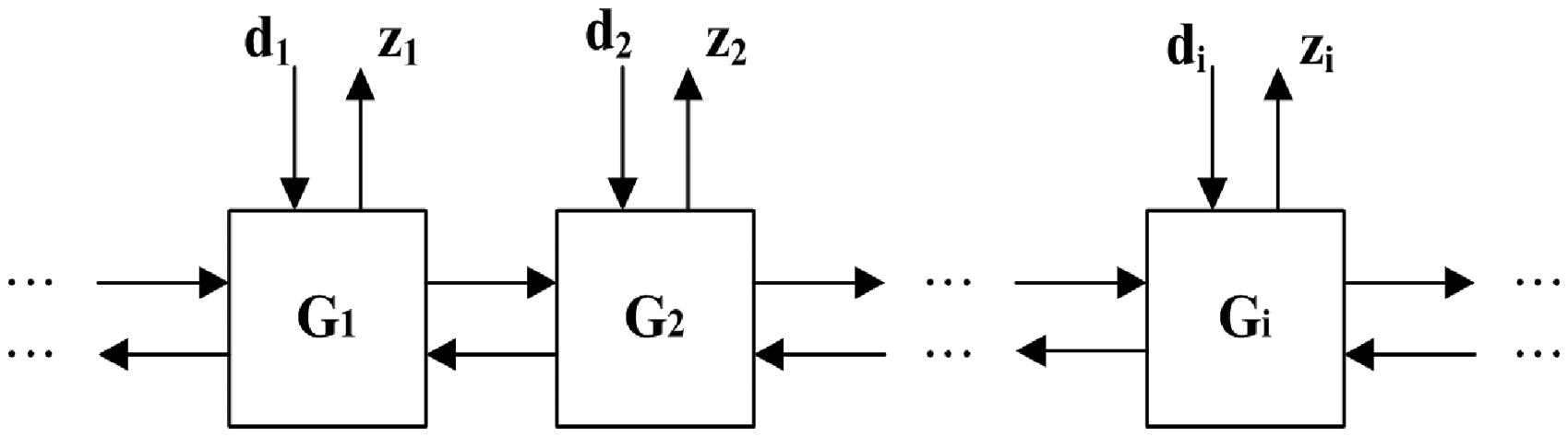
According to the interconnection terms among subsystems, spatially interconnected systems can approximately be divided into one-dimensional, two-dimensional and three-dimensional interconnected systems (D’Andrea and Dullerud, 2003). Figure 1 shows a unit of one-dimensional interconnected system which only interacts with its neighboring units. Here G is the state-space description of the i th subsystem, d, z and X are the disturbance input, performance output and state vector of the subsystem respectively. The frame structure of one-dimensional interconnected system is shown in Figure 2, which is called the tandem interconnected system. When the number of subsystems is N, and if the Nth subsystem directly interacts with the first subsystem, the interconnected system is called the loop interconnected system. If N is infinite, it is called the infinite interconnected system.
Unit of a one-dimensional interconnected system. Frame structure of a one-dimensional interconnected system.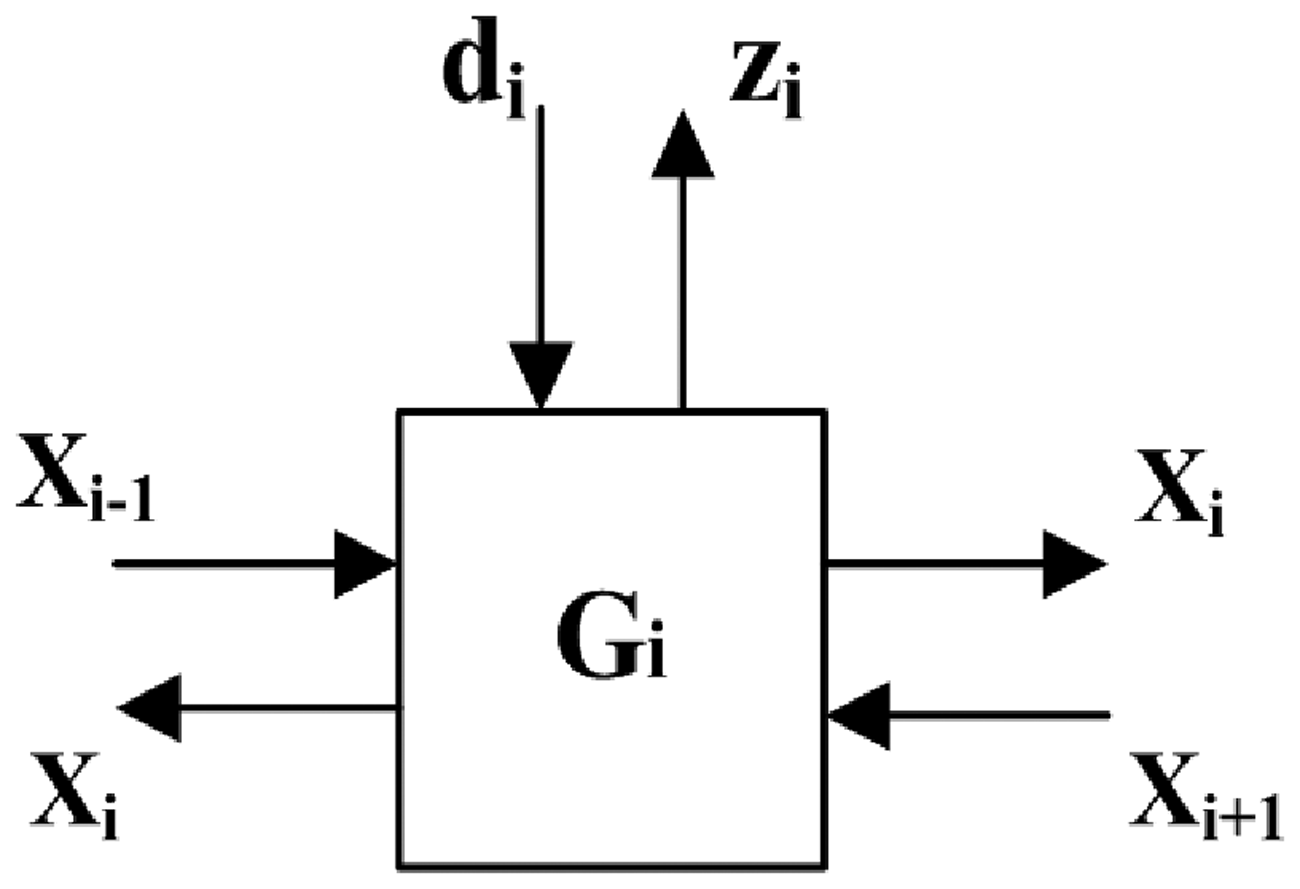
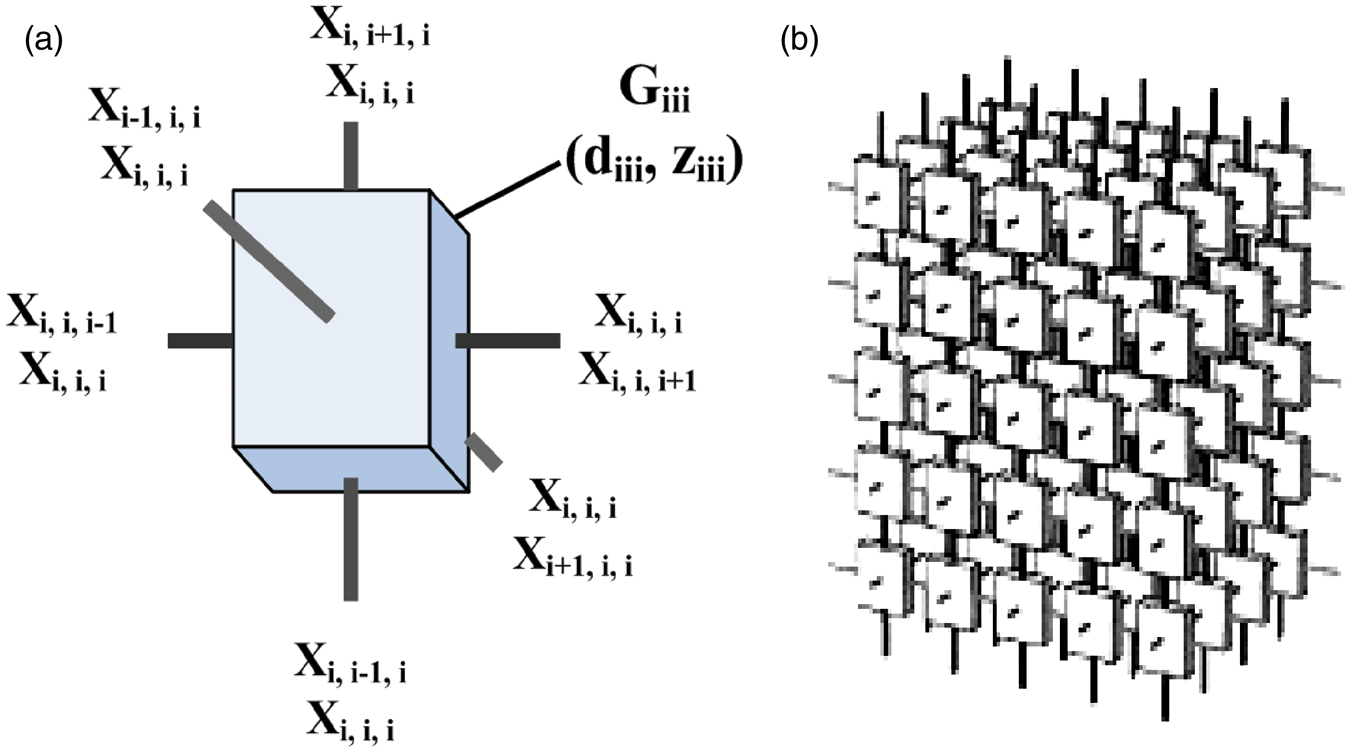
Figures 3(a) and 4(a) shows the basic units of two-dimensional and three-dimensional interconnected system, which can constitute two-dimensional and three-dimensional interconnected systems, as shown in Figures 3(b) and 4(b).
Two-dimensional interconnected system and its unit: (a) unit of a two-dimensional interconnected system; and (b) two-dimensional interconnected system. Three-dimensional interconnected system and its unit: (a) unit of a three-dimensional interconnected system; and (b) three-dimensional interconnected system.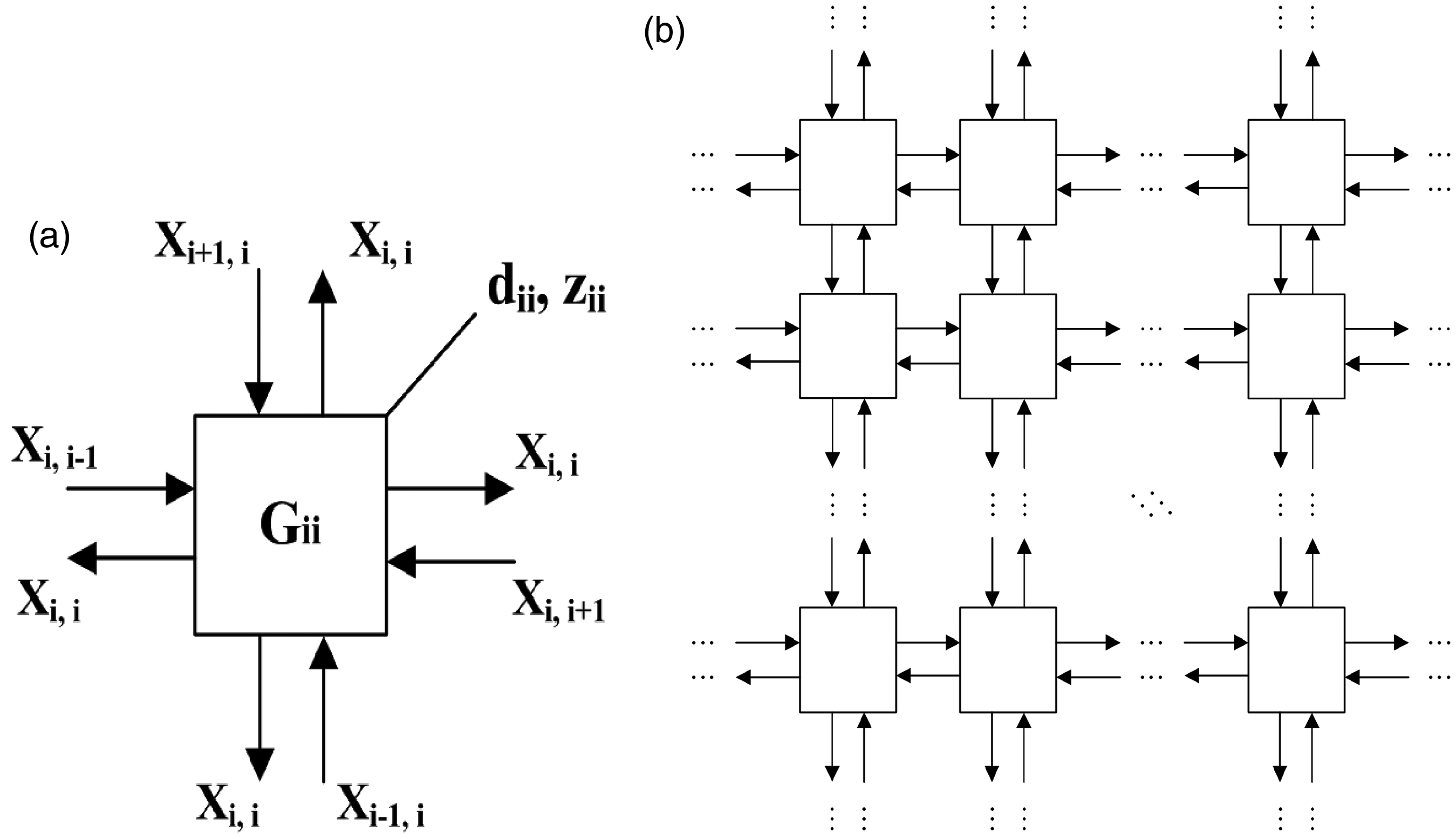
3. Distributed control system model
The so-called distributed control is that the large-scale control system has several local control stations that only observe and control local outputs. All controllers are involved in the control operation of the overall system to achieve the control target. Distributed control can be used for large-scale systems which are spatial distribution or spatial concentration with great difference among the dynamic response times (time constants) of each control channel. The advantages of the distributed control include: reduction of the complexity of control system function, less processing time of information transmission, effective local control, low cost, easy maintenance, high reliability and so on (Mohammad, 1996; Mohammadpour and Grigoriadis, 2010).
Distributed control system can be formed by the interconnected subsystems. That is, the entire system of controllers is connected by networks for communication and monitoring. The linear spatially invariant system is described by Equation (1), that is

When


Here

The dimensions of vectors

The interactions among subsystems including velocities and displacements are considered, and the high-order acceleration terms are ignored. The state-space formulation of the ith subsystem can be derived from Equation (2), that is


The last term on the right-hand side of Equation (5) represents the effects of other subsystems on the ith subsystem. If
If output states and input disturbances can be detected completely, the performance output


It has been proved that the whole system described by Equation (2) is stable when the subsystems meet the certain performance index

4. Distributed control of tensegrity structure
4.1. Description of the tensegrity structure
Without loss of generality, this paper takes the three-stage tensegrity structure as an example, as shown in Figure 5. This flexible structure contains 9 struts drawn in thick lines connected by 39 cables drawn in thin lines, and every stage contains 3 struts. Each cable is 1 m in length with a radius of 5 mm. The strut is aluminum alloy tube with a diameter of 20 mm and a length of 1.5 m. The material properties of structural members are listed in Table 1. The prestress in the cables are assumed to be 1 Mpa and the height of the overall structure is 2.5 m. The connection relationships of the three-stage tensegrity structure are illustrated in Table 2. Piezoelectric ceramic actuators are placed in two struts of each subsystem. For the weak coupling between the subsystem controllers, struts 1, 2, 4, 6, 8, 9 are selected to place actuators numbered 1, 2, 3, 4, 5 and 6 respectively.
Model of the three-stage tension tower and node number. Material properties of structural members Connection relationships of the three-stage tension tower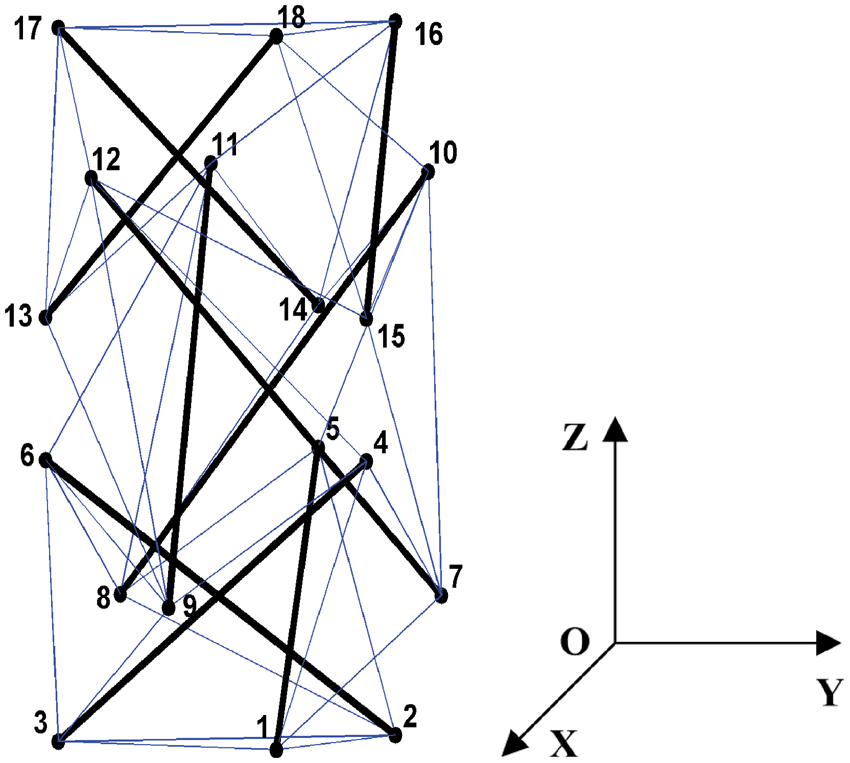


The three-stage tension tower shown in Figure 5 is a tandem interconnected structure. Every stage of the structure is taken as a subsystem, so it can be divided into three subsystems which are the bottom, middle and top subsystems. The top and bottom subsystems are boundary subsystems whose dynamic response is only affected by one adjacent subsystem. The middle one is the typical interconnected structure whose dynamic response is affected by two adjacent subsystems.
4.2. Control design
The adjacent subsystems are connected by the physical interconnection and its state equation is described by Equation (7), where
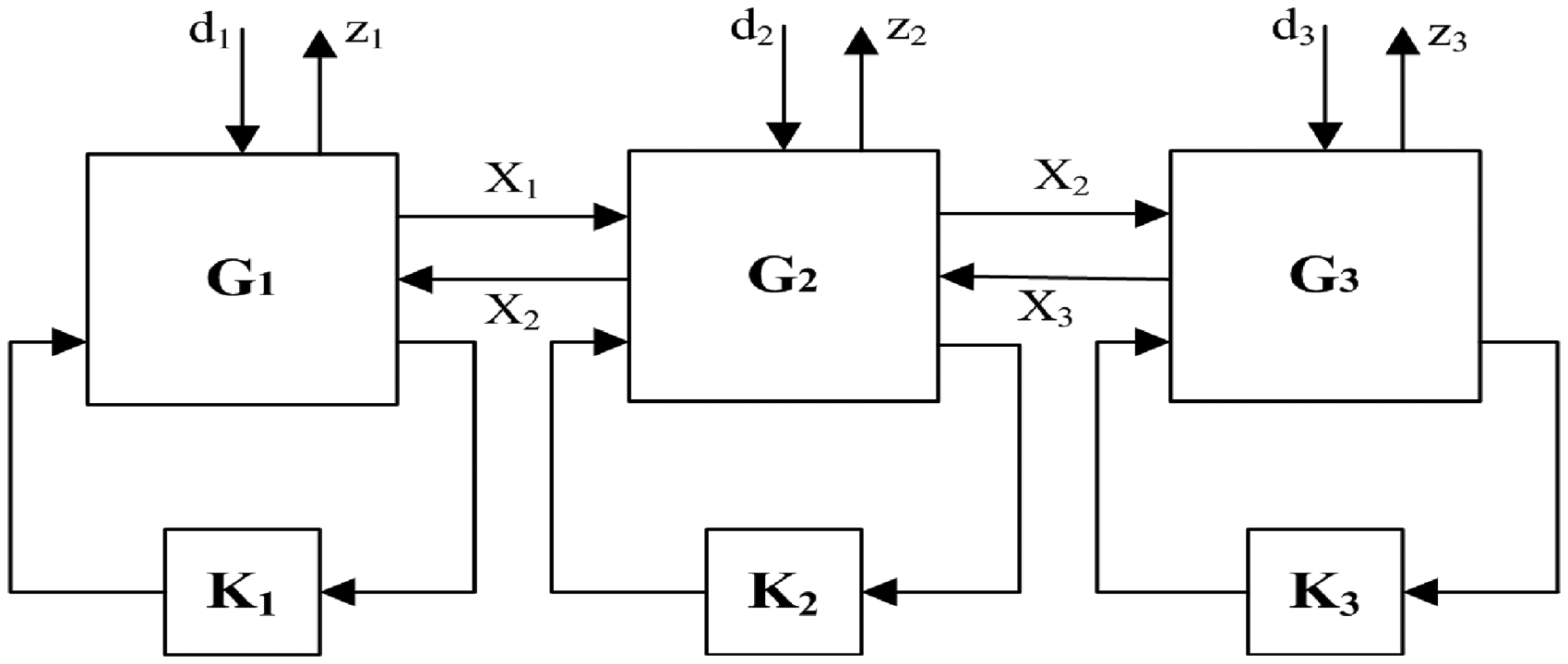
Tensegrity structures are space flexible structures, so system modeling error and environmental interference exist in the modeling process. In order to make the flexible tensegrity structure stable, the output-feedback distributed controller Block diagram for the interconnected subsystems. Interconnected closed-loop subsystems.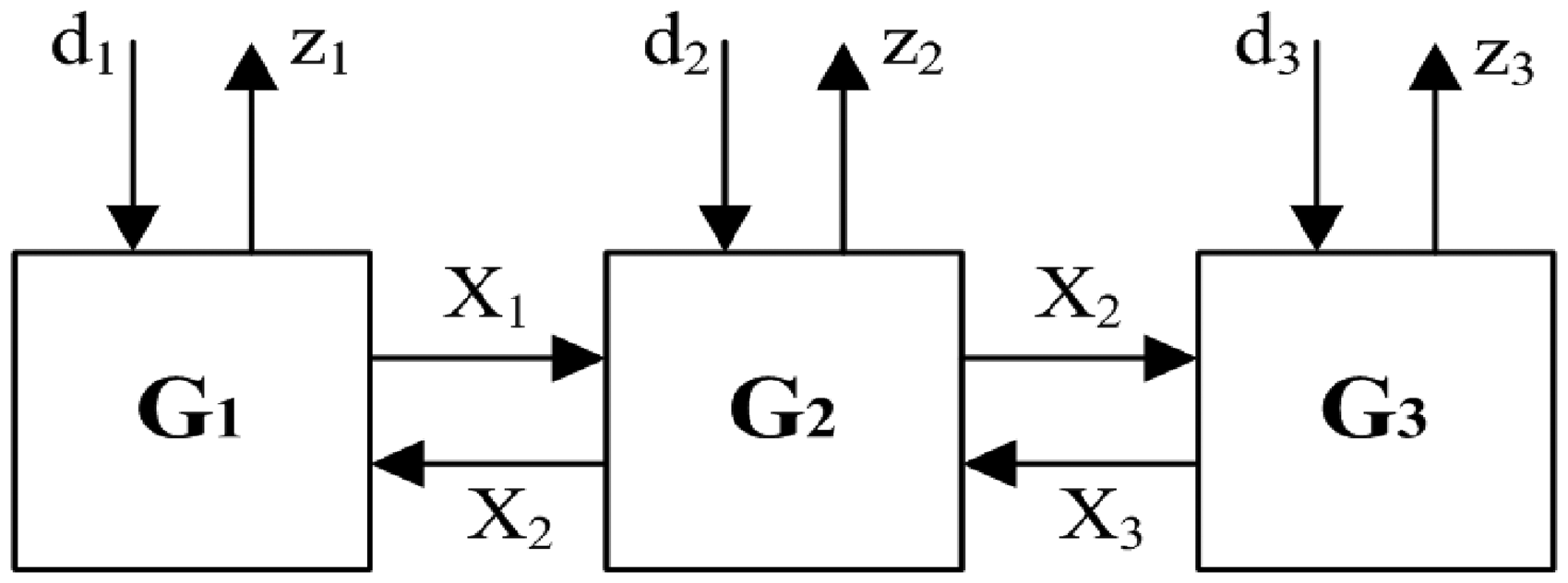
The robust distributed control method combining distributed control strategy with μ synthesis is applied to the vibration control of a three-stage tensegrity structure. First, it is necessary to perform uncertainty analysis (Li and Ma, 2011). Here the input uncertainties caused by the actuator excitation and measurement output uncertainties caused by sensor noise are considered. They are described with multiplicative uncertainties. The performance weight function is introduced, and then the control model of the augmented subsystem can be represented as a block diagram shown in Figure 8. Here Control model of augmented subsystem.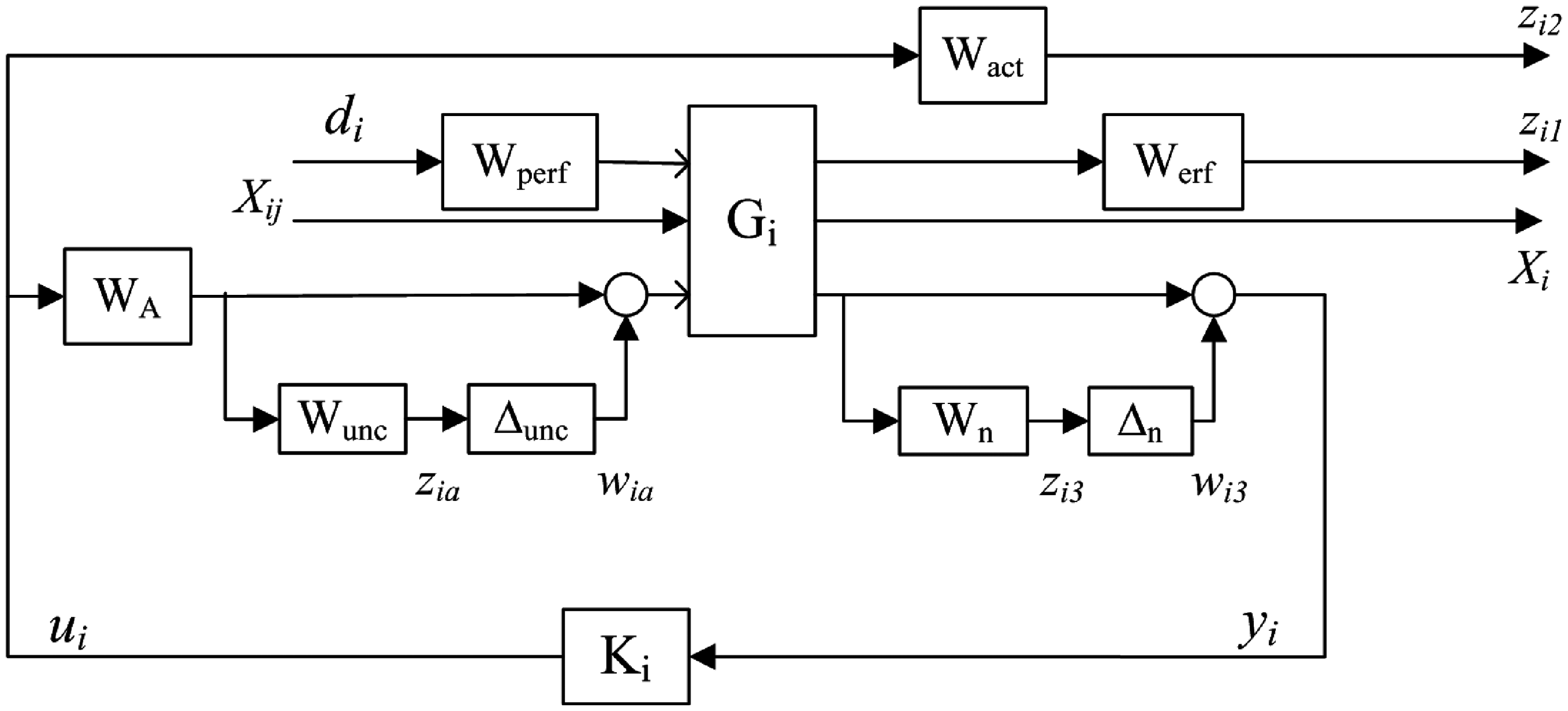
Based on the uncertainties of the augmented subsystem, the robust distributed controllers can be designed, and the interconnected closed-loop augmented subsystem can be derived to approximate the closed-loop control system, as shown in Figure 9. The designed controllers satisfy two requirements: (1) make the whole closed-loop system stable in case of uncertainties and possible external disturbances; (2) in order to suppress the external disturbance, the whole closed-loop system meets performance conditions Interconnected closed-loop augmented subsystem.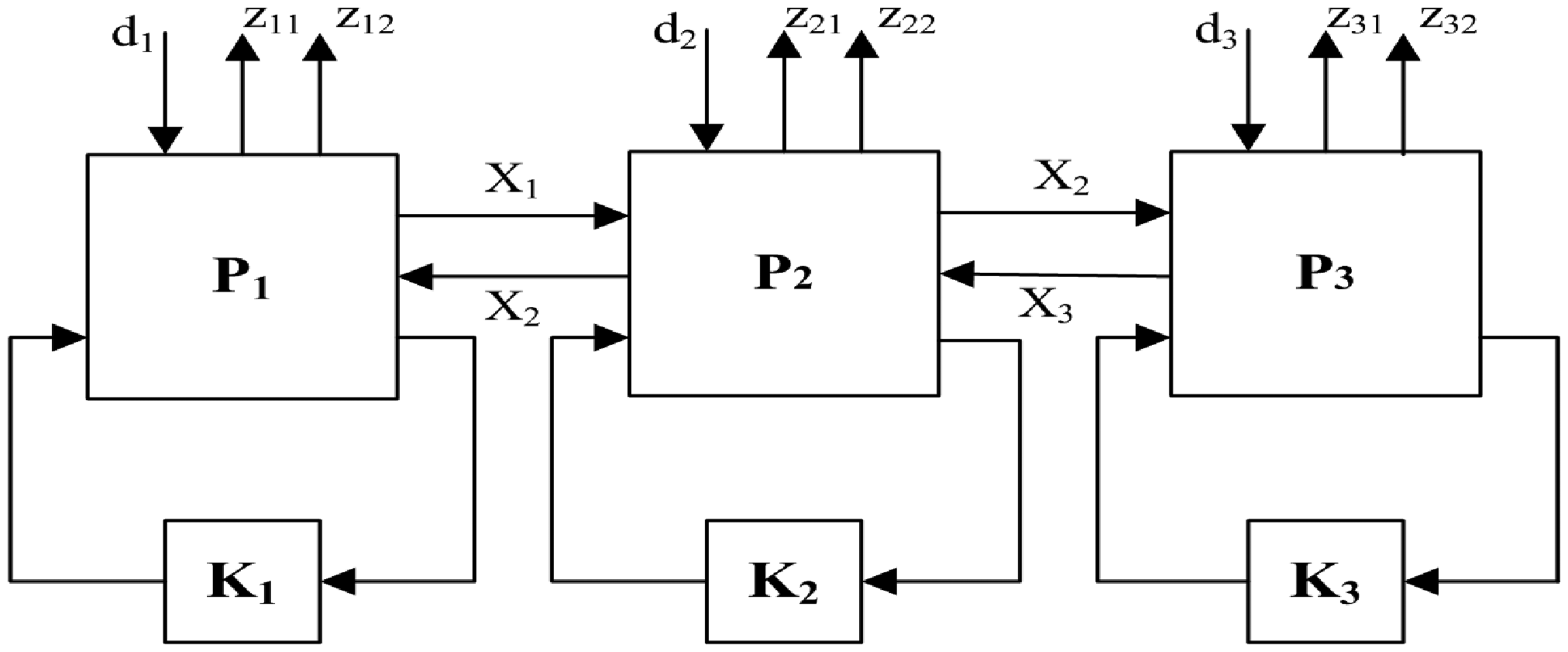
According to the connection relationship of nodes shown in Table 1, three nodes of tight connection exist between adjacent subsystems, such as nodes 4, 5 and 6 between subsystems 1 and 2. The subsystem state equation is modified so that Simplified interconnected subsystem.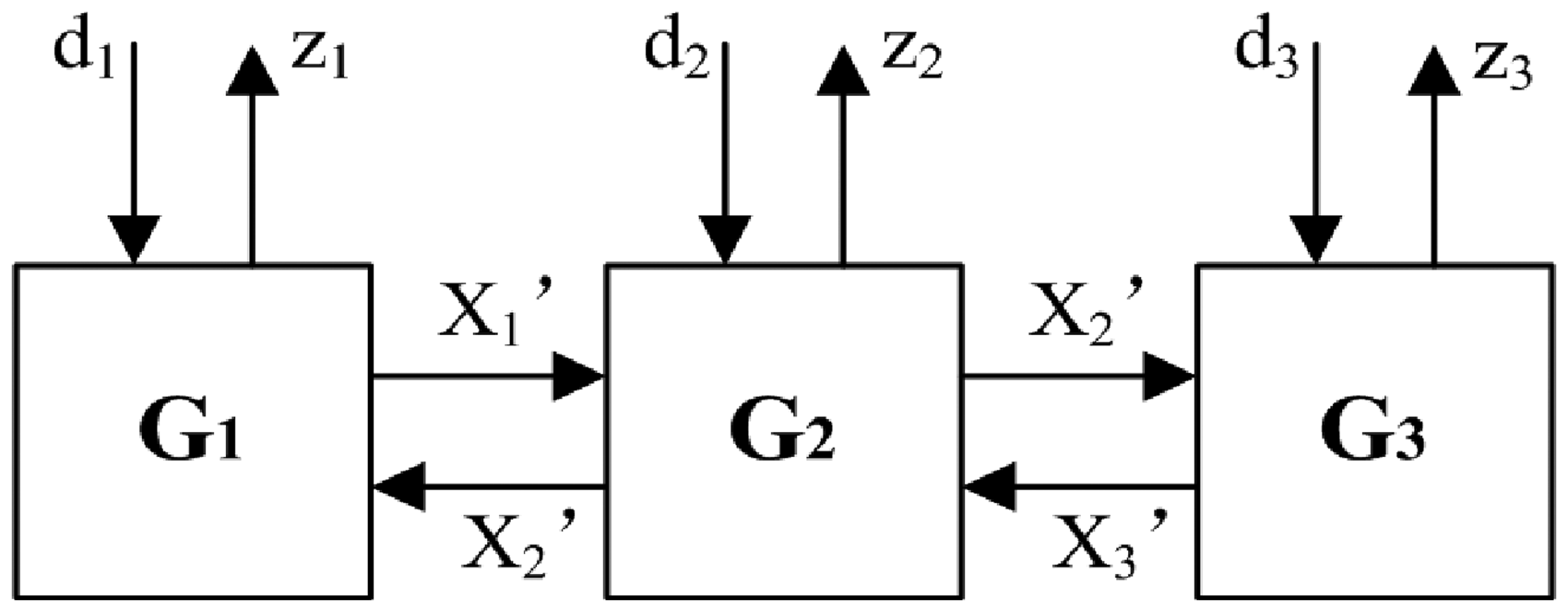
5. Simulation example
In this section, we apply the robust distributed control method to vibration control of a three tension tower. Because the deformation of the connected nodes between adjacent subsystems is maximum, the speeds of nodes 4, 10, 16 along the Z-axis and nodes 5, 11, 17 along the X-axis are measured as feedback signals. The purpose of the control system is to minimize the displacements of three top nodes of each subsystem. The weight functions are selected to suppress low-frequency vibration and high-frequency gain of controllers. The actuators are assumed to be all pass functions with 1% uncertainty in the low-frequency range, 10% perturbation in 20 Hz, and 100% perturbation from 200 Hz to the high-frequency range. The frequency responses of performance output Frequency responses of the main weight functions.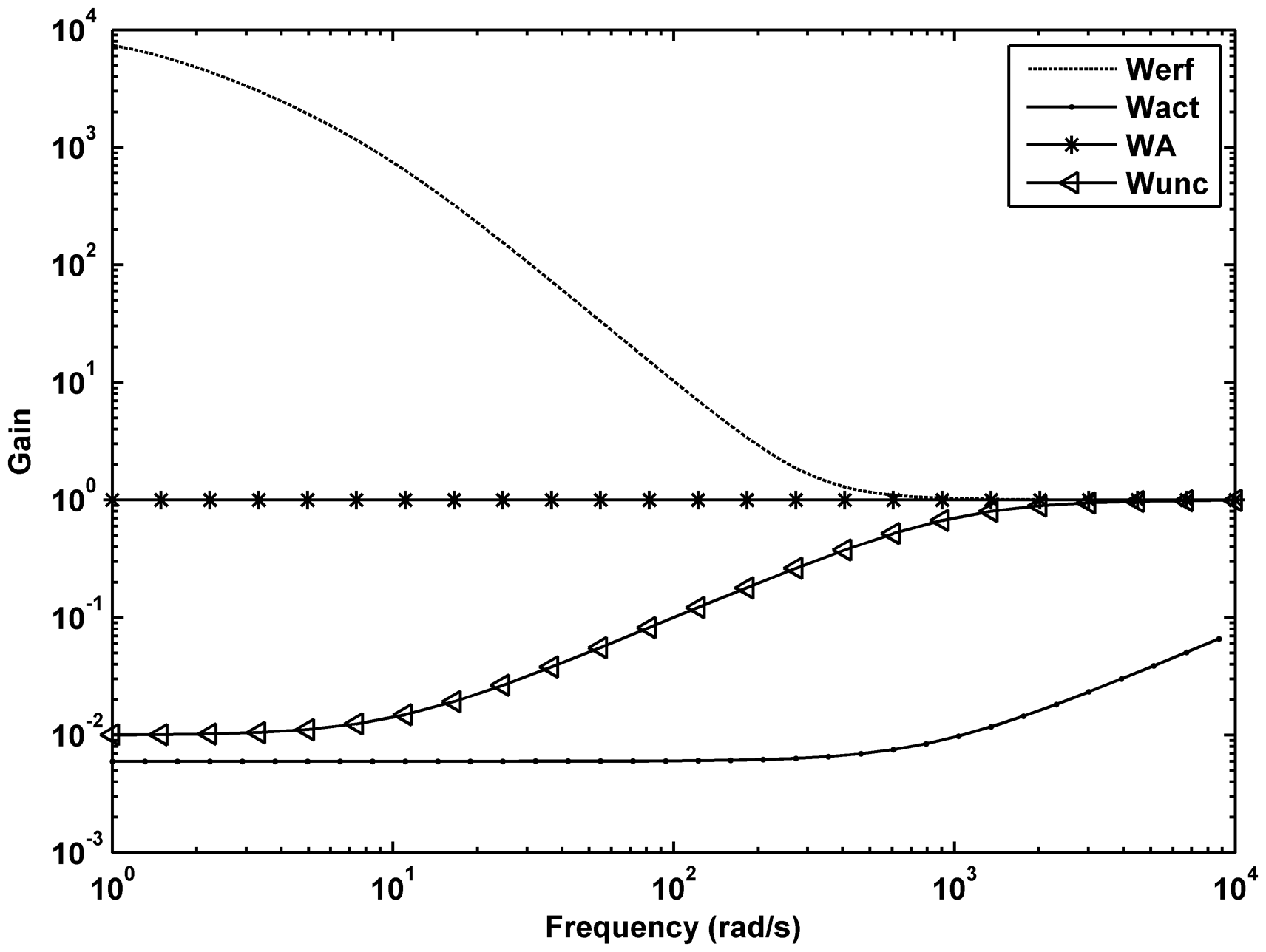
The augmented control system is established and the μ method is used to design distributed controllers for the whole system. Here, a unit step signal is applied at node 18 along the Z-axis. Figure 12 shows the step response of the closed-loop control system under μ distributed controllers, which are the vibration displacements of node 11 along the Y-axis, nodes 6 and 18 along the Z-axis, respectively. It can be noted that the closed-loop control system reaches the steady state within 50 seconds under the action of a step signal.
Step response of the whole system.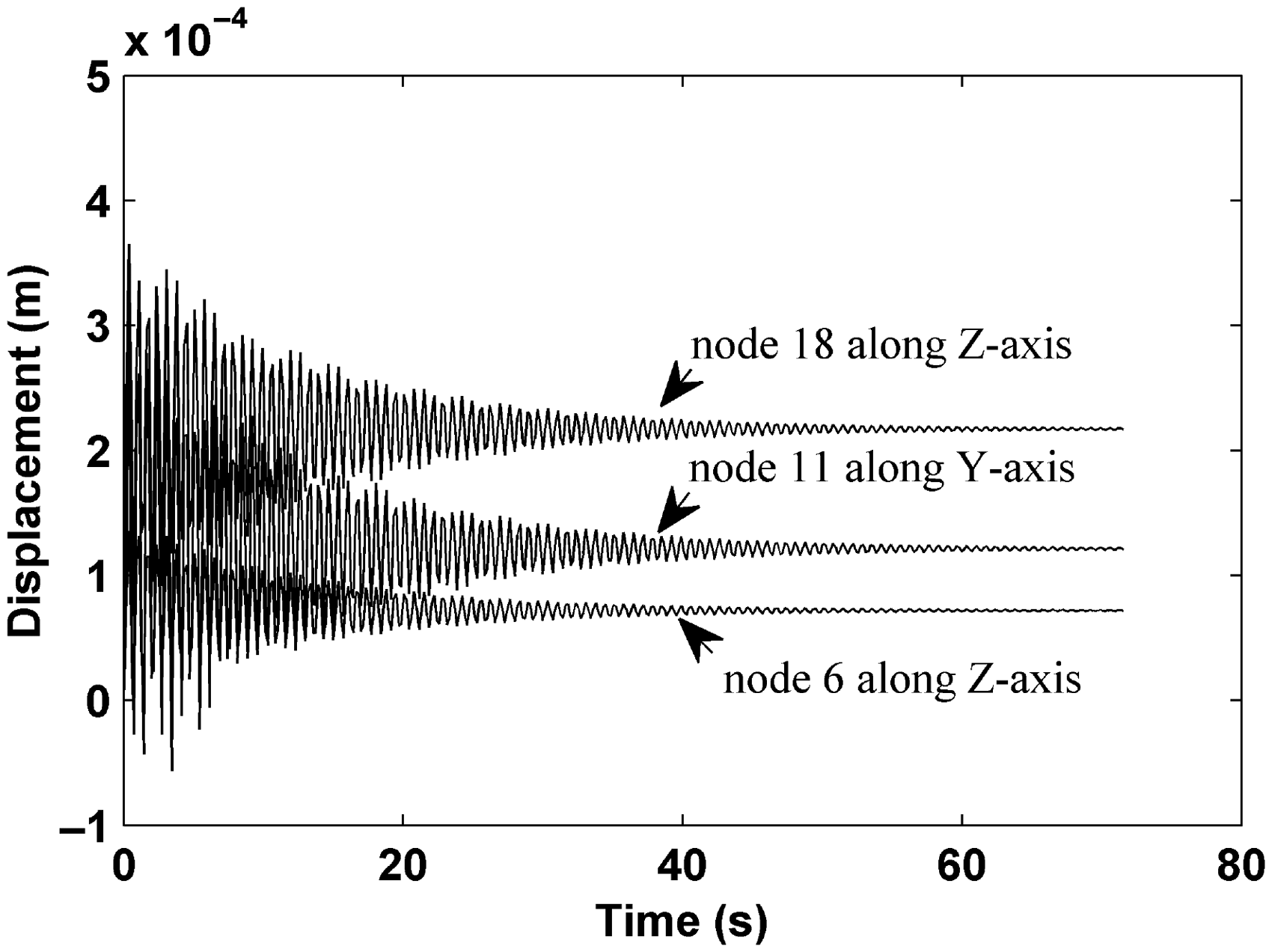
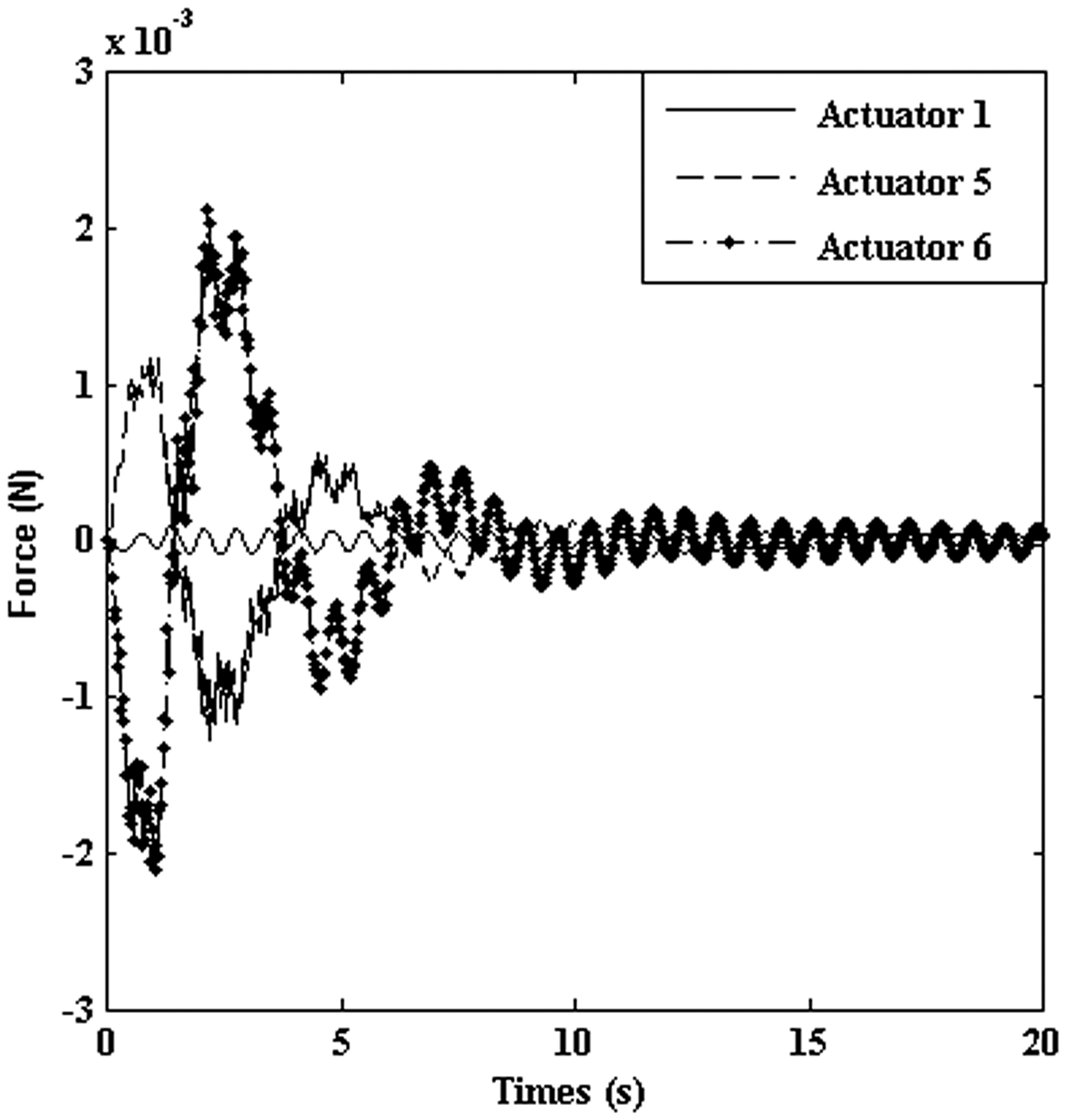
The low-frequency cosine perturbation signal (1 − cos8πt) is applied at node 18 along the Z-axis which is perpendicular to the bottom. Figure 13 shows the vibration displacement of node 18 along the Z-axis. The vibration almost attenuates in 40 seconds, which indicates that the closed-loop system is stable. From the viewpoint of control force, we can find that the actuator output force of subsystem 3 is larger than the others. Figure 14 shows the output forces of actuator 1 in subsystem 1 and actuator 5 and 6 in subsystems 3. It can be observed that based on the feedback information, μ distributed controllers can respond quickly to the disturbance, which can improve the local control performance without affecting the global stability.
Vibration curve of node 18 along the Z-axis. Output forces of actuators.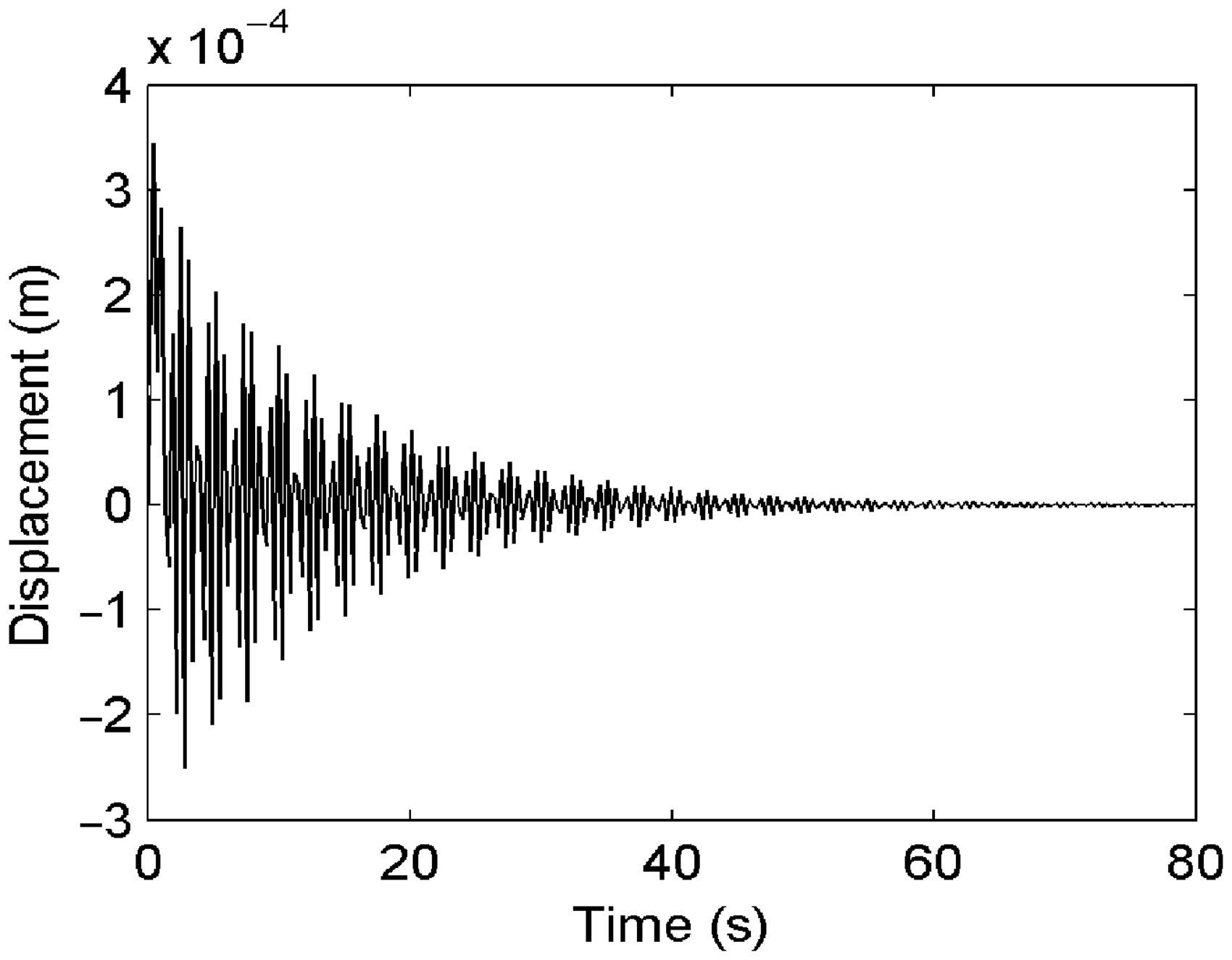
Based on the simplified interconnected system in this paper, the simulation results show that the distributed control can suppress the vibration of the whole system.
6. Conclusions
In this paper we have proposed the distributed control model of tandem interconnected systems. A three-stage tension tower is selected as an example, which is divided into three subsystems according to the physical connection of tensegrity structure. Then the method that combined the distributed control strategies with μ synthesis is proposed to achieve the active robust vibration control of a flexible structure. The closed-loop control system of the tensegrity structure under μ distributed controllers is simulated, and the results indicate that the closed-loop system is stable and can suppress disturbances effectively. Based on the feedback information, μ distributed controllers can respond quickly according to the external disturbance, which can improve the local control effects. The μ synthesis method combined with the distributed control strategy can greatly reduce the order of μ controllers, which is conducive to the engineering applications of μ controllers. This method can handle the robust performance problems with mixed uncertainties and improve the robustness of distributed controllers.
Footnotes
Funding
This research received no specific grant from any funding agency in the public, commercial, or not-for-profit sectors.