







Abstract
Control of structural vibration due to wind and earthquake forces has been extensively researched. However, studies on vibration control of structures against underground blasts are limited. It is thereby important to study the usefulness of established vibration control technologies in the blast resistant design of structures. In the present work, an attempt is made to study the effectiveness of the New-Zealand (N-Z) type base isolator (BI) in mitigating structural vibration effects due to blast induced ground motion (BIGM). The BIGM is modeled by an exponentially decaying function representative of a typical rock blast, and the isolator by a bilinear model. The influence of the various BI parameters on its performance is examined in the time domain by considering a single-degree-of-freedom structural model and a realistic five-story building. Numerical studies reveal that the N-Z base isolation system is highly effective in reducing both the underground blast induced structural acceleration as well as the displacement. It is noted that the peak displacement and permanent deformation of the BI may be crucial design criteria. These may, however, be restricted by selecting a proper combination of the BI parameters without significantly compromising the response reductions obtained by it.
Keywords
1. Introduction
Underground explosions due to general engineering construction and mine blasting generate ground vibrations that can cause damage to nearby structures. Furthermore, due to the scarcity of land in many parts of the world, nowadays various facilities, like ammunition storage, air raid shelters, oil and water storage caverns, etc., need to be built underground to free the surface land for other uses. Accidental blasting of underground ammunition storage is another source of significant damage to adjacent structures. Depending upon the intensity of explosion, distance of the structure from the blasting source, soil characteristics, and the type of structures, the damage may range from severe to minor, such as that of nonstructural components, together with other effects on user comfort. Thus, the evaluation of the performance of structures under underground blast induced vibration is gaining importance. Constraints on space and cost as well as safety issues have limited the number of experimental investigations on structural response and damage due to blasting, though there are several simulation studies on this, such as by Dowding (1996), Hao and Wu (2001), Carvalho and Battista (2003), Wu and Hao (2005), and Hao and Wu (2005). To protect structures from the effects of underground explosions, various codes and regulations, like DIN 4150 (1984), DOD 6055 (1992), and the NATO (1993), recommend different criteria that were predominantly established from empirical correlations between observed damage and recorded peak velocities during field blast tests. These criteria have many lacunae as they do not consider the inherent structural condition, site condition, and ground motion features. Hence, the protection of structures subjected to BIGM needs careful attention.
Over the last few decades, there have been extensive efforts by researchers in the development of vibration control technologies, such as those of base isolation, viscous fluid dampers, and tuned mass and liquid dampers, for structural protection against earthquake and wind loading. However, the same is not the case for underground blast load. It may be noted that, even though earthquakes and underground blast both cause ground vibrations, blast pulses are extremely dissimilar from seismic motions as they are characterized by large amplitude, high frequency waves and are of extremely short duration. Moreover, as the epicentral distance in case of BIGM is much less than that of seismic ground motion, the attenuation and spatial variation of the underground blast action are more significant than those of the latter over the same propagation distance (Wu and Hao, 2005). While the structural response to earthquake ground motion is dominated mainly by the lower frequency modes with little contribution from the higher modes, in case of blast ground motion, during the major shock period the higher frequency modes are predominantly excited. Thereby, the higher frequency modes govern the structural response in the forced-vibration phase while the structural response in the free vibration phase is mainly due to the lower frequency modes (Lu et al. 2001, 2002). Consequently, a structure subjected to BIGM will experience large accelerations in the forced-vibration phase and, if it survives this phase, will undergo large displacements in the free vibration phase (Dhakal and Pan, 2003). Hence, specific studies are needed on the applicability of established vibration control methods to structures subjected to underground blast. There are some limited studies in the open literature on vibration control techniques for blast loading. Miyamoto and Taylor (1999) evaluated the effectiveness of fluid viscous dampers in the reduction of responses of steel buildings subjected to air blast. Wu et al. (2004) proposed the mitigation of ground shock effects on structures by the provision of a sand layer in the foundation of the structure. The sand base was found to be successful in reducing the structural response and damage. This particular study was a motivating factor for the present paper on exploring the effectiveness of base isolation in blast vibration protection.
One of the most established and widely implemented base isolator (BI) devices is the lead-plug or N-Z bearing which was first introduced in New Zealand and is basically a laminated rubber bearing with a central lead core. Large numbers of experimental as well as analytical studies by various researchers (Fan et al., 1991; Jangid, 2010; Kulkarni and Jangid, 2002; Matsagar and Jangid, 2004; Naeim and Kelly, 1999; Ramallo et al., 2002; Rao and Jangid, 2001, and others) have underlined the effectiveness of the N-Z system in controlling the structural vibration due to seismic excitation. Interestingly, there are some studies on base isolated structures subjected to near-fault earthquakes which are characterized by large, high-energy, pulse-like signals, similar to blast motions. Though earlier studies by Heaton et al. (1995), Hall et al. (1995), and others, were discouraging due to excessive bearing displacements, Jangid and Kelly (2001), Alhan and Gavin (2003), and Jangid (2007) reported that lead–rubber bearings with appropriate properties are quite effective for seismic isolation of structures for near-fault motions. While Jangid and Kelly (2001) showed that there exists an optimum damping of the isolation system for which the superstructure acceleration attains a minimum value, Alhan and Gavin (2003) observed that for a known near field earthquake record, an appropriate combination of isolation stiffness and isolation damping may be adopted to limit the base drift without significantly increasing floor acceleration and inter-story drift. Further, the optimum yield strength of the N-Z system under different system parameters was derived by Jangid (2007). Supplemental viscous dampers to mitigate the large isolator displacements under near-fault ground motion were studied by Providakis (2009). Noting the potential of base isolation in mitigating structural vibration due a to near-fault earthquake, it was felt that it would be meaningful to study this technology for the control of structural vibrations due to underground explosion.
In this paper, an attempt is made to study the performance of the N-Z type BI in mitigating structural vibration effects due to BIGM. In doing so, the superstructure is first modeled as a linear, viscously damped SDOF system. The force-deformation behavior of the N-Z BI is represented by Bouc–Wen’s bilinear model (Bouc, 1967; Wen, 1976). Parametric studies are carried out on the base isolated system and the influence of various important BI parameters such as the isolation period, yield strength, rigidity ratio, and damping ratio are observed. Variations in the intensity of the blast input and the flexibility of the superstructure are also taken up. The purpose of the parametric study is to find the existence of optimum parameters, if any, by considering the minimization of both the peak absolute acceleration and peak base displacement as the optimality criteria. The study is extended to a five-story building.
2. Modeling of the structure-base isolator system
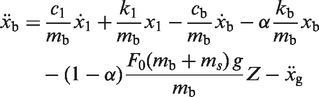
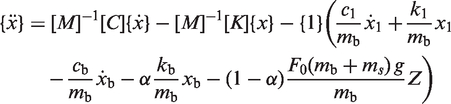
For a multi-story shear type building on an N-Z type BI, as shown in Figure 1, the equation of motion of the system under BIGM can be written as
Idealized building model on N-Z bearing.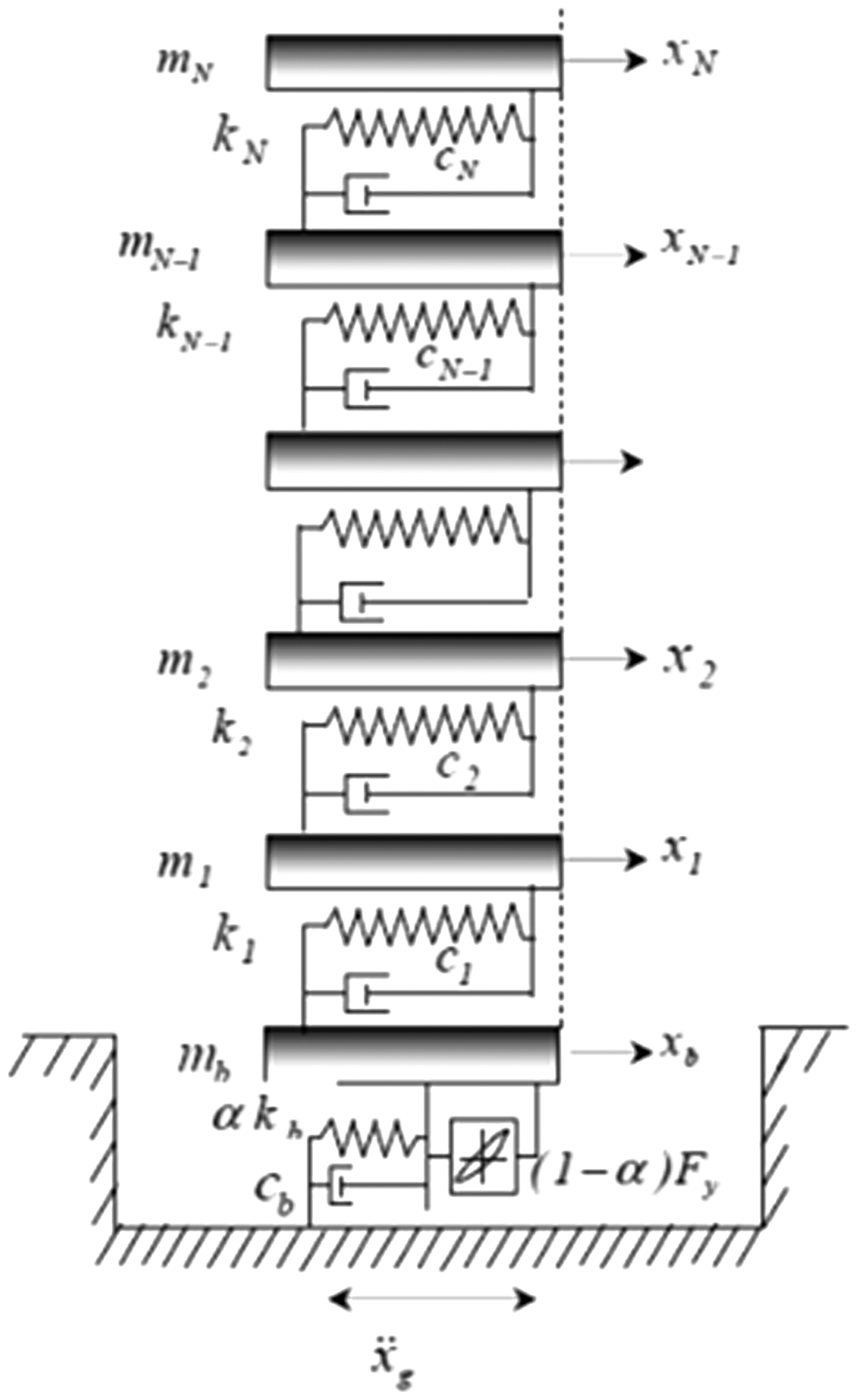


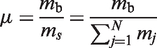
2.1. Mathematical model of the N-Z system
In the N-Z type base isolation system, the lead core provides an additional damping to reduce the bearing displacement, and energy dissipation occurs due to yielding of the lead core. Here, the force deformation behavior is nonlinear and is generally expressed by the bilinear model shown in Figure 2. This behavior can be approximated by Bouc–Wen’s equation (Bouc, 1967; Wen, 1976). The horizontal force ( Force–deformation behavior of N-Z bearing.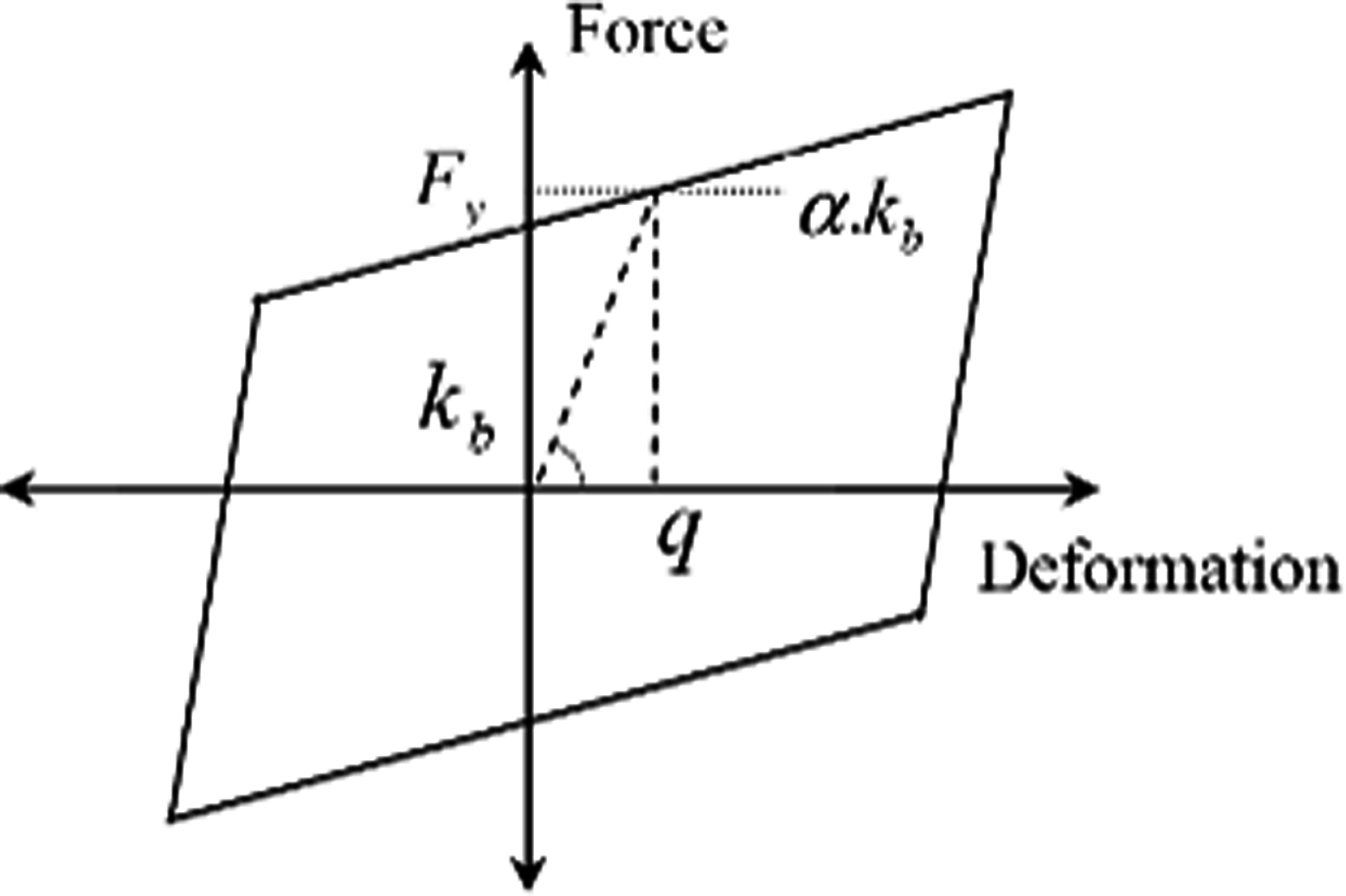


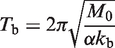

3. Modeling of blast induced ground motion
In the present study, the BIGM generated typically from an underground explosion is modeled by an exponentially decaying function by following Carvalho and Battista (2003). The blast loading on the structure,



For the blast input model, typical values of the volume of charge chamber (V), charge center distance (R), and propagation velocity of wave (Cp) are taken as 1000 m3, 50 m, and 5280 m/s (for granites rock), respectively. Three different blast input acceleration time histories are considered for the present numerical study (named as cases A, B, and C) corresponding to three values of TNT charge weight (Q), namely 10 ton, 50 ton, and 100 ton. The PPV of the three types of input motions are calculated as 22.66 cm/s, 73.74 cm/s, and 122.56 cm/s, respectively. The resulting ground accelerations are shown in Figure 3.
Input acceleration time histories.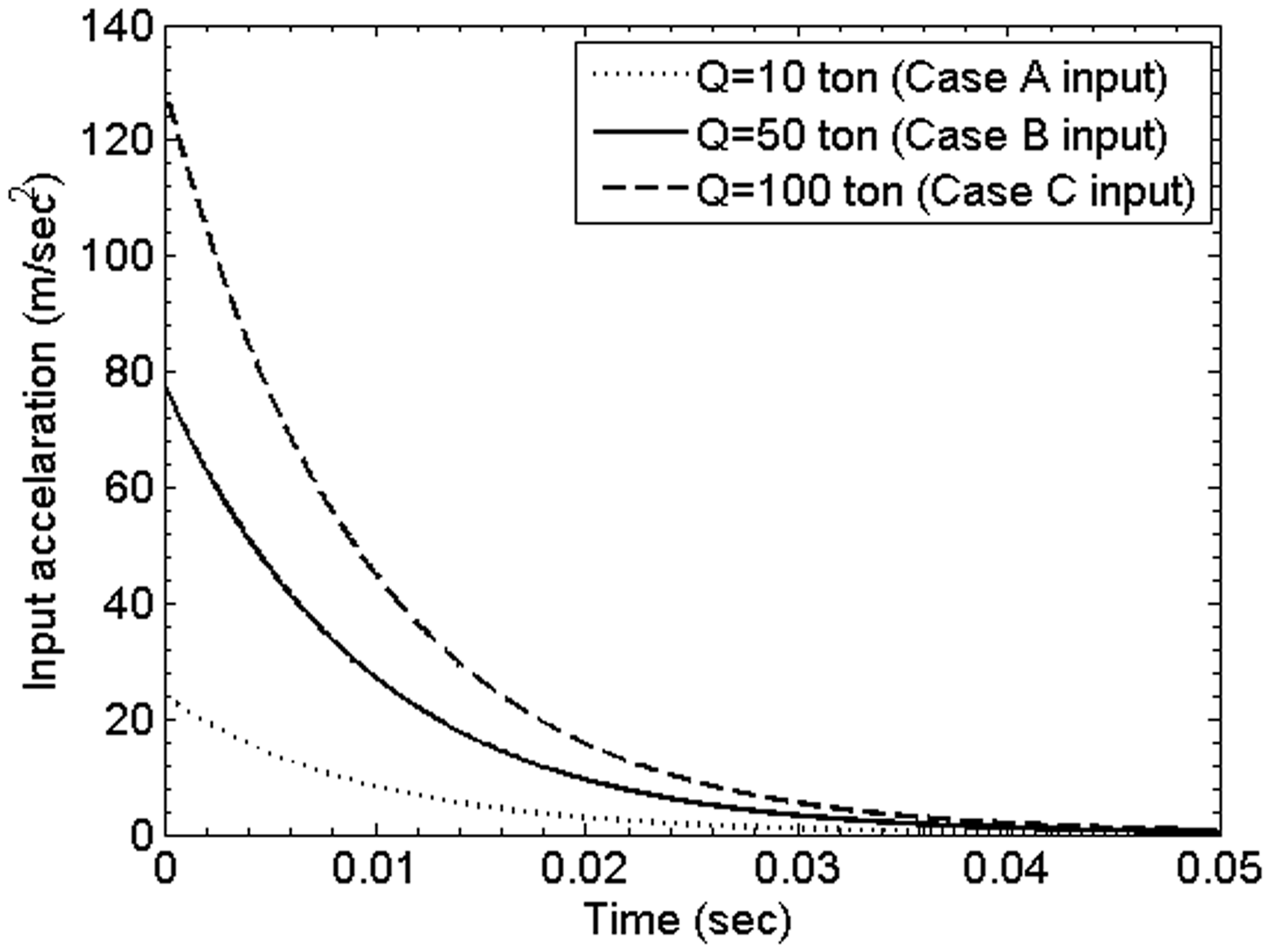
4. Numerical study
In this section, the performance of the base isolation system in mitigating the underground blast induced ground vibrations of the superstructure modeled both as a SDOF system and a MDOF system is illustrated though some numerical examples. At first, the variations in the design parameters of the BI as well as the superstructure and blast input properties are considered to analyze their influences on the peak response reductions of the SDOF model of the superstructure. In the subsequent section, a five-story building idealized as a MDOF shear building is considered as a case study.
4.1. SDOF system on N-Z type BI
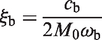
A SDOF system on N-Z type BI subjected to BIGM, as shown in Figure 3, is considered. The model of the isolated structural system under consideration is characterized by the parameters, namely the fundamental time period of the superstructure (Ts), the damping ratio of the superstructure ( Displacement time history for Tb = 2.5 s (case C input). Acceleration time history for Tb = 2.5 s (case C input). Peak responses reduction and peak base displacement of 2-DOF base isolated system for three cases of blast input.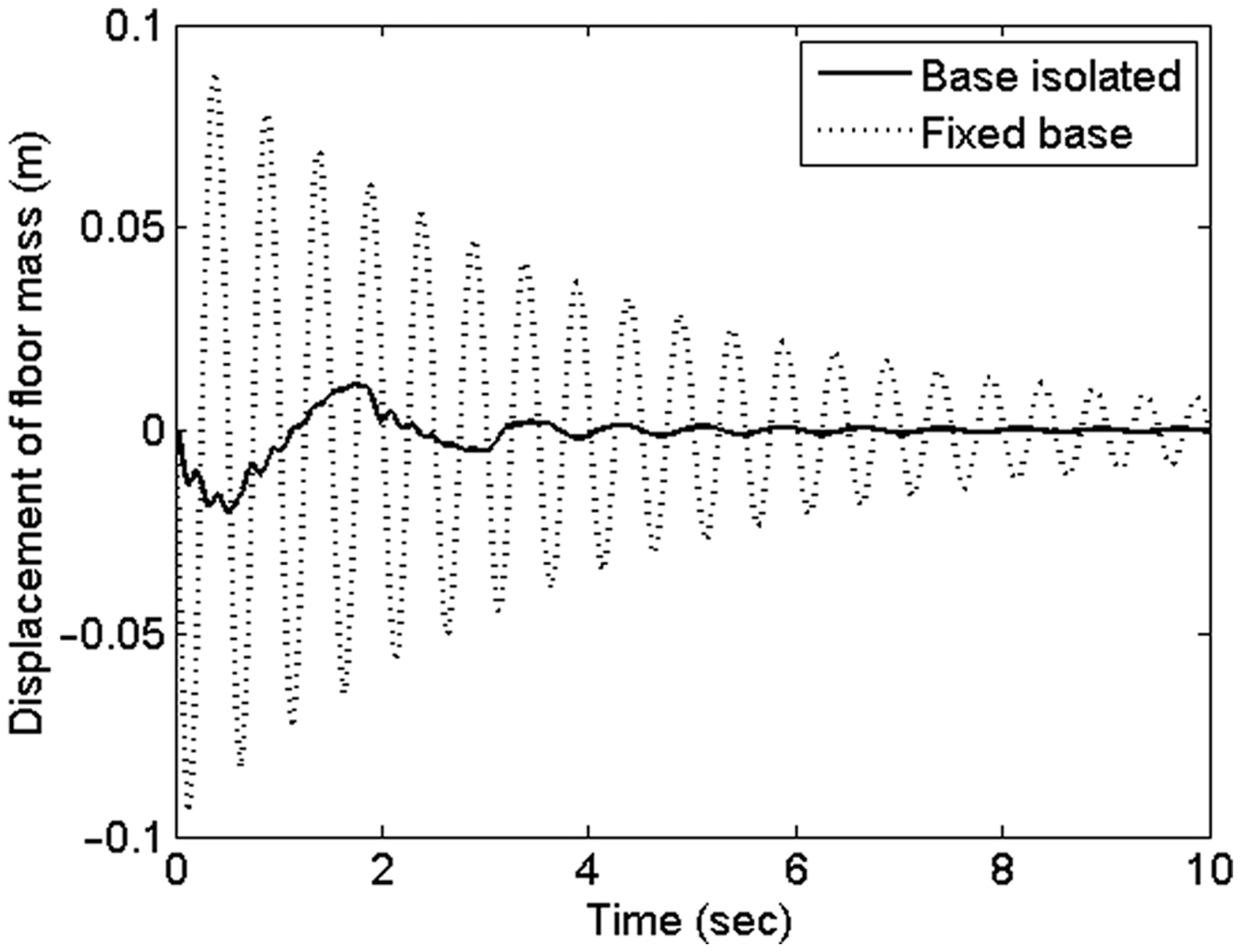
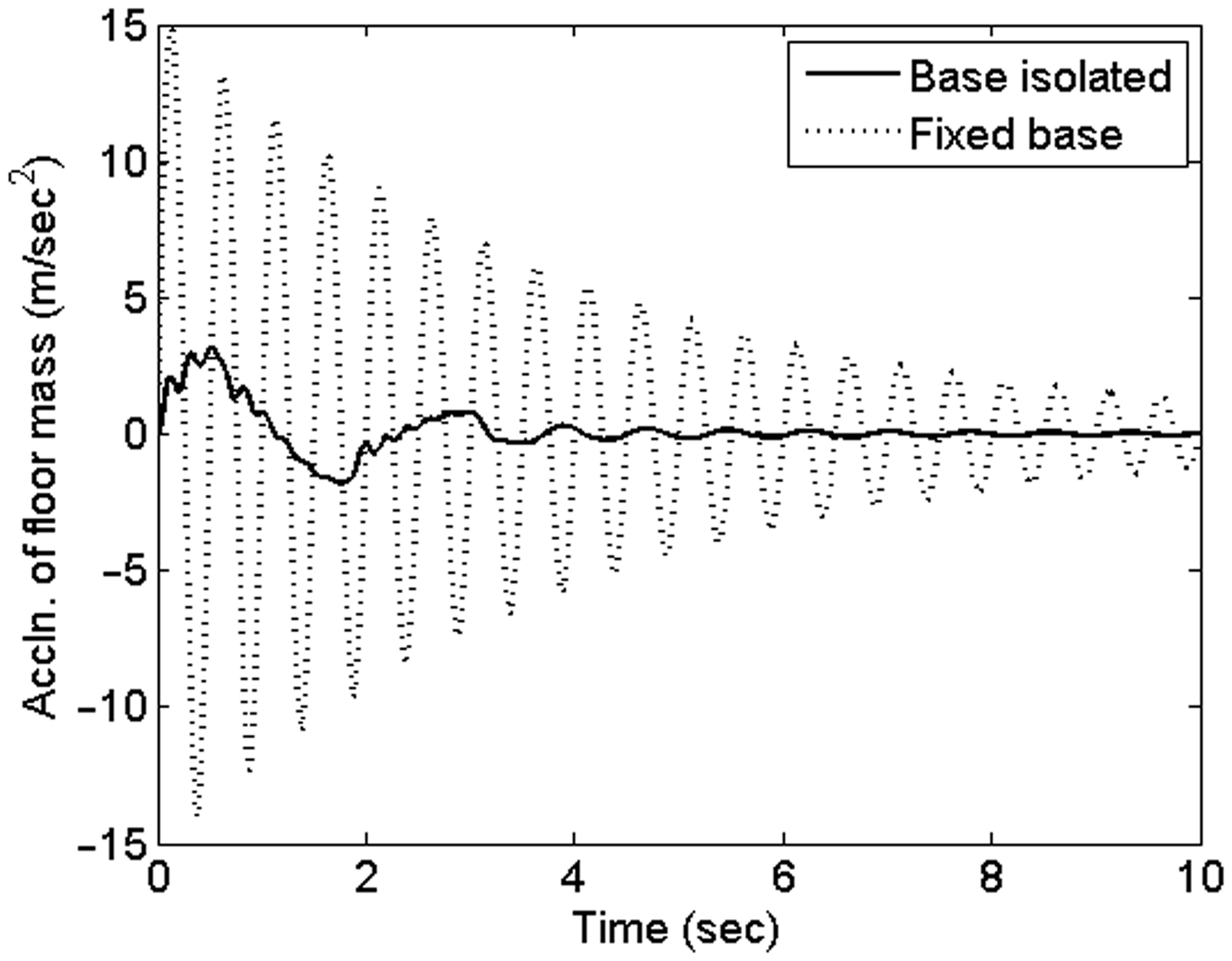
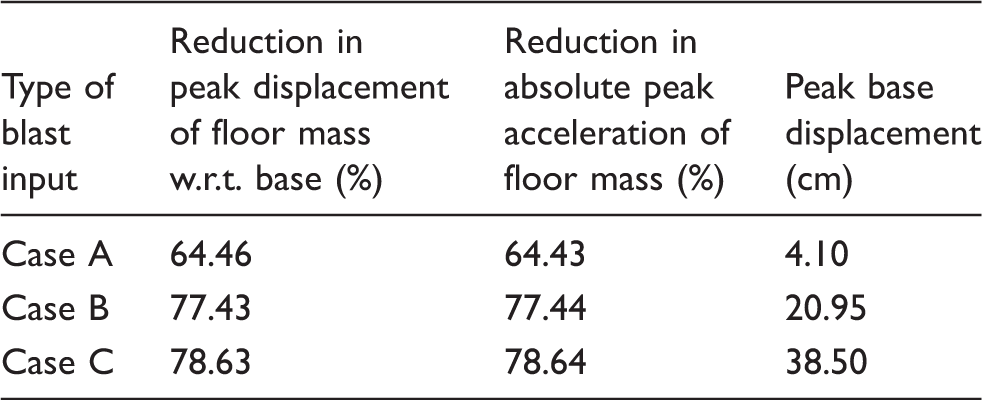
As discussed earlier, base isolated buildings are vulnerable to large pulse-like ground motions (similar to the impulsive BIGM) generated at a near-fault location due to large isolator displacements (Heaton et al., 1995; Jangid and Kelly, 2001). It is thus important to examine the peak bearing displacement in achieving high response reductions of the superstructure, as observed in Figures 4 and 5. Base displacement time histories for all three cases of blast input are shown in Figure 6 and the values of the peak base displacements are also given in Table 1. It is observed from Table 1 as well as from Figure 6 that for smaller intensities of blast input (case A), the peak base displacements are very small compared to those due to higher intensities of blast input. The peak base displacement of N-Z type BI under seismic vibration can be noted here to compare with that due to underground blast. For example, for the three earthquake records of Loma Prieta, Northridge, and Kobe with peak ground accelerations (PGAs) of 0.57 g, 0.6 g, and 0.86 g, respectively, peak base displacements of a N-Z type base isolated system (Ts = 0.5 s, Base displacement time history for Tb = 2.5 s (cases A, B, and C input).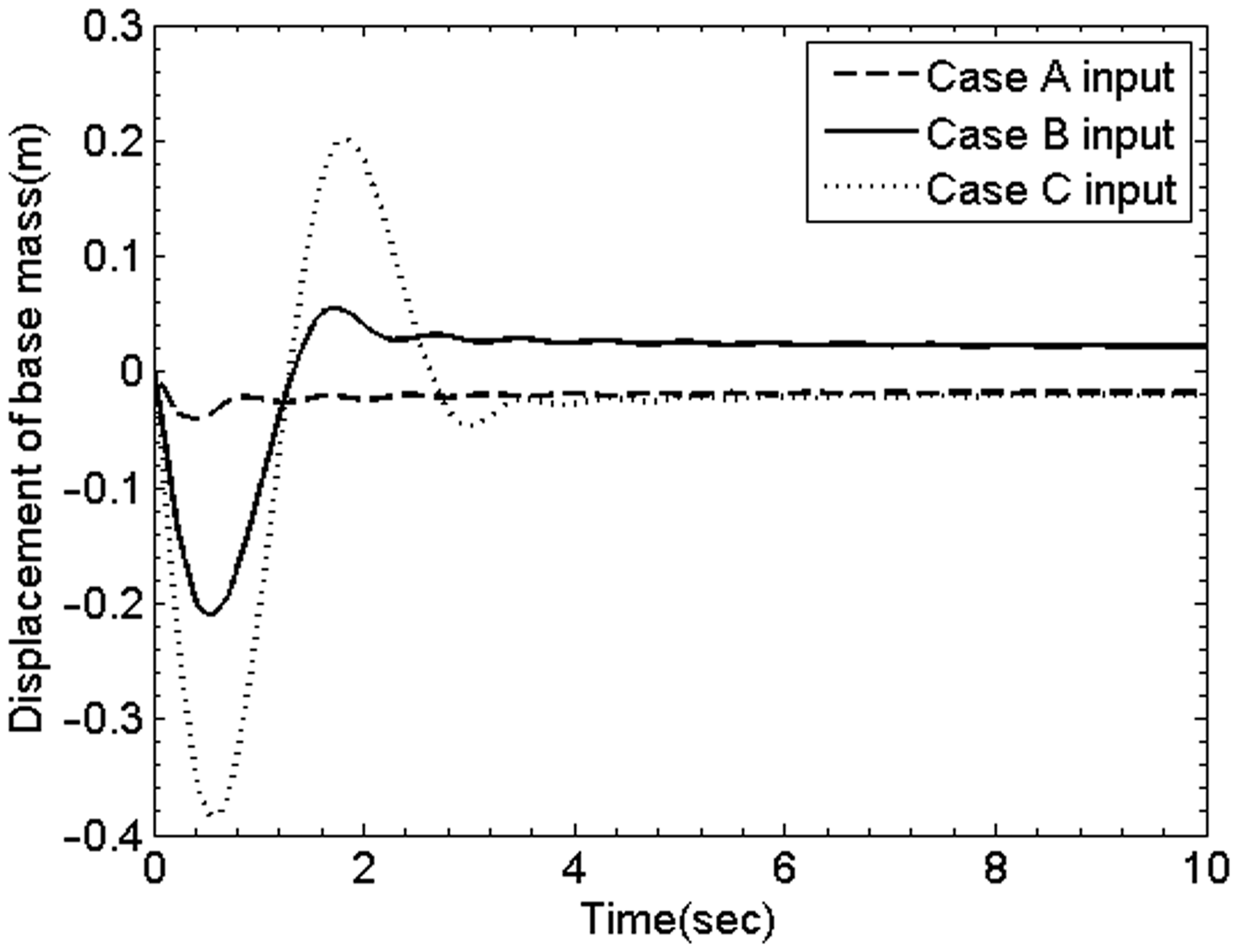
Now, the influence of various parameters on the performance of the base isolation system is studied. The parametric studies are chiefly presented for the case C blast input.
To study the effect of superstructure flexibility, the reductions in peak absolute acceleration due to base isolation for varying Ts are plotted in Figure 7 for three sets of isolation periods ( Variation of peak acceleration reductions with Ts for different Tb (case C input). Variation of peak base displacement with Ts for different Tb (case C input).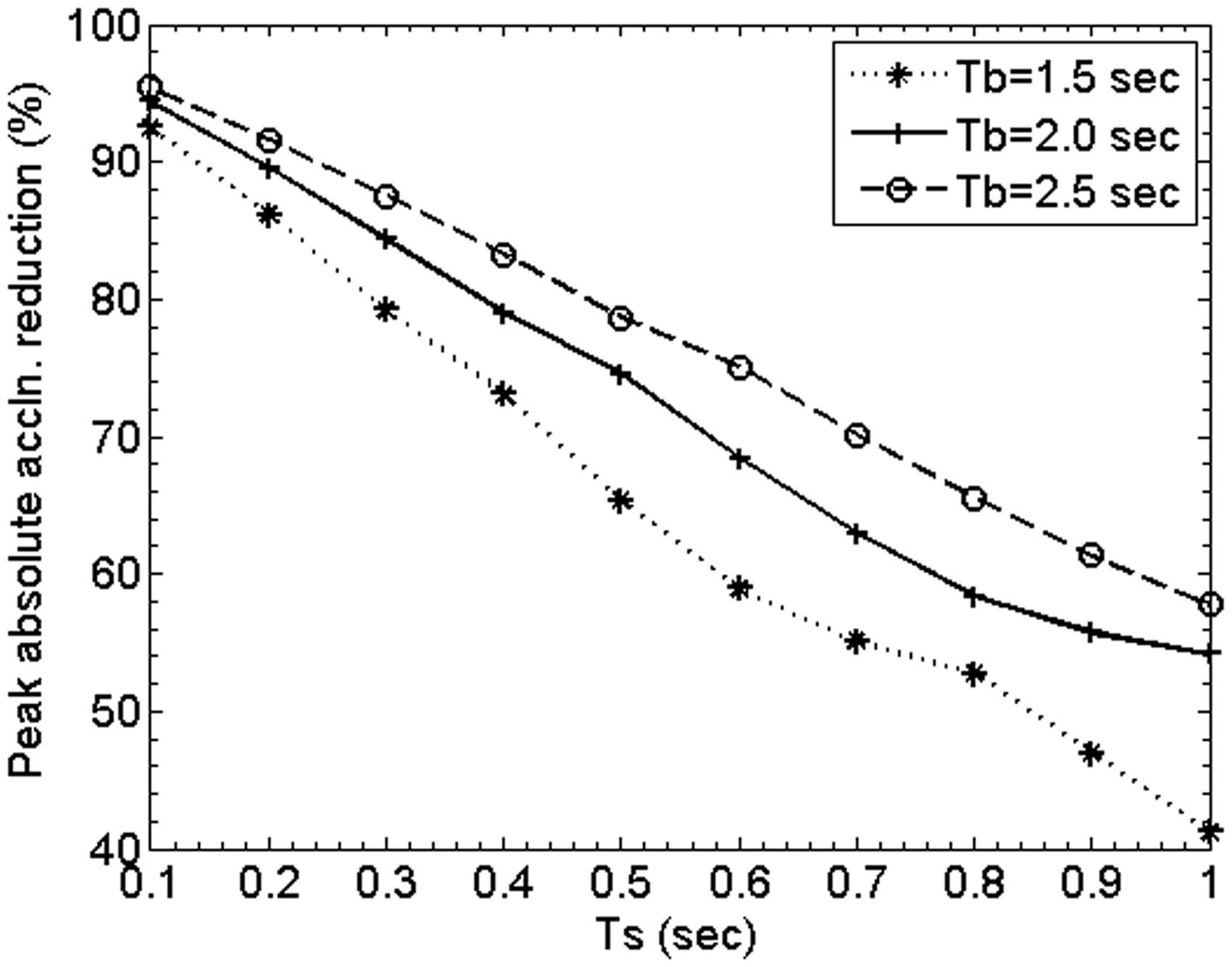
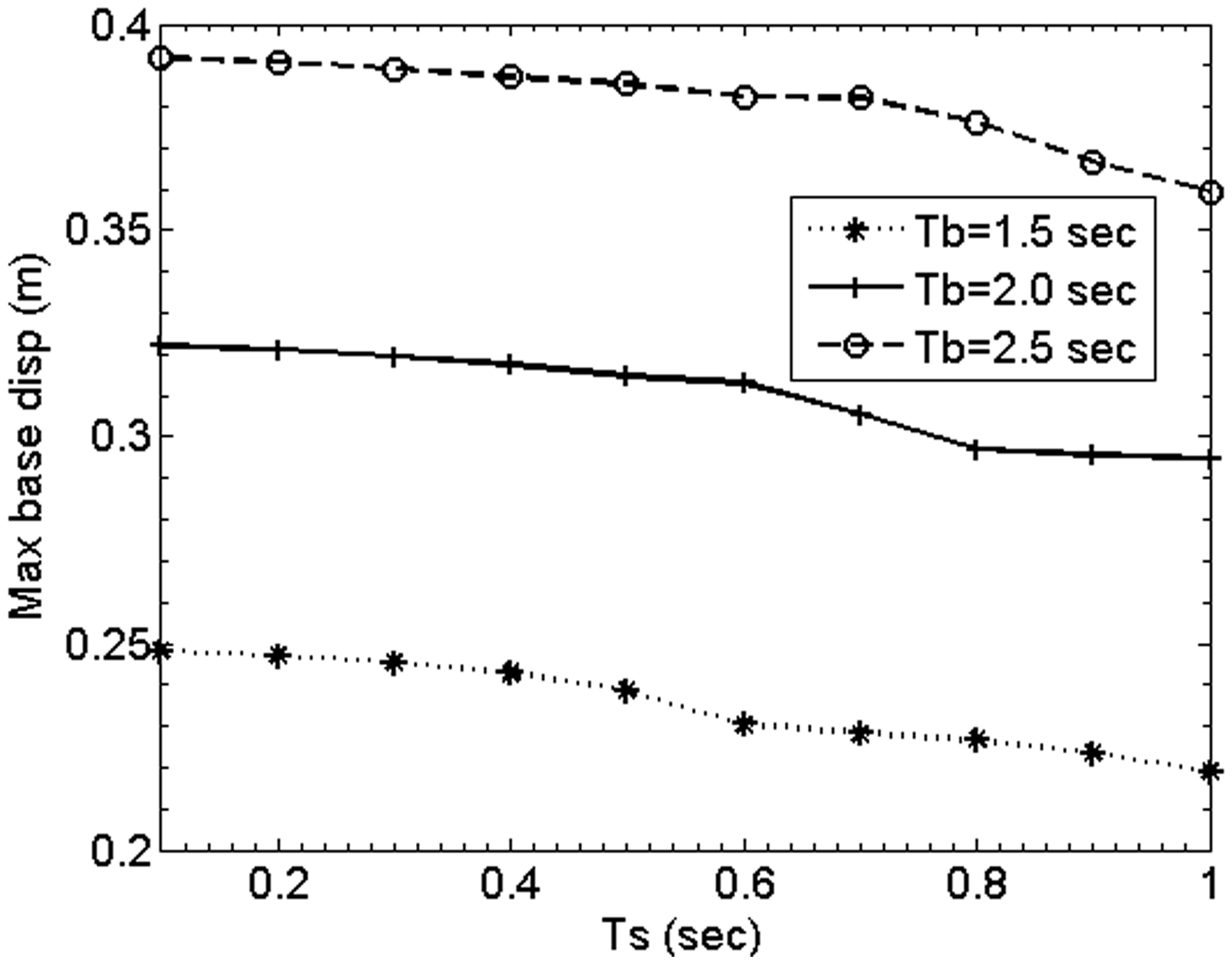
In order to understand the influence of the shape of the bilinear hysteresis loop of the BI, the normalized yield strength (F0) and the rigidity ratio (α) are next considered in the parametric study. First, the variation of peak acceleration reduction with F0 is presented in Figure 9 for three values of Variation of peak acceleration reduction with F0 for different Tb (cases A and C input).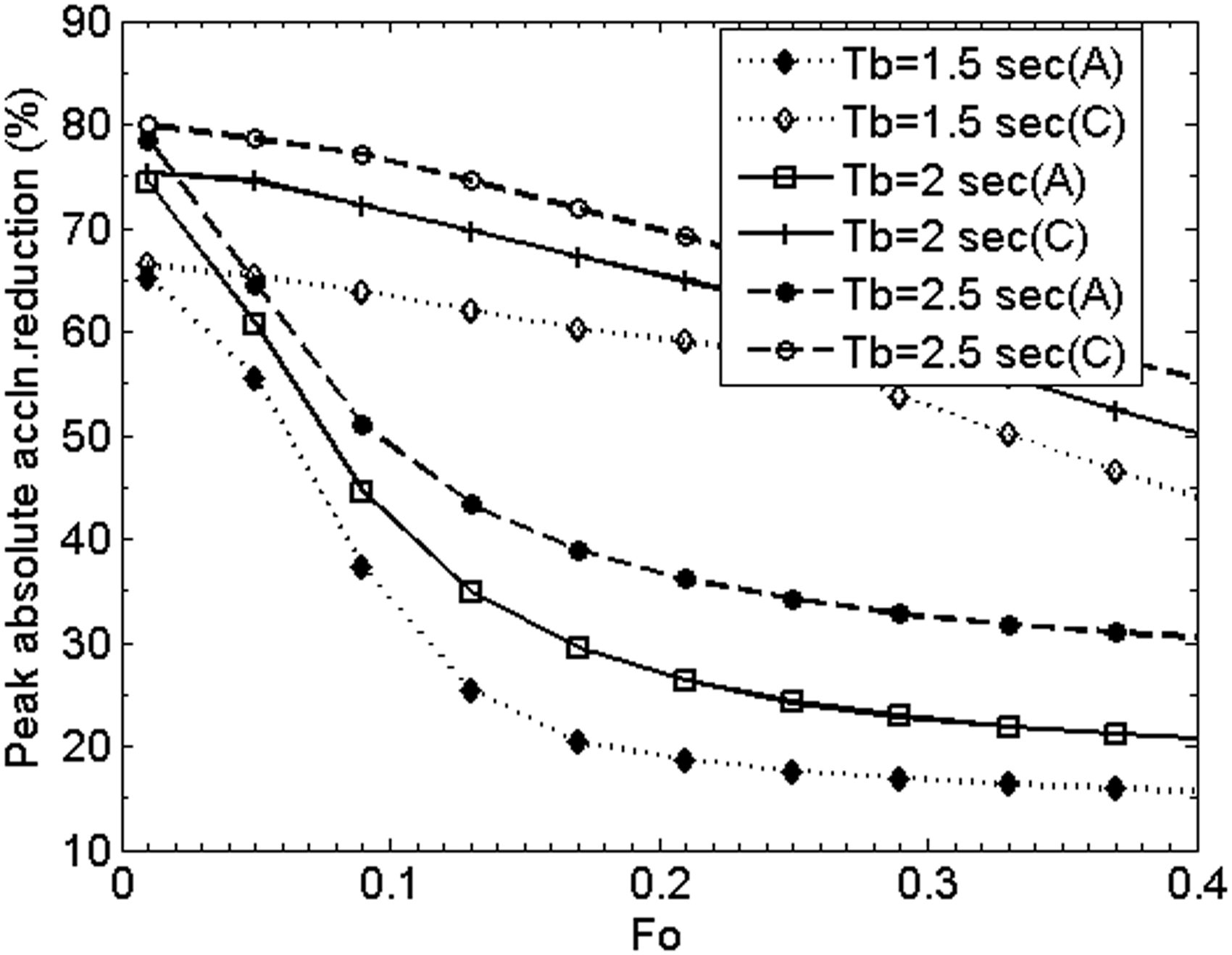
The influence of F0 on the peak base displacement is shown in Figure 10 for case C blast input. Here, the increase in F0 proves beneficial as it reduces the bearing displacement. Similar trends are followed for the other two cases of blast input. The nature of these two figures can be explained by the fact that for higher values of F0 (i.e., for higher yield strength Fy), the isolation system remains more in the elastic state (see Figure 2) which results in a lower flexibility in the structural system and smaller amount of energy dissipation. Consequently, the absolute acceleration of the superstructure increases while the bearing displacement decreases with increase of the isolator characteristic strength. Thus, the lower value of F0 is more advantageous from a peak acceleration reduction point of view. But the resulting higher base drift at such lower F0 values needs to be checked against the peak base displacement limit of that particular BI. Seismic codes such as UBC (1997) and IBC (2000) recommend the permissible limit of peak bearing displacement. Though no such code has been developed so far for the design of a base isolation system for blast vibration control, it can readily be recognized that the peak base displacement has to be controlled. Thus, a constrained optimization problem needs to be solved for the final selection of the value of F0.
Variation of peak base displacement with F0 for different Tb (case C input).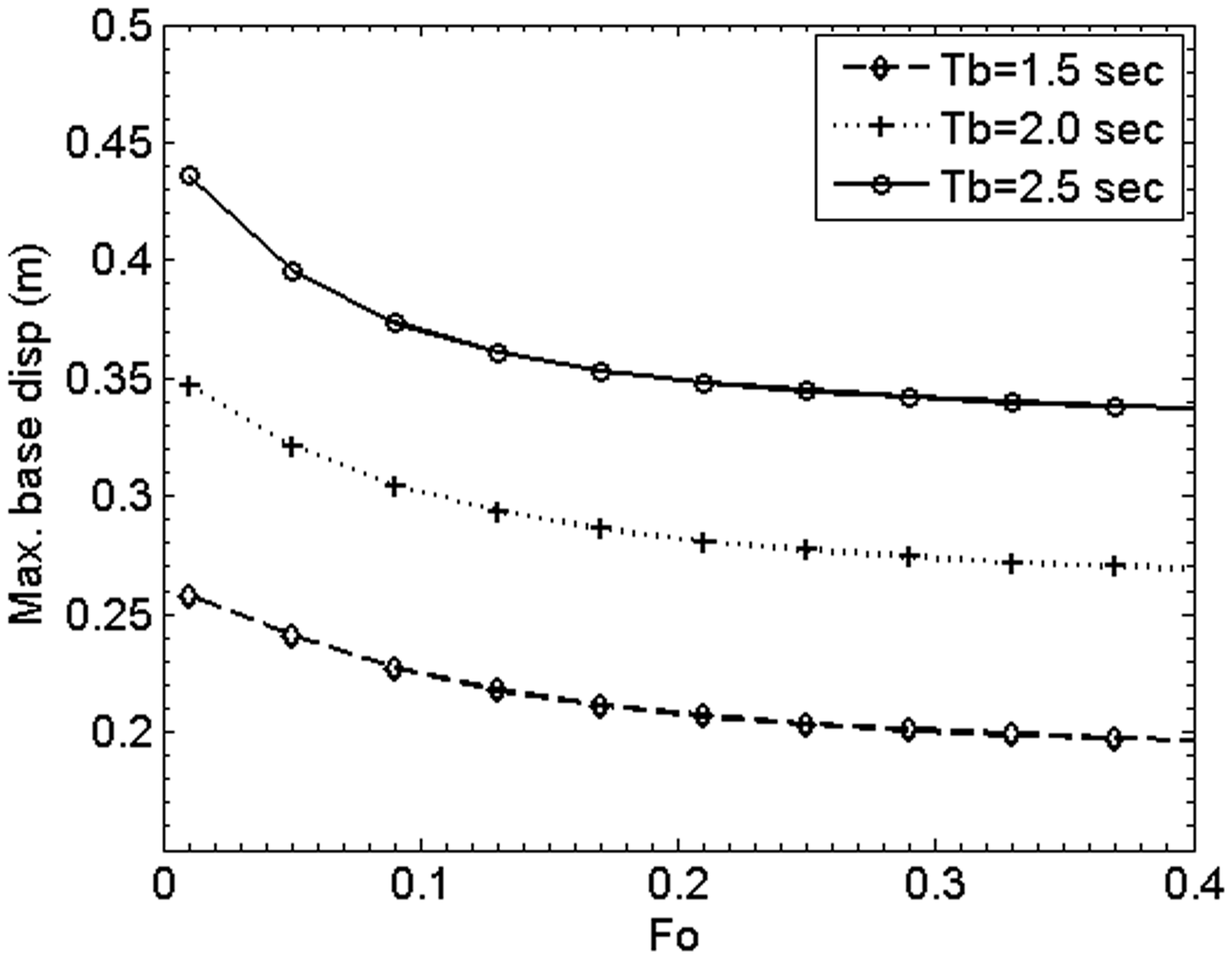
As discussed earlier in Figure 6, the permanent set of the isolator is another parameter of concern for designing the base isolated system under BIGM. The base displacement time histories for the three cases of blast input are thereby plotted for three values of F0 (= 0.05, 0.15, and 0.3) in Figure 11a–c. For this, only one value of Base displacement time histories for three values of F0 for (a) case A blast input (Tb = 2.5 s) (b) case B blast input (Tb = 2.5 s), and (c) case C blast input (Tb = 2.5 s).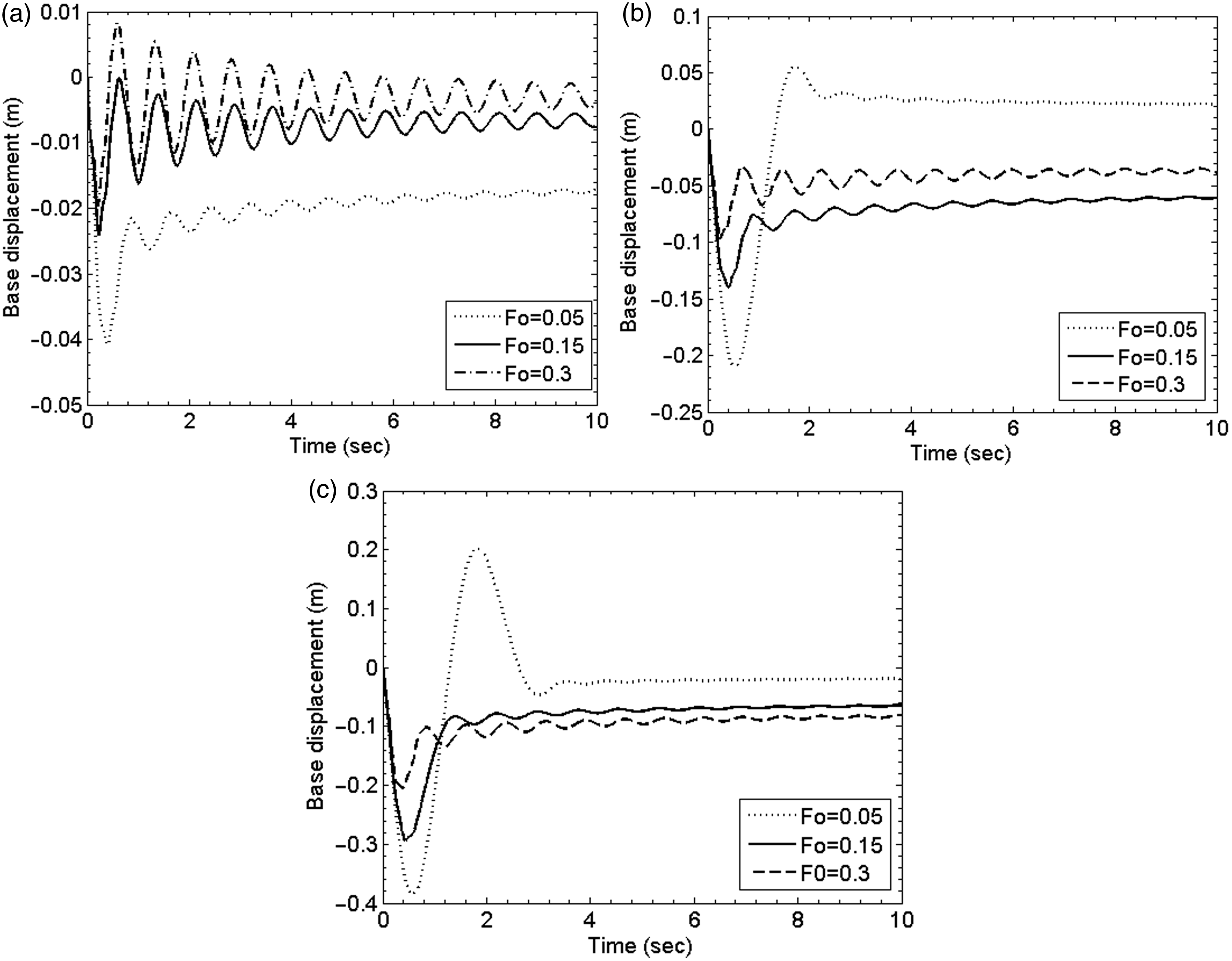
The rigidity ratio (α) is another factor that guides the shape of the hysteresis loop of the BI. The effects of α on the peak absolute acceleration reduction as well as on the base displacement are depicted in Figures 12 and 13, respectively, for the three sets of Variation of peak acceleration reduction with α for different Tb (case A and case C input). Variation of peak base displacement with α for different Tb (case A and case C input). Peak displacement reduction for different F0 and α for five-story base isolated building (case C input). Peak base displacement for different F0 and α for five-story base isolated building (case C input).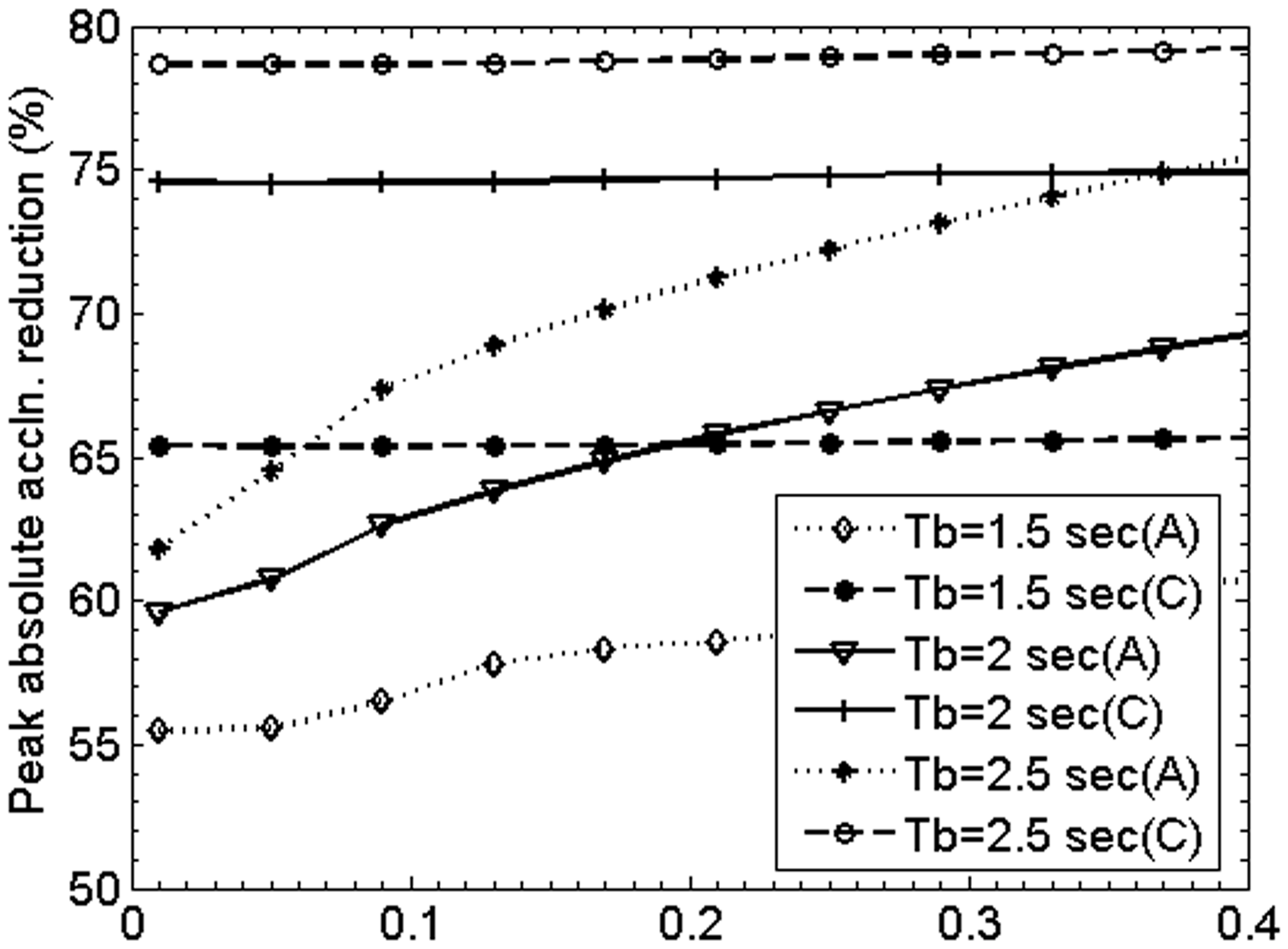
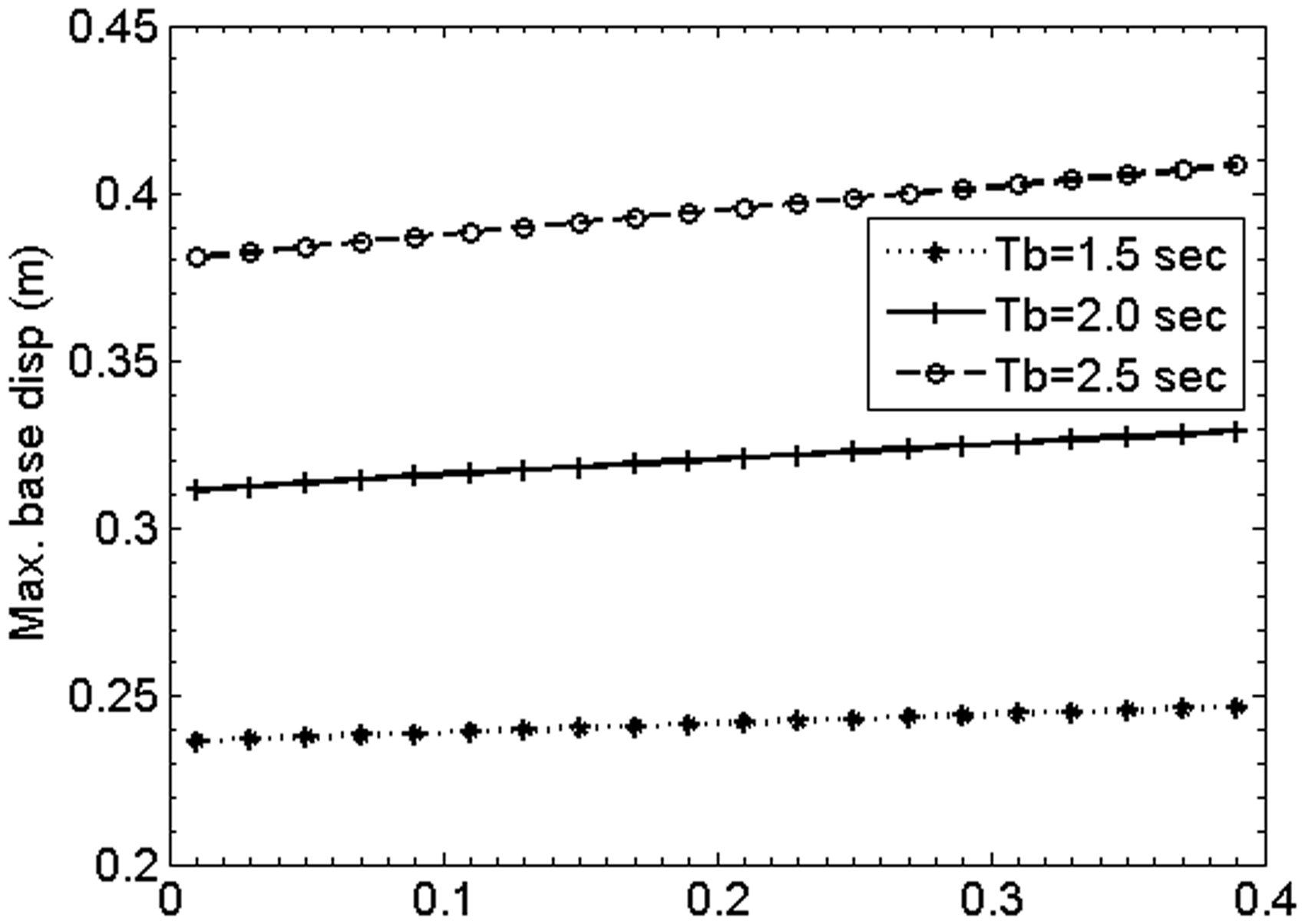
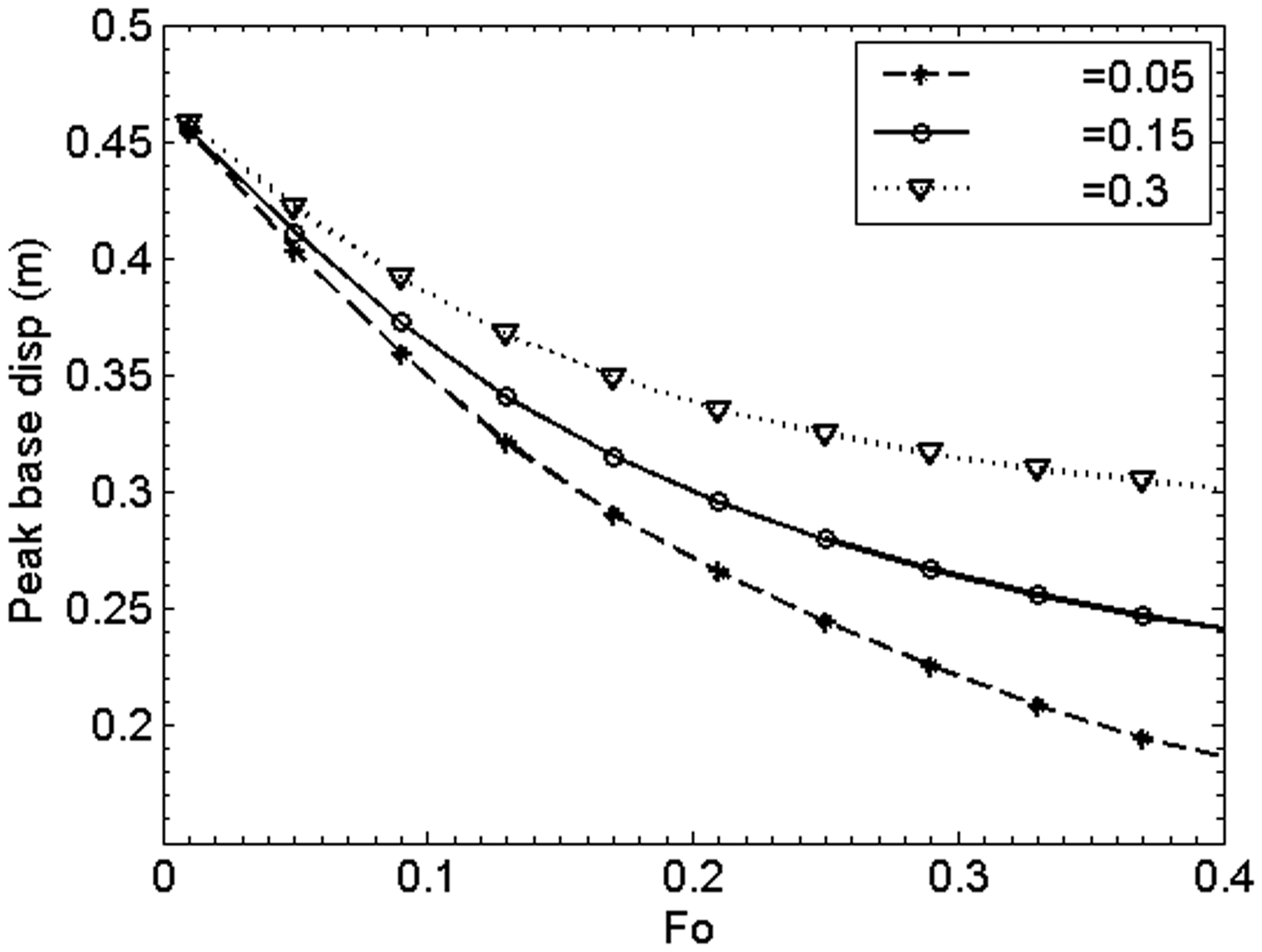
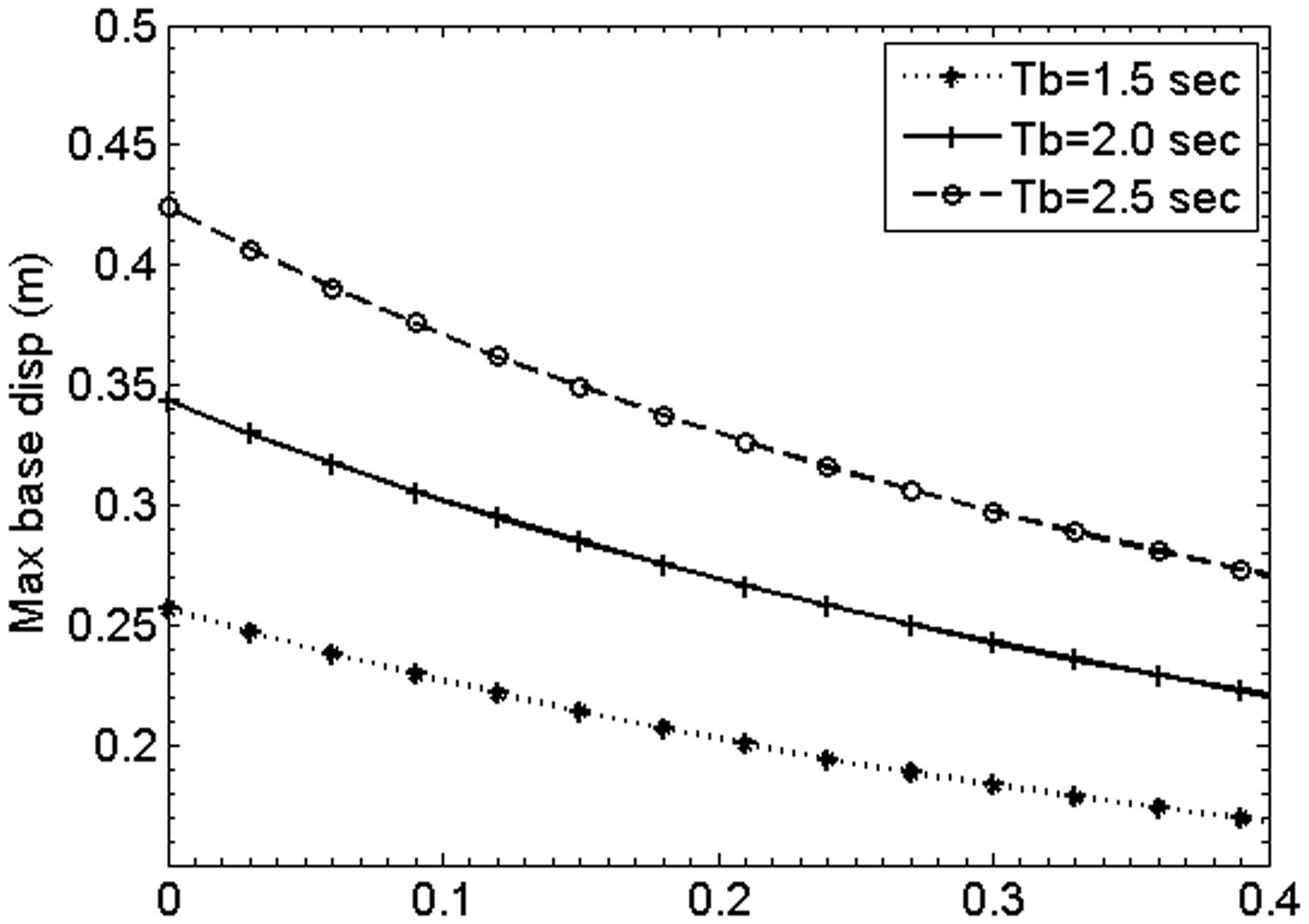
Finally, the effects of the damping ratio of the BI, Variation of peak acceleration reduction with ξb for different Tb (case C input). Variation of peak base displacement with ξb for different Tb (case C input).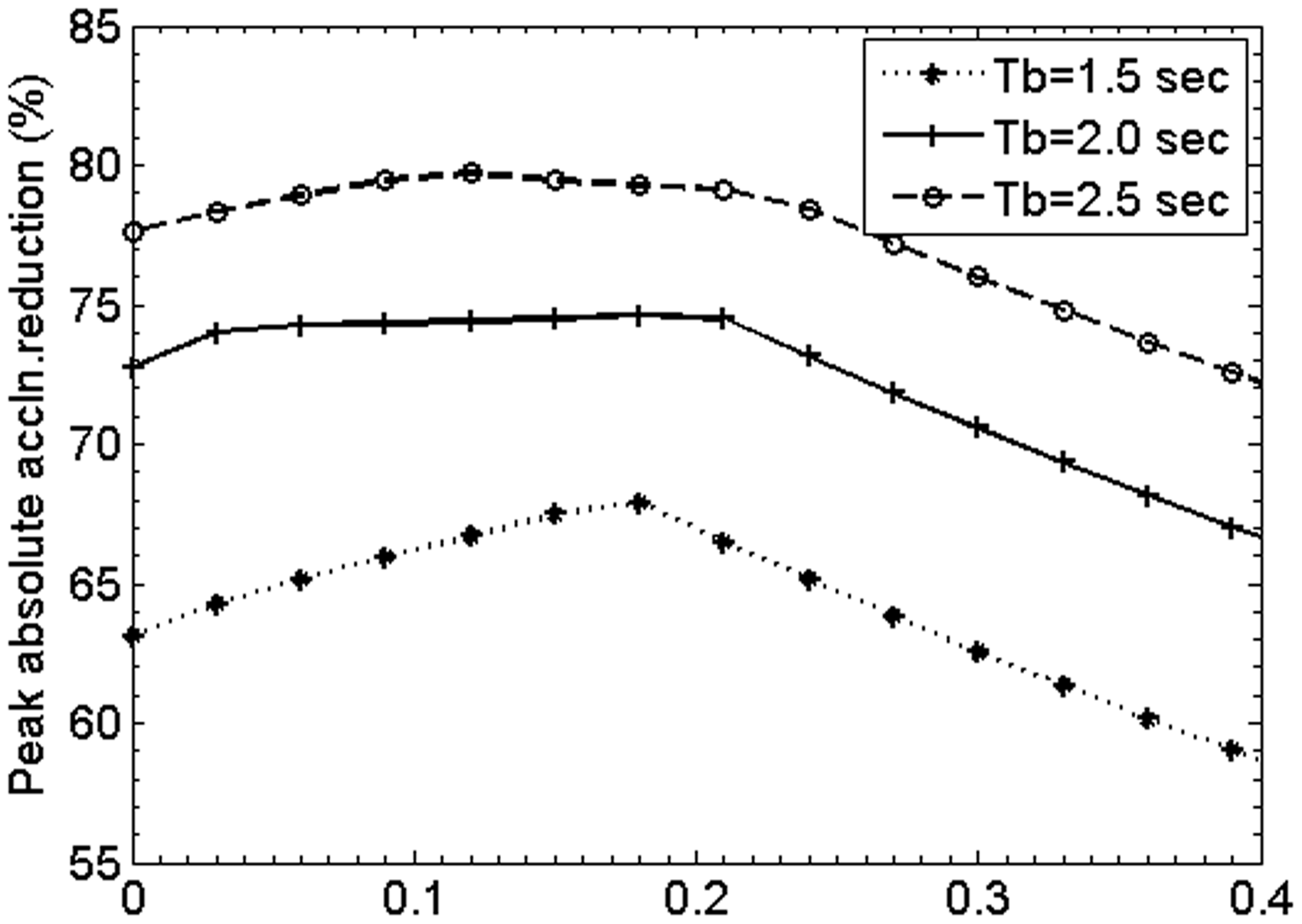
4.2. MDOF system on N-Z type BI
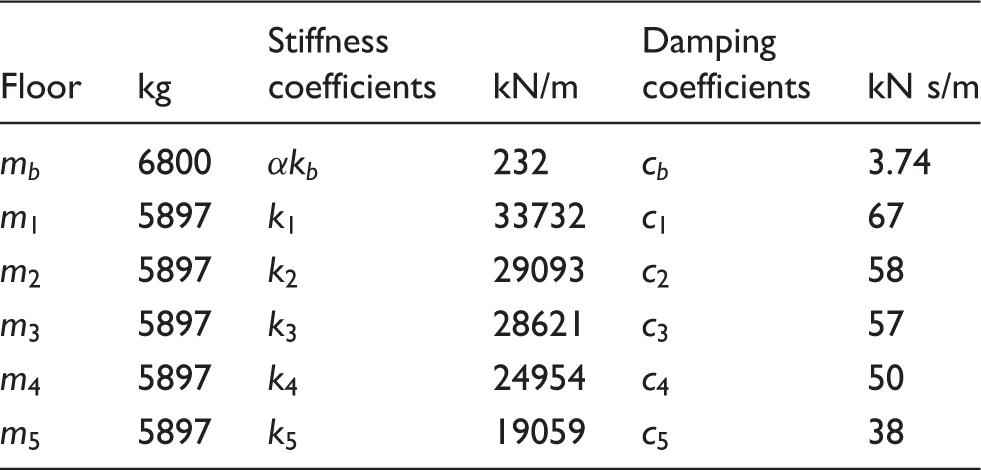
Structural model parameters.
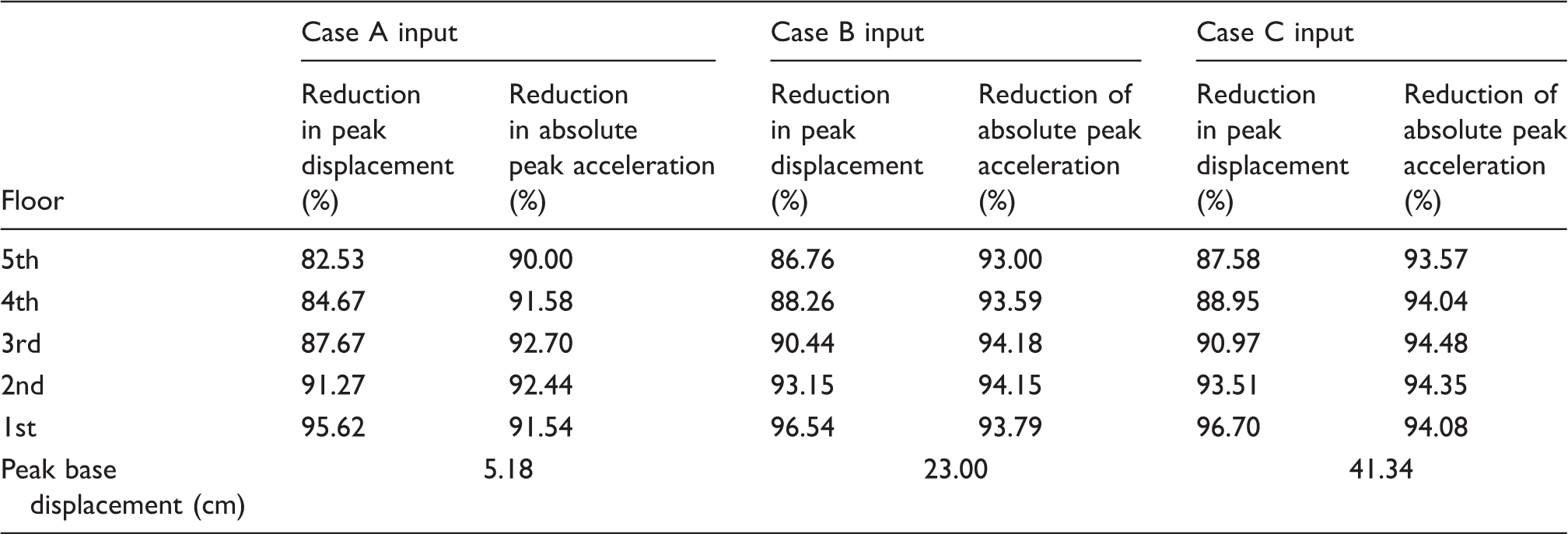
Peak responses reductions of each floors and peak base displacement of five-story base isolated building for different blast input.
Another important aspect of study, especially in case of MDOF systems, is the inter-story drift. It is well known that very low inter-story drift is one of the main advantages in the base isolation design of buildings against earthquake loading. To investigate the inter-story drifts for the underground blast loading, the displacement–time histories of each floor of the five-story base isolated building described above subjected to case C type blast input are presented in Figure 16. It is observed that the inter-story drifts are very small. Hence, the superstructure mounted on the BI behaves practically like a rigid body when subjected to underground BIGM.
Displacement time history of each floor of a five-story base isolated building (case C input).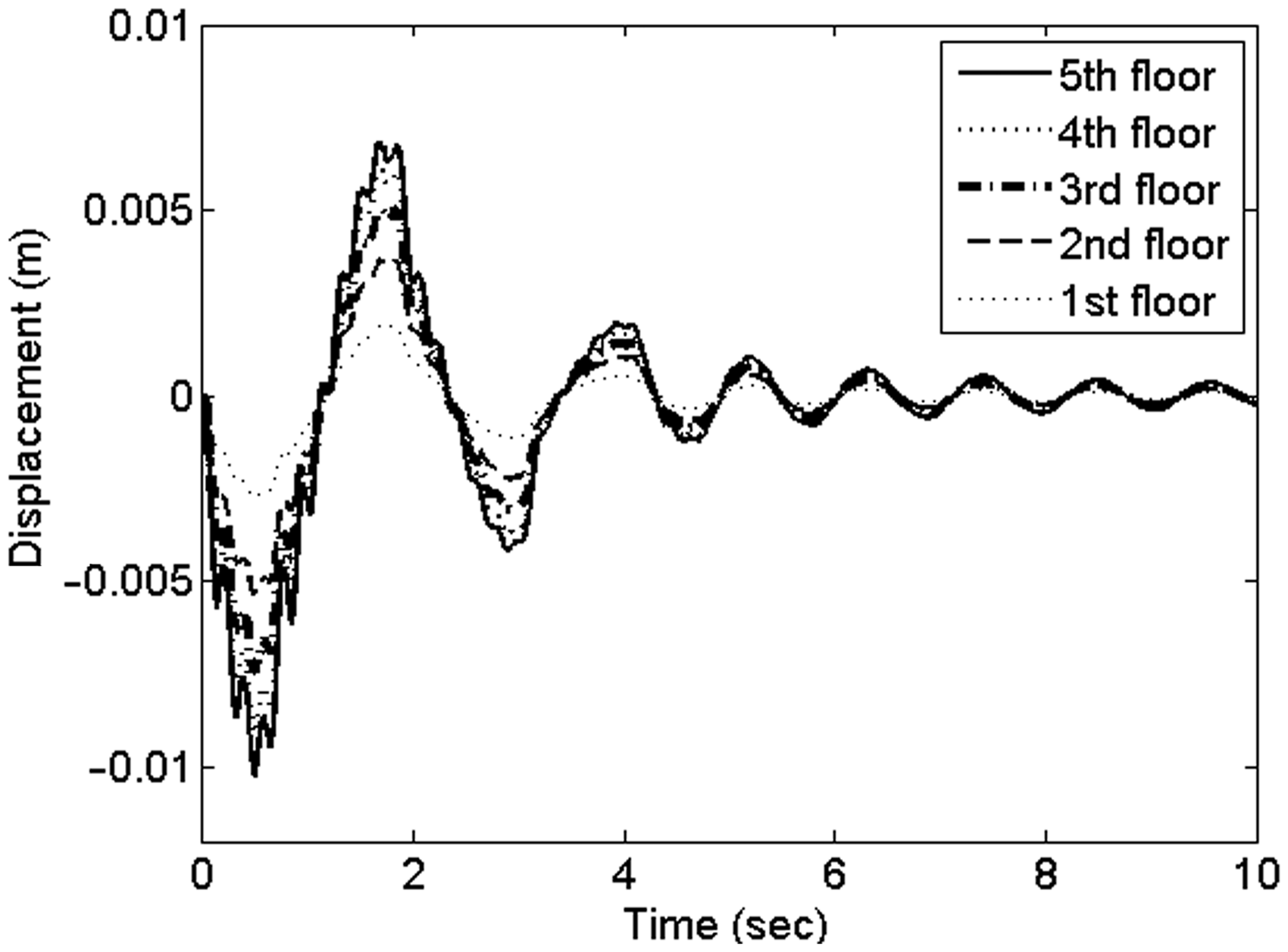
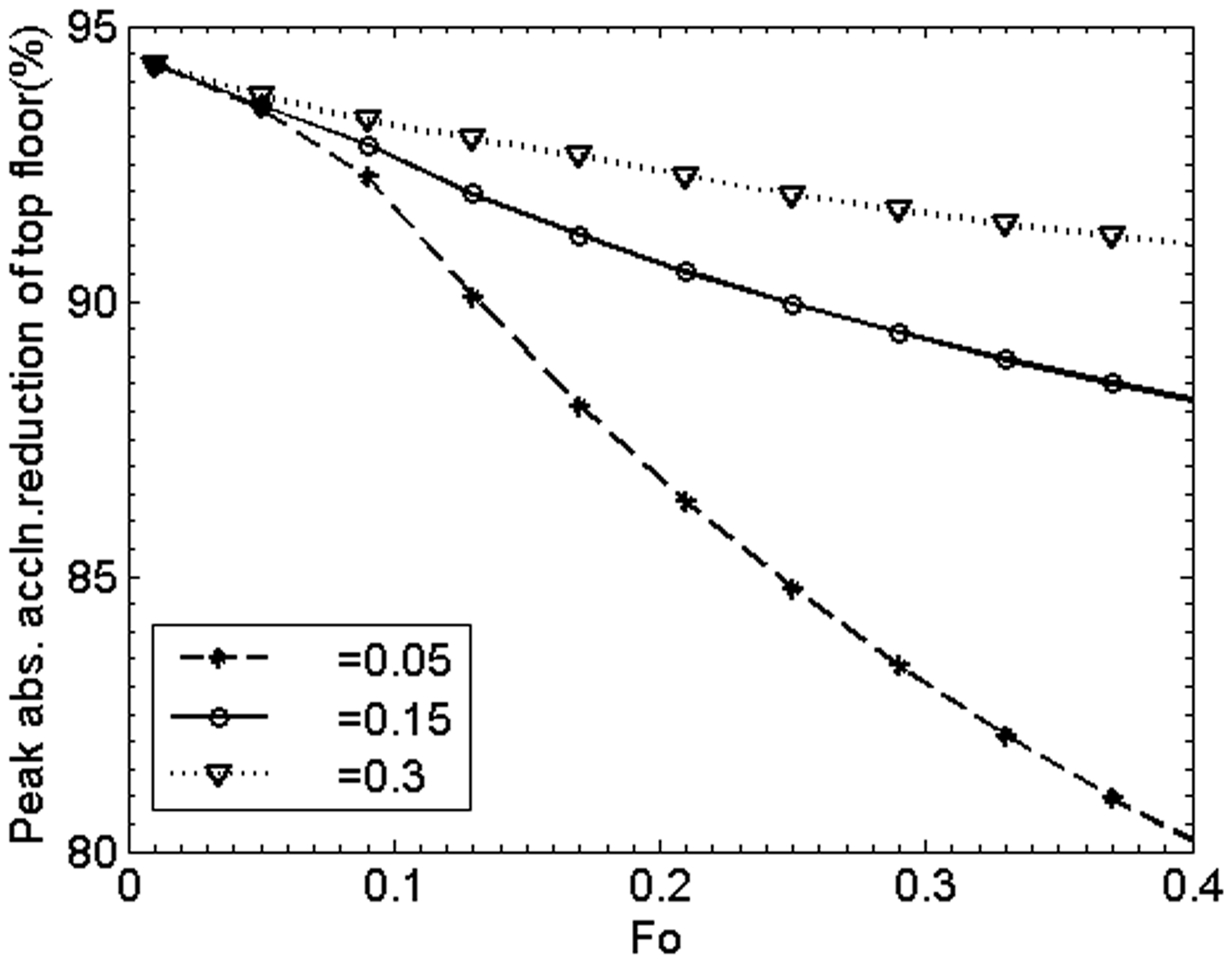
The influence of the normalized yield strength (F0) and the rigidity ratio (α) of the BI on the response of the same five-story base isolated building to the case C input are studied together in Figures 17--19. The peak displacement and peak absolute acceleration reductions of the top floor with respect to F0 are plotted in Figures 17 and 18, respectively. The curves are obtained for three values of α Peak acceleration reduction for different F0 and α for five-story base isolated building (case C input).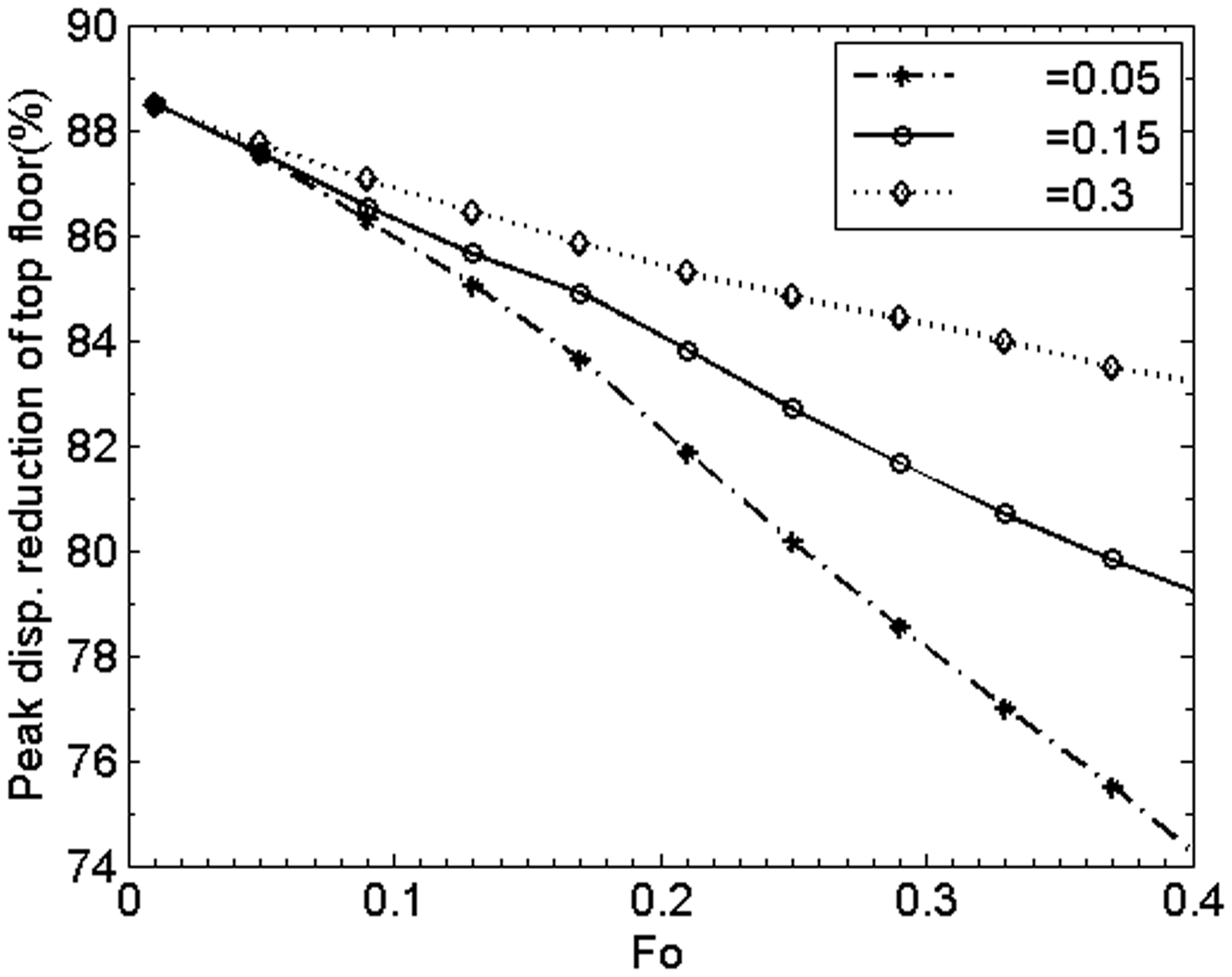
5. Conclusions
The study on the performance of the N-Z type base isolation system for structures subject to underground BIGM reveals that it can provide substantial reduction in the peak absolute acceleration, which is extremely significant for structures subjected to blast, as well as mitigate the peak displacement of the superstructure. The peak bearing displacements, which are often critical in base isolation design, are also computed and it is seen that, unless the blast loading intensity is very high, these values are within the moderate to low range as compared to those typically obtained in case of earthquake excitation.
A sensitivity study on the peak absolute acceleration reduction and peak base displacement to the various important design parameters, e.g., the flexibility of the superstructure, the yield strength, rigidity ratio, and damping ratio is performed for the base isolation system in which the superstructure is modeled both as SDOF and MDOF systems. Parametric studies are also carried out for different intensities of blast input by varying the TNT charge weight. In the parametric study for the SDOF system on N-Z type BI, it is noticed that greater peak absolute acceleration reductions can be achieved for stiffer superstructures for the same value of isolation period. These reductions are also high for higher values of the isolation period (
For the multi-story base isolated building it is seen that a base isolated building almost behaves as a rigid superstructure as inter-story drifts are very small. If all other structural and blast input parameters are fixed, then the post-yield to pre-yield stiffness ratio and the normalized yield strength of the BI play an important role in base isolation design. Here also, by choosing an appropriate combination of the BI parameters, a proper balance between the peak absolute acceleration reduction and the peak base drift as well the permanent deformation of the BI can be achieved.
Thus, depending upon the constraints on the peak displacement and permanent set of the BI, coupled with the response reduction requirement, a judicious combination of F0
Footnotes
Funding
This research received no specific grant from any funding agency in the public, commercial, or not-for-profit sectors.