






Abstract
Axially translating beams are widely seen in engineering applications. An active vibration control strategy based on a modified fuzzy sliding mode control is developed for controlling and stabilizing the motion of the beam. Geometric nonlinearity of the beam is considered. In the development of the control strategy, the governing equation of the beam is transformed into a multi-dimensional dynamic system with the Galerkin method of 6th order. An active control strategy is developed corresponding to the dynamic system, such that the control strategy can be used for multi-dimensional systems. Numerical simulations are performed with application of the control strategy developed. The effectiveness of the active control strategy is demonstrated in controlling and stabilizing the chaotic motion of the translating beam.
Keywords
1. Introduction
Axially translating beams and engineering structures with translating materials have been investigated extensively for their stability, vibration control, and control strategy applications in mechanical and industrial engineering. Significant progress has been accomplished and numerous findings of the investigations have been applied in industrial practices. To increase the efficiency of ultra-high-rise elevators, for example, the linear dynamics and stability of a class of horizontally and vertically translating beams with an attached spring-inertia-damper were investigated by Zhu and Ni (2000). It was concluded by the authors that the stabilization of a translating medium with varying length required the suppression of the amplitudes of the responses.
The effects of the translating speed of the power transmission chains, aerial cableways, textile fibers and paper sheets on their vibration features were also investigated by researchers and engineers. Wickert (1992) quantitatively studied the nonlinear behavior and translating speed of an axially translating beam and string. The author even claimed that higher-order equilibria of the translating beam can help complete the dynamic investigation of the beam.
In the dynamics investigations of translating media, such as high-speed magnetic tapes, band saw and transport cables, the linear equation of motion of a translating beam with constant length between boundaries was derived by some researchers based on the Euler-Bernoulli beam and Lagrangian frame of reference (Zhu, 2002). The rate of change of energies from the constant length of the beam as well as the dynamic stability was also investigated by the researcher. With regard to the existing vibration, which is harmful to cranes, strips in a thin metal-sheet production line and deployable robot, the nonlinear model of a tensioned beam with constant length between boundaries was established by Yang et al. (2005). A robust adaptive vibration control strategy was developed to simply suppress and reduce the undesired vibration of the beam. In the investigation of possibly large vibration of a slender beam, which is held by two different types of supports, the nonlinear governing equations of a Euler-Bernoulli beam were established (Humer, 2013). It was recognized by the author that the frequency of the vibration became lower as the length of the beam became shorter, which was explained by the larger inertia of the portion of the beam.
Generally, the governing equations of the axially translating media are in the forms of partial differential equations. In solving the governing equations, much attention of the previous studies has been paid to dynamic systems of the translating beam with single or two dimensions on translating beams, though some studies suggested the considerations of multi-dimensional dynamic system (Wickert, 1992). The solutions are then employed in developing the control strategies or techniques for controlling the linear and nonlinear vibrations of the axially translating media.
In engineering applications, it is desirable to control the nonlinear or irregular responses of translating beams. Numerous control techniques and theories are available in the field. In 1992, a control theory, namely the theory of sliding modes control (SMC), was proposed. This control theory provides high efficiency in the control of nonlinear systems operated under conditions of uncertainties (Utkin, 1992). A decade later, an improved control strategy, which was developed on the basis of SMC, was developed with implementation of fuzzy logic theories and named as fuzzy sliding mode control (FSMC). Many researchers used the strategy for controlling the nonlinear vibrations of engineering systems, and demonstrated the effectiveness of this control strategy in suppressing the nonlinear responses of the systems (Yau and Kuo, 2006; Kuo et al., 2007; Yau et al., 2010). The FSMC strategy was also used in controlling the chaotic response of a micro mechanical resonator under electrostatic forces applied at both sides of the resonator, modeled as a beam (Haghighi and Markazi, 2009). In their studies, the FSMC strategy demonstrated high efficiency in stabilizing the vibrations of the targeted system. It should be noticed that, the existing FSMC strategy is merely suitable for applying in the systems of first-order Galerkin discretization. Solutions of higher reliability and accuracy require higher order discretization in developing for the solutions. Therefore, the existing FSMC strategy is not applicable to the systems with higher-order discretization. Corresponding to a multiple-dimensional dynamic system, an active control strategy based on FSMC strategy is desired.
In the present research, an active vibration control strategy based on modified FSMC strategy is to be developed to control and stabilize the nonlinear responses of a translating beam which has fixed boundaries. The equations of motion of the beam are established based on von Karman-type equations. In developing the solutions of the beam, the equations in the form of partial differential equations are non-dimensionalized and transformed into six ordinary differential equations via a six-order Galerkin method. Corresponding to the derived multi-dimensional dynamic system, a control strategy is developed based on the FSMC strategy. Applicability and effectiveness of the control strategy developed is evident in the numerical simulations conducted. Some cases of chaotic motion of the beam are considered and the nonlinear motions are suppressed and stabilized with application of the control strategy.
2. Equations of motion
The axially translating beam considered in this research is sketched in Figure l. The equations of motion of the beam are to be derived based on Hamilton’s principle and von Karman-type equations. As can be seen from the figure, the translating beam with pinned-pinned boundaries is allowed to move axially at a constant rate b and thickness h. The x axis is along the mid-plane of the beam. The displacement of any point of the beam along the x- and z- axes are designated as u and w.
The model of the axially extending cantilever beam.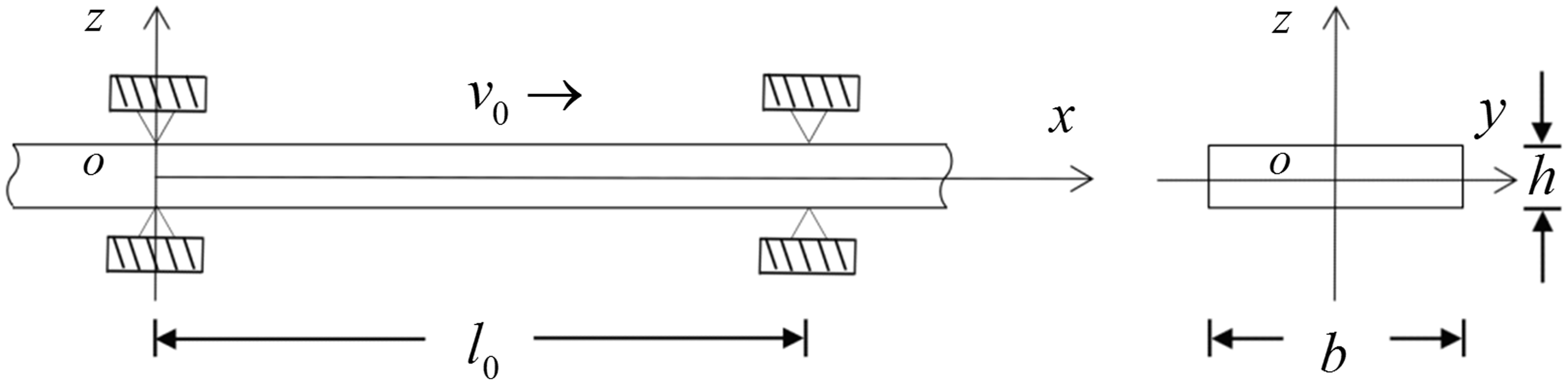
Starting from the origin at the left support of the beam, a position vector,
Thus, the displacement field of the translating beam can be derived as
Taking full differentiation of
Hence, the kinetic energy of the translating beam over a volume V of the beam is expressible as
The von Karman-type equations of strains of large deflection associated with the displacement field, normal to the cross section of the beam along the x direction, in equation (2) can thus be given by
Therefore, the total strain energy of the beam can be given by
The virtual work done by the force due to damping effect is defined as
In the following analysis, Hamilton’s principle will be employed to obtain the nonlinear equations of motion for the translating beam. The mathematical statement of Hamilton’s principle is given by
For the sake of clarity, hereafter, use x, u0, w0 to replace
Associated with the nonlinear dynamic equations and the boundary conditions (Nayfeh and Mook, 1979; Abou-Rayan and Nayfeh, 1993), the strain can be obtained as
Then, substituting equation (13) into equation (11b), the nonlinear differential governing equation of the translating beam in z direction is derived as
3. Non-dimensionalization
To validate the governing equation equation (14) and facilitate the numerical simulations in the consequent sections, the following non-dimensional variables are introduced:
With the non-dimensional variables shown in equations (15) and (16) introduced into equation (14), the non-dimensional governing equation of the translating beam can be expressed as
4. Series solutions
Based on the Galerkin method of discretization, the transverse displacement
Corresponding to the pinned-pinned boundaries of the translating beam,
Substitute the series solution of equation (19) into equation (17), and to assist presentation, replace
5. Control strategy development
With the developed governing equations, boundary conditions and the solutions of the governing equations, an active vibration control strategy can be developed. Based on previous works (Utkin, 1992; Haghighi and Markazi, 2009; Kuo et al., 2007; Dai and Sun, 2012), the proposed active control strategy is developed for the vibration control of a multi-dimensional nonlinear dynamic system shown in equation (21).
For a nonlinear governing equation in the following general form:
With application of the control, it is expected that the vibration of the beam can be controlled.
If the nth Galerkin method is applied in the discretization of the governing equation given in equation (23), a series of 2nd order ordinary differential equations considering the control input U and the unknown external disturbance will be derived as follows:
For a desired vibration or reference vibration expressed as
The fuzzy rule of
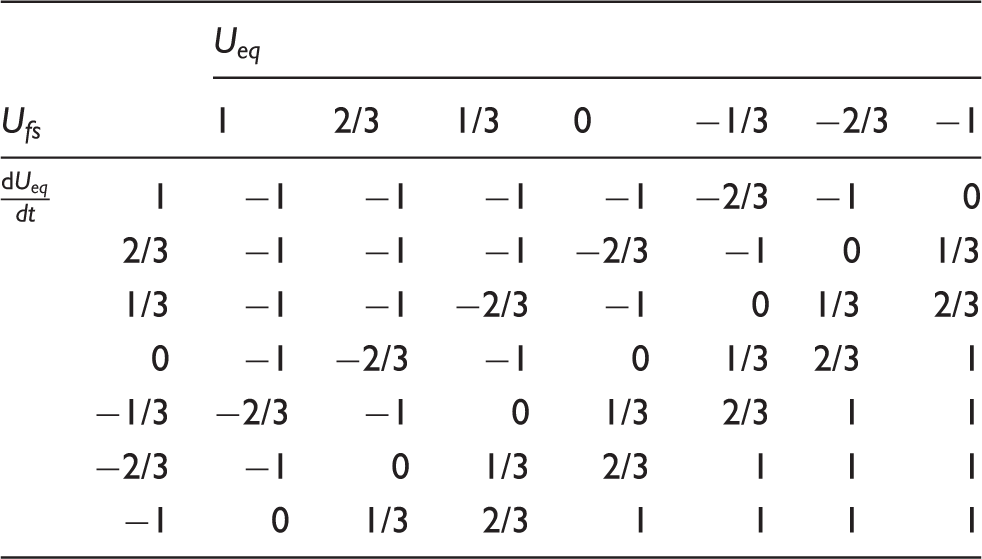
With the control strategy demonstrated in equation (23) to equation (28), the control of an axially translating beam governed by the general governing equation, equation (22), can be realized.
Take the axially translating beam governed by equation (17) as an example. Use the control strategy developed and apply the control input as shown in equation (27), the governing equation with the control input for the beam can be given by the following expression:
where u1, u2, u3, u4, u5 and u6 are derived as follows through the 6
th
-order Galerkin method:
6. Numerical simulations
To demonstrate the applicability and effectiveness of the control strategy developed in the previous section, numerical simulations are conducted for controlling an axially translating beam governed by equation (17). The nonlinear responses of the beam are focused in this research. With the numerical simulations performed, a chaotic motion is found when the beam is translating at certain rates. The proposed active control strategy not only effectively reduces the amplitude of the chaotic motion, but also stabilizes the motion so that the response of the translating beam is controlled to a desired periodic motion. To facilitate the numerical simulation, the 4th-order P-T method (Dai, 2008), is implemented.
The parameters used for the simulations for the responses of the axially translating beam are given as follows:
If the response of a point at
Chaos occurs when the control parameters and the unknown external disturbance take the following values:
The wave diagram of wp before and after the application of the control strategy.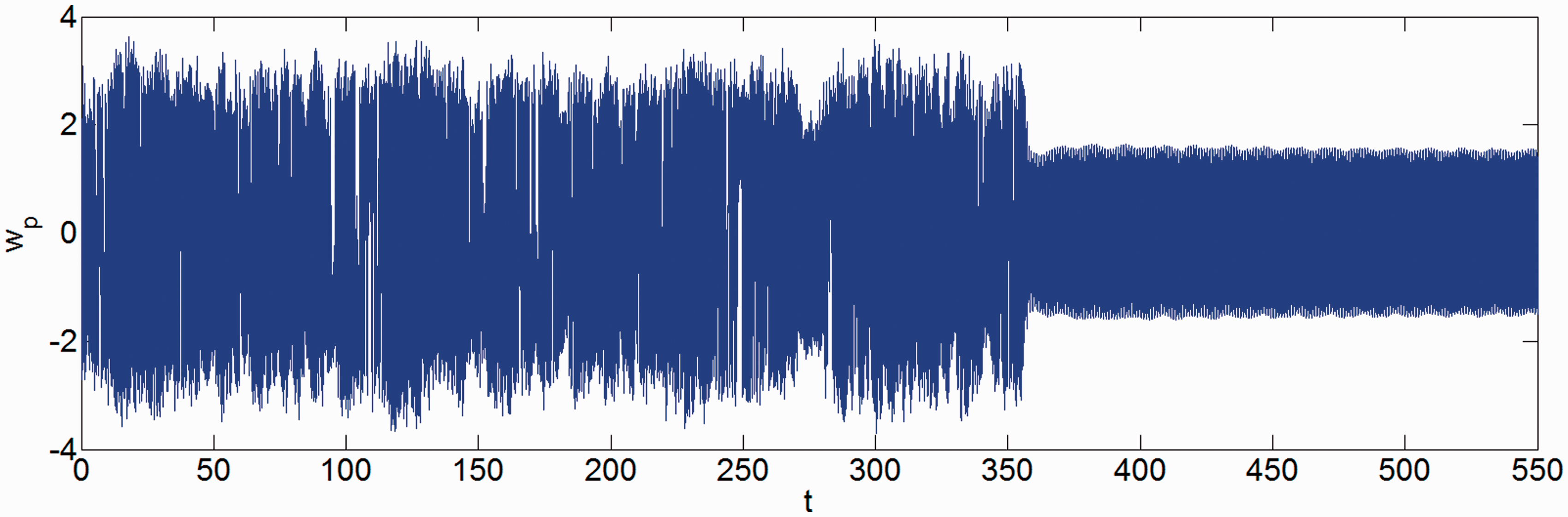
Starting from
Figure 3 shows the phase diagram of the motion of the beam at the selected point before the application of the control strategy, to demonstrate the chaotic response of the axially translating beam. As can be seen from Figure 3, the maximum amplitude of the vibration of the axially translating beam is more than 3.5, or in other words 3.5 times the thickness of the beam. Therefore, an effective control strategy, corresponding to the six-dimensional dynamic system, is needed for the vibration control of the beam.
The phase diagram of wp before the application of the control strategy.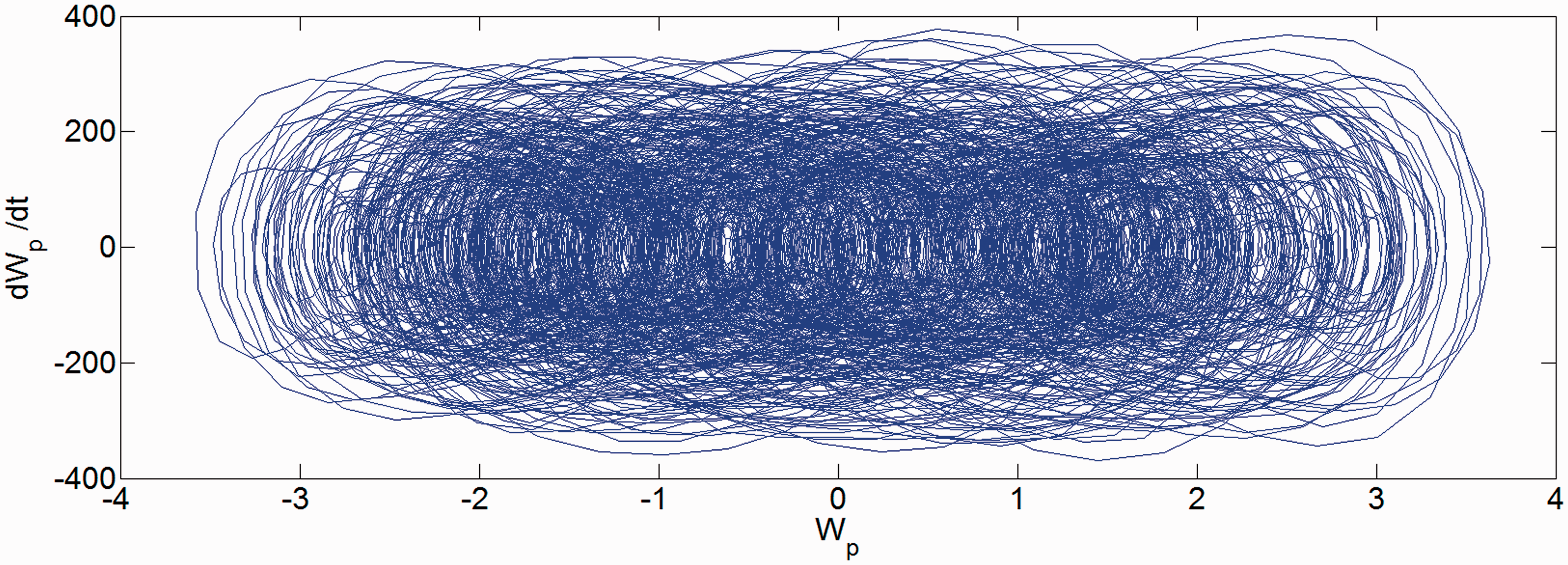
It may also be significant to see the displacements of the beam corresponding to each of the solutions after the application of the 6th-order Galerkin method. The responses of the beam represented by w1, w2, w3, w4, w5 and w6 are shown in Figure 4(a–f). As can be seen from the figures, the responses of the beam are all chaotic before the application of the control strategy. It is interesting to notice that the amplitudes of the responses are monotonically reduced from in Figure 4 (a–f), as expected. However, it should be noticed that the maximum amplitude of the response of the first vibration mode shown in Figure 4(a) is close to four times the thickness of the beam, while the maximum amplitude shown in Figure 4(f) is close to 0.5 times the thickness of the beam. Based on the numerical results, the response of the sixth vibration mode of the beam is not negligible. Therefore corresponding to the selected axially translating speed in this case, at least n = 6 should be chosen in the Galerkin method of discretization.
(a) The wave diagram of w1 before the application of the control strategy; (b) the wave diagram of w2 before the application of the control strategy; (c) the wave diagram of w3 before the application of the control strategy; (d) the wave diagram of w4 before the application of the control strategy; (e) the wave diagram of w5 before the application of the control strategy; (f) the wave diagram of w6 before the application of the control strategy.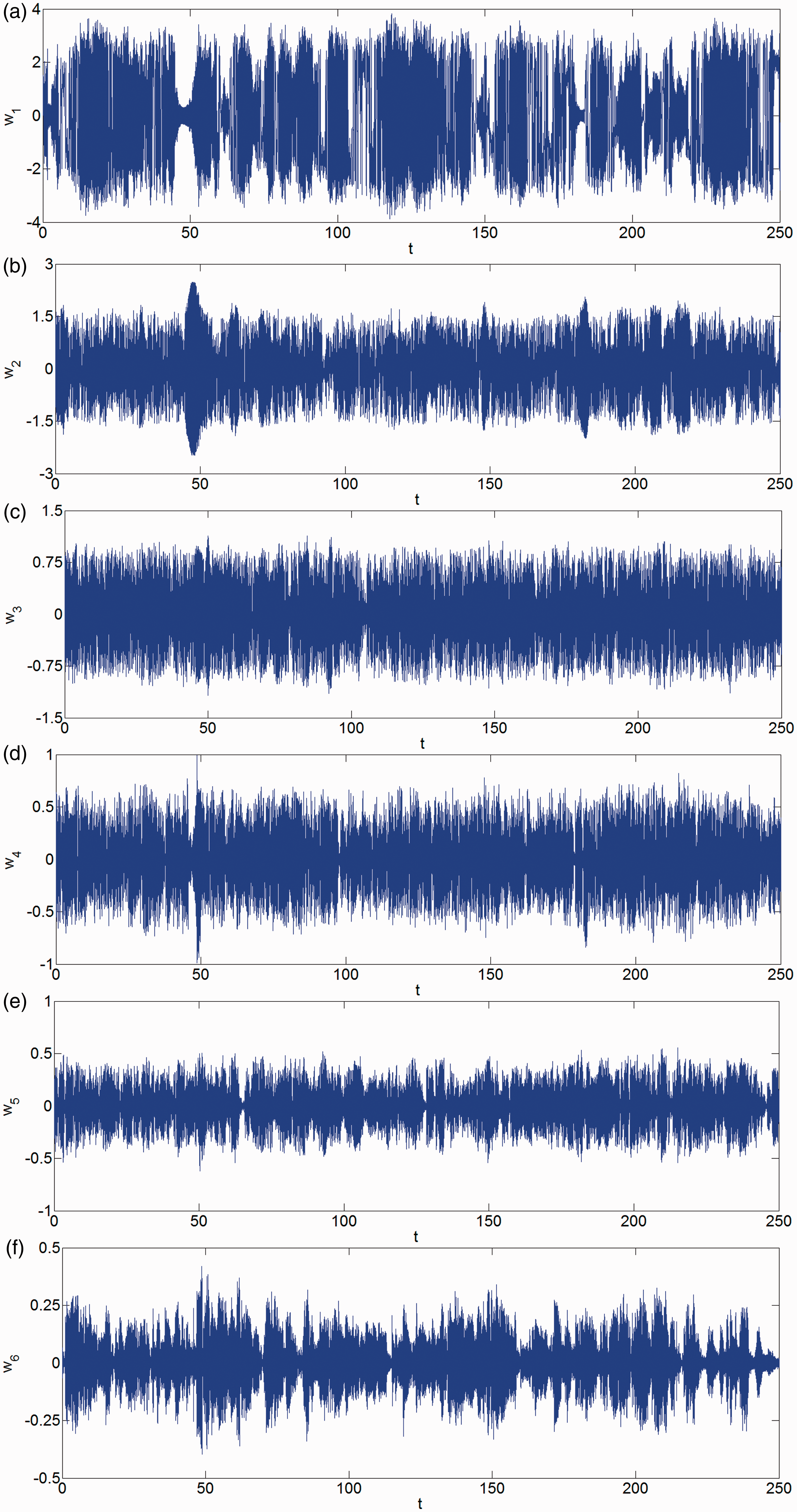
After the application of the control strategy, the responses of the beam at the translating speed The wave diagram of wp after the application of the control strategy. (a) The wave diagram of w1 after the application of the control strategy; (b) the wave diagram of w2 after the application of the control strategy; (c) the wave diagram of w3 after the application of the control strategy; (d) the wave diagram of w4 after the application of the control strategy; (e) the wave diagram of w5 after the application of the control strategy; (f) the wave diagram of w6 after the application of the control strategy.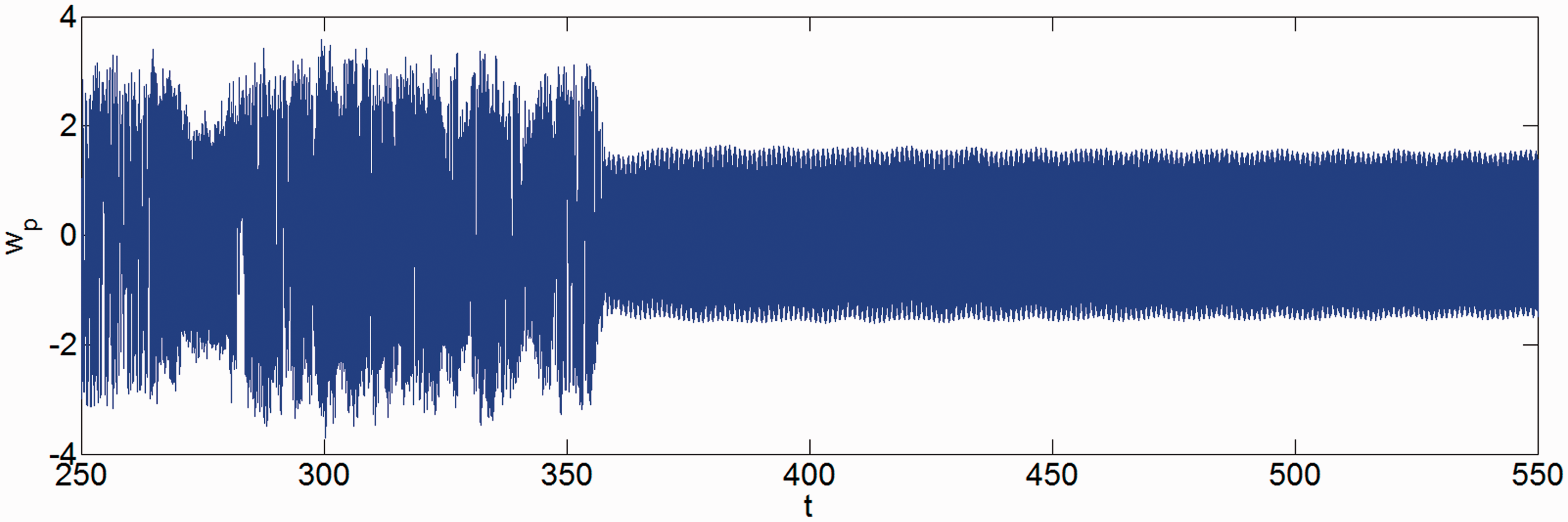
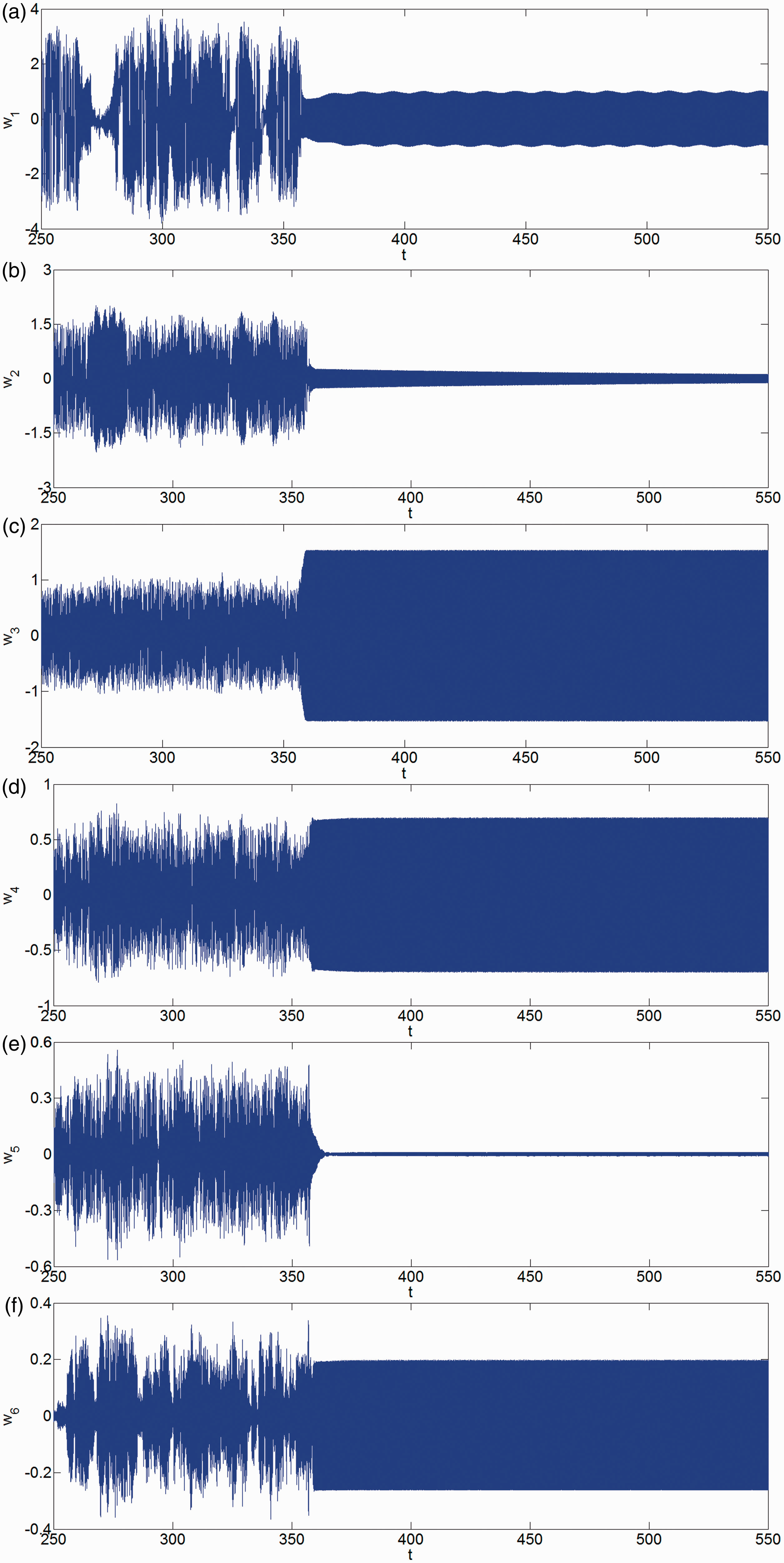
From Figure 6(a–f), the displacements are shown in terms of w1, w2, w3, w4, w5 and w6. Based on these figures, through the application of the control strategy, each of the displacements of the axially translating beam are gradually stabilized from a chaotic motion into a periodic one. However, it can be seen from these figures, the amplitudes of the displacements are different and not monotonically reduced from w1 to w6, though they are all stabilized eventually. Also, it can be seen from Figure 6(b) that stabilization of w2 takes longer than the others. It should be noticed that all these stabilizations including the variations contribute to the control and stabilization of the translating beam as described by wp of equation (31). It should be noticed the maximum amplitude of the response of the first vibration mode shown in Figure 6(a) is about 1 time the thickness of the beam, while the maximum amplitude shown in Figure 6(f) is about 0.3 times the thickness of the beam. That is, after the vibration of the beam has been stabilized, the response of the sixth vibration mode of the beam has become more significant. Thus corresponding to the selected axially translating speed in this case, a six-dimensional nonlinear dynamic system should be derived in the Galerkin method of discretization.
Figure 7 shows the comparison between the actual response of the beam wp and the reference signal wr applied. It can be seen that the reference signal wr is perfectly periodic with respect to time t. It can also be seen from the figure that the maximum amplitude of the beam’s response slightly varies after the stabilization of the beam with the application of the control strategy. However, as shown in the figure, the maximum amplitude of the beam is very close to that of the reference signal and the response of the beam is fairly close to periodic following the pattern of the reference signal, as desired.
The difference between wp (denoted with the continuous blue line) and wr (denoted with the yellow dash line) in wave diagram.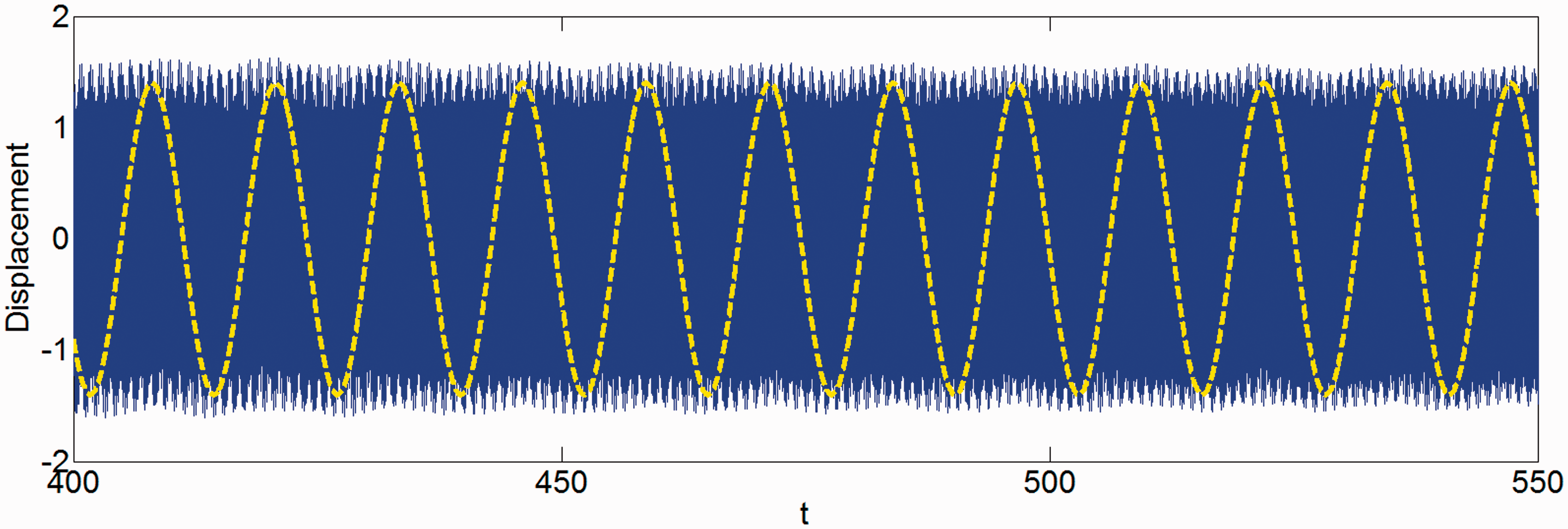
Figure 8 shows the control input U. Initially, the control input displays a non-periodic wave diagram for a short period of time corresponding to the time period of stabilization of the beam motion after the application of the control strategy. The maximum value of the control input in this period is close to The control input U.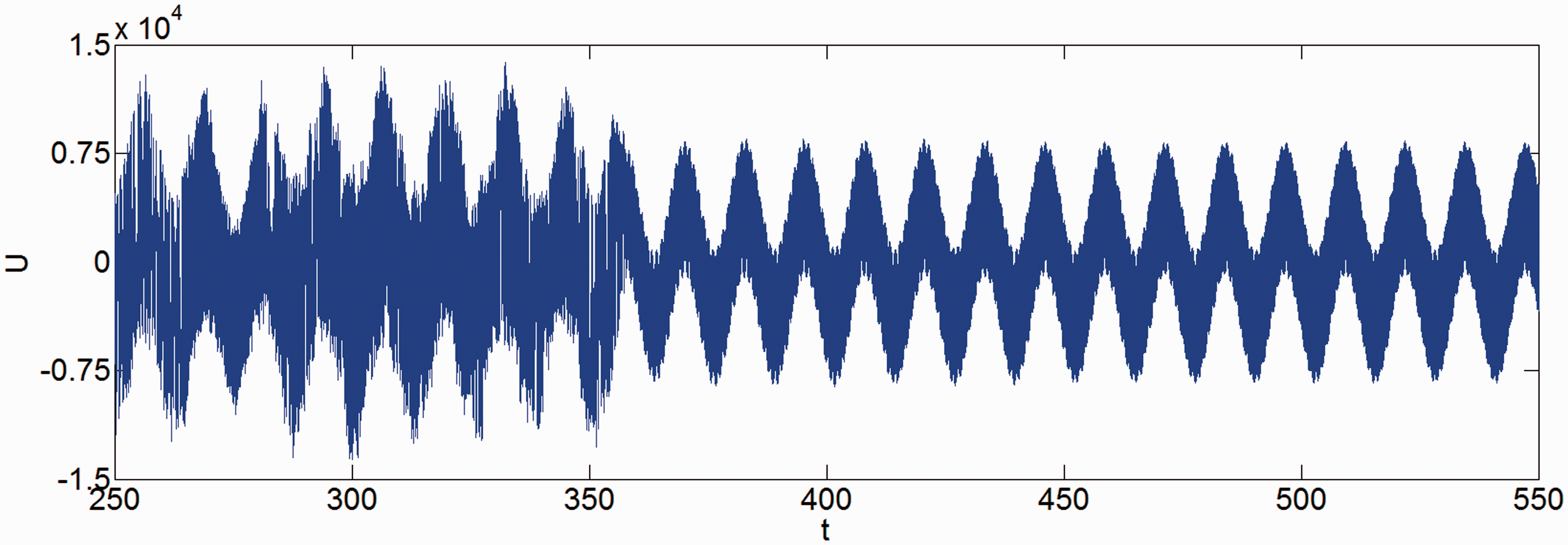
7. Conclusion
An active control strategy is developed in this research to control and stabilize the nonlinear motion of an axially translating beam, on the basis of a modified fuzzy sliding mode control strategy. The governing equation of the geometrically nonlinear beam is converted into a six-dimensional dynamic system and the control strategy is then developed in relating to the dynamic system converted with the application of the Galerkin method. The control strategy developed may therefore be applied to control multi-dimensional dynamic systems. The control strategy may also be used to control the nonlinear systems with external disturbances. Such a control strategy is not seen in the current literature. The numerical simulation with application of control strategy shows the effectiveness of the strategy. The research conducted will be beneficial to the engineering applications of vibration control for multi-dimensional nonlinear dynamic systems.
Footnotes
Acknowledgement
The authors would like to acknowledge with great appreciation the support from the National Science and Engineering Research Council of Canada (NSERC) and National Natural Science Foundation of China (Grant No. 11272270). The support of the Nonlinear Science research team at the Sino-Canada Research Centre for Noise and Vibration Control were significant to the performance of this research.
Funding
The students involved in the research are paid by some of the findings available to the research team, as indicated in the acknowledgement.