







Abstract
Subspace-based methods for estimation of modal parameters are briefly reviewed in this study and a time-varying modal parameter identification algorithm, based on finite-data-window Projection Approximation Subspace Tracking, is presented to investigate the time-varying modal parameters of a trapezoidal titanium-alloy plate in temperature-varying environments. An experiment conducted on a steel beam with a removable mass is used to confirm the proposed method with a brief discussion on the factors of this method. Two groups of experiments are conducted to reveal the effects of varying temperature and heating speed on the natural frequencies of the plate, and the identified natural frequencies evidently show the effect of thermal stresses caused by temperature gradients in experiment.
Keywords
1. Introduction
Hypersonic unmanned vehicles, such as missiles and rockets, experience dramatically temperature-varying fields, and the elasticity modulus and Poisson’s ratio are temperature-dependent (Jeon et al., 2011; Kehoe and Synder, 1991; Kehoe and Deaton, 1993) while thermodynamic effects are frequently ignored in literature. Simultaneously, the studies (Avsec and Oblak, 2007; Hios and Fassois, 2009; Marques et al., 2002) have reported that even a slightest temperature change would result in huge alteration of the modal parameters because a slightest temperature change would cause severe stress when structures are over-constraint. Even though the coupled thermo-elastic dynamics (Guo et al., 2009, 2011) is discussed, the model is just sufficient to analyze a beam in the temperature-constant environment. To the authors’ knowledge, no literature can be found on the effect of continuously varying temperature on modal parameters of structures in temperature-varying environments. Since structural dynamics is important and the modal analysis can provide an insight into structural dynamics, which is widely used in health monitoring (Liu et al., 2011;Verboven et al., 2004; Whelan et al., 2011), damage detection (Banan and Mehdi-pour, 2007; Niemann et al, 2010) and so on, it is necessary to process response signals as an inverse problem (Poulimenos and Fassois, 2006, 2009) for estimation of time-varying modal parameters. However, the conventional modal parameters are invalid for time-varying systems, so ‘pseudo modal parameters' and the subspace-based identification algorithm (Liu, 1999; Liu and Deng, 2006) are proposed by adopting ‘time frozen' technique. In terms of the ‘time frozen' technique, the modal parameters are assumed to slowly change, so the subspace-based identification algorithm appears to handle a series of time-invariant models constructed by the response signals. Pang et al. (2005) proposed a revised version of the algorithm proposed by Liu (1999) and Liu and Deng (2006). However, the methods by Liu (1999) and Liu and Deng (2006) and Pang et al. (2005) are not suitable to track modal parameters on-line, because the algorithms require many groups of experiments under different excitation or initial conditions.
Another subspace-based algorithm for estimation of time-invariant modal parameters (Bosse et al., 1998; Tasker et al., 1998), requiring only one experiment, takes the advantage of on-line identification. The algorithm herein could find its origin in 4SID (subspace-based state-space system identification) algorithm (Kim and Lynch, 2012; Overschee and Moor, 1994) and 4SID method, directly using the measured signals, provides numerically reliable state-space models for complex dynamical systems. In the subspace-based modal parameter identification algorithm (Bosse et al, 1998; Tasker et al, 1998), Singular Value Decomposition (SVD) is used to construct signal subspace while SVD requires a large compute load and memory space. So an algorithm for time-varying modal parameter extraction (Pang et al, 2005) is developed by adopting Projection Approximation Subspace Tracking (PAST) (Yang, 1995) instead of SVD for a lower compute load and memory space. PAST converts a high-order unconstrained minimization problem into a lower-order one by projecting subspace matrix on signal vector and then the optimization problem can be solved by the recursive least squares (RLS) technique. However, RLS suffers the problem of data saturation, consequently leading to PAST losing its tracking ability. Motivated by Ding’s work (Ding and Xiao, 2007), in which the finite-data-window least squares technique (Ljung, 1999) is employed to solve the problem of data saturation, finite-data-window PAST is derived and applied in the time-varying modal parameter identification algorithm based on subspace tracking.
The correspondence is organized as follows. Section 2 states the time-varying modal parameter identification algorithm based on the finite-data-window PAST, and an experiment conducted on a steel cantilever beam is used to confirm the identification method with a brief discussion on the factors of the proposed method. Thermal effect on the natural frequencies of a trapezoidal TA15 titanium-alloy plate in temperature-varying environments is discussed in section 3. Conclusions and further investigations are drawn in section 4.
2. Modal parameter extraction based on subspace tracking
2.1. Updating the discrete input and output vectors
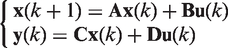
The discrete state-space model of an n/2-order linear time-invariant dynamic system is expressed as follows
Constructing Hankel matrices with the discrete input and output vectors respectively, we have
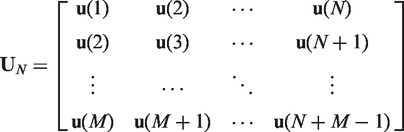
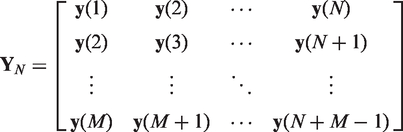

It would cost a large computation load and memory space if SVD is used to track signal subspace. If


2.2. Subspace tracking and estimation of modal parameters
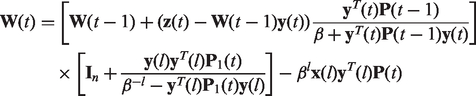
As stated above, RLS suffers the problem of data saturation, which would cause PAST to lose its tracking ability. So the finite-data-window technique is employed. Similar to the cost function (Yang, 1995), the truncated cost function is considered.

where

Applying RLS method to solve equation (8), we have











2.3. An example
To validate the proposed method, an experiment conducted on a steel cantilever beam of The steel cantilever beam with the removable mass. Power spectrum density of the acceleration signals; (A) the first step; (B) the second step.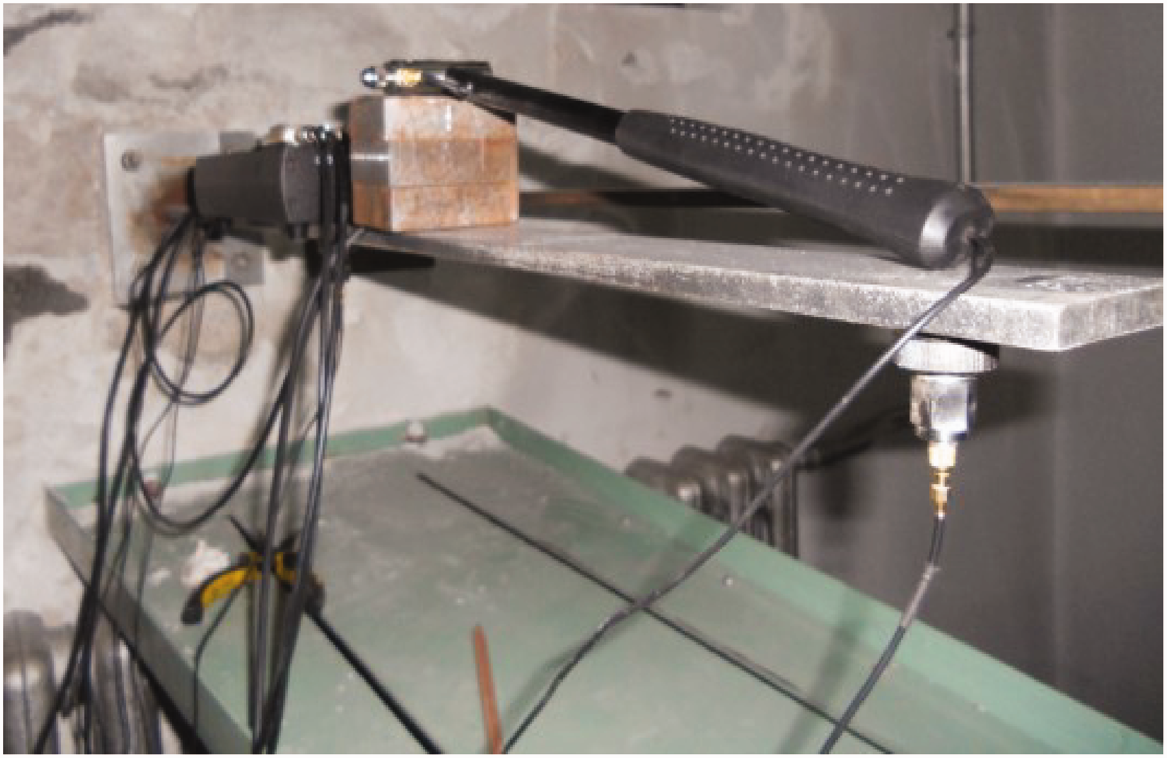
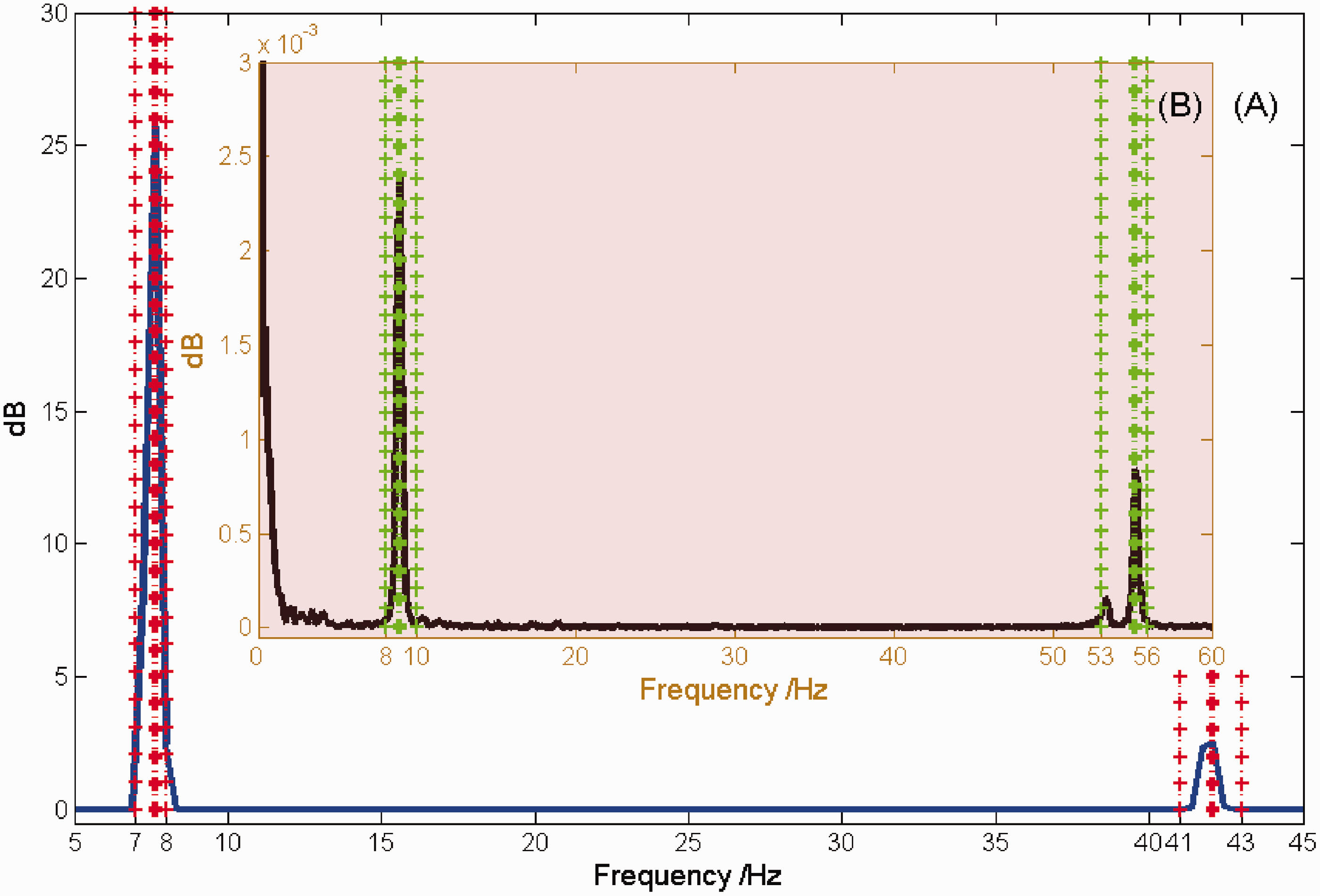
By Figure 3, the first-order natural frequency changes from 7.53 Hz to 8.65 Hz and the second-order natural frequency changes from 42.1 Hz to 54.1 Hz. The identified natural frequencies shown in Figure 3 coincide well with that depicted in Figure 2, which confirms the proposed method on estimation of time-varying modal parameters. The reason for Figure 4 only showing the first-order natural frequency is that the second-order natural frequency can’t be accurately estimated. The compare between Figure 3 and Figure 4 reveals that the forgetting factor has a great influence on the identified results. In addition, the authors are adviced to investigate the effect of the factors The identified two-order natural frequencies of the cantilever beam when the forgetting factor The identified first-order natural frequencies when the forgetting factor 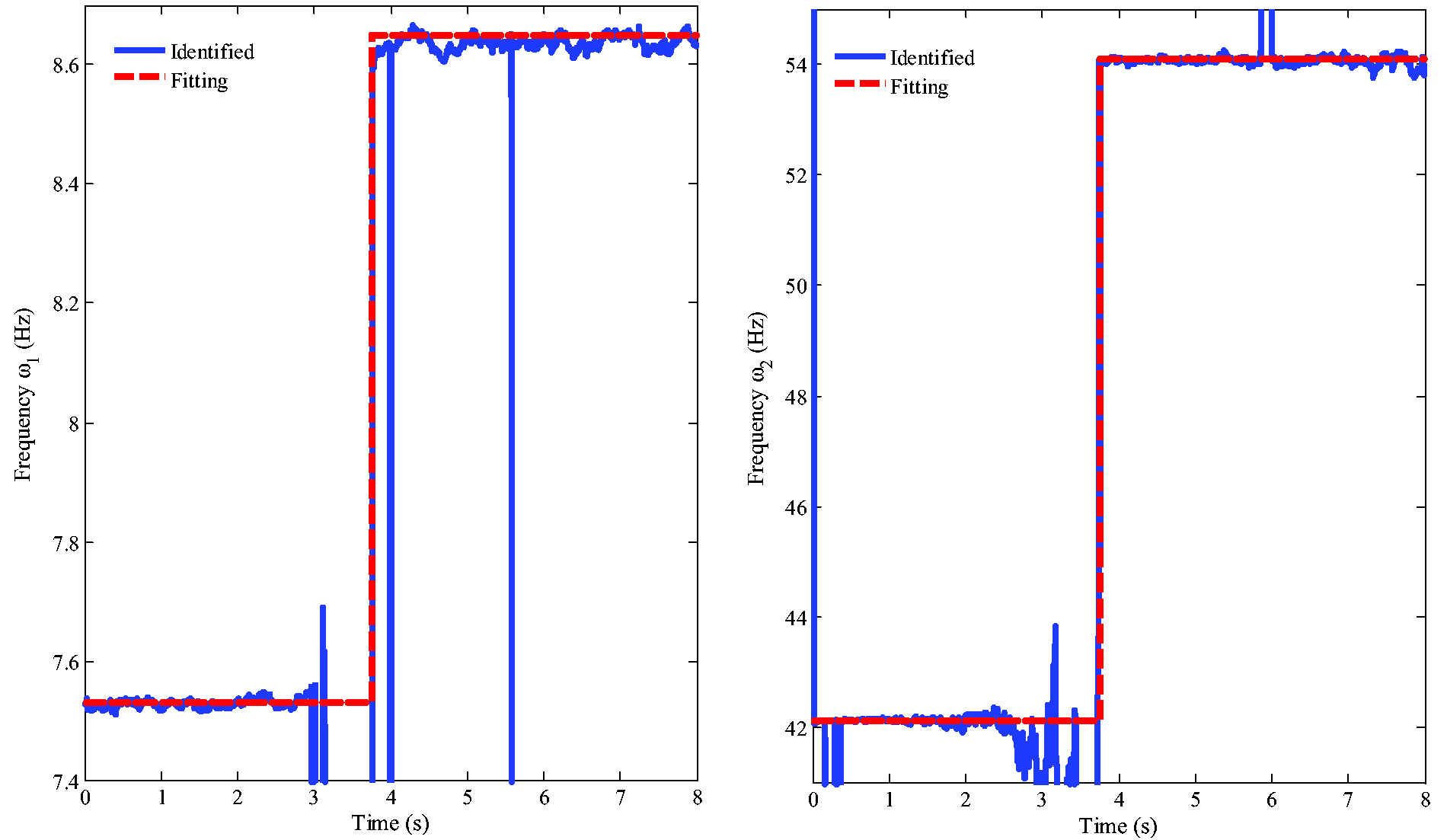
3. Experiments on a trapezoidal titanium-alloy plate
3.1. The first group of experiments
The surface temperature of the trapezoidal TA15 titanium-alloy plate is collected by thermocouples and then fed back to the programmable logic controller for controlling the power supply of the far-infrared quartz heating tubes. Thus a temperature-controlled environment is provided and the schematic diagram of the laboratory setup is illustrated in Figure 5. The plate under the working condition is shown in Figure 6 and its dimensions are depicted in Figure 7 with the locations of the exciting point, thermocouples and three accelerometers (Endevco® 6327M70d. The three accelerometers can be used in the environment of the temperature not higher than 650℃).
The schematic diagram of the laboratory setup. The laboratory experimental setup showing the plate, the three accelerometers, the tubes and the shaker. The trapezoidal TA15 titanium-alloy plate in the first group of experiments; ○ — the three accelerometers; □— the exciting point; ▽ the five thermocouples.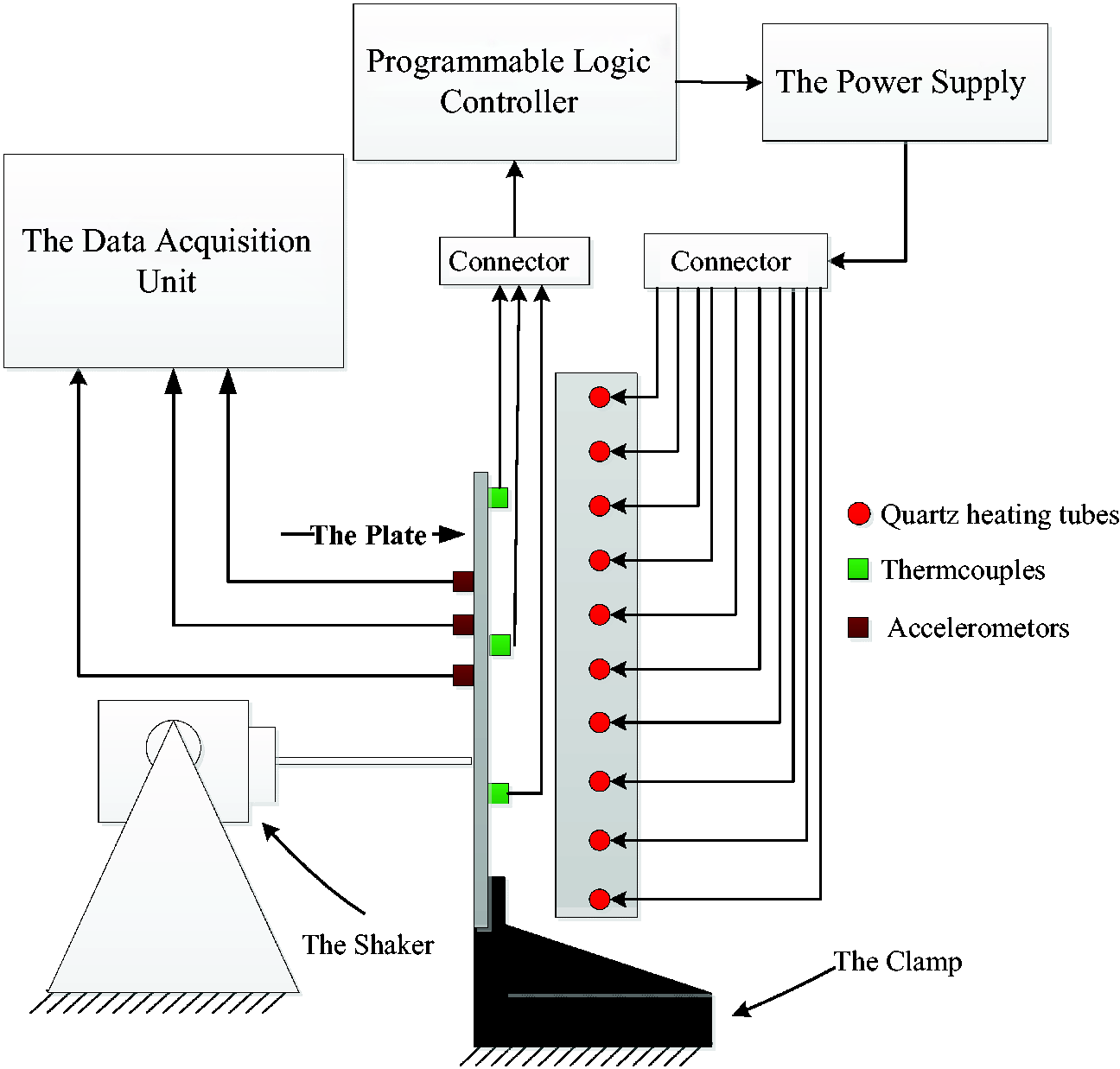
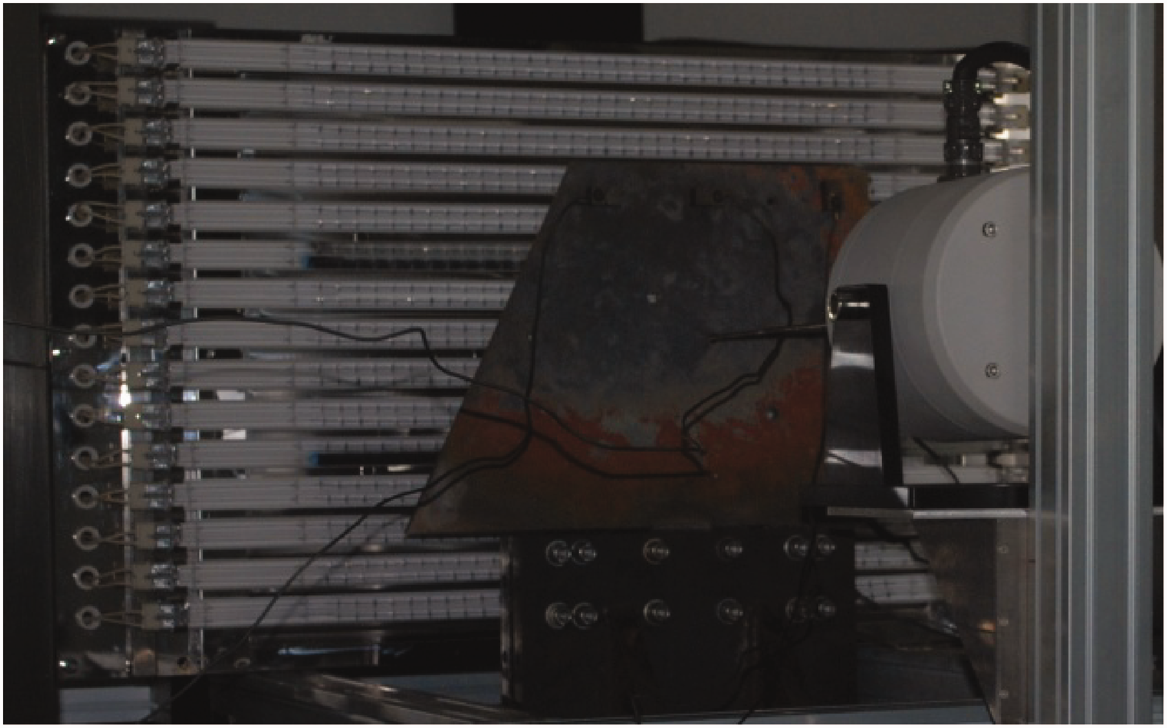
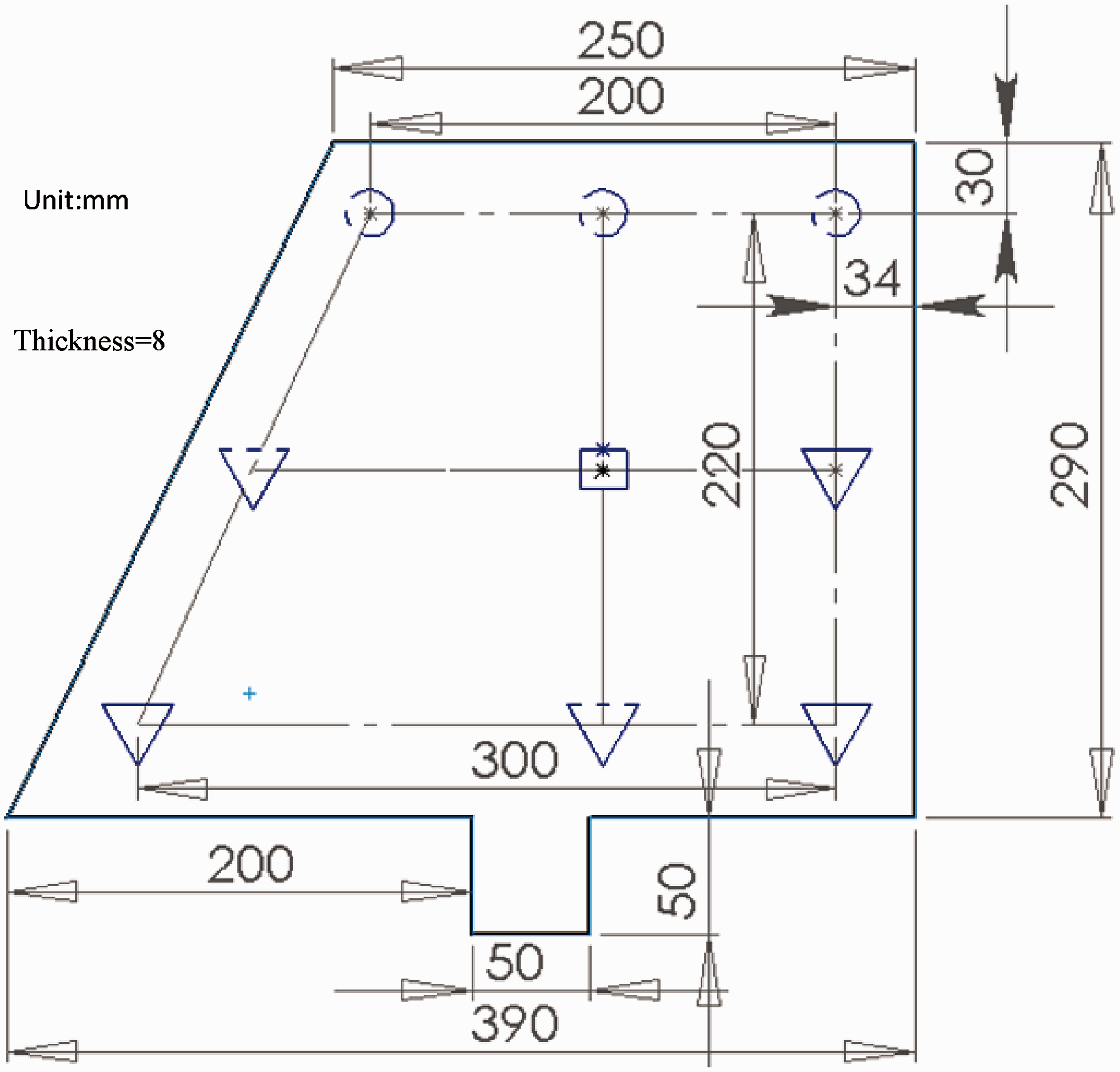
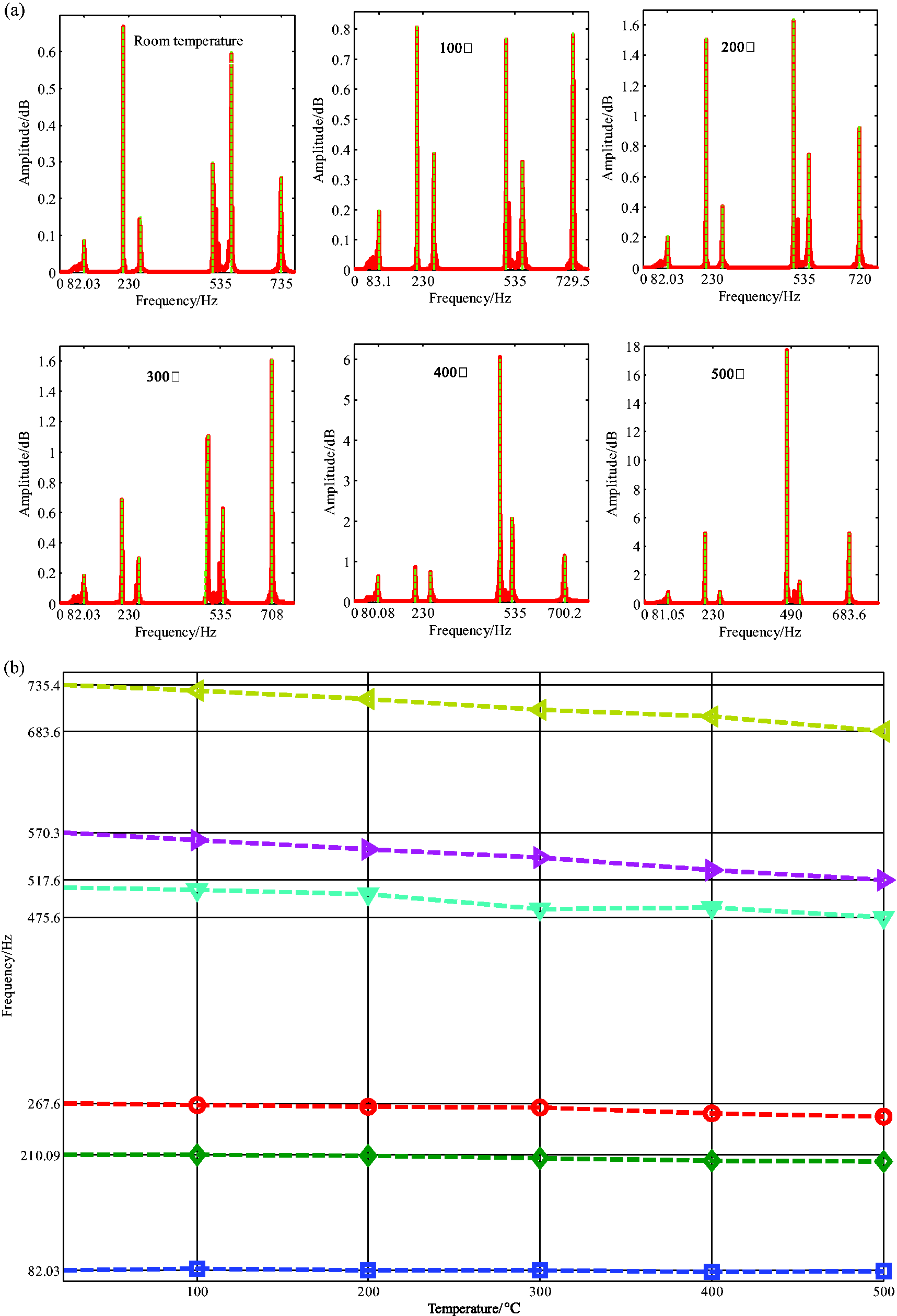
Figure 8 shows the natural frequencies of the plate in six temperature-constant environments by the Peak-Picking (PP) method. As shown in Figure 8, the natural frequencies of the higher orders are obviously influenced by temperature while the lower orders are barely affected. Note that the results by PP method herein are treated as the reference of the identified natural frequencies in the following three experiments conducted in the temperature-varying environments.
The reference experiments in the first group; a) the power spectrum density; b) the first five-order natural frequencies.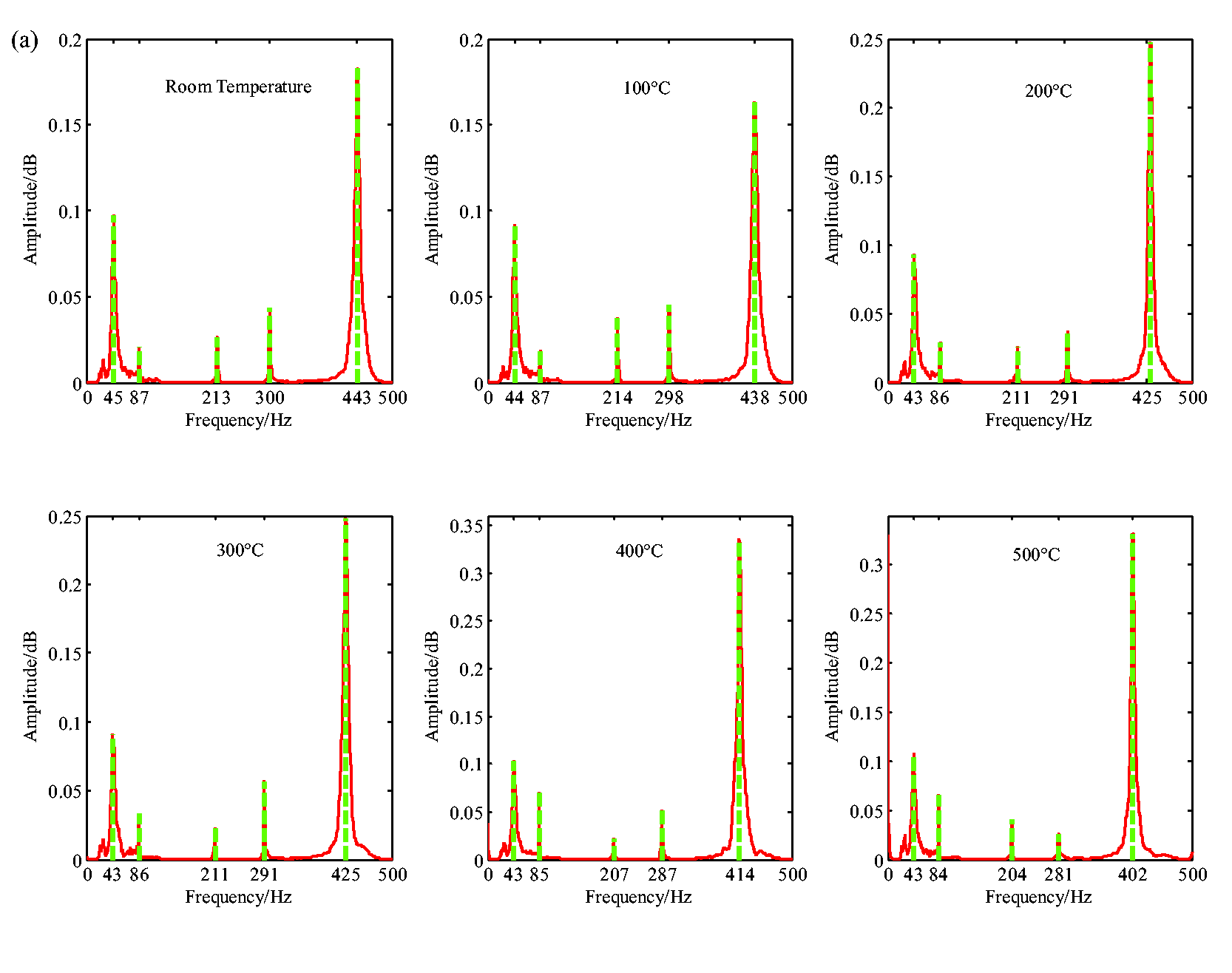
To investigate the effect of continuously varying temperature and heating speed on the natural frequencies, three experiments are conducted. Figure 9 shows the temperature-controlled records: the surface temperature of the plate is controlled to increase from the room temperature (about 22℃) to 500℃ in 90s and then stays 500℃ for about 90s in the first experiment, while the temperature increasing procedure is achieved in 60s in the second experiment and it is 24s in the third experiment. For all the experiments in this section, a random point-excitation is provided by the shaker (JZK-20) and the acceleration response is collected throughout the temperature-controlled procedure. The sampling frequency is 1280 Hz and the factors are The controlled temperature curves of the three experiments in the first group; a) the first experiment; b) the second experiment; c) the third experiment. The identified natural frequencies of the three experiments in the first group by the proposed identification method. The identified natural frequencies of the first experiment in the first group by the identification method based on the original PAST.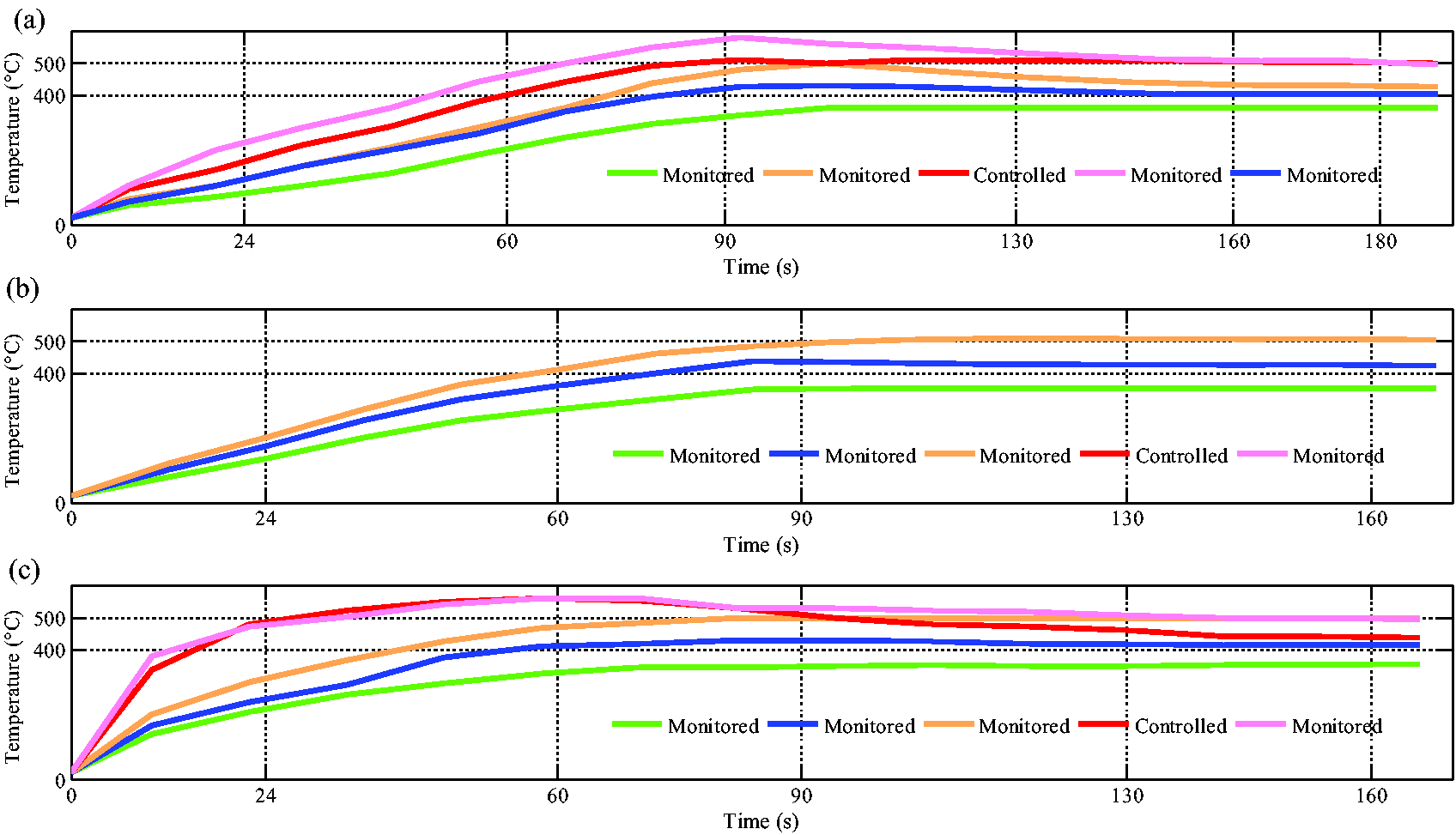
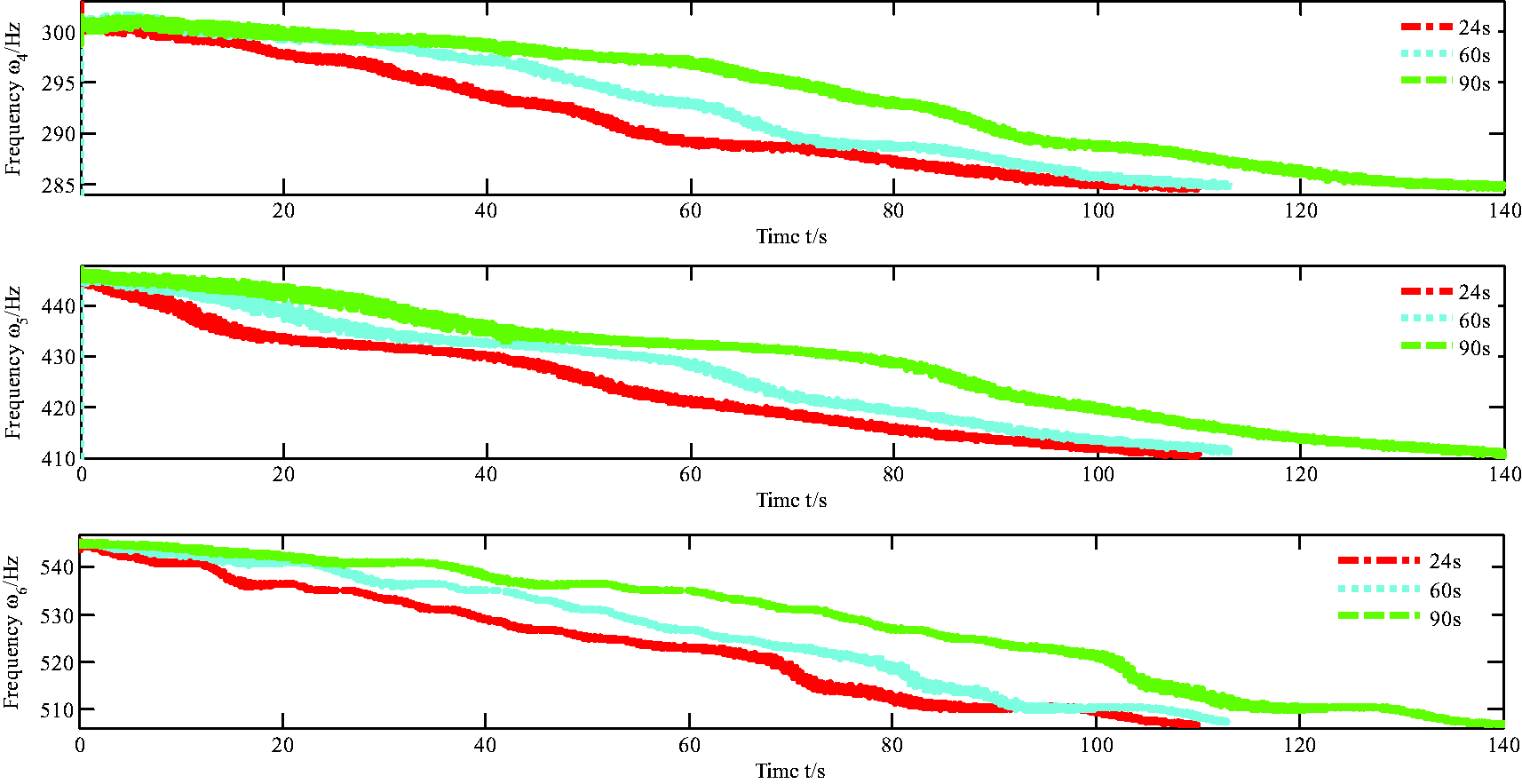
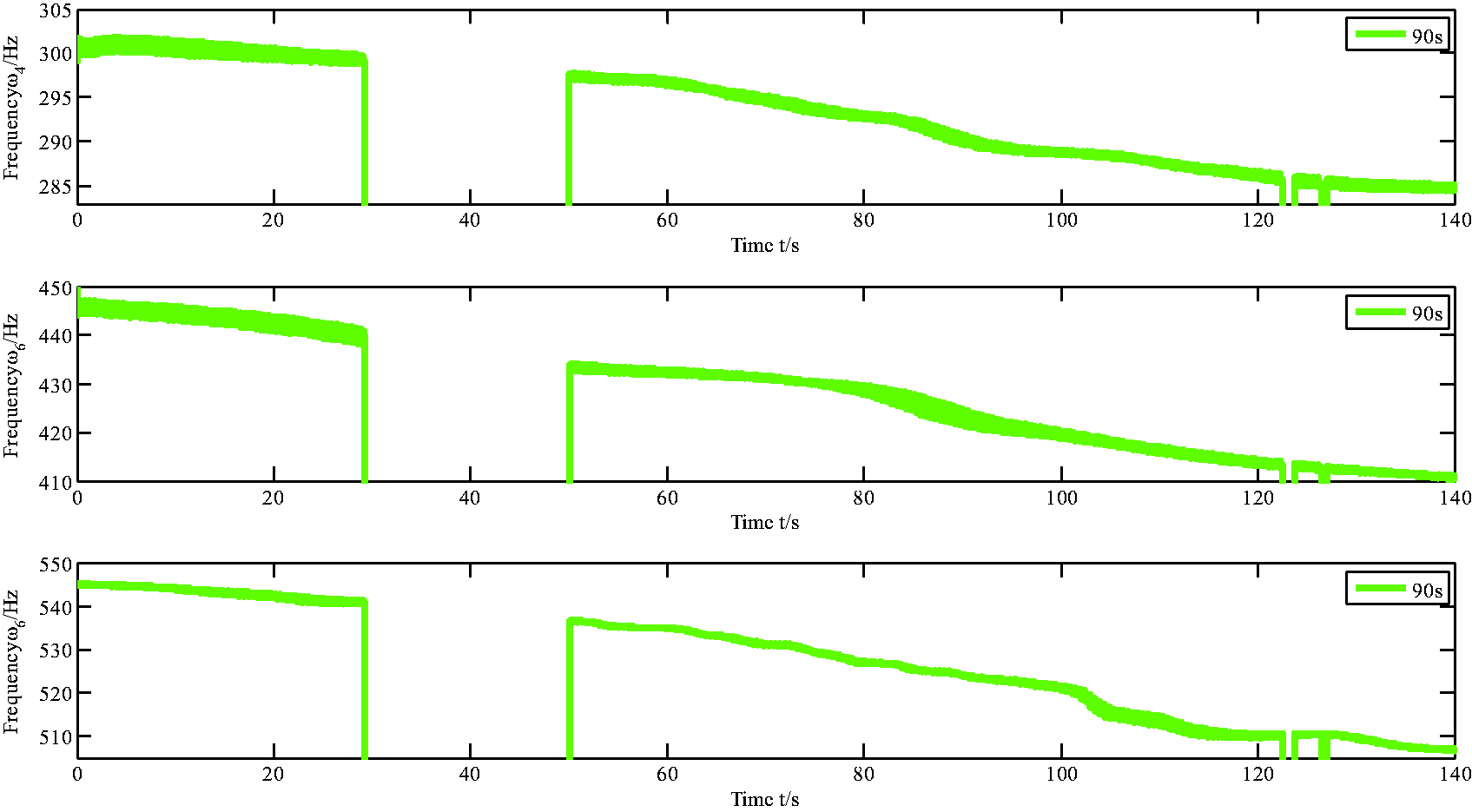
It is reported that the material properties could be affected by the increased temperature and the thermal stresses caused by temperature gradients when the modulus of elasticity decreases as temperature increases, causing a reduction in the stiffness (Kehoe and Synder 1991; Kehoe and Deaton, 1993), and the thermal stresses would cause an increase in the stiffness (Deyi et al., 2012). As shown in Figures 8 and 10, the decrease of the natural frequencies for all the modes indicates that the dominate cause of the frequency reduction is the elasticity modulus reduction. Further that the natural frequencies of the higher orders decrease faster when the temperature increases faster could be explained as the modulus of elasticity decreases faster as the temperature increases faster. Compared the corresponding results shown in Figure 8 and 10, the reduction amount of the natural frequencies shown in Figure 8 is larger than that shown in Figure 10 because the thermal stresses caused by temperature gradients are severe when the trapezoidal plate experiences a time-varying temperature environment. Such a phenomenon would appear again in next group of experiments.
As stated in equation (20), the corresponding damping ratios can be extracted as well. The identified damping ratios are depicted in Figure 12. As shown in Figure 12, the corresponding damping ratios are affected by the temperature-varying environments as well, which confirms the conclusion on the temperature-dependent damping ratios in experiment. The identified damping ratios have no obvious reduction trend as the identified natural frequencies shown in Figure 10 and there is no reference to confirm the identified damping ratios. So only the identified damping ratios of the third experiment are shown and no discussion on damping ratios would be processed in the second group of experiments.
The identified damping ratios of the third experiment in the first group.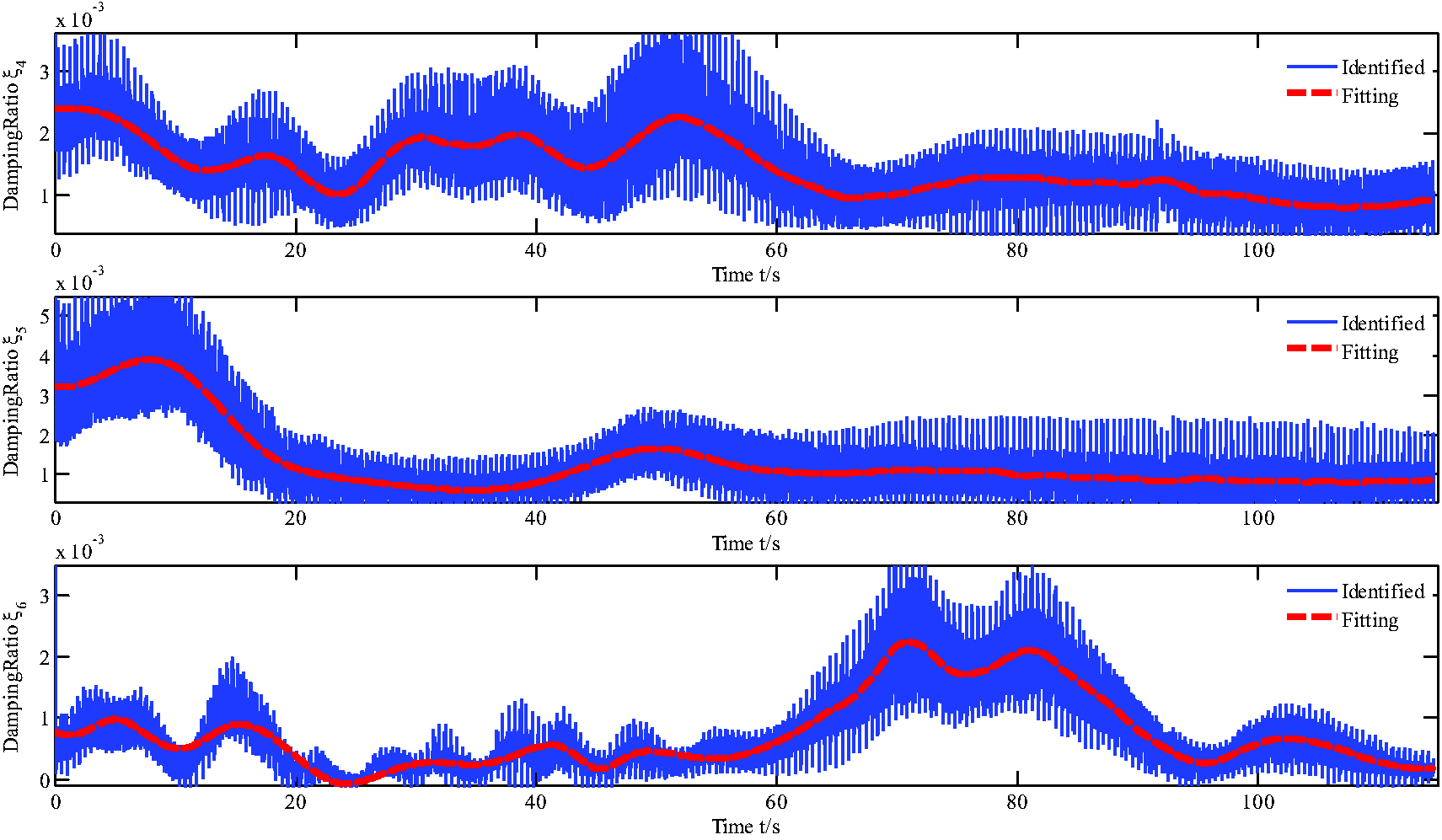
3.2. The second group of experiments
To further investigate the proposed method and the thermal effect on the natural frequencies, another group of experiments are conducted with a different exciting point. The locations of the exciting point and the three accelerometers are shown in Figure 13. Similarly, the referenced experiments are conducted in six temperature-constant environments and the natural frequencies of the plate by PP method are depicted in Figure 14. Three experiments are processed herein, the same as the three ones in the first group. For all the three experiments, the sampling frequency is 2000 Hz and the identification method’s factors are The laboratory setup for the second group of experiments. the reference experiments in the second group; a) the power spectrum density; b) the first six-order natural frequencies. STFT spectrum of one signal in the first experiment of the second group.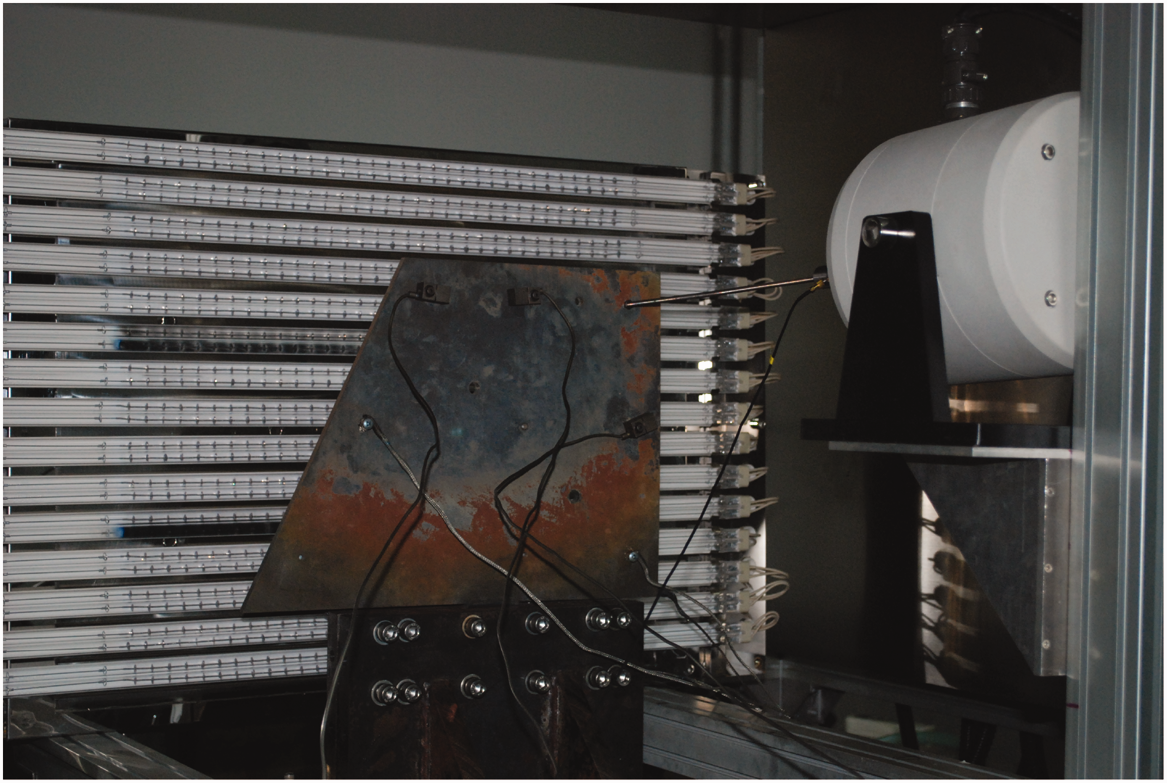
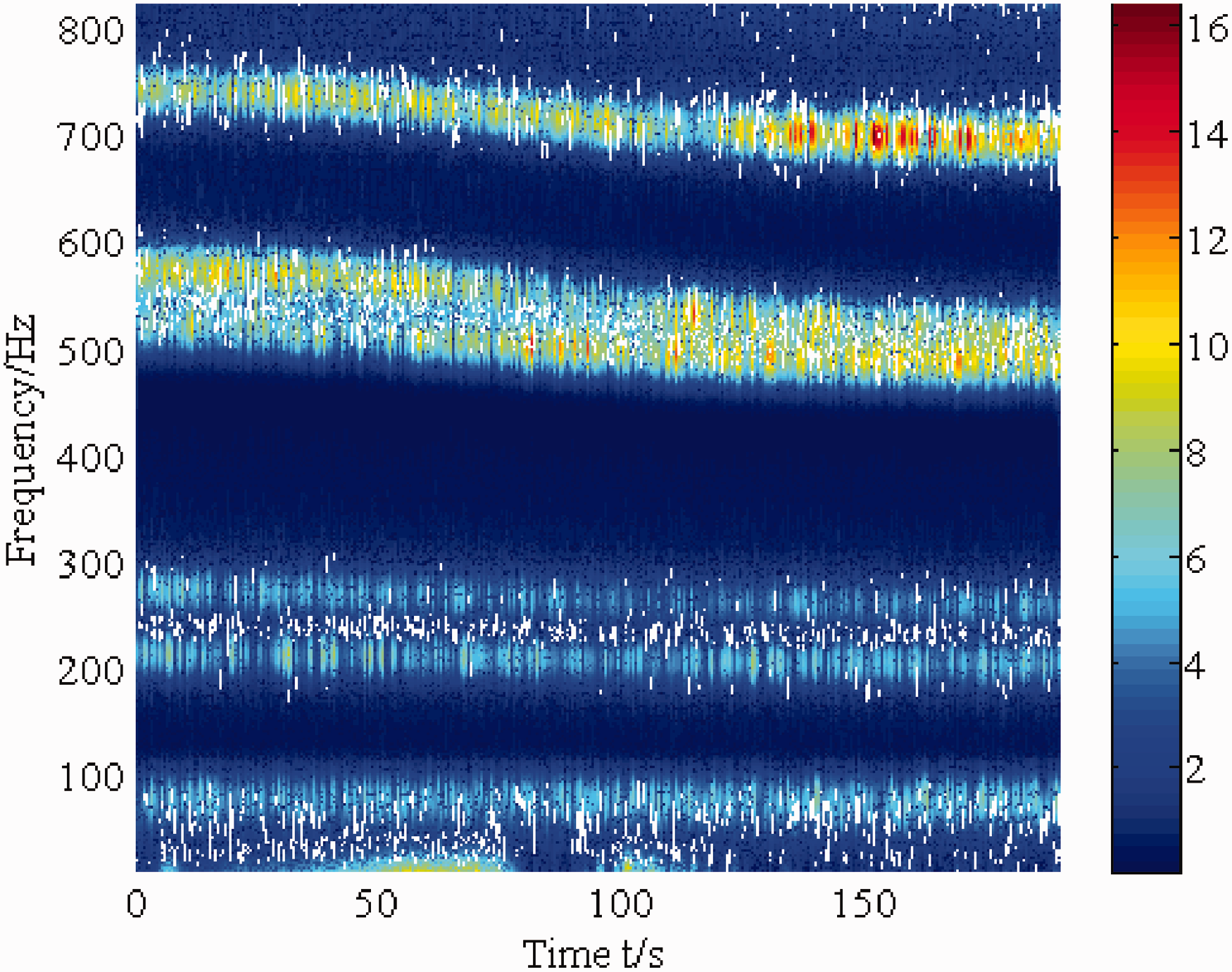
As shown in Figure 16, the first-order natural frequency is acceptably extracted while the other five decline as the temperature increases and the latter five-order natural frequencies decrease faster when the temperature increases faster, the same principle as that in the first group of experiments. It reported that the mode shapes were barely affected though such a conclusion was drawn based on the results of experiments in the temperature-constant environments by PP-based methods (Kehoe and Synder, 1991). Considering the identified results shown in Figures 10 and 16, that the natural frequencies decline in the practically same principle reveals the unchangeable linearity of the experiment structures under the continuously changing temperature. Further whether the results can be used to be an evident of unchangeable mode shapes should be investigated.
The identified natural frequencies of the former six orders for the three experiments of the second group; a) the first experiment; b) the second experiment; c) the third experiment; d) the fitting results of the identified natural frequencies.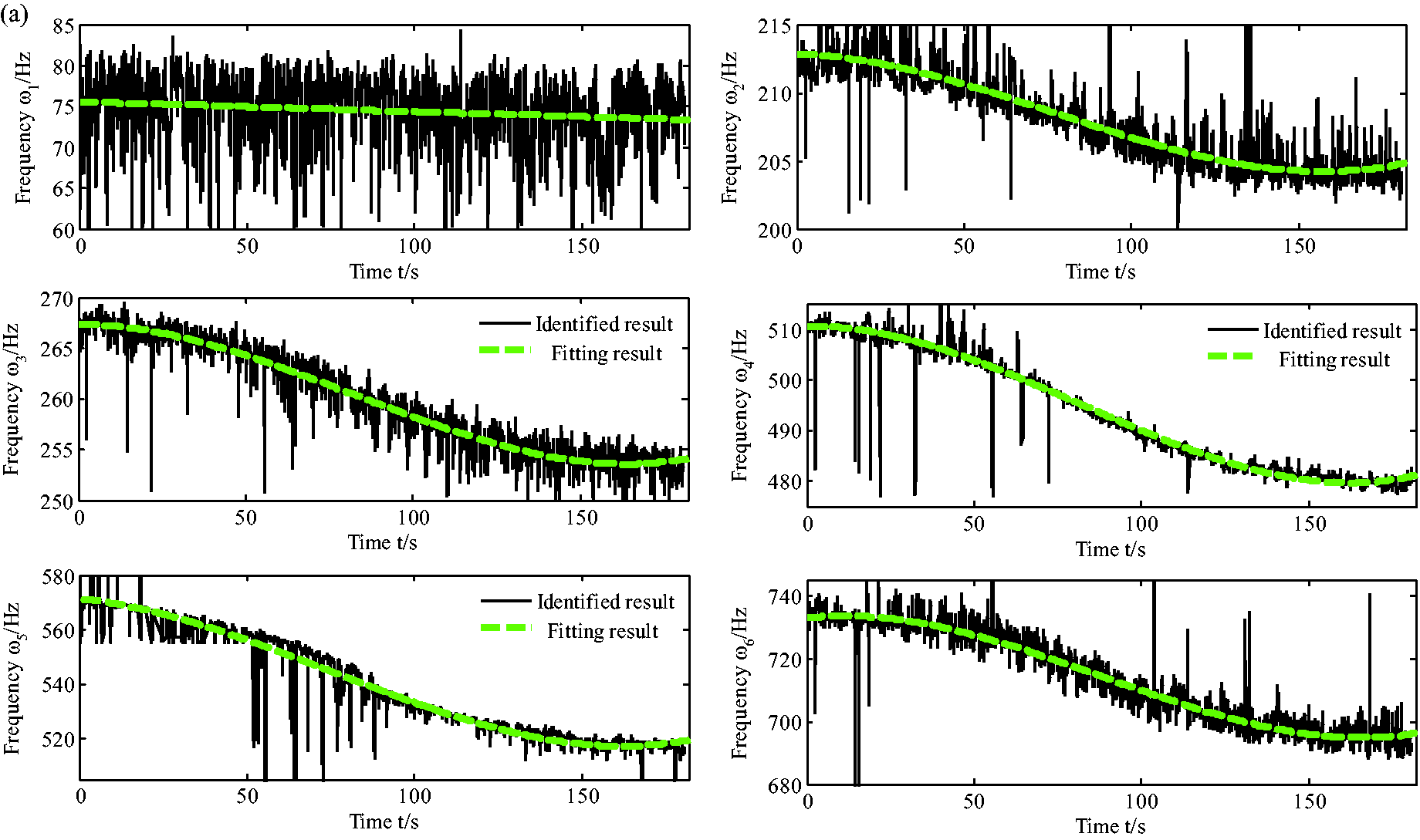
4. Conclusions
A time-varying modal parameter identification algorithm based on finite-data-window PAST is presented in this study. The proposed method is confirmed by an experiment conducted on a steel cantilever beam with a removeable mass and the choices of the factors are briefly discussed. Furthermore, the proposed method is applied to investigate the effect of varying temperature and heating speed on the natural frequencies of a trapezoidal TA15 titanium-alloy plate. The identified results show the first-order natural frequency is barely affected while the high-order natural frequencies are obviously affected by the temperature. Moreover, the high-order natural frequencies decline faster when the temperature increases faster and it could be understood as the modulus of elasticity decreases faster as the temperature increases faster, because the dominate cause of the frequency reduction is the elasticity modulus reduction in this study. Further, the effect of the thermal stresses caused by temperature gradients on the natural frequency reduction is revealed by experiments, taking advantage of the identification algorithm presented in this study.
Footnotes
Acknowledgments
The authors are grateful to Xiaonan Gai for conducting experiments.
Funding
This research was supported by the National Science Foundation of China (NSFC) under grant number 11172078.