







Abstract
This paper is concerned with the measure of degree of controllability (DOC) for linear system with external disturbance. A new measure of DOC, in which the initial condition is regarded as a random vector, is proposed in this paper by solving the fixed-time expected minimum-energy transfer control problem. Since this new measure is dependent on the statistical information of initial condition rather than its estimated value, it is more suitable to apply the proposed measure in the design and optimization of the structural parameters of controlled plants. Furthermore, the simulations on the NREL (National Renewable Energy Laboratory) CART3 wind turbine demonstrate that the relation of the proposed measure to turbine parameters (including rotor inertia and optimum tip speed ratio) coincides with that of the MPPT efficiency to turbine parameters. This indicates that the proposed measure is applicable to guide the design and optimization of the structural parameters of wind turbines. Meanwhile, a mass-spring-damper system is also simulated to validate the proposed measure.
Keywords
1. Introduction
As a quantitative measure of controllability, the degree of controllability (DOC) describes how controllable the system is. Currently, several different definitions of DOC have been proposed, which are based on the control energy (Kalman et al., 1962; Muller and Weber, 1972; Lee and Park, 2014), the distance from controllable to uncontrollable set (Paige, 1981), the minimum of 2-norms of initial conditions (Viswanathan et al., 1984) and the modal degree of controllability (Roh and Park, 1997)), respectively. This paper only addresses the issue of the control energy-based DOC. For linear systems without external disturbance, Muller and Weber (1972) described the controllability of plants quantitatively with a physically meaningful value: control energy and proposed three measures of DOC, in which the capabilities for stabilizing the system is regarded as the minimum energy required to regulate the system from any initial state to the origin within a limited time.
External disturbance is usually neglected in the above definitions of DOC. In fact, external disturbance appears in many practical systems, which is often attributed as the major cause of unfavorable performance and instability. As an important property of a plant, disturbance rejection is often the main objective of process control. Therefore, a measure representing DOC of disturbance rejection (Kang et al., 2009) was presented based on the expected total transfer energy in linear systems with external disturbance (Lee et al., 2011, 2012; Marghub and Johannes, 1999).
However, since the measure of Kang et al. (2009) focuses on the control energy contributing to disturbance rejection, it can only be employed to indicate the controllability of the plant, in which rejecting disturbance must be the major control objective. Assume that if the external disturbance disappears (i.e., the linear system with external disturbance degenerates into the one without disturbance), this measure is constantly equal to zero and cannot be applied to guide the design and optimization of controlled plants (Muller and Weber, 1972). Besides, the zero value of this measure which means that the system is to be controlled without consuming energy is inconsistent with the measure of Muller and Weber (1972) in which the control energy for stabilizing performance is only expressed. Therefore, the control energy has not been comprehensively considered in the definition of the measure presented in Kang et al. (2009). In addition, when the DOC measure in Kang et al. (2009) is applied to wind turbines, it is found that the variation of this measure with turbine parameters is opposite to that of the control performance of maximum power point tracking (MPPT) (Peng et al., 2014) which is commonly represented as the MPPT efficiency (Femia et al., 2005; Boubekeur and Houria, 2011) with turbine parameters.
In Lee et al. (2011, 2012), by considering both disturbance-rejection and system stabilization simultaneously, a DOC measure was presented, in which the initial condition is assumed to be estimated by the sensor. However, since the DOC measure is closely related to the initial condition, its value is variable and consequently unsuitable for the design and optimization of structural parameters of controlled plants, when the initial condition is a random vector. For example, the initial condition of wind turbines changes randomly because of the intermittent and random fluctuation of wind speed.
Hence, to remove the unexpected dependency of the specific initial condition reasonably, a new DOC measure, in which the initial condition is regarded as a random vector, is proposed in this paper for linear system with external disturbance. Since the new DOC measure is dependent on the statistical information of initial condition instead of the estimated value, it is more suitable to be applied to the design and optimization of the structural parameters of controlled plants. Furthermore, the relationship of the proposed DOC measure versus the MPPT efficiency is investigated by the simulations on the NREL (National Renewable Energy Laboratory) CART3 wind turbine. It is observed that the larger DOC measure is, the higher MPPT efficiency of wind turbines can be derived. Moreover, the larger DOC measure can be obtained by reducing rotor inertia and optimum tip-speed ratio, which is coincided with the engineering observations (Johan et al., 2006; Chun et al., 2013) that a higher MPPT efficiency can be achieved by the wind turbine with smaller rotor inertia and optimum tip-speed ratio. Meanwhile, a mass-spring-damper system (Kang et al., 2009) is also simulated to validate the proposed measure. These indicate that the applicability of the proposed measure is improved.
The remainder of this paper is organized as follows. Before presenting the main results, basic definitions and motivation are given in section 2.1. In section 2.2, the new DOC measure is derived for linear system with external disturbance. The application and verification of the new measure to wind turbines are given in section 3. In section 4, a mass-spring-damper system is employed to show the effectiveness of the new measure. Conclusions are drawn in the last section of the paper.
Notation: Standard notations will be used throughout this paper.
2. The new DOC measure
In this section, a new measure of the degree of controllability (DOC) will be introduced for linear system with external disturbance.
2.1. Basic definitions and motivation
Let Γ denote the linear time-invariant control system with external disturbance



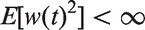
Denoting

Similarly, the disturbance-sensitivity Grammian is defined as
(Muller and Weber, 1972) For linear time-invariant control system without external disturbance, the DOC measure is given as
This measure represents the minimum energy required to regulate the system from any initial state to the origin within a limited time (Muller and Weber, 1972). (Kang et al., 2009) The DOC measure of linear time-invariant control system with external disturbance can be expressed as
This measure describes the capabilities for disturbance-rejection quantitatively with a physically meaningful value: control energy (Kang et al., 2009). According to the measures of definition 1 and 2, it is found that: On the one hand, external disturbances, which do exist in many practical systems and even mainly cause the unfavorable performance and instability, are not considered in the measure of definition 1. On the other hand, the measure of definition 2 focuses only on the control energy for rejecting external disturbance, but the one for stabilizing the system is neglected, which results in the inapplicability of this measure to the controlled plants. Assume that the external disturbance to the plant decays to zero (i.e., the linear system with external disturbance degenerates into the one without disturbance), the DOC of system (1) still exists according to the definition 1, but the measure of definition 2 is constantly equal to zero, which has no physical significance. Besides, the zero value of this measure is unable to the design and optimization of structural parameters of controlled plants (Muller and Weber, 1972).Definition 1
Remark 1
Definition 2
Remark 2
Remark 3



In addition, since the DOC measure proposed in Lee et al. (2011, 2012) is dependent on the estimated value of the initial condition, it cannot be well suitable for the design and optimization of the structural parameters of controlled plants, especially when the initial condition is a random vector. Therefore, in order to improve the applicability of the existing measures, a new DOC measure is proposed in the following section.
2.2. The proposing of a new DOC measure
Consider the fixed-time expected minimum-energy transfer control problem as
For the linear time-invariant control system with external disturbance in (1), the DOC measure μ can be defined as
Suppose that the optimization problem in (8) is solvable. Then, a DOC measure can be obtained as
Since the optimization problem in (8) is solvable for each initial condition x0, then the optimal solution of (8) can be given by minimum principle asDefinition 3
Theorem 1
Proof





According to (2) and (3), rearranging (11) yields

Using equation (5), the input covariance matrix can be expressed as

Hence, the expected total energy of (8) can be calculated by

Applying the property of the trace and rearranging terms, equation (14) yields

Therefore, σ provides a quantitative measure of controllability of (1) depending on
Let It is obvious that the DOC measure of uncontrollable systems is 0. If the system (1) is uncontrollable in Remark 4

Besides, Λ which is the covariance matrix of x0, can be calculated according to the statistical information of x0. When the distribution of x0 is given, Λ is a constant matrix. For example, the initial condition x0 usually obeys a Gaussian distribution in some stochastic systems (Fang, 2005).
As shown in (16), the new measure μ is dependent on t0 and tf. Without loss of generality, the initial time t0 is assumed to be zero. Furthermore, to eliminate the dependence of this measure on tf, the measure μ at steady state is defined below. For the asymptotically stable system, assume that Definition 4

In Kang et al. (2009), the measure for disturbance rejection at steady state is expressed as:
Assume that the system is asymptotically stable, then the DOC measure at steady state Note that, according to the definition 4, the DOC measure at steady state Theorem 2
Proof




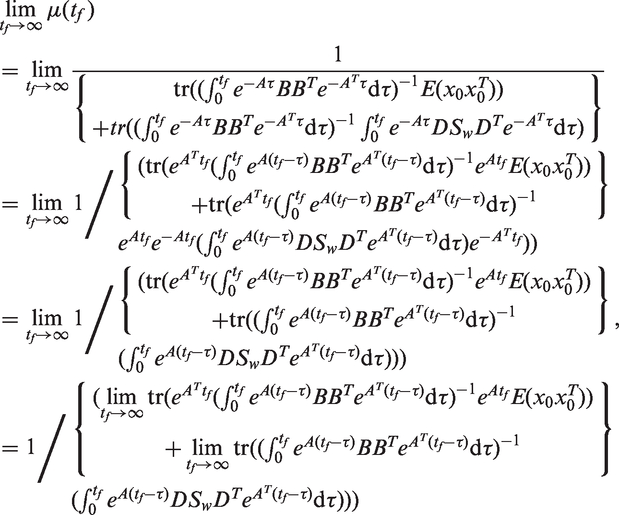
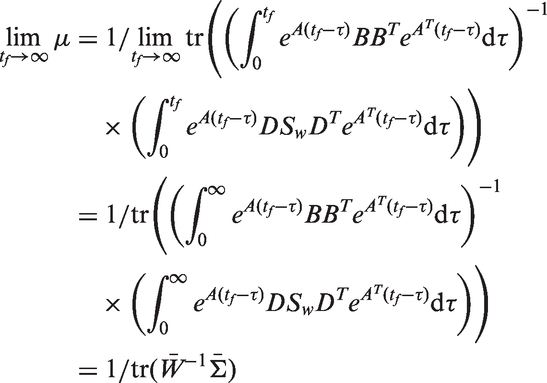
Because A is stable and If A is stable, Remark 5
3. The application and verification of the new measure to wind turbines
In this section, the new measure is applied to wind turbines. The MPPT efficiency (Femia et al., 2005; Boubekeur and Houria, 2011), as an engineering performance index of wind turbines, is adopted to test the DOC measure. In other words, if the variation of the DOC measure is in accordance with the one of MPPT efficiency with change of turbine parameters (i.e., the MPPT efficiency increases when the DOC measure becomes larger), it can be verified that the new DOC measure is effective for wind turbines.
The procedure for testing the proposed DOC measure is shown in Figure 1. Note that the MPPT efficiency is calculated by simulations on NREL’s FAST (Fatigue, Aerodynamics, Structures, and Turbulence) turbine model. And, the expression of DOC measure is derived from the single/two-mass model of wind turbines which is obtained by simplifying the FAST model. The details of each step are provided in section 3.1–3.4.
The procedure of testing the DOC measure by NREL’s FAST.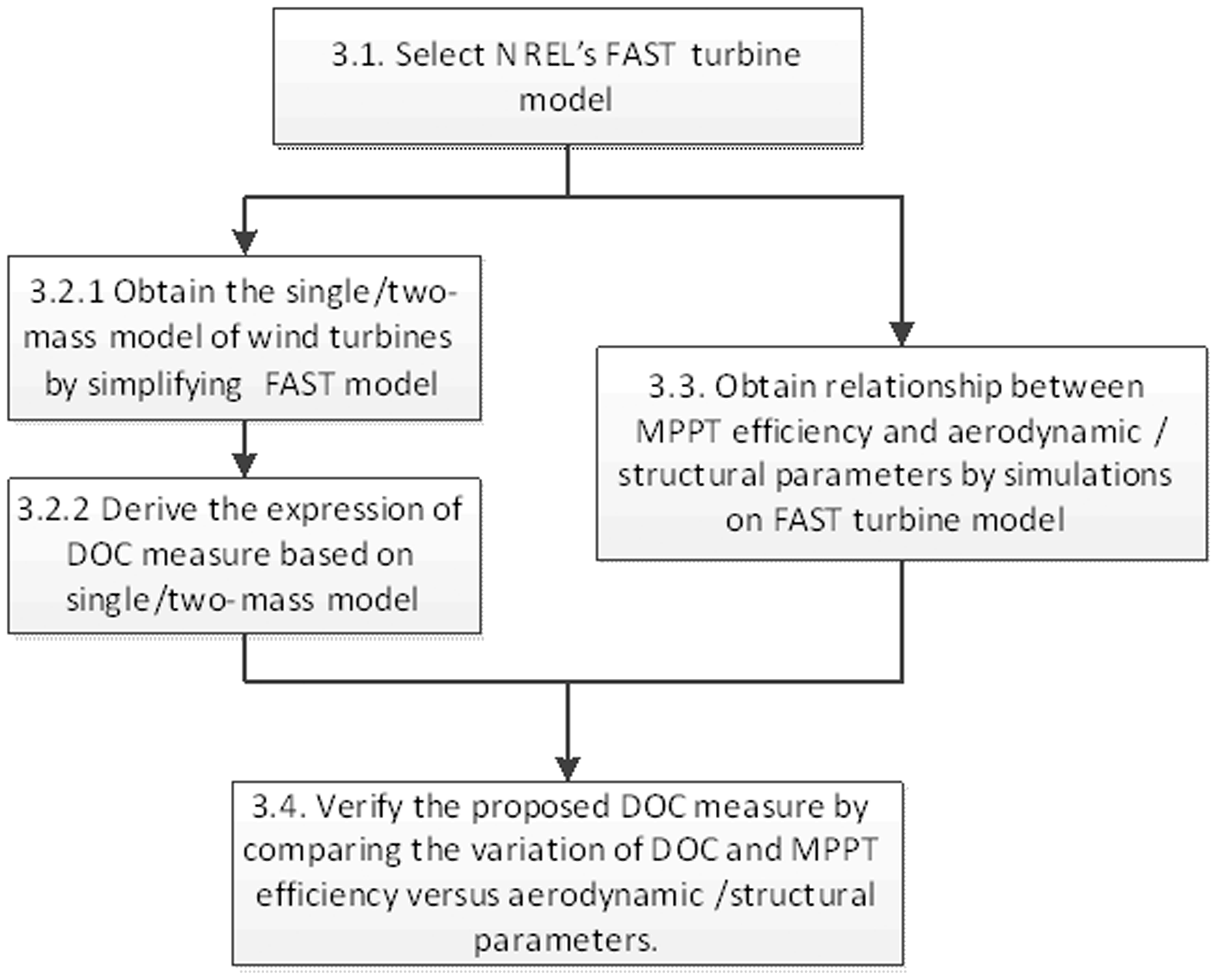
3.1. NREL CART3 wind turbine and turbulent wind
The parameters of CART3 wind turbine.

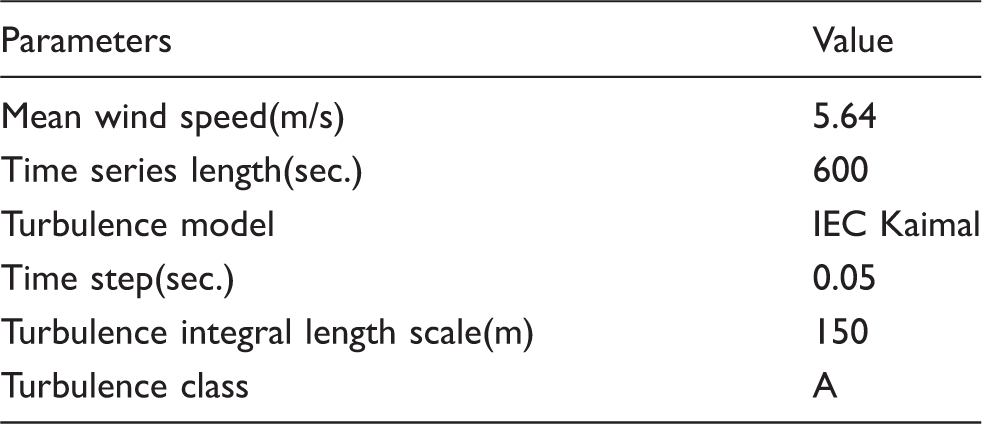
In addition, according to the regulation of IEC 61400-1 (International EC, 2005), the turbulent wind whose parameters are listed in Table 2, is generated by the TurbSim (Jonkman, 2009). As illustrated in Figure 2, the turbulent wind is used to conduct simulations on the CART3 wind turbine and derive the statistical distribution of initial condition required in the proposed DOC measure.
The turbulent wind generated by the TurbSim. Parameters for generating turbulence wind.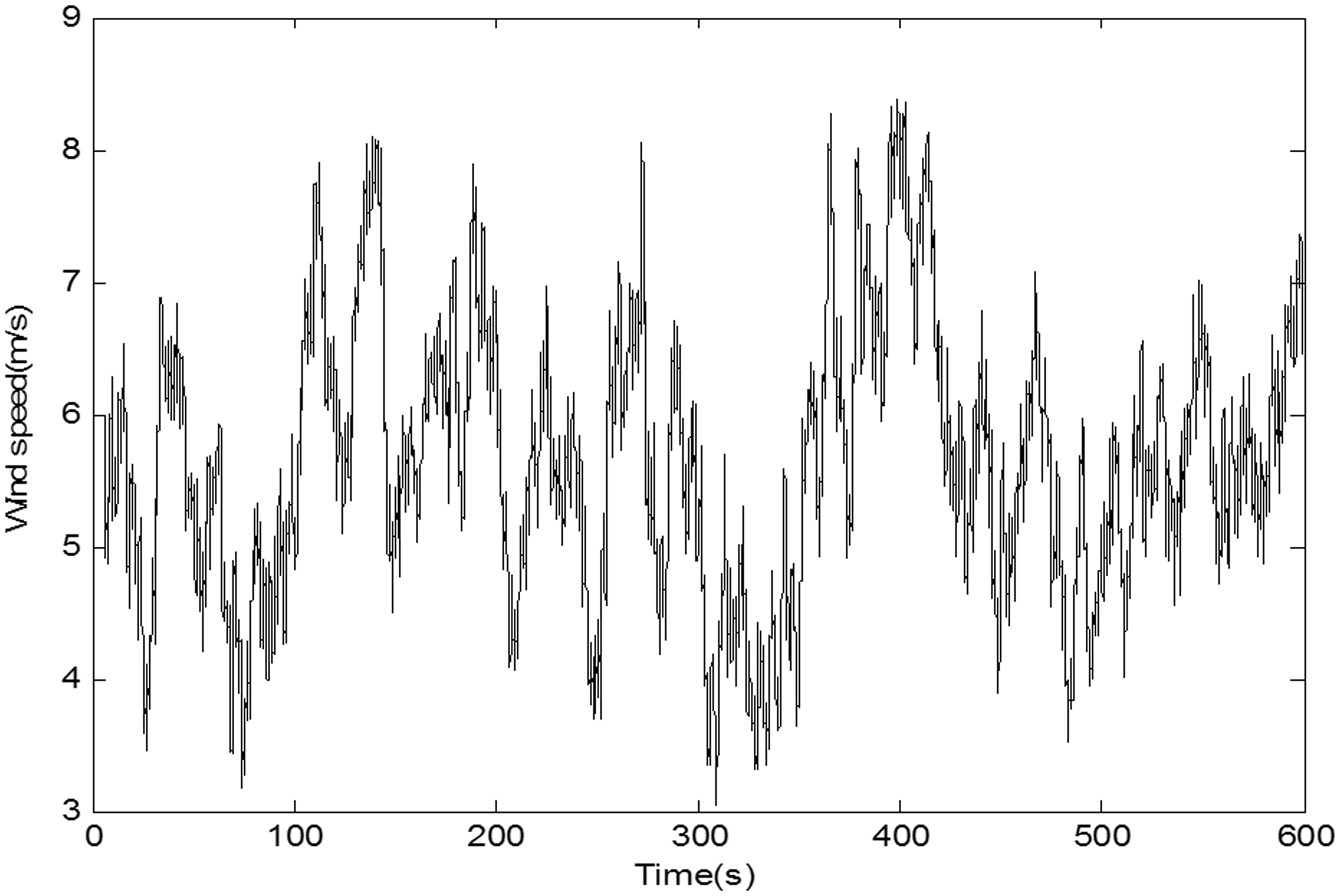
3.2. The derivation of new DOC measure based on the single/two-mass model of wind turbines
In this section, the new DOC measure with statistical distribution of initial condition is derived based on the single/two-mass model of wind turbines. Considering that wind turbines always operate in turbulence, the initial condition of wind turbines is closely relevant to wind speed. Hence, by deducing the functional relation of
3.2.1. The single/two-mass model and its linearization
Several types of wind turbine models, including the aero-servo-elasticity model (Bottasso et al., 2009; Bottasso et al., 2006), the multi-modal model (Fitzgerald and Basu, 2013; Staino and Basu, 2013) and the simplified model (i.e. the single/two-mass model (Chun et al., 2013; Boubekeur and Houria, 2011) have been established. Since the simplified model developed for wind turbine controller design are expressed as state space equations, this paper focuses on the single/two-mass model and derives the proposed DOC measure of wind turbines based on them. Note that because of the intermittent and random fluctuation of wind speed, two linearization models with wind speed regarded as external disturbance (Farzad et al., 2012) are deduced based on the single/two-mass model.
The single mass model and its linearization
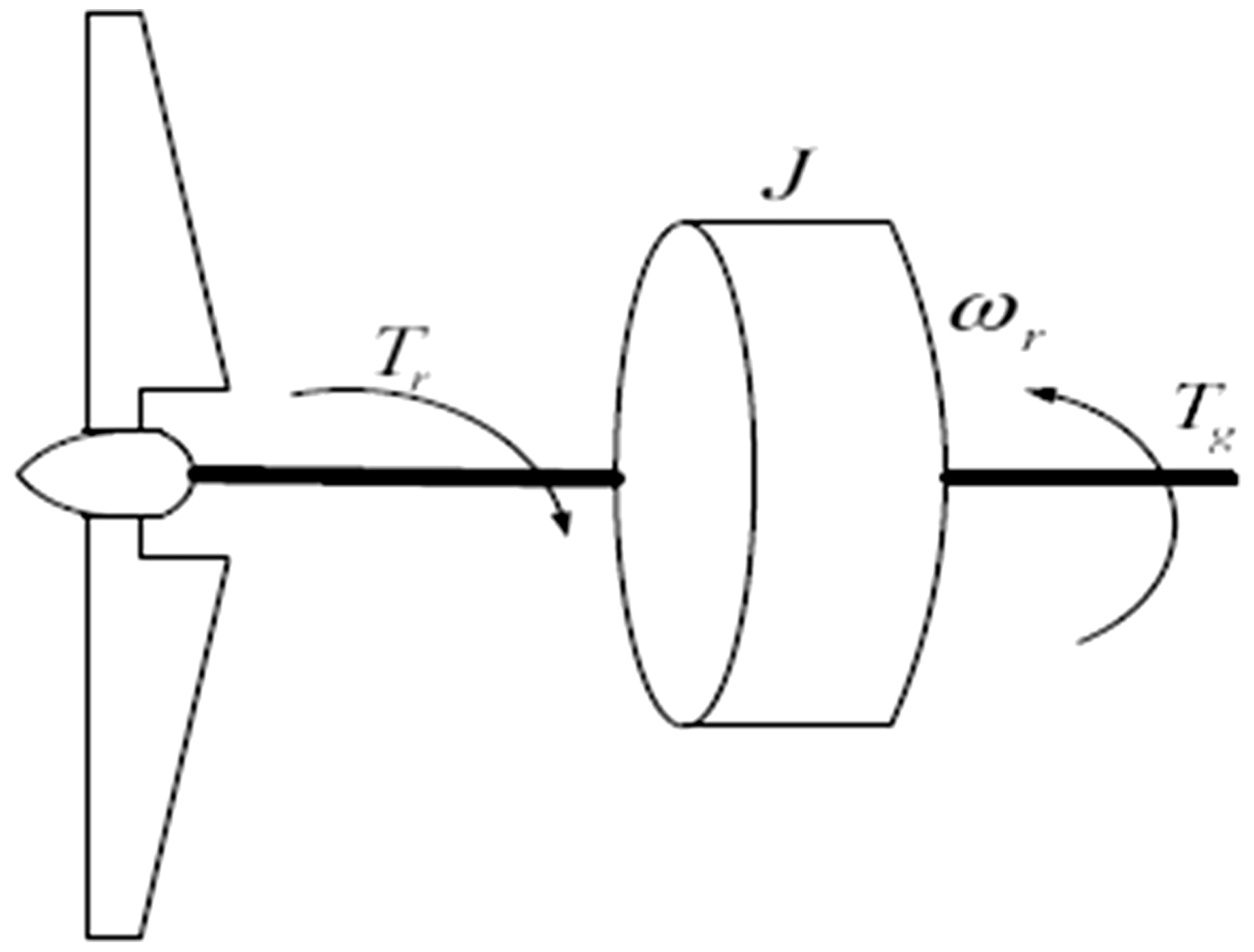
If the stiffness, damping and the dynamic of electrical part of wind turbines are neglected, a single-mass model with following dynamic equations in MPPT stage is shown in Figure 3 (Jovan et al., 2014).
The single-mass model of wind turbine system.


In Xia et al. (2014) a linearization model of wind turbines has been given in which the wind speed v is assumed to be constant near the equilibrium point. Nevertheless, because of the intermittent and random fluctuation of wind speed, it is more reasonable to regard wind speed as external disturbance. Therefore, a linearization model of wind turbines with external disturbance is derived from equation (21). Denoting the equilibrium point of wind turbines as 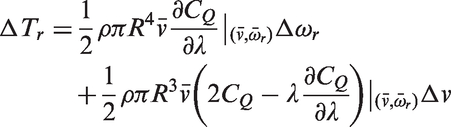
Thus, the linearization model of wind turbines with external disturbance can be obtained as
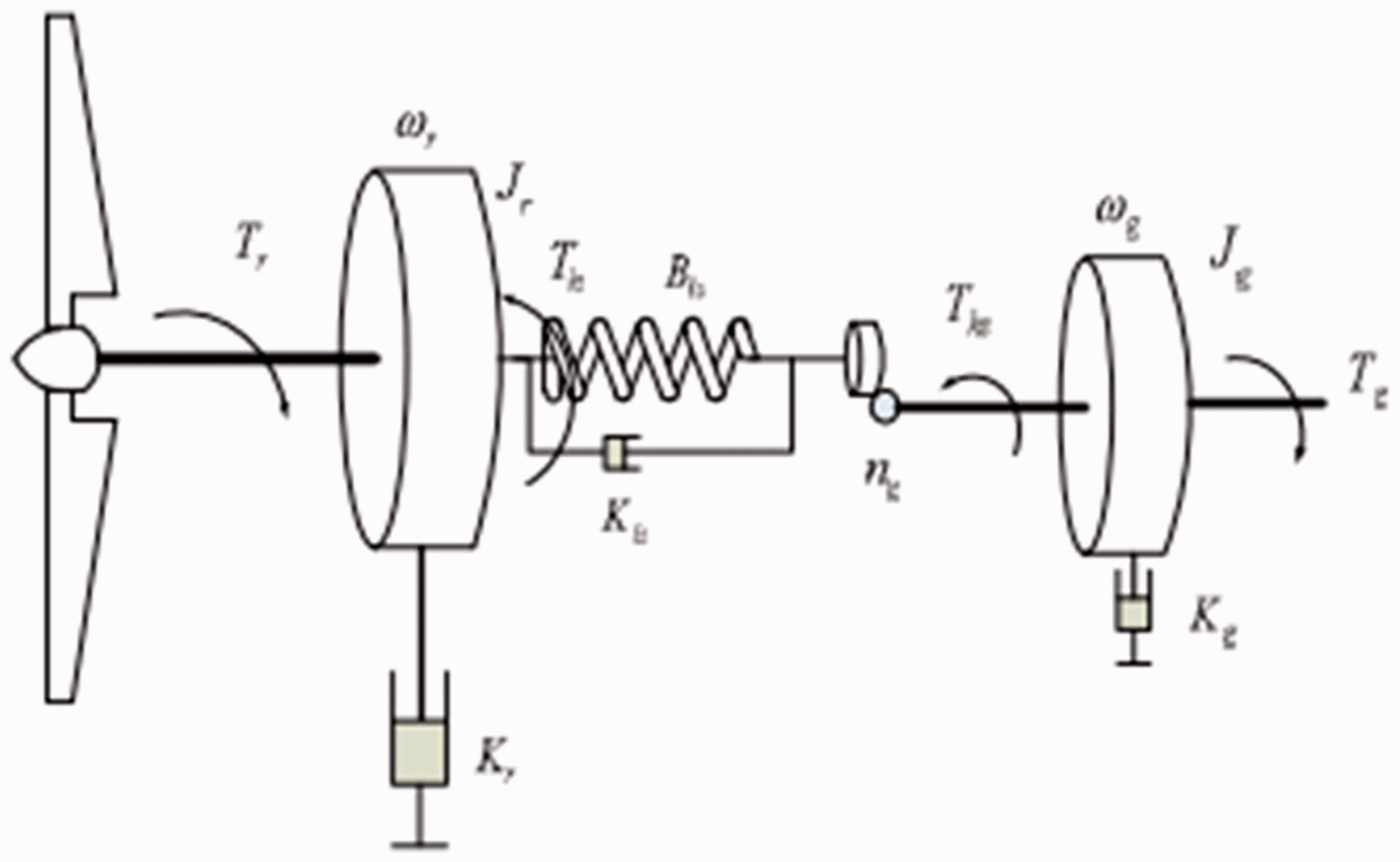
The two-mass model and its linearization
The two-mass model with following dynamic equations in MPPT stage is shown in Figure 4 (Boubekeur and Houria, 2011).
The two-mass model of wind turbine system.




Denoting the equilibrium point of wind turbines as 
Assume a state vector 
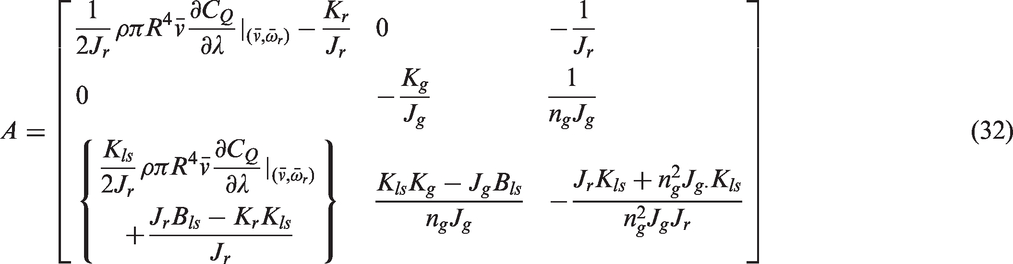

The control input is defined as
3.2.2. The derivation of the new measure with statistical information of initial condition
Based on the single-mass model of wind turbines, the new measure is expressed as:

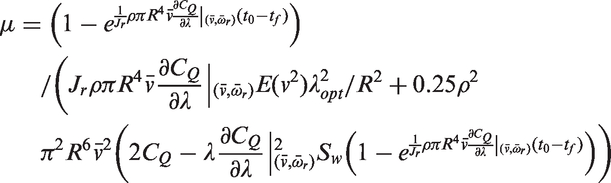
For purpose of the comparison, the measure κ in (7) is replaced by its reciprocal 
Based on the two-mass model of wind turbines, the new measure is expressed as:

Based on the similar assumption that the initial point x0 is equal to the optimal reference 
Λ in (36) can be calculated as
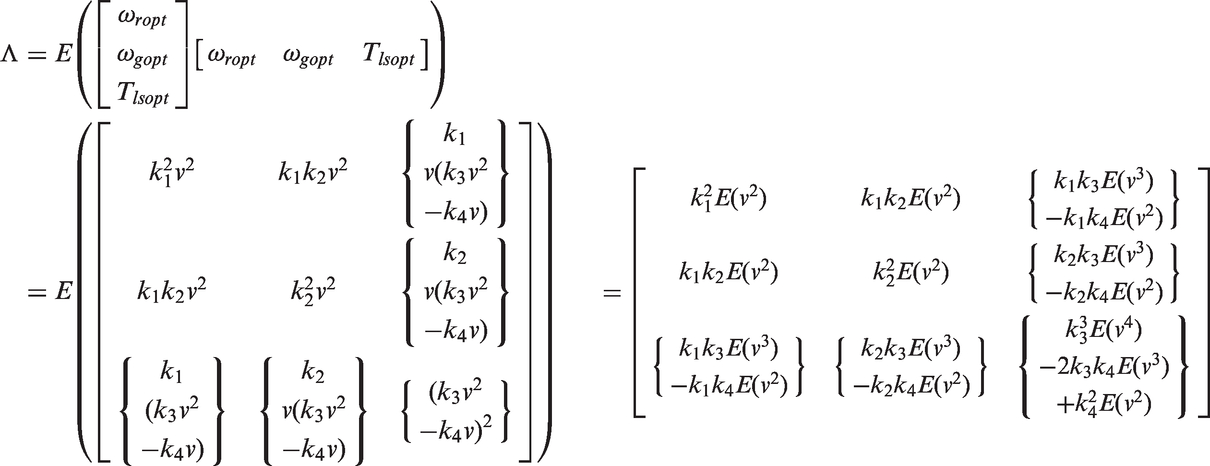
The measure 
From (34)-(37), it is observed that the DOC measures are relevant to structural parameters, including Jr,
3.3. The variation of the MPPT efficiency versus structural parameters obtained through simulations on NREL’s FAST turbine model
The MPPT efficiency, which is commonly used in the design and optimization of wind turbines, is chosen as the performance index of the MPPT control. And the formula for calculating the MPPT efficiency is (Femia et al., 2005; Boubekeur and Houria, 2011)

To calculate the MPPT efficiency, the simulation on CART3 wind turbine under turbulence is conducted by the FAST code (Jonkman and Buhl, 2005) and the MPPT control (i.e. the optimal torque control Kim et al., 2013) is applied.
Here, the flow chart for obtaining the relationship between the MPPT efficiency and structural parameters (i.e. Jr and Flow chart for obtaining the relationship between the MPPT efficiency and structural parameters through FAST simulations.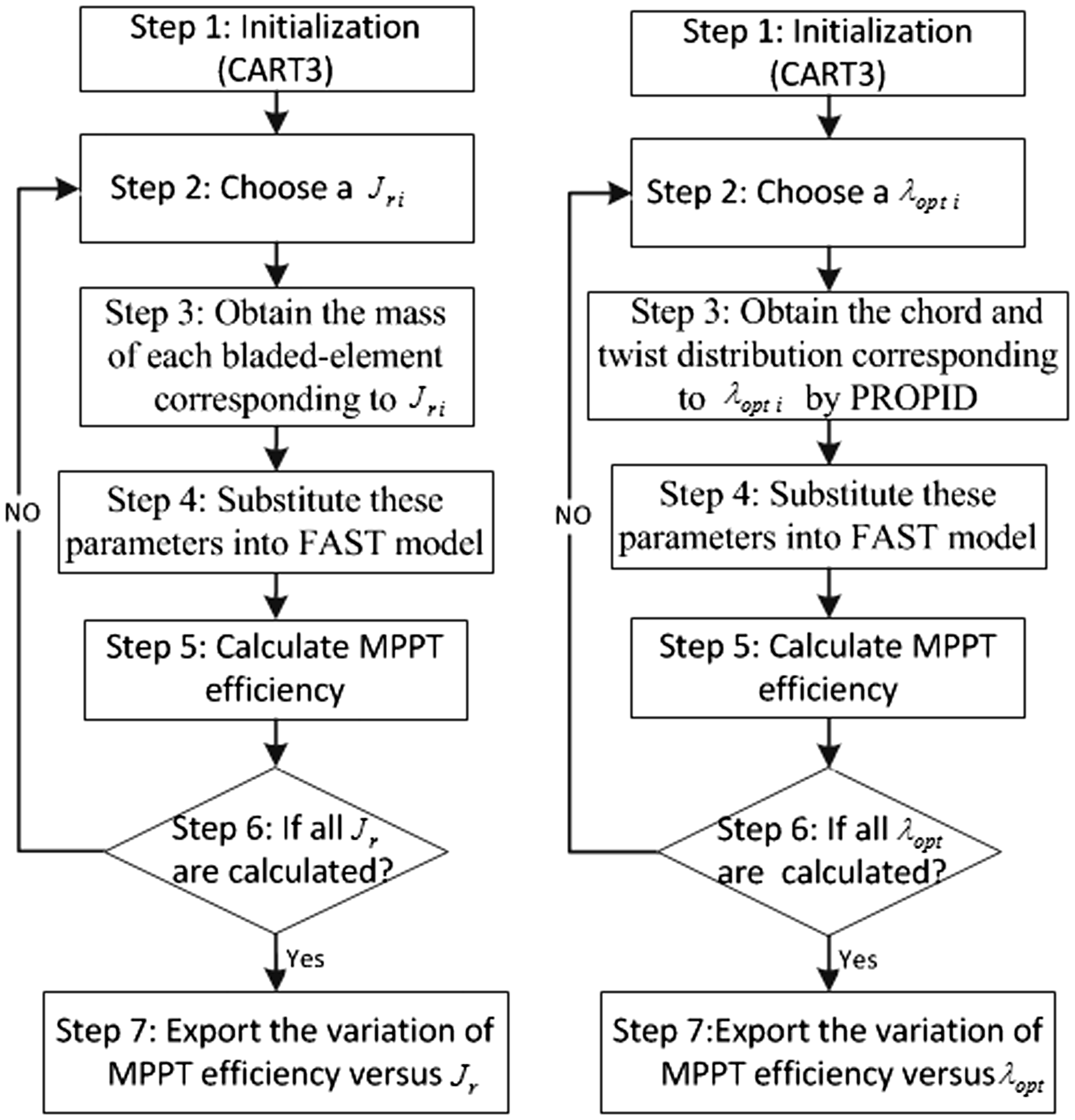
Step 1: Initialization.
Step 1.1: Choose the CART3 turbine, the parameters has been shown in Table 1.
Step 1.2: The variation interval of Jr is set to
Step 2: Choose a
Step 3: Obtain the mass of each blade-element corresponding to
Step 4: Substitute the mass of each blade-element into FAST model.
Step 5: Calculate the MPPT efficiency with respect to
Step 6: If all Jr are calculated, go to Step 7. Otherwise, return to step 2.
Step 7: Export the MPPT efficiencies corresponding to different Jr. Then, the variation of the MPPT efficiency versus Jr is obtained and shown in section 3.4.
3.4. Simulation and verification
According to section 3.2 and 3.3, the relations of DOC measures and MPPT efficiency to structural parameters (i.e. Jr and
3.4.1. The relationship between the DOC measures and structural parameters
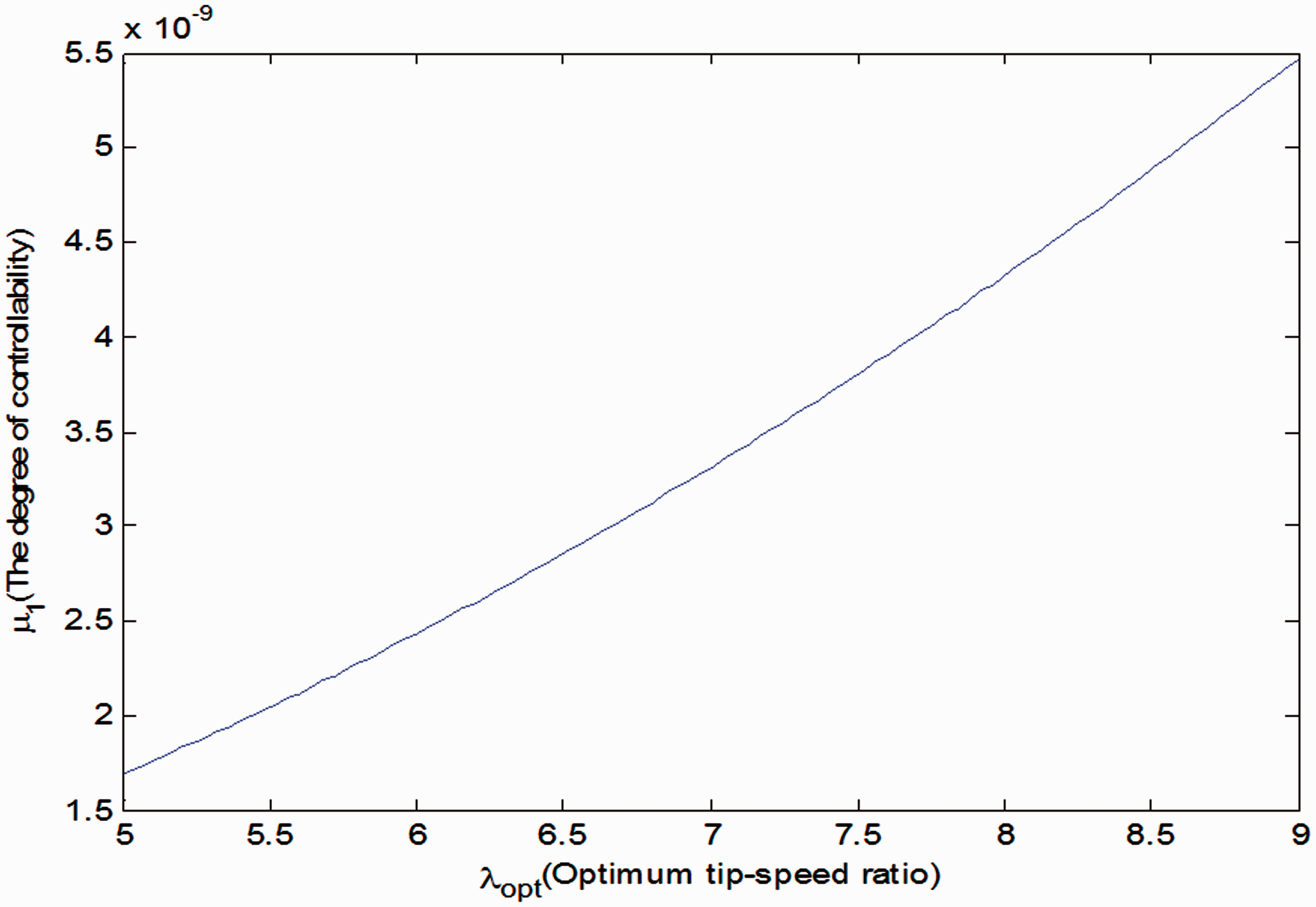
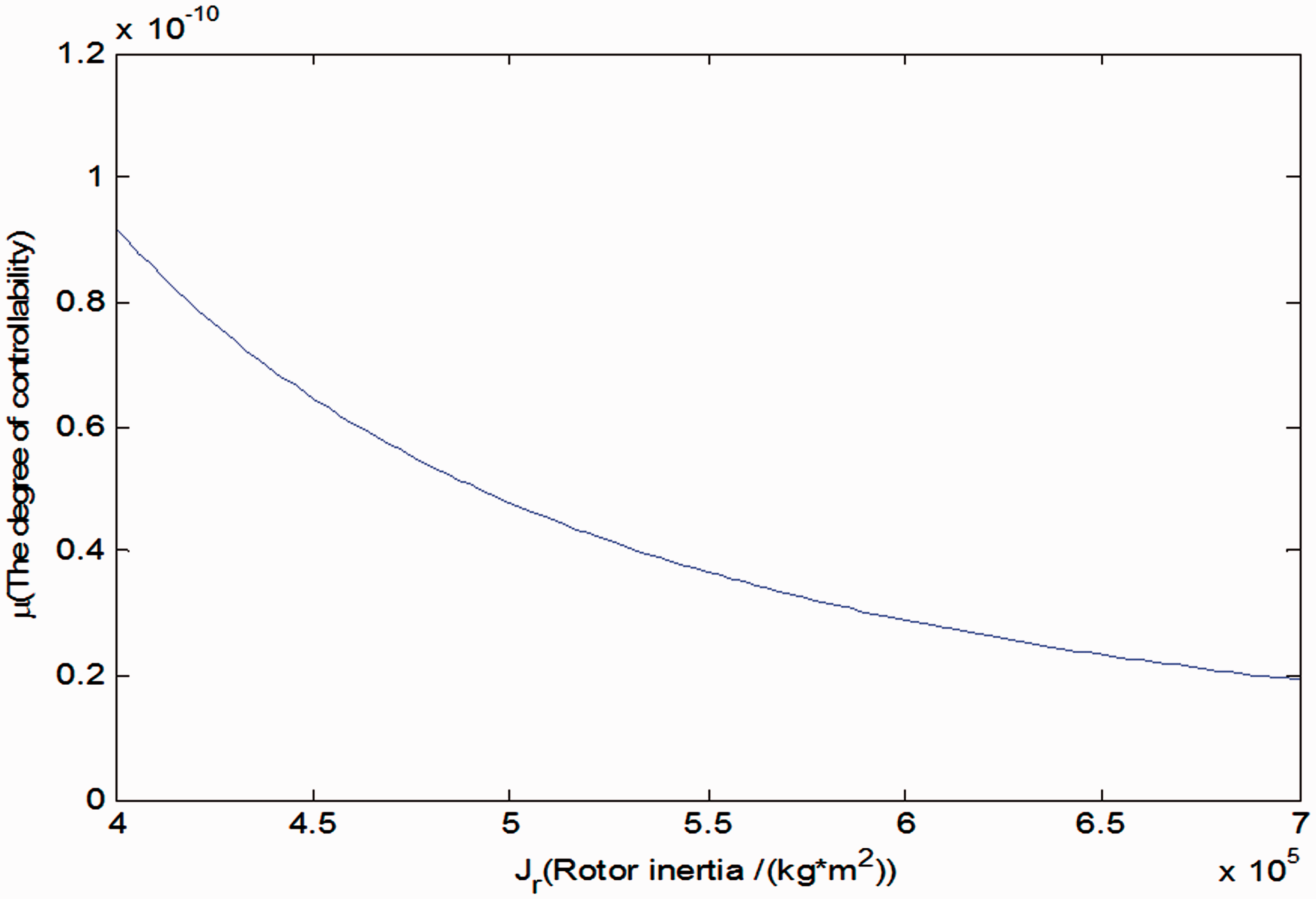
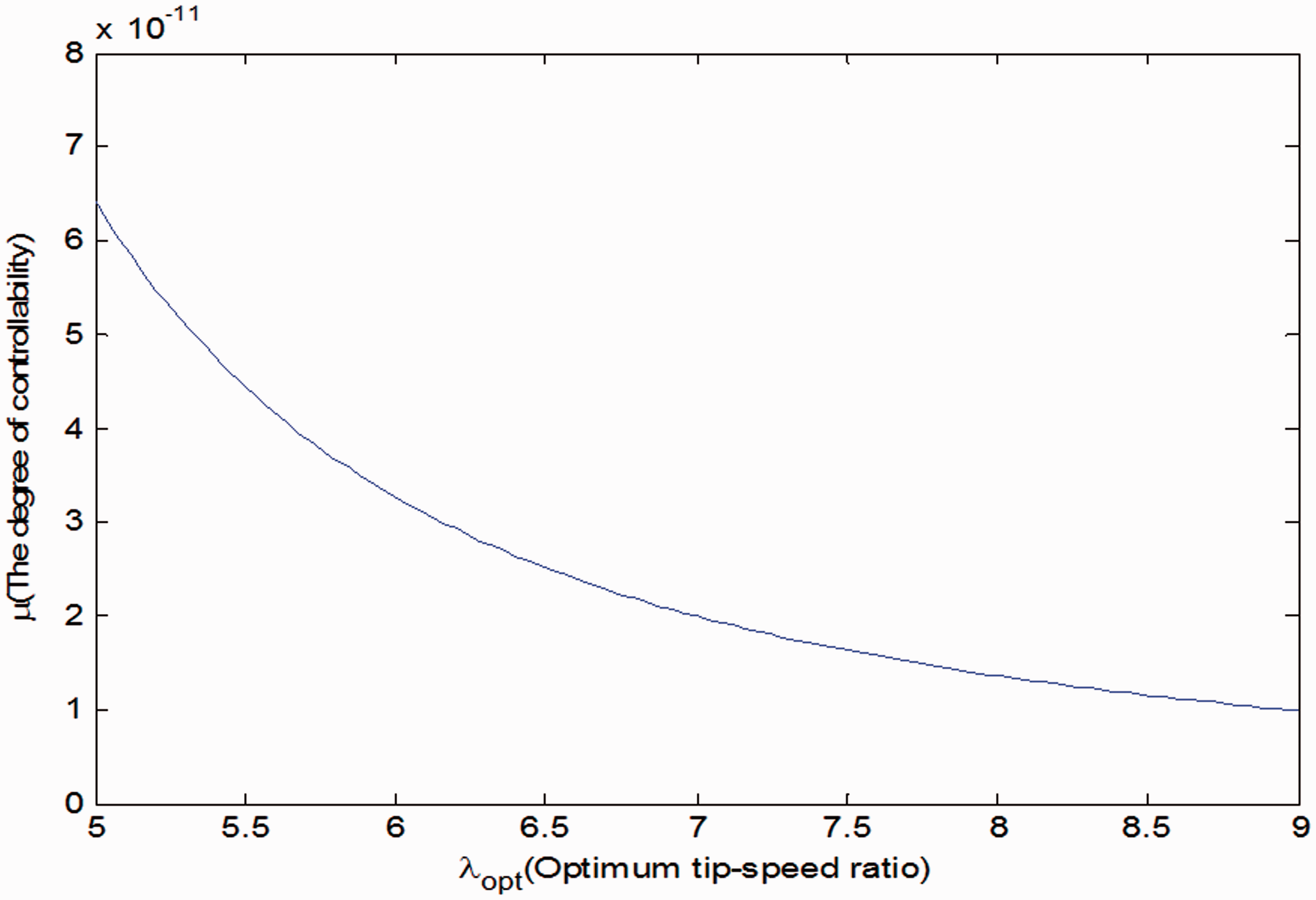
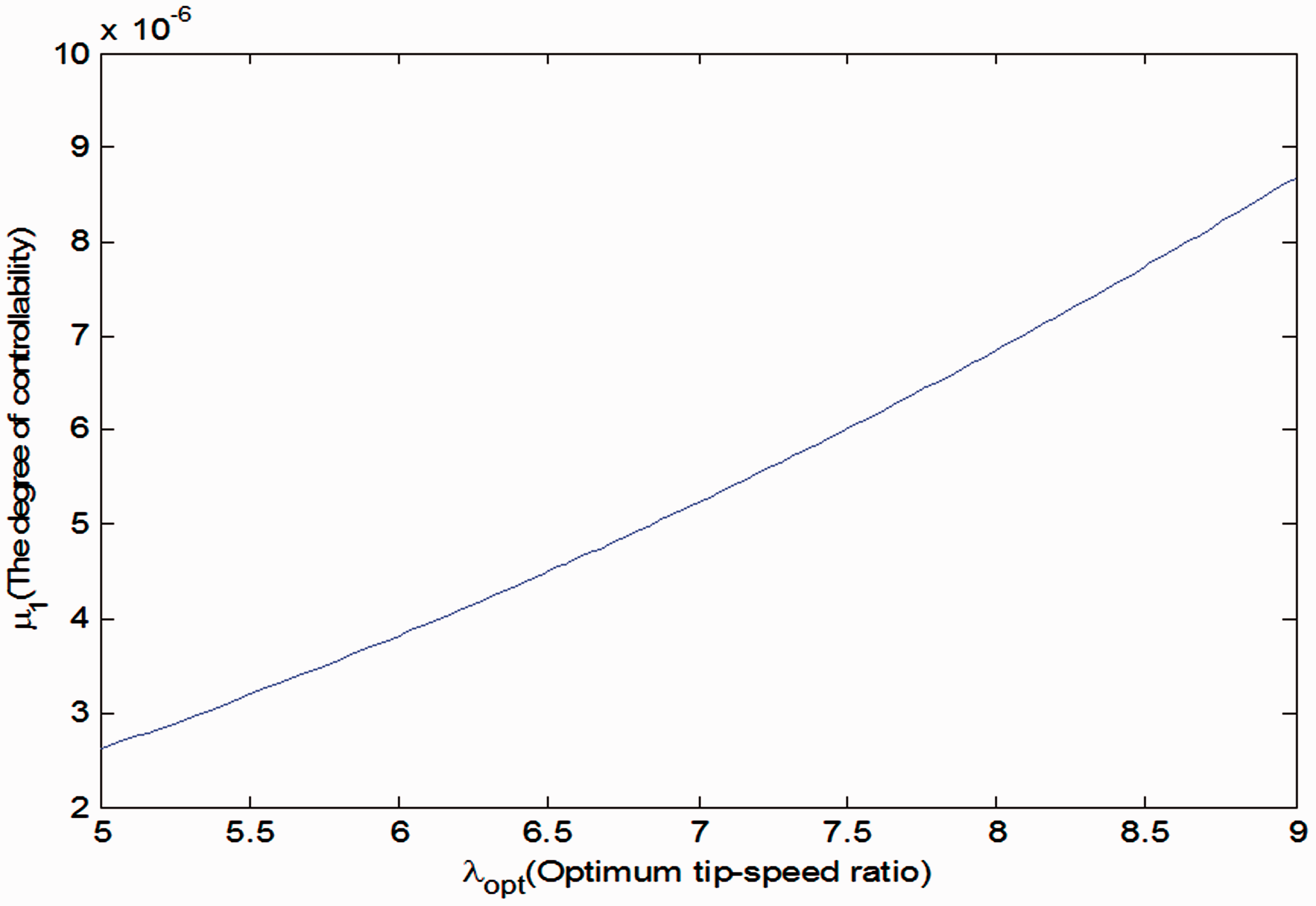
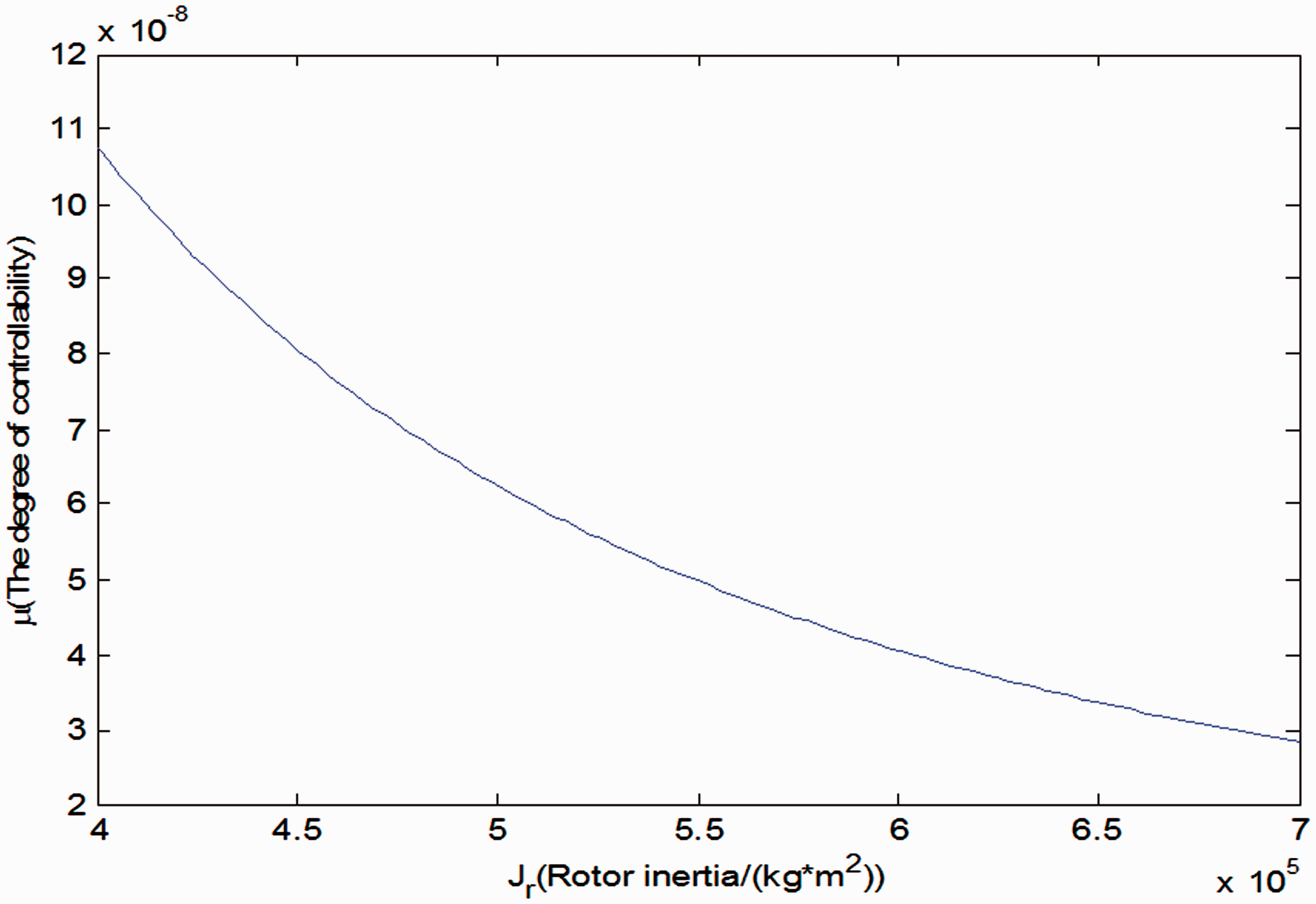
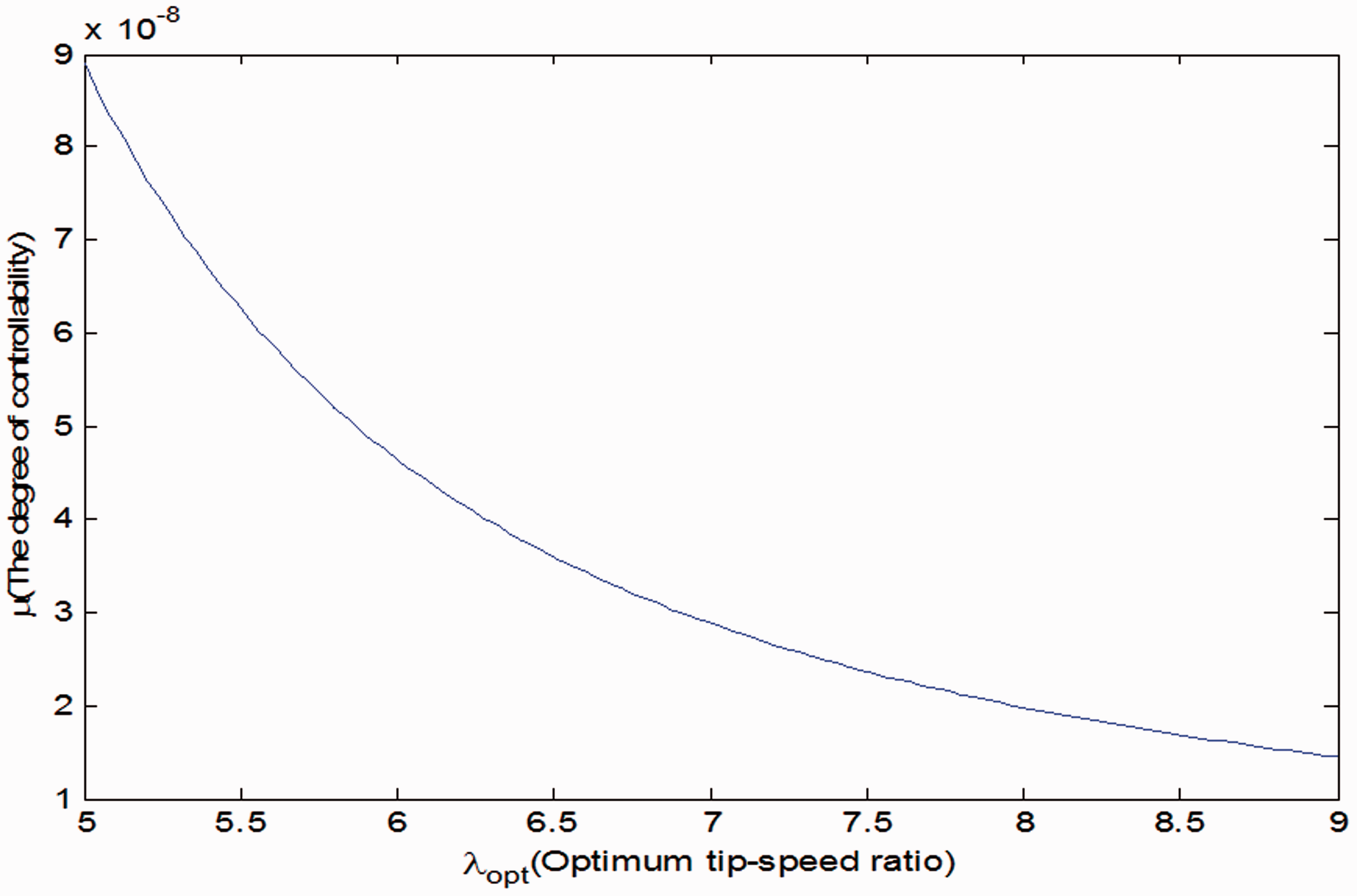
According to the expressions of DOC measures derived in section 3.2.2, the relations of the DOC measures to Jr and The variation of the DOC measures versus Jr and The relationship between the DOC
Based on the single-mass model, the relations of the new measure μ proposed in the paper to Jr and The variation of the DOC measures versus Jr and The relationship between the DOC μ and rotor inertia Jr. The relationship between the DOC μ and optimum tip-speed ratio
Based on the two-mass turbine model, the relationships of the measure The relationship between the measure The relationship between the measure The relationship between the measure μ and Jr. The relationship between the measure μ and 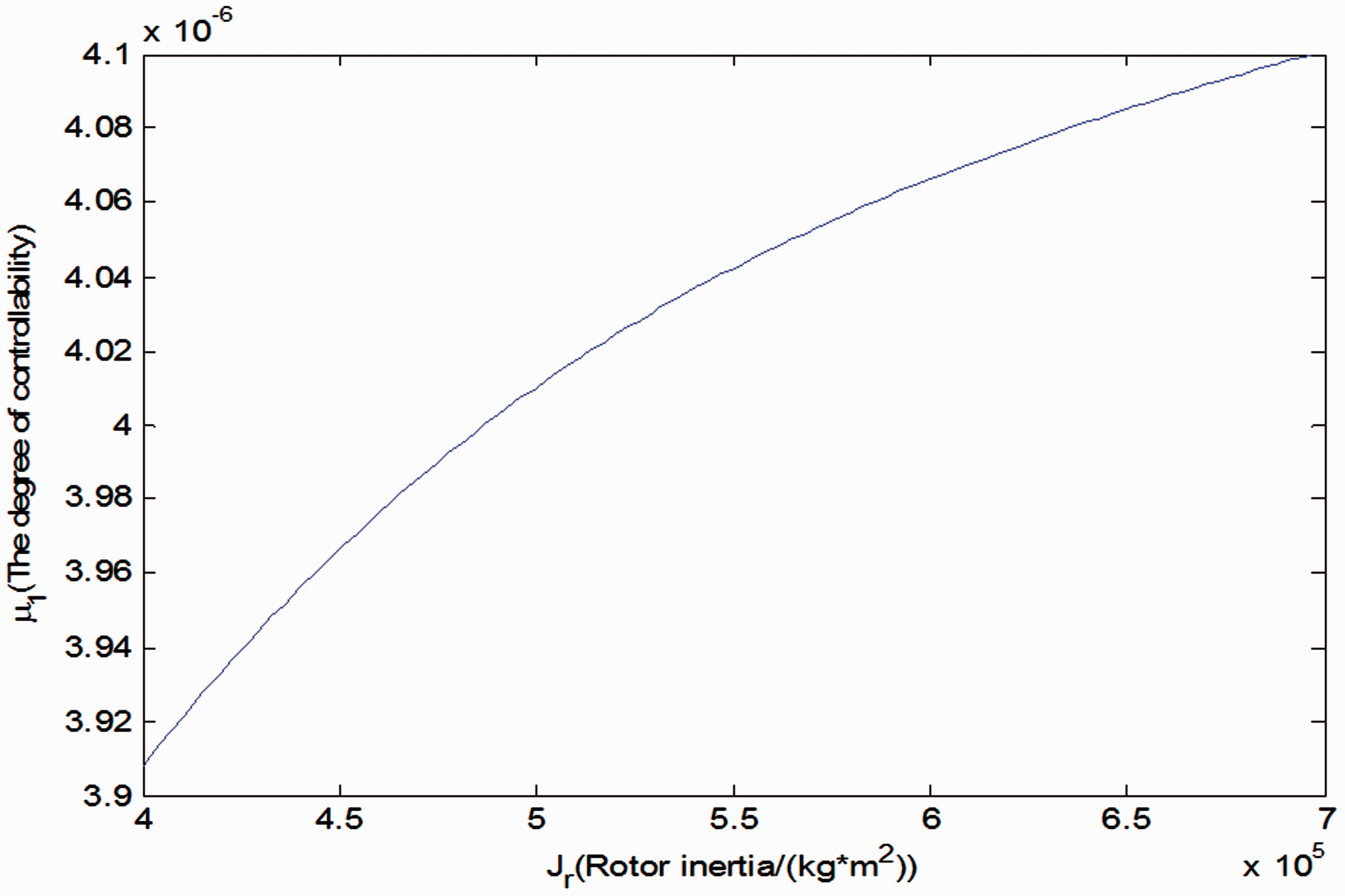
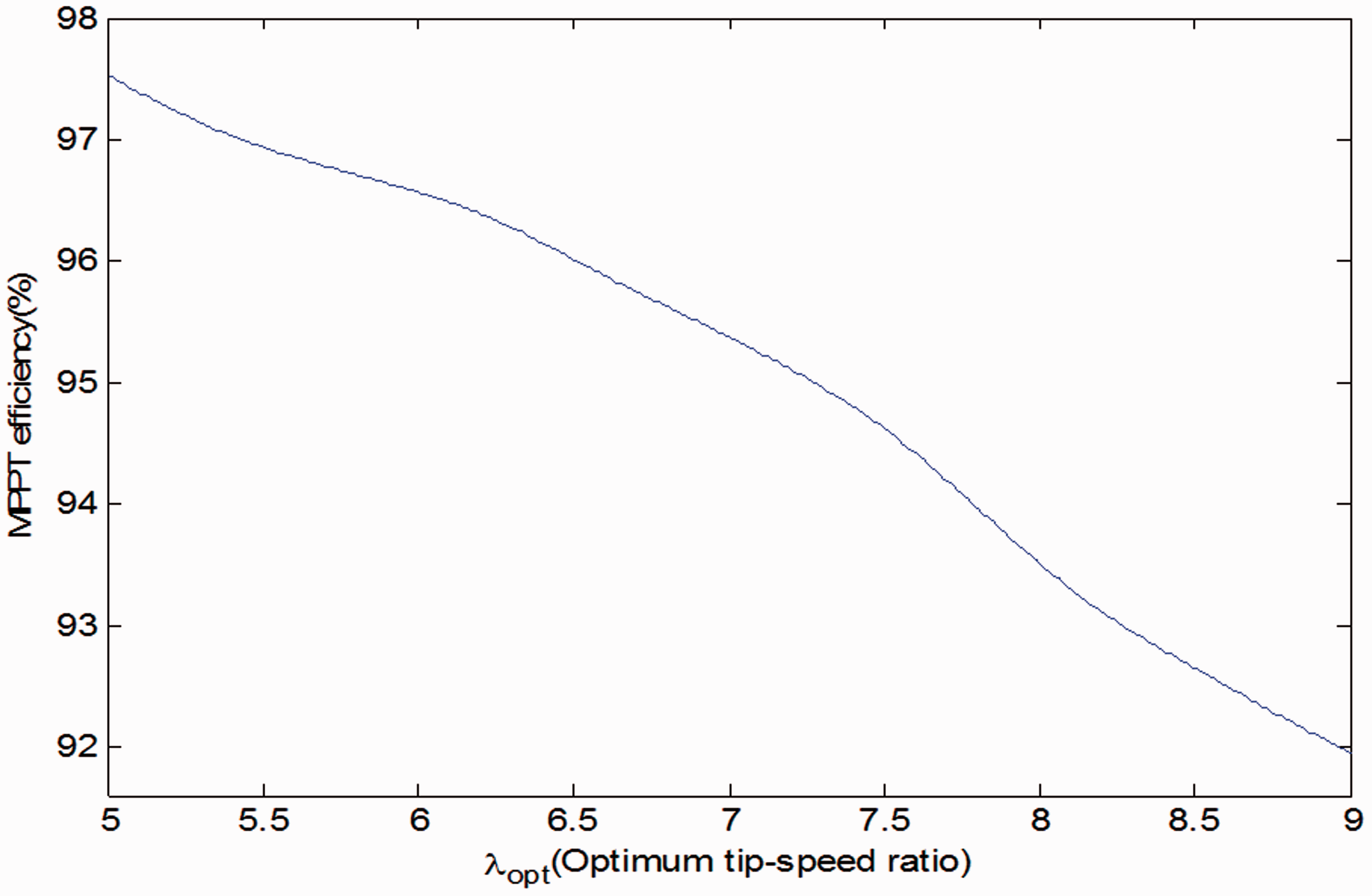
3.4.2. The relationship between the MPPT efficiency and structural parameters
According to the flow chart presented in section 3.3, the variations of MPPT efficiency versus Jr and The relationship between MPPT efficiency and Jr. The relationship between MPPT efficiency and 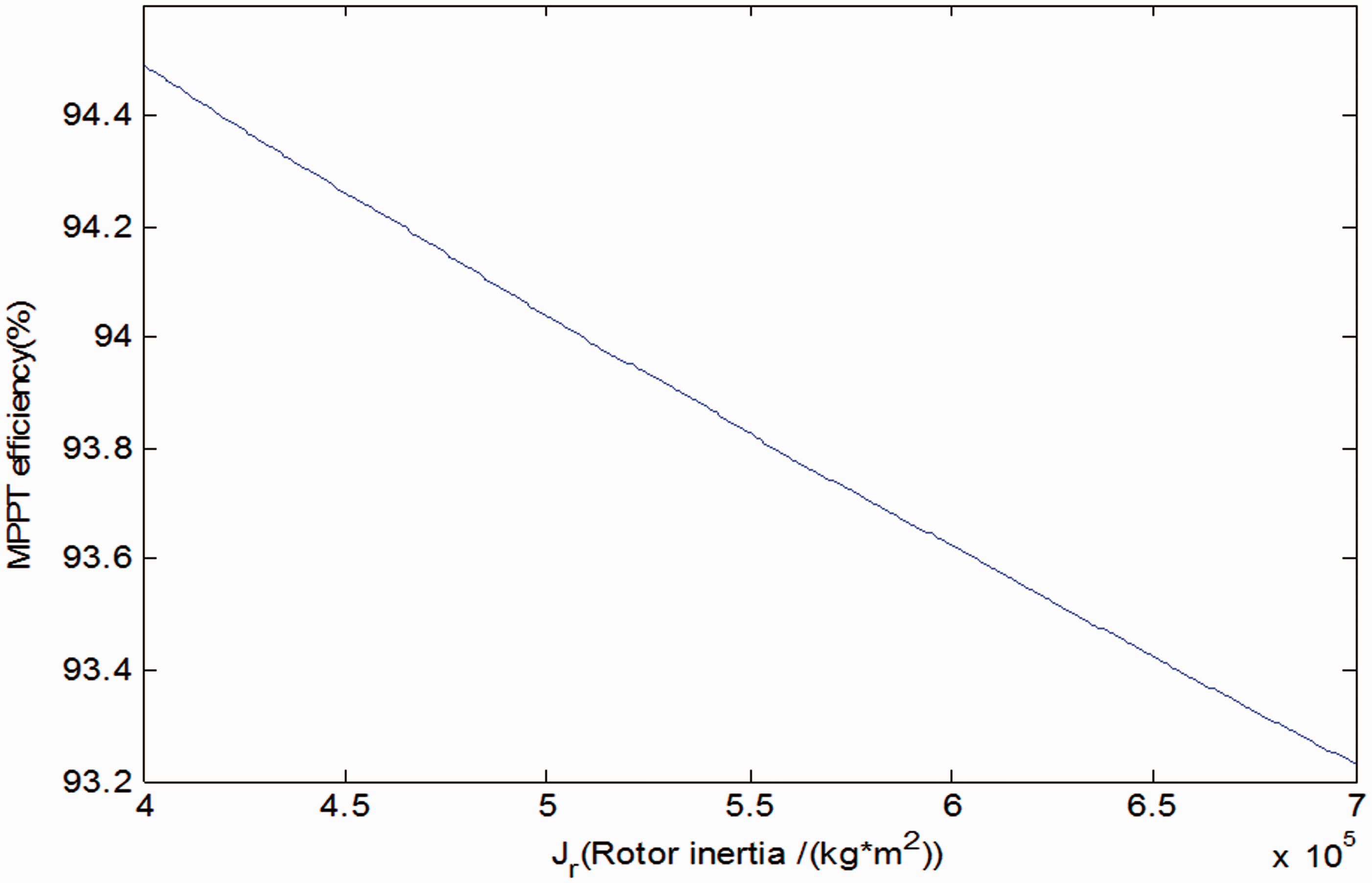
3.4.3. The relationship between the DOC measures and MPPT efficiency
Based on the results obtained from section 3.4.1 and 3.4.2, the variations of DOC measures and MPPT efficiency versus structural parameters are further compared, as shown in Figure 15–22.
The relation of the DOC measures based on the single-mass model to MPPT efficiency The relationship between the DOC
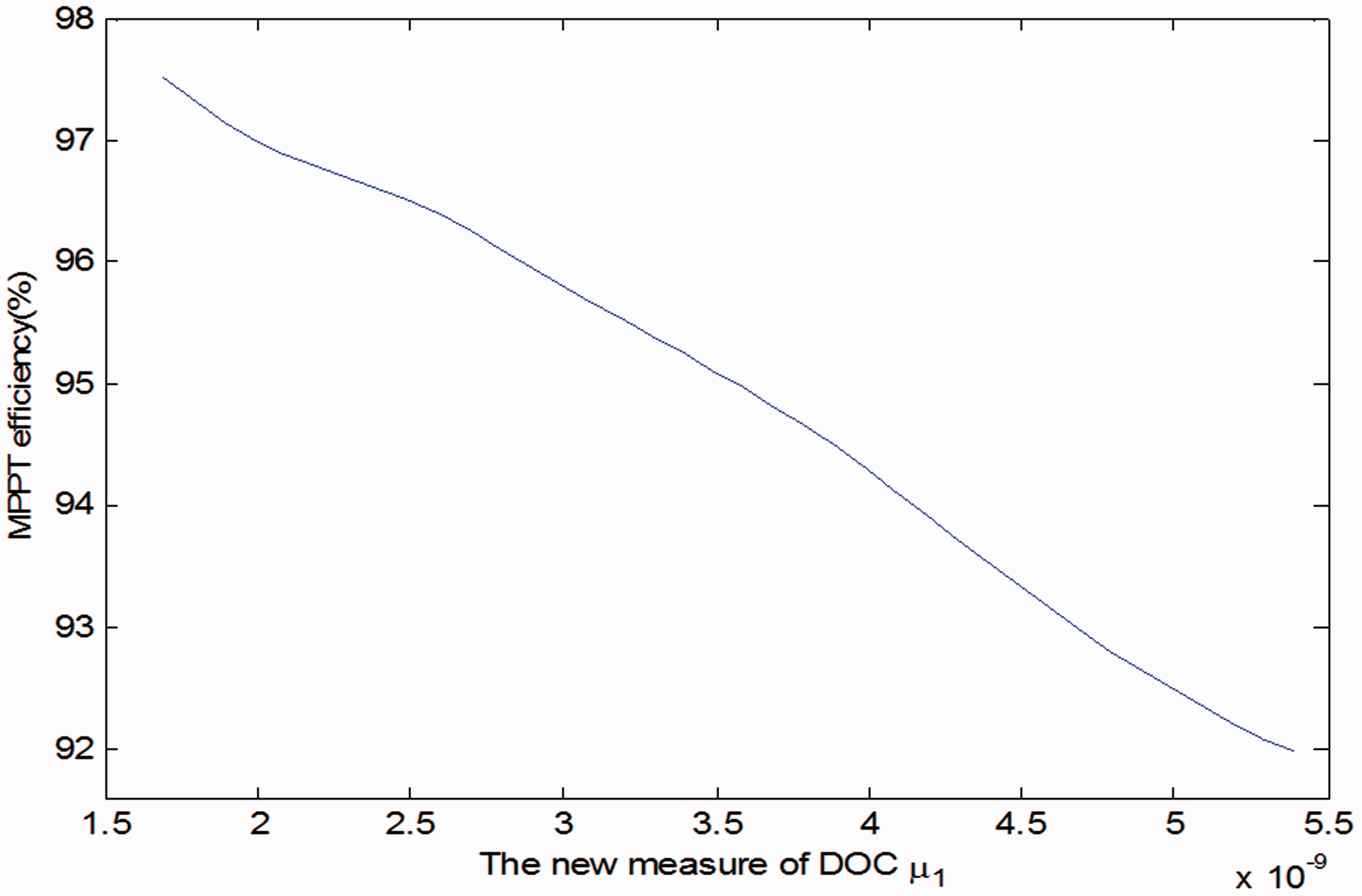
First, the variation of the DOC measure The comparison between two kinds of energy for wind turbine system.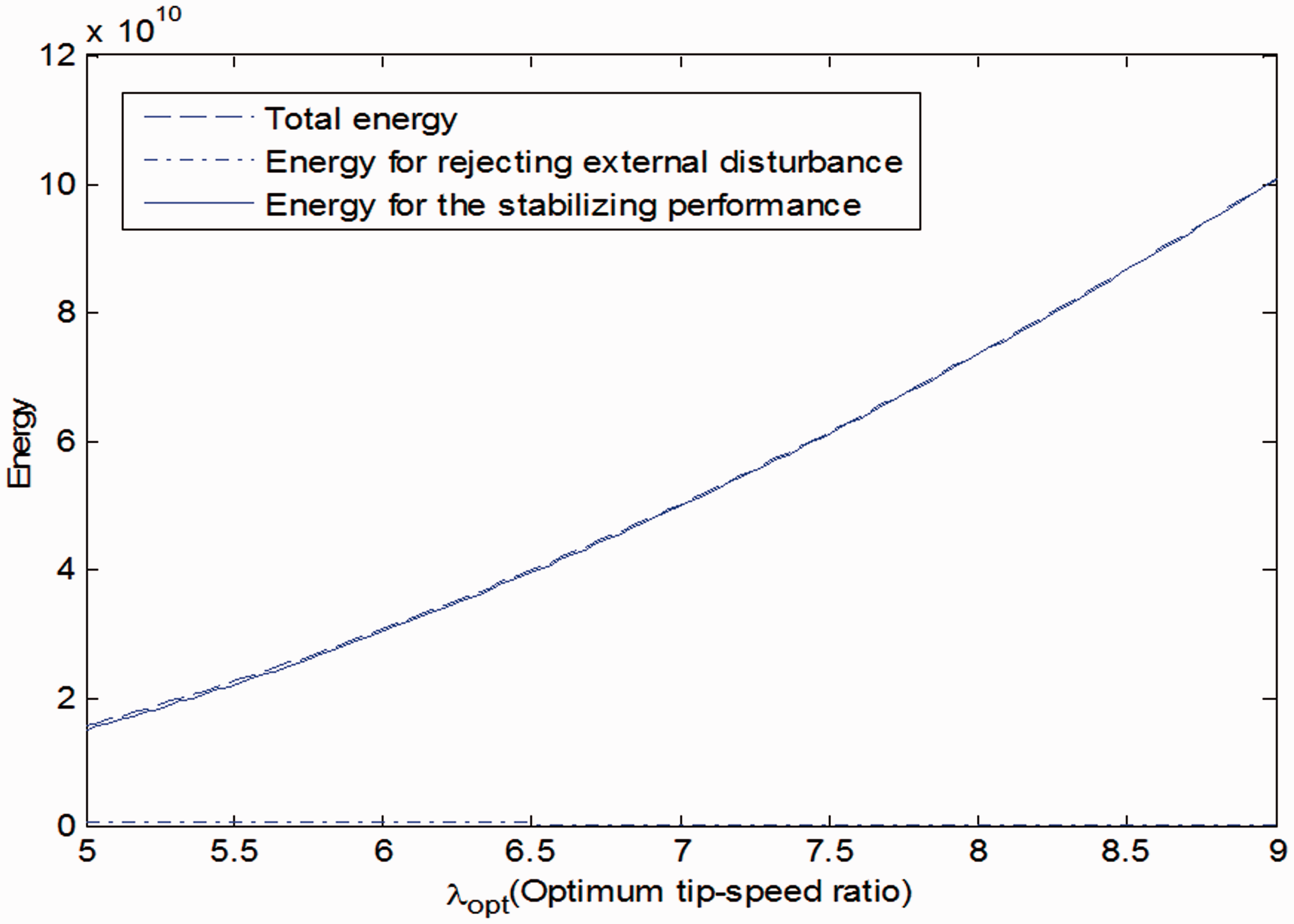
Furthermore, according to Figure 16, the energy for stabilizing performance, which is not considered in the definition of
As shown in Figure 17–18, the new measure μ is positively correlated with the MPPT efficiency. Therefore, it can be concluded from Figure 13–14 and Figure 17–18 that the relation of the proposed measure to turbine parameters is coincided with the engineering observations (Johan et al., 2006; Chun et al., 2013) that a higher MPPT efficiency can be achieved by decreasing Jr and The relation of the DOC measures based on the two-mass model to MPPT efficiency The relationship between the DOC μ and MPPT efficiency when Jr is changed. The relationship between the DOC μ and MPPT efficiency when
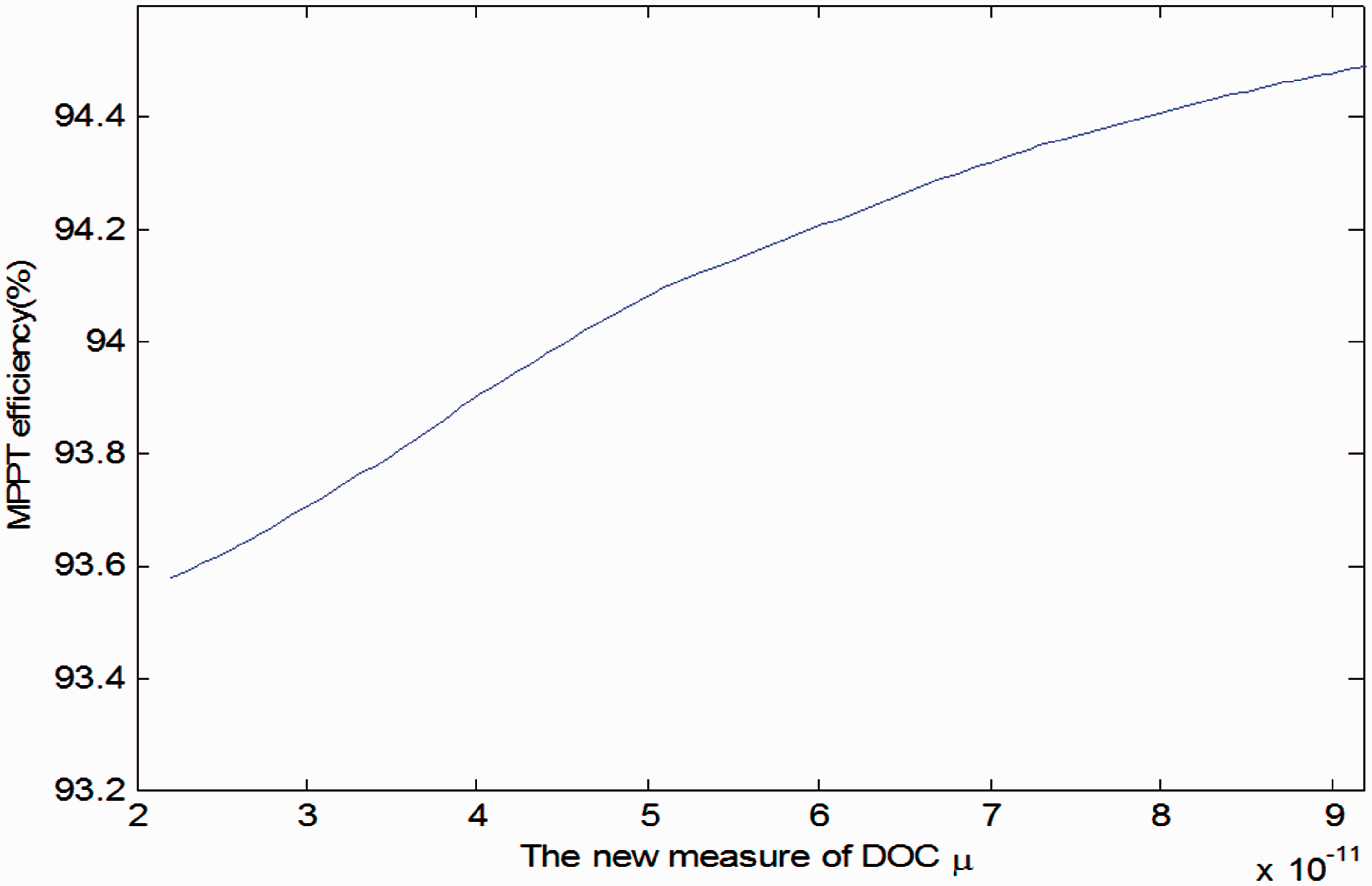
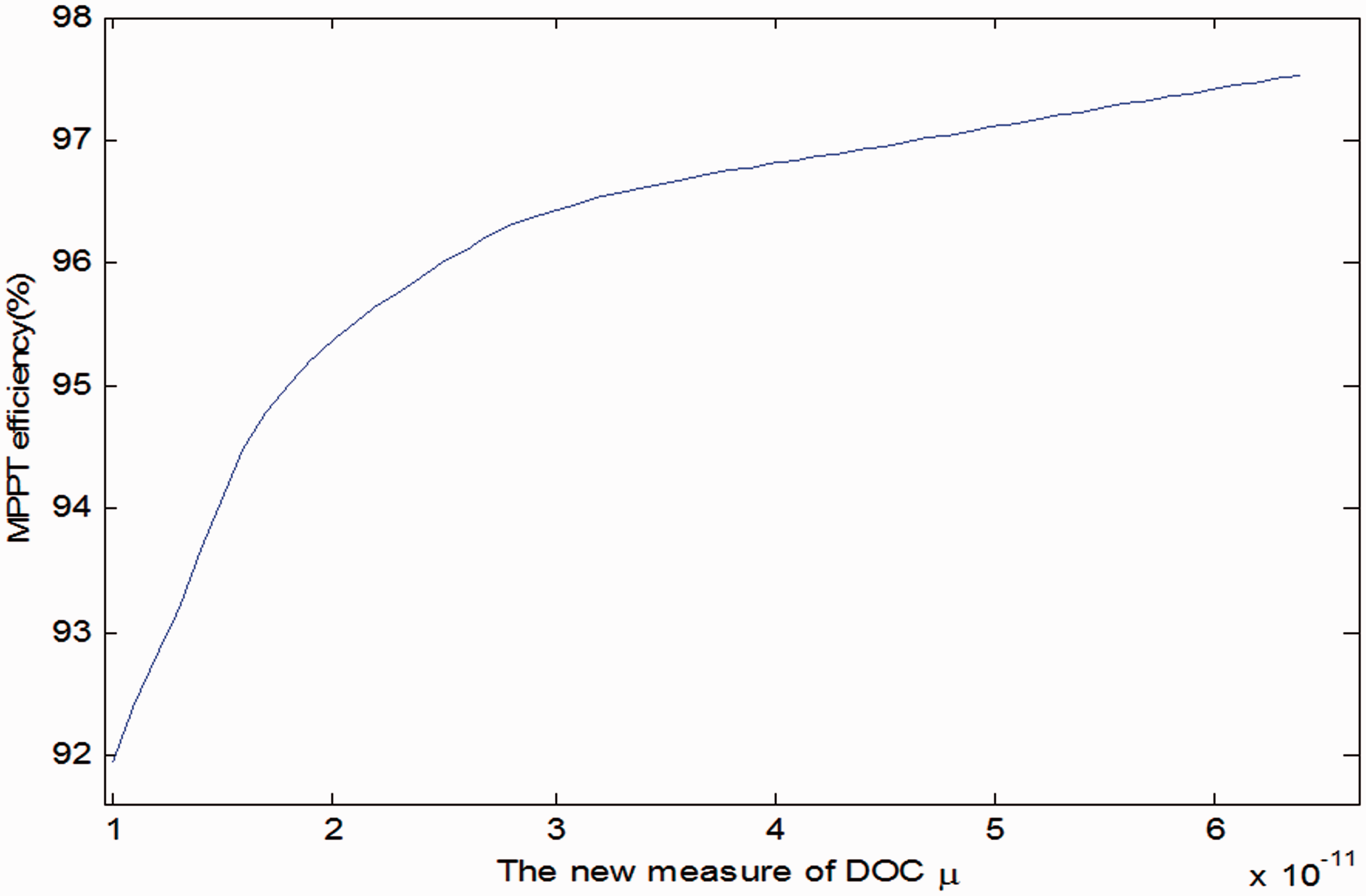
Similarly, based on the two-mass model, the variations of the measure The relationship between the DOC The relationship between the DOC The relationship between the DOC μ and MPPT efficiency when Jr is changed. The relationship between the DOC μ and MPPT efficiency when 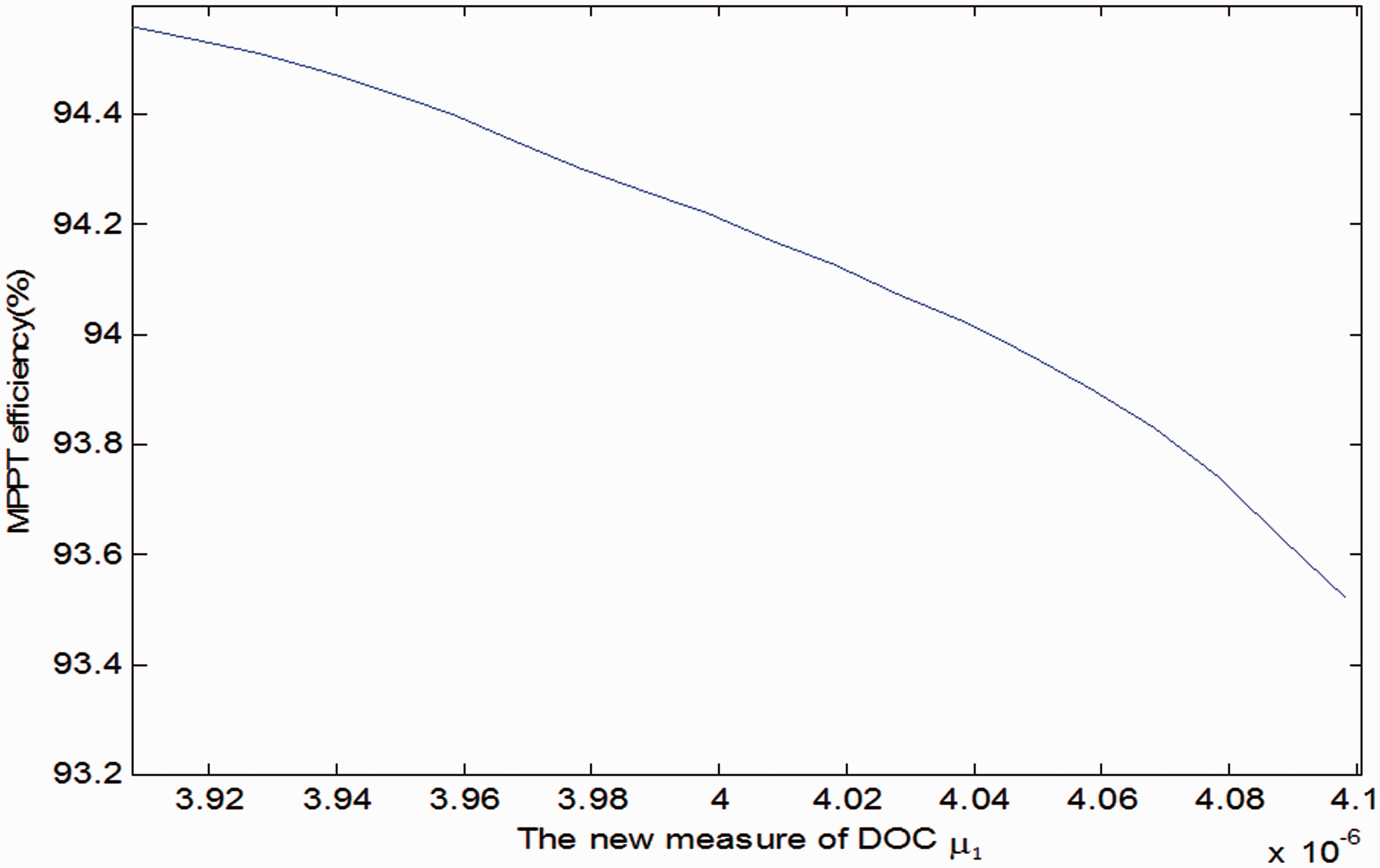

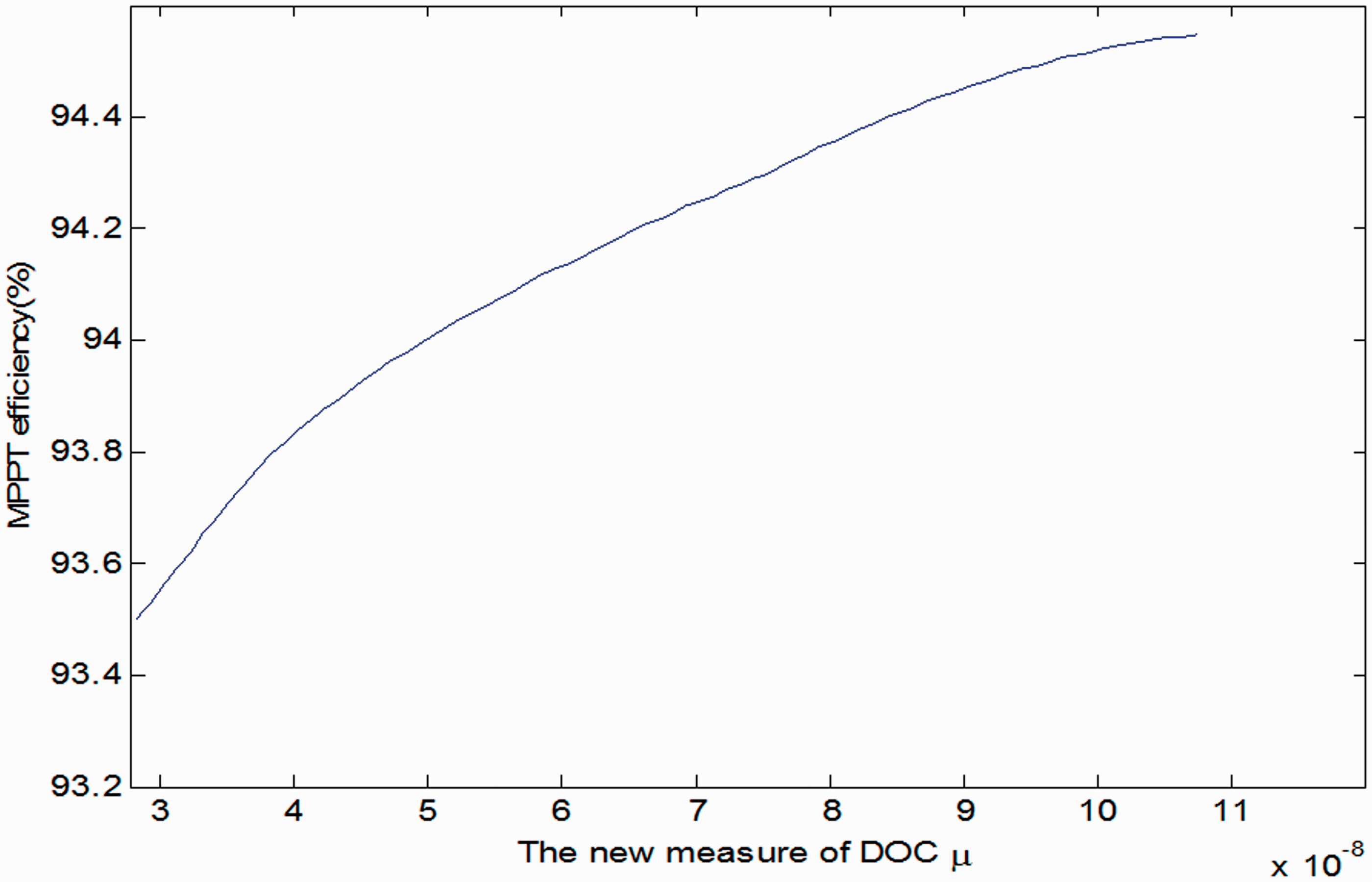
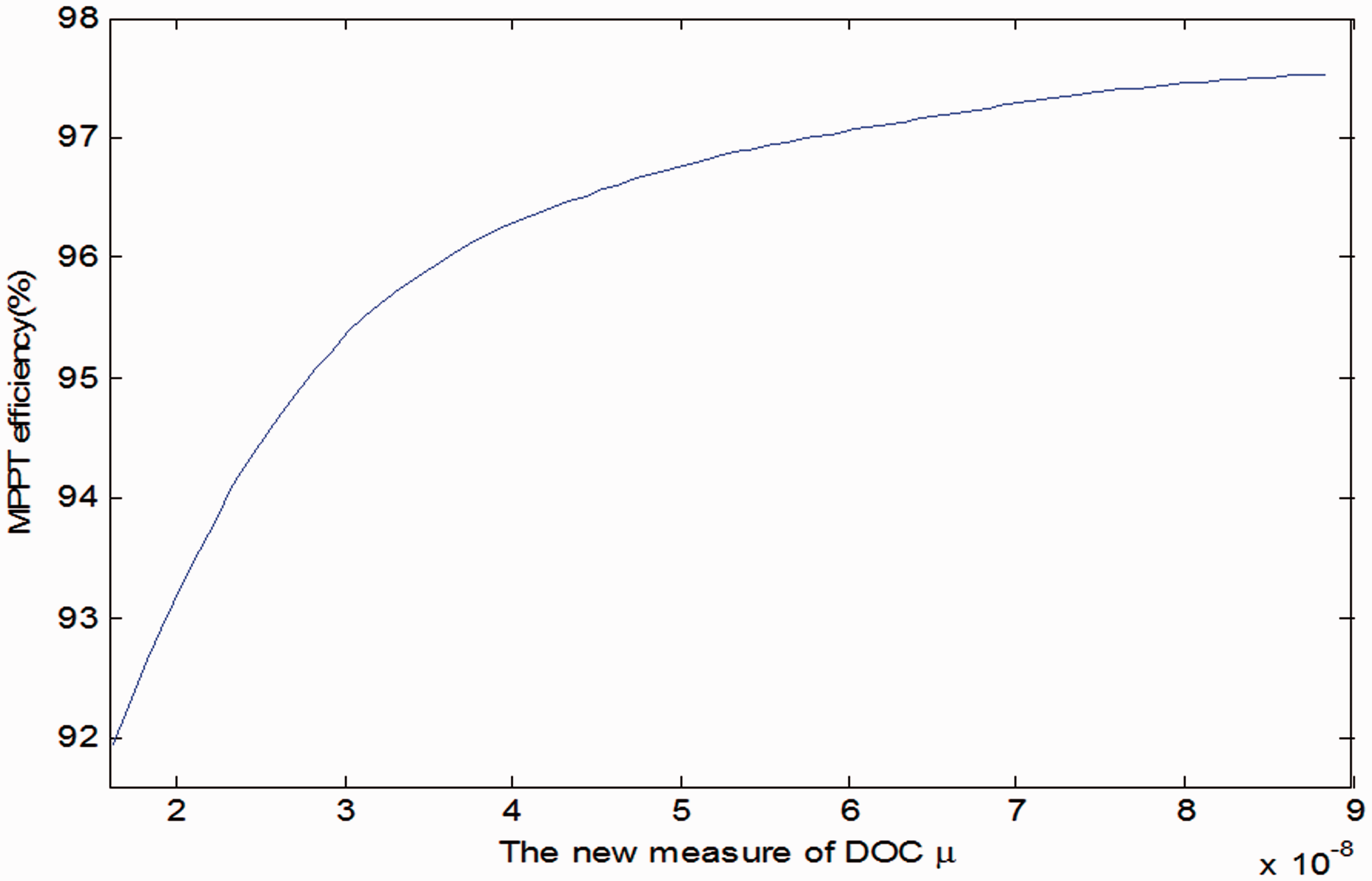
In summary, according to the above simulation results, the variation of the new DOC measure proposed in this paper is in accordance with the one of MPPT efficiency with change of turbine parameters. This indicates that the new DOC measure rather than the measure in Kang et al. (2009) is suitable for the design and optimization of structural parameters of wind turbines.
4. The application and verification of the new measure to Mass-spring-damper system
In this section, a mass-spring-damper system with a matched or unmatched disturbance (Kang et al., 2009) is analyzed, as shown in Figure 23.
Three-degree-of-freedom mass-spring-damper system.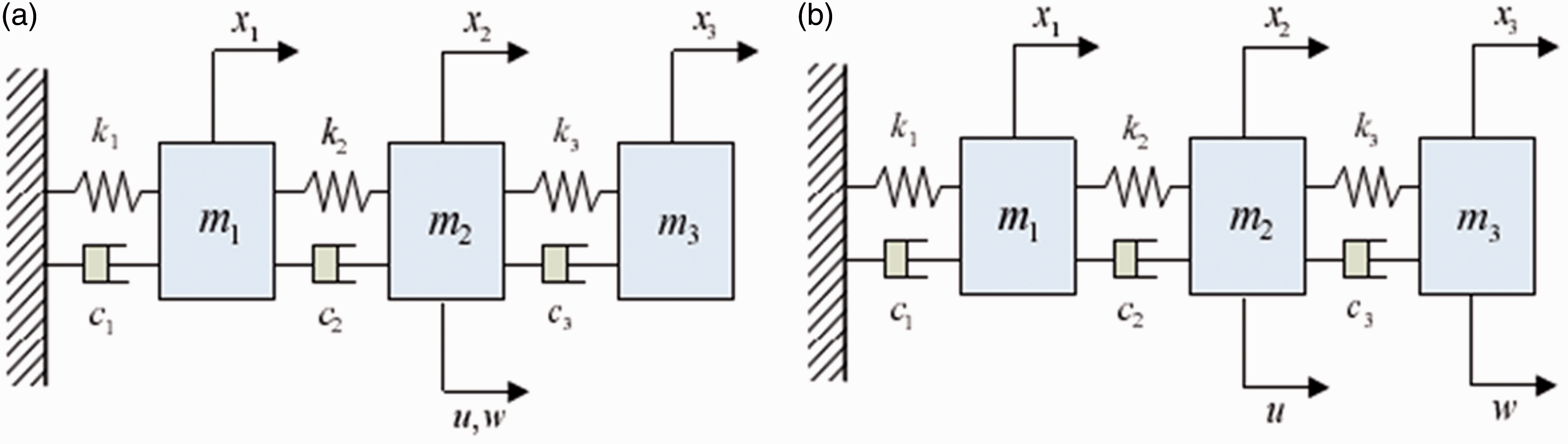
The state-space representation of the mass-spring-damper system is expressed as

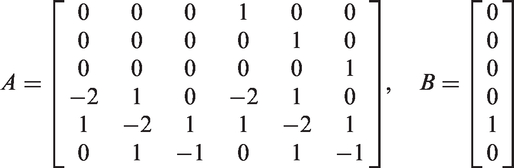
If the disturbance is matched, the matrix D is given by


If the disturbance is unmatched, the matrix D is given by


Obviously, it is demonstrated by equations (40) and (41) that the measure in Kang et al. (2009) is suitable for the aforementioned mass-spring-damper system. As mentioned in Remark 5, because the DOC measure proposed in this paper is equivalent to the measure in Kang et al. (2009) for indicating the DOC of asymptotically stable systems at steady state, the former is also applicable to the mass-spring-damper system.
The variation of

It is observed from Table 3 that when the final time tf approaches infinity,
5. Conclusions
In this paper, a new measure of DOC, in which the initial condition is denoted as a random vector, is proposed for linear system with external disturbance. Then, a wind turbine system and a mass-spring-damper system are given to verify the effectiveness of the proposed measure. For wind turbines, it can be observed from the simulation results that the variation of the proposed DOC measure to turbine parameters is consistent with that of MPPT efficiency with turbine parameters.
It is also observed that when using the same MPPT control, the higher MPPT efficiency can be achieved by the wind turbine with the larger value of DOC measure which can be obtained by reducing rotor inertia and optimum tip-speed ratio. This implies that the proposed DOC measure can be further employed to guide the design and optimization of the structural parameters of wind turbines.
Footnotes
Declaration of Conflicting Interests
The author(s) declared no potential conflicts of interest with respect to the research, authorship, and/or publication of this article.
Funding
The author(s) disclosed receipt of the following financial support for the research, authorship, and/or publication of this article: This work is supported by National Natural Science Foundation of China (Grant No. 61174038, 61573186, 61203129, 61473151) and the Fundamental Research Funds for the Central Universities (30915011104, 30920140112005)