







Abstract
In this article, the vibration analysis of rotating moderately thick cantilever orthotropic plate is analytically investigated. Based on the first order shear deformation plate theory, the partial differential equations of motion are derived using Hamilton’s principle. The centrifugal inertia forces and Coriolis effects due to the rotation are all considered. The analytical approaches, both extended Kantorovich method and extended Galerkin method, are employed to obtain the solution of the problem. Results obtained by these two methods are compared with those available in the open literature and good agreements are observed. The effects of various parameters, individually or in combination, on the vibrational behaviors are analyzed in detail. From the studies, it is found that in the rotating plates, when the stiffness ratio increases, the crossing/veering phenomenon occurs in the lower mode orders and/or rotation speeds. The results show that for each stiffness ratio, the effect of hub radius ratio is more significant on the out-of-plane mode frequencies than on the in-plane ones.
Keywords
1. Introduction
Rotating blades are one of the principal parts in many industrial applications, such as turbine blades, aircraft blades, and propellers. In design of these systems, the knowledge about natural frequencies and mode shapes of structural components is necessary to avoid resonance and reduce vibratory damages. Actually, the free vibration characteristics are known as the important technical information in the design process (Narita, 2000). Rotating blades are prevalently modeled as rotating cantilever beams. Around 100 years ago, Southwell and Gough (1921) began the study of one-dimensional type models of the free vibration of airscrew blades. Since then, the extensive investigations on large aspect ratio beam type blades have been conducted (Leissa, 1981; Chen and Keer, 1993 ; White and Heppler, 1996; Ozgumus and Kaya, 2010 ; Arvin and Bakhtiari-Nejad, 2012; Lacarbonara et al., 2012; Sari and Butcher, 2012; Ramesh and Rao, 2013; Oh and Yoo, 2016).
It should be pointed out that beam theories cannot predict the behavior of rotating blades with small aspect ratios satisfactorily. As a matter of fact, with decreasing the aspect ratio, the vibration is affected by the chordwise bending modes. Therefore, for rotating low aspect ratio blades, a two-dimensional model has been developed. A literature survey reveals that, although many works have been made to understand the dynamics of rotating beams, far fewer efforts have been directed toward developing plate type formulation. The research in this area goes back to the pioneering work of Dokainish and Rawtani (1971). For modeling the typical rotating blade, they used an isotropic thin plate and used a finite element technique to determine the modal characteristics. The Coriolis effects were not considered in their formulation. Since then, the research in this field has been continued by various investigators. Applying the finite element method, Sreenivasamurthy and Ramamurti (1981) discussed the Coriolis effects on the first two lowest frequencies of rotating cantilever thin isotropic plates. Rao and Gupta (1987) assessed the free vibration characteristics of a rotating pretwisted small aspect ratio thin blade by using the Ritz technique. In that analysis, the Coriolis effects were not considered. Applying the Galerkin method and neglecting the Coriolis effects, Wang et al. (1987) studied the influence of rotational speed, setting angle, and hub for a thin plate as well as the effect of fiber orientation of composite laminates. Sathyamoorthy (1987) provided a review paper in which the vibration analysis of plates with different methods was discussed. By applying the thin plate theory, Yoo and Chung (2001) modeled and investigated the dynamic response of a rotating blade. Yoo and Kim (2002) applied the Kane and Rayleigh–Ritz methods to introduce the linear equations of the flapwise bending motion in a rotating thin plate at zero setting angle. Based on a linear discrete dynamic model, Yoo and Pierre (2003) studied the modal characteristics of a rotating isotropic cantilever plate at a specified stagger angle (90°). Lim and Yoo (2006) extended the previous work to consider the effect of the accelerated in-plane motion on the rotating plate. A thin rotating plate model at zero-stagger angle was presented by Xiao and Chen (2006). Sinha and Turner (2011) derived the equation of motion for the transverse deflection of isotropic thin blade. The influence of warping of the cross-section is included in their work. They studied the twisted angle and aspect ratio only at the zero-stagger angle. The rotating isotropic thin plate was analyzed by Sun et al. (2013a). They determined the forced response, using a proportional damping model. The other related papers on rotating plates have also been reported by Rostami et al. (2016, 2018) and Sinha and Zylka (2017).
As the review shows, most of the publications concentrated on thin plates which are based on the Kirchhoff–Love assumptions. The classical plate theories are not adequate to predict the vibration characteristics of moderately thick plates. When the thickness of plate increases, the results of analysis are significantly influenced by the transverse shear deformation and rotary inertia effects. In the vibration analysis of moderately thick plates, the first order shear deformation plate theory (FSDT) is commonly used.
To the best of the author’s knowledge, the works reported on the vibration analysis of rotating thick element in this class of problems are limited.
For vibration analysis of rotating thick isotropic plates, Hashemi et al. (2009) developed a finite element formulation at the zero-stagger angle. They investigated the effects of parameters such as hub radius ratio, thickness ratio, and rotation speed on natural frequencies. Based on the thick shell theory, Sun et al. (2013b) developed a dynamic model for a rotating isotropic compressor blade. The eigenfrequencies and the influence of rotational velocity on the damping characteristics of system are studied. Sun et al. (2013c) also studied the vibration behavior of blade, particularly damping properties, using various coating layer configurations.
Given the lack of research on the rotating moderately thick orthotropic plates, in a nutshell, the aim of the current paper is to study the dynamic behavior of those with arbitrary stagger angle. Generally, the orthotropic property is a main physical property of a material and it has substantial effect on the frequency characteristics, especially in the rotating cases. Hence, according to such a view, the orthotropic plate is utilized in this investigation. The Hamilton’s principle is applied to derive the governing partial differential equations of motion. The theoretical formulations are based on the FSTD to account for rotary inertia and transverse shear deformation. The centrifugal inertia forces and Coriolis effects due to the rotation are also included. This work is a continuation of previous research conducted by Rostami et al. (2018) that was based on the classical plate theory. In fact, the purpose is to attend to issues that have not been evaluated before in detail and also the proposed mathematical model in the current study is suitable for analyzing thin to moderately thick rotating orthotropic plates. So, the presented paper significantly completes the Rostami et al. (2018), and provides a general framework to analyze the dynamics of rotating plates, which can be very beneficial for readers. In this paper, the analysis is performed by two methods: the extended Kantorovich method (EKM), which can be applied to many applications (Shufrin et al., 2009; Rahbar and Rostami, 2010, 2012), and extended Galerkin Method (EGM) are implemented to solve the equations, analytically. To ensure the accuracy and validity of the formulation and procedures, results are compared with the available data in the literature for a nonrotating case. For rotating cases, the results of two methods are compared with each other. A parametric study is undertaken, giving insight into the influences of thickness ratio, degree of orthotropy, rotation speed, stagger angle, hub radius ratio, and aspect ratio on the vibration characteristics. The present research evaluates the above effects both separately and simultaneously for a wide range of rotating thick plates. The Campbell diagrams of system are drawn and the transverse mode shapes of rotating rectangular orthotropic plates are provided as dimensionless parameters are varied. Because of the importance of resonant conditions, discussions are made on the crossing/veering phenomenon (C/V) between the out-of-plane modes as well as in-plane and out-of-plane ones, as the stiffness ratio and configuration are changed. Totally, the current paper tries to give information which can be useful in the design process.
The rest of this paper is organized as follows: Section 2 presents the governing equations and the boundary conditions, which are derived using Hamilton’s principle. In this section, the nondimensionalized equations of motion are attained; the solution procedures of the system equations are described in Section 3; the results are given and discussed in Section 4; and finally, the conclusions are presented in Section 5.
2. Mathematical derivation
Figure 1 is a schematic view of a rotating moderately thick rectangular orthotropic plate. One edge of the plate is clamped to a rigid hub of radius R and the other edges are free; l, b and h are denoting the length, width, and thickness of the plate, respectively. It is assumed that the hub rotates about its longitudinal axis with a constant angular velocity Ω, and φ is the stagger angle in respect to the plane of rotation. The xyz-coordinate system is introduced to describe the motion of the plate. The origin of the Cartesian system is located at the center of the clamped edge.
Geometry and coordinate system of the rotating plate.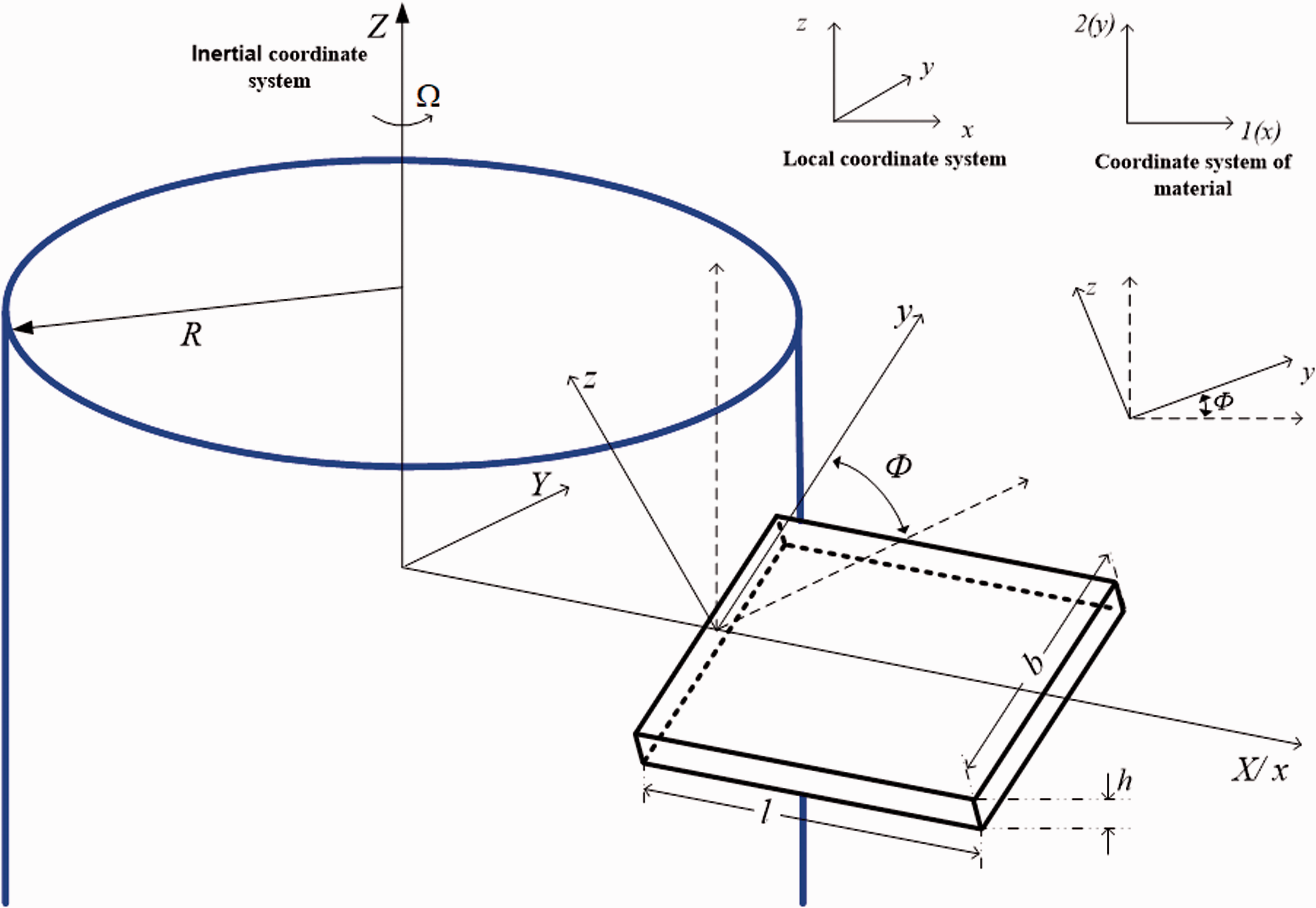
2.1. Governing equations and boundary conditions
According to the FSTD, the components of the displacement at a point are given as


The velocity vector in a rotating thick plate with respect to the inertial coordinate system is derived as the following form
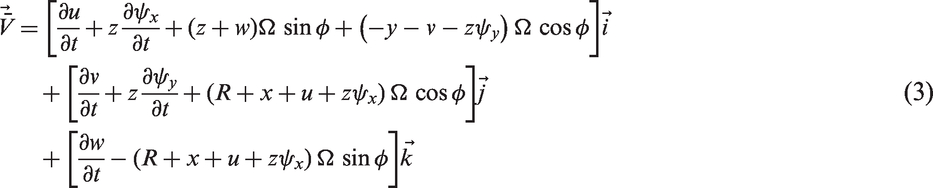
The kinetic energy, T and the strain energy, Us of the plate are given by the volume integrals as follows (Reddy, 2003)




According to the Hamilton’s principle (Meirovitch, 1997)

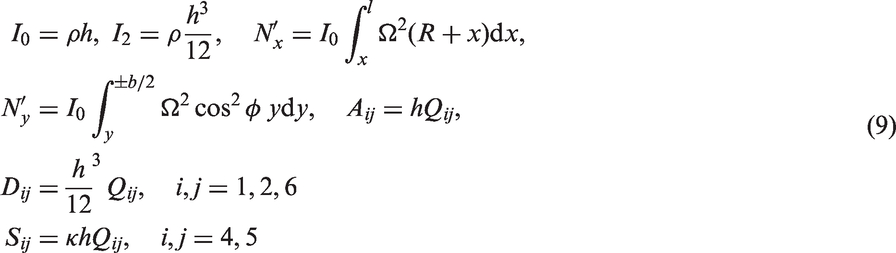
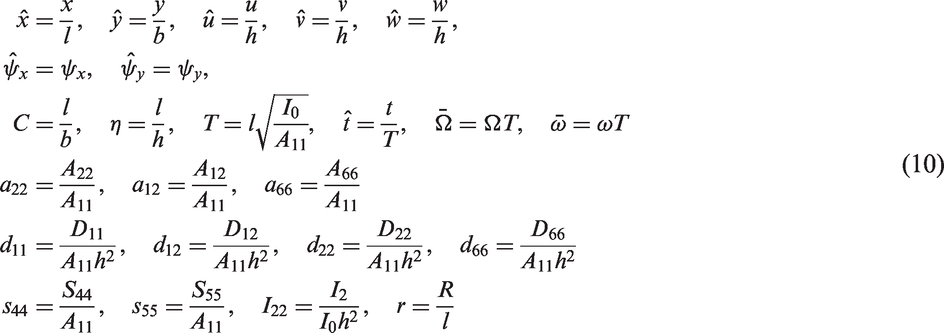
Therefore, the equations of motion are written in non-dimensional form as
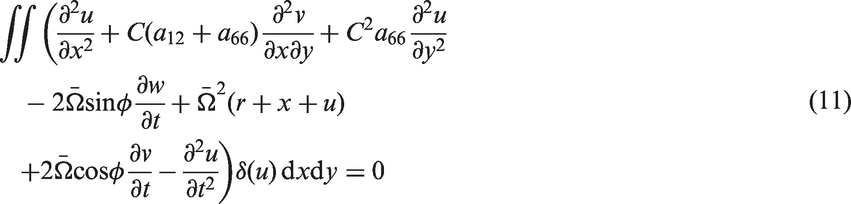
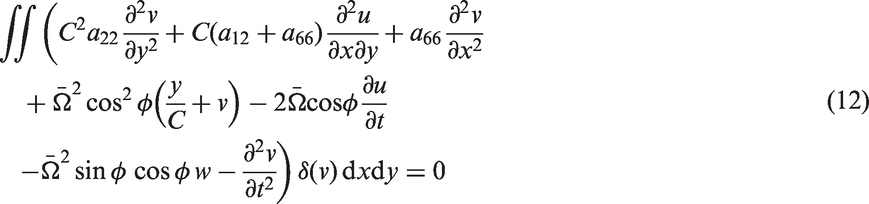
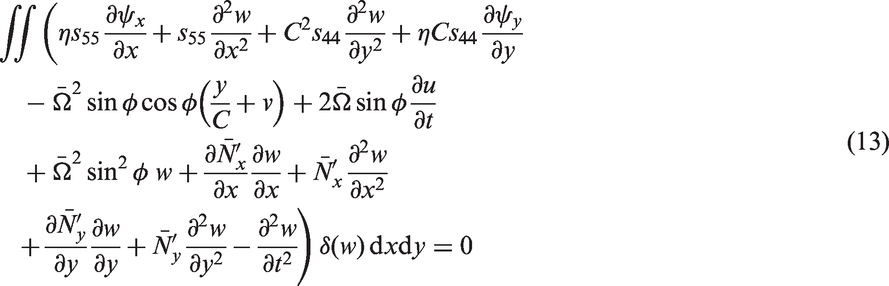
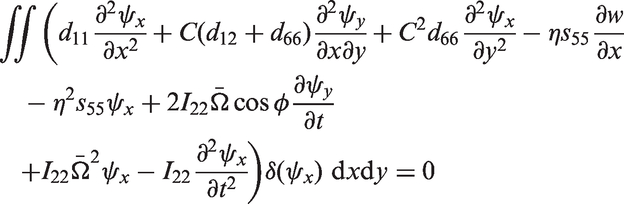
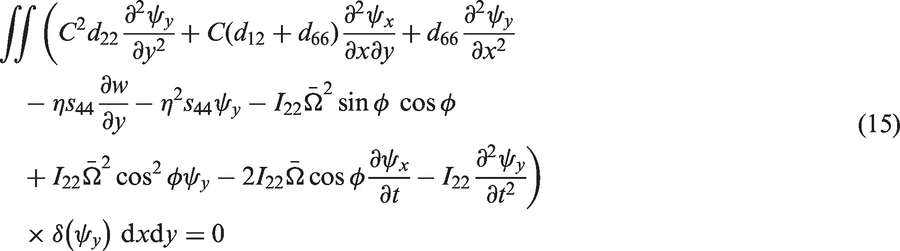
Also, associated boundary conditions in nondimensional form are

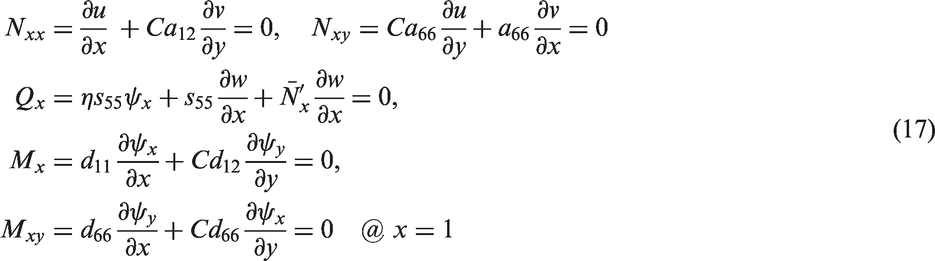
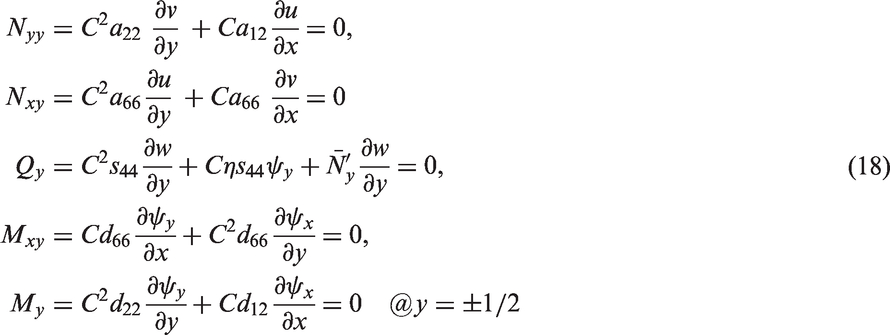
It is to be noted that hats (^) are eliminated from all the quantities.
3. Method of solution
In this section, the EKM and the EGM have been chosen to obtain the dynamic characteristics of the rotating thick rectangular orthotropic plates with cantilever boundary condition, described in equations (11)–(18).
To solve the equations of motion by EKM, the separable solution forms for displacements and rotations are assumed, so that
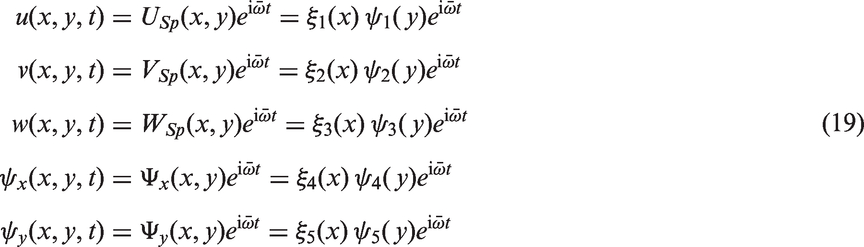
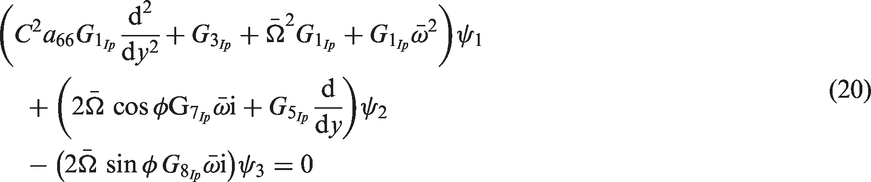

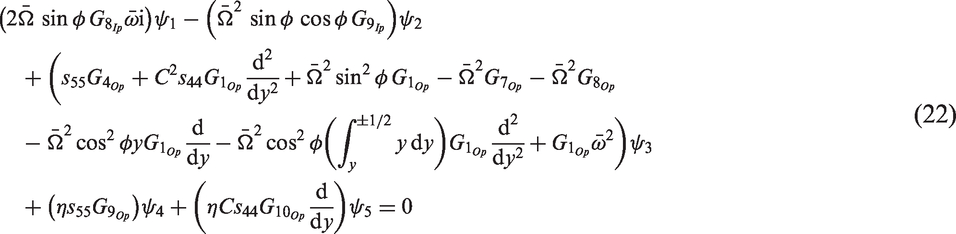
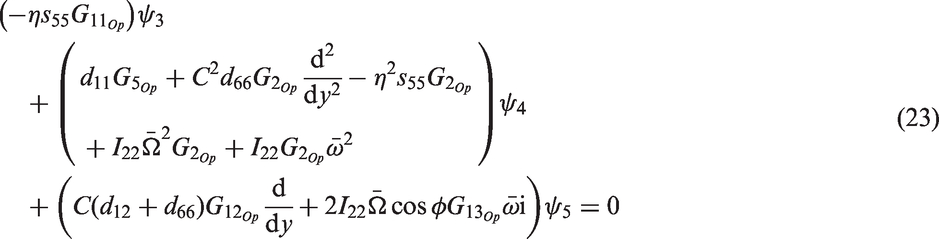
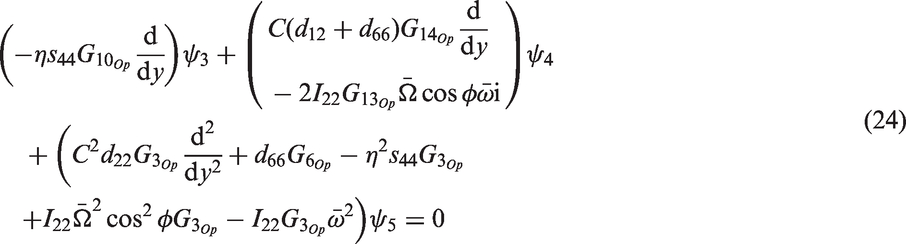
G’s are defined in Appendix A. By taking the similar procedure, one can determine the other set of ODEs in the x-direction
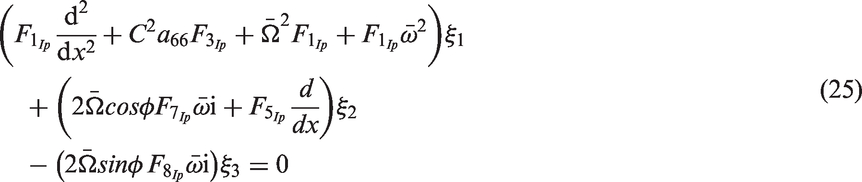
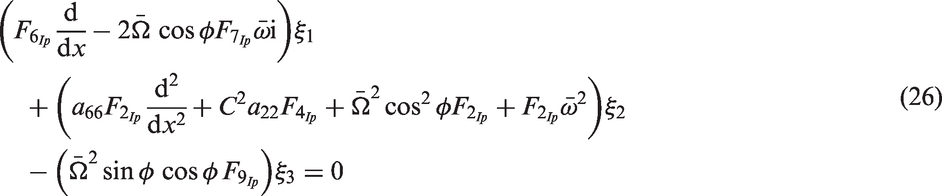
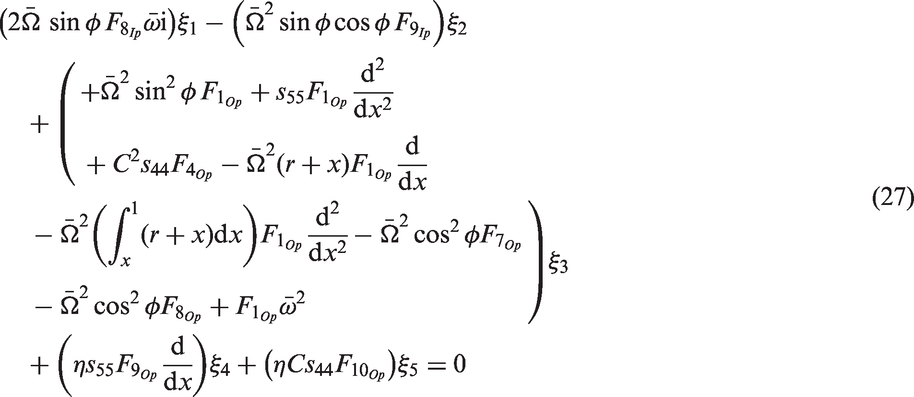

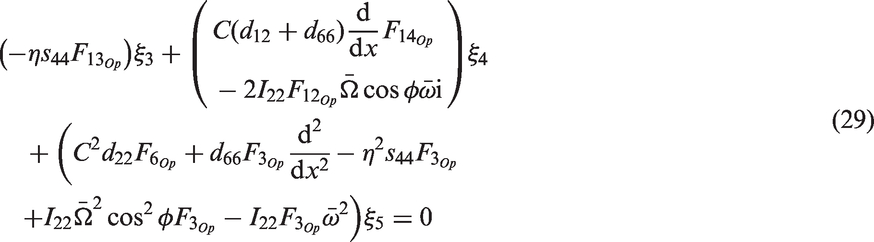
The formulae of F’s are given in Appendix B. In the iteration process, the solutions of two sets of ODEs for both directions will be repeated until convergence is achieved for the natural frequency.
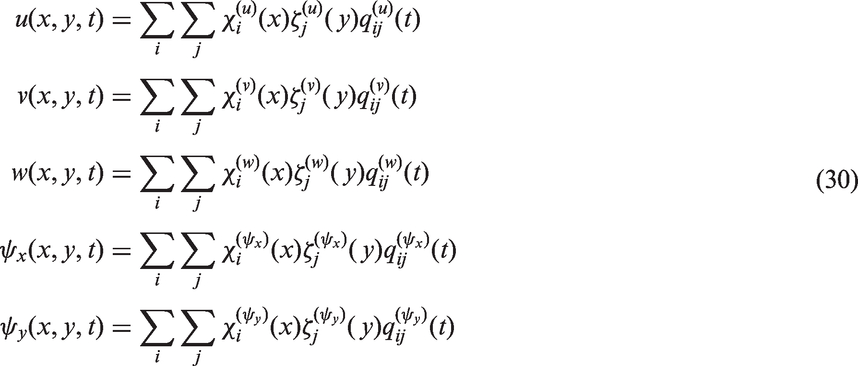
In the next step, the EGM is employed to solve the boundary value problem. The displacements can be approximated as follows

4. Computational results and discussions
The procedures outlined in the previous section have been applied to study the dynamic characteristics of the rotating moderately thick plates. First, to demonstrate the validity of the formulation and algorithm, the nondimensional natural frequencies of the stationary cantilever plate are calculated and compared with available results in the literature. Next, the natural frequencies obtained by EKM and EGM for rotating plates are compared with each other. Then, the Campbell diagram of the system is plotted and the effects of stiffness ratio, rotation speed, aspect ratio, stagger angle, and hub radius on the modal characteristics of orthotropic plates are presented and discussed in detail. The analysis is concentrated on the low aspect ratio plates. In the current article, the following material properties are utilized


The nondimensional frequency parameter for out-of-plane motion of nonrotating rectangular isotropic cantilever plate.
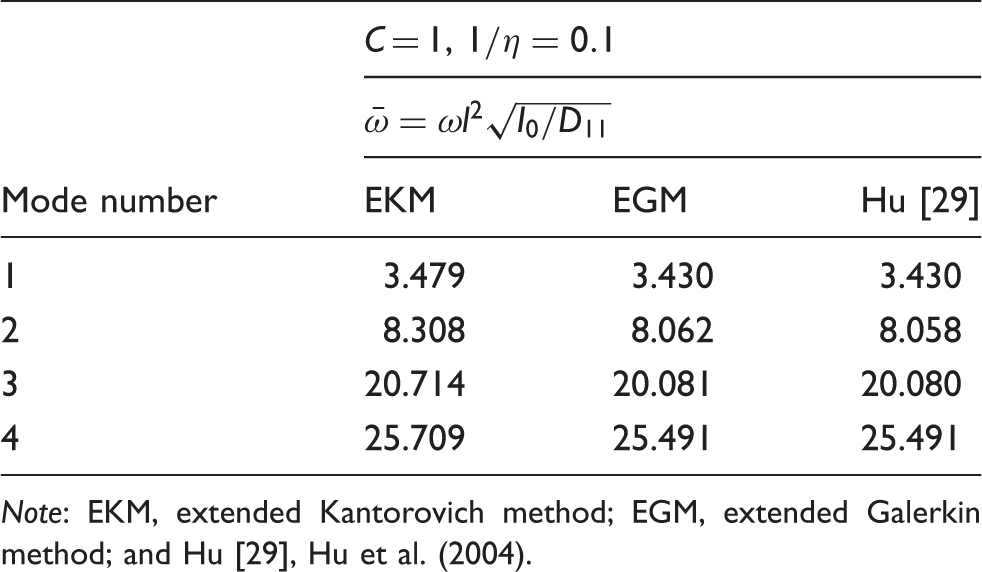
Note: EKM, extended Kantorovich method; EGM, extended Galerkin method; and Hu [29], Hu et al. (2004).
The nondimensional frequency parameter,
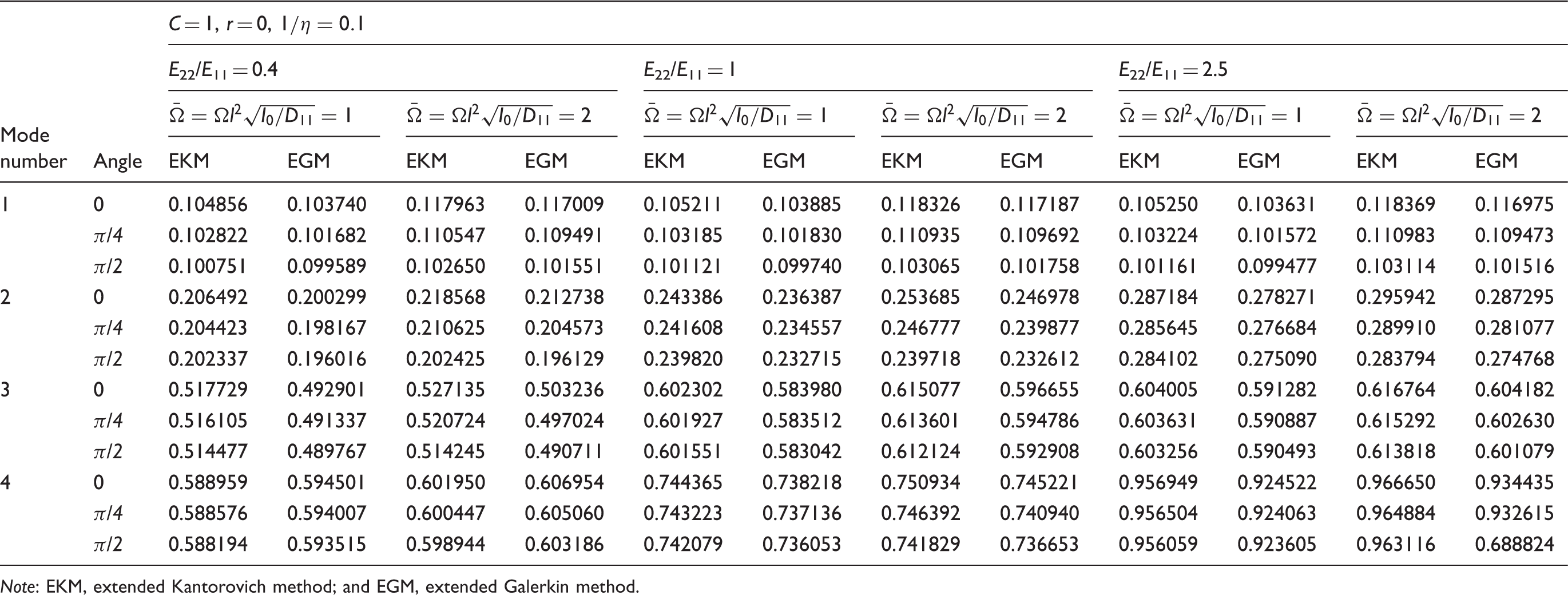
Note: EKM, extended Kantorovich method; and EGM, extended Galerkin method.
The nondimensional frequency parameter,
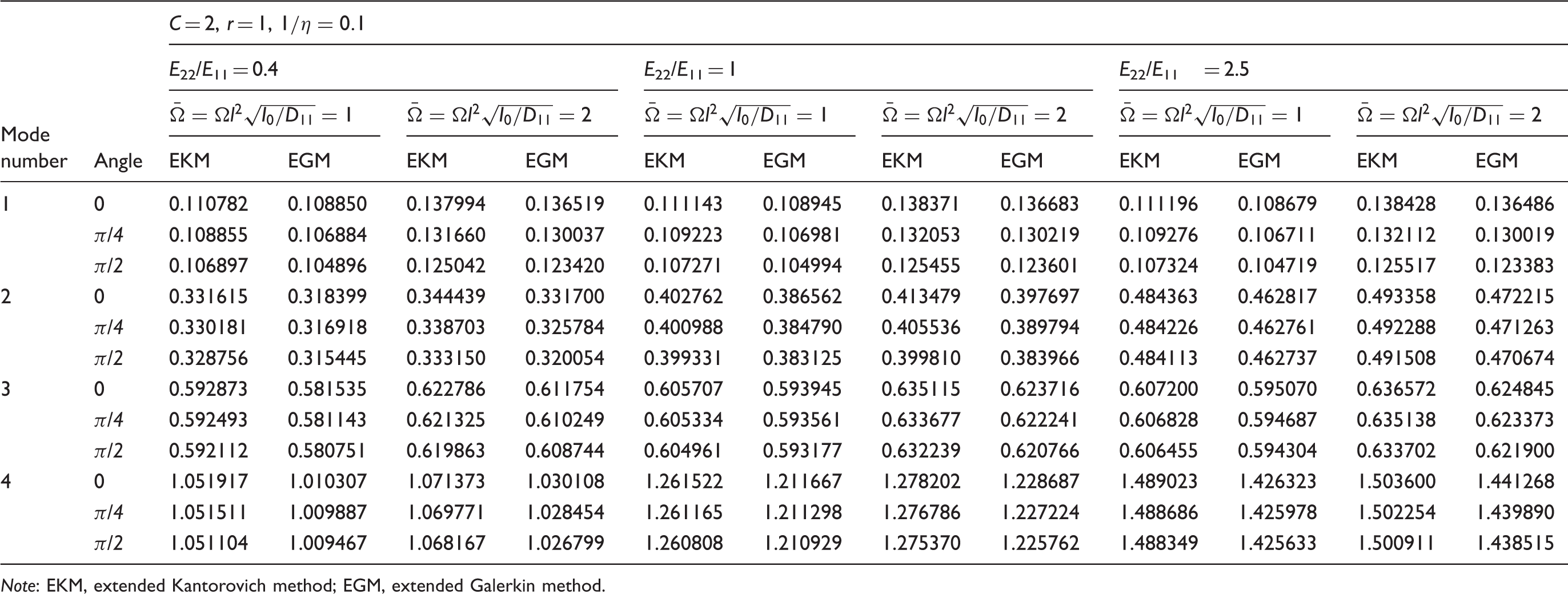
Note: EKM, extended Kantorovich method; EGM, extended Galerkin method.
For thickness ratios Variations of the first nine dimensionless out-of-plane natural frequencies, Five lowest nondimensional out-of-plane natural frequency of a rotating square isotropic cantilever plate, first order shear deformation plate theory (FSDT) versus classical plate theory (CPT) – r = 0, 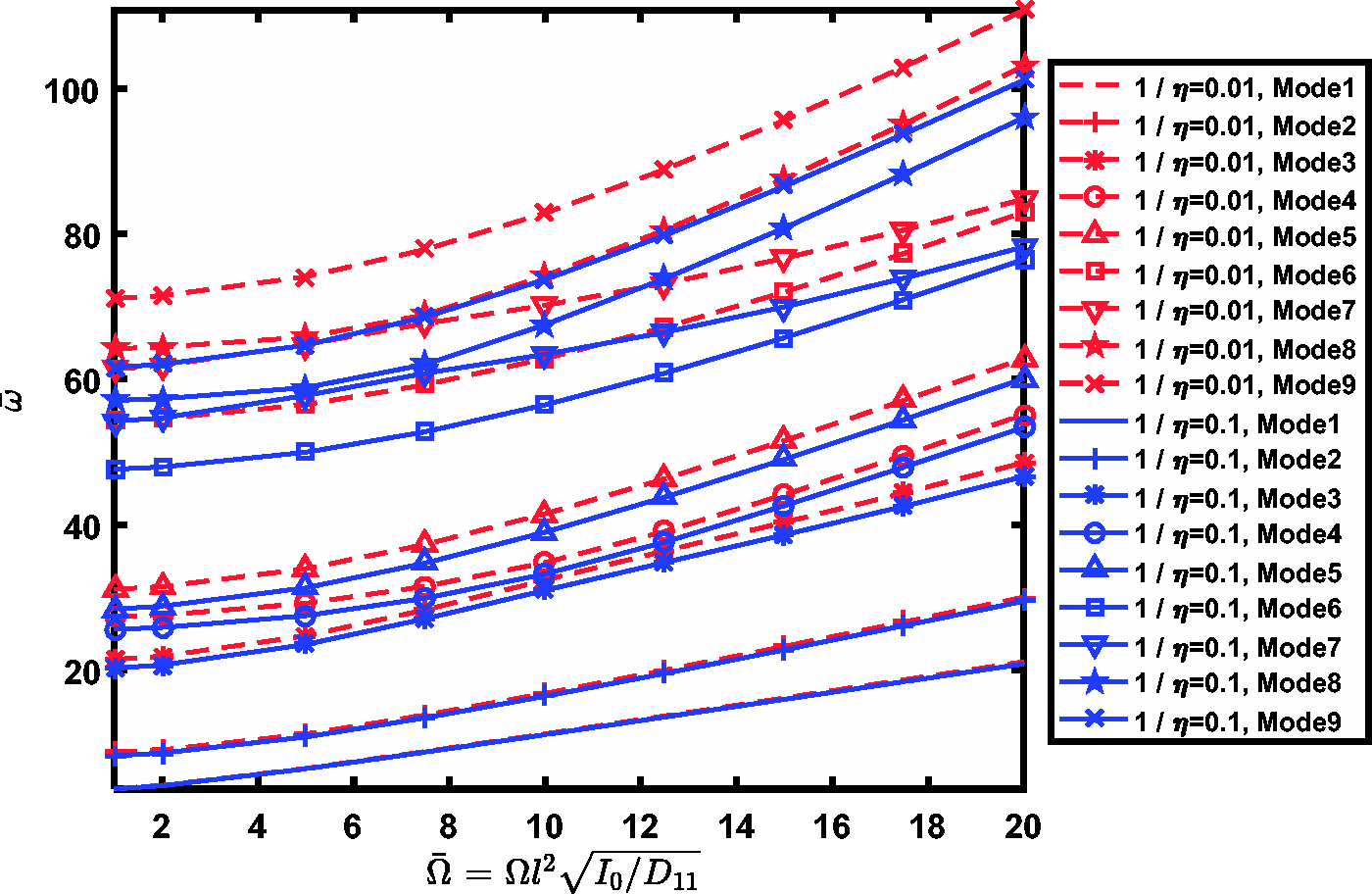
The Campbell diagram for the first nine out-of-plane frequencies of rotating moderately thick plate with the stagger angle Variations of the first nine dimensionless out-of-plane natural frequencies, Variations of the first nine dimensionless out-of-plane natural frequencies, 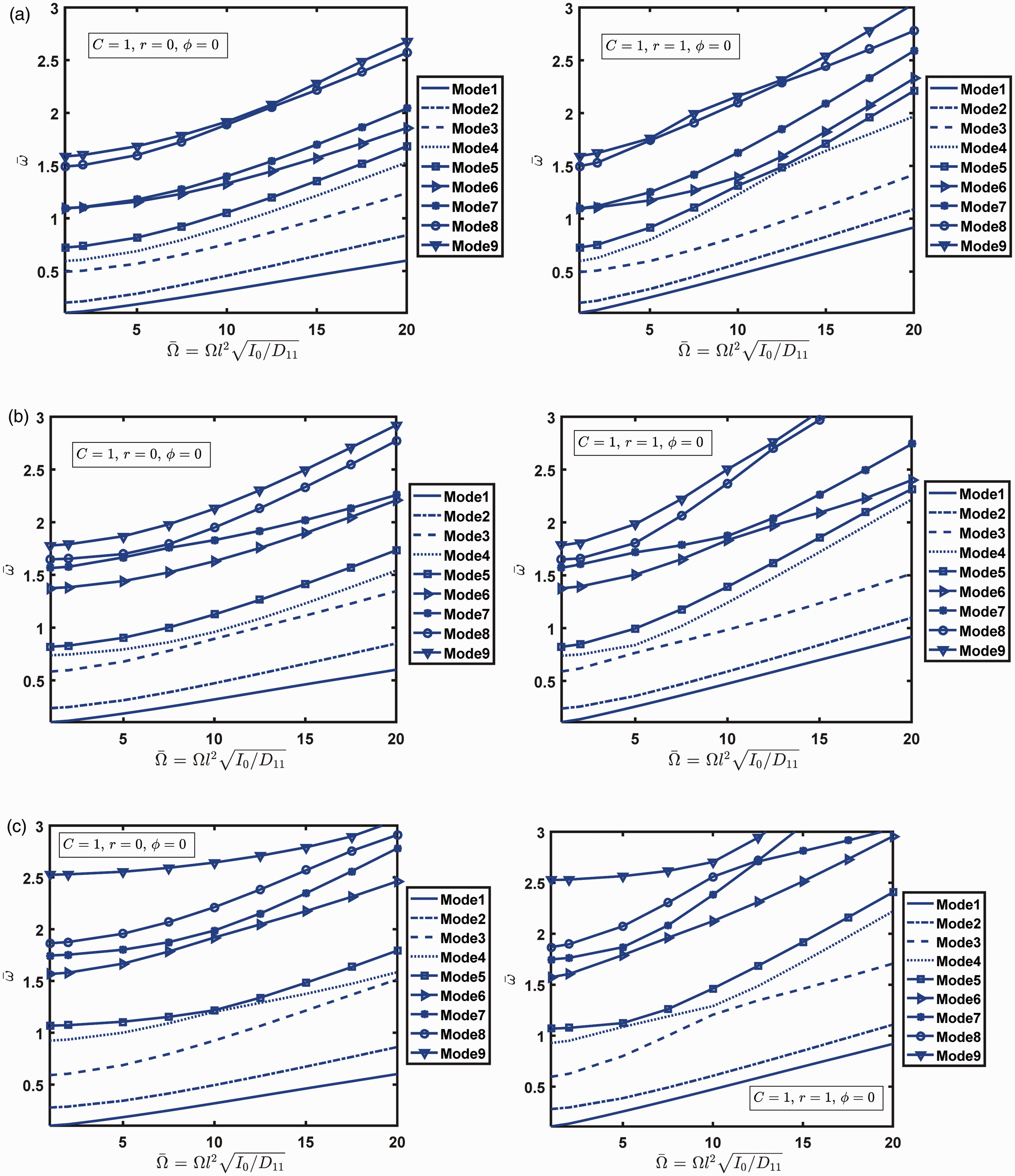
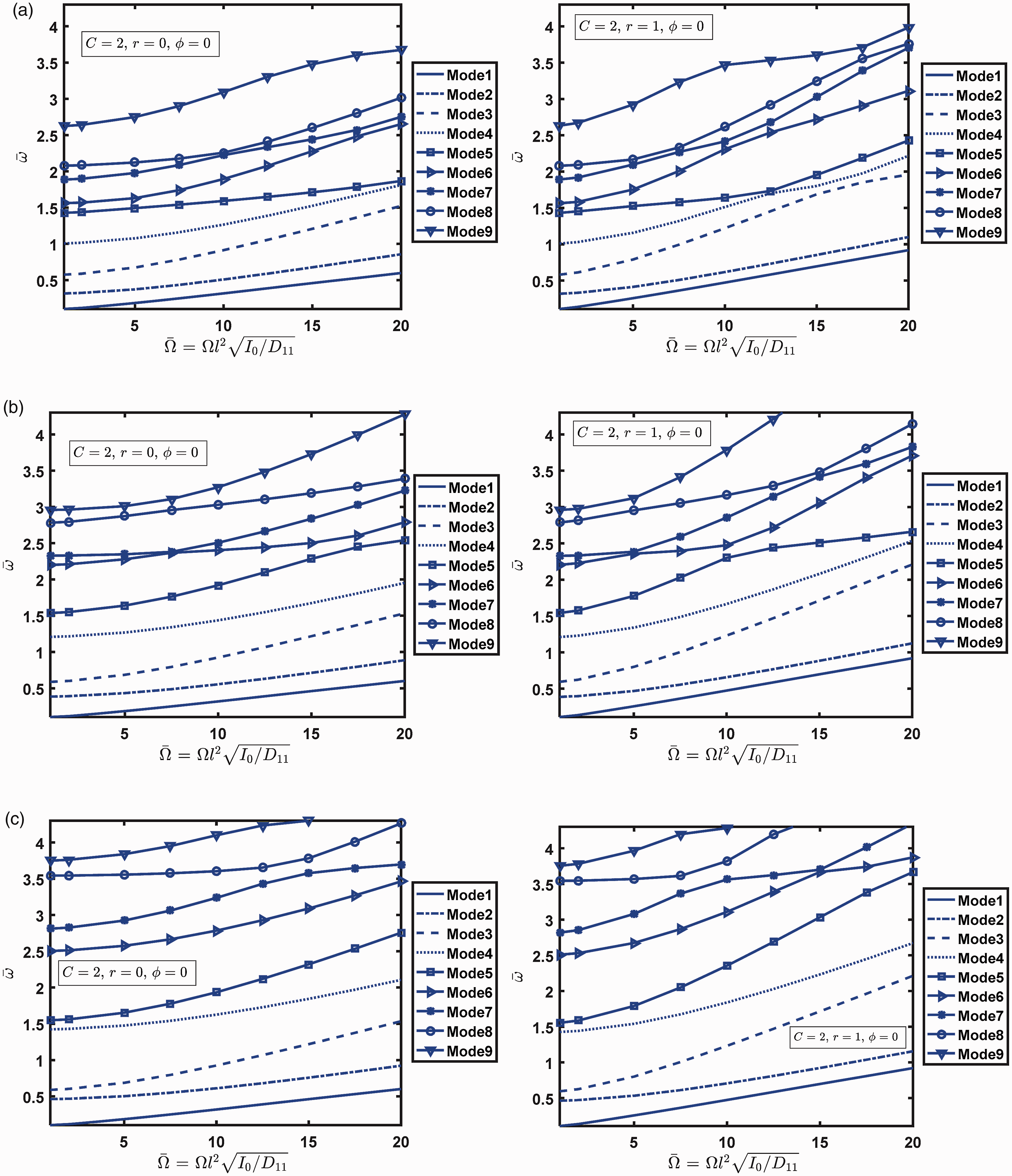
To provide a better interpretation of the C/V zones and due to the practical significance, the transverse physical mode shapes have been evaluated and the effects of plate orthotropy and rotation speed on them are analyzed. Actually, along with the computed natural frequencies, the corresponding mode shapes are obtained. However, only the found results are reported here as a summary. With respect to increasing the stiffness ratio, changes in the natural frequencies associated with the different mode shapes are evaluated and the following observations are made:
The eigenvalues associated with the chordwise bending modes increase faster than those associated with the spanwise bending modes. The increase in frequencies associated with the chordwise bending modes is more than the increase in frequencies associated with the torsion modes. The natural frequencies associated with the torsion modes increases slower than those associated with the combination modes (spanwise bending plus chordwise bending). The frequencies that correspond to the combination modes increase faster than those that correspond to the spanwise bending modes. The increase in frequencies that correspond to the torsion modes is more than the increase in frequencies that correspond to spanwise bending frequencies.
The difference of mode shapes and the stiffer chord direction in comparison with span direction which has been caused by increased stiffness ratio are the main reasons for such behaviors. The above-mentioned features are potentially the cause of the C/V zones, when the material changes. Therefore, an appropriate choice of the material is important. The scrutiny of the results reveals that the variations of the modal characteristics with increasing the rotation speed are the reverse of those with increasing the stiffness ratio, explained previously. From the discussions so far, it can be gathered that in the rotating plates, with increasing the stiffness ratio, the exchange of spanwise bending and torsion modes takes place with the lower chordwise bending and combination modes’ orders.
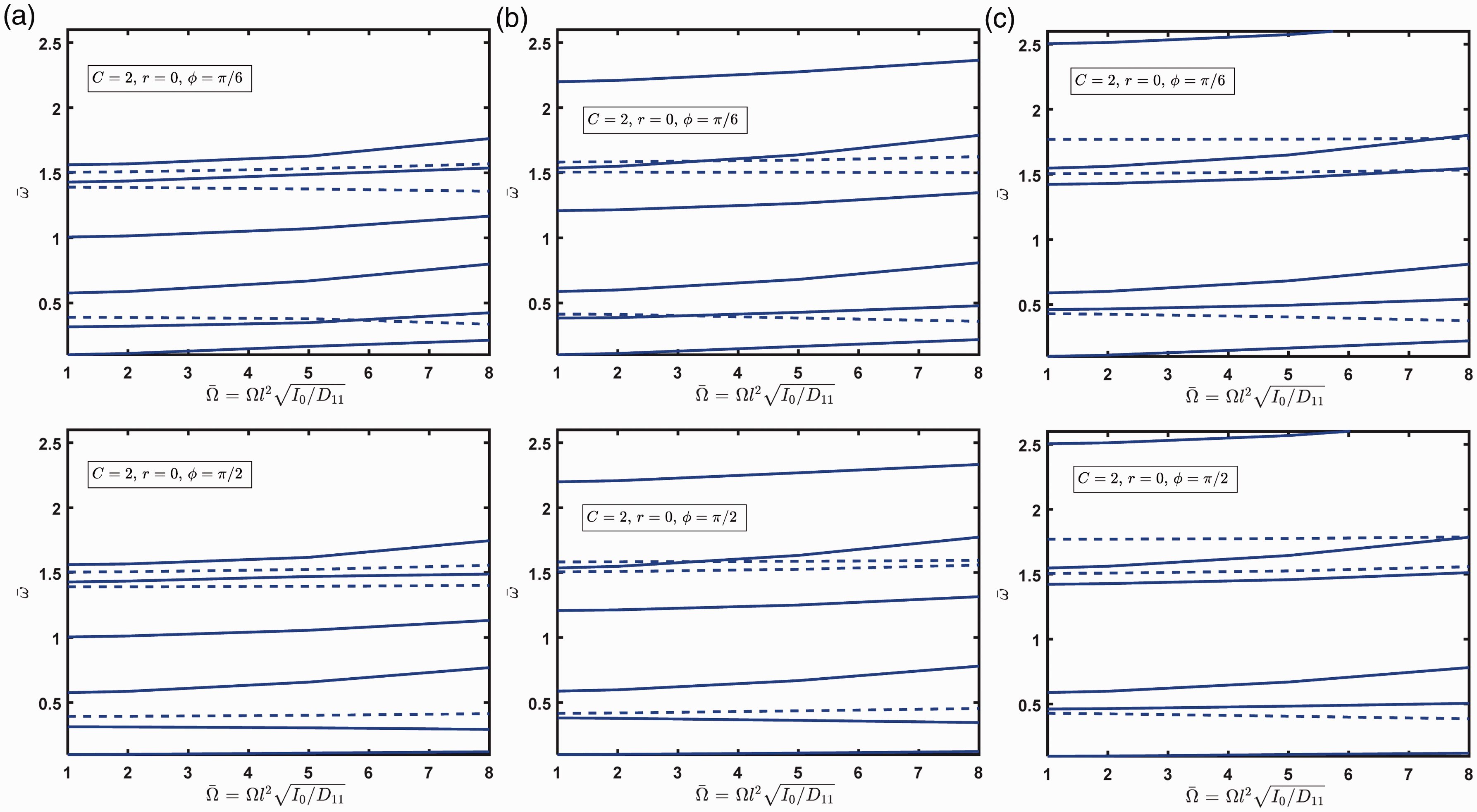
Figures 5 and 6 demonstrate the Campbell diagrams corresponding to the in-plane and out-of-plane frequencies of the present study with stiffness ratio taking values from 0.4 to 2.5 and the stagger angle taking values from Variations of the dimensionless natural frequencies, Variations of the dimensionless natural frequencies, 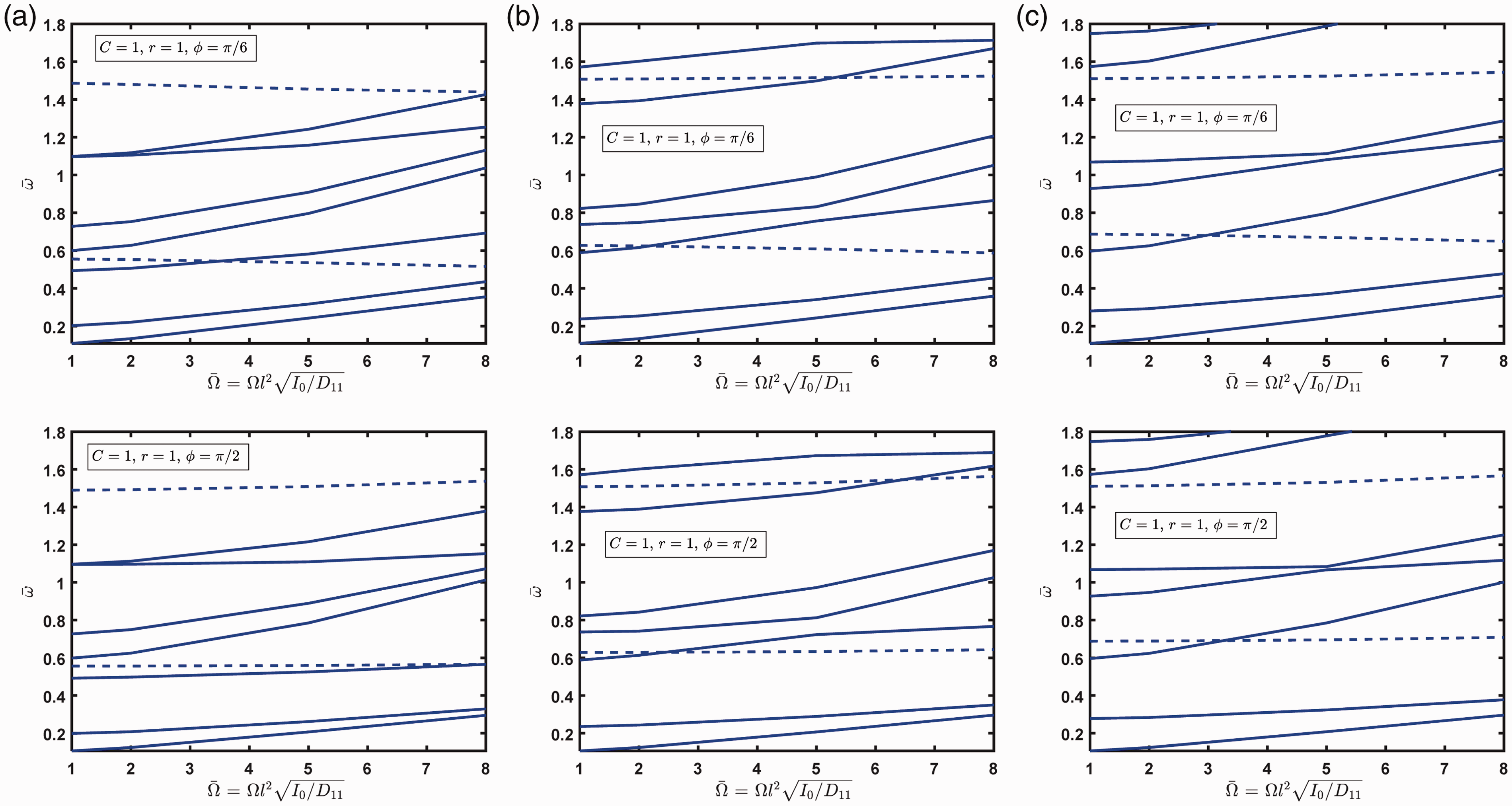
5. Summary and conclusion
The present article deals with the free vibration analysis of a rotating orthotropic moderately thick plate with the cantilever boundary conditions and arbitrary stagger angle. Five coupled governing differential equations have been derived using Hamilton’s principle. The analytical type solutions for this intricate system have been obtained by two methods, EKM and EGM. The study on the dynamic features of the problem has been performed by using the computer codes which are prepared in MATLAB for solving a set of equations of motion. To certify the computational algorithm, the natural frequencies calculated by EKM and EGM for nonrotating plate have been compared with their counterparts in the literature, which showed good agreement. Also, for different cases of rotating plates, a good correlation between the EKM and the EGM results has been observed. To show the effects of parameters on the vibration characteristics, several parametric studies have been carried out. It has been noted that, with increasing the rotational speed, the variation trend of out-of-plane frequencies in the different thickness ratio is almost similar. The possibility of the occurrence of the C/V phenomenon that was the result of the system configuration and material changes was recognized. A complete analysis illustrates that for each aspect and stiffness ratio, with increasing the hub radius ratio, the possibility of the C/V zone is increased. To enhance the understanding of the vibratory characteristics of the rotating plates, the evaluation of the physical mode shapes has been done. It has been found that the variation rate of the frequencies of different modes with the increase of stiffness ratio is the opposite of that obtained with the increase of rotation speed. The investigation of this opposite behavior has revealed that in the rotating plates, with increasing the stiffness ratio, the C/V happens in the lower mode orders and/or rotation speeds. The effects of stagger angle and hub radius ratio on the eigenvalue loci crossing between in-plane and out-of-plane frequencies have been examined. It is also concluded that for each stiffness ratio, the hub radius ratio has higher effects on transverse mode frequencies compared with in-plane modes. It has been noted that, in general, when the stiffness ratio and/or aspect ratio increase, the in-plane frequencies move toward a lower mode order.
Footnotes
Declaration of Conflicting Interests
The author(s) declare no potential conflicts of interest with respect to the research, authorship, and/or publication of this article.
Funding
The author(s) received no financial support for the research, authorship, and/or publication of this article.