







Abstract
This study aims to develop a practical methodology based on the eigenfunction expansion method to assess the effects of simultaneous action of vertical earthquake excitation and moving vehicle loads in single-span and multi-span simply-supported bridges. While the effects of vertical earthquake ground motions are generally ignored in common design practice, it is shown that the influence of simultaneous vertical earthquake excitation and vehicle loads can considerably affect the structural response of the bridge, especially in near-field earthquakes with high amplitude vertical components. To address this issue, a novel vibration suppression system is proposed using steel pipe dampers and its reliability is investigated for a wide range of bridge flexural rigidity under seven different earthquake records. The results indicate that the proposed system can significantly (up to 75%) suppress the vertical vibrations generated in the bridge, especially for the systems with lower flexural rigidity. For the same maximum deflection limits, application of pipe dampers could reduce the required flexural rigidity of the bridge (up to 50%), and therefore, lead to more economic design solutions with lower structural weight.
Keywords
1. Introduction
Currently, most bridge design guidelines (e.g., American Railway Engineering and Maintenance-of-Way Association, 1997; Union Internationale des Chemins de Fer, 2002; European Standard (2003)) rely heavily on static analysis methods to account for the impact of vehicle/train loads. While such simplified approaches can be acceptable for conventional systems, previous studies have demonstrated that more sophisticated methods may be required to obtain accurate results in the case of long-span bridges traversed by high-speed loads (Nikkhoo et al., 2007; Kiani and Nikkhoo, 2012; Salcher and Adam, 2015; Yang et al., 2017; He, 2018).
The structural response of linear continuous beams under dynamic loads has been a topic of many investigations (Su and Ahmadi, 1988; Frýba, 1999; Beskou and Theodorakopoulos, 2011; Leissa and Qatu, 2011; Pi and Ouyang, 2015; Zhu et al., 2015). However, most of these studies were limited to the beam vibrations caused exclusively by a single dynamic load case (i.e., under a single moving load or a specific seismic event).
While the interaction between moving loads and bridge systems has been widely investigated (e.g., Ichikawa et al., 2000; Xia et al., 2003; Salcher and Adam, 2015; Ticona Melo et al., 2018; Xia et al., 2018; Zhang et al., 2018), there are very limited studies on the structural response of bridge systems under simultaneous effects of moving loads and earthquake excitations (Wibowo et al., 2013; Nguyen, 2015; Paraskeva et al., 2017). In one of the early studies, Yau (2009) developed a method to obtain the dynamic response of suspended beams subjected to simultaneous actions of moving vehicles and support excitations by decoupling the response into the pseudo-static and inertia-dynamic components. Frýba and Yau (2009) and Liu et al. (2011) showed that the interaction between the moving force and the vertical support excitation can considerably amplify the dynamic response of suspension bridges, especially for high vehicle speeds. Legeron and Sheikh (2009) proposed a methodology to determine the response of the bridge supports under vertical seismic loads and demonstrated that the effects of vertical seismic excitations should not be disregarded in the design process of bridges. A similar conclusion was reported by other researchers (Papazoglou and Elnashai, 1996; Shrestha, 2015; Wang et al., 2015; Chen et al., 2016).
Several research studies have investigated the dynamic behavior of single-span bridge systems under seismic ground motions by mainly focusing on the horizontal acceleration components (e.g., Su and Ahmadi, 1988; Shrestha, 2015; Wang et al., 2015; Chen et al., 2016). Zarfam et al. (2013) developed a method to assess the influence of the weight and velocity of traversing masses on the dynamic response of a beam subjected to horizontal support excitations at different frequencies. Konstantakopoulos et al. (2012) and Nguyen et al. (2017) analyzed the vertical and horizontal dynamic response of suspension bridges subjected to earthquake and moving loads acting either separately or simultaneously. They concluded that the structural responses are significantly affected by the simultaneous effects of moving and seismic loads, especially when the moving loads are relatively small. However, the convective accelerations and the inertial acts of the moving vehicles were disregarded in most of the above-mentioned studies.
Elias and Matsagar (2017) developed a modified modal analysis approach, which can deal with nonclassically damped systems, to investigate the effectiveness of tuned mass dampers on isolated reinforced concrete bridges under horizontal earthquake excitations. A similar approach was then adopted by Matin et al. (2019) to study the effectiveness of distributed multiple tuned mass dampers in seismic response control of bridges. Agrawal et al. (2009) and Tan and Agrawal (2009) presented the problem definition of a comprehensive benchmark structural control problem for the highway bridges under seismic excitations simultaneously applied in two directions. While different passive, semi-active, and active devices and algorithms can be used to study the response of the benchmark model, the effects of moving masses are not taken into account.
Since the occurrence of an earthquake during the operational time of a bridge (i.e., whilst carrying moving loads) is highly likely, the structural response of the bridge system under such loading condition has to be adequately assessed during the design process. However, existing studies on the interaction between the vertical earthquake excitations and vehicle loads are commonly limited to the investigation of suspension bridges under moving forces (Frýba and Yau, 2009; Liu et al., 2011; Konstantakopoulos et al., 2012; Nguyen et al., 2017). Therefore, more studies are required to extend the results to the general bridge systems.
In this paper, dynamic behavior of bridges under simultaneous effects of moving inertial loads/vehicles and excitation due to the vertical earthquake excitations is investigated by adopting a modal analysis approach on simply-supported beams representing typical bridge systems. In addition, it is attempted to assess the efficiency of pipe dampers, originally proposed by Maleki and Bagheri (2010), to mitigate the vibrations induced by simultaneous actions of earthquake and vehicle loads. The vertical acceleration component of seven near-field earthquake ground motions with different frequency contents is applied to a simply-supported Euler–Bernoulli beam subjected to vehicle loads (or lumped masses) traveling at uniform intervals. The pipe dampers are then employed in the locations where maximum deflections commonly occur, aiming to evaluate their efficiency for mitigation of the vertical vibrations of the bridge systems with different flexural rigidities.
2. Problem formulations
It is assumed that a uniform undamped single-span Euler–Bernoulli beam of length L undergoes a dynamic excitation Schematic view of the proposed system.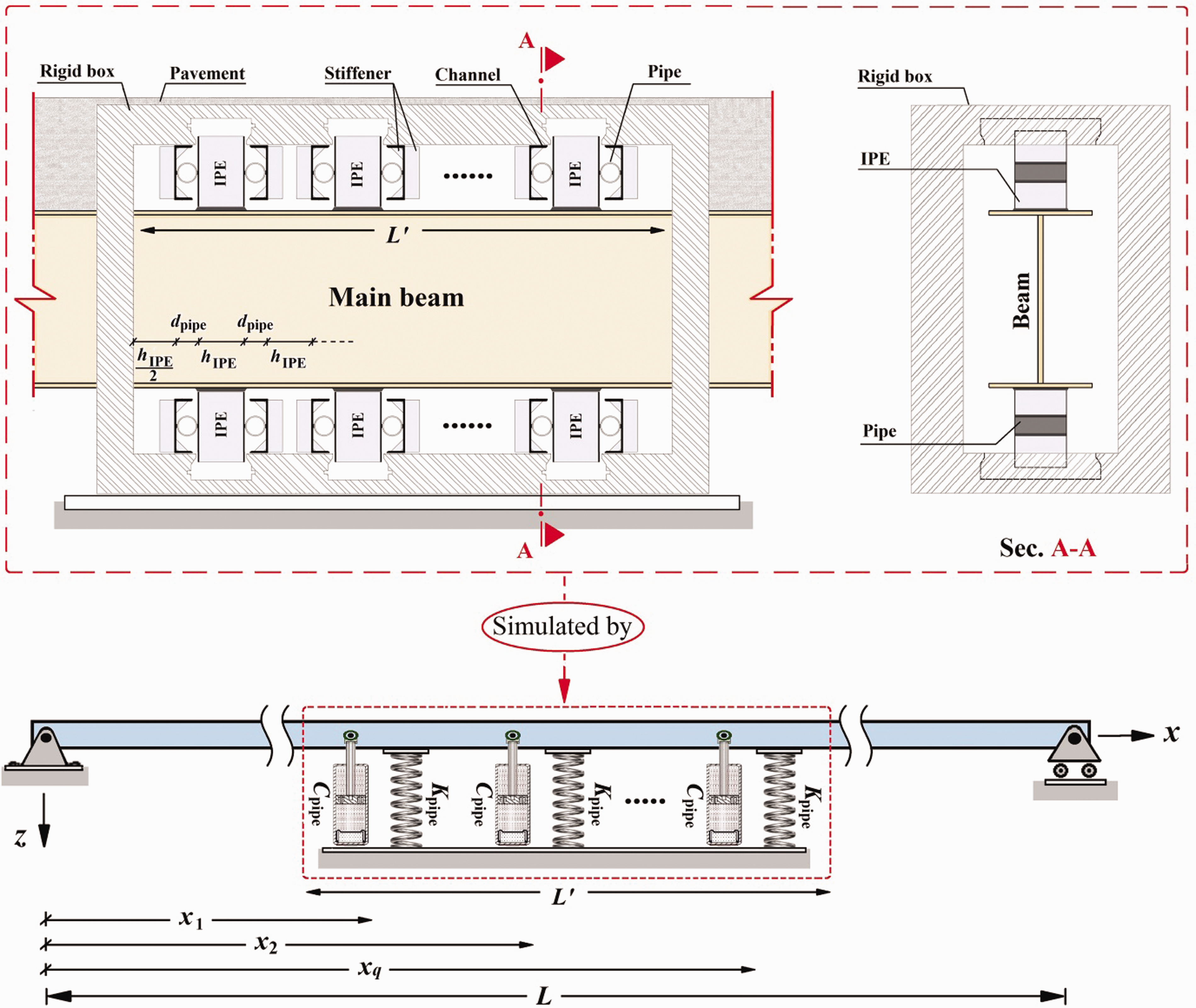



Here, δ and

3. Formulation of the steel pipe dampers (SPD) system
3.1. Assumptions and governing equations
While different types of dampers have been successfully utilized for vibration control of bridges, experimental and analytical studies conducted by Maleki and Bagheri (2010) indicated that SDP can provide very efficient design solutions by offering a stable hysteresis behavior and high energy absorption through metallic yielding. In this study, this type of damper is adopted to mitigate the effects of simultaneous action of vertical earthquake excitation and vehicle loads in bridges. The mathematical formulation for application of SPD is developed in the following section.
Figure 1 shows the schematic view of the proposed system. The stiffness factor of each pipe (
3.2. Configuration of the pipe damper system
As illustrated in Figure 1, the pipe damper system is a rigid box with length
As shown in Figure 1, the number of pipes attached above and below the main beam can be calculated as

The stiffness and damping of the steel pipes directly contribute to the beam vibration formula (equation (1)) as follows


3.3. Spatial and time discretization of the governing equations
The eigenfunction expansion method (EEM) is adopted to solve the above-mentioned differential equation, as follows

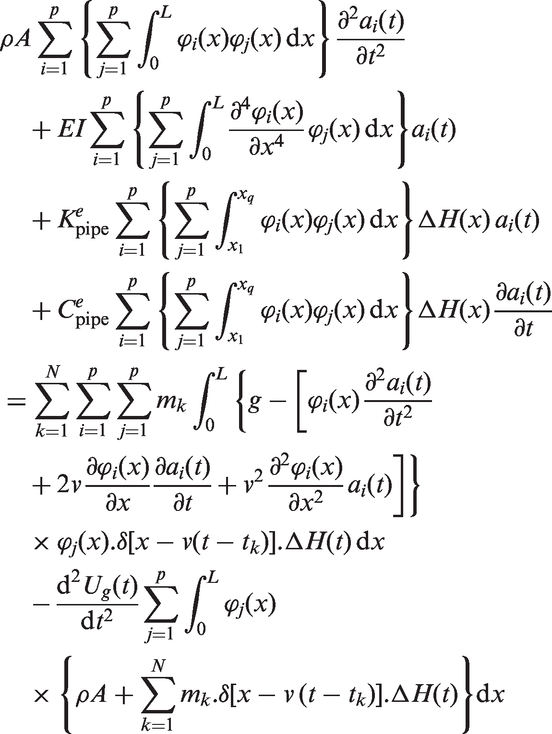
By defining

Considering the orthogonality of the modes






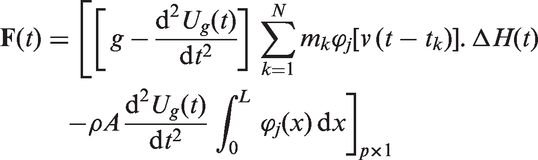
By transforming equation (12) into a state-space form, the second order differential equations set in equation (12) could be reduced to a first order set of equations via the following reformulation

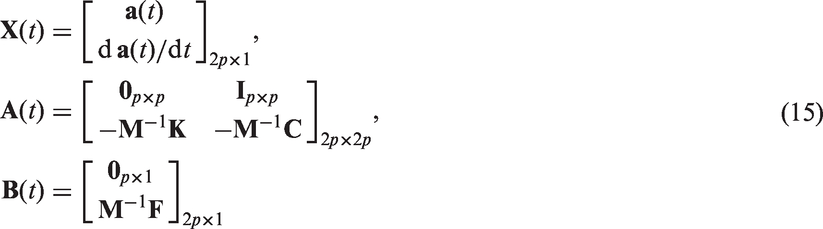
A number of methods are available to solve equation (14) in the time domain. In this paper, the matrix-exponential method, proposed by Brogan (1985) and utilized by a number of other researchers (e.g., Ebrahimzadeh Hassanabadi et al., 2014; Nikkhoo, 2014; Nikkhoo et al., 2016; Niaz and Nikkhoo, 2015) is adopted for calculation of the displacement field. In the following section, the efficiency of the method is demonstrated through a benchmark numerical example.
4. Numerical example
In this benchmark example, it is assumed that a group of moving vehicles are crossing a simply-supported bridge with a span length of Schematic view of a simply-supported beam subjected to moving masses with uniform intervals.
To investigate the effects of input ground motion characteristics on the dynamic response of the bridge, the vertical acceleration records of seven major near-field earthquakes are considered. The characteristics of the selected earthquakes, including the soil conditions according to SEI/ASCE 7-16 classifications (American Society of Civil Engineers, 2017), are presented in Table 1 (Pacific Earthquake Engineering Research Center, n.d.). It can be seen that these earthquake records cover different soil types and fault mechanisms. Figure 3 compares the acceleration response spectrum of the selected earthquake records.
Response spectrum of the selected earthquake ground motions: (a) vertical components; and (b) horizontal components. Earthquake characteristics.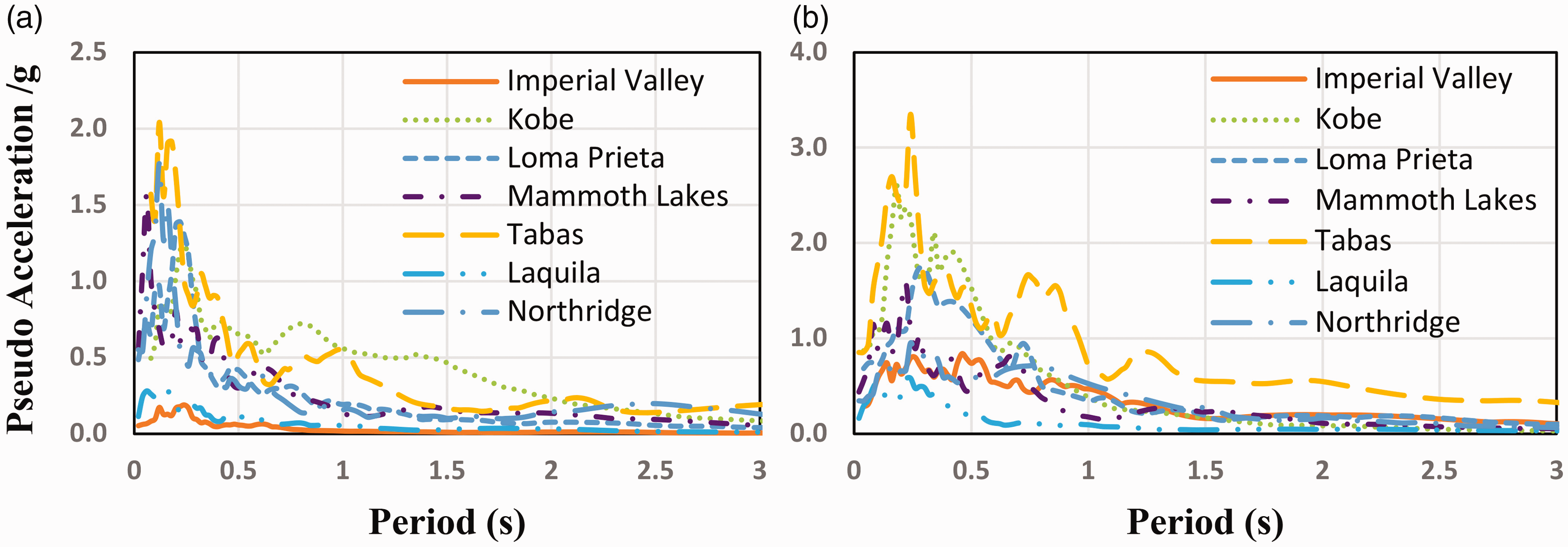

4.1. Vertical seismic loads and their interaction with moving inertial loads
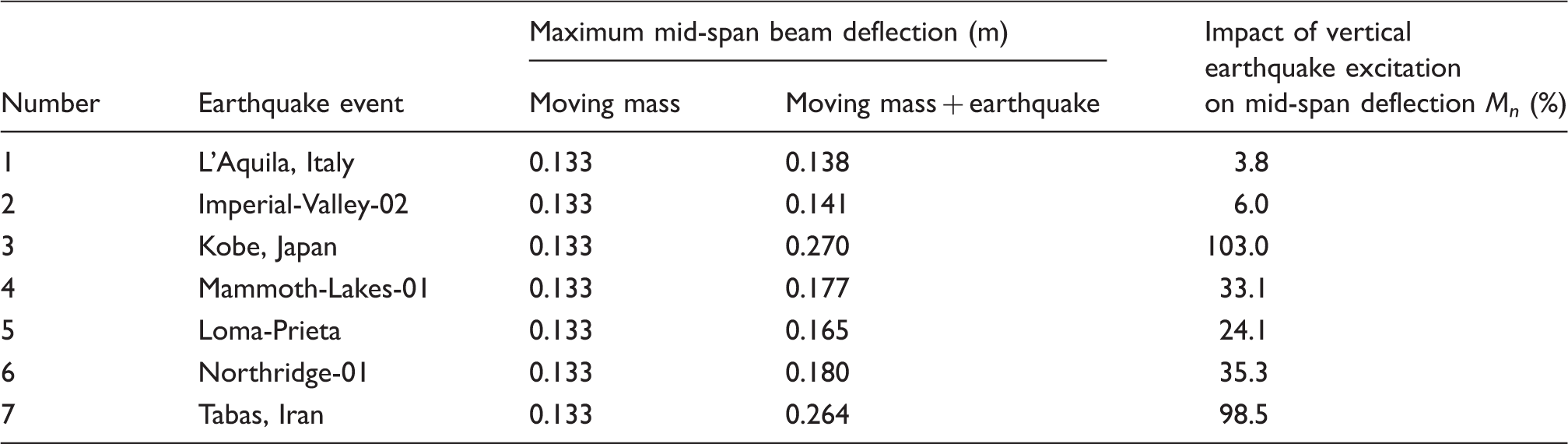
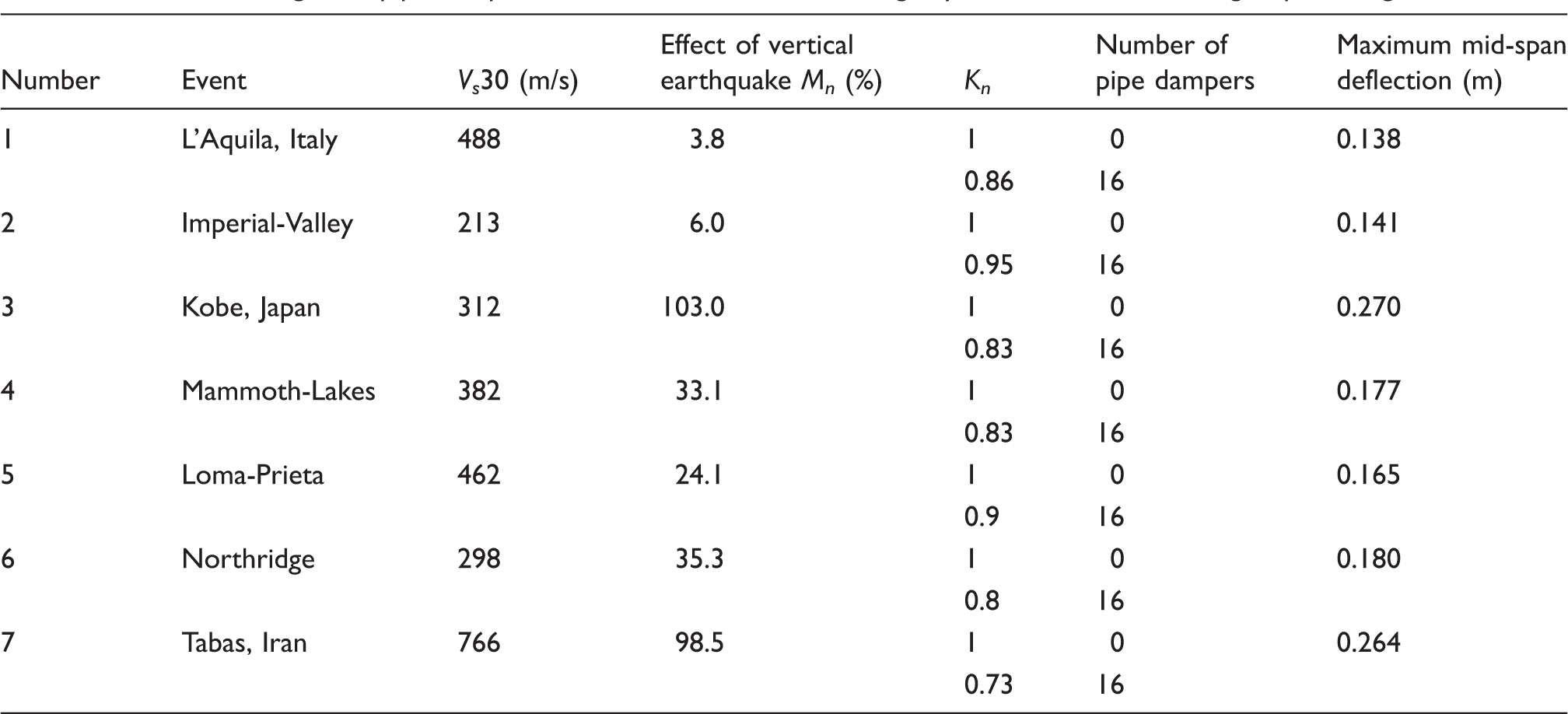
The mid-span beam deflection response of the case study bridge (Figure 2) due to the moving masses (dash line) and the simultaneous effects of moving masses and earthquake excitations (solid line) are depicted in Figure 4. As observed, in most cases, the seismic loads amplified the effects of moving vehicles and resulted in deflections up to twice the case excluding seismic actions. This effect was especially evident in Kobe and Tabas near-field earthquakes with large vertical components (see Figure 3). For better comparison, Table 2 presents the maximum deflection at the beam's mid-span locations under the two above loading conditions. As it is seen, the discrepancies in responses vary for different earthquakes. The increase in the beam vertical deflection response due to the vertical component of the input earthquake is represented by Time-history deflection of the beam due to external excitations: (a) L'Aquila; (b) Imperial-Valley; (c) Kobe; (d) Mammoth-Lakes; (e) Loma-Prieta; (f) Northridge; and (g) Tabas. Impact of vertical earthquake excitation on maximum deflections at beam's mid-span.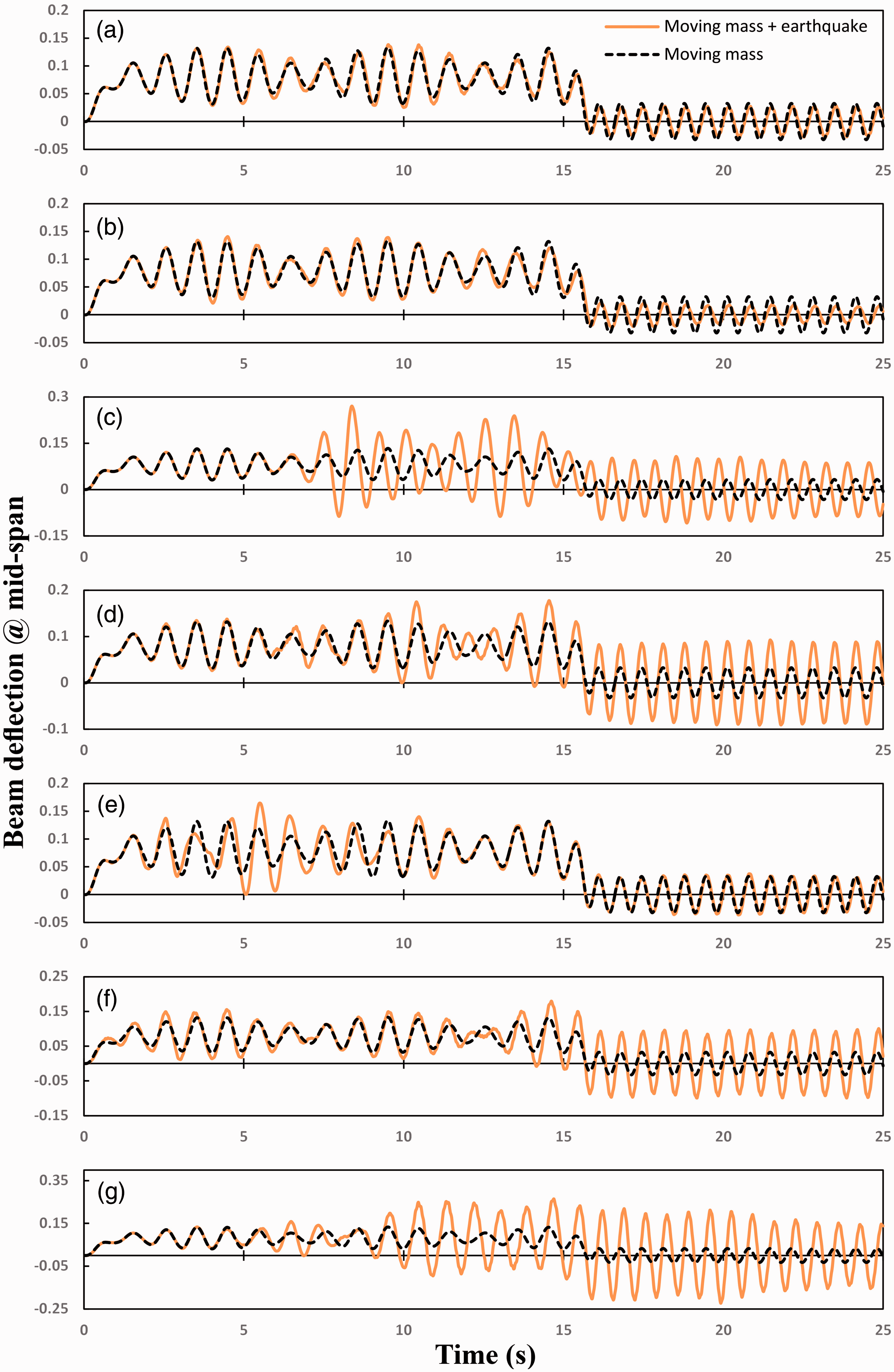
4.2. Efficiency of SPD in vibration suppression
This sub-section investigates the efficiency of the SPD in mitigating the bridge vibrations induced by simultaneous actions of moving masses and vertical seismic excitations. As in the study conducted by Maleki and Bagheri (2010), the exterior diameter of the pipe dampers was set to be
4.2.1. Single span bridge
Figure 5 demonstrates the variations in the deflection of the beam's mid-span as a function of the initial flexural rigidity factor ( Effect of initial flexural rigidity factor 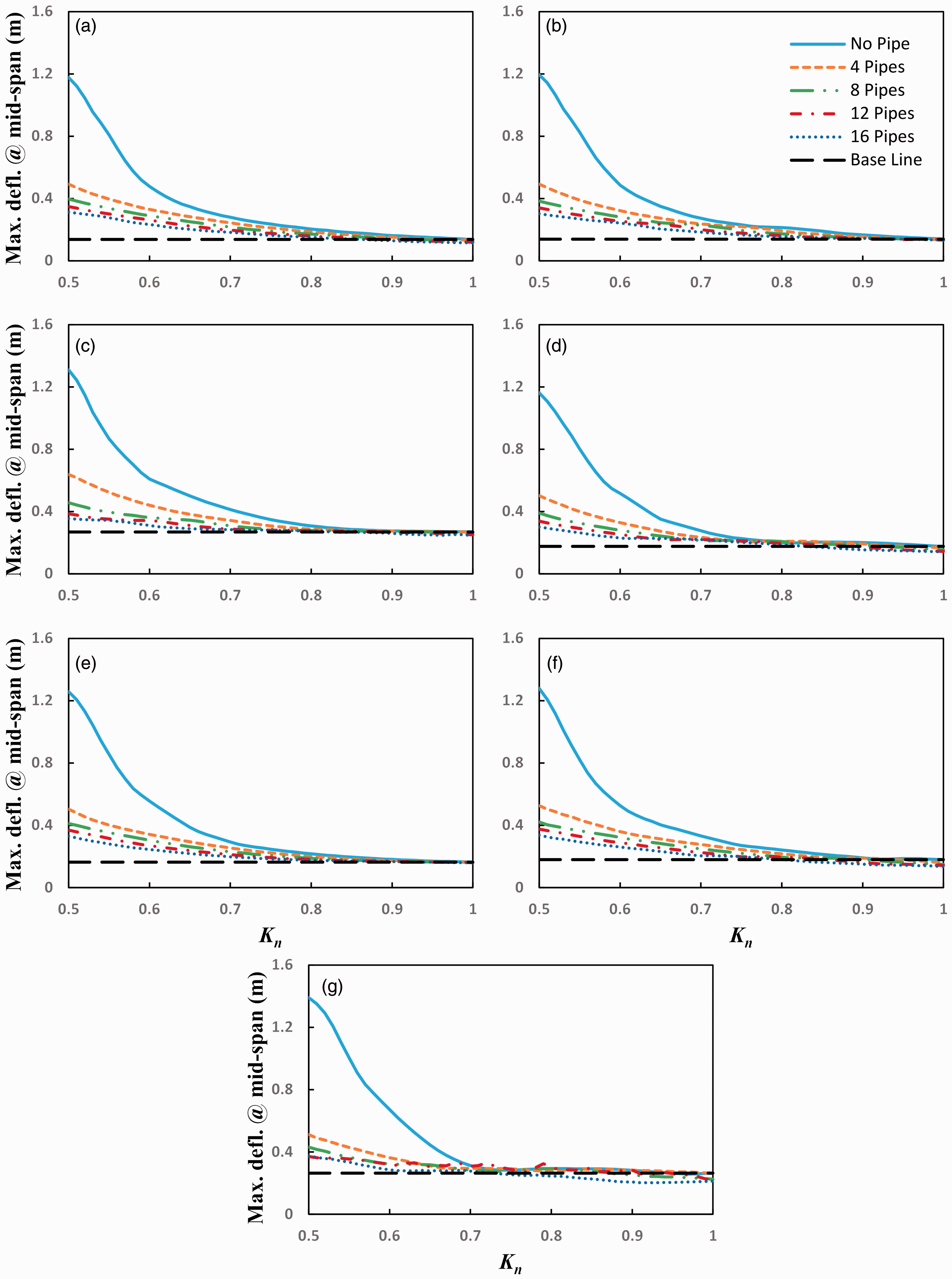
The base line in Figure 5 shows the maximum deflection at the beam's mid-span without pipe dampers (i.e.,
Effects of using steel pipe dampers and different initial flexural rigidity
The Fourier amplitude spectra curves illustrated in Figure 6 indicate that the dominant fundamental frequencies affecting the structural response of the beam system under different earthquake events do not change significantly after using pipe dampers.
Effect of frequency on the Fourier amplitude of beam deflection with and without dampers: (a) L'Aquila 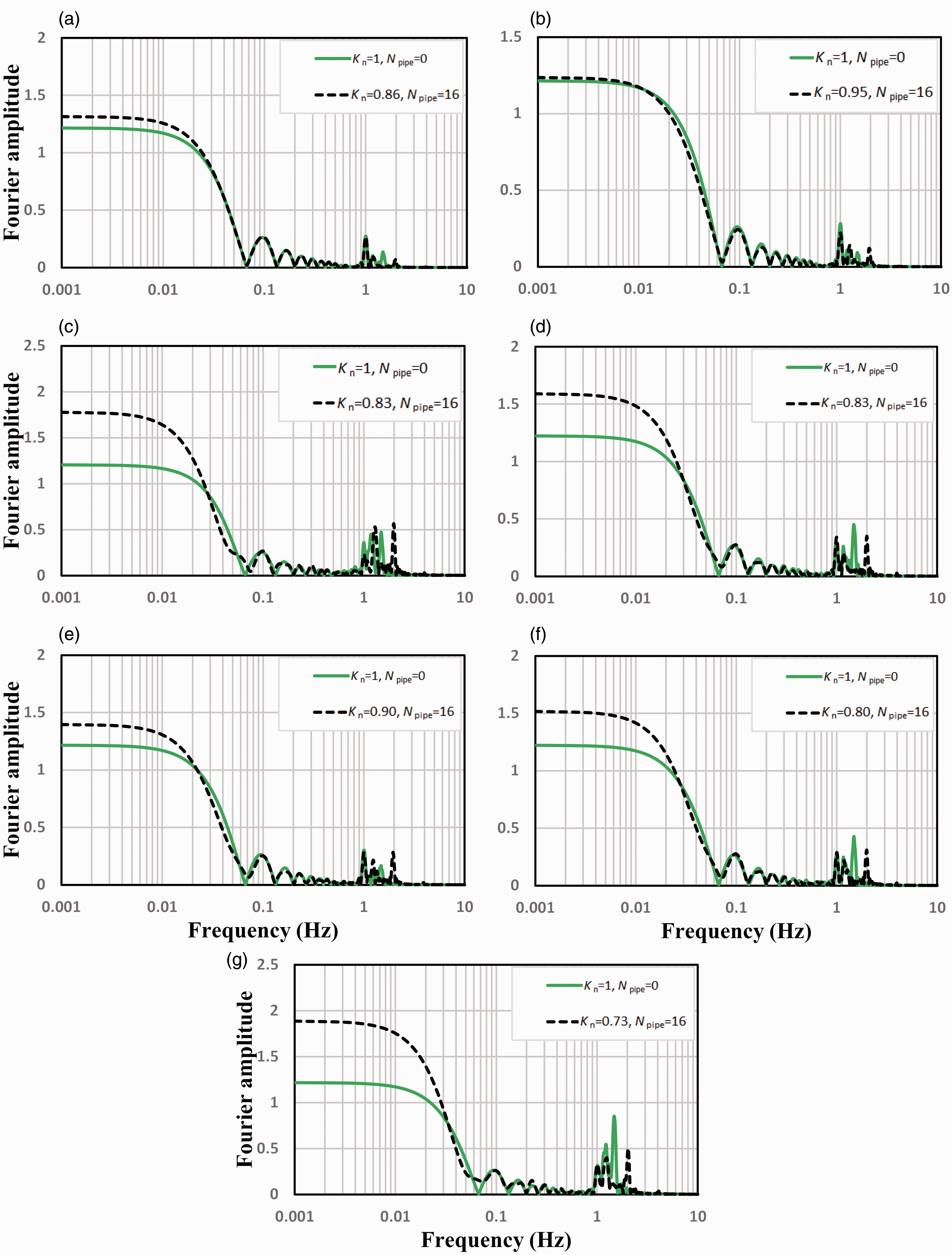
4.2.2. Multiple span bridge
As indicated in Figure 7, a three-span bridge with simple ends and total length of Schematic view of a three-span beam equipped with pipe damper system.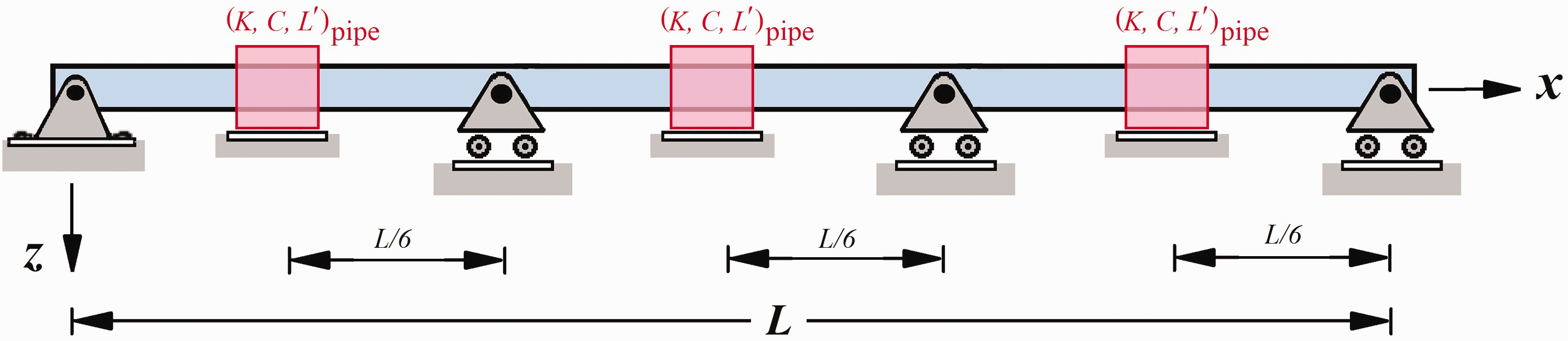
Figure 8 illustrates the spectrum of the maximum deflection at the mid-span as a function of the initial flexural rigidity factor Effect of initial flexural rigidity factor Effects of using steel pipe dampers and different initial flexural rigidity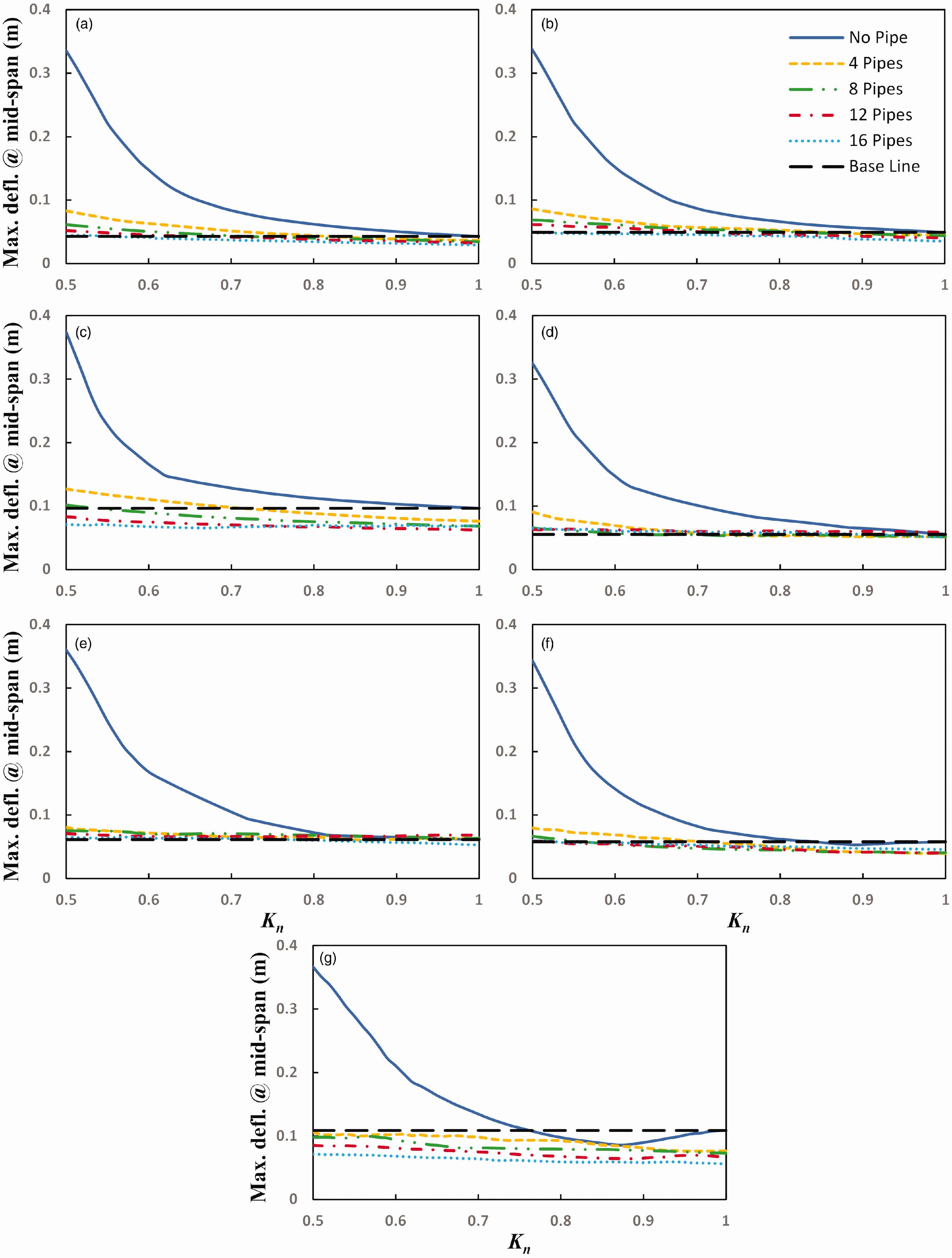
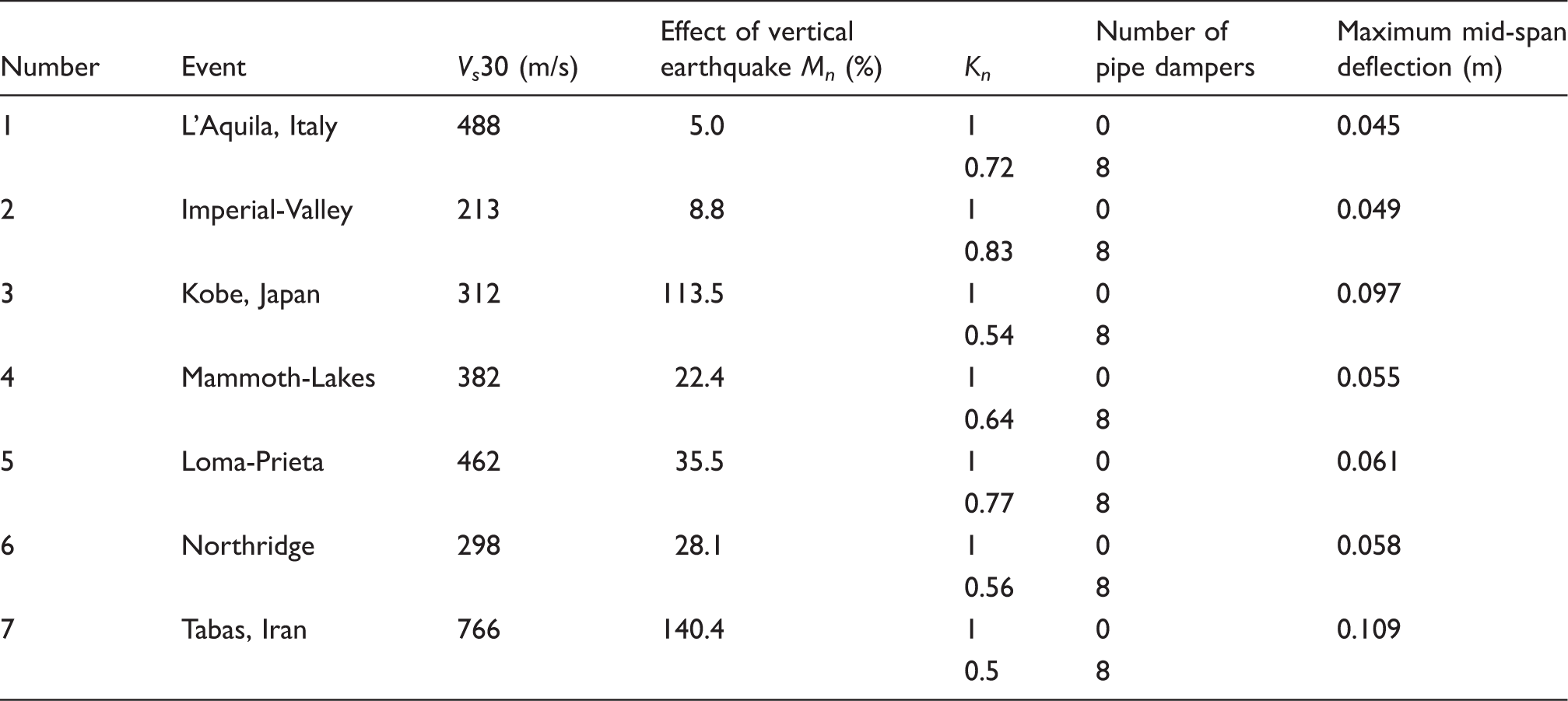
Similar to the single span bridge example, utilizing the pipe damper system could considerably reduce the dynamic response of the three-span bridge system. However, the efficiency of the pipe dampers was more prominent in the three-span bridge. This can be due to the higher values of
5. Conclusions
This study aimed to assess the vibration behavior and develop a mitigation technique for simply-supported bridge systems subjected to simultaneous effects of moving vehicles and vertical earthquakes. Through an extensive analytical study using EEM, it was shown that if a near-field earthquake with a strong vertical component strikes while vehicles are traveling across the bridge, depending on the frequency content of the earthquake, displacement response of the bridge could be severely intensified (by 100%). While the effects of vertical earthquake loads are usually ignored in the current design guidelines, this highlights the importance of considering the simultaneous effects of vertical earthquake excitation and vehicle loads in the design process of bridges in seismic regions. Subsequently, the efficiency of using SDP was examined to mitigate the induced vibrations in single-span and multi-span bridges. It was shown that the proposed system can significantly (up to 75%) reduce the maximum response amplitude of the bridge, especially for the systems with low initial flexural rigidity factors. Regardless of the input earthquake characteristics, the maximum deflection of the bridges appeared to be less sensitive to the variations of flexural rigidity when pipe dampers are employed. However, the efficiency of pipe dampers generally improved by increasing the
Footnotes
Declaration of Conflicting Interests
The author(s) declared no potential conflicts of interest with respect to the research, authorship, and/or publication of this article.
Funding
The author(s) received no financial support for the research, authorship, and/or publication of this article.