







Abstract
The acoustic response of a car door latch has been shown to directly impact the customers’ perceived quality and value evaluation of the automobile. This work introduces an experimentally validated computational model of three door latch components. The transient sound pressure level response of the three door latch components during door closure was collected in a semianechoic chamber using a three-element condenser microphone array. Postprocessing methodologies such as sound pressure level versus 1/3 octave band and continuous wavelet transform analysis were performed. This provided an in-depth analysis on the overall acoustic response and identification of dominant frequencies corresponding to four specific impact events during latch operation. Computational finite element analysis of the closure system using a rigid body, and explicit dynamic and transient structural acoustic analyses provided additional insights into the latch component interactions and the acoustic response generated empirically. Recorded average sound pressure level, frequency decomposition, and impact reaction forces are presented in addition to a comparison between the acoustic response for two different door closure speeds. It was found that an increased door closure speed increased the response sound pressure level, decreased damping of the primary impact, and decreased the frequency bandwidth of the response, thereby generating an acoustic response that would be perceived as noisier, less safe, and less secure by customers. These findings provide additional insights into the primary impact acoustic response of an automotive door latch during closure. The methodology introduced in this work allows automotive engineers to perform future work with modified latch components to further improve the psychoacoustic response of the automotive car door latch, further increasing the value evaluation of the automobile.
1. Introduction
In recent years, the automotive industry has placed significant emphasis on understanding the acoustic response of various automotive components. Investigations into structure-borne noise from tire–road contact and vehicle cabin noise due to external excitations have been considered (Von Estorff, 2008). The common approach to mitigate vehicle noise is to apply modifications to the sound source (vibration isolation), sound path (barriers), or sound receiver (location) (Kjar, 2005). Modifications to the sound source can take the form of structural modifications or active noise control. Recent work has demonstrated the advantages of the active noise control approach as it improves vibroacoustic coupling and eliminates the need for modification of structural parameters (Ning et al., 2019).
Psychoacoustics is a branch of acoustics that studies the human perception of an acoustic response (Howard and Angus, 2017). The study of psychoacoustics allows engineers to design products that generate an acoustic response that humans consider to be less annoying. Beyond annoyance, there has shown to be a relationship between the discerned overall quality of a product and its acoustic response (Howard and Angus, 2017; Lin and Abdulla, 2015; Niermann et al., 2010). This is significant to the automotive industry, as perceived product quality is of upmost importance for product sales. It has been shown that motorcycles have engine sounds that are well liked by the customer (Pierson and Bozmoski, 2003). The psychoacoustic response of a product can add value to a product. This has been quantified in other fields where it was shown that a 5-dB and 6-dB reduction in the sound pressure level (SPL) were able to increase the product value by 12% for a vacuum cleaner and a hair dryer, respectively (Takada et al., 2005, 2009). In an automobile, this phenomenon is complicated by the variety of acoustic sources present.
The first investigations into door closure sounds were performed by Højbjerg (1991). This work was focused on measuring the loudness of car door slams in terms of the SPL. Sound quality of door closure events was first documented by Champagne and Amman (1995). This work was furthered by Petniunas et al. (1999) and Hamilton (1999). Door closure events for two different vehicles were investigated by Becker et al. (2003). The qualitative psychoacoustic response evaluated by human test subjects clearly indicated that the door closure event for vehicle A sounded like “an upper-class vehicle” and had a “high expectation of quality by the customer,” whereas the door closure event for vehicle B sounded “tinny and light” with a sound allocated to “a low-budget vehicle with a lower level of quality.” These results indicate the strong perception of overall automobile quality that is generated by the acoustic response of the door closure event. Given that the door closure event is the first acoustic source that a potential customer would encounter, the psychoacoustic response of the door closure event is significant to demonstrating the overall quality of the automobile during the customers’ first impression of the automobile. The authors further demonstrated that frequency content in the bandwidth of 50–500 Hz was associated with the high-quality psychoacoustic response, whereas a frequency content above 500 Hz was associated with the low-quality, tinny response.
Further work investigating the psychoacoustic response to the door closure event for 11 different vehicle classes was performed by Kuwano et al. (2006). The authors surveyed two groups of individual test subjects: one from Germany and the other from Japan. The respondents were asked to rate each vehicle’s door closure acoustic response on a scale of 1–7 for 15 different qualitative measures, including “loud–soft,” “pleasant–unpleasant,” “heavy–light,” and “rough–smooth.”. The coefficient of correlation between the German and Japanese respondents was 0.946, indicating a strong consistency between both test groups when describing the psychoacoustic response of the door closure event for 11 vehicles. This consistency further highlights the significance the acoustic response of a door closure event has on the automobile market. It was also noted that the “loudness” of a sound did not correlate with the overall impression of the sound. Stimuli that were perceived as “loud” were often preferred over sounds perceived as “soft.” The results of this study indicate that individuals’ preferred sounds comprised lower frequencies (perceived as less sharp) over sounds composed of high frequencies (perceived as more sharp), agreeing with similar findings in the literature (Becker et al., 2003; Jo et al., 2014; Kuwano et al., 1999, 2002). This indicates that a deeper understanding of the sound characteristics of a door closure event beyond the SPL is required to determine the preferable door closure acoustic response.
Further psychoacoustic analysis was performed by Bezat et al. (2014). This work investigated the frequency composition of the door closure event in greater detail. The results revealed that the door closure acoustic response can be described mainly by the intensity of the response and the onomatopoeia, BOMN and KE, representing the low- and high-frequency noise components, respectively. The authors separated respondents into groups of naive and expert listeners, with expert listeners being automotive mechanics with an understanding of the mechanisms involved with a car door closure. The naive listener was able to discriminate the doors by their quality, solidarity, energy of closure, and door weight and door closure effectiveness in a consistent manner, in line with the results observed by Kuwano et al. (2006). In addition, expert listeners were able to identify the mechanisms of the door closure sounds (lock and closure contributions).
A recent psychoacoustic analysis investigating the value evaluation of the door closure event was performed by Takada et al. (2019). The authors noted that the door closure events containing abundant low-frequency content were associated with feelings of security, luxuriousness, and pleasantness. The high-frequency component was associated with the feeling of an effective door closure (correct locking of the door latch components), and therefore added safety and security. The high-frequency component was emitted by the door latch, which signaled to the user that the door was properly closed. The study also indicated that overall quietness of the door closure event was another important psychoacoustic factor. The authors noted that “quiet” events were correlated with an acoustic response that were both rapidly damped and contained a smaller quantity of high-frequency content. The results indicated that the user preferred a distinct, but not dominant, high-frequency component of the response to signal that the door was properly closed.
Overall, the body of the literature investigating the psychoacoustic response of a door closure event is well studied. There is a proven relationship between the acoustic response of the door closure event and the perception of quality. The consensus in the literature is that a dominant low-frequency component and a distinct high-frequency component, along with a rapidly damped response, will lead to the customer’s perception of a high-quality, luxurious, safe, and secure automobile, directly impacting the value evaluation of the automobile. A significant limitation to the body of the literature investigating the acoustic response of a door closure event is the lack of quantitative data describing the acoustic characteristics of the event. It is not well understood what components of the car door latch correspond to the different contributions of the acoustic response. A validated computational model of a door closure event has yet to be introduced, as all previous studies have considered experimental analysis only. In addition, it is not understood how the acoustic response of the door closure event changes as a function of door closure speed.
This work aims to address this literature gap by introducing a computational model of a door closure event and validating the model with experimental data. A previous acoustic work has demonstrated that the dynamic analysis of individual components of a structural model is recommended to identify which subsystems have a greater influence on the overall sound quality (Kjar, 2005; Von Estorff et al., 2008). This work considers the acoustic response of the car door latch components in isolation. This will have several implications. First, the computational model of the individual door latch components will allow for new quantitative results to be obtained, providing additional insights into the acoustic response not obtained with experimental data. This will allow for the contributions of each component to the acoustic response to be identified. Second, the methodology introduced to develop the validated computational model of the car door latch system will be of substantial benefit to the automotive industry, as structural modifications to the latch can be investigated to improve the psychoacoustic response of the latch, thereby directly improving the value evaluation of the automobile. Finally, the effect door closure speed has on the acoustic response will be identified. This will allow engineers to design the door closure system with an optimal door closure speed in mind.
2. Methodology
2.1. Door closure components
The three main components of the latch used in this investigation are the striker, ratchet, and pawl. Engineering models of the striker, ratchet, and pawl are displayed in Figure 1. This is a design of a primary door latch. This designation is given to latches equipped with both a fully latched position and a secondary latched position. A secondary latched position refers to the coupling condition that retains the door in a partially closed position (Transport Canada, 2010). (1) Pawl and pawl encapsulation. (2) Ratchet and ratchet encapsulation. (3) Striker.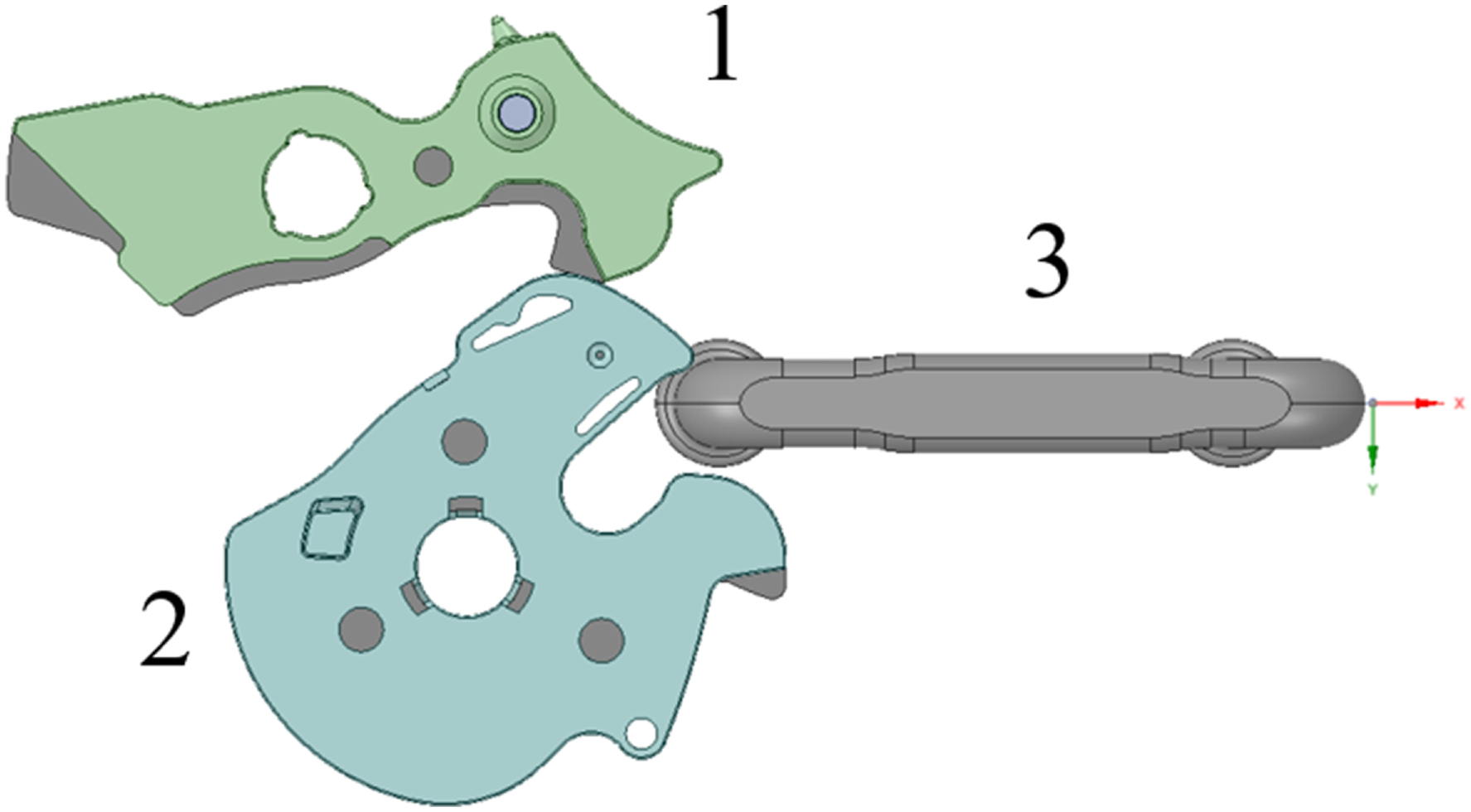
The striker, ratchet, and pawl were fabricated using alloy steel. An additional part denoted as the pawl pin was also fabricated using the same steel alloy. The purpose of the pin is to allow the pawl to disengage with the ratchet and unlock the mechanism. Both the ratchet and the pawl are encased in a durable thermoplastic polymer encapsulation. Figure 1 is a depiction of the striker, ratchet, and pawl in the fully unlatched position. It should be noted that the other latch components (i.e. frame, housing, and lock lever) are not included for ease of viewing.
As an automotive door is forced to close, the striker (affixed to the vehicle or pillar) meets the fork-bolt of the ratchet. The fork-bolt is the first contact point of the latch engagement as shown in Figure 1. The force from the striker causes the ratchet to rotate in the direction known as the fork-bolt closing direction until the pawl shifts past the fork-bolt. Should the ratchet cease to rotate at this point, the latch would be denoted as being in the secondary latched position. In normal latch operation, the striker will continue to rotate the ratchet until the pawl fully engages with the ratchet, thus locking the mechanism and preventing the door from opening (Transport Canada, 2010). This coupling condition is known as the fully latched position.
As the door closure transitions from the fully unlatched to the fully latched position, the kinetic energy of the striker and the pawl is both absorbed by “overslam” bumpers. These bumpers, comprising a thermoplastic vulcanizate, are meant to protect the latch components from potential damage. The ratchet encapsulation incorporates its own bumper system which serves the same function as the overslam bumpers. Rather than impacting a thermoplastic vulcanizate, the bumper simply impacts a portion of the latch housing. Knowledge of these impact events is critical for the understanding of which components have a greater influence on the complex acoustic response of the system. This is further discussed in subsequent sections.
2.2. Experimental analysis
According to the literature, the ideal test condition for performing acoustic measurements is a full outdoor environment free from hard surfaces and obstructions (Bies et al., 2017; Howard and Cazzolato, 2014; Kjar, 2005). This condition is known as a free-field (FF) environment and follows the conventional 6-dB SPL reduction per doubling of the distance which is ideal for sound measurements (Bies et al., 2017; Rossing, 2007). Although it is ideal, it is highly impractical because of various types of sporadic noise pollution from most outdoor environments. A semianechoic chamber was used for acoustic data collection to provide equivalent FF test conditions in a controlled indoor environment. The four walls and ceiling of the chamber were covered in a sound-absorbing foam, preventing reverberations from occurring. The floor comprised hard concrete with a smooth surface. Correction measures were applied to mitigate the chance of any reflections from the ground to the microphone receivers.
The data collection process followed a typical testing protocol used in automotive door closure sound analysis. This work focused on the acoustic phenomena of an automotive door closure independent of vehicle assembly. To simulate a door closing motion, the isolated latch and striker were affixed to a “pendulum-like” apparatus. This ensured that the boundary conditions present in this apparatus were equivalent to the boundary conditions present in a striker and latch properly affixed to a vehicle assembly. The affixed latch and striker are shown in Figure 2. Latch (left) and striker (right) affixed to the testing apparatus.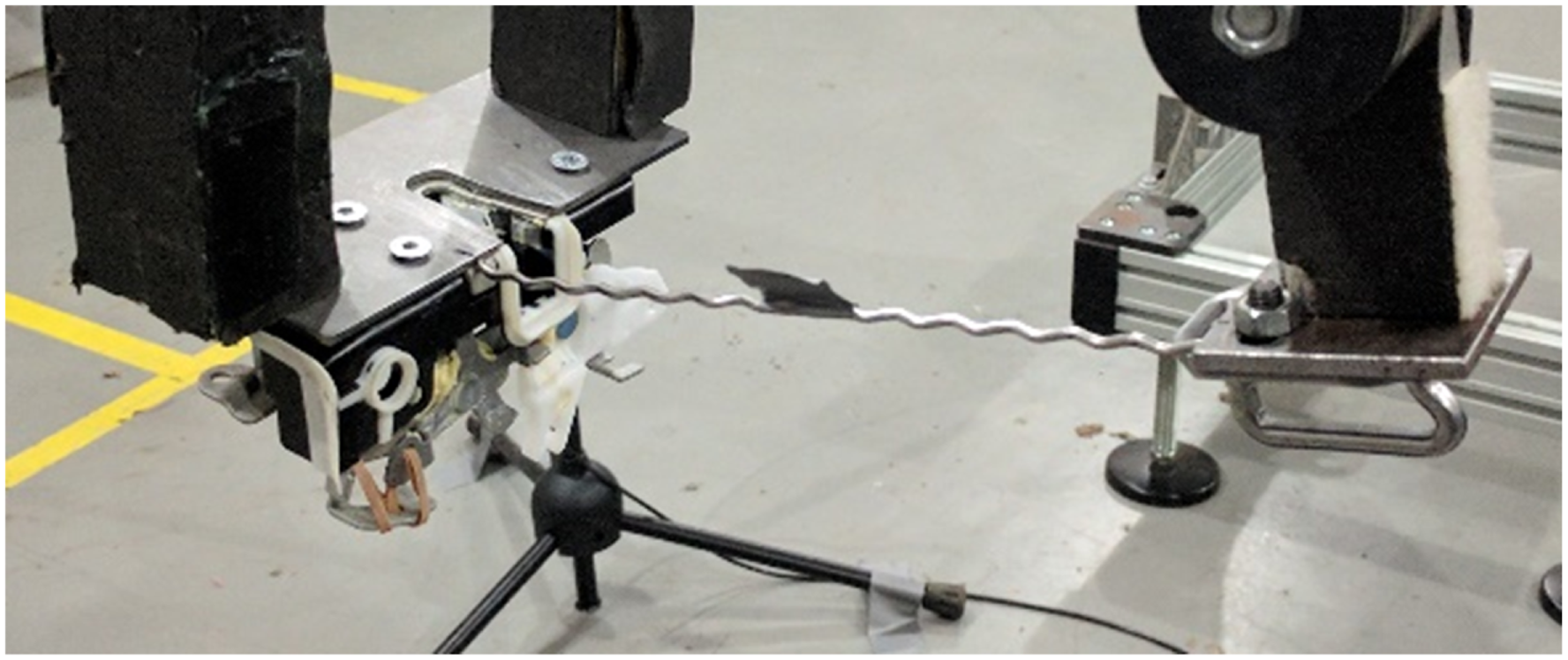
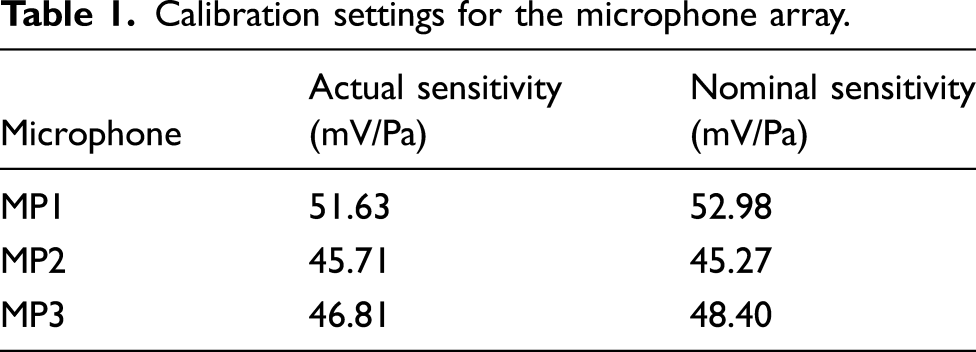
Sound pressure measurements were collected using a three-element condenser microphone array. These elements were placed at three locations around the latch denoted by MP1, MP2, and MP3, each 0.5-m normal to the latch, depicted in Figure 3. The placement was adapted from a standard testing procedure. LMS Test.Lab was used to calibrate the three microphones used for data collection. Table 1 depicts the calibration settings for each of the three microphones. Three-element microphone array. Calibration settings for the microphone array.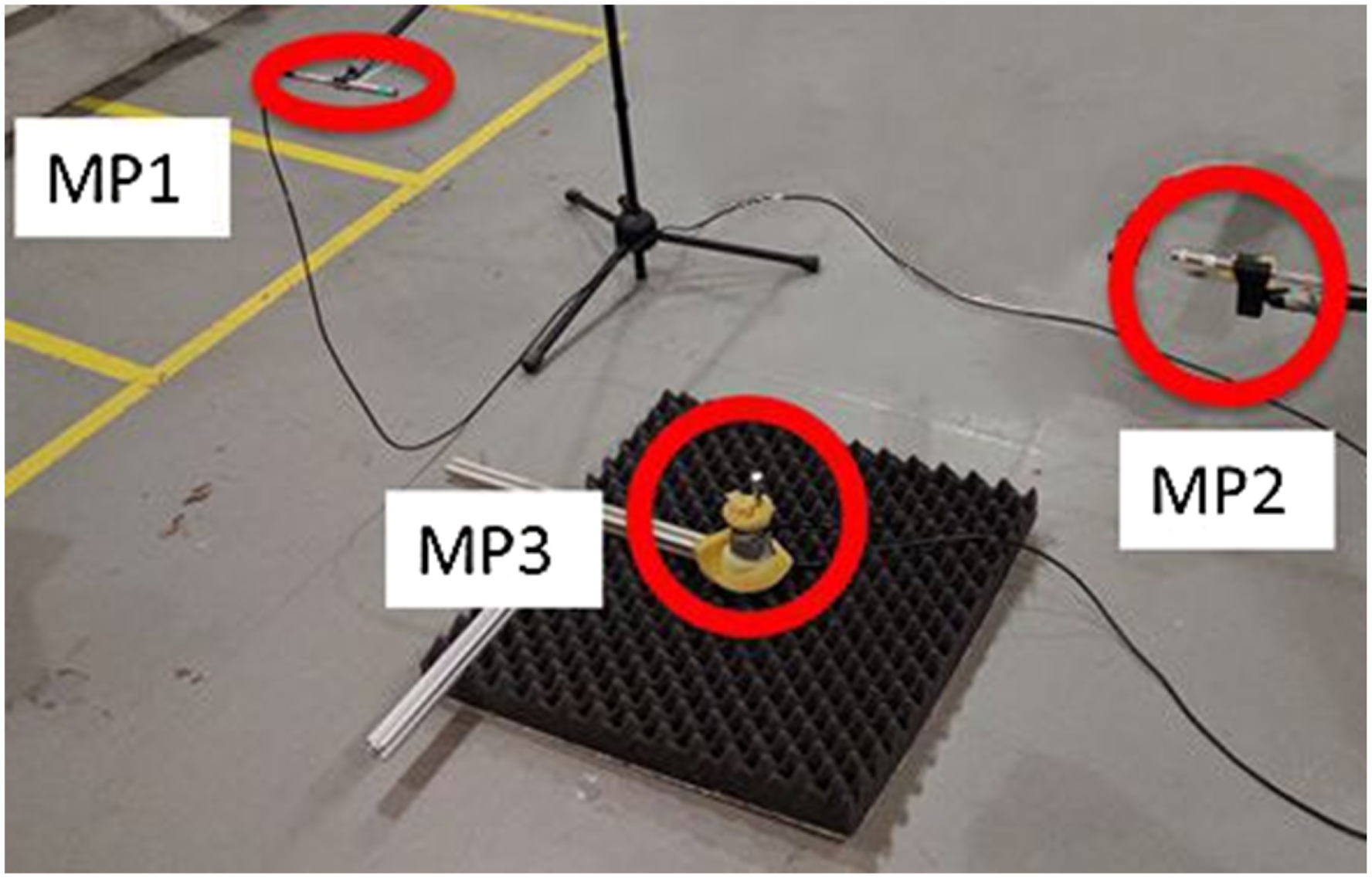
In accordance with the standard protocol, a target speed of 0.8 m/s (striker speed relative to the latch) was required for acoustic measurements. This is equivalent to the average closing speed necessary to achieve a fully latched position. An additional target speed of 1.2 m/s was added to the testing procedure. This is equivalent to a more aggressive door slam. The addition of a faster closing speed was used to provide an insight into how the impact speed of the striker relative to the latch would influence the overall acoustic response. Because of the complex dynamics of the apparatus, an oscilloscope speed trap that allowed for the precise separation distance is necessary to achieve each target speed. The speed trap operated using laser motion detection. As an object with a known dimension passed through the laser, the time duration for the object to completely pass the laser was recorded. This allowed for the precise measurement of the striker entrance speed relative to the latch body. The relationship is given in equation (1)
The LMS Test.Lab data acquisition system recorded sound pressure measurements from the microphone array. The propagation of sound from the source to the receiver was governed by the wave equation given by equation (2)
To prevent inaccurate sampling issues such as aliasing, the sampling frequency should be equivalent to the Nyquist frequency dictated by equation (3)
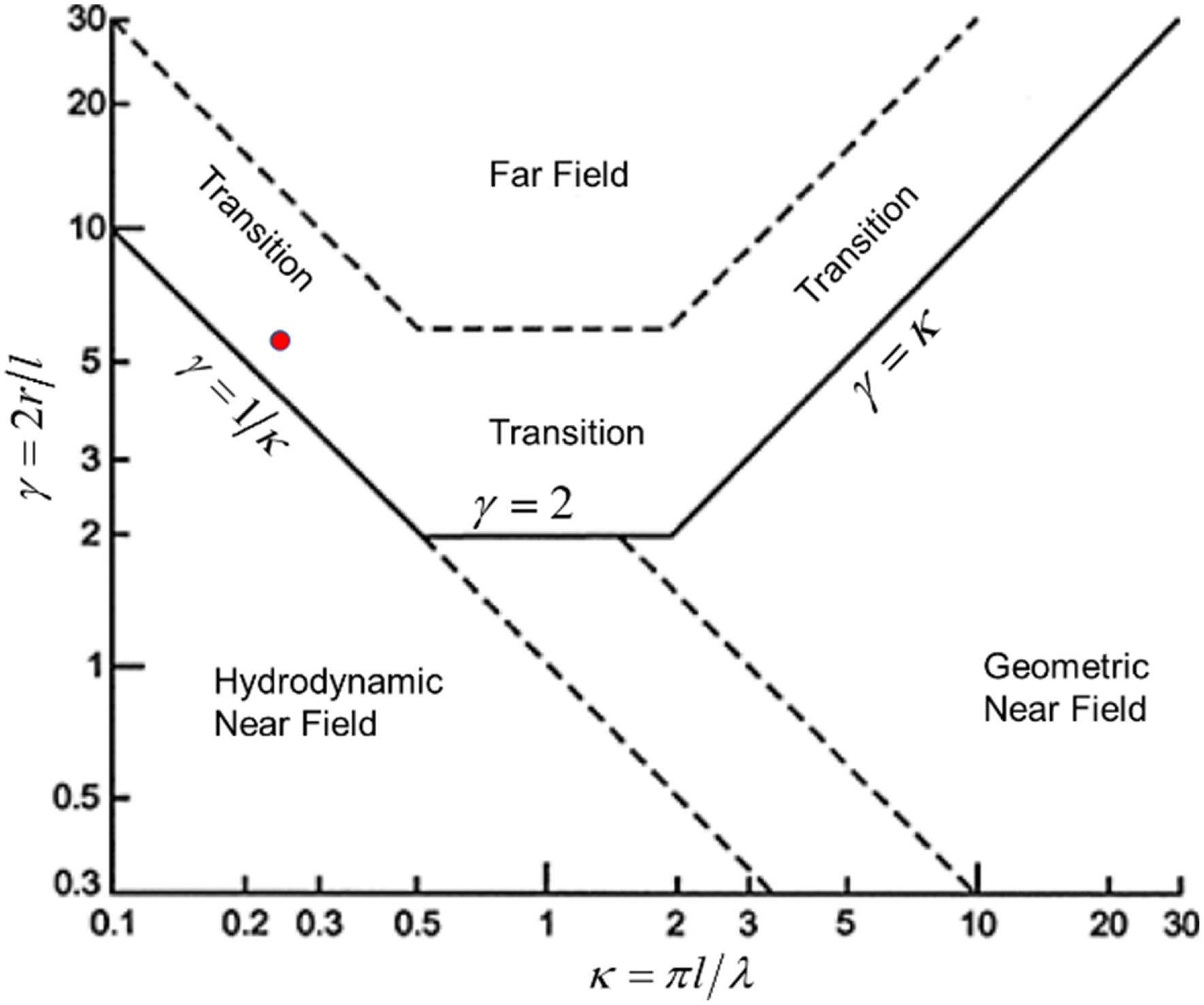
As previously mentioned, it is ideal to take acoustic sound pressure measurements from within the FF region of an anechoic chamber. Reverberations from the walls in the anechoic chamber were mitigated. This resulted in a sound field that comprised three regions. The region immediately adjacent to the sound source was denoted as the hydrodynamic near field (HNF). This region experienced fluid motion that was not directly linked to sound propagation and was not ideal for acoustic measurements (Bies et al., 2017). The geometric near field (GNF) was the sound region directly adjacent to the HNF. This region experienced interference between contributing waves from different parts of the latch. Acoustic measurements of broadband sounds in the GNF are not always preferred and should be avoided if boundary conditions allow. The FF region directly adjacent to the HNF is considered the best region suited for data collection.
It is possible to establish the location of the FF, given certain parameters of the environment as well as the sound source. For the purpose of this work, variables γ and κ are the parameters used to determine the location of the FF. These parameters are given in equations (4) and (5), respectively (Bies et al., 2017) Depiction of the radiating sound field (Bies et al., 2017).

The concrete floor allowed sound to be reflected into the room interior. This would result in the undesired effect of sound contributions from direct sound pressure and reverberated sound pressure. To remedy this, an acoustic absorber was placed directly below the testing apparatus as seen in Figure 3. The absorber was made of polyurethane foam with an egg crate texture on the face parallel to the floor surface and closest to the apparatus. The dimensions were 0.6604 m long by 0.6604 m wide by 0.0762 m thick. A dimension of 0.0762 m allowed 95% of the reverberated sound pressure to be absorbed. The placement of the foam absorber directly below MP3 ensured that the absorber did not obstruct the direct sound path from the source to the receiver.
Geometrical acoustics defines sound traveling in straight lines propagating outward from the sound source in the form of sound rays (Rossing, 2007). Figure 5 shows the propagating sound rays in the vicinity of the latch that could be reflected back to MP1 and MP2. The latch and striker are represented by the red box affixed to the apparatus shown in white. MP1, MP2, and MP3 are represented by the three gray rectangles, and the sound absorbing foam is shown in a black hatched box. The law of reflection reveals the propagating sound ray (incident ray) intersecting with the reflected ray along the normal line shown as a hashed line (Rossing, 2007). The normal line was determined to be 0.25 m from the latch. The absorbing foam extends beyond the normal line, indicating that 95% of the reverberated sound pressure will be absorbed by the foam and not reflected to MP1 and MP2. Incident and reflected sound waves.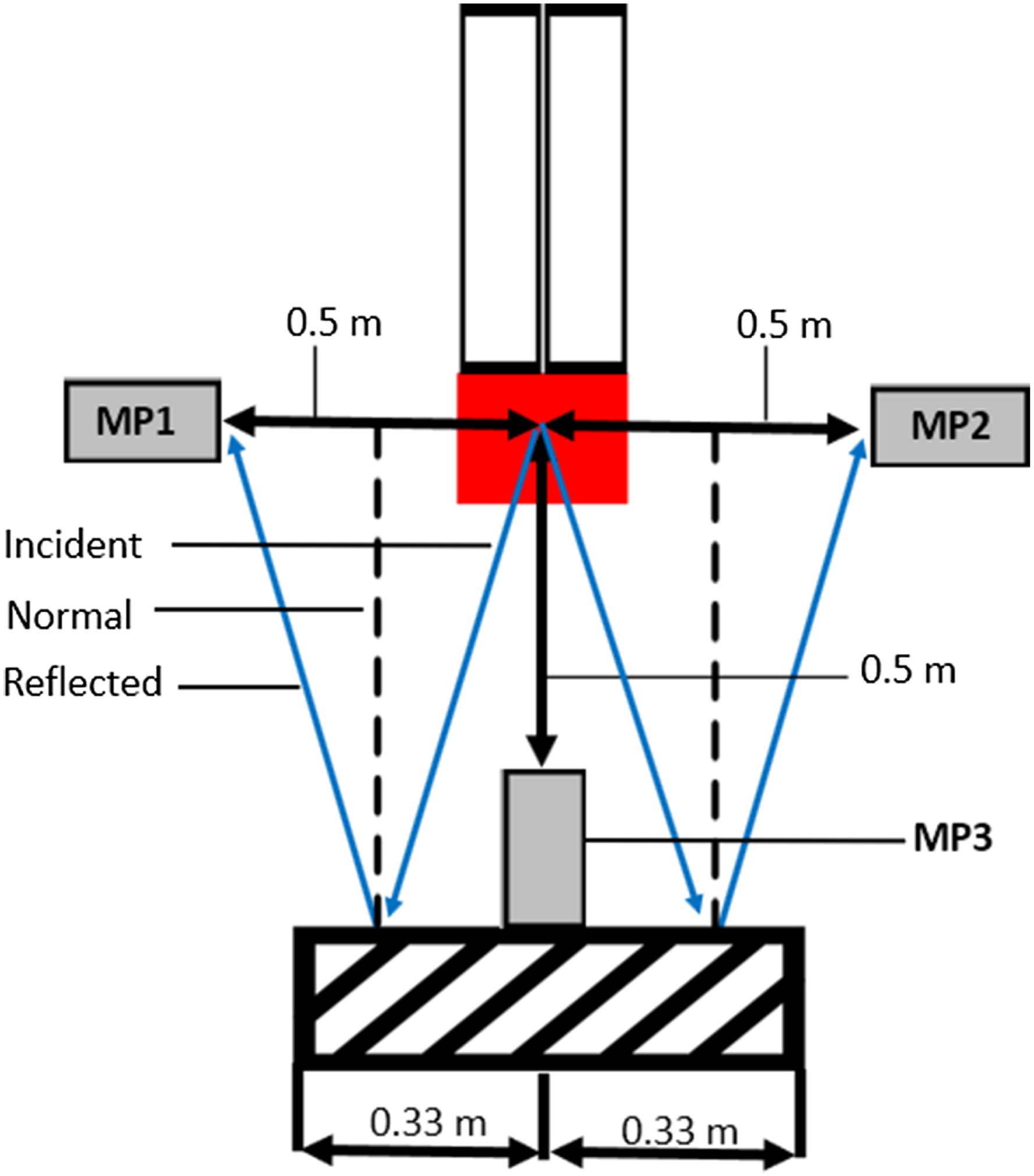
The radiated sound pressure was measured at three different microphone locations during latch operation. A total of five latches of the same geometry were analyzed at two different striker entrance speeds of 0.851 m/s and 1.179 m/s. For each latch and impact speed, three trials were performed for a total of 30 test trials containing 90 test samples. Each sample recording lasted approximately 10 s to ensure the total acoustic response from excitation to decay was captured. The raw microphone data were postprocessed in MATLAB to identify distinguishing features of the acoustic phenomena.
A MATLAB script was written to automatically truncate the portion of the sound pressure containing the latch locking operation waveform. The beginning of each truncated waveform identified the moment immediately before striker and fork-bolt contact. Similarly, the end of the waveform identified the moment immediately after the acoustic decay of the generated sound. The magnitude and position of the peak sound pressure were recorded.
To investigate the frequency composition of the acoustic response, two investigations were performed: a continuous wavelet transformation (CWT) analysis and a comparison of the overall SPL relative to a 1/3 octave bandwidth. A CWT is a modified Fourier transform optimized for analyzing abrupt changes in recorded data efficiently and accurately. The recorded sample is analyzed using a finite wave–like oscillation which can be shifted and scaled (Lilly and Olhede, 2012). The purpose of continuous wavelet signal analysis is to overcome the apparent lack of information in the frequency spectrum within a time-domain analog signal (Niermann et al., 2010). This relationship is given by equation (6)
1/3 octave band filters were required to determine the magnitude of the weighted SPL at a certain bandwidth. From these data, the addition of incoherent SPLs was performed to obtain the average SPL for each latch. This relationship is given by equation (7)
Analytically, the SPL can be modeled using the well-established relationship derived by He et al. (2019). The SPL (dB) of pure single-plate models generated by a harmonic load with amplitude q0 is given by equation (8)


For more information on the derivation of equations (8)–(10), see He et al. (2019).
2.3. Computational analysis
Finite element analysis (FEA) has been used in industry for decades because of its reliability and accuracy in analyzing mechanical dynamics and transient impacts (Calimanescu et al., 2009; Howard and Cazzolato, 2014). The literature suggests that the transient acoustic phenomenon is best captured by FEA as opposed to the boundary element method (Howard and Cazzolato, 2014; Von Estorff, 2008). In addition, statistical energy analysis has been shown to be less reliable than FEA for low-frequency ranges (Von Estorff, 2008). Because of the transient and low-frequency content nature of this analysis, FEA was selected as the most appropriate methodology for this investigation.
The computational analysis occurred in three separate modules: rigid body dynamic (RBD) analysis, explicit dynamic (ED) analysis, and transient structural (TS) analysis. For each analysis, four distinct impact events were considered: the pawl/ratchet impact, the striker/overslam bumper impact, the ratchet/housing impact, and the pawl/overslam bumper impact.
A finite element model of the internal latch components was developed in ANSYS Workbench. The engineering model shown in Figure 1 and the materials stated in the methodology section were implemented into the computational model. A depiction of the pawl and ratchet mesh models used for the ED simulations is shown in Figure 6. Meshed pawl and ratchet latch components.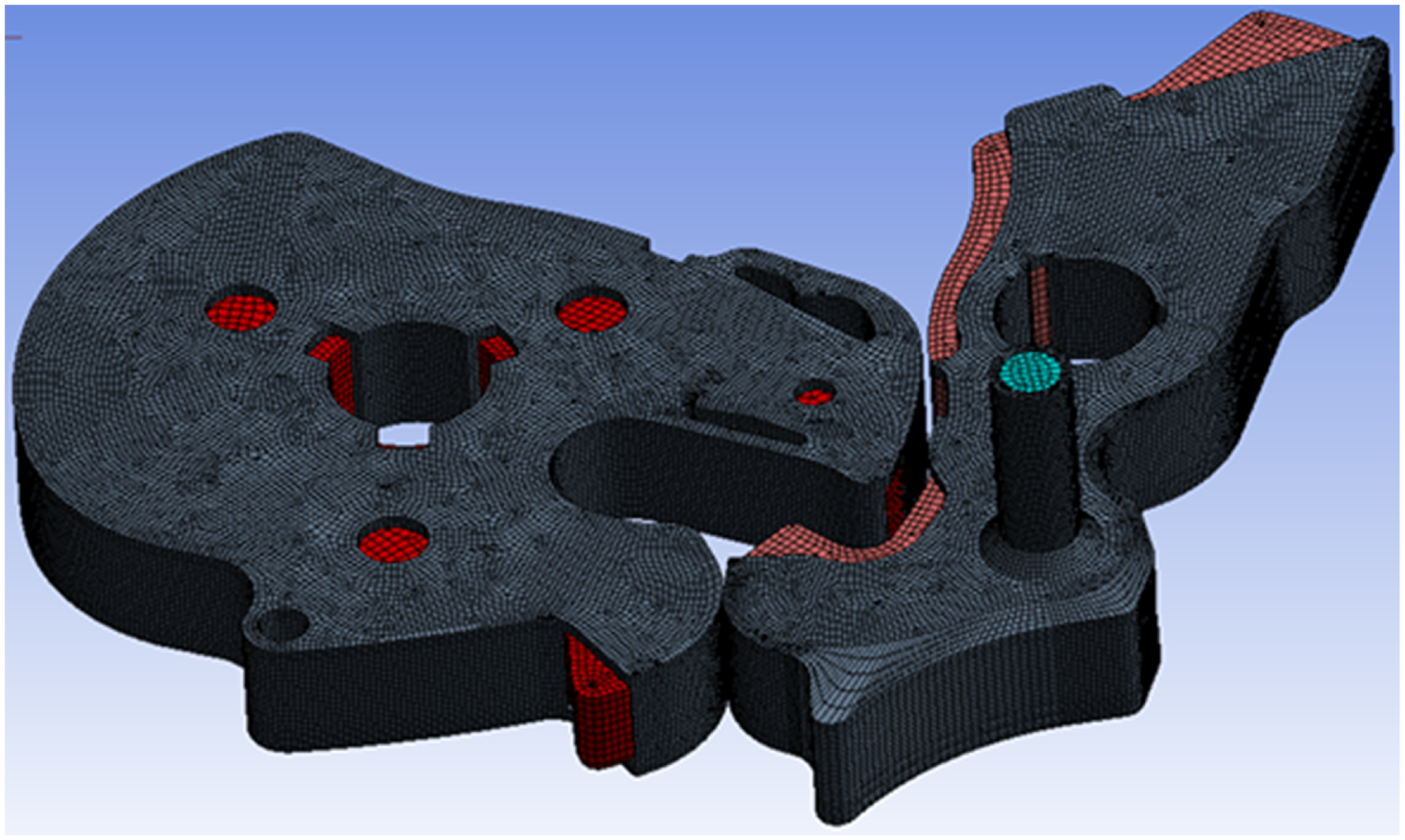
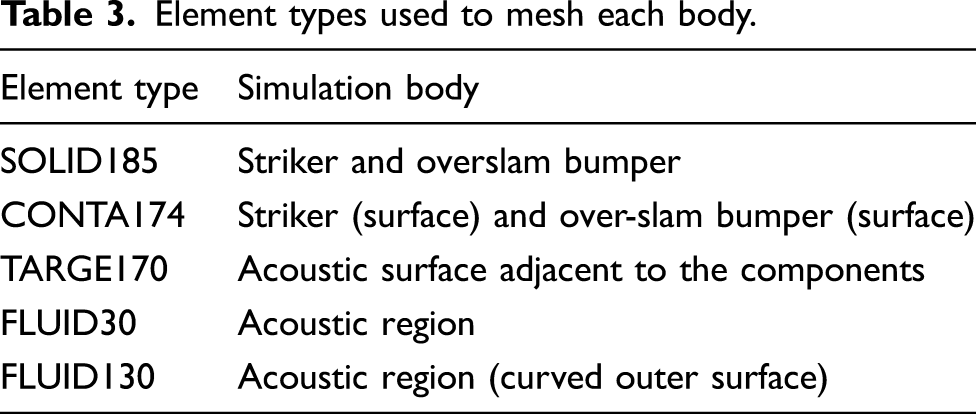
The mesh skewness metric was used to verify the quality of each mesh before solving. Mesh skewness evaluates the angle between two conjoining lines of a quadrilateral-shaped element and a triangular-shaped element. Conjoining lines with an angle of 90° for quadrilateral elements and 60° for triangular-shaped elements are considered high quality. Each analysis achieved an average mesh skewness <0.195, which is considered excellent (ANSYS Inc., 2014). Each component used in the simulation was meshed using SOLID185 elements with an average element size of 3.08 × 10⁻⁴ m.
The workstation used in this investigation contained 128 gigabytes of RAM DDR4-2132 (1066 MHz), 4 gigabytes of dedicated graphics, 2 terabytes of hybrid storage (solid state drive and hard disk drive), and an Intel Core i7 6850k chip (3.60 GHz).
2.3.1. RBD
To generate an acoustic response computationally, surface velocity initial conditions equivalent to the surface velocity of the door latch components during a door closure event must be used. Because of the complex design of the door latch system, the short transient nature of the latch closing process, and the dynamics of the testing apparatus, collecting empirical surface velocity measurement data was not possible. To overcome this, an RBD model was analyzed to approximate the complex component interactions of the latch and to provide surface velocity estimations to use as the initial conditions for further dynamic and acoustic analysis.
Summary of coil to torsional spring conversion.
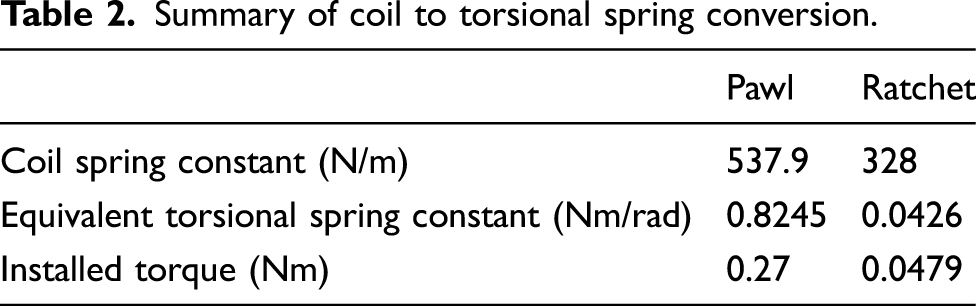
A revolute joint was used in the RBD analysis to allow the ratchet and pawl to rotate about a fixed point. It was assumed the frictional effects of the rotating pawl and ratchet were negligible because of lubrication. Therefore, the pawl and ratchet revolute joints were defined to be frictionless. A translational joint was used to define the entrance speed of the striker relative to the latch. Two separate analyses were performed at 0.851 m/s and 1.179 m/s, equivalent to the door closure speeds used empirically. The contact surfaces of the latch components were meshed using quadrilateral-shaped elements with mid-side nodes enabled (SURF154 element) as it is one of the most common element types used for 3D RBD analyses (ANSYS Inc., 2017). The element size used for the contact surface was 1.8 × 10⁻⁴ m. The average timestep was 1.08 × 10⁻⁶ s. Velocity probes were positioned at each impact location to record the tangential speed of the component at impact.
2.3.2. ED
The tangential speeds calculated in the RBD analysis were used as the initial conditions for the ED analysis, allowing for the calculation of the reaction forces experienced by each of the door latch components. To reduce computational time, each of the four distinct impact events were analyzed in isolation.
During operation, plastic deformation of any of the door latch components would result in a failed latch. This analysis assumed that all latch components behave as they do during normal operation without failure. Therefore, all latch components, including the thermoplastic vulcanizate, were modeled as linear elastic materials. All forces experienced by the components were within the proportionality limit of each material.
For each of the four impact events, the impacting bodies were separated by 7.5 × 10⁻⁵ m to replicate the instant before contact. For each impact event, the first component mentioned in each impacting pair was free to move, whereas the second component in each pair was fixed in space. The AUTODYN solver was used to perform the reaction force analysis. Contact detection between the two impacting bodies was defined using trajectory with a penalty formulation. This is the most common setting for an analysis of this type (ANSYS Inc., 2016a).
An important parameter in each ED analysis was the stiffness penalty function. The stiffness relationship between the contact body and target body must be established for contact to occur.Equation (11) was used to model this phenomenon


The minimum elements per wavelength (EPW) required to accurately modeling structural vibrations using linear shape elements is 12 EPW (Howard and Cazzolato, 2014). The average element size used in each model corresponds to 228.67 EPW, which is significantly above the suggested EPW value. The AUTODYN solver requires the use of higher order SOLID186 hexahedral elements (ANSYS Inc., 2016a). Therefore, SOLID186 hexahedral elements were used as opposed to SOLID185 tetrahedral elements which are known to be less accurate (Howard and Cazzolato, 2014).
A contact force probe was affixed to each contact surface. The reaction forces for each impact event were determined for both door closure speeds during the 3.19 × 10⁻³ s timestep.
2.3.3. TS
Acoustic modeling using FEA recognizes the bidirectional coupling between the structure and the fluid, known as the fluid–structure interaction (FSI). Therefore, the governing equations for both structural dynamics and fluid mechanics need to be considered. However, there are several assumptions to this approach. The acoustic pressure in the fluid medium is determined by the wave equation (equation (2)). The fluid is compressible, where density changes are due to pressure variations. There is no mean flow of the fluid. The density and pressure of the fluid can vary along the elements, and the acoustic pressure is defined as the pressure in excess of the mean pressure.
These assumptions allow the acoustic wave equation to determine the acoustic response of the fluid subject to any source causing a deviation from the mean pressure. Pressure-formulated acoustic elements are modeled by equation (14)

To consider the FSI, equation (15) is coupled with the dynamic equation of motion. This is presented in equation (16)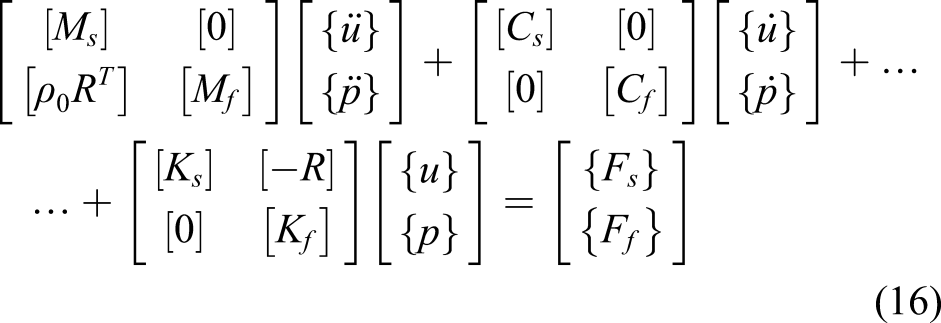
This work investigated the ideal case, where material damping was not considered. As such, the damping matrices [C s ] and [C f ] were calculated using the minimum Newmark damping parameters of γ = 0.5 and β = 0.25 (Howard and Cazzolato, 2014). Numerical stability was observed using these damping parameters, preventing the use of added numerical damping by increasing the Newmark damping parameters above the minimum value. Rayleigh damping was not considered in this model.
The acoustic domain was modeled as a 3D sphere to correctly model the radial spread of sound waves from the latch. Infinite elements were placed on the outer surface of the sphere to satisfy the Sommerfeld radiation condition that states that outgoing acoustic waves from acoustic sources shall continue to propagate outward to infinite (Dreyer et al., 2006). The recommended distance between the outer edge of the acoustic source and the outer surface of the spherical body is 0.2λmax. For the maximum frequency value of 5 kHz and a speed of sound of 343 m/s, λmax is equal to 2.14 m. Therefore, the minimum separation between the source and the outer edge of the acoustic medium was 0.428 m. The acoustic sphere was chosen to have a radius of 0.53 m. This ensured that the minimum separation between the latch and the outer edge of the acoustic medium was considered and that the 0.5-m microphone placement was surrounded by acoustic media.
The maximum element size, S
E
, was calculated using equation (17)
Taking the speed of sound to be 343 m/s, the maximum frequency of 5 kHz, and an EPW of 12 EPW, the maximum element size was calculated to be 5.72 × 10⁻³ m. The maximum element size used in the acoustic mesh was 3.45 × 10⁻³ m to increase the accuracy of the model. The mesh was further discretized in areas close to the door latch to increase the efficiency of the energy transfer from the door latch vibration to acoustic radiation.
Element types used to mesh each body.
The FSI was discretized such that both the fluid elements of the acoustic medium and the structural elements of the door latch were of size 5 × 10⁻⁴ m. This allowed for coincident nodes between the two surfaces, thereby transferring the nodal displacements into pressure fluctuations in the most efficient manner possible.
Because of computational limitations, each microphone was analyzed independently. This allowed for a sliver of the acoustic mesh to properly analyze the direct sound path from the latch to the microphone. Using a sliver of the acoustic mesh was the only way to ensure an accurate and feasible computational solution for a frequency bandwidth up to 5 kHz. The analysis was repeated for each of the three microphones, using the sliver of the acoustic mesh corresponding to the direct sound path of the latch to the outer surface of the acoustic sphere. Each microphone was analyzed using two door closure speeds. Similarly, because of computational limitations, only one impact event could be simulated. The dominant impact event was deemed to be the striker–overslam bumper impact. Therefore, this impact event was the focus of the TS acoustic analysis. Because only the dominant impact event was considered, the overall sound pressure of the computational analysis was lower than the experimental analysis. To address this, additional microphone locations were considered. Along with the 0.5-m microphone distance used in the experimental analysis, two additional microphone locations were used at distances of 0.3 m and 0.075 m. The decreased microphone distance offsets the decreased SPL due to considering only the dominant impact event.
The force results generated by the ED analysis were used as the initial conditions for the TS analysis. The force was equally distributed across the location where bumper contacted the striker. The force was applied in four steps over a time period of 8 × 10⁻² s, representative of the amount of time between the beginning of the primary impact and the end of the fully decayed sound pressure, as measured experimentally. The timestep was calculated using the Nyquist frequency relationship in equation (3) and determined to be 1 × 10⁻⁴ s. To prevent unwanted reflections of sound pressure from the surfaces of the latch components, an acoustic absorption surface boundary condition was applied to all external faces of the latch components.
3. Results
3.1. Experimental results
The experimental results for the impact speed of 0.851 m/s and 1.179 m/s measured at each microphone are shown in Figures 7 and 8, respectively. For each sample, the peak sound pressure was generated by the latch locking operation, varying between 1 Pa and 3 Pa above ambient pressure. Quantitatively, the average duration of the entire latch operation for all five latches was approximately 0.1073 s at 0.851 m/s and 0.1054 s at 1.179 m/s. Therefore, there was a negligible difference in average duration. As a result, there was no inherent difference to the duration of the latch locking operation or the magnitude of overall damping because of an increase in relative speed of the striker entering the latch. Waveform of the 0.851 m/s closure speed. Waveform of the 1.179 m/s closure speed.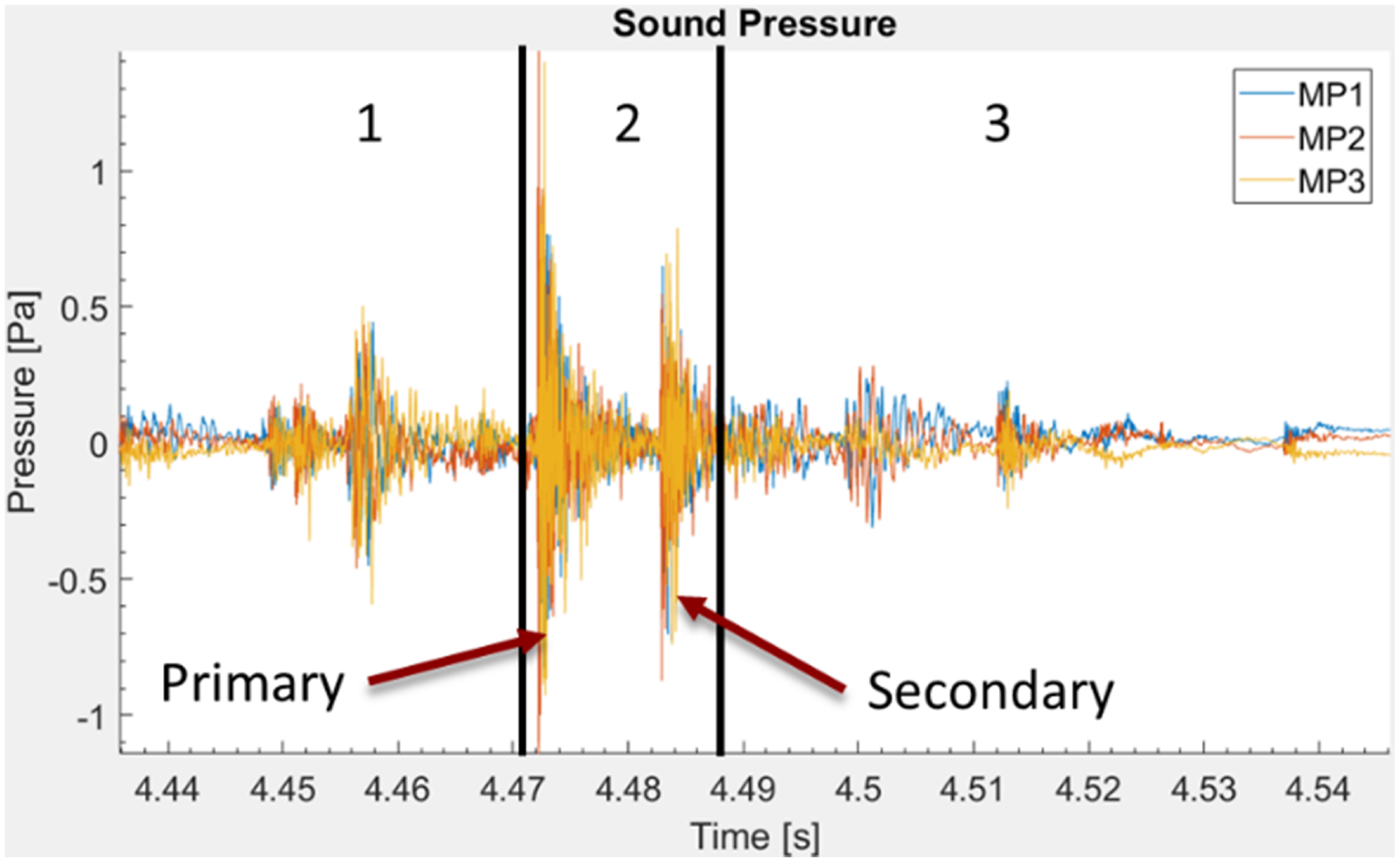
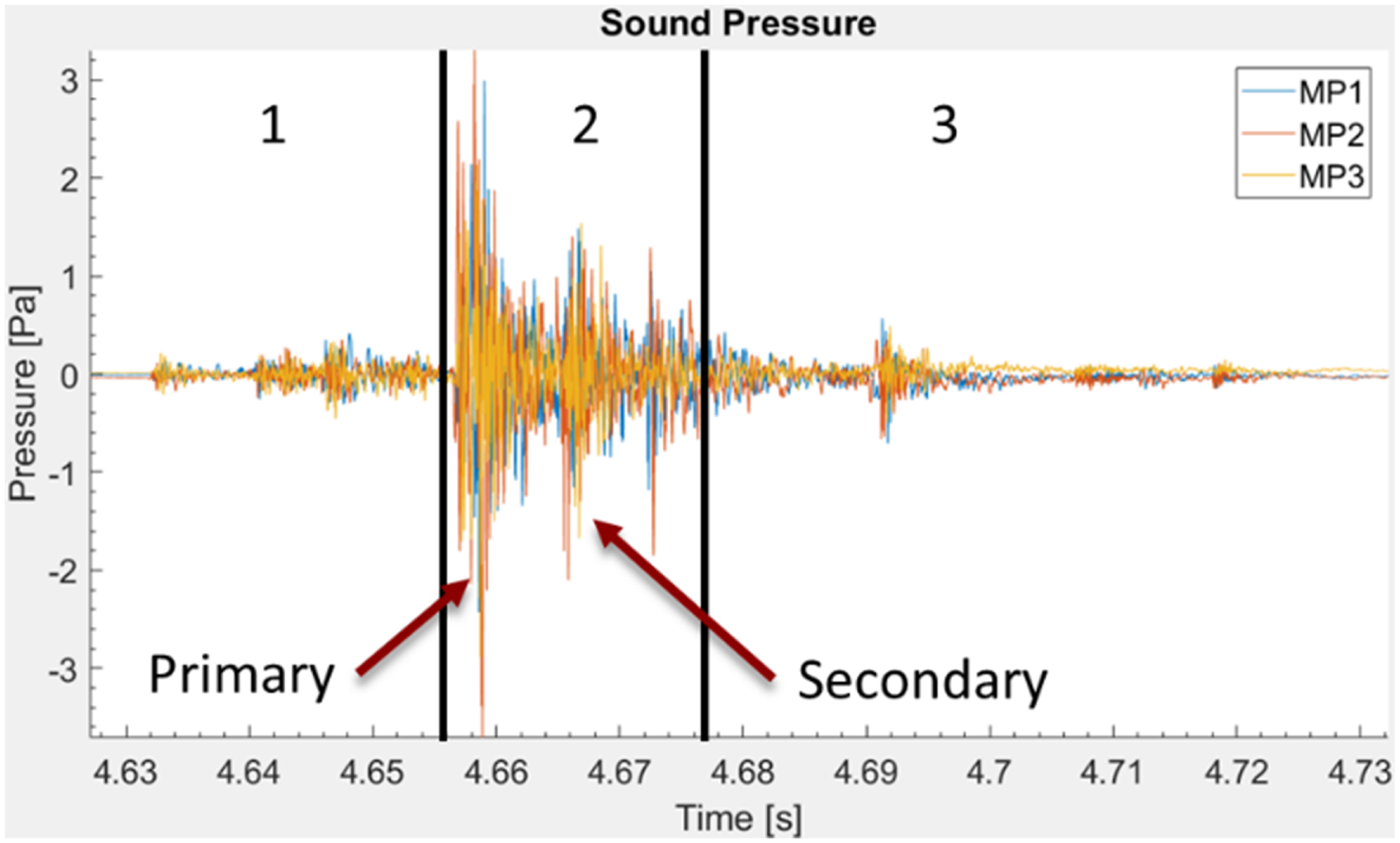
Initial inspection of the recorded waveforms shows good agreement between the sound pressures measured at each receiver with little variation. At 0.851 m/s, the peak sound pressure occurred at the middle of the latch locking operation with a magnitude slightly larger than 1.4 Pa. The peak sound pressure for the 1.179 m/s impact speed was larger with a magnitude of approximately 3 Pa. Analysis of each transient result shows that the sounds can be divided into three distinct segments, as illustrated in Figures 7 and 8. Segment 1 reveals that both speeds peak at a pressure of approximately 0.5 Pa, indicative of the sounds generated by the striker sliding across the face of the fork-bolt in addition to the weak pawl and fork-bolt (ratchet) impact.
In Segment 2, two impact events (primary and secondary) govern the waveform. It was hypothesized that the dominant frequencies composing the sound are derived from these impact events. In addition, it is theorized that the sound pressure was created by the striker/overslam bumper impact and the ratchet/housing impact.
An inherent difference between the sound pressures resulting from the different impact speeds is the distinguishability between the primary and secondary impact events. For both impact speeds, the time between the primary and secondary event is approximately 0.01 s. This indicates that the time difference between impact events occurring within the latch is not necessarily dependent on the entrance speed of the striker. A faster closing speed introduces additional kinetic energy into the system. The waveform shown in Figure 8 depicts the additional energy causing the sound pressure from the primary impact to run into the sound pressure generated by the secondary impact. This “blending” of sound pressure reduces the definition of the sound, giving the impression of a smeared acoustic response (Ballou, 2013). Segment 3 is a result of additional latch component interactions and residual vibrations which are significantly lower than the sound pressures generated within Segment 2.
The CWT analysis was then computed to determine the frequency composition of the waveform as a function of time. Figure 9 depicts the wavelet analysis of the waveform shown in Figure 7. Normalized magnitude is represented by the color bar, time is represented in the x-axis, and frequency is represented in the y-axis. For the purpose of this work, only the frequencies below 5 kHz were investigated in detail. The red circles outline the frequency with the largest magnitude produced by the latch. By comparing the timelines of Figures 7 and 9, it is confirmed that the primary and secondary impact events dominate the acoustic response. The dominant frequencies of the primary and secondary impact are between 3.7 kHz–5 kHz and 2.7 kHz–3.9 kHz, respectively. Continuous wavelet transform of the 0.851 m/s closure speed.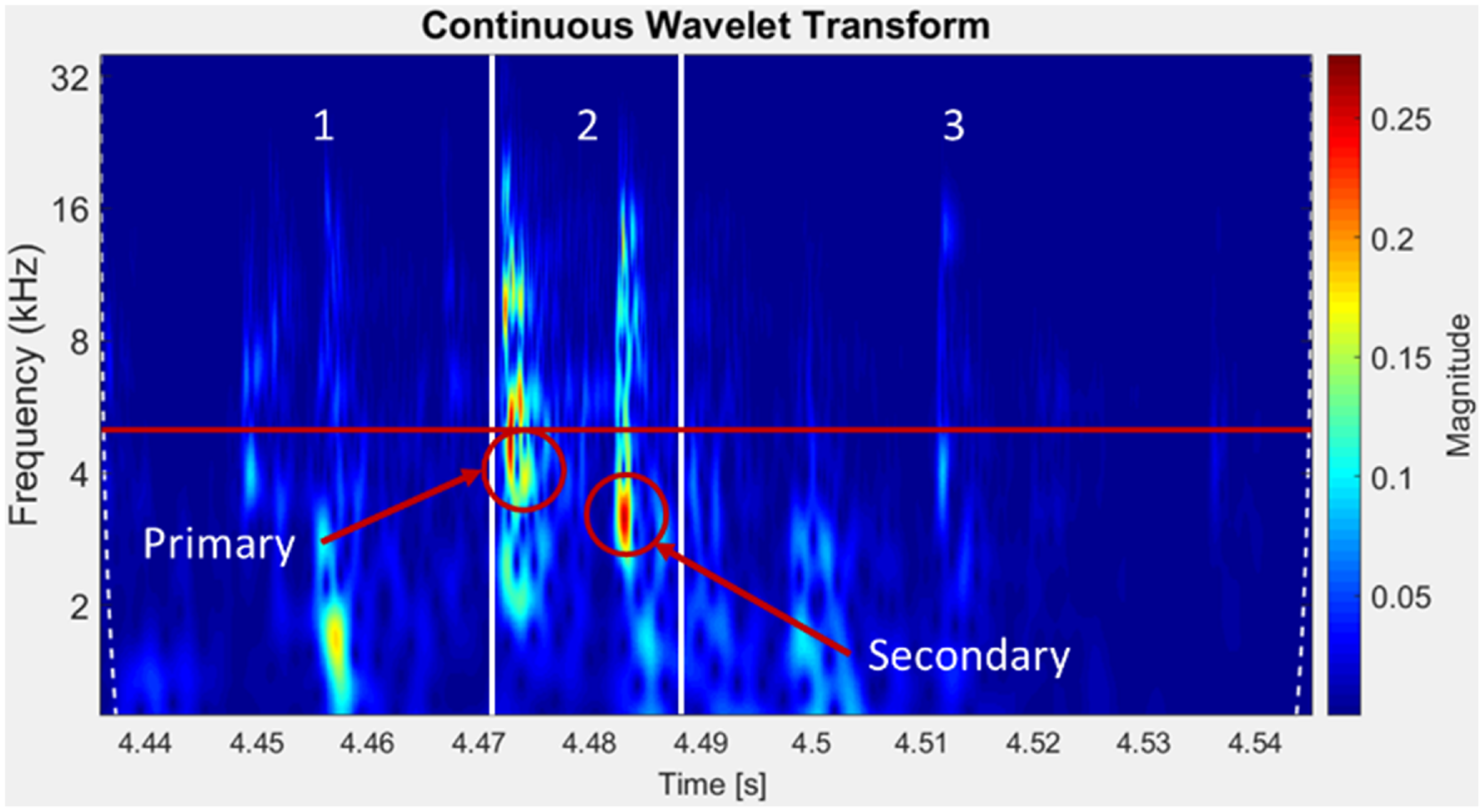
A similar trend was observed with the CWT for the 1.179 m/s impact speed. Figure 10 depicts the wavelet analysis of the waveform shown in Figure 8. Similarly, comparing the timelines of Figures 8 and 10 confirmed the primary and secondary impact events dominate the acoustic response. The dominant frequencies of the primary and secondary impacts are between 3 kHz–4 kHz and 1 kHz–1.8 kHz, respectively. The normalized magnitude of the dominant frequency of the primary impact exceeds the magnitude of the second impact. In addition, it can be observed that the difference in normalized magnitude of the primary impacts shown in Figures 9 and 10 is approximately 0.54, over three times greater magnitude for the 1.179 m/s impact than the 0.851 m/s impact. This difference is the result of the additional kinetic energy introduced to the system by the faster closing speed. The high-frequency content of the primary impact corresponds to the KE onomatopoeia seen in the work of Bezat et al. (2014). In addition, the time span of the primary impact with the maximum magnitude is significantly increased with increased door closure speed. This effect, along with the acoustic smearing noticed in Figure 8, generates a less preferable response for the customer. The distinct, primary and secondary acoustic responses would generate a greater perception of safety and security knowing that the door was closed properly (Takada et al., 2019). Continuous wavelet transform of the 1.179 m/s closure speed.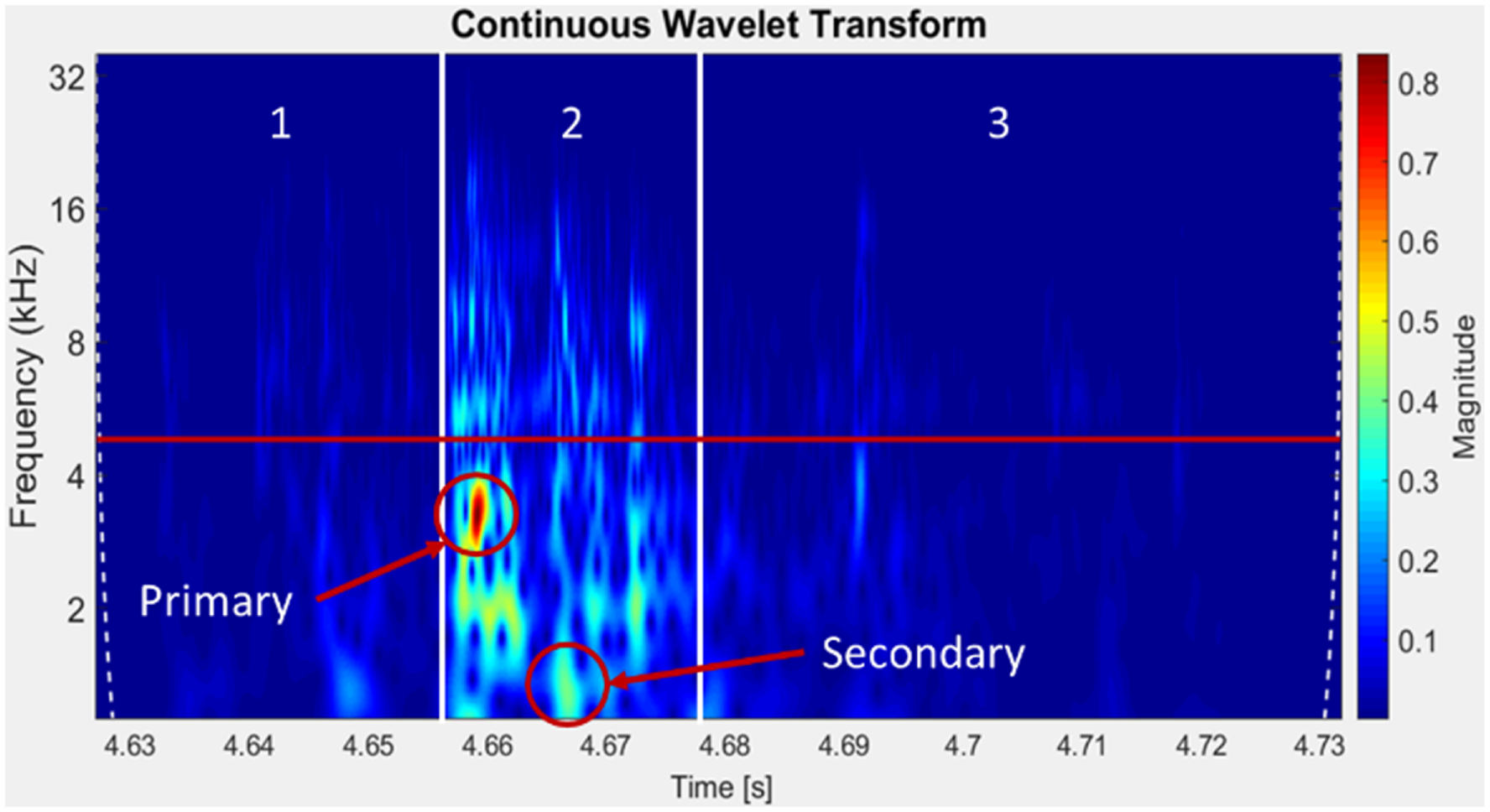
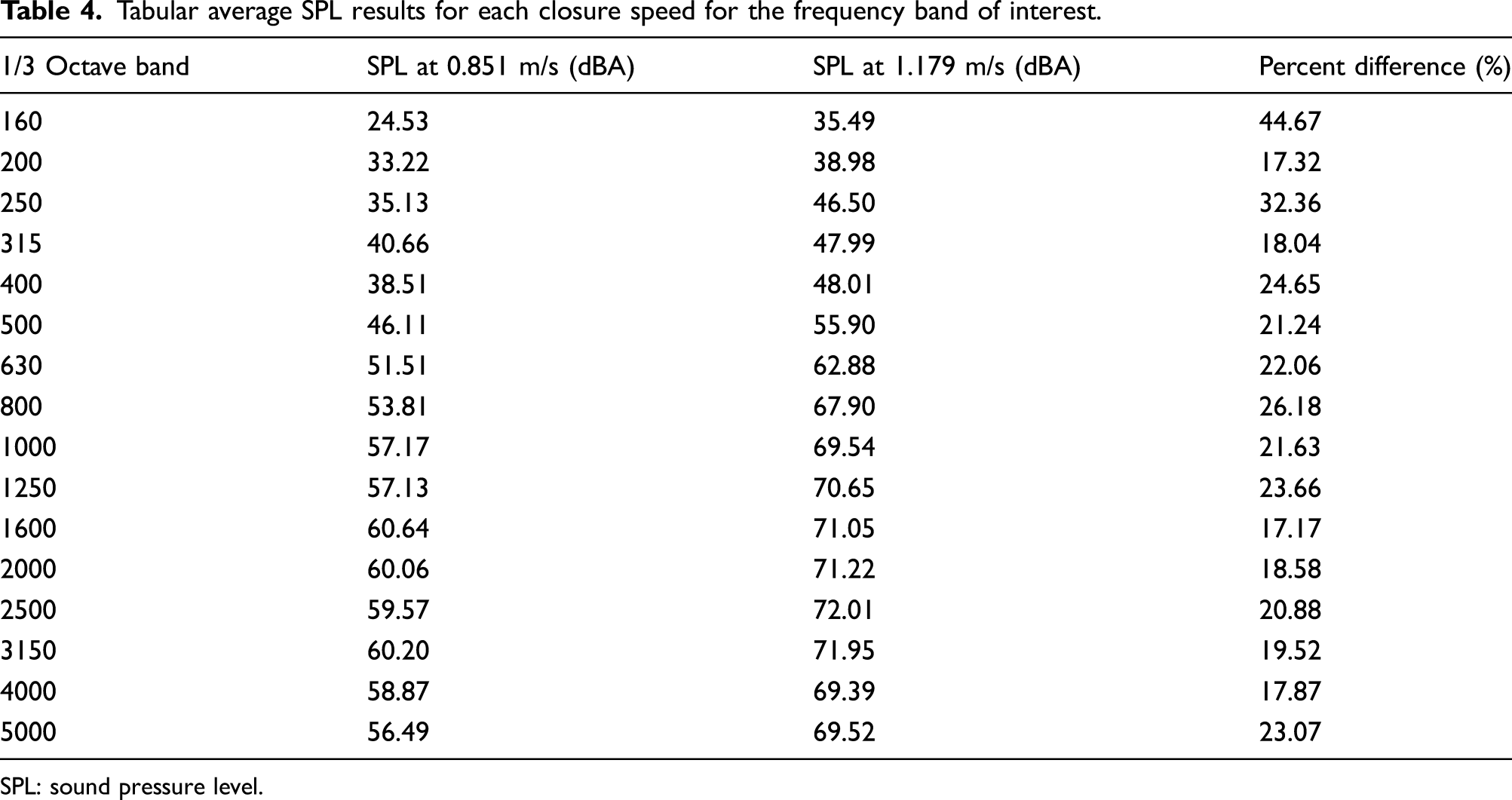
The calculation for the average SPL versus 1/3 octave band for the entire response was conducted using 1/3 octave band filters and incoherent average SPL addition. The results are displayed in Figure 11 for both door closure speeds. From Figure 11, it is evident that the additional energy presented to the system by the increased door closure speed greatly influenced the acoustic response. For each frequency band, the SPL experienced an average increase of 10.96 dBA because of the 0.328 m/s increase in door closure speed. Table 4 compares the SPL in the 160 Hz–5 kHz bandwidth. Weighted average sound pressure level versus 1/3 octave band for the two door closure speeds. Tabular average SPL results for each closure speed for the frequency band of interest. SPL: sound pressure level.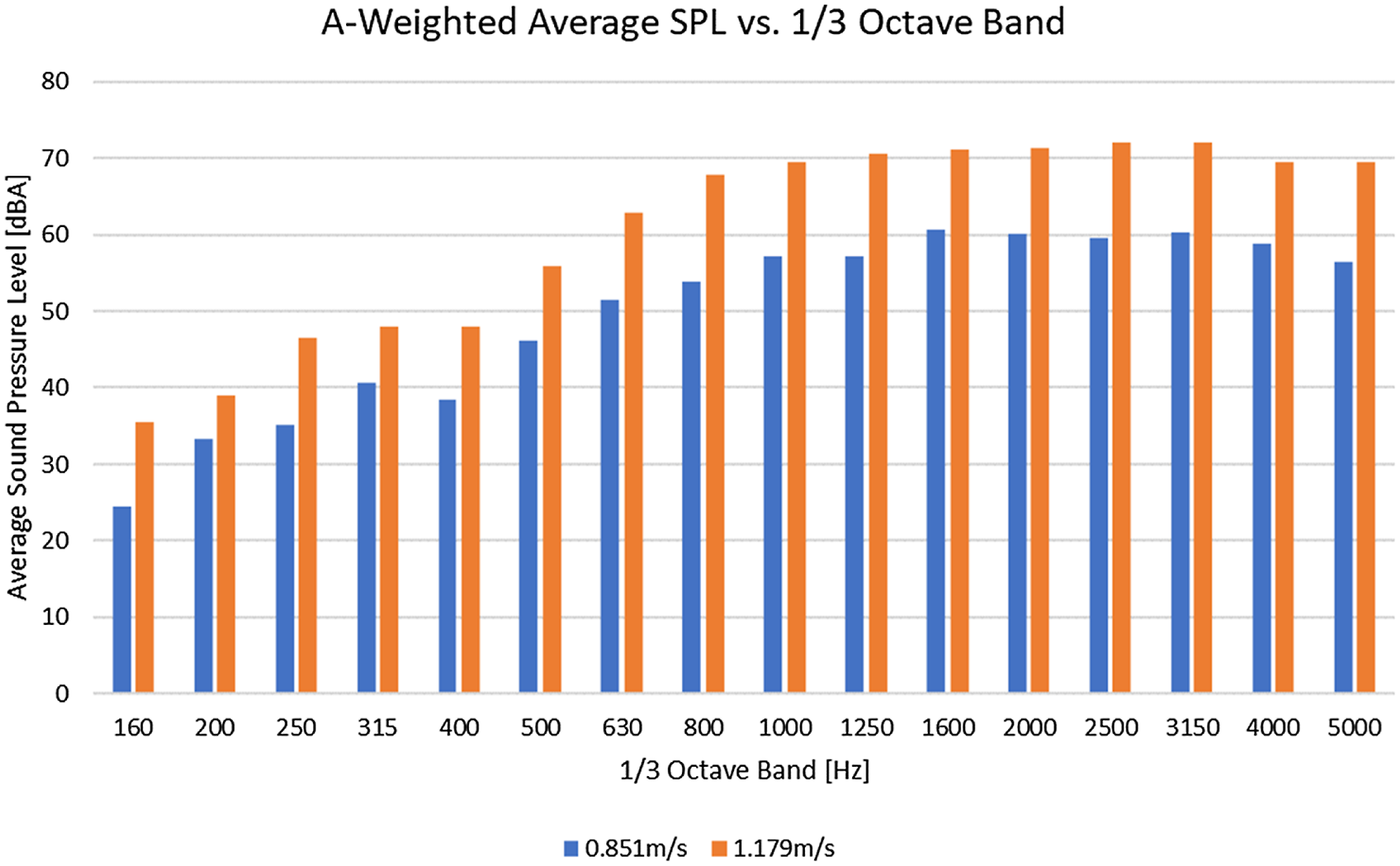
3.2. Computational results
3.2.1. RBD
Tangential impact speeds of the latch components.

3.2.2. ED
The velocity results from the RBD analysis were implemented as the initial conditions the ED computational model. Each impact event was analyzed independently. Figure 12 shows the reaction force as a function of time for door closure speeds for the striker/overslam bumper impact event. The reaction forces from each impact event in sequential order are summarized in Table 6. Reaction force results of the striker/overslam bumper impact event at 0.851 m/s (top) and 1.179 m/s (bottom). Reaction forces of the latch components.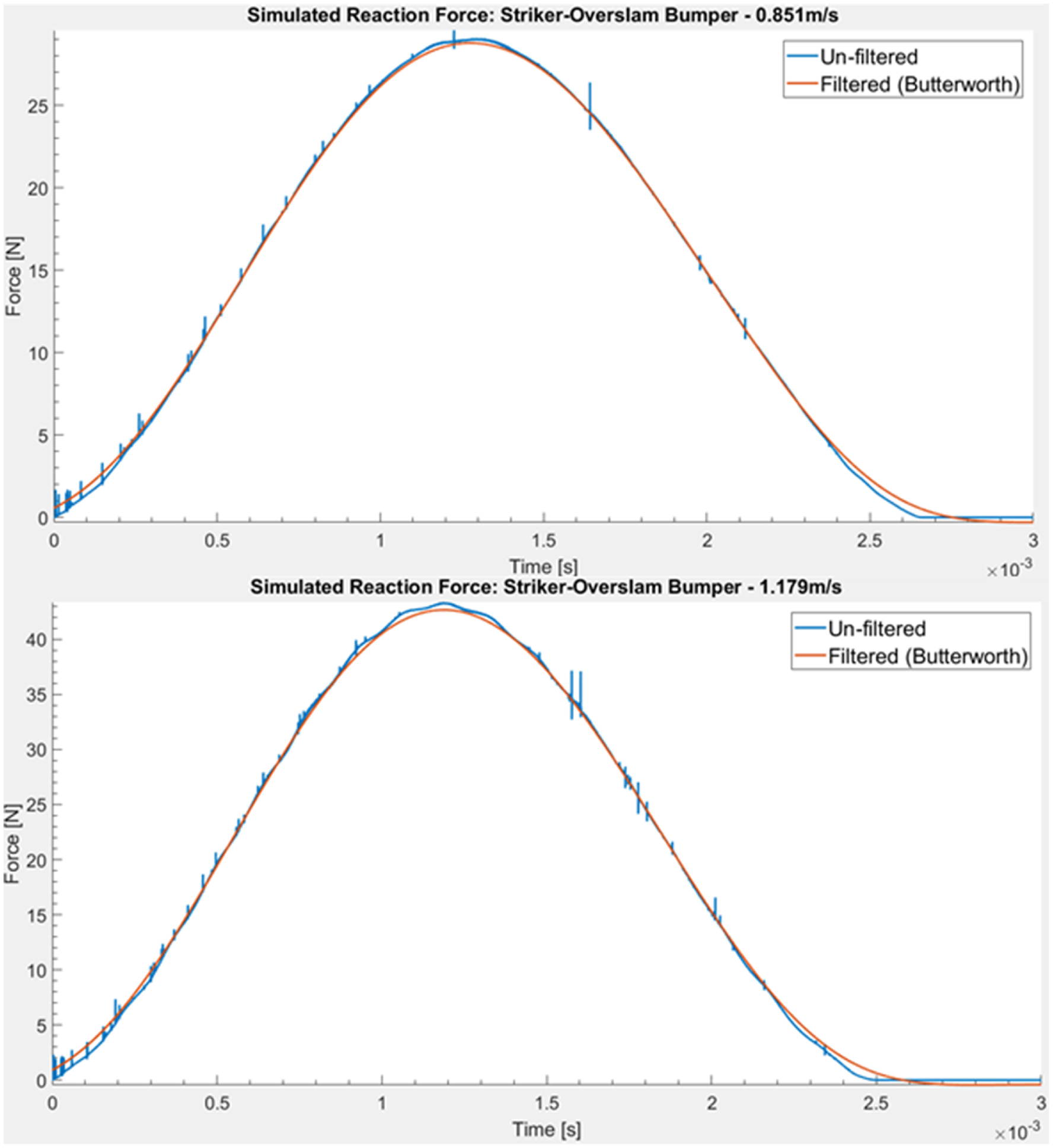

Analysis of the force reaction results indicates larger reaction forces between the ratchet/housing and striker/overslam bumper resulting from an increase in closing speed. This suggests that these impact events have a greater influence on the acoustic response than the other impact events. The striker/overslam bumper impact event was taken to be the dominant impact event because of having a reaction force >2.32 times larger than any other impact event.
3.2.3. TS
A total of six computations were performed. Sound pressure was measured at MP1, MP2, and MP3 at three microphone distances as a result of the primary impact forces from the two door closure speeds. The microphone at 0.075 m was most accurately able to replicate the experimental results. Figure 13 compares the normalized computational and experimental sound pressure for all three microphones with a door closure speed of 0.851 m/s. Figure 13(a) illustrates the computational time response of the primary impact event. Figure 13(b) illustrates the experimental time response of all impact events, as the impact events could not be isolated experimentally as they were computational. Figure 13(c) examines the experimental primary impact event in greater detail. Figure 13(a) and (c) demonstrate qualitatively high levels of correlation. Because the ideal case with no added structural damping was considered computationally, the experimental data demonstrate increased levels of damping. Comparison of the (a) computational, (b) experimental, and (c) experimental primary impact sound pressure for the 0.851 m/s door closure speed.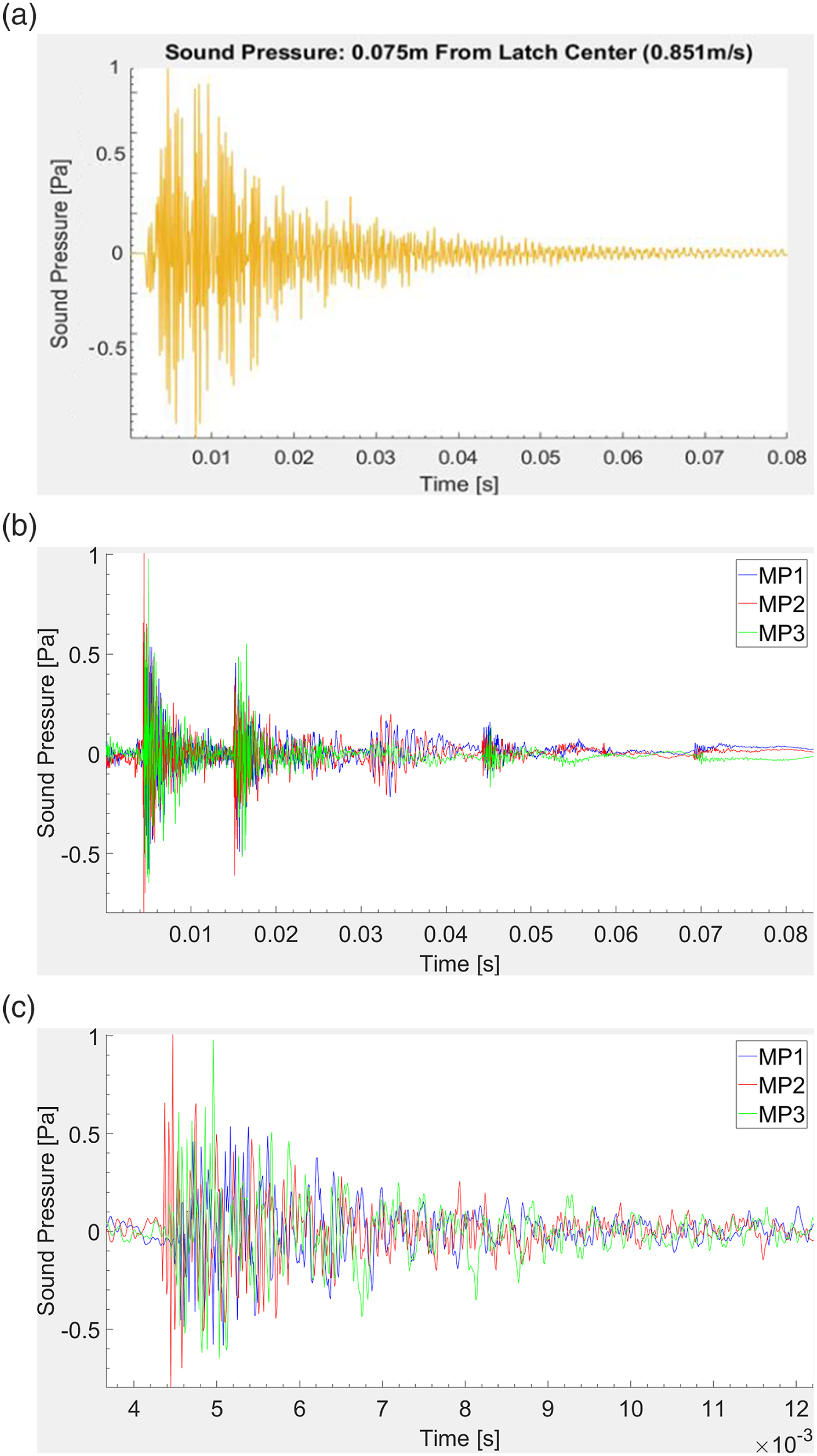
Because of the high levels of qualitative correlation between the primary impact events, further quantitative analysis was performed to determine the spectral decomposition of the primary impact time response. A spectral composition analysis of the generated sound pressure was performed for both door closure speeds. Figure 14 shows the spectral composition analysis for MP3 with a door closure speed of 0.851 m/s. Comparing Figures 9 and 14 suggests that the computational model was accurately able to predict that the primary impact had a dominant frequency response at approximately 4 kHz, lasting approximately 0.01 s. This further demonstrates the validity of the computational model. In addition, the computational results agree with the results of Bezat et al. (2014), as the primary impact contained a dominant high-frequency component, described as the KE onomatopoeia. The psychoacoustic response of the primary impact is known to provide the customer with a sense of security knowing that the door is properly closed. Continuous wavelet analysis of the 0.851 m/s transient structural analysis at MP3.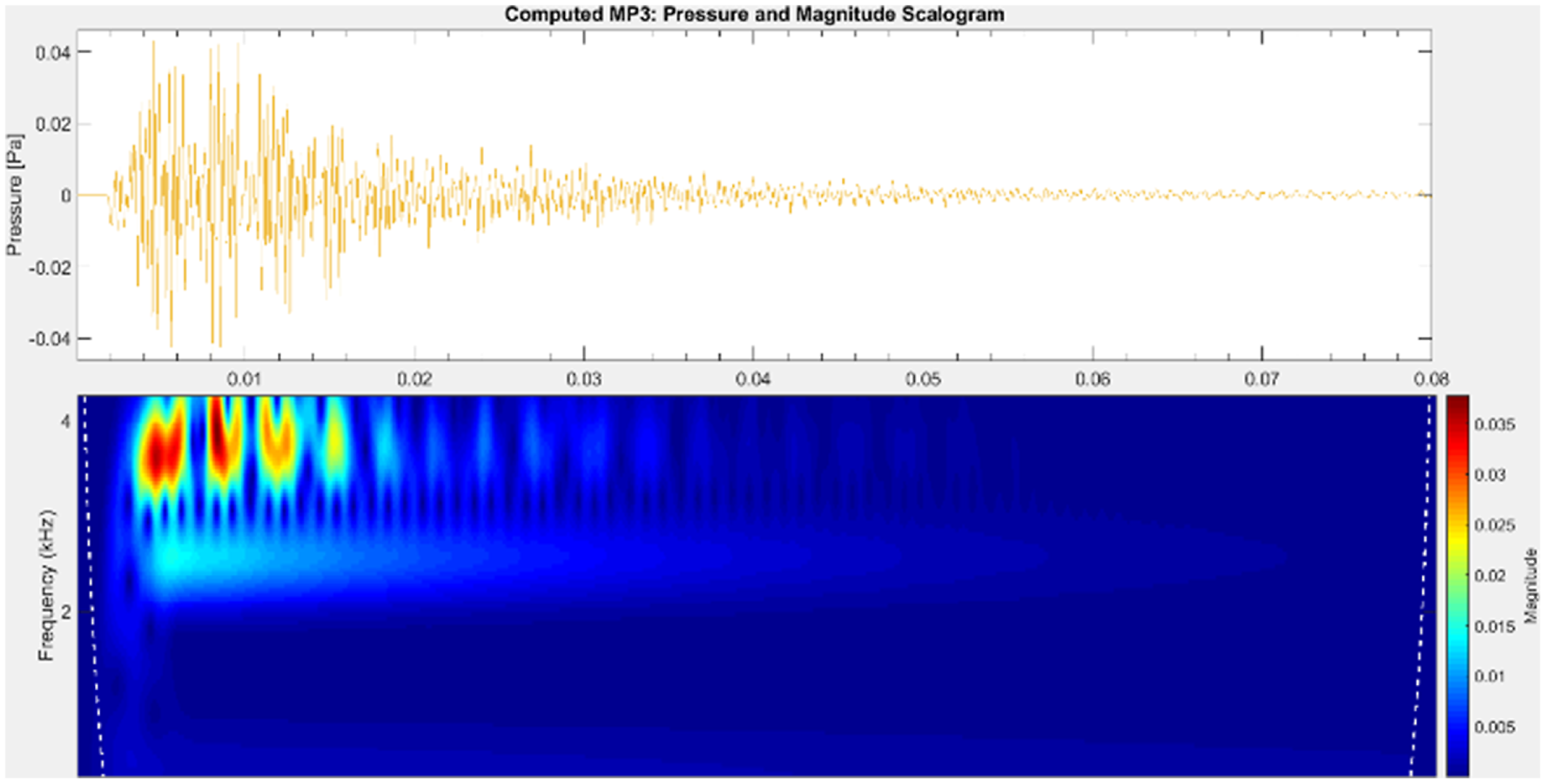
This work sheds new light on the relationship of the frequency response of the primary impact as a function of door closure speed. The spectral composition analysis of the primary impact at a door closure speed of 1.179 m/s generated a similar response to the experimental results seen in Figure 10. The frequency response of the primary impact was notably decreased as the door closure speed was increased. In addition, the magnitude of the response and the time span of the maximum magnitude were both approximately doubled. Both increased SPL magnitude and decreased damping have been shown to negatively impact the psychoacoustic response of the door latch to the customer. Therefore, it is critical for engineers to limit door closure speeds to generate a car door closure psychoacoustic response that is pleasant to the customer, adding value to the automobile.
4. Discussion
Overall, the comparison between the experimental waveforms at each microphone position provided excellent insights into the frequency composition of the acoustic phenomena. As expected, slight variation in the recorded sound pressure at each receiver was present because of the given boundary conditions. Based on the results of the CWT analyses of both impact speeds, it was determined that the impact speed of the striker influenced the result of the acoustic response. In this case, faster speeds introduced more energy into the system, producing a lower dominant frequency with a >3x increase in magnitude during the primary impact. Analysis of the force reaction results indicates a >48% increase in reaction forces between the ratchet/housing and the striker/overslam bumper resulting from a 38.4% increase in closing speed. This suggests that these impact events have a greater influence on the acoustic response than the other impact events that saw a minimal increase in the reaction force.
Further analysis of the CWT results indicates that the increase in door closure speed permitted frequencies below 3 kHz to become more pronounced in the audible response. The impulse from the reaction events caused these frequencies to resonate for a longer period of time. This duration was measured to be 9.08 × 10⁻³ s. With an increase in duration of the 1.5 kHz and 3 kHz frequency band, the resulting sound was described as “hard” based on sound engineering principles (Ballou, 2013). Door closure sounds perceived as “hard” have been demonstrated to be less correlated with luxury than “soft” responses (Kuwano et al., 2006).
Analysis of the SPL versus 1/3 octave band indicates that the overall production of sound for the 0.851 m/s closing speed was 10.96 dBA less than the 1.179 m/s response. This 10.96 dBA difference would generate a significantly louder response for the 1.179 m/s door closure event. Although not the only important psychoacoustic characteristic, a quieter response has been shown to generate a more pleasant psychoacoustic characteristic, increasing the perceived luxury of the automobile (Takada et al., 2019).
According to the psychoacoustics literature, customers are more inclined to purchase customer products that they believe sound “better” (Becker et al., 2003; Kuwano et al., 2006, 2002). The literature study of the psychoacoustics of car door closures generalizes that individuals prefer sounds that are low-frequency dominant. These sounds give the impression of better build quality with a long customer usability period. In addition, customers prefer to hear a distinct high-frequency component to the response, corresponding to the primary impact. This informs the customer that the door is properly locked and provides a sense of safety and security. The results of this work suggest that an increase in door closure speed from 0.851 m/s to 1.179 m/s would be detrimental to the psychoacoustic response, as both the magnitude of the SPL increased and the damping of the primary impact decreased. Both factors are correlated with lower levels of customer satisfaction, as they are described as noisy and irritating. The psychoacoustic response of the 0.851 m/s door closure event contained a distinct high-frequency response, with an increase in frequency, 3× decrease in magnitude, and a 10.96 dBA decrease in the SPL compared with the 1.179 m/s response. Therefore, this response would be described as quiet but also secure and safe. Future works can be performed using the methodology introduced in this work to consider additional impact events beyond what has been studied herein. This will provide further insights into additional components of the psychoacoustic response and how they can be modified to improve the perceived quality and value of the automobile. Active noise control techniques such as the method presented by Ning et al. (2019) can be used to improve the psychoacoustic response of the latch without structural modification.
5. Conclusion
Sound pressure data of an automotive door closure were collected in a semianechoic chamber, and a finite element model was developed to inspect the frequency components of the radiated acoustic response. Two distinct impact events were observed in the recorded waveforms. The additional kinetic energy from the striker caused lower frequencies to become more pronounced in the CWT of the 1.179 m/s door closure speed than the CWT of the 0.851 m/s door closure speed. Introducing additional kinetic energy into the system resulted in an average 10.96 dBA increase in the SPL within the 160 Hz–5 kHz bandwidth, and a psychoacoustic response that would be described as “loud”. In addition, the increased door closure speed generated a smeared acoustic response between the primary and secondary impacts. This would be perceived as a noisier response by the customer. The smeared frequency response would make it more difficult for the customer to perceive the distinct high-frequency response of the striker/overslam bumper impact event, decreasing the customers perceived safety and security from knowing the door was properly closed. The results of this work suggest that a door closure speed of 0.851 m/s is preferred over a door closure speed of 1.179 m/s. It is recommended that engineers ensure that the door closure speeds do not significantly increase beyond 0.851 m/s to ensure customer perception of a high-quality high-value automobile.
Future work can be performed using this methodology to investigate additional impact events. The methodology introduced in this work can also be used to investigate structural modifications or active noise control of the car door latch components and how they impact the acoustic response. The validated computational model used in this work provides a framework for a low-cost time-efficient design process to improve the psychoacoustic response of the door closure event, ultimately adding value to the automobile.
Footnotes
Acknowledgements
The authors would like to thank Magna International Inc. for technical support.
Declaration of conflicting interests
The author(s) declared no potential conflicts of interest with respect to the research, authorship, and/or publication of this article.
Funding
The author(s) disclosed receipt of the following financial support for the research, authorship, and/or publication of this article: The authors would like to thank the Natural Sciences and Engineering Research Council of Canada for financial support.
