






Abstract
When cracks start to surface in the surrounding areas of the structure, they create a local softness zone and influences on the dynamic response of the structure. The beams are more susceptible to shear and flexural cracks because of being subjected to shear and bending stress. In this study, the dynamic response of the single-span and multi-span damped beam under moving load with multi-crack and elastic boundary condition is studied based on Timoshenko’s theory. The Green’s function method is used to calculate the dynamic response of the cracked beam. In addition, the Green’s function method provides a solution for the differential equations. Moreover, the effects of the crack on the essential characteristics of the multi-span beams, especially the natural frequencies, are investigated. In this study, crack by itself is modeled in different situations and its effect on the behavior of the beam is analyzed. Also, the elastically restrained beam is modeled and its effect on the behavior of the beam is assessed. Because of the fact that the Euler–Bernoulli theory is also used in most beams, in this study, the results of the numerical examples are compared with the Euler–Bernoulli theory. Several examples are analyzed for a better understanding of the Timoshenko cracked beam.
1. Introduction
Basically, “crack” by itself is a kind of damage that often occurs in structures, which are subjected to shear and bending stress. Detection of the cracked beam behavior is both safe and economically important. Several studies have been conducted to identify cracked beam behavior and the changes that they bring to the properties of the cracked beam because of the presence of crack on structural elements. In reference to Fernandez-Saez et al. (1999) the Rayleigh method to evaluate the fundamental frequency of the cracked beam, by adding the polynomial functions, the longitudinal deformation and transverse deformation were considered. Also, by comparing their results with the results of finite element modeling, a small percentage error was observed. Obtaining the natural frequency of the cracked beam by using the finite element method was carried out by Zheng and Kessissoglou (2004). By substituting the general flexible matrix in a local flexible matrix in the crack region, it was concluded that the results are more accurate than the local matrix. The vibrations of the beam with several cracks that were subjected to axial load have been studied by Binici (2005). By applying the continuity conditions at the crack section, Binici could calculate the mode shapes for a beam with different supporting conditions and compare the results with a finite element method. Investigations on cracked beam based on Timoshenko theory were conducted by Loya et al. (2006). To achieve the natural frequency of the Timoshenko cracked beam, the beam was divided into two parts in the cracked region and connected to each other with a spring. This method was used to extend the discontinuity in the vertical and rotational directions. The differential equation for the free vibration of the beam for each separate part was solved, and with the special continuity conditions at the cracked section, the two parts were connected. Kisa and Gurel (2007) provided a numerical method for analyzing the free vibration of a cracked beam with a uniform and nonuniform circular cross section. The finite element method and component mode synthesis were used together and the cracked section was modeled by the matrix. By using this technique, the natural frequency and mode shape were obtained. Sekhar (2008) assessed different studies in the field of multiple cracks beam. Then, by comparing them, a method that is more effective in identifying the behavior of the cracked beam led to the selection and examination of the effects of cracks in the beam. The calculation of the stiffness of the reinforced concrete cracked beam under static loading for evaluating and determining the dynamic response was carried out by Xu and Castel (2016). In this research, the effect of bending crack in the concrete, as well as failure in the connection between steel and concrete were considered. Moreover, this carried out a static and dynamic analysis of the beam and concluded that the failure of the bond between steel and concrete had an insignificant impact on the natural frequency and dynamic stiffness of the beam. The study of the forced vibration of the Euler–Bernoulli cracked beam was carried out by Zhao et al. (2016). To reach this goal, the Green’s function was used to obtain the dynamic response of cracked beam and also in regard to a torsion spring applied for modeling the cracked cross section. Panigrahi and Pohit (2018) used Timoshenko theory and the Ritz method to obtain the governing differential equation of cracked beam. The effects of rotational speed, depth and location of cracks, and properties of the used materials in the beam were analyzed. Also, the cracked Timoshenko beam was analyzed based on wave vibration approach by Mei et al. (2006). Forced and free vibration of cracked beam, which was subjected to axial load, were completed by using this method. Shafiei and Khaji (2011) investigated multi-cracked Timoshenko beam under moving load. The modal expansion approach was applied to obtain the dynamic response of the beam. At the same time, the nonuniform multi-cracked Timoshenko beam was analyzed based on the differential quadrature element method by Torabi et al. (2014). The effects of depth and location of the crack on the natural frequency were studied. Al-Said et al. (2006) proposed a method based on Lagrange’s method to derive motion equations of the Timoshenko beam. The influences of shear deformation and rotation speed on the dynamic response of the cracked Timoshenko beam were studied and the results were compared with Euler–Bernoulli theory. A closed form of multi-crack Timoshenko beam response with various boundary conditions was introduced by Aydin (2007). Vibrational frequency and effect of buckling load were investigated. The new shape function of displacement was introduced by Stojanović et al. (2013). Using this new function leads to p-version finite element method to vibration analysis damaged Timoshenko beam. Chouiyakh et al. (2017) researched Timoshenko’s thin and thick with several numbers of cracks under moving mass. To study the forced and free vibration of multi-cracked Timoshenko beam, the “methodological” method was applied. Sarvestan et al. (2017) investigated the cracked Timoshenko beam by using spectral finite element procedure. The dynamic response of the cracked beam under moving load with various load velocities was obtained. Ghannadiasl and khodapanah Ajirlou (2019) investigated on cracked multi-span Euler–Bernoulli beam. The damping effect on natural frequency and displacement is studied. The influence of partial elastic foundation and elastic boundary condition on cracked beam features by using the Green function was studied by Ghannadiasl and khodapanah Ajirlou (2018a, 2018b).
In previous studies, various approaches were used to determine the dynamic response of cracked Timoshenko and Euler–Bernoulli beam. Li et al. (2014) investigated on Timoshenko noncracked beam by using the Green’s function. Zhao et al. (2016) also applied Green’s function in the Euler–Bernoulli cracked beam based on Abu-Hillal (2003) studies. In this study, dynamic analysis of single-span and multi-span cracked Timoshenko beam with general boundary condition is presented by using a Green’s function approach based on Li et al. (2014).
2. Mathematical modeling of Timoshenko beam
The governing differential equations of the uniform Timoshenko beam are defined as (Lueschen et al., 1996)
On substituting the harmonic function in equation (5), one may get
The above expressions may be simplified and rewrite as
The Laplace transform method is used to obtain the relation, which satisfies boundary conditions (Ghannadiasl and Khodapanah Ajirlou 2019). Finally, the relation based on the Green’s function method is presented in the following equation (Li et al., 2014)
In equation (12),
3. Green’s function for Timoshenko cracked beam
Consider one-cracked beam, which applied a concentrated load at Simply supported one-cracked beam.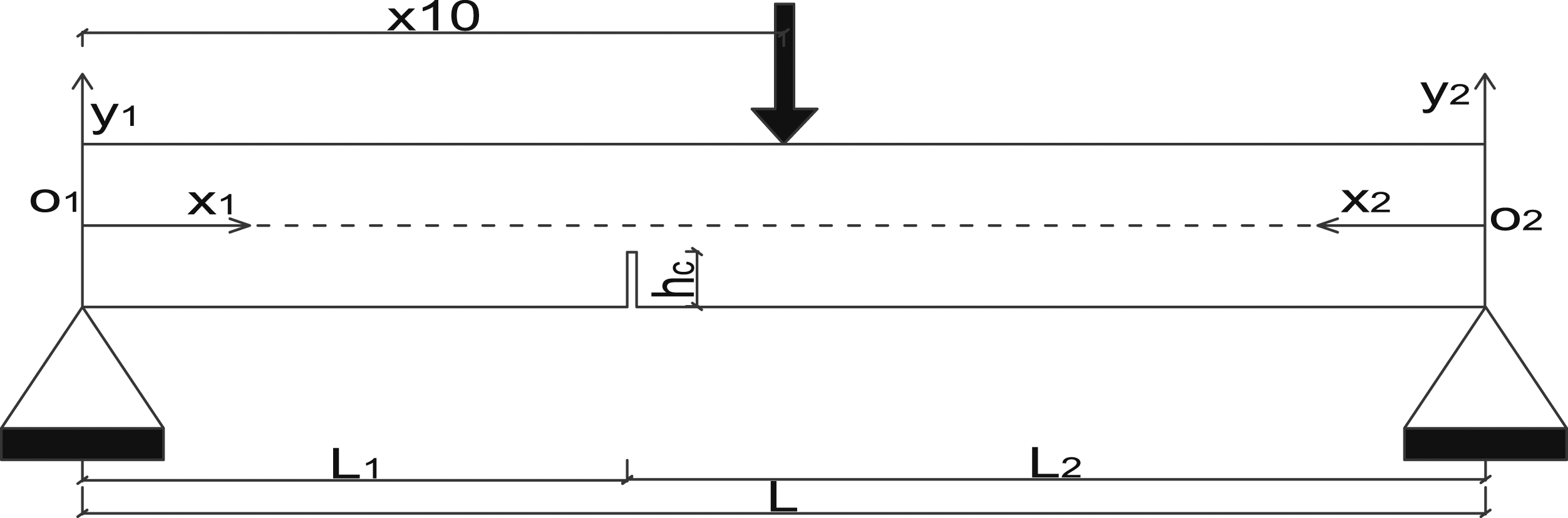
As mentioned, crack creates a discontinuity in the length of the beam; therefore, displacement, moment, and shear force of the beam on the left- and right-hand sides of the crack, respectively, may be written as
To consider crack effects, the cracked section may be modeled as local flexibility. According to jump in the bending slope caused by local flexibility, the discontinuity in the slope of the beam can be defined as follows (10)
By substituting equation (14) into (15), the following equation is obtained. By calculating the determinate of the following matrix, the natural frequencies of Timoshenko for one-cracked beam are determined
In this section, Figure 2 is presented for modeling the multi-cracked Timoshenko beam. The presence of n cracks divides the beam into n + 1 parts. For each part, the relation (11) is used separately, and by applying the special continuity relationships for each part, the continuity along the beam is created. For the first and last segments of the simply supported multi-cracked beam, the Gxreen’s function is defined as Simply supported multi-cracked beam.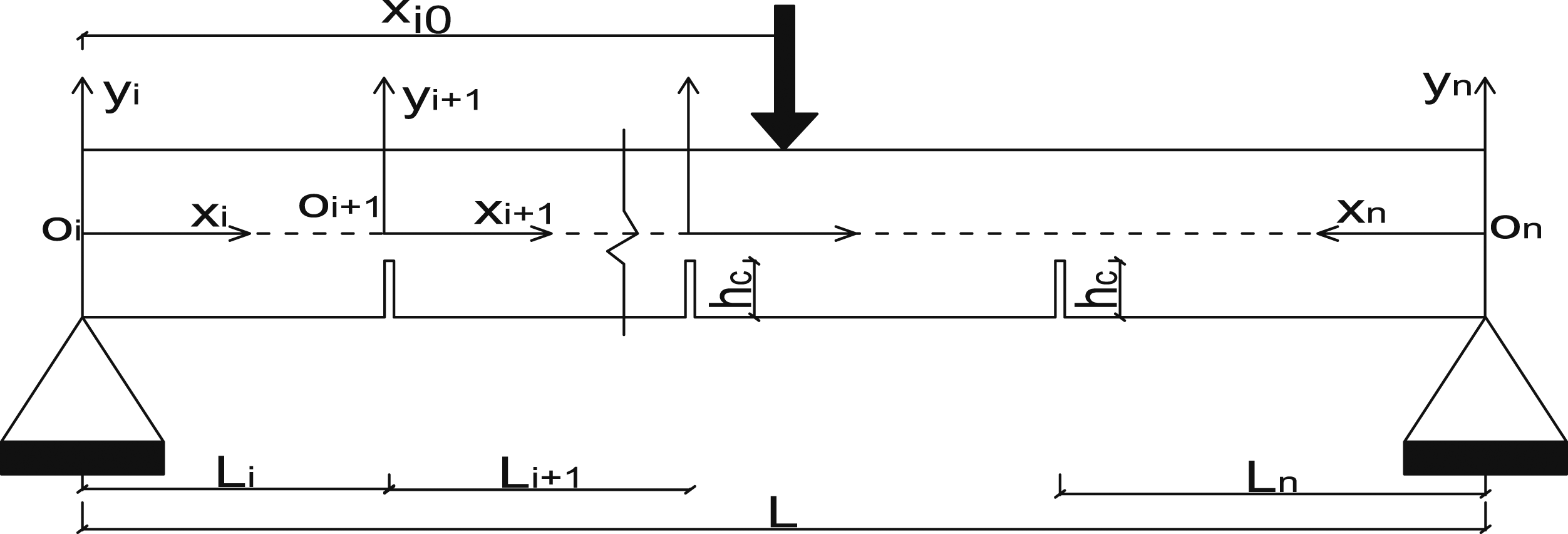
And for the middle segments (i.e.
For the first and ith segments, the following continuity equations in the cracked section are considered
Also in the cracked section, which is located between n and n − 1 segments, equation (22) is presented to make continuity
By substituting equations (19) and (20) in (21) and (22), the following matrix is obtained
More details of equation (23) are given in the Appendix 1. By solving equation (23), the natural frequencies of the simply supported two-cracked beam are determined.
4. Green’s function for multi-span Timoshenko beam
Multi-span beams are most commonly used in bridges and other large structures. The multi-span cracked beam with elastic boundary conditions is exhibited in Figure 3. Multi-span cracked beam with elastic boundary condition.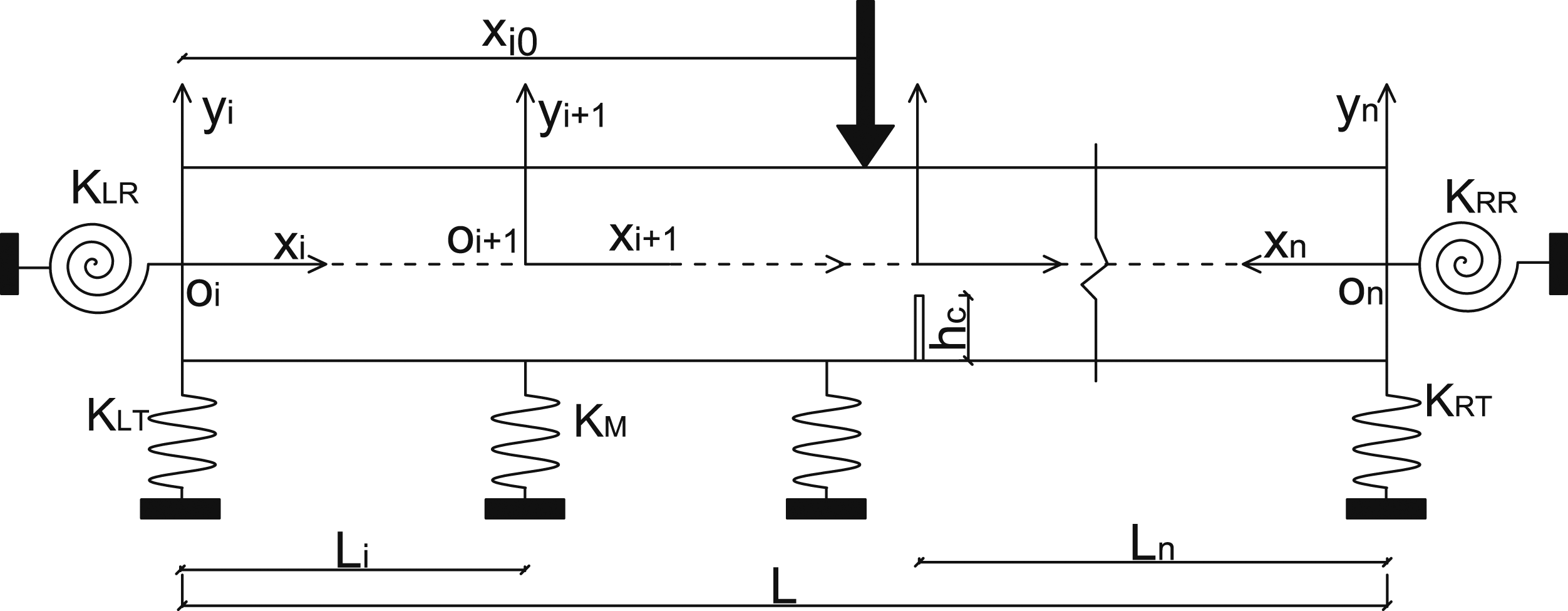
For the first and last segments of the beam, the Green’s function with respect to elastic supports is defined as
The constants
The Green’s function for the middle segments is presented in the following form
The following continuity relations are used to make continuity in the middle-span location
According to Figure 3, the continuity relations for the cracked section are given as follow
By considering the two-span cracked beam and substituting equations (24) and (26) in (27) and (28), the following equation can be obtained
More details of equation (29) are given in the Appendix 1. By solving equation (29), the natural frequencies of the two-span cracked beam with elastic boundary conditions are determined. To perform the modeling of the cracked section, a massless torsional spring with stiffness
Bilello (2001) presented an equation, which has more precision in
5. Numerical examples
5.1. Timoshenko beam with a crack in a different location
A cracked cantilever beam with Cracked beam with variable crack position. Natural frequencies of cantilever cracked beam.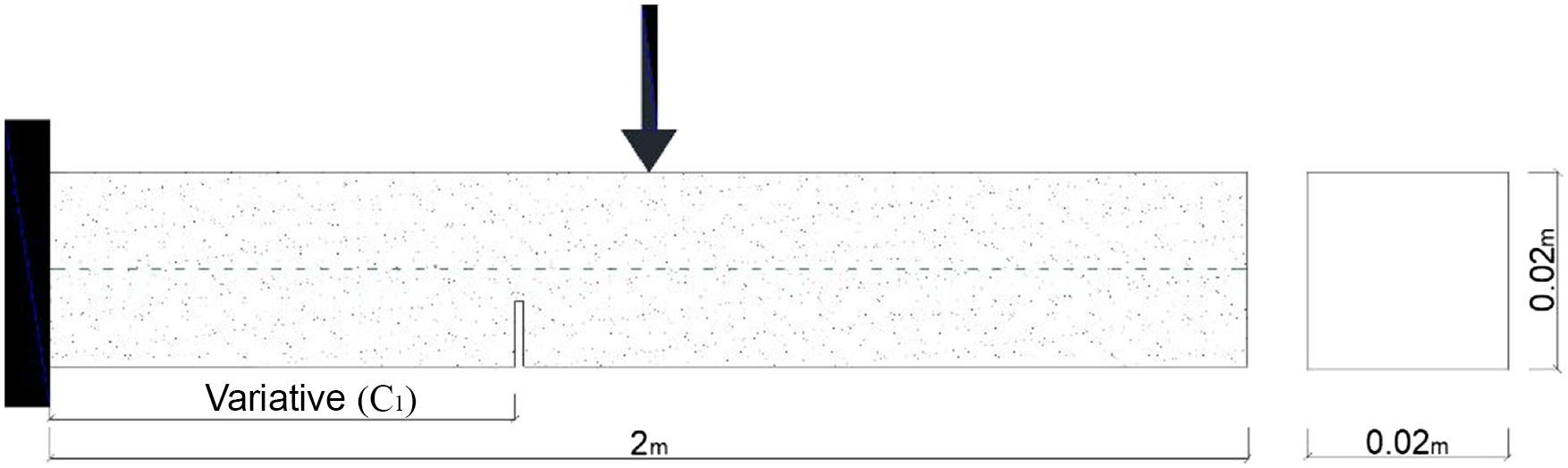
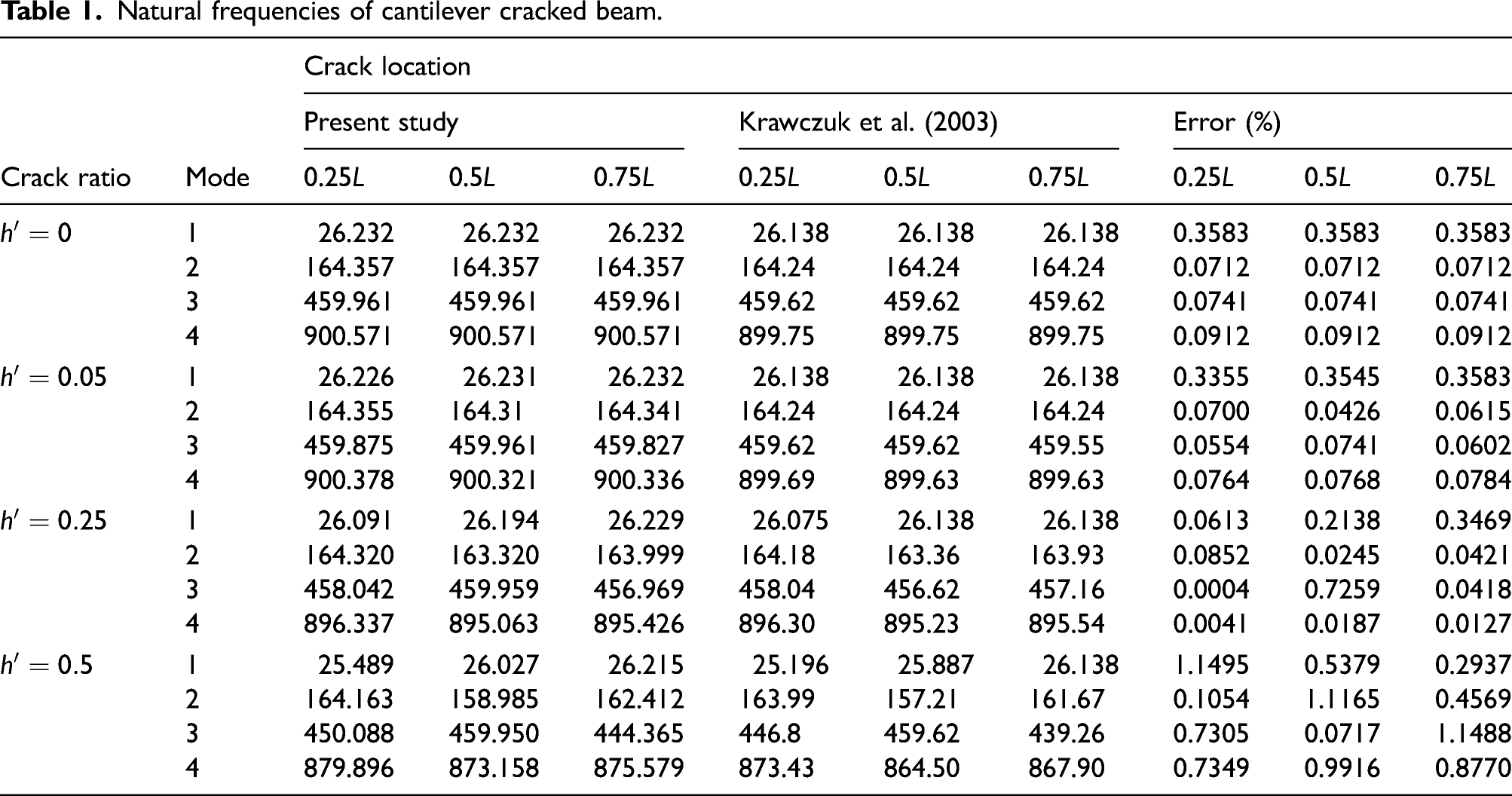
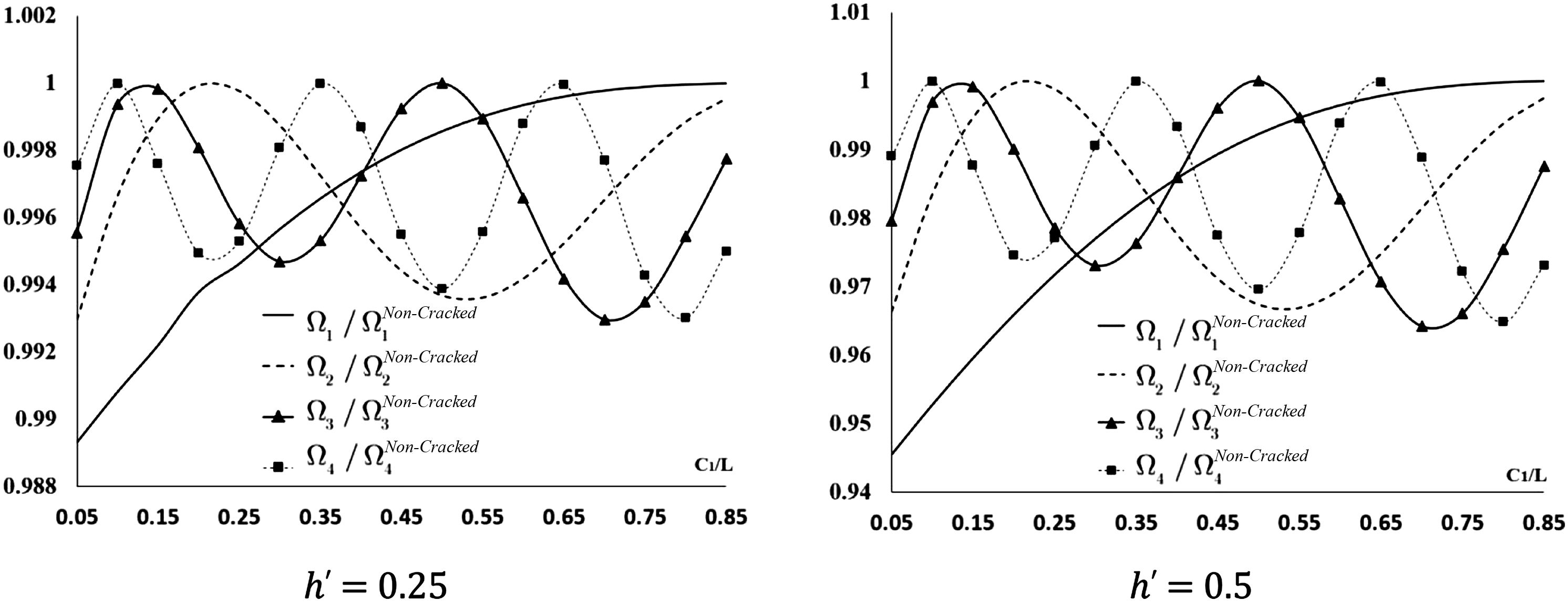
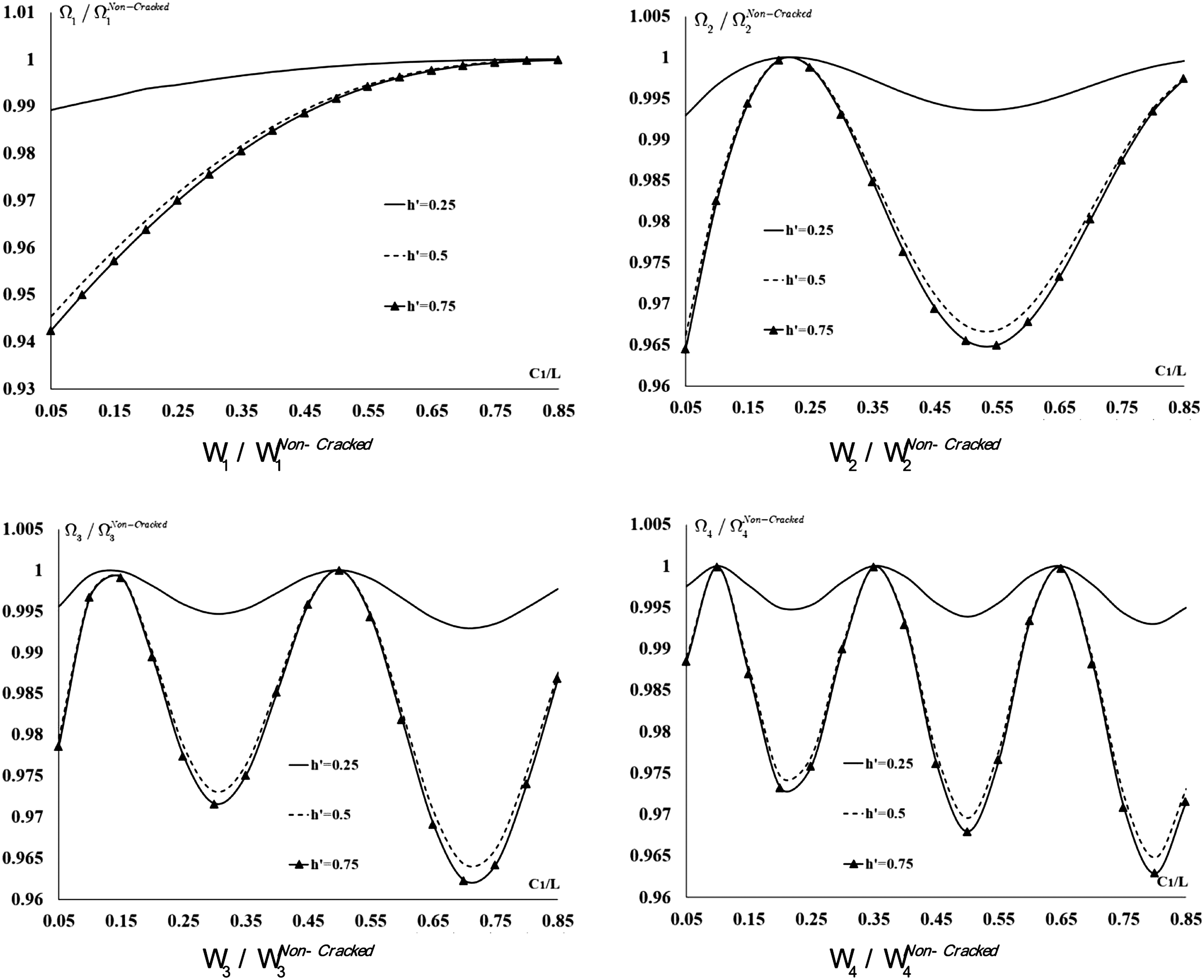
The effect of crack position and crack depth on the natural frequency of the Timoshenko beam is displayed in Figures 5–7. Effect of the crack ratio on natural frequencies of the fixed-free cracked Timoshenko beam Effect of the crack position on natural frequencies of the fixed-free cracked Timoshenko beam Effect of the crack ratio and the crack position on natural frequencies of the fixed-free cracked Timoshenko beam. (a) W1/W1noncracked. (b) W2/W2noncracked. (c) W3/W3noncracked. (d) W4/W4noncracked.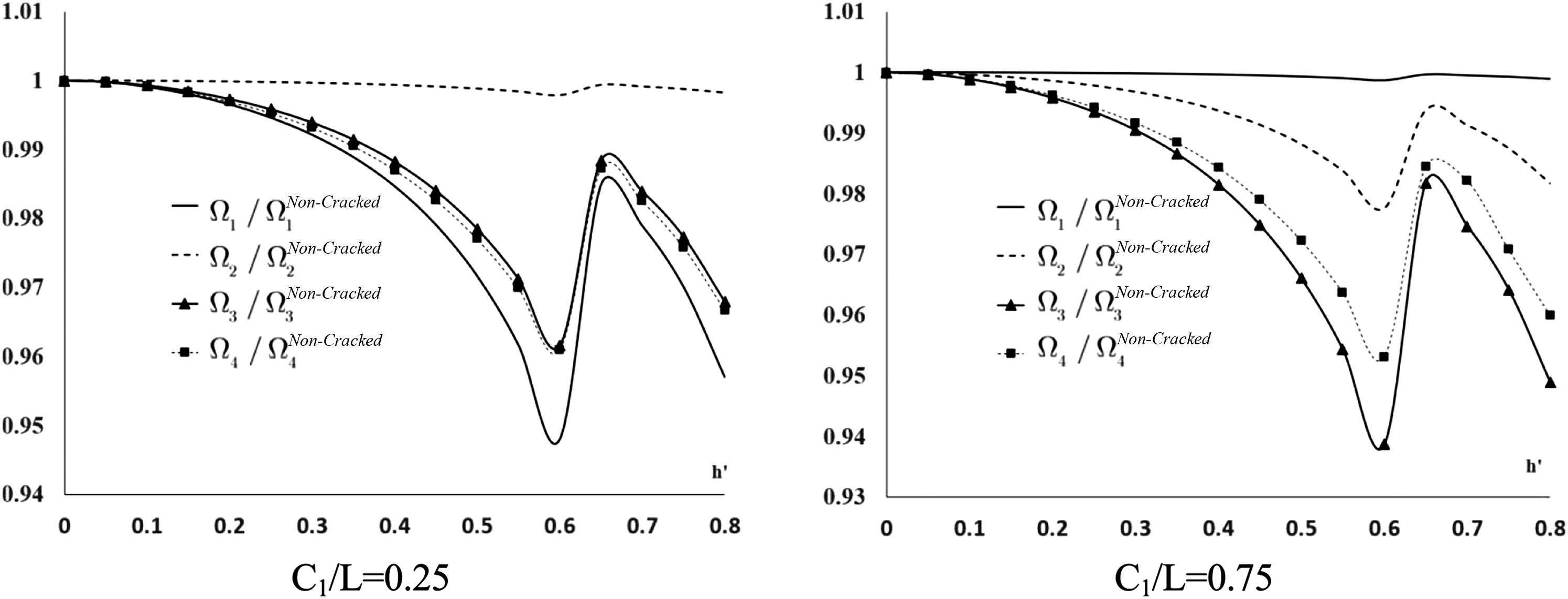
5.2. Multi-span Timoshenko cracked beam
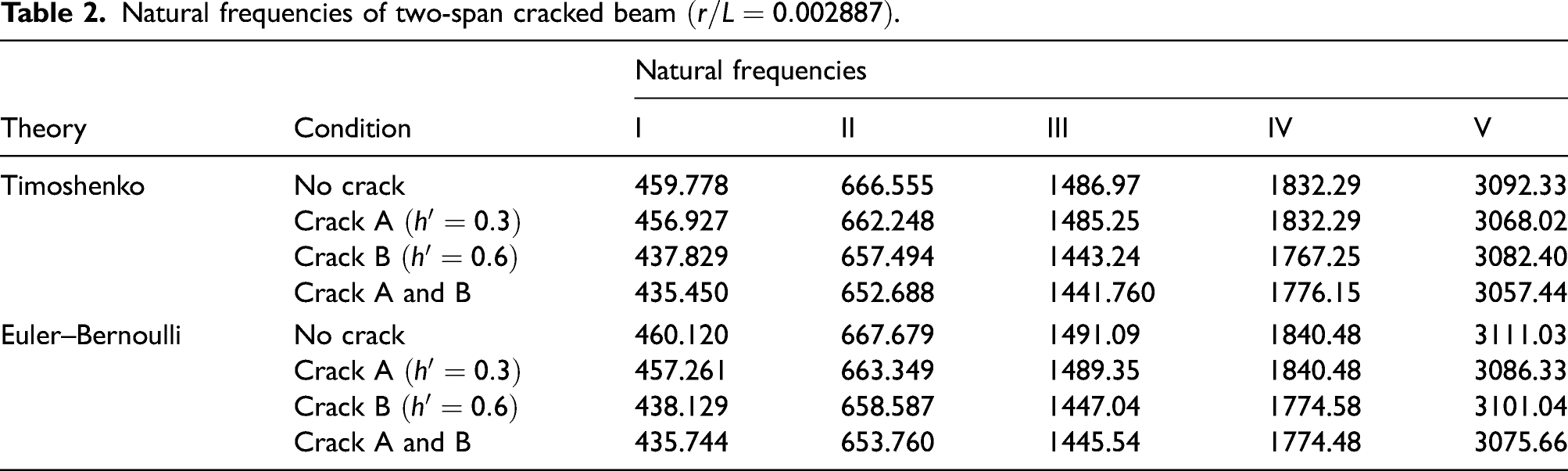
The two-span beam with Two-span beam with two cracks. Natural frequencies of two-span cracked beam Displacement of cracked beam under moving load 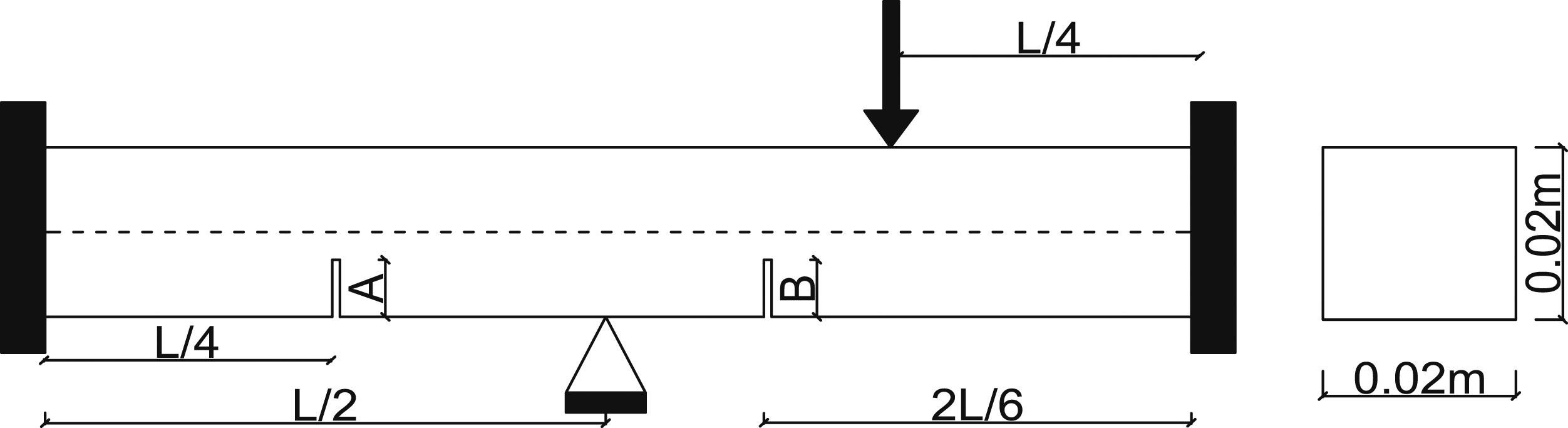
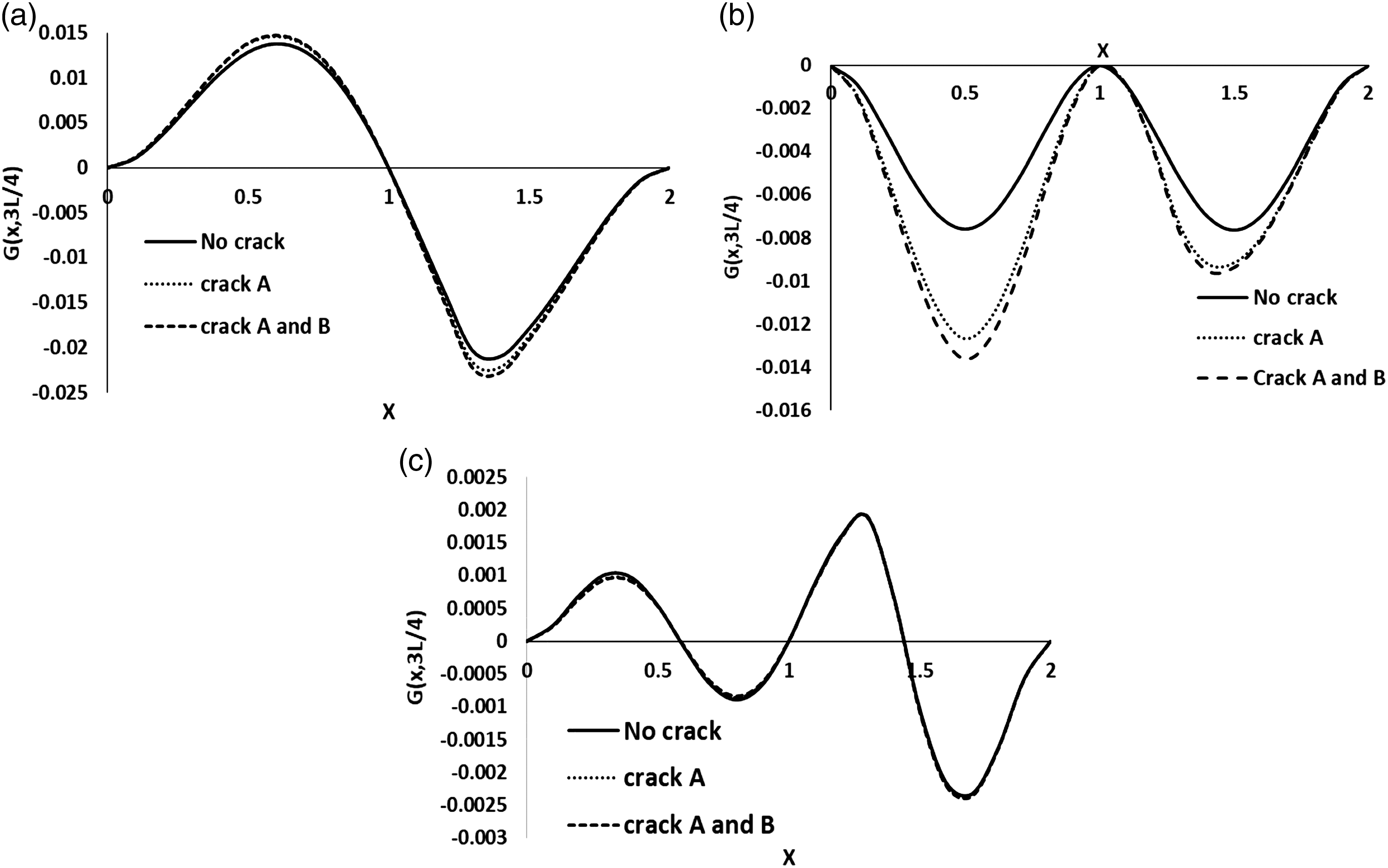
The influence of moving load on the cracked Timoshenko beam is displayed in Figure 10. Mode shape of multi-span cracked beam. (a) First mode. (b) second mode. (c) third mode.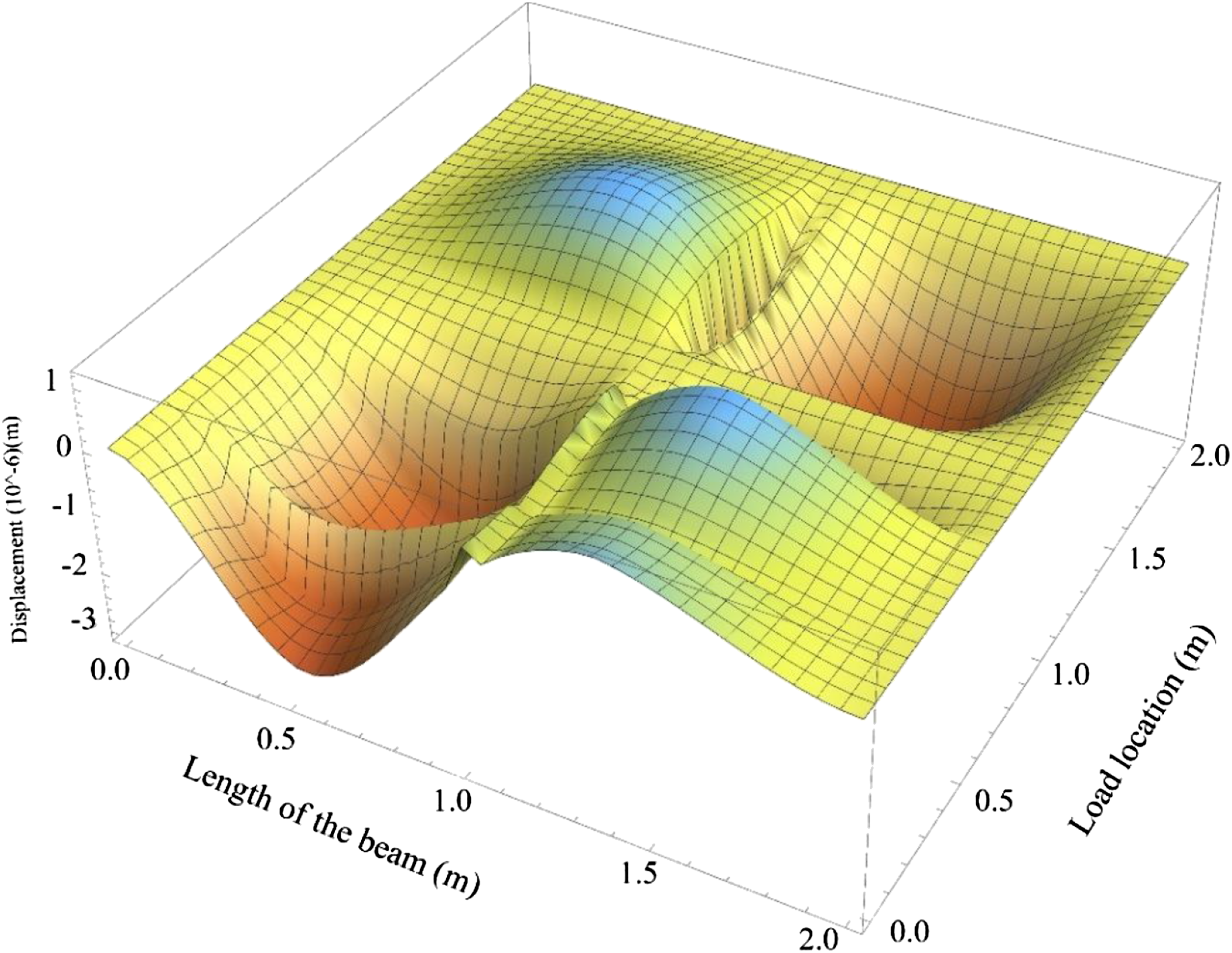
5.3. Force vibration of clamped-elastic cracked beam
The Timoshenko cracked beam with different crack locations is illustrated in Figure 11. At the same time, the considered constants in this example are based on Lueschen et al. (1996) data are presented in Table 3. The effect of damping ratio on cracked Timoshenko beam is presented in Table 4. By increasing the stiffness of the spring, the natural frequencies of a cracked beam in every position enhanced; in addition, by raising the damping ratio, the natural frequency decreased. Clamped-elastic Timoshenko cracked beam. Constants used in the clamped-elastic cracked beam. Natural frequencies of damped and undamped cracked clamped elastic beam.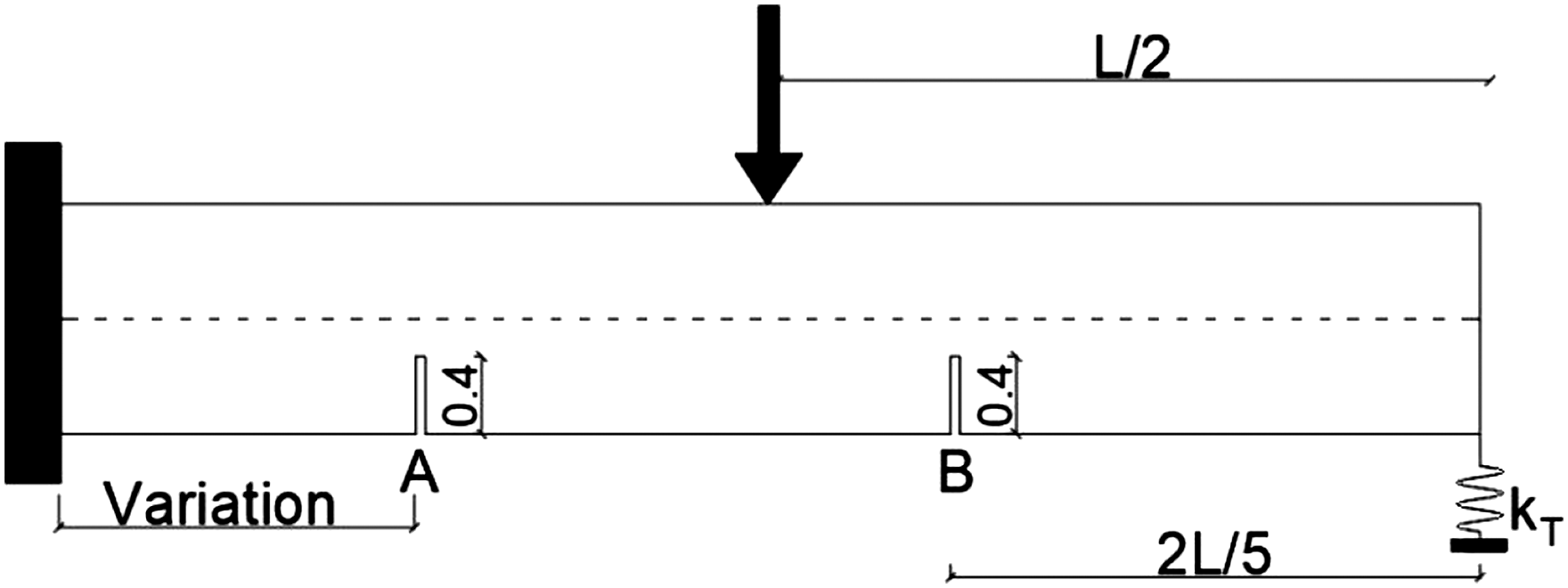
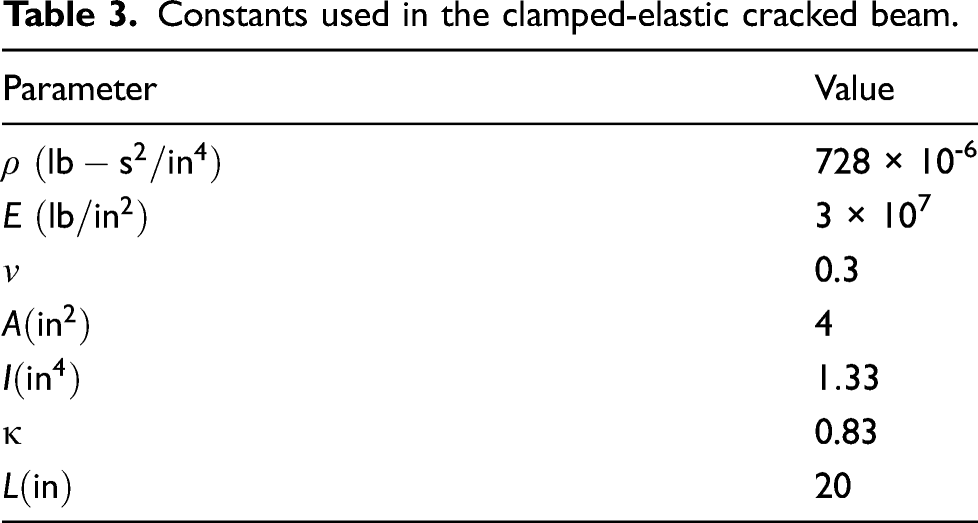
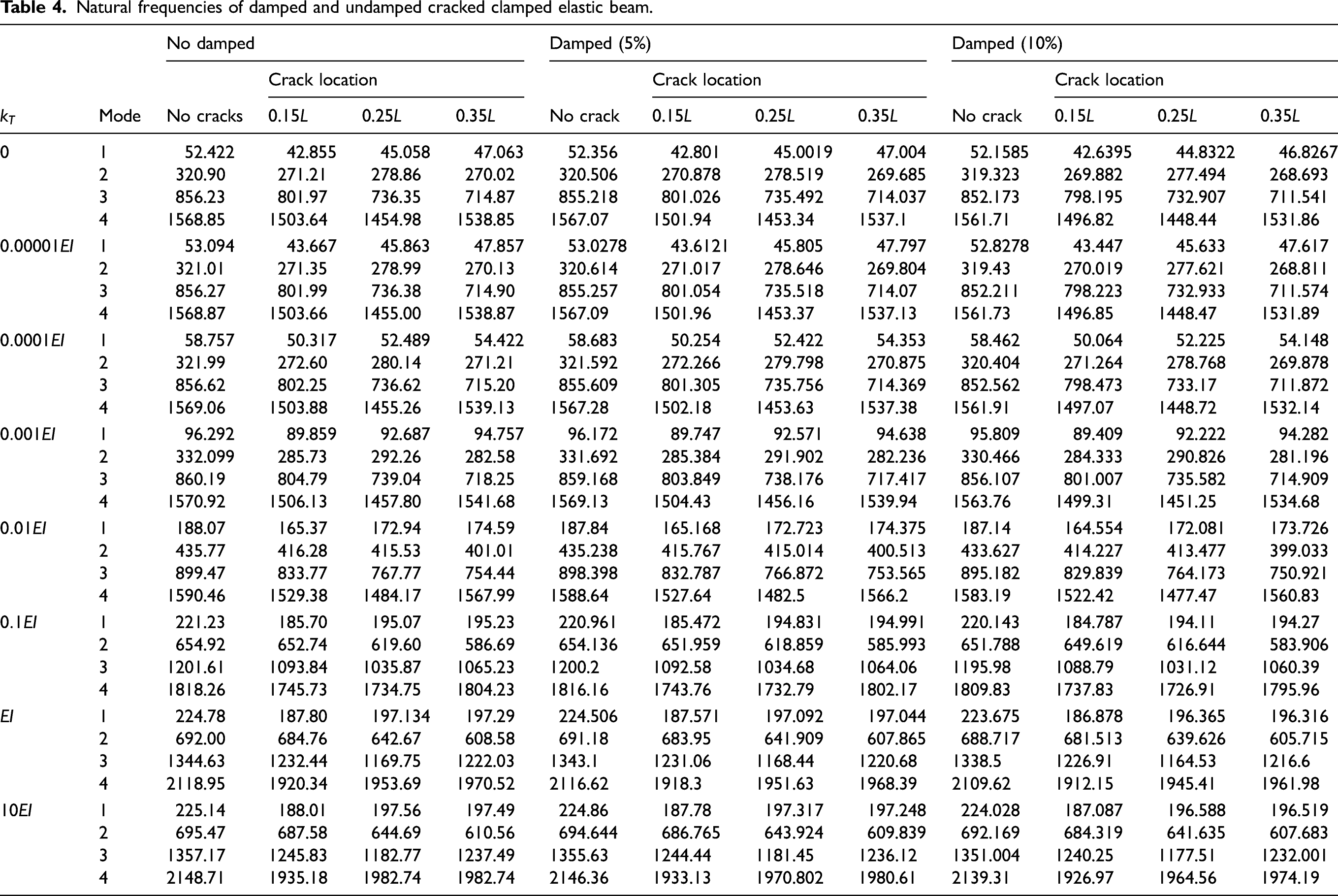
Figure 12 displays a two-dimensional contour graph of forced vibration of a fixed-elastic cracked beam when the moving load with The two-dimensional contour graph of fixed-elastic cracked beam under moving load 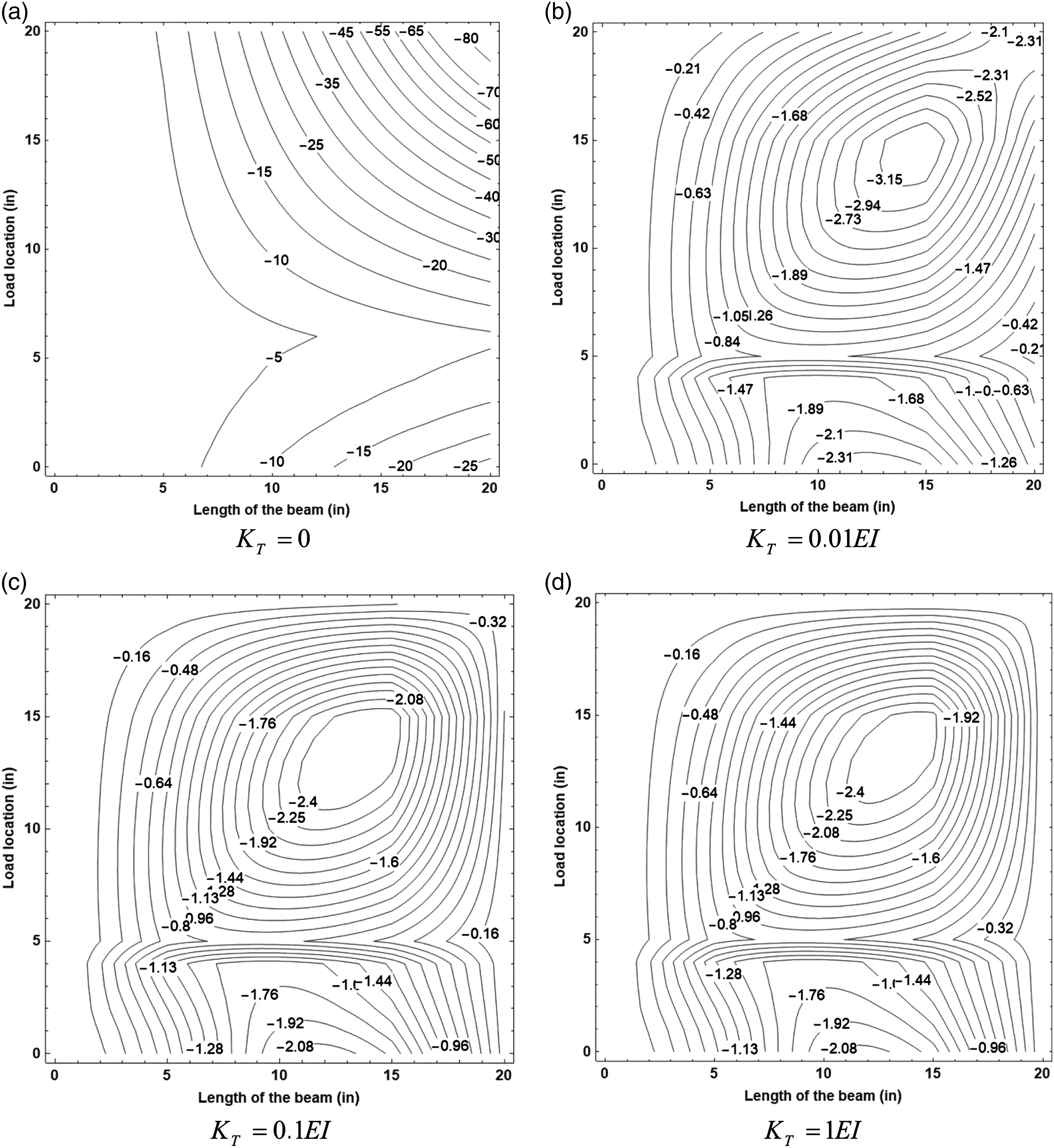
6. Conclusion
In this study, the dynamic response of the multi-span Timoshenko cracked beam studied. The Green’s function method used to calculate the dynamic response of the cracked beam. The effects of the existence of a crack or multiple cracks in a multi-span beam along with the important characteristics of the beam itself relevant to such as natural frequencies were also investigated. The natural frequencies of the beam were calculated and compared to Euler–Bernoulli and Timoshenko theory. It is noticed that by increasing the depth of the crack, its effects on the natural frequencies are more pronounced. Thus, displacement of the Timoshenko beam in various levels of the stiffness of elastic supports was derived. Also, the mode shapes of a multi-span cracked beam were achieved.
Footnotes
Declaration of conflicting interests
The author(s) declared no potential conflicts of interest with respect to the research, authorship, and/or publication of this article.
Funding
The author(s) received no financial support for the research, authorship, and/or publication of this article.
