







Abstract
Nowadays, there are many methods to detect and diagnose defects in mechanical components during operation. The newest methods that can be found in the literature are based on intelligent classification systems and evaluation of patterns to obtain a diagnosis; however, there is not any standard method to assess features. Wavelet packet transform allows to obtain interesting patterns for evaluating the condition of rotating elements. To perform this calculation, it is necessary to select a series of parameters that affect the resulting pattern. These parameters are the decomposition level and the mother wavelet function. A detailed methodology for the selection of the mother wavelet is proposed, which is the aim of this work, to obtain the most suitable patterns in the diagnostic task. This proposed methodology is applied to data obtained from a rotating shaft with a crack located at the change of section. These signals were measured at low rotation frequency (below the critical rotation frequency) and without eccentricity, where detection becomes more complex.
Keywords
1. Introduction
Currently, maintenance is one of the most important tasks in the industry. The implementation of a good predictive maintenance can indicate the best moment to solve a problem, avoiding unnecessary production stops, thus extending the life of the elements of a machine without compromising the quality of the products and maximizing production. Nowadays, in rotating machinery, the trend is to apply condition monitoring because it is very interesting to know the condition of the components of a machine during operation, without the need to dismount the elements, thus achieving a safer, cheaper, and faster maintenance. So, along with other knowledge, this is object of study in several works (Bachschmid and Penacci, 2008; Hodge et al., 2015) to properly implement it in the industry.
To detect any changes in the performance of a machine, which may be because of the appearance of a failure in one of its components, and within condition monitoring, vibration analysis is normally used. For example, to diagnose defects it is common to analyze the vibratory signals that are produced during the machine operation. Some studies apply tools in the frequency domain, such as the power spectral density (PSD) (Mohammed et al., 2014) or empirical mode decomposition (EMD) (Bustos et al., 2018). But in the particular case of shaft crack detection it is more common to use methods based on wavelets (Gómez et al., 2016c). The wavelet transform (WT) is well established for prognosis. Some works (Chen et al., 2016; Peng and Chu, 2004) use WT, and more specifically, the wavelet packet transform (WPT) is used in other works (Gómez et al., 2016a; Jayakumar and Thangavel, 2017).
For diagnosis, the WPT is used in several fields to analyze vibration (García-Plaza and Núñez López, 2018; Liu et al., 1997), acoustic (Bianchi et al., 2015) or ultrasonic signals (Meghnefi et al., 2004), earthquakes and aftershocks (Rajabi and Ghodrati Amiri, 2020), etc. One of the main challenges is to select the most suitable mother wavelet for each case because the results may change using one mother wavelet or another (Ngui et al., 2013).
Sine or cosine functions do not always quickly adjust to the study signal, which is the main concept of Fourier tools. This is why other functions are used, mother wavelets, which tend to be irregular and asymmetric and allow greater adaptability and better convergence to the study signal. Several works (Dremin et al., 2001) say that if a good mother wavelet is selected, the study signal can be more properly decomposed. Moreover, wavelets are also used for signal denoising, as in the case of Chiementin et al. (2011).
To do any wavelet analysis, it is necessary to choose a suitable mother wavelet. There is no clear algorithm in the literature to select the best one, but it is common to adhere to two criteria: some researchers (Ngui et al., 2013) propose the visual inspection and experience as important criteria, that is, the similarity of the shape of the mother wavelet with the expected variation of the study signal, and other researchers (Galawi et al., 2015; Zhang et al., 2005) propose to test different functions and choose the one that shows the best results.
This work selects the most suitable mother wavelet to use in condition monitoring, specifically, to diagnose a crack in the change of section of a shaft. For this, a methodology is proposed, in which three different families of functions with similar properties and that are common in the literature to detect defects in rotating elements are studied. The parameters that allow to determine the most suitable mother wavelet to obtain an identification pattern for automatic detection of cracks in a shaft will also be the object of this work.
This methodology will be applied and validated using noisy vibratory signals obtained from a cracked shaft at a rotation frequency of 60 Hz. For this, a WPT analysis will be conducted using each mother wavelet at a decomposition level of 3. It has been verified that higher decomposition levels show no variation in results, so level 3 has been chosen to minimize computational cost. The studied shaft is a scale model of a railway axle and it has been cracked with a crack whose depth has been increased after each test.
The WPT energy is calculated for each defect level and for different mother wavelets using a programming code developed with MATLAB. Once the energy values for all conditions have been calculated, the degree of energy variation (DEV) is calculated considering the energy of the packets of each defect level and the energy of the packets of the healthy shaft. Finally, a classification system will be performed for each mother wavelet that meets the previous criteria to see which one shows better accuracy using a linear support vector machine (SVM) model.
2. Wavelet packet transform
The WT (Mallat, 1998) provides information in both time and frequency domain, which is an advantage over other tools such as Fourier, which only provides frequency domain information. Machine defects, such as cracks in shafts, produce transient effects on the signal that cannot be detected by obtaining information only in the frequency domain (Hou et al., 2000).
The aim of the WT is to decompose the signal into different frequency components by means of a translation (τ) and an expansion (s) process of a function called mother wavelet

With the discrete wavelet transform (DWT), the study signal is decomposed into a series of signals restricted to certain frequency bands that form a basis of the functional space, complying with properties such as orthogonality, size, location, and smoothness. The DWT decomposes the signal using digital filters and divides the frequency resolution of the signal into two equal parts at each decomposition. One is the approximation (the one with the lowest frequency) and the other is the detail (the one with the highest frequency). On the other hand, the wavelet packet transform (WPT) applies the DWT recursively to both the approximation (A) and detail (D) coefficients at each decomposition level (Jensen and La Cour-Harbo, 2000). The DWT can be implemented via filters, which are related to the mother wavelet. Decomposition is performed by passing the signal


To apply the WPT, it is necessary to choose a mother wavelet and a decomposition level. It is also interesting to calculate the energy of the packets


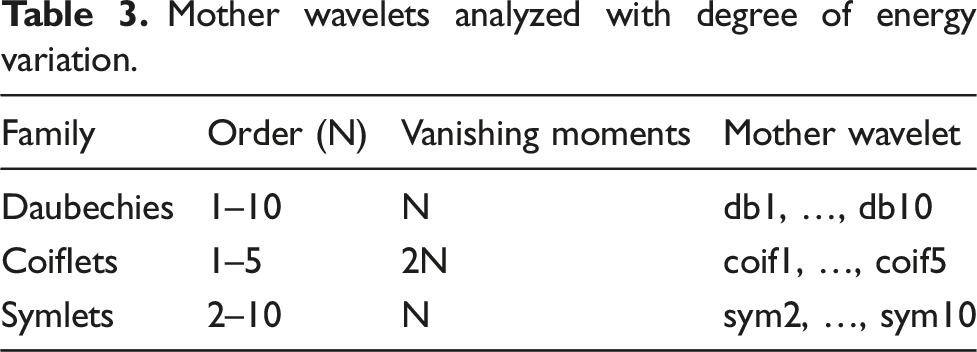
In the literature (Jensen and La Cour-Harbo, 2000), a great variety of mother wavelet families can be found, such as the functions of Daubechies, Coiflet, Meyer, etc. The objective of this study is to select the most suitable mother wavelet to detect a crack in a shaft. Within each family of mother wavelets, different order N can be selected. With this order, it is possible to know properties such as the width of the window, the length of the filter, and the number of vanishing moments, among other properties. These are some parameters that justify why some functions are more suitable than others depending on the application.
Mother wavelet families and properties.
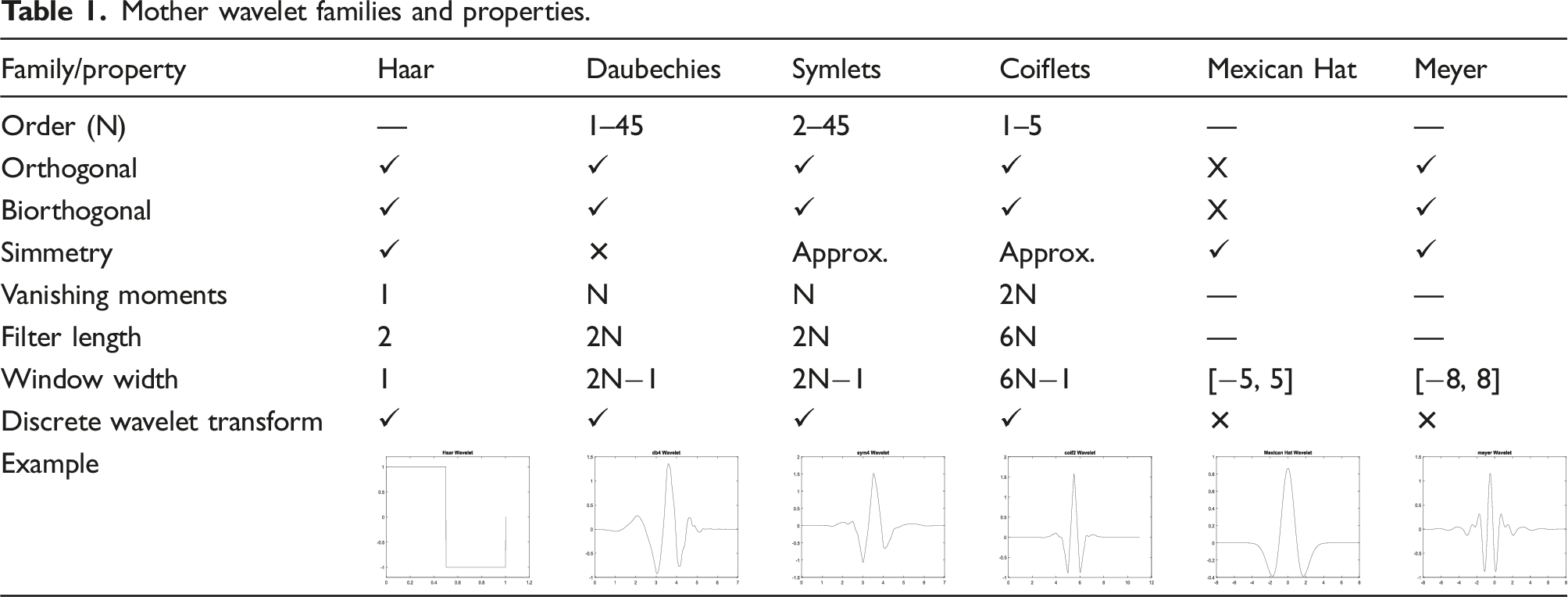
Another important issue is to determine the number of vanishing moments, which is related to information compression and noise elimination. This parameter allows to know the shape of the wavelet (smoothness). Normally, the order N of the mother wavelet coincides with the number of vanishing moments, except for the Coiflets family (Table 1). If the number is low, a lower resolution is obtained, and if it is high, it facilitates the detection of periodic components that meet the condition of having as many periods as vanishing moments. Some studies (Gómez-Luna et al., 2013) have proved that the higher the number of vanishing moments, the less information dispersion, but this means higher time of calculation too. So, a trade-off between both things is required.
The selection of the mother wavelet will depend on the study signal. For the case of electrical signals, for example, several works (Hong and Wang, 2005; Santoso et al., 2000) use the Daubechies family because it has been traditionally used and presents good results, but there is no scientific evidence that justifies this fact (Wilkinson and Cox, 1996). Specifically, db4 is studied in Butler and Bagriyanik (2003) and Chen and Zhu (2007) because it has enough number of vanishing moments to show up good results. However, works such as Gómez-Luna et al. (2013) propose db6 as a good mother wavelet to analyze transient electrical signals. In Gómez et al. (2016a), the WPT energy is calculated using db6, to detect a crack located at the change of section of a scale model of a wheelset axle. In this work and in other related ones (Gómez et al., 2016b; Zamorano et al., 2019), the db6 has been proved to be a good function to obtain useful patterns for shaft crack detection.
Another fundamental parameter to do a WPT analysis is the decomposition level. The original signal is divided into each level. The number of components associated with a decomposition level
3. Experimental test
To validate the methodology for selecting the most suitable mother wavelet in a diagnostic system, vibration signals were obtained on a test bench. In Figure 1, an example of a vibratory signal (healthy shaft) is shown. Example of a vibratory signal (healthy shaft).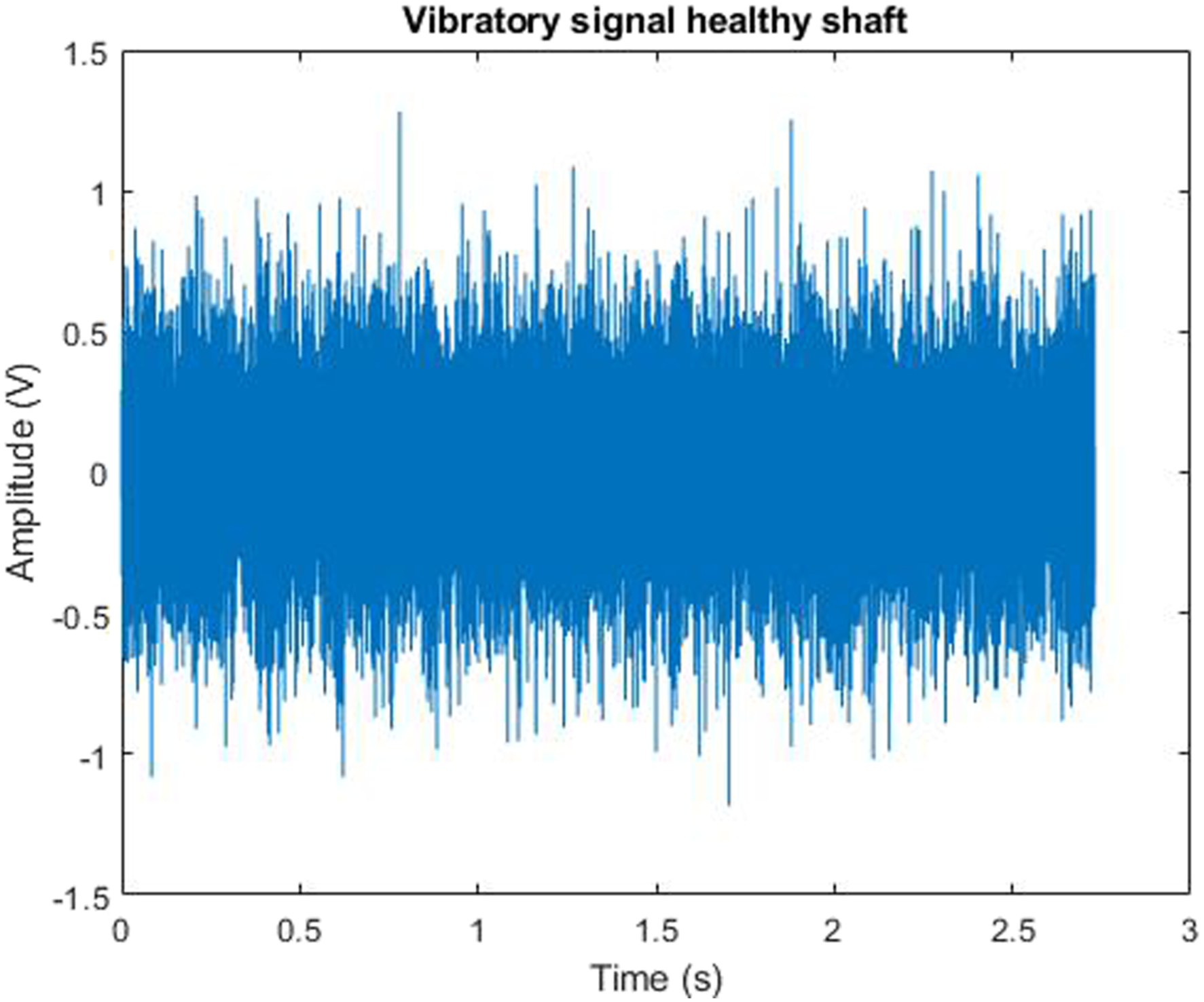
To see if these signals are noisy, the PSD of the vibratory signal is shown in Figure 2. It is shown for the healthy shaft case because it is easier and clearer to see in the frequency domain. In Figure 3, an example of a vibratory signal (cracked shaft) is shown. Power spectral density of vibratory signal (healthy shaft). Example of a vibratory signal (cracked shaft).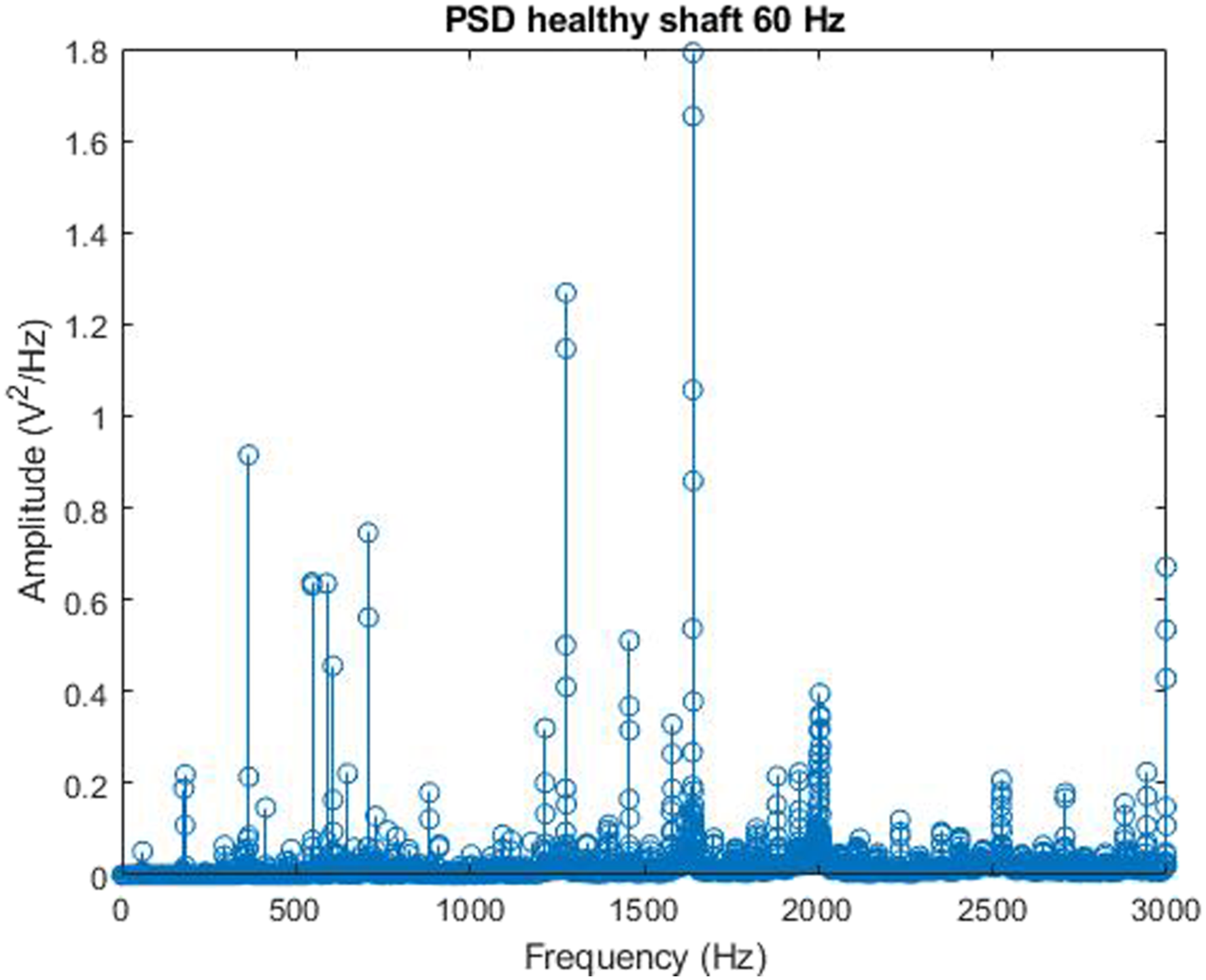
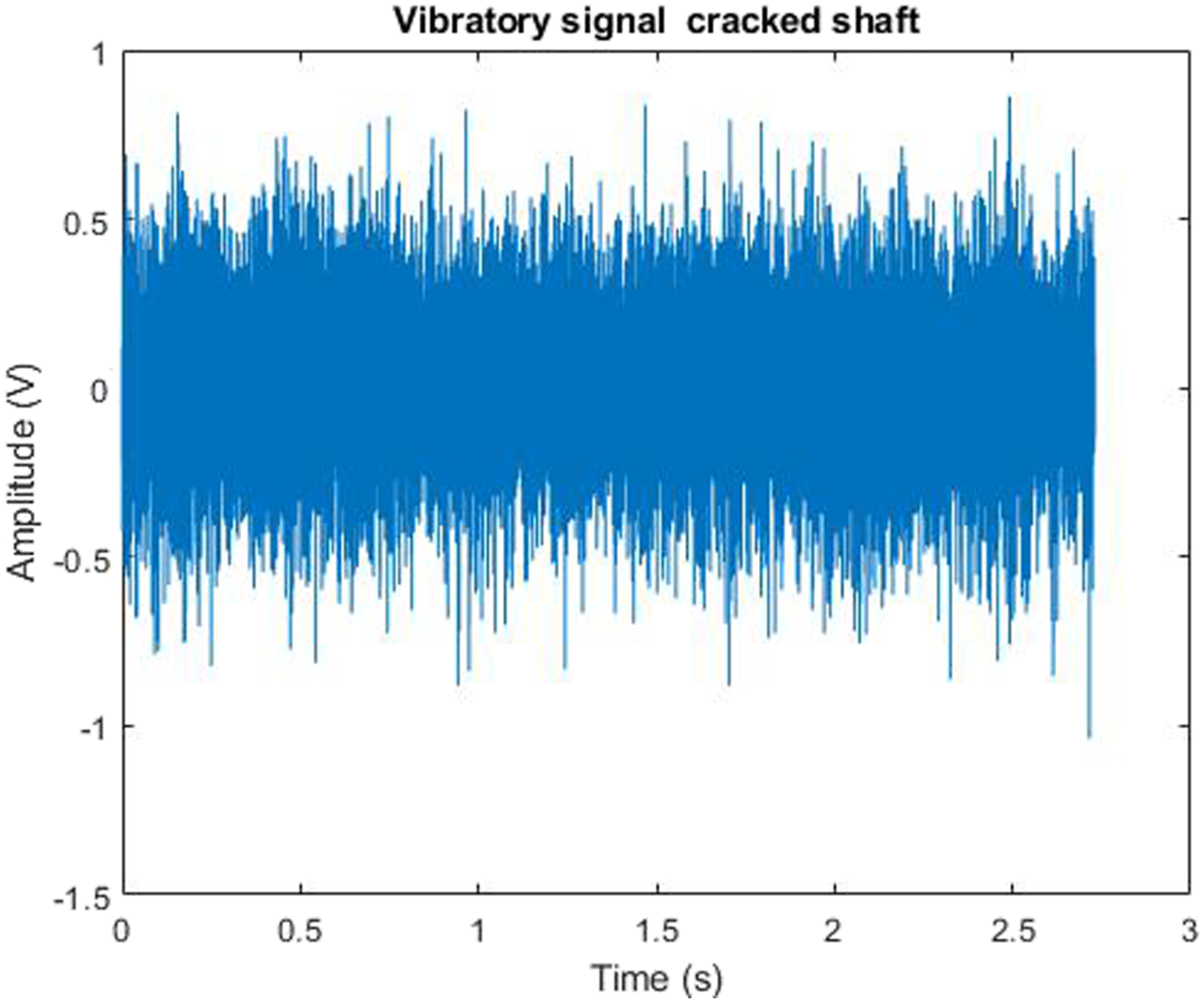
It can be seen, with a naked eye, that the experimental signals are noisy, so with this, the robustness of the proposed methodology is verified.
The experimental system is explained in detail in previous work (Zamorano et al., 2019). These vibratory signals were obtained on a test bench from the company SpectraQuest Inc. shown in Figure 4 and using an acquisition chain formed by an accelerometer (Brüel & Kjaer 4383), a NEXUS signal conditioner (Brüel & Kjaer 2693), a data acquisition card (Keithley KUSB-3100), and a computer to process these signals. Test bench to obtain vibratory signals.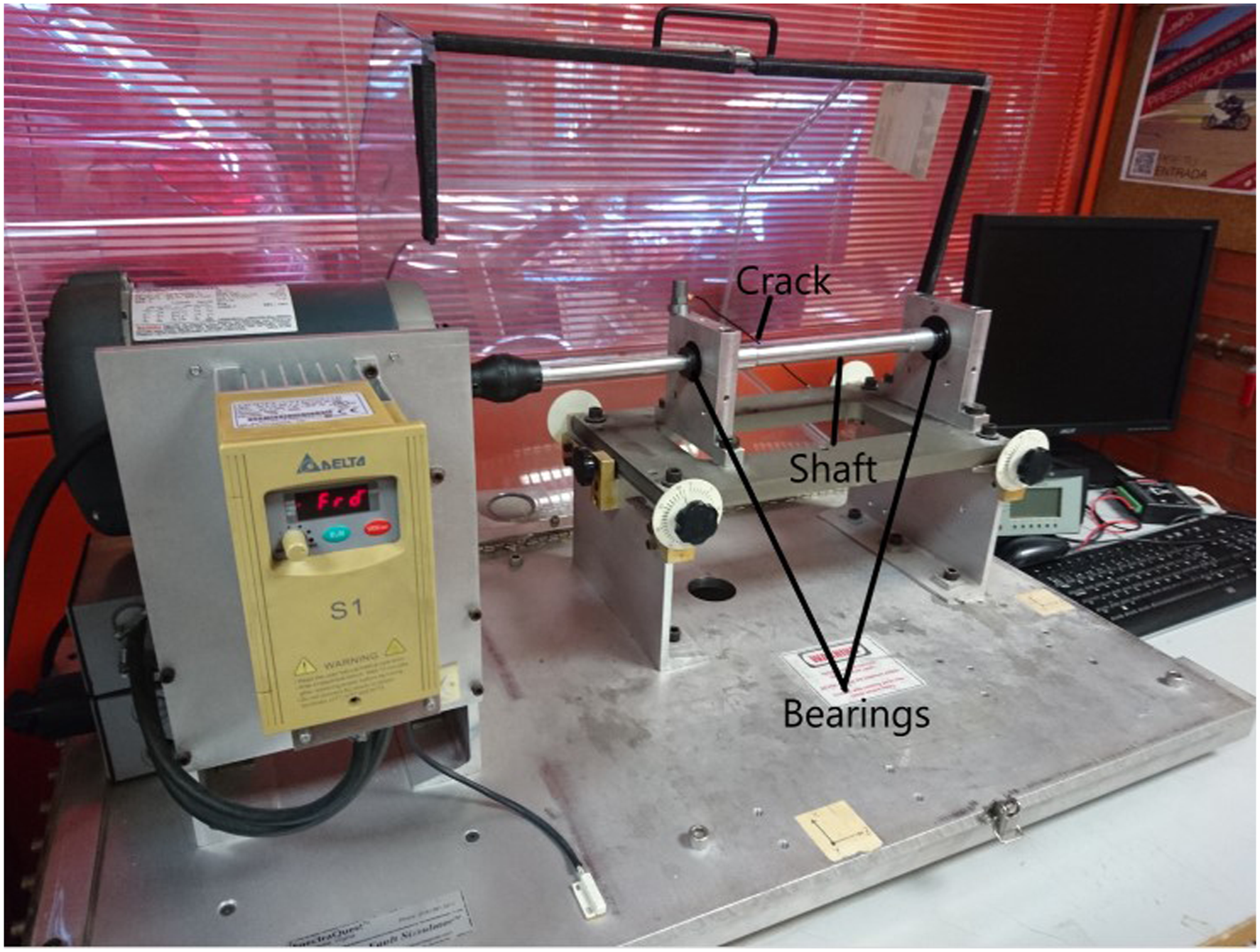
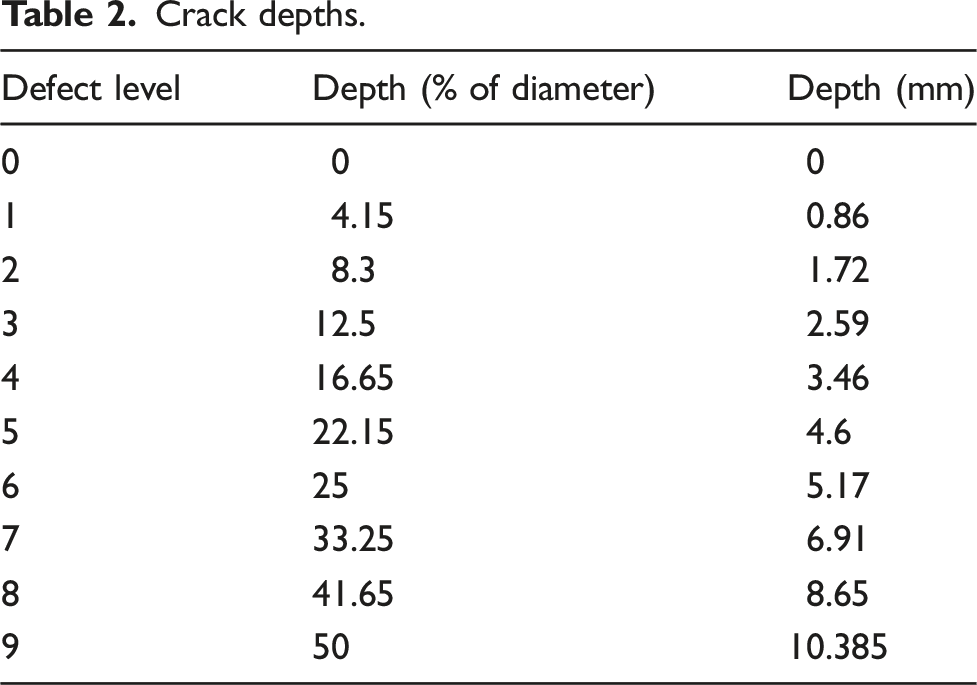
The shaft is a model of a railway axle, on a scale of 1:8 and whose diameter is 20.77 mm. It is made of aluminum (material selected after performing a dimensional analysis of the scaled system). The tests have been performed at 60 Hz, which is lower than the natural frequency of the healthy shaft (316.4 Hz) (Gómez et al., 2016b).
First, measurements were taken from the healthy shaft. Subsequently, a lateral crack was made in the area shown in Figure 5 without removing the shaft. This crack has been manually increased in depth after each test according to Table 2. Defect level 0 is the healthy shaft. Crack location (Gómez et al., 2016a). Crack depths.
For each defect level, 1000 measurements were obtained. Each signal has 16,384 points and the sampling frequency is 6000 Hz, which makes the duration of each signal 2.73 s.
4. Methodology for the selection
Daubechies, Symlets, and Coiflets families have been chosen due to: Properties of orthogonality, biorthogonality, and compact support. With the orthogonality property, the independence of the signal representation for different decomposition levels is ensured, that is, no redundant information is generated and therefore false signal is avoided. Application for DWT and therefore, for WPT. Similarity with the study signals. They are visually similar to the mechanical impulse response. Common use in related works (Gómez et al., 2016a, 2016b; Gómez-Luna et al., 2013; Zamorano et al., 2019).
As the interest of this research is to know which mother wavelet is the most suitable for the failure detection task, a measure of the goodness of the chosen mother wavelet to generate patterns of system behavior has been defined. With the obtained vibratory signals (healthy and defect levels), the WPT is calculated for each mother wavelet with different order N (dbN, symN, coifN) at a decomposition level of 3, so 8 packets are obtained (23). Each packet has a resolution that is given by the studied frequency range, 375 Hz (3000/8). For this case, a sampling frequency of 6000 Hz has been used, so applying the Nyquist theorem, a range of 3000 Hz is analyzed. The energy of each packet is calculated. The energy of a packet The optimal order of the mother wavelet for each family is determined using a parameter called degree of energy variation (DEV). This parameter measures the difference between the average energy values of the defective shaft and the healthy shaft energy values. For each defect level, the DEV is calculated according to equation (6) The evolution of the DEV by increasing the order N of each family of mother wavelets is compared. A variation (DEV variation) of more than 2% of this value between mother wavelets with different order N will be an exclusion criterion. This variation is calculated with equation (7) A reliability analysis is conducted. For that, a parallel coordinates plot is obtained to find packets that better differentiate the defective and healthy condition. Then, a classification system is performed using linear SVM as model and using as predictors only the mentioned packets. The most suitable mother wavelet will be decided based on the accuracy results of the model, which is the final objective.


5. Results
First of all, the WPT energy for each defect level has been calculated. The time it takes for MATLAB to do the calculations is shown in Figure 6, by increasing the number of vanishing moments. Calculation time.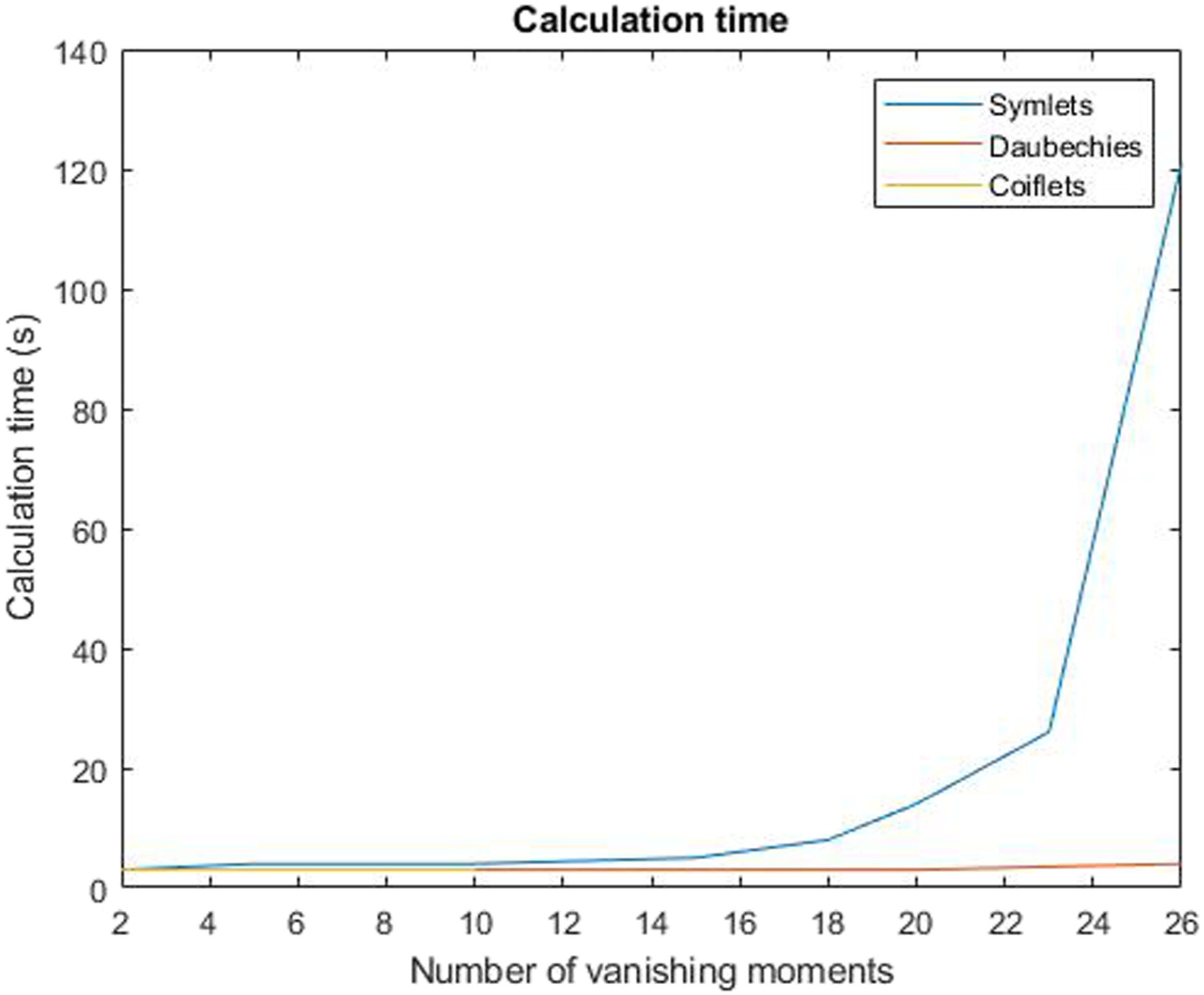
It is observed that Symlets family requires more computation time and it increases more notably with increasing order N. Coiflets and Daubechies families maintain an adequate and constant calculation time, but there is not much difference between families for a low order N.
Mother wavelets analyzed with degree of energy variation.
In Figure 7, the DEV evolution is shown for Daubechies family. It can be seen that the DEV converges toward a value as the order N increases. The same trend has been observed for the other families. Degree of energy variation evolution (Daubechies).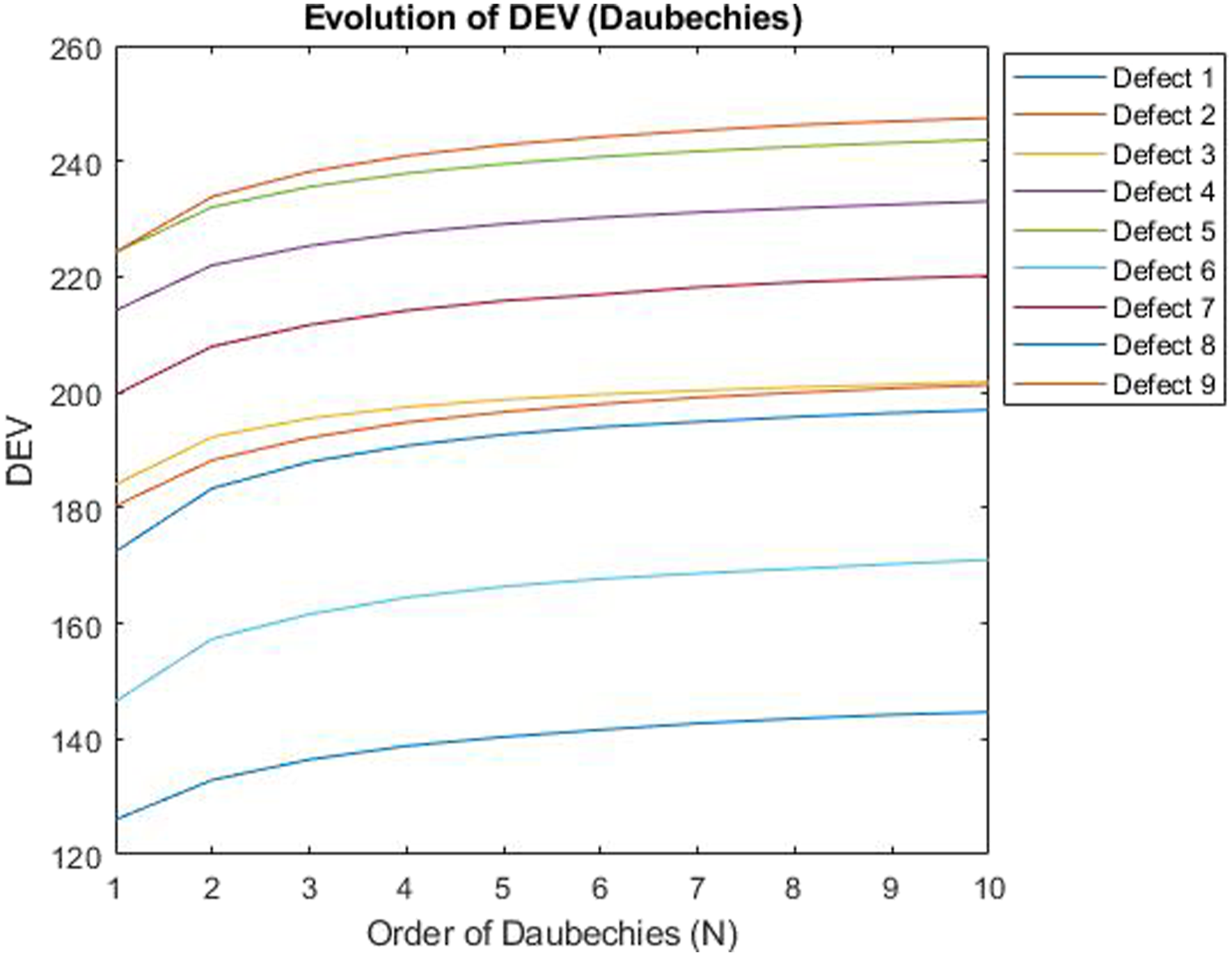
DEV variation (%).
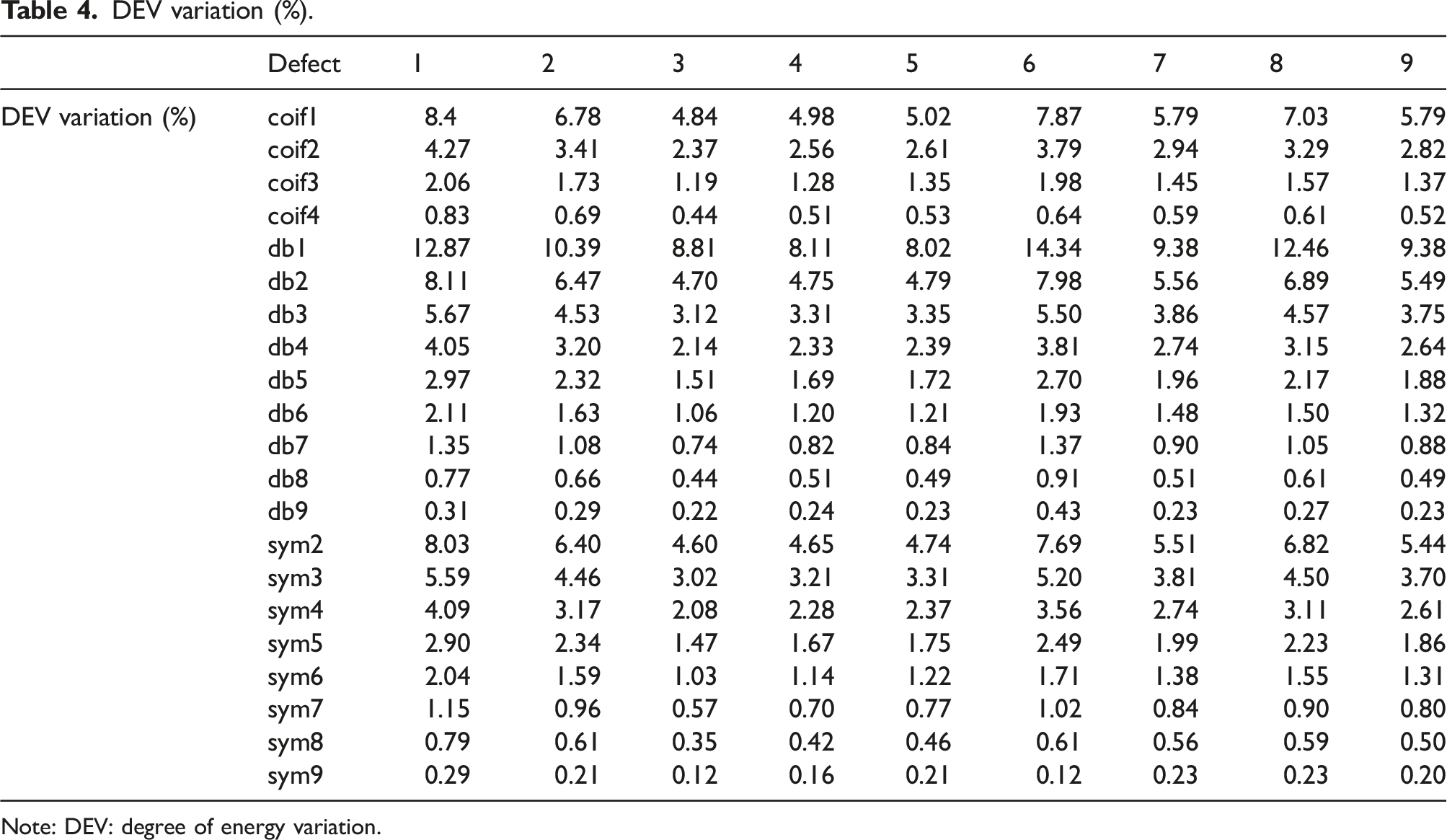
Note: DEV: degree of energy variation.
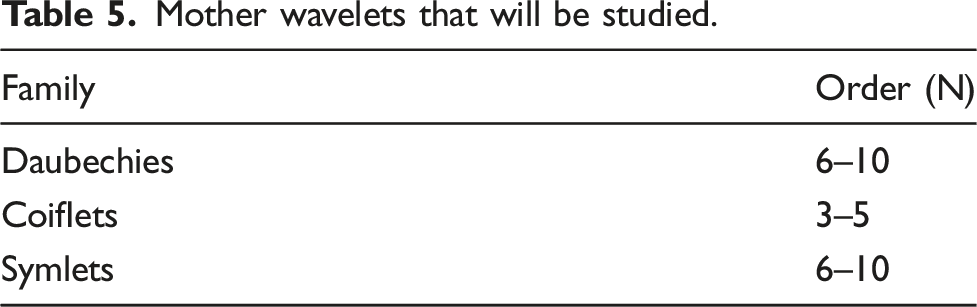
Mother wavelets that will be studied.
6. Analysis of reliability
Once it is known that Daubechies 6–10, Symlet 6–10, and Coiflet 3–5 are the mother wavelets with better results, according to the variation of the DEV, an analysis of reliability is carried out to see if any mother wavelet provides better accuracy.
Within the MATLAB software, the classification learner application is used in which the linear SVM model is established and in which the accuracy of the model is calculated using cross-validation and 50 folds.
The linear SVM is the model chosen to carry out the reliability analysis for its simplicity and its ability to generalize, and because it gives very good reliability results (Huang and Kecman, 2009).
This model finds the optimal way to classify the data by maximizing the separation of the data with a line. In this case, the healthy condition and the defective condition. Optimal classification is made by maximizing the separation margin between classes. The vectors that define the edge of this separation are the support vectors (Hearst et al., 1998).
Given a set of points, a subset of a larger set (space), in which each of them belongs to one of two possible classes (healthy and defective); an algorithm based on SVM builds a model capable of predicting whether a new point (whose class we do not know) belongs to one class or the other.
The SVM looks for a hyperplane (3 or more dimensions) or a line in case of 2 dimensions that optimally separates the points of one class with those of another.
In this concept of “optimal separation” is where the fundamental characteristic of SVM resides: this type of algorithm looks for the hyperplane or line that has the maximum distance (margin) with the points that are closest to itself. In this way, the vector points that are labeled with one class will be on one side of the hyperplane or line and the cases that are in the other class will be on the other side (Chen et al., 2005).
With this model, parallel coordinates plots (PCP) using the energy results of coif5, db10, and sym10 are obtained. In these plots, the predictors or rows are the eight energy packets. The blue color represents the healthy condition and the orange color represents the defective condition. In Figure 8, the PCP using db10 is shown. Using the other mother wavelets, no great differences are observed. Parallel coordinates plots using db10.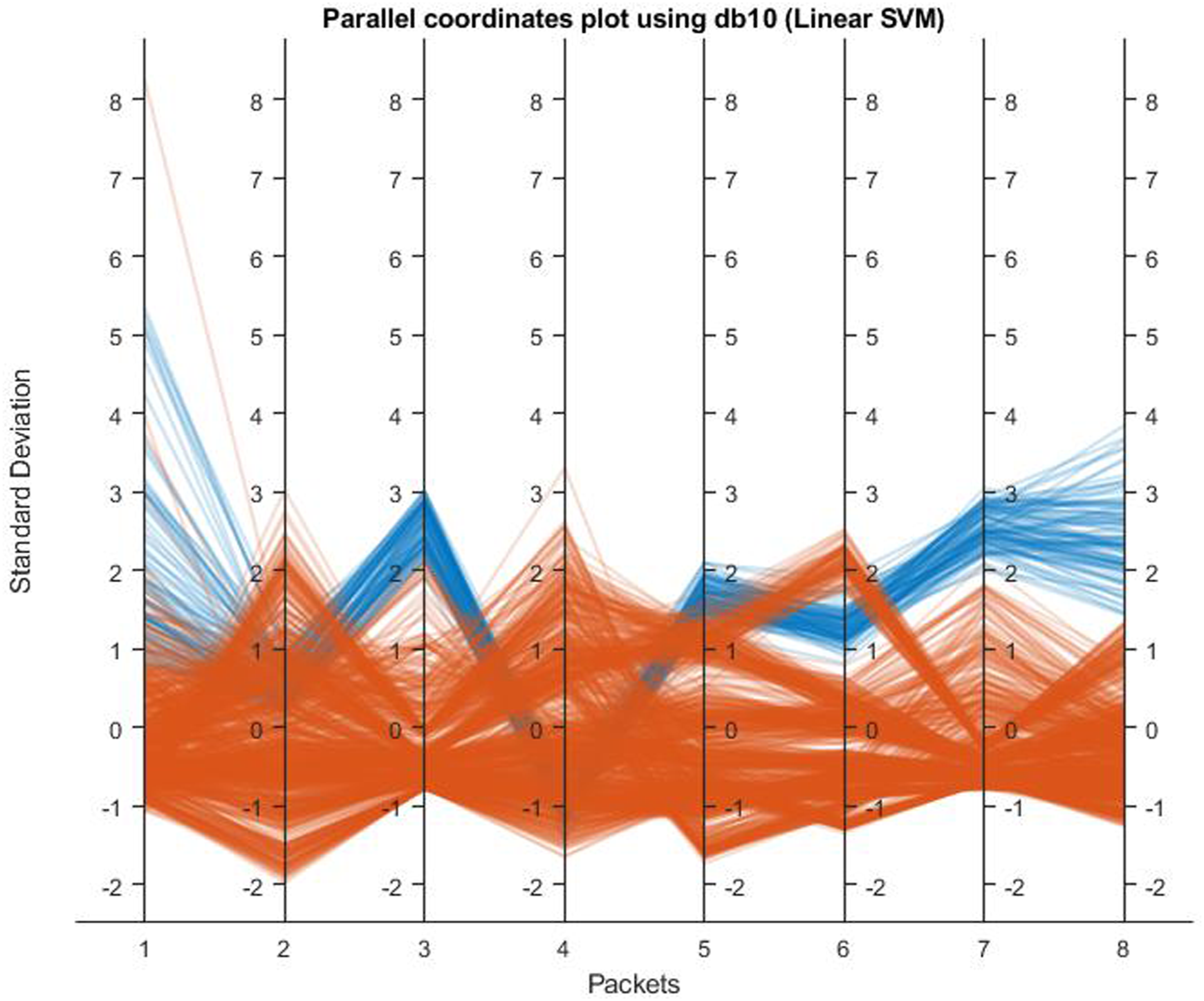
Accuracy of the classification system.
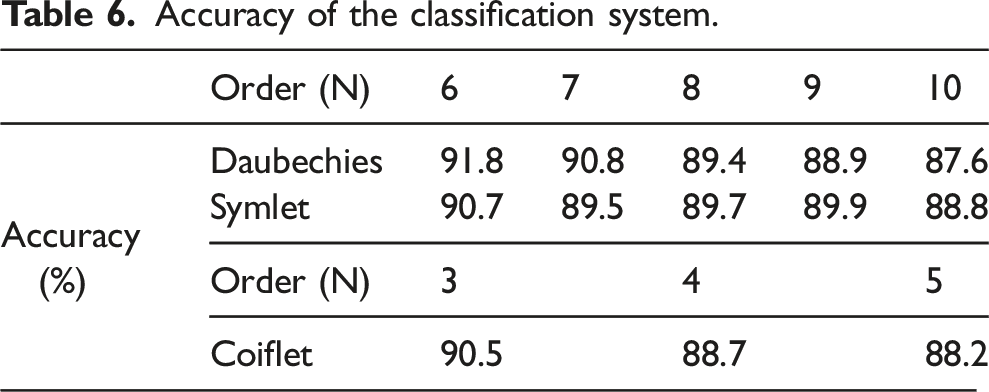
It can be observed that db6 has the highest accuracy and the PCP using db6 is shown in Figure 9. According to all the previous results, this mother wavelet would be the most suitable to diagnose cracks in shafts with a WPT analysis. PCP db6 and linear SVM. Note: PCP: parallel coordinates plots; SVM: support vector machine.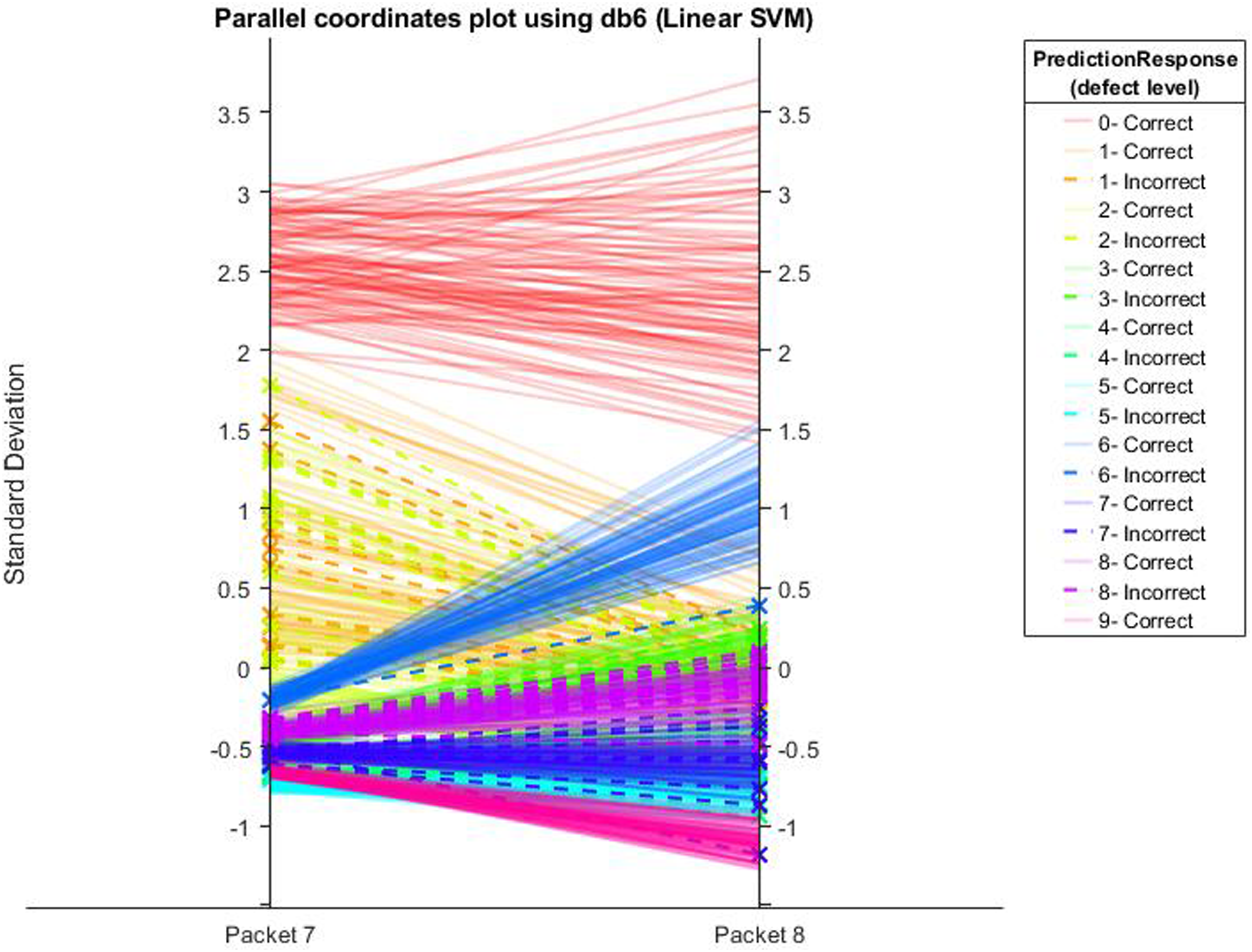
This means that the effects that the defect causes on the vibratory signals are more similar to Daubechies 6 than to the others. So, when using db6, there are more differences between a signal with defect and a signal without defect because the correlation of the defect is higher with that mother wavelet. In any case, as can be seen, there are not great differences in this application of the methodology.
It can also be observed that the family with the least variation is the Symlet. With this family, an ascending or descending trend cannot be accurately determined. The accuracy results are calculated using cross-validation with 50 folds, thus a small variation in the results is not considered because it can vary a few tenths each time it is calculated.
7. Conclusions
In this work, the vibratory signals of a shaft with a crack in the section change have been analyzed using the WPT energy. This analysis has been conducted for three different mother wavelet families, for a decomposition level of 3 and at a rotation frequency of 60 Hz.
The DEV is calculated up to 10 vanishing moments because it has been observed that the DEV value tends to converge as the order N increases, the calculation time increases and because in this way the families with the same conditions can be compared. It has been considered that the mother wavelets to be excluded with this criterion are those with more than a 2% variation compared with the corresponding mother wavelet with the highest DEV.
The last criterion has been to perform a classification system to obtain a parallel coordinates plot to find which packets better differentiate the healthy and the defective condition. These packets are 7 and 8 and are good parameters for the detection of a defect.
Another classification system using a linear SVM model is performed for each mother wavelet using only those packets as predictors to compare the accuracy of the model.
With all this, it has been proved that the mother wavelet that meets the criteria is the Daubechies 6. This mother wavelet has been found to have adequate calculation time and adequate data variation as well as good accuracy to perform a classification system using a linear SVM model.
Therefore, the energy of the wavelet packets using db6 would be very useful for the reverse crack detection process using a state monitoring system.
In conclusion, with these results it would be possible to create an algorithm for automatic detection of consistent failures.
Footnotes
Declaration of Conflicting Interests
The author(s) declared no potential conflicts of interest with respect to the research, authorship, and/or publication of this article.
Funding
The authors disclosed receipt of the following financial support for the research, authorship, and/or publication of this article: This work was supported by the Spanish Government [MAQSTATUS DPI2015-69325-C2-1-R].
