





Abstract
Limited by the difficulty of obtaining the exact stationary solution of Fokker–Planck–Kolmogorov (FPK) equation, the general control strategy for tracking a specified stationary probability density function have not been obtained till now. However, the feedback control for tracking a pre-specified stationary probability density function plays an important role in engineering or industrial systems. In this paper, a feedback control strategy of nonlinear stochastic dynamic system for accurately tracking a specified stationary probability density function without the requirement of exact stationary solution of Fokker–Planck–Kolmogorov equation is proposed. According to the probability conservation form of the Fokker–Planck–Kolmogorov equation, the stationary Fokker–Planck–Kolmogorov equation is split into a probability circulation flow (PCF) equation and a probability potential flow (PPF) equation. The control force is divided into probability circulation flow part and probability potential flow part accordingly. The probability circulation flow part of the control force is determined to satisfy the probability circulation flow term of the controlled system constructed from the target stationary probability density function. The probability potential flow part of the control force is obtained by solving the probability potential flow equation. A two-dimensional nonlinear stochastic system is carried out as an example. The control force is designed to track different types of target stationary probability density functions. Numerical results show that the proposed control strategy can accurately track the stationary probability density functions without the requirement of the exact solution of Fokker–Planck–Kolmogorov equation. The control efficiency can be regulated by the control parameter C.
Keywords
1. Introduction
Stochastic dynamics and motion/vibration control have been a significant subject in the field of engineering since engineering systems are usually subjected to random loadings, such as wind, ocean wave, and earthquake (Xu et al., 2011; Li and Chen, 2008; Wang et al., 2020). Among them, the probability density function (PDF) tracking control, which is designed to reshaping the PDF of key outputs of a stochastic dynamic system for tracking a pre-designed one attracts the attention from many researchers (Wang et al., 2008; Yue and Wang, 2003; Zhu and Zhu, 2019) due to its wide practical applications, such as flame shape control, papermaking process control, and chemical industry polymerization process control. However, limited by the difficulty of obtaining the exact stationary solution of Fokker–Planck–Kolmogorov (FPK) equation, the general analytical expression of the tracking control strategy for the multi-dimensional system, especially for the nonlinear system, have not been obtained till now.
For a Gaussian process, the statistical characteristics can be sufficiently described by its mean and variance value. Thus, for Gaussian outputs system, the target control is easy to be designed by tracking the mean and variance values (Lu and Skelton, 1998; Skelton et al., 1998; Sun, 2006; Wojtkiewicz and Bergman, 2001). However, due to the nonlinearity or non-Gaussian excitations, the output states of many practical systems usually appear in the form of non-Gaussian. For such systems, the tracking controls for targeting the mean and variance value are not suitable and the complete SPDF should be set as the target of tracking control design. Recently, Ren et al. made a very comprehensive summary on the feedback control of SPDF tracking, and divided the shaping control strategies into four categories (Ren et al., 2019). Zhu and Zhu (Zhu and Zhu, 2011, 2019) obtained the corresponding shaping control law according to the five classes of exact stationary solutions of the dissipative MDOF Hamiltonian system. Based on the limit average method (Huan et al., 2015), an effective procedure was proposed to reshape the PDF of stochastically excited quasi-integrable Hamiltonian systems against Markov jump disturbances (Xia et al., 2019). The above-mentioned shaping control methods are all designed under the condition that exact stationary solutions of FPK equations can be obtained. However, the exact stationary solutions of FPK are usually difficulty to be obtained, especially for nonlinear and multi-degree-of-freedom (MDOF) systems (Zhu and Yang, 1996; Zhu et al., 1990; Zhu, 2006). Some shaping control methods that do not rely on exact stationary solutions are proposed. Yin and Guo adopted the optimal recursive algorithm to realize the shaping control of the joint PDF by minimizing the distance between the output distribution and the expected distribution (Yin and Guo, 2012). Wang converted the PDF target control problem into neural network parameter control (Wang, 2012). Yin et al. realized the shaping control of the joint PDF through a data-driven method (Yin et al., 2015). In general, the advantage of the shaping control method based on the exact stationary solution is that the explicit tracking control law can be obtained, but the problem is that it is difficult to obtain the exact stationary solution of FPK equation. For other target control methods, the control force generally needs to be estimated online, which will result in a large online calculation load.
In this paper, a feedback control strategy of the nonlinear stochastic dynamic system for accurately tracking a specified SPDF is proposed. This control law does not need the exact stationary solution form of FPK equation. It has an analytical expression which does not need to be calculated online, and it can track various forms of target SPDFs. This paper is organized as follows: In section 2, the controlled system model is given and the control problem is described; In section 3, the probability conservation equation of FPK equation is briefly reviewed, and the mathematical expressions of circulation and potential stationary conditions are given. The design process of the control law is given in section 4. In section 5, the effectiveness of the control law is verified by a stochastic time-delay ecological predator-prey system for tracking two different SPDFs. The conclusion of the paper is given in the last section.
2. Problem formulation
Consider a MDOF nonlinear stochastic system expressed by the following general stochastically excited, dissipated, and controlled Hamilton equations



System (1) is equivalent to the following Stratonovich stochastic differential equation



According to the definition of Itô stochastic differential, the Stratonovich stochastic differential equations (3) and (4) can be converted to the following Itô stochastic differential equation by adding Wong-Zakai correction terms (Arnold, 1976; Wong and Zakai, 1965)







The objective of the control problem can be described as making the SPDF of the states

3. Fokker–Planck–Kolmogorov equation
The stationary FPK equation associated with system (4) can be formulated as

where
Rewriting FPK equation (12) in the following probability conservation form gives




When solving equation (13), it is generally considered that



The targeting control law obtained by using the exact stationary solution is essentially based on the exact solution of equation (12) without control
4. Control law
The targeting control law is designed by the following steps.
Firstly,

The probability circulation term

Substituting term equation (19) and the target SPDF

According to the definition of

The Hamiltonian
Substituting the determined

Secondly, substituting

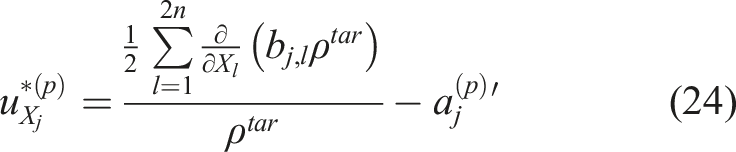
Solving equation (23), the probability potential part of the control force can be obtained
The total control force is the sum of the circulation part (equation (22)) and the potential part (equation (24)) and given as
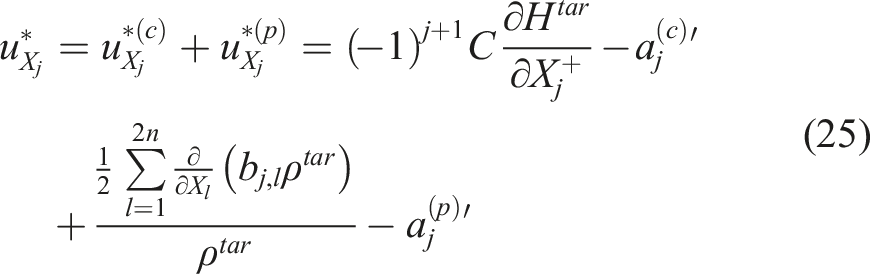
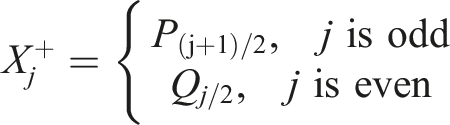
It can be seen that
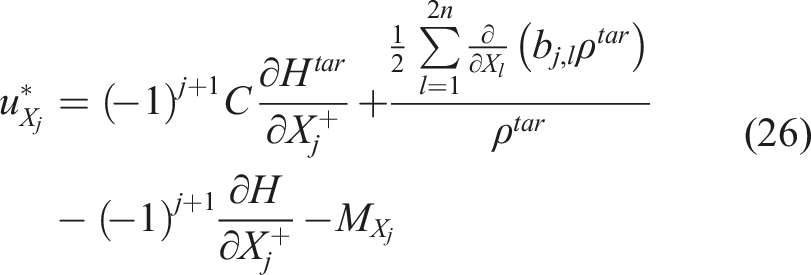
For a dissipative Hamiltonian system, Zhu et al. obtained the feedback tracking control law according to the exact stationary solutions of five types of Hamiltonian system (Zhu and Zhu, 2011, 2019). The target SPDF that can be shaped by this method is in exponential form, namely
5. Example and analysis
To verify the generality and the effectiveness of the proposed procedure, this paper takes a approximate model of the stochastic time-delay ecological predator–prey system as an example to conduct the control law for tracking two sets of target SPDFs.
The motion of an ecosystem is governed by the following stochastic delayed model (Cai and Lin, 2007)

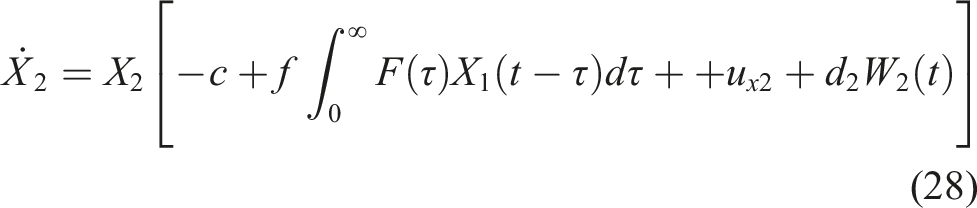

Expanding


To convert system (20) to Hamiltonian form, the following transformation is introduced

Then, system (30) and (31) becomes



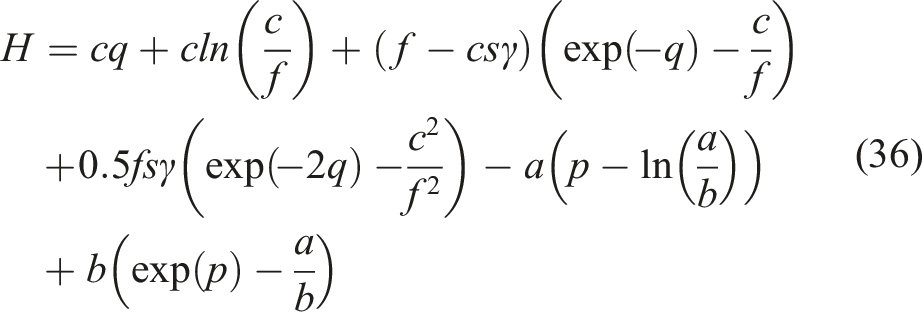
Two different target SPDFs of the population probability densities of the prey–predator system are set as


The target marginal SPDFs associated with equations (37) and (38) can be obtained as


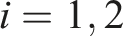
The feedback control forces for both target SPDFs in equations (37) and (38) can be determined by the previous proposed procedure. It can be seen from equations (37) and (38) that both

Substituting equation (41) into equation (26) with the specified forms of SPDFs in equations (37) and (38), the analytical expressions of the total feedback control forces for these two target can be obtained.
The control forces for first target

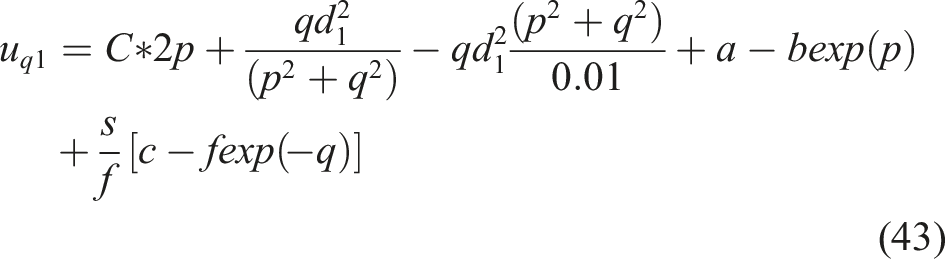
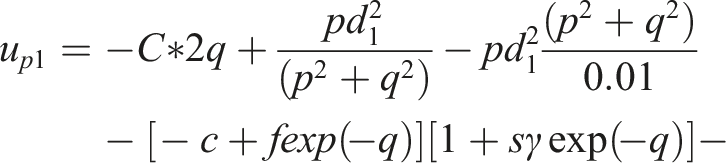

The control forces for second target

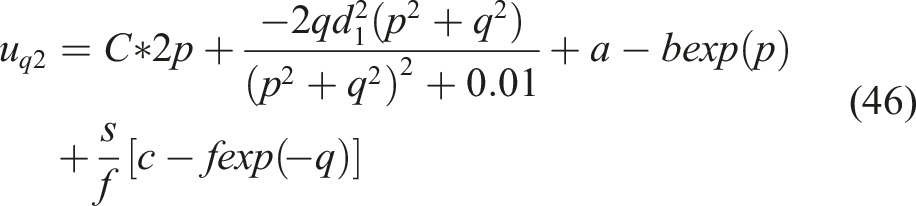
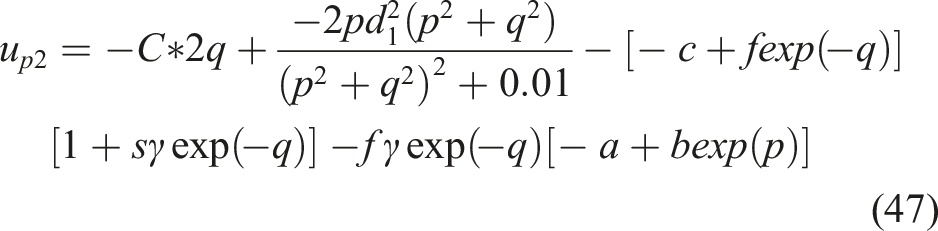
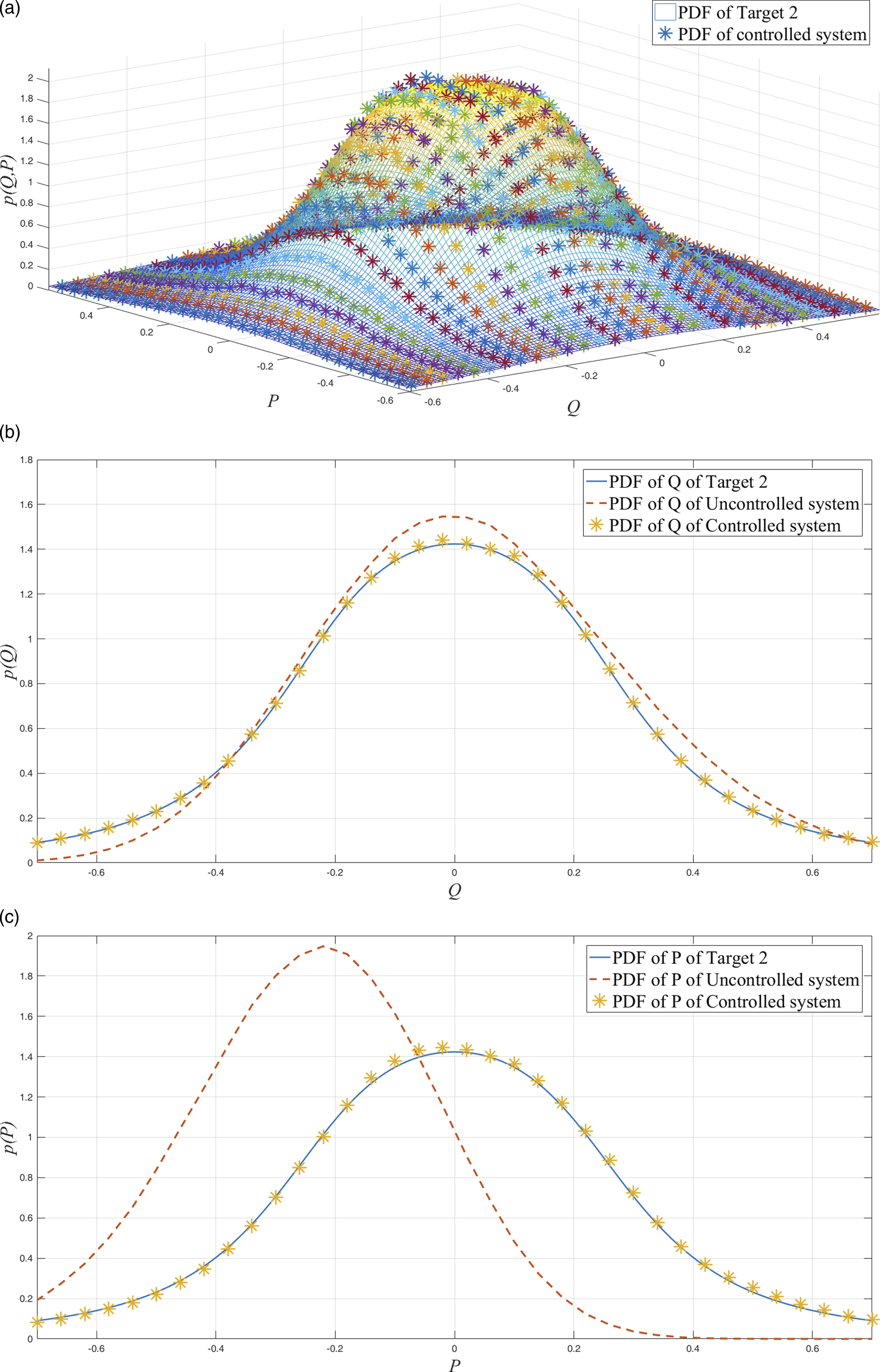
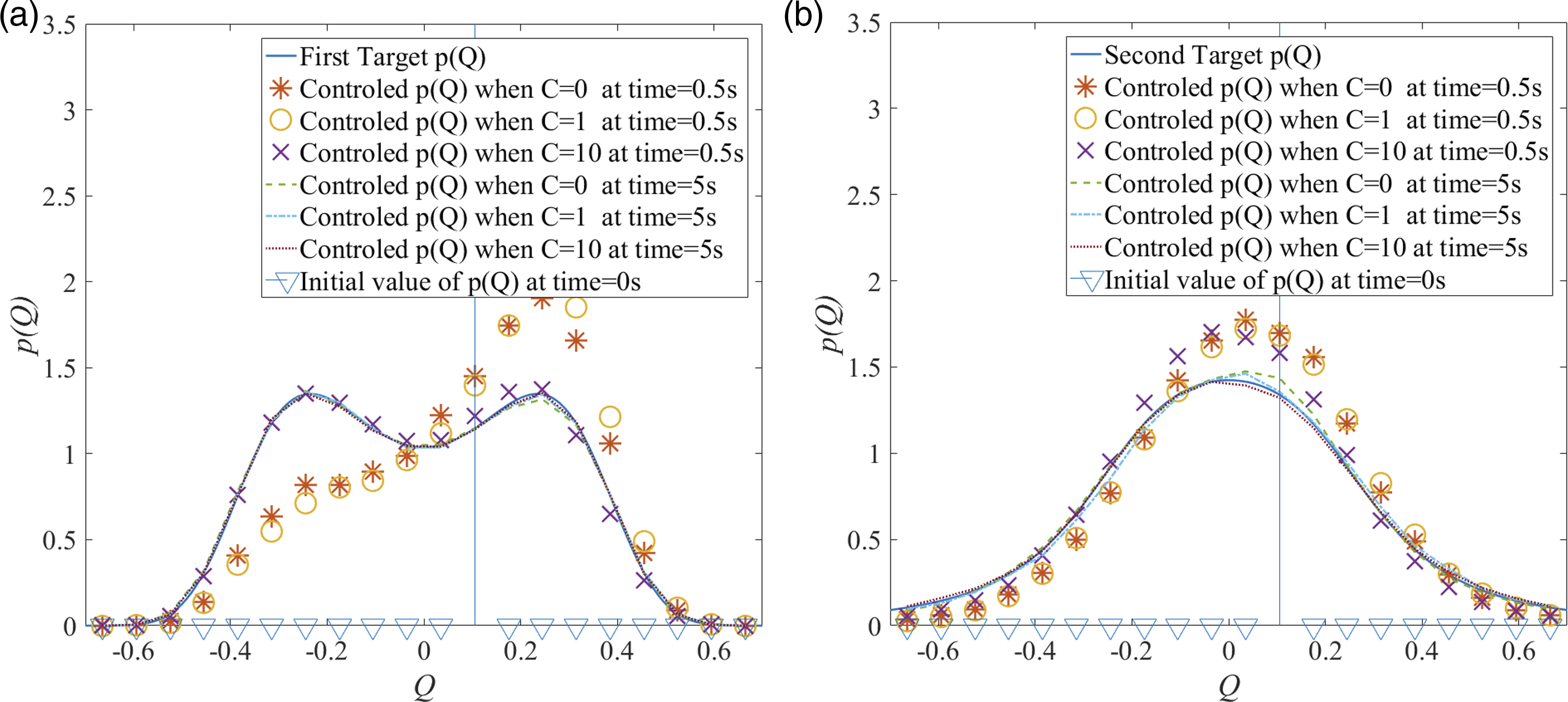
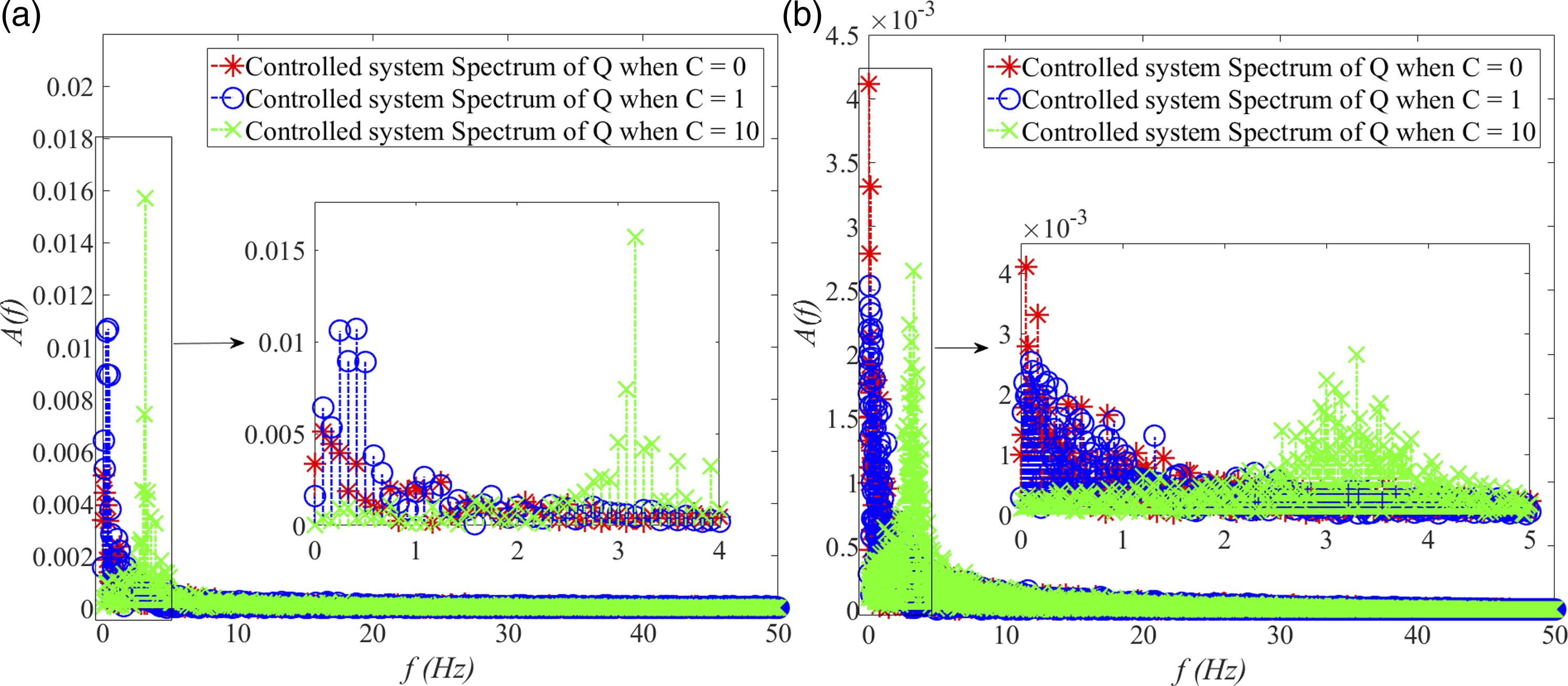
Some numerical results are obtained as shown in Figures 1–5 for system’s parameters The joint stationary probability density function of Q and P of the uncontrolled system. The control effectiveness for target The control effectiveness for target Marginal PDF evolution of state Q with The spectral responses of Q of the controlled system with 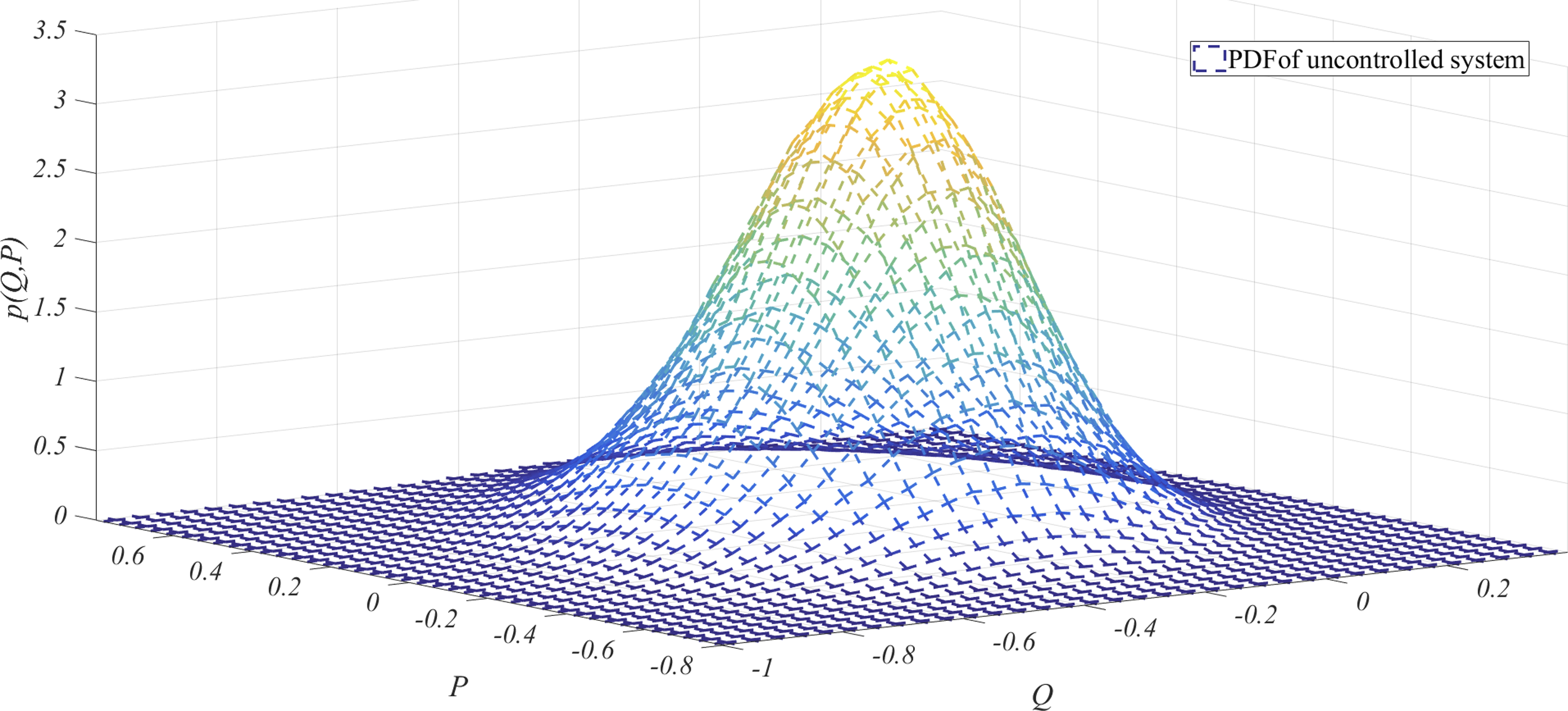


5.1. Effectiveness of the control law
Figure 1 plots curved surfaces of the joint SPDF of Q and P of the uncontrolled system. Figure 2(a) plots the curved surfaces of the first target SPDF
In order to verify that the control law proposed is not restricted by the function form of the target SPDF, Figure 3(a) plots the curved surfaces of the second non-exponential target SPDF
5.2. Efficiency regulation of the control law
The parameter C in the expression of control force is an arbitrary positive. That means any non-negative real value of C can achieve the purpose of tracking the same target SPDF. So what is the difference for different control parameter C? To answer this question, the effects of parameter C on the control effectiveness are investigated and shown in Figures 4 and 5.
Figure 4(a) shows the evolution of the marginal PDF of Q of the controlled system for different control parameter C = 0, 1, and 10, for the first target
Figure 4(b) plots the marginal PDF evolution of Q of the controlled system for different control parameter C = 0, 1, and 10, for the target
Figure 5(a) and (b), respectively, show the spectral responses of Q of the controlled system with
6. Conclusion
In this paper, a procedure for designing a feedback control strategy of nonlinear stochastic dynamic system for accurately tracking a specified SPDF without the requirement of exact stationary solution of FPK equation is proposed. The proposed procedure is applicable for vibrational and non-vibrational systems. The designed control force consists of a PCF part and a PPF part, which are determined from the PCF term and PPF term of the FPK equation, respectively. The advantages of the proposed control law include: the target control law is designed without the requirement of the exact solution of FPK equation; the target control law is in analytical expression and do not need real-time online calculation; the control law can track various forms of SPDFs, and the target SPDF do not limit to the non-exponential form; the control efficiency can be easily regulated by the control parameter C. The control effectiveness of the control law is validated by a 2-dimensional nonlinear stochastic system for tracking two different types of target SPDFs.
The proposed control strategy is designed for accurately tracking a specified SPDF, however, it also has the perspective of the applications in the structural vibration control if we design the target SPDF according to the objective of vibration control.
Footnotes
Declaration of conflicting interests
The author(s) declared no potential conflicts of interest with respect to the research, authorship, and/or publication of this article.
Funding
The author(s) disclosed receipt of the following financial support for the research, authorship, and/or publication of this article: This work was supported by the National Natural Science Foundation of China (No.12172323 and No.12072312) and Zhejiang Science and Technology Project (No. 2019C03129). Zhejiang Provincial Natural Science Foundation of China (No. LZ22A020003).
