







Abstract
In this paper, an intelligent prediction and design method of acoustic metamaterial beams based on deep learning is presented. A theoretical model of acoustic metamaterial beams is derived by using the spectral element method to calculate the band structure and transmission characteristic of beam-type acoustic metamaterial. A high-degree-of-freedom design space dataset of band structure and transmission characteristics is constructed. In addition, the vibration transmission characteristics of acoustic metamaterial beams are predicted and the on-demand inverse design of acoustic metamaterial beams is realized by constructing a fully connected deep learning neural network model. Furthermore, the forward prediction and reverse design network model is verified by using the autoencoder neural network model. Results show that the predicted value of the autoencoder neural network structure is in good agreement with the target value, which indicates the feasibility of the intelligent design method of acoustic metamaterials based on deep learning. The presented intelligent design method could be potentially utilized in the field of fast and efficient acoustic metamaterial design for low frequency vibration isolation in engineering structures.
Keywords
1. Introduction
With the development of modern industrial technology, various types of equipment continue to develop in the direction of large-scale and lightweight, which leads to the increasingly prominent problem of low frequency vibration and noise of the structure. The propagation of elastic waves inside the structure is the primary cause of vibration creation. Therefore, regulating the internal elastic wave is an effective way to reduce structural vibration and noise. The proposal of acoustic metamaterials provides a new idea for the regulation of elastic waves. Acoustic metamaterials are materials designed to control, direct, and manipulate sound waves or phonons in gases, liquids, and solids (crystal lattices)(Beli et al., 2018; De Melo Filho et al., 2020; Liu et al., 2000, 2005; Li and Chan, 2004; Wang et al., 2004; Yang et al., 2008). Due to the unique elastic wave band gap characteristics of acoustic metamaterials, it has a wide range of potential applications in the fields of engineering vibration reduction and noise reduction(Chen et al., 2021; Das et al., 2021; He et al., 2017; Xiao et al., 2019).
Early studies on acoustic metamaterials are mainly concentrated on the band gap formation mechanisms and low-frequency broadband properties (Cai et al., 2022; El-Borgi et al., 2020; Goh and Kallivokas, 2020; Li et al., 2017; Pai et al., 2014; Van Belle et al., 2019; Wen et al., 2020). Xiao et al. (2011) proposed a simple locally resonant continuous elastic system and provided analytical models with explicit formulations involving non-dimensional parameters to understand the underlying physics. Pennec et al. (2008) proposed a plate-type acoustic metamaterial structure that can produce a low frequency band gap. Li et al. (2020c) studied the flexural-wave bandgap and vibration isolation properties of sandwich-plate elastic metamaterials using numerical and experimental methods. Wu et al. (2008) numerically and experimentally demonstrate the existence of a low-frequency complete bandgap in a plate with a periodic stubbed surface. Badreddine Assouar and Oudich (2012) theoretically investigated an acoustic metamaterial structure that can significantly expand the full band gap. Miranda et al. (2019) used plane wave expansion and extended plane wave expansion methods to study the flexural wave band gap in a multi-resonator elastic metamaterial plate. Banerjee (2020) idealized the bending and torsional vibrations of the periodic perpendicular cantilever beam-mass resonator (PCBMR) as translation and rotation vibrators attached to the main beam, and evaluated the influence of the torsional vibrations of the PCBMR on the dynamics of an infinite Euler–Bernoulli beam. Sugino et al. (2016) proved that the dual problem of wave propagation in an infinite periodic beam is the modal analysis of a finite beam with infinite resonators.
With the continuous advancement of acoustic metamaterial research towards engineering applications(Li et al., 2022), rapid progress has been made in physical mechanism and design theory (Burlon and Failla, 2022; Bae and Oh, 2022; El-Sabbagh et al., 2008; Li et al., 2020a; Song et al., 2015, 2019; Yi and Youn, 2016). The rapid implementation of the reverse design to meet the engineering structural requirements is an important direction to further enhance the application of acoustic metamaterials. However, traditional acoustic metamaterial design mainly relies on manual empirical design, and rapid on-demand design of a large number of acoustic metamaterial structural in the field of large-scale engineering application could be hardly achieved. The emergence of deep learning (DL) provides a new way to solve the above problems(Jin et al., 2022; Muhammad and Lim CW, 2022). DL is an algorithm that uses neural networks as a framework to characterize and learn relationships between data (LeCun et al., 2015). By applying DL into the process of reverse design research of metamaterials, it only takes a little time to obtain material structures with specific functions required (Gurbuz et al., 2021). The band gap opening mechanisms of acoustic metamaterials mainly includes Bragg scattering mechanism and locally resonant mechanism. So far, some preliminary results have been obtained in the study of Bragg scattering type acoustic metamaterials. For example, Liu and Yu (2019) predicted the dispersion relations of one-dimensional (1D) phononic crystals by using the deep back propagation neural networks and radial basis function neural networks. Finol et al. (2019) respectively used deep convolutional neural network (CNNs) and traditional densely connected neural networks (NNS) to predict the eigenvalue problems of phononic crystals, and concluded that the CNNs was much better than NNs (both deep and shallow). Li et al. (2020b) came up with a data-driven approach to design phononic crystals, assisted by image-based finite element analysis and deep learning. He et al. (2021) efficiently reversed the engineering structural parameters to maximize the band gap width with reinforcement learning algorithms. Li et al. (2021) suggested an optimization method based on subset simulation and generative adversarial network (GAN) guidance to optimize the frequency band gap characteristic of periodic structures. Cheng et al. (2022) used the deep auto-encoder (DAE) model to realize the on-demand prediction of the performance of the unit. However, the majority of current studies construct their databases by using the numerical computational methods, which makes it challenging to anticipate and perform inverse design fast and effectively. In addition, the structure in practical engineering has a finite period. Thus, it is more accurate to use the transmission characteristics to evaluate the structural band gap than the band structure. The transmission characteristics of acoustic metamaterials are not as well investigated as the band structure. Finally, both geometrical characteristics and material properties should be taken into account during the forward prediction and reverse design processes since they have a significant influence on the structure’s band gap. Current studies frequently only contain geometric or material parameters because it is challenging to train deep learning neural network (DNN) models on numerous types of characteristics.
In the present work, an intelligent prediction and design method of acoustic metamaterial beams based on deep learning is presented. A theoretical model of acoustic metamaterial beams is derived by using the spectral element method and a high-degree-of-freedom design space dataset of band structure and transmission characteristics is constructed. On this basis, the vibration transmission characteristics of acoustic metamaterial beams are predicted and the structure on-demand inverse design is realized by constructing a fully connected DNN model. Furthermore, the forward prediction and reverse design network model is verified by using the autoencoder neural network model.
2. Dataset generation
2.1. Calculation of band structure
The acoustic metamaterial beams considered here is formed by periodically attaching a locally resonant substructure to a Euler–Bernoulli beam structure. The spectral element method is used to establish the theoretical model of acoustic metamaterial beams and solve the band structure (Doyle, 1997; Lee, 2009). Figure 1(a) shows the schematic diagram of acoustic metamaterial beams structure with N cells, and its single periodic cell is shown in Figure 1(b), in which the local resonance is composed of the spring (kr), mass (mr), and additional lumped mass (m0). In Figure 1, (a) Schematic diagram of acoustic metamaterial beams structure with N cells; (b) A unit cell.

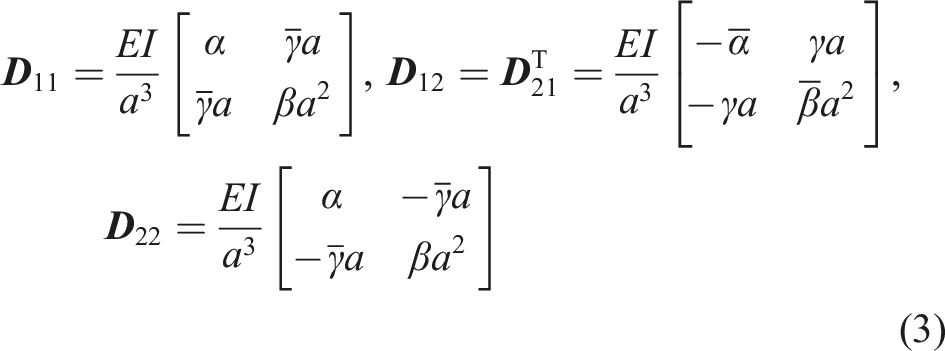
Based on Euler–Bernoulli beam theory, the spectral element matrix of beam element with length a is









For the rectangular beam, the cross-sectional area and moment of inertia can be calculated as follows:

The total dynamic stiffness matrix

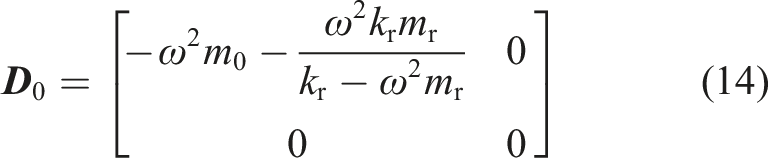
The dynamics equation of a unit cell is

According to Bloch theorem of periodic structure, boundary displacement and force vector of cell satisfy the following relation:


Substitute equation (16) into equation (15) to obtain

Combined with equations (15), (17), and (18), a quadratic eigenvalue problem of e-iqa can be deduced:

The corresponding eigenvalues can be solved by the following equation:

2.2. Calculation of transmission characteristic
Vibration transmission characteristic refers to the ratio of the vibration response at the other end to the vibration excitation applied by applying vibration excitation at one end of the finite structure shown in Figure 1(a). The dynamic stiffness matrix of the cell shown in Figure 1 (b) is as follows:
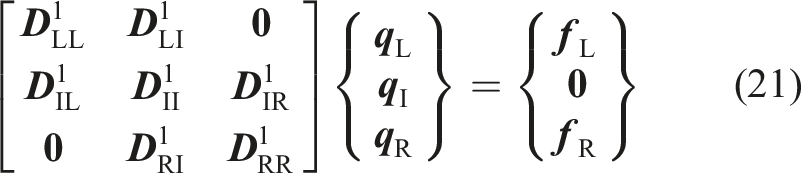

Based on the Bloch theorem of periodic structure, the eigenvalue equation is derived and transformed into a standard linear eigenvalue problem by using a method similar to that of band structure.

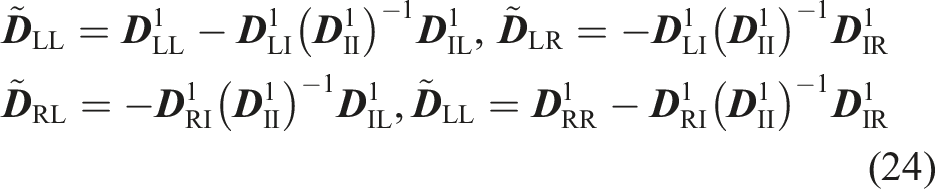
Solving equation (23), two sets of eigenvalues and eigenvectors can be obtained, which can be expressed as
According to equation (18), the eigenvector of


For the finite periodic structure, the displacement and force of any cell boundary can be expressed as the sum of the characteristic wave modes in positive and negative-going directions:


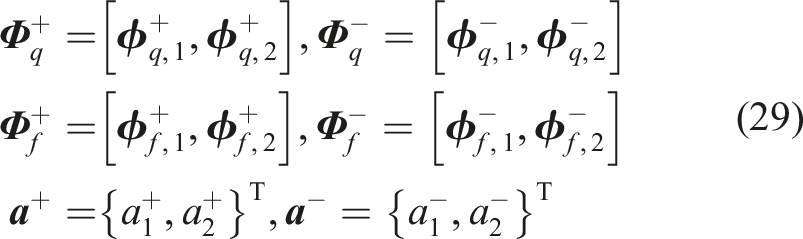
The displacement at both ends of the finite acoustic metamaterial beams can be expressed as


The wave amplitudes at both ends satisfy the following relation:

Substitute equation (32) into equations (30) and (31) and convert to matrix form:

Similarly, the matrix equation of the force vectors at both ends can be obtained:

Simultaneous equations (33) and (34):

On this basis, the vibration transmission characteristic of finite structures can be further calculated by considering the boundary conditions at both ends. For example, we suppose that the left end of the acoustic metamaterial beams as shown in Figure 1(a) is excited by a harmonic transverse displacement of amplitude




Thus, the vibration transmission characteristic of the finite structure can be obtained as

Material and structural parameters of acoustic metamaterial beams.

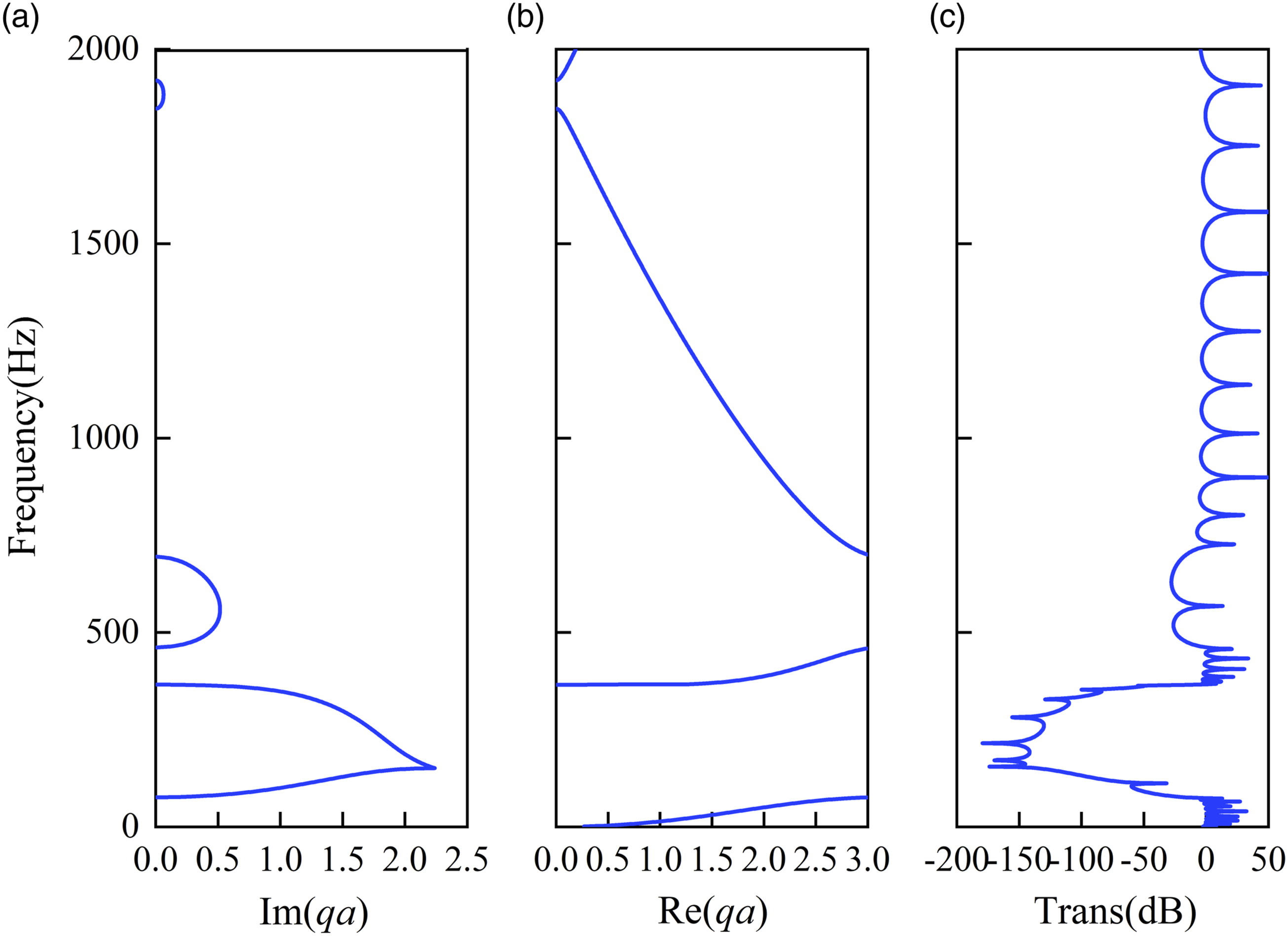
Band structure of imaginary (IM) (a) and the real (RE) (b) parts and transmission characteristic (c) of acoustic metamaterial beams.
2.3. Dataset establishment
Dataset is the core of deep neural network training. The number of data sets and the quality of data will directly affect the final training effect of the network. Our dataset consists of the structural parameters of the acoustic metamaterial beams and the corresponding transmission characteristic. The dataset consists of training set I and testing set I, and the ratio of training set to testing set is 9:1. Since the lattice constant (a), spring stiffness (kr) and beam width (b) are the main parameters that affect the band gap position of the proposed acoustic metamaterial beams, three parameters are changed during our forward prediction and reverse design. The three parameters vary as follows: the variation range of variable a is 0.005 m to 0.25 m, with a step of 0.005 m, so there are 50 nodes; the value of kr is varied from 3 × 10⁴ N/m to 8 × 10⁴ N/m with a step of 2500 N/m, having a total of 20 nodes; the value of b is changed from 0.005 m to 0.1 m, with a step of 0.005 m, so there are 20 nodes in total.
The forward prediction and reverse design of acoustic metamaterial beams are carried out, and two cases are considered, respectively. The first case (CI) is single parameter prediction and design by changing the lattice constant. The second case (CII) is multiple parameters prediction and design by changing the lattice constant, spring stiffness and beam width simultaneously.
3. Forward prediction
3.1. Deep learning framework
In recent years, deep learning has developed rapidly and achieved remarkable results in many fields, such as human-computer voice interaction and image recognition. DNN consists of input layer, hidden layer and output layer as shown in Figure 3. DNN can fit almost any function, so DNN has very strong nonlinear fitting ability. DNN is essentially a mapping function between input and output data. DNN training mainly includes forward propagation and back propagation. DNN after training has learned the relationship between input and output, so it can accurately predict the output corresponding to the input, which makes it equipped with image recognition, text prediction and other functions. The architecture of the DNN model for forward prediction.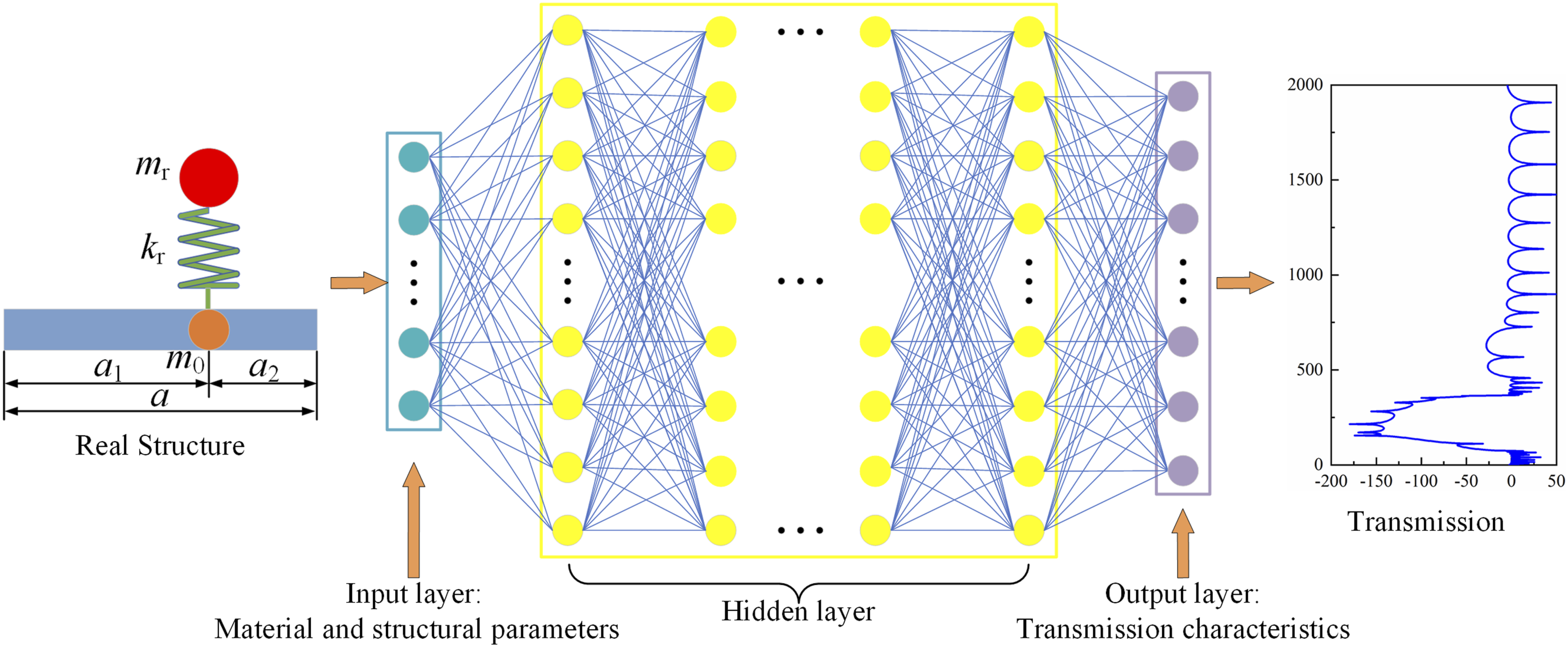
In order to increase the nonlinear factor in the neural network, so as to achieve a more approximate fitting effect, the nonlinear activation function is calculated before the output. The tanh function and the elu function are the two often utilized activation functions. Adaptive Moment Estimation (Adam) was chosen as the neural network optimization algorithm. For regression problems, we need to find the cost function to solve the optimal solution, and the common cost function is the mean square error (MSE).
3.2. Single parameter prediction
A deep neural network (DNN) is used to predict the transmission characteristic of acoustic metamaterial beams with different lattice constants. All data (50 sets of data) of CI are randomly divided into two parts, training set (45 sets of data), testing set (5 sets of data). One set of data includes lattice constants of acoustic metamaterial beams and its corresponding transmission characteristic. In particular, batch normalization (BN) is used to speed up training and prevent over-fitting. Another way to prevent over-fitting of neural networks is to introduce Dropout mechanism, which means that the inner neurons are not fully connected to the next layer, result in the enhancing of neural networks generalization and preventing over-fitting. The neural network structure is “1-50-30-20-20-30-50”, where “1” represents the dimension of the input layer, and the trailing “50” represents the dimension of the output layer. The middle numbers represent the number of neurons in the corresponding hidden layer, respectively.
The convergence curve of the cost function during the training of DNN model is shown in Figure 4. As can be seen from Figure 4, although the training dataset is relatively small, the cost function of single parameter prediction converges to a smaller value. In addition, the test set is used to evaluate the DNN model. 2 groups are randomly selected from the 5-group test set, and the comparison between the prediction and the target of transmission characteristic is shown in Figure 5. Satisfactory prediction results are obtained by training with DNN model. Figure 5 (a) and (b) correspond to lattice constants of 0.195 and 0.22, respectively. The agreement between the prediction and the target is good, especially in the band gap range, which verifies the good accuracy of the DNN model. Convergence curve of cost function for single parameter forward prediction. The transmission characteristic of single parameter prediction and the target: (a) a = 0.195 m; (b) a = 0.22 m.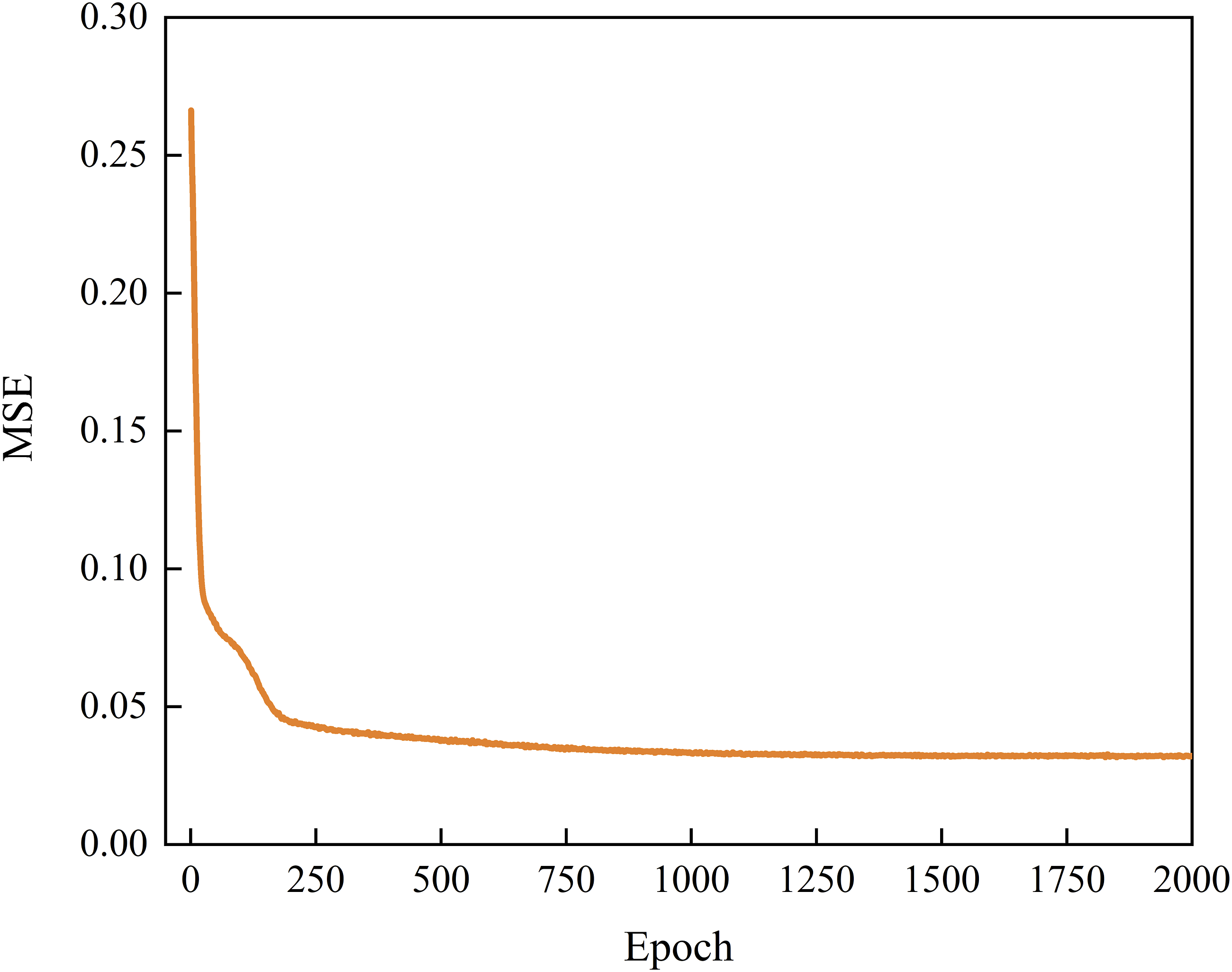
3.3. Multiple parameters prediction
The DNN model is used to predict the transmission characteristic of acoustic metamaterial beams with multiple parameter variations. All data (20000 sets of data) of CII are randomly divided into two parts, training set (18000 sets of data), testing set (2000 sets of data). One set of data includes lattice constants (a), spring stiffness (kr) and beam width (b) of acoustic metamaterial beams and their corresponding transmission characteristic. The lattice constants (a), spring stiffness (kr) and beam width (b) of acoustic metamaterial beams are the inputs of the DNN model, while the transmission characteristic of the acoustic metamaterial beams corresponding to this group of parameters are the outputs of the model. Similarly, BN and Dropout are used to speed up training and prevent overfitting. The neural network structure is “3-300-200-200-200-200-150-150-150-150-50”.
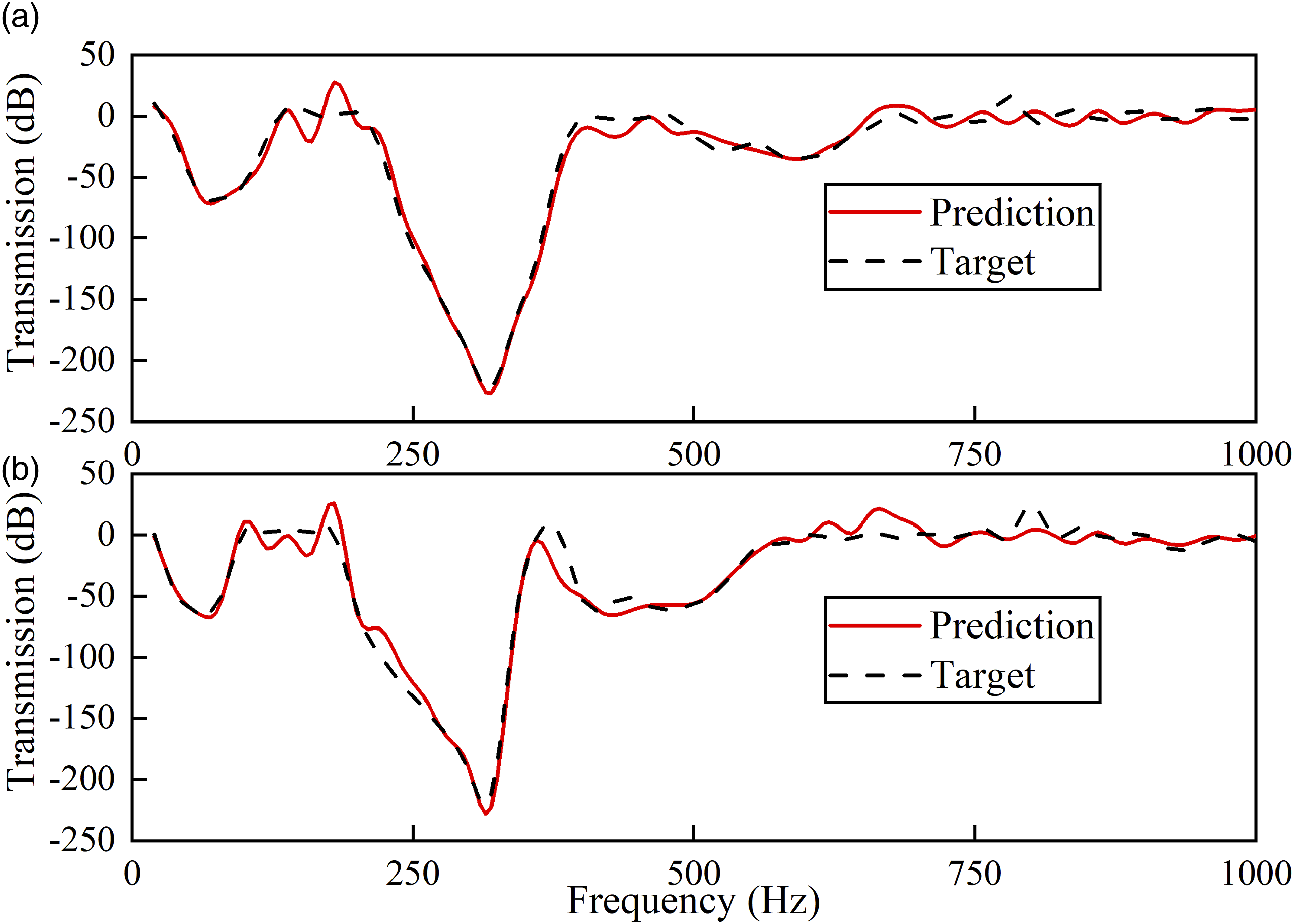
The convergence curve of the cost function during the training of the DNN model is shown in Figure 6. As can be seen from Figure 6 due to the substantial increase in the data set, the MSE of the multiple parameters is significantly reduced relative to the single parameter. The curve has slight up and down fluctuations, which is because the MSE converges to a small value of 0.0032. The DNN model is evaluated using the test set. 2 groups are randomly selected from the 2000-group test set, and the comparison between the prediction and the target of transmission characteristic is shown in Figure 7. Figure 7 (a) and (b) correspond to the structural parameters of (a = 0.2 m, kr = 62,500 N/m, b = 0.07 m) and (a = 0.12 m,kr = 45,000 N/m, b = 0.04 m), respectively. Again, the predictions are excellent in the frequency decay range. Convergence curve of cost function for multiple parameters forward prediction. The transmission characteristic of multiple parameters prediction and the target: (a) (a = 0.2 m, kr = 62,500 N/m, b = 0.07 m); (b) (a = 0.12 m, kr = 45,000 N/m, b = 0.04 m).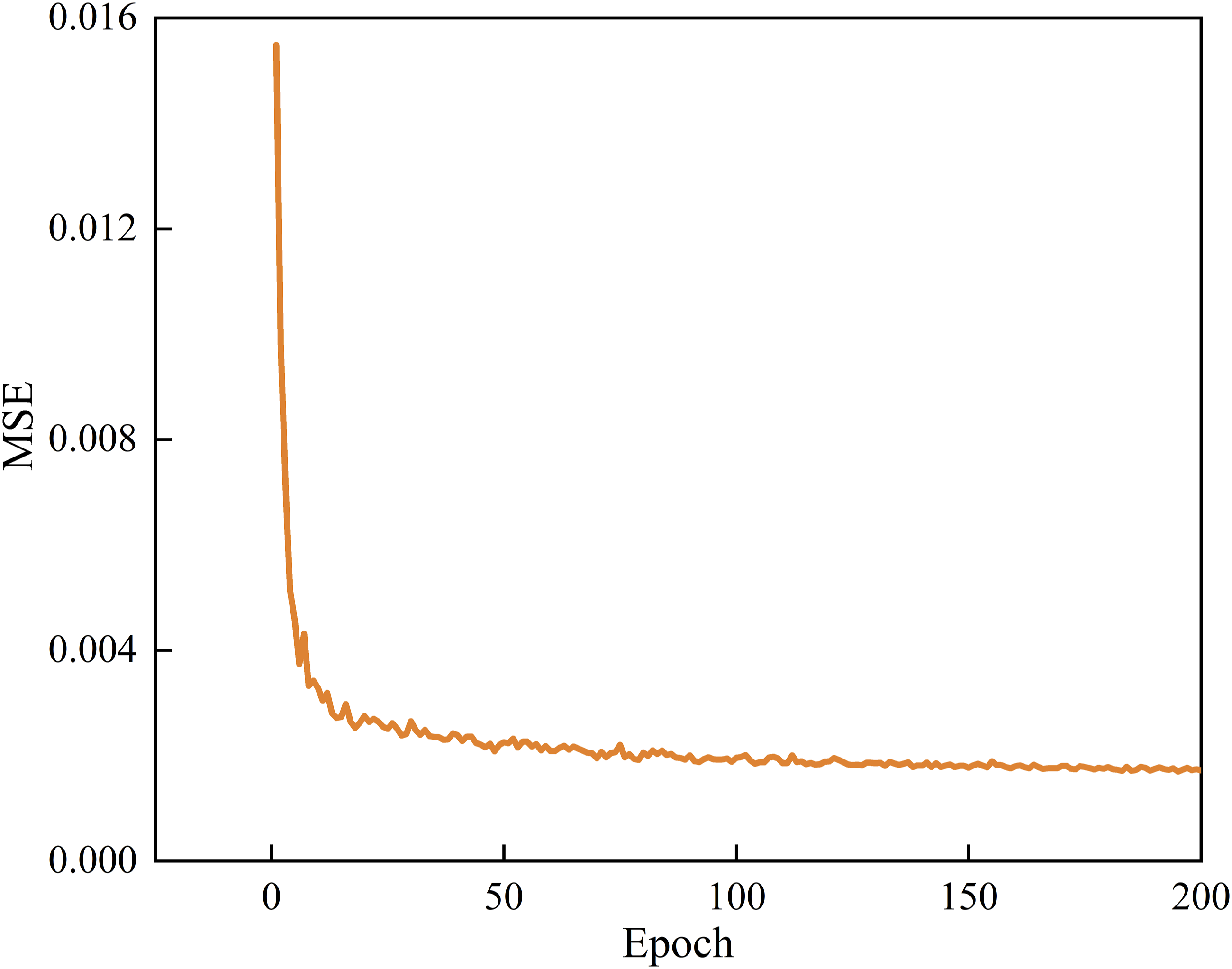
4. Reverse design
After the construction of forward prediction neural network was completed, we began to explore the construction of reverse design network. The function of the so-called reverse design network is to predict the corresponding structural parameters of the output through the transmission characteristic of the input acoustic metamaterial beams. The reverse design network model is shown in Figure 8. In the reverse design neural network, the optimization algorithm and loss function remain unchanged except that the network model is opposite to the forward prediction neural network. The reverse design neural network construction is important, which means that we can implement the on-demand inverse design of acoustic metamaterial beams. The architecture of the DNN model for reverse design.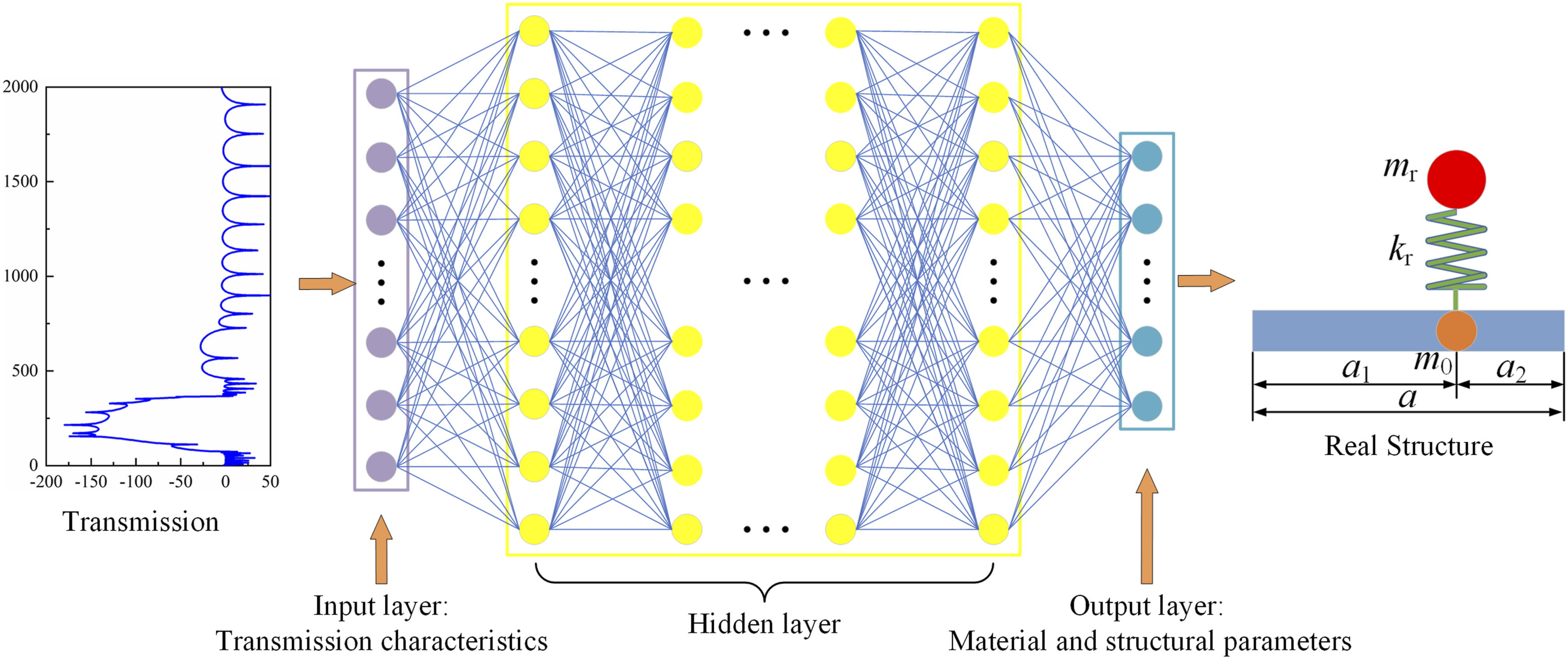
4.1. Single parameter reverse design
The lattice constant corresponding to the desired transmission characteristic is predicted using the DNN model. All data (50 sets of data) of CI are randomly divided into two parts, training set (45 sets of data) and test set (5 sets of data). A set of data includes the lattice constant of the acoustic metamaterial beams and its transmission characteristic, where the transmission characteristics are the input of the DNN model and the lattice constant is the output of the DNN model. BN and Dropout are used to speed up training and prevent overfitting. The neural network structure is “50-120-160-200-200-200-1”.
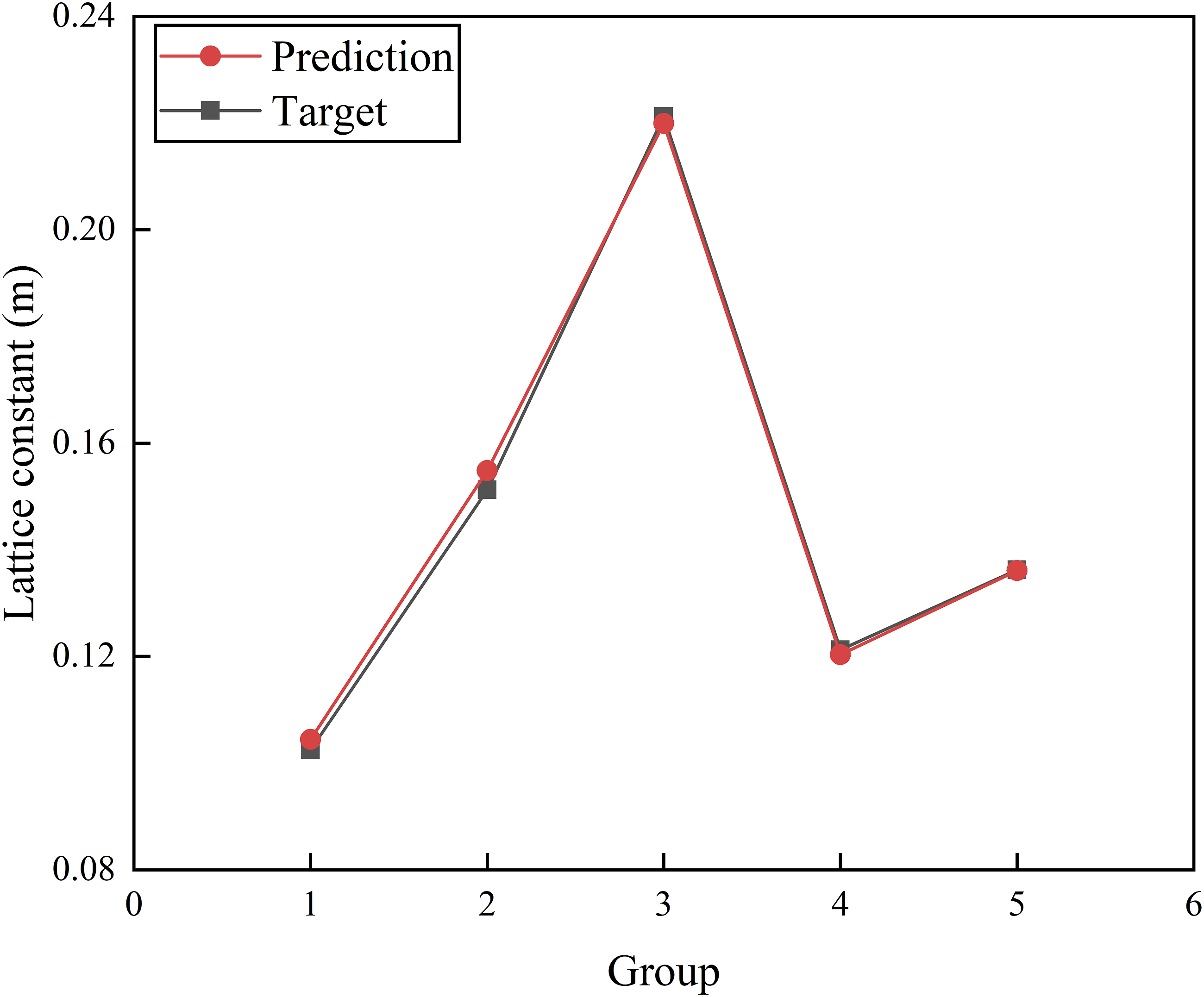
The convergence curve of the cost function during the training process of the reverse design DNN model is shown in Figure 9. When the number of training reaches 1000, MSE finally converges to around 0.0003. The comparison of the lattice constant between the prediction and the target in the test set is shown in Figure 10. We can see that the five groups of structural parameters predicted by the DNN model are in good agreement with the actual structural parameters and the average difference of the five sets of data is 0.0016. This shows that the training of the neural network has achieved good results, and it can predict the corresponding structural parameters through a given spectrum. Convergence curve of cost function for single parameter reverse design. The prediction and target of lattice constant.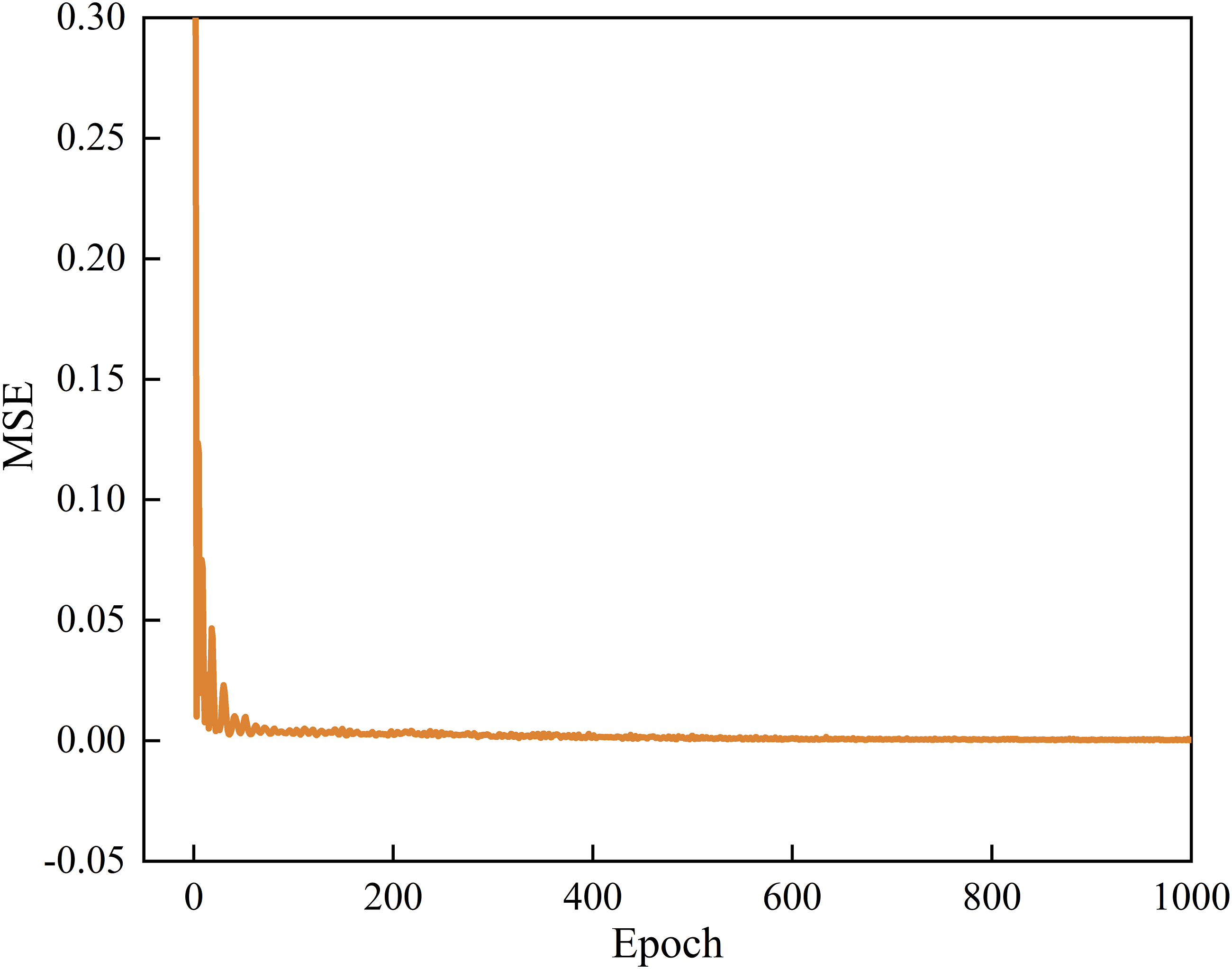
4.2. Multiple parameters reverse design
In the multiple parameters reverse design, the lattice constant, spring stiffness and beam width are selected. All data (20000 sets of data) of CII are randomly divided into two parts, training set (18000 sets of data) and test set (2000 sets of data). A set of data includes the lattice constant, spring stiffness and beam width of the acoustic metamaterial beams, and its transmission characteristics, where the transmission characteristics are the input of the DNN model, and the lattice constant, spring stiffness and beam width are the output of the DNN model. The neural network structure is “50-128-256-512-1024-512-256-128-64-16-8-3”.
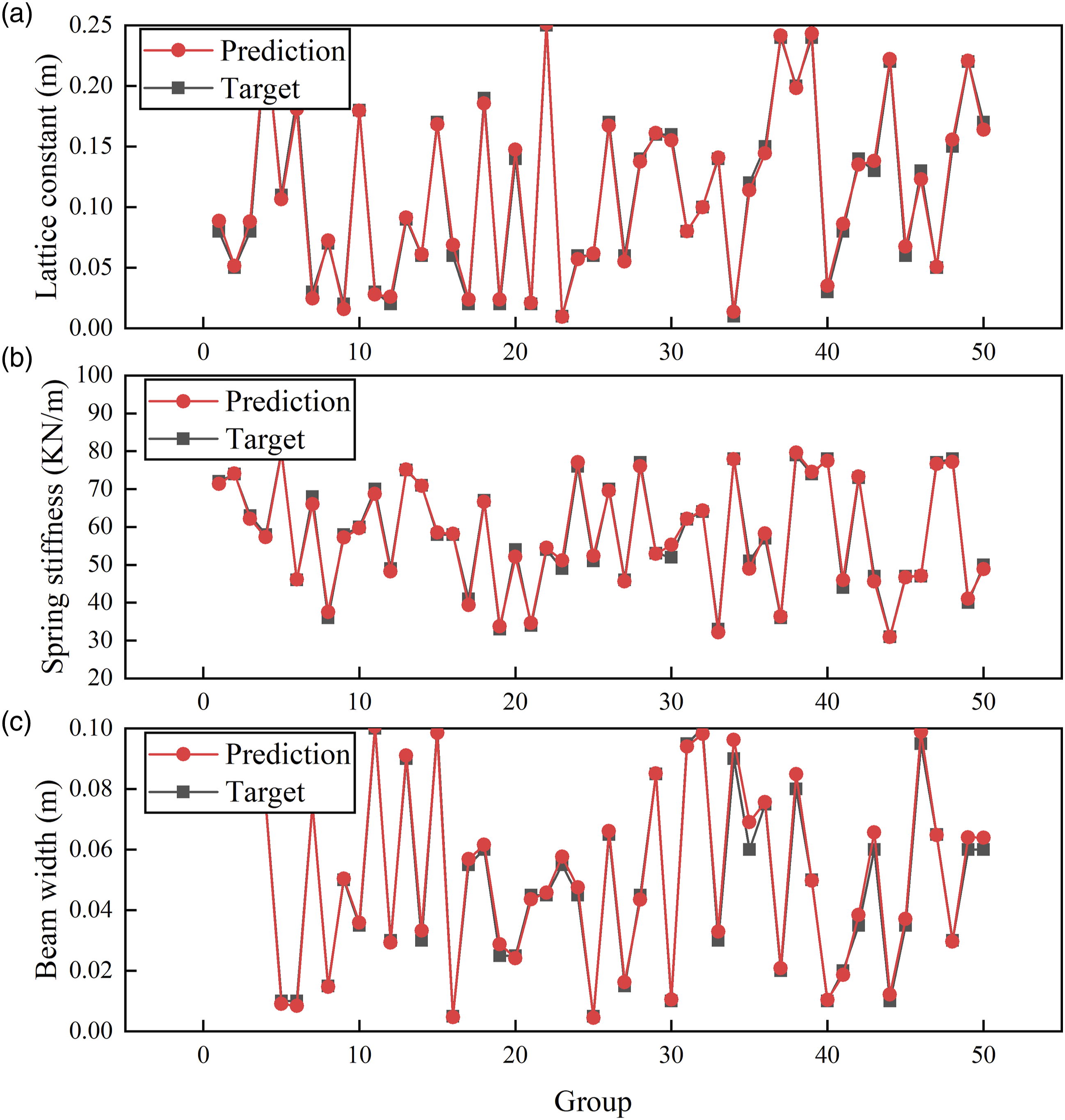
Similarly, Figure 11 shows the convergence curve of the cost function during the training process of the inversely designed multiple parameters DNN model. When the number of training times reaches 500, the MSE finally converges to around 0.00,122. 50 groups were randomly selected from the 2000 groups of test set data, and the comparison between the prediction and the target is shown in Figure 12. Figure 12(a), (b) and (c) show the comparison of predicted and target values for lattice constant, spring stiffness and beam width, respectively. It can be seen that the 50 groups of structural parameters predicted by the DNN model are in good agreement with the actual structural parameters. Convergence curve of cost function for multiple parameters reverse design. The lattice constant (a), spring stiffness (b), and beam width (c) of multiple parameters prediction and the target.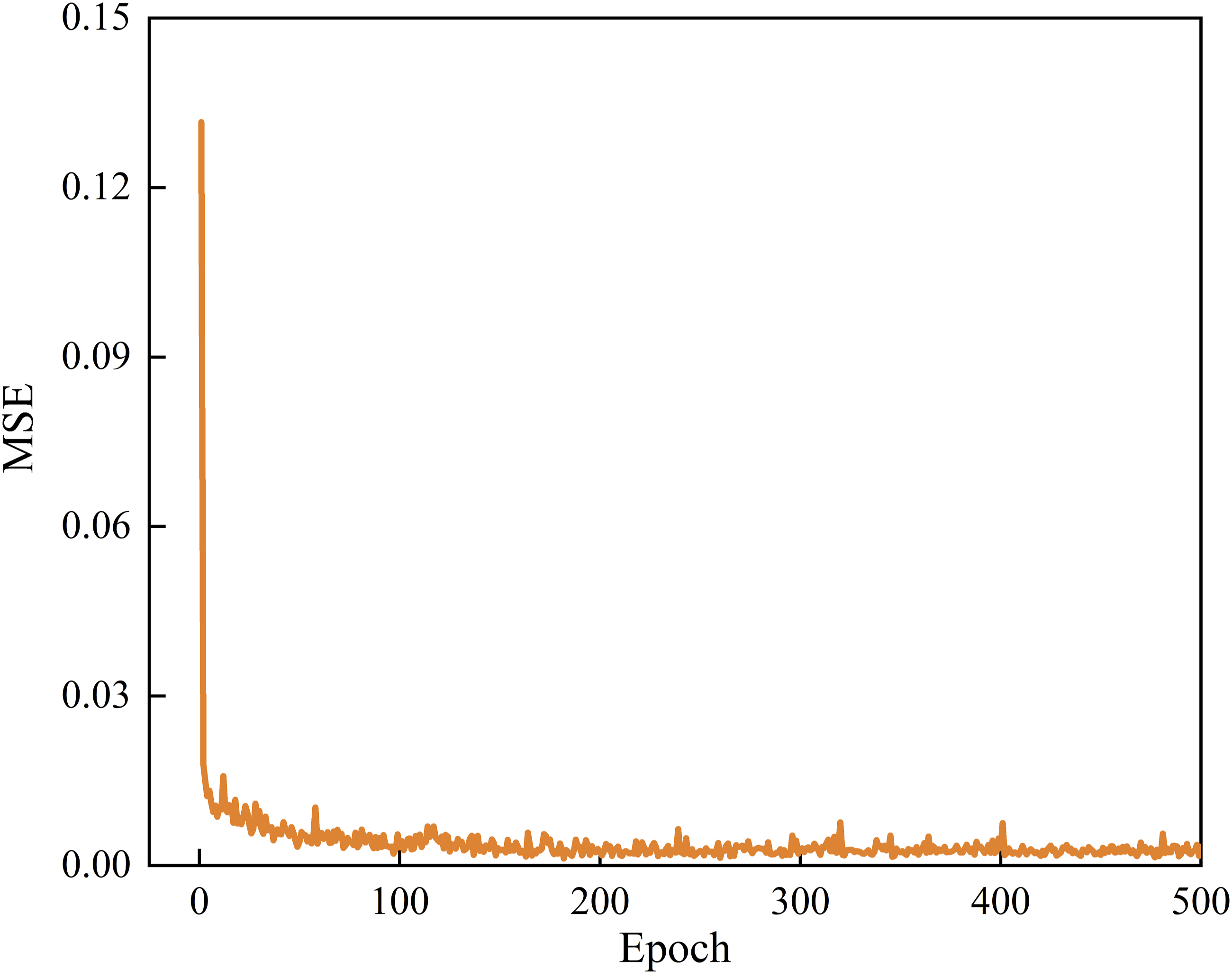
4.3. Model accuracy verification
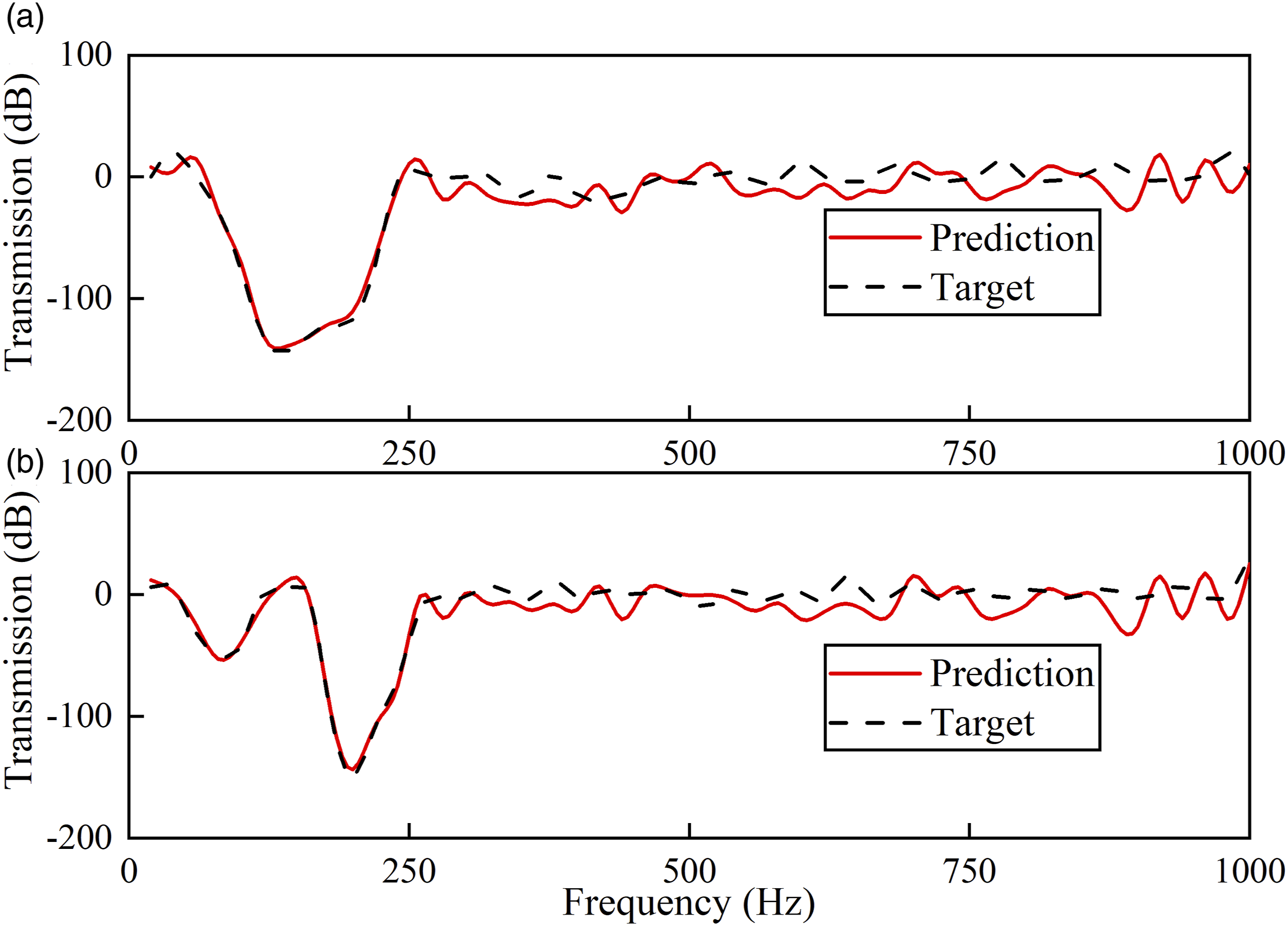
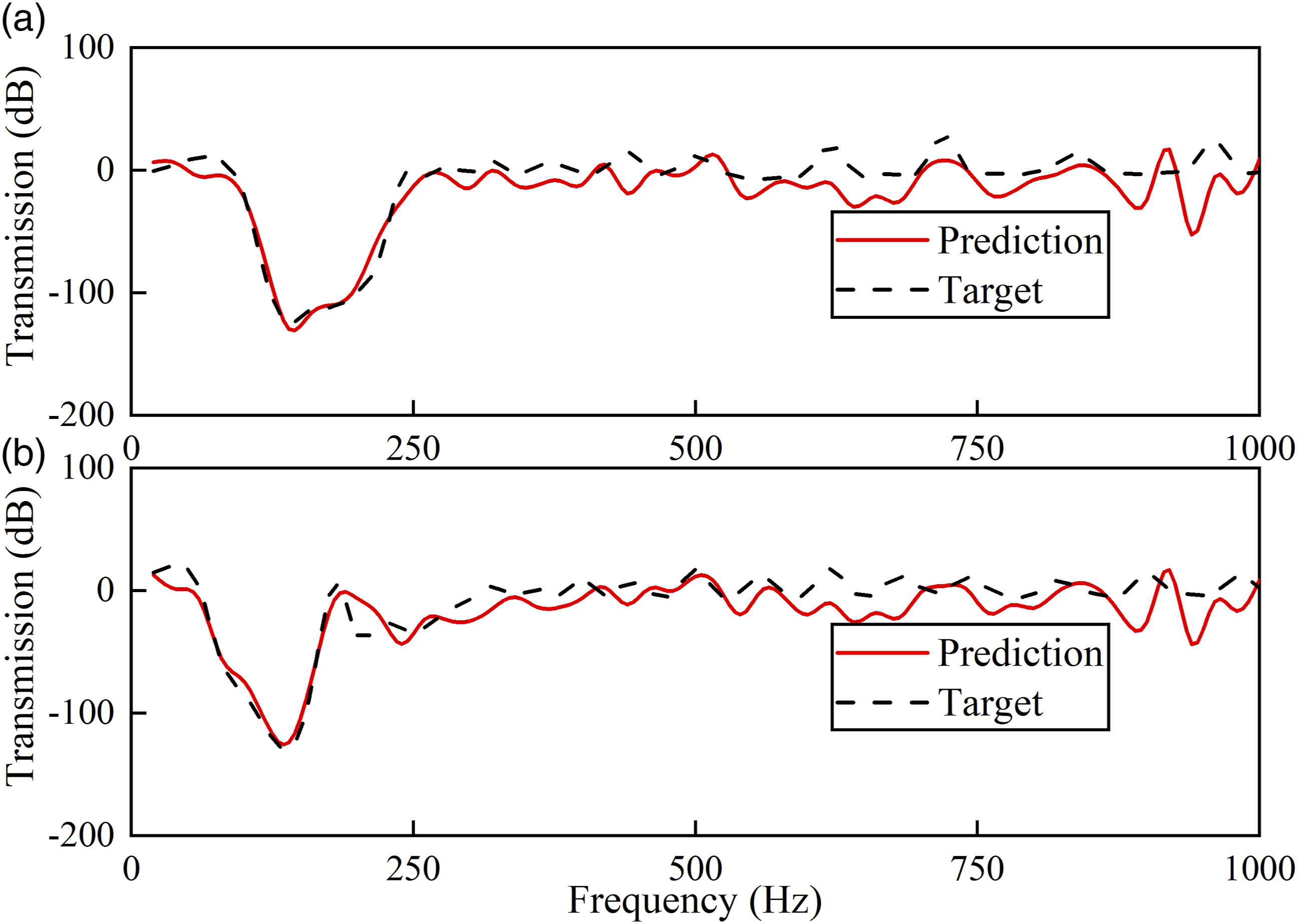
In order to verify the accuracy of the forward prediction and reverse design neural network, the forward prediction and reverse design neural network are combined to obtain the multiple parameters autoencoder neural network as shown in Figure 13, taking the multiple parameters neural network as an example. Again, all data (20000 sets of data) of CII are randomly divided into two parts, training set (18000 sets of data), testing set (2000 sets of data). The training process of the network is divided into two steps. First, the multiple parameters reverse design network and the forward prediction network are trained respectively. Secondly, the structural parameters obtained from the reverse design network prediction are input into the trained forward prediction network structure, and then the spectrum is output. 2 groups are randomly selected from the 2000-group test set, and the comparison between the prediction and the target of transmission characteristic is shown in Figure 14. Figure 14 (a) and (b) correspond to the structural parameters of (a = 0.1 m, kr = 57,500 N/m, b = 0.07 m) and (a = 0.16 m, kr = 40,000 N/m, b = 0.06 m), respectively. It shows that the prediction is in good agreement with the target, especially in the range of frequency attenuation. Multiple parameters autoencoder neural network. Comparison of the transmission characteristic of prediction and target by using multiple parameters autoencoder neural network: (a) (a=0.1m, kr=57500N/m, b=0.07m); (b) (a=0.16m, kr=40000N/m, b=0.06m)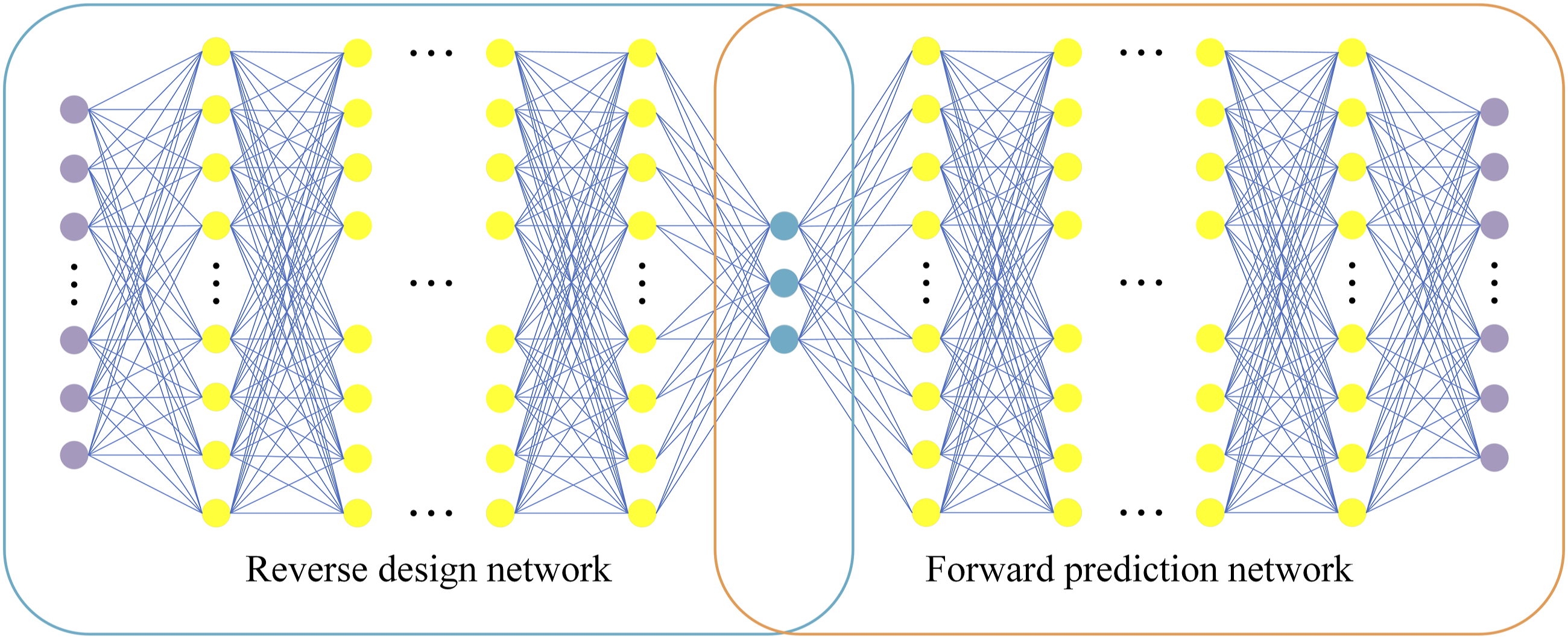
5. Conclusion
In this paper, an intelligent prediction and design method of acoustic metamaterial beams based on deep learning is proposed. The spectral element method is used to calculate the band structure and transmission characteristic of the acoustic metamaterial beams, and database are established. In addition, the forward prediction of transmission characteristics and the on-demand reverse design of structural parameters are carried out respectively for single parameter and multiple parameters. Finally, the reverse design and forward prediction neural network are connected to verify the accuracy of the two networks. The following conclusions can be drawn: (1) The band gap position of the band structure is basically consistent with that of the transmission characteristic, which verifies the effectiveness of spectral element method. (2) The results of forward prediction show that the bandgaps of prediction are highly consistent with targeted bandgaps. The structural parameters predicted by the reverse design network model are in good agreement with the target parameters. (3) The predicted value of the autoencoder neural network structure is in good agreement with the target value, which indicates the feasibility of the intelligent design method of acoustic metamaterials based on deep learning and provides potentially application in the field of fast and efficient acoustic metamaterial design for low frequency vibration isolation in engineering structures. To design acoustic metamaterials with various structural forms, a more efficient deep learning model must be developed in the subsequent study.
Footnotes
Acknowledgments
The authors gratefully acknowledge financial support from the project of National Natural Science Foundation of China (Grant No. 11972269), the project of Nature Science Foundation of Hainan Province (Grant No. 521MS068) and the Knowledge Innovation Program of Wuhan-Shuguang Project.
Author contributions
Yinggang Li: Conceptualization, Supervision, Funding acquisition, Formal analysis, Writing - original draft. Dingkang Chen: Investigation, Formal analysis, Writing - review & editing. Xiaobin Li: Formal analysis, Writing - review & editing. Weibo Wang: Formal analysis, Writing - review & editing.
Declaration of conflicting interests
The author(s) declared the following potential conflicts of interest with respect to the research, authorship, and/or publication of this article: The authors declare that they have no known competing financial interests or personal relationships that could have appeared to influence the work reported in this paper.
Funding
The author(s) disclosed receipt of the following financial support for the research, authorship, and/or publication of this article: This work was supported by the National Natural Science Foundation of China (Grant No. 11972269), the project of Nature Science Foundation of Hainan Province (Grant No. 521MS068) and the Knowledge Innovation Program of Wuhan-Shuguang Project.
