







Abstract
During the firing process of a recoilless gun, there is a high-intensity pulse noise phenomenon in its rear breech area. In order to obtain the physical mechanism of the pulse noise formation, this article designed experiments and used high-speed cameras and overpressure sensors to discover a “three peaks” phenomenon in the pulse noise at the shooter’s position. Using resistance strain sensors, the changes of strain with time in the chamber and nozzle expansion section of the recoilless gun during the firing process were recorded. By comparing the micro-strain data and overpressure data, the shock waves at the shooter’s position can be categorized into two types: internal shock waves and external shock waves. Internally, the opening of the blocking sheet initiates the formation of the initial shock wave, followed by the formation of a second pressure wave within the combustion chamber. The peak-to-peak interval between these two shock waves is nearly fixed, and the ratio of the dual peaks increases with the distance of the measurement position. The third shock wave forms externally to the nozzle, induced by the explosion of unburned propellant. As the weapon’s distance from the ground increases, the peak values of the overpressure data decrease, and the waveform of this explosion-induced shock wave transitions from a single-peak phenomenon to a double-peak phenomenon. This study can provide a reference for the study of the potential risk of injury to operators using single soldier recoilless guns and similar weapons.
1. Introduction
The recoilless gun refers to a weapon that utilizes the ejection of high-temperature and high-pressure gases from the combustion chamber through a rear nozzle to counteract the recoil generated by the projectile upon firing (Kelber and Jarvis Jr., 1952). Due to the intense changes in gas state at the entrance of the rear nozzle during the firing process of a recoilless gun, coupled with the potential occurrence of blocking sheet rupture or ejection, the flow of gas within the nozzle becomes highly complex. Meanwhile, the jet-generated pulse noise intensity in recoilless guns can reach up to 187 dB, which not only affects the weapon’s durability but also directly impacts the personal safety of soldiers (COSTIND, 1996; St Onge et al., 2011; Wang et al., 2020; Zhou and Tao, 2015). Therefore, it is necessary to conduct experimental research and theoretical analysis on the mechanisms of impulse noise generation in order to identify approaches for noise reduction.
Recoilless guns, as individual soldier weapons, generate complex impulse noise during the firing process, which consists of multiple shockwaves. In response to this issue, researchers have already focused on the measurement of external impulse noise generated by weapons and the analysis and modeling of the observed phenomena.
In the numerical simulation aspect, it can be divided into finite domain simulations (Cao et al., 2016; Ding et al., 2020; Wang et al., 2011) and infinite domain simulations. Regarding the research on infinite domain simulations, Celminš (1976) developed an estimation model for recoilless gun breech noise based on Lighthill’s theory (Lighthill, 1952, 1954). This model successfully estimated the noise intensity at a distance of 1 m from the breech. It was pointed out by Carofano (1984) that the pulse noise in the recoil area of the recoilless gun showed a “two peaks” phenomenon through experiments. Subsequently, numerical calculations were conducted to explain the structure of the plume field and indicate that the secondary shock wave was generated by the plume itself. Wiri et al. (2017a, 2017b) conducted experiments and numerical simulations to investigate the impact of shockwaves generated during the firing of various individual soldier weapons, including the Carl Gustav recoilless gun, on the personnel. The results revealed that during recoilless gun firing, the overpressure data at the shooter’s position exhibited a characteristic “three peaks” waveform. However, this simulation only considers the case of a free jet and ignores the results caused by the unburned propellant exploding in the rear breech area.
In the experimental aspect, in order to provide a convenient method for estimating the peak overpressure and impulse of blast noise caused by recoilless gun explosions, empirical formulas and prediction charts for post-chamber explosion noise of recoilless guns were proposed by Baker et al. (1971) and Westine and Southwest Research Inst San Antonio Tex, 1979 through experimental testing. Ma et al. (2004 and Tao et al. (2004) conducted experiments on the intense jet noise generated by portable rocket launchers and performed wavelet analysis. They found that the intense jet noise spectrum consists of precursor shockwaves, turbulent boundary layer noise, and subsequent shockwaves, with the precursor shockwaves experiencing faster attenuation. Kong et al. (2015) conducted measurements of the noise field generated by the M40A1 recoilless gun. Two sources of pulse noise were identified at the rear nozzle of the weapon: the explosive noise generated when the compressed propellant gas is rapidly discharged from the rear nozzle, and the jet noise continuously produced by the high-speed unsteady jet plume. Meanwhile, they developed a comprehensive hybrid prediction model for both explosion and noise.
Nevertheless, in previous studies, researchers faced limitations in exploring the physical mechanism behind the formation of impulse noise due to constraints in testing techniques. Further research is needed to enhance the understanding of the physical propagation processes when high-temperature and high-pressure combustion products pass through and exit the nozzle.
In our previous research, the dynamic opening pressure of the blocking sheet within the nozzle was determined by employing a combination of a high-speed camera and a piezoelectric pressure sensor (Jiang et al., 2023). However, due to limitations in the test conditions and escalating testing requirements, the applicability of the piezoelectric pressure sensor, which necessitates perforating the wall surface to measure pressure, no longer aligns with the demands of interior ballistics testing. The advancements in testing techniques have led to the emergence of resistance strain sensors as a viable alternative. These sensors quantify the strain induced by the deformation of an object and convert it into corresponding changes in resistance. Notably, in the context of interior ballistics pressure testing, resistance strain sensors have demonstrated a linear relationship between the measured strain data and the breech pressure data acquired through pressure sensors (Zhang et al., 2021). Consequently, the adoption of resistance strain sensors becomes a feasible option to replace piezoelectric sensors, enabling the observation of pressure waveform variations at the recoilless propellant chamber and the rear nozzle locations.
To further explore the physical processes involved in the generation of impulse noise in the breech region of recoilless guns, this paper introduces a qualitative investigation into the formation and propagation of shock waves during the firing sequence of a recoilless gun. In previous research, there are few experimental reports on this issue. Moreover, there is a lack of comprehensive physical descriptions regarding the origin of the triple-peak formation in recoilless gun blasts. The current study employs pulse testing on a recoilless gun through a designed experiment. Pulse noise data and waveforms at the shooter’s position are captured using a high-speed camera and an overpressure sensor. Simultaneously, changes in strain at various measurement points in the combustion chamber and nozzle expansion section during the firing process are monitored using resistance strain sensors. Through experimental methods, this paper elucidates the formation and propagation of shock waves during the launch of a recoilless gun, uncovering the fundamental physical mechanisms at play. The findings of this study can serve as a valuable reference for conducting risk assessments pertaining to the breech of individual recoilless gun weapons.
2. Shock wave experiment
2.1. Experimental system
Currently, commonly used shock imaging techniques include Schlieren Imaging, Shadowgraph Imaging (Traldi et al., 2018), Pressure-Sensitive Paint (Gregory et al., 2014), High-Speed Photography (Field, 1983), and Particle Image Velocimetry (Adrian and Westerweel, 2011). In comparison to other shock wave imaging methods, high-speed photography possesses several advantages, including high temporal resolution, intuitive visual information, flexible scene arrangement, visualization of shock wave interactions, quantitative analysis, and cost-effectiveness. To minimize interference from various reflected shock waves in the environment and obtain pure shock wave data, the experiment was conducted outdoors in an open-air setting. Considering safety and the complexity of the experimental environment, employing this method allows for the acquisition of useful information without sacrificing authenticity. Therefore, in this experiment, a high-speed camera was utilized to capture the propagation of shock waves at the shooter’s position through image contrast. Therefore, this experiment was divided into two steps. The specific experimental setup is shown in Figure 1. General layout of the experiment.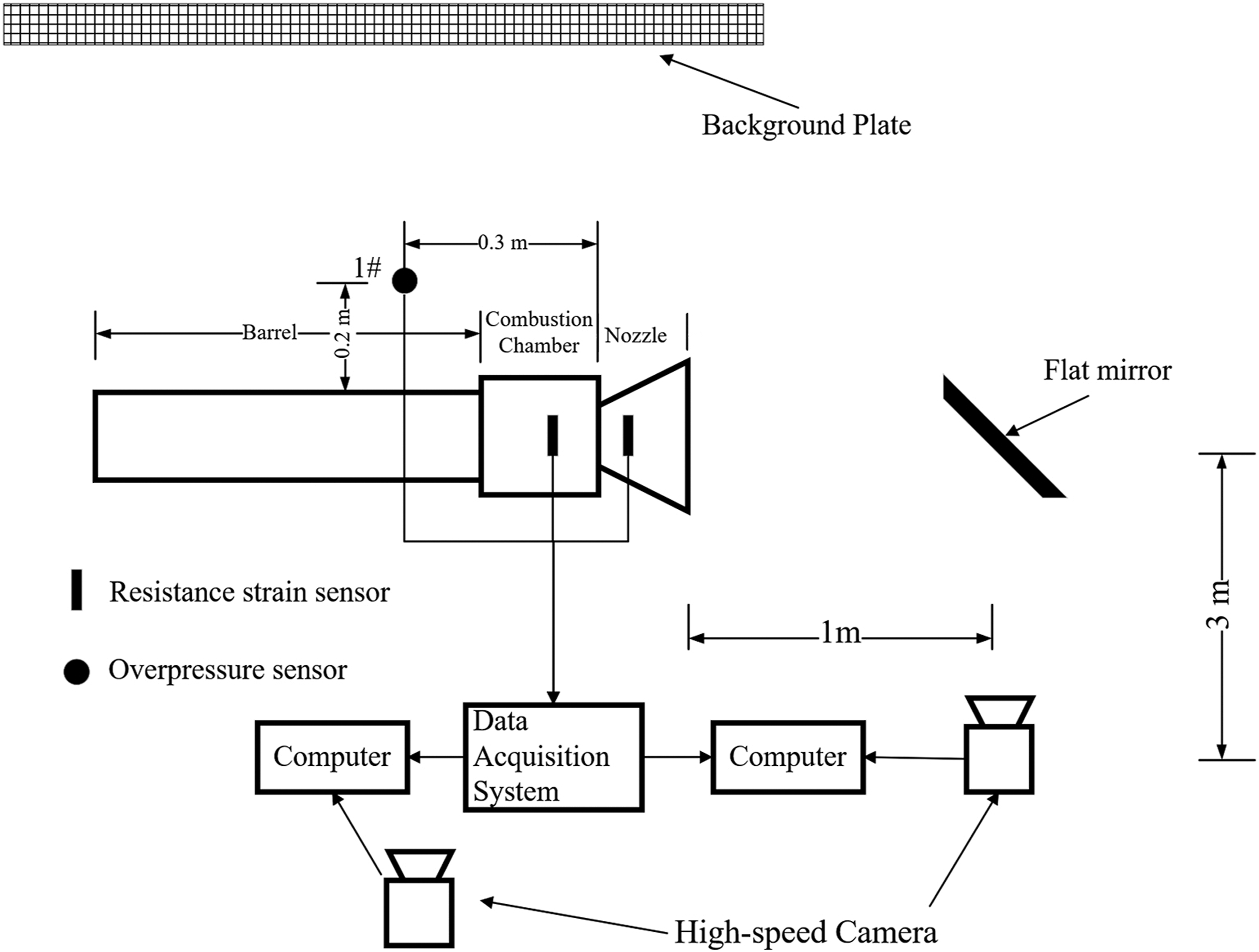
In the first step, to accurately capture the movement of shockwaves in the rear breech area of the recoilless gun, a proper outdoor setup was arranged. The height of the weapon’s central axis from the ground was set at 1 m. To ensure that the overpressure sensor receives the vertically incident shockwaves, the position of overpressure testing point 1# was determined according to the Chinese military standards GJB349.28 (COSTIND, 1990) and GJB2A-96 (COSTIND, 1996). The overpressure sensor was placed at a distance of 200 mm from the barrel wall and 300 mm from the nozzle inlet, aligning with the actual position of the shooter during operation.
The high-speed camera was used to record the motion of the shockwaves passing over the shooter’s position during the firing of the projectile. The high-speed camera used is the Mini UX50 produced by Fastcam in Japan. This camera impeccably recorded images at an exceptionally rapid time interval of 0.1 ms, resulting in a remarkable frame rate of 10,000 frames per second (FPS). These high-speed images boasted a resolution of 1280 × 240 pixels, complemented by a pixel density of 72 DPI. The recording time of the high-speed camera and the overpressure sensor was synchronized. Notably, this paper presents a novel approach to shockwave imaging, harnessing the differential capabilities of Adobe Photoshop. The core idea involves layering images: one portraying an undisturbed state devoid of shockwaves, and the other illustrating the presence of shockwaves. Through this layer blending technique, it distinctly highlights regions of significant change within the field of view. This method effectively captures density variations induced by shockwave motion within the image.
In the second step, to accurately determine the moment of the blocking sheet opening inside the nozzle (Jiang et al., 2023), this part of the experiment was conducted in a dark indoor environment. In this experiment, strain testing (Li et al., 2023) was utilized as an alternative to pressure testing due to the impracticality of drilling pressure measurement holes on the surface of the nozzle wall during dynamic testing of the recoilless gun’s rear nozzle. The design of the weapon necessitated the placement of the convergent (Laval) section and throat of the nozzle on the cartridge, making it unfeasible to directly measure strain in these specific sections. Therefore, in this experiment, strain data were measured at the positions of the combustion chamber and the expansion section of the nozzle. The locations of the resistance strain sensors are shown in Figure 2. The internal conditions of the nozzle were monitored using a high-speed camera, and its recording time was synchronized with the resistance strain sensors. Test layout of strain measuring points (mm).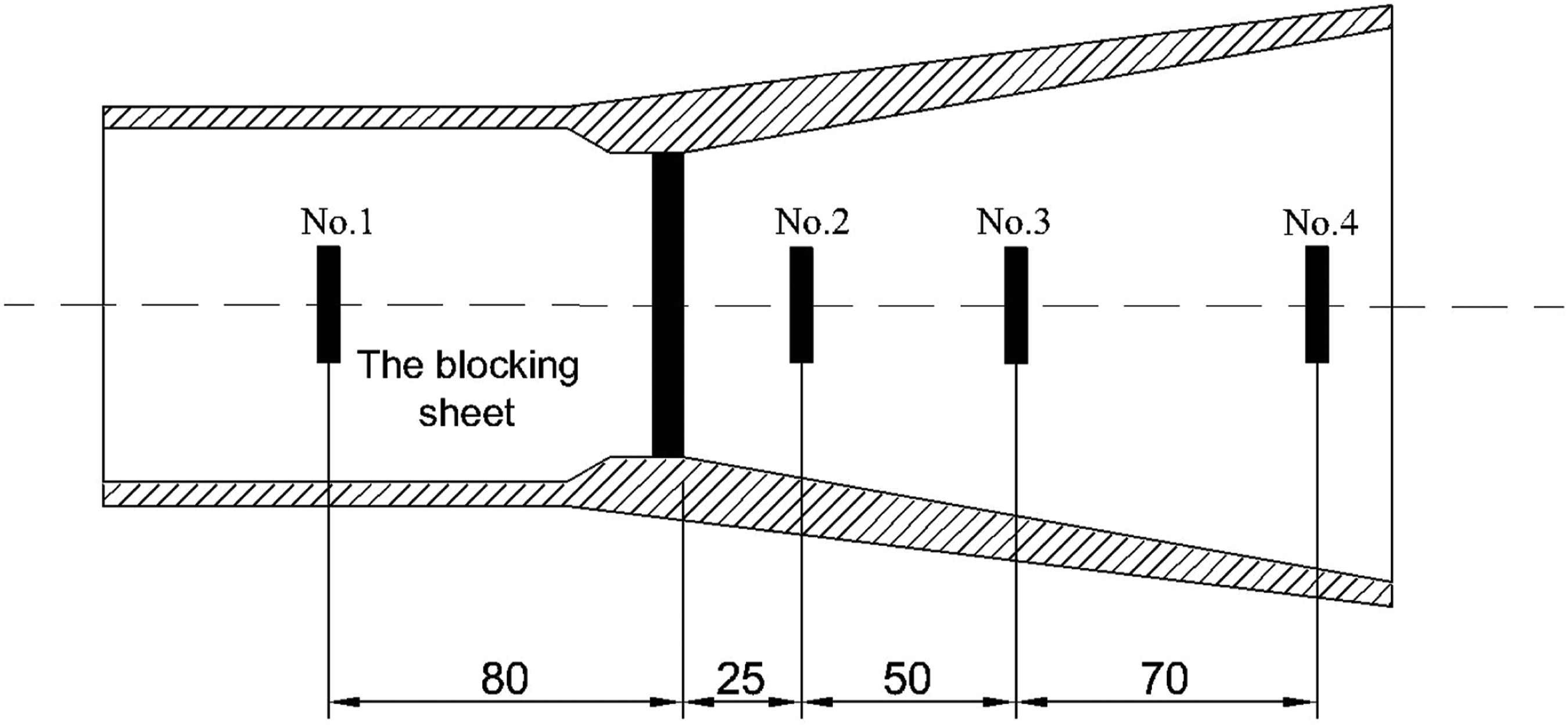
Experimental sensor parameter list.

The data acquisition equipment used in the test system is the SIRIUS series data acquisition system produced by Dewesoft in Austria, with a sampling frequency of 20 kHz. The high-speed camera used is the Mini UX50 produced by Fastcam in Japan, with a time interval of 0.05 ms between each captured image.
The experimental arrangement is divided into two parts: (1) The outdoor part includes artillery, overpressure sensor, background plate, high-speed camera, data collector, and computer. (2) The indoor part includes artillery, strain sensor, plane mirror, high-speed camera, data collector, and computer.
2.2. Experimental results
2.2.1. Outdoor experiment results
The proposed testing method was applied to conduct tests on a specific recoilless gun. A representative moment captured by the high-speed camera during the experiment is shown in Figure 3. Figure 3(b)–(d), compared with Figure 3(a), were generated using Photoshop’s difference function. Typical moments of the shock wave movement process during the firing process of a recoilless gun (a) A flash at the nozzle exit (0 ms); (b) Initial shock wave arrival (1.3 ms); (c) Arrival of the second shock wave (1.9 ms); (d) Arrival of the third shock wave (3.3 ms); (e) Projectile leaves the muzzle (3.4 ms).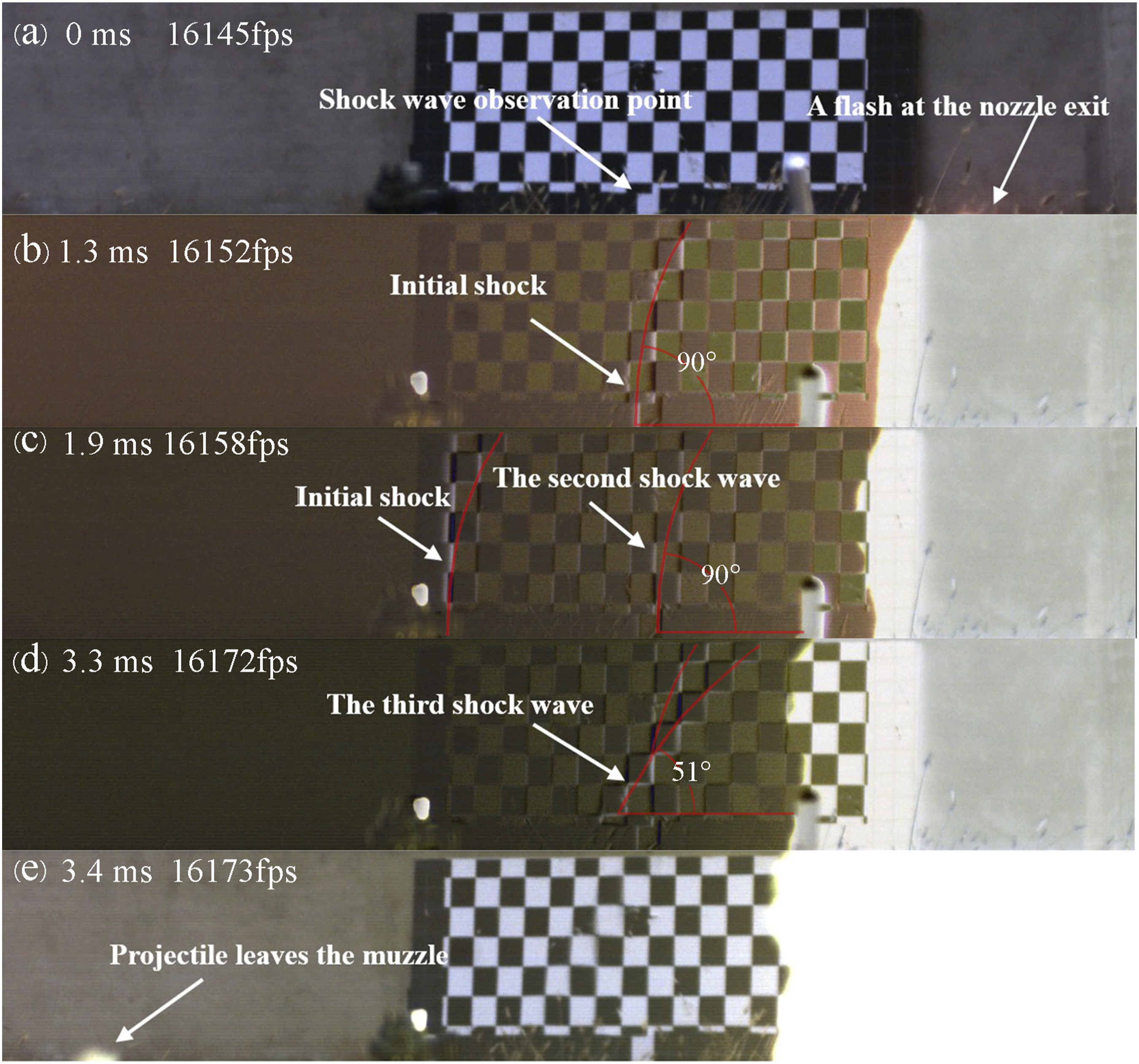
To avoid interference from the flame, the shooter’s position was selected as the observation point. From Figure 3, it can be observed that the initial shockwave arrives at the designated location 1.3 ms after the opening of the nozzle. The time interval between the arrival of the initial shockwave and the second shockwave at the same location is 0.6 ms. The time interval between the second shockwave and the third shockwave is 1.4 ms. The projectile exits the barrel approximately 3.3 ms after the appearance of the nozzle exit flash. The initial shockwave and the second shockwave have a perpendicular angle of incidence of 90°. The angle between the third shockwave and the ground is 51°.
The pressure data obtained from the overpressure sensor placed at the shooter’s position (1#) corresponds to the data captured by the high-speed camera, as shown in Figure 4. At 1.3 ms after the appearance of the flash at the nozzle exit, the initial peak value (25.78 kPa) of the impulse noise reaches the shooter’s position. At 1.9 ms, the second peak (33.2 kPa) is reached. The third peak (23.24 kPa) appears at 3.3 ms. The time interval between the third peak and the second peak (Δt2 = 1.4 ms) is twice the time interval between the second peak and the first peak (Δt1 = 0.7 ms). In Figure 4 of the test results obtained from the overpressure sensor, it is evident that the peak values of all three shock waves exceed 6.9 kPa, indicating that all three waves fall within the range of shock waves. Simultaneously, observations from Figure 3 reveal that when the third shock wave passes through the observation position, the projectile has not yet left the barrel, and no muzzle flash is observed at the muzzle of the recoilless gun. This suggests that the origin of these three shock waves is not influenced by muzzle impact, but rather solely originates from the rear chamber area of the recoilless gun. Overpressure at the shooter position as a function of time. (The weapon axis is 1 m above the ground. Acquisition frequency 10 kHz).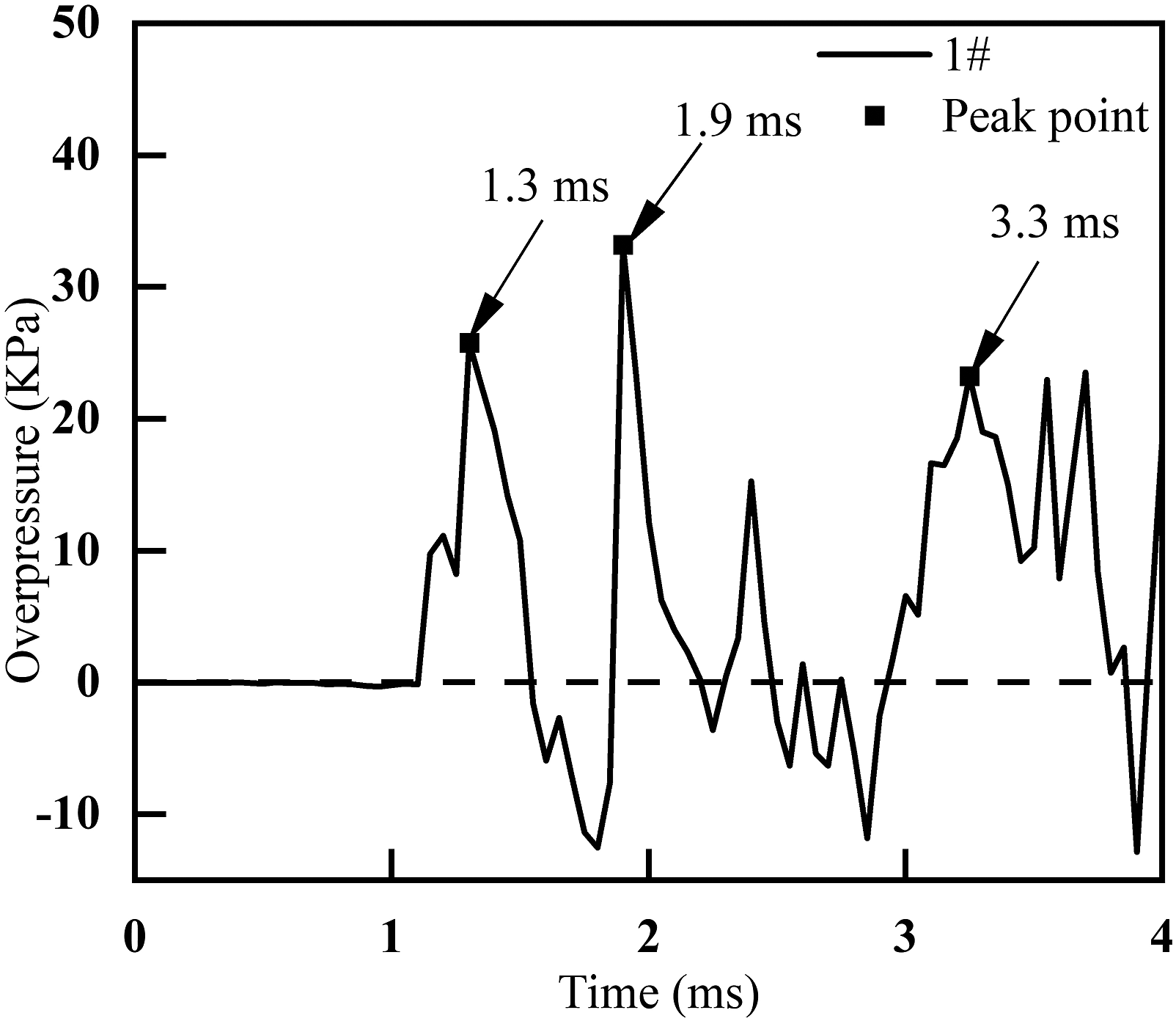
It should be noted that during testing, multiple peaks were observed. The reason for this phenomenon is that at the shooter’s position, there are three main waves. However, during weapon launch, there is not a pure single wave, but a main wave accompanied by multiple subsidiary clutters. Therefore, peak values were measured at the sensor positions at 2.5 ms, as well as at 3.5 and 3.7 ms.
2.2.2. Indoor experimental results
The typical moment captured by the high-speed camera in a dark indoor environment is depicted in Figure 5. Observation of ignition and propellant combustion in the combustion chamber was facilitated by a viewing hole centrally positioned in the blocking sheet. The start-up process of the nozzle was recorded by the high-speed camera (a) Ignition (0.6 ms); (b) Blocking sheet open (2.6 ms); (c) Gas reaches nozzle outlet (3.5 ms).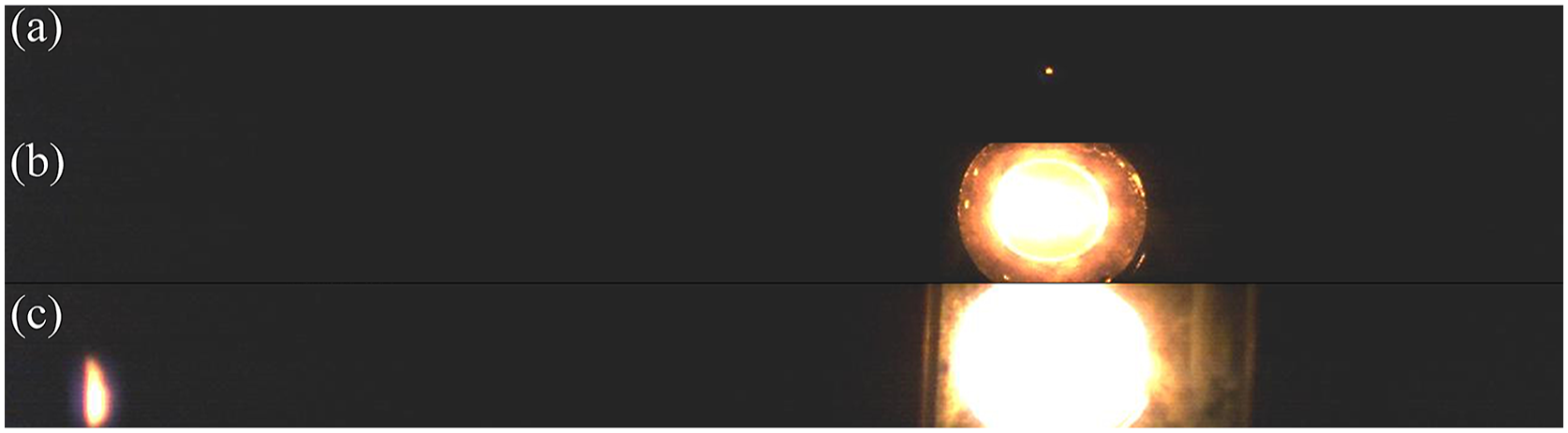
From Figure 5, it can be observed that at 0.6 ms, a bright spot appears at the viewing hole indicating the ignition of the propellant in the combustion chamber. At 2.6 ms, the high-temperature and high-pressure propellant gases rupture the obstruction and enter the nozzle expansion section. At 3.5 ms, flames are visible at the nozzle exit, indicating the gas produced by the combustion of the propellant reaches the outlet of the nozzle.
Simultaneously, the resistance strain sensors placed on the walls of the combustion chamber and nozzle expansion section were utilized to monitor the resistance variations caused by the deformation of the sensitive grids at their respective locations. These sensors provided data on the resistance changes corresponding to the deformation, allowing for the analysis of strain distribution in the chamber and nozzle. The indoor synchronous test results (Figure 5) correspond to the data shown in Figure 6(a). Three measurement results for the combustion chamber and nozzle expansion section of a recoilless gun.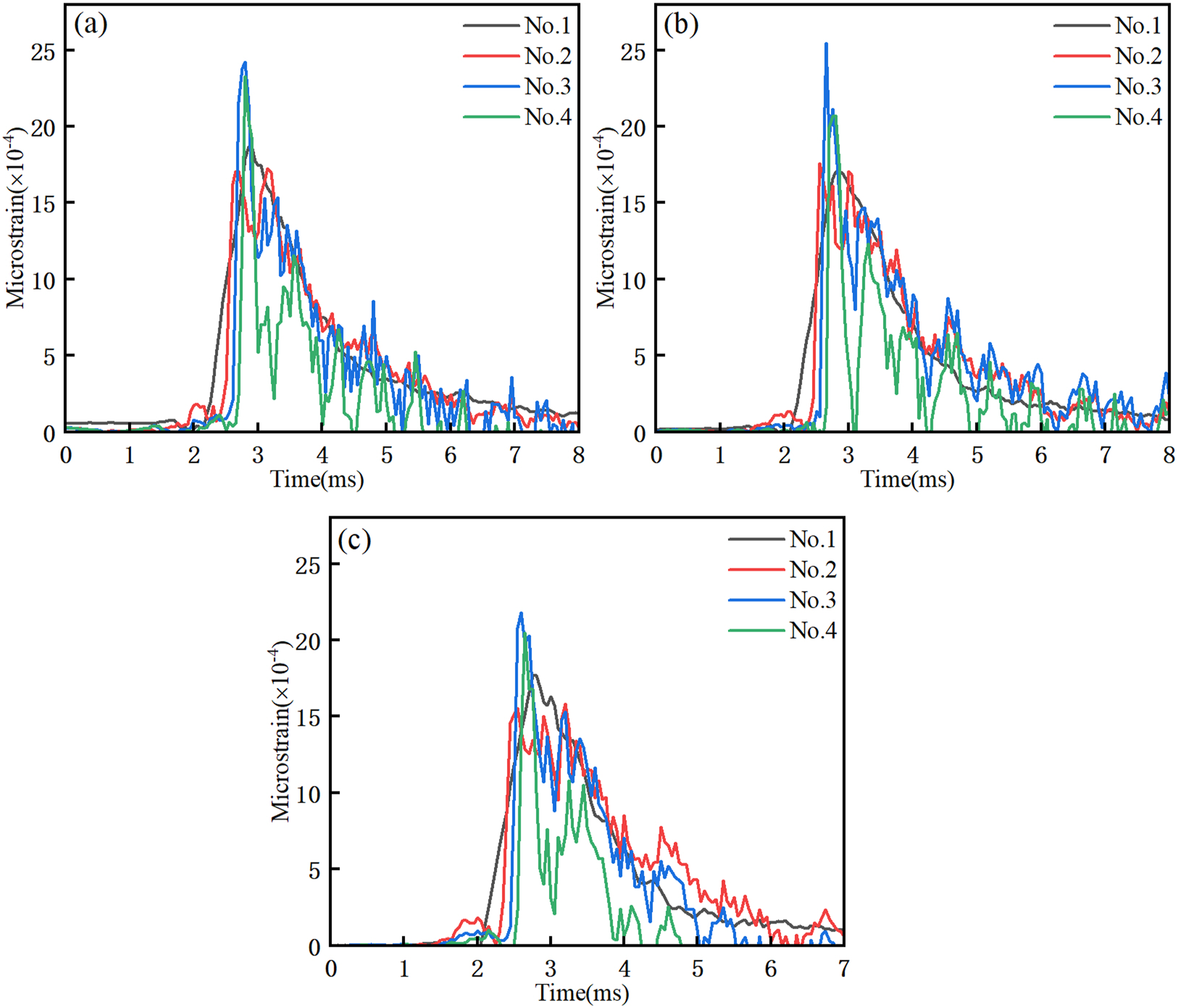
In order to mitigate the potential randomness of experimental phenomena, multiple experiments were conducted with the same experimental setup at the designated site. The specific experimental results are illustrated in Figure 6.
The pressure data inside the combustion chamber initially follows the standard single-peak breech pressure pattern. However, it transforms into a double-peak pressure phenomenon after passing through the converging section and throat.
Due to the similarity of the experimental results, the following focus is on the experimental data in Figure 6(a) and the indoor synchronization test results (Figure 5) are discussed in detail in Figure 7. (a) Curve of microstrain variation with time at each measuring point; (b) Pressure variation with time at No.1.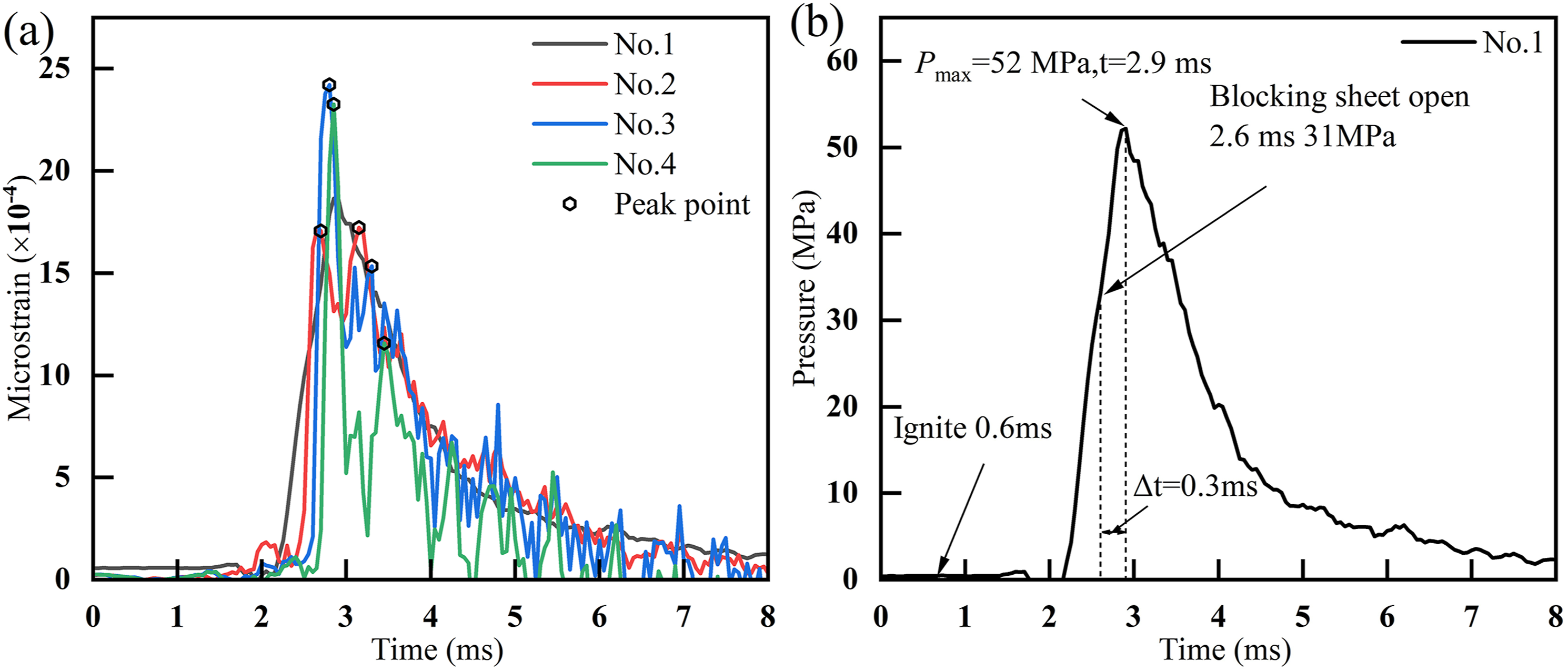
Figure 7(a) depicts the microstrain curves at different measurement points obtained by converting the resistance variations of the strain gauges using a data acquisition system. These curves provide information about the local strain distribution at specific locations within the test setup. Based on the literature (Zhang et al., 2021), the relationship between pressure and strain at the chamber can be described by equation (1).
Peak strain data of each measurement point.

The experimental results indicate that the time interval from the opening of the blocking sheet to the formation of the peak pressure in the combustion chamber is 0.3 ms. The pressure waveform of the combustion products of the propellant transitions from a “single peak” to a “double peak” after passing through the throat of the nozzle. The time intervals between the two peaks in the pressure data obtained at measurement points No. 2, No. 3, and No. 4 are 0.5 ms, 0.5 ms, and 0.6 ms, respectively. The ratio (initial peak/second peak) of the “two peaks” increases with the propagation of the waves, with values of 0.99, 1.58, and 2.00, respectively.
In this section, the propagation motion of the shock wave in the rear breech area of the recoilless gun was obtained through experimentation. It was discovered that during the process of high-temperature and high-pressure gas-flow passing through the nozzle, the pressure waveform transitions from a single peak to a double peak. The next section will focus on discussing the specific formation process of the three-peak phenomenon in pulse noise.
3. Discussion of the physical process of triple peak formation
3.1. Shock wave formation process in the nozzle
The “two peaks” phenomenon observed in the pulse noise generated by the exhaust jet of a recoilless gun during firing is a significant subject of investigation (Krier and Summerfield, 1979).
In the noise estimation model proposed by Celminš (1976), it is suggested that the occurrence of the “two peaks” phenomenon in the noise curve is related to the first derivative of the pressure inside the combustion chamber. However, the experimental findings presented in this article have disclosed a significant disparity between the theoretical time forecasted by CelminŠ.A.K’s noise estimation model and the effective time ascertained through empirical experimentation. In fact, the experimental measurements indicate that the actual time is more than twice as short as the projected time according to the model’s predictions. Therefore, further investigation is required to understand the formation process of the “two peaks” phenomenon.
In relation to the issue of nozzle startup with blocking sheet in the nozzle, Struck and Warmbrod (1968) conducted numerical simulations using the unsteady one-dimensional characteristic line method to study the startup process of a wind tunnel test section at a Mach number of 2.0. Meanwhile, Struck and Warmbrod (1968) have observed the formation of a central expansion wave at the site where the blocking sheet ruptures in a membrane. The passage of gas through a nozzle is disrupted by an expansion wave. However, these studies are limited to situations where the inlet flow remains stable. Wiri et al. (2017a, 2017b) conducted simulations using the SHAMRC method to study the shock waves generated during the firing of various individual weapons, including the Carl Gustav recoilless rifle. The results indicated that the first shock wave corresponds to the initial shock wave, the second shock wave is caused by the recovery shock wave generated from the transitional expansion region behind the initial shock wave, and the third peak is attributed to the ground reflection of the shock wave.
Based on our experimental observations and the pertinent literature mentioned above, the initial two shockwaves are categorized as jet shockwaves, and they originate within the nozzle. A schematic diagram illustrating the mechanism of shockwave formation is depicted in Figure 8. The formation process can be delineated as follows. The starting process of the tail nozzle of the recoilless gun (The schematic diagrams depicting the mechanisms of the first and second shockwave generation, corresponding to “b” and “c” in Figure 3): (a) Not activated; (b) Central expansion wave formation; (c) Secondary shock wave formation.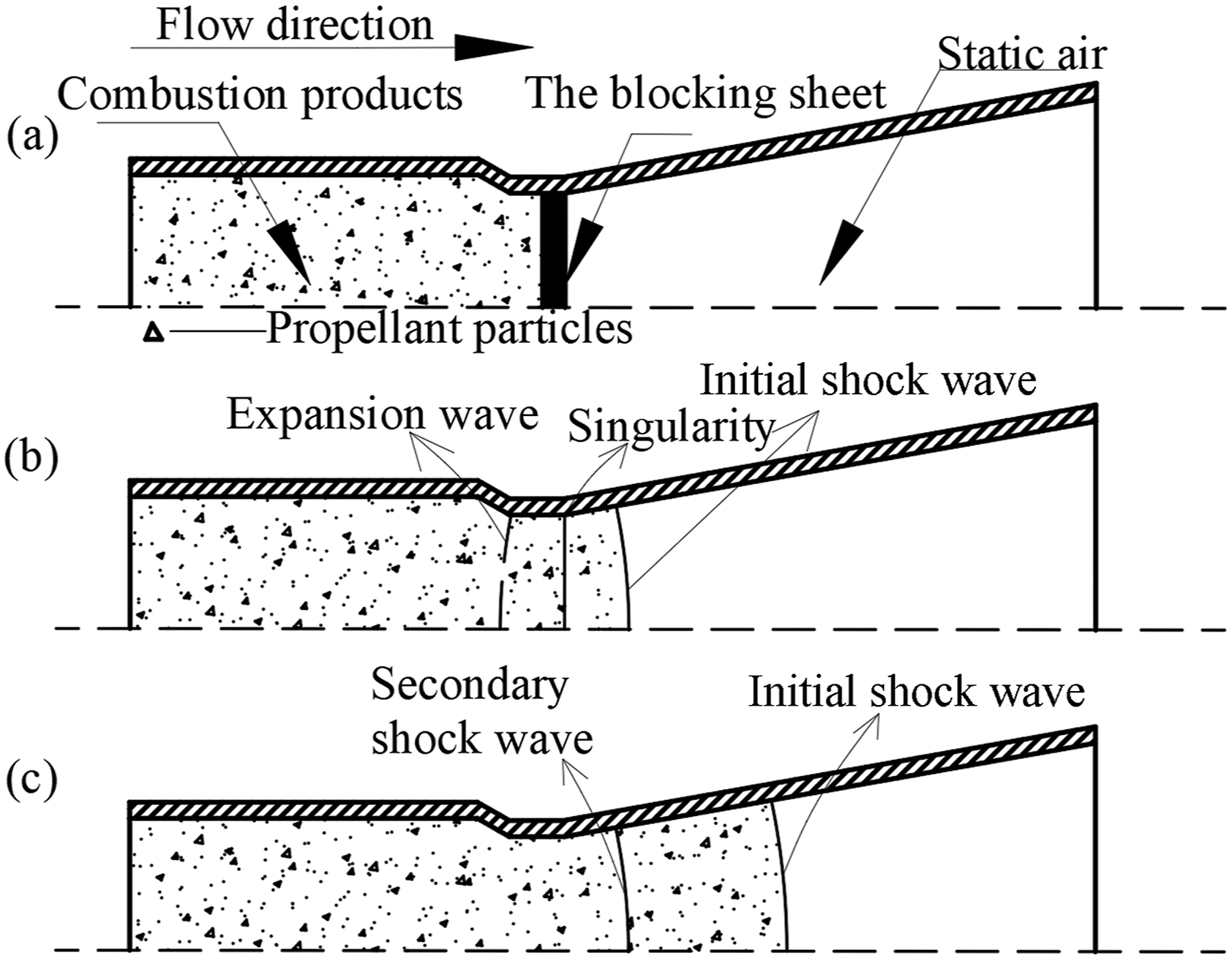
The formation process of the initial shock wave: After ignition and before the opening of the blocking sheet, the combustion products generated by the burning propellant spread outward from the ignition point and compress behind the obstruction. The compressed wave formed by the combustion products reflects at the contraction section when it encounters the stationary obstruction, generating an expansion wave in the opposite direction to the incoming gas flow. This expansion wave counteracts the incoming flow, gradually reducing the pressure between the obstruction and the burning propellant position (Fu and Ruan, 2019).
When the pressure behind the blocking sheet exceeds the shear force required to open the blocking sheet (at 2.6 ms, in Figure 7(b)), upon the opening of the blocking sheet, a central expansion wave region is formed at the location of the blocking sheet. The initiation shock wave and the contact surface propagate towards the expansion section, leading to the formation of the initial shock wave, as shown in Figure 8(b). As the shock wave reaches the positions of measurement points No. 2, No. 3, and No. 4, there is a sharp increase in the measured pressures at those points.
The formation process of the second shock wave: At the location where the blocking sheet was initially present, a central expansion wave region is formed in the throat of the nozzle. The fan-shaped expansion wave propagates into the high-pressure gas in the converging section, causing a decrease in gas pressure and an increase in velocity behind the initial shock wave.
Due to the flow of high-temperature combustion gases through the nozzle into the atmosphere, the consumption rate of the propellant gas increases. Weapons like recoilless firearms, which are open-breech weapons, have significant differences in interior ballistics compared to conventional closed-breech firearms. In the case of recoilless guns, the interior ballistics require the use of propellants with a thinner burning rate to ensure balance during the weapon’s firing process (Yang, 1982). As a result, their shockwave forms much more quickly compared to other firearms. Under the influence of various factors, the pressure inside the combustion chamber peaks at 2.9 ms, in Figure 7(b). The expansion wave moving towards the high-pressure region leads to a decrease in pressure. This decreasing trend disappears after the full development of flow within the nozzle. Subsequently, the pressure variation follows the same trend as the pressure inside the combustion chamber (Struck and Warmbrod, 1968). As a result of multiple strain tests, it was observed that the strain data from measurements No. 2–4 following the second peak in No. 2–4 displayed a consistent trend of change, akin to that observed in measurement No. 1 following the peak in No. 1. Therefore, the secondary shock wave formed inside the combustion chamber moves to the right and propagates through the nozzle into the atmosphere, resulting in the appearance of a second pressure peak at the measurement point, as shown in Figure 8(c).
During the movement of the two shock waves inside the nozzle, the velocity of the second shock wave is slower than that of the initial shock wave, leading to an increasing time interval between the appearance of the two peaks. The gas flow between the two shock waves is supersonic, and at the same location, the velocity of the later arriving gas flow is greater than that of the earlier one. This results in a phenomenon known as gas catching-up, causing an increase in the peak-to-peak strain ratio along the propagation of the wave.
3.2. Formation process of the third peak outside the nozzle
In previous studies (Wiri et al., 2017a), it was determined that one of the identifiable sources contributing to the third shockwave, under the absence of other contributing factors, was the reflection shock wave generated by the weapon’s internal jet shock wave upon collision with the ground. Wiri’s numerical simulations revealed a noteworthy discrepancy: the peak pressure resulting from the reflected shock wave of the jet was distinctly lower than the peak pressure originating from the nozzle’s original jet shockwave. However, the experimental outcomes obtained at the shooter’s position, as illustrated in Figure 4, indicate a close alignment of the peak pressure of the third shockwave with the preceding two peaks. Consequently, a plausible deduction arises: an additional shockwave source exists within the rear breech area of the recoilless gun.
To validate the presence of a reflected shockwave as the source of the third peak and to elucidate its impact, an additional experiment was undertaken. This experiment involved elevating the weapon platform to a height of 1.5 m, and the results are depicted in Figure 9. Test results of overpressure at the shooter’s position. (The weapon axis is 1.5 m above the ground. Acquisition frequency 20 kHz).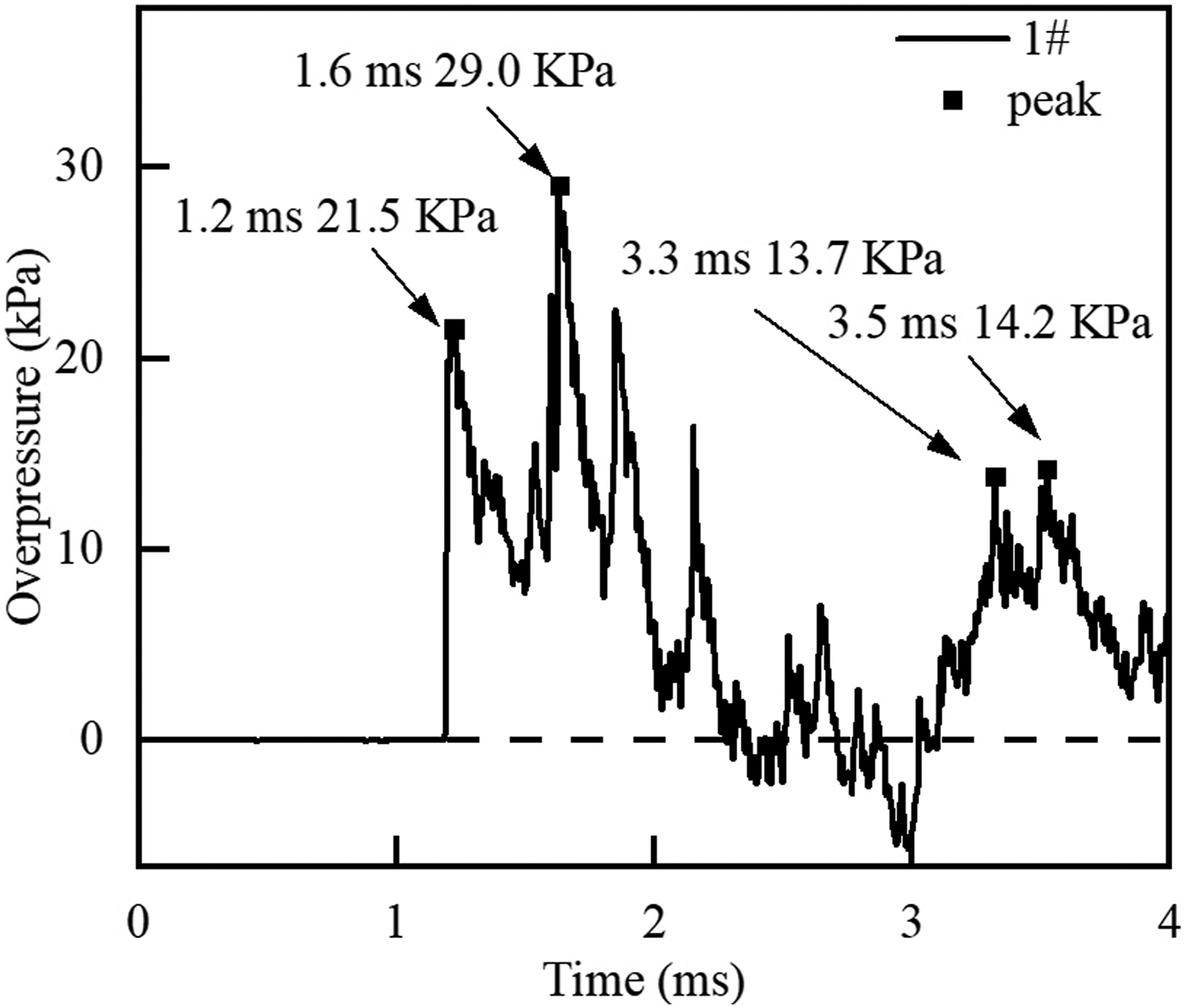
Due to variations in measurement conditions in the current test, the measurements of the jet shockwaves differ. In this specific test, the first shockwave manifested at 1.2 ms with a peak pressure of 21.5 kPa, while the second shockwave emerged at 1.6 ms with a peak pressure of 29.0 kPa. These magnitudes were close with those observed in Figure 4.
When comparing the experimental results at a height of 1.5 m (as depicted in Figure 9) to those obtained at 1 m above ground level (as shown in Figure 4), it becomes evident that the third peak has significantly diminished. Furthermore, within this diminished third peak, it has been observed that two sub-peaks are discernible. The first sub-peak appears at 3.3 ms, measuring 13.7 kPa, while the second one emerges at 3.5 ms, measuring 14.2 kPa. This signifies that the third peak comprises both an incident wave and a reflected wave.
The third peak consists of two types of waves: incident and reflected. The incident wave arises from the explosive shockwave generated by unburned flammable gas in the breech area, while the reflected wave results from the impact of the explosion wave on the ground. Elevating the weapon’s firing height allows for the separation of the reflected wave accordingly.
Based on the experimental results and prior researchers’ conclusions, the development process of the breech shockwave in recoilless firearms is depicted in Figure 10. Weapon’s external shockwave propagation and development process diagram.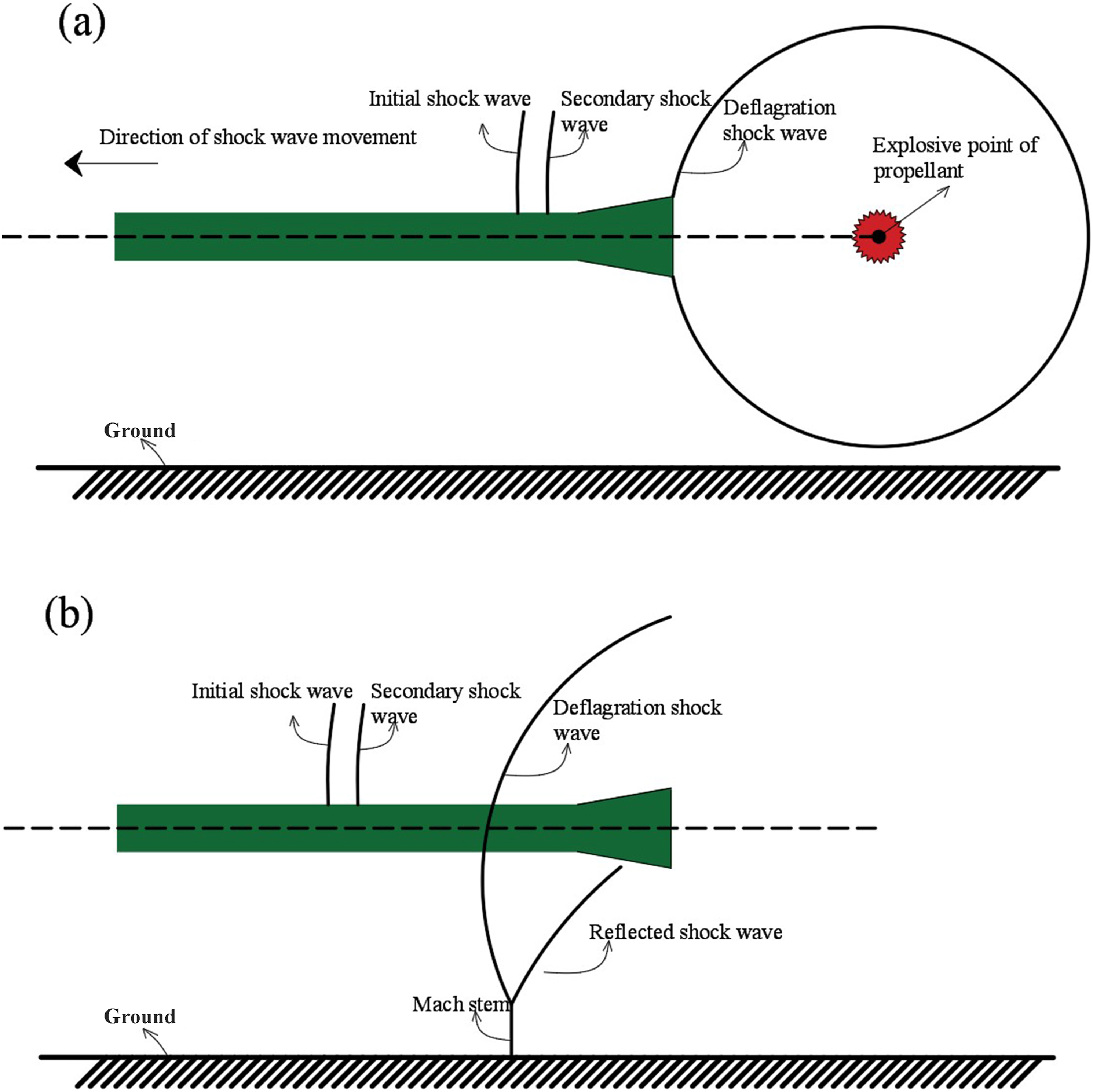
The formation process of the third peak has the following description. After the nozzle blocking sheet opens, unburned propellant particles are expelled along with the high-speed gas flow, resulting in an explosion of the propellant behind the nozzle. Due to the proximity of the weapon to the ground during firing, the shockwave generated by the explosion creates a second sub-peak upon contact with the ground.
Furthermore, at a shooting height of 1 m, the explosion shockwave and the reflected shockwave intersect, resulting in the absence of the twin-peak phenomenon in the third shockwave. However, at a shooting height of 1.5 m, the explosion shockwave and the reflected shockwave separate from each other, leading to the presence of the twin-peak phenomenon in the third shockwave. Therefore, the issue of finding the optimal shooting height exists. This matter will be discussed in future work.
4. Conclusions
During the firing process of the recoilless gun, three shock waves were observed sequentially in the rear breech area before the projectile exited the barrel, using a high-speed camera. The variation of strain at different measurement points in the combustion chamber and nozzle expansion section during the firing process was recorded using resistance strain sensors, in conjunction with the high-speed camera capturing the startup process of the rear nozzle of the recoilless gun. Based on the obtained results and analysis, the physical mechanism behind the generation of the “three peaks” pulse noise at the shooter’s position was elucidated, leading to the following conclusions: a) The microstrain data indicates that, upon the opening of the blocking sheet, the initial shock wave forms at the throat and enters the expansion section, while the expansion wave enters the contraction section simultaneously. The expansion wave entering the contraction section concludes upon encountering the shock wave formed by pressure changes in the combustion chamber. The dual-peak interval inside the nozzle is 0.5 ms. The ratio of the two peaks increases from 0.99 to 2.0 as the measurement position distance increases. b) The overpressure data reveals the following peak times and values for the three shock waves at a height of 1 m: 1.3 ms/25.78 kPa, 1.9 ms/33.2 kPa, and 3.3 ms/23.24 kPa. At a height of 1.5 m, the third shock wave exhibits a twin-peak phenomenon with times and values of 3.2 ms/13.7 kPa and 3.4 ms/14.2 kPa. Upon comparison with the micro-strain data, it is evident that there are explosion-induced shock waves external to the nozzle. Specifically, after the opening of the blocking sheet inside the nozzle, unburned propellant is expelled with the high-speed airflow and explodes in the rear chamber area. As the weapon’s distance from the ground increases, the peak values of the overpressure data decrease, and the waveform of this explosion-induced shock wave transitions from a single-peak phenomenon to a double-peak phenomenon.
Footnotes
Declaration of conflicting interests
The author(s) declared no potential conflicts of interest with respect to the research, authorship, and/or publication of this article.
Funding
The author(s) received no financial support for the research, authorship, and/or publication of this article.

Data availability statement
The data that support the findings of this study are available on request from the corresponding author. The data are not publicly available due to privacy and ethical restrictions.