







Abstract
The Variational Mode Decomposition (VMD) method is a signal processing technique commonly used for decomposing complex signals, especially for analyzing time-series signals (such as speech signals and vibration signals). It has been widely applied in signal diagnosis. A fault diagnosis method based on Variational Mode Decomposition (VMD) and Random Forest (RF) is proposed for the problem that early faults are difficult to diagnose when the drying roller is running with load. The method primarily applies VMD to decompose the raw vibration acceleration signal, breaking down the complex base frequency signal of the drying drum into a series of intrinsic mode functions in order to find the optimal frequency band decomposition. The decomposed modal signals are then synthesized to reconstruct the original signal. Finally, the method employs Random Forest, Decision Trees, and K-Nearest Neighbors for training. To eliminate random errors and uncertainties from the experiments, 20 repeated tests are conducted to establish a classification model. Vibration signals from three different models of drying drums were collected to further verify the generality and engineering application value of the VMD-RF-based fault diagnosis method. Experimental results show that the VMD-RF method has a higher overall recognition rate for early faults in rotary dryers, while also demonstrating good applicability to various models of rotary dryers.
1. Introduction
Material drying technology has a wide range of applications in major industrial industries and fields, and the drying roller is primarily used in the mixing of materials. It is a key component in mixing equipment. Its main structure consists of the feed-end seat, discharge-end seat, drum frame, drum body structure, and drive motor. The drying material is moved by the rotational motion of the drum, coming into contact with the hot air or flame generated inside, which heats the material to form the dried product (Hou and Yang, 2019; Wang, 2021). As a large rotating machine, drying drums are highly susceptible to faults during operation due to factors such as processing precision, uneven material distribution, localized vibrations, and poor contact. The main causes of failure are the misalignment of the rollers, leading to axial displacement of the drum body, and poor contact between the drum rings. There are many mechanical fault diagnosis techniques. For instance, Li et al., (2024) have proposed SHO-mvMSloEn, which significantly improves efficiency in the nonlinear dynamic analysis of mechanical signals. At the same time, they extended the concept of dispersion entropy and its multi-scale form, and verified that the multi-scale version of EDisEn achieves the highest recognition rate in various situations due to its more accurate entropy estimation (Li et al., 2025), while requiring fewer features to reach the highest recognition rate.
Huang proposed an adaptive time-frequency analysis technique for processing nonlinear and non-stationary signals—Empirical Mode Decomposition (EMD) (Jin and Li, 2023: 888–892). EMD decomposes complex signals into a series of simple components with different frequency characteristics, known as Intrinsic Mode Functions (IMFs). It has been widely applied in the field of fault diagnosis (Chi et al., 2020: 9–16; Hu et al., 2019: 9–18), extracting fault-related feature information to help detect early faults or abnormal patterns. However, EMD still has some issues, such as endpoint effects, mode mixing, and limitations in adaptability. To address the problem of mode mixing in EMD, Wu and Huang proposed the Ensemble Empirical Mode Decomposition (EEMD) (Jia et al., 2020), but residual white noise remains in the decomposition process. Yeh and Huang et al. proposed Complementary Ensemble Empirical Mode Decomposition (CEEMD) (Chen et al., 2020), which involves adding random white noise of the same length as the original signal during the EMD decomposition process, and performing the decomposition multiple times. The overall mean of the decomposition results is taken as the final output, effectively suppressing mode mixing. Various methods derived from EMD can effectively perform multi-modal decomposition of the original signal, but they suffer from drawbacks such as high computational cost, lack of mathematical theoretical support, and the inability to manually select the required number of decomposition modes. In 2013, Gilles proposed the Empirical Wavelet Transform (EWT), a new method based on wavelet decomposition, with the goal of achieving adaptability similar to that of EMD in wavelet transform. EWT can extract the oscillation amplitude and frequency components of a signal, addressing some of the limitations of EMD. However, the scale-space function of EWT is susceptible to noise interference, leading to the emergence of invalid components. Additionally, excessive decomposition may occur during the decomposition process (Kong et al., 2024). Inspired by Huang and Gilles, Drago and others proposed the Variational Mode Decomposition (VMD) method (Li et al., 2020), which uses iterative search and optimization to find the best modal functions in the frequency domain, thereby reducing errors. VMD is supported by solid mathematical theory and performs well in terms of noise robustness, particularly for narrowband signals with non-overlapping frequency ranges. Wang employed VMD to extract features of rotor system rubbing faults (Wang et al., 2015), studied the equivalent filtering characteristics of VMD, and demonstrated that VMD is more effective than EWT, EMD, and EEMD in detecting multiple features caused by rubbing faults. Zhang et al., (2017) compared VMD and EMD in fault diagnosis of rolling bearings in multistage centrifugal pumps, and the simulation results indicated that VMD outperforms EMD in fault diagnosis. An and Zhang (2017) proved that VMD performs better than EMD and wavelet transform in diagnosing base looseness faults. VMD has also been combined with other methods for fault diagnosis of rotating machinery under harsh working conditions. However, in practical applications, the modulation capability of VMD heavily depends on the selection of two internal parameters: the secondary penalty factor
Random Forest is a powerful and flexible machine learning algorithm that makes predictions by constructing an ensemble of decision trees and combining their results. In this approach, the tests of each decision tree are independent of each other. A single decision tree is prone to overfitting the training data, while a Random Forest, composed of many independent decision trees, mitigates this issue by aggregating the classification results of each tree through statistical voting or weighted averaging to form the final classification outcome. This approach provides high classification accuracy and effectively avoids the problem of overfitting on the training data. Fault diagnosis methods based on Random Forest (Chen et al., 2021; Fan et al., 2020; Lin et al., 2024; Li et al., 2024) have already been successfully applied in the mechanical field.
In actual production processes, drying drums are heavy, with complex overall structures. The vibration signals generated under load are often accompanied by strong background noise and severe coupling, making it difficult to detect weak fault features in the signal, which complicates early fault diagnosis of the equipment. Traditional fault diagnosis methods for drying drums mainly rely on manual recognition, heavily depending on human experience, and their diagnostic effectiveness is poor, especially in identifying early faults (Cheng, 2019; Jiang and Shi, 2019; Xu, 2016). Although some scholars have used various methods to diagnose faults in equipment similar to drying drums (Bencheikh et al., 2020; Mei et al., 2022; Yuan, 2023), such as rotary kilns, the research on drying drums is relatively scarce due to their large size. For example, research on the GT10.0 type drying drum primarily addresses fault diagnosis of raw vibration signals that are nonlinear, non-stationary, and severely coupled, with weak fault features. A novel fault diagnosis method based on VMD-RF for intelligent fault diagnosis of drying drums has been proposed. By decomposing the complex vibration signals of the drying drum using Variational Mode Decomposition (VMD), clearer and more physically meaningful frequency-domain and time-domain features can be extracted. These features are then input into a machine learning model for classification, enabling fault prediction and the diagnosis of the health state of the drying drum equipment.
2. Diagnostic method design
2.1. Theoretical design of the fault diagnosis method
The fault diagnosis process based on VMD-RF is shown in Figure 1. The time-domain statistical feature formulas are listed in Table 1, and the frequency-domain statistical feature formulas are listed in Table 2. The specific experimental procedure is as follows: The flow chart of fault diagnosis based on VMD-RF. Time-domain statistical characteristics. Frequency domain statistical characteristics.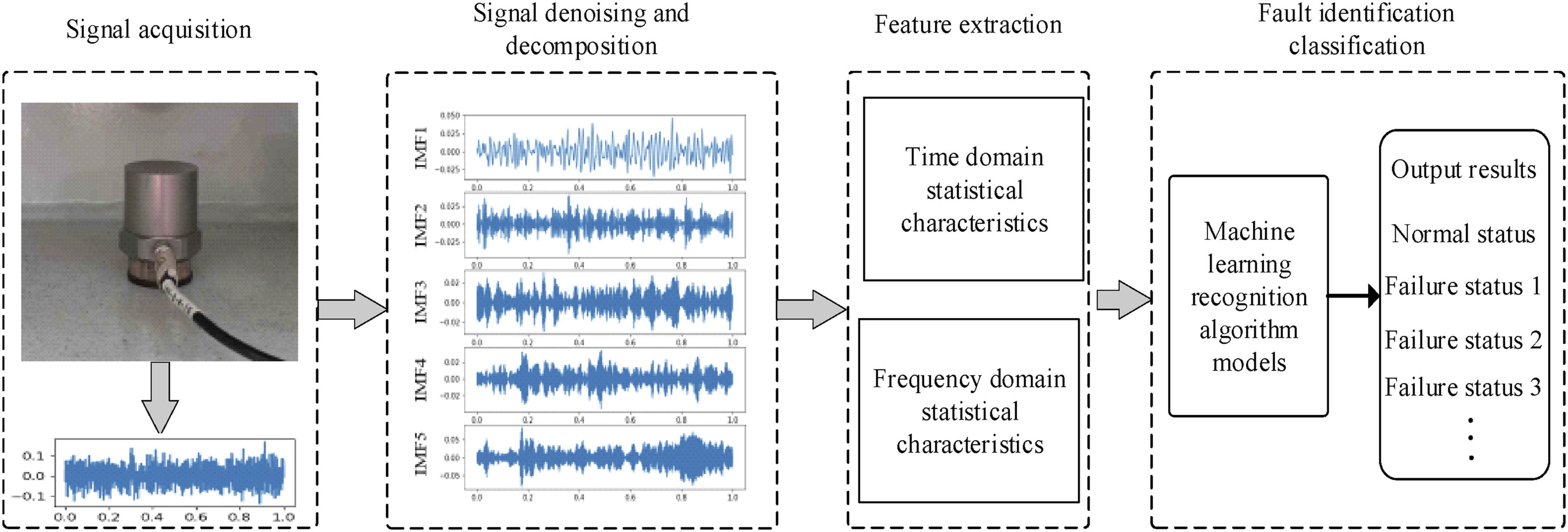
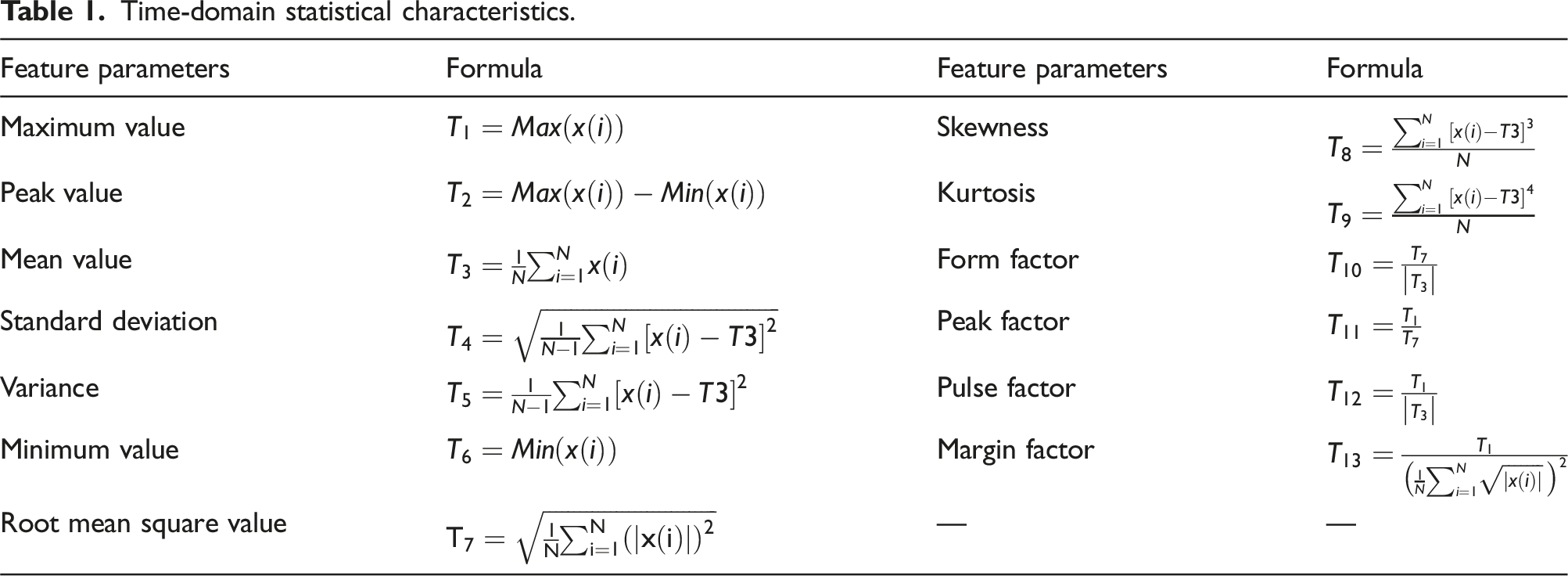
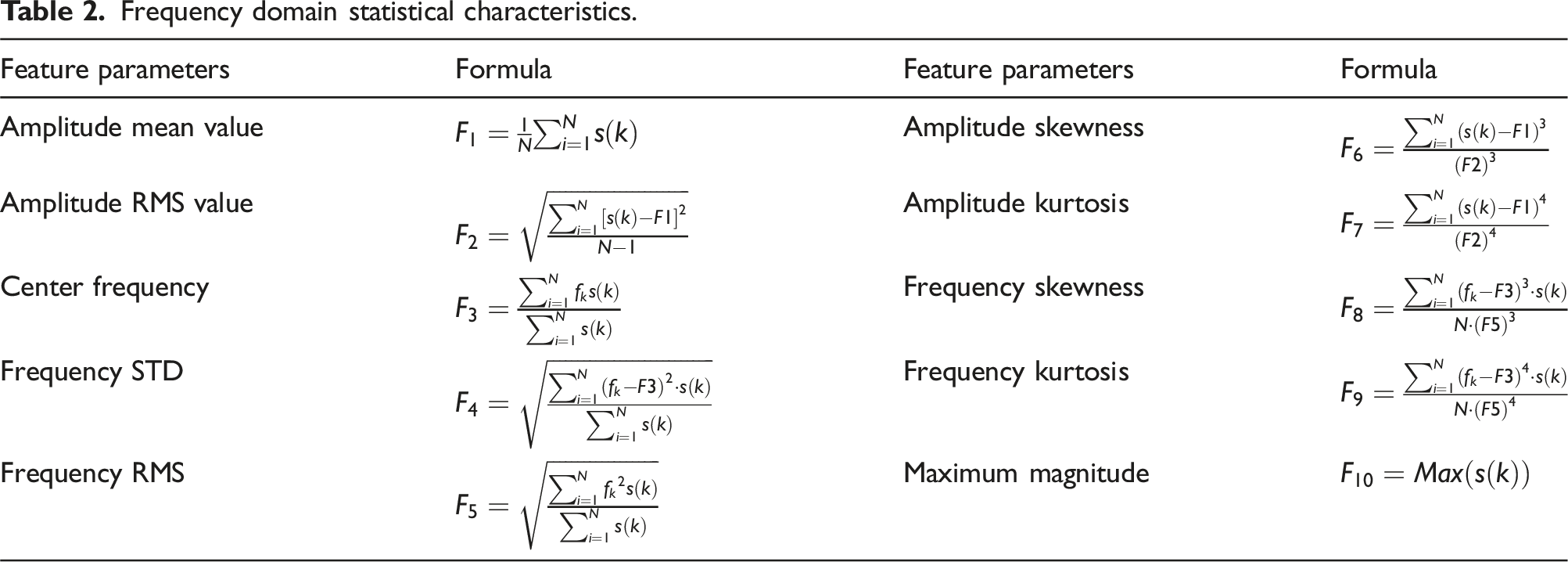
Under different operating conditions of the drying drum, vibration signal samples are collected. The vibration acceleration signal from a single sensor is decomposed into a finite number of IMF components using VMD. Time-domain and frequency-domain features are extracted from each IMF component. These features are then concatenated to form a high-dimensional feature vector, which is input into a machine learning model for training. The resulting trained model is used to diagnose the fault state of the drying drum.
2.2. Drying roller fault signal acquisition
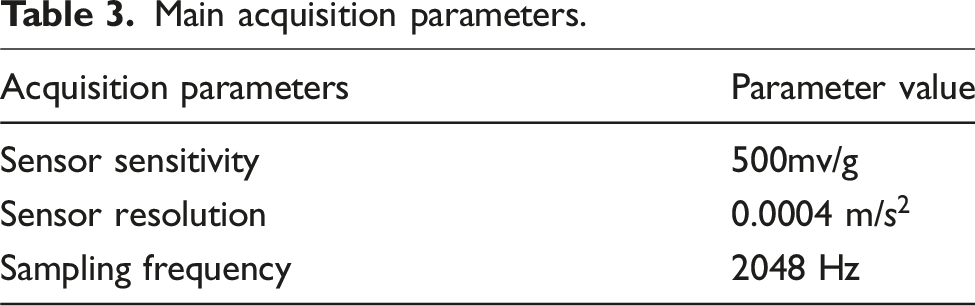
Taking the GT10.0 type drying drum as the research object, the signal acquisition system of the drying drum consists of an NI data acquisition card, an IEPE piezoelectric accelerometer, an industrial computer, and a host computer. A material conveying platform is set up, and fault signal collection is carried out under an operating condition with a load of 11.5 t/h. The overall test platform is shown in Figure 2(a), the acquisition equipment used is shown in Figure 2(b), and the main signal acquisition parameters are listed in Table 3. Overall experiment platform (a) and Signal acquisition equipment (b). Main acquisition parameters.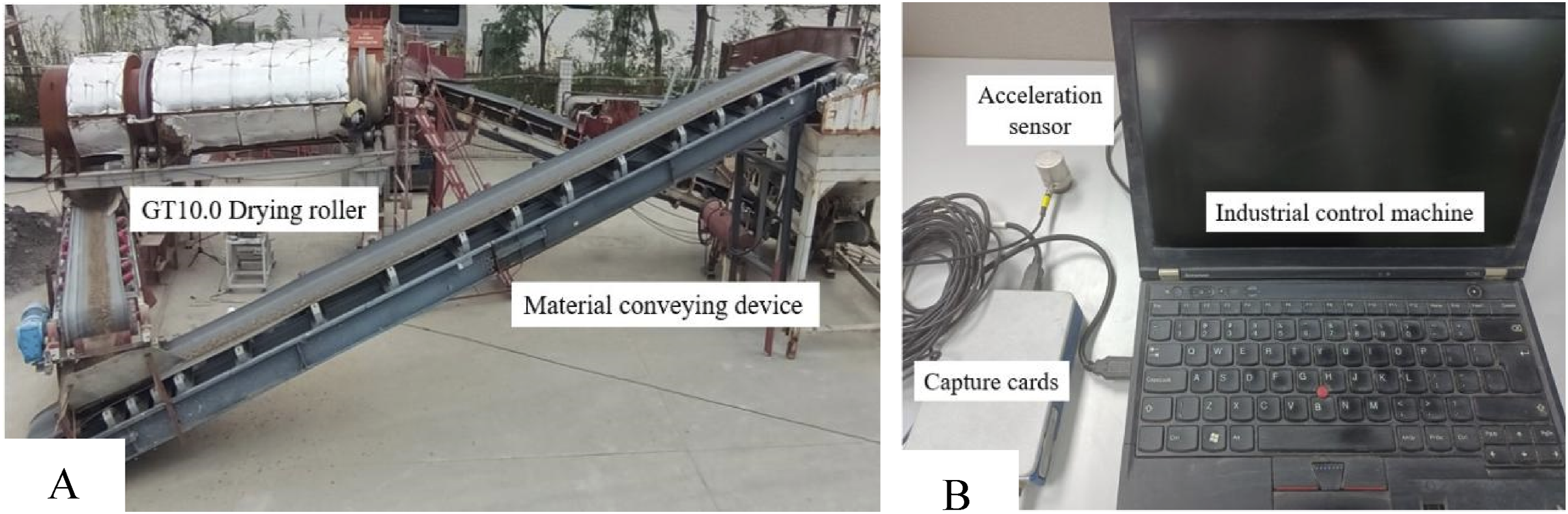
As a large rotating machine, the drying drum is highly prone to failures during operation due to factors such as processing accuracy, uneven internal material distribution, local vibrations, and poor contact. Based on engineering experience, the main causes of failure in drying drums are typically due to drum body movement caused by roller misalignment and poor contact of the roller rings. By manually adjusting the roller positions, several fault conditions of the drying drum are obtained, including a roller displacement of 5 mm on one side, 5 mm on both sides, 3 mm on the left side, and 6 mm on the right side, and bearing seat height adjustment at the roller position. Signal acquisition is performed under these fault conditions on the overall test platform. Given that the position adjustment is made at the roller, accelerometers are installed at the roller supports. The structure of the drying drum is shown in Figure 3(a), and the positions of the accelerometers are shown in Figure 3(b). GT10.0 drying roller (a) and Acceleration sensors placement (b).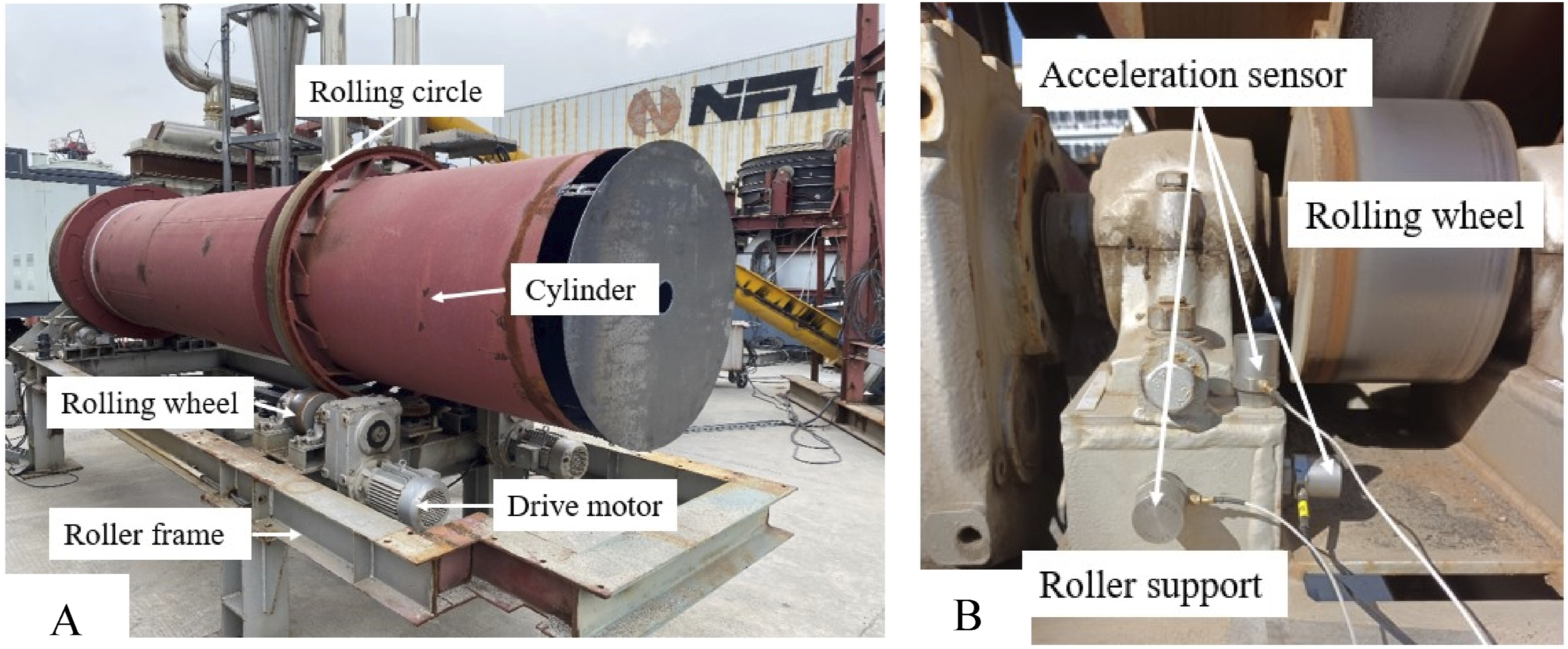
2.3. VMD key parameter selection
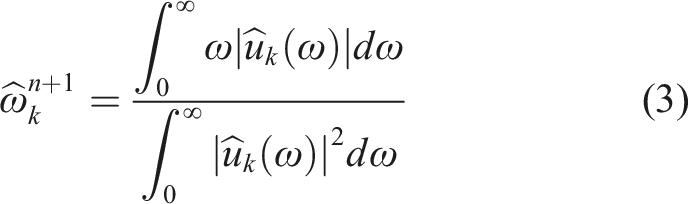
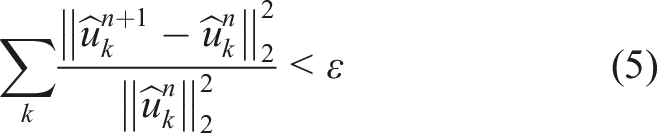
The variational mode decomposition (VMD) can be viewed as an implementation of an adaptive optimal Wiener filter bank. It uses iterative search and optimization to find the best mode functions in the frequency domain. This method leverages the narrowband characteristics of signal components, allowing it to adaptively select the corresponding frequency bands. It is assumed that the original signal is decomposed into several variational mode components, each of which is a narrowband signal centered around its respective central frequency. A constraint model is established based on the narrowband condition of each component (Fan et al., 2021): Step 1: Perform spectrum estimation on the original signal to obtain the initial spectral components. Initialize Step 2: Through an iterative optimization process, continuously adjust the amplitude and phase of each frequency component to minimize the residual energy between the signal and the modal function. The principle of variational methods is applied, and the modal function is updated by solving a constrained optimization problem. Number of iterations Step 3: To control the number and smoothness of the modal functions, a regularization term is introduced to constrain the optimization problem. Update Step 4:Update Step 5: Repeat steps 1 to 4. The above process is repeated, and the iterative procedure continues until the stopping criterion in equation (5) is met. Once the stopping condition is satisfied, the iteration halts, and the loop terminates, yielding a set of intrinsic mode functions (IMFs) with distinct frequency characteristics.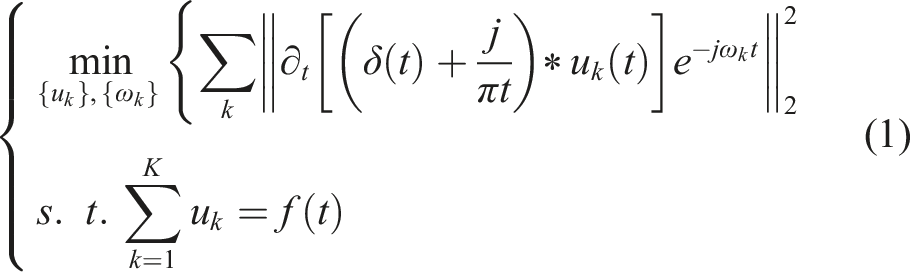


3. Experimental analysis
3.1. Selection of key parameters for VMD
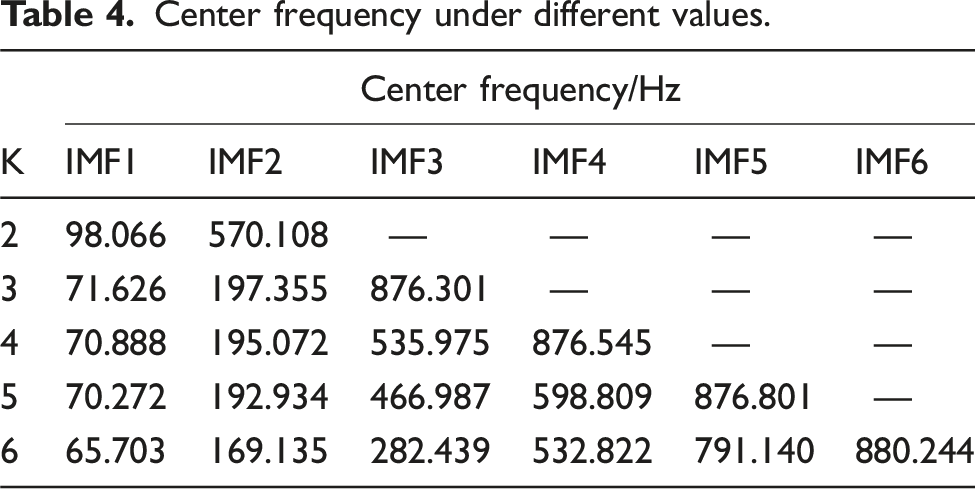
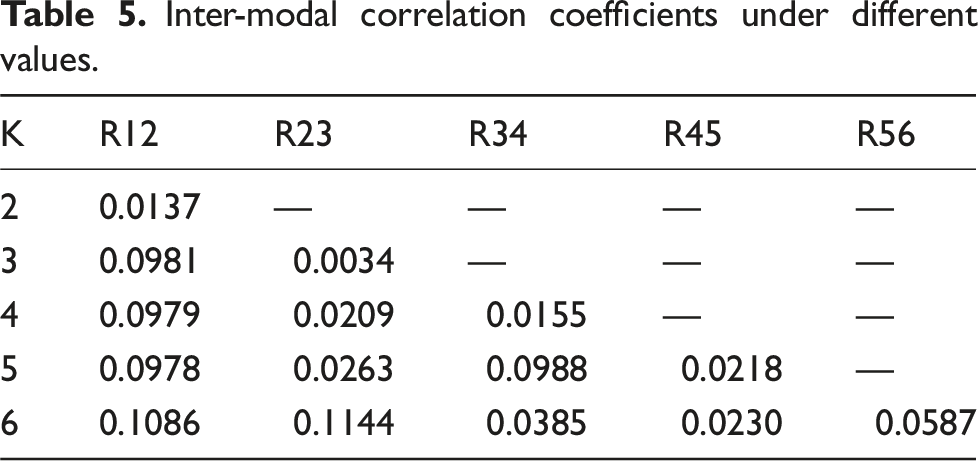
In the VMD algorithm, the signal decomposition result is highly dependent on the number of modes
Center frequency under different values.
Inter-modal correlation coefficients under different values.
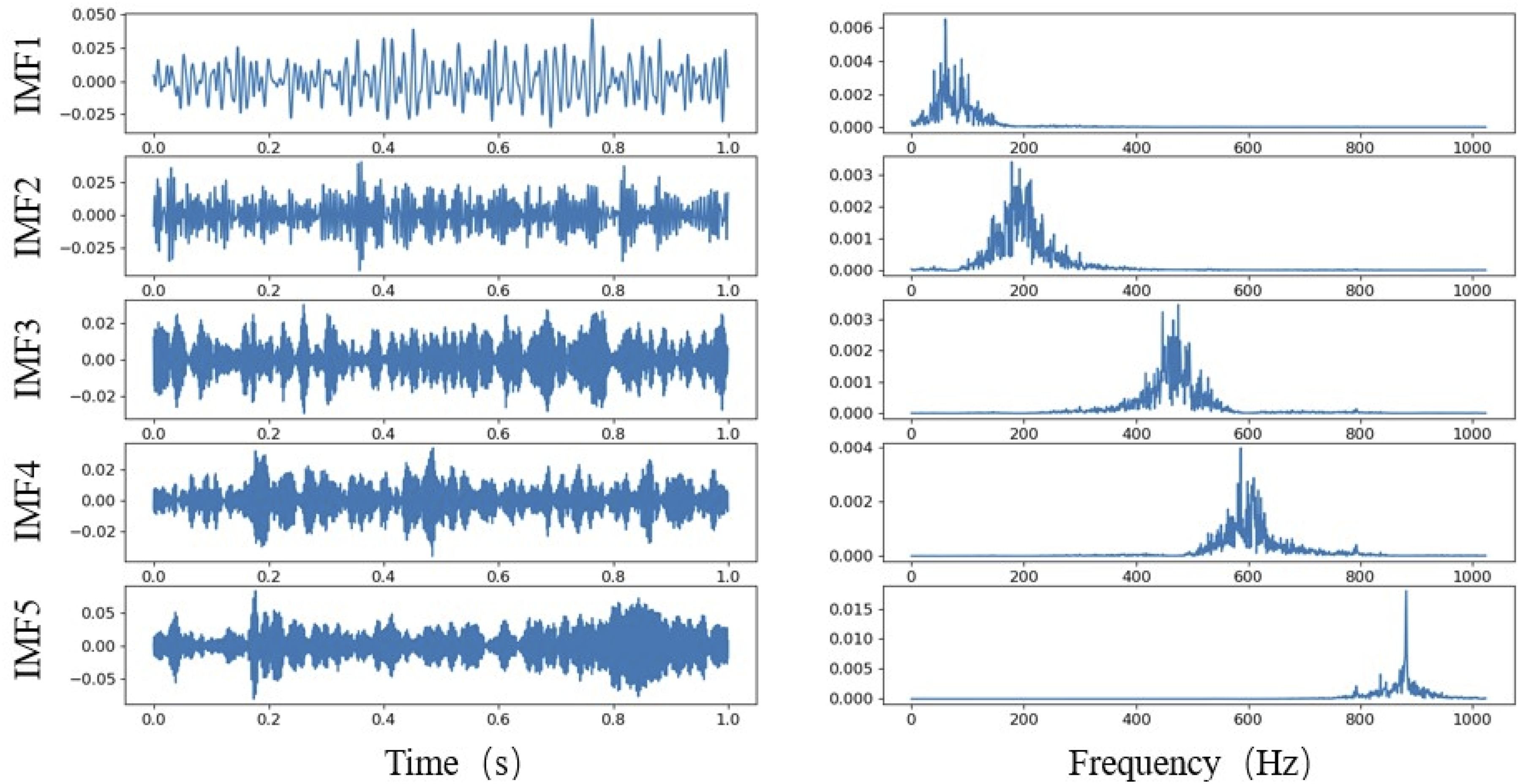
Vmd result.
3.2. GT10.0 loaded drying roller fault diagnosis
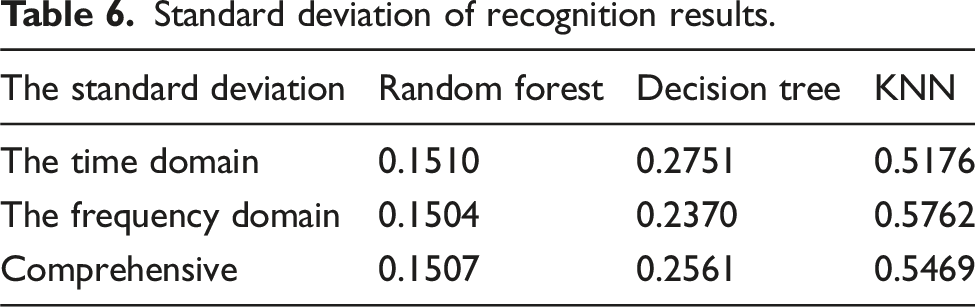
Vibration signals were collected from the GT10.0-type drying drum under normal and early fault conditions, along with four other operating states, totaling five states. The sampling time was 180 seconds, with data recorded every second, each group containing 2048 data points. For each state, 180 groups of data were collected, amounting to a total of 900 groups. Each experiment was repeated 20 times to reduce random errors and variability, and the average identification accuracy was recorded. The specific experimental procedure is as follows: Step 1: Perform VMD decomposition on the collected raw vibration acceleration signals under different operating conditions of the drying drum. Step 2:After each training sample undergoes VMD decomposition, the original training signal is decomposed into five different modal components. For each modal component, 13 time-domain statistical features and 10 frequency-domain statistical features are extracted. Combine these features to form a high-dimensional feature vector. Step 3:These features are input into three machine learning models: Random Forest (RF), Decision Tree (DT), and k-Nearest Neighbors (K-NN) for training. To eliminate random errors and variability. Step 4:Each experiment is repeated 20 times, and a classification model is established. Use the validation dataset samples to verify the fault diagnosis performance of the obtained model.
The comparison of fault recognition results is shown in Figure 5. The fault diagnosis method based on VMD-RF achieved the highest identification rate using both time-domain index and frequency-domain index, and the comprehensive identification rate reached 99.45%. Drying roller fault identification results.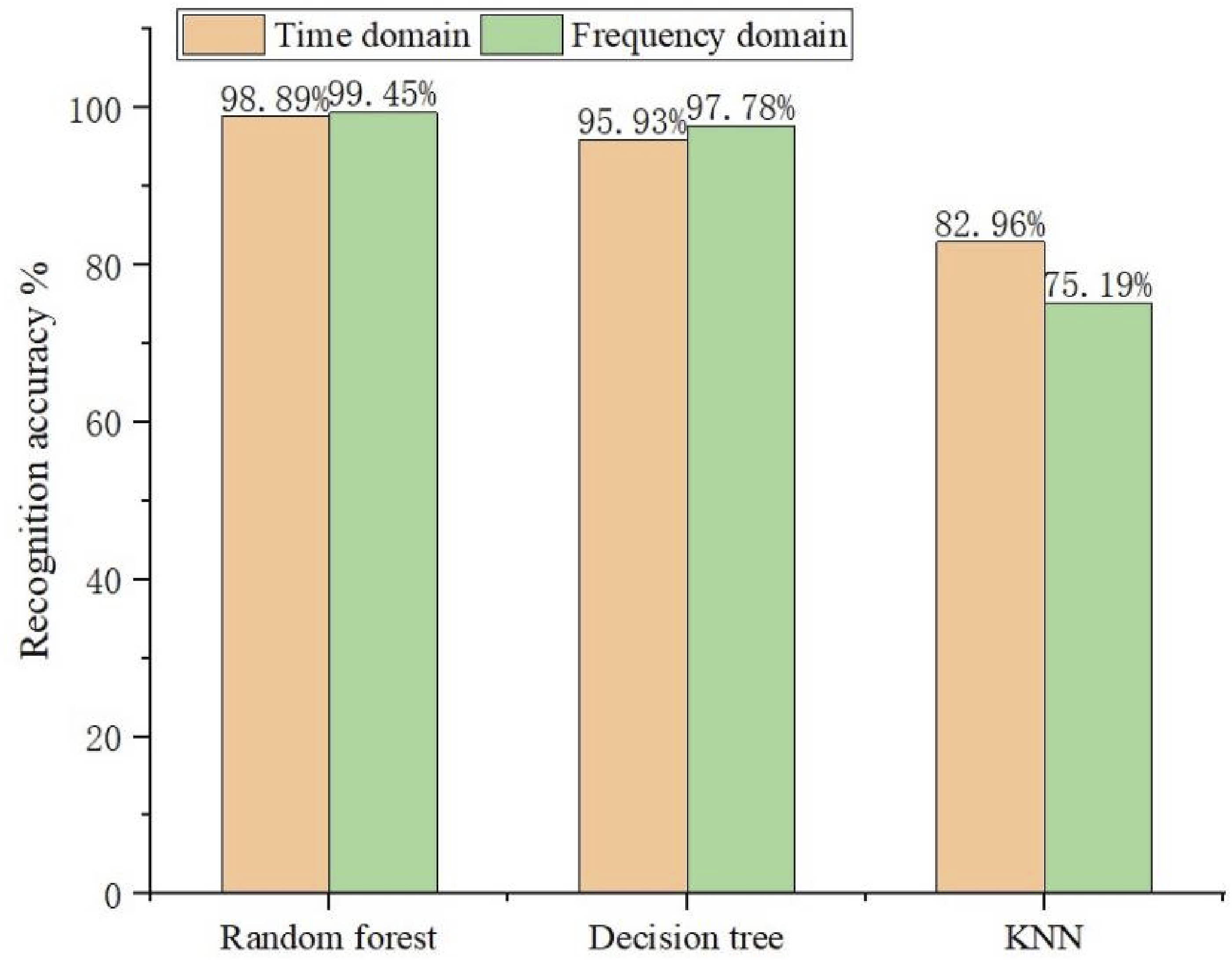
Standard deviation of recognition results.
3.3. Multi-model drying roller fault diagnosis
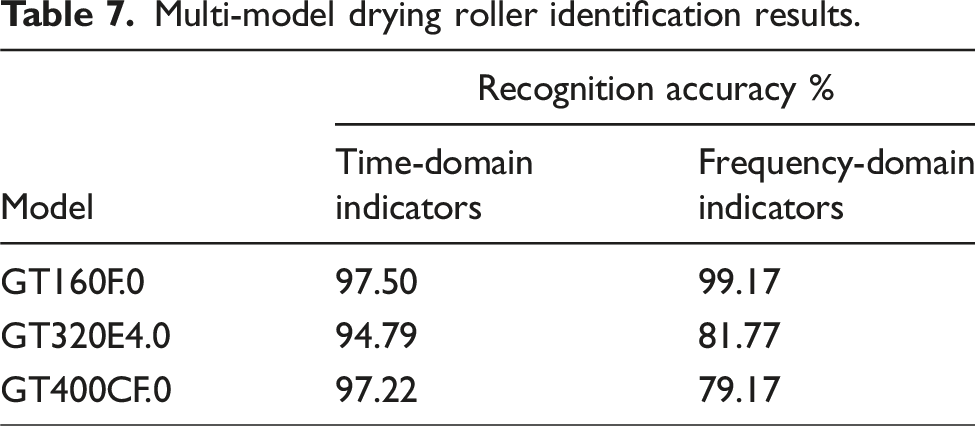
Multi-model drying roller identification results.
4. Conclusion
Fault diagnosis methods for drying drums are typically limited to manually identifying severe faults in the later stages, with early faults often going unnoticed. These methods heavily rely on the experience of human experts, and the diagnostic effectiveness is suboptimal. This paper proposes a method for decomposing the fault diagnosis signals of a drying drum using Variational Mode Decomposition (VMD), obtaining a series of mutually orthogonal intrinsic mode functions, analyzing the different frequency components of the signal, and combining the Random Forest (RF) algorithm to find the optimal solution.
Through field testing and practical verification, the following conclusions have been drawn: (1) The approach of using load-bearing signals has high research value, as it more closely reflects real operating conditions. (2) The early fault signals of the drying drum are analyzed using the VMD (Variational Mode Decomposition) method, which makes it easier to capture potential fault characteristics and enhances the ability to understand and analyze the operational state of the equipment in more detail. (3) For early faults caused by roller position misalignment in the drying drum, the proposed VMD-RF-based (VMD-Random Forest) diagnostic method achieves the highest recognition accuracy, with a comprehensive recognition rate of 99.45%. This indicates that the VMD-RF method is highly effective and accurate in distinguishing different types of faults, demonstrating its superiority in fault diagnosis. (4) The VMD-RF-based fault diagnosis method was applied to multiple different models of drying drums. The time-domain and frequency-domain indicators obtained showed high recognition accuracy, with a comprehensive recognition rate of 97.50%. Through these experimental analyses, this indicates that the method has high versatility and promising engineering application prospects in the fault diagnosis of drying drums.
In summary, the proposed VMD-RF method demonstrates great potential in fault diagnosis for drying drums, especially in load-bearing conditions, where traditional methods may struggle. The approach can be extended to other rotating machinery, providing a robust and efficient way to detect early faults and improve maintenance practices across industrial equipment.
Footnotes
Author’s note
This manuscript has not been published or presented elsewhere in part or in entirety, and is not under consideration by another journal.
Declaration of conflicting interests
The author(s) declared no potential conflicts of interest with respect to the research, authorship, and/or publication of this article.
Funding
The author(s) disclosed receipt of the following financial support for the research, authorship, and/or publication of this article: This research is supported by “National Natural Science Foundation of China (No. 52275530)”, “Fujian Provincial Natural Science Foundation (NO. 2020J01068)”.

Data Availability Statement
The data that support the findings of this study are available from the corresponding author, [Wei Fan], upon reasonable request.