







Abstract
In industrial scenarios, bearing operating conditions are complex and unknown faults may occur unexpectedly, which usually reflect some new modes. This can result in the recognition failure of traditional intelligent algorithms based on the closed set assumption. To address this issue of open set fault diagnosis (OSFD), an OSFD approach of rolling bearing is proposed based on adversarial reciprocal point learning (ARPL) and efficient multi-scale attention (EMA). First, ARPL is introduced to diagnose the bearing faults under open set scenarios, which considers the deep distribution of unknown classes in learners by using an adversarial mechanism, achieving better open set recognition ability. Then, the EMA is employed to improve the open set classification performance of the ARPL model by interacting with information without channel dimensionality reduction. Finally, the effectiveness of the proposed method is evaluated on the bearing datasets. The experimental results show that the proposed ARPL-EMA model can effectively identify the unknown faults and its OSFD performance is superior to the comparative methods.
Keywords
1. Introduction
The rotatory machinery are widely used in the industrial fields, and the fault diagnosis of rotating machines has received extensive attention for many years because a reliable fault diagnosis system can considerably reduce the great loss resulted from the unplanned downtime (Chen et al., 2023b; Zhao et al., 2020). Rolling bearing is the most widely used and the most easily damaged mechanical component in the rotating machines. Its health condition directly influences the safe and reliable operation of the whole machine (Jiao et al., 2024). Therefore, the fault diagnosis of rolling bearing is of great importance to improve the safety and economy of the entire mechanical system.
With the widespread application of artificial intelligence, many intelligent fault diagnosis methods of rolling bearing have been developed during the past decades (Han et al., 2018; He et al., 2023). Among these intelligent approaches, the deep learning (DL) ones, which have powerful feature learning capability and nonlinear transformation ability, have gained great success in bearing fault classification and recognition (Men et al., 2024; Zhang et al., 2023b). However, most of the previously proposed intelligent fault diagnosis methods are under the closed set assumption that the training samples and testing samples share the same labels (Geng et al., 2020). But in the realistic industrial scenarios, due to the harsh environment and complex operation conditions of machinery, some new bearing fault types that never appeared may happen unexpectedly, so the diagnosis performance of the traditional DL-based methods will be greatly degraded when handling this open set fault diagnosis (OSFD) problem. Therefore, an effective OSFD method of rolling bearing is urgently required to accurately classify the known fault types and recognize the unknown fault types simultaneously.
To address the challenges of OSFD, diverse methods have been put forward and these methods can be mainly divided into two categories: discriminative and generative methods (Chen et al., 2024; Geng et al., 2020). The main goal of discriminative methods is to obtain explicit boundary information between the known and unknowns. Zhang et al. (2022) put forward an OSFD approach for rolling bearing based on an improved OpenMax and developed an open set convolutional neural network to accurately recognize new bearing fault classes. Yu et al. (2021) utilized the extreme value theory (EVT) to couple the deep model to realize known fault classification as well as the unknown fault detection, and further achieved cross-domain OSFD by designing the different weights distribution. In Zhang et al. (2023a), the distances of intra-class and inter-class samples were computed by means of multi-sample distances fusion, and generalized Pareto distributions of these two distance distributions were estimated by EVT to identify the unknown faults. Based on the subspace learning method, the literature (Tian et al., 2018) achieved the open set fault recognition by adaptively setting the threshold according to the test data. Mei et al. (2024) realized the rejection of unknown faults by means of variational encoder classifier and EVT. Zhang et al. (2024) constructed a discrimination framework to strengthen the model’s ability of recognizing the unknown samples, and used neighborhood clustering learning to accomplish cross-domain fault diagnosis. Chen et al. (2023a) developed a pair of discriminators based on EVT theory and Shannon entropy to decide whether the sample is unknown or not. The posteriori inference method was introduced by Wu et al. (2024) to obtain the open set recognition weight for successful identification of unknown classes. To deal with the issue of open set domain adaptation, Wang et al. (2024) adopted the feature clustering and separation strategy to distinguish known and unknown categories. By contrast, generative methods obtain the detection ability of unknown fault by generating negative samples to simulate the open set. In the study by Liu et al. (2023), the traditional generative adversarial network (GAN) was improved by a regularization module and used for the generation of open data, transforming the issue of open set into the pseudo-closed set problem. In Peng et al. (2022), the algorithm of soft Brownian offset sampling and shrinkage autoencoder were employed to generate negative samples, and the generated samples were utilized in the model training phase to achieve better unknown fault identification. Sun et al. (2023) utilized prototype network and reconstruction network for obtaining reconstructed signals, and calculated the correlation coefficients between reconstructed signals and original signals to recognize the unknown faults.
Although various discriminative and generative OSFD approaches have been developed for the successful open set fault recognition of rolling bearing, they may all exhibit some of their own limitations and most of them do not consider the deep distribution of unknown classes in learners, which will lead to potential open space risk (Chen et al., 2022). To handle the challenges of open set recognition (OSR), Chen et al. (2022) proposed a new OSR method called the adversarial reciprocal point learning (ARPL) to model the potential unknown space and estimate the unknown distribution from the open space. Different from the existing OSR approaches, ARPL designs a novel concept of reciprocal point to formulate the open space risk, which is contrary to the prototype of the known category and beneficial to the overlap reduction of known and unknown classes. Additionally, an adversarial mechanism between the reciprocal points and known classes is developed to generate confusing samples to improve the unknown distribution discriminative ability of the model. By means of this, ARPL can obtain excellent open set classification performance compared with traditional OSR methods. Based on this consideration, ARPL is introduced in this study to identify known and unknown faults of rolling bearing under open set scenarios.
On the other hand, whether the feature extractor is able to extract informative features has huge influence on the model’s diagnosis performance (Ren et al., 2023). The rolling bearing usually operates under complex conditions, and bearing vibration signal with strong noise increases the difficulty of feature extraction of the model. For this reason, it is necessary to further enhance the OSFD performance of ARPL from the point of view of feature extraction. Because of the ability of extracting features containing key information, different kinds of attention mechanisms have been adopted to improve the feature extraction capability of the models in the field of fault diagnosis (Tang et al., 2023; Xie et al., 2023). Efficient multi-scale attention (EMA) (Ouyang et al., 2023) is a newly-developed attention module which can effectively enhance the models’ feature representation ability. In comparison with the widely used coordinate attention (CA) (Tong et al., 2023) and convolutional block attention module (CBAM) (Li et al., 2022), EMA owns better feature extraction ability and is more efficient in term of computational overhead by using a universal convolution to avoid channel dimensionality reduction. In order to extract more key state information under complex and variable running conditions of rolling bearing, in this paper, the EMA module is incorporated into the ARPL model to further strengthen the bearing OSFD performance.
To sum up, a new open-set fault diagnosis method for rolling bearing is proposed in this paper based on the ARPL model with EMA improvement. The contributions of this study are as follows: First, the ARPL method is introduced for the open set fault identification of rolling bearing. Unlike the traditional OSR methods, ARPL models the deep distribution of unknown classes in learners to minimize the overlap of known distribution and unknown distributions using the reciprocal point and adversarial mechanism, which could make it achieve better bearing fault diagnosis performance under open set situations; Second, a new feature extractor module is constructed by incorporating EMA into the ARPL model to improve the feature extraction capability on key state information, further enhancing the open set recognition performance of ARPL; Third, extensive experiments on our own dataset and different OSFD tasks validate the enhanced performance and superiority of the proposed ARPL-EMA approach. The rest of this article is organized as follows. An overview of the proposed methodology is introduced in theoretical background section. The following section describes the proposed method of fault diagnosis. In experimental study Section, the effectiveness of the proposed method is verified on the experimental dataset of our own. The conclusion is given in conclusion Section.
2. Theoretical backgrounds
2.1. Adversarial reciprocal point learning
2.1.1. Reciprocal point
A set of n-labeled samples
Samples of
The reciprocal point

The reciprocal point of the class is represented by an m-dimensional vector, optimized by a depth embedding function
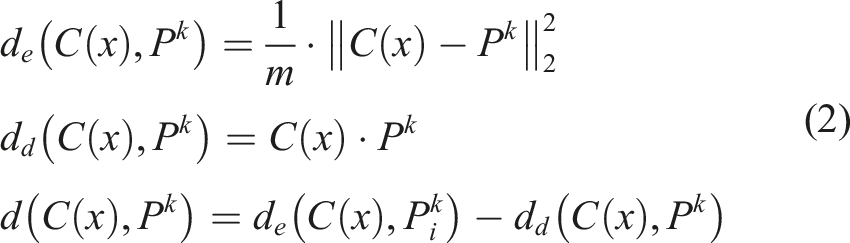
In both spatial position and angular direction, every known class is opposite to its reciprocal point.
According to the nature of reciprocal points, the probability that the sample
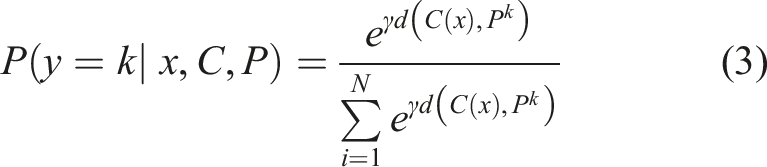
where

Therefore, there is an overlap between
2.1.2. Open set loss
In multi-class OSR scenarios, the open spaces of multiple classes are united into one global open space

To separate

Then, the open space risk can be bounded by constraining the aforementioned distance as

where
By combining equations (4) and (7) to address simultaneously the empirical classification risk and open space risk, the total loss function can be designated as

where
2.2. Instantiated adversarial enhancement
To further reduce the open space risk generated by the confusing unknown data, the ARPL uses a new training strategy to learn a confused generator to improve the discriminant ability of the classifier for various new distributions.
2.2.1. Confused generator learning
Different from the traditional GAN, the generator is employed to recover the confusing samples from The framework of the confused generator training.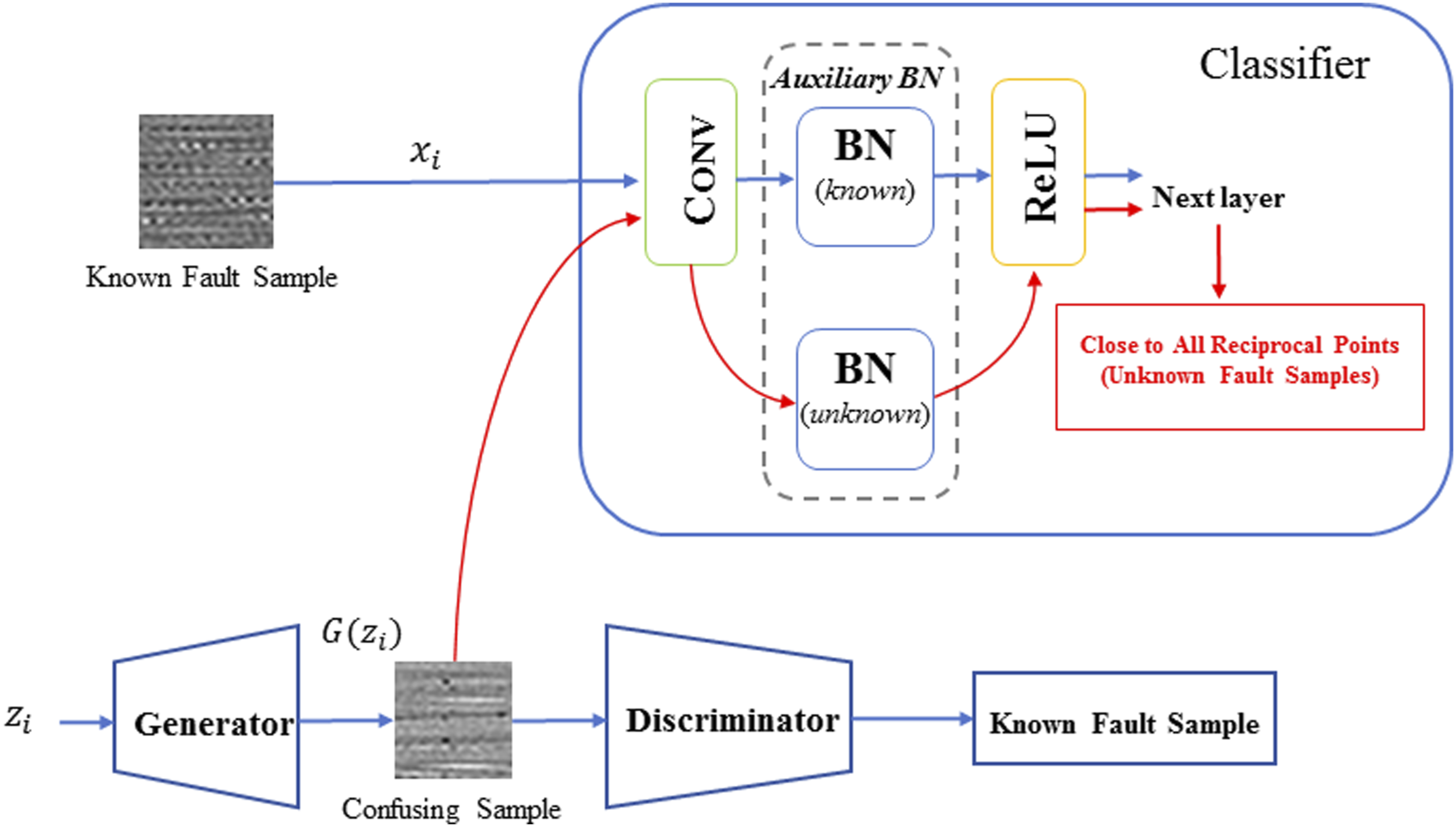
Given the generator’s outputs

To deceive the discriminator, the generated samples are expected to be closer to the known classes

The adversarial mechanisms between known classes and reciprocal points are introduced to confuse generators by creating samples close to each center

According to Shannon entropy (Ren et al., 2023), equation (11) can be maximized when all values equal. Finally, the generator is optimized by

2.2.2. Classifier learning
Considering the generated unknown samples and the ultimate target of training a better feature space, the classifier C is optimized as

Equation (13) shows that the known and generated samples are processed independently, which will result in inaccurate statistics because of the different distributions between the known and confusing samples. To disentangle this mixed distribution, Auxiliary Batch Normalization (ABN) is proposed to guarantee the normalization statistics obtained for the confused samples only. Specifically, Batch Normalization (BN) (Ioffe and Szegedy, 2015) uses the mean and variance calculated within each minibatch to normalize the input features, which should come from a single or similar distribution. As shown in Figure 1, ABN aids to disentangle mixed distributions by keeping separate BNs for features belonging to different domains, blocking effectively the negative influence of confusing samples on known class distinction. Finally, the discriminator and the classifier can be improved simultaneously with the confused generator.
2.3. Efficient multi-scale attention
Considering the complex and varying working conditions of rolling bearing and the difficulty in extracting discriminative features, the EMA attention mechanism is introduced to improve performance of ARPL model by enhancing the feature extraction ability on key state information. EMA is a cross-space learning method, and it can interact with information without channel dimensionality reduction and lighten the computational burden (Ouyang et al., 2023). Its architecture is presented in Figure 2. Efficient multi-scale attention architecture.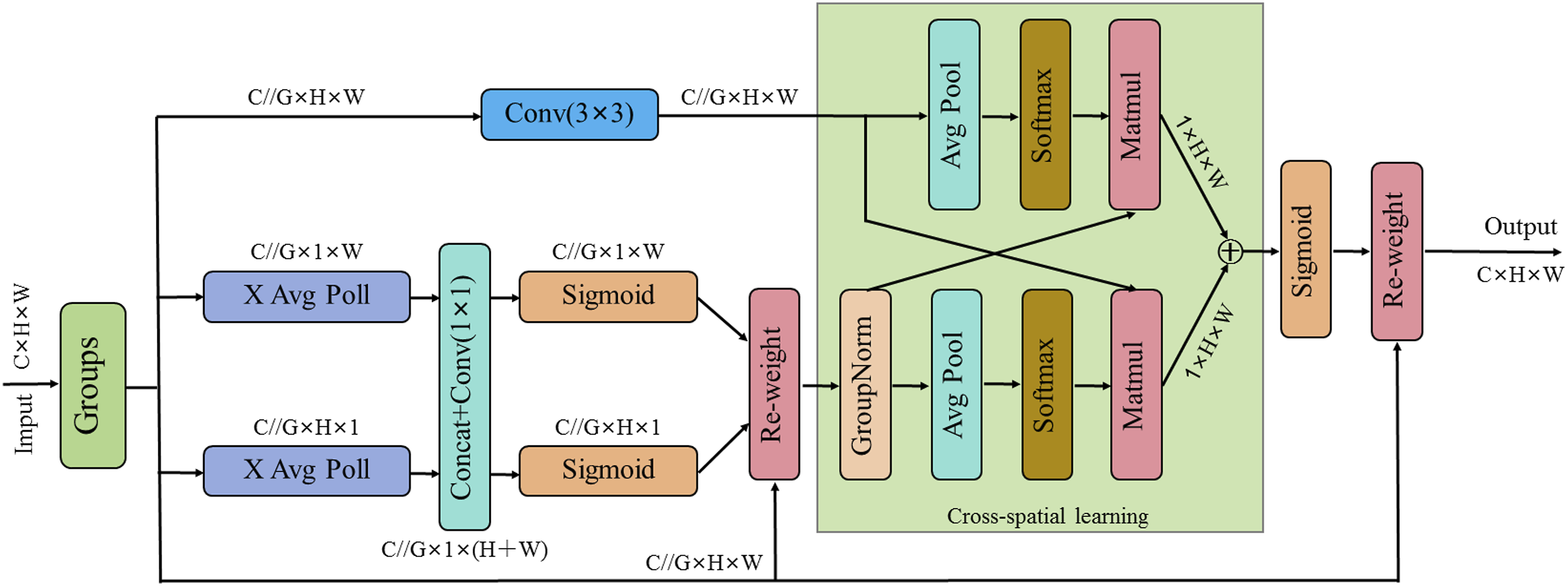
For the input feature map X, EMA divides it into G groups along the channel dimension. Each sub-feature group learns to obtain attention weights to strengthen the feature representation of different regions in the bearing feature image. The grouping process is designated as

Subsequently, two 1D global average pooling operations are adopted to encode the channel along two spatial directions, respectively, in 1 × 1 branch, and only a single 3 × 3 kernel is stacked in 3 × 3 branch to capture multi-scale feature representation.
Following the output of the 1 × 1 and 3 × 3 branches, 2D global average pooling coding is utilized to adjust the channel weights, which can be described as

After the above implementation, the matrix dot product operations are employed to fuse the information from the two branches to obtain the final output feature map of EMA.
3. The proposed bearing fault diagnosis method
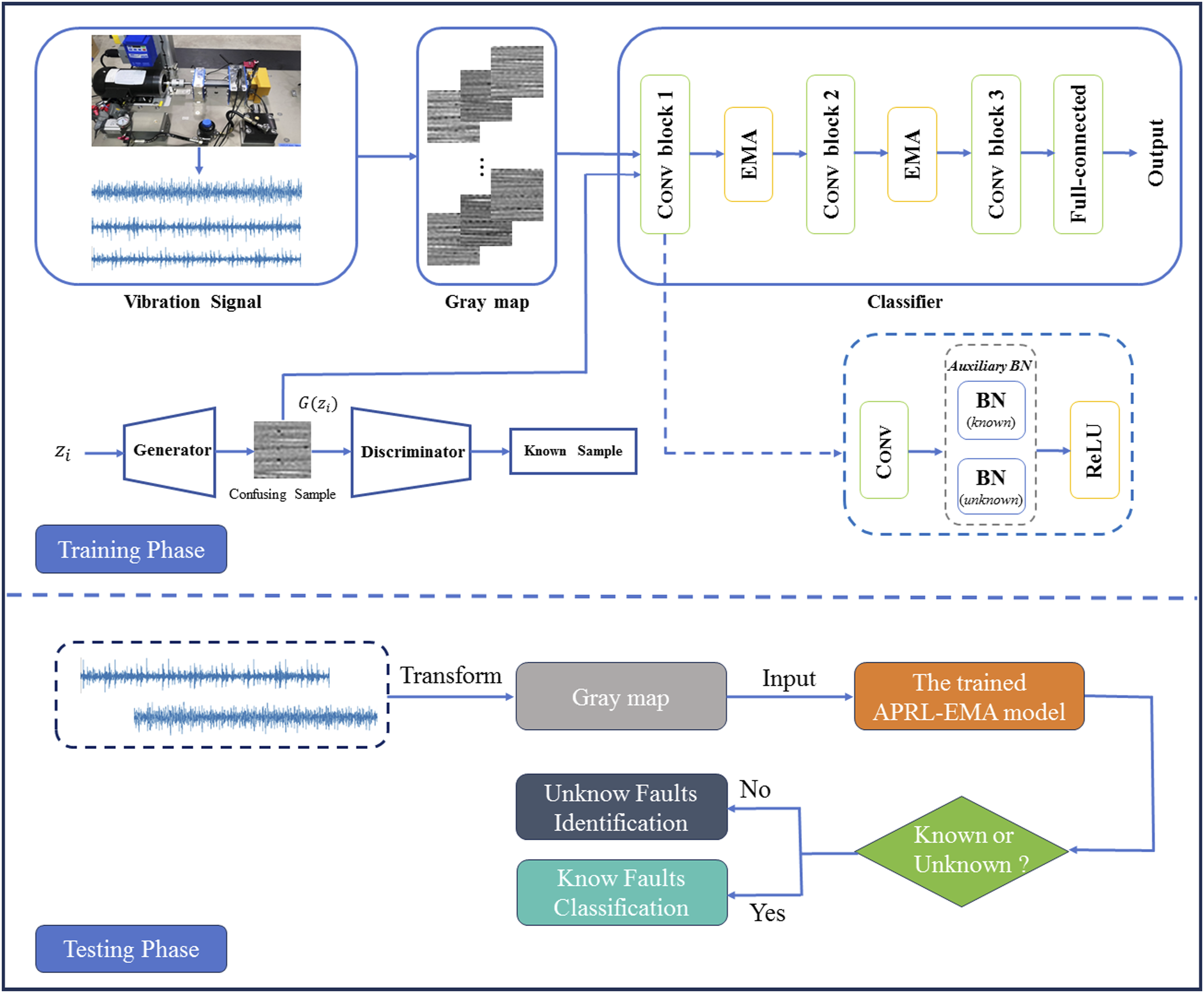
In order to address the challenge facing by the traditional OSFD methods, a new OSFD approach for rolling bearing is developed based on the ARPL model with EMA improvement. The flow chart of the proposed method is given in Figure 3. (1) The bearing vibration signals under different working conditions are acquired from the bearing experimental test rig with an accelerometer. (2) The collected data is then transformed by converting one-dimensional vibration signals into two-dimensional grayscale images, which are separated into the training and testing sets. (3) The training samples are learned by the EMA-improved ARPL model and the trained ARPL-EMA model is established. (4) The known and unknown samples of different fault types in the testing sets are identified by the trained ARPL-EMA model to realize the open set fault classification of rolling bearing. Flow chart of the proposed method.
4. Experimental study
4.1. Dataset description and experiment settings
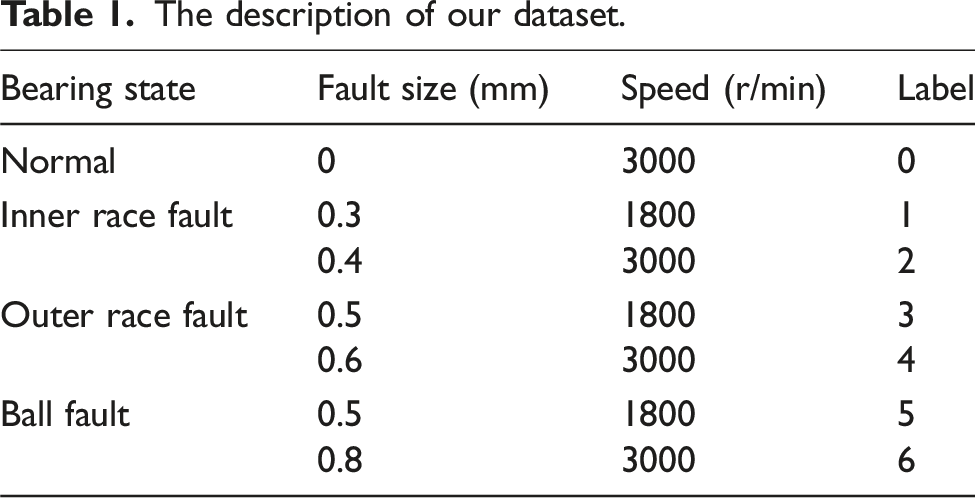
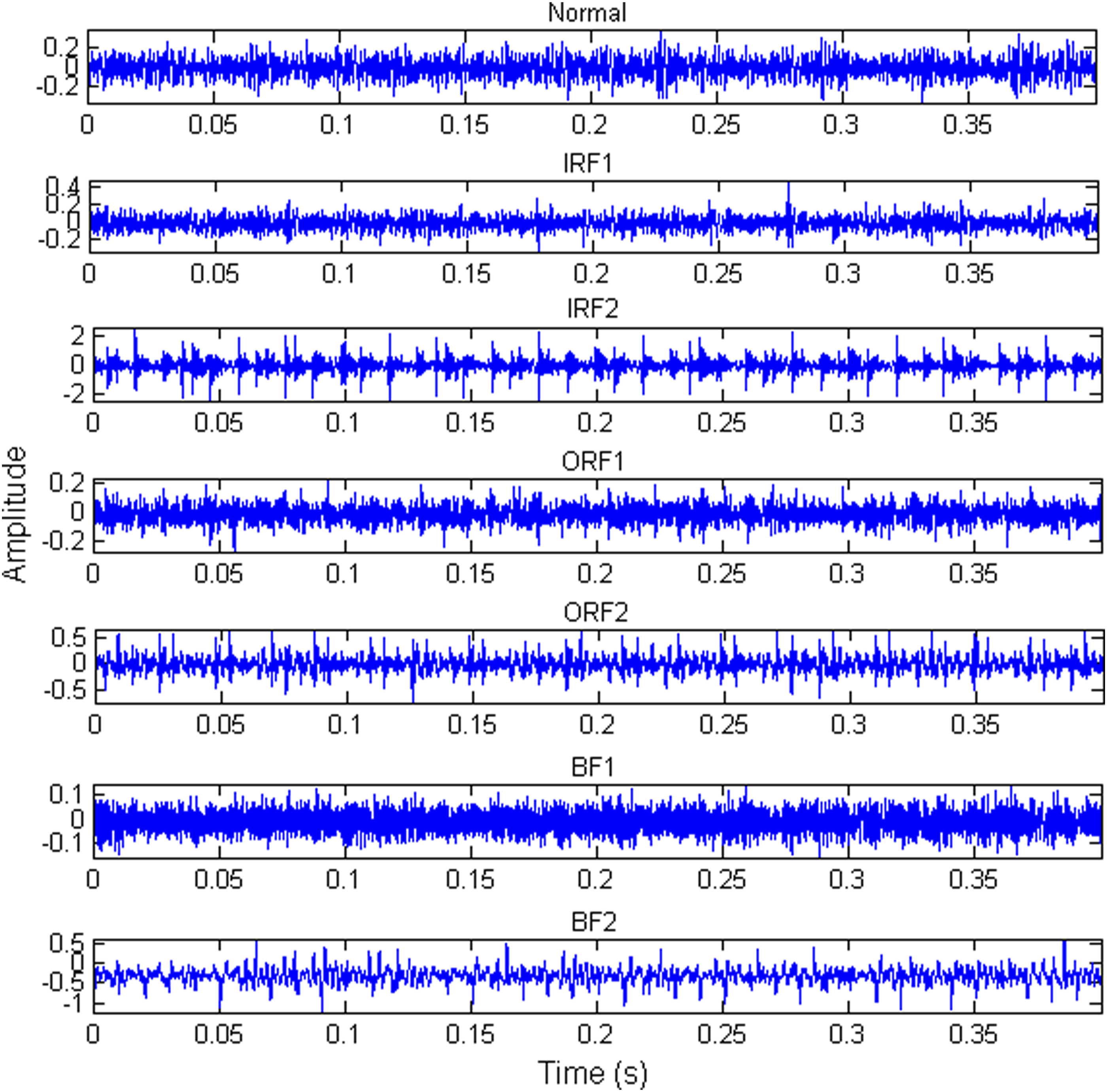
To validate the effectiveness of the proposed method, the bearing experimental data has been collected from our test bench in the laboratory. The test rig is illustrated in Figure 4, which consists of drive motor, motor controller, bearing seats and acceleration sensors. The test bearing is ER16k and the sampling frequency is 25.6 kHz. Three types of faults, inner race fault (IRF), outer race fault (ORF), and ball fault (BF) are introduced and two rotation speeds of 1800 r/min and 3000 r/min are simulated. Considering each fault type with different fault sizes, the dataset includes totally seven classes. The details of the experimental data are presented in Table 1, and the temporal waveforms of bearing vibration signals are given in Figure 5. The bearing test rig. The description of our dataset. Time-domain waveforms of the bearing vibrations under seven different conditions.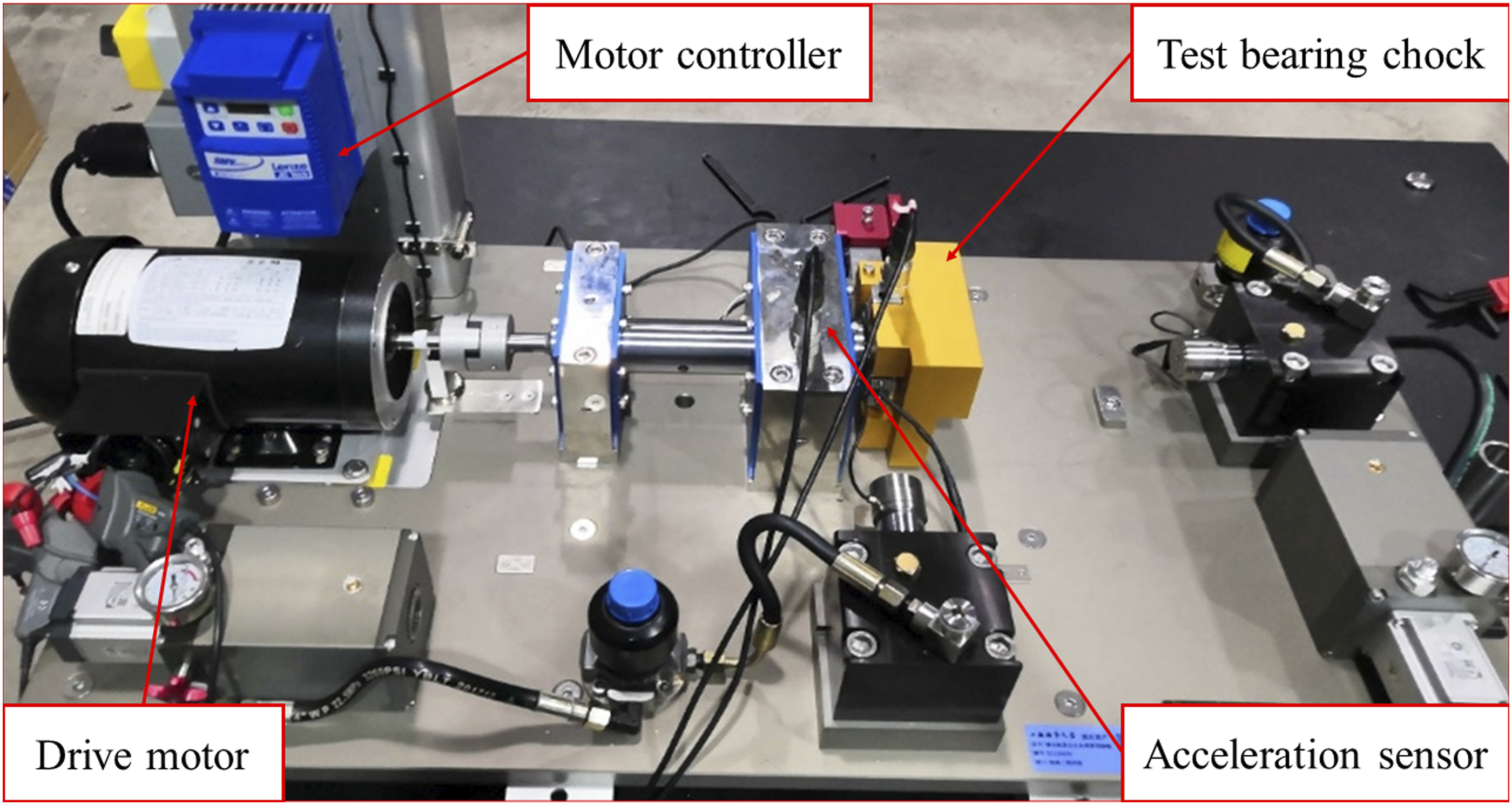
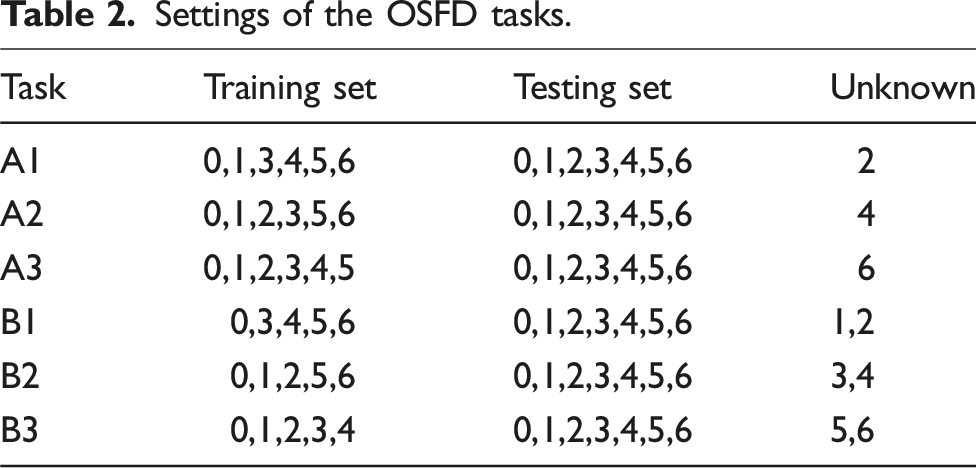
Settings of the OSFD tasks.
4.2. Comparative methods and evaluation metrics
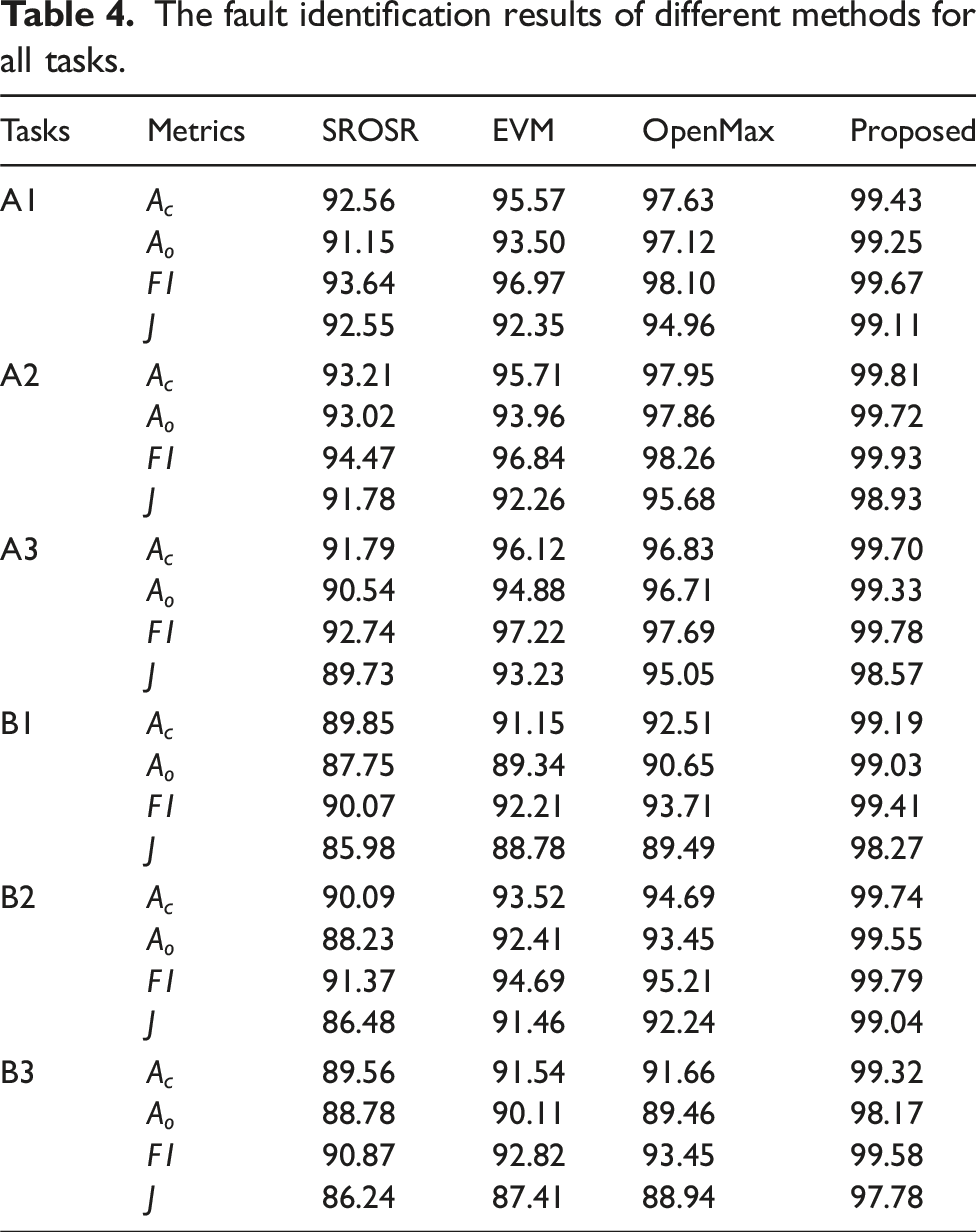
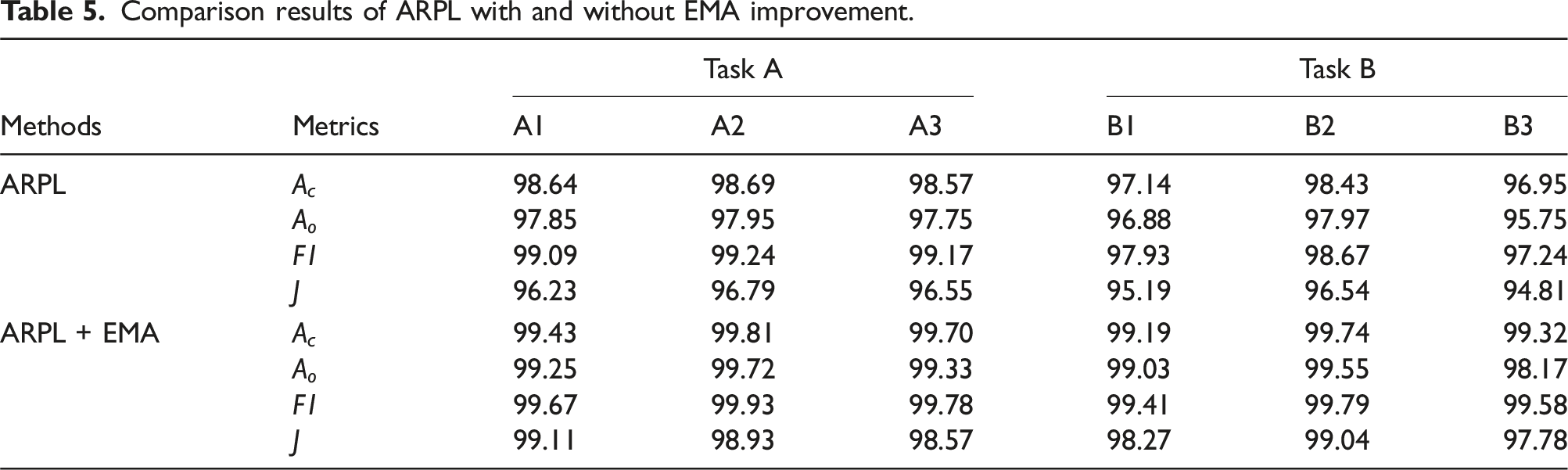
To demonstrate the superiority of the proposed ARPL-EMA method, other three typical and extensively used OSR approaches are employed to compare with the proposed method, which are sparse representation based open set recognition (SROSR) (Zhang et al., 2016), Openmax (Bendale and Boult, 2016), and the extreme value machine (EVM) (Rudd et al., 2017), respectively. Additionally, to verify the feature extraction ability of EMA, the comparison results of ARPL with and without EMA improvement are also investigated.
Unlike the evaluation indexes of close set recognition, the identification performance of OSR on the unknowns also needs to be considered. Based on the previous studies (Geng et al., 2020; Chen et al., 2023a), two commonly utilized OSR evaluation metrics are adopted in this paper: the open set accuracy 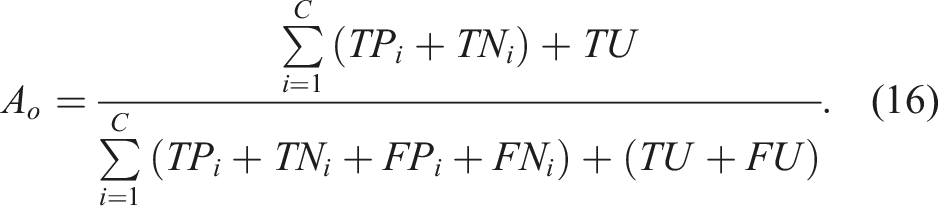
Youden index is a metric representing the ability of avoiding failure of the model. The larger J value indicates the model’s better ability to distinguish known and unknowns. Its definition is as follows:
In addition, the accuracy 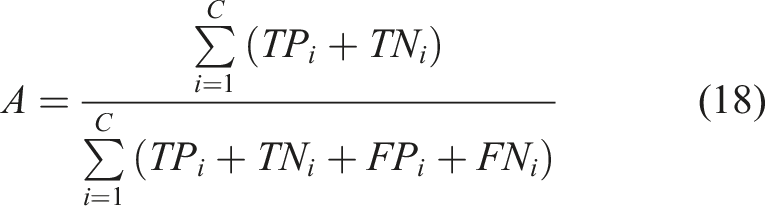

4.3. Experimental results
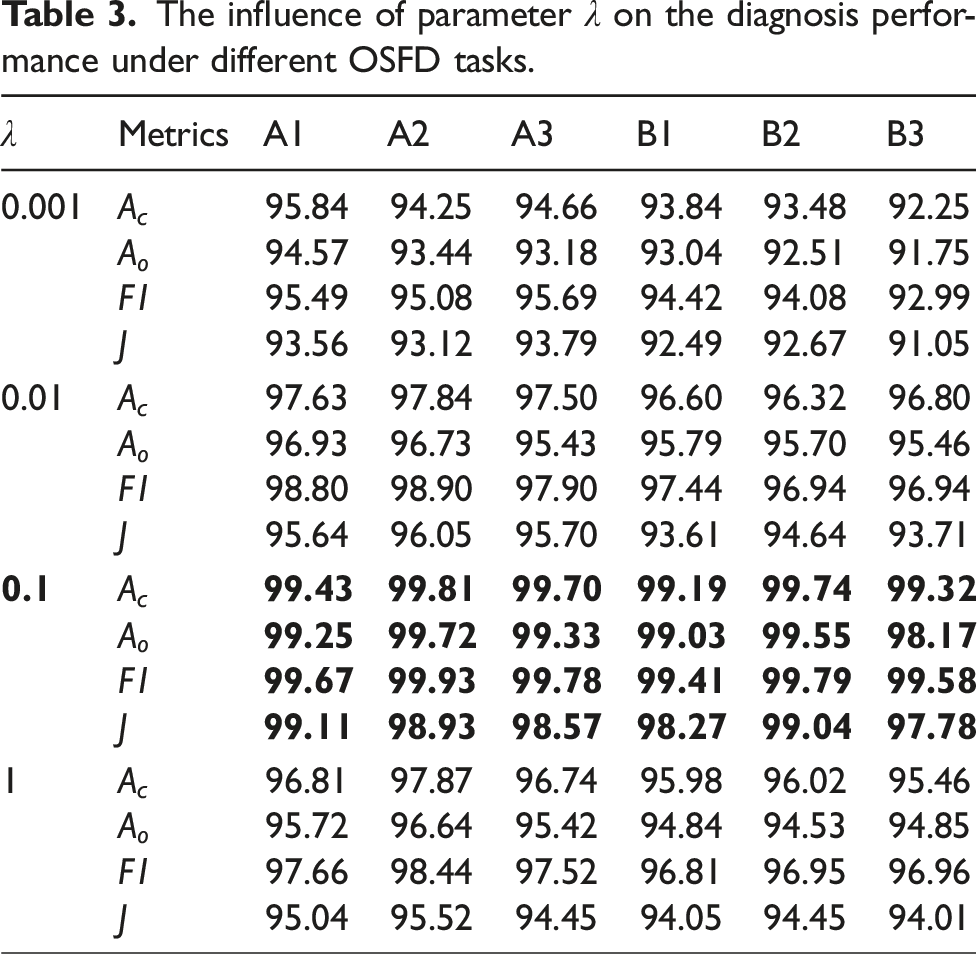
The influence of parameter
The fault identification results of different methods for all tasks.
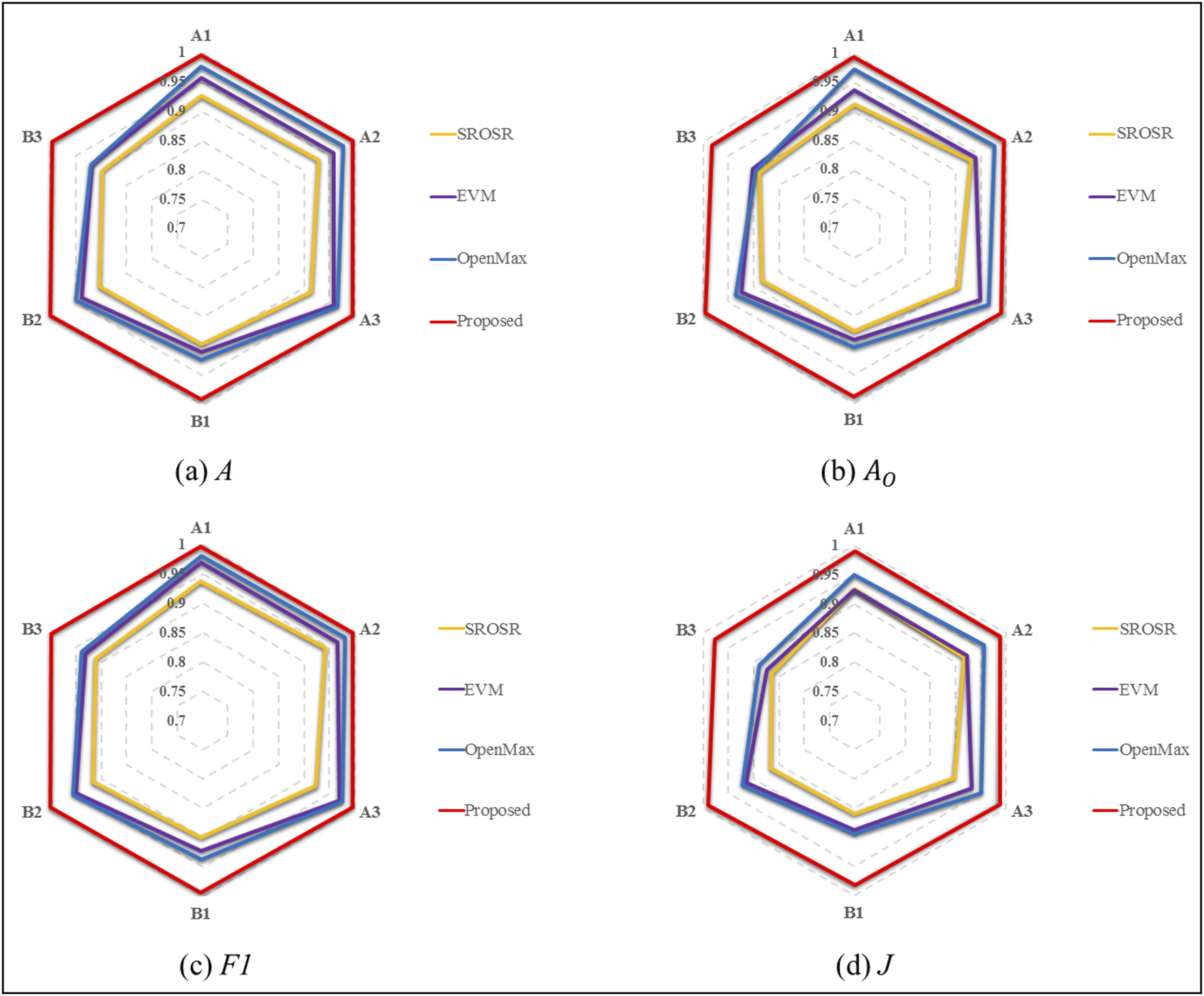
Comparison results of different methods over different evaluation metrics.
Comparison results of ARPL with and without EMA improvement.
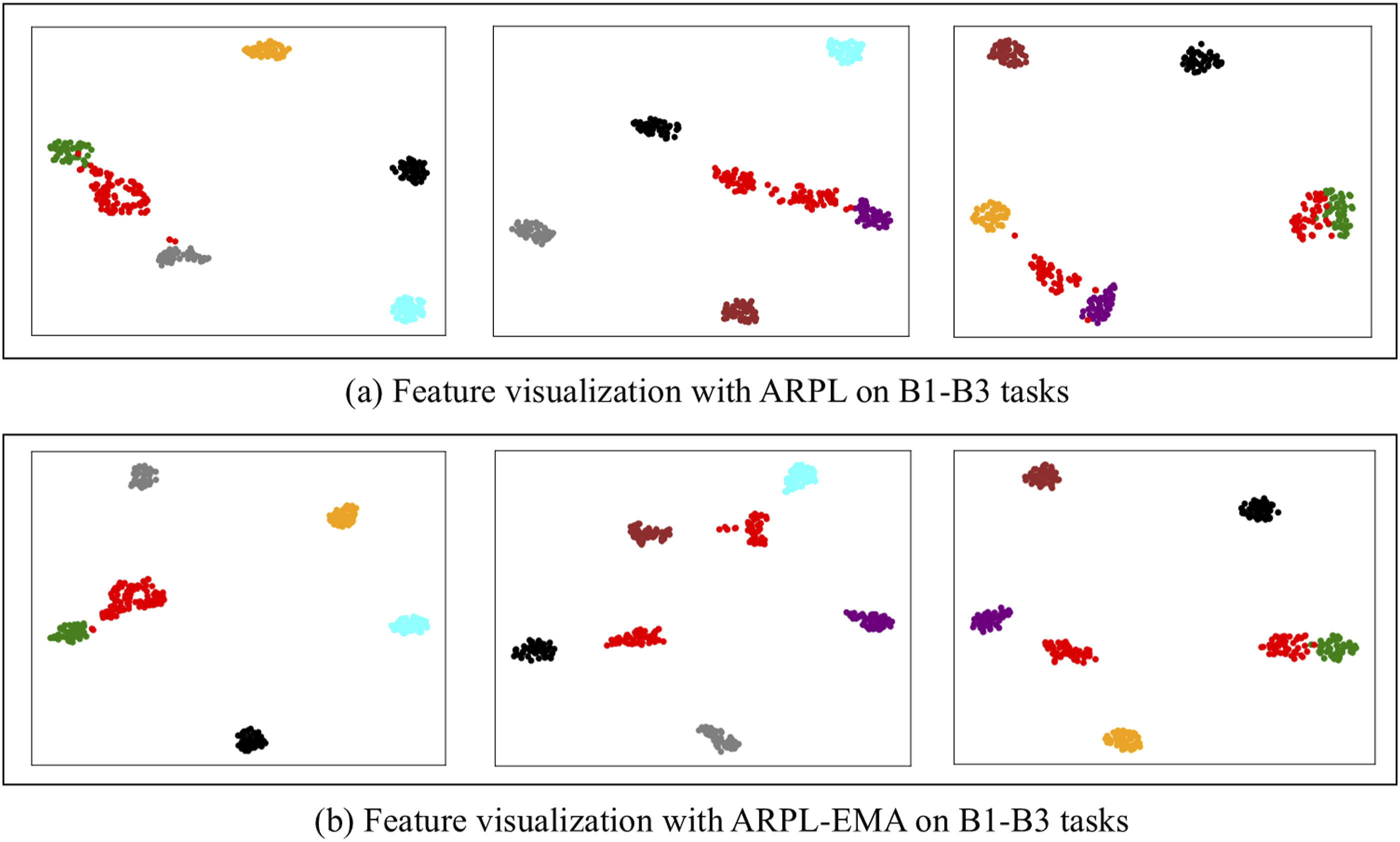
Finally, the t-distributed stochastic neighbor embedding (t-SNE) (Peng et al., 2022) algorithm is utilized for feature dimension reduction to visually demonstrate the feature extraction performance of EMA by visualizing the features. Figures 7 and 8 illustrate the visualization results with and without EMA on tasks A and B, respectively. In these figures, each color represents one fault class and the red color stands for the unknown faults. As it can be seen, compared with ARPL, the better clustering effect can be achieved by features extracted with ARPL-EMA. In addition, the features obtained by ARPL-EMA have less overlapping between the known and unknown classes than those extracted by APRL. This comparison results further verify the capability of EMA to extract key condition information. Visualization results of features extracted by ARPL and ARPL-EMA on A1–A3 tasks. (a) ARPL. (b) ARPL-EMA. Visualization results of features extracted by ARPL and ARPL-EMA on B1–B3 tasks. (a) ARPL. (b) ARPL-EMA.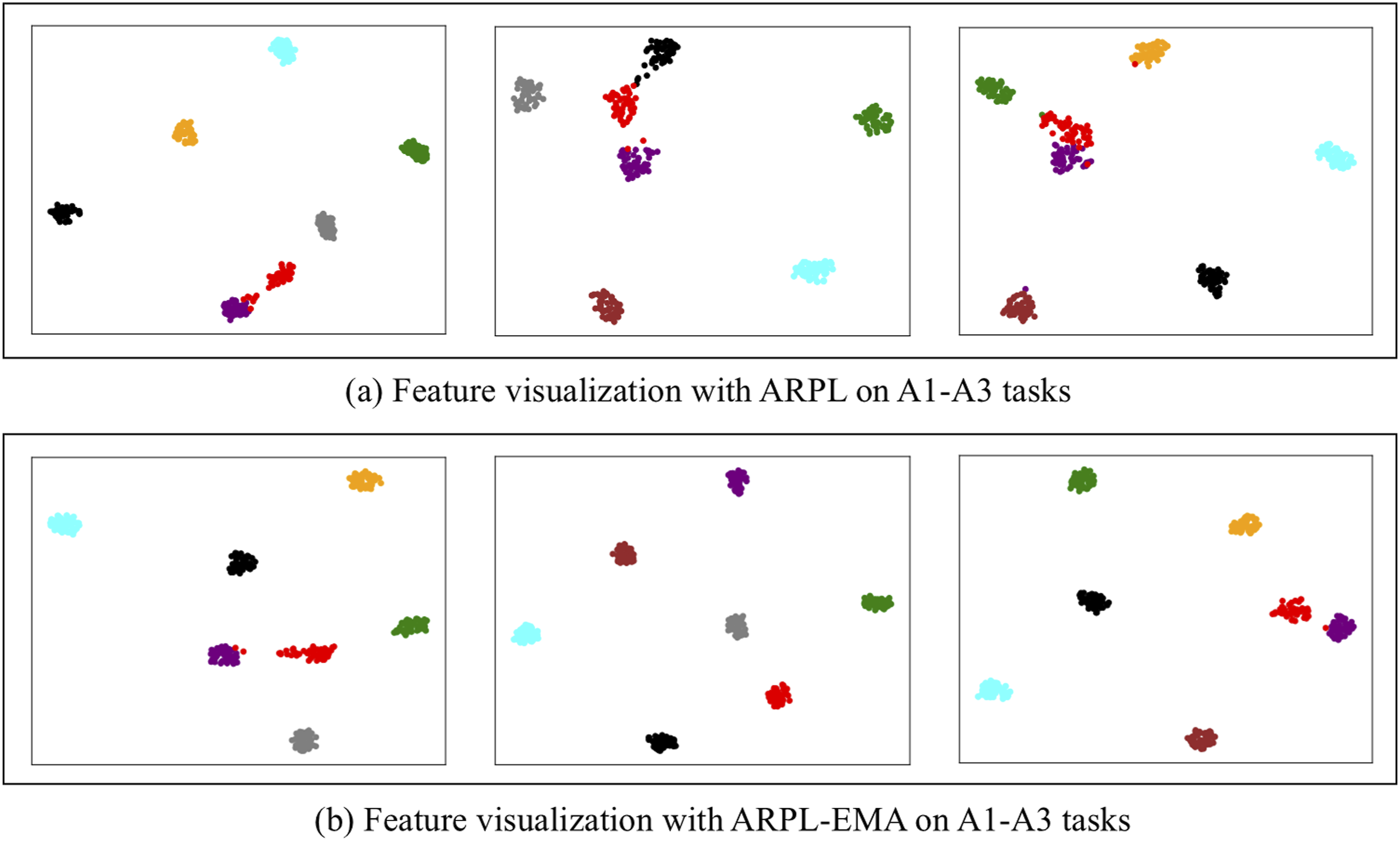
5. Conclusion
In this study, a new OSFD method for rolling bearings is proposed based on ARPL with EMA improvement. Unlike the traditional open set recognition methods ignoring the deep distribution of unknown classes, ARPL can model the potential unknown space and unknown distribution with the concept of reciprocal point and adversarial mechanism, which achieves better OSFD performance. Moreover, EMA is adopted to improve the feature extraction capability of ARPL model by providing more abundant and discriminative state information. The experimental analysis indicates that the proposed method can effectively complete open set fault recognition of rolling bearing, and the comparison results show that the proposed ARPL-EMA exhibits the best open set identification performance compared with the SROSR, Openmax, and EVM models.
It should be noted that the proposed method only considers the working conditions of different rotation speeds for the experimental verification. The influence of working conditions of different operation loads needs to be further explored in the future. Meanwhile, the open set identification of bearing compound faults has not been tested. The following works will be concentrated on the open set diagnosis of compound faults, which is more practical in real industrial applications.
Footnotes
Acknowledgments
The authors are grateful for the support of the National Natural Science Foundation of China (No. 52205111) and the support of Shanghai Weichangmeng Intelligent Technology Co., Ltd.
Declaration of conflicting interests
The author(s) declared no potential conflicts of interest with respect to the research, authorship, and/or publication of this article.
Funding
The author(s) disclosed receipt of the following financial support for the research, authorship, and/or publication of this article: this work was supported by the National Natural Science Foundation of China (No. 52205111) and the support of Shanghai Weichangmeng Intelligent Technology Co., Ltd.
