






Abstract
The adaptive finite-time sliding-mode control (SMC) scheme with a nonsingular barrier function is presented in this paper as a novel approach to path tracking and stabilization in nonlinear systems that are subject to external disturbances. In order to achieve rapid convergence in finite time without the singularities that are commonly associated with terminal sliding-mode approaches, the control strategy incorporates a nonsingular terminal sliding surface that was designed under Hurwitz stability conditions. Without overestimating control gains or requiring prior knowledge of the disturbance boundaries, robustness is improved by using an adaptive barrier function. A secure chaotic communication system employing controlled chaotic dynamics for data encryption and transmission is created in order to verify the efficacy and applicability of the suggested approach. The method’s potential in advanced control and soft computing applications is highlighted by extensive simulation results that show it can achieve high-accuracy tracking, effective disturbance rejection, low chatter behavior, and secure information encryption.
Introduction
Most engineering and physical systems are inherently nonlinear and often subjected to high levels of uncertainties. However, modeling and controlling nonlinear systems, especially over a wide range of operation, is a challenging problem. This is because nonlinear systems give rise to various interesting phenomena such as dead-zones, hysteresis, bifurcation, and chaos, which do not permit the use of linear approximations (Mohadeszadeh and Pariz, 2022). Nonlinear equations are also difficult to solve analytically. Uncertainties stemming from the lack of knowledge about system parameters and the unavailability of all system states further complicate the control problem (Cheng et al., 2023). Numerous control designs, ranging from classical robust and adaptive controls, to Lyapunov-based methods, gain-assignment methods, fuzzy controls, backstepping controls, and intelligent controls have been proposed in the literature for nonlinear uncertain systems (Wu et al., 2024; Zuo et al., 2024). Recent advancements in control systems and encryption methodologies have addressed critical challenges in high-order system stabilization and secure data transmission. In the domain of control systems, Guo and Hu proposed a time-base generator (TBG) approach for predefined-time stabilization of high-order systems under unknown disturbances, achieving robust convergence within a user-specified time by leveraging a novel time-varying gain (Guo and Hu, 2023). Similarly, Xiong and Chen introduced a radial basis function neural network (RBFNN)-based adaptive sliding mode control for nonlinear systems, effectively compensating for parameter uncertainties and external disturbances through real-time adaptation (Xiong and Chen, 2025). Both studies emphasize robust control strategies but differ in their approaches: Guo et al. focus on deterministic time convergence, while Xiong et al. prioritize adaptability to dynamic uncertainties. Meanwhile, Zhao et al. developed a supervised nonlinear dimensionality-reduction surrogate modeling method. Such a method combines the supervised kernel principal component analysis (SKPCA) and polynomial chaos-Kriging (PCK) techniques into the jointly surrogate modeling process and adaptively establishes the accurate mapping from the high-dimensional inputs to the output of the system (Zhao et al., 2024). In the encryption domain, Xie et al. present a new chaotic plotting technique, termed 2D-LMSM, which integrates improvements from logistic and sine mappings. The proposed method demonstrates significant advancements in the encryption process, showcasing its applicability in securing speech communications effectively (Huang et al., 2023). Herbadji et al. proposed an improved chaotic map for speech encryption, improving the chaotic behavior of traditional systems. According to the authors of the article proposed algorithm preprocesses speech signals to eliminate silent segments, allowing for efficient encryption while maintaining security. The tweakable aspect enables multiple encrypted outputs from the same voice using a single secret key, reducing computational resources and time (Herbadji et al., 2024). Liu et al. presented a multi-receiver certificateless searchable public key encryption (mCLSPE) scheme that leverages proxy re-encryption. This scheme addresses the inherent issues in searchable public key encryption (SPE) and also allows for more flexible addition of receivers and enhances data-sharing flexibility (Liu et al., 2025).
Sliding mode control (SMC) is renowned for being one of the main approaches to control uncertain nonlinear systems (Bartolini and Punta, 2010; Chen et al., 2018a; Cruz-Ortiz et al., 2022). Among SMC’s remarkable properties are its ability to convert complex systems into simple one, robustness, accuracy and ease of implementation (Luo et al., 2018; Yang and Ma, 2024). Additionally, combining SMC with other techniques such as predictive control (Li et al., 2022a; Ma and Huang, 2021), event-triggered control (Yang et al., 2020; Yao et al., 2020, 2022), backstepping control (Song et al., 2020), adaptive control (Fan and Yang, 2016; Guo et al., 2022; Jiang et al., 2020), and neural networks control (Lian et al., 2019; Park et al., 2019; Wang and Zhao, 2021) was shown to further simplify the control strategy (He et al., 2018).
Because of its resilience to perturbations, SMC finds extensive use in a wide range of industries, including robotics, aerospace, automotive systems, and secure communication networks. In dynamic environments, like autonomous vehicles traveling on constantly shifting terrain or communication systems with channel noise, SMC’s ability to maintain stability and performance is crucial. Traditional SMC methods, however, frequently call for exact knowledge of system parameters or disturbance boundaries, which may not be achievable in real-world scenarios. The adaptive mechanisms suggested in this work get around these restrictions and increase the applicability of SMC for systems with time-varying uncertainties by dynamically altering the control gains. Because it guarantees dependable performance while lowering the computational load related to control gains, this adaptive approach is appropriate for embedded systems with constrained resources.
The convergence time of controlled system is a critical factor in the system’s overall performance and operation. This is especially important for nonlinear systems with disturbances. Finite time control was a breakthrough in control system design and has played a significant role in control engineering field (In-Soo et al., 2006). Unlike linear feedback control, which achieves exponential convergence with infinite time and control gain, finite-time control ensures convergence within a fixed time. This convergence time is set in advance and depends on the initial states as well as the chosen control gain parameters (Li et al., 2022b). In Chen et al. (2018b) and Zuo and Wang (2022), the strict-feedback systems with unknown parameters finite time control problem was examined. In general, finite time control is necessary for SMC-based approaches because the systems’ dynamic behaviors, which are determined by the sliding mode, do not act until the system states reach the sliding mode surface (Wu and Huang, 2022; Zhang et al., 2020; Zhu et al., 2022). Hence, in contrast to the asymptotic stabilization that only ensures convergence in the infinite settling time, finite time control ensures that the states reach the sliding surface in the finite time.
In recent years, the application and the development of SMC for uncertain nonlinear systems has seen significant growth (Geronel and Bueno, 2025; Vaseghi et al., 2023). To address the challenge of state and parameter estimation in nonlinear systems, researchers have introduced sliding mode adaptive observers, as detailed in He et al. (2018), Na et al. (2013), and Rios et al. (2021). A high order sliding-mode observer has been proposed in Rios et al. (2021) for a nonlinear system. Global and uniform asymptotic stability was established using the small-gain theorem and the Lyapunov theory. A new approach to the adaptive control design for the pure-feedback systems is introduced in Na et al. (2013), which avoids the usage of backstepping. This technique employs a set of alternative states and their corresponding transform to achieve the desired control objectives. After system transformation, a high-order finite-time observer is employed to estimate the unknown states of the derived canonical system. Two adaptive neural control schemes have been proposed to achieve the tracking control. Finite time SMC control is proposed in Chen et al. (2018b) and Li et al. (2017, 2018). In Li et al. (2018), a formation SMC design is proposed for under-actuated ships. To realize the sliding mode control and avoid the singularity problem in SMC, terminal sliding mode control with linear sliding mode surface is designed. A terminal sliding mode approach was proposed in Chen et al. (2013) to deal with nonlinear systems with external disturbances and input saturations. However, the approach required large control inputs to properly stabilize the system. Sliding mode approaches were equipped with and adaptation mechanism in Edwards and Shtessel (2016) and Negrete-Chávez and Moreno (2016) to overcome this problem. In Li et al. (2017), the Markov jump nonlinear systems adaptive SMC is planned. Focuses on the actuator faults and system uncertainty, the reduced-order equivalent sliding motion, upon which the SMC surface is constructed, is stochastically stable. The system’s state trajectories are then controlled onto the sliding mode surface in a finite amount of time by the adaptive sliding mode controller. Because of its high application demands, the problem of tracking the trajectory of high order nonlinear systems with uncertainties or disturbances has sparked a lot of effort (Zhang et al., 2020). Current related outcomes, like backstepping design, higher order sliding mode integration, and increased virtual control complexity in each backstepping step, manifest alongside the system controller’s growing complexity and result in an expensive implementation process.
Barrier function (BF)-based SMC approaches were recently proposed as an adaptive strategy capable of ensuring a control gain that is not overestimated, guaranteeing the convergence of output variables to the specified neighborhood of zero, and not requiring any knowledge of the upper bound of the disturbances (Obeid et al., 2018). A barrier adaptive TSMC tactic was proposed in Mobayen et al. (2021) for the control of a disturbed Robotic Manipulator. An adaptive nonsingular TSMC technique was proposed in Mobayen et al. (2022) for robust stabilization of disturbed nonlinear systems. Using the linear matrix inequalities and the Lyapunov stability theorem, the state trajectories’ overall asymptotic stability was determined. Two chaotic systems were successfully controlled using the method when nonlinear dynamics and external disturbances were present. Chaos, an element of nonlinear systems theory, exhibits a fascinating nonlinear phenomenon that has been extensively studied, simulated, and implemented in circuits for the previous 40 years (Strogatz, 2018). From a communications standpoint, chaotic signals display remarkable attributes. Numerous investigations have characterized these signals as having broad bandwidth, extreme sensitivity to initial conditions, noise-resembling properties, impulsive correlation, and minimal cross-correlation between signals originating from different starting points (Dmitriev et al., 2023; Martinez-Gost et al., 2024; Vaseghi et al., 2017). The practical applications of chaos extend to various communication domains, including radar systems (Warjri et al., 2023), spread-spectrum technologies (Liu et al., 2024), secure communications (Suchit et al., 2024), ultra-wide-band transmission (Efremova and Kuzmin, 2024), and signal encryption (Alanazi et al., 2023).
The proposed adaptive nonsingular barrier function-based terminal sliding mode control (SMC) approach builds upon and advances existing barrier function-based SMC methods, such as those presented in Shao et al. (2021) and Shao et al. (2022). The work in Shao et al. (2022) develops a barrier function adaptive sliding mode (BFASM) control for uncertain nonlinear systems with actuator saturation, focusing on asymptotic convergence of tracking errors into a prespecified region. It employs a reaching control input to adapt to time-varying disturbances without requiring disturbance bound information, addressing chattering issues caused by overly aggressive control gains. Similarly, Shao et al. (2022) propose a BFASM controller for linear motor positioners, introducing a modified barrier function (MBF) to handle actuator saturation and ensure finite-time convergence of tracking errors, with adaptive gain adjustment to minimize control input when disturbances decrease. Our approach introduces several key improvements over these methods. First, we incorporate a nonsingular terminal sliding manifold, designed under Hurwitz stability conditions, which guarantees finite-time convergence of the sliding variable to the origin, avoiding singularities inherent in traditional terminal SMC approaches. This contrasts with Shao et al. (2022), which achieve asymptotic convergence, and Shao et al. (2021), which focus on finite-time error convergence but does not address singularity issues in the sliding manifold design. Second, our adaptive barrier function dynamically estimates unknown disturbance bounds without overestimation, similar to the referenced works, but is tailored for a broader class of disturbed nonlinear systems, including those exhibiting chaotic dynamics. This enables our method to handle complex nonlinearities and external disturbances more effectively, as demonstrated in the synchronization of a hyper-jerk chaotic system (sub-3 seconds, Section 5). Third, while Shao et al. (2021, 2022) focus on actuator saturation in mechatronic systems, our method extends the application to chaos-based secure communication, enabling dynamic cryptographic key evolution alongside rapid synchronization. This dual capability addresses critical challenges in secure communication systems, where both security and real-time performance are paramount, a feature not explored in the referenced studies. Finally, our approach further reduces chattering through the nonsingular terminal sliding manifold and adaptive gain tuning, offering smoother control signals (Section 5, Figure 7) compared to the conventional SMC methods discussed in the referenced works. These advancements make our proposed method particularly suitable for applications requiring robust control under significant uncertainties and rapid, secure synchronization, such as in chaos-based communication systems, while maintaining computational efficiency and practical implement ability for resource-constrained systems.
Inspired by the discussion above, we present in this paper a nonsingular finite-time stabilizing controller for a class of disturbance-containing nonlinear systems. The following are the paper’s principal contributions: (1) A design that combines finite time control with Hurwitz criterion to ensure the stabilization of disturbed nonlinear systems in finite time. (2) A design that guarantees the convergence of the sliding surface to the origin in finite time. (3) Successful implementation of the proposed design for chaotic encryption with the aim of ensuring secure communication.
The remainder of the document is structured as follows: The problem formulation is explained in Section Problem Formulation. The stability analysis and control design for the sliding model are highlighted in Section Main Results. The use of the suggested design for chaotic encryption to guarantee secure communications is described in Section Application to Secure Communications. The simulation results are presented later. The paper is finally concluded in Section Conclusions.
Problem formulation
Examine the nonlinear systems of nth order that have disturbances that are described by:
The nonlinear system described in (1) assumes that the functions
(Wu and Huang, 2022): Consider the candidate positive-definite Lyapunov function
Main results
Define the linear sliding surface
When
The equivalent control input is found from (5) as
The nonsingular terminal sliding manifold has the following definition for the sliding surface s(t)’s finite-time convergence to zero:
Examine the nonlinear system (1) with external disturbances. If the control input is designed as:
Applying the time-derivative of the nonsingular terminal sliding manifold (7) to the positive-definite Lyapunov function Substituting (1) into (10) yields: Then, the nonsingular terminal sliding manifold (7) reaches zero in the finite time. □ If Based on Lemma 1, the state
Consider the nonlinear system in the presence of external disturbance as equation (1). For the time
Construct the following positive-definite Lyapunov function: Substituting the adaptive controller (18) in (21), one attains
Consider the nonlinear system with external disturbance as equation (1). For the time
Construct the positive-definite Lyapunov function by
Application to secure communications
This section outlines the implementation of the proposed approach for a chaos-based secure communication system utilizing synchronized chaotic oscillators. In a secure chaotic communication setup, chaotic oscillators are positioned at both the transmitter and receiver ends. The transmitter’s chaotic system generates chaotic signals that, along with scrambling algorithms, blend and transmit the scrambled message. To extract the received signal, the receiver requires identical chaotic signals used in the scrambling process. Consequently, the receiver’s chaotic system must be in sync with the transmitter’s chaotic system. This synchronization is comparable to aligning the receiver’s local oscillator with the sender’s carrier in traditional telecommunications for message detection. However, due to chaotic signals’ extreme sensitivity to initial conditions, synchronizing these chaotic oscillators is considerably more challenging, demanding sophisticated and precise algorithms. As a result, without knowledge of the chaotic oscillator’s dynamics underlying the scrambling process and access to the synchronizing and control signal, message retrieval becomes extremely difficult. Figure 1 illustrates the proposed chaos-based secure communication system. As shown in this figure, the model consists of synchronized chaotic oscillators deployed at both the transmitter and receiver ends. At the transmitter, the master chaotic oscillator generates chaotic signals Block diagram of the proposed chaos-based secure communication system.
Because chaotic systems are extremely sensitive to initial conditions and parameter changes, synchronizing chaotic oscillators for secure communications is a significant challenge. Out-of-synch and inaccurate message recovery can result from even a small oscillator mismatch between the transmitter and receiver. When there are outside disruptions or channel noise present, traditional synchronization methods like linear feedback control frequently fail to produce quick and reliable synchronization. These problems are addressed by the suggested adaptive nonsingular TSMC technique, which ensures that the synchronization error will converge to zero in finite time even in the presence of disturbances. The technique reduces chatter and ensures robust performance by implementing an adaptive barrier function that dynamically modifies the control gains without requiring prior knowledge of the system parameters or disturbance boundaries. For real-time secure communication systems, where low latency, high reliability, and noise resilience are essential, this makes the suggested approach especially appropriate.
In the proposed chaos-based secure communication method, we use two channels to speed up the synchronization process. The encryption/decryption mechanism can be summarized as follows:
Encryption: A nonlinear function
Synchronization: The receiver side of the communication system incorporates a synchronization block to recover the chaotic oscillator signals and obtain the required data for decryption. The transmitter oscillator signals are transmitted through one channel for synchronization purposes. These signals are adequate to generate receiver oscillator signals which are exact estimates of the master oscillator signals. Retrieving this signal is crucial for decrypting the message received on the second channel. Section 3 will provide detailed information about the synchronizer.
Decryption: After recovering the oscillator signals, the decryption function
The proposed method offers advantages over existing approaches, including adaptive robustness without over-estimation (dynamically adjusting gains via barrier functions, eliminating the need for prior disturbance bounds), and reduced chattering (smoother control signals compared to conventional SMC). Its nonsingular terminal sliding manifold avoids instability issues, while the application to chaos-based secure communication (Section 4 and 5) demonstrates superior disturbance rejection and synchronization performance (e.g., error convergence in <3s, Figures 2–6). Though minor limitations exist (e.g., parameter tuning), the method’s faster convergence, lower chattering, and adaptability make it highly effective for real-world nonlinear systems. Also, the proposed adaptive nonsingular barrier function-based finite-time sliding mode control delivers crucial advantages for chaotic secure communications by simultaneously enabling dynamic cryptographic key evolution and ultra-fast synchronization. Since the control proofs are independent of the specific chaotic dynamics (Theorems 1–3), the transmitter can continuously modify oscillator parameters to generate fresh encryption keys for each transmission while maintaining sub-3-second synchronization (Figures 2–6)—a critical combination that ensures both enhanced security through dynamic key generation and practical usability in real-time applications. This dual capability fundamentally addresses the core challenges of maintaining cryptographic security while achieving the rapid synchronization essential for practical implementation in chaos-based communication systems.
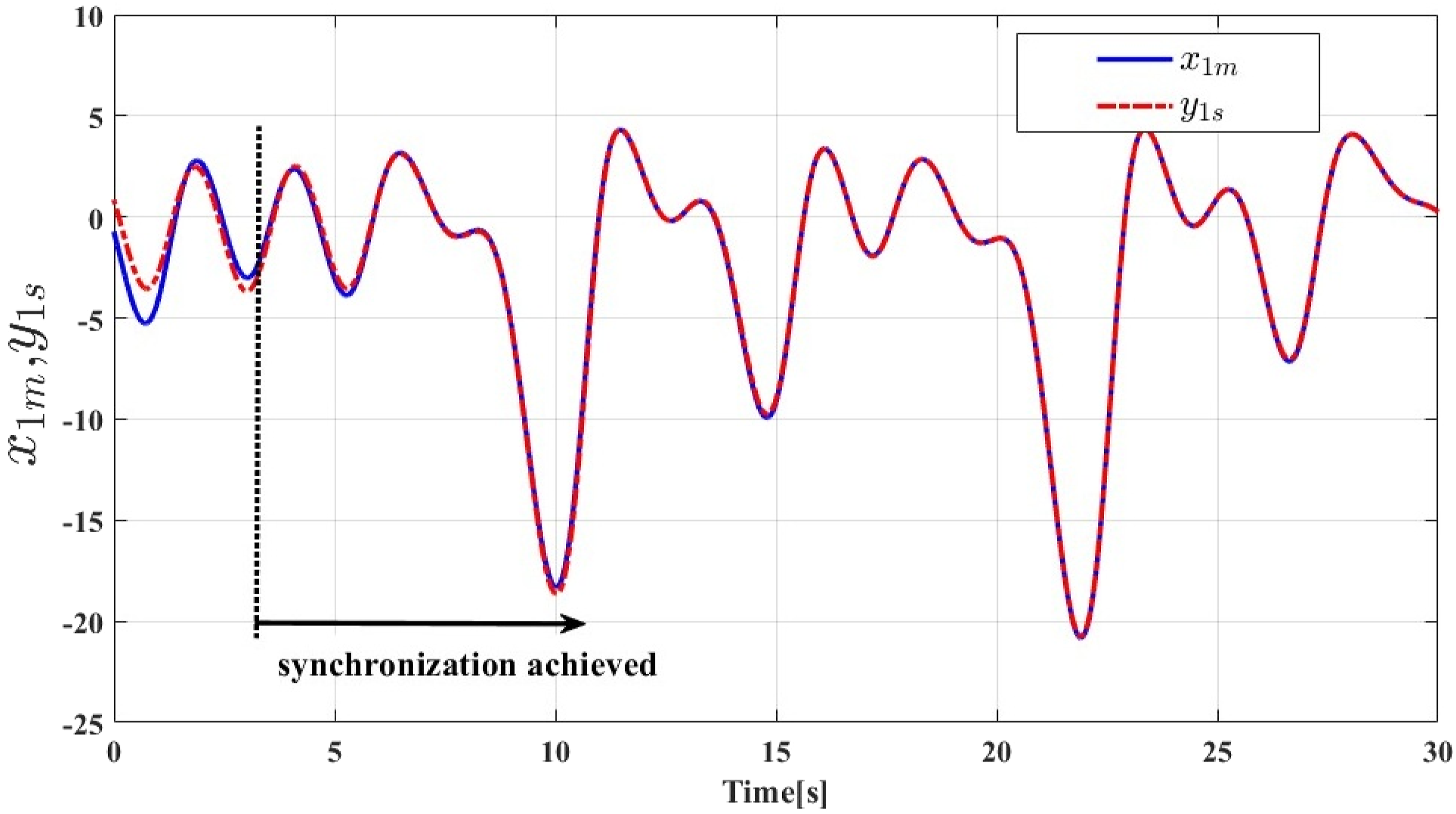
Time trajectories of states 𝑥1𝑚, y1s.
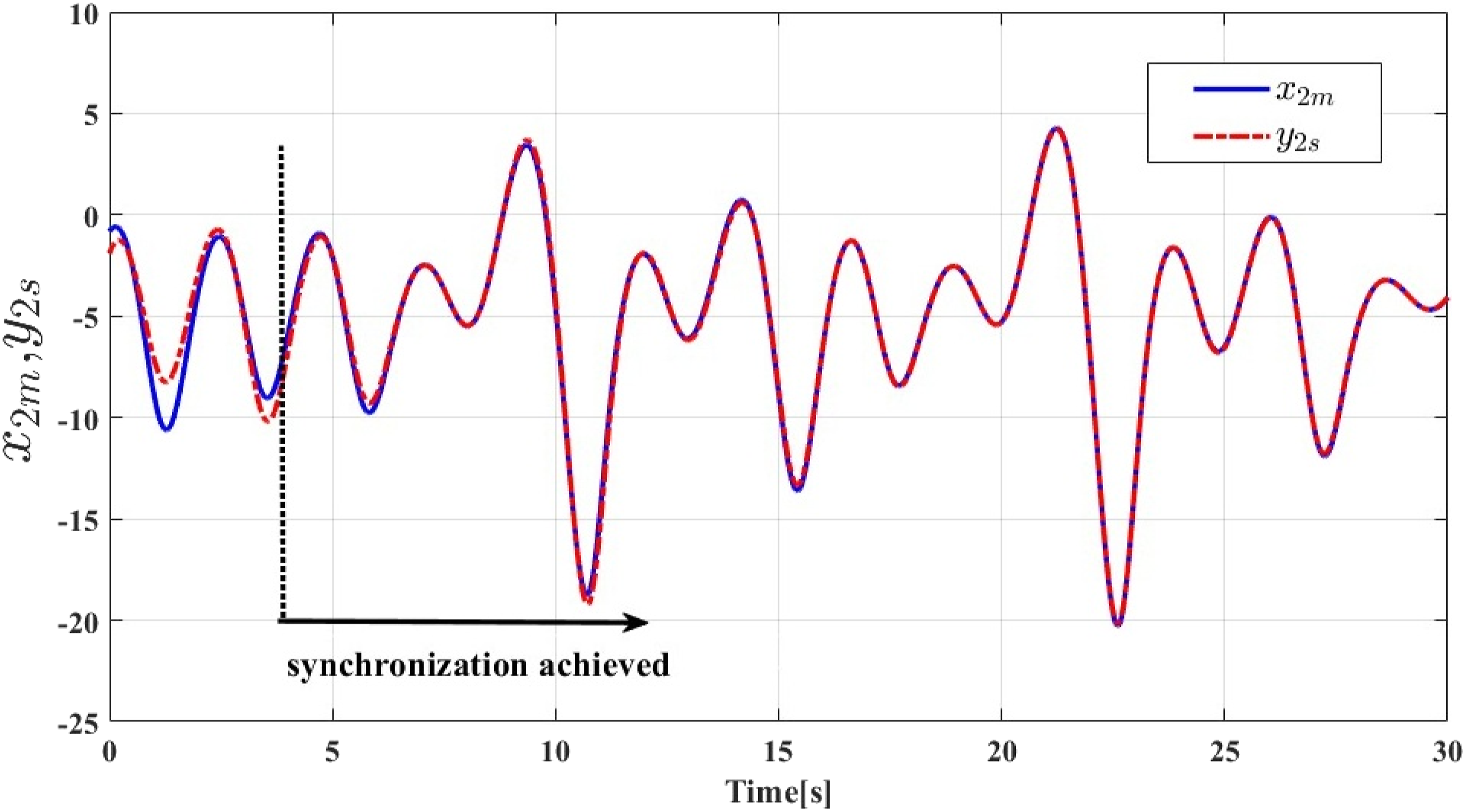
Time trajectories of states 𝑥2𝑚, y2s.
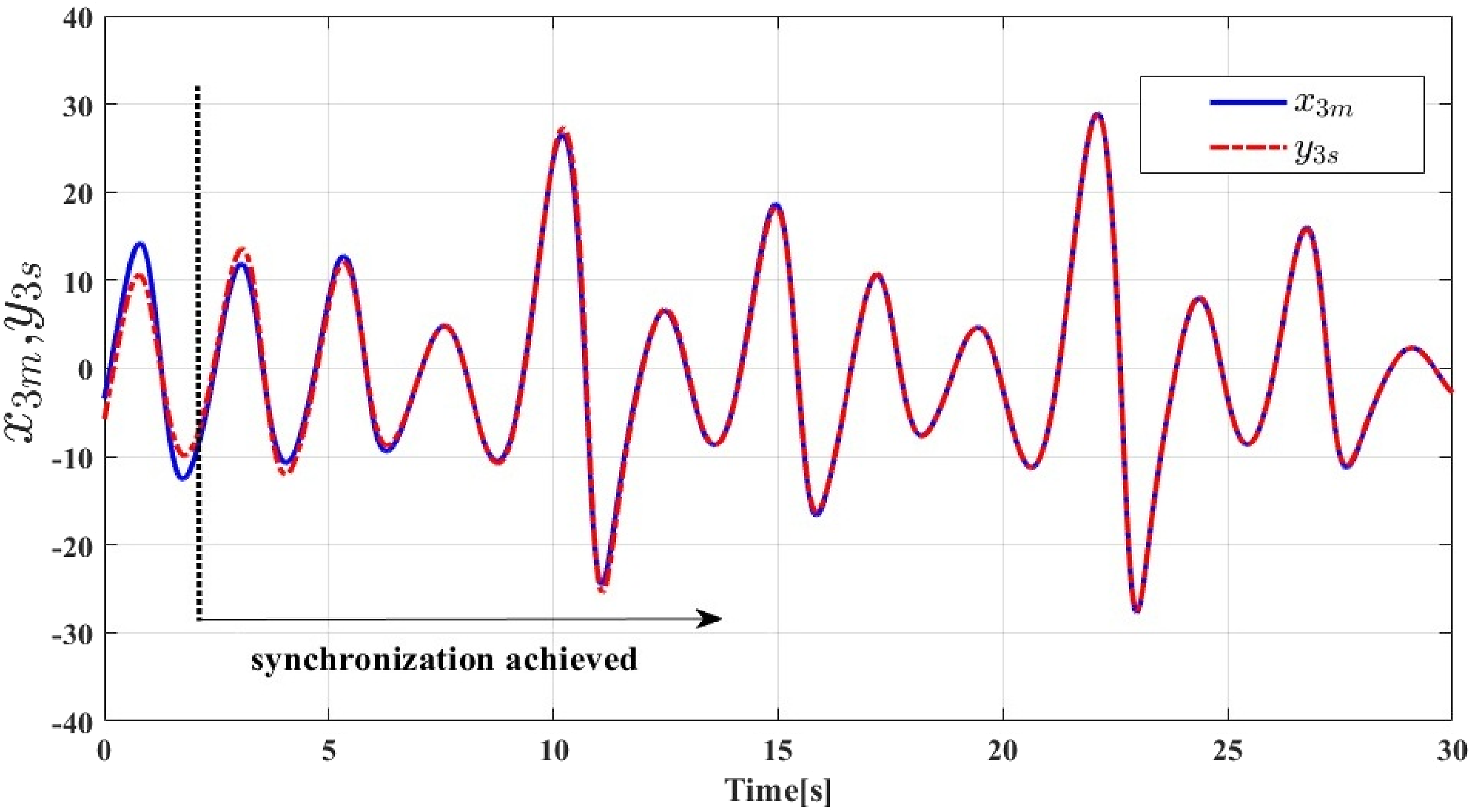
Time trajectories of states 𝑥3𝑚, y3s.
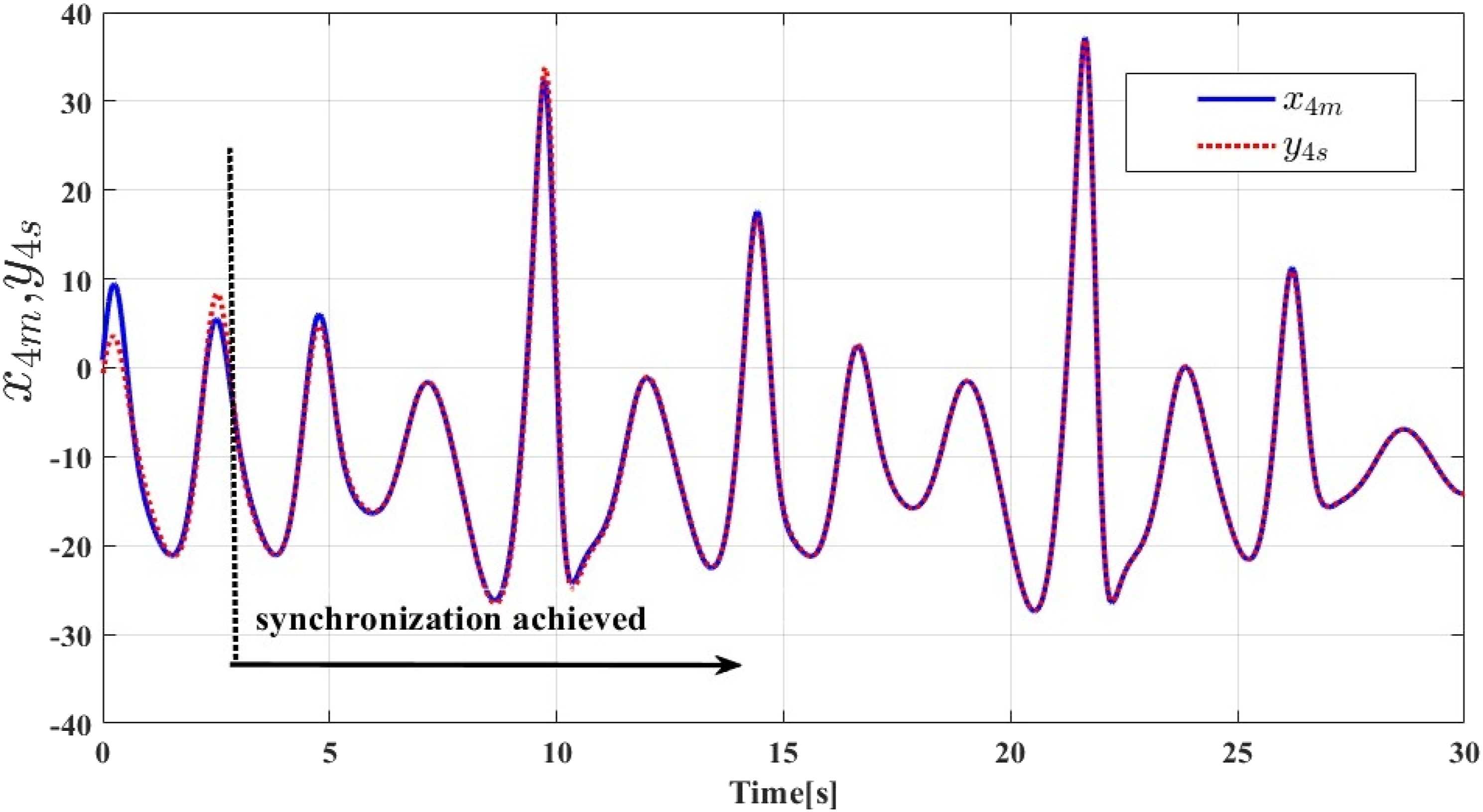
Time trajectories of states 𝑥4𝑚, y4s.

Time trajectories of the error signals.
Simulation results
This section employs numerical simulations to assess the effectiveness and relevance of the proposed adaptive nonsingular barrier function-based finite-time sliding mode control for disturbed nonlinear systems with application to chaos-based secure communication. The simulation trials were directed on a computer prepared with an Intel(R) Core (TM) i7-6820HQ CPU running at 2.70 GHz, 16 GB of RAM, and a 750 GB hard drive. The system operated on 64-bit Microsoft Windows 11, with MATLAB R2023a serving as the computational environment.
Consider the following 4-D master chaotic hyper-jerk (Vaidyanathan et al., 2018):
The system model in equation (1) includes external disturbances By subtracting equation (29) from (30), the synchronization error between master and slave chaotic systems is obtained in the following form:
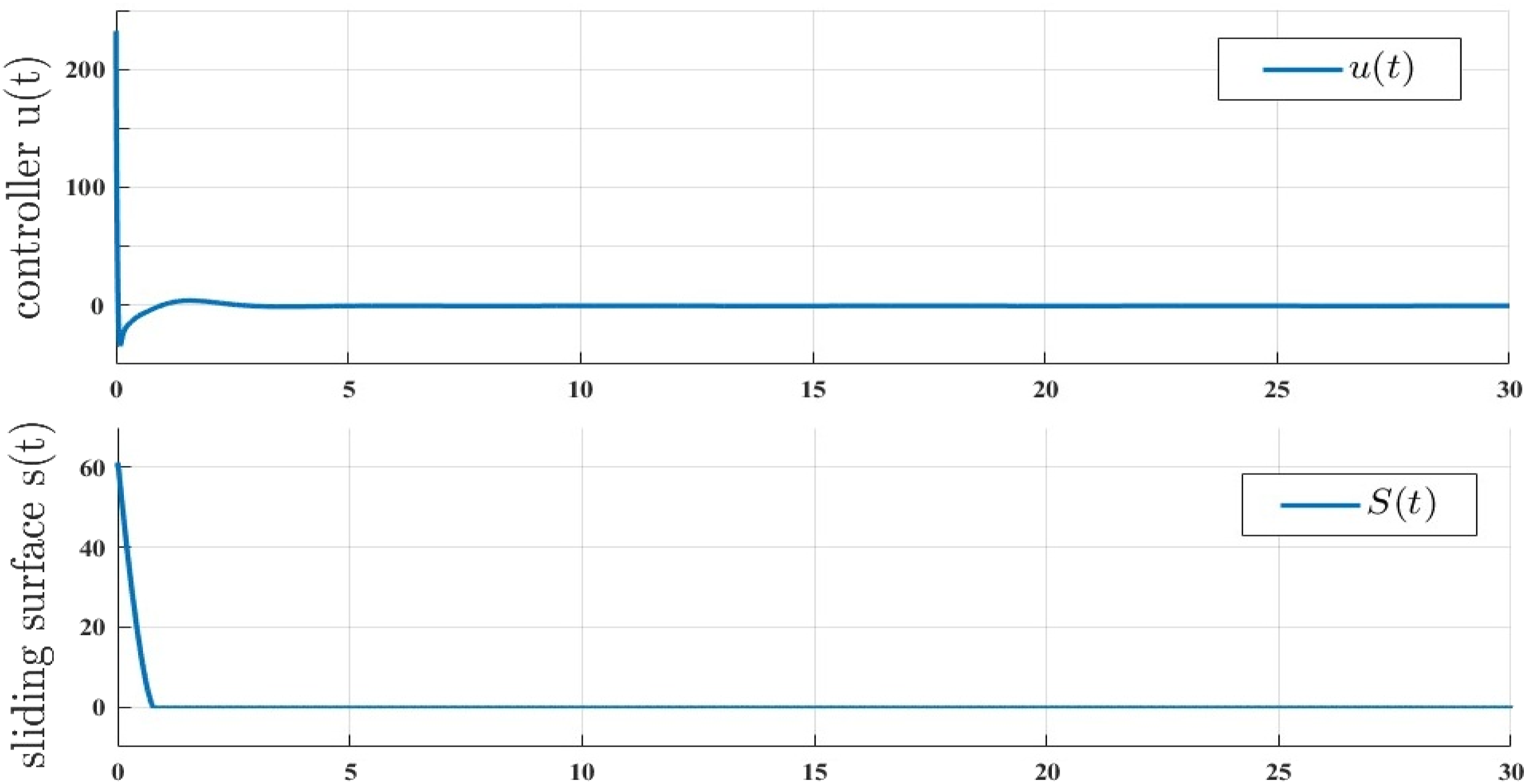
Time histories of the control input 𝒖(𝒕) and sliding surface 𝒔(𝒕).

Time histories of the adaptation gain
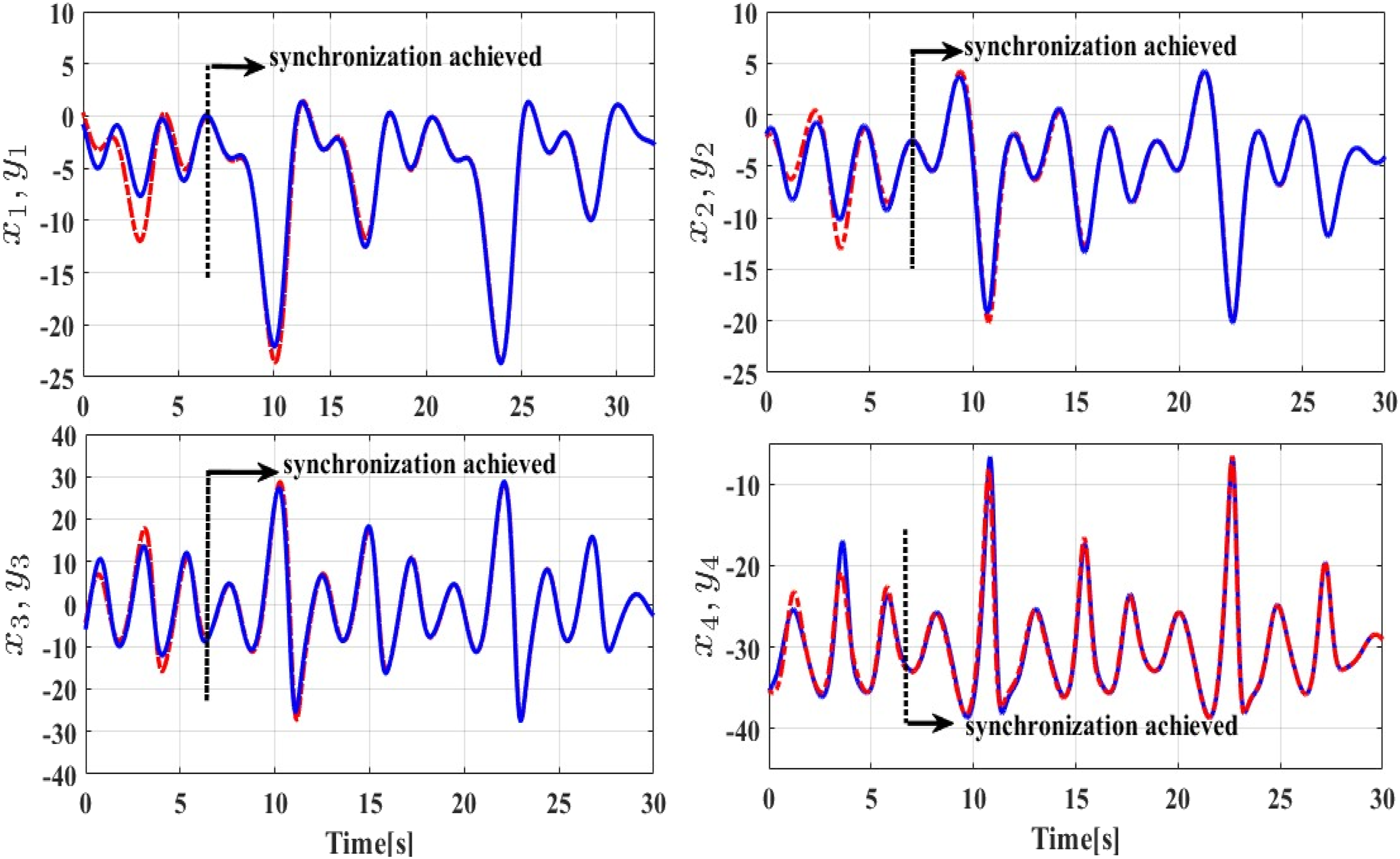
Synchronization performance using controller in Wang (2024).
In the proposed barrier-function adaptive sliding mode control (SMC) methodology, key parameters such as Figures 2–5 depict the time trajectories of the master chaotic states Figure 6 illustrates the temporal progression of the synchronization error signals, defined as Figure 7 presents the time histories of the control input To robustly validate the efficacy of the proposed adaptive nonsingular barrier function-based terminal sliding mode control (ANBFSMC), we conducted a rigorous comparative analysis against the state-of-the-art adaptive terminal sliding-mode control (ATSMC) method by Wang (2024) under identical conditions synchronizing the 4-D hyper-jerk chaotic system (Equations (29) and (30)) while subjected to disturbances The following section demonstrates the feasibility and implementation of the proposed chaotic cryptosystem through numerical simulations. The original message Figure 8(a) shows the encrypted signal, and Figure 8(b) compares the original message

(a) Encrypted signal and (b) original and decrypted signal.
Conclusions
This study presents a nonsingular barrier function-based SMC for disturbed nonlinear systems, applied to secure chaotic communication. Motivated by the need to control nonlinear systems under disturbances, the proposed method uses an adaptive barrier function to estimate disturbances without prior knowledge of their bounds. A Hurwitz-based sliding surface ensures exponential state convergence, while a nonsingular terminal sliding manifold achieves finite-time convergence to the origin. Applied to a hyper-jerk chaotic system, the method demonstrated zero error signals in finite time, robust to unmodeled dynamics and disturbances, with no chattering in the control signal. Its application to data encryption highlights its potential for secure communication. Future research could explore: (a) extending the method to multi-agent systems, (b) integrating machine learning for enhanced adaptability, and (c) evaluating robustness against cyber-attacks in chaotic encryption. These directions invite further investigation into the method’s scalability and security, advancing control and communication technologies.
Footnotes

Funding
The authors received no financial support for the research, authorship, and/or publication of this article.
Declaration of conflicting interests
The authors declared no potential conflicts of interest with respect to the research, authorship, and/or publication of this article.