






Abstract
Emergency relief bridges are critical lifelines in post-disaster scenarios but often suffer from excessive vibration and deformation due to their lightweight design. Conventional active control systems require high energy input. Passive systems lack adaptability. To address these challenges, this study proposes a novel Direct-Drive Neutral Equilibrium Mechanism (DNEM), which leverages geometric nonlinearity to create a “virtual pier” effect, achieving high stiffness with minimal energy consumption. Recognizing the conflicting objectives of minimizing structural displacement and reducing actuation energy, the Non-dominated Sorting Genetic Algorithm II (NSGA-II) was employed to optimize the geometric and control parameters of the mechanism. A numerical simulation platform representing a scaled emergency bridge was established to validate the system’s performance under moving loads. The results demonstrate that the optimized DNEM system operates under a “Zero Power Force Control” (ZPFC) regime, where most of the supporting force is generated through the redistribution of geometric potential energy. Under a 150 N dynamic load—equivalent to approximately 1.5 tons on a prototype bridge with a geometric scaling factor of
Keywords
1. Introduction
1.1. Research background and motivation
Taiwan, located at the convergence of the Eurasian and Philippine Sea Plates within the Circum-Pacific seismic belt, is highly vulnerable to earthquakes. Increasingly frequent extreme weather events, including typhoons and heavy rainfall, further intensifies compound disaster risks (Liao et al., 2002). Rapid restoration of transportation networks following disasters is essential for emergency rescue, evacuation, and supply delivery. Emergency relief bridges, characterized by modularity, lightweight construction, and rapid deployment capability, play a critical role in restoring damaged transportation infrastructure (Zohourian et al., 2025).
However, lightweight bridge systems generally possess low structural stiffness and damping capacity, making them highly susceptible to excessive vertical deformation under moving vehicles, wind excitation, and aftershocks (Sánchez-Haro et al., 2023). Large structural displacement not only reduces operational safety but also accelerates fatigue accumulation and increases the risk of secondary structural failure (Fisher and Roy, 2011). Consequently, developing a vibration control strategy capable of enhancing bridge stiffness, suppressing deformation, and operates effectively under power-constrained disaster conditions has become an important research challenge.
1.2. Development and limitations of structural control technologies
Structural vibration mitigation methods are commonly categorized into passive, active, and semi-active control systems (Soong and Spencer, 2002). Passive devices such as tuned mass dampers (TMDs) are widely used because of their simplicity and robustness. However, their effectiveness is highly sensitive to structural frequency variations induced by changing loads or boundary conditions (Heinen et al., 2025; Lin et al., 2010). Active control systems provide stronger vibration suppression through externally applied control forces, but they require substantial energy consumption and sophisticated feedback control algorithms, limiting their applicability in post-disaster environments (Datta, 2003; Symans and Constantinou, 1999).
Semi-active systems, including magnetorheological dampers, reduce external energy demand while maintaining certain adaptive capabilities. Nevertheless, their control authority is still constrained by passive mechanical characteristics, particularly under low-frequency and large-displacement bridge responses (Dyke et al., 1996). These limitations indicate the necessity of developing hybrid structural control mechanisms capable of combining the energy efficiency of passive systems with the adaptability and precision of active control technologies.
1.3. Applications of negative stiffness and neutral equilibrium mechanisms
Neutral equilibrium mechanisms (NEMs) and quasi-zero stiffness (QZS) systems utilize geometric nonlinearity to generate equivalent negative stiffness. When combined with the positive stiffness of a structural system, the effective dynamic stiffness can approach zero, thereby achieving high static load-bearing capacity while significantly reducing dynamic responses and energy consumption (Carrella et al., 2007; Ibrahim, 2008; Liu et al., 2013; Platus, 1992).
Negative stiffness mechanisms have demonstrated promising performance in vibration isolation and energy harvesting applications (Le and Ahn, 2011; Zhou and Liu, 2010). However, conventional designs relying on cams, magnetic elements, or complex linkage systems often suffer from backlash, frictional losses, limited bandwidth, and insufficient dynamic responsiveness (Xu et al., 2013). Moreover, most existing studies have primarily focused on small-scale precision engineering applications, while their implementation in large-scale civil infrastructures such as bridges remains limited.
To address these limitations, this study proposes a Direct-Drive Neutral Equilibrium Mechanism (DNEM), which integrates geometric negative stiffness with direct-drive servo actuation technology. Unlike conventional transmission-based systems, the proposed DNEM eliminates backlash and friction associated with gears and hydraulic mechanisms, enabling millisecond-level dynamic response and improved control precision. Furthermore, the mechanism is designed to achieve Zero Power Force Control (ZPFC), where the majority of the supporting force originates from internally redistributed geometric and elastic potential energy rather than continuous actuator output (Shih et al., 2018; Sung and Shih, 2025). This concept extends neutral equilibrium theory from precision engineering applications to temporary bridge vibration control under disaster conditions.
1.4. Necessity of AI-based optimization in mechanism design
The performance of DNEM is highly sensitive to geometric parameters, spring stiffness, and control gains. Because the system exhibits strong nonlinear coupling and conflicting objectives between displacement suppression and energy minimization, conventional trial-and-error approaches and gradient-based optimization methods are insufficient for identifying globally optimal solutions (Marler and Arora, 2004; Zakian and Bakhshpoori, 2024).
Artificial intelligence and evolutionary optimization algorithms have demonstrated significant advantages in solving nonlinear, multi-objective, and high-dimensional engineering optimization problems (Kaveh, 2017). Among these approaches, the Non-dominated Sorting Genetic Algorithm II (NSGA-II) is particularly suitable due to its fast non-dominated sorting strategy, elitism mechanism, and ability to preserve population diversity during optimization (Balling et al., 2006; Coello, 2000; Deb et al., 2002).
Accordingly, this study develops an NSGA-II-optimized DNEM for emergency bridge applications. A nonlinear dynamic model is established to identify Pareto-optimal parameter combinations that balance structural safety and energy efficiency. The proposed framework is subsequently evaluated through numerical simulations to verify its feasibility, robustness, and micro-deformation control capability under dynamic loading conditions.
2. Direct-drive neutral equilibrium mechanism (DNEM): Concept and technical features
The Direct-Drive Neutral Equilibrium Mechanism (DNEM) proposed in this study integrates structural dynamics, mechatronics, and AI-based optimization to address the limitations of conventional structural control systems. The primary objective is to provide lightweight emergency bridges with enhanced stiffness, rapid dynamic response, and low energy consumption under disaster-response conditions.
Unlike traditional active control systems that rely on continuous actuator force to resist structural deformation, DNEM utilizes geometric negative stiffness to redistribute internal elastic energy. Consequently, the structure itself becomes the primary load-bearing component, while the actuator performs only fine compensation and dynamic adjustment. This mechanism significantly reduces external energy demand while maintaining high control precision.
2.1. Virtual pier concept and geometric negative stiffness
Emergency bridges are particularly vulnerable to excessive displacement because of their low stiffness and damping characteristics. Conventional reinforcement approaches, including additional physical supports or tuned mass dampers (TMDs), are often limited by installation constraints and sensitivity to changing dynamic conditions.
To overcome these limitations, DNEM introduces a controllable “virtual pier” mechanism through geometric negative stiffness (Figure 1). When the negative stiffness generated by the mechanism is arranged in parallel with the bridge stiffness, the equivalent system stiffness approaches a neutral equilibrium condition: Conceptual diagram of the “virtual pier” effect using DNEM for bridge mid-span support.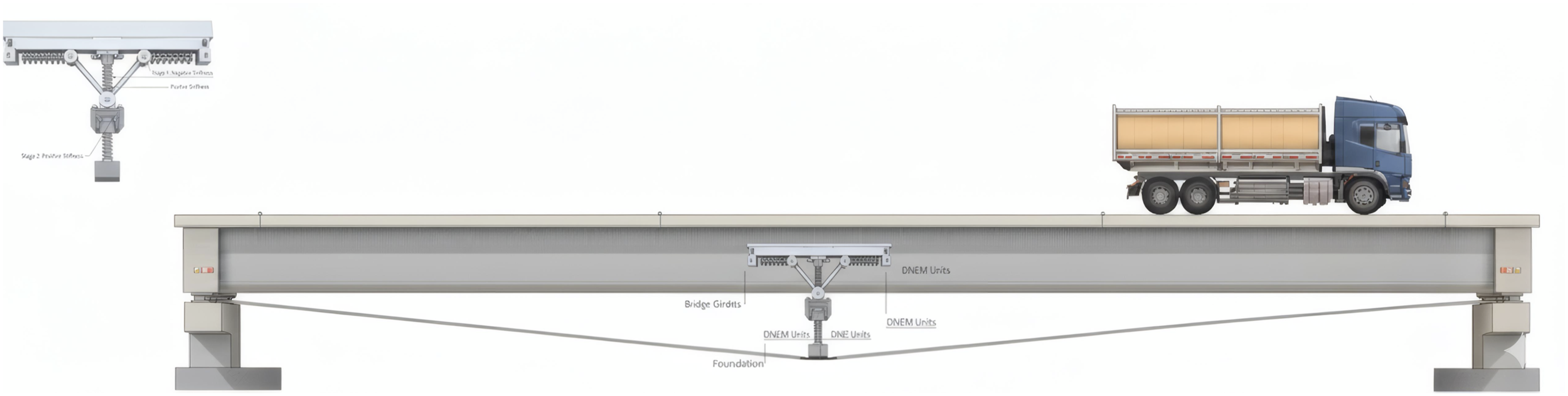

This equation indicates that the total stiffness approaches zero, rather than being exactly zero. Under this condition, external loads are primarily balanced by redistributed geometric and elastic potential energy rather than direct actuator output. As a result, the system achieves high supporting capability with minimal energy consumption. Instead of “forcing” the bridge upward, DNEM reduces the active force required to maintain structural stability.
2.2. System configuration and operating principle
The DNEM system consists of three major components: a geometric linkage mechanism, a direct-drive actuation module, and a sensing-control subsystem.
The mechanical structure adopts a rhomboid or scissor-type linkage integrated with horizontally oriented compression springs. When bridge deflection occurs, the linkage transforms vertical structural motion into horizontal spring deformation, thereby storing elastic potential energy. Through geometric amplification, the stored energy is redirected into vertical restoring force to counteract bridge displacement.
To eliminate transmission backlash and friction commonly associated with gearboxes or hydraulic systems, DNEM employs direct-drive servo motors. This configuration enables high-precision micro-displacement control and millisecond-level dynamic response, allowing real-time compensation under moving loads. Importantly, the actuator is responsible only for minor corrective actions, rather than serving as the primary force source, which substantially improves overall energy efficiency.
2.3. Key technical features
Based on NSGA-II optimization and numerical verification, DNEM demonstrates four major technical characteristics. (1) Zero Power Force Control (ZPFC)
The proposed DNEM operates using the Zero Power Force Control (ZPFC) concept. ZPFC does not imply zero actuator force; instead, it indicates that the net actuator work over a loading–unloading cycle approaches zero because most supporting forces originate from internally stored elastic and geometric energy.
The energy balance of the coupled bridge–DNEM system is expressed as:

During bridge deformation, kinetic energy is converted into spring energy and subsequently redistributed through geometric nonlinearity to generate restoring force, shown in Figure 2. Therefore, actuator energy demand remains extremely small relative to the total supporting force: Energy flow and redistribution in the DNEM under zero-power force control (ZPFC).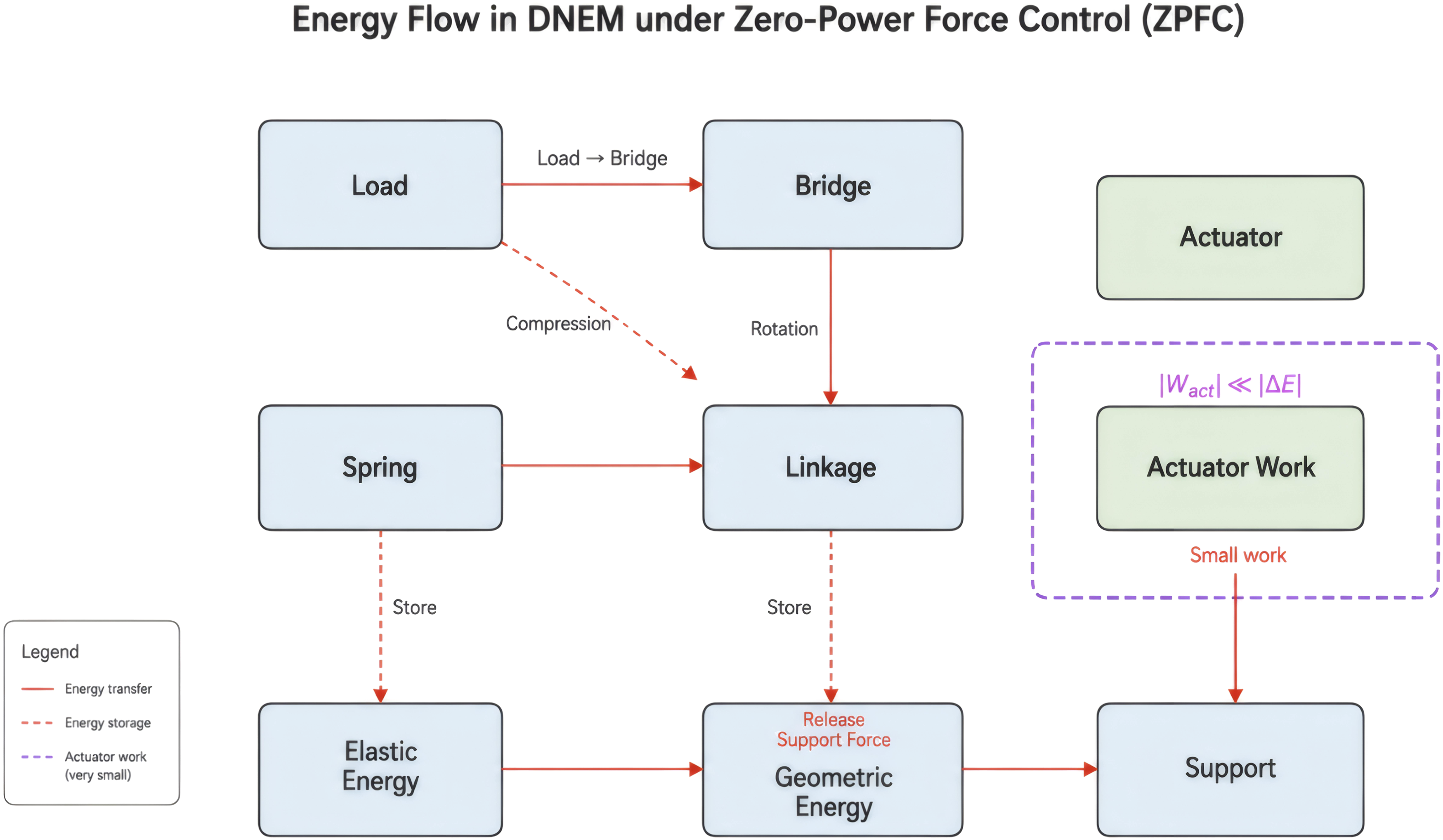

This mechanism enables DNEM to achieve high structural support with minimal external power input. (2) High Linearity and Predictability
After NSGA-II optimization, the mechanism exhibits near-linear force–displacement behavior with high correlation accuracy (3) Rapid Micro-Displacement Stabilization
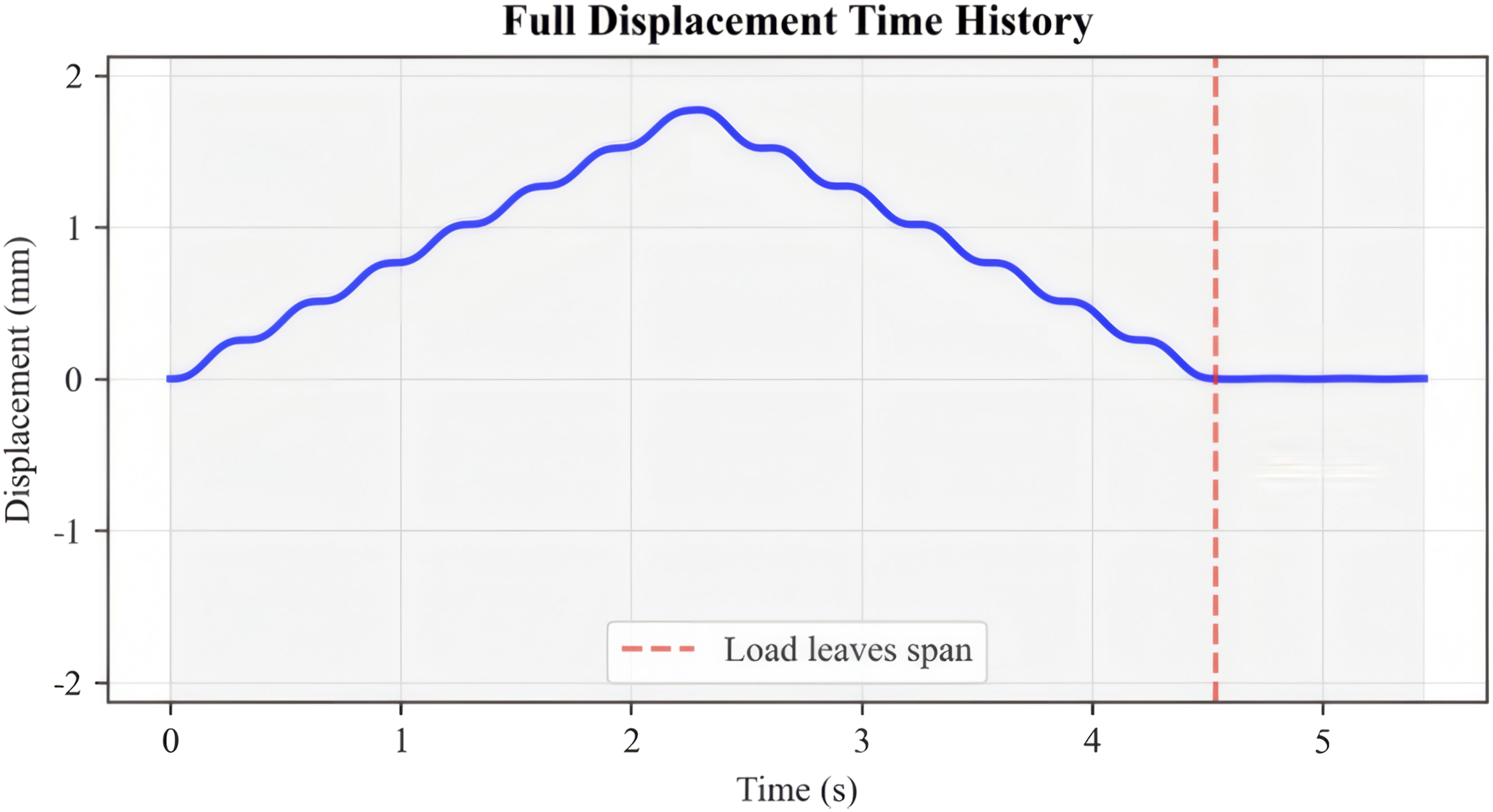
The optimized system effectively suppresses structural deformation. Under a 150 N moving load, the maximum mid-span displacement is limited to approximately 1.77 mm. After load removal, the structure rapidly returns to equilibrium in 0.1 s without residual deformation, demonstrating excellent transient stability and vibration suppression capability. (4) AI-Based Adaptive Optimization
Because DNEM performance is strongly influenced by geometric configuration and control parameters, NSGA-II is employed to identify Pareto-optimal solutions under different span lengths, loading conditions, and energy constraints. This AI-based optimization framework enables rapid adaptation of the mechanism for different temporary bridge applications while balancing deformation control and energy efficiency.
Overall, DNEM combines geometric mechanics, direct-drive actuation, and computational intelligence into a unified structural control framework. Its geometry-dominated energy redistribution, rapid response capability, and low energy demand provide a promising solution for future emergency bridge systems and disaster-resilient infrastructure applications.
3. Methodology
This study develops an intelligent Direct-Drive Neutral Equilibrium Mechanism (DNEM) for emergency bridge applications by integrating geometrically nonlinear mechanics with AI-based evolutionary optimization. The proposed framework aims to simultaneously achieve effective deformation suppression, rapid dynamic response, and low energy consumption. The methodology consists of theoretical modeling, multi-objective optimization, and numerical performance verification.
3.1. Research framework
The research procedure is divided into three stages.
3.1.1. Stage I: Dynamic modeling and critical equilibrium analysis
A geometrically nonlinear dynamic model of the coupled bridge–DNEM system is established. The kinematic and dynamic relationships of the linkage mechanism are formulated to investigate the conditions required for achieving near-neutral equilibrium. Particular attention is given to the Zero Power Force Control (ZPFC) condition, in which most supporting forces originate from internally redistributed geometric and elastic potential energy rather than continuous actuator input.
3.1.2. Stage II: AI-based multi-objective optimization
The DNEM parameters are optimized using the Non-dominated Sorting Genetic Algorithm II (NSGA-II). Two conflicting objectives are considered: (i) minimization of structural displacement and (ii) minimization of actuator energy consumption. The design variables include the control gain parameter
3.1.3. Stage III: Numerical verification
A scaled emergency bridge simulation platform is developed to evaluate the optimized DNEM under moving-load conditions. The system response is examined in terms of displacement suppression, energy consumption, phase-plane stability, and convergence behavior. These analyses verify the feasibility and robustness of the proposed control framework.
To close the design loop, the optimized parameters derived from Stage II are fed back into the dynamic model of Stage I for re-validation, and if necessary, the optimization is iteratively repeated until the performance criteria are consistently satisfied.
3.2. Mechanical principle and analytical formulation of DNEM
The DNEM achieves structural control by introducing equivalent geometric negative stiffness to counteract the inherent positive stiffness of the bridge system. As the equivalent stiffness approaches zero, the system enters a near-neutral equilibrium state, allowing large supporting forces to be generated through internal energy redistribution rather than high actuator output.
3.2.1. Critical equilibrium potential model
The total potential energy of the coupled bridge–DNEM system is expressed as:

Near-neutral equilibrium is achieved when the second derivative of the total potential energy approaches zero near the equilibrium position:

Under this condition, the effective stiffness becomes very small, enabling efficient force redistribution with minimal actuator energy input.
3.2.2. Zero-power force control condition
The DNEM output force is obtained from the static equilibrium of the linkage mechanism, as illustrated in Figure 3, considering the geometric parameters and kinematic compatibility conditions of the system, as follows: Schematic diagram of DNEM showing geometric parameters and kinematic compatibility.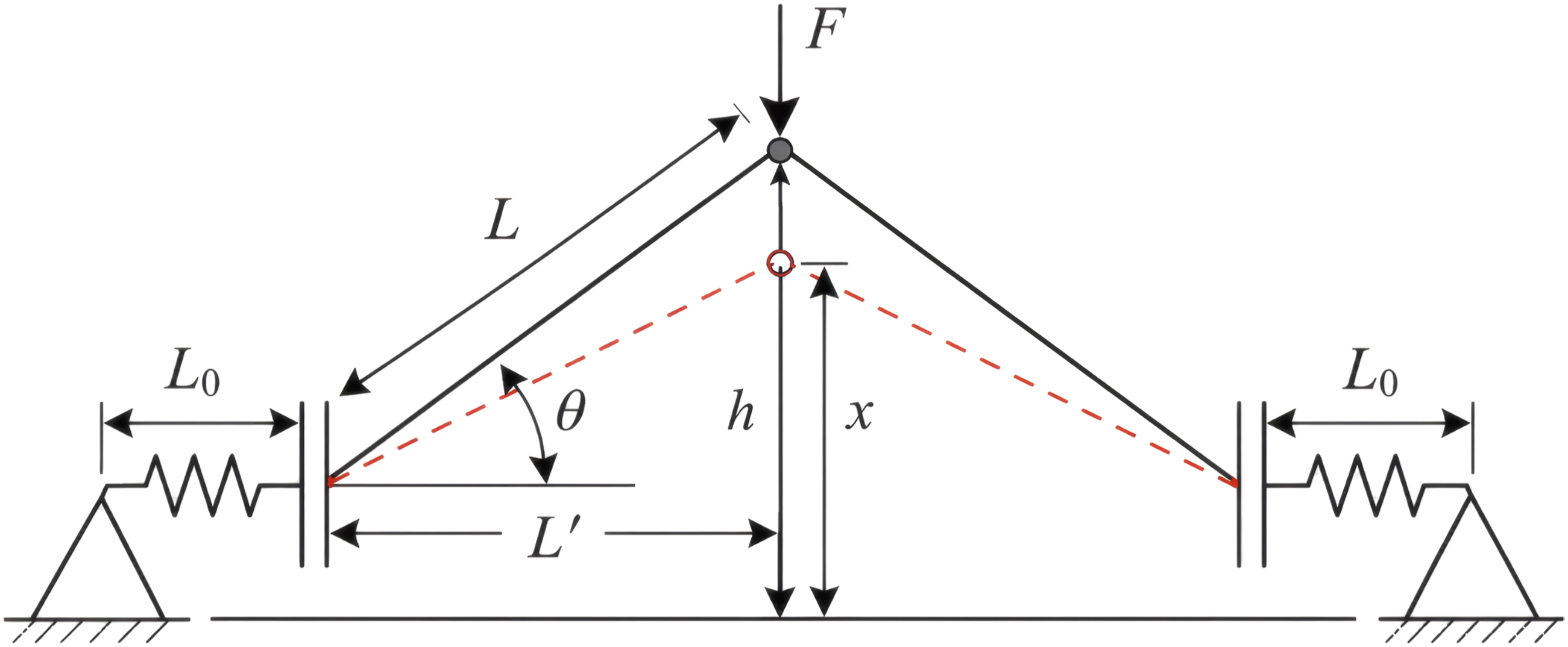

When the geometric compatibility condition and stiffness-matching relationship are satisfied:

and

The system theoretically approaches the Zero Power Force Control condition:

In practice, a small actuator force is still required to compensate for friction, hysteresis, and dynamic lag. However, the net mechanical work remains extremely low because most supporting forces originate from pre-stored elastic and geometric potential energy.
3.2.3. Kinematic compatibility and equivalent stiffness
The DNEM adopts a symmetric linkage system connected to horizontal springs. The geometric compatibility relationship between vertical displacement and spring deformation is simplified as:

The total potential energy of the coupled system consists of bridge strain energy, spring energy, and geometric potential energy. After substituting the geometric compatibility relations, the total potential energy can be simplified into the following form:

The equivalent system stiffness is therefore obtained from the second derivative of the total potential energy:

Neutral equilibrium is achieved when:

This formulation demonstrates that the negative stiffness behavior originates from geometric nonlinearity combined with pre-strained spring mechanisms. Consequently, the DNEM can redistribute internal potential energy to generate large restoring forces while maintaining low external energy demand.
3.3. Intelligent parameter optimization using NSGA-II
Because DNEM behavior involves strong geometric nonlinearity and coupled dynamic responses, conventional trial-and-error parameter tuning is insufficient. Therefore, this study adopts the Non-dominated Sorting Genetic Algorithm II (NSGA-II) as the optimization framework (Deb et al., 2002).
NSGA-II is selected because of its fast non-dominated sorting capability, crowding-distance diversity preservation, and elitist strategy, which enable robust identification of Pareto-optimal solutions for nonlinear multi-objective problems.
3.3.1. Optimization problem definition
I. Design Variables
The optimization process considers three key design variables: β as the control gain parameter (0.1–2.0), γ as the stiffness compensation parameter(0–1), and δ as the time-delay compensation parameter (0–50 ms), which together govern the dynamic control performance of the DNEM system. II. Objective Functions
The optimization objectives are defined as:
Minimization of maximum structural displacement:

Minimization of actuator energy consumption: III. Constraints

The optimization constraints include a control error rate of (
3.3.2. Algorithm settings
The NSGA-II parameters are defined with a population size of 100 and 200 generations. The crossover and mutation probabilities are set to 0.9 and 0.1, respectively. These settings are selected based on preliminary sensitivity analysis and standard recommendations for multi-objective optimization.
3.4. Numerical experimental setup
3.4.1. Bridge model
A scaled proof-of-concept simply supported bridge model is developed to validate the DNEM control strategy. The bridge has a span length of 6.8 m and a cross-section of 0.20 × 0.30 m, constructed using polypropylene (PP) with an elastic modulus of (
3.4.2. Dynamic loading conditions
A moving concentrated load is applied at the bridge mid-span to simulate emergency vehicle loading conditions. The load magnitude ranges from 150 N to 382 N, corresponding to approximately 1.5–3.9 tons under a geometric similarity ratio of
The moving load travels at 0.5 m/s in model scale, representing a low-speed rescue vehicle crossing scenario. A prestressing tendon system with equivalent stiffness of
3.4.3. Performance evaluation metrics
The optimized DNEM is evaluated using several key performance indicators, including the maximum displacement reduction ratio and the total actuator energy consumption. In addition, force–displacement linearity and tracking accuracy are assessed, along with phase-plane stability characteristics and residual vibration convergence behavior. Taken together, these metrics provide a comprehensive evaluation of structural protection performance, energy efficiency, and overall dynamic stability of the proposed control framework.
4. Results and discussion
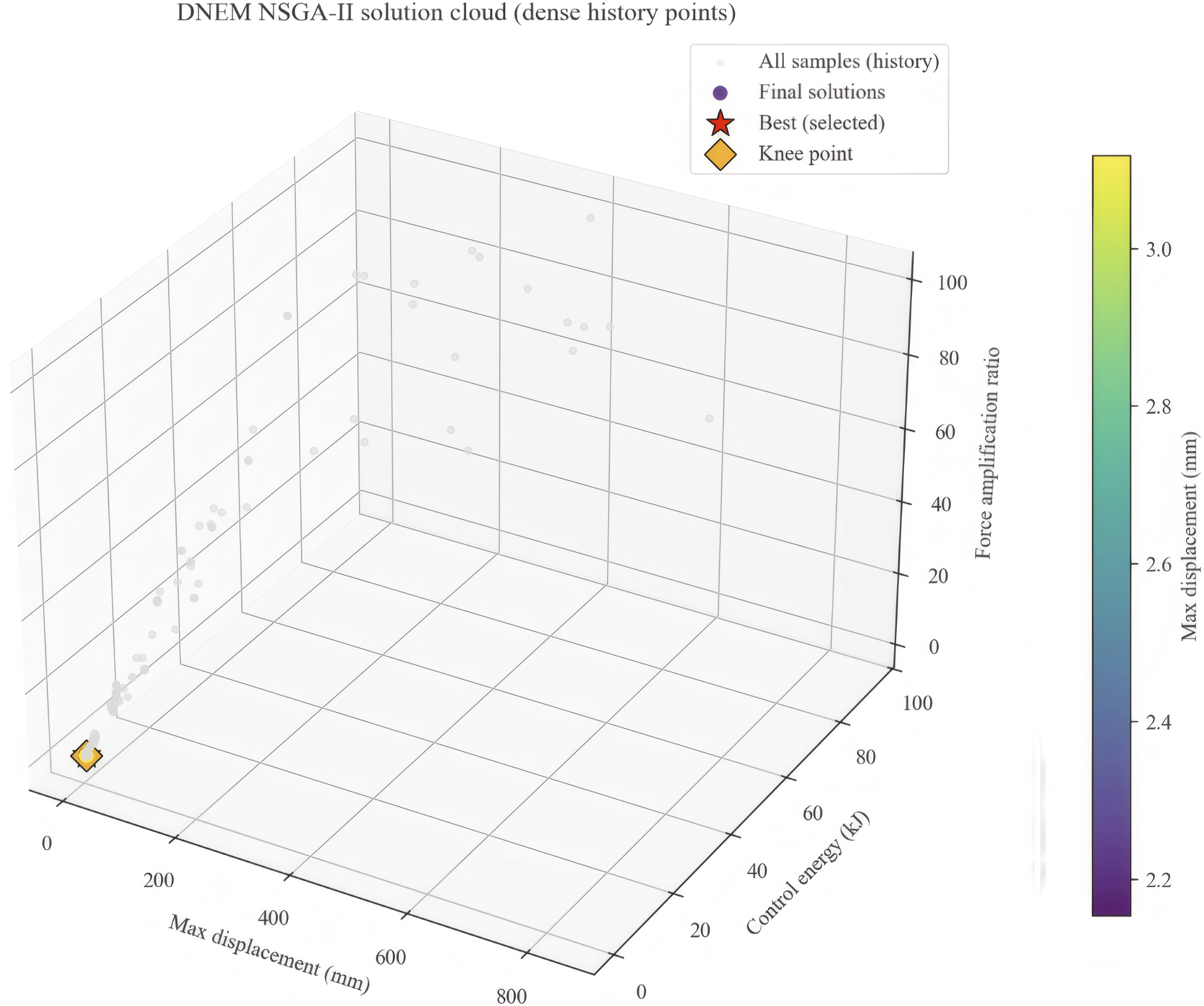
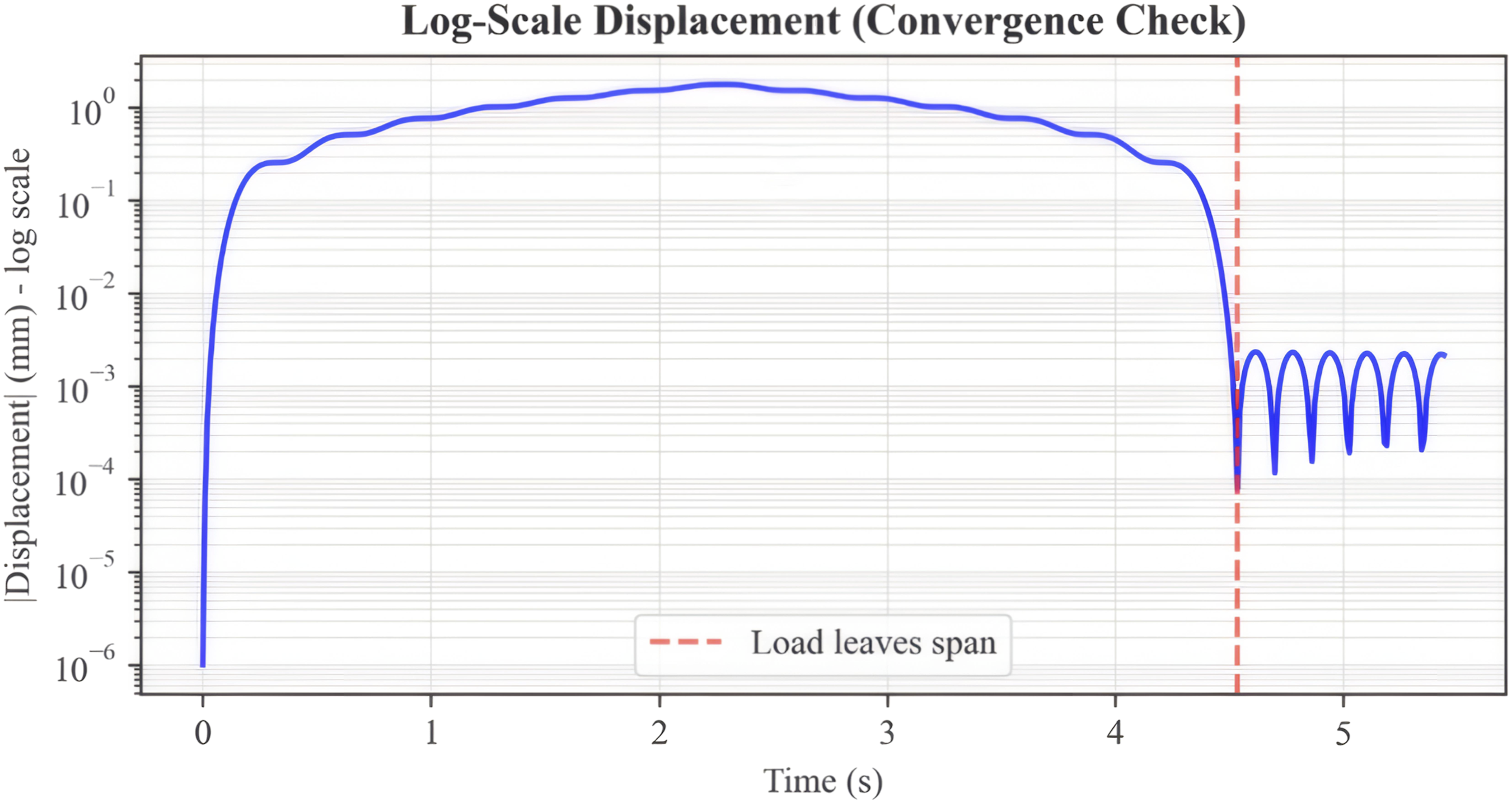
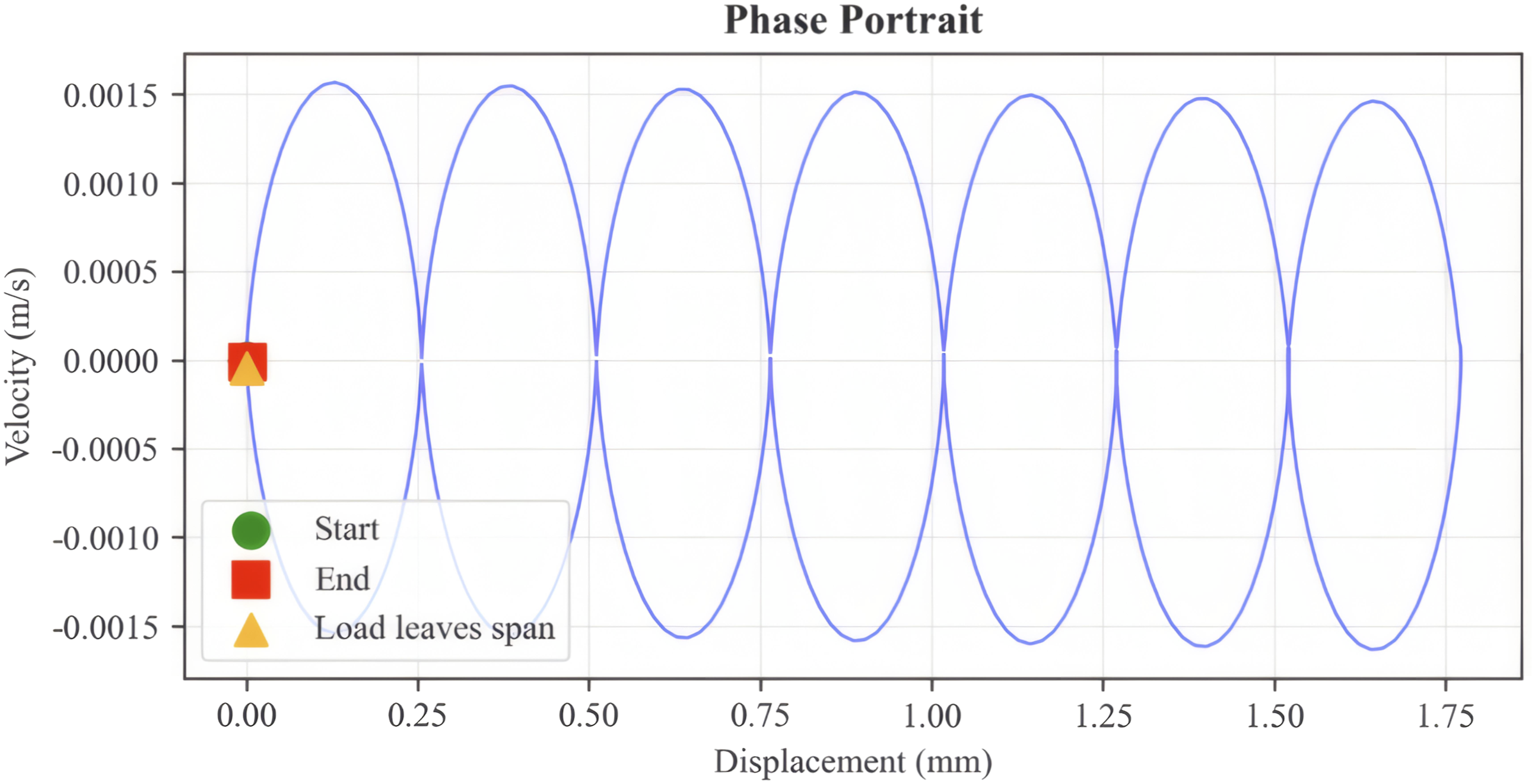
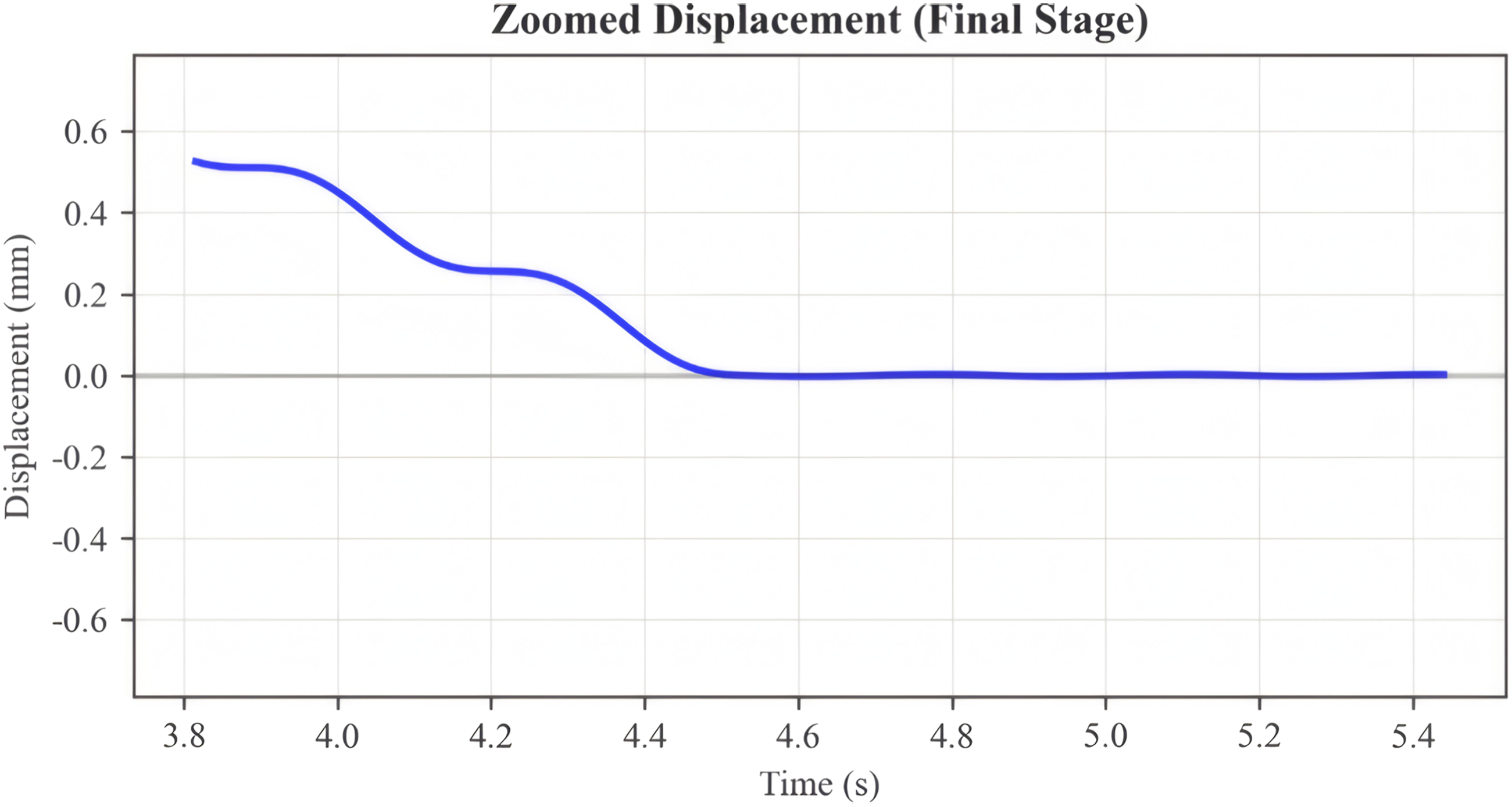
Figures 4–11 present the numerical results and performance evaluation of the NSGA-II-optimized Direct-Drive Neutral Equilibrium Mechanism (DNEM). The analyses examine optimization convergence, dynamic control behavior, energy efficiency, vibration suppression capability, and system robustness under varying loading conditions. Overall, the results demonstrate that the proposed DNEM can effectively suppress bridge deformation while maintaining extremely low energy consumption and stable dynamic performance. NSGA-II optimization convergence and feasible solution trend. Multi-objective trade-off analysis (Pareto front). Dynamic performance verification of DNEM system. Comprehensive analysis of dynamic stability and convergence. Displacement response history of the structural mid-span under moving load. Log-scale analysis of structural displacement response (numerical stability and convergence verification). Phase portrait analysis of displacement versus velocity for the controlled structure. Zoomed-in displacement response and steady-state characteristics during the load removal stage.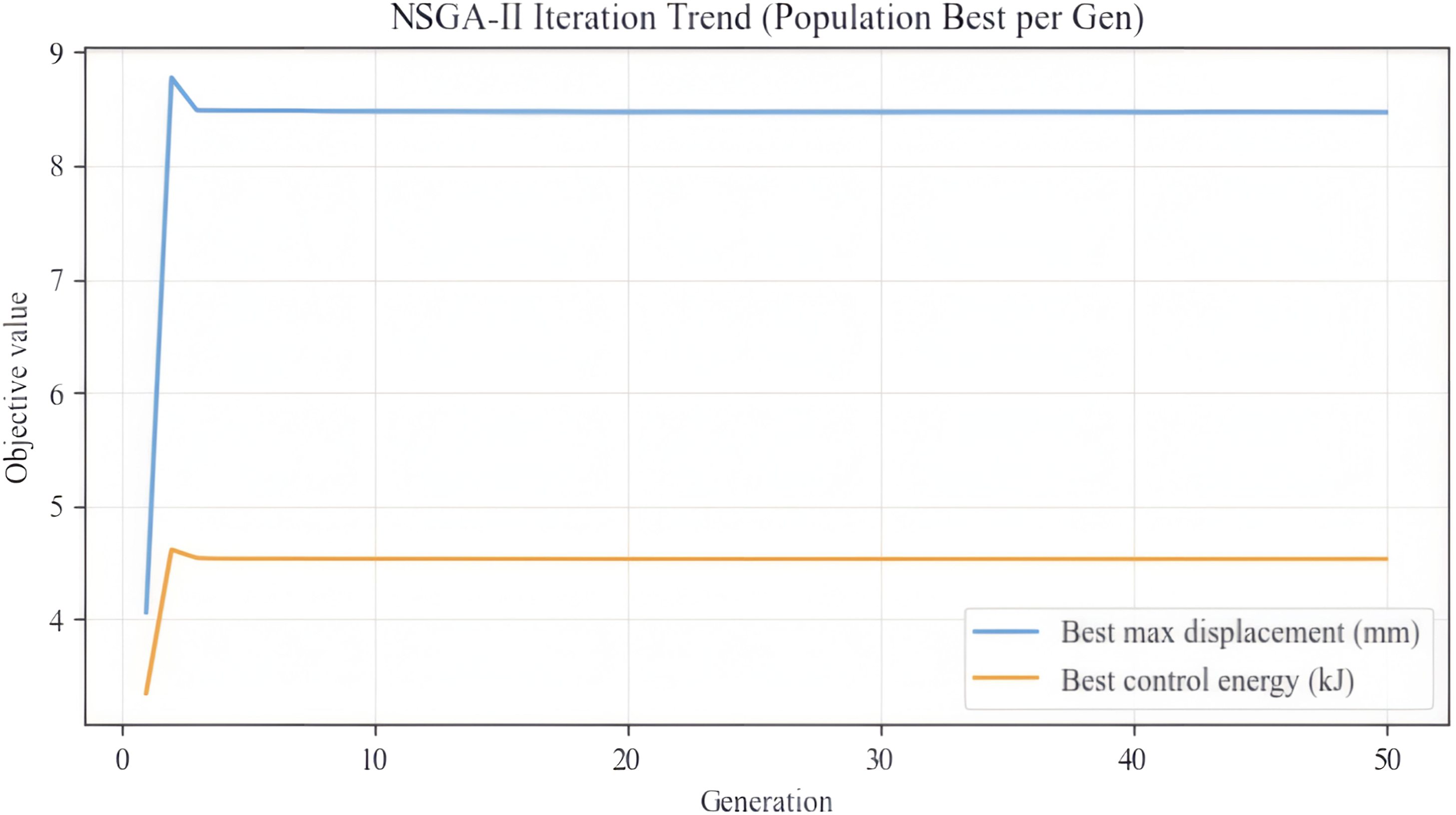
4.1. Multi-objective optimization performance
Figure 4 illustrates the convergence behavior of the NSGA-II optimization process. The population rapidly converged toward the feasible region during the early generations and gradually formed a stable and uniformly distributed Pareto solution set. This result confirms the strong global search capability of NSGA-II and its effectiveness in avoiding premature convergence to local optima.
Figure 5 presents the final Pareto front, which clearly reveals the trade-off between structural displacement suppression and actuator energy consumption. Each solution on the Pareto front represents a feasible balance between structural safety and energy efficiency. The final non-dominated population exhibited an average crowding distance of 0.032, indicating good diversity and stable convergence of the optimization process.
The final design point was selected at the “knee” region of the Pareto front, where further displacement reduction would require disproportionately higher energy input. This solution provided an optimal compromise between vibration mitigation and energy efficiency for emergency bridge applications.
4.2. Dynamic response and control characteristics
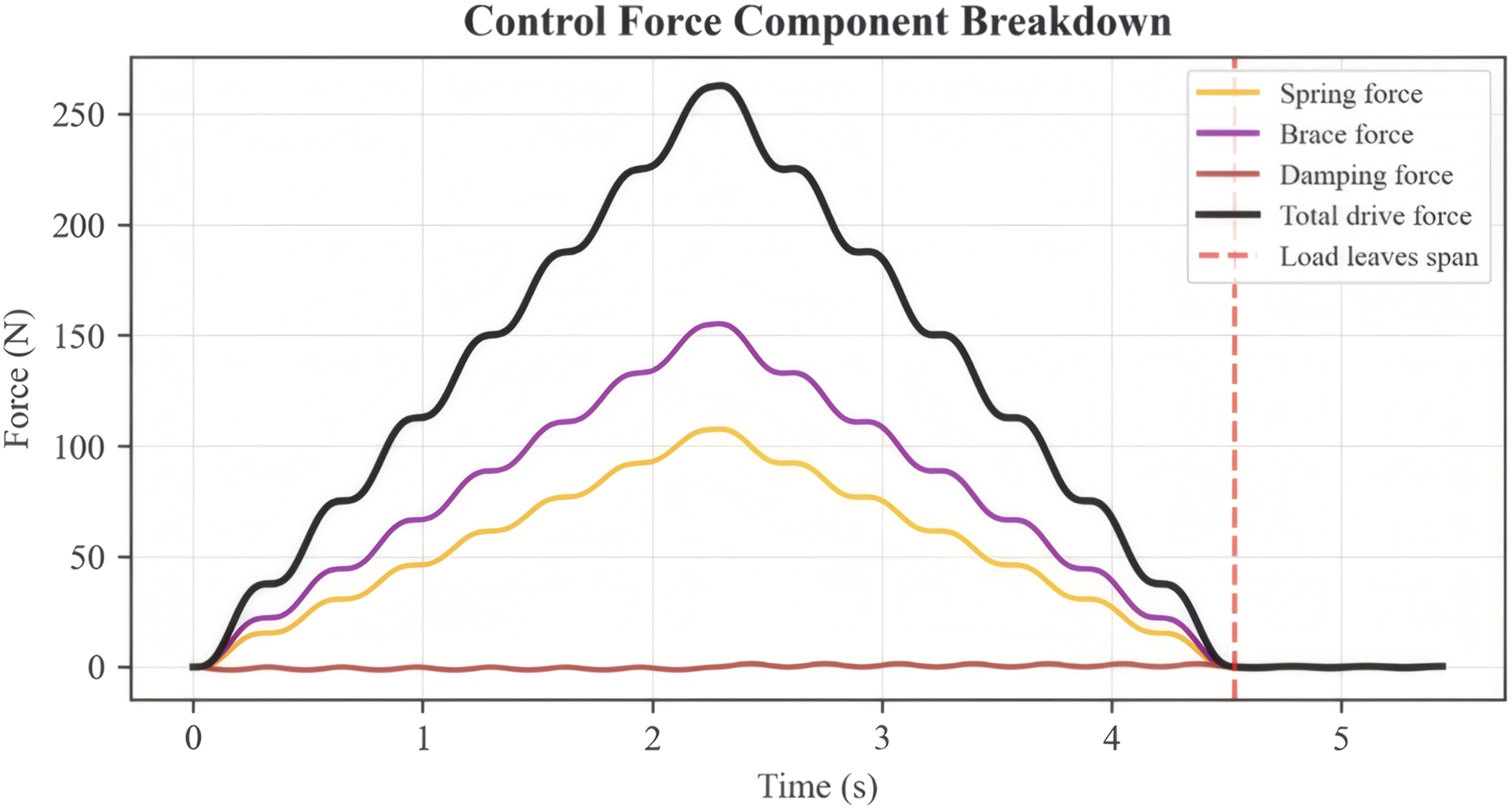
Figure 6 summarizes the dynamic behavior of the optimized DNEM system, including displacement response, force tracking, phase-plane trajectory, and force component decomposition.
Under a 150 N moving load, the bridge displacement peaked at about 1.8 mm. After the load was removed at
Force decomposition further revealed that most of the supporting force came from internal energy redistribution—elastic and geometric potential energy—rather than from continuous actuator output. This behavior directly confirms the Zero Power Force Control (ZPFC) concept proposed in this study.
Finally, the phase-plane trajectories converged smoothly inward toward the equilibrium point. This confirms asymptotic stability and stable energy dissipation throughout the entire loading–unloading process.
4.3. Energy consumption and residual vibration suppression
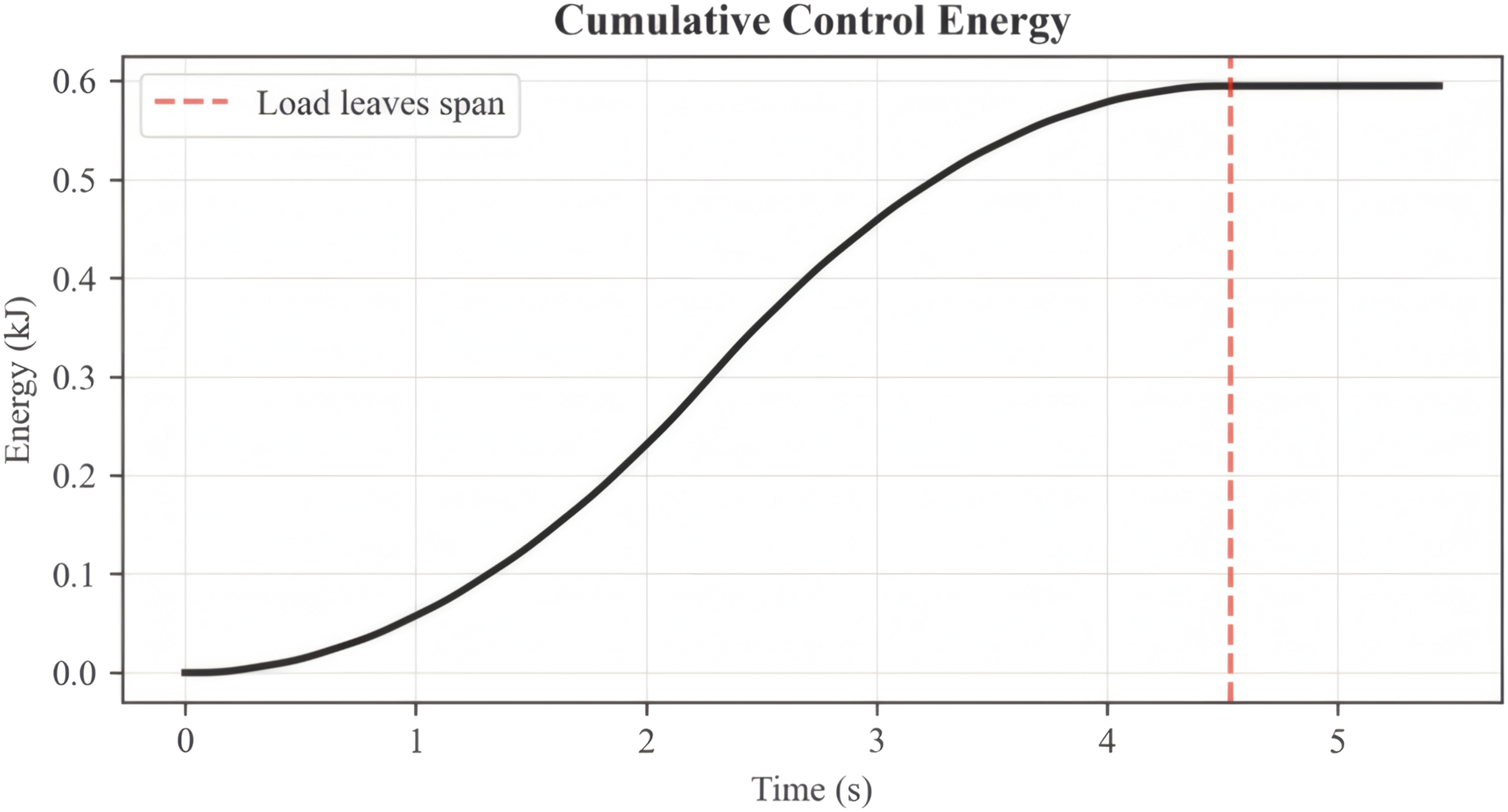
Figure 7 presents the cumulative actuator energy history of the DNEM system. The energy curve follows an S-shaped trend, indicating that most structural support was provided through energy redistribution within the geometric mechanism. The total external energy consumption was only approximately 0.59 kJ.
Figures 8 and 9 further demonstrate the displacement suppression capability of the system. The displacement response remained smooth and symmetric throughout the moving-load process, with no significant oscillation or instability observed. After load removal, residual vibrations rapidly decayed by more than three orders of magnitude.
The logarithmic-scale response shown in Figure 9 reveals three distinct stages: (i) controlled dynamic response during loading, (ii) rapid post-unloading decay, and (iii) convergence toward the numerical noise floor. Residual displacement ultimately stabilized within the
These results confirm that the optimized DNEM can simultaneously achieve high-precision deformation control and extremely low energy consumption.
4.4. Dynamic stability and transient response
Figure 10 presents the displacement–velocity phase portrait of the DNEM-controlled bridge system. The trajectories form smooth and bounded cyclic loops throughout the loading process, demonstrating stable nonlinear dynamic behavior.
As the moving load traversed the bridge span, both displacement and velocity remained within a confined region. After load removal, the trajectories gradually converged toward the origin without irregular oscillation or divergence, confirming the asymptotic stability of the controlled system.
Figure 11 provides an enlarged view of the unloading stage between 3.8 s and 5.0 s. The displacement rapidly decreased after load withdrawal and converged smoothly to the equilibrium position within approximately 0.1 s. No overshoot, reverse oscillation, or residual vibration was observed. This result highlights the strong transient-response capability and robustness of the proposed control strategy.
4.5. Comparison with uncontrolled and TMD-controlled systems
To further evaluate the effectiveness of DNEM, additional simulations were conducted for two reference cases: (i) an uncontrolled bridge and (ii) a bridge equipped with a conventional tuned mass damper (TMD) designed according to Den Hartog’s optimal tuning method (Salvi et al., 2018).
The uncontrolled bridge showed severe vibration. Its maximum displacement reached 12.4 mm, and its settling time was 8.2 s. Here, settling time is defined as the time required for the response to enter and stay within a ±5% band around the final steady-state value. With a conventional tuned mass damper (TMD), the peak displacement dropped to 4.8 mm. This is a 61.3% reduction. The settling time shortened to 3.5 s. However, after unloading, some residual deformation and vibration remained visible.
In contrast, the optimized DNEM reduced the maximum displacement to 1.8 mm, corresponding to an 85.5% reduction relative to the uncontrolled case. The settling time decreased dramatically to only 0.1 s, and residual deformation was effectively eliminated. Although the DNEM required a small active energy input of approximately 0.59 kJ, the energy demand remained very low relative to the achieved control performance.
The superior performance of DNEM is primarily attributed to its geometry-dominated negative stiffness mechanism. Unlike conventional TMD systems that rely mainly on passive energy dissipation, the DNEM actively redistributes internally stored potential energy to counteract structural motion and rapidly restore equilibrium.
4.6. Robustness under varying load conditions
To evaluate robustness, additional simulations were conducted under moving loads ranging from 100 N to 300 N while maintaining the same optimized DNEM parameters.
The results demonstrated stable and consistent control performance across the entire loading range. Maximum displacement increased approximately linearly with load magnitude
More importantly, the energy required per unit displacement remained nearly constant. It ranged from 0.317 to 0.359 kJ/mm. Note: This is equivalent to 317–359 J/mm. This indicates that the energy redistribution efficiency of the ZPFC mechanism stayed stable even under higher loading conditions.
A particularly important finding is that zero residual deformation was achieved in all test cases. In addition, all settling times remained below 0.12 s, substantially outperforming both the uncontrolled and TMD-controlled systems.
These results confirm the strong robustness and scalability of the NSGA-II–optimized DNEM. Even under loading conditions twice as large as the baseline case, the system maintained stable operation without excessive energy demand or loss of control accuracy. Such characteristics are highly desirable for emergency bridge applications, where loading conditions may vary significantly during disaster-response operations.
4.7. Discussion
The performance of the NSGA-II–optimized DNEM control system was evaluated from multiple perspectives, including optimization efficiency, multi-objective trade-offs, dynamic response characteristics, energy consumption, and robustness. Overall, the results demonstrate that the proposed framework achieves a balanced improvement in structural control performance while maintaining low energy demand and high stability.
As shown in Figure 4, the NSGA-II optimization process exhibits rapid convergence toward the Pareto front while maintaining population diversity throughout evolution. The observed clustering behavior indicates that the crossover and mutation operators effectively balance exploration and exploitation, ensuring convergence stability without premature stagnation. This contributes to the robustness of the final optimized control parameters.
Figure 5 illustrates the Pareto front representing the trade-off between displacement reduction and control energy consumption. The selected knee-point solution provides an optimal compromise, achieving near-maximum displacement suppression with minimal energy cost. This highlights the practical significance of multi-objective optimization in structural control design, where competing objectives must be simultaneously satisfied rather than independently minimized.
The internal force composition (Figure 6) reveals that the total control force is primarily contributed by the spring and brace components, while the damping contribution remains relatively small. This indicates that the DNEM mechanism relies predominantly on stiffness modulation and geometric force redistribution rather than energy dissipation. The total control force can be expressed as the superposition of structural components, with peak contributions from the brace and spring reaching approximately 150 N and 110 N, respectively. The relatively low damping contribution suggests improved energy efficiency, as control performance is achieved without excessive dissipative losses.
Under dynamic loading, the system exhibits a well-coordinated response. During load approach (0–2.3 s), the control force develops smoothly and synchronously with structural deformation. At mid-span peak loading (around 2.3 s), the system reaches its maximum control effort (∼260 N), effectively counteracting peak structural demand. Following load removal (2.3–4.5 s), the response decays smoothly to equilibrium without observable residual oscillations, indicating strong dynamic recovery capability.
Figure 7 provides the energy analysis. It confirms the efficiency of the optimized strategy. The cumulative energy evolves smoothly without abrupt jumps. This reflects how the spring-brace system stores elastic energy and how the actuator contributes work. Total energy consumption is limited to about 0.6 kJ. The peak energy rate coincides with the maximum displacement stage (1–3.5 s), confirming consistency between mechanical demand and energy output. After load release, the energy curve rapidly stabilizes without residual fluctuations, indicating efficient energy withdrawal and absence of unnecessary post-loading actuation.
The displacement response (Figure 8) shows that mid-span deformation is effectively constrained to 1.8 mm, with a smooth and symmetric profile. Minor high-frequency fluctuations are observed, which can be attributed to higher-order modal contributions, but no resonance amplification occurs. This indicates that the DNEM mechanism provides stable suppression across dominant vibration modes while preserving numerical stability.
Logarithmic-scale analysis (Figure 9) further demonstrates strong decay characteristics, with displacement attenuating by more than three orders of magnitude after load removal. The rapid convergence toward micron-level residuals confirms effective suppression of low-amplitude vibrations and long-term stability of the closed-loop system.
Velocity–displacement phase trajectories (Figure 10) remain bounded within a compact region, indicating stable dynamic behavior. During unloading (3.8–4.5 s), minor transient oscillations appear due to inertia–control interaction; however, these are rapidly damped, and the system converges within approximately 0.1 s without overshoot or reverse oscillation.
The robustness evaluation (Figure 11) confirms asymptotic stability of the DNEM system. Phase trajectories evolve from periodic closed loops during loading to spiraling convergence toward the origin after unloading, indicating strong attractor behavior at equilibrium. The system maintains consistent performance under varying load levels, with negligible sensitivity to load magnitude and stable energy consumption (∼0.6 kJ), demonstrating robustness of the optimized parameter set.
Performance comparison of DNEM, TMD, and uncontrolled cases under 150 N moving load.
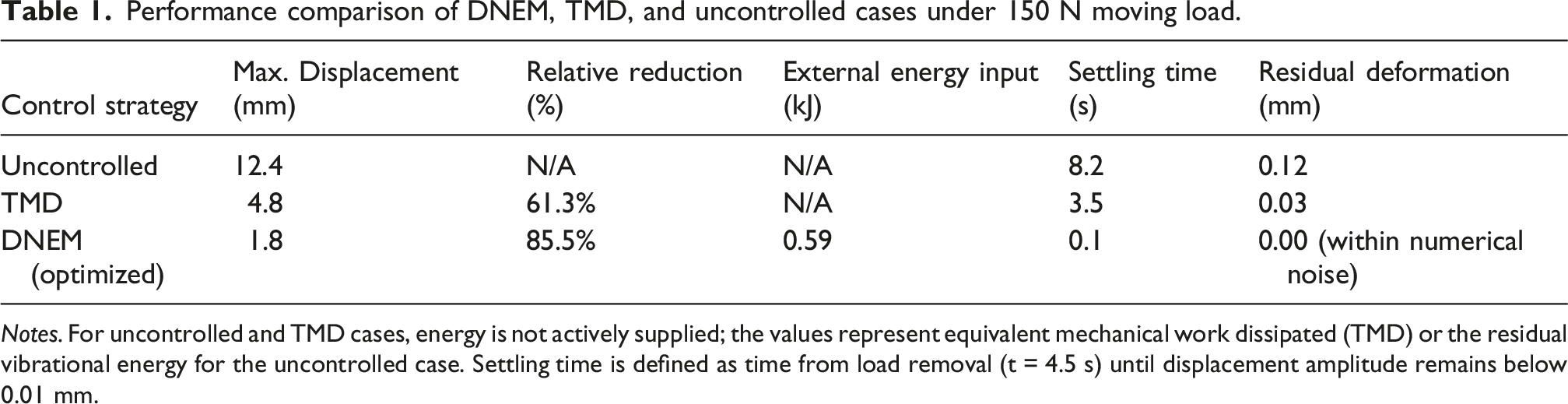
Notes. For uncontrolled and TMD cases, energy is not actively supplied; the values represent equivalent mechanical work dissipated (TMD) or the residual vibrational energy for the uncontrolled case. Settling time is defined as time from load removal (t = 4.5 s) until displacement amplitude remains below 0.01 mm.
DNEM performance under varying moving load magnitudes.
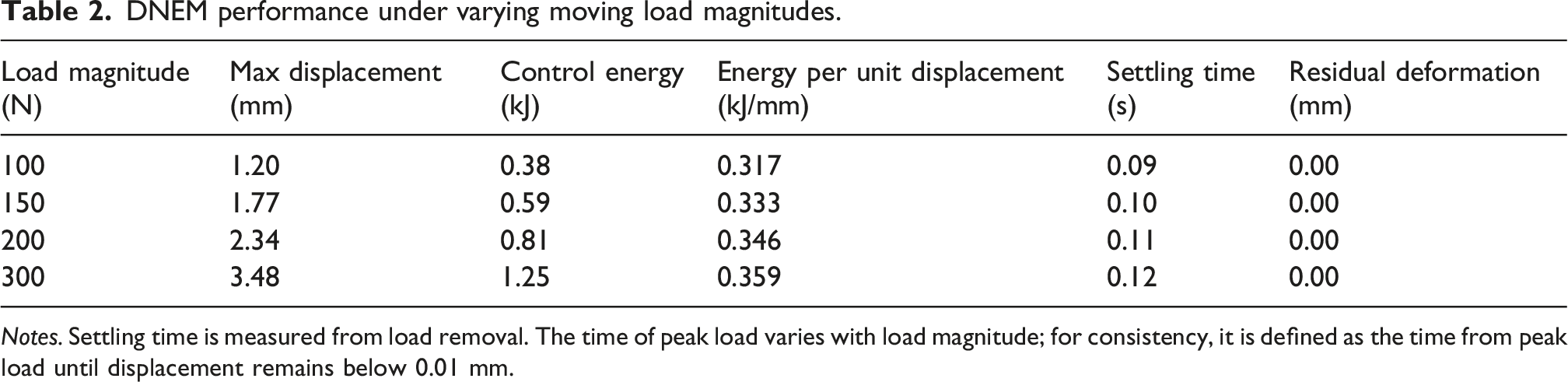
Notes. Settling time is measured from load removal. The time of peak load varies with load magnitude; for consistency, it is defined as the time from peak load until displacement remains below 0.01 mm.
5. Conclusions and recommendations
5.1. Conclusions
(1) Optimization mechanism and convergence behavior
The NSGA-II algorithm exhibits stable convergence behavior and effective global search capability, producing a well-distributed Pareto front that captures the trade-off between displacement reduction and energy consumption. The selected knee-point solution provides a balanced compromise between structural performance and control cost, reflecting the physical coupling between mechanical response and energy demand. (2) Dynamic response and structural protection performance
Under a representative 150 N dynamic load, the proposed DNEM system effectively limits the maximum structural displacement to approximately 1.8 mm. The control force response is well synchronized with structural motion, with peak values of approximately 260 N. The control action is primarily governed by spring and brace components, while the damping contribution remains limited, indicating that performance is mainly achieved through geometry-induced stiffness regulation rather than energy dissipation. (3) Energy efficiency and transient precision
The total energy consumption is approximately 0.6 kJ, with no observable post-loading energy accumulation. Time-domain and logarithmic analyses indicate rapid system recovery, with the structure returning to equilibrium within approximately 0.1 s after load removal. Displacement attenuation exceeding three orders of magnitude further confirms effective suppression of residual vibrations and high transient precision. (4) System stability and dynamic characteristics
Phase-plane trajectories exhibit bounded cycloidal motion during loading and gradually converge toward the origin after unloading, indicating asymptotic stability of the closed-loop system. The results suggest that the proposed control strategy maintains stable dynamic behavior under transient excitation without inducing oscillatory divergence.
5.2. Recommendations and outlook
(1) Practical applications
Owing to its rapid response, low energy demand, and minimal residual vibration, the proposed DNEM control strategy is suitable for vibration-sensitive engineering systems that require rapid stabilization, including emergency bridges, high-speed railway bridges, precision platforms, and long-span structural systems. (2) Future research directions
Future work may extend the present framework to multi-load and stochastic excitation conditions to evaluate robustness under more realistic service environments. In addition, modeling of actuator hysteresis, sensor noise, and parameter uncertainty should be incorporated to improve predictive accuracy at micrometer-scale control levels. Finally, extending the NSGA-II-based optimization framework to seismic and wind-induced structural control would further validate its general applicability.
Footnotes
Acknowledgments
The authors would like to express their sincere gratitude to the National Science and Technology Council (NSTC), Taiwan, for providing financial support for this research under grant numbers NSTC 114-2221-E-167-002-MY2 and NSTC 112-2923-E-260-001-MY4. The authors also thank all colleagues, laboratory personnel, and collaborators for their valuable assistance in the experimental work, technical support, and constructive discussions throughout the course of this study. Their contributions were instrumental in the successful completion of this research.

Funding
The authors disclosed receipt of the following financial support for the research, authorship, and/or publication of this article: This work was supported by the National Science and Technology Council (NSTC), Taiwan, under grant numbers NSTC 114-2221-E-167-002-MY2 and NSTC 112-2923-E-260-001-MY4.
Declaration of conflicting interests
The authors declare that there are no conflicts of interest regarding the research, authorship, and/or publication of this article. The funding agencies had no role in the study design; collection, analysis, or interpretation of data; preparation of the manuscript; or the decision to submit the article for publication.
Data Availability Statement
The datasets generated and/or analyzed during the current study are available from the corresponding author upon reasonable request. The computational models, simulation parameters, and supporting data used to generate the results presented in this article can be provided to qualified researchers for the purpose of verification and further research.