






Abstract
Permanent magnet bearings (PMBs) with Halbach arrays are widely adopted for their contactless and frictionless operation, offering great potential in artificial heart pumps, aerospace equipment, and flywheels. The load capacity of radial Halbach PMBs relies on the precise magnetic field interaction between the inner and outer rings, and axial deviation often occurs under combined radial and axial loads. However, the influence of this axial deviation on the supporting characteristics remains insufficiently studied. Therefore, this study focuses on the variation laws of the supporting characteristics (including supporting force and stiffness) under axial deviation conditions. The theoretical model of supporting force for radial Halbach array PMBs is first established through theoretical derivation. Subsequently, a finite element simulation model is built using Ansys EM software, and the consistency between the simulation model and the theoretical model is verified. Then, simulation analyses are conducted under different axial deviation values, and corresponding conclusions are drawn. This study addresses the neglect of axial deviation in previous research and provides a theoretical reference for the design, application, and performance calculation of PMBs.
Keywords
1. Introduction
The principle of PMBs lies in achieving rotor suspension by utilizing the repulsive force between the inner and outer magnetic rings. Compared with hydrodynamic bearings (Fang et al., 2021, 2022; Yang et al., 2023b) and active magnetic bearings, PMBs offer advantages such as a simpler structure, no lubrication required, no mechanical contact, lower energy consumption, and no active control required (Du et al., 2025; Liu et al., 2026; Wang et al., 2025; Yu et al., 2025). However, PMBs are restricted by material properties, resulting in relatively low supporting force (Xiang et al., 2023). Therefore, to enhance the supporting force of PMBs with the same size, current research commonly adopts Halbach arrays for arranging the magnets in the inner and outer rings. This is because Halbach arrays can strengthen the magnetic field in the air gap while weakening it on the opposite side (He et al., 2024; Yu et al., 2022). Wang et al. investigate PMBs with Halbach arrays featuring arbitrary segmented magnetization angles, establish a magnetization model for the bearings, and verify the correctness of the theoretical model and conclusions through finite element analysis (Nianxian et al., 2016). Yang et al. propose a method to improve the output characteristics of bearing force and reduce force ripple using Halbach arrays, which is validated through simulations (Yang et al., 2023a). Wu et al. apply Halbach arrays to water-lubricated bearings, and through simulations and experiments, verify the effectiveness of Halbach PMBs in reducing the system’s natural frequency and enhancing the supporting force (Wu et al., 2023b). Zhou et al. introduce the number of magnetic blocks per unit wavelength and the correction coefficient of magnetic induction intensity, and establish an analytical model of magnetic levitation force based on Halbach arrays, thereby compensating for the errors between theory and practice caused by insufficient precision in the production and installation of permanent magnet arrays (Zhou et al., 2023). Sharifi et al. introduce a new compact PMB design using Halbach array technology, which achieves improved damping with minimal loss of stiffness and verifies it through finite element methods (Sharifi et al., 2025).
The aforementioned literature proposes several schemes and obtains some promising results regarding the design, calculation, and optimization of Halbach array PMBs. Although Halbach array PMBs have the aforementioned merits, their supporting force derives from the precise magnetic field interaction between inner and outer magnetic rings. The supporting force of radial PMBs only functions in the radial direction. Shaft components usually endure radial and axial loads simultaneously. Due to the structural characteristics of Halbach arrays, axial deviation emerges between inner and outer magnetic rings under axial loads. The magnetic rings fail to achieve accurate alignment, which disturbs the normal magnetic support effect. The variation laws of supporting force and supporting characteristics of PMBs under axial deviation remain unclear. Existing studies confirm that the machining and installation accuracy of permanent magnet arrays affects bearing performance (Zhou et al., 2023). However, relevant literature rarely explores the influence of axial deviation on the supporting characteristics of Halbach array PMBs.
Based on the above discussion, this paper conducts a study on the influence of axial deviation on the supporting characteristics of radial Halbach array PMBs. Finite element simulations are carried out for different axial deviations, permanent magnet ring sizes, etc., providing a theoretical reference for the design, calculation, and application of radial Halbach array PMBs.
2. Modeling
2.1. Theoretical modeling of radial Halbach array PMBs
PMBs achieve rotor suspension by utilizing the repulsive magnetic force between the outer magnetic ring on the stator and the inner magnetic ring on the rotor (Nielsen et al., 2021). The inner and outer magnetic rings of the PMB consist of sub-magnetic rings with different magnetization directions. The fabrication method for sub-magnetic rings with different magnetization directions involves magnetizing each sub-magnetic ring in an external magnetic field of a specific direction and then manufacturing and fixing these sub-magnetic rings with varying magnetization directions in a particular sequence to form a Halbach array assembly (Yue et al., 2025). A Halbach permanent magnet array is a type of magnet structure. By arranging permanent magnets in different magnetization directions according to a certain rule, the magnetic field on one side of the magnet can be concentrated while the magnetic field on the other side is weakened, thereby obtaining a relatively ideal unilateral magnetic field (Wu et al., 2023a). When applied in the design of PMBs, Halbach arrays can generate a strong magnetic field in the air gap and effectively reduce the size of the PMBs (Zhou et al., 2023). Therefore, in this paper, the inner and outer magnetic rings of the PMB are designed as Halbach arrays to save space and enhance the supporting force (Guo et al., 2021). A Halbach array can be composed of at least four magnetic rings with different magnetization directions. The modeling method is the same for arrays with different numbers of magnetic rings. Generally, the more magnetic rings there are in a single period, the more uniform the magnetic field distribution is, and the closer the theoretical calculation is to the actual situation. However, this also increases the manufacturing difficulty. Therefore, in the subsequent modeling, referring to the structure in Nianxian et al. (2016), to reduce the axial end magnetic leakage of the bearing and ensure the symmetry of the magnetic fields at both ends, the Halbach array used in this study consists of 9 magnetic rings with 8 different magnetization directions.
The geometric model of the Halbach array PMB is shown in Figure 1. Geometric model of Halbach array PMB.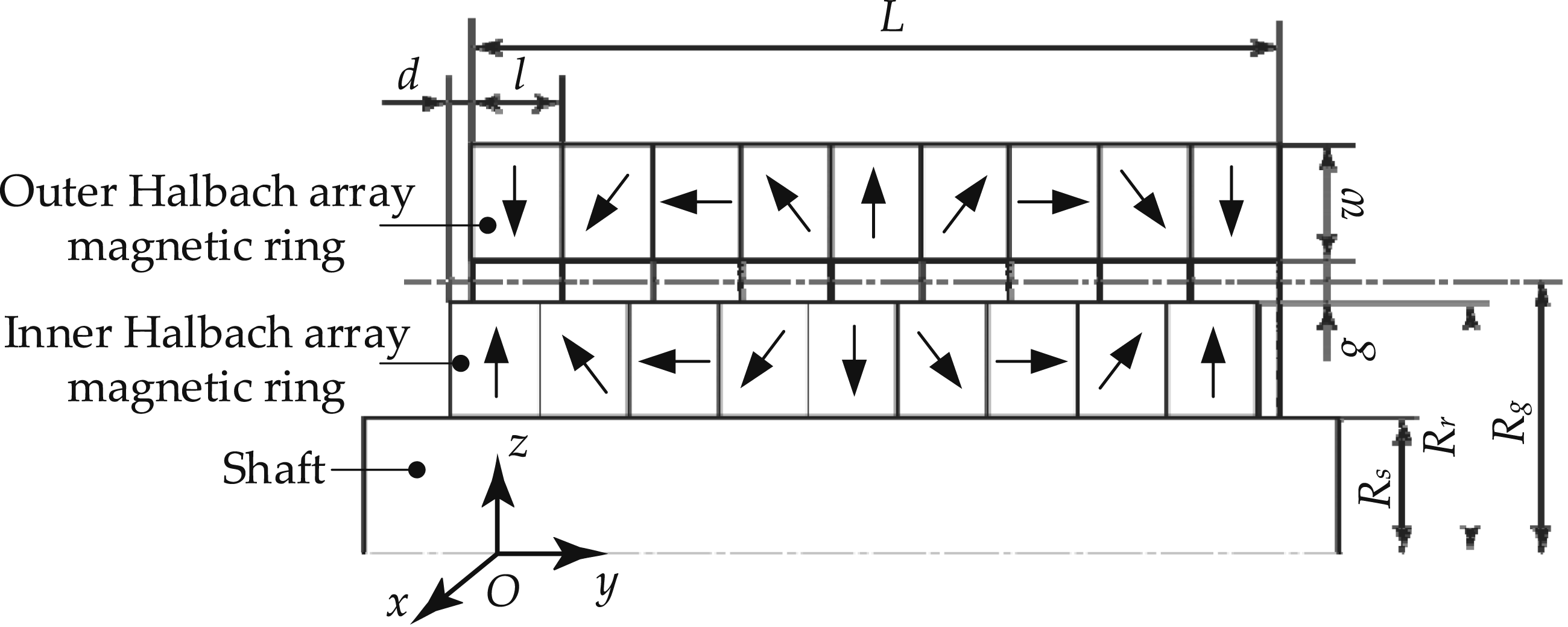
In Figure 1, the parameter “g” represents the unilateral air gap of the PMB, and “w” denotes the radial thickness of the permanent magnet ring. “l” stands for the axial length of a single permanent magnet ring, while “L” corresponds to the axial length of a Halbach periodic permanent magnet ring. “R s ” indicates the inner radius of the inner magnetic ring, “R r ” represents the outer radius of the inner magnetic ring, and “R g ” is the middle radius of the air gap. “d” refers to the axial relative deviation between the inner and outer magnetic rings.
Since the magnetic field in the air gap between the inner and outer magnetic rings is uniform along the circumferential direction, the magnetic field distribution on any radial cross-section is consistent. Therefore, the magnetic field calculation between the rings can be equivalent to that between two flat plates. This equivalence can be regarded as unfolding the rings along the circumference. The magnetic force between the inner and outer magnetic rings can be equivalently expressed as the magnetic force between the upper and lower plates. In this representation, the axial deviation of the PMB, as well as the end and radial magnetic leakage, is ignored.
As can be seen from Figure 1, for the inner magnetic ring, the magnetization directions of different magnetic rings vary within the period L and are related to their positions on the y-axis. Therefore, the magnetization vector is represented by the vector sum of the magnetic field components in the y- and z-directions. The magnetization vector of the permanent magnet is expressed as follows:

Equation (1) defines the spatial distribution of the permanent magnetization vector by decomposing it into y- and z-directional components, which characterizes the directional magnetization rule of the Halbach array, where M = B r /μ0 represents the saturation magnetization of the permanent magnet, B r denotes the remanence on the surface of the permanent magnet, μ0 is the vacuum permeability, and e y and e z are the unit vectors in the y-direction and z-direction, respectively.
The above analysis simplifies the annular permanent magnet into a planar structure, whereas the actual magnet adopts an annular shape. To obtain the magnetization vector at any point A on the analysis surface, a cylindrical coordinate system as shown in Figure 2 is established. The projection from the origin O to point A in the Oxz plane is taken as a vector with a length of r. Let θ = y/r; then equation (1) can be transformed into the form of equation (2). Analysis plane in cylindrical coordinate system.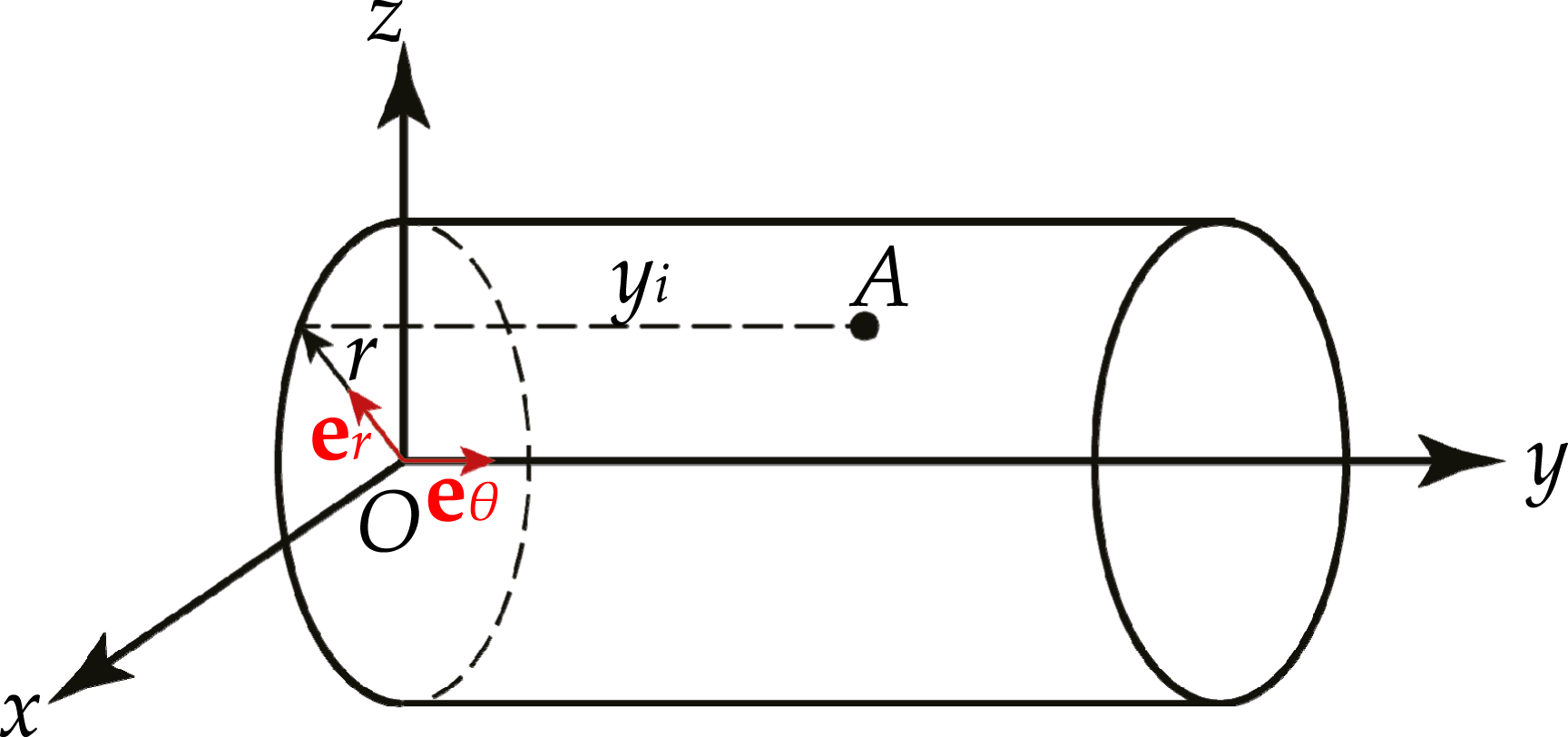

Equation (2) converts the planar magnetization vector into a cylindrical coordinate system, which matches the actual annular structure of the PMB and ensures the theoretical derivation conforms to the real geometric shape, where r is the polar radius of the analysis plane, and
According to Hu et al. (2022), Wang et al. (2016), and Xing et al. (2025), the governing equation of the scalar magnetic potential can be obtained as follows:

Equation (3) is the core governing equation for scalar magnetic potential, which describes the conservation and distribution law of the magnetic field in the steady-state without current excitation, where μr is the relative permeability of the permanent magnet. By combining the above equation and referring to Hu et al. (2022), Wang et al. (2016), and Xing et al. (2025), the expression of the magnetic field in the air gap of the PMB can be obtained as follows:
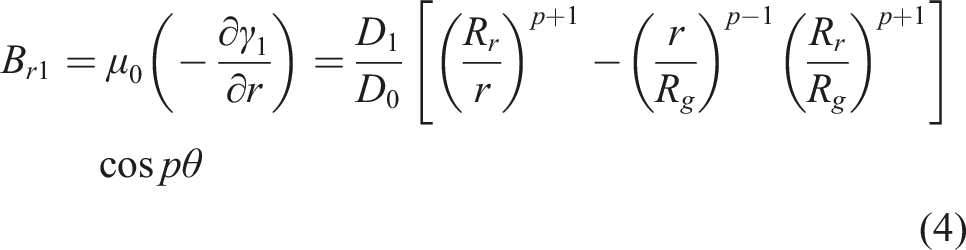
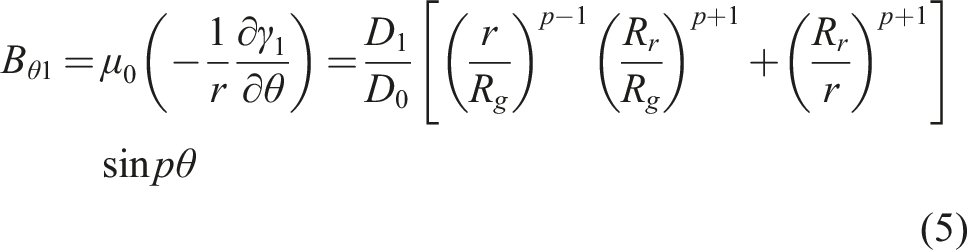
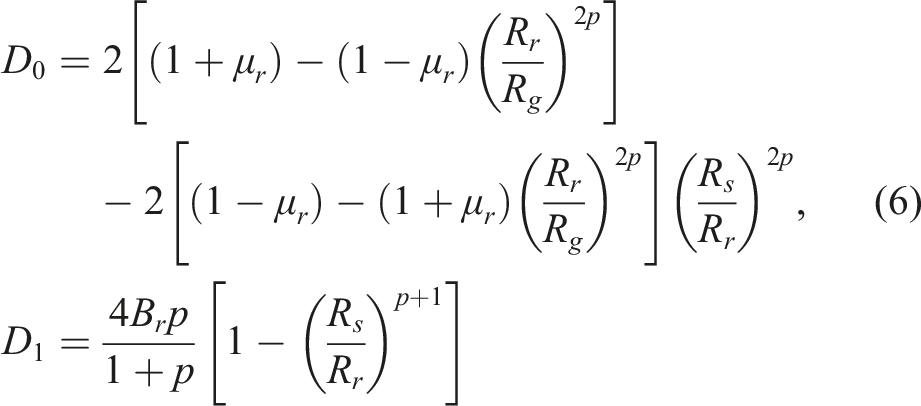
Equations (4)–(6) quantitatively characterize the magnitude and directional distribution of the magnetic field in the bearing air gap, which is the basis for calculating the magnetic force and supporting characteristics. The magnetic field energy in the air gap is entirely provided by the permanent magnet, so the volume density of the magnetic field energy is as follows:

Equation (7) defines the energy stored per unit volume in the magnetic field, which reflects the intensity of the air-gap magnetic field. The energy of the air gap magnetic field can be expressed as follows:

Equation (8) calculates the total magnetic energy accumulated in the entire air-gap region, which links the magnetic field distribution to the mechanical force output. As can be seen from Figure 1, the magnetic field of the permanent magnet ring is uniformly distributed in the circumferential direction, so the magnetic force per unit area on the permanent magnet ring is as follows:

Equation (9) computes the magnetic force acting on unit area of the magnet surface by using the magnetic energy method, which converts magnetic field energy into mechanical force. In a Halbach array PMB with one period, the radial magnetic force per unit area on the inner permanent magnet ring can be expressed as follows: Radial cross-section of the PMB.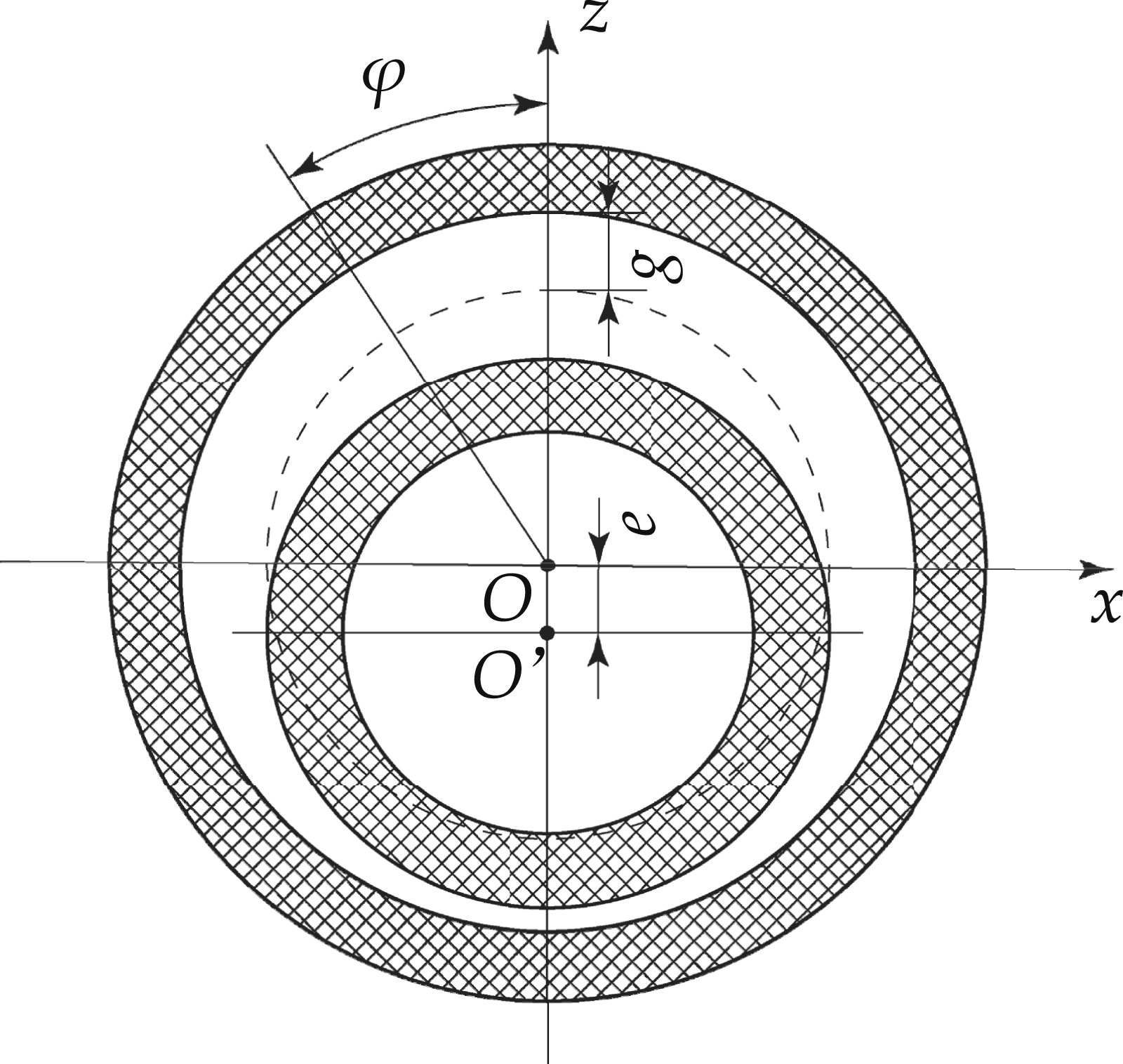

The relationship between the middle radius of the air gap and the angle φ is as follows:

The total radial force acting on the inner magnetic ring is as follows:

When there are radial deviations in both the x-direction and z-direction, the supporting forces in each direction can be obtained by projecting equation (12) onto the respective coordinate systems.
2.2. Simulation modeling of radial Halbach array PMBs
PMB parameters.
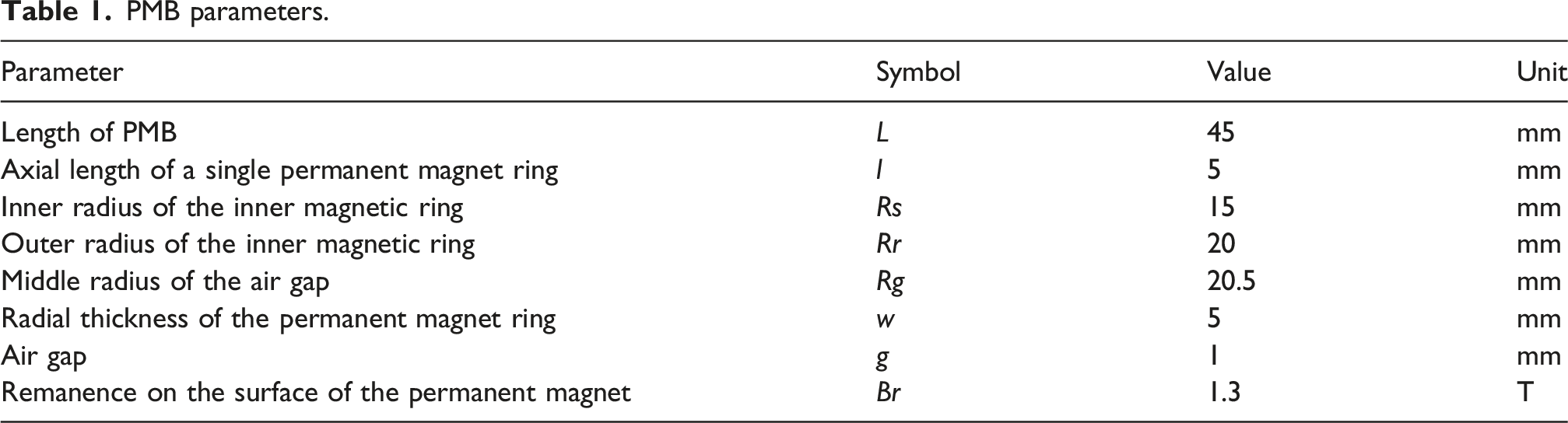
Based on the parameters in Table 1, a three-dimensional finite element simulation model is established in Ansys EM, as shown in Figure 4. In Figure 4, Analysis region refers to the simulation domain, that is, the square region enclosing the permanent magnets. Indicating that the simulation is carried out only within this region. The boundary of this region is set to zero magnetic flux. 3D model of finite element simulation.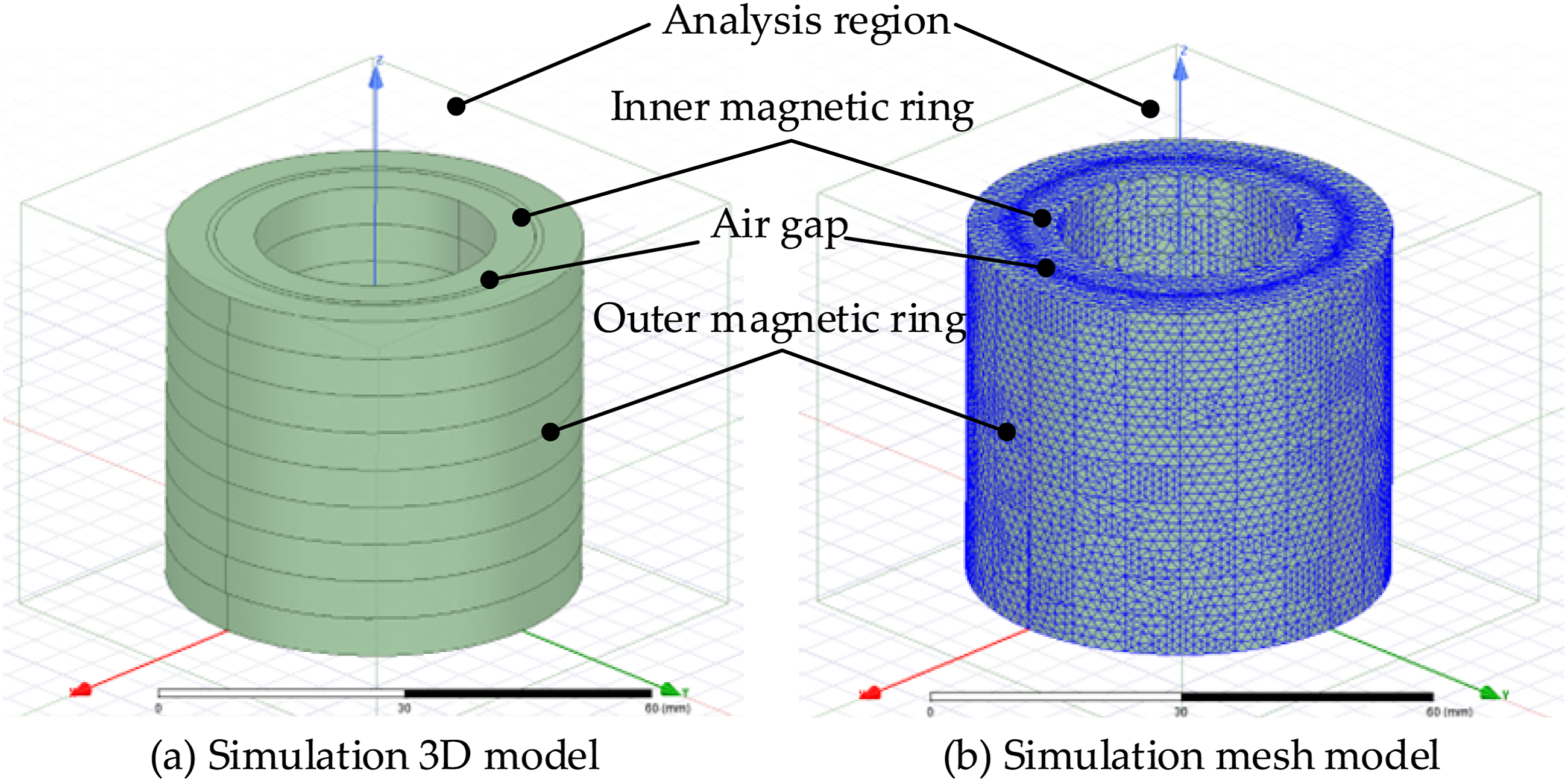
Without considering radial and axial deviations, a magnetic field simulation analysis is performed. For the convenience of observation, the simulation magnetic induction intensity nephogram and magnetic induction intensity vector diagram of its radial section are shown in Figure 5. It can be seen from Figure 5 that the direction of the magnetic field follows the Halbach array form. The inner and outer magnetic rings can effectively enhance the magnetic flux density in the air gap while weakening the external magnetic field. The magnetic fields of the inner and outer magnetic rings repel each other in the air gap. When a radial offset occurs, the repulsive force increases in the direction where the air gap decreases, thereby providing radial support. Simulation diagram of the radial cross-section of the PMB.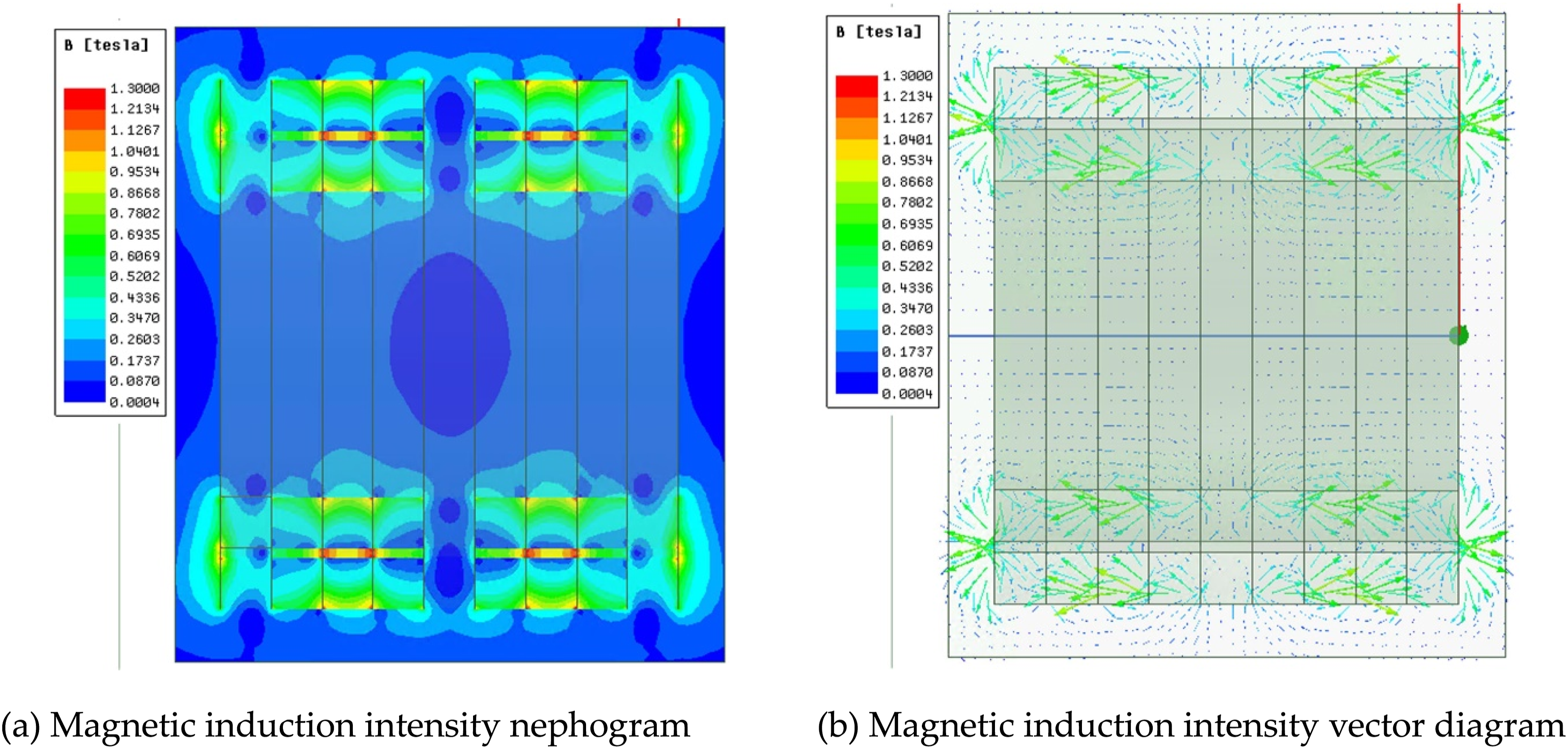
2.3. Consistency verification of theoretical and simulation models
To verify the consistency between the simulation model and the theoretical model, when axial displacement is not considered, the relationship between radial deviation e and supporting force F is calculated through both the theoretical model and the simulation model, as shown in Figure 6. Mature analytical modeling theories are well established for PMBs operating without axial deviation, whereas a complete and universal theoretical framework still lacking to describe the mechanical performance under axial deviation conditions. For this reason, we firstly conduct cross-comparison between theoretical calculation and numerical simulation under axial-displacement-free conditions. This validation confirms the accuracy and feasibility of the established finite element model, so as to guarantee the credibility of subsequent simulation analysis on axial deviation effects. It can be seen from Figure 6 that the simulation results are close to the theoretical calculation results but slightly lower than them. This is because the theoretical calculation ignores the magnetic leakage. Therefore, the consistency between the simulation model and the theoretical model can be verified, which means that the simulation model and the simulation results are accurate, and the validated simulation model can be reliably adopted to explore the variation rules of supporting force and stiffness under various axial deviation and structural parameter conditions. Both Figure 6 and subsequent simulation results pass the grid independence verification. Comparison of theoretical and simulated supporting force curves of the PMB.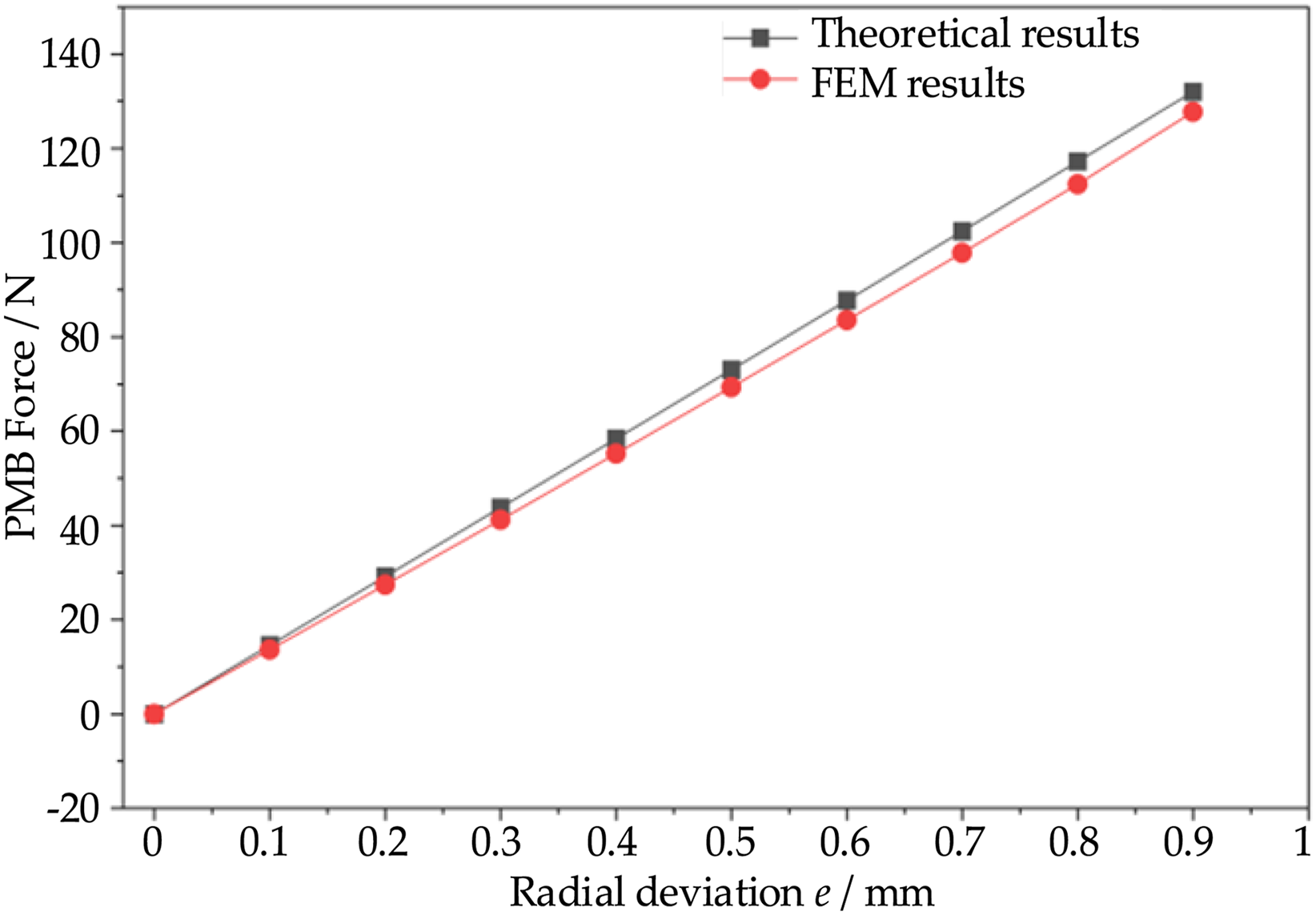
3. Analysis of the influence of axial deviation on the supporting characteristics of PMBs
The variation laws of the radial supporting force of the PMB are analyzed when there is an axial relative position deviation between the inner and outer magnetic rings, with the radial deviation changing from 0 to 0.9 mm (in steps of 0.1 mm) and the overall axial deviation changing from −1 mm to 1 mm (in steps of 0.1 mm). The simulation results are shown in Figures 7–9. Simulation results of the PMB with an axial deviation of 1 mm and no radial deviation. Relationship between supporting force of PMB and axial deviation under different radial deviations. Relationship between supporting force of PMB and radial deviation under different axial deviations.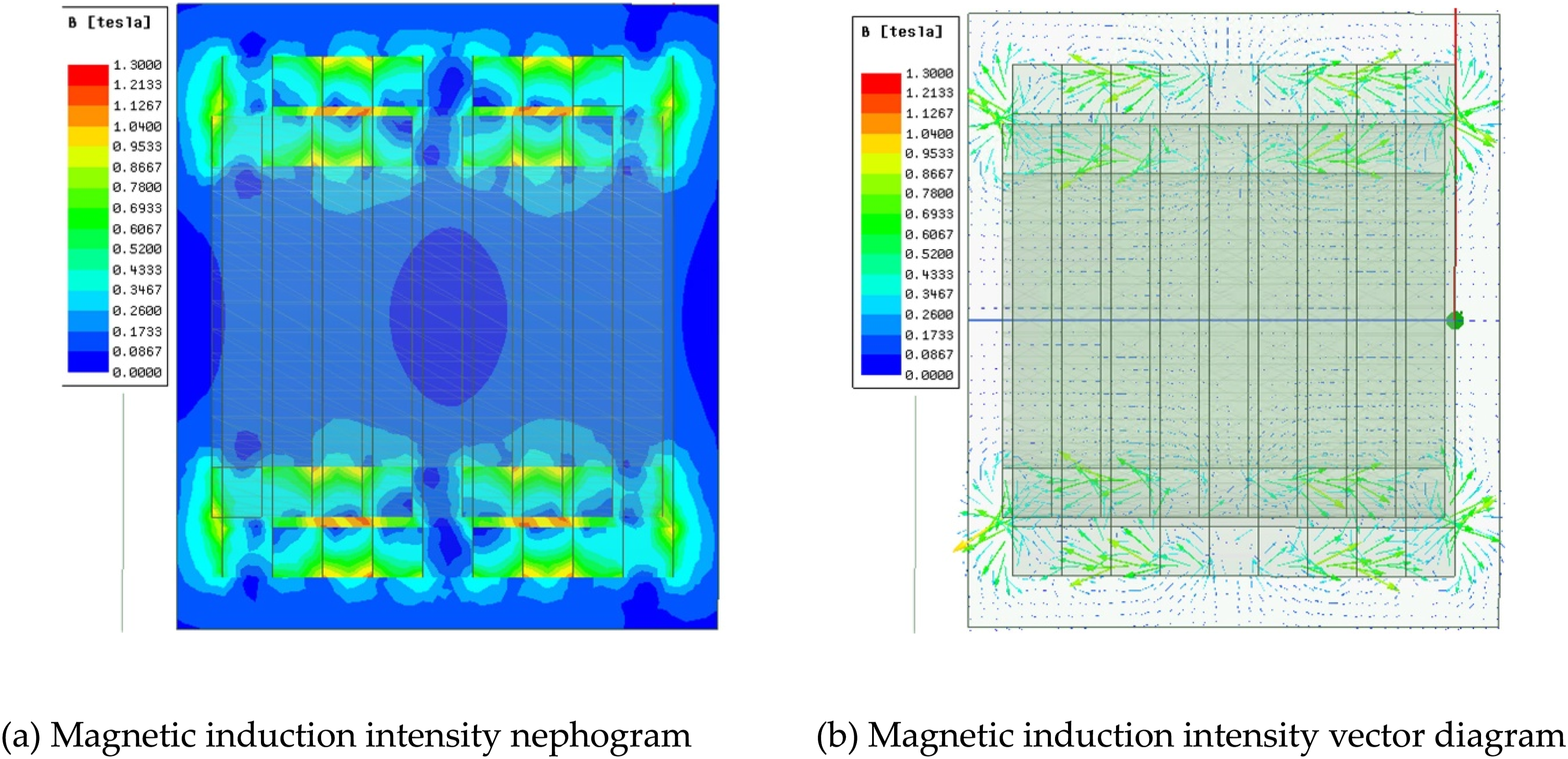
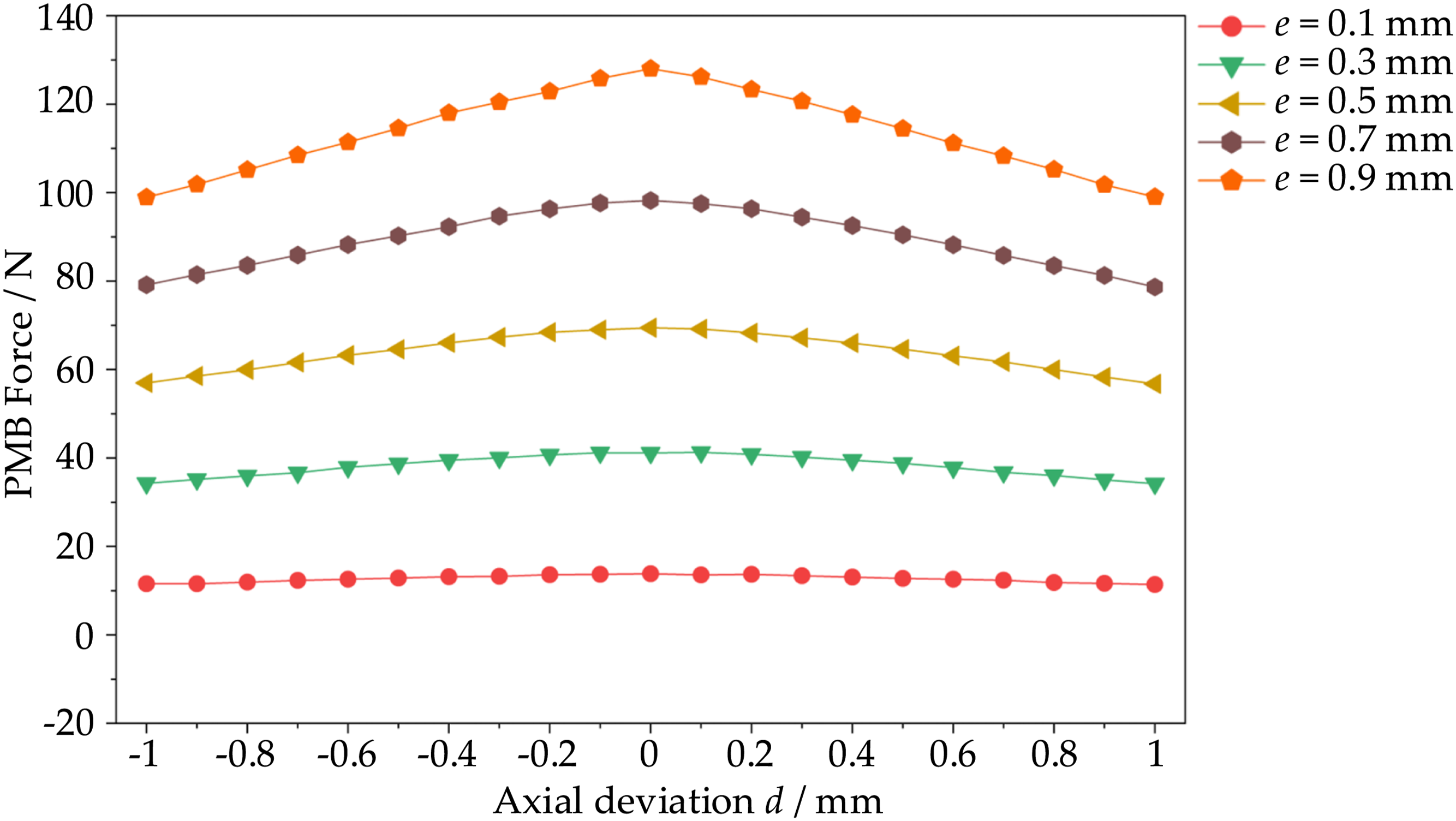
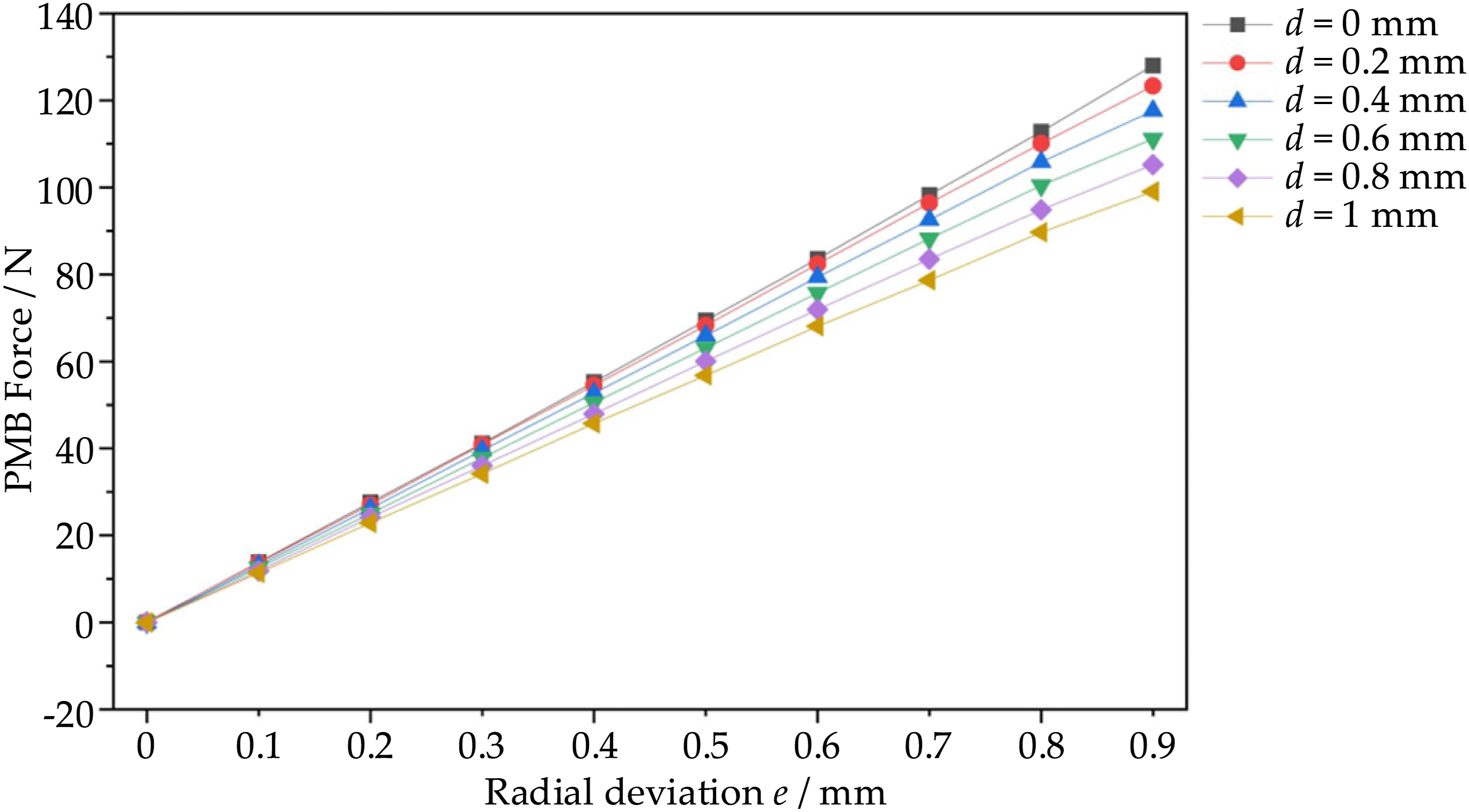
Figure 7 shows the magnetic field simulation results when there is a maximum axial deviation of 1 mm and no radial deviation. It can be seen from the figure that when there is an axial deviation, the magnetic field in the air gap, which originally acts radially, deviates axially, that is, the magnetic field energy leaks axially.
Figure 8 presents the relationship curves between axial deviation and supporting force under different radial deviations. It can be observed that the larger the absolute value of axial deviation is, the smaller the supporting force of the PMB becomes, and this phenomenon is more obvious when the radial deviation is larger. Taking radial deviations of e = 0.1 mm, e = 0.5 mm, and e = 0.9 mm as examples, the reduction rates of the PMB supporting force caused by axial deviation are 17.0%, 18.3%, and 22.8%, respectively. This is because when the radial deviation is large, the air gap on the supporting side of the bearing is small, which makes the magnetic field effect more obvious and also amplifies the magnetic field energy leakage caused by axial deviation.
Figure 9 shows the relationship curves between radial deviation and supporting force under different axial deviations. It can be known that under different axial deviations, the relationship between radial deviation and supporting force is basically linear. When the axial deviation increases, the slope becomes smaller, that is, the supporting stiffness of the PMB decreases. Therefore, it can be concluded from Figures 8 and 9 that axial deviation not only affects the supporting force of the PMB but also its supporting stiffness.
3.1. Influence of axial deviation on supporting characteristics of PMBs under different structural parameters
As can be seen from Figure 1, once the structure and material of the PMB are determined, the structural parameters that affect its supporting characteristics include the axial length l of a single permanent magnet ring, the radial thickness
3.2. Different axial lengths l of permanent magnet rings
First, while keeping other parameters unchanged, analyze the influence of axial deviation on the supporting characteristics of PMBs under different permanent magnet ring lengths l, where the radial deviation varies from 0.1 to 0.9 times the air gap and the overall axial deviation ranges from −1 mm to 1 mm. Since changing the dimensional parameters will affect the supporting force of the PMB, to facilitate a more intuitive comparison, the attenuation rate γ of the supporting force caused by axial deviation d and the attenuation rate of the supporting stiffness are used as comparison indicators, which are defined as follows:

The simulation results are shown in Figure 10(a) and (b). It can be seen from Figure 10(a) that when the permanent magnet ring length l = 0.5 mm, its supporting force is almost completely attenuated. As can be seen from Figure 1, the axial deviation between the inner and outer permanent magnet rings is twice the length of a sub-magnet ring at this time, which destroys its Halbach arrangement and leads to bearing failure. When the permanent magnet ring length l increases, the attenuation rate of the supporting force decreases rapidly. It reaches the minimum value when l = 3 mm. Continuing to increase l will cause the attenuation rate of the supporting force to increase slightly, but the change is not obvious. This indicates that when the permanent magnet ring length is very small, the axial deviation has a greater impact on the supporting force of the PMB. Attenuation rate of supporting force and stiffness caused by axial deviation under different lengths l.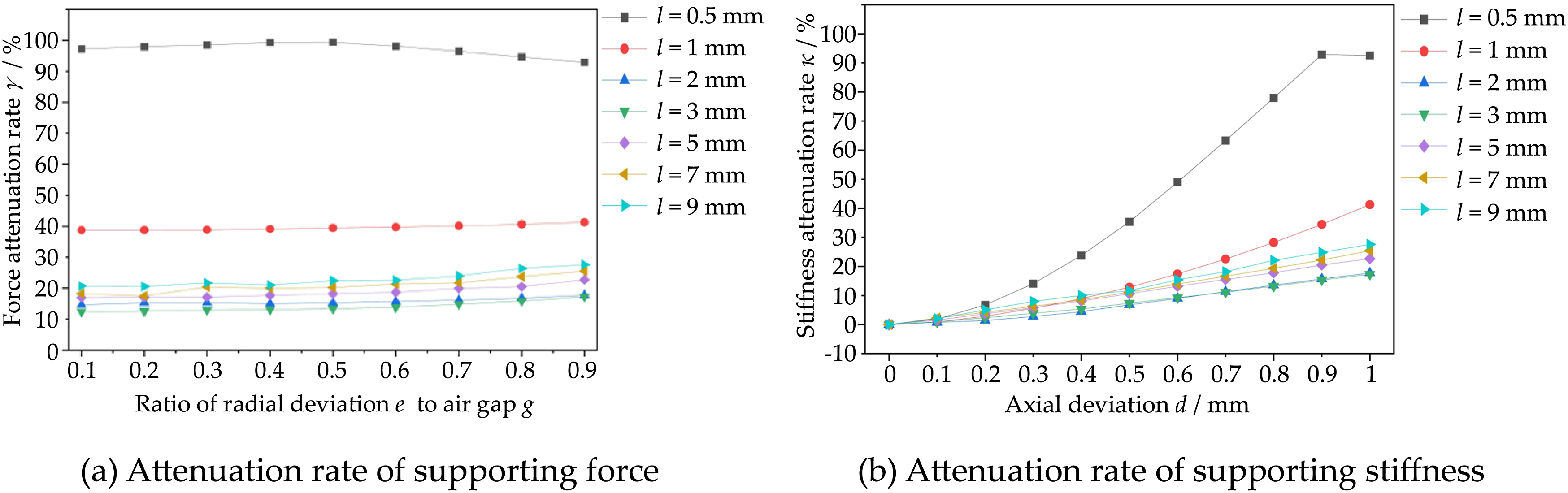
It can be seen from Figure 10(b) that the attenuation of the supporting stiffness is not only related to the permanent magnet ring length l but also increases with the increase of the axial deviation. When the axial deviation is small, it has little impact on the supporting stiffness. Similar to Figure 10(a), when l is small, the attenuation of supporting stiffness is more significantly affected by axial deviation.
3.3. Different radial thicknesses w of permanent magnet rings
Next, with other parameters kept unchanged, this section analyzes the influence of axial deviation on the supporting characteristics of PMBs under different radial thicknesses
The simulation results are shown in Figure 11(a) and (b). It can be seen from Figure 11(a) that when the radial thickness Attenuation rate of supporting force and stiffness caused by axial deviation under different radial thicknesses Attenuation rate of supporting force and stiffness caused by axial deviation under different air gap sizes g.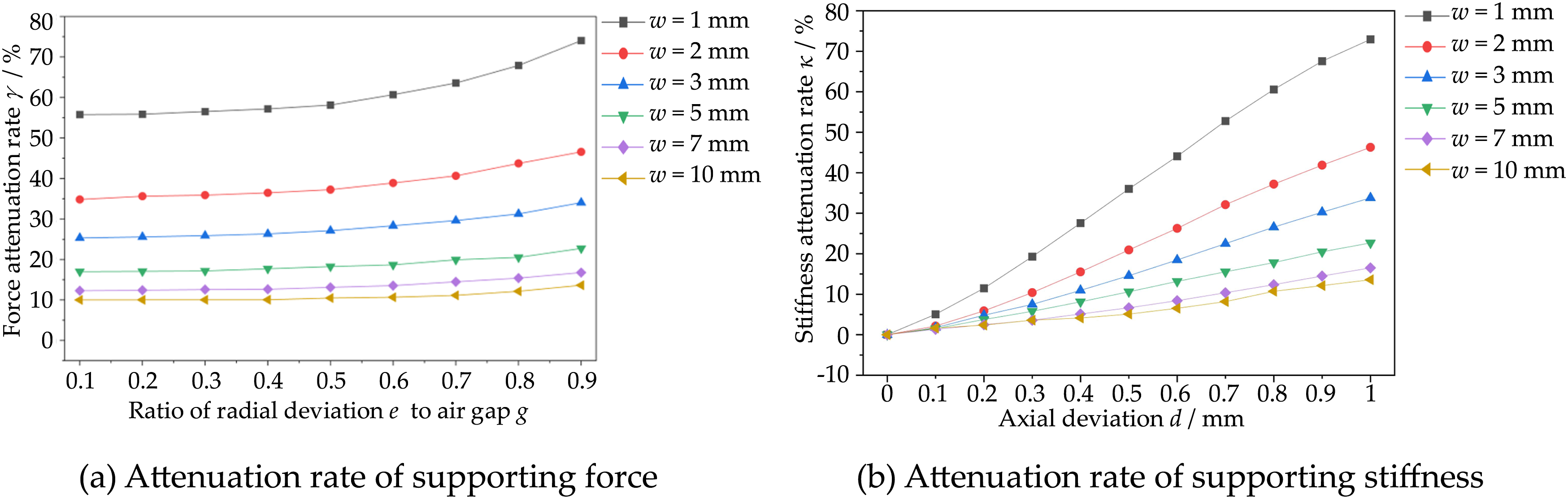
It can be known from Figure 11(b) that the attenuation rate of the supporting stiffness of the PMB decreases with the increase of
3.4. Different air gap sizes g
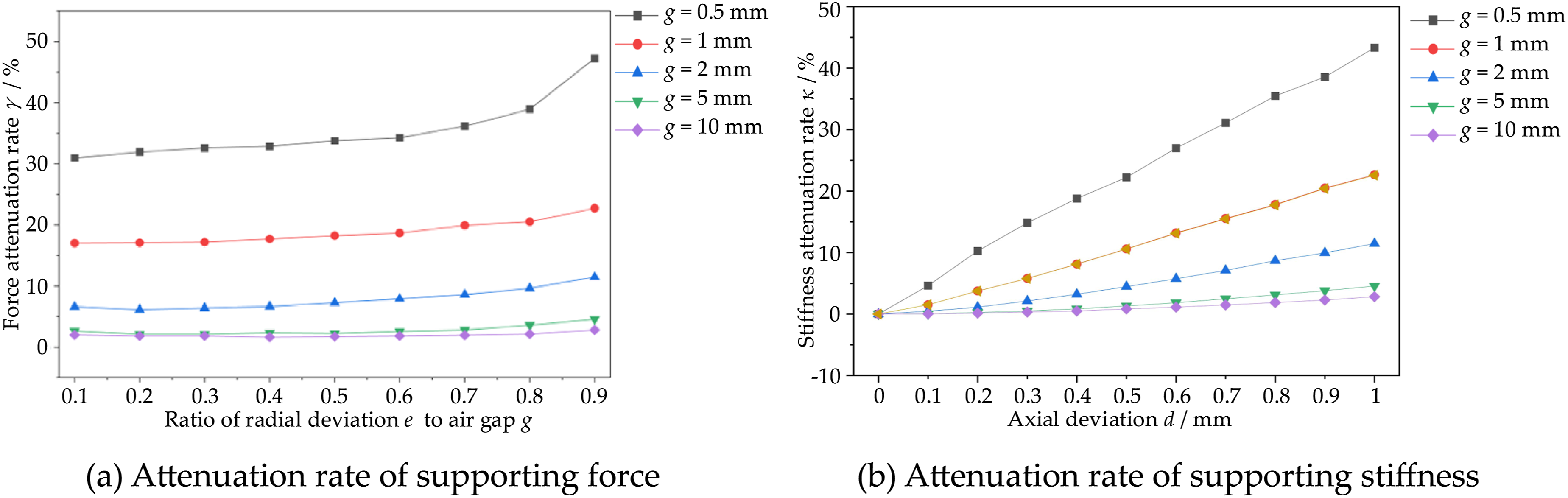
Next, this section analyzes the attenuation of the supporting force of the PMB when changing the air gap size g (i.e., changing the outer diameter and inner diameter of the outer permanent magnet ring). The parameters of radial deviation and axial deviation are the same as those in the above analysis.
The simulation results are shown in Figure 12(a) and (b). It can be seen that when the air gap is small, the attenuation rate of the supporting force of the PMB in the presence of axial deviation is large. Increasing the air gap can significantly reduce the attenuation rate of the supporting force. However, when the air gap increases to a certain extent, as shown in Figure 12(a) where g increases from 5 mm to 10 mm, the decrease in the attenuation rate of the supporting force is not obvious. At the same time, the attenuation of the supporting stiffness caused by axial deviation also decreases with the increase of the air gap. When the air gap is large enough, the attenuation of the supporting force and supporting stiffness is close to zero.
3.5. Different outer radius Rr of inner permanent magnet rings
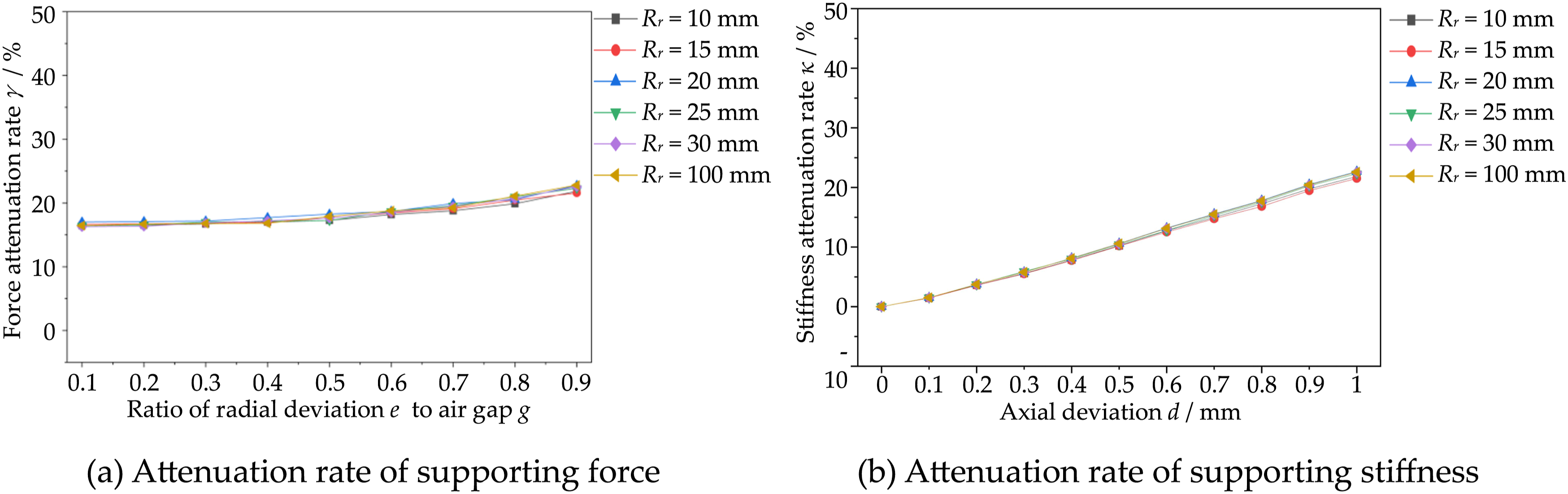
Finally, this section explores the changes in the supporting characteristics of the PMB when altering the outer radius R r of the inner permanent magnet ring (i.e., changing the outer and inner diameters of both the inner and outer permanent magnet rings). The parameters for radial deviation and axial deviation remain the same as in the above analyses.
The simulation results are presented in Figure 13(a) and (b). It can be observed that, unlike the previous findings, when the outer radius of the inner permanent magnet ring is changed, there is almost no difference in the attenuation of the supporting force and supporting stiffness. That is, when the axial length, radial thickness, and air gap of the permanent magnet ring remain unchanged, modifying other radial dimensions of the PMB does not affect the attenuation of the supporting force and supporting stiffness caused by axial deviation. In this case, the attenuation of the supporting force and supporting stiffness is more influenced by radial and axial deviations than the structural parameters. Attenuation rate of supporting force and stiffness caused by axial deviation under different outer radius R
r
.
4. Conclusions
This paper studies the influence of axial deviation on the supporting characteristics of radial Halbach array PMBs. The novelty of this work lies in exploring the variation mechanism of PMB supporting characteristics under axial deviation and quantitatively analyzing the parameter sensitivity of structural dimensions, which compensates for the insufficient research in previous studies. By establishing a simulation model and verifying its consistency with the theoretical model, and through finite element simulation, the following conclusions are drawn: (1) Axial deviation reduces the supporting force of radial Halbach array PMBs. The larger the absolute value of the axial deviation is, the smaller the supporting force of the PMB becomes. This phenomenon becomes more obvious as the radial deviation increases. (2) The greater the axial deviation is, the smaller the supporting stiffness of the radial Halbach array PMB becomes. (3) Under different structural parameters, the impact of axial deviation on radial Halbach array PMBs varies. A proper increase in the permanent magnet ring length l can reduce the influence of axial deviation, but an excessively large l instead enhances the effect of axial deviation, leading to greater attenuation of supporting force and supporting stiffness. In particular, when the permanent magnet ring length l is smaller than the axial deviation, its supporting force and supporting stiffness attenuate significantly as d increases. Therefore, in the design of radial Halbach array PMBs, efforts should be made to avoid making the permanent magnet ring length l smaller than or close to the possible axial deviation. (4) Increasing the permanent magnet thickness (5) The outer radius R
r
of the inner permanent magnet ring has no influence on the changes in the supporting characteristics of the PMB caused by axial deviation. That is, when other parameters are determined, changing the radial dimensions of the bearing alone cannot improve the impact caused by bearing deviation. (6) For future research, efforts can be devoted to establishing a theoretical modeling method for PMBs with full consideration of axial deviation, and investigating active control and compensation strategies for axial deviation, so as to further improve the stability and reliability of Halbach array PMBs in practical applications.
In general, the influence of axial deviation on the supporting characteristics of radial Halbach array PMBs cannot be ignored, and in practical applications of PMBs, axial deviation is inevitably present. The main contribution of this study lies in revealing the effects of axial deviation on PMBs and providing the following design guidelines: when designing the structural parameters of radial Halbach array PMBs, it is necessary to consider the factor of axial deviation in advance, so as to minimize the impact of axial deviation through changes in structural parameters. In the application and installation of radial Halbach array PMBs, efforts should be made to control axial dimensional deviations and axial installation clearances. The analysis methods and results in this paper can serve as an effective reference for the design and application of radial Halbach array PMBs.
Footnotes

Funding
The authors disclose receipt of the following financial support for the research, authorship, and/or publication of this article: The project is supported by the Research initiation fund of Jianghan University, with grant number 1029/06780001.
Declaration of conflicting interests
The authors declare that they have no known conflicts of financial interests or personal relationships that could appear to influence the work reported in this paper.