






Abstract
This paper proposes a novel fixed-time reaching law (FTRL)–based sliding mode control (SMC) with a disturbance observer (DOB) for surface-mounted permanent magnet synchronous motor (SPMSM) drives. Unlike conventional fixed-time SMC methods, the proposed reaching law accelerates convergence while ensuring fixed-time stability irrespective of the initial state. Based on this reaching law, a speed controller and a fixed-time disturbance observer are systematically designed within the field-oriented control framework to estimate the unwanted load torque and uncertainty of the system in fixed time. Lyapunov-based analysis confirms the fixed-time stability of the closed-loop system. Both simulation and experimental studies show enhanced dynamic performance with faster response, minimized overshoot, and improved disturbance rejection compared with traditional fixed-time SMC approaches, confirming its effectiveness for high-precision SPMSM control.
Keywords
1. Introduction
Permanent magnet synchronous motors (PMSMs) have recently become a major focus of research, driven by their high performance, efficiency, and power density. The applications of the PMSM can be listed in many areas in industry such as robot with servo motor, electric vehicles, household applicants, and so on. The PMSM was designed for the application of the rail-mounted belt drive elevator (Avsar et al., 2024). The discussion of PMSM control for servo system was shown in Zhao et al. (2023) and Liu et al. (2024). The control of PMSM for gas compressor was presented in Zhao et al. (2022). The control of PMSM with application in robot was shown in Yankui et al. (2022). The applications of the PMSM for the electric vehicle were shown in Kumar and Singh (2025), for automotive application can be found in Nair et al. (2022), and for energy conversion were presented in Orlando et al. (2013). The control design for the PMSM has been taking into account in recent years due to the development of the electric drive control system. The main problem of control system for PMSM is how to keep the speed of the rotor stable under harsh working condition or variations of system parameters and load torque. In the speed control axis, the variations of mechanical factors such as visco coefficient, the variations of electrical factors such as stator resistance and inductance, and load torque on the rotor shaft make the performance of the PMSM control system decrease. Therefore, robust control strategies capable of suppressing disturbances and parameter uncertainties are required. Due to its high robustness to parameter variations and external disturbances, sliding mode control (SMC) is widely adopted in PMSM drive applications. However, conventional SMC methods often suffer from severe chattering caused by the discontinuous switching control law, which may lead to undesirable oscillations and reduce system performance. To mitigate this issue and improve disturbance rejection capability, a combination of disturbance observers (DOB) and SMC has been widely investigated in the literature. Several studies have proposed different combinations of DOB and SMC for PMSM systems. For example, a neural-network-assisted disturbance observer combined with fixed-time sliding mode control was presented in Trinh et al. (2026). Other DOB-based SMC strategies for PMSM drive systems have been reported in Wang et al. (2021), Xu et al. (2021), Pu et al. (2024), Wang et al. (2022), and Lin et al. (2023). An adaptive sliding mode control scheme combined with a modified reduced-order PI observer for PMSM drives was presented in Nguyen et al. (2022). In addition, the integration of deadbeat control and disturbance observer techniques for PMSM drives was investigated in Lang et al. (2024). Beyond PMSM applications, DOB-based control strategies have also been widely applied to various engineering systems. For instance, robust adaptive integral fast SMC has been developed for servo motors to improve robustness and convergence speed in Ali et al. (2026). In thermal systems, DOB-based methods have been used in Rsetam et al. (2022a) and Rsetam et al. (2021) for electrical tube furnaces and electric heating furnaces to enhance temperature regulation. Moreover, finite-time DOB-based control has been applied to air conditioning systems, providing fast disturbance estimation and improved performance (Rsetam et al., 2023). These studies demonstrate that integrating disturbance observers—especially with sliding mode control—enhances robustness, disturbance rejection, and transient performance across various applications.
The concept of nonlinear disturbance estimation was first introduced in Chen et al. (2000) and its applications have been further developed in Nguyen et al. (2020) and Wu et al. (2020). However, many existing disturbance observer approaches require that the first derivative of the disturbance be zero. Such a requirement is only satisfied when the disturbance varies slowly or remains constant, which may not be valid in practical PMSM drive systems where load torque and parameter variations can change rapidly. To address this issue, a disturbance observer with a fixed disturbance structure was proposed in Hwang and Kim (2020). Nevertheless, this approach still relies on predefined disturbance models. Recently, Giap et al. (2022) proposed a disturbance observer design that relaxes the requirement on the disturbance derivative and disturbance structure. Applications of this original disturbance observer concept can be found in Nguyen et al. (2025); Dang et al. (2025); Giap et al. (2024); Nguyen et al. (2024). In these approaches, the disturbance observer operates with the support of the state observer and control input signals, providing improved disturbance estimation performance.
On the other hand, the fundamental theory of sliding mode control was originally developed by Utkin (1977). Further developments in reaching laws and sliding mode design were later studied in Giap et al. (2021a) and Giap et al. (2021b). The application of fixed-time stability theory in control system design has received increasing attention in recent years. In contrast to finite-time control, where the settling time is influenced by the initial state, fixed-time control ensures that system states converge to the equilibrium within a bounded time that does not depend on initial conditions. The theoretical foundations of fixed-time sliding mode control were established in Polyakov (2012); Li and Cai (2017); Tian et al. (2020). Moreover, fixed-time stability has also been applied to disturbance observer design, as reported in Nguyen et al. (2025) and Nguyen et al. (2024). Furthermore, fixed-time sliding mode control strategies have also been successfully applied to various nonlinear systems beyond PMSM drives, such as aerial flexible-joint robot manipulators and flexible-joint robotic systems (Khan et al., 2025; Rsetam et al., 2022b). Several studies have investigated different fixed-time or finite-time sliding mode control schemes for these systems, consistently demonstrating improved robustness and fast convergence characteristics. The finite time SMC for PMSM can be found in Hou et al. (2020).
Despite the progress in fixed-time sliding mode control and disturbance observer design, several challenges remain in PMSM drive applications. First, many existing fixed-time reaching laws may converge slowly when the initial state is large. Second, some disturbance observers rely on restrictive assumptions, such as zero disturbance derivative or predefined disturbance structures, which limit their applicability in practical PMSM systems with varying disturbances. To address these issues, this paper proposes a fixed-time sliding mode controller and a fixed-time sliding mode disturbance observer for SPMSM drive systems under the FOC framework. An improved fixed-time reaching law is introduced to accelerate convergence, especially under large initial conditions, and a new disturbance observer is designed to estimate unknown disturbances without requiring zero disturbance derivative or predefined disturbance structures.
The main contributions of this paper are listed below. (i) First, an improved fixed-time reaching law was given and proof, which is used to construct the switching control of the SMC and reaching law of the DOB for SPMSM drive control system. The given fixed-time law is faster than the conventional method, which is validated in MATLAB simulation and experiment. (ii) Second, based on the introduced fixed-time law, a new DOB was developed to estimate the unwanted signals such as parameter variation, especially load torque of the SPMSM. (iii) Third, the mathematical analysis was given by using the Lyapunov theorem to show the correction of given concept and the feasibility of proposed concepts. (iv) Final, the simulation by using MATLAB software and experimental study were used to conduct the correction and power of the proposed method under some comparisons.
The template of the paper is as follows: First, the introduction is given in the first section. Second, the preliminary mathematics are given in second section. Third, the proposed method is applied for controlling the SPMSM in mathematics operation. Fourth, simulation and experimental studies are given to shown the superior performance of the control method. Final, the conclusion is given in the last section.
Compared with existing fixed-time SMC and disturbance observer frameworks, the proposed method exhibits three main distinctions. First, the developed fixed-time reaching law guarantees faster convergence with a strictly smaller explicit settling-time bound than the conventional fixed-time reaching law reported in Li and Cai (2017). Second, the proposed disturbance observer removes the assumption that the disturbance derivative is zero and eliminates the dependence on a predefined disturbance structure, leading to improved robustness against time-varying uncertainties. Third, both the controller and the observer are constructed under a unified fixed-time framework, and the overall closed-loop system is proven to be globally fixed-time stable.
2. Preliminary and proposed mathematics
In this section, the basic concept of the reaching law in previous paper (Li and Cai (2017)) and the reaching law of this paper are given. Second, the basic concept of DOB is given. Finally, the mathematical model of SPMSM in dq-axes is given.
2.1. An improved reaching law
Herein, some definitions are given for the system in equation (1):

The origin of system (1) is globally finite time stable if x (t, x(0)) = 0 with t ≥ Tmax, where Tmax is called settling time (Polyakov, 2012).
The equilibrium point of the system (1) is fixed-time stable if the settling time T (x(0)) is bounded by a constant T (x(0)) ≤ Tmax with ∀x (0) ∈ R
n
(Polyakov, 2012).
The traditional concept of fixed-time stability is given in Lemma 1.
(Li and Cai, 2017): Considering the scalar function below The proof of Lemma 1 can be found in Giap et al. (2021a). Herein, the proposed method as in Theorem 1 with the aim of fast fixed-time stability.


If the reaching law is designed as


Although the reduction in the theoretical upper bound of the settling time is not significant, the integral term I introduces a time-varying exponent mechanism. Since
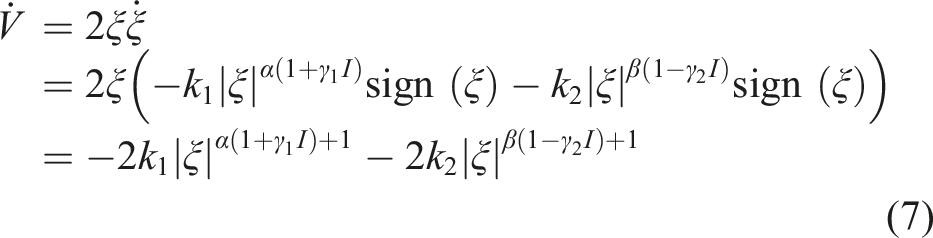
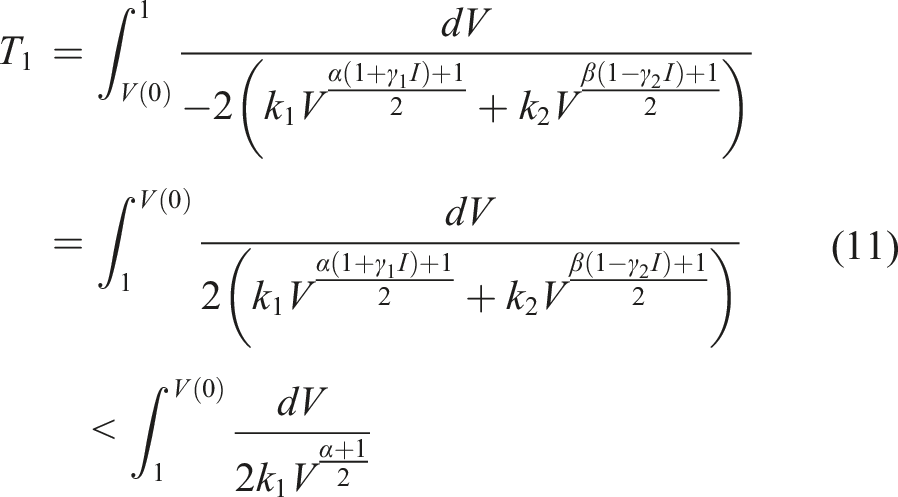
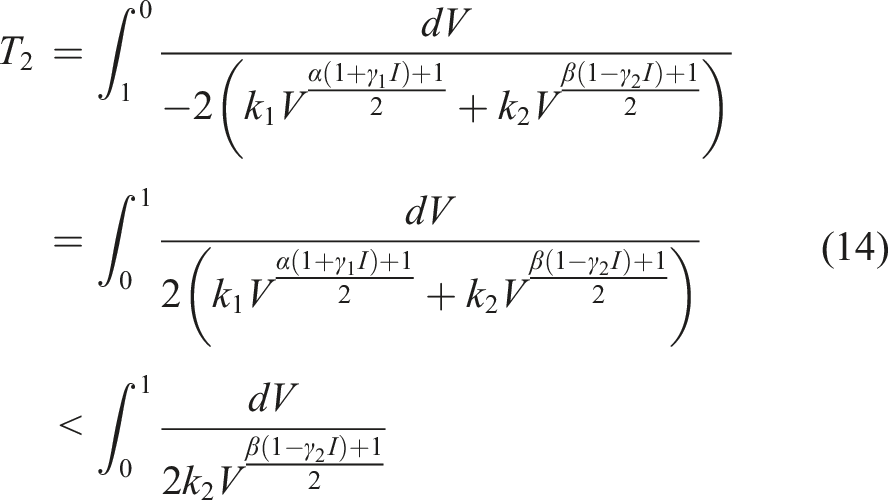
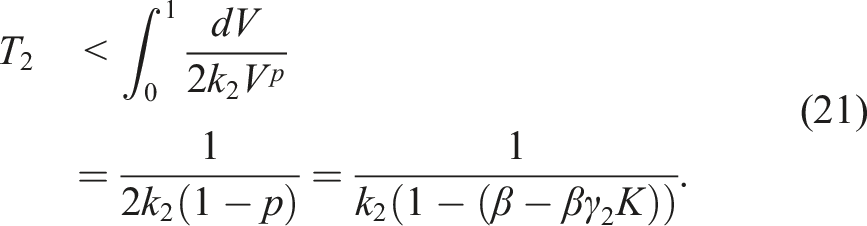
First, the Lyapunov function of reaching law in equation (4) is selected by Using equation (4) to solve the first derivative of equation (6) yields Equation (7) can be represented by By separating variables and integrating with respect to time from t = 0 to t = Tmax, equivalent from V (0) to V (Tmax) = 0, it follows that Since the system is initially away from the sliding surface, it follows that V (0) = ξ2 (0) > 1. The settling time is therefore decomposed as Tmax = T1 + T2, where T1 corresponds to the interval V ∈ [1, V (0)]. Then, Since α > 1 and V ∈ [1, V (0)], the integral in T1 can be exs. Next, consider the interval V ∈ [0, 1]. The remaining time component is defined as Assume that during interval V ∈ [1, V (0)] there exists a constant ɛ > 0 such that Since Define Then Because I (t) is monotonically increasing, it follows that in the interval V ∈ [0, 1] From (13) and (18), for V ∈ [0, 1], Therefore, the settling time of proposed method is













The comparison of performance between the proposed law and the control law of Li and Cai (2017) is given in Figure 1. Both laws are implemented based on the same sliding surface defined in (34). In fact, the comparison in mathematical analysis between the proposed method and Li and Cai (2017) is clearly, the same parameter for reaching law are used to compare, the given result shown that the proposed method in our paper is better than previous law in Li and Cai (2017).
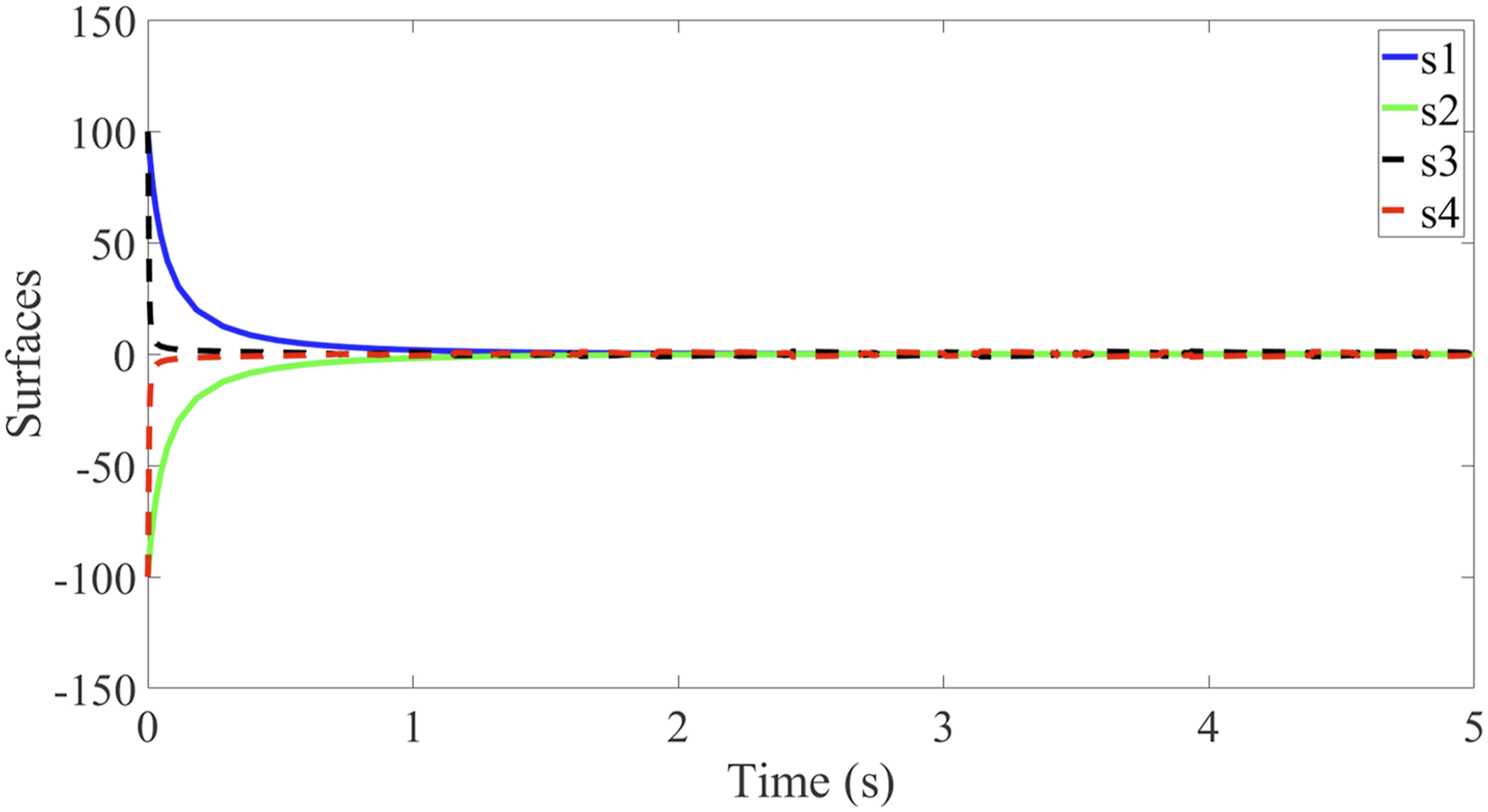
Comparison of the proposed reaching law and previous law in Li and Cai (2017).
The parameters were selected as follows: The gains are α = 1.75 and β = 0.75, k1 = 0.5, k2 = 1.5, γ1 = 1.5, and γ2 = 1.75. The initial conditions are S (0) = 100 and S (0) = −100. s1 and s2 are states in performance of Li and Cai (2017) with control law in equation (2). s3 and s4 are states in performance of our proposed method with control law in equation (4). The performance of the negative and positive gains is the same with the proposed method obtaining the better reaching times.
The reaching law of Theorem 1 is used for constructing both sliding mode control and disturbance observer.
2.2. Disturbance observer
In this paper, the basic inspiration of DOB in Giap et al. (2022) with an embedded state observer is needed. Herein, a novel DOB for SPMSM with general format of the physical system below is firstly considered

The disturbance d(t) must be bounded by ∣d(t)∣ ≤ γ
d
, where γ
d
is positively defined.
The state observer with embedded DOB for system in equation (19) can be shown below.

The fixed-time sliding mode disturbance observer is designed as follows:
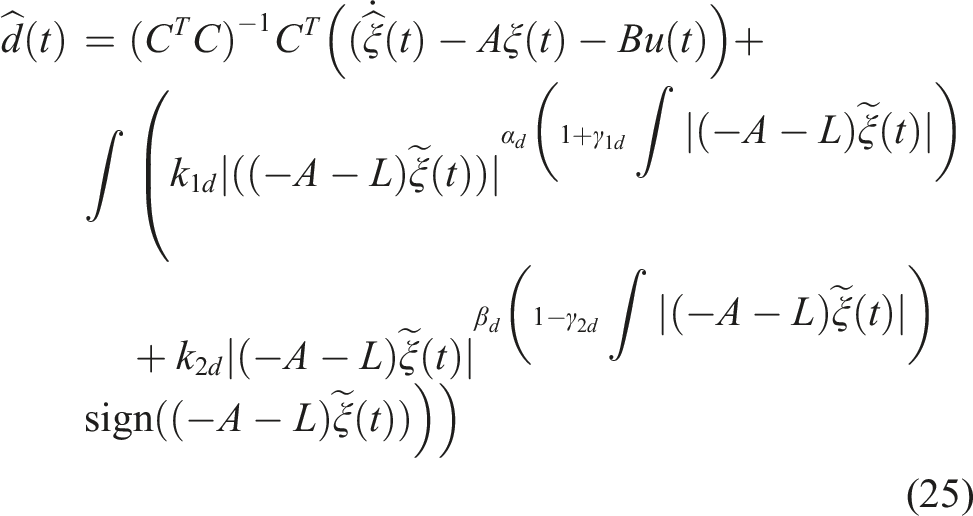

The disturbance observer proposed in this paper achieves accurate disturbance estimation at steady state when
Based on Remark 5 and substituting equation (26) into equation (25) yields
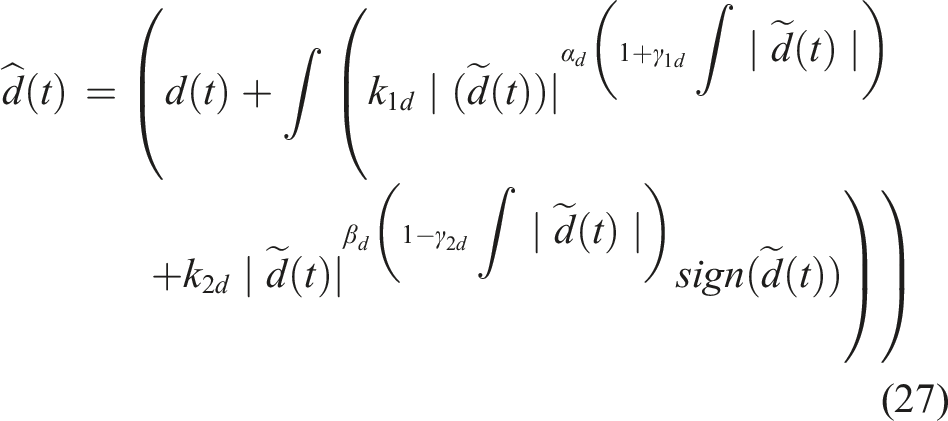
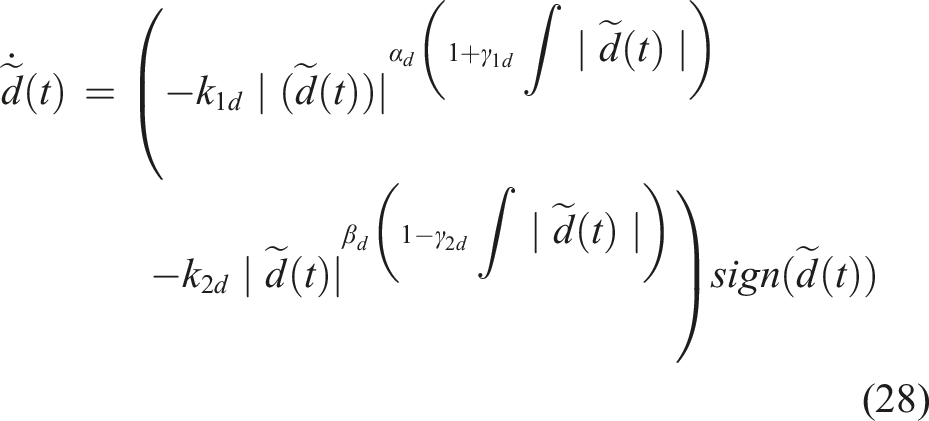
As shown in equation (28), the format of reaching law of disturbance observer is now fulfilled in Theorem 1, which leads to the settling time of the DOB is also fixed time with

2.3. Mathematical model of SPMSM
Herein, following Xu et al. (2021), the mathematical model of SPMSM in dq-axes is given with



Therefore, the dynamic equation is presented as follows:

The disturbance of the motor must be bounded as follows: T
L
≤ γ
L
, where γ
L
is positively defined. Remark 6: The boundedness assumptions on the lumped disturbance and load torque (Assumptions 1–2) are essential for guaranteeing the convergence of the disturbance observer and the robustness of the closed-loop control system. These assumptions are physically consistent with real-world motor systems, where external inputs are naturally constrained by hardware limitations.
3. Proposed method for SPMSM
Herein, speed control and the DOB for estimating the load torque are presented.
3.1. Speed control for SPMSM
The sliding surface of the speed controller is defined as follows:


Herein, the equivalent control of SMC can be calculated by considering the

The switching control law for speed axis is designed as follows:
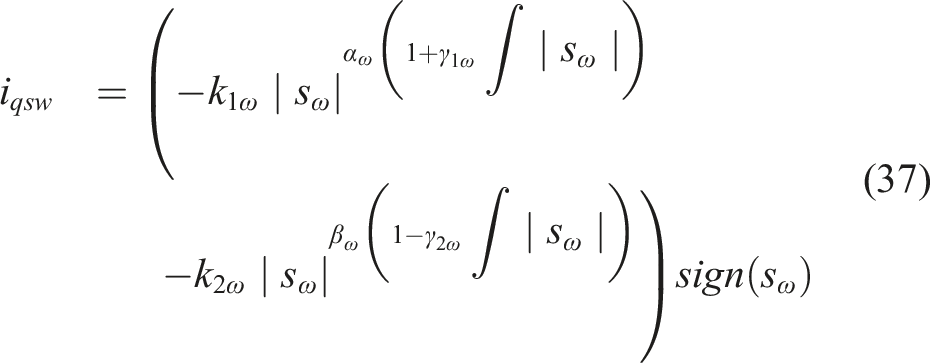
Therefore, the total control input is constructed as follows:

3.2. Disturbance observer for SPMSM
To design the DOB, the observer must be firstly provided as follows:


The DOB of this paper is good at steady state with approximated disturbance be calculated from equation (35) by
Herein, the disturbance observer is proposed such as follows:
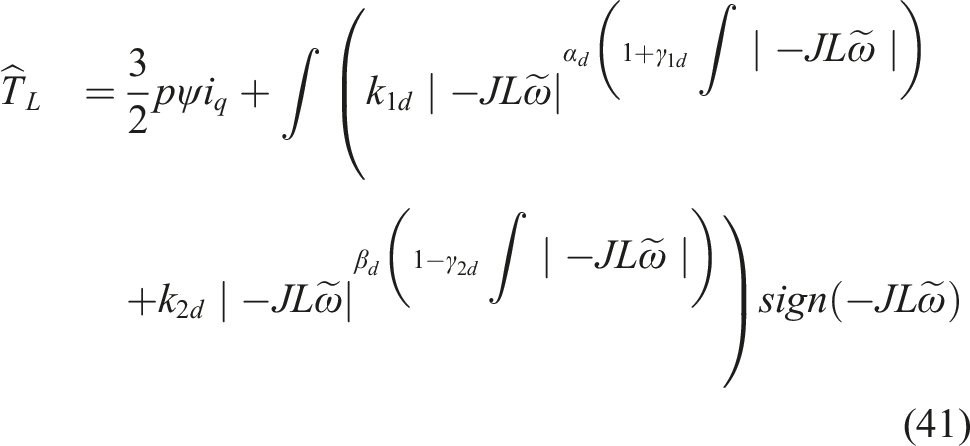
As a result in remark 7, the first derivation of equation (40) can be represented by
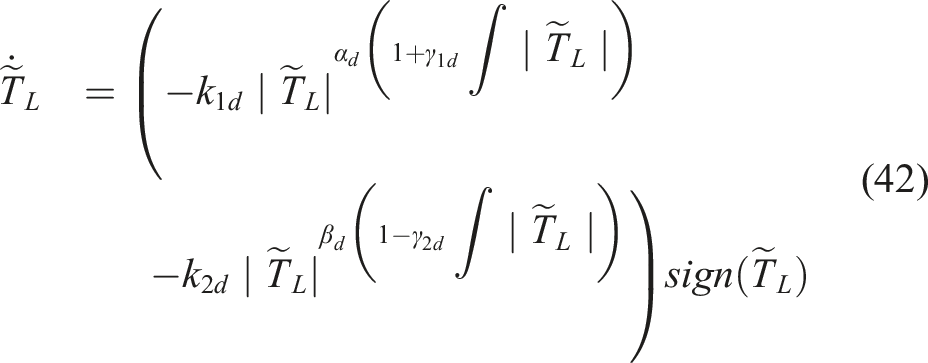
Therefore, the proposed DOB is now fulfilled in Theorem 1. The reaching time of DOB is now defined by a fixed-time stability. Specifically, the settling time is bounded as

3.3. Stability analysis
Herein, the Lyapunov candidate is selected for providing the proof of the stability. The Lyapunov candidate is selected by

Taking the first derivative for both sides of equation (42) yields
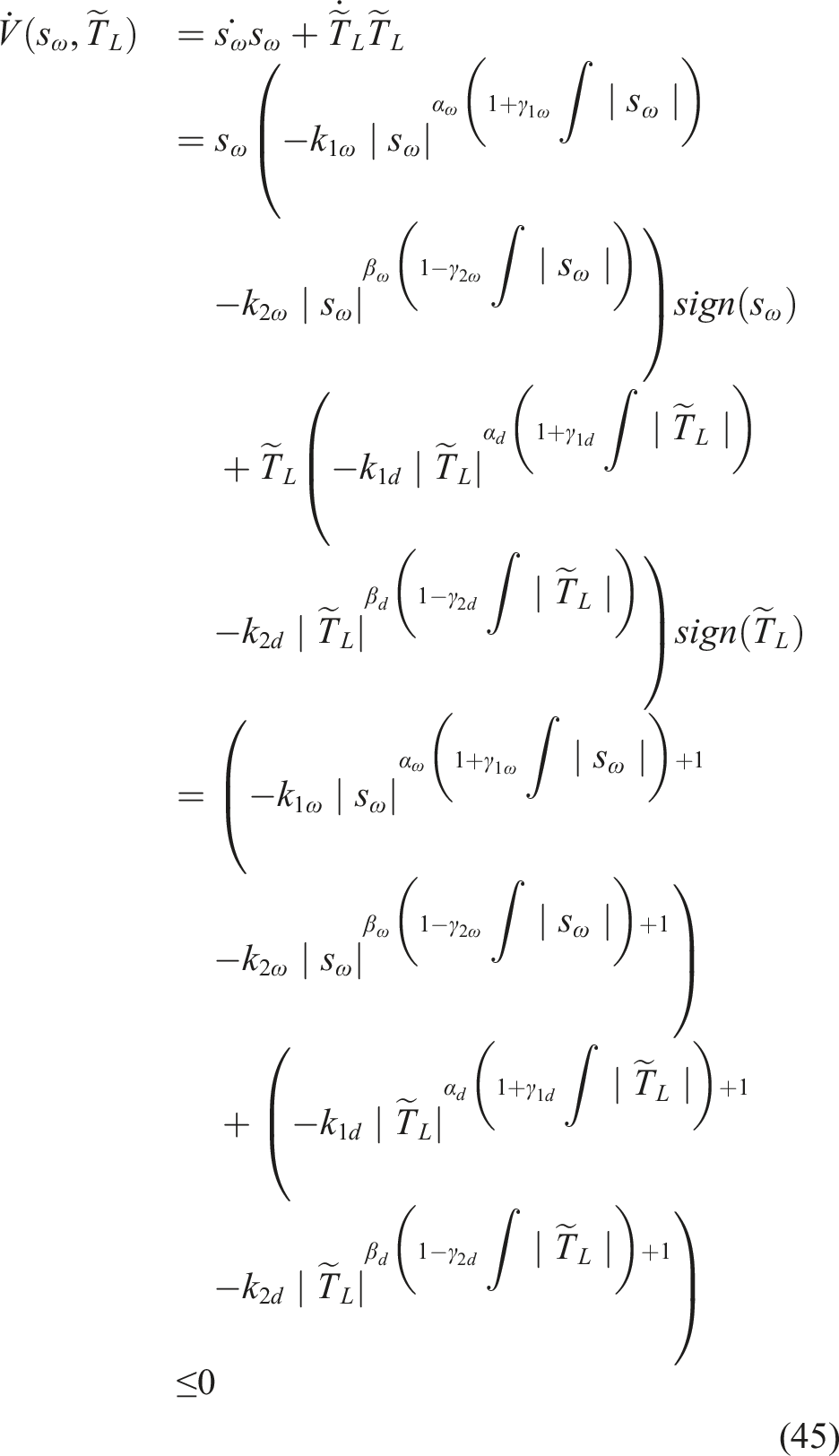
The stability is now obtained. Furthermore, according to Theorem 1, the settling time is now calculated by
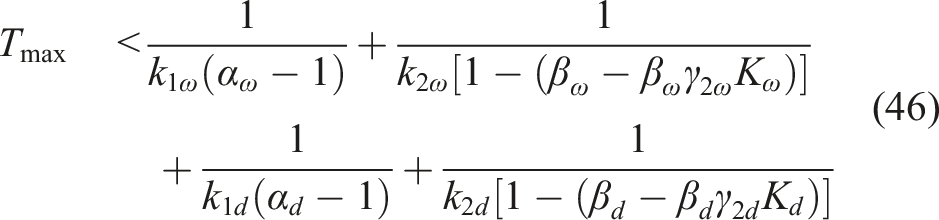
The performance of the proposed control law is given in the next section.
4. An illustrative example
The effectiveness of the proposed method is illustrated through two scenarios. MATLAB-based simulations and experimental studies are used with the same of using the control scheme as in Figure 2. FxTSMC and FxTDOB denote the proposed fixed-time controller and disturbance observer, which guarantee convergence within a fixed time independent of initial conditions, as shown in (46). Proposed control method for SPMSM.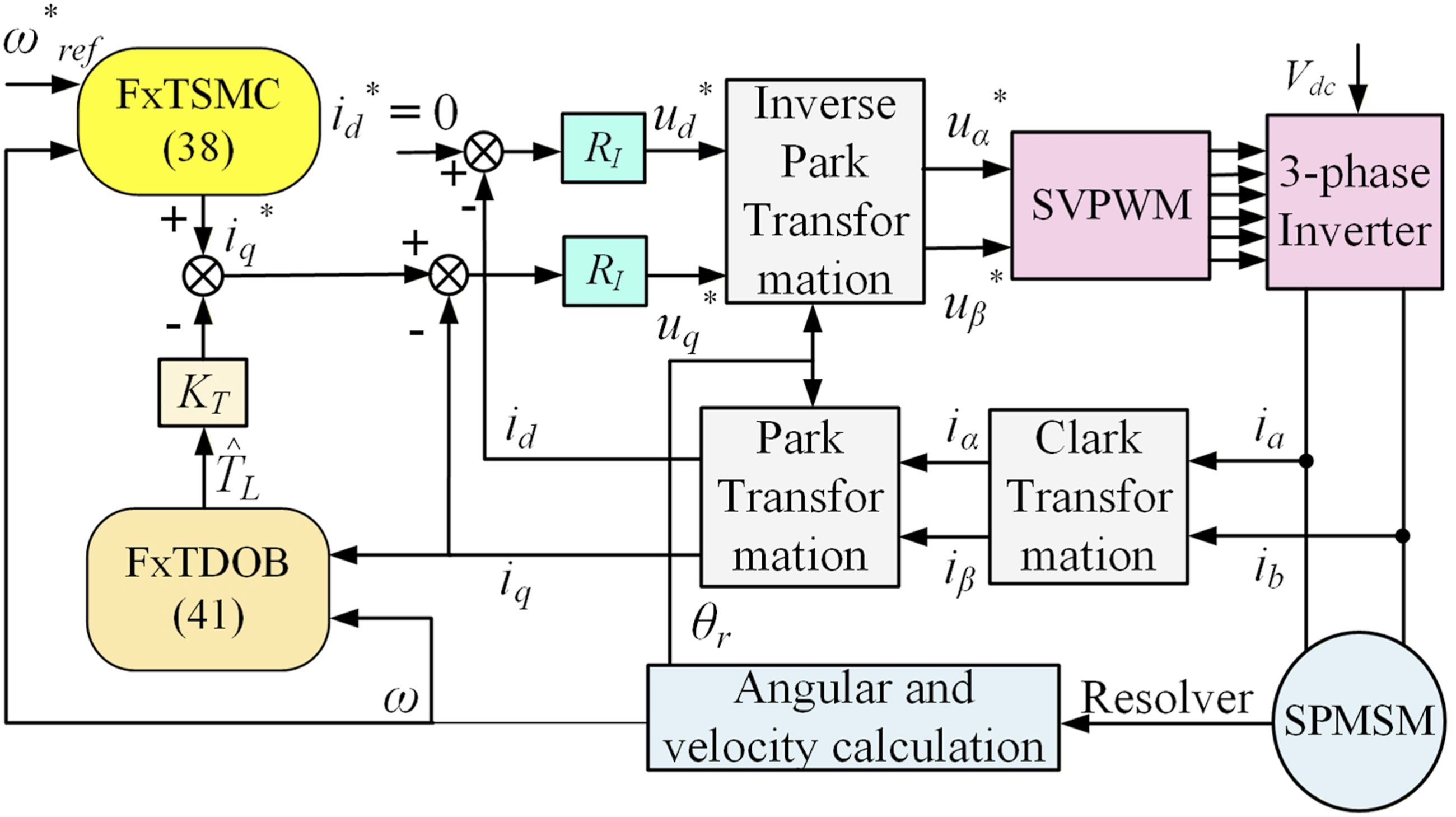
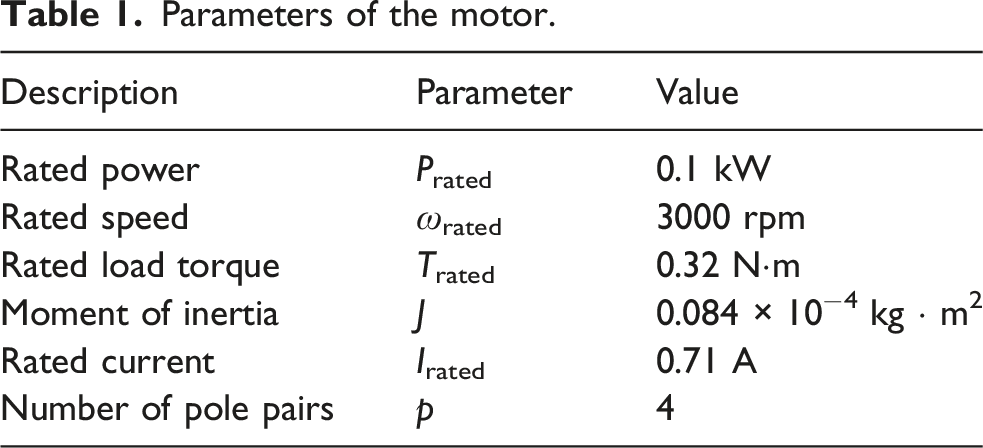
Parameters of the motor.
4.1. Parameter selection guidelines
Selection of proposed FxTSMC: From equation (37), the two nonlinear terms dominate in different regions of the sliding variable. When the state is distant from the sliding surface, the term with exponent α ω accelerates the trajectory toward the surface, whereas near the surface the term with exponent β ω ensures fast convergence to the equilibrium. The gains k1ω and k2ω regulate the convergence speed in these regions: increasing k1ω improves the transient response, while increasing k2ω enhances convergence near steady state. However, excessively large gains may amplify noise and induce chattering. The parameters γ1ω and γ2ω strengthen the control action when the error persists, thereby reducing the settling time, although overly large values may cause overshoot and oscillations. The parameters are tuned sequentially: first, the nonlinear exponents are selected to satisfy the Lyapunov conditions (α ω > 1, 0 < β ω < 1); next, k1ω and k2ω are adjusted to obtain the desired transient and steady-state responses; finally, γ1ω and γ2ω are fine-tuned to reduce the settling time.
Selection of proposed DOB: The observer parameters are selected in a similar manner due to the analogous nonlinear structure. The term with exponent α d dominates for large estimation errors, providing strong corrective action, whereas the term with exponent β d governs the dynamics near zero and ensures fast convergence. The gains k1d and k2d regulate the convergence speed, while the observer gain L scales the correction term and directly affects the estimation dynamics. Larger gains accelerate convergence but may increase noise sensitivity. Parameter tuning follows a similar procedure: first, the nonlinear exponents are chosen to satisfy the Lyapunov conditions (α d > 1, 0 < β d < 1); next, k1d, k2d, and L are adjusted; finally, γ1d and γ2d are tuned to improve convergence.
4.2. Simulation study
Parameters of controllers.

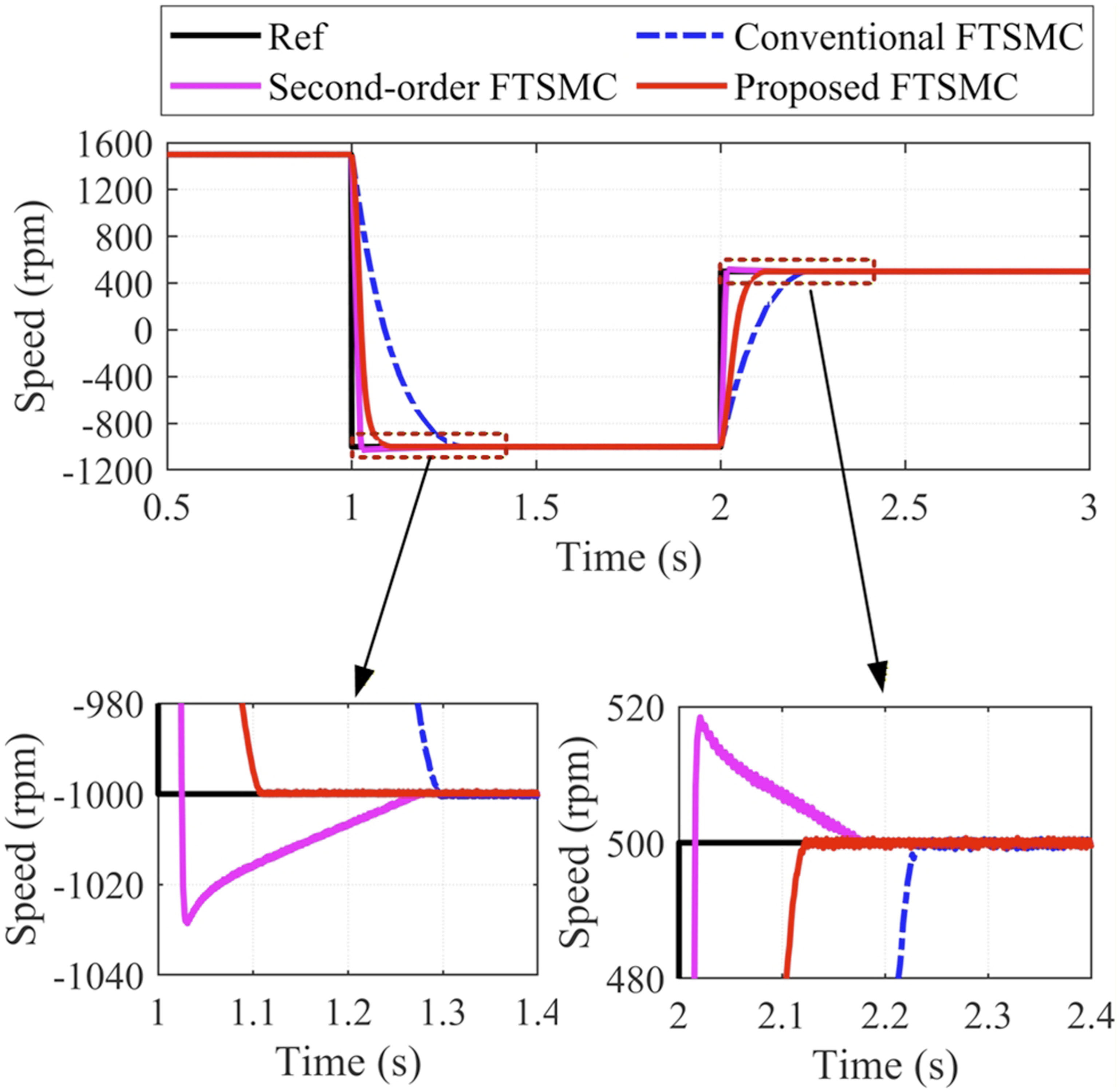
As shown in Figure 3, the startup response is evaluated with a reference speed of 1500 (rpm) and no load torque. The SO-FxTSMC controller exhibits an overshoot of 1.07%, while both the conventional FxTSMC and the proposed FxTSMC reach the reference speed without overshoot. The conventional FxTSMC has the longest settling time of 0.265 (s), whereas the SO-FxTSMC settles in 0.175 (s). The proposed FxTSMC achieves the fastest response with a settling time of about 0.15 (s). When the reference speed is reversed to −1000 (rpm) at 1 (s), the proposed FxTSMC reaches the target within approximately 0.11 (s), which is faster than the conventional FTSMC (0.295 (s)) and the SO-FxTSMC (0.28 (s)). The sliding surfaces of the conventional FxTSMC and proposed FxTSMC follow (34), while that of SO-FxTSMC is taken from its original reference. It is clearly observed that the sliding surface converges to zero for all controllers. Moreover, the proposed method achieves faster convergence than the others. Furthermore, when the reference speed changes to 500 (rpm) at 2 (s), the proposed FxTSMC continues its better performance. In this scenario, the settling of the proposed FxTSMC is about 0.125 (s). In comparison, the settling time of the conventional FxTSMC is about 0.23 (s) and settling time of SO-FxTSMC is about 0.18 (s). Besides that, the SO-FxTSMC also exhibited overshoots of 1.93% and 1.2% in these scenarios of speed changing, respectively. The performance of this scenario is shown in Figure 4. Simulation result of the startup responses. Simulation result when the reference speed suddenly changes.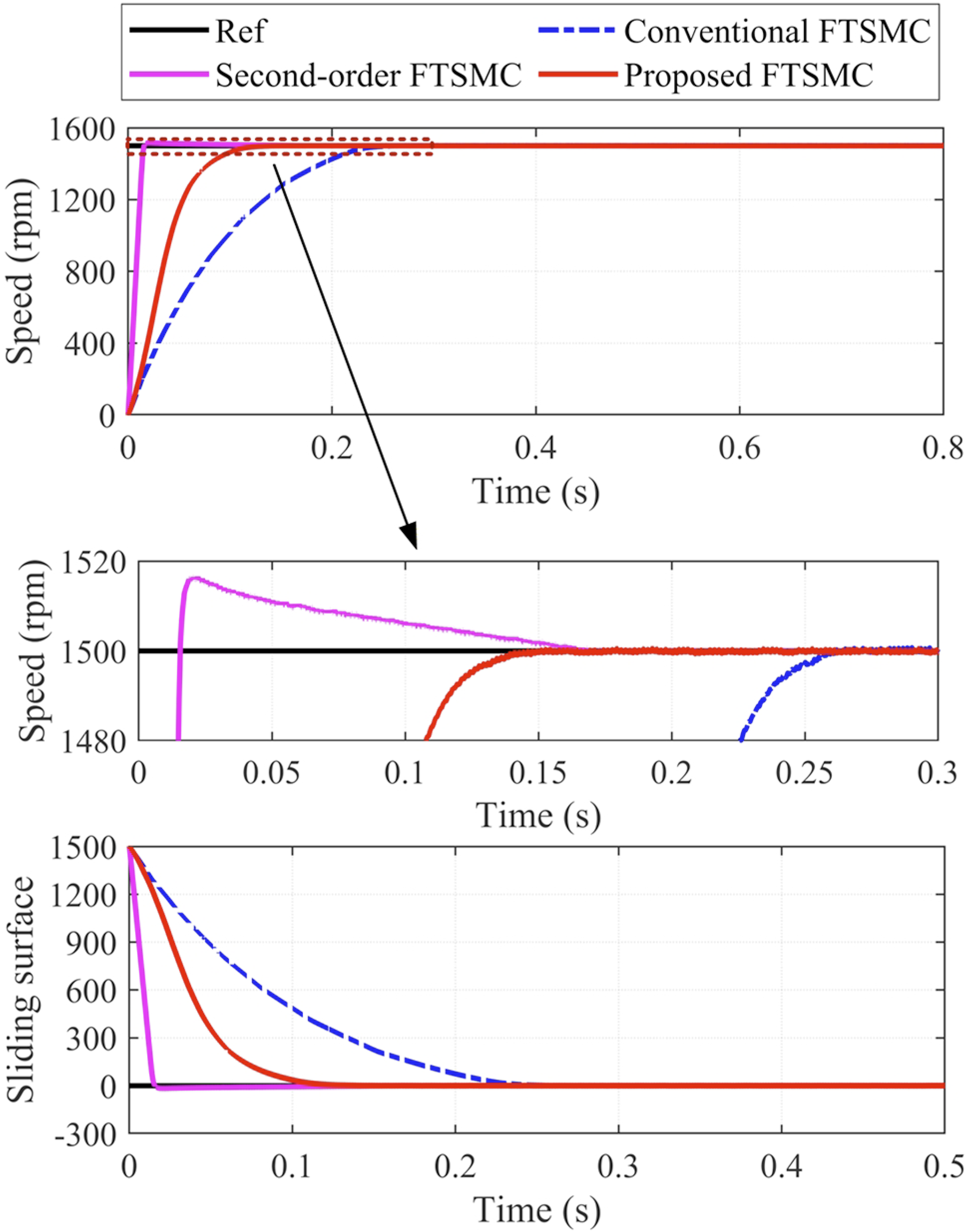
Parameters of disturbance observers.

The proposed method M3 successfully restricted the speed drop to a minimal 8 (rpm) and back to the desired speed in 0.03 (s). The performance of M2 is that, the maximum change of speed is 22 (rpm) and the time of reaching back the stable speed is about 0.043 (s). By using the M1, the maximum changing of speed is about 20 (rpm) and the time for reaching stable is about 0.018 (s). At 1 (s), the load torque is changed from 0.15 (N.m) to 0.05 (N.m). The performance of the output results is shown that the proposed method M3 is still better than the others. The maximum error of speed is about 6 (rpm) and the stable is obtained in 0.026 (s). In contrast, the M2 given the maximum error is about 16 (rpm)and reaching stable in 0.035 (s), while its by M1 are 15 (rpm) and 0.007 (s), respectively. Although M1 exhibits a shorter settling time than M3, it experiences a significantly larger speed deviation when the disturbance occurs. In contrast, M3 effectively suppresses the speed variation, indicating better disturbance rejection capability and improved dynamic robustness. Therefore, M3 provides a better trade-off between disturbance rejection capability and dynamic response. Besides that, the SMDO suffers from significant chattering due to the discontinuous sign function. In contrast, the SO-FxTSMC DOB, constructed using only integral terms, yields smoother estimation at the cost of a slower convergence rate. The proposed DOB achieves a better trade-off between fast convergence and reduced chattering. The results are shown in Figure 5. Simulation results of the three control schemes when the load torque suddenly changes. (a) Speed tracking with q-axis current responses and observed disturbance; (b) phase-a current response and its total harmonic distortion (THD).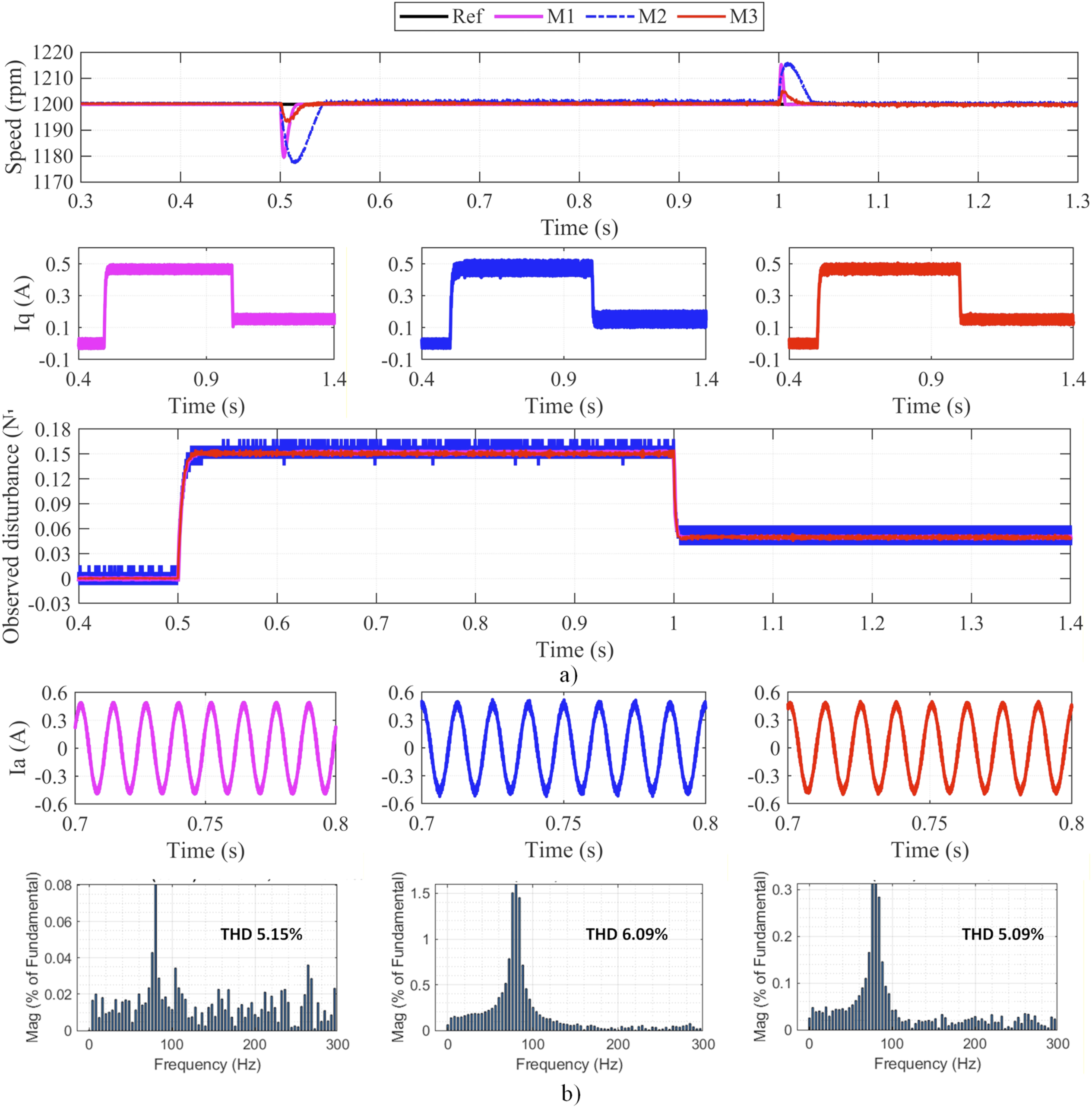
To further quantify the dynamic performance of the compared control strategies, FFT analysis is performed on the steady-state current signal. The corresponding frequency spectra are shown in Figure 5, where the total harmonic distortion (THD) values are calculated for each method. As observed, M3 achieves a THD of 5.09%, which is lower than that of M2 (6.09%) and slightly better than M1 (5.15%). This result indicates that the proposed method provides improved harmonic characteristics compared with benchmark strategies.
Although the integral term in the control law can accelerate convergence when the tracking error is large, its effect becomes less significant for small deviations. Moreover, the integral term may accumulate during operation and affect control performance. Therefore, an integral reset mechanism can be applied in practice, for example, by resetting the integral state when the reference speed changes. In addition, the computation of the integral term increases the computational burden. While this overhead is negligible for modern DSPs and microcontrollers used in motor drives, it may be challenging for older embedded controllers with limited computational capability.
4.3. Experimental study
To show the feasibility of the proposed control method, the experimental study is used with the experimental setup such as in Figure 6. The corresponding system block diagram is depicted in Figure 7. Laboratory setup for SPMSM experiments. Block diagram of the experimental system.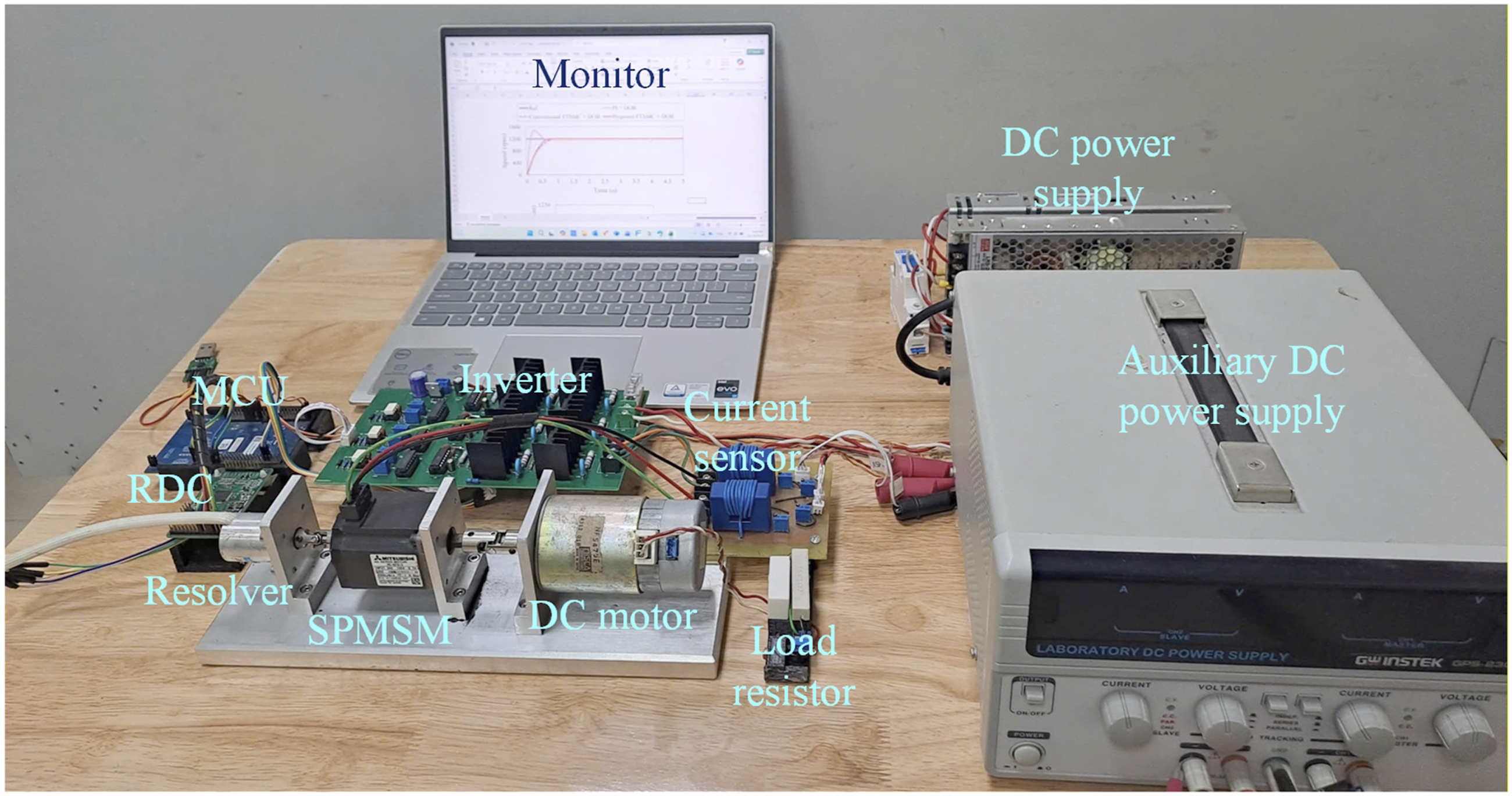
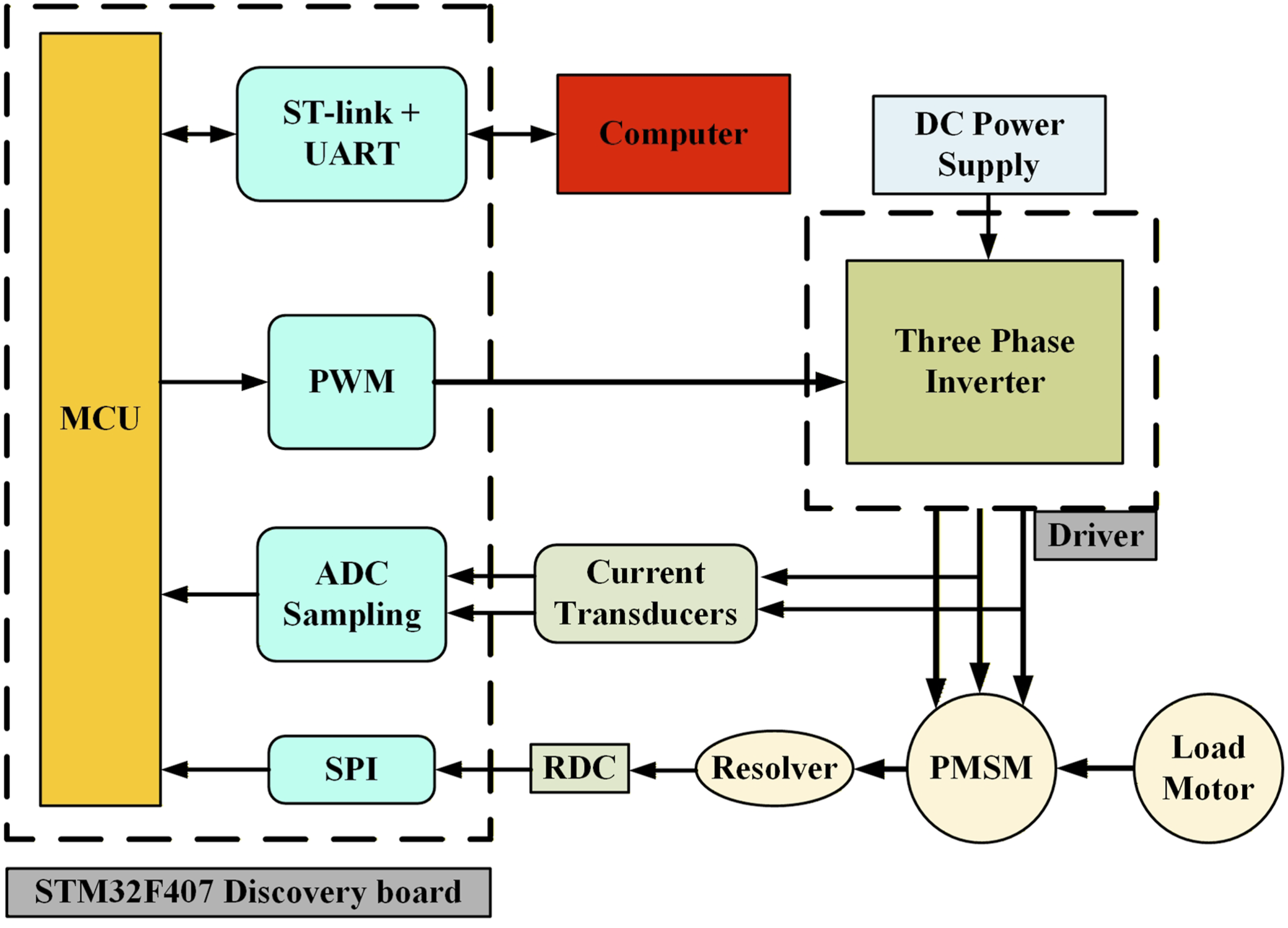
The experimental setup employed a surface-mounted PMSM Mitsubishi model HC-KFS13. To ensure accurate rotor position feedback, the motor is equipped with a Tamagawa Seiki resolver (model TS2611N11E90), which features a maximum electrical error of only ±0.5°. The resolver signals are then managed by a Resolver-to-Digital Converter (RDC) (Texas Instruments PGA411-Q1). This RDC communicates with the main digital controller via an SPI interface and provides high-resolution 12-bit digital position output per revolution, guaranteeing reliable rotor position estimation during dynamic operation. A controllable mechanical load is introduced by directly coupling an NISCA NF5475 motor to the PMSM shaft. A three-phase full-bridge MOSFET inverter operating at 20 kHz is used to drive the PMSM. This inverter is modulated by PWM signals generated directly from the digital controller. An STM32F407 Discovery board (STMicroelectronics), built around the ARM Cortex-M4 STM32F407VGT6, is used to implement the control system. Phase currents are precisely measured using LEM LA 55-P current transducers, which maintain high accuracy with a linearity error below 0.65%. The analog current signals are then converted to digital data using the 12-bit ADC module integrated within the STM32F407 Discovery board, providing sufficient resolution for accurate current feedback in the control loop. Regarding power, the inverter is supplied by an integrated AC/DC source (Meanwell model LRS 200W). Meanwhile, an auxiliary DC supply (Gwinstek model GPS-2303) is dedicated to powering the sensitive current transducers. The entire control algorithm is developed, compiled, and executed efficiently within the STM32CubeIDE environment. The most computationally intensive operations in the proposed control law are the exponential calculations. On the STM32F407 with hardware floating-point support, the execution time of the controller is about 50 (μs). With a speed loop frequency of 2 kHz, the CPU utilization is approximately 10 (%), ensuring real-time execution without noticeable control cycle delay. For monitoring and analysis during experiments, the controller transmits real-time measurement data to a host computer via a UART communication link. A computer running Windows 11, equipped with an Intel Core i7, 16 GB RAM, NVMe SSD, and Intel Iris Xe integrated graphics, was used for this study.
For speed control, the SO-FxTSMC controller is implemented with δ3 = 20, λ ω = 800, χ ω = 2000, α = 0.75, and β = 1.25. Meanwhile, the conventional fixed-time SMC utilizes the following parameters: k1ω = 0.15, k2ω = 100, α ω = 1.2, β ω = 0.3, and λ = 0.01. The proposed FxTSMC uses the same parameters as the conventional FxTSMC, with two additional gains: γ1ω = 0.006 and γ2ω = 0.001. For consistency with the simulation study, the same three control methods are evaluated experimentally: M1, the SO-FxTSMC with DOB in Lin et al. (2023); M2, the conventional FxTSMC with SMDO in Xu et al. (2021); and M3, the proposed FxTSMC with the proposed DOB. The parameters of DOBs are selected as follows: δ2 = 1, λ o = 100, χ o = 20000, α = 0.75, β = 1.25, k1d = 4, k2d = 8, α d = 1.2, β d = 0.5, γ1d = 20, γ2d = 5, and L = 1000. The currents control is handled by a PI controller, configured with a proportional K pc = 120 and an integral gain K ic = 8000.
The SPMSM is initially operated with a load torque of 0.08 (Nm) and a reference speed of 1200 (rpm). The transient responses of the motor under different control strategies are depicted in Figure 8. Method M1 exhibits a settling time of 0.85 (s) with an overshoot of 9.25%. In contrast, M2 and the proposed method M3 achieve significantly reduced overshoot of 0.2% and 0.2%, respectively. Moreover, M3 provides the fastest settling time of about 0.7 (s), compared with 1.05 (s) for M2. Experimental results of the startup responses. (a) speed tracking responses; (b) q-axis current responses.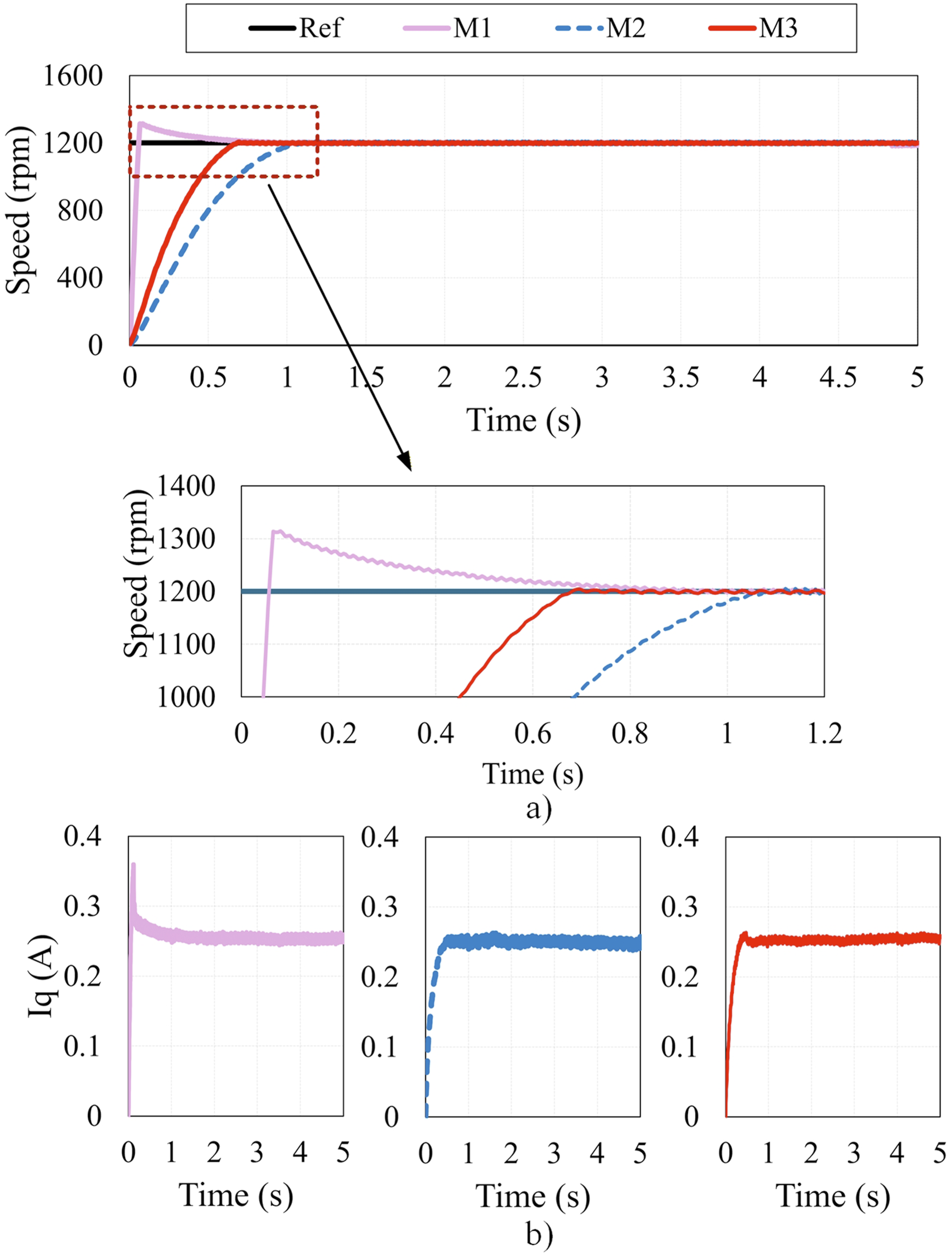
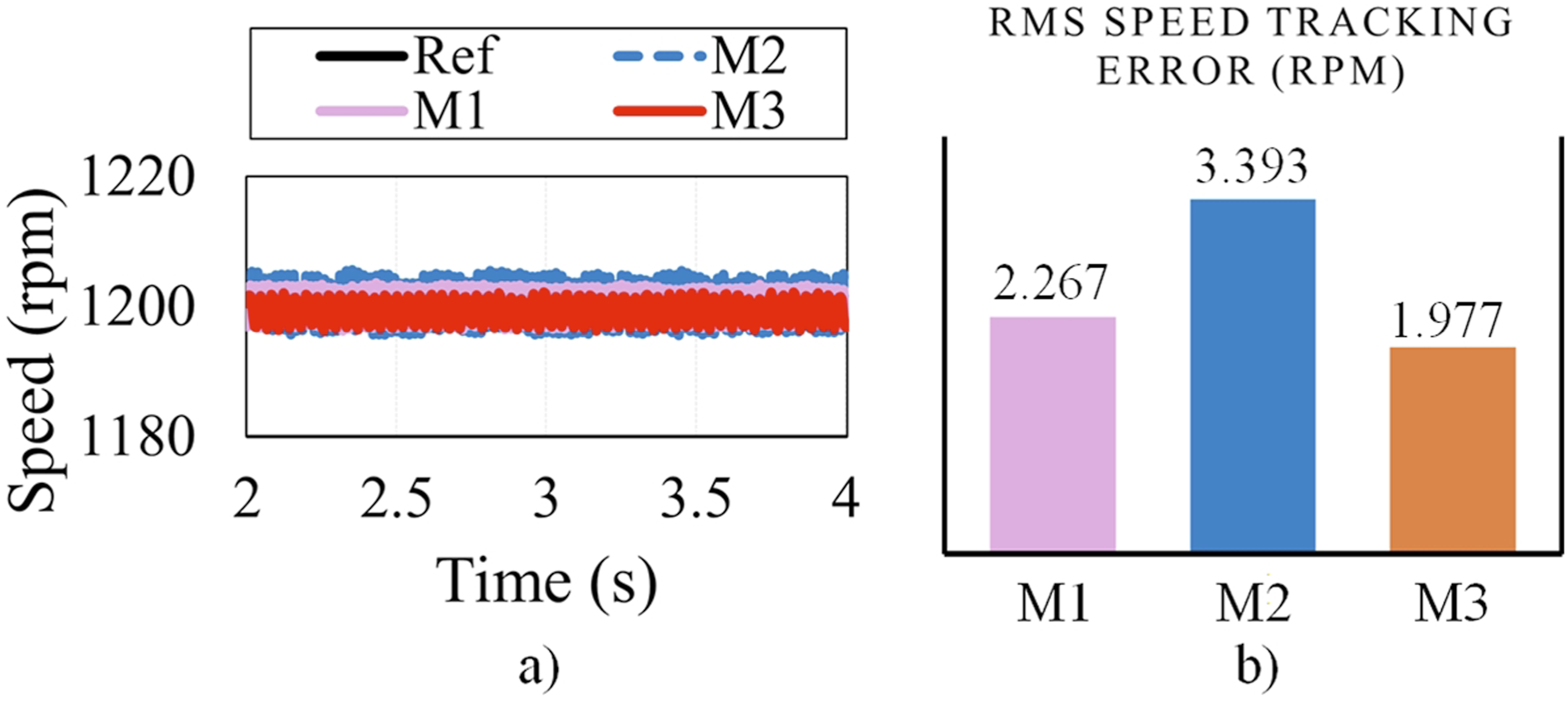
To quantitatively evaluate the tracking performance, the RMS value of the speed tracking error is calculated as RMS value of speed tracking error for different control strategies. (a) speed tracking responses; (b) RMS value of speed tracking error.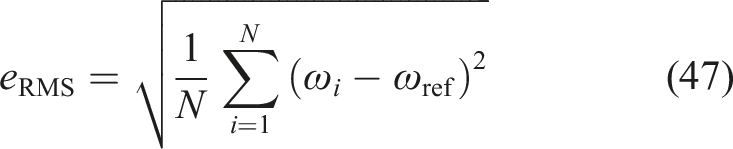
Under the command in which the speed decreases from 1200 (rpm) to −800 (rpm) at 5.5 (s) and then increases to 800 (rpm) at 7.5 (s), the experimental responses are shown in Figure 10. Compared with M1 and M2, the proposed method M3 exhibits superior transient characteristics during large speed reversals. During the transition from 1200 (rpm) to −800 (rpm), the settling time of M3 is 0.61 (s), whereas M2 and M1 require 1.1 (s) and 1.05 (s), respectively. Moreover, M1 shows an overshoot of about 37.5 %, while both M2 and M3 exhibit no overshoot. Similarly, for the speed transition from −800 (rpm) to 800 (rpm), M1 reaches steady state within 0.9 (s), exhibiting an overshoot of 30%. Both M2 and M3 show no overshoot, with settling times of 1.05 (s) and 0.45 (s), respectively. Among these methods, the proposed method M3 provides the fastest response while maintaining zero overshoot, representing the best overall performance. Experimental results when the reference speed suddenly changes. (a) Speed tracking responses; (b) q-axis current responses.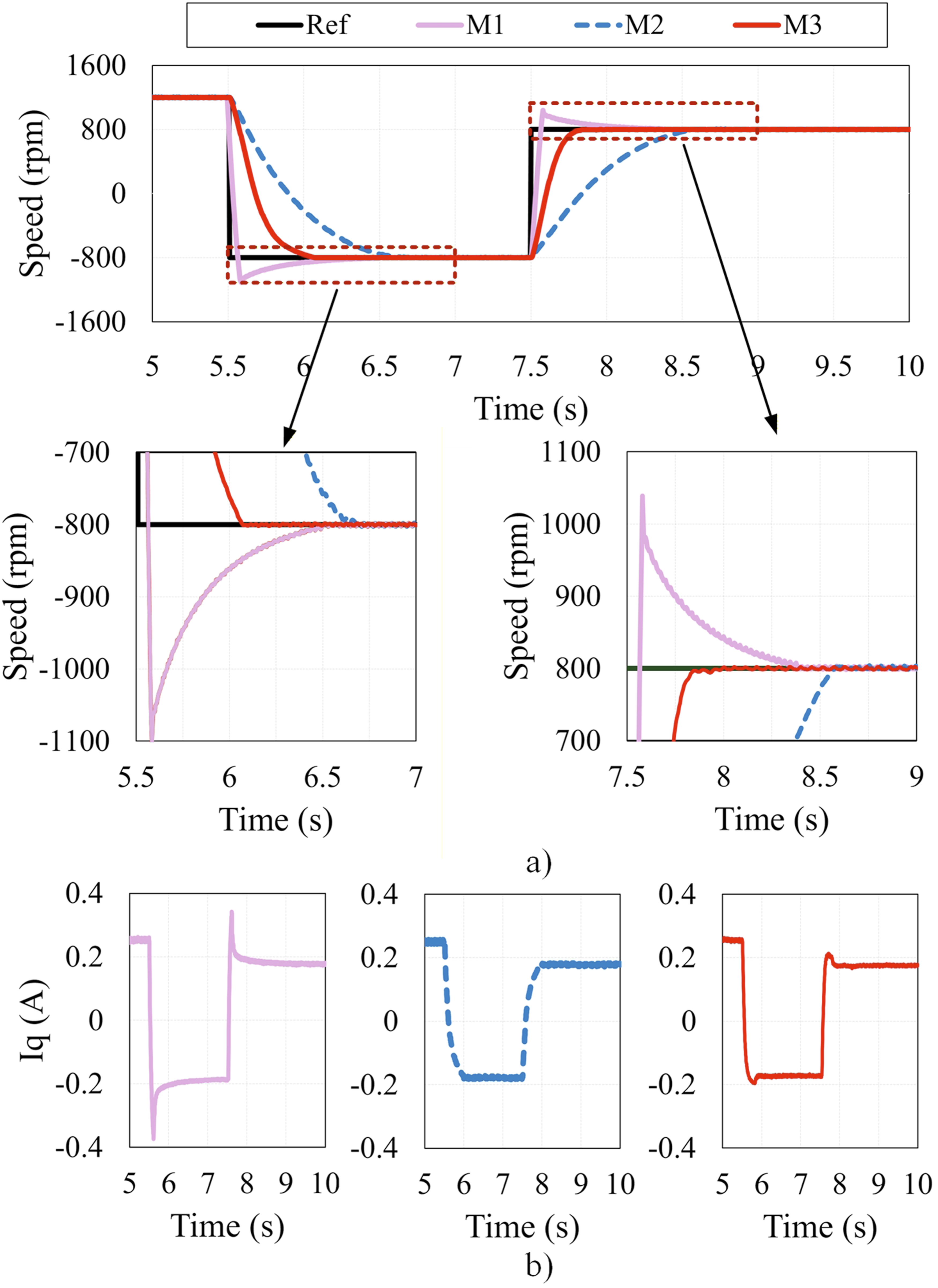
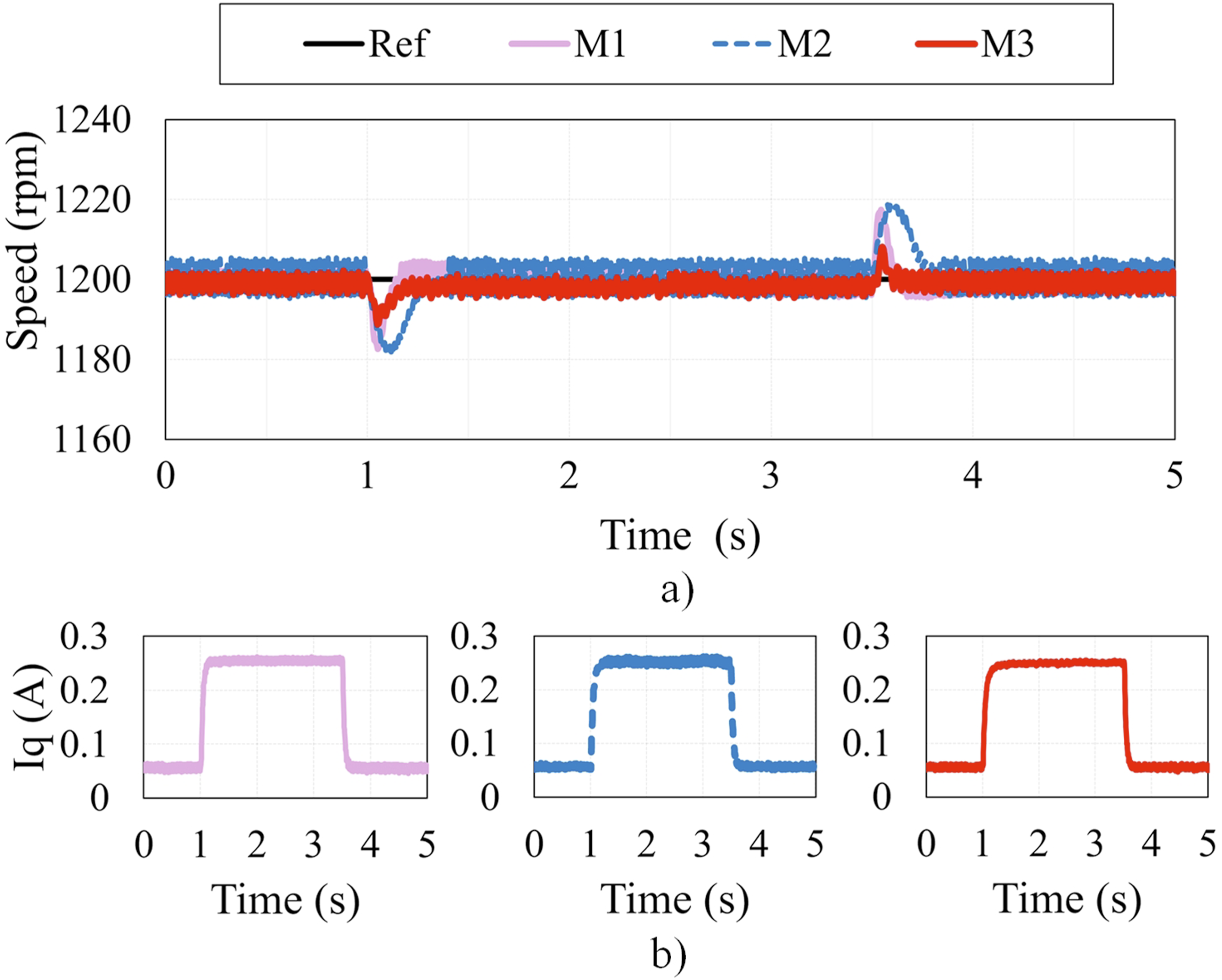
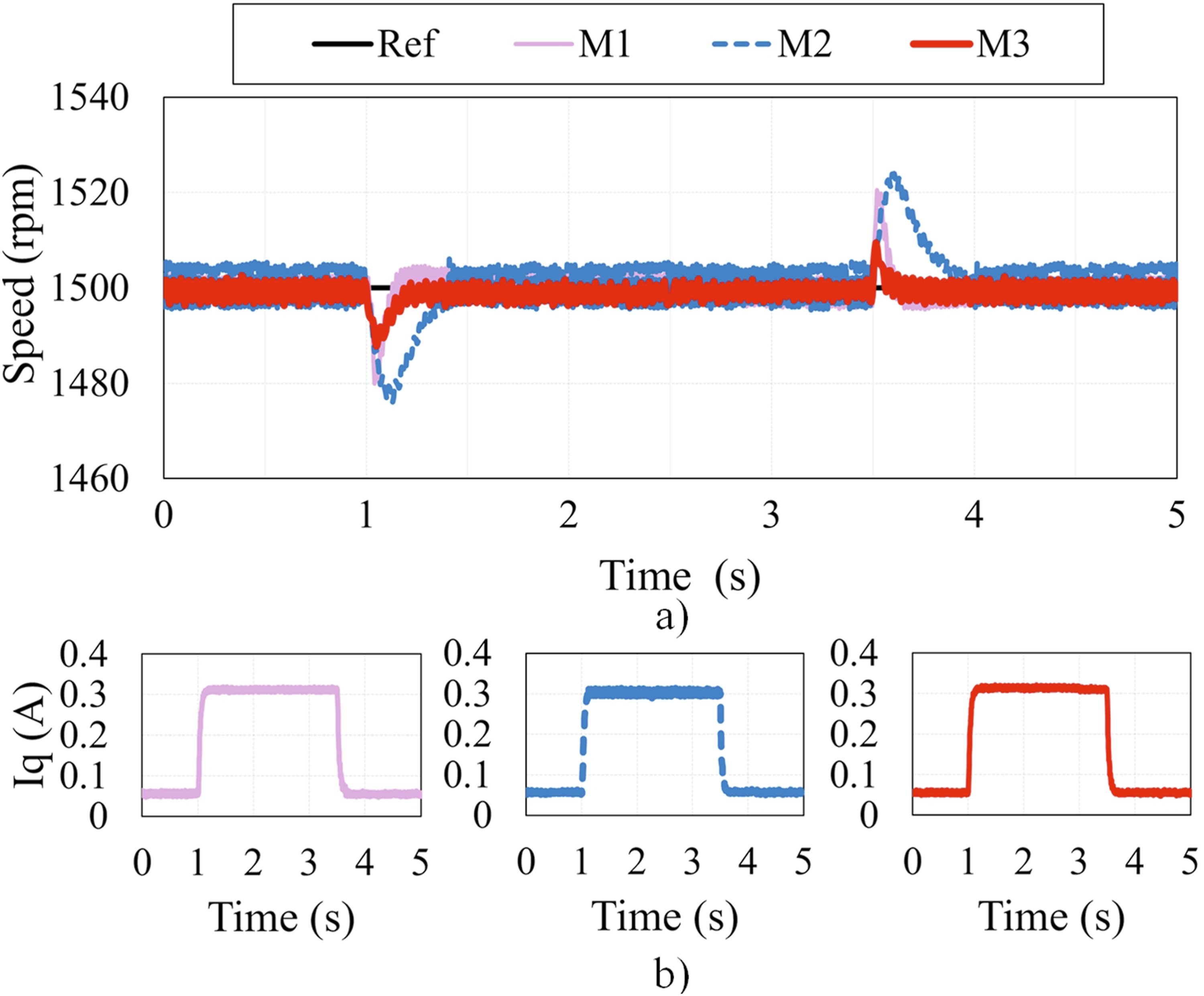
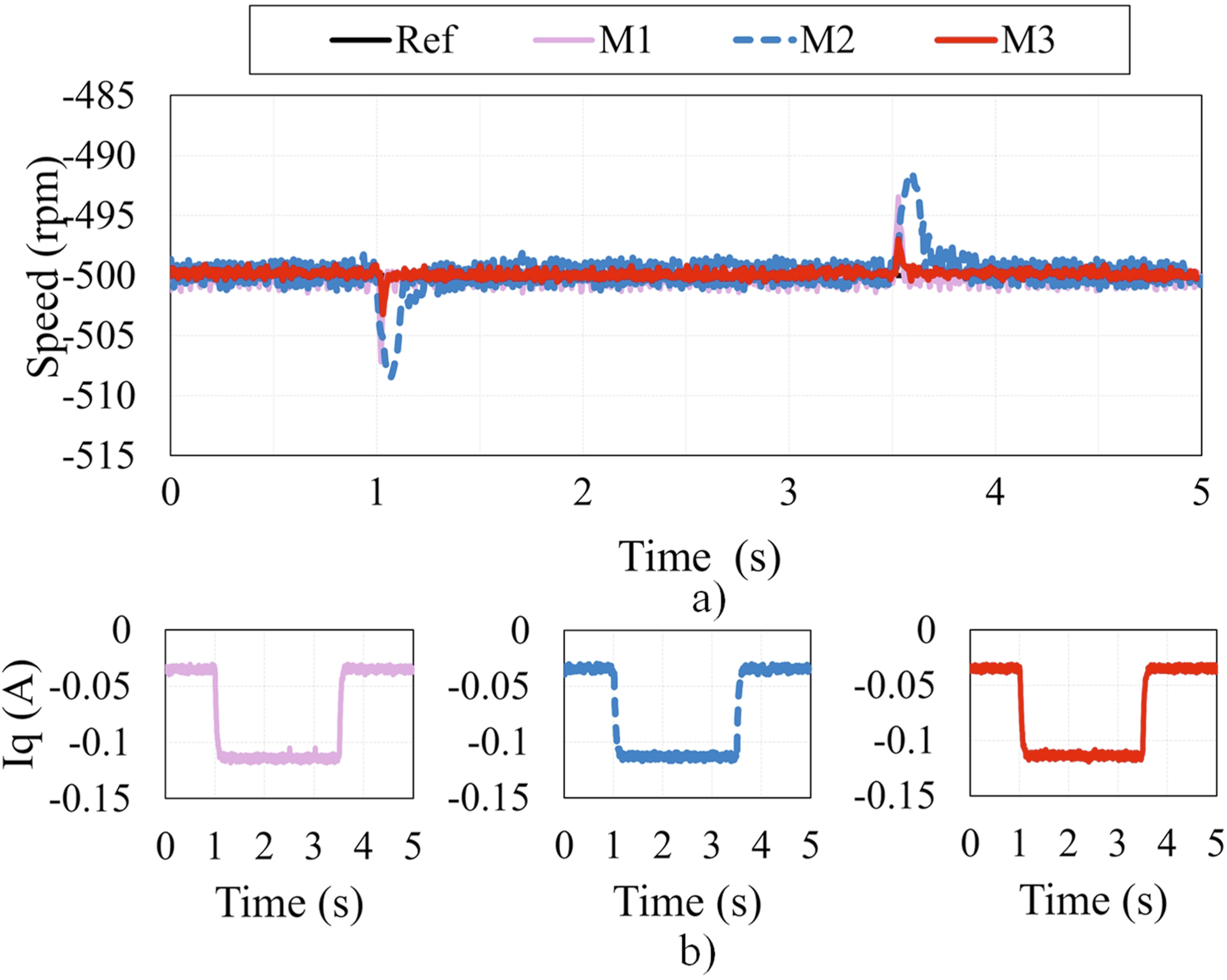
To further evaluate the effectiveness and robustness of the proposed fixed-time FxTSMC and DOB, the following scenarios are considered to analyze the controller response to sudden load torque changes. Case 1: The load is applied and removed when the reference speed is 1200 (rpm), with a load torque of about 0.08 (Nm) (Figure 11). Responses of the three control methods to a sudden load torque change at 1200 (rpm). (a) Speed tracking responses; (b) q-axis current responses. Case 2: The load is applied and removed when the reference speed is 1500 (rpm), with a load torque of about 0.1 (Nm) (Figure 12). Responses of the three control methods to a sudden load torque change at 1500 (rpm). (a) Speed tracking responses; (b) q-axis current responses. Case 3: The load is applied and removed when the reference speed is −500 (rpm), with a load torque of about 0.033 (Nm) (Figure 13). Responses of the three control methods to a sudden load torque change at −500 (rpm) reference speed. (a) Speed tracking responses; (b) q-axis current responses.
Comparison of different strategies under load and no-load conditions.
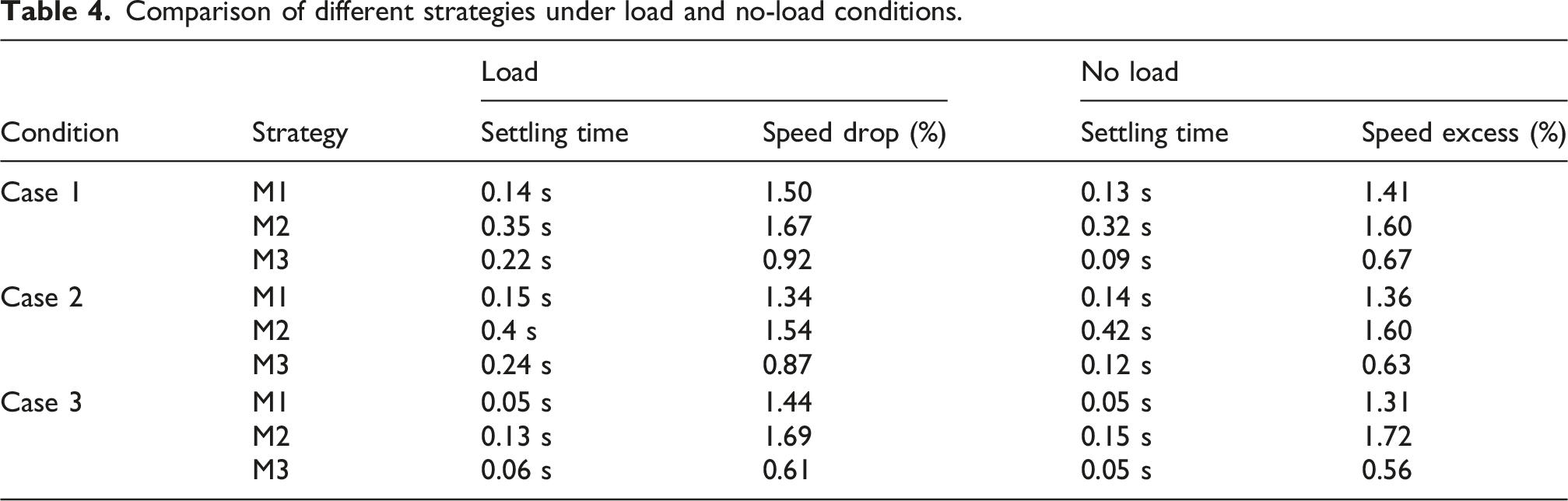
Based on the three experimental scenarios, the proposed method M3 effectively compensates for disturbances and achieves improved disturbance rejection compared with the other two methods. Method M2 exhibits the largest speed fluctuation, averaging 1.64%, with a settling time of about 0.295 (s). Method M1 shows an average fluctuation of 1.39% with a settling time of about 0.11 (s). In contrast, the proposed method M3 significantly reduces the speed fluctuation to 0.71%, while maintaining a comparable settling time of 0.13 (s).
5. Conclusion
This paper proposes a novel fixed-time reaching law for the sliding mode controller and disturbance observer design of the SPMSM drive system. The proposed reaching law provides faster convergence than conventional fixed-time SMC and is applied to both the controller and observer with complete theoretical analysis. Simulation and experimental results verify strong disturbance rejection against load torque variations. Comparative results show that the proposed method achieves the shortest settling time when starting to 1200 (rpm) (0.7 (s)), compared with 0.85 (s) and 1.05 (s) for other methods. The overshoot is only 0.2%, the speed RMS error is reduced to 1.977 (rpm), and the average speed fluctuation under load change is reduced to 0.71%, confirming the effectiveness of the proposed method for SPMSM drive applications. Future work will investigate a neural-network-based disturbance observer.
Footnotes

Funding
The authors disclosed receipt of the following financial support for the research, authorship, and/or publication of this article: This research is funded by the Vietnam National Foundation for Science and Technology Development (NAFOSTED) under Grant Number NCUD.02-2024.30
Declaration of Conflicting Interests
The authors declared no potential conflicts of interest with respect to the research, authorship, and/or publication of this article.