






Abstract
In this paper, the Direct Normal Forms (DNF) framework is extended to nonlinear oscillators systems with fractional-order damping, namely, Fractionally Damped Duffing (FDD) and Van der Pol (FDV) oscillators. Analytical frequency-amplitude relations are derived using an adapted DNF formulation based on the Davison–Essex fractional derivative. Numerical validation is then performed for both FDD and FDV oscillators using Grunwald–Letnikov time-domain simulations. The steady-state response is obtained, and the fundamental harmonic is extracted using Fourier analysis. The compared analytical and numerical results demonstrated good agreement away from resonance (typically within 5–10%), while larger deviations occurred near resonance, due to neglected higher-order nonlinear effect. For FDD oscillator, the analytical prediction showed close agreement when compared with averaging-based numerical solutions. Similarly, for FDV oscillator, analytical results demonstrated close agreement when compared with solutions obtained using Lucas wavelets method. The comparisons indicate that the steady-state response in both systems is principally governed by the fundamental harmonic component. In general, the implemented DNF formulation provides a practical analytical approximation for fractionally damped systems within the considered range, nevertheless, its accuracy decreases close to strongly nonlinear resonance conditions.
Keywords
1. Introduction
Fractional calculus broadened the scope of derivatives to include non-integer (fractional) orders, which proved to be an effective approach to represent complex dynamic systems, particularly when traditional models with integer orders are inadequate to accurately describe system dynamics. The importance of fractional calculus in engineering is clearly illustrated in the context of viscoelastic materials, where incorporating damping of fractional order described efficiently problems related to viscoelastic materials (Alsakarneh et al., 2023; AlSaleh et al., 2023; Momani et al., 2021; Sun et al., 2018).
Recent studies have investigated the influence of fractional damping on nonlinear oscillators. For example, it was demonstrated that fractional damping could significantly alter resonance characteristics and induce non-classical dynamic responses in Duffing systems (Coccolo et al., 2023, 2024). Earlier works also highlighted the emergence of complex dynamics, including chaotic oscillations and escape phenomena, in Duffing type systems with non-classical damping (Ruzziconi et al., 2011; Syta et al., 2014). These findings underline the importance of developing analytical tools capable of capturing such effects, which motivates the present extension of the DNF framework.
This study considers, in its first part, the fractionally damped Duffing oscillator subjected to harmonic excitation away from resonance, formulated as (Podlubny, 1999):

In order to validate the accuracy of the approximation described in equation (1), it is necessary to obtain numerical solutions for the corresponding fractional system. Studies of fractional-order differential equations in recent years have led to the development of numerous numerical methods with several important contributions (Difonzo and Garrappa, 2024; Garrappa, 2010). The approach of these studies utilizes both trapezoidal rules and predictor-corrector algorithms. Such methods have been implemented in several MATLAB algorithms tailored to different system types. The foundation for predictor-corrector algorithms is established in Diethelm et al. (2002); Diethelm et al. (2005). These studies introduced several numerical methods for fractional-order calculus, covering computations based on both Caputo and Riemann–Liouville definitions of fractional derivatives, providing a solid framework for the numerical analysis of fractional-order differential equations, which facilitated the verification and validation of analytical results.
The second part of the study develops a DNF solution for fractionally damped Van der Pol (FDV) oscillator, influenced by the non-resonant harmonic force and governed by the following equation of motion (Petras, 2011):

The FDV oscillator, renowned for its non-conservative nature and nonlinear damping properties, has various applications across several fields, such as biology, physics, and electronics (Afzali et al., 2023; Sierociuk, 2005). The topic has been the subject of both numerical and analytical investigations in the literature using a range of methodologies. Initially, the dynamics of an unforced FDV oscillator was analyzed using multiple numerical techniques (Barbosa et al., 2004). Subsequently, the analysis was enhanced by introducing a modified version that incorporated fractional-order time derivatives into a state-space model (Barbosa et al., 2007).
On the other hand, Grunwald–Letnikov (GL) approach is another widely recognized numerical approach for differential equations of fractional-order, which has been broadly described in the literature (Oldham and Spanier, 1974; Ostalczyk, 2000; Podlubny, 1999). It was applied in several studies involving fractional-order dynamical systems; for instance, GL definition was utilized to develop a state equivalent model for continuous linear time-invariant systems (Sierociuk, 2005), while it was employed also to attain numerical solutions for forced Van der Pol oscillators with fractional-order damping (Afzali et al., 2023). In the present study, the GL definition is adopted to generate numerical solutions for the FDD and FDV oscillators described in equations (1) and (2).
Despite these developments, analytical studies applying reduced order techniques to fractionally damped nonlinear oscillators remain limited. One recent work proposed a framework to simulate fractional differential equations and investigates the behavior of FDD and FDV oscillators (Lima De Abreu et al., 2024). It was initiated by forming the GL definition for fractional derivatives, which serves as the foundation for developing a general numerical solution method for fractional differential equation. Then, a fractional-order derivative is introduced into the Van der Pol oscillator, effectively converting it from an integer to a fractional-order system. Similarly, the Duffing oscillator is modified to include fractional damping by incorporating fractional displacement effects into the model. The dynamic behavior of these systems was explored using established nonlinear analysis tools, including the time-domain response, Poincare maps, bifurcation diagrams, fast Fourier transforms, and advanced techniques such as the continuous wavelet transform and Hilbert–Huang transform.
To the best of the authors’ knowledge, DNF method has not been applied before to analyze the FDD or FDV oscillators with fractional-order. In contrast, the present study employs the DNF method as an approximate analytical approach to derive the frequency-amplitude relationships for both the FDD and FDV oscillators. Then, to assess the validity of the proposed formulation, the results were validated against those from numerical solutions obtained by the GL definition based methodology presented in Lima De Abreu et al. (2024), as well as those by averaging and Lucas wavelets solutions, where applicable.
Such comparisons provide additional insight into the accuracy and limitations of the proposed approximation for fractionally damped oscillators, and support clarifying visions into the behavior of these complex systems.
2. DNF analysis for nonlinear systems
The literature shows that DNF technique has been widely employed to study the dynamics of nonlinear oscillators introducing polynomial stiffness terms of lower order, such as cubic and quadratic stiffness (Neild and Wagg, 2011; Wagg and Neild, 2015). Furthermore, it has been employed to study systems with higher-order polynomial stiffness and combinations of viscous damping and polynomial stiffness (Nasir, 2023; Nasir et al., 2021).
This study presents an extension of the DNF method to oscillators with fractional-order damping, focusing on FDD and FDV systems. Where relevant, the findings are compared with numerical simulations and other analytical methods reported in previous research.
A concise guide to solve problems using the DNF method, covering both conservative and non-conservative oscillators, is provided in Li and Deng (2007). This has supported subsequent applications of the technique to both SDOF and MDOF systems (Oliveira and Machado, 2014).
The DNF method is used in this study to obtain reduced analytical descriptions of the FDD and FDV oscillators. In the DNF framework, the governing equation is transformed through a near-identity transformation so that the non-resonant terms are removed while the dominant harmonic contribution is retained. This produces a reduced equation from which the steady-state amplitude and phase relations are obtained. The present formulation follows the standard DNF treatment of weakly nonlinear oscillators, while extending it to systems with fractional-order damping.
The procedure of the DNF followed in this study is summarized schematically in Figure 1. The diagram outlines the sequential steps starting from the formulation of the governing equations and linear modal transformation, followed by the transformation of external forcing and damping terms. The nonlinear near-identity transformation, which is considered the core of the method, is where the system is reformulated to eliminate non-resonant contributions and retain the dominant harmonic terms. This leads to reduced order representation from which the amplitude-frequency and phase characteristics are obtained. Schematic presentation of the DNF procedure for nonlinear oscillators with fractional damping.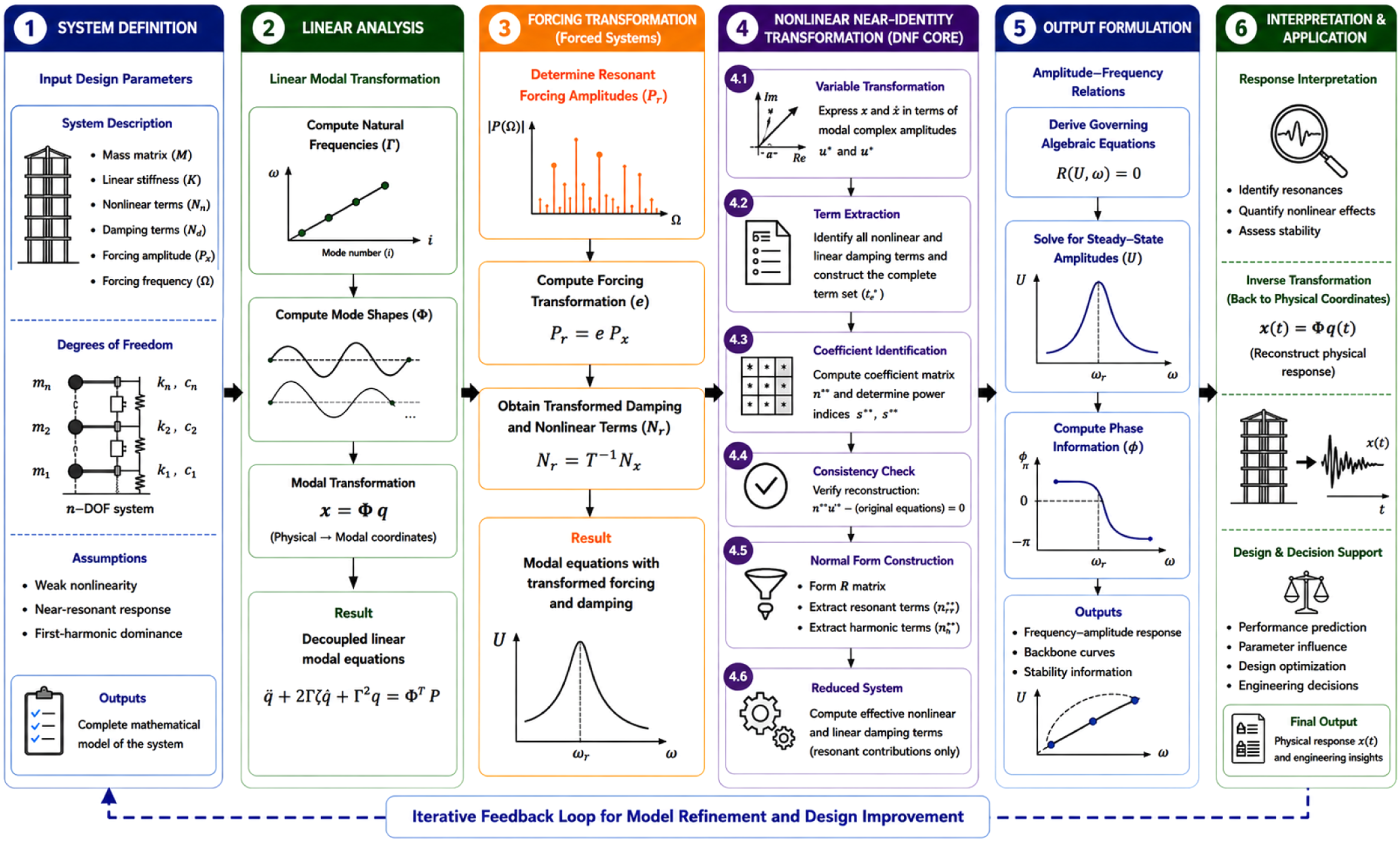
The final stage involves interpreting the analytical results and reconstructing the physical response where required. Figure 1 serves as a structured overview to guide the detailed derivations presented in the following sections.
2.1. General formulation of the DNF method
The fractional derivative is represented using the Davison–Essex definition (Lima De Abreu et al., 2024), which is convenient for harmonic functions and therefore compatible with the complex exponential representation used in the DNF procedure. For a harmonic component,

The Davison–Essex derivative may be written as




The terms The incomplete gamma function (real and imaginary parts), when 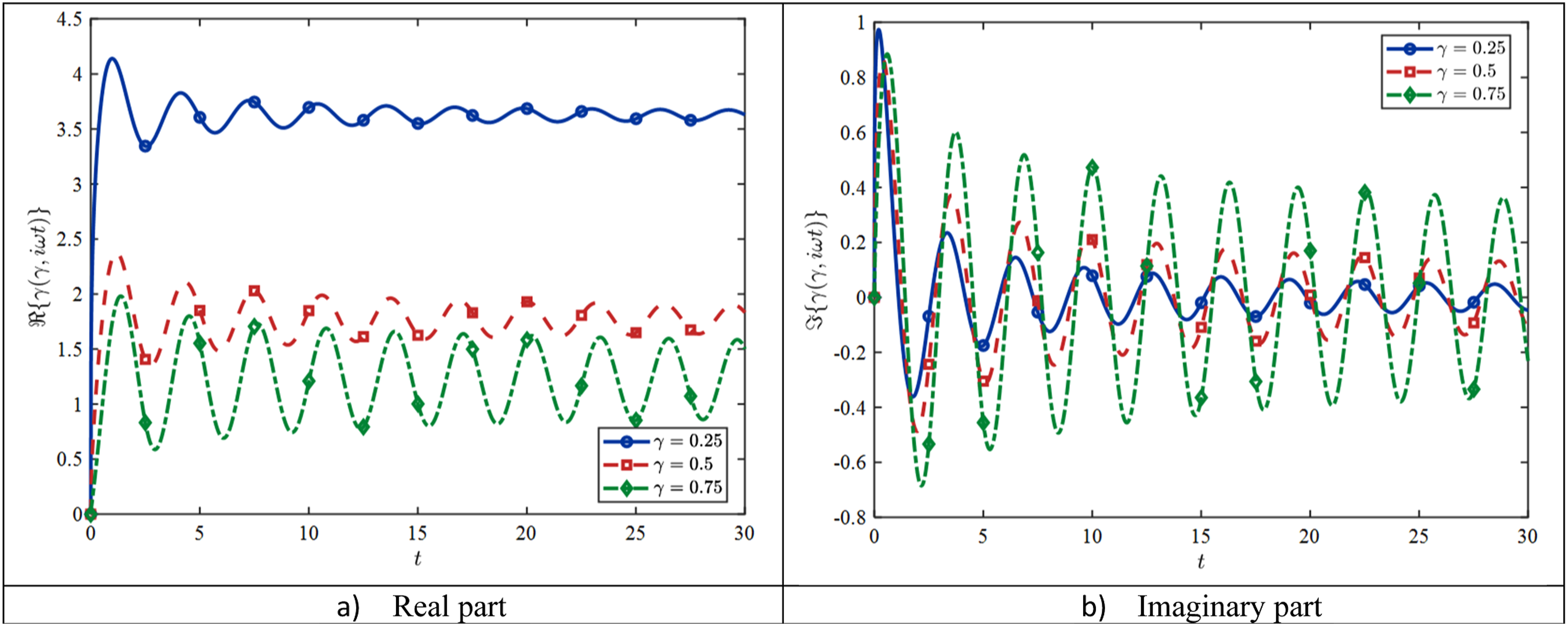
In order to obtain the steady-state responses, for real

Therefore, it is possible to define



The incomplete gamma terms represent transient memory contributions of the fractional derivative. Since the frequency-response analysis concerns the persistent periodic steady-state response, the transient contribution is neglected after it decays. Thus, the steady-state fractional coefficients are


The quantities
2.2. DNF analysis of FDD oscillator
Considering the FDD oscillator driven by a non-resonant harmonic force, equation (1), DNF method is applied to develop the amplitude-frequency relationship of the oscillator (Coccolo et al., 2023). Using the DNF reduction, the response is assumed to be dominated by the fundamental harmonic:

The acceleration term is





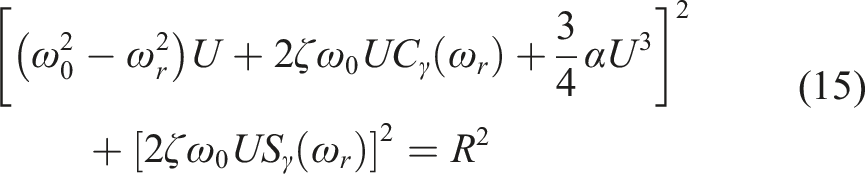
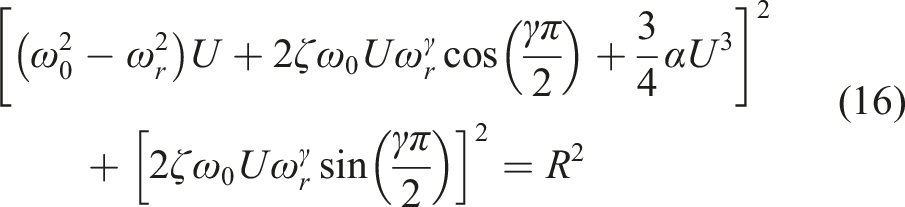
Squaring and adding eliminates the phase angle and gives the FDD frequency-response equation:

2.3. DNF analysis of FDV oscillator
For the FDV oscillator in equation (2), the DNF procedure retains the dominant harmonic component of the response; thus,



Keeping the fundamental harmonic terms only,


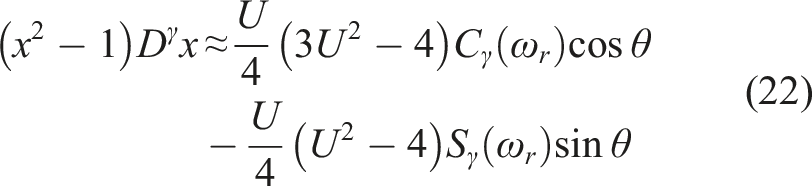


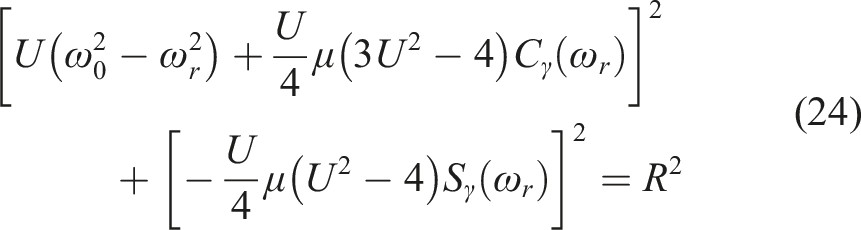
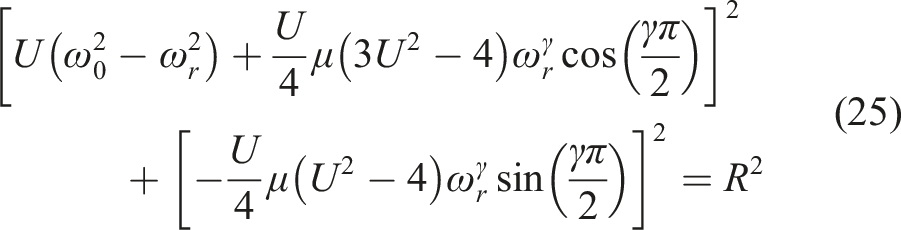

This corrected formulation is fully consistent with the DNF approximation because it retains the fundamental resonant contribution while removing the higher-order non-resonant harmonic terms. Nonetheless, the third harmonic generated by the nonlinear damping term is not ignored entirely; it is treated as a higher harmonic outside the first-order reduced DNF model and is later assessed numerically through FFT analysis.
2.4. Numerical validation using GL method
To verify the DNF-based analytical frequency-response relations, numerical solutions are obtained using the GL approximation. Within this framework, the fractional derivative of a function


Starting with
For FDD, the steady-state amplitude

For FDV, because the nonlinear damping can generate higher harmonics, the validation amplitude is taken as the fundamental harmonic component of the steady-state numerical response:



This definition is consistent with the first-harmonic DNF formulation and avoids comparing the analytical fundamental response with the peak-to-peak amplitude that may include higher harmonics. Moreover, the percentage difference between the analytical and numerical results is calculated as

For the FDV oscillator, the harmonic content of the numerical response is also evaluated using FFT. The ratio between the third harmonic and the fundamental harmonic is
Although different fractional derivative definitions are employed in the analytical and numerical formulations, both representations are consistent in describing the same physical damping behavior in the steady-state regime. The Davison–Essex definition is adopted for analytical tractability within the DNF framework, and the GL approach is adopted for numerical validation purposes. Compared to more computationally intensive hybrid and spectral methods reported in the literature (Derakhshan et al., 2024, 2025; Kamran et al., 2025), the GL approach provides a direct and sufficiently accurate numerical framework for the present validation study.
3. Results and discussions
In this section, the analytical results obtained for the FDD oscillator are verified through numerical simulations based on the GL definition of fractional derivatives. Additionally, the FDD results were compared with selected findings from the literature that were derived using the averaging method. For the FDV oscillator, the results were evaluated against those obtained using the Lucas wavelet approximation technique.
3.1. Comparing DNF to numerical results for FDD
To determine the reliability of the amplitude-frequency correlation for the FDD oscillator, the frequency-response functions are obtained analytically using equation (16). These results are then verified by numerical simulations using DNF steady-state frequency responses in comparison to numerical solutions for the FDD.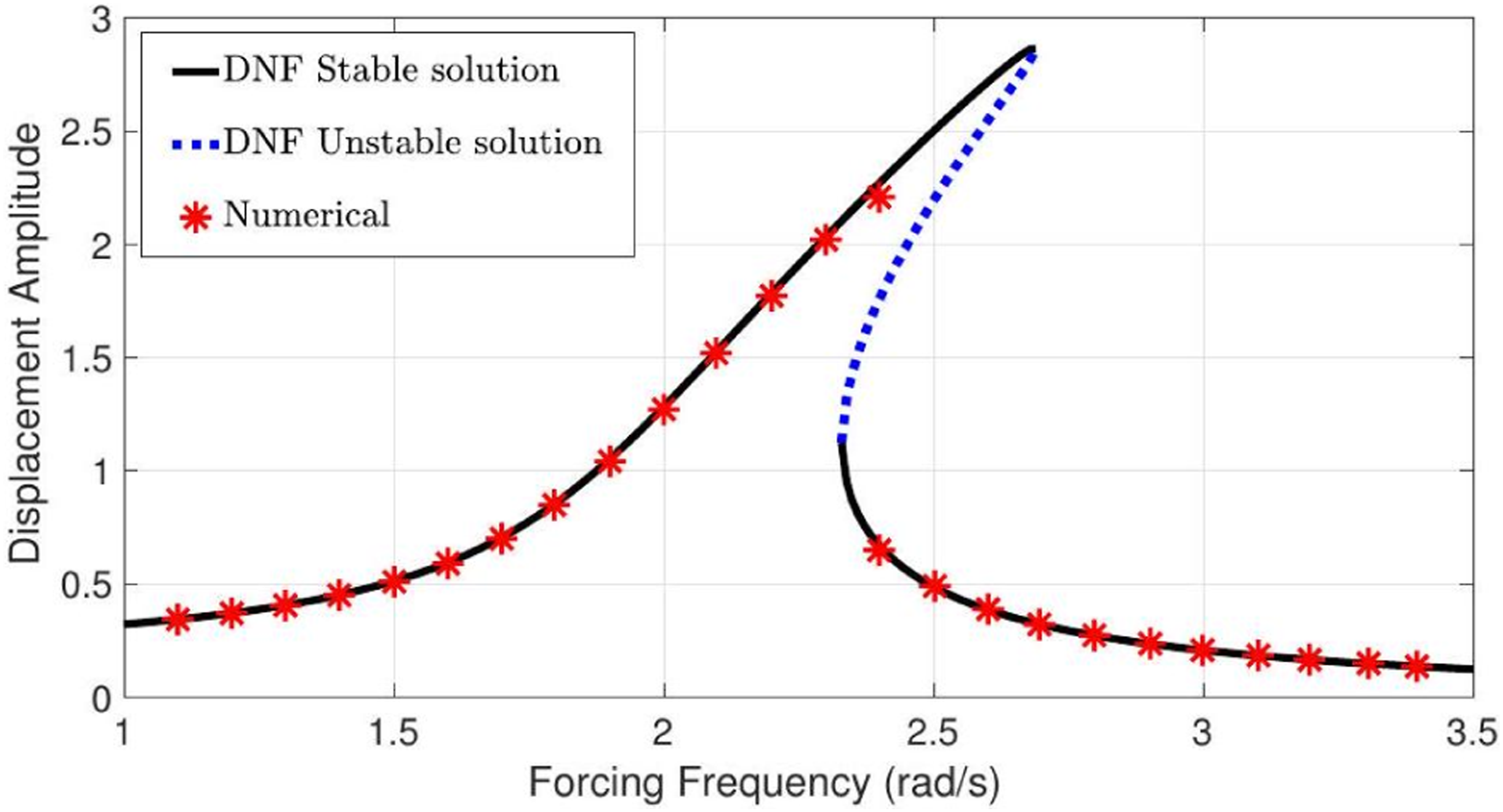
The influence of altering the fractional-order FDD analytical frequency responses for different orders of 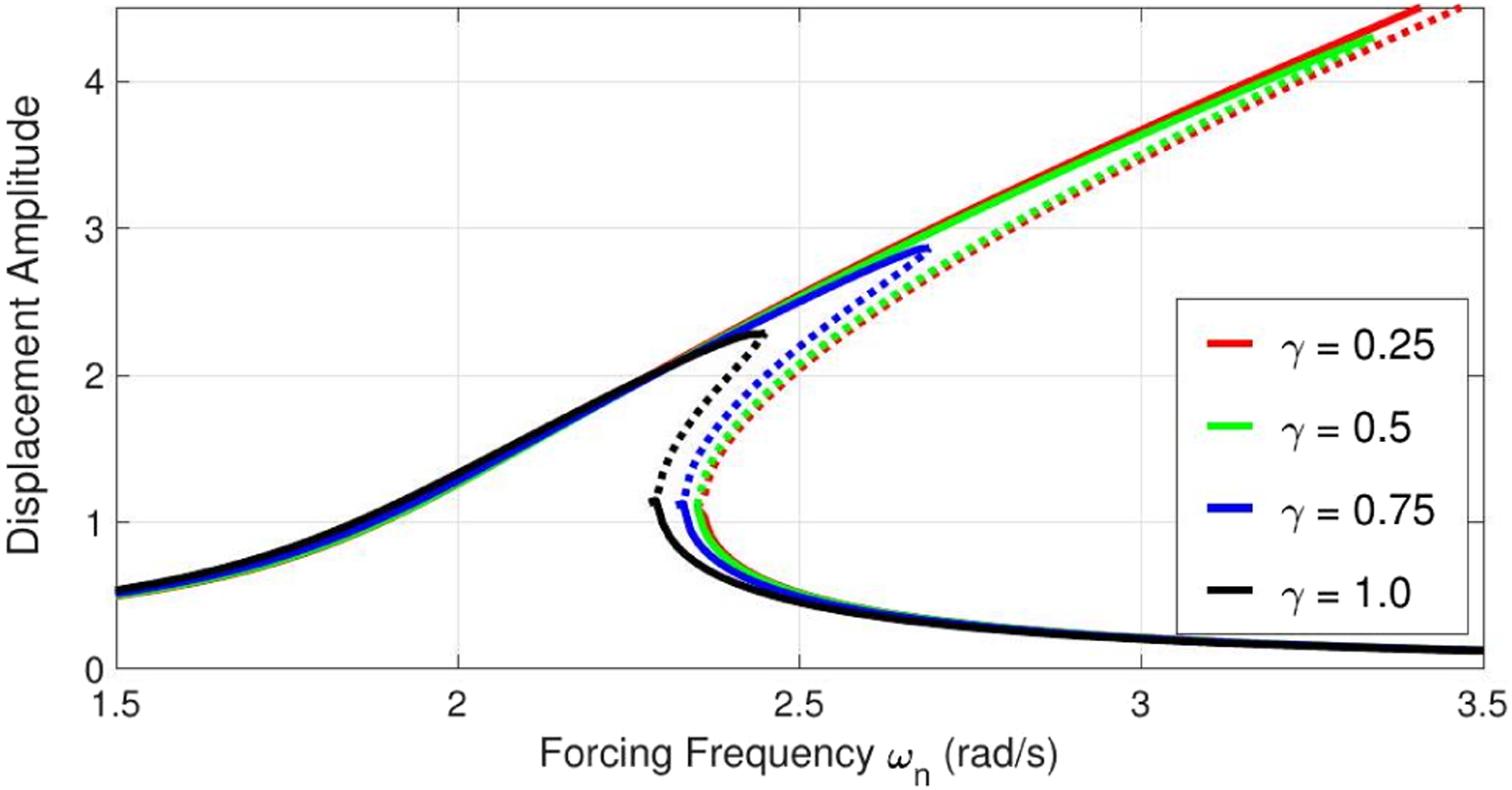
Figure 5 illustrates the effect of varying the excitation amplitude on the oscillation amplitude of the oscillator, considering a fractional derivative order of FDD analytical frequency responses for different values of 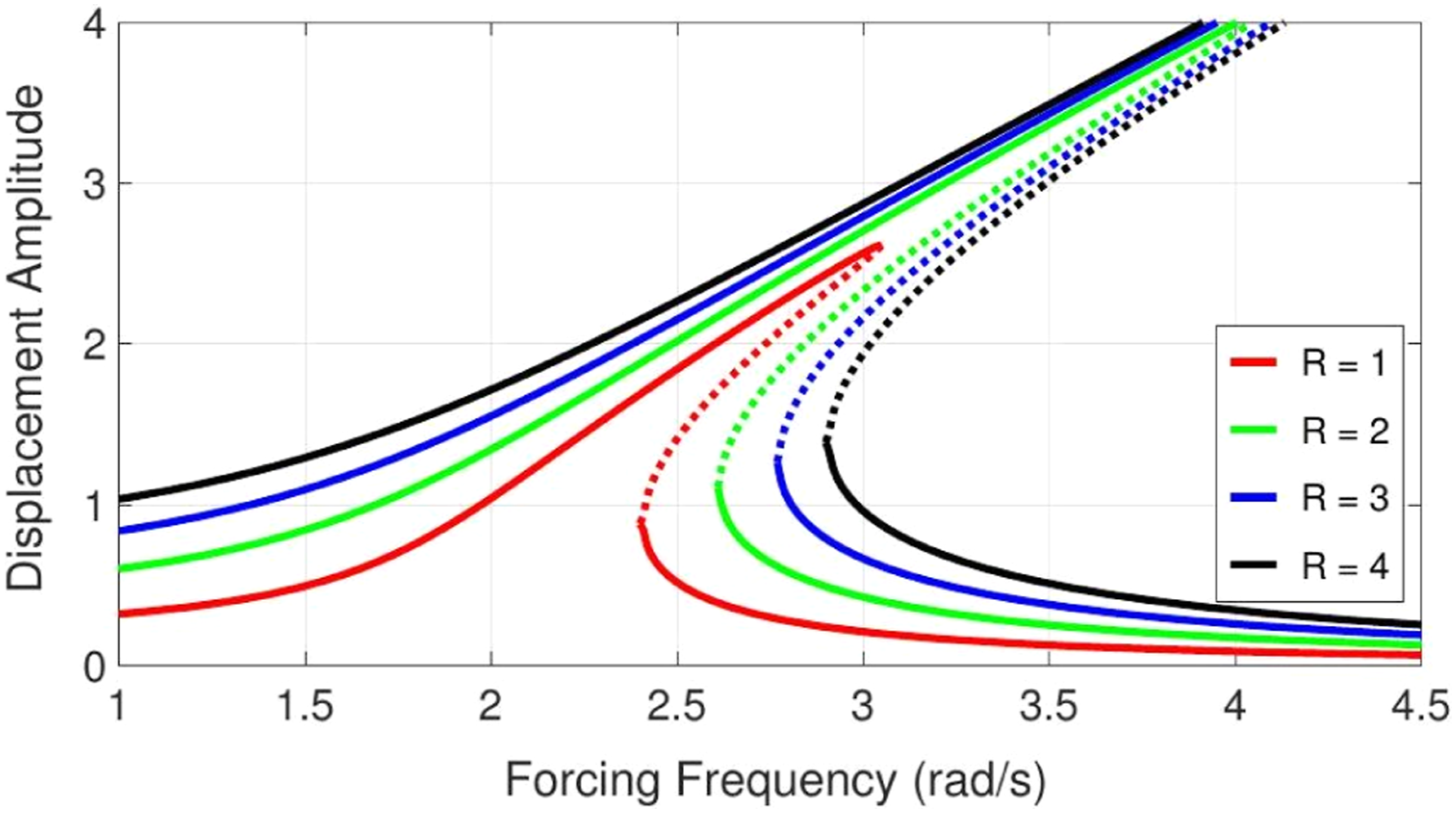
In Figure 6, the influence of altering the nonlinear stiffness coefficient term Effect of nonlinear stiffness coefficient 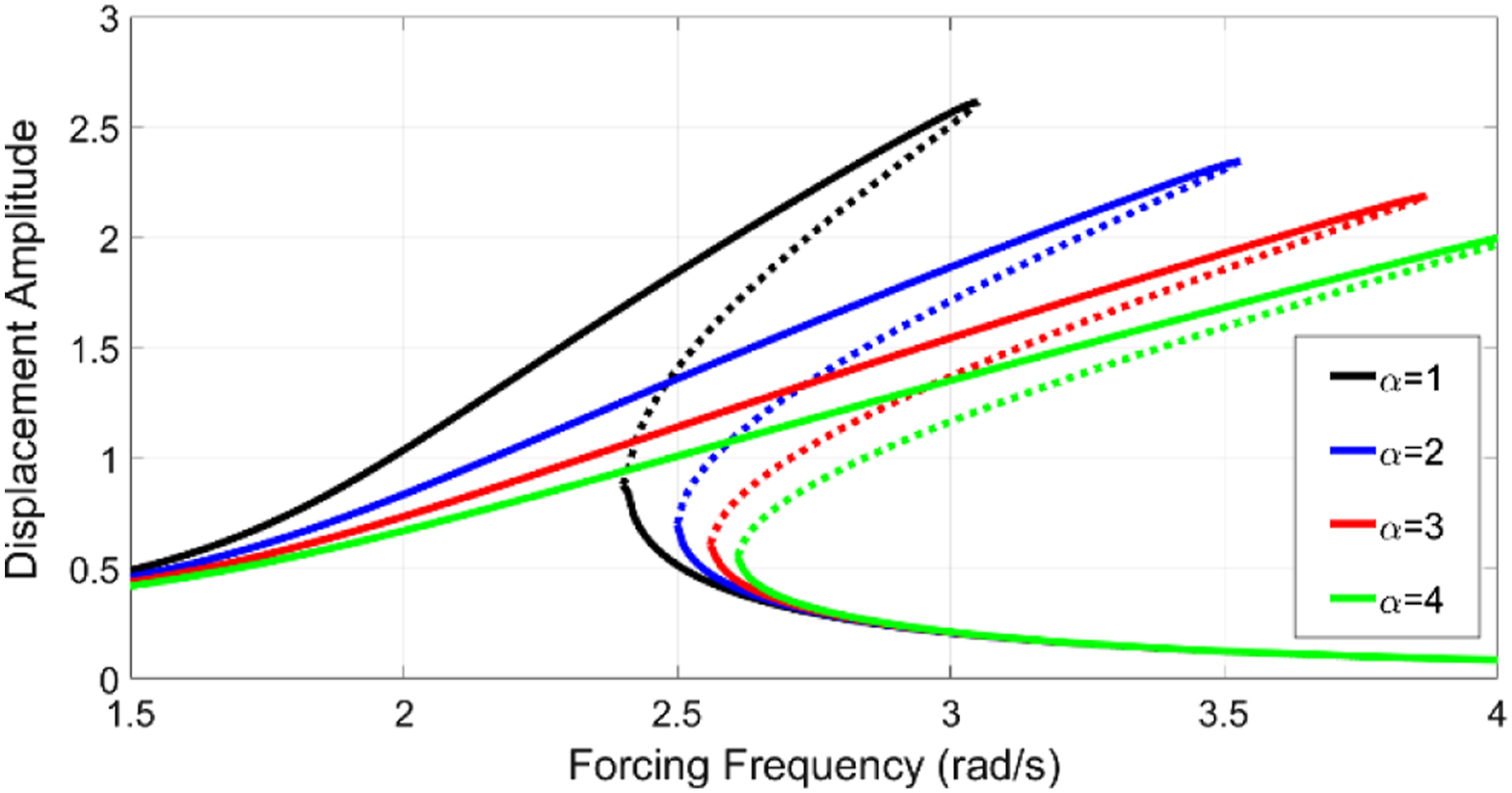
3.2. Comparing DNF to averaging method for FDD
Various approximate analytical techniques, including harmonic balance, the method of averaging, and multiple scales, have been used to investigate the behavior of FDD oscillator (Xu et al., 2013). Herein, the DNF results are compared with relevant results obtained using the averaging method. This method, briefly outlined in Li et al. (2018), was modified to capture the influence of inserting the viscous and fractional damping terms, which enabled a comparison between the two techniques.
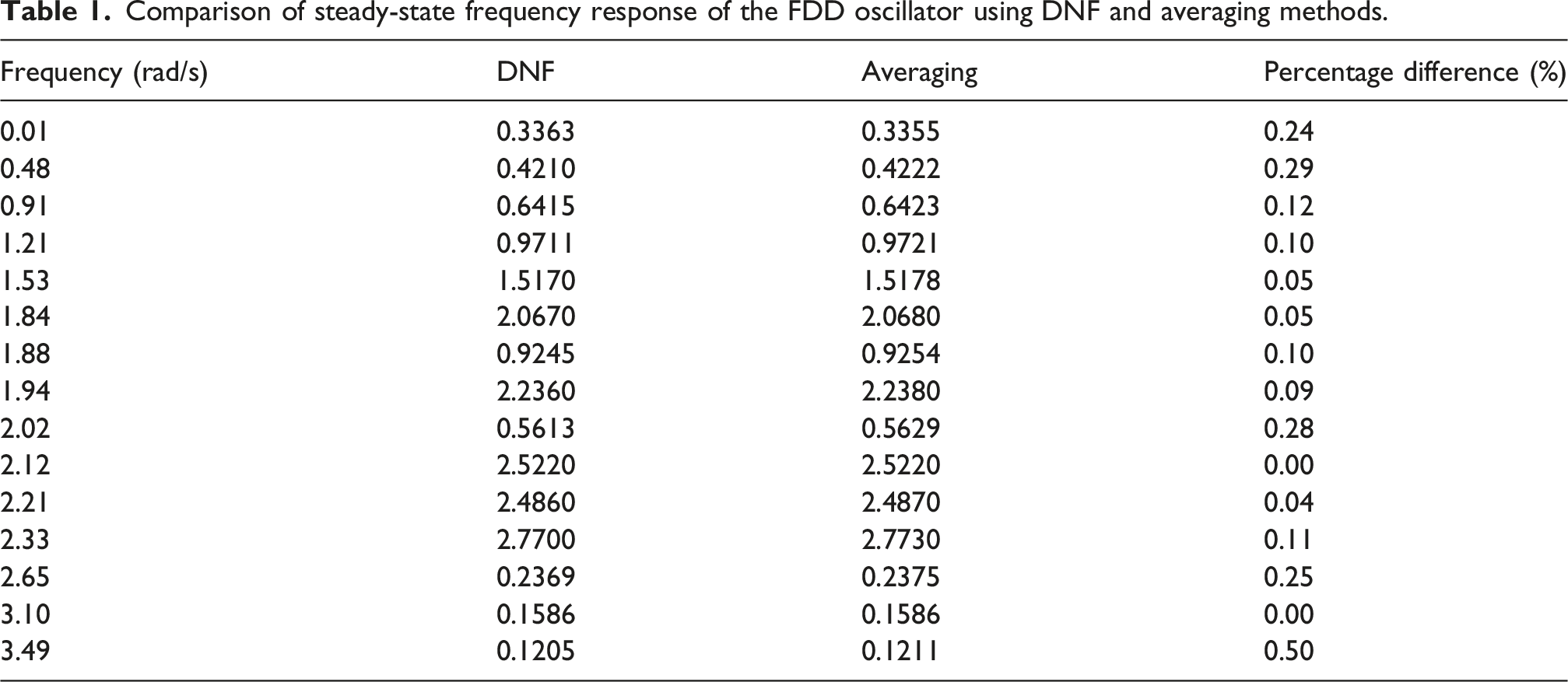
The frequency-amplitude relation for the FDD in equation (16) is plotted together with the DNF results in Figure 7, which presents a comparison between the two methods using fractional-order of FDD Steady-state frequency response computed using DNF and averaging methods.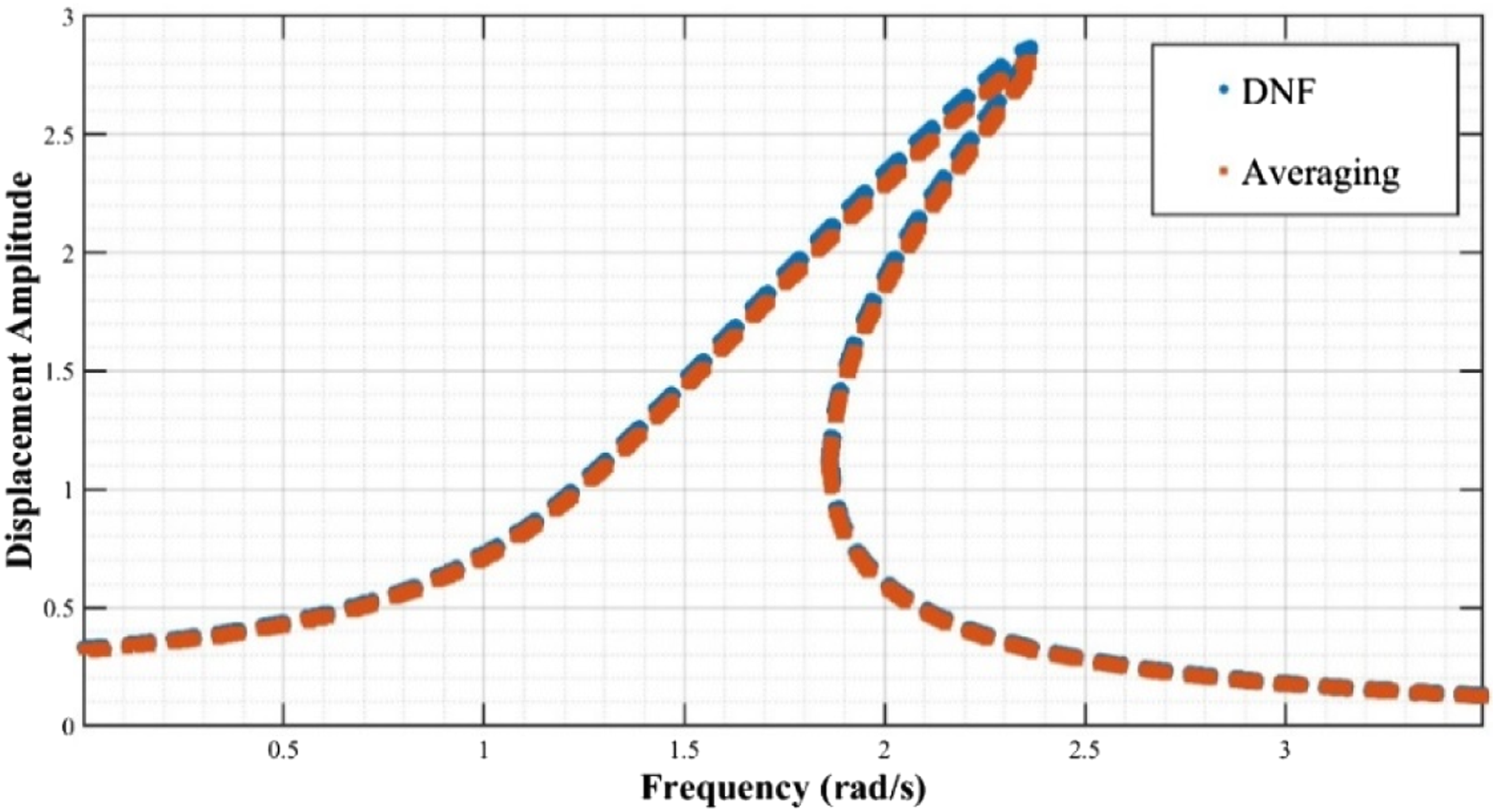
Comparison of steady-state frequency response of the FDD oscillator using DNF and averaging methods.
3.3. Comparing DNF with Lucas wavelets technique for FDV
In this section, the FDV frequency-amplitude relation obtained from equation (25) is compared with results reported using the Lucas wavelet approximation technique. This comparison provides an additional analytical benchmark, while the independent numerical validation is presented in Section 3.4. The comparison is carried out using the Lucas wavelets approximation technique for fractional Van der Pol oscillators (Rajaraman, 2025) using
The accuracy of the DNF method compared with the Lucas wavelet approximation technique for analyzing the FDV oscillator is demonstrated in Figure 8. Because both methods provide analytical approximations of the frequency response, additional validation can be performed by comparing the results with a reliable numerical solution. Table 2 presents a detailed comparison of the numerical values underlying the two curves of Figure 8. FDV Steady-state frequency response computed using DNF and Lucas wavelets. Comparison of steady-state frequency response of the FDV oscillator using DNF and Lucas wavelets methods.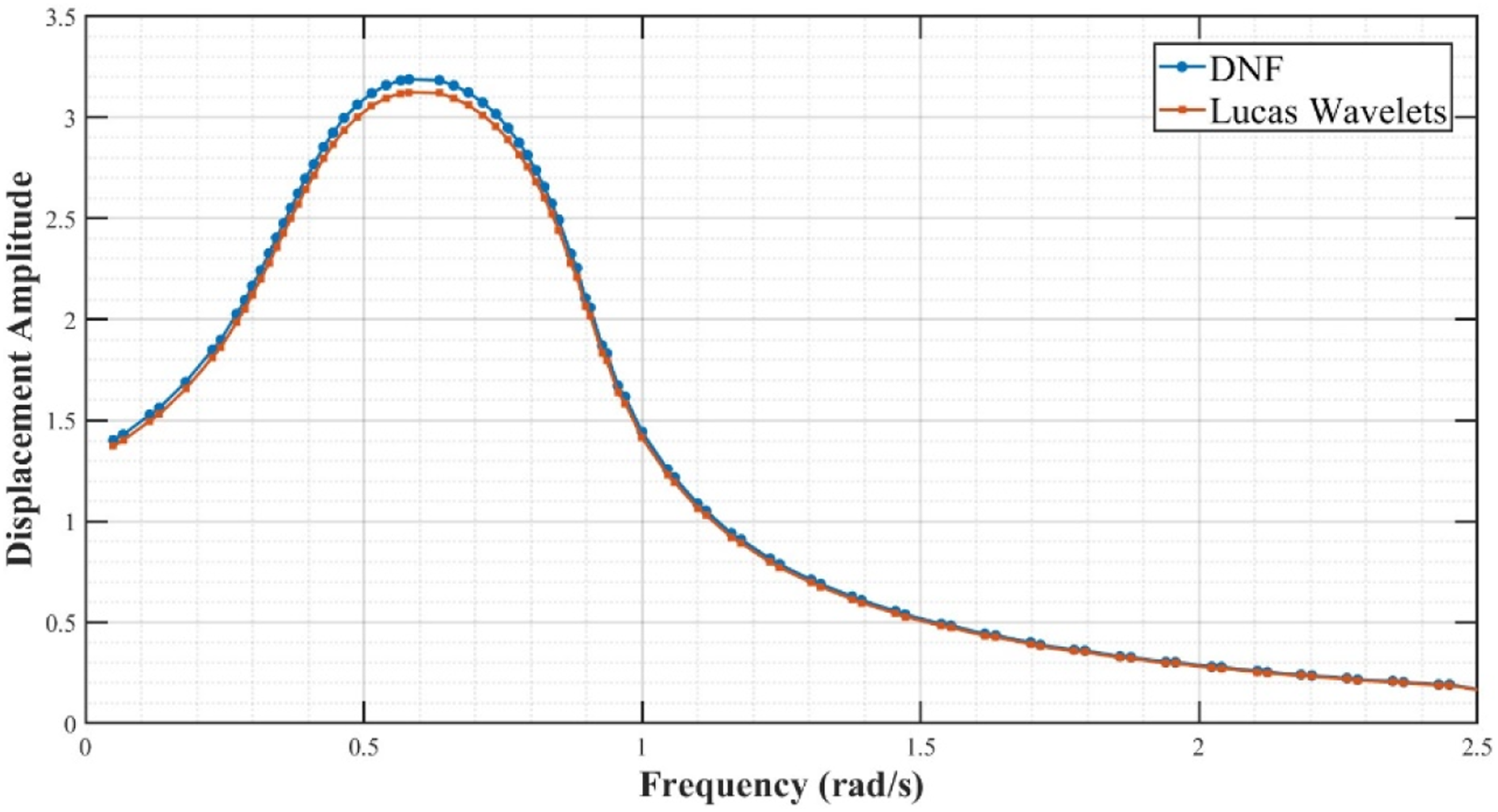
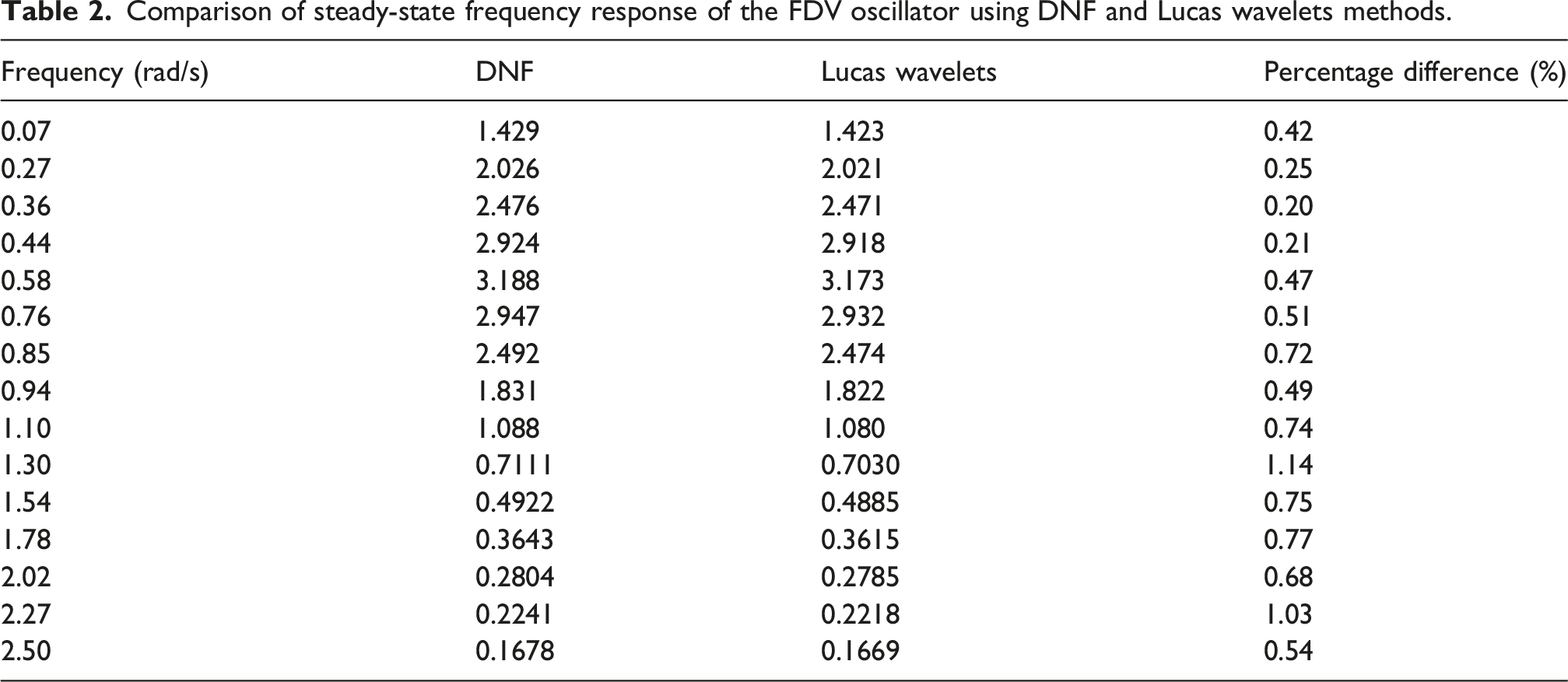
The close agreement between DNF and Lucas wavelets indicates that both methods capture the dominant harmonic contribution of the FDV response within the considered parameter range. Therefore, the Lucas wavelets comparison provides an analytical benchmark, while the GL-based results in Section 3.4 provide the independent numerical validation.
3.4. FDV numerical validation results
Amplitude comparison between DNF and GL solutions.
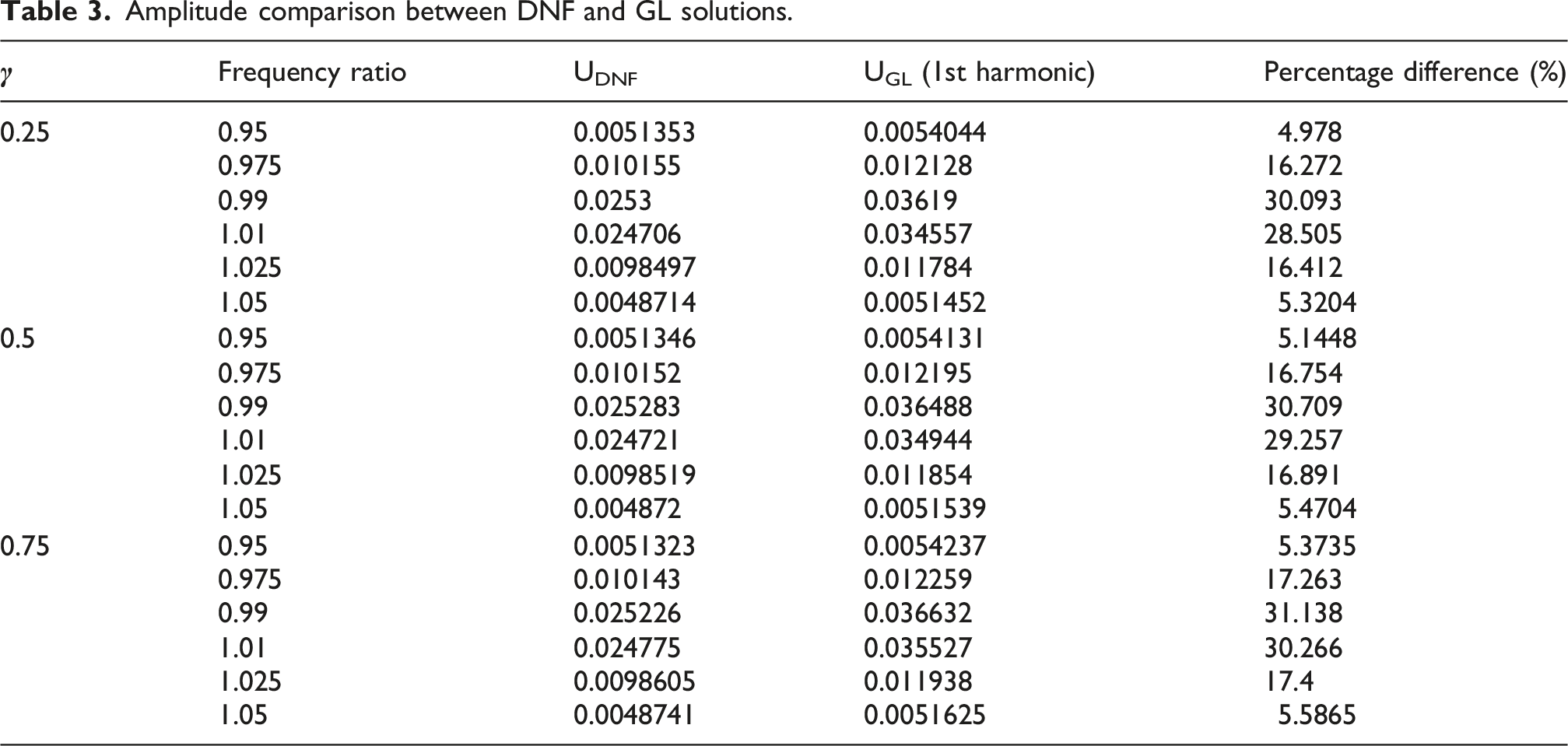
The listed results in Table 3 show that the discrepancies between the DNF and the GL solutions are significant near resonance (approximately 30%), while remaining relatively low (below 10%) away from resonance. This behavior is because of the first-order truncation inherent in the DNF formulation, which neglects higher-order nonlinear contributions that become significant near resonance. To further illustrate the comparison, the first-harmonic amplitude responses obtained using the DNF formulation and the GL numerical method are presented in Figure 9(a) and (b), respectively. The analytical DNF results show smooth frequency-response curves, while the GL results are represented as discrete points extracted from time-domain simulations. It can be seen that both approaches capture the same overall trend, with peak amplitudes occurring near resonance. Also, within the considered parameter range, changing the fractional order did not produce noticeable variations in amplitudes. First-harmonic amplitude response of the FDV oscillator: (a) DNF analytical prediction and (b) GL numerical results for different fractional-orders.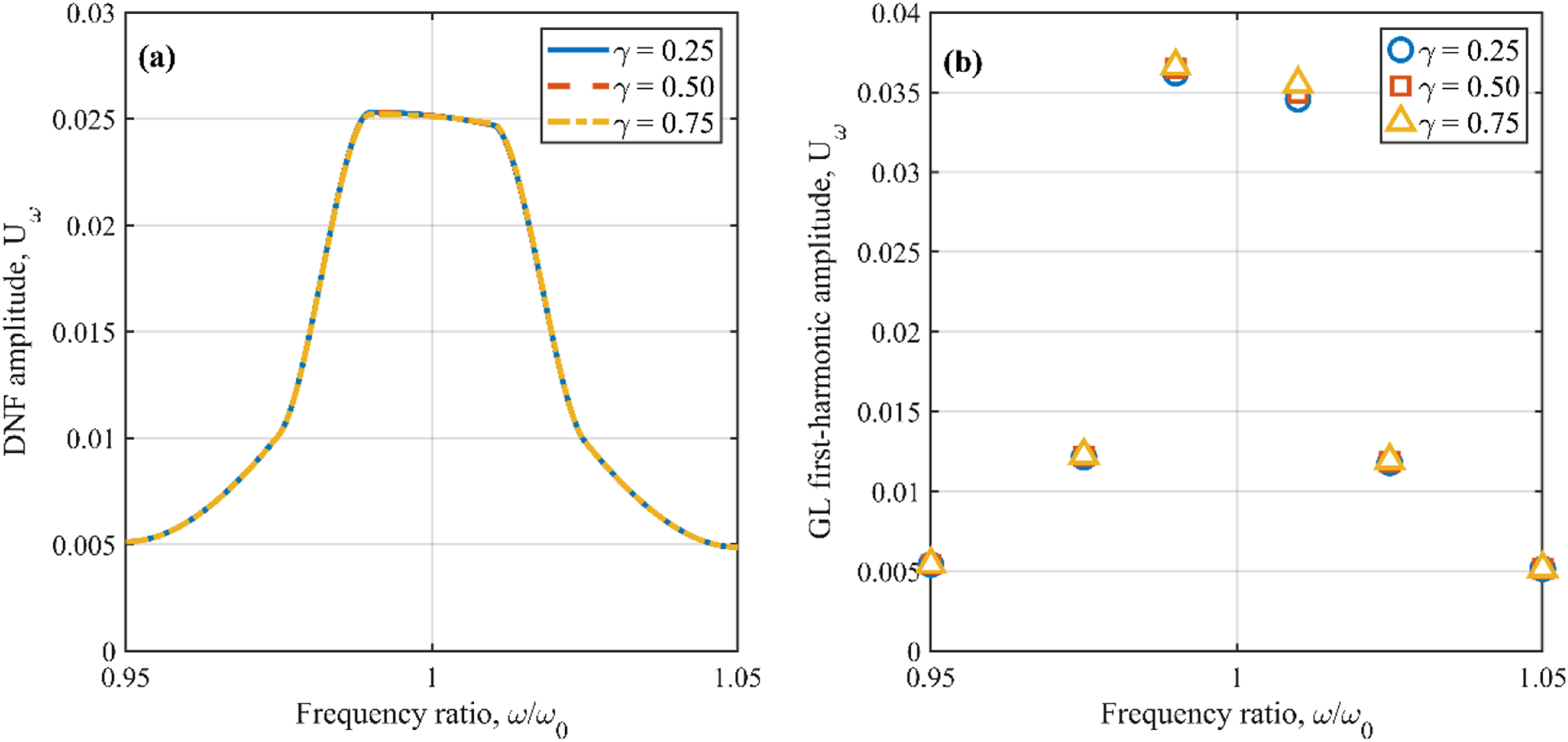
The percentage of the difference between the analytical and numerical amplitudes is shown in Figure 10, in which it can, similarly, be seen that the deviation remains relatively small away from resonance, typically within 5–10%, and increases to approximately 30% near the resonance region. This behavior reflects the limitation of the first-order DNF approximation, which neglects higher-order nonlinear effects that become more significant near resonance. Percentage difference between DNF analytical amplitudes and GL numerical results for the FDV oscillator.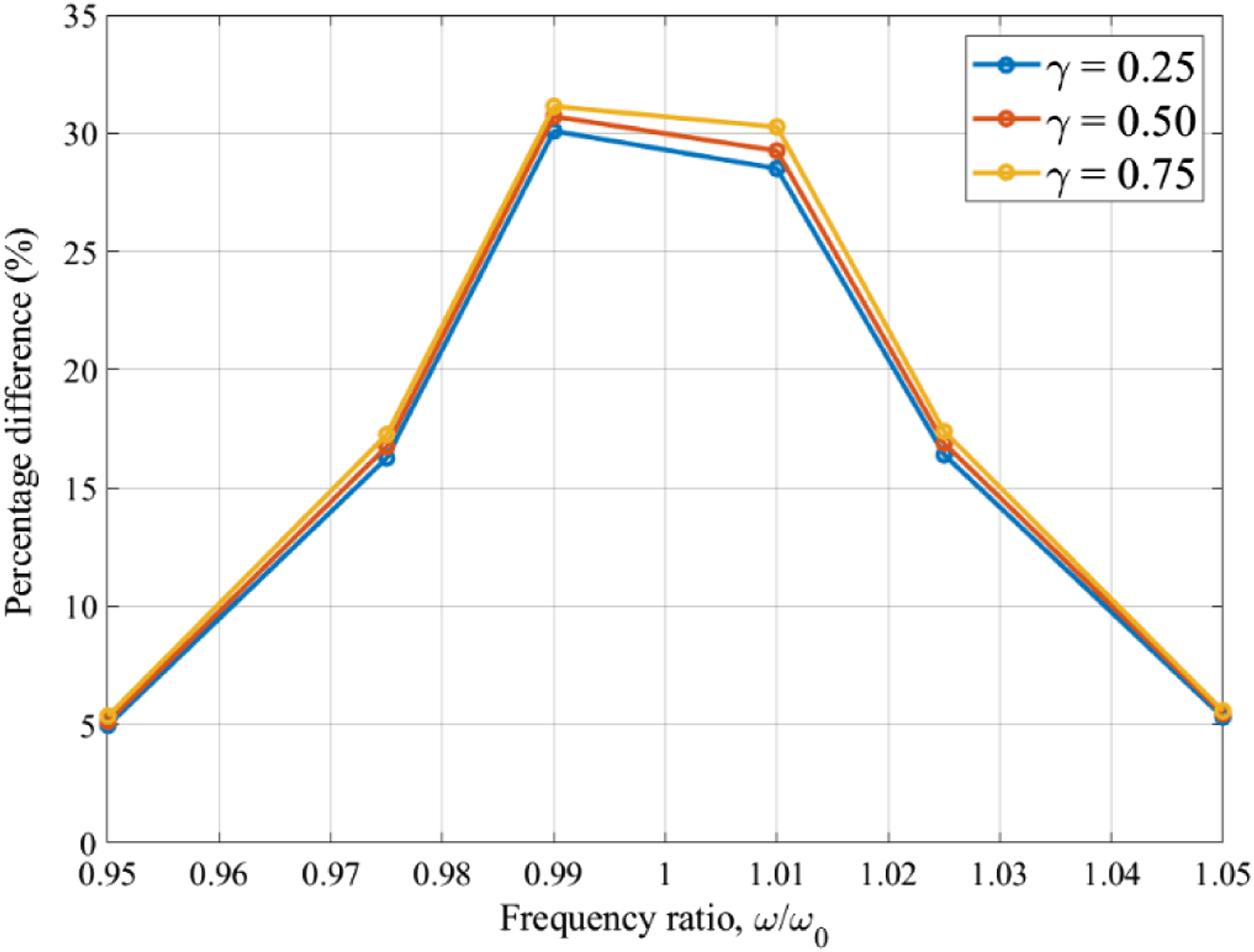
Harmonic content validation (A3/A1 ratio).
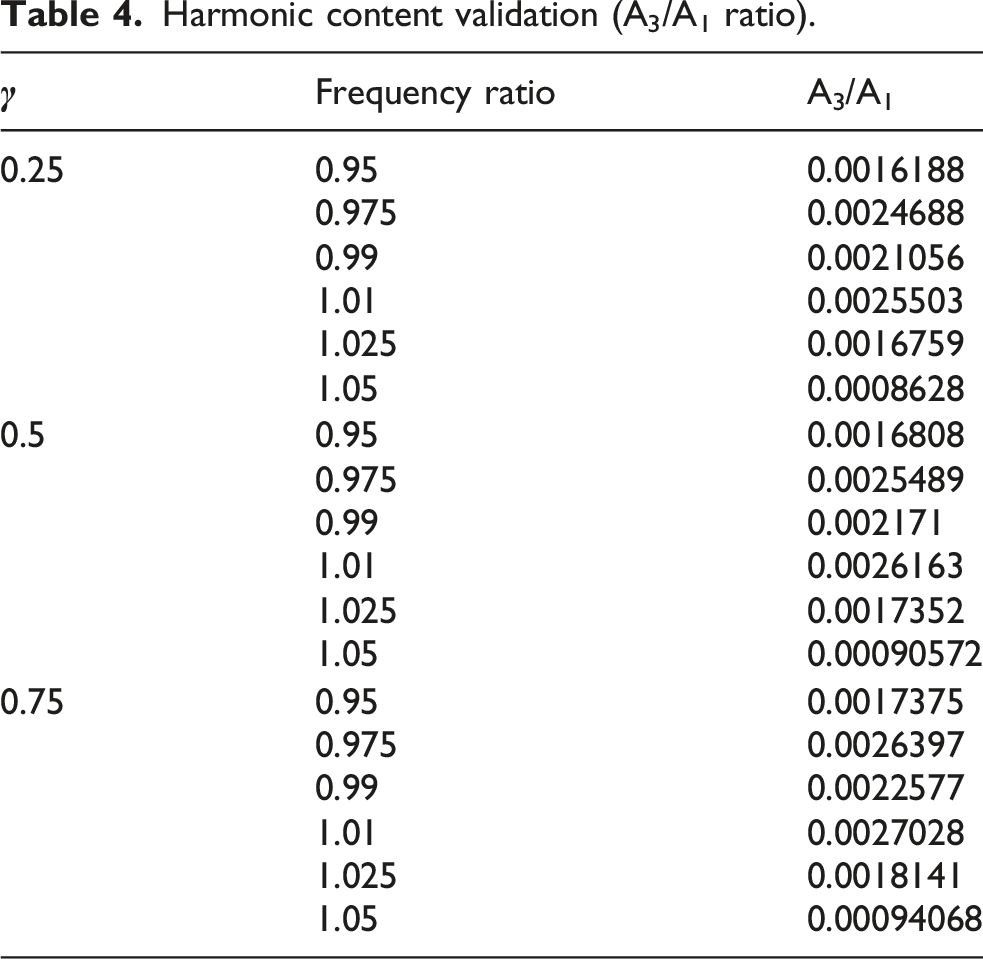
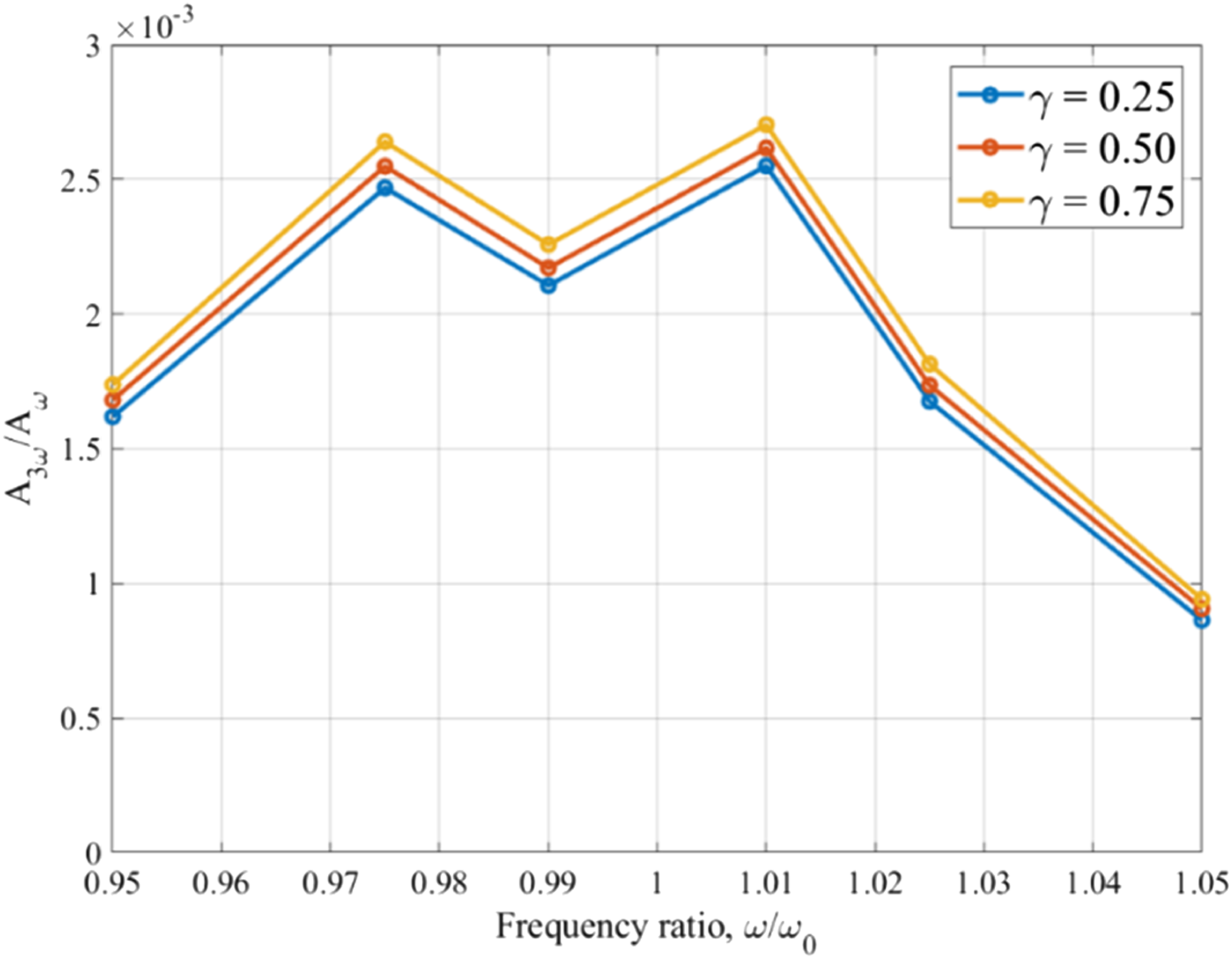
Harmonic content validation showing the ratio of the third harmonic to the fundamental component (A3/A1).
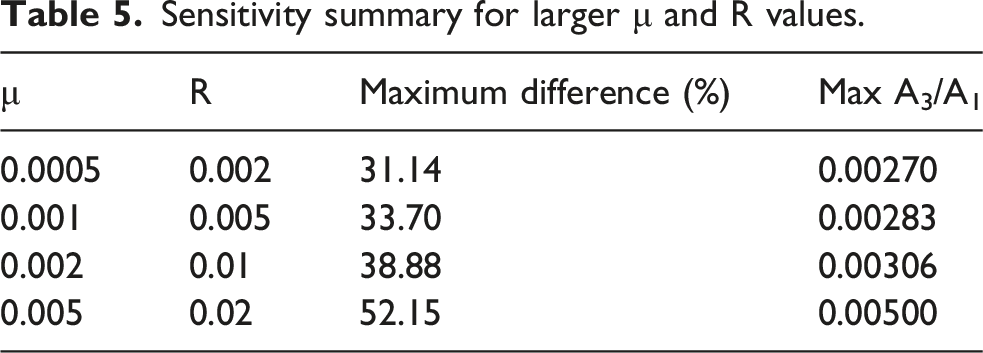
Sensitivity summary for larger μ and R values.
4. Conclusions
This study presented an adapted Direct Normal Forms (DNF) formulation for the nonlinear oscillators having damping of fractional order. The formulation is applied to fractional damped Duffing (FDD) and Van der Pol (FDV) systems. Fractional damping was incorporated through the Davison–Essex definition, enabling the derivation of analytical frequency-amplitude relationships. Then, validations were achieved via comparing analytically obtained results to numerically obtained ones.
The analytical results of the FDD oscillator exhibited good agreement with numerical results obtained by the aid of Grünwald–Letnikov (GL) definition. The key nonlinear features of the system were captured, including amplitude-dependent frequency shifts, and the influence of fractional damping on resonance behavior. Similarly, the validation of the analytical solution of the FDV oscillator was performed by comparing the DNF first-harmonic amplitude to the fundamental component extracted from the GL simulations. The deviations revealed by this comparison remained within 5–10% away from resonance and increased to 25–30% near resonance, which reflected the limitation of the first-order DNF approximation.
Harmonic analysis confirmed that the system response is strongly dominated by the fundamental component, with higher harmonics remaining relatively small across the investigated range, which also supports the validity of the first-harmonic approximation employed in the DNF formulation. Furthermore, a sensitivity analysis further confirmed that increasing nonlinear effects leads to larger discrepancies, while the fundamental harmonic remains dominant.
The proposed DNF formulation within this contribution provided a useful analytical approximation for fractionally damped nonlinear systems, providing insight into the relationship between system parameters and dynamic response. However, the adapted formulation exhibited limitations near strong nonlinear regimes and could not capture subharmonic or higher-order resonance phenomena. Hence, recommendations for future studies would be to focus on extending the current formulation to include higher-order harmonics, and examining the method on more complex systems. This may further support the use of the DNF approach as a computationally efficient alternative to time-domain fractional solvers for steady-state analysis.
Footnotes
Acknowledgment
The authors express their appreciation to Prof. David Wagg, Prof. Neil Sims, and Prof. Andrea Cammarano for their support and insightful remarks on this contribution.

Funding
The authors received no financial support for the research, authorship, and/or publication of this article.
Declaration of conflicting interests
The authors declared no potential conflicts of interest with respect to the research, authorship, and/or publication of this article.