







Abstract
This study examines the concordance of abuse self-reported by adolescents at 18 years and child protective service (CPS) determinations and how abuse characteristics predict concordance. It includes 819 youths participating in 18-year interviews of the Longitudinal Study of Child Abuse and Neglect (LONGSCAN). Cross-tabulations revealed low correspondence between self-reports and CPS determinations of physical, sexual, and emotional abuse. Logistic regression identified that among youths with CPS physical abuse determinations, White race, chronicity, and co-occurring neglect were positively associated with corresponding self-reports. Co-occurring CPS-determined emotional abuse was more concordant with self-reports. More frequent self-reported physical abuse was associated with corresponding CPS determinations. Self-reports of childhood emotional abuse and perpetration by nonparental family/other household members were positively associated with corresponding CPS determinations. CPS determination concordance also varied significantly by LONGSCAN site. Results demonstrate differences in abuse characteristics captured by CPS data and youth self-report, which may impact research findings on abuse correlates.
Keywords
Exposure to child maltreatment has been related to a wide range of mental health, substance use, and physical health problems (Hussey, Chang, & Kotch, 2006; Jaffee, 2017). Sizable human and financial resources have been devoted to examining and addressing the causes, correlates, and consequences of child maltreatment, but researchers’ understanding of foundational maltreatment measurement strategies remains limited and their relative merits are sometimes hotly debated. Researchers observing low concordance between self-reports and official child protective service (CPS) reports of maltreatment have long questioned the adequacy of each measure to represent actual child maltreatment rates in the population (Fergusson, Horwood, & Woodward, 2000). This concern is further complicated by increasing attunement to the multidimensionality of child maltreatment (e.g., Jackson, Gabrielli, Fleming, Tunno, & Makanui, 2014), extending questions to whether these measures equally represent varying characteristics of maltreatment. Along these lines, the current study builds upon prior work by first examining the concordance of youth self-report at 18 years and CPS determinations of physical, emotional, or sexual abuse. Second, it examines whether abuse characteristics (i.e., developmental timing and chronicity of exposure, co-occurrence with other abuse and neglect, frequency, and perpetrator relationship to child) obtained from one data source correlate with concordance with the other data source.
Issues in Measuring Childhood Experiences of Abuse
Five primary sources of information have been used to measure maltreatment in the extant literature: adult recall of childhood experiences, caregiver self-report, youth self-report, reports from community professionals who encounter children and families in their work (e.g., teachers), and CPS administrative records. Of these, youth self-report and CPS records have been of particular interest, the former for its potential for high validity (Everson et al., 2008) and the latter for its accessibility and ability to capture longitudinal records without limitations of recall bias (Drake & Jonson-Reid, 1999). Both youth self-reports and CPS records are imperfect sources of information with identified strengths and limitations.
CPS administrative records may capture abuse cases with less measurement error, given that records are compiled prospectively over time by a third party, which reduces error arising from recall bias, respondent subjective perception of an event, socially desirable responding, or limited developmental capacity (Drake & Jonson-Reid, 1999; Everson et al., 2008; Taber, 2010). However, important limitations exist for CPS administrative data that can bias findings, such as nondetection of abuse arising from limitations of current CPS surveillance systems (Widom, Czaja, & DuMont, 2015). Thus, CPS allegation records are not likely to capture the full range of abuse experiences in the general population (Drake & Jonson-Reid, 1999). In addition, statutes and data collection procedures (e.g., caregiver risk factors) vary considerably by state in the United States, as evidenced by stated limitations with the National Child Abuse and Neglect Data System, contributing to measurement error when comparing CPS experiences across regions (U.S. Department of Health and Human Services, 2017). Statutes defining specific forms of maltreatment also vary, for example, whether they define abuse based on actual harm (i.e., injuries) or harm potential (Child Welfare Information Gateway, 2016). Finally, potential biases in maltreatment surveillance and substantiation processes may lead to the overrepresentation of poor or minority children in CPS data (Ards et al., 2012; Cross & Casanueva, 2008).
Compared with self-report data, administrative records can avoid ethical dilemmas related to the disclosure of abuse in research settings, although legal concerns regarding data sharing may inhibit accessibility (Knight et al., 2000, van Panhuis et al., 2014). Youth self-reports have the advantage of reduced nondetection error as they directly query the possible victim. Furthermore, youth self-report may allow researchers to more feasibly and thoroughly capture characteristics of maltreatment beyond allegations or substantiations. For example, surveys can be designed to capture several characteristics of abuse events, such as severity, frequency, chronicity, developmental timing, and perpetrator relationship to youths (Jackson et al., 2014). While systematic case record reviews can also capture detailed characteristics of abuse experiences, they involve more time-intensive processes and may rely on nonstandardized documentation of abuse experiences (Runyan et al., 2005).
The Concordance of Physical, Emotional, and Sexual Abuse
Several studies have found low agreement between self-reports of abuse and official CPS or court data, with youth generally reporting higher occurrence of abuse (Everson et al., 2008; Hambrick, Tunno, Gabrielli, Jackson, & Belz, 2014; Negriff, Schneiderman, & Trickett, 2017; Swahn et al., 2006). For example, using a Longitudinal Study of Child Abuse and Neglect (LONGSCAN) sample from the age-12 interview, Everson et al. (2008) observed low concordance between youth self-report and CPS records of emotional abuse (κ = .07), physical abuse (κ = .15), and sexual abuse (κ = .19), with youth reports yielding higher rates of abuse. In a study focused on adolescents aged 9–13 years with active CPS cases, Negriff, Schneiderman, and Trickett (2017) observed similar percentages of sexual abuse based on adolescent self-report and a systematic case record review using the Maltreatment Case Record Abstraction Instrument, but lower occurrence of physical abuse and higher occurrence of emotional abuse identified by self-report. Other studies have found variations based on age of report, suggesting lower self-reporting with older youths. Specifically, using a sample of foster youths ages 8–22 years, Hambrick, Tunno, Gabrielli, Jackson, and Belz (2014) observed no overall significant discrepancies in sexual abuse and a higher percentage of youth self-reporting sexual abuse only for youth ages 12 and younger. Overall, these findings highlight substantial discrepancy between self-report and CPS data, particularly for emotional abuse, which (along with neglect) is more effusively defined and less likely to be evidenced by concrete, physical signs than physical and sexual abuse, making it more difficult to detect by CPS (English, Thompson, White, & Wilson, 2015; Runyan et al., 2005). Although higher occurrence of abuse is often found via self-reports, unique cases are identified by both methods, and differential findings among studies may reflect sample characteristics such as age and CPS involvement.
Remaining even less clear is whether concordance between child abuse measures (i.e., adolescent self-report and CPS administrative records) may vary across specific abuse characteristics. A few studies have observed that CPS surveillance systems may be more likely to detect youths who self-report experiences of abuse that are more frequent, injurious, or co-occurring with other forms of abuse that could be detected (Schaffer, Huston, & Egeland, 2008; Swahn et al., 2006). Swahn and colleagues (2006) found higher correspondence between self-reports of abuse and court records among youths who self-reported frequent abuse or abuse involving an injury. In a study comparing retrospective self-report at 19 years to a prospective multisource measure that included CPS record reviews, Schaffer, Huston, and Egeland (2008) found that concordant abuse was more often co-occurring with other maltreatment types.
Other important dimensions of abuse not yet examined by research, such as the developmental timing and chronicity of exposure and the youths’ relationship to the perpetrator, may also affect measurement concordance. For instance, youths may be less reliable at reporting abuse that occurred during earlier developmental time periods, such as early to middle childhood, as a result of difficulties of recalling distal events, but may be more likely to report chronic abuse if they appraise this to be meaningful to their life and development (Fergusson et al., 2000; Hulme, 2004). Alternatively, fears of disclosing abuse by a person who has a close relationship to the youth may inhibit their reports of abuse experiences, particularly if the perpetrator is the youth’s primary caregiver (i.e., parent; Della Femina, Yeager, & Lewis, 1990).
Study Aims
Using a sample of participants from the LONGSCAN 18-year interview, the current study first examined concordance between youth self-report and CPS administrative records of physical, emotional, and sexual abuse determinations for the 6–16-year time period. Although important, neglect was not included because the LONGSCAN self-reported scales define neglect broadly and are not easily aligned with offenses that would be reported to CPS (Dubowitz et al., 2011). Using subsamples of respondents with indicated abuse, the following research questions assessing the relations between abuse characteristics and concordance were also addressed: Are CPS determinations of (a) physical and (b) emotional abuse of varying characteristics (developmental timing and chronicity of exposure, frequency, co-occurrence with other forms of abuse and neglect, and association with a specific type of perpetrator) more likely to agree with youth self-reports? And conversely, are self-reported (a) physical and (b) emotional abusive experiences of varying characteristics more likely to agree with CPS reports?
The study contributes to the concordance literature, first by examining youth self-reports of abuse at 18 years, the beginning of legal adulthood in the United States and the earliest age that research participants can typically give consent. Furthermore, prior research showing higher self-reports of sexual abuse only among younger youth (Hambrick et al., 2014) warrant further study of various age groups. Second, this study relates a wider range of characteristics of individual abuse types to concordance in a multivariate analysis. This is important because patterns of concordance between self-reported and CPS measures vary by abuse type (e.g., Everson et al., 2008) and because abuse characteristics are likely to interrelate with each other.
Method
Sample
This study draws from the LONGSCAN, a national study of high-risk children that investigates the etiology and consequences of child abuse and neglect (Larrabee & Lewis, 2014; Runyan et al., 1998). The LONGSCAN is a multisite study consisting of five pooled cohort samples from various regions in the United States. Children were selected to represent a continuum of risk exposure to maltreatment. They included children with prior CPS involvement (Midwest, Southwest, and Northwest sites), with involvement with a pediatric clinic serving low-income youths (East site), and who were identified as high risk at birth based on a state public health tracking system (South site; Larrabee & Lewis, 2014). Sampling occurred from birth to 5 years and data collection occurred at ages 4, 6, 8, 12, 14, 16, and 18, from July 1991 to January 2012. All sites used the same measures and procedures for data collection and management (Larrabee & Lewis, 2014).
For the current study, data were obtained from the National Data Archive on Child Abuse and Neglect. A sample of 819 youths with completed 18-year interviews were included, representing 60.5% of the original LONGSCAN sample (N = 1,354). Youths in the analysis sample were more likely to be girls, 46.2% versus 54.9%, χ(1) = 9.980, p = .002, and Black, 47.9% versus 56.8%, χ(1) = 10.515, p = .001, and were less likely to be Hispanic/Other, 24.9% versus 17.7%, χ(1) = 10.083, p = .001, than those lost to follow-up. Attrition varied significantly by site, ranging from 29.8% in the East to 60.0% in the Midwest, χ(5) = 68.15, p < .001. Youth lost to follow-up were more likely to have chronic emotional abuse based on CPS determinations than those in the study sample, 20.0% versus 11.4%, χ2(1) = 4.08, p = .044. However, no significant differences were found in the presence of CPS allegations or in any other abuse characteristics between retained and attrited youth. Past studies have shown minimal effects of mandated reporting of maltreatment discovered during data collection on attrition (Knight et al., 2006).
Approximately one quarter (25.4%, n = 208) of the study sample were White and average age was 18.5 years at the time of the interview. Further analyses were conducted within the following nonmutually exclusive subsamples of youth with indicated abuse: self-reported physical abuse (n = 225), self-reported sexual abuse (n = 39), self-reported emotional abuse (n = 198), CPS determinations of physical abuse (n = 171), CPS determinations of sexual abuse (n = 81), and CPS determinations of emotional abuse (n = 167). These subsamples were drawn in order to assess the relations between abuse characteristics, which are only valid when abuse is indicated, on concordance.
Measures
Abuse Concordance (Dependent Variables)
Self-reported abuse
Self-reported child physical, emotional, and sexual abuse were assessed at age 18 using a set of LONGSCAN-developed measures administered via audio computer–assisted self-interview. Item development for the LONGSCAN self-report abuse scales was guided by Barnett, Manly, and Cicchetti’s (1993) typology. The self-reports of physical abuse (12 dichotomous items, α = .80), psychological maltreatment (12 dichotomous items, α = .85), and sexual abuse (11 dichotomous items, α = .92 for 8 items asked of all youth) ask, respectively, if the adolescent has ever experienced physically abusive behaviors (e.g., hit with dangerous object; choked), emotionally abusive behaviors (e.g., made you feel unloved, threatened to abandon, and had really serious fight with another family member), and sexually abusive behaviors (e.g., looked at your/their private parts sexually, intercourse) by a parent or other adult (Barnett et al., 1993).
Follow-up items elicit further information about the age during which the abuse occurred (0–5 years, 6–12 years, 13–16 years, and 17–18 years). Indications of any abuse occurring (i.e., one of more item endorsed) between 6–12 years and 13–16 years were combined to create three dichotomous variables representing any self-reports of (a) physical, (b) emotional, and (c) sexual abuse occurring from 6 to 16 years. Abuse occurring during 0–5 years was excluded because children were sampled during that age from several sites based on CPS involvement, complicating concordance analysis. Abuse occurring from 17 to 18 years was excluded because it could have occurred after legal adulthood, which would be outside of the auspices of CPS.
CPS determinations of abuse
Official lifetime CPS records were compiled for LONGSCAN participants. These records were then reviewed and coded by trained abstractors at each of the five sites using the Modified Maltreatment Classification System (MMCS), which is based on Barnett et al.’s (1993) typology. Interrater reliability was moderate to perfect in nearly all categories examined in a 5% sample of coded CPS records (see “maltreatment reliability statistics” document at http://www.unc.edu/depts/sph/longscan/formoredetails). Abstracted information included maltreatment type, as well as subtype, severity, frequency, and perpetrator (English, Graham, Litrownik, Everson, & Bangdiwala, 2005; English & the LONGSCAN Investigators, 1997). For the purposes of this study, dichotomous measures of any determination of (a) physical, (b) emotional, and (c) sexual abuse from 6 to 16 years were created, using the allegation date to estimate age of exposure. Determinations of abuse were based on final CPS investigation narratives and included substantiated claims, as well as cases with descriptions of abuse as defined by the MMCS. Determinations were selected instead of allegations to decrease the likelihood of false-positive reports (Everson et al., 2008). This method of abuse identification is likely to be more sensitive and consistent than the use of substantiation alone, which is susceptible to Type 2 error, caseworker bias, and statute differences among jurisdictions regarding the definition and substantiation of abuse (English & Graham 2000; Everson et al., 2008).
Abuse Characteristics (Independent Variables)
Within cases with indicated abuse, self-reported and CPS-determined abuse characteristics were coded as follows.
Developmental timing and chronicity of exposure
Self-reports indicating the age of abuse exposure (i.e., 6–12 years, 13–16 years) were used to create a multiple category variable for each abuse type: childhood only (6–12 years), adolescent only (13–16 years), and chronic (childhood and adolescent). Parallel variables based on CPS determinations were created using allegation dates to estimate age. The operational definition of chronicity approximates developmental chronicity, which has shown to have balanced predictive validity across a range of outcomes (English et al., 2005).
Frequency
Frequency of abuse for each epoch (i.e., 6–12 years, 13–16 years) was self-reported for 5 physical abuse, 9 emotional abuse, and 6 sexual abuse items on a 3-point Likert-type scale: 1 = 1–2 times, 2 = 3–10 times, and 3 = 10 or more times. Sum scores for the two epochs were then added together to indicate the frequency of each abuse type across the 6- to 16-year time period (potential range: physical abuse = 1–30, emotional abuse = 1–54, and sexual abuse = 1–36). For CPS data, sum scores of the number of determinations within the 6- to 16-time period were calculated for each abuse type to indicate frequency.
Co-occurrence
Co-occurrence variables were created for other abuse types (i.e., emotional or sexual abuse for physical abuse, physical or sexual abuse for emotional abuse, and physical or emotional abuse for sexual abuse) and neglect (1 = co-occurring, 0 = not co-occurring). Self-report indications of co-occurring neglect were based on items assessing physical needs and monitoring/supervisory neglect on the Revised Neglectful Behavior Scale, a self-report measure of neglectful parent behaviors administered at 12 (elementary school, 12 items), 14 (past year, 12 items), and 16 (past year, 20 items) years (Dubowitz et al., 2011). Responses were recorded on 4-point Likert-type scales. Youth selecting any physical needs or monitoring/supervisory neglect item in the half of the scale indicating higher levels of neglect (e.g., replied never or almost never to “my parents gave me enough to eat”; replied strongly disagree or disagree to “my parents made sure I saw a doctor if needed”) were coded as having co-occurring neglect. Neglect co-occurrence of CPS abuse determinations was based on determinations of physical neglect (supervisory, failure to provide) between 6 and 16 years.
Perpetrator
For all abuse types, self-reports of exposure triggered follow-up items eliciting further information about the identity of the abuse perpetrator. Three perpetrator groups were created: birth/adoptive parent (mother, father), other family/household member (stepmother/father, foster mother/father, mom’s boyfriend, dad’s girlfriend, another family member, or relative), and nonfamily/household member (teacher, coach, minister, or someone like that, someone else). Parallel variables were created based on CPS-determined abuse: birth/adoptive parent (natural or adoptive parent), other relative/household member (stepparent, foster parent, parent’s partner, grandparent, sibling, and other household member), and nonrelative/household member (institutional employee, childcare provider, and other nonhousehold member). If perpetrators from more than one group were reported, the youth was assigned to both categories (multiple responses were allowed). Perpetrator data for CPS determinations of emotional abuse were excluded because of large amounts of missing data, which were likely due to undecipherable emotional abuse perpetrator identities in many CPS investigation narratives.
Demographic and Control Variables
Child gender (girl = 1, boy = 0) and race/ethnicity (White = 1, Other = 0) were drawn from caregiver interviews at the 6-year data collection point. LONGSCAN site (i.e., East, Midwest, Northwest, South, and Southwest) was also examined to control for potential site differences due to jurisdiction and sampling.
Analysis
Concordance between self-reported and CPS-determined abuse
Descriptive analyses and cross-tabulations assessing agreement between dichotomous indicators of self-reported and official-reported abuse for the 6- to 16-year time period were first conducted using SPSS. κ coefficients of agreement (κ; Siegel & Castellan, 1988) were used to assess agreement between the two sources. κ values range from −1 (almost perfect disagreement) to 1 (almost perfect agreement). A value of 0 suggests that agreement is likely due to chance. Guidelines for interpreting κ across raters are as follows: .01 to .20 (slight agreement), .21 to .40 (fair agreement), .41 to .60 (moderate agreement), and >.60 (substantial agreement; Viera & Garrett, 2005).
Abuse characteristics and concordance
First, descriptive analyses were conducted within subsamples of respondents with CPS determinations of abuse (physical = 171, emotional = 167, and sexual abuse = 81) and with self-reports of abuse (physical = 225, emotional = 198, and sexual abuse = 39). Next, χ2 and t test analyses were conducted to assess whether CPS-determined abuse characteristics varied by concordance (i.e., to distinguish CPS determinations in agreement with self-reports vs. CPS determinations alone) among youths with CPS determinations of physical (n = 171) and emotional abuse (n = 167). χ2 and t test analyses were also conducted to assess whether self-reported abuse characteristics varied by concordance (i.e., distinguishing self-reports in agreement with CPS determinations vs. self-reports alone) among youths with self-reports of physical (n = 225) and emotional (n = 198) abuse. Two sets of analyses assessed these relations because abuse characteristics are only valid in cases with indicated abuse (e.g., CPS abuse characteristics data are only valid when CPS abuse is indicated and therefore cannot predict disagreement due to self-report in the absence of CPS determinations because these data would be missing). Bivariate analyses for sexual abuse were not conducted because of sparse cells.
Two sets of logistic regression analyses were then conducted using Mplus Version 7.4 within these same subsamples. First, characteristics of CPS-determined physical and emotional abuse were examined as predictors of corresponding self-reports of abuse. Second, characteristics of self-reported physical and emotional abuse were examined as predictors of corresponding CPS determinations. In logistic regression equations, childhood only was used as the reference group for the developmental timing and chronicity of exposure variable, and Southwest was used as the reference category for the site variable. Adjustments to the perpetrator variables were made in some logistic regressions due to distributional issues (see Table notes). Logistic regression analyses for sexual abuse were not conducted because of sparse cells.
No multicollinearity concerns were found, applying Allison’s (1999) lower tolerance threshold of .40 (p. 141). Missing data were handled using full information maximum likelihood (FIML), which has been shown to be less biased than other approaches (Enders & Bandalos. 2001). Missingness was 18.1% for the CPS physical abuse perpetrator variable and 9.8% for the self-reported co-occurring neglect with physical abuse. All other missingness was below 3%. Little’s (1988) tests were nonsignificant for all logistic regression subsamples, indicating that data were missing completely at random, satisfying the assumption of missing at random that is required for FIML (Raykov, 2005).
Results
Concordance Between Self-Reported and CPS-Determined Abuse
Table 1 depicts the frequencies and concordance of CPS determinations of abuse and self-reported abuse. Self-report yielded higher frequencies of physical abuse (self-report = 27.6%, n = 225; CPS = 20.9%, n = 171) and emotional abuse (self-report = 24.5%, n = 198; CPS = 20.4%, n = 167). However, frequencies of sexual abuse based on self-report (4.8%, n = 39) were approximately half than that indicated by CPS determinations (9.9%, n = 81).
Frequencies and Concordance of Self-Reported Abuse and CPS Determinations.

Note. N = 819. CPS = child protective services; SR = self-report.
*p < .05. **p < .01. ***p < .001.
κ values indicated slight correspondence between the two measurement sources for all abuse types (range = .082–.164). For physical and emotional abuse, most disagreement was due to self-report in the absence of a CPS determination. For sexual abuse, most disagreement was due to CPS determinations in the absence of a corresponding self-report.
Abuse Characteristics and Concordance
Descriptive characteristics of subsamples with indicated abuse
Table 2 depicts demographic and abuse characteristics of subsamples of youths with indicated abuse based on self-report and CPS determinations. Statistical significance of differences in demographic and maltreatment characteristics among subsamples cannot be determined due to overlap in study subsamples and measurement differences. In general, more girls than boys were emotionally and sexually abused based on both self-report and CPS determinations. Sexually abused youth were more often White based on both measurement sources than youth exposed to other abuse types. A larger proportion of youths exposed to emotional abuse during adolescence (77.8%) than childhood (54.5%) was found via self-report, while the opposite pattern was found for other abuse measures. For all abuse types, more chronicity was detected via self-report measures (physical abuse = 29.8%, sexual abuse = 23.1%, and emotional abuse = 32.3%) than for CPS measures (physical abuse = 15.2%, sexual abuse = 6.2%, and emotional abuse = 11.4%). Overall, rates of co-occurrence were high, ranging from 55.0% for other abuse types co-occurring with self-reported physical abuse to 79.5% for other abuse types co-occurring with self-reported sexual abuse. The occurrence of parent-perpetrated sexual abuse was notably higher for CPS determinations than for self-report (38.7% vs. 7.7%).
Descriptive Statistics of Self-Reported Abuse and CPS Determinations.
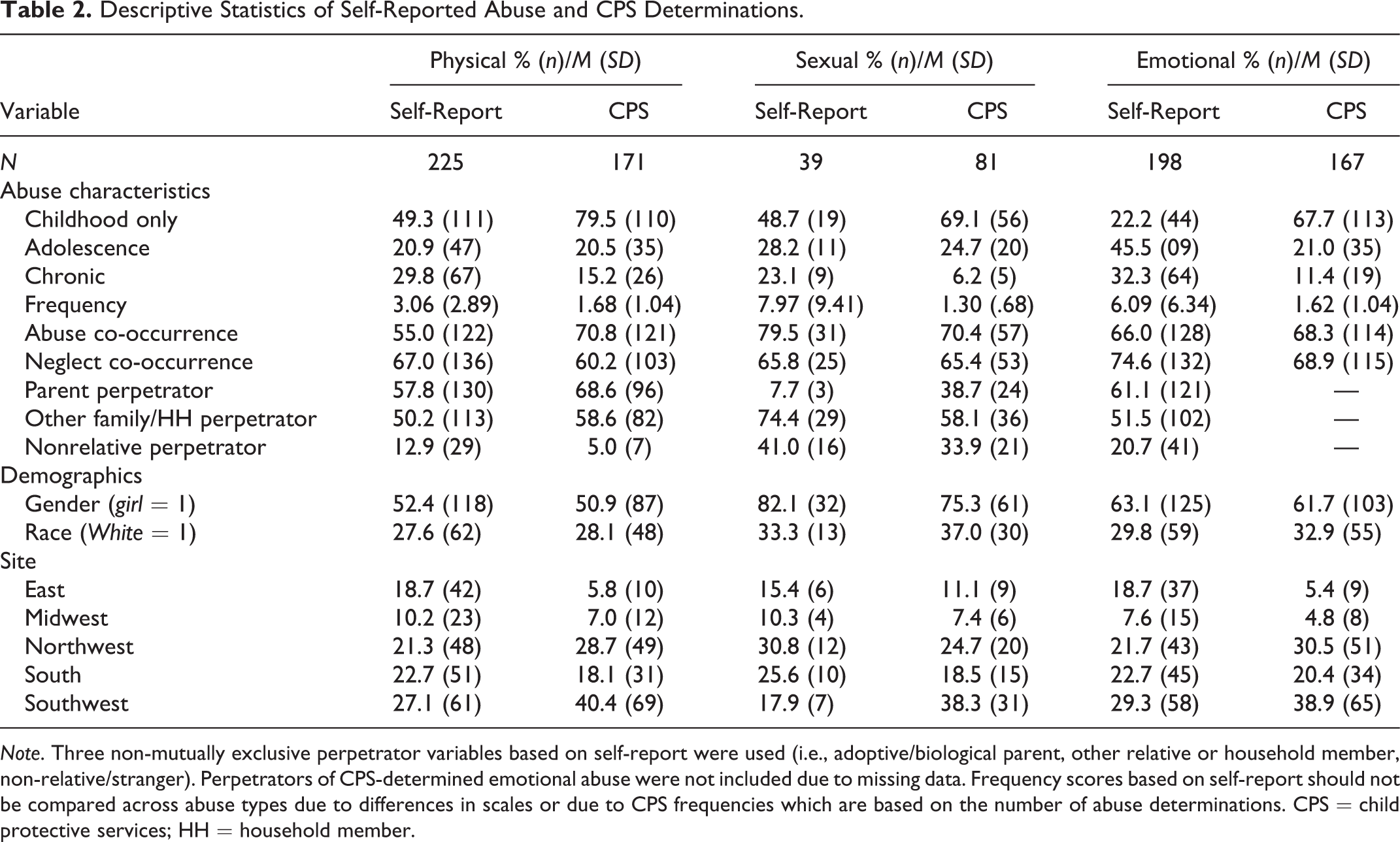
Note. Three non-mutually exclusive perpetrator variables based on self-report were used (i.e., adoptive/biological parent, other relative or household member, non-relative/stranger). Perpetrators of CPS-determined emotional abuse were not included due to missing data. Frequency scores based on self-report should not be compared across abuse types due to differences in scales or due to CPS frequencies which are based on the number of abuse determinations. CPS = child protective services; HH = household member.
Bivariate analyses of abuse characteristics predicting concordance
Bivariate differences in physical and emotional abuse characteristics and demographic control variables based on concordance are presented in Tables 3 and 4. As depicted in Table 3, CPS-determined physical abuse that was more frequent and co-occurring, perpetrated by a parent, and involving White youths was more correspondent with self-report. The concordance of CPS-determined physical abuse with self-reports also varied significantly by developmental timing and chronicity of exposure, with chronicity associated with higher concordance and childhood only abuse associated with lower concordance. For CPS-determined emotional abuse, co-occurrence with other abuse types and female gender was related to higher concordance in self-reports.
Bivariate Analysis of Characteristics of CPS-Determined Physical and Emotional Abuse by Concordance With Self-Reports.
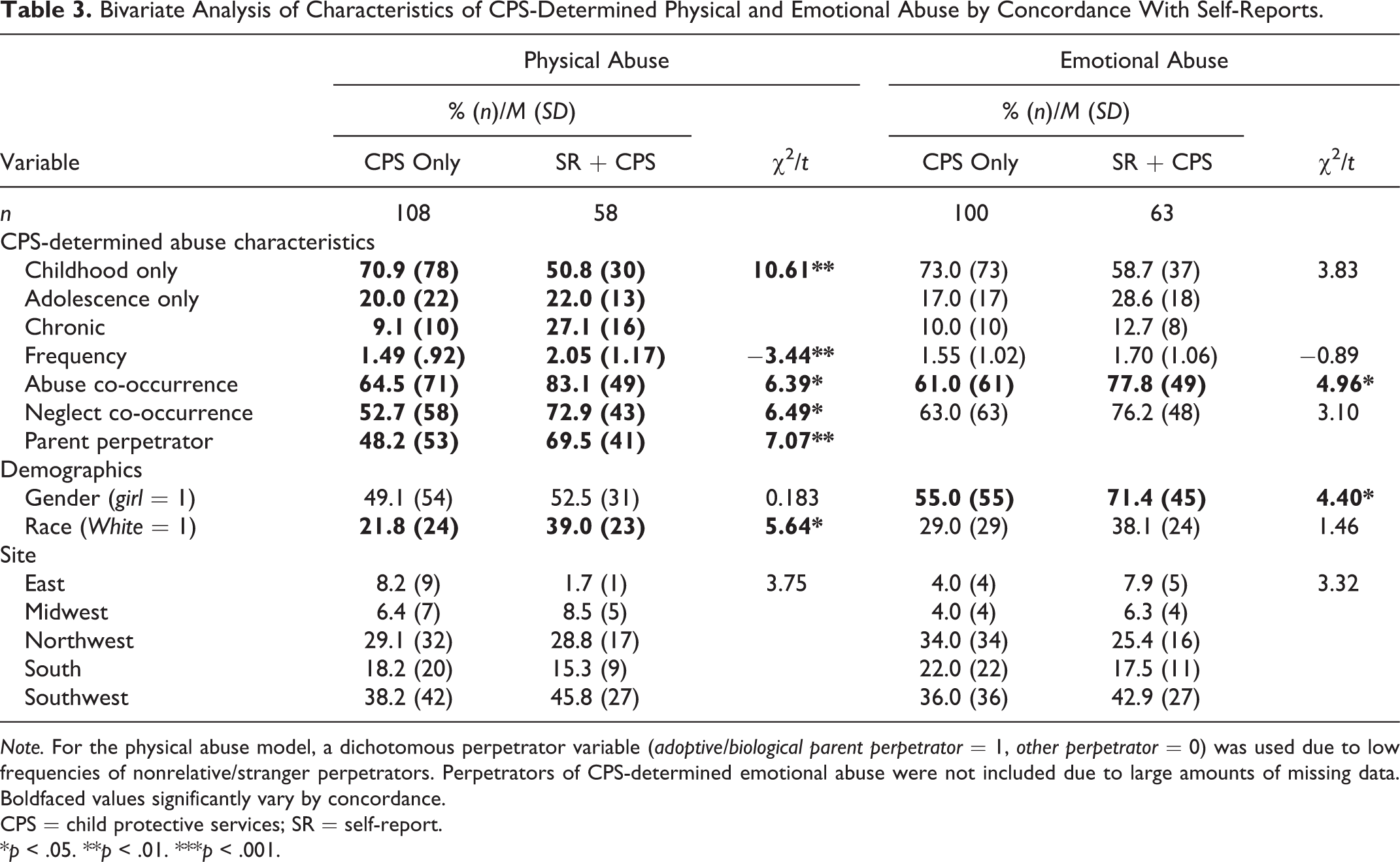
Note. For the physical abuse model, a dichotomous perpetrator variable (adoptive/biological parent perpetrator = 1, other perpetrator = 0) was used due to low frequencies of nonrelative/stranger perpetrators. Perpetrators of CPS-determined emotional abuse were not included due to large amounts of missing data. Boldfaced values significantly vary by concordance.
CPS = child protective services; SR = self-report.
*p < .05. **p < .01. ***p < .001.
Bivariate Analysis of Characteristics of Self-Reported Physical and Emotional Abuse by Concordance With CPS Determinations.
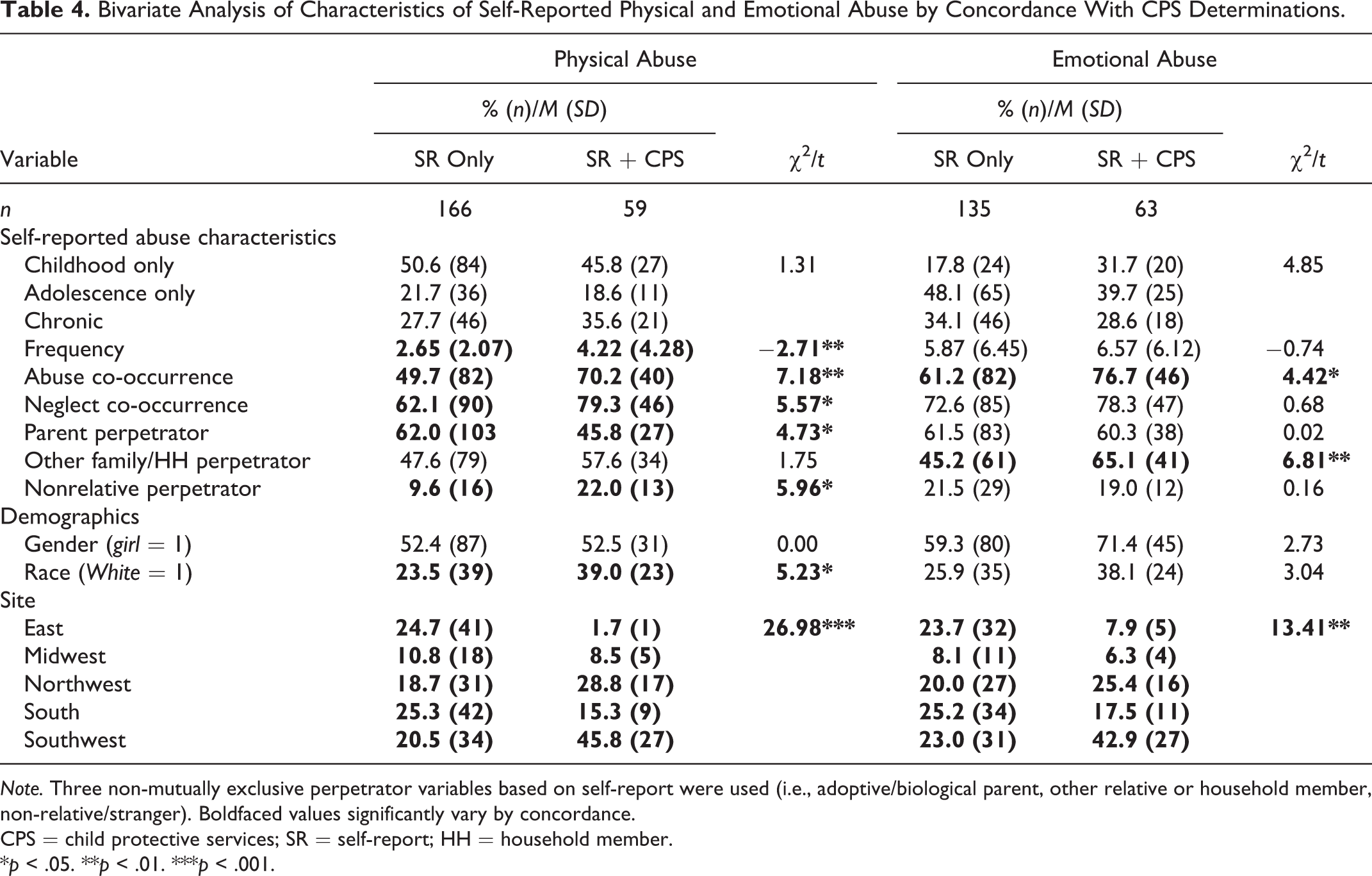
Note. Three non-mutually exclusive perpetrator variables based on self-report were used (i.e., adoptive/biological parent, other relative or household member, non-relative/stranger). Boldfaced values significantly vary by concordance.
CPS = child protective services; SR = self-report; HH = household member.
*p < .05. **p < .01. ***p < .001.
Table 4 shows the characteristics of self-reported abuse that were related to CPS determinations on a bivariate level. Concordance with CPS determinations was associated with higher physical abuse frequency, co-occurrence with other abuse and neglect, and perpetration by a nonrelative. Self-reported physical abuse perpetrated by a parent was less concordant with CPS determinations than that by a nonparent. For emotional abuse, self-reports that were co-occurring with other abuse types and perpetrated by a nonparent relative or other household member were more concordant with CPS determinations. Finally, the concordance of self-reported physical and emotional abuse with CPS determinations varied significantly by site. It is noteworthy that contrary to patterns in the overall sample, higher numbers of disagreement due to CPS determination only (Table 3) than self-report only (Table 4) were observed in the Northwest and Southwest sites.
Logistic regression models predicting concordance
Table 5 displays findings for logistic regression models predicting correspondence in self-reported abuse based on CPS determination characteristics. Youths with chronic CPS determinations of physical abuse had 3.5 higher odds of having a corresponding self-report than those with CPS determinations during childhood only (odds ratio [OR] = 3.48, 95% confidence interval [CI] = [1.17, 10.35], p = .025). Youths with co-occurring neglect (OR = 2.62, 95% CI [1.14, 6.02], p = .023) and White youths (OR = 3.16, 95% CI [1.37, 7.27], p = .007) also had greater self-report correspondence. CPS-determined emotional abuse co-occurring with other types of abuse (OR = 2.93, 95% CI [1.32, 6.52], p = .009) and neglect (OR = 2.60, 95% CI [1.17, 5.78], p = .019) was more likely to be self-reported than non-co-occurring emotional abuse.
Logistic Regression Analysis of Characteristics of CPS Determination of Abuse Predicting Agreement in Youth Self-Reports.
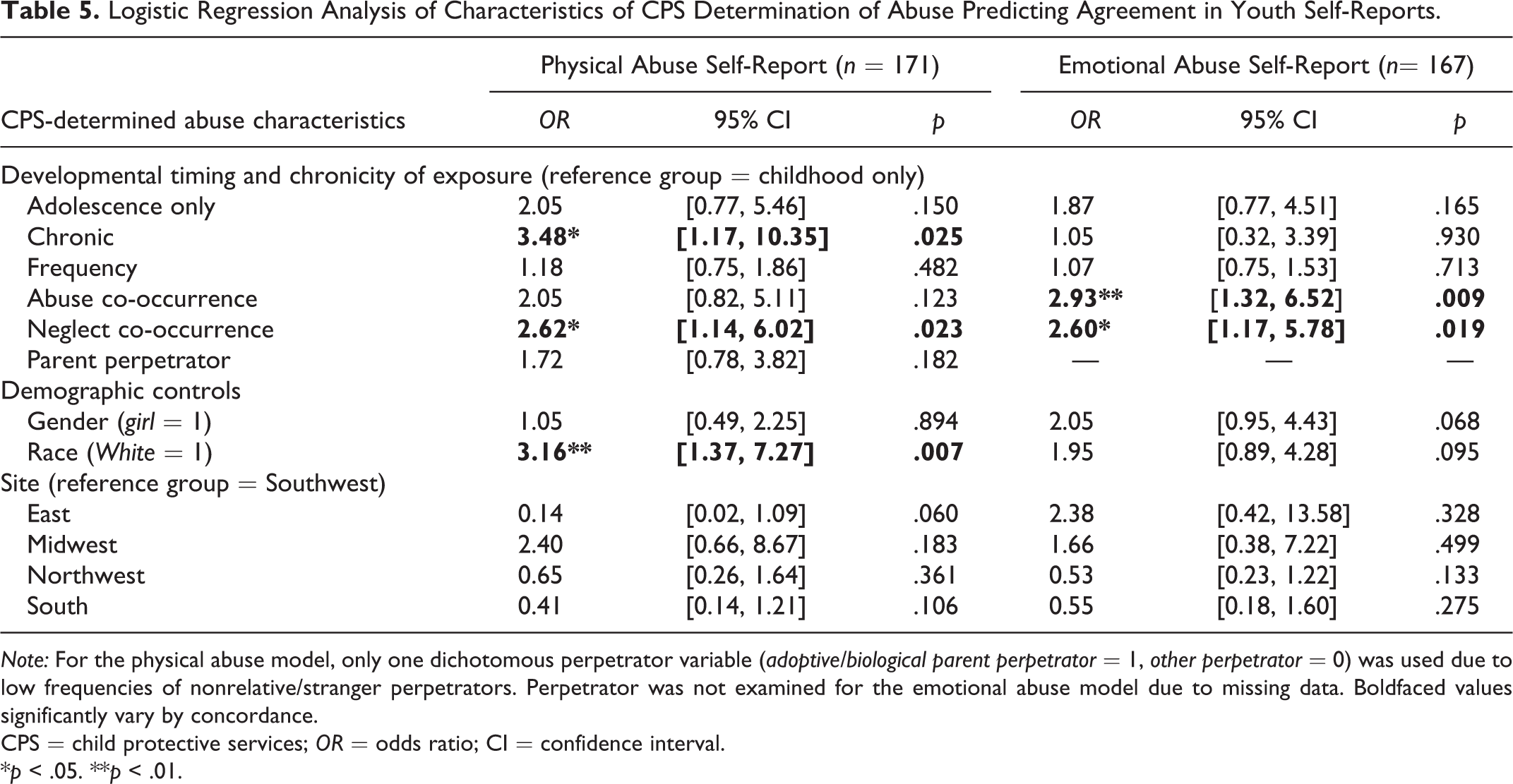
Note: For the physical abuse model, only one dichotomous perpetrator variable (adoptive/biological parent perpetrator = 1, other perpetrator = 0) was used due to low frequencies of nonrelative/stranger perpetrators. Perpetrator was not examined for the emotional abuse model due to missing data. Boldfaced values significantly vary by concordance.
CPS = child protective services; OR = odds ratio; CI = confidence interval.
*p < .05. **p < .01.
Table 6 illustrates logistic regression models predicting correspondence in CPS determinations of physical and emotional abuse based on self-reported abuse characteristics. Self-reports of more frequent physical abuse were associated with corresponding CPS determinations (OR = 1.15, 95% CI [1.01, 1.32], p = .042). Among youths with self-reported emotional abuse, chronic abuse was less concordant with CPS determinations than abuse occurring during childhood only (OR = 0.32, 95% CI [0.10, 0.99], p = .048). Perpetration by other family members was related to higher CPS correspondence (OR = 2.45, 95% CI [1.17, 5.13], p = .018). For both emotional and physical abuse, the East (physical OR = 0.04, 95% CI [0.01, 0.36], p = .004; emotional OR = 0.25, 95% CI [0.08, 0.80], p = .020) and South (physical OR = 0.29, 95% CI [0.11, .75, p = .010; emotional OR = 0.34, 95% CI [0.14, 0.88], p = .025) sites had significantly lower CPS correspondence than the Southwest site.
Logistic Regression Analysis of Characteristics of Youth Self-Reported Abuse Predicting Agreement in CPS Determinations.
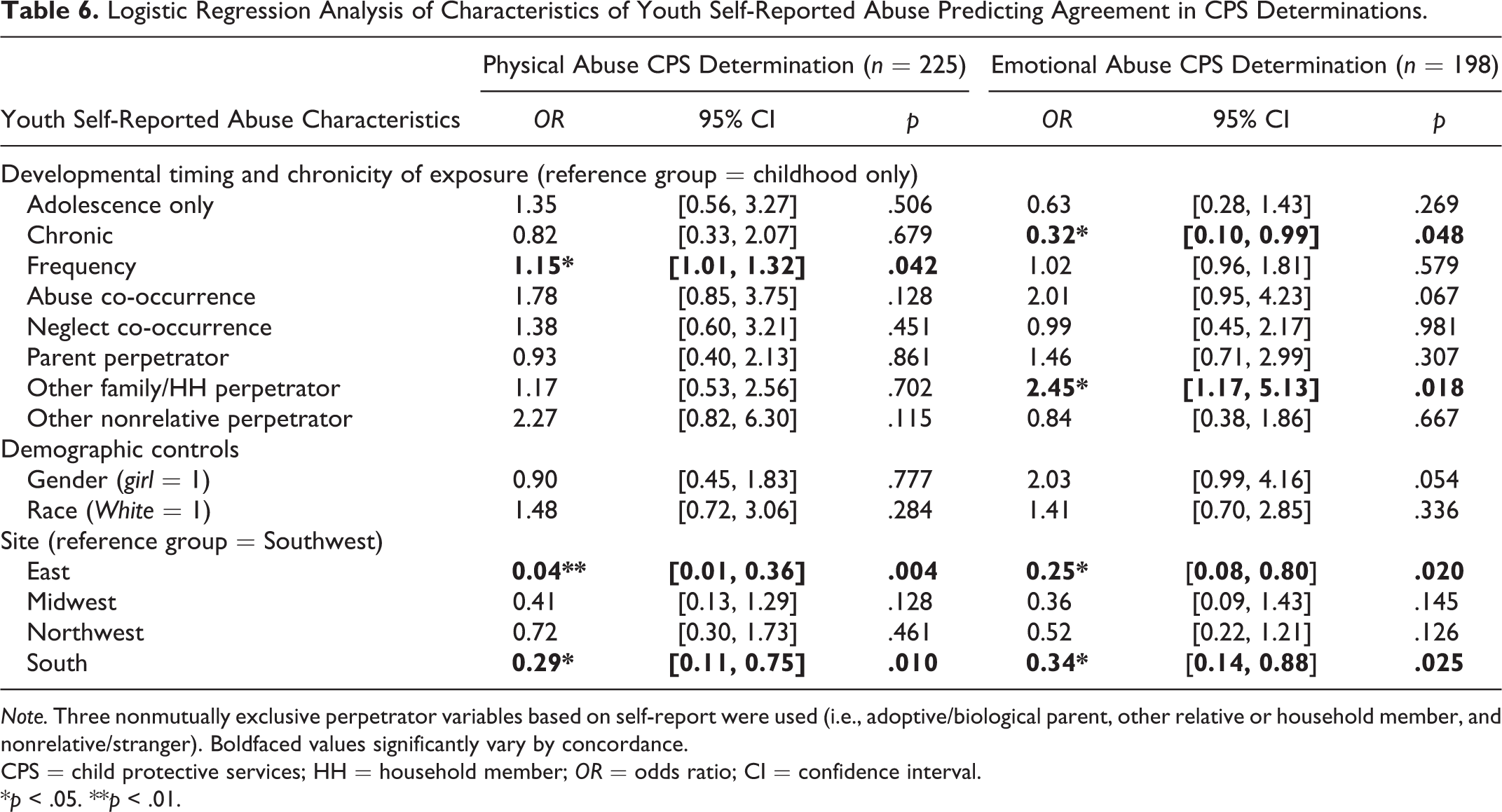
Note. Three nonmutually exclusive perpetrator variables based on self-report were used (i.e., adoptive/biological parent, other relative or household member, and nonrelative/stranger). Boldfaced values significantly vary by concordance.
CPS = child protective services; HH = household member; OR = odds ratio; CI = confidence interval.
*p < .05. **p < .01.
Discussion
Concordance Between Self-Reported and CPS-Determined Abuse
This study found higher rates of physical and emotional abuse based on 18-year self-report than CPS determinations. This is consistent with most past literature (Everson et al., 2008; Hambrick et al., 2014; White, English, Thompson, & Roberts, 2016) and corroborates evidence that incidents of child abuse that are reported to CPS represent only a portion of child abuse that occurs (Drake & Jonson-Reid, 1999; Widom et al., 2015). However, it is notable that many past studies found a larger differential between self-reported and CPS-detected emotional abuse than was observed in these findings (Everson et al., 2008; Hambrick et al., 2014; White et al., 2016). For example, Everson et al. (2008) found that the rate for self-reported emotional abuse was more than 6 times higher than the rate found in official CPS reports in a study of 350 LONGSCAN 12-year-olds. Similarly, for physical abuse, some studies have found greater differential than the current analysis (Everson et al., 2008), whereas other studies have found higher detection by CPS (Negriff et al., 2017). The current analysis used an older sample of youths than many prior studies (i.e., Everson et al., 2008). More distal reference periods may have inhibited self-report relative to CPS determinations among these late adolescent youths, for example, if past events no longer have seemed relevant. Alternatively, the longer, less restricted time span examined, given the older age of the youths, may have also increased the frequency of CPS-determined abuse relative to self-reported abuse because CPS had more time to discover the abuse (Kim, Wildeman, Jonson-Reid, & Drake, 2017). Other methodological differences of the study, such as the 6- to 16-year reference period for abuse exposure, the sample of youth with prior CPS involvement and at risk for maltreatment, and the specific geographic regions examined, may explain disparate results. In this study, overall patterns of higher disagreement in physical and emotional abuse due to self-report only were not observed in two of the five LONGSCAN sites.
Frequencies of sexual abuse by self-report were approximately half the frequency indicated by CPS determinations. This finding differs from past research, which has found higher occurrence of sexual abuse based on self-report (Everson et al., 2008) or no differences between measurement sources (Hambrick et al., 2014; Negriff et al., 2017). In an analysis based on age of reporter, Hambrick et al. (2014) found that higher sexual abuse was found via self-report only for youths 12 and younger, suggesting that the use of 18-year interviews in the current study may explain results. Feelings of shame and embarrassment may inhibit self-reports of sexual abuse (Fergusson et al., 2000; Widom & Morris, 1997), and it is possible that older children feel more shame and embarrassment either because of their advanced development or the nature of sexual abuse experienced during adolescence. These discrepancies could also reflect situations considered abuse by CPS but not youth, for example, sexual contact with a young adult which the youth views as legitimate. Higher rates of parent-perpetrated abuse based on CPS may reflect situations where parents are logged as the perpetrator because parental supervisory neglect enabled the youth to be sexually abused by another individual.
κ analysis showed low levels of agreement between self-reported and CPS-determined abuse, which is consistent with past research (Everson et al., 2008; Negriff et al., 2017). This finding reiterates existing literature (e.g., Negriff et al., 2017) showing that youth self-reports and CPS determinations of abuse are two distinct sources of information. Each method provides a unique contribution in understanding abuse prevalence, suggesting that using multiple sources of information in maltreatment research is optimal.
Abuse Characteristics and Concordance
The current study has several novel findings that suggest that the concordance between self-reported and CPS-determined physical and emotional abuse varies as a function of abuse characteristics. Past research on this topic is scarce but has suggested that concordance is higher for abuse that is more frequent, injurious, or co-occurring (Schaffer et al., 2008; Swahn et al., 2006). The current study is broadly consistent with these past studies, finding that emotionally and physically abused youths who had co-occurring maltreatment based on CPS determinations had higher odds of having a corresponding self-reports. Similarly, chronic physical abuse based on CPS determinations was associated with more corresponding self-reports. In addition, youths with more frequent self-reported physical abuse were more likely to have corresponding CPS determinations.
Co-occurring and chronic abuse may be more traumatic and memorable or more likely to be cognitively appraised by youths as a meaningful aspect of their past experience, leading to greater self-reporting correspondence. CPS workers may be more likely to discover more frequent physical abuse, for example, because this abuse is perceived as more harmful and is therefore reported to CPS. The finding that chronic emotional abuse was less likely to be concordant with CPS determinations is somewhat contrary to expectations but may suggest a lack of recognition of emotional abuse beyond childhood or persistence in emotional abuse not detected by CPS.
A novel finding of the current analysis was that youths whose emotional abuse was perpetrated by a family member or household member were more likely to have a corresponding CPS determination. This finding may reflect reporting mechanisms through which emotional abuse becomes known to CPS authorities. Emotional abuse perpetrated by a nonparent family or household member may be less hidden in nature and, for example, witnessed and reported by a parent. Alternatively, youths may be willing to disclose abuse by these perpetrators to others because they are less afraid of it, leading to removal or harming the more fundamental parent relationship (Della Femina et al., 1990).
Logistic regression analysis also identified noteworthy significant relations between demographics and concordance. White youths with CPS determinations of physical abuse were significantly more likely to have a corresponding self-report compared with minority groups. This may suggest that CPS workers and minority youths perceive physical abuse differently. Some studies indicated that physically punitive parenting practices may be more normative and more likely to be associated with positive relationship qualities among ethnic minority families (Lau, Huang, McCabe, Yeh, & Hough, 2006). Subjects may not report experiences because they have perceived these experiences of maltreatment as normal (Bower & Knutson, 1996) or because youth believe reporting their experiences as “abuse” would bring shame and loss of face to the entire family (Cheung, Lee, & Chan, 1994). Issues of trust may also inhibit minority youths from disclosing physical abuse on self-report measures. This finding suggests greater discrepancy between CPS determinations and racial and ethnic minority youth’s self-appraisals of physical abuse. Further research on the cross-cultural meaning and validity of youth self-report measures of maltreatment is needed.
A notable finding of this study is that agreement in CPS determinations varied significantly by LONGSCAN site. This may suggest differences in the detection of maltreatment resulting from varying jurisdictional definitions of maltreatment and mandated reporter laws (Matthews, Lee & Norman, 2016). However, sampling criteria varied in each of the five LONGSCAN sites, complicating interpretation of these findings. Future research is needed in this area.
Strengths and Limitations
This study has several strengths and limitations to bear in mind when interpreting study results. A strength is that it was based on the LONGSCAN data, a large national sample with high numbers of youths with indicated abuse and rich, detailed, and multisource data on abuse characteristics. The use of MMCS-coded CPS investigation narratives, with its advantages over both allegations and substantiations, also strengthened this study (English et al., 2005). LONGSCAN self-report measures were designed according to the same conceptual framework as the MMCS (Barnett et al., 1993), enhancing the comparability of self-reported and CPS-determined abuse data.
Several limitations of the current analysis should be discussed. First, the ability to match time periods of abuse exposure for the two measurement sources is imperfect. Abuse may have occurred well before the allegation dates that were used to estimate date of abuse occurrence for CPS data. Similarly, youth reports of age of exposure are subject to recall error. Some abuse characteristics could not be assessed because of missing data. For example, abuse severity, which has been suggested to be particularly relevant among maltreatment characteristics in predicting youth outcomes, could not be assessed because of missing data in both self-report and CPS measures (Jackson et al., 2014). Cognitive limitations associated with abuse exposure, including those resulting from head injuries, as well as mental health, may also affect self-reporting and should be considered in future analysis. Abuse occurring before age 6 was excluded because of the LONGSCAN sampling frame, which included CPS-involved youths in some sites. This may limit generalizability. Similarly, abuse after age 16 was excluded because the self-report measure did not clearly exclude abuse occurring after legal adulthood. Finally, multivariate analysis of sexual abuse could not be assessed because of problems of sparse cells.
Conclusions and Implications
Results suggest that in addition to leading to different findings regarding the prevalence of abuse, self-reported and CPS measures of abuse would lead to different conclusions regarding abuse characteristics. Differences in the characteristics of abuse captured by self-report and CPS sources may affect findings of the causes and correlates of abuse. Specifically, youth may be more apt to reporting co-occurring emotional and physical abuse and chronic physical abuse, whereas CPS may be more likely to detect frequent physical abuse, potentially biasing measures to more complex forms of abuse and inflating effects. On the other hand, CPS may be less likely to detect chronic emotional abuse with the opposite effect. CPS physical abuse may more often concur with White youths’ perceptions of their own experience, and the validity of CPS determinations of physical and emotional abuse may vary by jurisdictional or sample characteristics. Finally, processes by which abuse becomes known by CPS may influence characteristics of abuse (i.e., emotional abuse perpetrators) detected by those sources.
Future studies of sexual abuse and neglect are needed, as well as examinations of other maltreatment characteristics such as severity. For all types of abuse, studies should further examine how these relations vary in different populations. In particular, there is a need to clarify how age of self-report, developmental period of exposure (i.e., early childhood), and jurisdiction affect concordance. Finally, qualitative research may also be helpful in better understanding how youth disclose abuse as well as racial/ethnic differences.
Study findings have implications for measurement and clinical assessment contexts—namely, demonstrating that both self-report and CPS data strategies are incomplete measures but suggesting higher detection of physical and emotional abuse via self-report. For sexual abuse, the use of secondary informants (i.e., aside from the youth) may be particularly important given low rates of disclosure suggested by the current analysis. Study findings suggest that the use of youth self-report versus CPS data would lead to varying conclusions regarding abuse characteristics, as well as the frequency of its occurrence. Furthermore, varying characteristics of abuse captured by each source may bias correlational studies of abuse.
Footnotes
Declaration of Conflicting Interests
The author(s) declared no potential conflicts of interest with respect to the research, authorship, and/or publication of this article.
Funding
The author(s) received no financial support for the research, authorship, and/or publication of this article.