







Abstract
Recent theory and empirical research suggest that child neglect is a heterogeneous phenomenon characterized by various types. This study examined family risk factors associated with five neglect types including failure to provide physical needs, lack of supervision, emotional neglect, moral–legal neglect, and educational neglect in 390 substantiated cases of neglect in four U.S. Army communities. Family factors associated with elevated risk of each neglect type relative to other types were identified using multivariate regression. Relatively distinct sets of family risk factors were differentially associated with the neglect types. Family mental health problems and larger family size were associated with risk of failure to provide physical needs, childcare problems and larger family size were associated with risk of supervisory neglect, and family disagreements were associated with risk of emotional neglect. None of the family factors were associated with elevated risk of moral–legal or educational neglect. Results can inform the development of indicated and relapse prevention strategies for families affected by different neglect types.
According to the U.S. Department of Health and Human Services (USDHHS, 2018), child neglect is the type of child maltreatment most frequently reported to Child Protective Services (CPS) and most frequently associated with child fatality. Yet childhood neglect has remained understudied compared to other types of child maltreatment. In addition, prior research has primarily focused on a broad, undifferentiated, general neglect construct despite growing theoretical and empirical support for the conceptualization of neglect as a heterogeneous phenomenon characterized by distinct types of neglectful caregiving (e.g., Cozza, Ortiz, Fullerton, et al., 2015; Dubowitz, Newton, et al., 2005). Although several studies have shown that different types of neglectful caregiving are associated with different child outcomes (Dubowitz, Pitts, & Black, 2004; Dubowitz, Pitts, et al., 2005; Egeland, 2009; English, Thompson, Graham, & Briggs, 2005), factors that increase the likelihood of specific types of neglectful parenting remain largely unknown. Research identifying risk factors for specific types of neglect is needed to inform targeted prevention efforts.
Prior literature reviews and meta-analyses of child neglect studies indicate that the following factors increase risk of general neglect: lower socioeconomic status (Connell-Carrick, 2003; Schumacher, Smith Slep, & Heyman, 2001; Stith et al., 2009), single parenthood (Connell-Carrick, 2003), larger family size (Connell-Carrick, 2003; Stith et al., 2009), younger parental age (Connell-Carrick, 2003; Stith et al., 2009), parental substance abuse (Connell-Carrick, 2003), parental depression (Clément, Berube, & Chamberland, 2016; Connell-Carrick, 2003; Stith et al., 2009), lower parental education (Connell-Carrick, 2003), parental conflict (Connell-Carrick, 2003), parental stress (Schumacher et al., 2001; Stith et al., 2009), social isolation or low social support (Connell-Carrick, 2003; Schumacher et al., 2001; Stith et al., 2009), and parental history of abuse or neglect (Connell-Carrick, 2003; Stith et al., 2009). Although child gender and age are typically robust predictors of other maltreatment types, prior studies have yielded inconsistent results regarding the associations between child gender, age, and general neglect (see Connell-Carrick, 2003; Stith et al., 2009; Stoltenborgh, Bakermans-Kranenburg, Lenneke, & van IJzendoorn, 2015) perhaps due to differences in the sample characteristics and operational definitions of neglect used across studies. Prior research also indicates that the risk of neglect often increases when multiple risk factors are present within a family. For example, the combination of being economically disadvantaged, single, and young places a parent at increased risk of neglectful behavior (see Connell-Carrick, 2003).
Despite the known associations between risk factors and general child neglect, few studies have examined risk factors for child neglect types (e.g., Jonson-Reid, Drake, & Zhou, 2013; Sedlak, 1997). One recent exception focused primarily on military-specific risk factors (Cozza et al., 2018). Following reports that rates of general neglect in military families increase during combat deployment periods (e.g., McCarroll, Fan, Newby, & Ursano, 2008; Rentz et al., 2007), Cozza and colleagues found that deployment status at the time of the neglect incident (concurrently deployed, previously deployed, and never deployed) was differentially associated with risk of specific neglect types. The findings underscored the importance of examining risk factors associated with different neglect types, rather than focusing on general neglect, to develop more nuanced and targeted prevention efforts in affected populations.
Investigations of additional, nonmilitary-related factors associated with elevated risk of child neglect types are needed to further advance understanding of the etiology of neglect types in both military and civilian families. Despite similarities in how child neglect is defined within military and civilian communities, rates of child neglect are higher in civilian compared to military families (McCarroll, Ursano, Fan, & Newby, 2004a, 2004b; Raiha & Soma, 1997) perhaps due to demographic and economic differences in the populations. For example, the Department of Defense (DOD) Family Advocacy Program (FAP) specifies that neglect entails “negligent treatment of a child through acts or omissions by an individual responsible for the child’s welfare under circumstances indicating the child’s welfare is harmed or threatened” (DOD Manual for Child Maltreatment and Domestic Abuse Incident Reporting System, 2005). This definition is aligned with operational definitions of child neglect that focus on commissions or omissions of caregiver’s behavior (English et al., 2005; Glaser, 2011). However, alternative definitions of neglect are used across jurisdictions, disciplines, as well as national and international agencies and organizations (e.g., Butchart & Harvey, 2006; Rebbe, 2018; Straus & Kantor, 2005; see Barnett, Manly, & Cicchetti, 1993, for a review). For example, child-centered approaches to defining neglect focus on whether a child’s basic needs are adequately met without attributing blame to caregivers (e.g., Dubowitz, Newton, et al., 2005). Other legal and research definitions include additional criteria, such as evidence of imminent or demonstrable harm to the child (e.g., Sedlak, 1997).
Similar to the diverse operational definitions of general neglect, competing conceptual models regarding the etiology of neglect also exist (Cicchetti & Rizley, 1981; Dubowitz, Newton, et al., 2005). One prominent conceptual framework draws from an ecological theory of maltreatment (Belsky, 1993), which proposes that risk of abuse and neglect is determined by multiple factors operating within various embedded systems of the child’s social ecology. Systems in the child’s proximate environment (e.g., family) more strongly influence child outcomes than distal systems (e.g., cultural beliefs and values that perpetuate maltreatment). In the present study, we focus on family-related factors that span multiple levels of the child’s social ecology, including child characteristics, parental characteristics, and characteristics of the family’s broader environmental context (e.g., recent moves, job problems, legal trouble). Given that neglect typically occurs in a family context, an examination of the contributions of family-related risk factors to child neglect types appears an appropriate next step to advance knowledge of the etiology of neglect types.
The present study examined associations between family risk factors and five types of neglect in a previously described sample of substantiated child neglect cases involving parental offenders (Cozza et al., 2018). Neglect types were selected based on their phenomenological distinctness and conceptual clarity as outlined in the Modified Maltreatment Classification System (MMCS; Barnett et al., 1993), a widely used instrument for classifying maltreatment types in record review studies (e.g., Huffhines et al., 2016; Mennen, Kim, Sang, & Trickett, 2010) and other types of research (e.g., the National Survey of Child and Adolescent Well-Being). The MMCS identifies two types of child physical neglect (failure to provide physical needs and lack of supervision) as well as three additional neglect types within other categories of child maltreatment (i.e., emotional, moral–legal, educational neglect). In accordance with the operational definitions provided in the MMCS, we defined failure to provide physical needs as caregivers’ failure to provide a minimum degree of care in meeting the child’s physical needs. Subtypes of failure to provide physical needs include adequate food and nutrition, appropriate clothing, shelter, hygiene, health care, dental, and mental health. Lack of supervision was defined as failure to take adequate precautions to ensure child safety in and out of the home based on the child’s emotional and developmental needs. Lack of supervision includes three subtypes: general lack of supervision, unsafe environment, and substitute care. Emotional neglect was defined as harmful insensitivity to a child’s developmental level and/or persistent or extreme thwarting of the children’s basic emotional needs such as the need for an environment free of excessive hostility and violence, an available and stable attachment figure, positive regard, and the absence of excessively negative or unrealistic evaluations. Emotional neglect includes the following five subtypes: inadequate nurturance or affection, expected to assume inappropriate level of responsibility, not permitted age-appropriate socialization, abandonment, and protection from violence. Moral–legal neglect was defined as caregiver failure to demonstrate a minimum degree of care in assisting the child to integrate with the expectations of society such as exposing the child to or involving the child in illegal activity or other activities that promote delinquency or antisocial behavior. Finally, educational neglect was defined as caregiver failure to ensure the child is adequately educated and/or properly socialized by regularly attending school.
The MMCS was selected to classify neglect types in the present study because it includes operational definitions for multiple neglect types, differentiates maltreatment from poor parenting, and provides examples as well as inclusion and exclusion criteria for each neglect type that take into account children’s developmental age and level. Prior work has also demonstrated the MMCS to be a reliable and valid measure for identifying risk factors and differential outcomes for specific neglect types (Cozza et al., 2018; Runyan et al., 2005). However, alternative classification systems and typologies exist (e.g., Dubowitz et al., 2004; Lau et al., 2005; Runyan et al., 2005). For example, the Fourth National Incidence Study of Child Abuse and Neglect differentiates among physical neglect (with subtypes for medical neglect, supervision, disregard for physical safety, and hygiene), emotional neglect, and educational neglect (Sedlak et al., 2010), whereas the National Child Abuse and Neglect Data System differentiates only one neglect type, medical neglect, from general neglect (USDHHS, 2018).
Candidate family risk factors were selected based upon their expected contribution to adult caregiver acts of omission or commission that have been associated with general child neglect or other types of maltreatment in military and civilian populations, or caregiver acts that could predictably place a child at risk for specific types of neglect. Selected risk factors include family resource problems (i.e., number of children in the home, financial problems, childcare problems), family health problems (i.e., physical medical problems, mental health problems), family conflict (i.e., family disagreements, infidelity, problems regarding child rearing methods), social and community stressors (i.e., recent moves, housing/neighborhood issues, parental isolation/loneliness, unit/job problems), and family criminal/legal problems (i.e., legal problems, criminal problems, and Uniform Code of Military Justice [UCMJ]/disciplinary action). These family factors are likely to be shared by military and civilian families despite potential differences in their prevalence across military and civilian communities (Dubanoski & McIntosh, 1984). Given the lack of prior research on risk factors for neglect types, we also included demographic correlates of general child neglect (Connell-Carrick, 2003; Schumacher et al., 2001; Stith et al., 2009; Stoltenborgh et al., 2015), including child age, parental marital status, offender parent age, and an index of family socioeconomic status (i.e., highest military rank in the family).
Based on prior research in which child, parental, and community factors were differentially associated with neglect types (Cozza et al., 2018; Jonson-Reid et al., 2013), we expected particular categories of family risk factors to differentially influence the likelihood of specific types of neglect. For example, we hypothesized that family resource problems would impair a parent’s ability to provide for the child’s physical needs as well as a parent’s ability to ensure appropriate supervision compared to other neglect types. We also hypothesized that social and community stressors, including experiencing a recent move, housing/neighborhood issues, parental loneliness/isolation, and job problems, would be more likely to interfere with a parent’s ability to meet their children’s physical needs, to provide appropriate supervision (e.g., their ability to arrange for appropriate substitute caregivers), and to ensure their child is enrolled in school and receives appropriate educational services. Family health problems that involve substantial parental impairment were hypothesized to increase risk of failure to provide physical needs (e.g., nutrition, shelter, sanitary household conditions) compared to other types of neglect. Parental mental health problems in particular were expected to increase the likelihood of emotional and educational neglect. Family conflict, as indexed by family disagreements, infidelity, and problems with child rearing methods, was predicted to be associated with risk of lack of supervision and emotional neglect involving exposure to intimate partner violence. Finally, given that parents involved with the legal system may be more likely to expose their children to illegal behavior or substances, we hypothesized that family criminal/legal problems would be associated with increased risk of moral–legal neglect compared to other neglect types.
Method
Participants and Procedures
A previously described (Cozza et al., 2018) random sample of 390 U.S. Army FAP cases of substantiated child neglect was examined in the present study. Using random sampling stratified by year, 400 case files were selected for review from the 2,781 total child neglect cases substantiated during 2003–2009 at four Army installations with the highest number of substantiated neglect cases as reported by the Army Central Registry (n = 100 per installation). Three cases were excluded because less than 80% of the file was complete. An additional seven cases were omitted because the offender was someone other than the child’s parent. The remaining 390 child neglect cases comprised our analytic sample. The study was approved by the office of research at the Uniformed Services University of the Health Sciences.
A 244-item record review form was developed to record and code information from case files. Record reviews were conducted by members of the research team who participated in two 1-hr training sessions during which the data collection protocol was explained and the sample files were reviewed to determine interrater reliability of neglect type coding. Neglect types were not mutually exclusive; cases could be coded as involving one or more types of neglect. Interrater reliability was assessed for 40 (10%) randomly selected records. Average Kappas (κs) for each type of neglect were greater than .80. Discrepancies in coding were resolved by discussing differences of opinion until raters came to a consensus decision. Information about family demographics (e.g., child age, child gender, number of children in the home) and socioeconomic status (i.e., highest family military rank) was also recorded from case files.
Measures
Neglect types
The MMCS (Barnett et al., 1993) was used to classify five neglect types: failure to provide physical needs, lack of supervision, emotional neglect, moral–legal neglect, and educational neglect. The MMCS has been used widely in maltreatment studies to differentiate various types of childhood maltreatment by type and severity and has been shown to be a reliable and valid measure for classifying neglect types (Cozza et al., 2018; Runyan et al., 2005). Although the MMCS provides guidelines for classifying other maltreatment types, only child neglect classifications were used in the present study.
Family risk factors
Family risk factors were derived from self-reported responses of one or both parents obtained during Army FAP assessments conducted at the time of the neglect report. Specifically, parents were asked whether their family was currently experiencing financial problems, childcare problems, physical/medical problems, mental health problems, family disagreements, infidelity, housing and neighborhood issues, loneliness/isolation, unit (job) problems, legal problems, criminal problems, UCMJ/disciplinary action, problems related to child rearing methods, or a recent move. With the exception of number of children in the home, all questions were dichotomous yes/no questions.
Covariates
Child age, service parent marital status, offender parent age, and highest military rank in family were examined as covariates in the primary analyses based on prior research. In particular, younger child age, single parenthood, and younger parental age have been associated with increased risk of general neglect (see Connell-Carrick, 2003; Raiha & Soma, 1997; Stith et al., 2009). In cases in which both parents were offenders, the age of the oldest parent was selected for analysis. Highest military rank in family was used as an index of socioeconomic status based on research on neglect in Army families (Raiha & Soma, 1997). Lower socioeconomic status has also been associated with higher risk of physical, educational, and emotional neglect in nationally representative studies (Sedlak, 1997; Sedlak et al., 2010).
Data Analysis
Demographic characteristics of child neglect victims and their families were examined as well as frequencies of family risk factors and neglect types. Bivariate associations between the proposed family risk factors and specific neglect types were explored using contingency tables, χ2 tests, and univariate logistic regressions. All family risk factors were examined as categorical variables. To examine the unique associations between risk factors and neglect types, factors associated with increased risk of a specific neglect type were subsequently included in multivariate logistic regressions with child age, marital status of the service parent, offender parent age, and highest family military rank included as covariates. Given that our sample was comprised of families with substantiated child neglect histories, results from the regression models provide evidence of family factors associated with increased risk of specific types of neglect relative to other neglect types. Factors associated with decreased risk of specific neglect types are not interpreted. Odds ratios (ORs) and 95% confidence intervals (CIs) were calculated. We performed all statistical analyses using SAS 9.4 (SAS Institute Inc., Cary, NC) and defined statistical significance as p < .05 using two-tailed tests.
Results
Descriptive characteristics of children and their families are summarized in Table 1. The majority of neglected children were between 1 and 11 years of age (78%) and male (54%). Most parents were married (85%), and 74% of children had one or more siblings. For most families (62%), sponsor service members were junior enlisted soldiers (rank of E4 or below). The offender was the service member parent in 24% of cases and the spouse of the service member parent in 42% of cases. In the remaining 33% of cases, both the service member parent and their spouse were offenders.
Demographic Characteristics of Children, Offenders, and Families.
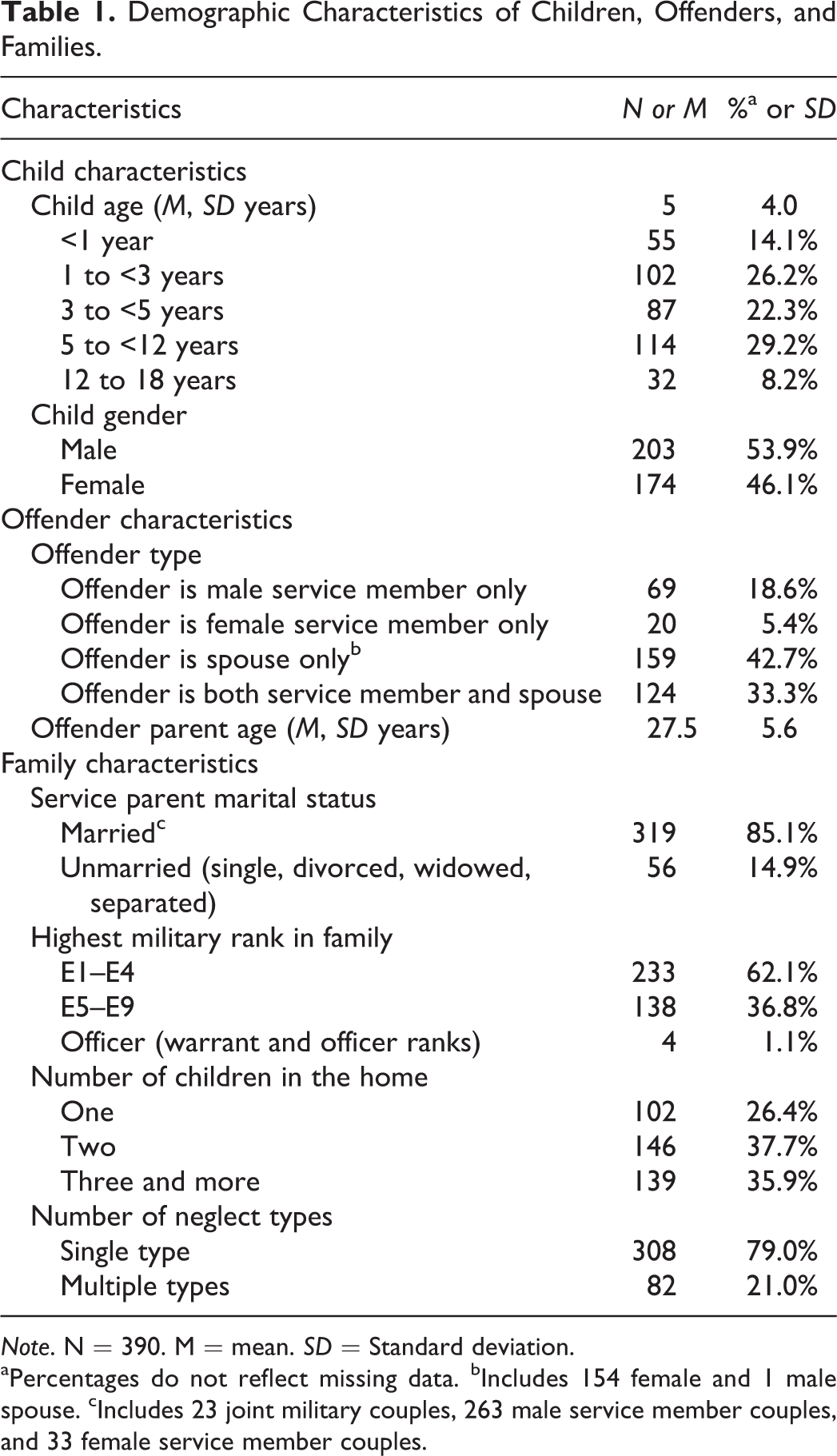
Note. N = 390. M = mean. SD = Standard deviation.
aPercentages do not reflect missing data. bIncludes 154 female and 1 male spouse. cIncludes 23 joint military couples, 263 male service member couples, and 33 female service member couples.
Based on the description of parental neglectful behaviors documented in the case files, a case could involve more than one neglect type. Lack of supervision and emotional neglect accounted for the highest percentages of cases (42% and 41%, respectively). As reported previously (Cozza et al., 2015), the majority (86%) of emotional neglect cases involved exposure to parental intimate partner violence. Whereas approximately one-third (33%) of cases involved failure to provide physical needs, only 5% and 3% of cases involved moral–legal and educational neglect, respectively. Among the 21% of cases that involved multiple neglect types, 78% included failure to provide physical needs and 45% involved both failure to provide physical needs and supervisory neglect. Cases involving multiple maltreatment types (i.e., physical or sexual abuse in addition to neglect) were substantially less common. Consistent with rates in the general population (USDHHS, 2018), 8% and 1% of neglect cases involved co-occurring physical abuse and sexual abuse, respectively.
Frequencies of family risk factors are presented in Table 2. Over one-third of families reported problems related to family disagreements (38%) or finances (36%), 24% reported legal problems, 20% reported physical/medical problems, 20% reported loneliness/isolation, 19% reported mental health problems, 19% reported childcare problems, 18% reported infidelity, 17% reported unit/job problems, 14% experienced a recent move, 13% reported housing/neighborhood issues, 10% reported conflict regarding child rearing methods, 6% reported criminal problems, and 6% reported UCMJ/disciplinary action. Overall, 73% of families reported one or more of the 15 proposed family risk factors (M = 2.91, SD = 2.40, median = 2, range = 1–10).
Frequencies of Reported Family Risk Factors.
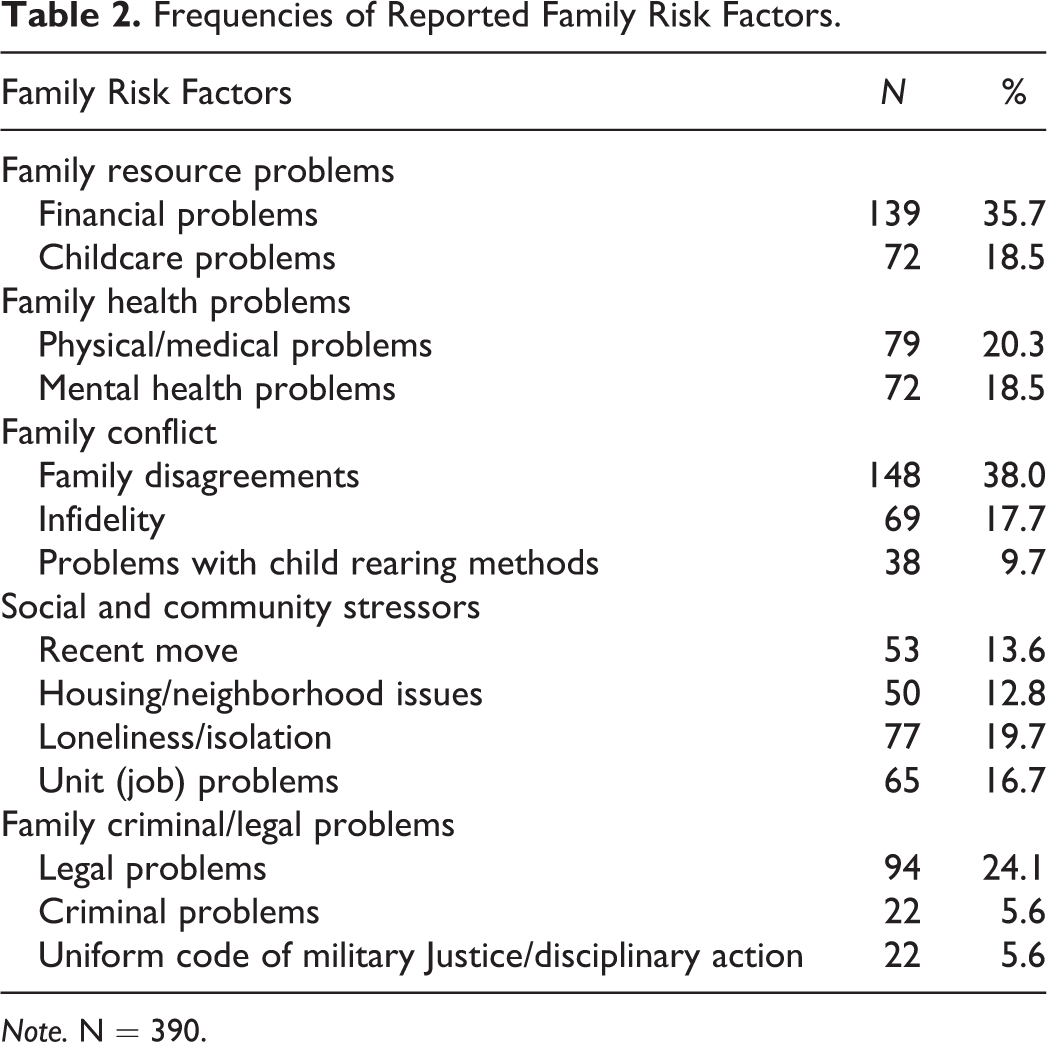
Note. N = 390.
Consistent with our hypothesis that particular categories of family risk factors would be differentially related to specific neglect types, results from univariate logistic regressions indicated that three or more children in the home (OR = 1.90; CI = [1.08, 3.34]), mental health problems (OR = 2.83; CI = [1.68, 4.78]), and housing/neighborhood issues (OR = 2.78; CI = [1.52, 5.07]) were associated with increased risk of failure to provide physical needs. Childcare problems were the single-family risk factor associated with elevated risk of lack of supervision (OR = 2.96; CI = [1.74, 5.04]). Family disagreements (OR = 3.3; CI = [2.15, 5.06]), infidelity (OR = 1.99; CI = [1.18, 3.38]), and experiencing a recent move (OR = 2.08; CI = [1.16, 3.73]) were each associated with higher risk of emotional neglect. None of the family risk factors were associated with increased risk of moral–legal neglect or educational neglect. Other proposed family risk factors (i.e., financial problems, physical/medical problems, problems with child rearing methods, loneliness/isolation, job problems, legal problems, criminal problems, UCMJ/disciplinary action) were not associated with increased risk of any neglect type and were therefore not included in subsequent multivariate analyses.
To examine the unique contributions of the family risk factors to specific neglect types, all factors associated with increased risk of a specific neglect type in the univariate analyses were subsequently tested in multivariate logistic regressions (Table 3) adjusted for child age, service member marital status, highest family military rank, and offender parent age. Neglect cases that involved families with mental health problems or families with more than three children in the home were at higher risk of failure to provide physical needs (OR = 3.11; CI = [1.63, 5.92] and OR = 2.13; CI = [1.06, 4.29], respectively). Neglect cases in families with childcare problems (OR = 3.59; CI = [1.95, 6.63]) or in families with two (OR = 2.07; CI = [1.12, 3.83]) and three or more children in the home (OR = 2.36; CI = [1.21, 4.60]) were at higher risk of supervisory neglect. Problems with family disagreements emerged as the single family factor uniquely associated with elevated risk of emotional neglect (OR = 3.35; CI = [2.00, 5.61]). No significant associations were found between the covariates and any of the neglect types tested in the multivariate models.
Results From Multivariate Logistic Regressions Predicting Neglect Types.
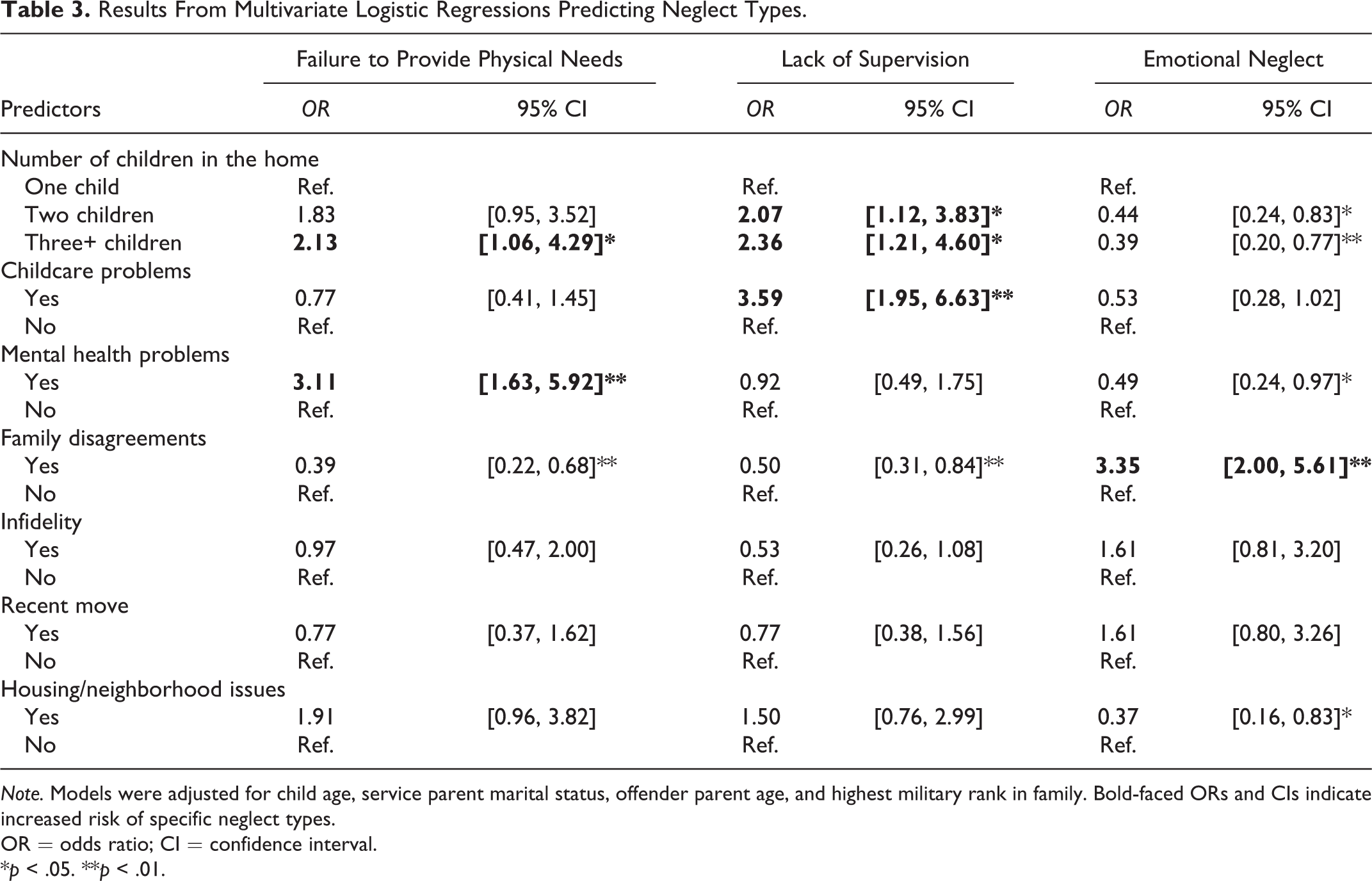
Note. Models were adjusted for child age, service parent marital status, offender parent age, and highest military rank in family. Bold-faced ORs and CIs indicate increased risk of specific neglect types.
OR = odds ratio; CI = confidence interval.
*p < .05. **p < .01.
Discussion
This study supports and extends prior research in several ways. First, consistent with theory and previous empirical work (e.g., Connell-Carrick, 2003; Cozza et al., 2018; Dubowitz, Newton, et al., 2005), our findings demonstrate that child neglect is a multidimensional phenomenon characterized by various types of experiences rather than a singular, uniform construct. Our results also advance the development of a child neglect typology by providing new evidence that a wide range of risk factors for general child neglect are differentially associated with elevated risk of specific neglect types. Although previous studies identified military-specific risk factors (Cozza et al., 2018) and risk factors associated with physical and educational neglect (Sedlak, 1997), our findings extend this research by showing that various nonmilitary-specific family factors also confer elevated risk of physical neglect, supervisory neglect, and emotional neglect. Advancing knowledge concerning risk factors for child neglect types is critically important given the high number of child neglect cases reported to and substantiated by CPS each year.
In general, results are consistent with study hypotheses concerning the differential contributions of family risk factors to specific neglect types. For example, family resource problems, indexed by larger family size and problems with childcare, were associated with higher risk of failure to provide physical needs and lack of supervision relative to other neglect types. These findings are aligned with the types of challenges families with resource problems would be expected to experience. Given that caring for more children requires greater resources (i.e., financial, material, and psychological) from caregivers, larger families may be less able to meet their children’s physical needs and provide adequate supervision (Connell-Carrick, 2003; Stith et al., 2009). Similarly, parents who have problems with childcare may not have the resources or capacity to provide adequate supervision. Results also showed that family health problems were associated with elevated risk of failure to provide physical needs compared to other neglect types. Family mental health problems in particular may impede a parent’s ability to provide adequate nutrition, shelter, and sanitary household conditions (Clément et al., 2016; Connell-Carrick, 2003; Stith et al., 2009). Finally, as predicted, family conflict, indexed by family disagreements, was associated with higher risk of emotional neglect compared to other neglect types. Family disagreements among parents may lead to hostile and violent behaviors exhibited in the presence of children in the home, thereby contributing to emotional neglect (Connell-Carrick, 2003; Dong et al., 2004).
Readers are reminded that our sample consisted only of substantiated child neglect cases. Our findings therefore provide evidence of factors that elevate the risk of experiencing a specific neglect type relative to another neglect type, rather than factors that heighten risk of general neglect compared to no neglect. For example, our finding that parental criminal problems, parental social isolation, family physical medical problems, and infidelity were not uniquely associated with heightened risk of a specific neglect type is not inconsistent with findings from other studies showing that these factors increase risk of general child neglect (e.g., Schumacher et al., 2001; Stith et al., 2009). Our results instead indicate that these particular family factors did not differentiate risk of the specific neglect types examined in a sample of substantiated neglect cases in U.S. Army families. Similarly, although prior research indicates that particular family demographic characteristics, including single parenthood, younger parental age, and low family socioeconomic status, confer heightened risk of general child neglect, these demographic characteristics were not associated with neglect types among the Army families examined in our study. Our findings instead suggest that established sociodemographic correlates of general child neglect may poorly differentiate risk of specific types of neglect in military families. Sociodemographic correlates of neglect identified in general child welfare populations may be less strongly associated with neglect types in military samples given that military life entails particular economic and social supports, which buffer risk of neglect compared to the U.S. civilian population, or because risk of neglect types and risk of general child neglect are not the same. In general, additional research comparing military and civilian samples is needed to determine the shared and unique risk factors for neglect types in military and civilian communities.
Although our results require replication, our findings have clear practical implications for risk assessment. Most assessment tools used to determine risk of child neglect were designed to identify children at risk of child maltreatment broadly defined (e.g., Child Abuse Potential Inventory, Milner, Gold, Ayoub, & Jacewitz, 1984; California Family Risk Assessment, Johnson, 2011; and tools derived from the Framework for the Assessment of Children in Need and their Families, Léveillé & Chamberland, 2010) rather than risk conditions specific to general neglect or specific neglect types. Due to the multifaceted nature of child neglect as well as the paucity of valid and reliable tools that uniquely assess risk of neglect, case workers often base their child neglect evaluations on combinations of multiple assessment instruments that focus on single dimensions of parenting or environmental characteristics known to contribute to neglect (Gershater-Molko, Lutzker, & Sherman, 2003). Continued effort to develop comprehensive assessment measures that survey the full scope of a family’s social ecology is needed to both minimize the assessment process and improve identification of conditions within each family that predict risk of specific neglect types. Our findings suggest that such comprehensive, multidimensional risk assessments should include the broad range of family factors shown to differentially increase risk of the neglect types examined in our study.
Our results also have practical implications for the refinement of established preventive interventions that could be tailored to different types of neglect. The Institute of Medicine (IOM) framework for interventions (Springer & Phillips, 2007) describes different levels of intervention, including health promotion, prevention (i.e., universal, selective, indicated), treatment, and maintenance (i.e., relapse prevention, rehabilitation). The IOM framework further advises that intervention services should be appropriately matched to the specific risk conditions that characterize the vulnerable population. Although existing indicated and relapse prevention programs have shown promising results in families at risk of general neglect or with prior CPS involvement (e.g., DePanfilis & Dubowitz, 2005; Ethier, Couture, Lacharite, & Gagnier, 2000), our findings suggest that such programs can be tailored to better target specific types of neglect. For example, families that fail to provide for their child’s physical needs may be best served by interventions that incorporate financial assistance and mental health services for ailing parents. In contrast, neglect involving inadequate supervision should focus on securing adequate and affordable childcare, perhaps through strengthening families’ supportive networks to expand options for substitute childcare during times of stress. Finally, families in which emotional neglect involved children’s exposure to parental intimate partner violence may be best served by interpersonal, communication, and problem-solving skills training to help parents develop effective strategies for managing conflict. While all families are likely to benefit from a broad range of preventive intervention strategies, services that are aligned with the risk factors associated with the specific types of neglectful caregiving observed in the family will enhance the effectiveness of interventions and improve child outcomes.
Several limitations of our study should be noted. First, our sample included military families with substantiated neglect. Therefore, the degree to which findings generalize to other populations and to neglect cases that were referred but not substantiated is unknown. Although comparisons of substantiated and unsubstantiated cases of maltreatment share many characteristics, including similar levels of recidivism risk as indexed by substantiated rereports and future foster care placement (e.g., Kohl, Jonson-Reid, & Drake, 2009), replication of our results in unsubstantiated cases of neglect types and in other populations is needed. Second, because all cases of neglect in our sample were randomly selected from cases identified through the Army Central Registry of substantiated neglect cases, our results are subject to biases associated with using adjudication records (similar to CPS case files) as accurate indicators of neglect incidents. Such methodology may underestimate neglect incidence, especially in advantaged populations (e.g., senior enlisted service members or officers compared to junior enlisted service members), and may not fully characterize neglect phenomenology (Dubowitz, Pitts, et al., 2005). Third, our results concerning educational and moral–legal neglect should be considered preliminary due to the limited number of these types of neglect incidents in our sample. Because general population studies regarding the prevalence of neglect types have typically not examined educational or moral–legal neglect (e.g., Clément et al., 2016; Stoltenborgh et al., 2013), the extent to which our findings concerning the low prevalence of these incidents among U.S. Army families and their associations with family risk factors are consistent with nationally representative samples is unknown. Fourth, the family risk factors examined in our study were self-reported by caregivers and therefore subject to reporting biases. Future research should aim to cross-validate the veracity of self-reported family problems by comparing caregiver reports to reports from other informants (e.g., social workers, youth, teachers). Finally, the case records used to derive measures of family risk factors examined in the present study did not contain information on all environmental factors affecting family risk that have been shown to increase risk of general neglect in prior research. For example, case records did not include systematic information on neighborhood characteristics (e.g., crime, poverty) associated with heightened risk of child neglect (e.g., Manly, Oshri, Lynch, Herzog, & Wortel, 2012) which precluded our ability to examine the relation between these factors and neglect types in the present study.
Despite these limitations, our findings advance knowledge of risk factors for specific neglect types in military families that have implications for families more broadly. Future research should examine the relation between family risk factors for neglect and co-occurring maltreatment types to test the utility of these family risk factors in predicting complex forms of maltreatment that involve multiple co-occurring types of abuse and neglect with varying degrees of chronicity and severity. In particular, the use of empirically driven analytic methods, such as latent class analysis, to identify groups of children with similar patterns of exposure to multiple maltreatment types would inform our understanding of the types of neglect and other forms of abuse that tend to co-occur within families as well as risk factors associated with different profiles of comorbid maltreatment. Future studies should also examine exposure thresholds for risk conditions that increase the likelihood of specific neglect types. For example, greater understanding of the type and severity of mental health problems that increase risk of failure to provide physical needs would improve the ability to provide families with intervention services that appropriately address the specific risk conditions present in the family. Finally, the field would benefit from additional studies that examine developmental outcomes of children who experience different types of neglect. Although prior research indicates that survivors of childhood emotional neglect and physical neglect have different developmental outcomes (e.g., Egeland, 2009), more longitudinal studies are needed to enhance our understanding of how outcomes vary for children who experience other types of neglect, such as moral–legal, educational, and supervisory neglect. Collectively, these lines of recommended future research would inform the development of prevention, treatment, and policy efforts for the families in greatest need of services to improve the health and well-being of their children.
Footnotes
Authors’ Note
The authors’ expressed opinions do not necessarily reflect those of the Uniformed Services University or the Department of Defense.
Declaration of Conflicting Interests
The author(s) declared no potential conflicts of interest with respect to the research, authorship, and/or publication of this article.
Funding
The author(s) disclosed receipt of the following financial support for the research, authorship, and/or publication of this article: This research was supported by a research grant from the Department of Defense, Congressionally Directed Research Programs (Grant No. PT074743).