







Abstract
We examined whether a policy banning corporal punishment enacted in Kenya in 2010 is associated with changes in Kenyan caregivers’ use of corporal punishment and beliefs in its effectiveness and normativeness, and compared to caregivers in six countries without bans in the same period. Using a longitudinal study with six waves of panel data (2008–2016), mothers (N = 1086) in Colombia, Italy, Jordan, Kenya, Philippines, Thailand, and United States reported household use of corporal punishment and beliefs about its effectiveness and normativeness. Random intercept models and multi-group piecewise growth curve models indicated that the proportion of corporal punishment behaviors used by the Kenyan caregivers decreased post-ban at a significantly different rate compared to the caregivers in other countries in the same period. Beliefs of effectiveness of corporal punishment were declining among the caregivers in all sites, whereas the Kenyan mothers reported increasing perceptions of normativeness of corporal punishment post-ban, different from the other sites. While other contributing factors cannot be ruled out, our natural experiment suggests that corporal punishment decreased after a national ban, a shift that was not evident in sites without bans in the same period.
Violence against children (VAC) is a serious global public health problem that has far-reaching implications for human development. Approximately one billion children of ages 2–17 years, more than half of the world’s children, have experienced violence in the previous year (Hillis et al., 2016). The World Health Organization (World Health Organization, 2016) defines VAC as all forms of physical and emotional harm, abuse, neglect, and exploitation that are detrimental to a child’s health, development, or dignity. In 2015, the United Nations General Assembly added the specific aim to end all forms of VAC (i.e., Target 16.2) to the Sustainable Development Goals guiding the international agenda through 2030. Aside from the proximal risks of physical injuries or death, there is substantial evidence that the experience of maltreatment in childhood is associated with increased prospective risk of depressive and anxiety disorders, behavioral and conduct disorders, alcohol and drug use, suicidal behavior, and sexual risk-taking (Fry et al., 2012; Norman et al., 2012). The economic costs associated with social services and reductions in quality of life due to child maltreatment are substantial, estimated at USD 428 billion annually in the United States (Peterson et al., 2018), and USD 194 billion in countries in East Asia and the Pacific region (Fang et al., 2015).
The most common form of violence experienced by children occurs at home, typically in the form of corporal punishment at the hands of caregivers. Globally, approximately 74% of children ages 1–14 experienced some form of physical and/or psychological aggression at home in the previous month (UNICEF, n.d.). Corporal punishment is the use of physical force—for example, hitting using the hand or an implement—with the intention of causing a child to experience pain for the purpose of controlling or correcting the child’s behavior (Straus & Stewart, 1999). Systematic and meta-analytic reviews have documented the negative outcomes associated with spanking and other forms of corporal punishment on child and adult aggression, mental health, and socioemotional competence across various measures, raters, time periods, and countries (Ferguson, 2013; Gershoff & Grogan-Kaylor, 2016).
The enactment of laws is a key strategy to decrease VAC (World Health Organization, 2016). Despite the evidence of detrimental effects of corporal punishment, legislating its prohibition remains contentious because of the widespread social acceptance of corporal punishment as a means of child discipline. As of July 2021, only 62 countries in the world have instituted laws that prohibit corporal punishment in all settings including the home (Global Initiative to End All Corporal Punishment of Children, 2021). In principle, legal prohibitions could reduce the use of corporal punishment by penalizing the behavior. In the longer term, laws may effectively shift social attitudes by reducing approval and tolerance of corporal punishment and other forms of VAC (Durrant, 2019).
In countries that have legally banned corporal punishment, attitudes endorsing corporal punishment and its use by caregivers have declined (Durrant, 2019; Österman et al., 2014; Zolotor & Puzia, 2010). In Sweden, the first country to implement a legal ban, various studies and government data show steady decreases in the use of corporal punishment both before and after the prohibition was implemented in 1979; by 2011, 86% of Swedish children reported never having experienced corporal punishment. Public opinion polls spanning the years 1965–2011 likewise documented the significant change in attitudes about corporal punishment, from nearly half of Swedish adults endorsing its use in the 1960s to fewer than 10% in 2011 (Durrant, 2019).
Germany banned corporal punishment by caregivers in 2000, and comparisons of nationally representative parent and youth surveys before and after the ban showed significant decreases in caregivers’ use of physical punishment (Bussmann, 2004). Attitudes evinced less change, possibly because public endorsement of corporal punishment in childrearing in Germany was normatively declining even prior to the ban. However, German parents who were aware of the law had a more sensitive “legal consciousness” about the use of physical punishments and were more likely to judge such acts as violent and illegal.
Lansford et al. (2017) reported mixed results in examining differences in child discipline between two time points in eight countries with and without corporal punishment legal bans In Togo, reported rates of severe corporal punishment decreased from pre- to post-ban; however, milder forms of punishment and beliefs about its necessity in childrearing increased after the ban. Ukraine, which banned corporal punishment prior to the first time point, saw continuing declines in its use and belief of its necessity through to the second time point. Kazakhstan and Montenegro, which had not banned corporal punishment as of the time of data collection, reported rates of corporal punishment that were lower than in Togo. By contrast, a 6-country European study indicated that parents were 1.7 times more likely to report frequent use of corporal punishment in countries where there is no legal ban, controlling for parents’ age, education, and employment (duRivage et al., 2015).
Significant decreases in youth reports of physical violence have been documented in Kenya, the focal country in the current study, where a legal ban against corporal punishment in all settings was enacted in 2010. In the 2019 national VAC survey (N = 2132, 13–24 year olds), 39% of girls and 52% of boys reported experiencing any form of physical punishment (i.e., punched, kicked, whipped, or beat with an object) before age 18 (Ministry of Labour and Social Protection of Kenya, 2019). These figures represent a 41% decrease for females and a 29% decrease for males compared to the national VAC data collected in 2010 (N = 2,928, 13–24 year olds) (UNICEF Kenya, 2010). Despite the changes in incidence of corporal punishment, high levels of acceptance and normalization of VAC remained: among the young people surveyed in 2019, 42% viewed corporal punishment by parents as necessary.
Methodological and design limitations in the aforementioned studies preclude strong inferences regarding the effect of legal bans on corporal punishment on caregivers’ attitudes and behaviors. In most of the studies, different cohorts of caregivers and youth were used in pre- and post-ban assessments, and time intervals between assessments and the implementation of the law varied. The lack of a comparison group in the longitudinal studies allows alternative explanations for changes in childrearing practices and attitudes, such as public education campaigns or normative declines in endorsement of harsh punishments that accompanied legal reforms.
The present study is the first to overcome each of these limitations by following the same sample of caregivers for several years pre- and post-ban. We report changes over time in caregivers’ behaviors and attitudes related to corporal punishment using a multi-country longitudinal design with six waves of panel data collected when focal children were ages 8 through 16 (from 2008 to 2016). We assessed mothers in Medellin, Colombia; Naples and Rome, Italy; Zarqa, Jordan; Kisumu, Kenya; Manila, Philippines; Chiang Mai, Thailand; and Durham, NC, USA. Within this period, Kenya enacted a legal ban on corporal punishment in all settings including the home, whereas none of the other countries had instituted such legal prohibitions.
Kenya’s Constitution 2010 was signed into law in August 2010, after Parliament approval and a national referendum where 69% voted in favor of the wide-reaching reforms (African Elections Database, n.d.). Considered a turning point in Kenya’s history, the Constitution promulgated democratic governance, social equity, and specific commitments to the rights of women and children to non-discrimination and protection, among others (Domingo & Wild, 2012; Kramon & Posner, 2011). For instance, Article 29 states that every person “has the right to freedom and security of the person, which includes the right not to be…(c) subjected to any form of violence from either public or private sources…(e) subjected to corporal punishment; or (f) treated or punished in a cruel, inhumane or degrading manner.” In addition, the Constitution states that every child “has the right…(d) to be protected from abuse, neglect, harmful cultural practices, all forms of violence, inhumane treatment and punishment, and hazardous or exploitative labour” (Article 53(1)). Following the passage of Constitution 2010, the government of Kenya produced the Framework for the National Child Protection System in 2011 and devolved county-level system guidelines, to operationalize the child rights principles in the Constitution across health, justice, education, and social welfare services in the country (National Council for Children’s Services, 2011).
We examine changes in corporal punishment use and mothers’ beliefs about the effectiveness and normativeness of corporal punishment in Kenya before and after the legal ban in terms of means and rates of change. Further, we compare the changes in Kenya to changes in behaviors and attitudes in the six other countries. Thus, the present study represents a natural experiment that permits stronger causal inferences on the impact of national policies on violence in families. Our first set of analyses examines country-level means across waves/ages before (ages 8–11) and after (ages 12–16) the policy change in Kenya. We expect that among Kenyan caregivers, mean levels in attitudes and behaviors will significantly change after the 2010 policy change and that these changes will be greater compared to changes in the other countries. Our second set of analyses examines country-level piecewise latent growth curves for caregivers’ attitudes and behaviors before (ages 8–11) and after (ages 12–16) the policy change in Kenya. We expect that in the Kenya sample the rate of decline in use of corporal punishment after the policy change will be steeper than before the policy change. Compared to other countries, we expect a more pronounced rate of decline in all outcomes in Kenya after the policy change.
Methods
Country Sites
Families were recruited from Medellín, Colombia (N = 108); Naples and Rome, Italy (N = 213); Zarqa, Jordan (N = 114); Kisumu, Kenya (N = 100); Manila, Philippines (N = 120); Chiang Mai, Thailand (N = 120); and Durham, North Carolina, United States (N = 311) and are part of the longitudinal Parenting Across Cultures project (Lansford et al., 2016). Families from Shanghai and Jinan in China, and Trollhättan, Sweden were excluded from the present analyses. High attrition in China resulted in small sample sizes in later waves, whereas Sweden had very low incidence of corporal punishment due to their legal ban implemented in 1979. The sample of countries varies on several dimensions that might be related to parenting and child development. For instance, countries included in this analysis ranked between 15 to 147 in the 2019 Human Development Index, a composite indicator of a country’s health, education, and income status (United Nations Development Programme, 2019), and between 13 to 91 in Hofstede Individualism scores (Hofstede, 2015). This sample thus provides an opportunity to examine longitudinal changes in corporal punishment in countries that differ widely in country-level indicators of economic, sociodemographic, and psychological dimensions.
With the exception of Durham, the sites in our sample are among the large or most populous cities in their countries. Kisumu is the third largest city in Kenya with a population of approximately 721,082. All respondents are from urban areas. Families from high-, middle-, and low-income backgrounds were sampled in proportions representative of each recruitment area, resulting in socioeconomically diverse samples in each site. The sample also included the majority ethnic groups in each country, except for Kenya, wherein the Luo ethnic group was recruited (third largest, 13% of population), and the United States, which included 35% European American, 33% African American, and 32% Latino families.
The first wave of data collection in the Kenya site commenced approximately 4 months following a period of intense post-election violence (PEV) in late December 2007 to January 2008 that resulted in more than 1200 casualties, the internal displacement of at least 350,000 persons, and the destruction of thousands of properties (Skinner et al., 2014). Kisumu, being the stronghold of the opposition candidate, was the site of violent and deadly protests and lootings. The political situation began to stabilize in April 2008, when a coalition government was established (Center for Strategic and International Studies, 2009).
Participants
Data used in the present study were drawn from interviews with mothers, who responded to structured interviews collected in six waves from 2008 to 2016 (i.e., survey waves 1–3 and 5–7; relevant data were not collected in wave 4), in intervals of approximately 10–14 months (except between waves 3 and 5). Mothers’ mean age was 37.1 (SD = 6.8), 80% were married, and 96% were biological parents to focal children who were 8.7 years old, on average (SD = .69), in wave 1. Mothers were educated for an average 12.56 years (SD = 4.45) (see online supplement for Supplementary Table S1). Age and gender of the focal child did not vary across sites in wave 1.
On average, 81% of the mothers from the first wave continued to provide data at wave 7; retention rates ranged across sites from 72% to 92%. We conducted within-site tests that compared wave 1 mother characteristics for the sample with wave 7 data relative to the sample without wave 7 data (see online supplement for Supplementary Table S2). Only 1 of the 31 tests was significant, so we conclude that attrition did not vary systematically. Our use of full information maximum likelihood to estimate the models further guards against bias due to attrition by including all non-missing observations over time in the analysis, even if one or more time points is missing.
Procedures
The principal investigators of each site meet annually to plan procedures and measures and discuss analyses and interpretations of findings. We obtain initial and continuing ethics approval from the institutional ethics review boards in each site. For the initial wave, participants were recruited via letters to parents sent through their children enrolled in primary schools that catered to families of different socioeconomic backgrounds. To be eligible for the study, the family must have a focal child in the target age (i.e., 8 years old) enrolled in the school, understand the local language(s) in which interviews are conducted, and self-identify as members of the majority or specific ethnic groups previously described. Parents who received letters and indicated interest were contacted by trained research staff by telephone or home visits to discuss the study and obtain informed consent to participate. This procedure is followed in subsequent waves, with trained researchers recontacting the families.
Individual interviews are conducted in venues convenient to the respondents, usually in the family home or the child’s school. Mothers are given the option to respond via written questionnaires or oral structured interviews administered by trained data collectors who speak the local language and reside in the same area. The oral administration enables mothers who have limited education or literacy to respond to the items. Each interview takes approximately 1.5–2 hours. Researchers in each site provide contextually appropriate participant compensation such as vouchers that can be used for groceries or modest contributions to the children’s schools.
Measures
The investigators in each site use a rigorous process of forward- and back-translation to ensure the linguistic and conceptual equivalence of the measures across languages. The site investigators and their respective teams are fluent in English and the local language. In addition to translating the items, investigators pretest the measures and modify language which may be culturally inappropriate or have different meanings in the local context. Adjustments are discussed and agreed on by the international team with the aim to maintain as much consistency as possible across sites in procedures and to ensure that measures are valid across sites with respect to conceptual meanings (Lansford et al., 2016). Measures are administered in Spanish (Colombia and the United States), Italian (Italy), Arabic (Jordan), Dholuo (Kenya), Filipino (the Philippines), Thai (Thailand), and English (the United States and the Philippines).
Use of Corporal Punishment
We measured Use of Corporal Punishment with the child discipline module of the UNICEF (2020) Multiple Indicator Cluster Survey (MICS). The 11-item scale indicates various behaviors adults use to teach children the right behavior or address a behavior problem. For each item, the primary caregiver reports on whether anyone in the household had used the behavior on the focal child in the previous month (1 = yes, 0 = no). For this study, we utilized five items describing corporal punishment, namely, (1) “shook him/her”; (2) “spanked, hit, or slapped him/her on the bottom with bare hand”; (3) “hit or slapped him/her on the hand, arm, or leg”; (4) “hit him/her on the bottom or elsewhere on the body with something like a belt, hairbrush, stick, or other hard object”; (5) “hit or slapped him/her on the face, head, or ears”. An average across these items captures the proportion of corporal punishment behaviors used on the focal child in the previous month. This scale more sensitively captures change in use of corporal punishment over time in the same cohort, rather than using a dichotomous indicator for experiencing any form of corporal punishment. Supplementary Table S3 (see online supplement) provides means, SDs, and alphas for each country over time (alphas at each wave across all observations: .70, .70, .74, .75, .70, and .68).
Beliefs About Effectiveness and Normativeness of Corporal Punishment
We assessed Beliefs about the Effectiveness of Corporal Punishment by averaging across the mother’s agreement (1 = strongly disagree, 4 = strongly agree) with the statement “doing this would get the child to do what he/she is supposed to do right now” for three items of corporal punishment: “grab or shake the child,” “spank, slap, or hit child,” and “throw something at the child” (alphas at each wave across all observations: .60, .68, .68, .72, and .75). Descriptive statistics by site are presented in Supplementary Table S3.
With reference to the same three forms of corporal punishment used to assess beliefs of effectiveness, we measured Beliefs about the Normativeness of Corporal Punishment by averaging across the mother’s assessment of “how frequently do other parents do this in your community?” (1 = never, 2 = less than once a month, 3 = about once a month, 4 = about once a week, 5 = almost every day; alphas at each wave across all observations: .76, .75, .80, .83, and .83). Descriptive statistics by site are presented in Supplementary Table S3.
Analytical Approach
Random intercept models were used to examine mean levels of use of and beliefs about corporal punishment in Kenya before and after the corporal punishment ban, as well as mean differences in Kenya relative to the other sites. The models included country indicators (with Kenya as the excluded category), an indicator for time periods after the corporal punishment ban (coded 1 if the within-country median child age for that wave was greater than 11, the median child age in Kenya when the legislation was approved), and the interactions between the country indicators and the post-ban indicator. We hypothesize that this post-ban coefficient (capturing the change in the Kenyan mean across waves after the corporal punishment ban) will be negative due to the policy change. We hypothesize that the interactions between country and post-ban indicators (capturing the difference in that country’s change in mean between age 8–11 and age 12–16 compared to the change in Kenya) will be positive, indicating that the change in average use and beliefs after age 11 is smaller in countries without a corporal punishment ban.
We also estimated multi-group piecewise latent growth curve models using restricted maximum likelihood in MPlus with time measured by the median age of the focal child at the mother’s interview within country (Preacher et al., 2008). Supplementary Table S3 provides median ages at each wave by country. Each growth model includes a random family-level intercept (set at wave 1) and two random family-level slopes: one corresponding to when focal children were ages 8–11 (waves 1–3), considered pre-corporal punishment ban; the second slope corresponding to ages 12–16 (waves 5–7), considered post-corporal punishment ban. Relevant outcome variables were not assessed in wave 4. For the outcomes on beliefs of effectiveness and normativeness of corporal punishment, the second slope only includes ages 12–15 as the data were not available for wave 7.
The growth parameters, their variances, and the residual variances at each outcome were freely estimated for each site. The intercept and slopes were allowed to covary. Good model fit is defined by a non-significant chi square test (p > .05), the CFI ≥ .95, the TLI ≥ .95, the RMSEA ≤ .06 and SRMR ≤ .08 (Hu & Bentler, 1999). Due to the sensitivity of the chi square significance to sample size, we rely more heavily on the other fit indices when evaluating model fit (Cheung & Rensvold, 2002). Due to small within-site sample sizes, initial models sometimes estimated small negative and non-significant variances for the slope parameters. Following Muthén & Asparouhov (2011), these variances were fixed to zero if model fit was not significantly worsened by the specification change.
We tested the hypothesis that the policy change in Kenya accelerates the rate of decrease in use of and beliefs about corporal punishment by comparing Kenya’s age 8–11 slope (pre-ban) and age 12–16 slope (post-ban). We also expect the change in slope in Kenya to be greater than the change in slope in each of the other countries due to the corporal punishment policy change in Kenya. We expect a more pronounced rate of decline in all outcomes in Kenya relative to other countries.
Results
Use of Corporal Punishment
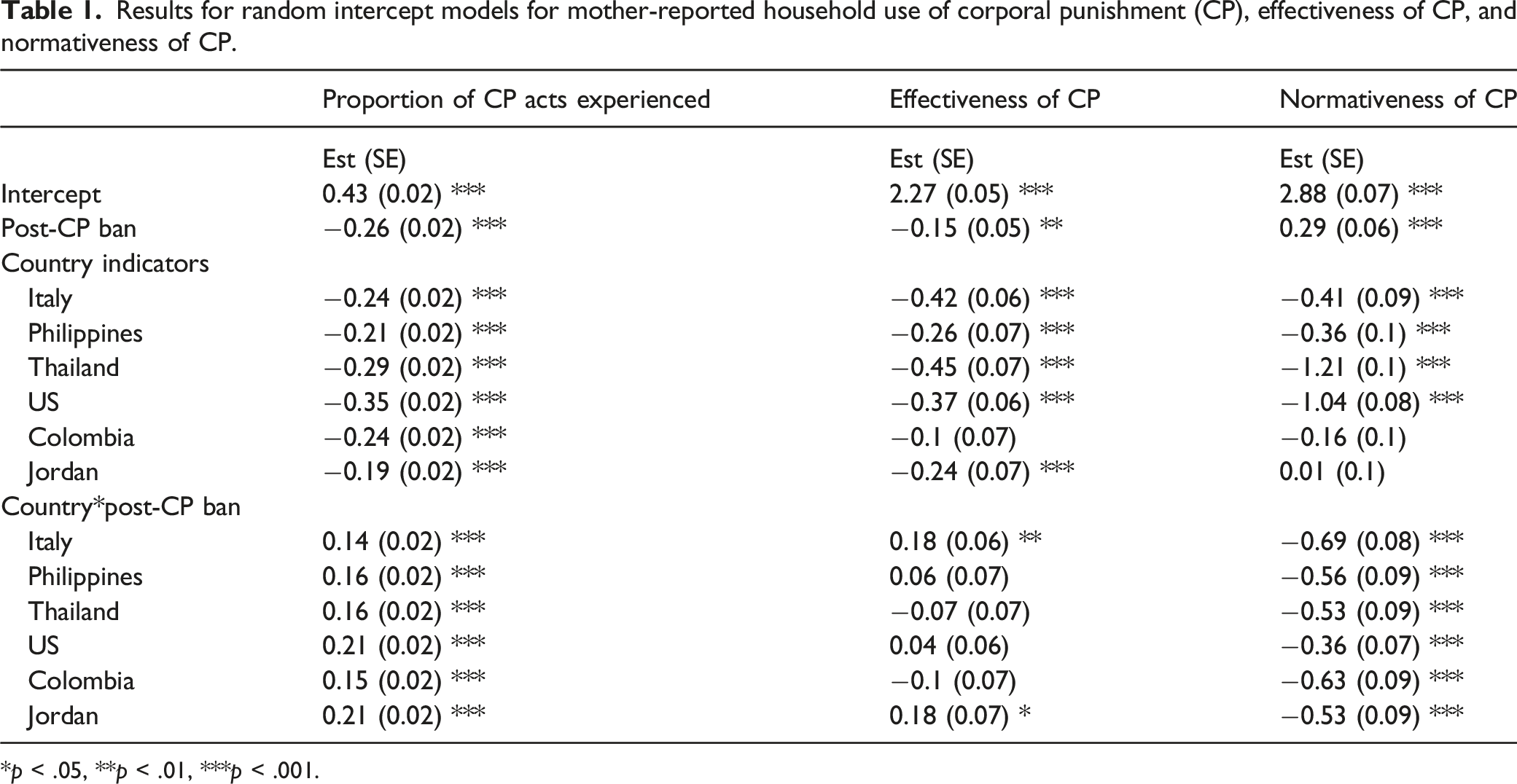
Results for random intercept models for mother-reported household use of corporal punishment (CP), effectiveness of CP, and normativeness of CP.
*p < .05, **p < .01, ***p < .001.
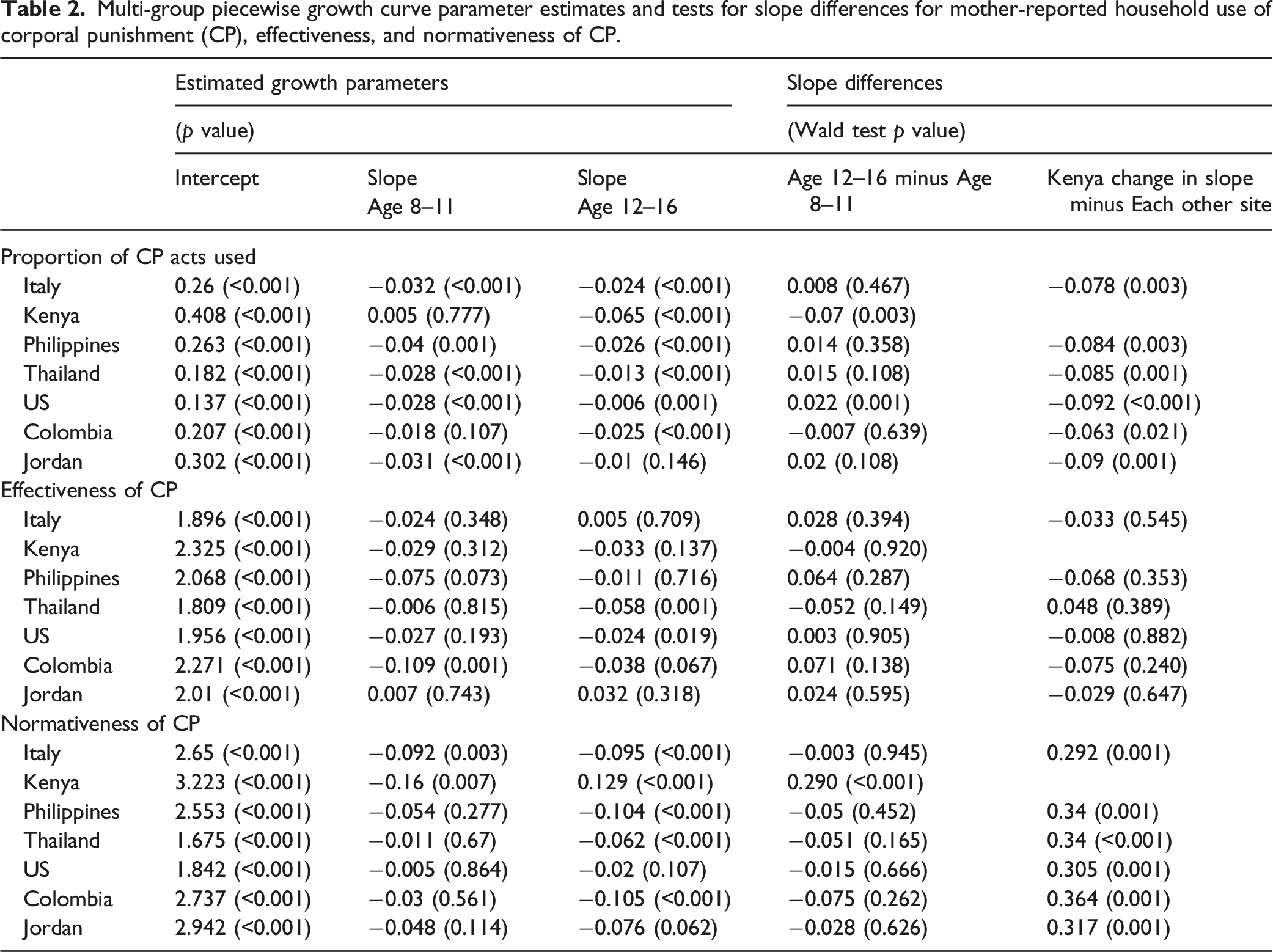
Multi-group piecewise growth curve parameter estimates and tests for slope differences for mother-reported household use of corporal punishment (CP), effectiveness, and normativeness of CP.
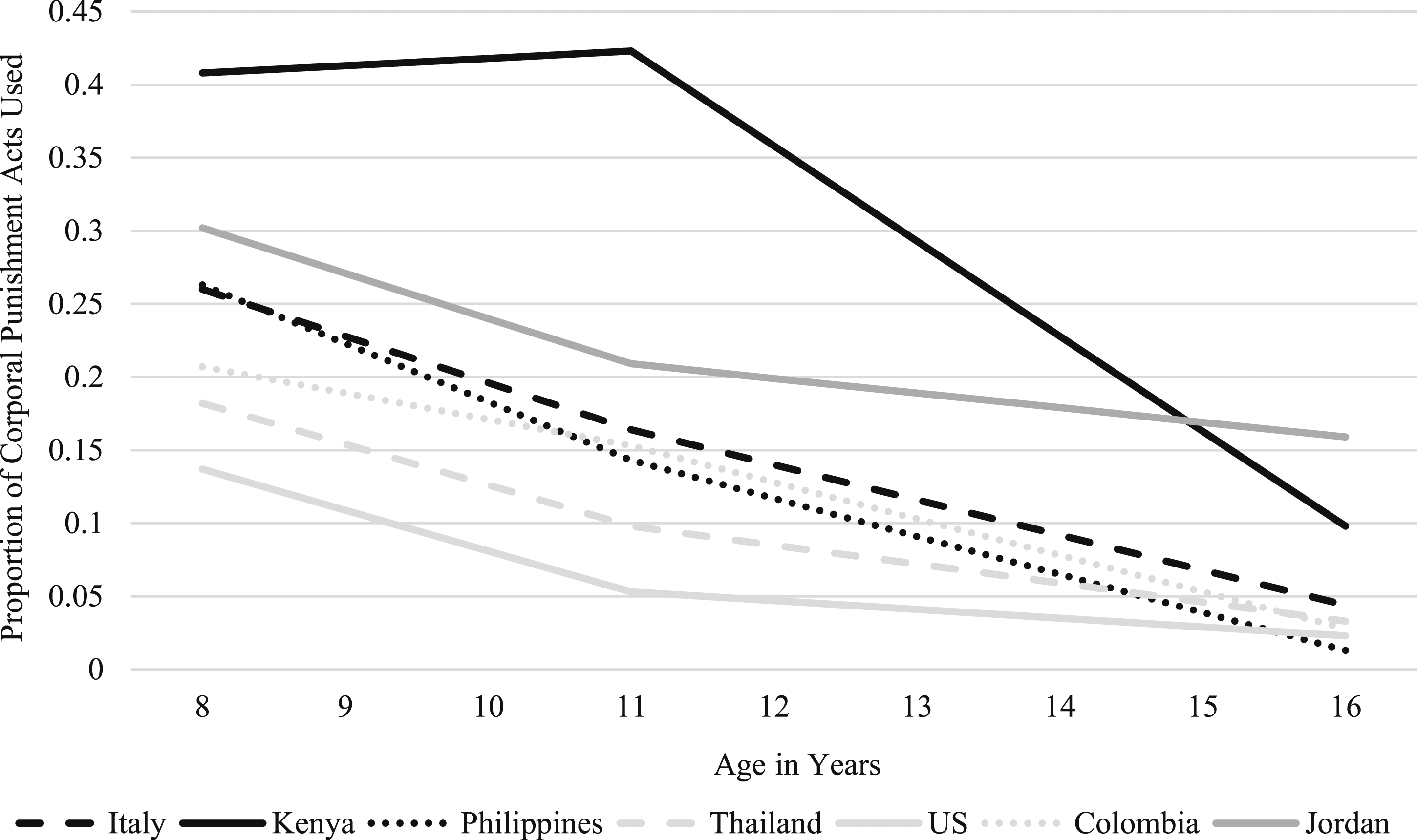
Estimated piecewise latent growth curve model for mother-reported proportion of corporal punishment acts used by household members by age of focal child.
In all other sites except the US, the age 8–11 and 12–16 slopes were not statistically different. In the US sample, the rate of decline in the proportion of corporal punishment behaviors used was greater between ages 8–11 (est = −0.028, p < 0.001) than ages 12–16 (est = −0.006, p = .001; Wald Stat (1) = 11.640, p = 0.001), a statistically significant difference that was the opposite of what we observe in Kenya. Moreover, the change in slope in Kenya (pre-ban/age 8–11 compared to post-ban/age 12–16) is significantly different from the change in all other sites (Table 2, column 5). Thus, we found evidence of a more dramatic decline in the proportion of corporal punishment behaviors used over time among the Kenyan caregivers following the legal ban on corporal punishment. This pattern of change was not evident for the other countries where no such policy was implemented.
Effectiveness of Corporal Punishment
Prior to the corporal punishment ban, Kenyan mothers reported an average level of corporal punishment effectiveness of 2.27 (SE = 0.05, p < .01); see Table 1. Mothers in all countries except Colombia reported significantly lower average levels of perceived effectiveness during these waves (ages 8–11) relative to Kenyan mothers. After the ban, Kenyan mothers reported significantly lower perceived effectiveness (Est = 0.15, SE = 0.05, p < .01) relative to the pre-ban years. The post-ban change in perceived effectiveness in Kenya was not significantly different from that in four of the six comparison countries. The Kenyan change in perceived effectiveness after the ban was significantly greater than that in Italy and Jordan because these countries did not report a change in average perceived effectiveness between the two time periods.
The multi-group piecewise LGM for mothers’ beliefs about the effectiveness of corporal punishment fit the data reasonably well, after setting small negative and non-significant variances to zero (Kenya and Philippines) (chi square (47) = 66.77, p = 0.03; RMSEA = 0.05; CFI = 0.97; TLI = 0.96; SRMR = 0.068). In the Kenya sample, the pre-ban age 8–11 slope (est. = −0.029, p = 0.312) was not statistically different from the post-ban age 12–15 slope (est. = −0.033, p = 0.137; Wald Stat (1) = 0.010, p = 0.920). The two slopes were also not statistically different in all other sites. The change in slope in Kenya was not statistically different from that in any of the other sites. Overall, there were no differences over time between the Kenyan mothers’ beliefs about the effectiveness of corporal punishment and the beliefs of mothers from the other countries. The trends in effectiveness beliefs were generally stable or gradually declined over this period (Table 2 and Figure 2). Estimated piecewise latent growth curve model for mother-reported effectiveness of corporal punishment by age of focal child.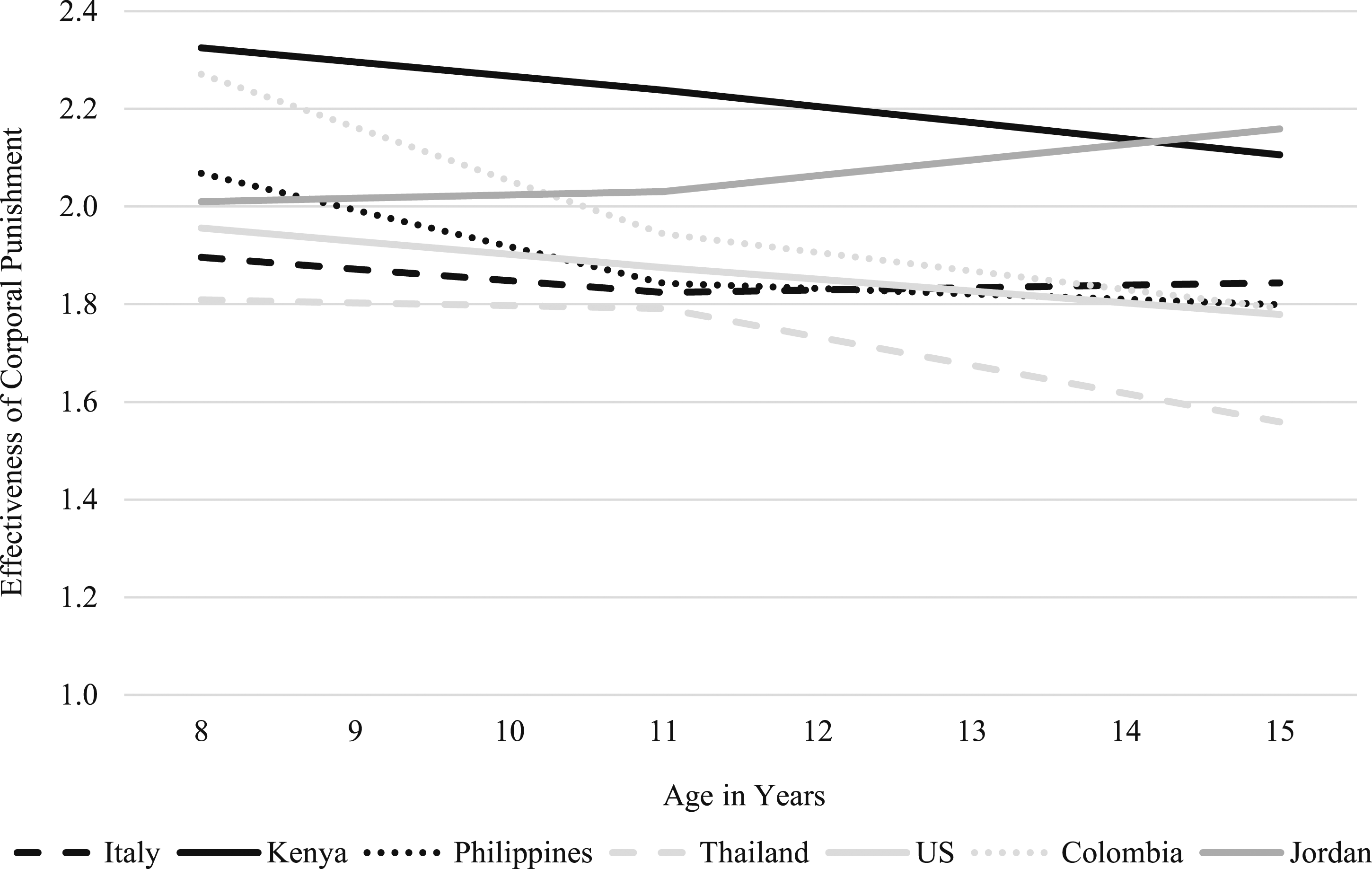
Normativeness of Corporal Punishment
Prior to the ban (ages 8–11), Kenyan mothers reported an average level of corporal punishment normativeness of 2.88 (SE = 0.07, p < .01). During this same time period, mothers in all countries except Colombia and Jordan (where normativeness ratings were not significantly different from Kenya) reported significantly lower average levels of normativeness. In Kenya, the post-ban mean was 0.29 points higher than the pre-ban mean (SE = 0.06, p < .01). For all countries, the post-ban change in perceived normativeness of corporal punishment was significantly different from that in Kenya. In all countries except the US, the mean level of perceived normativeness decreased significantly after age 11. In the US, there was not a significant change in perceived normativeness in the later time period (Table 1).
The multi-group piecewise LGM for mothers’ reports of the normativeness of corporal punishment fit the data well, after setting small negative non-significant variances to zero (Italy, Kenya, Jordan) (chi square (51) = 58.84, p = 0.21; RMSEA = 0.03; CFI = 0.99; TLI = 0.99; SRMR = 0.05). In Kenya, the pre-ban age 8–11 slope (est = −0.160, p = 0.007) is statistically different from the post-ban age 12–15 slope (est = 0.129, p < .001; Wald Stat [1] = 12.471, p < 0.001). Prior to the ban, normativeness of corporal punishment among Kenyan mothers was declining as the child grew older. However, after the ban, the reported normativeness of corporal punishment rose as the child aged from 12–15. In all other sites, the age 8–11 and 12–15 slopes were not statistically different. The change in slope before and after the ban in Kenya was significantly different from all other sites, indicating that Kenyan mothers reported increasing normativeness of corporal punishment in the years after the policy change whereas mothers in other sites reported no change in normativeness (Table 2 and Figure 3). Estimated piecewise latent growth curve model for mother-reported normativeness of corporal punishment by age of focal child.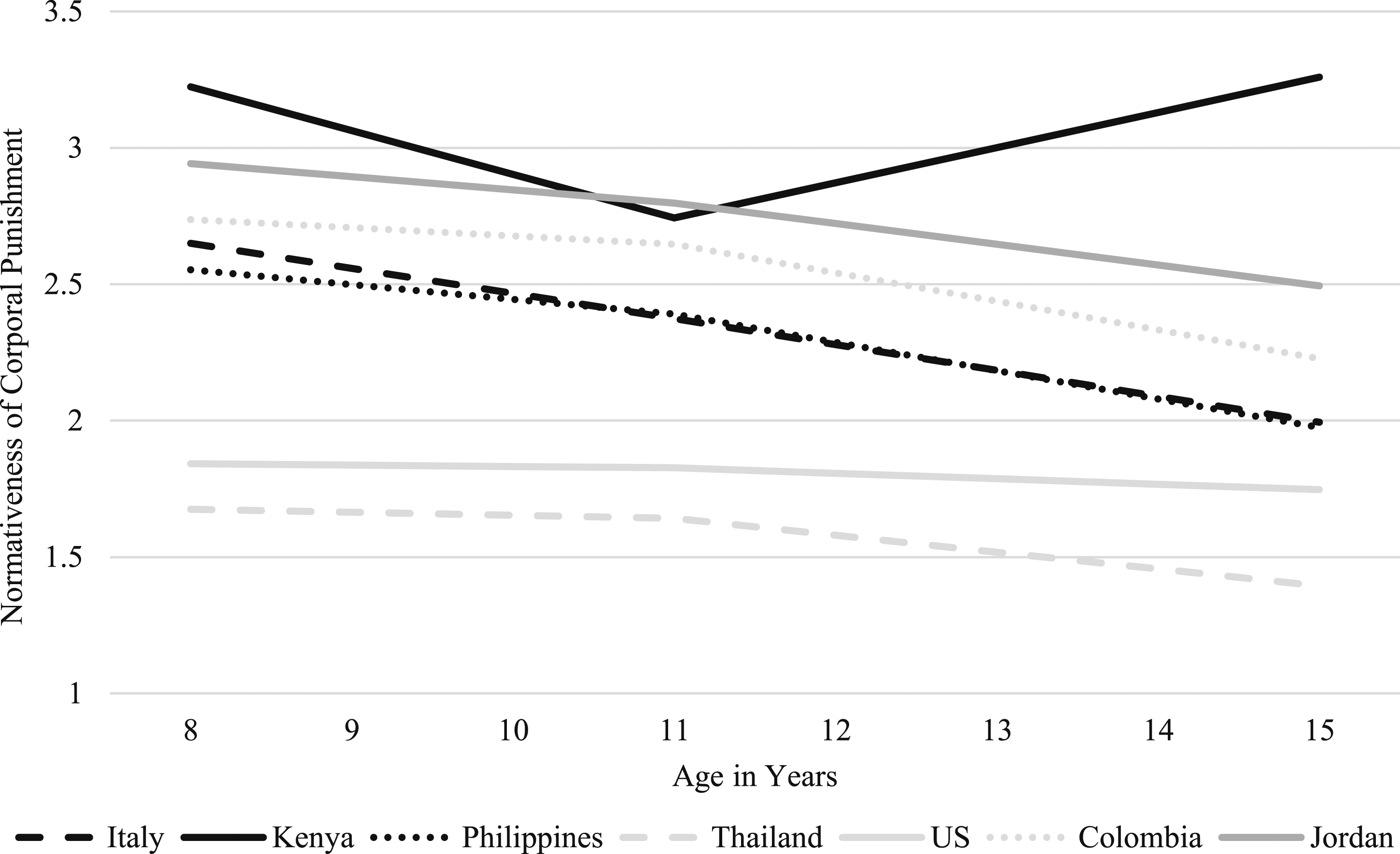
Discussion
We found that the proportion of corporal punishment behaviors used by the Kenyan caregivers in our sample significantly decreased in an average level after the passage of a legal prohibition on corporal punishment in all settings. The rate of decline was likewise significantly different in comparison to six other countries where such a policy was not passed during the same period. We do not have direct evidence of the extent of parents’ knowledge of specific provisions, but there is a reason to think that communities were aware of the propositions in the Constitution that outlawed corporal punishment. Constitution 2010 was strongly endorsed in Kisumu (our data collection site), with a 76% voter turnout and 92% voting “yes” (African Elections Database, n.d.). Widespread “Yes” campaigns were conducted, many led by women’s grassroots organizations that emphasized the principles of progressive governance, equality, and women and children’s rights, needs, and entitlements in the Constitution (e.g., Mumbi, 2020; Munyeki, 2010).
Psychological theories suggest that social policies can serve as behavior change interventions. According to Social Cognitive Theory (Bandura, 1986), expected consequences, whether in terms of rewards or punishment, drive a person’s behaviors, particularly when the person feels efficacious in performing the behavior. Under the Theory of Planned Behavior (Ajzen, 1991), behaviors are dependent on intentions that are shaped, in part, by individuals’ perceptions of how they think others want them to behave. Laws instantiate social beliefs of acceptable and unacceptable behaviors and signal punishments for the latter, which then induce behavior change (Lansford et al., 2017). Perhaps more broadly, the Constitution 2010 brought to public awareness rights-based, progressive ideas that are less compatible with corporal punishment behaviors.
In the succeeding years, the government of Kenya issued national and county-specific frameworks and guidelines to integrate child protection principles in social services (National Council for Children’s Services, 2011); likewise, multisectoral organizations spearheaded campaigns and programs to end all forms of VAC, including teacher and parent training on positive discipline (Global Initiative to End All Corporal Punishment of Children (2010); UNICEF Kenya, 2010). News reports continued to cite the bans on corporal punishment as well as debates and parents’ objections over corporal punishment taking place in schools (e.g., KTN News, 2014; Waweru, 2012). Such initiatives alongside the legal ban may have also contributed to the decrease in corporal punishment behaviors, a result that is consistent with the decreased prevalence of children’s experience of corporal punishment from 2010 to 2019 in the Kenyan national VAC studies (Ministry of Labour and Social Protection of Kenya, 2019).
Kenyan mothers reported a lower average level of perceived effectiveness post-ban, also seen in four of the six comparison countries. In addition, the rate of change in perceived effectiveness in the pre-ban years did not vary from that in post-ban years, in all the sites. This suggests that the policy did not influence Kenyan caregivers’ beliefs of effectiveness of corporal punishment. Rather, corporal punishment may be viewed by mothers as a less effective discipline strategy as children grow older, consistent with studies reporting declining rates of corporal punishment across age (Finkelhor et al., 2019; Runyan et al., 2010).
By contrast, Kenyan mothers reported increased perceived normativeness of corporal punishment (i.e., perceptions of frequency of other parents’ use of corporal punishment) in the years after the ban, whereas caregivers in other countries showed declining or no change in their perceptions. Perhaps this is due to a heightened “legal consciousness” or awareness of corporal punishment (Bussmann, 2004), reflecting greater sensitivity among Kenyan mothers to such behaviors in their community, even as their use in their own household decreased. Moreover, the discourse on corporal punishment continues to dominate Kenyan public meetings, mass media, and religious forums. Kenyan news continue to report severe incidences of corporal punishment, especially in schools (e.g., KTN News, 2014b). It is possible that the active discourse on the topic brings about a perceptual error known as pluralistic ignorance, where individuals do not personally engage in a behavior but incorrectly assume that the majority of others do (Pronin, 2008). Such misalignments in perceptions of self and others’ behaviors are typical because individuals hold more information about their motives and behaviors, but only rely on external observations to assume those of others. How perceptions of normativeness of corporal punishment affect actual behaviors warrants further study.
Our findings are qualified by some limitations. We are unable to completely exclude other factors that may account for the decrease in corporal punishment use after 2010, such as the stabilization of family life following the PEV in early 2008. A previous study with our sample of families indicated that Kenyan mothers’ exposure to the PEV was unrelated to their use of corporal punishment; however, children’s exposure to PEV (retrospectively reported by mothers) was positively associated with externalizing behaviors, which predicted mothers’ reports of subsequent corporal punishment (Skinner et al., 2014). Another question is whether the steep decline in corporal punishment use is typical for this age group in this region for reasons that are particular to this context. Including comparisons between Kenya and the six other countries is meant to alleviate the concern that decreases over time in corporal punishment are a function of normative age-related changes in this form of discipline, and the findings support that interpretation. However, we do not have comparison countries from Africa that did not have a legal ban, and we acknowledge there may be unmeasured factors that contributed to the steeper decline in use of corporal punishment in Kenya than in the comparison countries.
Although the MICS child discipline module is utilized in a large number of international studies, its categorical yes/no scale does not indicate actual frequency of use of corporal punishment. Our analyses also do not distinguish between “moderate” from “severe” forms of punishment. Unlike corporal punishment, beliefs of effectiveness and normativeness were assessed at only two time points post-ban, which may have constrained our analyses of the patterns in these variables over time. Lastly, the data are self-reported and may be influenced by social desirability.
Banning corporal punishment is only one of many steps that governments can take to address VAC, but it is considered critical as it sets the legal basis for programs and policies. Our results and use of a longitudinal panel design permit stronger inference about the association of legal bans and decreases in caregivers’ use of corporal punishment than has been possible in previous research. Our findings support global initiatives advocating for nations to implement societal policies to protect children from all forms of violence.
Supplemental Material
sj-pdf-1-cmx-10.1177_10775595211036401 – Supplemental Material for Change in Caregivers’ Attitudes and Use of Corporal Punishment Following a Legal Ban: A Multi-Country Longitudinal Comparison
Supplemental Material, sj-pdf-1-cmx-10.1177_10775595211036401 for Change in Caregivers’ Attitudes and Use of Corporal Punishment Following a Legal Ban: A Multi-Country Longitudinal Comparison by Liane Peña Alampay, Jennifer Godwin, Jennifer E. Lansford, Paul Oburu, Marc H. Bornstein, Lei Chang, Kirby Deater-Deckard, W. Andrew Rothenberg, Patrick S. Malone, Ann T. Skinner, Concetta Pastorelli, Emma Sorbring, Laurence Steinberg, Sombat Tapanya, Lilliana M. Uribe Tirado, Saengduean Yotanyamaneewong, Suha M. Al-Hassan, Dario Bacchini, Laura Di Giunta, Kenneth A. Dodge and Sevtap Gurdal in Child Maltreatment
Footnotes
Declaration of Conflicting Interests
The author(s) declared no potential conflicts of interest with respect to the research, authorship, and/or publication of this article.
Funding
The author(s) disclosed receipt of the following financial support for the research, authorship, and/or publication of this article: This research is supported by the Eunice Kennedy Shriver National Institute of Child Health and Human Development (RO1-HD054805) and Fogarty International Center (RO3-TW008141).

Supplemental Material
Supplemental material for this article is available online.
Note
References
Supplementary Material
Please find the following supplemental material available below.
For Open Access articles published under a Creative Commons License, all supplemental material carries the same license as the article it is associated with.
For non-Open Access articles published, all supplemental material carries a non-exclusive license, and permission requests for re-use of supplemental material or any part of supplemental material shall be sent directly to the copyright owner as specified in the copyright notice associated with the article.
