






Abstract
Economic support programs for low-income families may play an important role in preventing child abuse and neglect. In the United States, childcare subsidies are provided to low-income families who meet certain requirements to offset the high cost of childcare. States have flexibility in setting many policies related to the provision of childcare subsidies, which results in a great deal of variation in how the programs operate between states. One policy dimension on which states vary is the number of employment hours required to receive childcare subsidies. A small body of work has begun to investigate the ways in which these state policy variations might relate to child maltreatment. Using 11 years of administrative data from the United States, the current study sought to estimate the relationship between two sources of variation in childcare subsidy policies: employment requirements and copayment size; and child neglect, physical abuse, and emotional abuse substantiations. The study found a nuanced relationship between required employment and neglect substantiations. Specifically, requiring some level of work was not associated with neglect substantiations, but requiring 30 hours of employment was associated with higher rates. The study did not find a relationship between copayment size and maltreatment substantiations.
Introduction
According to the Centers for Disease Control and Prevention (2019), one in seven children under 18 years in the United States experiences abuse or neglect per year. Among substantiated cases, neglect is the most common form of maltreatment, accounting for 76% of child maltreatment, followed by physical abuse (16%), and sexual abuse (10%) (U.S. Department of Health & Human Services [USDHHS], 2023). Childhood experiences of abuse or neglect often have a detrimental impact across the life span. Maltreated children are at greater risk for adverse physical, mental, cognitive, and social development (Carr et al., 2020; Russotti et al., 2021; Su et al., 2019; Vizard et al., 2022). Child maltreatment is also associated with adverse physical health outcomes, including obesity, diabetes, cancer, high blood pressure, chronic obstructive pulmonary disease, and stroke (Carr et al., 2020). Even as adults, the survivors of child maltreatment are more prone to depression, anxiety, substance use disorder, and antisocial personality disorder (Russotti et al., 2021).
Traditional child maltreatment interventions have focused on psychosocial, mental health, and parenting programs. Additional approaches—including primary and universal prevention approaches which target large segments of the population—are needed to reduce the number of children exposed to initial or recurrent maltreatment. In particular, a growing body of research indicates that economic support programs for low-income families may play an important role in reducing child abuse and neglect (Feely et al., 2020; Fortson et al., 2016; Kovski et al., 2022; Maguire-Jack et al., 2022b). Work in this area has drawn on a range of exogenous changes to policy, examining the influence of EITC generosity (Kovski et al., 2022) and Medicaid expansion (Brown et al., 2019), among others, yet little work has examined the link between childcare subsidies and maltreatment (Maguire-Jack et al., 2022a). The lack of research in this area is notable considering that all states provide childcare subsidies. There is a great deal of variation in how states administer their childcare subsidies including the criteria used to determine eligibility, the rate of reimbursement, and the expectations placed on individuals to remain eligible for the subsidy. Research is needed to understand what aspects of these childcare subsidies may be related to reductions in child maltreatment. Although a range of research has investigated the effects that hourly employment requirements have on the poverty-reducing power of these programs, no work, to date, has examined whether state-level hourly employment requirements for childcare subsidies influence substantiated child maltreatment. Additionally, few studies have examined how child maltreatment rates may be related to the copayment size, which may significantly influence families’ experiences with childcare subsidies. Such gaps in knowledge are notable, given the important role that subsidies play in the lives of low-income families, particularly families with young children. To that end, the current paper examines the role of state-level variation in work eligibility requirements and level of copayment for childcare subsidies in substantiated child maltreatment.
Background
Income and Child Maltreatment
Poverty, or economic hardship, may influence child maltreatment through pathways linked to changes in parenting practices and resource availability. At the individual level, the family stress model posits that economic hardship can lead to financial pressure that may cause psychological distress in parents, which in turn may then disrupt their marital relationship and parenting practices (Masarik & Conger, 2017). Accordingly, parents distressed by material hardship are at heightened risk for engaging in harmful parenting practices, including abuse and neglect.
In addition to low income, income insecurity and instability may be linked to child maltreatment. For example, recent work indicates that parents who are economically insecure due to cumulative material hardship and income losses are at greater risk for maltreating their children (Conrad-Hiebner & Byram, 2020). Likewise, instability in earnings and income positively predicted CPS involvement, controlling for income level, possibly due to elevated stress and unpredictability (Monahan, 2020). However, the negative impact of earnings instability on child maltreatment was buffered by the receipt of benefits such as TANF, SSI, SNAP, childcare subsidy, child support, and unemployment insurance (Cai, 2022).
Notably, income may have a direct effect on child maltreatment. For example, parents with few or insufficient financial resources may be unable to provide for their child’s basic needs, resulting in physical neglect (Warren & Font, 2015). The Family Adjustment and Adaptation Response model (FAAR) describes how small problems may tip parents into crisis if they lack the economic or personal means to offset or respond to them. For example, unstable or unaffordable childcare may force parents into unsafe or undesirable care options if they are unable to afford safe and consistent childcare. In this sense, experiences of poverty may increase the likelihood of child maltreatment as families are tipped into a logistical crisis resulting in gaps in care. Extant research indicates that a range of risk factors for child maltreatment at different levels of the ecological model are all closely related to poverty or economic instability (Drake & Jonson-Reid, 2013; Garbarino, 1977).
Underlying the association between poverty and child maltreatment are complex intersections with race and ethnicity in who is referred child welfare and, as some empirical research indicates, in decision-making within child welfare systems. Poverty interacts with race and ethnicity in the general population - indicated by the disproportionate percent of Hispanic (23%), Native American (28%) and Black children (31%) living in poverty (Kids Count Data Center, 2022). Within the child welfare system, Black and Native American children and families are reported to child welfare at rates disproportionate with their percentage of the general population. Relatedly, residence in a racially and ethnically diverse neighborhood increased the risk for CPS contact, i.e. reports, for White, Hispanic, and Black families (Klein & Merritt, 2014). The elevated risk for initial child welfare contact is presumably due, in part, to structural racism and racial biases (Dreyer, 2020; Kim et al., 2017) resulting in more non-white families with high levels of structural risk (Feely & Bosk, 2021) and a greater propensity for non-white families to be reported. Taken together, the extant evidence indicates that race/ethnicity likely interacts with poverty to impact reporting decisions (Kim & Drake, 2018) and may impact decision-making processes in child welfare system (Dettlaff et al., 2011; Fong, 2020; Merritt, 2021).
Childcare Market
In the U.S., the supply of available and affordable childcare is significantly shaped by macroeconomic factors (Brown & Herbst, 2022). For example, COVID-19 in 2020 led to a sharp decline in childcare providers (Crouse et al., 2023). Although there has been an increase in childcare providers since then, the childcare industry has not fully recovered as of May 2023 (Crouse et al., 2023). The slow recovery of the childcare industry is likely significantly influenced by its largely private – as opposed to public - funding streams (Brown & Herbst, 2022). Specifically, the vast majority of childcare is funded by individuals as opposed to government funds. Childcare subsidies and HeadStart represent public investments into the childcare industry, but most childcare is paid for out of pocket, by individual parents. In this sense, expanded public funding may help to stabilize the childcare industry and provide greater access to low-income parents (Brown & Herbst, 2022).
Childcare & Child Maltreatment
A limited literature indicates that childcare burden may be a predictor of child abuse and neglect (Ha et al., 2015). Moreover, parents who lack financial resources may be more prone to behaviors that are considered child neglect (Ha et al., 2015). In particular, low-income parents who lack access to affordable childcare might have no choice but to leave their children home alone if they must leave for work, school, and other responsibilities, inadvertently resulting in child neglect (Sokol et al., 2021). Prior work examining the relationship between childcare subsidy and self-reported neglect subtypes found that receiving a childcare subsidy was protective against, supervisory neglect (i.e., leaving a child alone at home when the child needs adult supervision) (Maguire-Jack et al., 2019). In contrast, states with restricted access to childcare have higher rates of child maltreatment (Klevens et al., 2015).
Further, stress related to childcare may limit parental capacity to provide supportive and sensitive parenting and even lead to child abuse (Klein, 2016; Pace et al., 2022). Specifically, the financial burden of out-of-home childcare increases stress among families with limited resources. Parents display more physical and psychological aggression toward their children when the out-of-pocket cost of childcare is higher (Ha et al., 2015). Moreover, parental burnout – i.e., emotional exhaustion caused by parenting stress, emotional distancing from children, and loss of efficacy in parenting – could lead to violent and neglectful behaviors toward children (Mikolajczak et al., 2018). Roskam et al. (2022) found that parental burnout mediates the relationship between low socioeconomic status and parental neglect. Therefore, childcare subsidies may not only help alleviate the financial burden of securing childcare but also reduce parenting stress by allowing parents to take a break from parenting (Pace et al., 2022).
Given the high cost of childcare in the U.S., low-income families face barriers in accessing safe, consistent, and stable childcare. However, childcare subsidies are designed to increase the affordability and stability of childcare for low-income families, while simultaneously encouraging parents to enter, or remain in, the formal labor market. As a result, and in line with the FAAR model, subsidies may protect against abuse and neglect both through access to quality childcare and through the increased opportunity for income through parental employment (Klika et al., 2022; Rochford et al., 2022; Yang et al., 2019). In keeping with the family stress model, subsidies may also influence child and parent behavior. Childcare can help children adopt positive behaviors, which could further reduce maltreatment triggered by parenting stress related to dealing with child problem behaviors (Miragoli et al., 2018; Yamaguchi et al., 2018). Subsidy receipt varies by child age and parents of younger children birth to age five receive childcare subsidies at a higher rate than parents of older, school-aged children (Chien, 2022). Taking into account that nearly three-quarters of child maltreatment victims are ages five years or younger (USDHHS, 2022), childcare subsidies are a potentially effective means to prevent child maltreatment in younger children.
Childcare Subsidies
Childcare Subsidy Policy Variation 2019, Quarter 1.
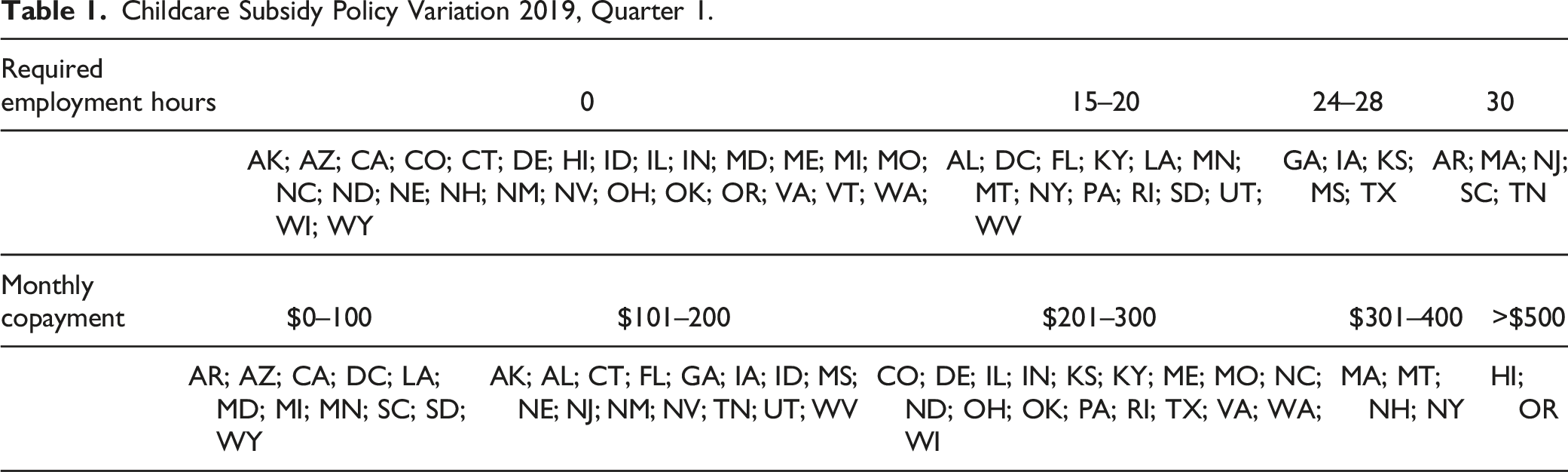
The effect of hourly employment requirements for benefits programs such as Medicaid, Temporary Assistance for Needy Families (TANF), and Supplemental Nutrition Assistance Program (SNAP) have been previously examined (Bauer et al., 2018; Han, 2022; Ku et al., 2019; Pavetti, 2018). SNAP hourly employment requirements did not promote employment but, instead, prevent low-income individuals from receiving assistance (Bauer et al., 2018; Han, 2022; Ku et al., 2019). Notably, Bauer et al. (2018) suggested that hourly employment requirements for SNAP and Medicaid deprived individuals of access to much-needed resources noting that the largest percentage of people out of the labor force had health concerns that kept them from working. Furthermore, TANF recipients who worked to fulfill hourly employment requirements did not earn enough to escape poverty, and in some states, the percentage of families at or below 50% of the poverty level even increased when benefits were counted as income (Pavetti, 2018).
As illustrated above, hourly employment requirements for various benefit programs may yield unintended adverse outcomes (Herbst, 2010). Granted, literature on other welfare programs is to be understood with caution given that childcare subsidies were implemented to facilitate caregiver’s participation in the labor force. Among single mothers in particular, childcare subsidies have shown to increase parental employment (Blau & Tekin, 2007; Herbst, 2010). However, employment requirements attached to childcare subsidies may potentially create barriers for caregivers in low-wage work (e.g., irregular shifts or night shifts which would not allow them to utilize childcare), inadvertently increasing the risk for maltreatment. However, to our knowledge, no research has examined the relationship between hourly employment requirements for receiving childcare subsidies and child maltreatment substantiations. Hence, we examine how the rate of child maltreatment varies across states by hourly employment requirements for childcare subsidies. The role of childcare subsidy-related hourly employment requirements in child maltreatment is theoretically ambiguous. It may be, for example, that hourly employment requirements exclude some families from receiving childcare subsidies, thus increasing the risk for maltreatment both through a lack of access to care and through pathways related to work and income, which may be particularly impactful for already vulnerable families. Alternatively, it may be that hourly employment requirements increase both time and money by encouraging work, effectively subsidizing the high cost of childcare, and increasing available time for parents. In this sense, hourly employment requirements may decrease the financial and cognitive-stress burdens low-income parents face and, in turn, may reduce child maltreatment. Additionally, the level of copayment, which varies across states based on a sliding scale, can significantly influence families’ experiences with childcare subsidies (Dwyer et al., 2020). Within each state, copayment size is determined by household income, number of children, and other factors (e.g., special needs of a child). Table 1 displays the required maximum copayments for a family of 3 with one child in center-based care and an income at or below 150% of the federal poverty level for the first quarter of 2019. Copayments range from $0 to over $500 per month. Because childcare subsidies are found to impact the child maltreatment rate, copayment amount may also impact the rate of child maltreatment through its impact on the accessibility or affordability of childcare. Higher out-of-pocket childcare costs may discourage families from utilizing childcare subsidies altogether due to unaffordability (Herbst, 2008). In this sense, copays may perpetuate barriers to employment because parents still face the burden of expensive childcare, even with subsidies designed to encourage parental employment (Landivar et al., 2022). Prior work indicates that states with a lower level of copay or copayment exemption for families experiencing poverty had lower rates of maltreatment reports and substantiations (Pac, 2021; Rochford et al., 2022). However, few studies examined the effects of childcare subsidy copayment on child maltreatment. To address this gap, we examine how child maltreatment rates vary across states by copayment level.
Current Study
This study examines the association between two state-level sources of variation in policy related to childcare subsidy: (1) hourly employment requirements; and (2) maximum copayment rates; and their relationship to state neglect, physical abuse, and emotional abuse substantiations. Early education policies have been shown to be related to child maltreatment and its associated risk factors (Maguire-Jack et al., 2022a). A previous study has shown that states with more generous economic support programs have lower rates of child maltreatment (Puls et al., 2021). Moreover, states with a higher CCDF enrollment rate have fewer CPS reports of child abuse and neglect among children under three years old (Pac, 2021). Likewise, having more restrictive eligibility for childcare subsidies, such as lower income eligibility levels, is related to higher substantiated rates of child maltreatment (Klika et al., 2022; Rochford et al., 2022). Therefore, we hypothesize that states with more generous policies, (i.e., lower required hours of employment; and lower required copayments) for childcare subsidies will have lower child maltreatment rates, with larger impacts on child neglect than child abuse.
Methods
Data
Data were linked from a number of sources. First, child maltreatment data were accessed from the National Child Abuse and Neglect Data System (NCANDS), which included information on child abuse and neglect substantiations. The years 2009 through 2019 were selected because these were the years for which a robust database of childcare subsidy policy variables was available. Child maltreatment data were available for all 50 states and the District of Columbia for all years (except Oregon was missing in 2009 and 2010). A panel of state-quarter observations was constructed across these years. These data were then linked to childcare subsidy policy information from the Urban Institute policy database (ccdf.urban.org), which provides annual information about state-level variation in policies and procedures regarding CCDF policies. The number of children potentially eligible for childcare subsidies was reported by the Office of the Assistance Secretary for Planning and Evaluation (2022) (https://aspe.hhs.gov/estimates-child-care-eligibility-receipt) and the number of children who received childcare subsidies was provided by Office of Child Care (https://www.acf.hhs.gov/occ/data/child-care-and-development-fund-statistics). The market rate cost of childcare and copayment size were available for each state from the National Women’s Law Center (https://nwlc.org/). Control variables were accessed from the U. S. Census Bureau American Community Survey (ACS), Kentucky Center for Poverty Research National Welfare, and Child Welfare Information Gateway including population by age and race, percent of population foreign-born, urbanicity, poverty rate, unemployment rate, relative generosity of the social safety net, and centralization of state child welfare system. The current study focused on children age 0–4 because this age group is most likely to access childcare due to being pre-school age.
Measures
Dependent Variables
We focused on child maltreatment substantiations (separately for neglect, physical abuse, and emotional abuse) per 1000 children among children age 0–4. These rates were examined by quarter and state. We exclude sexual abuse from the specific analyses due to differences in etiology of sexual abuse compared to other forms of maltreatment (Black et al., 2001). We focus on children age 0–4 because they are at the highest risk for child maltreatment (USDHHS, 2023), and are most likely to be in childcare settings during their pre-school years.
Key Independent Variables
Two key variables were examined for the current study. These included: the minimum number of employed hours required to receive childcare subsidy, and the maximum copayment for a family of three at 150% of the federal poverty level with one child in center-based care, for each state in each quarter. The minimum number of employed hours required to receive childcare subsidy was available through the CCDF policy database from Urban Institute (Dwyer et al., 2020). This variable was measured in two ways. In the first set of models, we examined a dichotomous measure of whether the state in that quarter had any work requirements for part-time childcare. In the second set of models, we selected only states with a minimum number of employment hours, and used a dichotomous measure of whether the state required 30 employment hours for part-time care (the maximum number of hours required). Maximum copayment size for a family of three with one child in center-based care and earning at or below 150% of the federal poverty level was available from the National Women’s Law Center (https://nwlc.org/) and was measured continuously.
Control Variables
Childcare subsidy take-up rate was calculated by dividing the average number of children served monthly by the number of children potentially eligible for childcare subsidies (two-year average monthly estimates) and was measured continuously. From the National Women’s Law Center, the market rate cost of center-based childcare for a four-year-old was used to control for the cost of childcare within the state. For the year 2013, we used the mean of the rates of 2012 and 2014 because the number of eligible children was not available for 2013. Finally, we included a dichotomous measure to indicate whether the child welfare system within the state was centralized at the state-level or county-administered (Child Welfare Information Gateway, 2012, 2018). A number of state-level control variables were linked from the American Community Survey (ACS) annual estimates. Control variables were selected that have been found in previous research to be related to child maltreatment (Maguire-Jack et al., 2020), including racial composition (population proportion White, population proportion Black, and proportion American Indian or Alaska Native), proportion of the population foreign-born, population proportion that resides in an urban area, the unemployment rate, and the poverty rate (i.e. percent of residents under the federal poverty level). From the Kentucky Center for Poverty Research National Welfare data, we examined the value of the state social welfare safety net, measured as the combined monthly maximum TANF and SNAP benefit for a two-person family.
Analysis
Multiple regression was used to examine the relationship between employment requirements and child maltreatment among children aged 0–4. We ran a series of three regressions with a dichotomous indicator for whether the state required any work to receive childcare subsidy, copayment size, and subsidy take-up rate. The models sequentially examined the association between the policy variables of interest with the state rate of neglect, physical abuse, and emotional abuse substantiations. These three models were then repeated on a subset of the overall sample, selecting only those states that had some minimum number of required employed hours, and replacing the dichotomous “any employment required” variable with a dichotomous variable indicating “30 employed hours required.” As a sensitivity test, we re-ran all models replacing the continuous measure of copayment with a dichotomous measure indicating that a state required a $200 monthly copayment or more for care.
In each of these models, we included state fixed effects, quarter-year fixed effects, and state*year fixed effects to control for average differences across states and time in observed and unobservable predictors as well as state-specific linear time trends. We used the cluster option in Stata to account for grouping at the state level and produce robust standard errors. Finally, we used the Bonferroni correction to correct for multiple comparisons.
Results
Descriptive Statistics
Descriptive Statistics, N = 2236 State/Quarters.
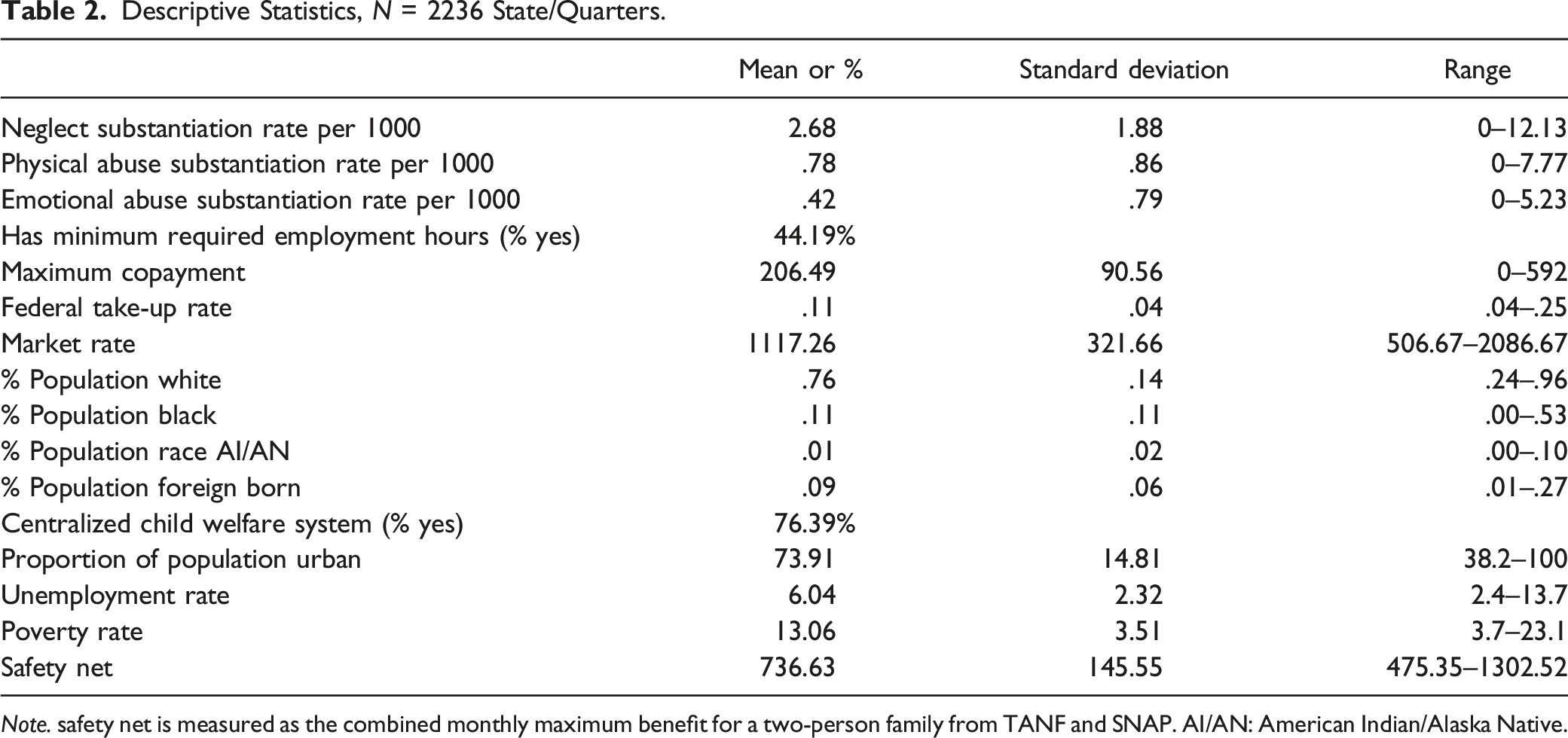
Note. safety net is measured as the combined monthly maximum benefit for a two-person family from TANF and SNAP. AI/AN: American Indian/Alaska Native.
Descriptive Statistics, N = 988 State/Quarters That Required Employment Hours to Receive Childcare Subsidy.
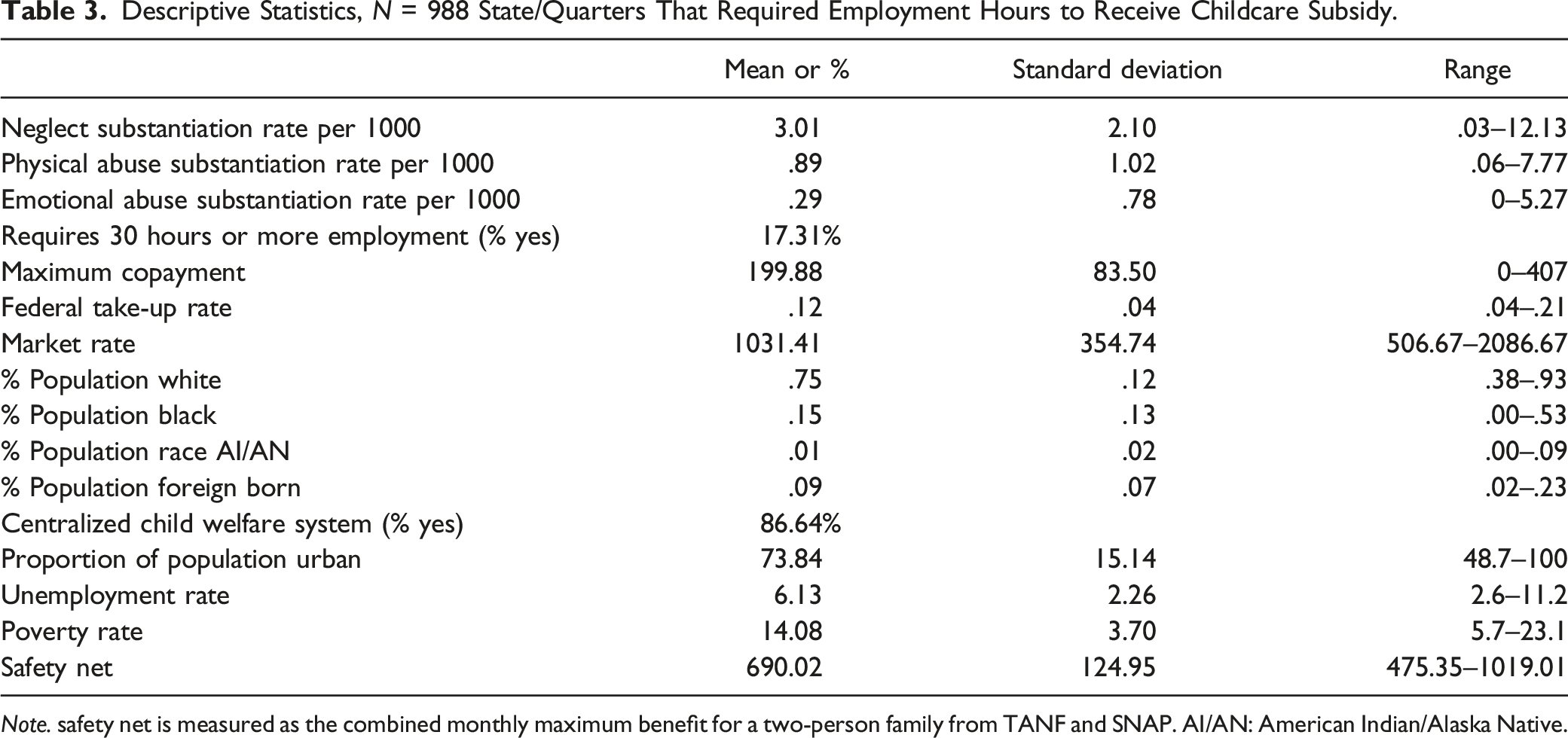
Note. safety net is measured as the combined monthly maximum benefit for a two-person family from TANF and SNAP. AI/AN: American Indian/Alaska Native.
Multiple Regression Results
OLS Regressions Examining the Relationship Between Requiring Work, Copayments, and Subsidy Take-Up Rate and Child Maltreatment Substantiations Among Children Aged 0–4, 2009–2019, With Robust Standard Errors and Clustering at State Level (N = 2236 State/Quarters).
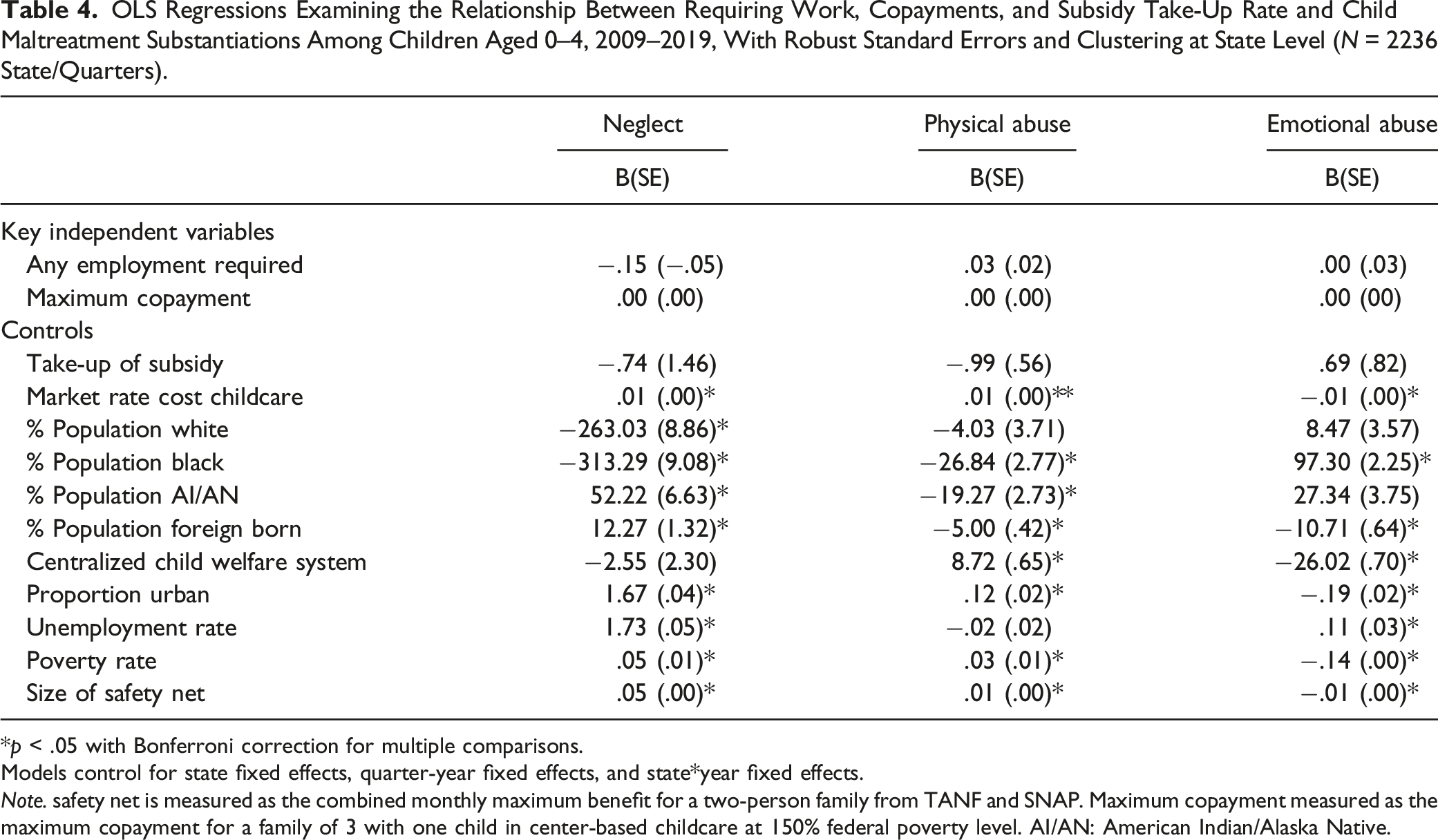
*p < .05 with Bonferroni correction for multiple comparisons.
Models control for state fixed effects, quarter-year fixed effects, and state*year fixed effects.
Note. safety net is measured as the combined monthly maximum benefit for a two-person family from TANF and SNAP. Maximum copayment measured as the maximum copayment for a family of 3 with one child in center-based childcare at 150% federal poverty level. AI/AN: American Indian/Alaska Native.
In a series of sensitivity tests, we re-ran all models replacing the continuous measure of copayment with a dichotomous measure indicating that a state required a monthly copayment of $200 per month or more for a family of three with one child in center-based care and earning an income at 150% of the federal poverty level. There were no changes to the main model findings.
OLS Regressions Examining the Relationship Between Requiring 30 Hours of Work, Copayments, and Subsidy Take-Up Rate and Child Maltreatment Substantiations Among Children Age 0–4, 2009–2019 Among States With Employment Requirements, With Robust Standard Errors and Clustering at State Level (N = 988 State/Quarters).
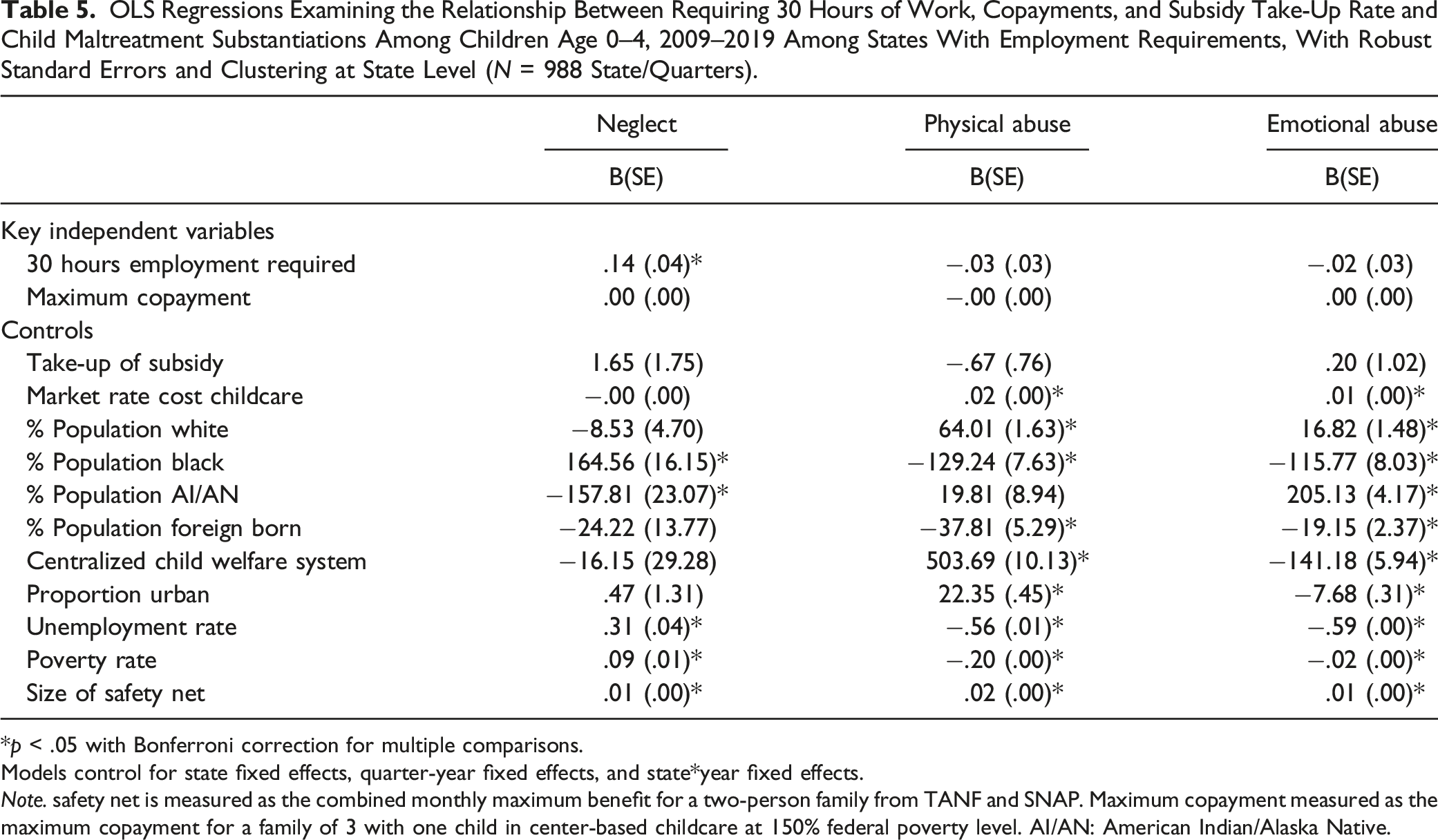
*p < .05 with Bonferroni correction for multiple comparisons.
Models control for state fixed effects, quarter-year fixed effects, and state*year fixed effects.
Note. safety net is measured as the combined monthly maximum benefit for a two-person family from TANF and SNAP. Maximum copayment measured as the maximum copayment for a family of 3 with one child in center-based childcare at 150% federal poverty level. AI/AN: American Indian/Alaska Native.
Discussion
High levels of minimum hourly employment requirements for childcare subsidies increase the risk of substantiated child neglect for children between birth and four years old. Young children are the most common recipients of childcare subsidies and are also most likely to be involved in the child welfare system for allegations of child maltreatment (Sedlak et al., 2010). These results suggest that expanding childcare subsidies by lowering the minimum number of employed hours required for their receipt would reduce substantiated neglect rates for young children. Simply put, as parents are required to demonstrate full- or near full-time employment to receive a childcare subsidy, more young children experience neglect. Additionally, parents are only credited for the hours they spend at their job or jobs. Most people have some transportation time from their home to job, only adding to the amount of time for which they must secure childcare. The lack of findings related to physical and emotional abuse may be driven by a more straightforward relationship between poverty and neglect compared to poverty and abuse. In relation to emotional abuse in particular, another compounding factor may be that there is a relatively low rate of substantiated emotional abuse reports (United States Department of Health & Human Services, 2022).
Contrary to our expectations, level of copayment was not associated with any type of child maltreatment. Such null findings are inconsistent with earlier findings that copay significantly affects maltreatment rate (Pac, 2021; Rochford et al., 2022). However, higher copayment may allow childcare funds to be distributed to a greater number of families (Fuller et al., 2002), potentially having mixed effects. Additionally, a higher copayment level may discourage families from utilizing subsidies, reducing the take-up rate, which was controlled for in this study.
Notably, the reduction in substantiated child neglect that we observe is likely a lower bound of the possibilities for childcare subsidies to prevent child maltreatment. First, the amount of subsidies is capped so many families who qualify under current rules do not receive a subsidy, and second because the most economically precarious families, who are the least likely to be able to acquire, maintain, and ensure appropriate documentation of a sufficient number of employed hours may also be excluded from the subsidy. Additionally, while the subsidies do allow parents to access childcare, the majority of home-based and center-based childcare where subsidies are generally eligible to be used are, at most, only open from 6 am to 6 pm Monday through Friday and closed on some holidays. However, much of low-wage work occurs in the evenings, nights, and weekends (Enchautegui, 2016; Henly & Lambert, 2005) so parents may be unable to have their children in childcare during much of the time they dedicate to employment (Carrillo et al., 2017). It is important to note that some or many parents who are unable to qualify under the minimum employment hours are still employed. Eligibility requirements create a barrier to establishing and maintaining enrollment in childcare subsidies even among employed parents (Henly et al., 2015). It is also possible that if parents work full- or near full-time per employment requirement, their income may just exceed the income eligibility threshold. In other words, parents may find it difficult to meet both income and a high level of work requirement criteria to receive subsidies.
Overall, these results suggest that employment requirements above a certain threshold have measurable negative externalities for children and families. Childcare subsidies that require employment may not reach the most precarious working families, and/or they do not serve to sufficiently increase low-income mothers’ income while simultaneously providing care for children, but rather potentially exclude groups of highly vulnerable mothers who either cannot work, cannot work the required hours, or for whom the documentation to establish and retain eligibility is overly burdensome.
Interpretation of our findings can be guided by the FAAR model. It may be, for example, that the combination of work and consistent childcare increases the resources, both the time and money, that parents have at their disposal to provide safe and consistent care for their children. More accessible subsidized childcare reduces a financial burden on families (e.g., increasing money, and increases the amount of time parents have without their children which also gives respite from the constant demands of young children, and facilitates parental employment). The subsidy effectively increases the time and financial resources of the family, making it more resilient to regular and intermittent demands and stressors.
In this context, a high level of employment requirements excludes some families from participation in the childcare subsidy program, reducing their capacity to respond to even small stressors and more likely to be substantiated for child maltreatment. Substantiated findings suggest real gaps in safe and consistent care, rather than perceived poor parenting or other minor issues that may be reported but not substantiated. The Family Stress model might predict an increase in accepted reports as parents experience additional stress, emotional and financial distress, depression, parental conflict, and consequently demonstrate harsher parenting. In this sense, our results are consistent with the expected benefits of childcare subsidies. If hourly employment requirements functionally exclude the most vulnerable families, the increased risk for young children may stem from parents’ inability to afford child care while simultaneously balancing unstable, variable, or lack of work. Similarly, young children require significant parental time and attention. To that end, lower employment requirements may allow parents time to invest in their children outside of the childcare setting, thus reducing child maltreatment.
Limitations
This study does not illuminate mechanisms through which employment requirements may be linked to higher rates of child maltreatment. The study relies on officially substantiated maltreatment. By virtue of using administrative data, maltreatment that was not reported to child protective services is not included. Child maltreatment is widely believed to be underreported as there is significant stigma associated with child abuse and neglect, and many individuals are unsure how to intervene or help. Relatedly, while all states are subject to child maltreatment definitions from the federal Child Abuse Prevention and Treatment Act, states vary widely in their policies and procedures for investigating and substantiating maltreatment. These practice differences may result in qualitative differences between what is considered abuse or neglect that could cause challenges in comparing state rates. The inclusion of state fixed effects is intended to assist with controlling for these differences. Additionally, this study examined state rates of child maltreatment, which may preclude us from understanding important geographic differences within states. To the extent that more rural areas of states are affected by childcare or employment deserts, the relationship between state-level childcare subsidy policies and child maltreatment may have a differential impact. Additionally, the NCANDS data was missing Oregon for two calendar years of the study period. Further, for the copayment measure, we used a specific scenario – a maximum copayment for a family of three with one child in center-based care and earning at or below 150% of the federal poverty level – for analysis in this study. Accordingly, we were unable to capture the complexities of the variations in copayment depending on the family size, income, number of children, and copay exemptions. The data in this study are from before 2020 and the COVID-19 pandemic. The pandemic decimated the childcare workforce and network of providers. Therefore, because of the disruption to childcare providers that the response to the COVID-19 pandemic created for the provision of childcare, many parents have been unable to consistently access care since the Spring of 2020. However, the federal government also invested $50 billion in childcare as part of pandemic-related relief (Office of Child Care, 2022). This is a generational opportunity to expand the supply of quality childcare, to support more children and families benefiting from quality childcare and implement a significant maltreatment prevention strategy. How these funds are spent and how childcare subsidies are structured in the future will influence the risk of child maltreatment at a population level. Last, the policy-level data mean that our findings are potentially subject to ecological fallacy insofar as they may not align with individual experiences. Despite these limitations, the study also has notable strengths, including the linkage of several large datasets and examination of timely and policy-relevant research questions.
Conclusion
A growing literature has sought to identify the causal role of economic hardship in child maltreatment, and child neglect in particular, by leveraging exogenous variation in social welfare policies or macro-economic trends. This work has consistently found that more generous social welfare policies – EITC, Medicaid, and minimum wage, among others – are linked to decreased child maltreatment, with consistently larger effects for child neglect (E. D. Brown et al., 2019; Kovski et al., 2022; Raissian & Bullinger, 2017; Schneider et al., 2021). Similarly, a range of work has demonstrated that large negative shocks to the macroeconomy, high unemployment rates or decreased consumer confidence, are often associated with changes in child maltreatment, though sometimes in opposing directions (Brooks-Gunn et al., 2013; Lindo et al., 2018; Raissian, 2015). Although this work significantly adds to our understanding of the role that economic hardship plays in child maltreatment, it often does not offer immediate policy solutions. Our findings, by contrast, offer immediate prevention-related policy solutions that states can take up.
Footnotes
Declaration of conflicting interests
The author(s) declared no potential conflicts of interest with respect to the research, authorship, and/or publication of this article.
Funding
The author(s) disclosed receipt of the following financial support for the research, authorship, and/or publication of this article: This publication was supported by the Centers for Disease Control and Prevention (R01CE003178) of the U.S. Department of Health and Human Services (HHS) as part of a financial assistance award totaling $977,677 with 100 percent funded by CDC/HHS. The contents are those of the author(s) and do not necessarily represent the official views of, nor an endorsement, by CDC/HHS, or the U.S. Government.

Data Availability Statement
The analyses presented in this publication were based on data from National Child Abuse and Neglect Data System (NCANDS). These data were provided by the National Data Archive on Child Abuse and Neglect at Cornell University and Duke University and have been used with permission. The data were originally collected under the auspices of Prevent Child Abuse America. Funding was provided by Centers for Disease Control and Prevention. The collector of the original data, the funder, NDACAN, Cornell University, and the agents or employees of these institutions bear no responsibility for the analyses or interpretations presented here. The information and opinions expressed reflect solely the opinions of the authors.