






Abstract
The current study aimed to examine the extent to which neighborhood structural factors commonly found to be associated with child maltreatment in urban areas also apply to rural areas. Using three years of administrative child welfare data, we examined patterns of child maltreatment across metro and nonmetro census tracts in the State of Michigan. Extending from social disorganization theory, a principal components factor analysis was conducted to determine the extent to which neighborhood structural factors (neighborhood economic disadvantage, residential instability, and childcare burden) that have been tested in relation to child maltreatment in urban areas cluster together similarly in rural areas. Spatial analysis and negative binomial regression were used to examine: (1) the extent to which these three factors were related to child maltreatment substantiation rates in nonmetro census tracts; and (2) factors hypothesized to have unique impacts within nonmetro tracts, including seasonal housing and racial demographics of neighborhoods. Findings showed some similarities between metro and nonmetro areas, including associations of neighborhood poverty, single-parent households, and vacant housing units with increased levels of child maltreatment. Differences between metro and nonmetro areas were also identified, suggesting the need for additional research into the neighborhood correlates of rural child maltreatment.
Introduction
Child maltreatment is a critical issue in the United States, with one in three children subject to a Child Protective Services (CPS) investigation by the age of 12 (Kim & Drake, 2019). Although most child maltreatment research has focused on urban areas, the proportion of rural children who are maltreated is substantial and often greater than that of urban areas (Maguire-Jack, Jespersen, et al., 2020). In Michigan, the average child maltreatment rate for rural census tracts is 31 per 1000 children, compared to 16 per 1000 for urban tracts (Michigan Department of Health and Human Services, 2022). Child maltreatment is influenced by characteristics of the context in which families live. In urban settings, there is a clear connection between neighborhood conditions and child maltreatment (Coulton et al., 2007; Freisthler et al., 2006; Maguire-Jack, 2014). Aspects of neighborhoods such as poverty rates (neighborhood structural factors) influence the way in which neighbors interact with each other (neighborhood processes), which in turn, affects child maltreatment (Coulton et al., 2007). However, the role of geographic distance in these relationships is unknown. Current knowledge about child maltreatment and the associated factors is largely predicated on urban populations. It is unclear whether community risk and protective factors of child maltreatment identified primarily in urban areas are also applicable to rural areas, and what unique characteristics of rural neighborhoods may be related to child maltreatment. The current study sought to examine whether neighborhood structural factors commonly associated with child maltreatment in urban areas also apply to rural areas.
Background
Social Disorganization Theory
Social disorganization theory (Shaw & McKay, 1942) was first proposed to understand geographic variation in juvenile delinquency in the metropolitan Chicago area. The authors suggested that three factors at the neighborhood level – concentrated economic disadvantage (e.g., poverty, unemployment, and other macroeconomic factors), residential instability (i.e., individuals transitioning in and out of the neighborhood), and ethnic heterogeneity (i.e., percentage of various racial and ethnic groups) – drive geographic patterns in rates of crime among youth (Shaw & McKay, 1942).
Some child maltreatment researchers have applied this theory to understand geographic variation in child maltreatment rates at the neighborhood level (e.g. Freisthler, 2004; Harrikari, 2014; Kim & Maguire-Jack, 2015; Mayer, 2023; Seon, 2021). In addition to neighborhood disadvantage, residential instability and ethnic heterogeneity, many studies have added a fourth factor in investigating structural characteristics of neighborhoods and child maltreatment, childcare burden, which relates to the ratio of children compared to adults within the neighborhood and is thought to be related to child maltreatment (Coulton et al., 2007; Guterman et al., 2009).
It is important to note that there are significant limitations to social disorganization theory, especially in regard to its reliance on individual characteristics of residents without specific attention paid to systems and structures. Relatedly, Coulton and colleagues (2007) argue that the theory is limited in its ability to provide specificity for the pathways through which the structural characteristics relate to maltreatment. The theory has also been critiqued (Jones, 2020) for its failure to consider important protective factors within communities and for the racist underpinnings of the theory. Jones (2020) writes “Social disorganization theory evaluates structural, individual, and economic resources in a community to determine the culture and/or experience of areas labeled as socially disorganized… [it] further aids the act of racism embedded into every functioning system, which impacts oppressed minority communities” (p. 30). Given such critiques, there is a significant need for the application and understanding of more holistic and inclusive neighborhood theories. There are comprehensive theories that consider the individual, the neighborhood, and the broader societal context, but are limited in that they do not point to specific variables to test at the neighborhood level (Cicchetti et al., 2000; Cicchetti & Lynch, 1993). The purpose of the current study is to specifically evaluate the applicability of social disorganization theory in rural settings, to further contribute to the debate on the utility of this theory in a modern context.
Neighborhood Structural Characteristics and Child Maltreatment
Extant research has found consistent support for the relationship between neighborhood-level poverty and child maltreatment in urban areas (Drake et al., 2022; Kim & Drake, 2023; Maguire-Jack, 2014; Maguire-Jack & Sattler, 2023). However, studies examining the association between urban residential stability and child maltreatment have not been consistent. While some studies have found evidence of a relationship (Bressler et al., 2019; Freisthler & Maguire-Jack, 2015; Irwin, 2009; Kim et al., 2022; Maguire-Jack et al., 2023), other studies have not found a significant association (Coulton et al., 1999; H. Kim et al., 2022; Merritt, 2009; Molnar et al., 2003). In terms of ethnic heterogeneity, one study found that children living in more ethnically diverse neighborhoods are at a higher risk of being reported to CPS compared to those living in a more homogeneous neighborhood (Klein & Merritt, 2014). Conversely, one study found that diversity within a neighborhood was protective against child maltreatment substantiations (Barboza-Salerno, 2020). Potentially due to the obscure nature of this theoretical association, many studies have examined whether the concentration of a specific racial/ethnic composition relates to child maltreatment (Ernst, 2001; Freisthler et al., 2007). Findings from such studies have mixed results, with one study reporting no evidence of a relationship (Kim, 2004), and another observing a protective effect of a greater proportion of Latine residents (Molnar et al., 2003), which is opposite of the hypothesized direction predicted by social disorganization theory in relation to juvenile delinquency (Shaw & McKay, 1942). It is important to note that the racial disproportionality in the child welfare system and differences in decision-making may be due, in part, to demographics of the neighborhood intersecting with socioeconomic status in important ways within the United States, due to historic racist policies including practices of segregation and redlining (Maguire-Jack, Korbin, et al., 2021b). Finally, while some studies found that urban childcare burden was associated with child maltreatment (Coulton et al., 2007; Ha et al., 2015; Merritt, 2009), one did not find a significant association (Irwin, 2009). Overall, the urban neighborhood literature suggests that the neighborhood context plays an important role in parenting and that the economic disadvantage of neighborhoods is a consistent predictor of maltreatment.
Neighborhood Structural Factors in Rural Settings
While neighborhood structural factors have been studied extensively within urban contexts, very little is known about the extent to which these findings translate to the rural context. In terms of economic disadvantage, rural areas generally have higher rates of poverty. In 2018, 16.1% of rural residents had incomes below the federal poverty level compared to 12.6% of urban residents (United States Department of Agriculture Economic Research Service, 2020). Additionally, rural areas tend to have lower employment rates among adults, with 53.4% of rural adults employed compared to 60.5% of urban adults (United States Department of Agriculture, 2019). Unemployment rates include only those adults who are looking for employment. As such, retired individuals are not included in the count, which is important to note as rural areas have a larger proportion of aging residents compared to urban areas (Henning-Smith et al., 2018). Finally, homelessness is a significant issue in rural communities. In 2019, approximately 20% of homeless families were located in rural areas (Henry et al., 2020).
In terms of both residential instability and childcare burden, population turnover in rural areas exceeds that of urban areas, and a significant proportion of the population loss in rural areas comprises younger individuals (Henning-Smith et al., 2018). Since 2000, suburban areas have gained 11.7 million new residents from urban or rural areas, while at the same time, there has been a net loss of 380,000 rural residents moving to suburban and urban communities (Parker et al., 2018).
Finally, regarding ethnic heterogeneity, the 2012-2016 American Community Survey (ACS) suggests that White residents make up 44% of the population, Latine residents comprise 27%, and Black residents comprise 17% of the population in urban areas (Parker et al., 2018). On the other hand, White residents comprise 79% of the population, and Latine and Black residents comprise 8%, respectively, in rural areas (Parker et al., 2018).
A growing body of research is focused on rural child maltreatment, with a recognition that this has been an understudied area of research (Maguire-Jack, Jespersen, et al., 2020; Maguire-Jack, Smith, & Spilsbury, 2022). Rural areas make up large geographic areas within the United States, with very diverse social and political contexts. A national study of nearly all counties within the United States, reported that rates of child maltreatment investigations are higher in rural counties, but that report rates are lower in rural counties with a majority Black population and that as poverty rates increase in rural counties, maltreatment report rates decrease, pointing to an important intersection between rural, racial, and socioeconomic identities (Smith et al., 2021). When focusing on rural, majority Black counties in the Southern United States, it was found that after accounting for the rate of investigations, rates of substantiations across the region were similar, suggesting that the lower absolute rate of substantiations is driven by lower rates of investigation in such counties (Smith & Pressley, 2019). To our knowledge, this is the first empirical study of a variety of neighborhood structural characteristics and child maltreatment among rural census tracts.
Unique Rural Context
In addition to the differential rates of the urban structural characteristics in rural communities, there are also unique aspects of rural areas that may impact these relationships. Rural areas typically have much larger distances between neighbors, which could potentially reduce the impact of the neighborhood characteristics on child maltreatment due to fewer interactions within the community. However, at the same time, there is also a greater need for informal networks within rural areas, due to fewer formal services being available (Belanger et al., 2008), and social ties within rural areas are often highlighted as a strength (Flora et al., 2015). Regarding social services in particular, social services in urban areas have been found to be protective against child maltreatment in a variety of studies (Maguire-Jack & Klein, 2015; Mayer, 2023), but the relationship is complicated and not uniformly protective (Maguire-Jack et al., 2018). Furthermore, in addition to the factors commonly used to assess residential instability in urban areas, such as the percentage of residents who have moved into the area within the past year, vacant housing units, and owner-occupied housing units (Maguire-Jack, 2014), rural areas face an additional critical aspect of residential instability that relates to the percentage of seasonal housing units. When a significant proportion of a rural community is comprised of vacation homes and rental properties for seasonal workers in tourism or seasonal agriculture, families encounter another form of residential instability. For example, in Michigan, housing in rural regions is 24%–38% vacant due to seasonal housing (RKG Associates Inc., 2019). Consequently, regardless of the reason for the designation of housing units as seasonal, permanent residents experience high rates of regular turnover within their communities, which may decrease the number of connections parents can build with their neighbors. To the best of our knowledge, this factor has not been studied in prior research, and as such, is treated as an exploratory variable in the current study (Maguire-Jack et al., 2021a, 2022).
Current Study
Given the dearth of research studies examining potential neighborhood structural factors associated with child maltreatment in rural areas (Maguire-Jack, Jespersen, et al., 2021a), one possible starting point for conducting this research is to apply the same models that have been tested within urban areas to compare the findings. The current study sought to understand whether this approach is appropriate to the rural context. Specifically, the study addressed the following research questions: (1) Are neighborhood structural factors found to be related to child maltreatment in urban areas (economic disadvantage, childcare burden, and neighborhood turnover) also correlated in the same way in rural areas?; (2) Do economic disadvantage, childcare burden, and neighborhood turnover relate to child maltreatment in rural areas?; and (3) Do seasonal housing units and racial demographics of the neighborhood relate to maltreatment in rural areas? While there are multiple definitions of rural, urban, and suburban areas, the current study relied on the Rural-Urban Continuum Code (RUCC - 2013, using the updated version for 2020) of four or higher, indicating that it is a tract in a nonmetropolitan area.
Methods
We assessed and compared the neighborhood structural factors contributing to child maltreatment in metropolitan (metro) and nonmetropolitan (nonmetro) areas using negative binomial mixed effect models. Census tract-level structural variables describing economic disadvantage, childcare burden, and residential instability, commonly found to contribute to child maltreatment in urban areas, were tested on total cases of child maltreatment per 1000 children for both metro and nonmetro areas. We also tested variables hypothesized to be important for rural contexts to better assess the determinants in these nonmetro areas.
Study Location
Michigan is split into two peninsulas, with the Northern peninsula being referred to as the “Upper Peninsula” and the Southern peninsula being referred to as the “Lower Peninsula.” Although the population density of nonmetro census tracts in both the Upper Peninsula and Lower Peninsula is low, the Lower Peninsula has adjacent towns and cities with larger population sizes, whereas the Upper Peninsula is largely entirely nonmetro. In comparing the metro and nonmetro areas of Michigan, urban areas have large healthcare infrastructure while rural areas have fewer healthcare facilities and providers, forcing residents to drive long distances for specialized care (McAllister, 2024). Like many other locations, nonmetro areas of Michigan struggle to attract and retain teachers contributing to disparities in the quality of education (McAllister, 2024). While metro areas in Michigan offer employment opportunities in high-paying sectors such as healthcare and technology, nonmetro areas tend to rely on agriculture and small businesses, which tend to be lower pay (McAllister, 2024). In terms of racial demographics, 95% of individuals in nonmetro areas identify as White, compared to 74% of individuals in metro areas of Michigan (Citizens Research Council of Michigan, 2018).
Data
Dependent Variable: Child Maltreatment Data
The addresses of substantiated child maltreatment cases between 2016 and 2021 were obtained from the Michigan Department of Health and Human Services. These data were received through a data sharing agreement after approval from the Institutional Review Boards of the first author’s academic institution as well as the Michigan Department of Health and Human Services. Data were shared and stored according to strict data protocols to protect individual data. We calculated coordinates for each unique address using the Google geocoding API and intersected these data with census-level variables. The Google Map database includes virtually complete coverage of addresses, enabling us to geocode most rural areas. However, a number of addresses could not be located due to incomplete records or inability to identify the address (n = 45,955). Of the total 352,773 cases in the 5-year database, 187,674 unique locations where child maltreatment had occurred at least once were obtained. This included 126,516 locations with a single case and 61,158 with more (M = 2.9; SD = 2.3; maximum = 128). Total child maltreatment substantiations, which we defined as those with a unique case ID and a known address, were aggregated for all census tracts using a spatial join and adjusted based on the total number of children (i.e., individuals less than 18 years of age) in each of these geographic boundaries. This per capita adjustment normalizes for differences in the total number of children across census tracts and variations in tract size, particularly between rural and urban areas. This adjustment also highlighted some census tracts with significantly higher rates of child maltreatment than the national averages for both rural and urban areas. Upon further investigation, we found that many of the substantiated cases in these tracts were concentrated in specific institutions, such as children’s residential institutions and shelters. We omitted these census tracts to reduce the influence of these unique cases in our analysis, capping maltreatment per 1000 children at 100 (10% of the total; n = 36). Finally, we mapped total maltreatment per 1000 children to visualize the distribution of child maltreatment for the entire state (Figure 1). Map of maltreatment per 1000 children (<18 years of age) calculated for census tracts in Michigan. The data, referencing the year 2019, presents the total substantiated cases per census tract as a ratio of the total number of children under the age of 18. To provide a more detailed perspective, inset maps of the two largest urban areas, Grand Rapids and Detroit, are included to visually emphasize these fine-scale patterns. The map depicts child maltreatment rates, with darker blues indicating higher rates, and highlights prominent nonmetro clusters in northern Michigan. Census tracts without color are areas with rates exceeding 100 or those with no substantiated cases.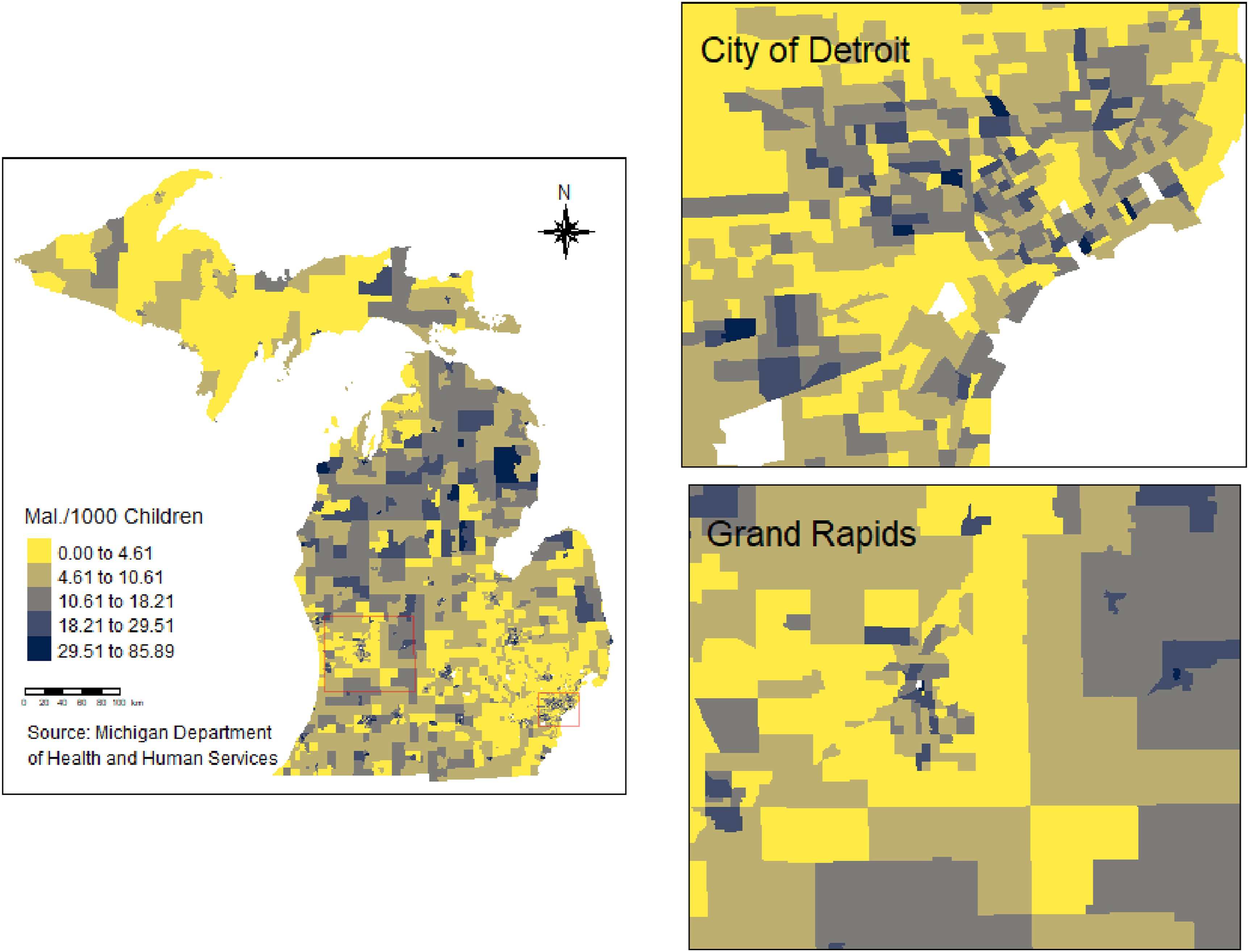
Independent Variables
Variable Names and Descriptions.
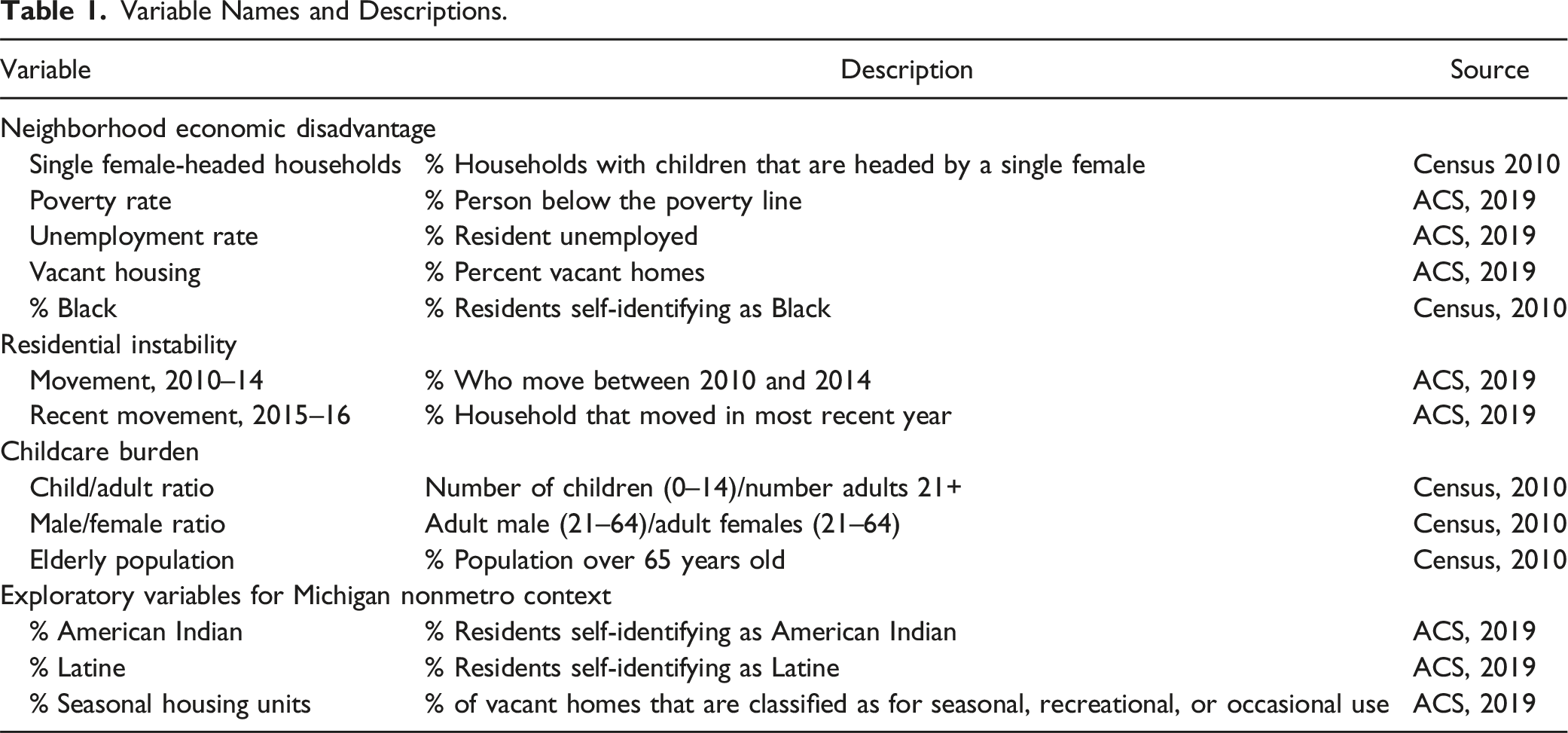
Traditionally, studies applying social disorganization theory begin with examining correlation between social factors, such as the notable direct association between instances of single female-headed households and poverty rate using principal component analysis (PCA). PCA is used to reduce data dimensionality and account for multicollinearity between variables, grouping these into principal components (PCs). PC coefficients represent the linear combinations of the original variables. We employed exploratory PCA to calculate PCs (see Table 3), including variables that typically represent “Neighborhood economic disadvantage,” “Residential instability,” and “Childcare burden” (Table 1) used in the study of social disorganization theory in child maltreatment (see Maguire-Jack, 2014 for a review). However, our main goal with this analysis, instead of defining PCs for inclusion in model prediction, was to compare structural factors that characterize metro and nonmetro areas. This process enabled us to test the hypothesis that these factors might impact child maltreatment differently across these locations. The classification of rural and urban areas was based on the Rural-Urban Continuum Codes from 2019 (RUCC - 2013, using the updated version for 2020) (metro: 1–3; nonmetro: 4–9). We assessed sampling adequacy for each variable using the Kaiser-Meyer-Olkin (KMO) test, with a threshold for adequacy set at 0.6 (Shrestha, 2021). Although KMO tests can be influenced by high correlations among variables, we applied the general guideline that correlations below 0.80 typically do not indicate problematic multicollinearity (Shrestha, 2021). To enhance the interpretability of PCs, we applied a varimax rotation. For interpretation, we highlighted components outside of plus and minus 0.3 as the most important contributors to the PCs and omitted those below plus or minus 0.1.
Analysis
We employed a negative binomial model to estimate the incidence of child maltreatment substantiations in both metro and nonmetro areas. We included all the variables typically included in studies using social disorganization theory (“Neighborhood economic disadvantage,” “Residential instability,” and “Childcare burden”), as well as additional “Exploratory variables for Michigan nonmetro context” (Table 1) for exploratory analysis. These variables were included as individual variables rather than their PCs so that we could assess differences across the individual variables. We included the percentage of seasonal housing units within the census tract as we hypothesized that the high rates of seasonal housing in nonmetro Michigan may impede the ability of residents to make meaningful connections with their neighbors. We also included the percentage of residents who are Latine based on prior research suggesting lower-than-expected rates of maltreatment among Latine residents (Kim & Drake, 2018) and a protective effect of a greater concentration of Latine residents within a neighborhood on maltreatment (Barboza-Salerno, 2020; Molnar et al., 2003). Percentage of residents who are American Indian was included due to the high concentration of American Indian residents in nonmetro Michigan and prior research showing a great deal of disproportionality for American Indian children in the child welfare system (Maguire-Jack, Font, et al., 2020).
Negative binomial regression models are appropriate for count data exhibiting over-dispersion, where the variance is larger than the mean. To ascertain the presence of over-dispersion, likelihood ratio tests of the over-dispersion parameter alpha were conducted. Cases, where the dispersion parameter is found to be significantly greater than zero, suggest that the data exhibit overdispersion (Hinde & Demétrio, 1998), making a negative binomial model a more suitable and effective choice for estimation compared to a Poisson model.
Model selection was conducted by systematically evaluating multiple candidate models and comparing their performance based on the Akaike Information Criterion (AIC) using the dredge function in R. AIC is a measure that strikes a balance between model complexity and fit by penalizing models with more parameters. We incorporated child maltreatment occurrences into our model for the years with complete coverage from January to December 2019 (Shellito & Pijanowski, 2003).
Results
Overview
Descriptive Statistics for Study Variables by Metropolitan Status for 2019 and Removing Outliers of Census Tracts With Greater Than 100 Cases of Maltreatment per 1000 Children (n = 6).
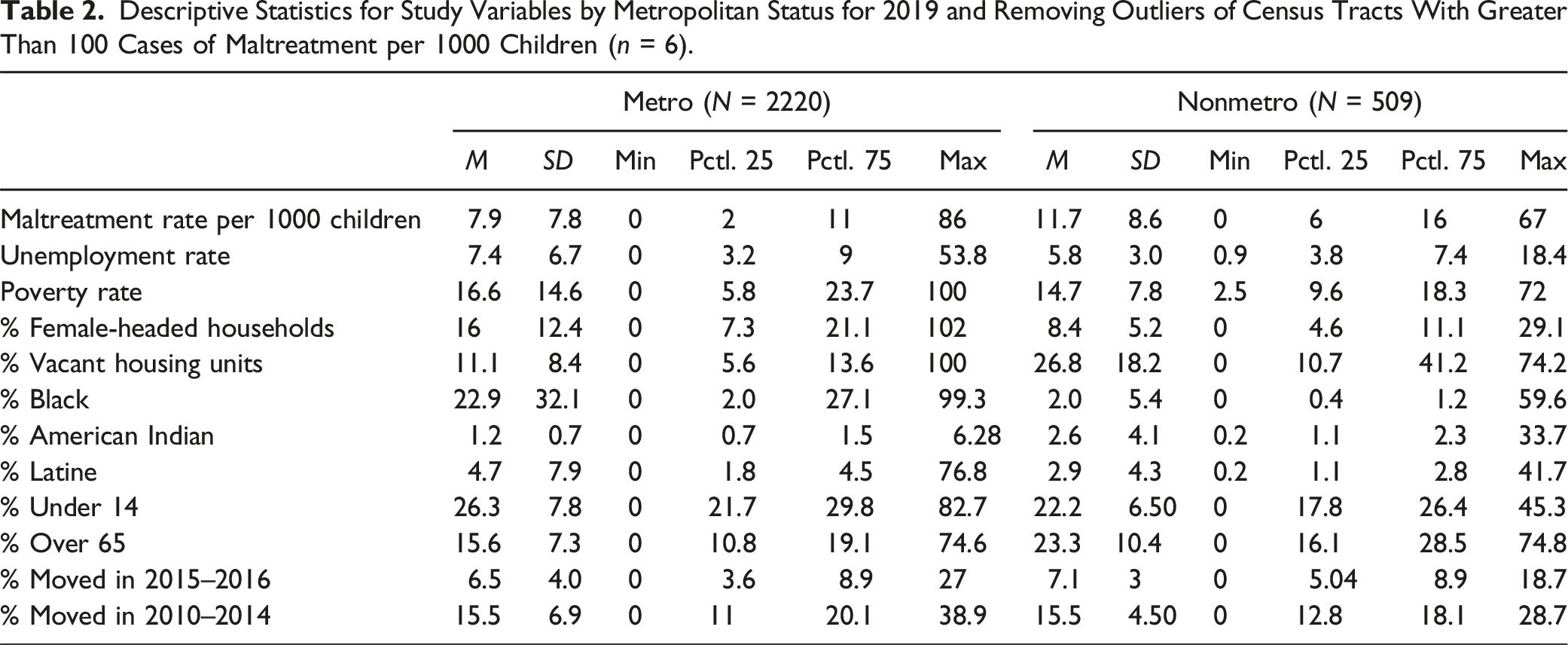
In 2019, there were 19,050 substantiated child maltreatment cases reported in Michigan, with 14,515 of these incidents occurring in metro areas and 4,535 in nonmetro regions. Although metro areas had a higher absolute occurrence of child maltreatment, the rate of child maltreatment when normalized by total children was higher in nonmetro areas. Metro areas had an average of 7.9 (SD = 7.8) maltreatment substantiations per 1000 children excluding outliers (greater than 100 cases) compared to nonmetro areas with 11.7 (SD = 8.6). The distribution of child maltreatment substantiation rates across Michigan exhibits distinct patterns (as shown in Figure 1), with relatively lower occurrences in suburban areas and isolated pockets of higher incidents in major cities. Conversely, nonmetro areas, particularly in the Upper Peninsula, exhibited lower occurrences, while the northern half of the Lower Peninsula experienced higher rates of maltreatment substantiations.
Comparing Structural Factors of Metro and Nonmetro Regions
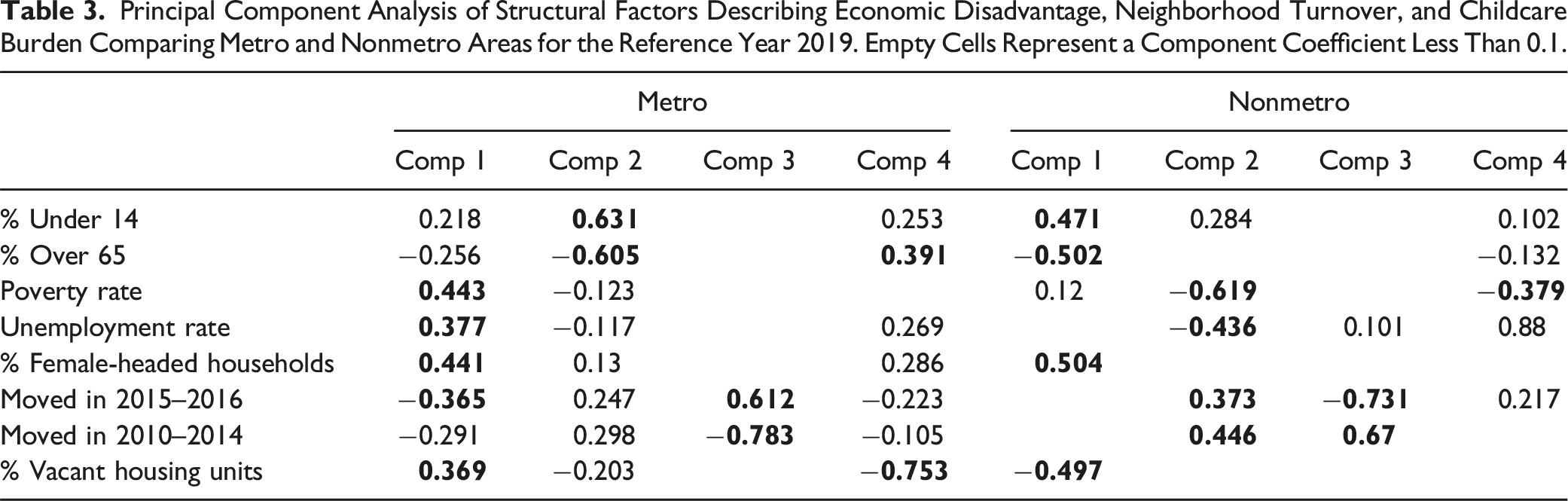
Principal Component Analysis of Structural Factors Describing Economic Disadvantage, Neighborhood Turnover, and Childcare Burden Comparing Metro and Nonmetro Areas for the Reference Year 2019. Empty Cells Represent a Component Coefficient Less Than 0.1.
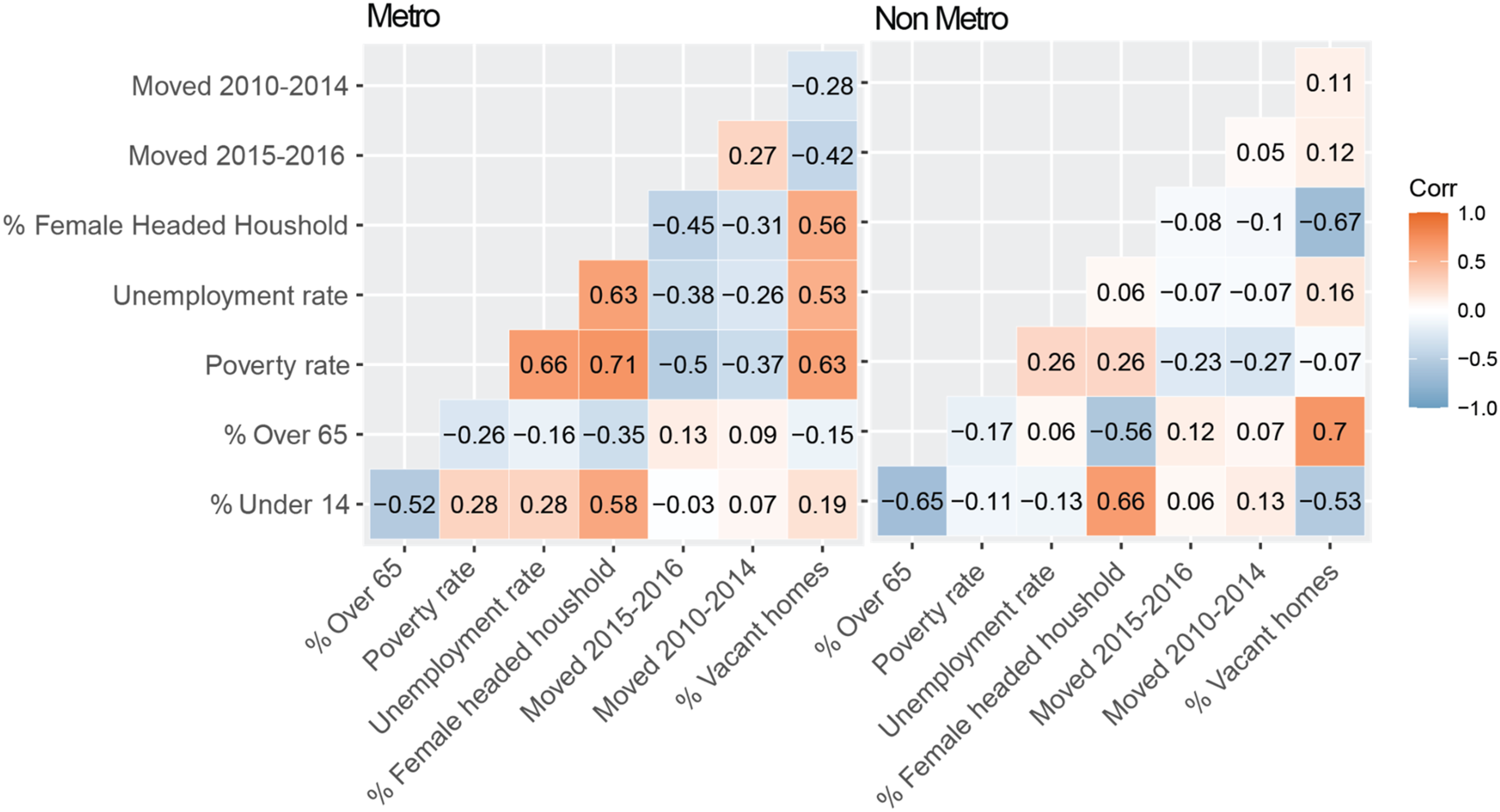
Correlation matrix of structural factors describing economic disadvantage, neighborhood turnover, and childcare burden comparing metro and nonmetro areas for the reference year 2019. Positive correlations are indicated by more intense red hues, while negative correlations are represented by blues.
The results of the factor analysis conducted for nonmetro areas in Michigan revealed a distinct set of structural factors influencing economic disadvantage, childcare burden, and neighborhood stability in these regions. The factor loadings of the variables indicated that in nonmetro areas, the presence of female-headed households is more closely associated with a high percentage of children under 14 years of age, fewer retirement-age individuals, and a high percentage of vacant housing (component 1). These findings suggest a departure from the typical urban indicators of economic disadvantage, where female-headed households are frequently associated with higher unemployment and poverty rates. Also, the analysis identified nonmetro areas with a combination of low poverty rates and low unemployment rates but with a high level of neighborhood turnover (component 2). Rural regions with high seasonal tourism often display this pattern of seasonal work and high neighborhood turnover (RKG Associates Inc., 2019).
Figure 3 depicts and confirms the result of the PCA visually for the first two PCs. The size (distance from the origin) and direction of the arrows indicate how strongly the variable influences a particular component, and the direction indicates whether it is positively or negatively associated with the component. For example, in the metro PCA plot, the “Neighborhood economic disadvantage” component is represented as large arrows in the same direction for the percentage of female households, percentage of vacant homes, poverty rate, and unemployment rate. Variable correlation plots for the first two PCA dimensions of the metro and nonmetro datasets for 2019. Dimensions 1 and 2 (Dim 1 & (2) represent the first 2 principal components or the dimensions that capture the most significant variability in the data. Total variability is indicated in parentheses as percentages.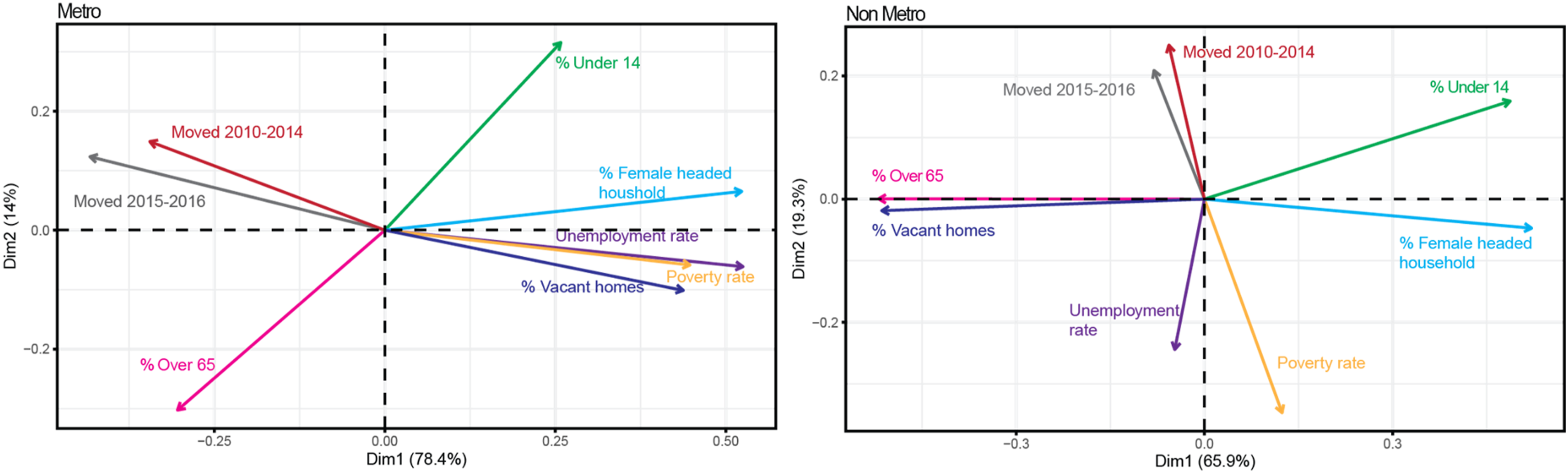
Model Results
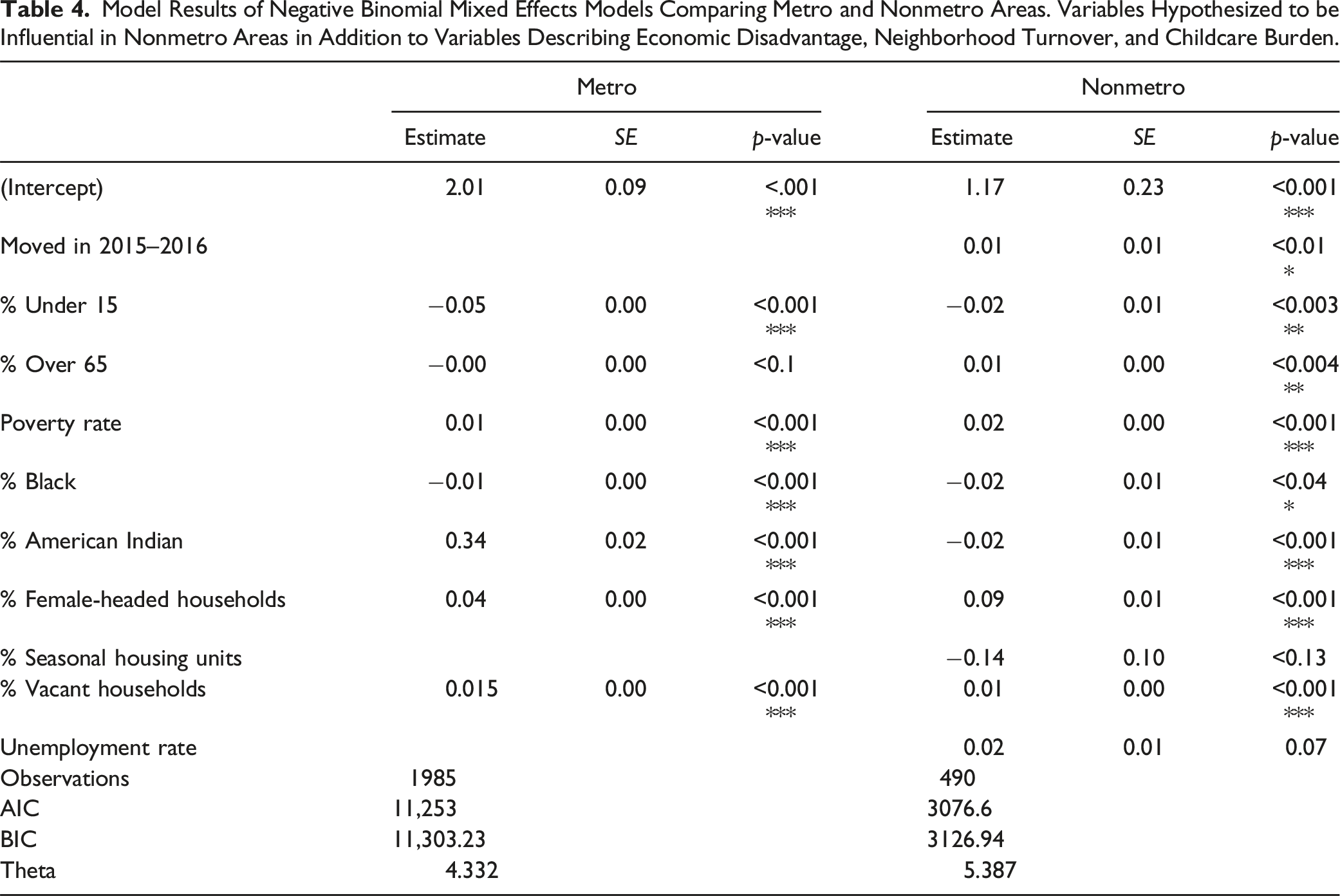
The results obtained from the negative binomial model revealed that despite the differing regional characteristics of these attributes, the factors influencing child maltreatment substantiation rates showed similarities between metro and nonmetro areas in Michigan. Tests of overdispersion using Poisson models indicated the appropriateness of a negative binomial model to account for overdispersion (nonmetro alpha = 3.08; metro alpha = 2.42). Measures of the variance inflation factor suggested that multicollinearity was not a concern for this dataset, with values remaining under eight for all measures.
Model Results of Negative Binomial Mixed Effects Models Comparing Metro and Nonmetro Areas. Variables Hypothesized to be Influential in Nonmetro Areas in Addition to Variables Describing Economic Disadvantage, Neighborhood Turnover, and Childcare Burden.
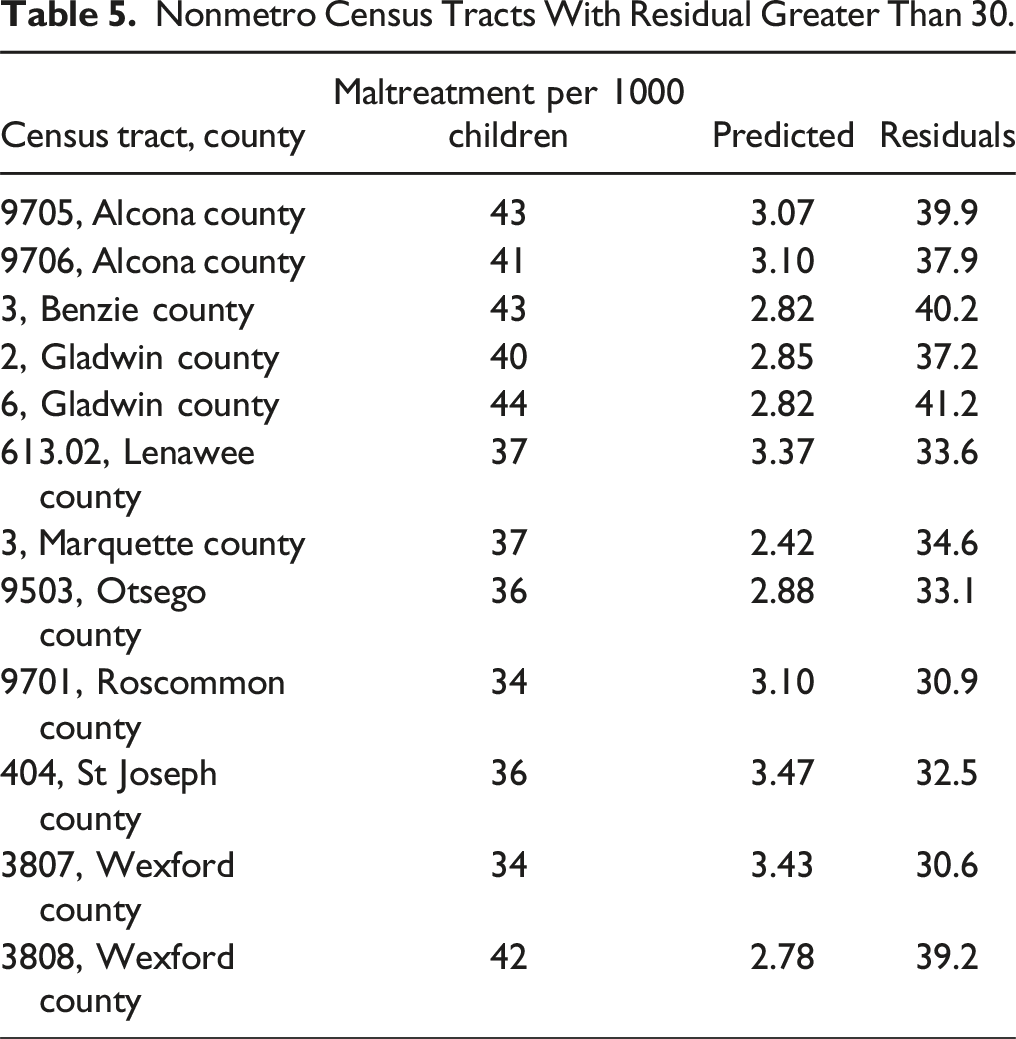
Maps comparing predicted values and residuals showed that our model largely underestimated maltreatment substantiations per 1000 children across Michigan (Figure 4). Nonetheless, the model accurately predicted child maltreatment substantiations in 2019 within plus or minus five counts per 1000 children for 52% of Michigan census tracts. The model fit for the metro model (56%) outperformed the nonmetro model (34%). This was also evident spatially, where there were clusters of census tracts in Northern Michigan that had much higher rates of child maltreatment substantiations than is predicted by the model. Specifically, nonmetro census tracts with residuals exceeding 30 were concentrated in these regions. While many of these locations reported maltreatment cases ranging from 30 to 40 per 1000 children annually, the model predicted a significantly lower count of 2–3 per 1000 children (See Table 5). Maps of model prediction (left) and residuals (right) for metro and nonmetro areas. Nonmetro Census Tracts With Residual Greater Than 30.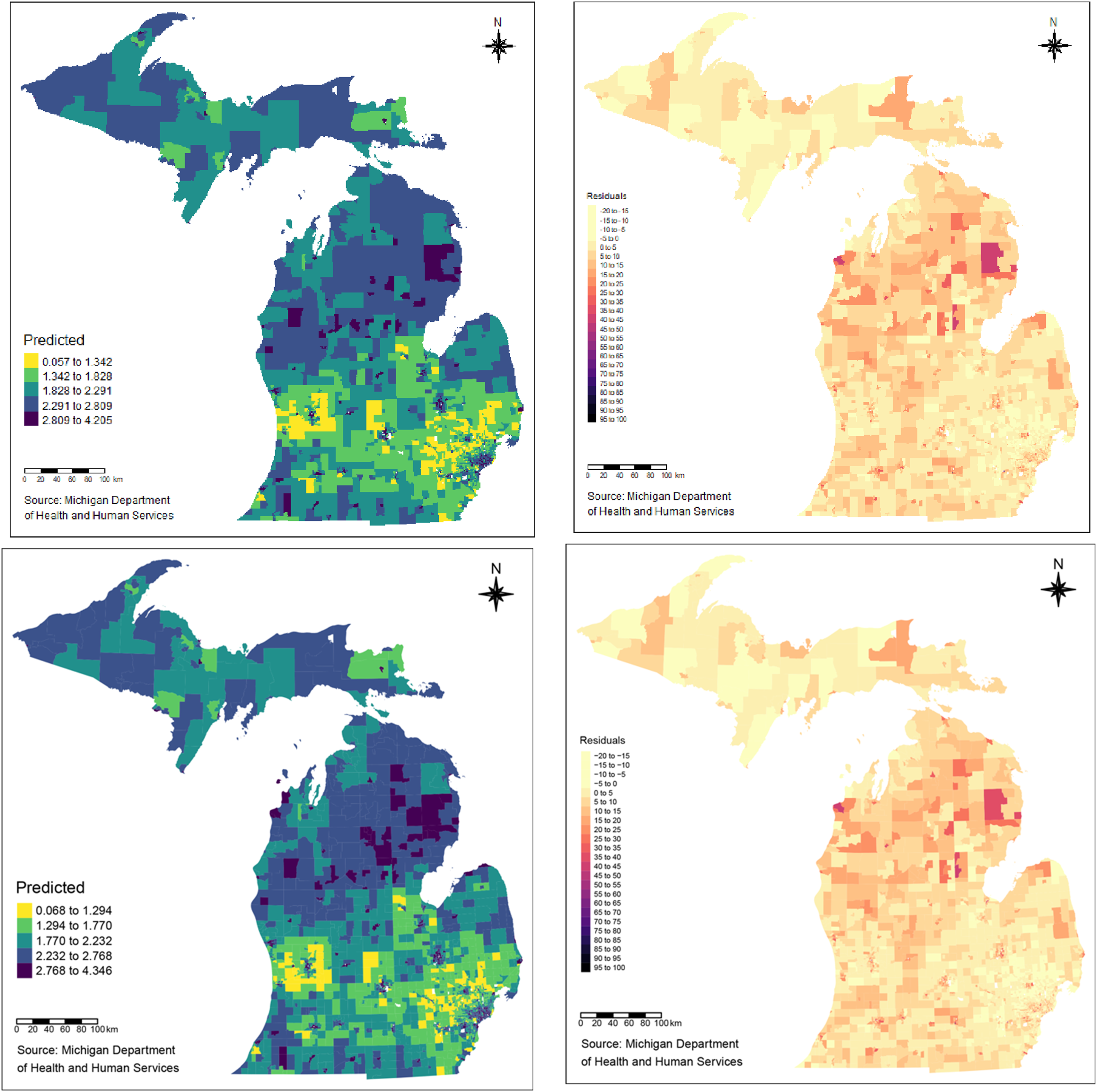
Discussion
The current study sought to investigate nonmetro child maltreatment substantiation rates in the State of Michigan to enhance our understanding of the ways in which neighborhood structural factors might play a role in child maltreatment in nonmetro areas. We applied a commonly used urban theoretical framework for understanding neighborhood structural factors and child maltreatment, namely social disorganization theory, and examined whether this theory and its application in metro areas was robust to nonmetro areas. Our findings revealed some similarities as well as important distinctions between metro neighborhood research and its application to nonmetro areas.
Comparing Child Maltreatment Substantiation Rates Across Michigan
The current study found that child maltreatment substantiation rates were higher in nonmetro census tracts in the State of Michigan, compared to metro census tracts. This finding is consistent with prior work at larger units of geography, that finds county-level child maltreatment rates to be higher, overall, within rural counties (Maguire-Jack & Kim, 2021). However, not all previous studies have concurred with this finding. For example, a critical study examining child maltreatment rates in rural majority-Black population counties in the Southern United States found that such counties have lower-than-expected child maltreatment rates (Smith & Pressley, 2019). Nevertheless, the context of the current study is in the State of Michigan, which is situated in the Northern part of the United States, where nonmetro areas primarily comprise a White population, which may account for the differences in such findings.
Although the current study sought to examine nonmetro-Michigan as a whole, important variations were observed in the rates of child maltreatment substantiations across nonmetro census tracts within the state. As shown in Figure 1, there was significant variation across the two. We found that the nonmetro tracts in the northern part of the Lower Peninsula had higher child maltreatment rates compared to those within the Upper Peninsula. There are fewer child welfare workers to cover the large mass of land, as staffing decisions are largely driven by caseload size. In fiscal year 2021, of the 1633 child welfare workers statewide, 35 workers (Michigan Department of Health and Human Services, 2021) covered the entire 16,429 square miles of the 15 counties in the Upper Peninsula (USA.com, 2024), which is a rate of approximately 469 square miles per worker. By comparison, 109 child welfare workers (Michigan Department of Health and Human Services, 2021) covered the 11,158 square miles comprising the 21 counties of the northern portion of the Lower Peninsula (USA.com, 2024), which is a rate of approximately 102 square miles per worker. It is possible that the lower penetration of child welfare workers within the Upper Peninsula hinders the ability to detect child maltreatment or diminishes public willingness to report suspected child maltreatment if residents believe there will not be a timely response. Future investigation into these patterns within nonmetro areas is warranted in future research. These findings suggest that even within a single state, there is considerable variation in child maltreatment substantiations in nonmetro areas. Because of this variation, it is unknown the extent to which these findings might extend to nonmetro areas in other states that exist within different political, social, and social service contexts. The findings suggest specific attention be paid to the unique geographies and child welfare practices of the nonmetro settings in particular. Additional research is needed on a variety of nonmetro areas to have a better understanding of the factors that influence nonmetro child maltreatment.
Intercorrelations Between Structural Factors in Nonmetro Setting
In relation to examining social disorganization theory within the nonmetro setting, a principal components factor analysis provided evidence to suggest that the variables commonly assessed in relation to child maltreatment (Maguire-Jack, 2014) did not hang together in the same manner within nonmetro areas as they do within metro areas. Within the nonmetro Michigan census tracts, we found that female-headed households did not cluster together with unemployment and poverty rates, which commonly map onto a factor referred to as “economic disadvantage” in metro areas (Maguire-Jack, 2014). Overall, we found that while poverty and unemployment rates were similar across metro and nonmetro tracts, the rate of female-headed households was considerably smaller in nonmetro tracts (approximately 17% in metro tracts compared to 9% in nonmetro tracts). This suggests that while poverty and unemployment may be concentrated among female-headed households in metro tracts, it is more dispersed among two-parent families within the nonmetro tracts. The built environment might play a role in the ways in which these factors hang together as well. Specifically, single mothers may be less likely to live in rural areas because of the large geographic distances between neighbors and may choose to live in areas in which social support is more readily available. The greater availability of apartments and subsidized housing available and easier access to resources and services (e.g. job opportunities, childcare, public transportation) may also contribute to a greater tendency of single mothers to live in urban communities.
Another important difference observed between metro and nonmetro tracts relates again to poverty and unemployment. Within metro tracts in Michigan, and the broader literature on social disorganization theory and child maltreatment in metro areas, there is a correlation between neighborhood turnover, poverty, and unemployment; such that high levels of poverty and unemployment rate are often coupled with higher levels of population turnover. In this study, we found that within the nonmetro census tracts, lower poverty and unemployment rates clustered with higher levels of population turnover. This finding may be driven by the tendency of younger people to leave nonmetro areas and relocate to urban areas in search of better opportunities (Henning-Smith et al., 2018). Additionally, because nonmetro areas tend to have a larger concentration of older residents, such residents would not be counted as unemployed if they are retired.
Consistent Findings Between Metro and Nonmetro Michigan in Terms of Individual Variables and Maltreatment
In terms of how the social disorganization factors relate to child maltreatment, we found some consistent results across both metro and nonmetro settings. In both types of census tracts, factors such as poverty rate, percentage of female-headed households, and percentage of vacant housing units were consistently related to higher levels of child maltreatment. These factors seem to be consistent across contexts and are particularly problematic for child maltreatment. All three of these factors may be related to higher levels of stress within families, which can make parenting more difficult. Poverty at the neighborhood level may decrease opportunities for families within, and is often tied to other social problems, such as crime (Gaitán-Rossi & Velázquez Guadarrama, 2021). By definition, female-headed households refer to single-parent families in which the family is dependent on a single income and a single female parent to cover all child-rearing responsibilities. Vacant housing units are indicative of a neighborhood in flux and may hinder the ability to make connections with neighbors, which can serve as a protective factor for parents (Maguire-Jack & Showalter, 2016).
We also found that the percentage of the population under 14 was associated with a lower rate of child maltreatment across both metro and nonmetro areas, in other words, it had a protective effect. This variable is commonly mapped onto a factor related to “childcare burden” within neighborhood research and has yielded mixed findings within the prior literature (Maguire-Jack, 2014). The factor name of “childcare burden” for which this variable typically loads onto might lead one to assume that the variable would be related to greater levels of child maltreatment, but it is also plausible that communities with more children may have greater amenities that attract families with children, and that there are possibly more norms supportive of children and families, which could potentially have a protective effect.
Differences in Metro and Nonmetro Findings in Terms of Individual Variables and Maltreatment
There are also important neighborhood-level factors that differ between the metro and nonmetro tracts in Michigan. Within the current study, we found that a greater percentage of older residents was protective against child maltreatment substantiation rates in the metro census tracts but was related to higher rates of child maltreatment substantiation rates in nonmetro census tracts. The variable related to older residents is tenuously understood. On one hand, the presence of older residents could indicate a greater likelihood of grandparents who may be available to help with childcare and provide social support, serving as a protective factor. On the other hand, it may also indicate fewer individuals within the traditional parenting age group are present, which may hinder the ability of young families experiencing similar challenges or circumstances to connect and provide social support to one another. Within nonmetro areas, there may also be a greater proportion of retirement communities, which may hinder the integration of other residents within the community with older residents. Given the higher proportion of older residents in nonmetro areas, this factor should be investigated further to understand whether the protective effect of this factor in urban areas could be similarly leveraged within the nonmetro context. To do so, it is critical to understand the mechanisms through which this factor protects against child maltreatment.
Prior research has been mixed on whether residential instability is related to child maltreatment. From a theoretical perspective, as neighborhoods experience turnover, residents are less able to form meaningful connections with their neighbors. Turnover rates were similar across both types of tracts, hovering around 13–15%. However, the implications of the turnover rates may operate differently across metro and nonmetro areas. In our study, higher turnover rates were associated with greater child maltreatment rates in nonmetro tracts. For metro tracts, the percentage of new residents was excluded from the model as it significantly reduced model fit. Nonetheless, in metro areas where there is a large population of young families, such turnover may result in new neighbors of similar demographics and, therefore, may be less related to child maltreatment as parents are able to meet new families going through similar circumstances. In contrast, in nonmetro areas, it is more likely that the residents will not be replaced by those with similar demographics, as nonmetro areas tend to have a much larger population of aging residents.
Taken together, the findings of the current study suggest that the applicability of social disorganization theory to child maltreatment in rural neighborhoods is tenuous. The variables traditionally used to proxy the constructs in urban neighborhoods do not hang together in the same way, and the relationships differ between the two contexts in important ways. These findings suggest the need for alternate theoretical frameworks to understand neighborhood impacts on rural child maltreatment.
The current study also found important metro and nonmetro similarities and differences in the relationships between racial demographics of neighborhoods and child maltreatment substantiation rates. First, across both metro and nonmetro tracts, we found that a higher percentage of Black residents was associated with lower child maltreatment substantiation rates, representing a protective factor. This finding is consistent with a prior national study that found that across all counties in the United States, a higher proportion of Black residents was associated with lower odds of child maltreatment substantiation and out-of-home placement (Maguire-Jack, Font, et al., 2020) and a prior study examining rural Southern counties with majority Black populations which found lower rates of child maltreatment reports and substantiations (Smith & Pressley, 2019). The consistency of the findings between the studies suggests that the finding is robust to the modifiable areal unit problem (Fotheringham & Wong, 1991), in which statistical findings vary depending on the geographic unit of analysis. The consistency of findings across these three studies also suggests that it may be broadly generalizable, although the reason for the protective impact is not well understood. Smith and Pressley (2019) suggested that it may be due to a reluctance to screen in calls from under-resourced communities. It is also plausible that there are fewer overall calls from the population within communities with majority Black populations because of the overrepresentation of Black children within the child welfare system and concerns about racial bias (Dettlaff et al., 2021).
In terms of American Indian residents, we found that a greater proportion of American Indian residents in nonmetro tracts was associated with lower rates of child maltreatment substantiations, while the opposite effect was observed in metro tracts. The proportion of American Indian residents in nonmetro tracts in Michigan is more than double the proportion within metro tracts. The greater proportion within nonmetro tracts overall may serve as a protective factor for neighborhoods with a significant population of American Indian residents, in that there may be more community and social support within tribes. Additionally, exposure to a specific racial group within one’s own neighborhood may reduce bias in community members making reports to the child welfare hotline. Indeed, prior research has found that the race of a child interacts with the level of diversity within their own neighborhood in important ways that impact the likelihood of being reported for child maltreatment concerns (Klein & Merritt, 2014).
Exploratory Findings Related to Unique Nonmetro Characteristics
In this study, we investigated the percentage of seasonal housing within the census tract as a potentially unexamined factor contributing to child maltreatment substantiations. We expected that this factor would be related to higher levels of child maltreatment because of the impediment to forming relationships with neighbors. However, we did not find a significant association between this factor and child maltreatment substantiation rates in the nonmetro areas, but the inclusion of the variable did improve model fit. On the other hand, in metro areas, this variable significantly reduced model fit. Future research should investigate the impact of seasonal housing on child maltreatment to better understand its role in both metro and nonmetro areas.
Conclusions About the Overall Success in Applying Social Disorganization Theory to Nonmetro- Michigan
Overall, the predicted child maltreatment substantiation rates from the neighborhood structural factors were severely underestimated over time, suggesting that the models relying solely on neighborhood social disorganization factors may be missing important variables that explain the child maltreatment rates. As such, the results should be interpreted with caution, and additional research is warranted. The nonmetro models underestimated child maltreatment substantiation rates to a greater degree compared to the metro models, which suggests our understanding of the neighborhood structural factors associated with child maltreatment substantiations in metro areas is greater than that of nonmetro areas. This finding suggests that the metro neighborhood structural factors may not be sufficient to explain child maltreatment substantiations in nonmetro areas, and that there is a need for research that is specific to nonmetro areas to identify and understand the unique neighborhood structural factors that are associated with child maltreatment substantiations within nonmetro areas.
Limitations
The current study has a number of limitations that should be considered. First, the study relied entirely on administrative data. Child welfare data represent only a portion of all child maltreatment cases that were reported to the child welfare system with sufficient evidence to investigate and substantiate. There are likely more cases of child maltreatment that go unreported. Further, we used child maltreatment substantiations as a proxy for child maltreatment, which captures only those cases for which there was sufficient information for the child welfare worker to substantiate. This is likely an undercount of true maltreatment. Because we relied on the substantiation rate as a percentage of the overall child population for the census tract, we are unable to account for certain aspects of maltreatment including the severity, chronicity, and timing of maltreatment. Second, we relied on data from the US Census and ACS to proxy neighborhood characteristics. These data are provided at the census tract level, which, though a small geographic unit, does not likely map onto the boundaries of what residents would consider to be their own neighborhood (Coulton et al., 2001). This problem may be magnified more in nonmetro areas, where census tracts tend to cover much larger plots of land, thus masking important variations occurring at smaller units of geography. Similarly, we relied on the RUCC to determine whether a census tract was metro or nonmetro, which may or may not align with residents’ own understanding of their community. Third, we also relied on data from the closest year for the analysis, for example, the 2010 US census and the 2019 ACS, which did not correspond to the years of child maltreatment data used. Given the changing nature of neighborhoods over time, these data may not be reflective of the circumstances within the neighborhood at the time of the maltreatment. Fourth, seasonal housing may differentially relate to maltreatment based on the reason for the housing, for example due to seasonal workers versus seasonal tourists, but the available data did not allow us to make this distinction.
Conclusion and Implications
This study suggests the need for more research examining unique neighborhood characteristics in nonmetro areas. While the research to date has been dominated by studies within urban areas, there is still much unknown about the ways in which neighborhood structural factors relate to rural child maltreatment. There is a need for in-depth qualitative inquiry to understand from rural residents the ways in which they are impacted by their communities and the ways in which prevention programs might be created for, or tailored to, the unique strengths and challenges within rural areas. The study’s findings that nonmetro child maltreatment substantiation rates are higher than those in metro areas suggest the need for significant investment of resources into such areas. The study suggests that reducing poverty and residential instability are important levers for which policy should be directed to reduce rural child maltreatment.
Footnotes
Declaration of Conflicting Interests
The author(s) declared no potential conflicts of interest with respect to the research, authorship, and/or publication of this article.
Funding
The author(s) received no financial support for the research, authorship, and/or publication of this article.
