







Abstract
Studies show the protective power of informal support networks for parents, however, most research in this area is not specific to the child welfare context. With a sample of parents with children involved with the U.S. child welfare system due to substantiated child maltreatment (N = 118), latent profile analyses revealed three distinct profiles of parents’ informal support networks including perceived support, received support, and network demands. The profiles were associated with differences in sociodemographic risks, ACEs, and symptoms of depression and stress. Parents with four or more ACEs were more likely to be classified in the very little support profile versus the profile of parents with some support. Parents who had high levels of informal network support and a manageable level of network demands had lower levels of depression and stress compared to parents with very little network support. Implications for research and practice are discussed.
Keywords
Introduction
U.S. child welfare agencies received an estimated 4,276,000 referrals involving 558,899 substantiated cases of child maltreatment during the most recent federal reporting period; 74% involved neglect (U.S. Department of Health & Human Services, 2024). In instances of substantiated child maltreatment, states are charged with intervening to promote safety and well-being. Parents involved with the child welfare system (CWS) face a host of vulnerabilities, often including histories of adverse childhood experiences themselves (ACEs; Blair et al., 2019), economic hardship (Fong, 2017), and mental health challenges (Roscoe et al., 2018). The importance of strong informal support networks in buffering against vulnerabilities has been well established (e.g., Radey, 2018; Taylor & Conger, 2017). However, most research in this area is not specific to the child welfare context. Because of the known vulnerabilities often faced by families involved with CWS, coupled with evidence on the benefits of strong safety networks, the aims of this study were to (a) identify profiles of parents’ informal support networks; and (b) test for differences in parents’ ACEs, sociodemographic risks, and mental health symptoms by profile membership.
Informal Support Networks
Research demonstrates the protective power of informal support networks for parents (Choi & Pyun, 2014; Radey, 2018). Support from one’s informal networks can aid mental health (Radey et al., 2020; Reid & Taylor, 2015; Wilmot & Dauner, 2017). More specifically, strong informal support is associated with lower levels of parental depression (Prelow et al., 2010; Reid & Taylor, 2015) and stress (Cardoso et al., 2010; Radey et al., 2022), and parental depression and stress are strong correlates of child maltreatment (Venta et al., 2016).
Informal support is a multidimensional construct, and there are important distinctions between perceived and received support. Perceived informal support involves one’s perceptions of the availability of, and satisfaction with, their support network; whereas received support involves specific supportive behaviors provided by members of the support network (Haber et al., 2007; Radey, 2018). Studies show the protective power of both (e.g., Holt-Lunstad et al., 2010; Radey & McWey, 2019); however, perceived and received support are only moderately correlated with one another, which corroborates the conceptualization of perceived and received support as important yet separate dimensions of informal support networks (Haber et al., 2007). Plus, support network availability and usage are often tied to network demands, particularly within disadvantaged contexts (Gazso et al., 2016; Offer, 2012; Radey & McWey, 2019).
Although obligations, or demands from informal support networks, have been studied less frequently, demands are an important feature of informal support network functioning. Landmark ethnographic work conducted by Carol Stack (1974) demonstrated that the adaptive functioning of reciprocity was a central feature of families’ support networks in low-income contexts. More recent qualitative research (e.g., Dominguez & Watkins, 2003; Offer et al., 2010) has built upon this work. For instance, a qualitative study of mothers in Jerusalem revealed the challenges of relying on informal support networks under impoverished conditions (Offer et al., 2010). Mothers’ testimonials revealed instances of discomfort in asking for support and the need for careful consideration of what would be requested in return. Participants acknowledged that if they gave too much to their support network or were overburdened by demands, they would ultimately need to discontinue relationships. Conversely, they also spoke about the guilt they felt when they could not reciprocate within their network, which also threatened the sustainability of network support. Similarly, another study involving an ethnographic analysis of social network descriptions of low-income mothers found that the capacity to reciprocate shaped the extent to which mothers sought to exchange resources (Dominguez & Watkins, 2003).
These ideas have been tested quantitatively as well. For instance, with a sample of low-income mothers and children, researchers tested dimensions of parents’ safety nets (Radey et al., 2022). Results indicated that “healthy safety nets” were ones in which parents had at least some informal support and a manageable number of obligations (mothers reported whether they had none, only a few, as many as they could handle, or too many). Moreover, healthy safety nets were associated with lower levels of maternal stress. Taken together, expectations of reciprocity can lead parents to calculate whether or not to seek support from their informal network. Parents must carefully navigate a balancing act of having enough network demands to negotiate support for their families, while not giving too much and putting themselves and the sustainability of their informal support network at risk.
Informal Support Networks Within the CWS Context
Although there is strong empirical support for the importance of informal safety nets for families in vulnerable contexts (e.g., poverty, Radey, 2018; Taylor & Conger, 2017), there is less research specific to the CWS. This is important because there may be nuances of informal support within the child welfare context. For instance, among a sample of caregivers involved with the CWS, researchers found that those who were economically disconnected were more likely to receive financial support from their informal networks, however, their higher levels of unmet basic needs may be an indicator of the limited capacity of their informal network to help them meet their needs (Marcenko et al., 2012). A quantitative study of grandmothers raising grandchildren compared informal support received by those with CWS involvement to those without it, and their findings revealed that grandmothers in the CWS-involved group had higher levels of support needs, and, across groups, higher levels of needs were associated with higher levels of burden (Goodman et al., 2007). The authors concluded that the receipt of informal support was important, yet not fully meeting the needs of grandmothers involved with the CWS. Relatedly, in a study of characteristics of caregivers with prior CWS investigations, scholars conducted cluster analyses and found an association between lower levels of perceived support and future CPS investigations; their results pointed to social network complexity and the potential for both positive and negative aspects of social ties (Boyd et al., 2023).
Similar to research on network demands not specific to the CWS context, a qualitative study of 40 parents investigated for past child maltreatment reported that the parents often described disadvantaged social network ties and the need for, yet potential consequences of, relying on their informal supports (Fong, 2017). Parents in the sample reported having experienced, on average, four adverse childhood experiences (ACEs) and described social networks that were marked with distrust or were fractured altogether. Another qualitative study of parents involved with the CWS in Canada found that a majority of the sample reported turning to family and friends for informal support, but that their networks could also be unhelpful in times of need due to a lack of access, demands, or mistrust (Manji et al., 2005). Taken together, these findings suggest that it is important to consider demands when examining informal support networks of families.
Few quantitative studies have distinguished between perceived and received informal support among families involved with the CWS. Testing the long-standing hypothesis that maltreatment occurs in the context of parental isolation, Coohey (1996) compared perceived and received informal supports of mothers involved with the CWS to non-CWS-involved mothers from the same community. Findings underscored that, for mothers in the CWS subsample, networks were perceived as less supportive, and mothers involved with the CWS due to neglect received fewer instrumental supports. Burden, however, was not assessed. Similarly, when examining connections between informal support networks and parental mental health, researchers found an inverse association between perceptions of the availability of informal social supports and levels of depression among a sample of parents involved with the CWS (Lyons et al., 2005). Strengths of their study included the large sample size and the assessment of the availability of social support, however, the authors concluded that because they did not also assess for the potential negative dimensions of social support (such as demands), additional research is needed.
Conceptual Framework
The family stress model (Conger & Elder, 1994Conger & Elder Jr, 1994), which builds off the ABCX model (Hill, 1958; McCubbin & Patterson, 1983), helps explain family functioning in the context of child maltreatment. The model espouses that hardship and demands lead to higher levels of family tension, and this negative emotional context threatens family relationships and stability. The model was originally developed based on work with families in rural farming communities who were facing financial crisis but has since been extended to other stressful family conditions (Conger et al., 2010) and continues to emphasize the importance of informal support for parents in disadvantaged circumstances (Taylor & Conger, 2017).
Warren and Font (2015) applied the family stress model to the context of child maltreatment by empirically demonstrating linkages between parental hardship, child maltreatment, and parental stress. Taking the application of the family stress models a step further; it is plausible that CWS involvement is a hardship that further stresses the family context. And under conditions in which parents would typically turn to their informal support networks for help, the potential stigma and shame of being investigated for child maltreatment contributes to a hesitation to mobilize supports. Plus, with informal network relationships that require reciprocity (Dominguez & Watkins, 2003; Offer et al., 2010), seeking support can strain, rather than relieve, stress and burden (see Figure 1). Conceptual model.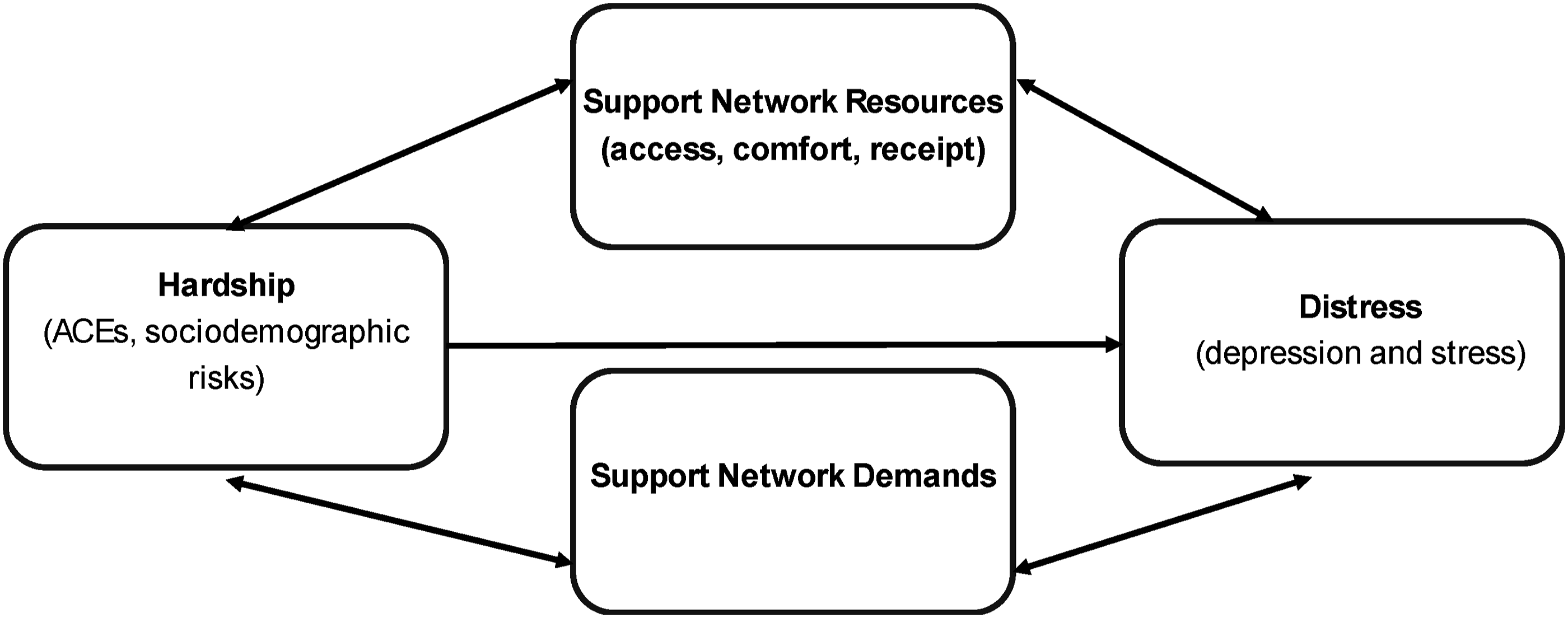
Notably, within the CWS, families may have disadvantaged social networks to begin with, and the intersections of sociodemographic factors such as race and income may make some families particularly vulnerable (Williams-Butler et al., 2023). For example, Black families are disproportionately reported to and represented within the CWS (Child Welfare Information Gateway, 2021), as are single mothers (Berger et al., 2009). Plus, in circumstances involving intergenerational trauma, where parents faced adverse experiences when they were children, they may understandably be mistrustful of seeking support. Taken together, dimensions of hardship, support networks, and distress may differ from family to family, and the family stress model considers this heterogeneity. Given the evidence on informal network reciprocity demands, particularly amid hardship (e.g., Offer, 2012), the family stress model helps explain how differing configurations of informal network support and demands may be related to parental distress.
The Current Study
This study applied the family stress model to test dimensions of informal support and determine how support profiles were associated with mental health symptoms of parents involved with the CWS. Previous research points to the multidimensionality of informal support networks. For example, a study examining different profiles of parents’ social support during the COVID-19 pandemic demonstrated heterogeneity in dimensions of informal support (e.g., perceived, received), and those with lower perceived levels of social support had higher levels of depressive symptoms (Bai et al., 2023). A noteworthy empirical gap is that no known study has used a person-centered approach to examine the different dimensions of informal support within the child welfare context. In their study of risk factors and neglect among families in poverty, Sattler (2023) argues that understanding the combination of co-occurring factors associated with maltreatment calls for person-centered approaches to help practitioners and policymakers identify family-level risks. Person-centered approaches identify subgroups of participants based on within-group similarity relative to between-group differences, changing the focus from the associations among and between variables to associations among and between people (Woo et al., 2024). Variable-centered analyses, such as structural equation modeling, emphasize estimating population-level parameters based on the degree of variability along a factor or factors. Person-centered analyses assume that variables do not necessarily operate the same way across people because factors vary and may be configured differently among subgroups (Woo). As such, the primary goals of this study were to (a) use a person-centered approach to identify profiles of parents’ informal perceived supports (i.e., support access and level of comfort), received supports (i.e., transportation, childcare, money, and housing), and network demands; and (b) test for differences in parents’ ACEs, sociodemographic risks, mental health symptoms by profile membership. Based on extant research and theory, we hypothesized that there would be unique profiles of informal network supports and demands and that parents with higher levels of support and reasonable network demands would have lower levels of stress and depression. Moreover, we expected that a parent’s number of ACEs would be associated with informal network engagement. Latent profile analyses were used to identify profiles of informal supports among a sample of parents involved with the CWS. Then, ACEs and sociodemographic characteristics were examined as covariates of profile membership, and differences in levels of depression and stress were tested by profile.
Method
Study Design and Sample
This study used data from the Power of Parents in Child Protection Study (POPS), a larger study of parents with substantiated cases of maltreatment and active case plans. The POPS’s purpose is to understand parents’ public and private support systems and needs at the onset of child welfare system involvement. Eligible parents included those who: (a) had an open child welfare case, (b) received a new case plan within the past three months, and (c) were seeking to retain or regain child custody. With the endorsement of the state’s Department of Children and Families (DCF), we recruited parents from community-based care agencies statewide from August 2023 through June 2024. Most commonly, case managers presented a study flyer to parents who recently received a case plan. We also recruited parents through direct service providers (e.g., substance abuse counselors, domestic violence educators) and posted flyers in supervised visitation centers. Parents completed an electronic pre-survey to confirm eligibility and provide contact information. Eligible parents received the survey link through text messages within 24 hours of pre-survey completion with reminder texts sent 3, 7, and 21 days later if they did not complete the survey. Respondents provided information about their informal support networks, receipt of benefits and services, and their needs. The analytic sample included all parents who completed the survey and provided data on study covariates and mental health symptoms (N = 118). The Institutional Review Board at the authors’ university approved all study protocol.
The sample included 78% mothers and 22% fathers, and was racially and ethnically diverse, including 58% who identified as non-Hispanic White, 25% non-Hispanic Black, and 17% Hispanic. Their mean age was 30. Approximately one-third (34%) reported being married or cohabiting. Regarding education, 74% had some high school or a high school diploma or its equivalent, 12% had some vocational or college education, and 14% had a college degree. In terms of employment and income, 47% were employed, and 39% lived in households earning less than $10,000 in the past year, 24% earned $10,000-$24,999, 26% $25,000-$49,999 and 11% earned $50,000 or more. Most parents (78%) reported receiving some public assistance in the past year, including SNAP (65%), Medicaid (60%), EITC (30%), SSI (16%), and TANF (4%). Reasons for CWS involvement included neglect (25%), parental substance abuse (25%), domestic violence (31%), physical abuse (11%) and sexual abuse (3%). Most parents had one (22%), two (31%), or 3 (20%) minor children who ranged in age from newborn to 17 years old.
Measures
Latent Profile Indicators: Support Network Characteristics
Modeled after prominent surveys of families facing difficult circumstances (e.g., Future of Families and Child Wellbeing Study, Welfare Children Families Study), we measured informal support from family and friends in the past year in the following domains: emotional support, practical support, trusted friends, transportation, childcare, money, and housing. We considered support access, level of comfort in asking, support receipt, and network demands for each domain. To measure support access, parents indicated their level of access to support in each domain including “no one,” “some,” “enough,” or “more than enough.” Similar to Frederickson et al. (2019), we combined “enough” and “more than enough” to create a 3-point scale. Responses were summed across indicators. Respondents also indicated their level of comfort in asking family or friends in each of the seven domains. They indicated whether they relied on family and friends “only as a last resort,” “with the right person at the right time,” or as a “first place I turn.” We totaled items to create a sum score. Support receipt was measured through two series of items: (a) parents indicated whether they received support in each domain in the past year, and (b) among those who did, also whether they received the support without having to ask for it. Based on prior work indicating the value of receiving unrequested support (e.g., Mazelis & Mykyta, 2020), we created a three-point scale: did not receive, received after asking, and received without asking. We then totaled the items. Parents indicated their level of network demands by rating the number of people who turned to them for support on a four-point scale: not the right amount, no one; not the right amount, too few; not the right amount, too many; and the right amount. We distinguished between those with “the right amount” and those without the right amount in each area and created a sum score. For ease of comparison, we converted scales to range from 0 to 1 with higher scores indicating higher levels of support and the “right amount” of demands. In addition to the scales, we included two additional indicators of support network behaviors in the past year: if parents had needed network support, but did not ask for it (1), otherwise (0) and if they had asked for support, but did not receive it (1), otherwise (0).
Mental Health Symptoms
Depressive Symptoms
Depressive symptoms were measured through the Major Depression Inventory (MDI; Bech et al., 2015). The MDI is a 12-item instrument covering 10 dimensions of depression. Respondents indicated their frequency of feelings (e.g., felt low in spirits or sad, felt life wasn’t worth living, trouble sleeping) in the past two weeks on a 6-point Likert scale ranging from “at no time” to “all the time.” We summed the scores in the 10 domains including the highest score for the two domains with two indicators (i.e., increased/decreased appetite, restless/slowed down), creating a depression symptom score from 0 to 50. Prior research supports the validity and reliability of the MDI (e.g., α = .90; Olsen et al., 2003). The Cronbach’s alpha for the study sample was 0.96.
Stress Level
The Perceived Stress Scale (Cohen et al., 1983) measured parents’ stress frequency over the last month through 10 items on a five-point scale (i.e., 0 = never, 4 = very often). Sample items included: “not able to cope with all that you had to do” and “felt nervous and stressed.” Positively worded items were reverse coded such that higher scores reflect higher levels of stress on the 0-50 scale. Past studies indicated adequate reliability (α = .76; Warttig et al., 2013). The Cronbach’s alpha for the study sample was 0.86.
Covariates
The Adverse Childhood Experience (ACE) Questionnaire for Adults (Felitti et al., 1998) was used to measure parents’ experiences in childhood. Respondents indicated which of 10 experiences applied to them before age 18 (e.g., parent death, abandonment, or divorce; live with someone who spent time in prison; was pushed, grabbed, slapped, or had something thrown at you by an adult). Arguably, all of the items on the ACEs indicate potential maltreatment with the exception of parental separation and incarceration, and experiencing four or more ACEs is considered clinically significant (Felitti). Parents with four or more ACES (1) were differentiated from those with fewer experiences (0).
We also included a range of sociodemographic characteristics. Parents provided their age (in years) and their race and ethnicity (Hispanic, non-Hispanic Black, non-Hispanic White) by indicating whether they were of Hispanic or Latino/a origin and their race from the U.S. Census 2010 categories. Parents indicated their relationship status from the following categories: married, cohabiting, in a romantic relationship, single, divorced, or widowed. We measured whether they had a romantic partner or spouse (1) or not. Parents indicated if they had less than a high school education, a high school education or equivalent, or more than a high school education. We also included whether or not parents had enough money to meet their needs in the past month (1 = yes, 0 otherwise).
Analytic Strategy
We assessed the validity and reliability of items developed to measure support access, support comfort, support receipt, and demands through factor analysis and Cronbach’s alpha values. We next completed a manual three-step approach Latent Profile Analysis (LPA; Nylund-Gibson & Choi, 2018; Vermunt, 2010). The purpose of LPA is to create an underlying categorical latent variable to differentiate latent subpopulations by estimating conditional means and variances of the continuous indicators and the distribution of the dichotomous indicators. We used a manual 3-step estimation procedure with all auxiliary variables because it allowed us to include both covariates and mental health symptoms associated with latent profile membership (Asparouhov & Muthén, 2014).
The model’s first step identified the best-fitting unconditional model, the posterior probabilities, and modal class assignment. The Akaike Information Criterion (AIC; Akaike, 1974), Bayesian Information Criterion (BIC; Schwarz, 1978), a sample size-adjusted BIC (ABIC; Sclove, 1987), the Lo-Mendell-Rubin adjusted likelihood ratio test (LMR LRT; Lo et al., 2001) and the Bootstrap LMR LRT (B-LRT; Geiser, 2012) guided model selection. Lower AIC and BIC scores suggest better fit, while the LRT tests are Chi-squared difference tests between k and k-1 classes. A statistically significant test suggests that the model with the additional class provides a superior fit. We first tested a two-profile model and concluded with a five-profile model. Typical for these analyses, fit indices did not agree on one model solution (Nylund et al., 2007). We selected the model through fit indices, profile size, model parsimony, and theoretical relationships (Nylund et al., 2007). Although not recommended for profile selection (Vermunt & Magidson, 2002), we reported class entropy, a measure of overall classification into profiles. Entropy exceeding 0.80, as ours did, indicates a low level of misclassification error (Vermunt, 2010). To compare mean differences of indicators across profiles (i.e., access, comfort, receipt, demands) and differences in mental health symptoms (i.e., depressive symptoms, stress level) among profiles, Wald tests were conducted (Asparouhov & Muthén, 2014). Due to the low rate of missing data (<5% across safety net indicators), we used full information maximum likelihood to handle missing data to reduce estimation bias (Enders & Bandalos, 2001).
In the second LPA step, the model estimated conditional probabilities for modal class assignment given actual latent class membership. This estimation provided average classification errors for modal class assignments. We treated the classification errors as fixed parameter values to represent the relationship between the latent profile variable and the latent class assignment to use in the third step (Nylund-Gibson & Choi, 2018). The modal class assignment from step one coupled with the fixed classification error values calculated in step two were used in step three to estimate a new model. We individually tested sociodemographic characteristics and whether the parent had experienced a clinical number of ACEs and retained characteristics that were at least marginally significant. Post-hoc tests indicated how parents in the various profiles differed in their mean levels of depression and stress. Analyses were conducted in Mplus, Version 8 (Muthén & Muthén, 2020) and Stata, 18.0 (StataCorp, 2023).
Results
Validity and Reliability of Scales Measuring Support
Correlations, Means, and Reliability Coefficients for Informal Support Network Variables (N = 118).
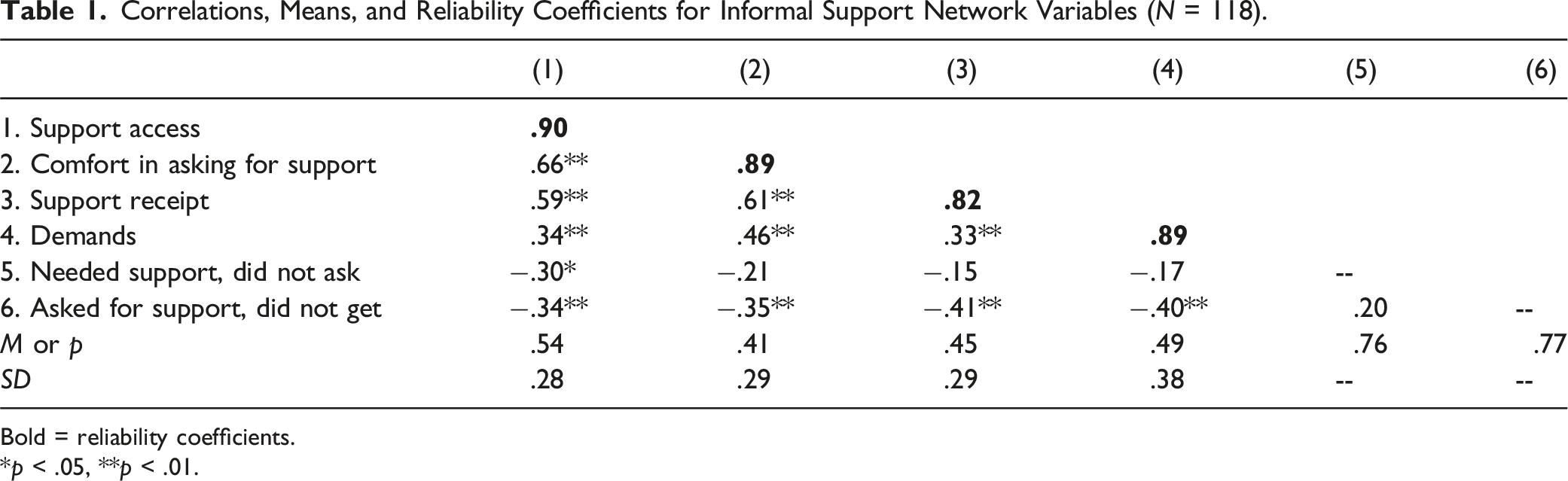
Bold = reliability coefficients.
*p < .05, **p < .01.
Latent Profile Analysis
Fit Indices for Latent Profile Models (N = 118).
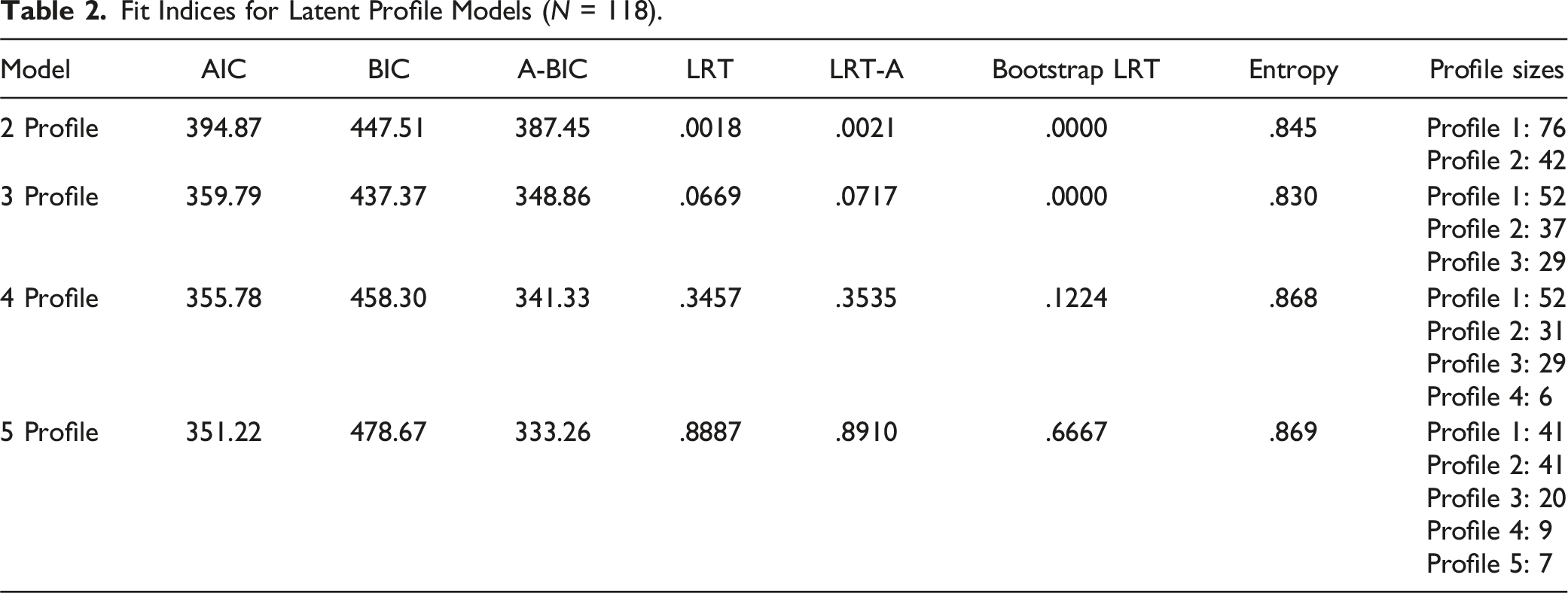
The three profiles had unique levels of supports and demands (see Figure 2). All indicators ranged from 0 to 1 for ease of comparison with higher scores indicating higher levels of support and the “right amount” of demands. Profile 1, named “very little support,” was the most common class (44%) with the lowest amount of support. Parents in the “very little support” profile typically had no one to provide them with support, were not comfortable turning to others, did not receive support, and did not report having the “right amount” of demands. In addition, two-thirds of parents in the very little support profile reported needing support in the last year and did not ask their network members for that support, and 82% asked for support without receiving it. The smallest profile, Profile 3, was named “some support” and included 25% of parents. Parents in this profile typically had “enough people” or more to access support, turned to their family and friends first in times of need, received support without asking for it, and reported the “right amount” of network demands. A small minority of parents in this profile needed support without asking (25%) or had asked for support without receiving it (22%). The level of support among parents in Profile 2, named “little support” and including 31% of parents, was between that of Profiles 1 and 3. Parents in the “little support” profile averaged “some” access to support, turned to the right family member or friend at the right time, typically asked for support when they received support, and had the right amount of demands in about half of the support domains. The highest proportion of parents in the “little support” profile needed support in the past year, but did not turn to family or friends (93%), and 76% asked for support that they did not receive. Distribution of criteria variables for each latent profile.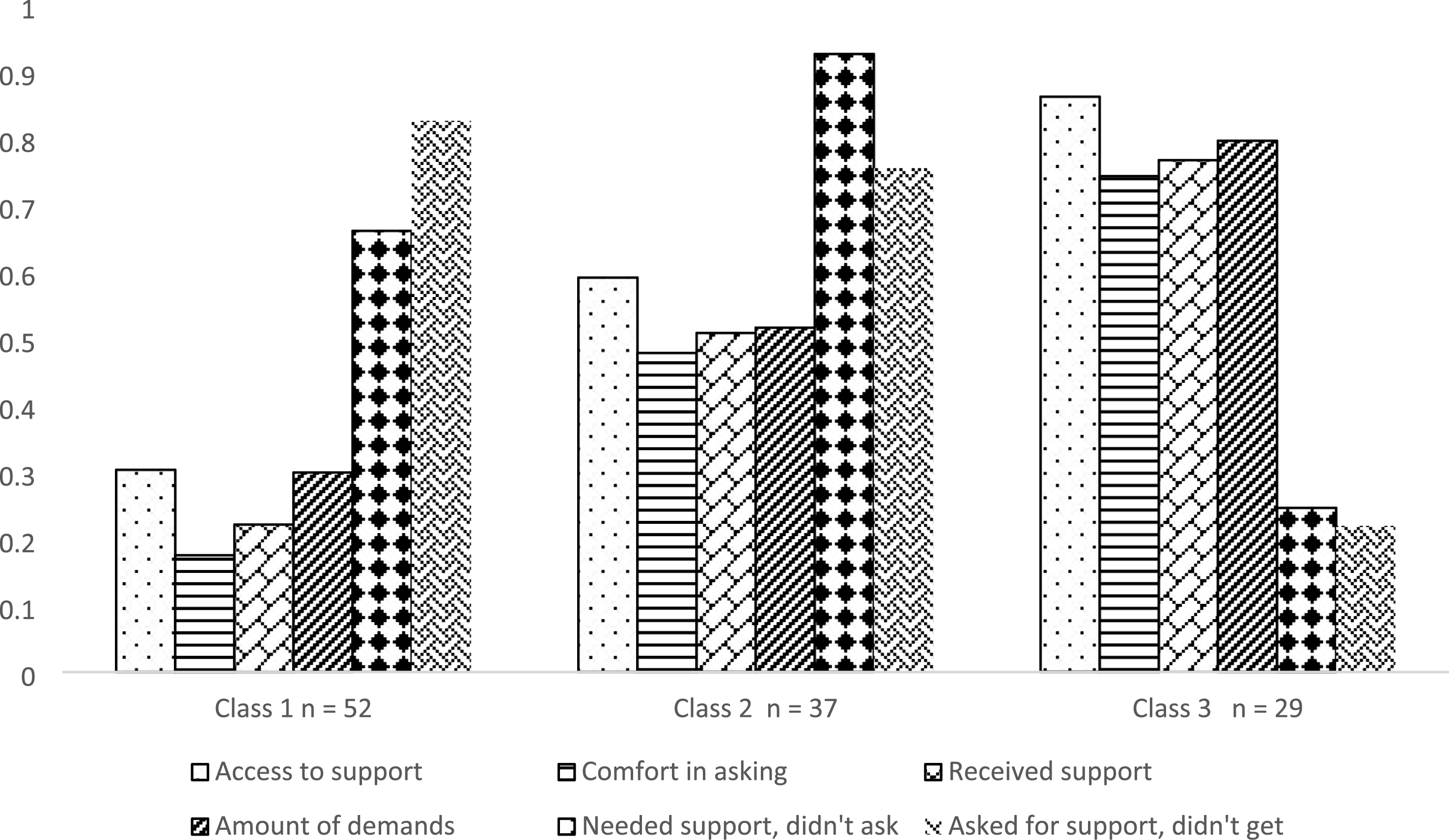
Comparing Mean Scores of Dimensions of Informal Support Across Three Symptom Profiles (N = 118).
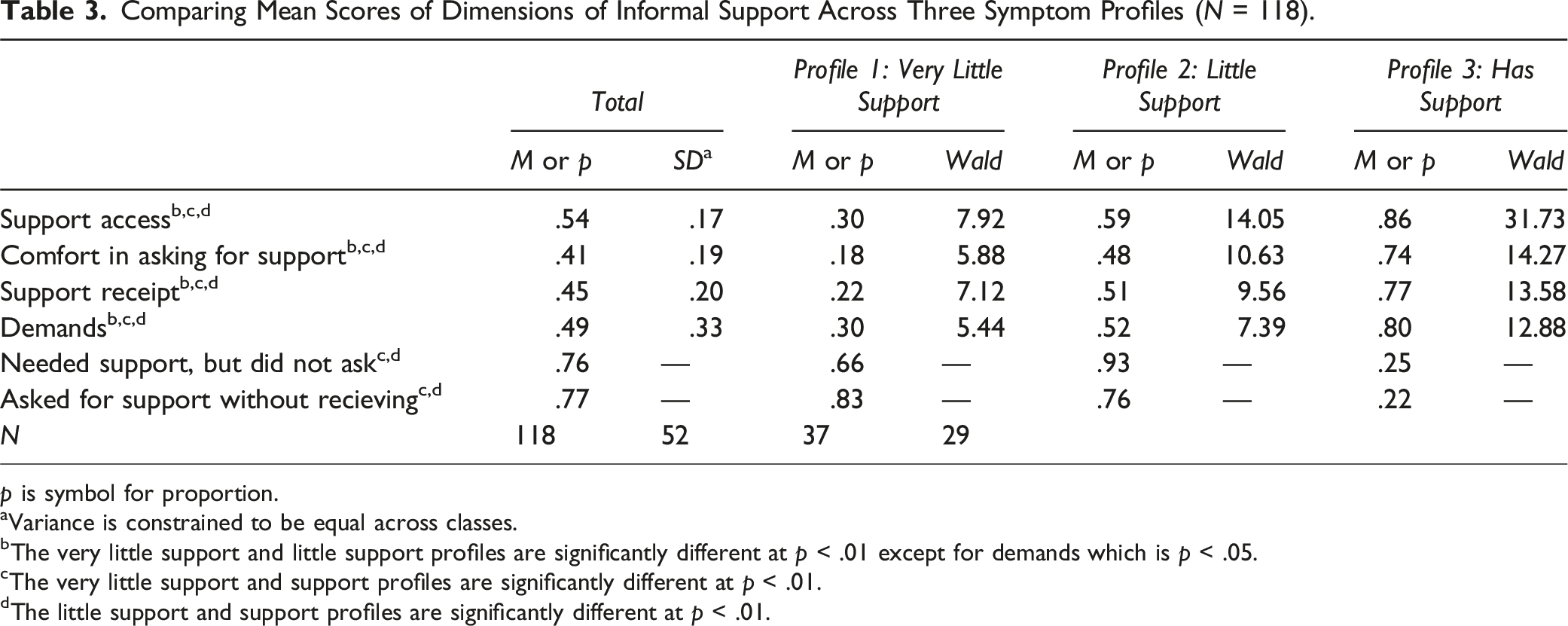
p is symbol for proportion.
aVariance is constrained to be equal across classes.
bThe very little support and little support profiles are significantly different at p < .01 except for demands which is p < .05.
cThe very little support and support profiles are significantly different at p < .01.
dThe little support and support profiles are significantly different at p < .01.
Comparing Mean Scores of Covariates and Mental Health Symptoms From Three Symptom Profiles (N = 118).
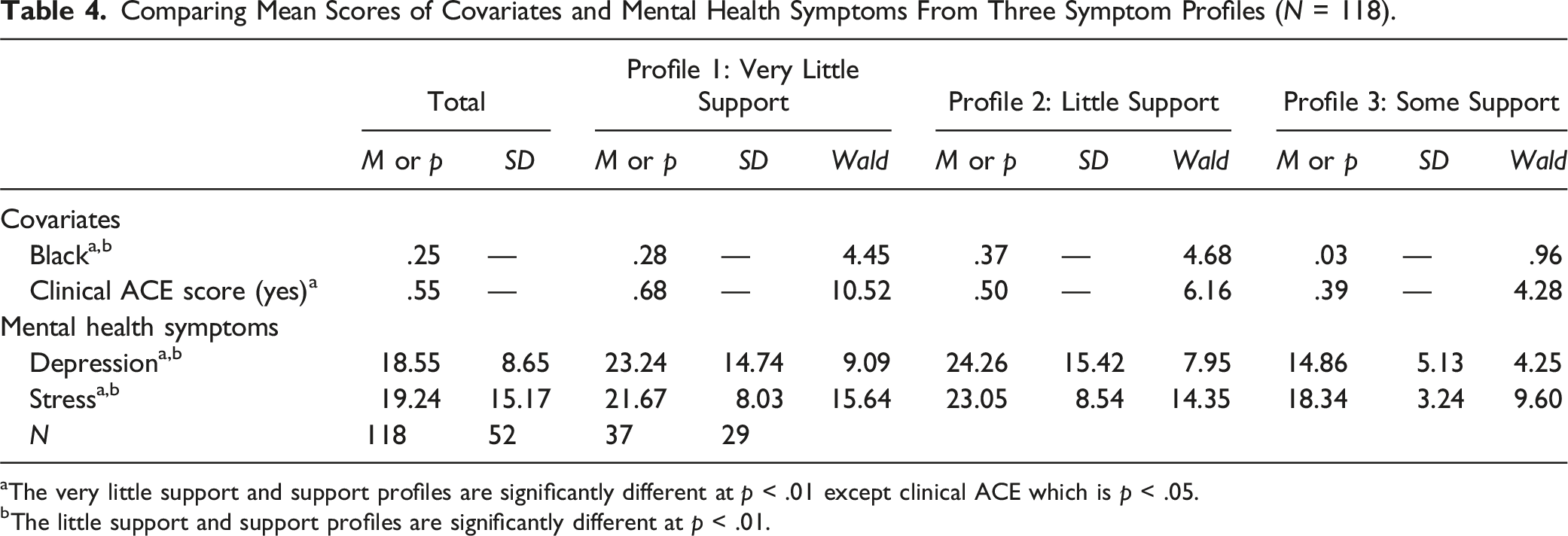
aThe very little support and support profiles are significantly different at p < .01 except clinical ACE which is p < .05.
bThe little support and support profiles are significantly different at p < .01.
Relationships between profile membership and depression and stress symptoms were in the expected direction. Parents in profiles with “very little” or “little” support reported significantly more depressive and stress symptoms (M = 23.2 and 24.3, respectively) than parents in the “some support” profile (M = 14.9). The differences in depression and stress symptom levels among those in “very little” and “little” support profiles were remarkably similar and did not approach statistical significance (depression: M = 23.2 vs. M = 24.3 and stress: M = 21.7 vs. M = 23.1, respectively).
Discussion
Parents involved with CWS are susceptible to many challenges, including economic and mental health barriers (Roscoe et al., 2018). For parents facing hardship, informal support networks can protect against challenges, including financial instability, poor mental health, and stress (Radey, 2018; Taylor & Conger, 2017), however, aspects of informal support may differ from family to family. The present study examined dimensions of social safety nets among parents involved in CWS to determine whether the protection of safety nets that benefit economically marginalized families more broadly also applies to the CWS parent population. Notably, although the study sample was richly racially and ethnically diverse, it was largely homogeneous in terms of economic disadvantage (e.g., 89% lived in households earning $49,999 or less), which is similar to past child welfare research (e.g., Fong, 2017; Marcenko et al., 2012; Sattler, 2023). As such, the application of the family stress model was fitting. Supporting the study hypotheses, findings pointed to distinct profiles of informal support networks. Plus, different profiles were associated with parents’ ACEs and mental health. Using person-centered analyses, results revealed three typologies of supports and demands: very little support, little support, and some support. It is noteworthy that most parents (75%) reported little to no informal support. The “very little support” profile was the largest, and was characterized by little perceived and received support, a lack of comfort in asking for support, and, despite discomfort, most (82%) sought help from their informal support networks but did not receive it. Plus, even though the “little support” typology had comparatively more support compared to the “very little” group, as the second largest profile, the informal support of parents in this group was also quite limited. Although parents involved with the CWS may have higher informal support network needs compared to non-CWS-involved parents (Goodman et al., 2007), most parents in this study (75%) reported limited support. These findings are congruent with research showing that parents most in need of support perceive the least amount of access to it (Radey, 2018).
We also found that demands differed between profiles. Parents within the “some support” profile reported the “right amount” of demands, highlighting the value of reciprocity within one’s informal support network. These findings align with the research suggesting that healthy networks require both available support and manageable network contributions (Radey & McWey, 2019) and build upon existing research depicting the intricacy of negotiating supportive and often reciprocal expectations of support in already overburdened contexts (Offer et al., 2010). However past research suggests that higher levels of unmet basic needs may point to the limited capacity of informal networks (Marcenko et al., 2012). Plus, research shows that, particularly in low-resourced contexts, parents must carefully consider the extent to which they can reciprocate support when deciding whether to ask for it (Dominguez & Watkins, 2003; Offer et al., 2010). It is therefore plausible that in the CWS context, where parents are already navigating many demands (e.g., fulfilling case plans while maintaining employment and stable housing), they have little to give, and this limits the extent to which they receive support from their informal networks, even when they really need help.
Levels of support also were linked with parents’ mental health such that those with little and very little support reported higher levels of depressive symptoms and stress. This is an important finding because stress and depression are correlates of child maltreatment (Venta et al., 2016). Our findings coincide with results from Durden et al. (2007) that suggest that emotional demands may add to psychological distress when emotional supports are not present.
The majority of the study sample reported high levels of depressive symptoms and stress with low levels of network support, plus they had demands at a level incongruent with their desires. Conclusions drawn from research not specific to the CWS that highlight increased susceptibility to poor mental health among parents in poverty without informal safety nets (Radey et al., 2020) also seem to apply to parents in CWS, and this further supports the idea that those most in need have the least support access through their informal networks (Harknett & Hartnett, 2011).
A parent’s exposure to ACEs when they were children also was related to profile membership. Compared to parents in the “some support” profile, parents in the “little” and “very little” support profiles were significantly more likely to report having experienced four or more ACEs, a level of clinical concern (Felitti et al., 1998). Notably, parents in these profiles also often reported discomfort in asking for help when they needed it, and although many sought support, they did not receive it. This finding complements existing research highlighting the disadvantaged network ties among families involved in the child welfare system and the historical presence of intergenerational trauma and adversity (Fong, 2017). Moreover, past qualitative researchers reported similar patterns (e.g., Fong, 2017; Manji et al., 2005). For instance, Fong (2017) found that parents with higher ACEs scores described distrust of their social networks. Similarly, early trauma and difficult adult relationships were overarching themes in an ethnography examining CWS engagement among women with active cases in England (N = 72; Mason et al., 2020). Our finding that high levels of childhood ACEs were associated with weak informal support networks is not surprising given that difficulty in facilitating relationships and low levels of trust are defining features of traumatic event exposure (McWey, 2022). These findings bolster calls for trauma-informed service provision within the child welfare context (Kramer et al., 2013). Similar to how CWS workers often employ a trauma-informed lens when working with children, providers can approach parents by recognizing that their behaviors (e.g., withdrawn, reserved) may be adaptive and arguably essential for survival. Trauma and social network adversity may be interrelated such that low levels of trust may inhibit parents’ ability to successfully navigate resources (Mason et al., 2020).
The family stress model can help frame our understanding of these findings. In the context of child maltreatment, families may start with disadvantaged social networks. Plus, the stigma of CWS involvement may further restrict one’s willingness to involve their informal support networks in their family’s needs. In circumstances in which parents faced adverse experiences when they were children, they also may understandably be mistrustful of support (Mason et al., 2020). Plus, with informal network relationships that require reciprocity (Dominguez & Watkins, 2003; Offer et al., 2010), seeking support from one’s informal network can further strain, rather than alleviate, stress and burden. In line with the family stress model, overwhelming stressors and demands can then be further detrimental to parents’ mental health.
This study contributes to the research on informal support networks for families involved with the CWS, however, there also are limitations to consider. First, the data were cross-sectional. Longitudinal research capturing changes in informal support networks and mental health outcomes is needed. Additionally, the measures of parents’ experiences were self-report and included perceptions. Although informal support perceptions are important predictors of outcomes (House et al., 1988), responses could be influenced by responder bias. Moreover, although the researcher-created assessment of informal support networks captured greater nuance than is typical in this area of research, more work is needed to develop and standardize a measure of social support specific to the CWS context.
Plus, the study sample involved mostly women (78%). Although this makes sense considering that most of the parents in the CWS are mothers (Berger et al., 2009), it introduces the potential for unique gendered expectations related to social support. A study by Williams-Butler and colleagues (2023) examined social network quality among Black mothers reported to the CWS finding that mothers generally reported their social networks as positive, citing informal supports as a potential untapped strength for mothers. They concluded that there is a need for culturally- and gender-responsive interventions that take into account the larger ecological context in which families live. These ideas could not be further tested in this study due to the limited representation of fathers.
A strength of this study was the use of a person-centered approach that allowed us to explore the heterogeneity of families involved with the CWS and identify specific aspects of informal support networks associated with ACEs and mental health symptoms. A person-centered approach is useful because it can help identify within-group differences and point to tailored areas of intervention; however, the sample size was small for the analyses conducted. The lack of statistical power limited our ability to conduct full factor analyses and include additional covariates to test nuanced relationships such as the function of social networks by gender. Plus, although we tested sociodemographic characteristics associated with profile membership, only race was significant. One likely explanation for this is that the sample was largely economically disadvantaged, so there was limited variability to capture when testing income and education as covariates. Finally, since the scope of this project was limited to [one U.S. state, blinded for peer review], the findings may be not generalizable to other states or regions. Researchers should examine related research questions with a nationally representative sample.
With these limitations in mind, results can inform policy and practice. Chronic familial problems are frequently the crux of why families enter CWS, and economic hardship often complicates successful case completion (Marcenko et al., 2012). The CWS services often address parenting, mental health, and substance abuse issues, but not material needs. The high level of material needs coupled with low levels of informal support among parents in the current study highlights the potential for CWS professionals to connect parents to public programs and services. Meeting material needs could allow parents to focus on additional case plan requirements in which they may have greater control. In our sample, only 4% of parents reported receiving Temporary Assistance to Needy Families (TANF) cash assistance despite state eligibility for many CWS parents (Florida Department of Children and Families, 2023). A recent scoping review suggests TANF receipt can reduce CSW investigations and substantiations (Maguire-Jack et al., 2022). With their high level of material need, it is intuitively consistent that CSW families could also benefit. In addition to connecting eligible parents to benefits, an expanded public safety net may help to close the gap between what parents need and what they can access through CWS and their informal networks to meet case plan requirements. For example, recent collaborations between CWS and permanent supportive housing programs (e.g., Chambers et al., 2023) show promise. To better meet the needs of multiply disadvantaged families, greater CWS and public service integration may be able to address concerns for which stand-alone agencies are often ill-equipped (Ehrle et al., 2004). Like past research on the strengths and needs of parents involved with the CWS (e.g., Williams-Butler et al., 2023), results highlight the importance of context-sensitive interventions that are focused on the unique needs and strengths of each individual family.
In sum, this study contributes to the literature by using a person-centered approach to examine the multiple dimensions of informal support and testing whether variations in support were associated with sociodemographic factors, ACEs, and mental health symptoms among a sample of parents involved with the CWS. Results point to an overwhelming lack of informal support for parents involved with the CWS, and those with the fewest resources reported higher levels of parental stress, depression, and ACEs. These findings can be used to inform continued research and intervention efforts aimed at helping families involved with the child welfare system.
Footnotes
Declaration of Conflicting Interests
The author(s) declared no potential conflicts of interest with respect to the research, authorship, and/or publication of this article.
Funding
The author(s) disclosed receipt of the following financial support for the research, authorship, and/or publication of this article: The research reported in this paper was supported by funding from the Florida Institute for Child Welfare.
