






Abstract
Increasingly, communities across the U.S. are looking to prevent families from unnecessary involvement with the child welfare system. Community-based participatory research methods, like community cafés, offer a framework for developing solutions in partnership with groups impacted by the child welfare system. The present study, which is part of a larger child welfare prevention demonstration project, is among the first to use community cafés with families and mandated reporters to inform the design of a community response program. Evaluators worked with local partners to host eleven community cafés in three states, mainly in rural areas. Conversations centered on the need for voluntary, tailored, and affirming support for families. Participants living in rural areas emphasized the unique service barriers impacting families in their communities. These collective insights from families and mandated reporters shine a light on opportunities to improve community response programs, including meeting the needs of families in rural areas.
Keywords
Introduction
Each year, millions of reports of suspected maltreatment are made to Child Protection Service (CPS) agencies across the country. In 2023, there were nearly 4.4 million referrals involving more than 7.7 million children and of these referrals, 52.5% were screened out or determined ineligible for further CPS intervention (U.S. Department of Health & Human Services, 2025). Despite the volume of referrals that are screened out, relatively little is known about these families. Existing research shows that a substantial share of screened-out families is re-reported within five years (Putnam-Hornstein et al., 2015; Simon et al., 2022). A recent screening analysis conducted across three states examined statewide referral patterns over multiple years and found that screened-out children represent a large cohort with meaningful near-term re-referral risk and that many re-referrals occur within four months, underscoring the importance of timely outreach and connection to supports immediately following a screened-out report (Heaton et al., 2025).
Research further demonstrates that children and families who are screened out share similar demographic characteristics and needs—and similar risks of future CPS involvement—with those who are investigated (Dumas et al., 2015; Putnam-Hornstein et al., 2015; Slack & Berger, 2020). Together, these findings suggest that, regardless of the initial screening decision, many families referred to CPS have underlying needs and risk factors that may worsen when left unaddressed, increasing the likelihood of initial or repeated CPS contact. In the absence of adequate and meaningful community-based alternatives, CPS becomes the default point of entry for family support rather than fulfilling its intended role of ensuring child safety. This shift not only misaligns the system with its core mission, but it also diverts critical resources away from protecting children at risk of harm. Together, these patterns point to a clear and urgent need for community-based approaches that can support families well before risk escalates to the level of child welfare involvement.
Community Response Programs
As part of the move toward community-based prevention, Community Response (CR) programs have reshaped the maltreatment prevention landscape. CR programs serve families who are reported to CPS systems but are not engaged by them as the circumstances involved in the report do not meet statutory criteria for further intervention (Slack & Berger, 2020). Given the focus of secondary prevention on individuals that are at high risk of child maltreatment (Jones Harden et al., 2020), CR programs could be classified as a secondary prevention strategy for child maltreatment. In a CR program model, following a screened-out child maltreatment referral, families are referred to a community-based program (Heaton et al., 2025) to address needs that put them at risk of future child welfare involvement. CR programs connect families with support and resources in their communities to meet their needs, with the goal of preventing families from becoming system involved. Across programs, CR models share several core components: family-centered needs assessment, case management or navigation services, community referrals, and—in many cases—flexible financial supports (Heaton et al., 2026). However, CR program design varies considerably in terms of eligibility criteria, outreach strategies, assessment tools, duration of engagement, and the breadth of services offered. This variability complicates efforts to identify best practices and contributes to mixed evidence on program effectiveness (Heaton et al., 2026; Simon et al., 2022). While some CR programs report positive outcomes such as reduced CPS re-referrals, improved protective factors, or increased access to mental health services, others show no measurable impact on child welfare involvement or family stability (Heaton et al., 2026; Simon et al., 2022). Some studies suggest that CR programs may hold promise for reducing future child welfare involvement (Allan et al., 2018; Millett, 2019; Slack et al., 2022). For example, some studies have found that offering community-based services to screened-out families resulted in decreased re-referrals in participating counties (Loman et al., 2009) and for families (Maguire-Jack & Bowers, 2014; Millet, 2019).
Despite the promise and growing adoption of CR programs, these programs face several challenges that limit their potential impact. CR program engagement and acceptance rates vary widely across programs and sites (Drury et al., 2019; Maguire-Jack et al., 2014; Simon et al., 2021; Slack et al., 2022). Some evaluations of CR programs have found general acceptance rates to be less than one quarter of eligible families (Allan et al., 2018; Beachy-Quick et al., 2018). When the referral to the CR program was made by CPS, acceptance rates were lower, as low as 10% (Beachy-Quick et al., 2018). Across the literature, several implementation challenges are consistently documented (Heaton et al., 2026). CR programs frequently grapple with staff turnover, limited bilingual capacity, high caseloads, and difficulties engaging rural or hard-to-reach families. Ineffectively coordinated pathways to connect families to services—particularly for mental health and substance use services—are a persistent barrier, as are budget constraints and inconsistent access to flexible funds.
Little is known about best practices or strategies for the successful design and implementation of CR programs, particularly around engagement and inclusion of families. Only a small number of CR programs describe stakeholder collaboration or inclusion of lived experts in program design or governance (Heaton et al., 2026). Most co-design activities occur at administrative rather than community or family levels, highlighting a substantial gap between stated values of partnership and the actual practices documented in prior CR initiatives (Heaton et al., 2026). Given the increasing emphasis on ensuring that systems and programs are responsive to the individuals and communities most affected by them, filling these gaps is critical.
Overview of the Project
In 2023, the Doris Duke Foundation (DDF) launched Opportunities for Prevention & Transformation Initiative, or “OPT-In for Families”, an initiative focused on serving families who are reported to CPS systems due to needs or concerns that do not meet state thresholds for formal CPS intervention. OPT-In for Families builds on data and lessons learned from community-based prevention work and CR programs and the perspectives of people with lived experience of the child welfare system. OPT-In for Families was designed as a “proof of concept” to test a meaningful alternative to the child welfare system, using an upstream community-based approach to support families when they need it most.
OPT-In for Families has four core components: access, engagement, navigation, and support (Doris Duke Foundation, 2025). Access involves the intentional focus of each selected site on families who are screened out at the hotline. Through Engagement, families will be reached out and engaged with compassion and respect by community-based programs that are outside the child welfare system. Via navigation, a trusted community-based person will help families navigate complex and bureaucratic services, so that the search for help does not become a hardship. Finally, to enhance support, sites are receiving funding to provide flexible funding support directly to families, in addition to linking them with needed services. Co-design is a further guiding principle of OPT-In: OPT-In partners aim to involve families and communities impacted by the child welfare system in developing and improving the designed solutions.
Four jurisdictions were selected to participate in OPT-In for Families and each site is designing, testing, and implementing alternative pathways in a subset of locations. These jurisdictions, with the exception of one, are geographically diverse with a mix of urban, suburban, and rural areas. This geographic diversity poses an interesting challenge for OPT-In work as some of the communities being served through the initiative include rural communities, yet our understanding of child maltreatment has generally focused on urban contexts and it is unclear how this research translates to rural contexts (Maguire-Jack et al., 2021). Prior epidemiological work on child maltreatment in rural communities has been mixed regarding whether maltreatment reports and substantiations are higher or lower in rural communities compared to urban communities
Community-Based Participatory Research and Community Cafés
Community-Based Participatory Research (CBPR) is a spectrum of collaborative research methods that involves partnership with those affected by the issue being studied (Bergold & Thomas, 2012). Effective CBPR cultivates power sharing between researchers and participants, as well as power building in the communities involved. The research team on this project integrated CBPR methods into the OPT-In evaluation, in alignment with the initiative’s guiding principle of co-design. CBPR methods provide a clear framework for working with communities to identify solutions that best meet their needs—in the case of OPT-In, designing a community-based pathway to prevent child welfare involvement and help families thrive. The present study focuses specifically on the use of community cafés to gather perspectives from community members on how to support families in their communities.
Community cafés are a facilitation model for fostering authentic dialogue and shared understanding, derived from the World Café approach (Brown & Isaacs, 2005; World Café Method, 2019). Broadly, cafés involve a series of small group discussions on a topic of interest to the community. Participants share insights and questions from their small group discussions with the larger group in one or more “harvest”—a space for meaning-making and building shared understanding. Though facilitation structures vary, community cafés often involve a host to guide the overall event, as well as designated or ad hoc notetakers and table hosts (World Café Method, 2019). Increasingly, researchers are integrating community cafés into their work as a participatory qualitative research method (Lohr et al., 2020), including in child welfare and family well-being research on a variety of topics such as integrating anti-racist and anti-opressive practices into the child welfare system, the impact of funding on community efforts in child protection, child maltreatment prevention intervention design, centering children in services, and family reunification (Best et al., 2021; Cerulli et al., 2017; Robinson et al., 2023; Stafford et al., 2021; Stephens et al., 2016). These studies overwhelmingly find that community cafés effectively generate collective insights, and that participants report feeling safe, heard, and connected with one another. Given these findings, community cafés represent a promising community-based alternative to traditional qualitative research methods.
Methods
Setting and Community Cafes
To support co-design during early implementation, the research team convened 11 community cafés across three jurisdictional sites—Site 1 (n = 3), Site 2 (n = 3), and Site 3 (n = 5) —from December 2024 through March 2025. Our community cafés were informal, solution-focused conversations designed to surface community strengths, identify family challenges and unmet needs, and generate community-informed strategies to strengthen supports and reduce pathways into child welfare involvement. Cafés were held in-person in accessible community locations and cohosted with local community organizations. This study was approved by BRANY SBER IRB (IRB00010793).
Cafe Discussion Prompts
During community cafes participants were asked to respond to set of three prompts. The first prompt elicited community strengths by asking participants what they were most proud of in their community. The second prompt asked participants about the challenges a family that has been or could have been reported to child welfare faces and what that family needed to prevent or overcome those challenges. The third prompt tasked participants with taking the role of a community planning team and mapping a pathway to help a family in their community transition from struggling to thriving. Participants were specifically asked about needs, resources, barriers, and facilitators to access.
Participant Recruitment and Selection
Café locations were selected within each implementation site based on planned service areas and/or areas with elevated screened-out referral rates. Given the initiative’s scope and the evaluation’s emphasis on understanding the experiences of families at heightened risk, recruitment relied on non-representative convenience and snowball sampling. In many cases, participants included families with lived experience of systems involvement. Site partners and community-based organizations supported recruitment through multiple strategies, including in-person invitations, printed and electronic flyers, and email outreach. Invitees were also encouraged to share information about the cafés with other community members and mandated reporters in their networks.
Data Collection Procedures
Each community café lasted approximately 1.5–2 hours and included lunch or dinner. Participants received an incentive for their participation. At the start of each event, the café team, composed of the research team evaluating the OPT-In Initiative (mostly PhD-level researchers, one master’s level and one bachelor’s level researcher) and a partnering organization representative (a leader or provider for a local resource community center or program), reviewed the OPT-In initiative as well as the purpose, process, and agenda of the café. Prior to beginning discussion, the research team reviewed informed consent material and obtained verbal consent from each participant. The cafés involved two separate discussion periods, each followed by a “harvest session”. During the discussion periods, the research team members served as table facilitators of the discussion prompts and as note takers. A local community member identified by the partnering organization or the advisory board that planned the cafés served as a table host, facilitating introductions and an ice breaker, fostering a welcoming environment, and offering relevant community context. During the harvest sessions, participants were asked to share a summary of their table discussion and their reflections on the table discussion process. The cafés culminated with a discussion of participants’ reflections on the café experience, including what worked well and opportunities for improvement.
The community cafés drew on the World Café model (World Café Method, 2019). However, the research team incorporated research-oriented adaptations described by Robinson and colleagues (2023) to support a more structured, focus group-like environment during small-group discussions. For example, rather than rotating participants across tables—a common feature of traditional World Café formats—participants remained with the same table group throughout the café to promote continuity and deeper discussion as conversations progressed across prompts.
Data Management and Documentation
Based on recommendations from the planning café teams, which included lived experts, and in alignment with similar prior work (Robinson et al., 2023), café sessions were not recorded. To support rigor and transparency, facilitators captured detailed notes on a laptop during table discussions and harvest sessions using a consistent note template. Additionally, table hosts or other volunteers wrote main response notes on a paper board. Immediately following each café, the research team conducted debriefs to document initial impressions, contextual factors (e.g., community dynamics, emergent concerns), and facilitation considerations that could inform interpretation. These debrief reflections were used to strengthen the analytic record and ensure that site context was preserved during analysis. Photos of the paper board and notes were reconciled by one researcher. If there was inconsistency in notes, the researcher consulted with the team members until consensus was reached on what the note should reflect.
Data Analysis
Four members of the research team conducted a thematic analysis (Braun & Clarke, 2006) using a three-phase approach to generate site-specific and cross-site findings of community café data. Prior to the analysis, the team reviewed a set of notes together, independently identifying codes and collectively reviewing and discussing to ensure congruence in the codes identified. When there were discrepancies, the team members discussed them, noting what factors contributed to the different interpretation, until mutual understanding and consensus was reached. A similar process was followed for theming decisions. Throughout the process there were multiple check points for team members to discuss discrepancies and ensure alignment in approach.
Phase 1: Site-level thematic analysis
For each site, core research team members took on the role of the lead analyst and second analyst. They each independently reviewed café notes multiple times, developing inductive codes that arose and these were then later categorized to identify salient themes for each discussion prompt. The lead analyst drafted a main site summary of the themes; the secondary analyst mapped their own analysis onto the draft, and discrepancies were resolved through discussion until consensus was reached. One to two additional members of the research team took on the role of reviewers. They read the notes and examined the draft findings and provided feedback on whether their analysis of the notes mapped well to the written main summary. When thematic interpretations differed, the full analysis team met to refine theme definitions and reach agreement. Throughout this process, the team used analytic memos to document emerging interpretations and rationale for decisions, supporting an audit trail of how themes were developed. The analysis was done manually using a Mural board and virtual sticky notes to map codes onto themes.
Phase 2: Member check-in
To strengthen credibility, the team conducted voluntary member check-in sessions in which analysts presented site findings to café participants and invited feedback, clarifications, and alternative interpretations. A total of 15 member checking sessions (8 for families and 7 for mandated reporters) with about 125 participants were hosted across the sites. Participant input, which was generally appreciation for representing their voice and thoughts accurately and occasional requests for emphasis of certain findings, was integrated into the finalized site-level findings, consistent with qualitative rigor practices that emphasize credibility and reduced research bias (Birt et al., 2016; Lincoln & Guba, 1985).
Phase 3. Cross-site synthesis
Finally, the four-person analysis team inductively coded across sites to identify cross-site patterns. To maximize utility for implementation, cross-site themes were subsequently organized under OPT-In’s four core components: access, engagement, navigation, and support.
Reflexivity Statement
Our core community café research team was composed of five researchers, four of whom hold PhDs. We represent professionals in the fields of social work, educational psychology, community research, and public policy. We have diverse backgrounds, which include different racial and ethnic composition, lived experience with the child welfare system and/or child maltreatment, experience working within the child welfare system, experience living in rural and urban contexts, and experience growing up in poverty and accessing public benefits. We also have varied experience engaging in Community-Based Participatory Research, ranging from experience leading such research and having published in the community cafe methodology to new research in this space. Collectively, our backgrounds and experiences relate to those of the communities we heard from through community cafés. Throughout this research, we engaged in discussions on power dynamics and how our backgrounds impacted how we understood the experiences shared with us by participants.
Results
Breakdown of Number of Participants by Site and Participant Type
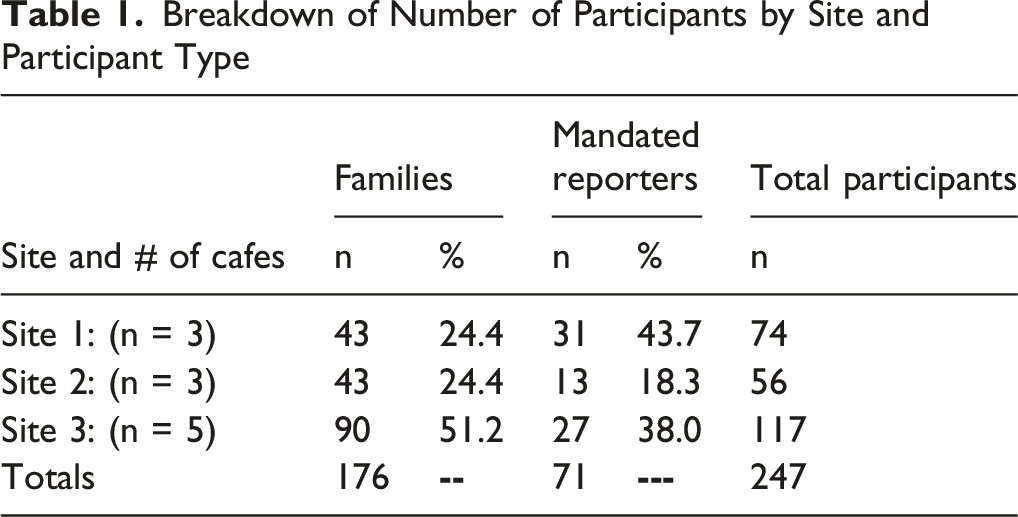
The community cafés took place in geographically diverse communities with some having a mix of urban, suburban, and rural areas. Most participants in the cafés described residing in rural or remote communities. For some participants at cafés held in non-rural areas, their experiences aligned with conditions and challenges shared in rural cafés (geographic based transportation access issues, lack of proximity to some services, etc.).
Table 1 Number of community cafés and participants by participant type and site location.
Emergent Themes From Community Cafés
Several themes emerged regarding participants’ perceptions about their community and how they would plan a community response program to meet family needs. Because this research aimed to inform the work of the OPT-In Implementation sites, our café analysis used the framework of the four core components of OPT-In –access, engagement, navigation, and support – to derive participant informed implementation recommendations for Community Response Programs. Themes on community pride are presented outside of this framework and are presented first as they provide context on community strengths as perceived by participants.
Community Pride: Community Connectedness, Community Support, and Resource Availability
Among participant discussions of what they were proud of in their communities, three main themes emerged: (1.) community connectedness, (2.) community support, and (3.) resource availability. These themes provided useful community context to understand what participants perceived was working well in their community and their selection for community response program recommendations.
Community Connectedness
Across sites, participants shared that they were proud of living in communities that were connected and close-knit. Participants described that the connectedness or close-knit communities were embodied by kindness, hospitality, and warmth, which promoted feelings of being welcomed and supported. Family participants shared: “Everyone in [Community location] is connected; it feels small, and people are willing to help.” (Site 1); “Pretty much everyone knows each other, if you need help from a neighbor—everyone is super friendly.” (Site 2); “What I like about the community is the hospitality. Everybody is so nice to everybody else, and it doesn’t matter where you come from” (Site 3).
Participants’ feelings of connectedness in part may have been attributed to the rural context that some of these participants described, which afforded them proximity to get to know each other and longstanding relationships with each other. Participants described that “[Community location] is very small, different. I love and am proud of how everyone does for one another. Very generational, families have known each other for a long time.” (Mandated reporter participant, Site 1), “There’s a lot of love [in our community]…[It’s] a sweet little tight-knit community.” (Mandated reporter participant, Site 2) and “[There’s a] certain warmth, hospitality, and genuineness you find here that you don’t find in other places” (Family participant, Site 3).
Community Support – Informal and Formal
Additionally, participants also expressed pride in the level of support they receive from their community. One family participant expressed “I am proud of my community because of the support it gives families.” (Site 1). Across sites, participants depicted the community support as both formal—support from services, organizations, and systems—and informal support from family, friends, churches, and neighbors. In particular, family, neighbors, schools, churches, and community-based providers were identified as critical sources of support across the sites. A common thread was a sense of unity in providing support, with several participants describing their communities coming together as a village to help: [Our community] is like a village where everyone works together to remove barriers for families.” (Mandated reporter participant, Site 1), “It takes a village—we try to emulate that day in and day out.” (Family participant, Site 2), and “Most people in my neighborhood look out for each other. Mostly it is a village, and everyone understands that is important to help out the kids.” (Family participant, Site 3).
Resource Availability
Participants described that despite various challenges in some resource availability (housing, behavioral health, substance use treatment, etc.), they were proud that their communities still had a variety of resources and supports to help meet family needs. Participants expressed: “I have been proud of what we have available [resources].” (Family participant, Site 3) and “What I love about [REDACTED] county is that they have a lot of resources to offer to the community” (Mandated reporter participant, Site 3). Additionally, participants noted that the resources they had available were often not present in neighboring counties: “[We] have a lot of resources in this community that other communities might not.” (Family participant, Site 2) and “We have a lot of services in this small community—more than larger counties….” (Mandated reporter participant, Site 1).
Strengthening Access, Engagement, Navigation, and Support in CRP
Access
Community café participants shared various needs and challenges that place families in their communities at high risk of or contributed to system involvement. Participants described that families often experience compounded challenges, which exacerbate families’ circumstances and their ability to overcome difficult situations. These challenges and needs shared by families can best be categorized into two critical thematic areas:
Financial and Concrete Needs
Resoundingly, participants across community cafes described that families in their community face various challenges related to finances and meeting their concrete needs. The financial struggles often were impacted by or impacted other aspects of a family’s stability and well-being, such as maintaining stable housing and employment and accessing critical resources and supports like basic needs, transportation, and childcare. Participants described: “Economics are a challenge – [families are] struggling with income, resources and support, lack of childcare…” (Family participant, Site 2), “The foundation of the issue is, there [are] basic needs not being met. … Resources are low, housing, nutrition, it’s all getting cut.” (Family participant, Site 2), and “Parents have a lot of stress and are doing the best they can. They can’t provide, can’t buy a phone, and they want to provide a little extra for their children, but they can’t provide what the children needed.” (Family participant, Site 3).
Systemic and Structural Barriers
In addition to the need for financial and concrete supports, participants also shared that families experience various bureaucratic and external challenges that make it difficult to have their needs met. These challenges include things such as long waitlists, limited or lacking availability of resources and transportation, and rigid or high thresholds to receive or participate in services, among others. Two family participants highlighted the thresholds for services access challenges: “You need to be almost drowning to get help.” (Site 2) and “Background checks, eligibility qualifications. You can’t just be a woman in need to go to a woman’s shelter” (Site 3). Because many of the participants described being in rural or remote communities, access to transportation was a major challenge noted across the sites. One family participant described that “Not everybody has transportation. And on the other side, there’s no public transportation” (Site 3), while another shared the challenge it posed for accessing basic things like schools: “Transportation to school [is a challenge]. [Community Location] is a walking district—no bus service. There was a family that walked 2 miles to school every day to get to school. Sometimes having to walk across highways.” (Site 1).
Engagement
Community café participants' various insights on barriers to engagement and how to best engage families were categorized into five themes. Barriers were categorized under the theme of Stigma, Fear, and Mistrust of Systems, while the following themes arose for engaging families: Universal Outreach and Community Building, Relatable Individual Outreach, Authority to Provide Small Help, and Multiple Outreach Approaches and Methods.
Stigma, Fear, and Mistrust of Systems
Participants indicated that the presence of stigma, fears, and mistrust of systems impacted families’ willingness to engage in services and were major engagement barriers. One family participant summarized the common fears associated with service engagement: “[There’s] fear of the outcome with getting services, of people looking at you a certain way, of what is required to get services. Fear of getting reported or having the child taking away, fear of being judged as lazy, fear of retaliation through the system – fear of losing other services” (Site 3). Specifically, participants described that families in their communities experience stigma related to help seeking or acceptance, which seemed pronounced in the rural contexts.
Universal Outreach and Community Building
Participants expressed that one of the best approaches to engaging families was to begin with community-wide outreach strategies that include community building and fun, as well as offering immediate, tangible assistance (e.g., school supplies, clothing vouchers). Ideas shared by participants included: “Have churches do presentations, create awareness through the basketball leagues, community events (have free food), and community cafés.” (Family Participant, Site 2), “Hold meetings like this [the community cafe] and share resources. Pass out flyers and let families know what are available.” (Mandated Reporter participant, Site 3) and “Putting together resources for many people, don’t single a family out. Create a community wide outreach” (Mandated Reporter participant, Site 2). Some participants expressed that engaging in universal outreach would help normalize help seeking and acceptance and would also help build trust and establish initial relationships. This sentiment was best captured by these participants: “We need to bring people together and [create a] sense of community and build relationships so they will ask for help.” (Family Participant, Site 2) and “Build a sense of community so that people can feel comfortable and ask for help” (Mandated Reporter Participant, Site 3).
Relatable Individual Outreach
Participants also identified that outreach from a consistent peer navigator or other relatable individual or organization in the community would make families more likely to engage with services. Participants shared that having the individual reaching out to families be a known person, or someone they can identify with and trust would encourage families to engage with supports and accept help. Some suggestions included: “A community partner should reach out, and they look like them [the families] and not the [child welfare] system.” (Family Participant, Site 2), “I would want the people [doing outreach] to look like the families that they’re reaching and just feel representative of them.” (Mandated reporter participant, Site 2), “Bring them in through someone they already trust, like an organization, or church, or school staff like the counselor.” (Family participant, Site 3) and “Recruit different peer support specialists and have them do the calls.” (Family Participant, Site 1).
Authority to Provide Small Help
Café participants resoundingly agreed that it is critical that the individual engaging families is empowered and has access to resources to provide some immediate and practical help to demonstrate their commitment and ability to support the family. Family participants emphasized: “If you are going to reach out to people, make sure that you can actually help them” (Site 3), “Come prepared with resources to meet the family needs at first contact.” (Site 3), “It’s really important that the person at the front door … has the authority to do the support and provide the help. You don’t want to be diverted.” (Site 2), “Don’t create a position without the authority to meet the need. [They] should be able to meet it within 72 hours” (Site 2) and “They [the outreach persons] need to be prepared and trained, maybe a database that helps them access the information they need to share with families.” (Site 1).
Multiple Outreach Approaches and Methods
Finally, participants indicated that for engagement to be successful, a variety of engagement methods of communication—text, phone, letter, etc.—at varying times of day should be employed to increase the likelihood of reaching families and to overcome common challenges with engagement. Within these conversations, café participants noted strengths and challenges of each approach to acknowledge that a single method may not work for every family. For example, face to face contact was noted as a good method to build trust, “Go to their house and see them in person – people are proud and they don’t want to tell you they are struggling.”
Navigation
Across cafés, participants shared insights regarding the service access barriers that make it difficult for families to navigate services and provided recommendations for how to address those barriers. These insights were organized along the themes of Service Access Barriers, Service Navigation Approach, and Strengthening Navigation. The Strengthening Navigation theme included the subthemes of Centralized, One Stop Resource Hub, Centralized and Streamlined Referral Processes, and Well Trained and Prepared Staff.
Service Access Barriers
Café participants shared various challenges that make it difficult for families to navigate the resources and supports available in their communities, particularly in rural communities. Participants specifically identified knowledge, social, logistical, and structural challenges, like families and mandated reporters not being aware of the availability of services or not having the right connections to know or access the services. Family participants described that “Family service access “[ties] back into word of mouth, what you know or who you know. A lot of times they [families] don’t have that access.” (Site 2) and “Families don’t always know where to turn.” (Site 1). Additionally, families not meeting requirements to access a service or providers not being willing to help was a significant challenge. Finally, the rural context provided logistical challenges to navigating resources, such as not having services or internet access. One mandated reporter participant explained: “[This is a] big rural area [with]rugged terrain and it’s hard to get there…[Phones] and Wi-Fi is an issue and we’re trying to get connected, but they don’t have services or can’t afford Wi-Fi” (Site 2).
In response to the challenges identified, participants provided several recommendations on the type of navigation support families should receive and the ways to strengthen navigation so that families could experience seamless support when meeting their needs.
Service Navigation Approach
Participants provided various insights on how they believe navigation support should look like to be most helpful to families. Participants described the need for a consistent point of contact that treated families with kindness, compassion, dignity, and respect. This was best captured by two family participants: “People don’t like to see different faces, or too many people involved, so we need a consistent person.” (Site 1) and “Families should feel like they are being treated like family, warm, welcoming, with respect and dignity.” (Site 2).
Participants also expressed a desire for a collaborative approach in which their navigator provided them with sustained and consistent family-centered support until their needs were met. “Weekly or twice-a-month check-ins to build rapport and follow up.” (Family participant, Site 1) and “[A] navigator to help with all of the supports (holistic approach)… who can look at my circumstances on case-by-case basis…” (Family participant, Site 2). Finally, family participants wanted their navigator to serve as an advocate and supporter throughout the process: [A family navigator] “who can help coach, give resources, pick you up and take you around; can be your voice to advocate for you, help with motivation you don’t have.” (Site 2) and “Take me, hold my hand and walk me through it” (Site 3).
Strengthening Navigation
Participants highlighted certain practices and components that would improve their experience with navigating services. The main strategies identified were having a centralized, one stop resource hub where families can receive services, centralized resources and a streamlined referral process, and trained and knowledgeable navigators who can direct families to needed support.
Centralized, One Stop Resource Hub
A resounding recommendation across cafes was that there should be centralized hubs in which families could access a variety of services and resources. These hubs would provide ease of access for families who often experience multiple and complex needs, and who are often sent in various directions to have their needs met. “Needs to be place where all resources are in one spot” (Family Participant, Site 2), “Pie in the sky—one giant resource hub [with] transportation to get to and from hub, people doing outreach to get the word out about the hub.” (Mandated reporter participant, Site 1) and “One stop shop…have a little bit of everything, mental health, basic needs” (Mandated reporter participant, Site 3).
Centralized Resources and Streamlined Referral Processes
Café participants overwhelmingly recognized that resources and referral processes need to be streamlined so that families can have their needs more quickly and easily met. In addition to a centralized hub, participants provided various recommendations on how this could be done including streamlining applications, services, and resource information. “Centralized services—parents should have access to a point person; providers run families around for weeks trying to make connections to services” (Family participant, Site 1) and “Systemize or centralize help, make it more organized or automated or right away send an email about steps to get help” (Family participant, Site 3). Participants also recommended a variety of ways to streamline service information such as QR codes, resource packets, mobile applications, and a community resource book. “Integrate a book/QR codes with requirements/eligibility criteria already included, then hand it out to people” (Family Participant, Site 2).
Well Trained and Prepared Staff
Participants also emphasized that having well trained and prepared staff was critical for families to more easily navigate services and get their needs met. Having trained staff would ensure that families would be treated well and directed to the correct services, enhancing families’ experience. Family participants expressed they wanted “A well-trained social worker or a community or church member. It is all about your approach”,
“Better training and more accountability…” (Site 2) and that “the worker should have a list of questions about how they can assess accurately what the needs and issues are.” (Site 1).
Support
Across cafés, participants shared various support needs and challenges to having needs met that families experience in their communities. In response to those challenges, participants shared the type of supports that they would like families in their communities to receive so that they can thrive. Participant insights were organized into the following themes: Nature of the Support Provided, Financial and Concrete Supports, and Mental Health and Substance Use Recovery Support.
Nature of the Support Provided
Participants expressed that it was critical that any support provided to families was sustained, as opposed to one-time temporary assistance, to ensure family stability long term. In a similar vein, participants stressed the importance of having preventative support instead of solely reactive support. For example, one family participant expressed an interest in more preventative resources. They shared: “More preventative resources. Current services won’t help until the family is in trouble.” (Site 1) Another family participant shared: “It should be preventative, not just emergency” (Site 2). Café participants also described that supports offered should be individualized and holistic to meet the specific and varied needs that families have. This is best exemplified by these family participants, “Ask them what they need, it should be individualized” (Site 1) and “[offer] Support for the whole family and with any needs that come up” (Site 3). Finally, participants indicated that supports should be available outside of traditional work hours to accommodate families’ schedules and emergent needs. “After hours options. Everything cuts off at 5- more resources should come after work hours” (Family Participant, Site 1) and “…have someone available at all times to respond to a crisis.” (Mandated Reporter Participant, Site 2).
Financial and Concrete Supports
Financial and concrete supports, including housing, childcare, and transportation, were the most cited supports that families need to thrive and to prevent child welfare system involvement. Participants described that families’ struggles to meet basic needs often stemmed from pervasive economic challenges. Meeting those financial needs would address compounded challenges that families experience, contributing to increased family stability. Family participants identified supports including:
“Transportation, childcare, workshops for people to get jobs so people can get the resources and training they need” (Site 3), “Access to food, child care, rental assistance, utility assistance, clothing vouchers, transportation vouchers…clothing assistance, basic needs and supports year round,” (Site 2) and “Utilities, housing, clothes, food, transportation, car maintenance, employment…first month rent and deposit” (Site 1).
Mental Health and Substance Use Recovery Support
Participants across cafes shared that beyond financial support needs, families in their communities were struggling with mental health and substance use challenges. Family participants described: “It’s a lot of mental illness, a lot of drugs, alcoholics, homeless people, the majority of people who are homeless are so because of mental health problems.” (Site 3) and “A lot of families accessing services are homeless or have substance use disorders” and “[There’s] lack of resources for substance abuse problems” (Site 1). The high need for and scarcity of these resources made them critical to families. Across the sites, participants expressed the need for more mental health services and facilities, as wells as more substance use treatment centers.
Discussion
This study used a CBPR approach to inform the design and ongoing refinement of the OPT-In intervention. OPT-In is a community response program that is structured around four integrated components—access, engagement, navigation, and support—grounded in co-design as a guiding principle. Through community cafés, families and mandated reporters shared their perspectives on community strengths, family challenges, and strategies for meeting families’ needs to help shape a community response program in their communities.
Findings from community cafés underscore that engagement is a critical and fragile entry point into prevention services. Families’ willingness to engage was shaped strongly by stigma, fear, and mistrust of systems, particularly those associated with Child Protective Services (CPS). Participants described pervasive concerns that seeking help could lead to judgment, surveillance, or child removal, reflecting a broader perception that CPS is not oriented toward family support. Prior work has found that fears of CPS involvement impact how parents engage with available resources (Fong, 2020). These experiences contribute to reluctance to engage with services, which may explain, in part, the low engagement rates, less than half % and usually around a quarter, found in the CR Programs literature (Heaton et al., 2026; Simon et al., 2021). This finding highlights the need for engagement strategies that explicitly address families’ fears.
Participants across cafés shared that they lived-in close-knit, supportive communities with extensive formal and informal supports and not surprisingly, these community strengths were foundational to participant recommendations for enhancing engagement. Participants identified several engagement approaches that may mitigate fear and stigma while building trust. Universal outreach that normalizes help-seeking and offers immediate, tangible assistance was viewed as an effective starting point for relationship-building. This broad approach was seen as particularly powerful when paired with subsequent personalized outreach from a peer navigator or other relatable, trusted individual. Families emphasized that credibility and trust were strengthened when outreach staff had the authority to provide small-scale, practical assistance and could demonstrate the ability to help in concrete ways. Finally, participants highlighted the importance of using multiple communication modalities and flexible timing to increase the likelihood of reaching families. Collectively, these insights suggest that effective engagement depends on early trust-building, personalization, and flexibility, rather than reliance on a single outreach strategy. Recommendations of normalizing need for support and developing trust and relationships align with prior work (Pettigrew et al., 2024). For rural contexts in particular, community closeness should be seen as an asset and leveraged, something that has been recommended by other scholars regarding responses to child maltreatment (Hartman et al., 2017). Finally, in line with participant recommendations, universal approaches to child maltreatment prevention has been suggested as an effective approach to addressing the needs of parents and preventing child maltreatment (Daro & Karter, 2019). Beyond engagement, community café discussions highlighted the central role of navigation in helping families overcome fragmented and complex service systems. Families described numerous barriers to accessing supports, including limited awareness of available resources, restrictive eligibility requirements, transportation challenges, and inconsistent responsiveness from providers. These challenges often resulted in frustration, delayed access, or disengagement altogether. Similar to findings by Pettigrew and colleagues (2024), participants’ experiences point to navigation as a linchpin in translating access into meaningful service use. Families consistently emphasized the value of having a single, trusted point of contact who could provide sustained, family-centered support over time. A reliable navigator can help reduce confusion, support follow-through, and foster trust. Participants also called for more centralized and streamlined access to services, such as one-stop resource hubs, coordinated referral systems, and simplified application processes with transparent eligibility criteria. Importantly, and similarly to Pettigrew and colleagues (2024), navigation was described as most effective when it was warm, culturally responsive, and relational—characterized by dignity, respect, and accompaniment rather than simple information provision. These relational skills were viewed as equally important as technical knowledge, underscoring the need for well-trained navigators who are equipped to problem-solve, communicate effectively, and adapt support to families’ circumstances.
At the same time, participants noted that even the strongest navigation efforts are constrained by the availability and accessibility of the service array itself. These findings align with other work (Pettigrew et al., 2024), which highlight waitlists and other system problems as challenges. Provider shortages, cost barriers, and transportation limitations frequently limited families’ options, suggesting that OPT-In’s success depends not only on program design but also on parallel investments across community systems to strengthen prevention infrastructure over the long term. These investments are critical to preventing child maltreatment (Jones Harden et al., 2020), as the challenges noted by participants resonated with some of the challenges documented in CR Programs literature (Heaton et al., 2026).
Finally, findings related to the Support component underscore that families’ needs extend well beyond one-time flexible assistance. Participants consistently emphasized the importance of robust financial and concrete supports—such as housing stability, utilities, food, childcare, and transportation—as foundational to family well-being. Given the strong relationship between child maltreatment and poverty (Drake et al., 2022), providing economic concrete supports to families at risk of child welfare system involvement seems like a critical component to child maltreatment and system involvement prevention (Cusick et al., 2024). In addition, families described widespread unmet needs related to mental health and substance use—a challenge for rural communities that is recognized nationally (Clary et al., 2020)—and called for more accessible, family-centered treatment options. Across discussions, there was a clear call for sustained, individualized, and holistic supports that address families’ intersecting needs over time rather than offering short-term relief alone.
Taken together, these findings suggest that meaningful prevention requires a coordinated system that integrates engagement, navigation, and support in sustained and relational ways. Navigation emerges as a central mechanism linking families to services, reducing barriers, and maintaining continuity through consistent follow-up. Strengthening both navigation and the broader support landscape is essential for promoting family stability, building long-term well-being, and reducing the likelihood of future system involvement. Rather than operating as discrete programs, these components function as interconnected elements of a community-based alternative to traditional child welfare pathways, with the goal of addressing family needs before they escalate to formal system involvement.
Limitations
While this work provides great insight into how community response programs can be designed to meet family needs, this research is not without limitations. Due to concerns of stigma in the close-knit rural context of most jurisdictions where the community cafés took place, we did not collect demographic data from participants or record the sessions. The absence of demographic data precluded us from completing in-depth analyses that considered various aspects of identity and family context in our findings. This was particularly important in a rural context in which some participants had dual identities (family member and a mandated reporter). Additionally, the inability to record the sessions meant that the quality of the notes and quotes were limited to how well the note taker could transcribe the data. Additionally, due to timing constraints and IRB requirements, community members were unable to take an active role in actual data collection, which impacted fidelity to a true CBPR model. Future work should address these limitations to the degree possible.
Conclusion
CRPs play an important role in the child maltreatment prevention landscape. Co-design is a critical yet underdeveloped lever for strengthening design and implementation efforts in this space as it can align prevention services more closely with family-identified needs, preferences, and cultural contexts. Our research points to the need for prevention models that move beyond technical compliance toward deeper relational and participatory practice. Strengthening engagement, embedding structured yet flexible case management, and meaningfully incorporating families as partners in co-design may increase both participation and effectiveness. Future prevention initiatives should prioritize sustained collaboration with families and communities not only as service recipients, but as co-creators of systems intended to support family well-being and reduce unnecessary child welfare involvement.
Footnotes
Acknowledgement
This project was made possible by the financial support and thought leadership of the Doris Duke Foundation. The Chapin Hall team would also like to thank Foster America, our national technical assistance partner in the OPT-In initiative, for their collaboration and support.
Thank you to our jurisdictional partners, the local organizations, and community members that cohosted and participated in the community cafés. We are grateful for the time, expertise, and connections they contributed to this project and for their commitment to sharing the authentic voice of the families they serve.

Funding
The authors disclosed receipt of the following financial support for the research, authorship, and/or publication of this article: This research was funded through the Doris Duke Foundation (DDF) for the OPT-In for Families Inititiative (Grant #2023-0359). The mission of the Doris Duke Foundation is to build a more creative, equitable and sustainable future by investing in artists and the performing arts, environmental conservation, medical research, child well-being and greater mutual understanding among diverse communities.
Declaration of conflicting interests
The authors declared no potential conflicts of interest with respect to the research, authorship, and/or publication of this article.