






Abstract

Photo courtesy: Michael Otto Wirth. Reprinted with permission.
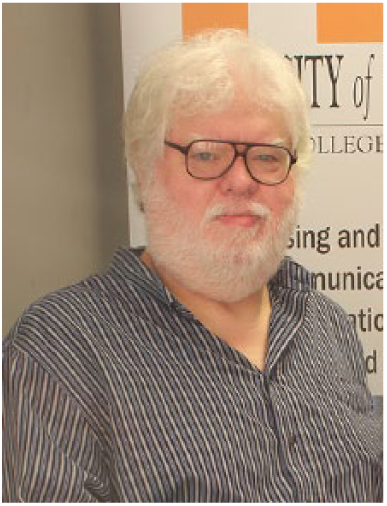
Benjamin J. Bates
By Michael Otto Wirth
Ben Bates, professor emeritus of the School of Journalism & Electronic Media (JEM) in the College of Communication and Information, died on Thursday, November 1, 2018, in Santa Barbara, California surrounded by his family.
Ben Bates was a brilliant scholar and a wonderful colleague. He will be greatly missed but long remembered for his many contributions to the School of Journalism and Electronic Media, CCI, UT and the academy! We are also deeply grateful to Ben for creating the Ben Bates Graduate Student Endowment through a $750,000 legacy gift to support CCI graduate student research and travel in perpetuity. His gift serves as a lasting reminder of his love of and commitment to graduate education.
“Ben left us too soon,” said JEM Director and Professor Catherine Luther.
He had so much more to offer to academia. Ben was a consummate scholar who invested so much time and effort in his graduate students, many who have gone on to have successful careers. As a former colleague and friend, he will be deeply missed by me and the rest of the journalism and electronic media faculty.
Dr. Benjamin J. Bates was an internationally known professor in the School of Journalism and Electronic Media at The University of Tennessee, Knoxville, where he served with distinction for 22 years from 1994 until his retirement in 2016 when he became a professor emeritus.
His scholarship focused on the interrelationship of media systems and society and the role played by policy in shaping their development. He taught courses in media and information economics and industries, policy, and new technologies, as well as communication theory and research.
His research examined the economics of broadcast policy, traditional media and the Internet, the development of new media worldwide, and communication and information policy issues affecting that development. His most recent work focused on broadcasting and new media, particularly the Internet and World Wide Web, and information economics and policy, particularly copyright.
His groundbreaking work led to appointments as an adjunct in the UT School of Information Science, as well as the Sir David Beattie/Ericsson Professorial Research Fellowship at Victoria University of Wellington in New Zealand.
He previously taught at the University of Salzburg (on faculty exchange) and the Universities of Helsinki and Tampere in Finland (as a Fulbright Senior Scholar), and he served as a faculty member at Texas Tech University (where he also served as Director of the Institute for Communication Research), the Chinese University of Hong Kong, Michigan State University, the University of California at Santa Barbara, and Rutgers University. He also worked for a broadcast management consulting firm and held positions at several college radio stations.
His publications are in the Journal of Media Economics, The Journal of Broadcasting & Electronic Media, Journalism Quarterly, Public Opinion Quarterly, The Communication Yearbook, and Information and Behavior book series, The Hong Kong Economic Journal, and Telecommunications Policy. He also wrote many chapters that appeared in scholarly books on the economics of information and media, and the development of telecommunication systems. He served on the editorial board of the Journal of Media Economics (where he was a founding member of the editorial board), JMM—the International Journal of Media Management, and Journalism & Mass Communication Quarterly as well as reviewing regularly for a range of other journals and academic publishers. He was an active member of AEJMC (where he was past head of the Communication Technology & Policy division), ICA, MAPOR, and BEA (where he was past head of the research division), and helped to found the Association of Internet Researchers (where he served as its first Treasurer).
He wrote and maintained the “Media Business & the Future of Journalism” blog for many years. The blog was recognized by the International Journal of Media Management as one of the top blogs in the field.
He received a BA in economics and mathematics from Pomona College, master’s degrees in statistics from the University of Wisconsin, Madison, and in communication from the University of Wisconsin, Stevens Point, and a PhD in communication from the University of Michigan, Ann Arbor.
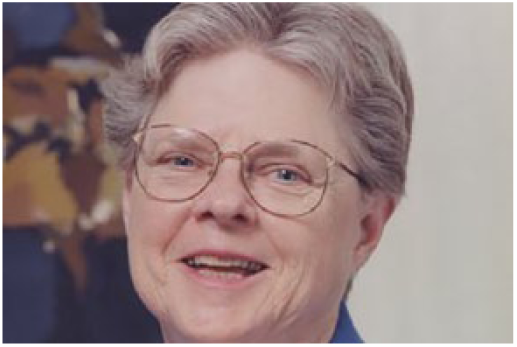
Carol Reuss
By Tom Bowers
Carol Reuss, 86, a journalism professor emeritus at the University of North Carolina at Chapel Hill, died December 31, 2018, in Chapel Hill, North Carolina.
Reuss was born in Cleveland, Ohio, on December 3, 1932. She began her journalism career and a lifelong fight against sex discrimination when she was in grade school – when she fought to get a newspaper route, and Cleveland papers would not let girls have a route. “I ran into the antifeminist view way back then,” Reuss later recalled, and it shaped how she did things for her entire life.
She wrote a weekly column about high school sports and reported game scores to local newspapers, including those in Cleveland. “After the games,” Reuss recalled, “I’d take my scorebook and my quarters and go to a pay phone and start making phone calls.”
Reuss also realized that although she wanted to work in journalism, she could never be satisfied writing for newspaper society pages. “There was no way I was going to do very much on a newspaper because they were very anti-girl and against a woman doing anything,” she said, “and so I tucked that in my bag and went on from there.”
Chemistry was her alternate choice, but she knew that she could not get into a collegiate science program because of discrimination against women. She chose Saint Mary-of-the-Woods college in Terre Haute, Indiana. After completing her journalism degree at Saint Mary’s, Reuss returned to Cleveland and joined the editorial staff of an industrial magazine. Other women at the magazine were clerks and stenographers, and she had to punch a time clock just as they did – until she put her foot down and refused.
She learned that she had to wear practical shoes because her reporting work often took her into factories where there might be hot metal on the floor. Remembering the men that she worked with, Reuss said, “I learned to accept them, and they learned to accept me. And I had no big problems. And it’s remained that way. I can get along with almost anybody.” That is how Reuss effected change – quietly and by getting along with everybody.
After working her way up to being managing editor of the magazine, boredom with the job took her back to Saint Mary-of-the-Woods, where she worked in the alumni office and got her first taste of public relations work, a field that she would pursue for the rest of her life. She began her teaching career there, and that led her to the University of Iowa, where she earned her master’s and PhD degrees.
Reuss was a member of the Sisters of Providence order from the early 1960s until 1976. She said that she joined the order because she found a group of women who really enjoyed working, and doing, and succeeding in all sorts of things.
After teaching at Loyola University of New Orleans, Reuss joined the faculty of the UNC School of Journalism in 1976. She created the public relations program in the school, which grew to be the largest specialization area in the school. Secretaries in the school brought punch and cookies for students during final exam week, and they expected female faculty members to do the same—until she quietly told them otherwise.
Reuss was an associate provost who worked with four different provosts, and had responsibility for the Friday Center, Botanical Garden, and other units. She was also a founder and early leader of the Association of Women Faculty. “We were looking for acceptance,” she recalled. “We were looking for salary equivalence and for better treatment.”