







Abstract
Sexual violence in the Catholic Church (SVCC) has recently become a major public issue, and mass media have played an important role in its visibilization. While to date, studies of media coverage of SVCC have mainly covered short time periods and concentrated on print media, our article covers a long time-frame (1950–2020) and focuses on television news. It provides an important contribution to the field of media and religion study by providing both a case study, focusing on France and delineating four “regimes of visibility” of SVCC in television news, and a methodological toolbox for similar studies in other countries.
Over the past two decades, sexual violence in the Catholic Church (SVCC) has become a major public issue, as evidenced by the creation of victims’ associations and independent commissions, mostly in Western countries (Terry, 2015). Mass media have played an important role in this visibilization across continents and years: SVCC was covered by the mass media as early as the 1990s in Ireland (Donnelly & Inglis, 2010; Ferguson, 1995; Kenny, 2009), before becoming a major new story, mainly in the United States (Cheit et al., 2010; Hove et al., 2013; Shavit et al., 2014; Weatherred, 2017) and to a lesser extent in Europe (Pew Research Center’s Project for Excellence in Journalism, 2010). This evolved over the following decade, when investigations into SVCC became prominent in Europe. In 2010, considerable media attention was trained on how Benedict XVI had handled cases of sexual violence in the period before he was elected Pope (Pew Research Center’s Project for Excellence in Journalism, 2010). Other sensational cases broke out the same year in several European countries, including Belgium, Ireland, Netherlands, the United Kingdom (Koetsenruijter et al., 2017) and, a few years later in France, where media coverage convinced the French church to set up an Independent Inquiry Commission (Atlani-Duault et al., 2023).
This article studies the “regimes of visibility” (Brighenti, 2007) of SVCC in one of these countries, France, over a long timeframe (1950–2020) and through the lens of one specific type of media: television news. It contributes to the field of media and religion studies by providing both a case study as well as a methodological toolbox for similar studies in other countries as, to date, studies of media coverage have mainly covered shorter time periods of just a few years, and have focused on print media (1991–1995 in Breen, 1997; 2002 in Russell & Kelly, 2003; 2010 in Koetsenruijter et al., 2017; 2016–2020 by Dubec et al., 2022).
A study by the Pew Research Center’s Project for Excellence in Journalism (2010) examines the U.S. mainstream media—print, radio, network television, cable television, and online news sources—for the years 2002 to 2010, but does not focus specifically on television coverage. Donnelly and Inglis (2010) situate media coverage of SVCC in Ireland in the socio-historical context of secularization in the second half of the 20th century, finding that the Catholic Church gradually lost its institutional power within the media, which became less afraid to report on cases involving the clergy. The choice of television as a focal point for examining the visibility regimes of SVCC in France is relevant for at least three reasons: television’s tendency to cover personal stories and issues (Mehl, 2008); its salience in the media coverage of sexual violence in France (Ambroise-Rendu, 2014); and the extensive holdings and relative accessibility of television items in French archives, which make it a fruitful terrain for socio-historical research and study (Hoog, 2006).
We performed a search using the research database of the Institut National de l’Audiovisuel (INA), collecting a corpus of 1,331 items on the main French television channels (TF1, France 2, France 3, Canal +, Arte and M6), which include both privately owned and public channels. The private channel TF1 and the public channel France 2 are the two largest ones in the French broadcasting landscape. They often offer similar coverage of current affairs, although the former is historically more right-wing than the latter. France 3, a public channel, is more regional in its approach and, like France 2, is inclined toward comprehensive views of current affairs. Finally, there are the two private channels, M6 and Canal+, the latter being a major pay-TV channel known for both its original programming and the movie it shows. These two channels devote less of their content to news than the others, but were selected because of their importance in the French media landscape.
We started out analyzing television coverage of SVCC by determining (a) the prevalence of the subject over time and (b) the salient features of the peaks of media coverage by coding with three categories: the country where the event took place; whether it was a new case or one that had already been addressed; and whether it was a specific case or thematic coverage. Having created a representative sample consisting of 705 items, we were able to explore the journalistic framing of SVCC based on two key issues identified in the literature regarding media coverage of sexual violence: (a) the victims’ believability and (b) the possibility of attributing structural responsibilities. In addition to those two issues, which enabled us to assess the relative power of the victims and the Catholic Church in television news over time, we investigated the driving forces behind the media coverage of these issues, particularly the factors that create newsworthiness.
Our article identifies four regimes of visibility in French television news coverage of SVCC over seven decades (1950–2020): (a) a period of invisibilization (1950–1990); (b) a period of visibility marked by ambivalence in 2000–2005; (c) a “detour,” during which the news agenda was focused on coverage of international cases (2010). (d) the re-emergence of coverage of French cases on French televised news programs in the years 2016–2020, when the structural dimension of the phenomenon was becoming clear. Our research highlights three features structuring those different regimes over time: the importance of sociocultural recognition of general sexual violence in France; the publicization of the subject through television coverage of judicial affairs; and the tension between Church policies and victims associations’ demands, for whom visibility has both obvious benefits and significant risks.
Literature Review
For many years, SVCC was absent from the public sphere (Terry, 2015). Our research therefore leans heavily on the concept of visibility, including both what Foucault (1972) calls “the visible (what can be seen) and the articulable (what can be said in a given cultural universe)” (Brighenti, 2007, p. 328). Victims have historically been subjected to a regime of visibility where their experiences are silenced, hidden, or invalidated (Dale & Alpert, 2007). But visibility has recently taken on a new status, becoming an issue in itself (Voirol, 2005). Victims have banded together in associations and collectives and fought to denounce the violence suffered and to highlight the responsibility of the Catholic Church (Girod, 2023). In response, the Catholic Church has gradually sought to communicate more about its failings and responsibilities and has made requests for forgiveness (Anzelmo, 2018).
The mass media have played a pivotal role in this transformation, due to their reconfiguration of the private and public spheres. This “new visibility” (Thompson, 2005) has played a considerable role with regards to SVCC, which only began to appear in the media space in the 1990s.
Media and Religion
The relationship between the media and religion, as framed within two dominant paradigms, has been described as a blind spot in communication studies (Hoover & Lundby, 1997; Mahan, 2014; Stout, 2013). The first paradigm draws parallels between the ritualistic nature of media consumption and religious practices, suggesting that religions are a form of communication, while the media have become a new form of religious engagement (Stout, 2006). The second paradigm opposes religion and media, relegating religion to the realm of tradition, while the media are seen as the epitome of modernity (Hoover & Lundby, 1997; Hunt, 2013). However, the notion of a “religion-media interface” (Stout, 2013) offers a more nuanced perspective, suggesting that the two are not mutually exclusive but rather intertwined. During the 20th century, the convergence of religion and mass media, particularly in the context of globalization, compelled religious institutions, including French Catholicism, to adapt to rapid advances in mass communications (Douyère, 2015). That adaptation involved reconfigurations of public space, responding to journalistic investigation (Boullet, 1985), and navigating the intricacies of crisis management (Barth, 2010). When it recognized the profound impact of mass media, the Church proactively engaged with media dynamics, as evidenced by its adoption of the 1964 decree Inter mirifica and the 1967 inauguration of a World Day of Social Communications (Kappeler, 2009). The decision to place Marshall McLuhan, a media theorist, at the heart of its Social Communications Committee underscores the Church’s acknowledgment of the media’s transformative potential (Sarno, 1987). In return, McLuhan’s frustration with the Church’s inability to incorporate his suggestions highlights the institution’s struggles to comprehend the significance of media in today’s world (Kappeler, 2009).
Faced with a “new visibility” (Thompson, 2005), the Church found itself in a position in which it had to “publicly account for a contested moral discourse” (Douyère, 2015). This became particularly obvious in the context of sexual-abuse scandals. Thompson’s analysis of the rise of political scandals during the 20th century underscores the transformative power of new communication technologies and can easily be transposed to the SVCC context. The technologies fostered a previously unseen degree of intimacy and personal self-disclosure, reshaping the public’s perception and evaluation of public figures (Thompson, 2000). With more visibility came more accountability, transparency and trust, leading to a reconsideration of authority and control within and by the Church (Dagenais, 1996; Hoover, 2006). In the context of secularization, mediated visibility of the Church became both a boon and a bane (Schement & Stephenson, 1996).
To understand the religion-media interface in the context of sexual violence, several themes should be considered. These include the transition from private practices to public visibility (Meyrowitz, 1994); the resurgence of religious themes in media narratives (Dayan & Katz, 1992); the increasing prominence of private and sexual themes in public discourse (Tincq & Defois, 1997); and the Church’s ever-evolving public-communication strategies. Furthermore, the rise of religious television programming highlights the media’s growing role in shaping religious discourse. In France, the end of a public monopoly led to the emergence of religious radio stations and later on, televised religious ceremonies. Nonetheless, the major television networks do not have close links to religion. Indeed, an important aspect of French television, and French public life in general, is the principle of laïcité or secularism. Rooted in the French Revolution and reinfoced by laws in the early 20th century, laïcité means that religious matters are strictly separated from state affairs. This extends to public broadcasting. While religious programming is allowed, it is presented in a neutral, often analytical manner, ensuring that no single religion is given preferential treatment or promotion (Malherbe, 2017).
Recent literature has highlighted the importance of social networks in the process of overturning the Church’s discursive control (Bogen et al., 2022; Colwell & Johnson, 2020). Following the #MeToo movement, two hashtags have spread within the Church community (#ChurchToo and #SilenceIsNotSpiritual), and discourses reclaiming religious iconography, notably the crucifixion, for a reinterpretation of Jesus as a victim of abuse (Reaves & Tombs, 2019).
Despite that, television remains of considerable importance when it comes to journalistic coverage of such violence over the long term. It focuses more than other media on personal stories and issues (Mehl, 2008), and historically, it has played a major role in making such violence visible in France (Ambroise-Rendu, 2014). Several studies have also highlighted the investigative role of the news media in publicizing SVCC, whether in Ireland in the 1990s (Colum, 2009; Donnelly & Inglis, 2010) or in the United States in the 2000s. the Boston Globe’s revelations about how sexual violence had been perpetrated and covered up within the Boston archdiocese received unprecedented media coverage (Cheit et al., 2010; Hove et al., 2013; Shavit et al., 2014; Weatherred, 2017).
The Issue of Victims’ Believability
The relationship between the media and victims differs depending on whether the latter are isolated individuals or are in groups formed to influence public debate (Cefaï, 1996; Cefaï & Terzi, 2012; Cefaï & Trom, 2001; Fraser, 1990; Gamson & Modigliani, 1989). These logics of mobilization are rooted in the process of the professionalization of communications (Schlesinger, 1990), whereby organizations and activists anticipate journalistic practices (Molotch & Lester, 1974) and provide them with ready-to-use content (Champagne, 1984).
Despite the resulting interdependence between the media and social movements, the literature on sexual violence and media coverage shows that journalists and media institutions remain the driving force shaping the discourse they produce (Marchetti, 1998). The challenging (or lack thereof) of victims’ statements has, therefore, become an important issue in media coverage. When the topic emerged in the 1980s, the reports that broke through into the media were often challenged (Atmore, 1996; Franklin & Horwath, 1996; Kitzinger, 1996; Weatherred, 2015). In the United States, for example, media reports on the collective denial of sexual violence gave rise to a decade of backlash during which prevailing stories highlighted “false accusations,” “official misconduct” in the pursuit of investigations (1985–1990), and eventually the controversial notion of “false memory” (1990–1994) (Beckett, 1996).
Recently, the concept of victims’ believability has been highlighted by work in media studies (Banet-Weiser & Higgins, 2023). It replaces the concept of credibility, which is closely linked to issues of doubt and consent, and whose gendered and racialized dimensions have been highlighted by feminist academics (Gilmore, 2017). Believability has two dimensions: subjectivity (the “ability to be believed”) and performance (the “quality of being convincing”). Banet-Weiser and Higgins (2022) point out that since the #MeToo movement began in 2017, the media has tended to emphasize performance, in other words, the question of whether or not the person is convincing in their position as victim.
Production and Selection of Information
The literature on sexual violence has long highlighted the media’s tendency to favor official sources (Kitzinger & Skidmore, 1995), novelty (Kitzinger, 1996), dramatic stories (Beckett, 1996), and sensationalism (Wilczynski & Sinclair, 1999). In media studies, all of those factors are linked to research on newsworthiness. Derived from work on the sociology of journalism, the concept was originally applied to describe journalists’ intuitive ability to sort through media events (Galtung & Ruge, 1965). It was then used in analyses of journalistic content to determine the factors involved in promoting certain facts to the detriment of others. Studies on the media coverage of crime, for example, cite the seriousness of the crime (Roshier, 1981), the presence of sentimental or dramatic elements such as “Victim cooperation and quality (photogenic and quotable)” (Surette, 1998, p. 69), or high social status (Chermak, 1995) as central newsworthiness factors. Studies on the media coverage of sexual violence against children have highlighted the importance of certain newsworthiness factors in the selection and prioritization of information, such as scandal, uniqueness, and celebrity involvement (Cheit et al., 2010), criminal justice event (arrest and trial), controversies (disputed verdicts), and breakthrough or milestone information, including anniversaries (Mejia et al., 2012).
Several studies establish that these newsworthiness factors are part of a more general individualization of media narratives that isolates the crimes from their social, institutional, and cultural context. Kitzinger and Skidmore (1995) point out that the British media’s focus on individual stories in the 1990s had the effect of inhibiting coverage of other issues such as prevention. In their study of media coverage of sexual violence against children in the United States between 2007 and 2009, Mejia et al. (2012) demonstrate that coverage tended to focus on extreme cases and criminal justice details, to the detriment of contextual information about the events themselves. More generally, the studies point to the media’s difficulties in attributing responsibility for sexual violence. In the U.S. media, in the 1990s (Shavit et al., 2014) and 2000s (Mejia et al., 2012), news reports missed the decisive influence of structural factors related to hierarchy. A shift since the first decade of the 2000s has recently been noted: according to Weatherred (2017), U.S. media framing of sexual violence has moved from being seen as “an individual-level problem with individual-level solutions to a societal-level problem with institutional culpability,” while still highlighting individual-level interventions as offering the best possible solutions. This is also an issue for SVCC. Historically, the “rotten apple” narrative (White & Terry, 2008) has been a key strategy with which the Catholic Church has sought to minimize visibility of the structural dimension of SVCC, defined as both the possibility of designating hierarchical responsibilities and highlighting the mechanics of silence surrounding the violence. The narrative allows the organization under attack to focus its “damage control” communications on blaming a deviant individual whose actions are publicly disavowed as contrary to the values of the group.
Methodology
Sample Selection
To create our corpus, we adopted a two-stage collection methodology for televised material, which was developed by the National Audiovisual Institute (INA). The INA is a national public institution whose central mission is to archive audiovisual productions, particularly those of French television since the 1950s. It has a research center that provides researchers with a range of resources for exploring and getting the most out of audiovisual databases and items. These include workstations, quantitative and qualitative analysis software, human support (documentalists, archivists, research officers and engineers), and even financial support in the form of research grants.
This methodology was selected for two reasons. First, it was designed to build corpora on socially sensitive subjects that are prone to “invisibilization.” This made it particularly suitable for studying sexual violence within the Catholic Church, whose different denominations and changing forms of discourse over time 1 make it difficult to identify relevant material within a database. Second, it helped to overcome two major obstacles to researching media coverage of the subject before the mid-1990s.
The first obstacle stems from the political history of French television. During the 1950s and 1960s, television was under public control and was considered a tool for nation building. It thus gave little space to subjects judged likely to weaken national unity (Sécail, 2010). The second obstacle is the fragmented nature of the INA’s audiovisual archives: not only are there gaps in the 1949–1974 collection of content from the national public broadcasting organization RTF-ORTF, but archived material was not preserved and documented systemically until 1995, when the country’s Mandatory Copyright Deposit regulation was implemented (Hoog, 2006). This methodology has proven its worth in a previous research study, in which 201 items dating from 1962 to 1994 on another sensitive topic—infanticide by parents—were collected (Dubec, 2019).
Our data collection thus proceeded in two stages (Table 1). First, we queried Hyperbase, the INA database, using a set of general keywords and terms linking sexual violence and religious institutions (e.g., “sexual abuse” and “church”). As media coverage is usually linked to arrests or trials (Mejia et al., 2012), we added entries associating religion and criminal justice (e.g., “priest,” “cardinal,” “bishop” and “trial,” “review”). This resulted in 1,211 records.
Summary of Collection.
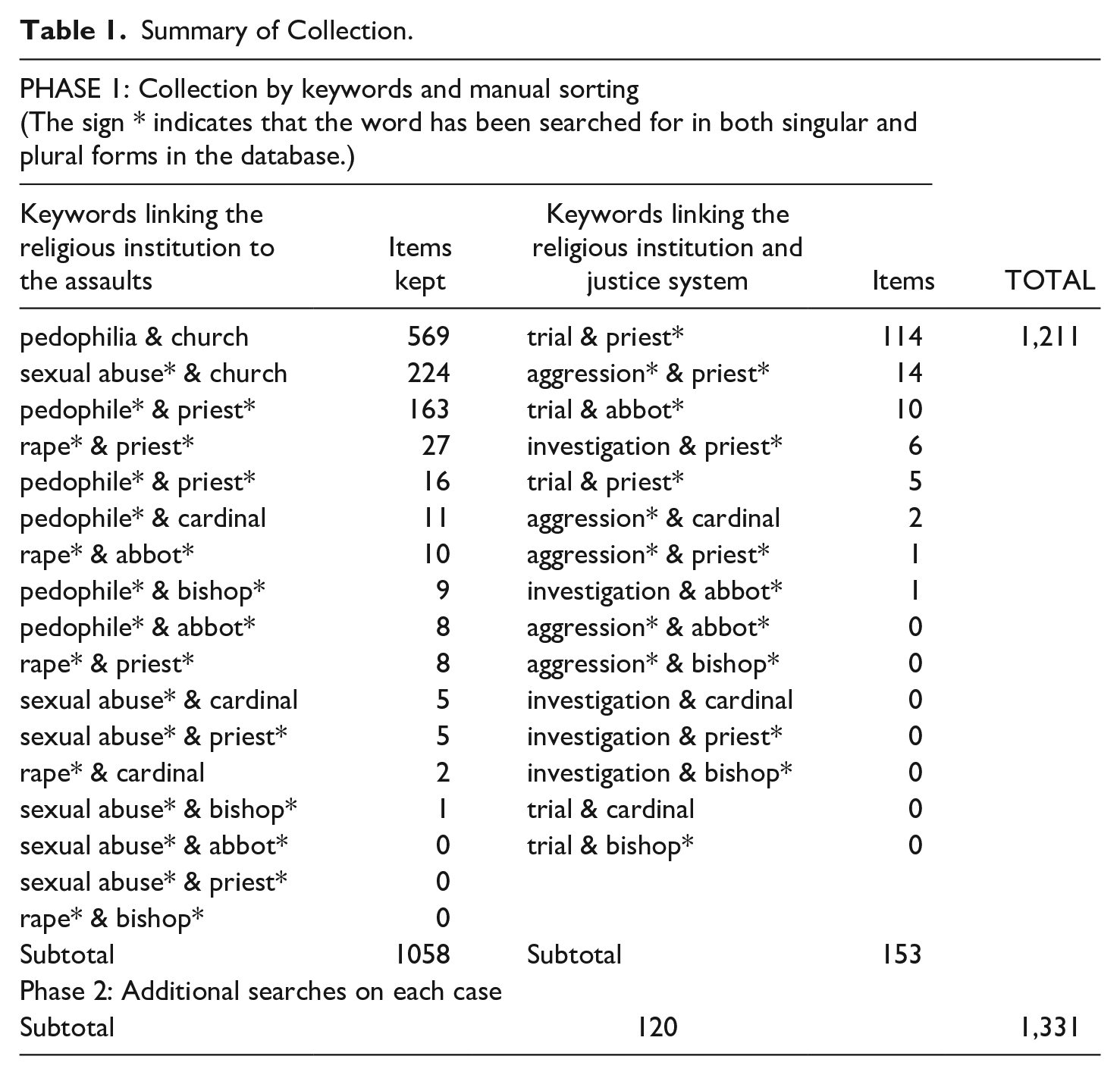
In Hyperbase, each record is associated with a documentary file, including at least a title, a channel and a program name, but most often also keywords and a short description. Based on these data, we then researched each French case found, as news reports on sexual violence tend to be case-based (Kitzinger & Skidmore, 1995; Mejia et al., 2012; Shavit et al., 2014; Wilczynski & Sinclair, 1999). To do this, we targeted case information using the following criteria: name of the accused, city where the sexual violence took place, and date of arrest. An additional 120 items were retrieved, resulting in a total of 1,331 items on national television from 1990 to 2020.
An exploratory examination of the documentary files allowed us to notice certain specificities of media coverage over time. The full corpus analysis shows both the prevalence of the subject by year and the salient features of each identified peak in media coverage, which are necessary to distinguish different regimes of visibility. To do this, we coded each report as follows: (a) by country where the event covered took place; (b) whether the mediatized case was new or had been covered previously; (c) whether the item could be categorized as either an individual case or a more general one, that is, thematic report.
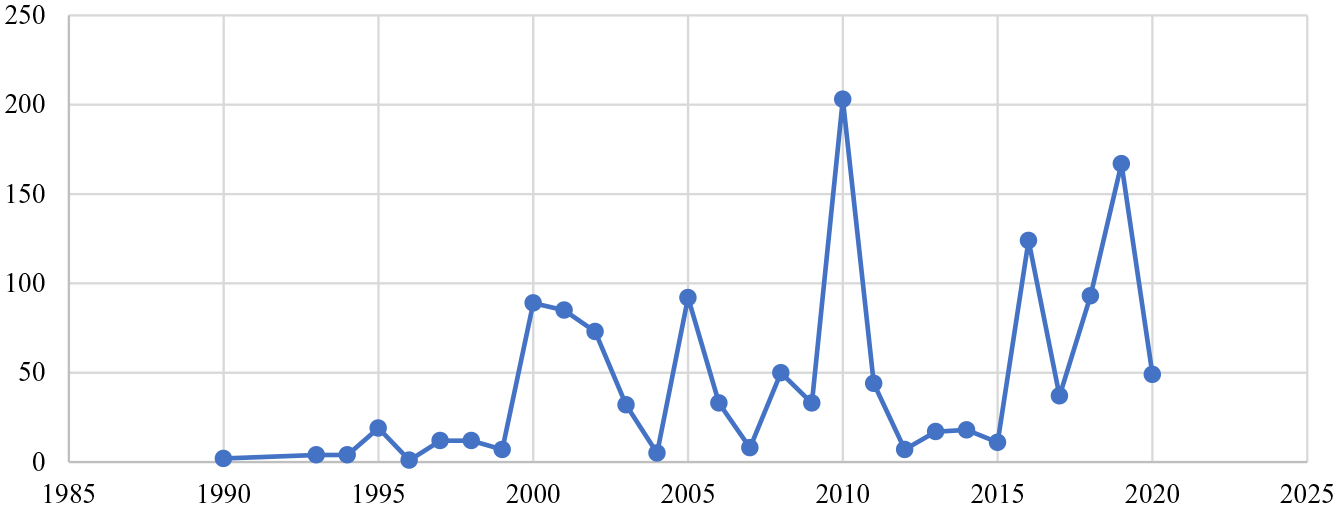
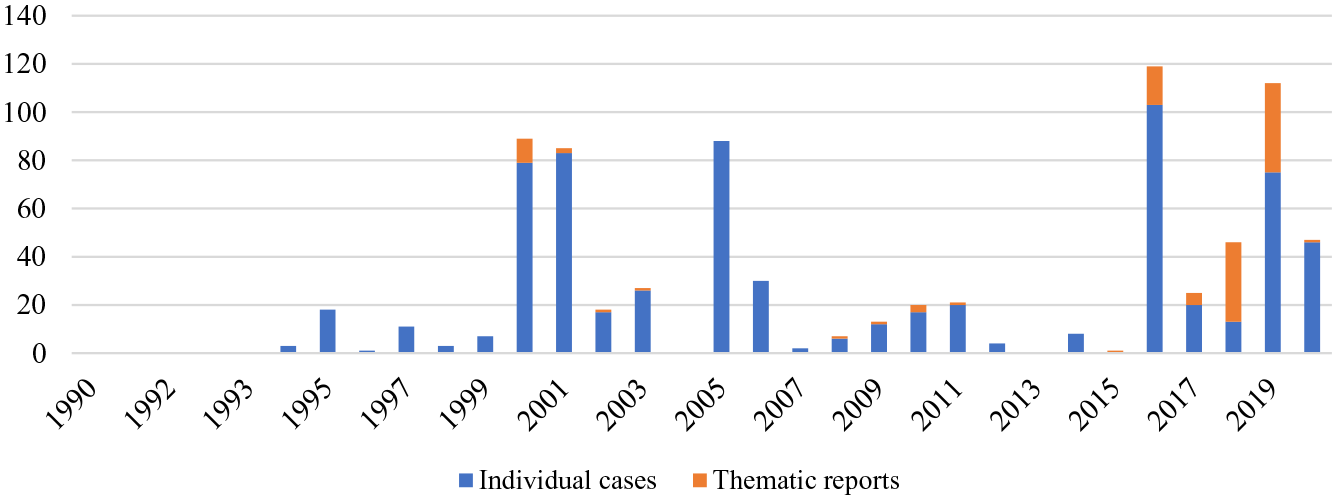
That first stage enabled us to create a representative sample that reflected the distribution of material in the corpus as a whole. The count by year shows growing media coverage of SVCC by French television news programs from the 1990s to the 2000s (Figure 1) and distinguishes five peaks in coverage. We decided to group the fourth and fifth peaks together because they both emerged during the Preynat and Barbarin cases (2016–2020). Those cases were key to making SVCC a public issue in France, and they led to criminal trials.
Coverage of SVCC by National Televised News Programs (Number of Items Per Year).
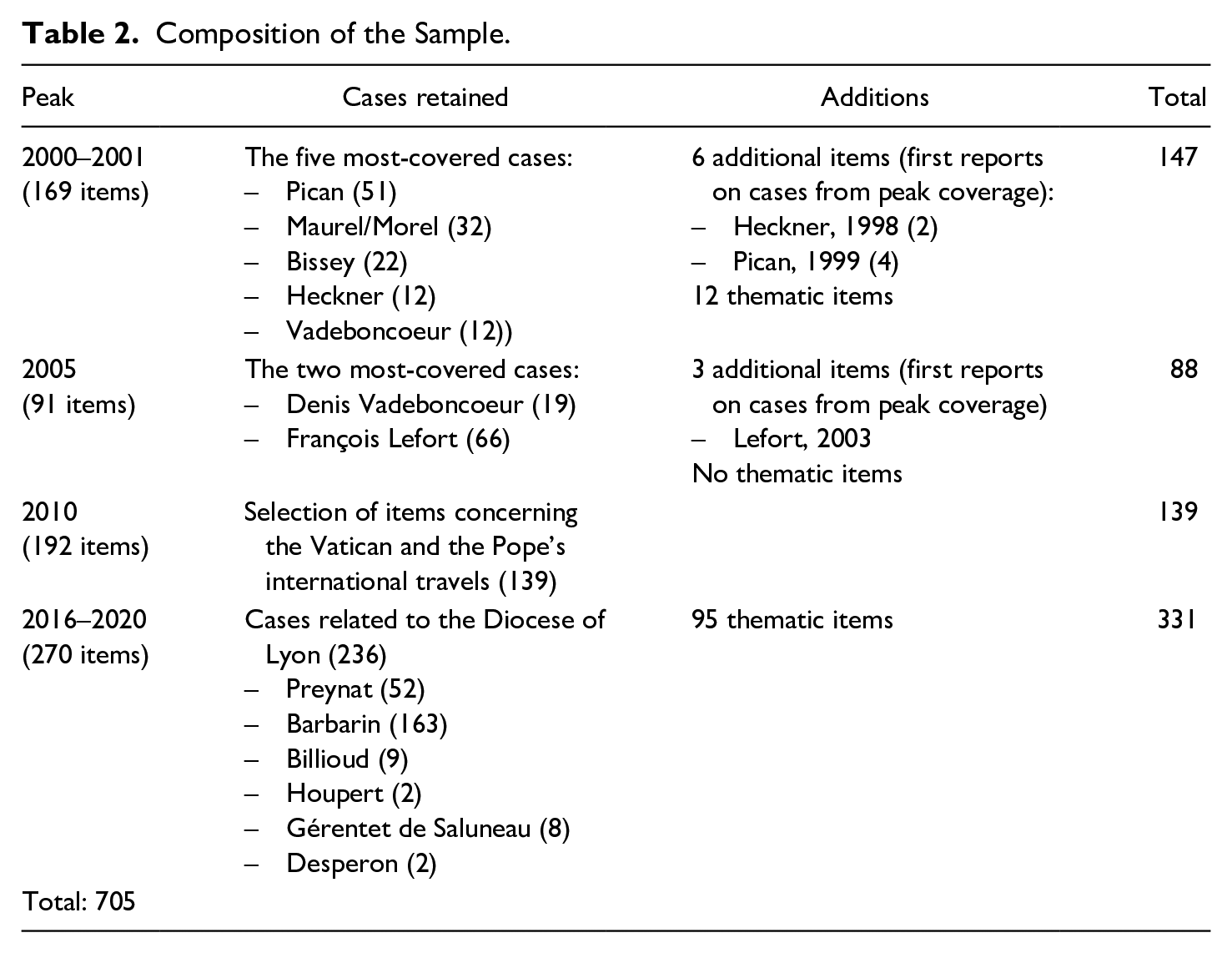
For three of the four remaining peaks (2000–2002; 2005; 2016–2020), we selected the most frequently covered cases as well as the items dealing with SVCC as a topic of general interest. An exception was made for the year 2010, whose main characteristic was the large number of items about SVCC abroad (see Figure 2). We therefore chose to select all the elements from 2010 concerning the Vatican’s reactions to the numerous VSEC affairs occurring internationally. Therefore, items from 2010 mainly concern the Pope’s travels to different countries to acknowledge responsibility and present his apologies to the victims. We excluded coverage from the year 2002, which was largely focused on the sexual violence in the Boston archdiocese and had already been well documented in the literature (Cheit et al., 2010; Hove et al., 2013; Russell & Kelly, 2003; Shavit et al., 2014; Weatherred, 2017).
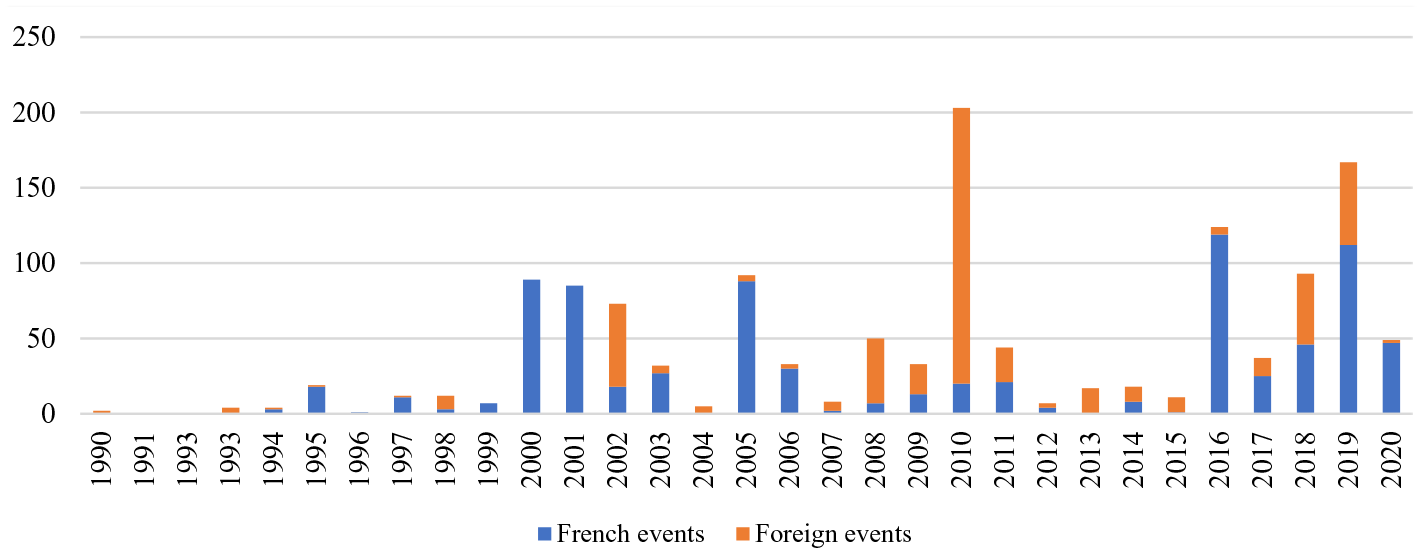
Televised News Coverage of SVCC: Reports About France (805) Versus Events in Other Countries (526).
Finally, when selection by peaks did not allow us to have access to all the reports on a case, we chose to include the first reports produced on the case to better understand the issues at stake. The final sample consists of 705 items that reflect four mediatization peaks: 2000–2001; 2005; 2010; 2016–2020 (Table 2).
Composition of the Sample.
Framing Theories
Framing methodology is the most widely used in the literature on journalistic coverage of sexual violence, particularly sexual violence against children (Popović, 2018; Weatherred, 2015). However, framing is subject to multiple definitions between studies (Scheufele & Tewksbury, 2007). Three approaches stand out. The first, from work by Katherine Beckett (1996), refers to Gamson and Modigliani’s (1989) definition of framing as “a central organizing idea or story line that provides meaning to an unfolding strip of events, weaving a connection among them. The frame suggests what the controversy is about, the essence of the issue,” (p. 143). The second, derived from the work of Iyengar (1990), is more widely used in this literature (Hove et al., 2013; Mejia et al., 2012; Weatherred, 2017): it aims to analyze the media’s framing of public issues by distinguishing between content that addresses them through the prism of general subjects (thematic framing) on the contrary and, on the other, content that deals with them through personal experience (episodic framing). The third is often associated with the episodic/thematic distinction: it involves coding the causes and solutions (Iyengar, 1990) that the news mediates for public issues, and their level of problematization (individual or societal). This approach has been renamed “the framing of responsibility” by Weatherred (2015).
Our study is in line with the first of these approaches to framing, which seems to be the most compatible with identifying SVCC-related “regimes of visibility” in television news. 2 Unlike the psychological approach, which focuses more on the search for effects, this sociological perspective aims to identify dominant worldviews that are themselves linked to power struggles within society (Lemarier-Saulnier, 2016). From this perspective, our scoping efforts focused on power relations between the Catholic Church and victims within television news (RQ1), based on two key questions identified in the literature:
Do the programs challenge victims’ believability?
Do the news items reveal structural responsibilities for the sexual violence (i.e., the possibility of designating hierarchical responsibilities and highlighting the mechanics of silence surrounding the violence)?
Finally, we took into account the media dimension of the content analyzed by measuring the presence of five newsworthiness factors in key cases from each period considered (Research Question 2). The categories selected were inspired by previous studies and were chosen for their relevance to our subject. 3 The five newsworthiness factors are:
Multiple parties: “There is more than one victim, accused, or both” (Cheit et al., 2010)
Cover-up: “There is an element of a cover-up to the story” (Cheit et al., 2010)
Sentimental or dramatic elements: Victims and their families are quick to testify in the news media.
Controversies: Conflicts arise over the case.
Criminal justice events: Media coverage is associated with high-profile judicial events, such as an arrest or trial.
The last newsworthiness factor (criminal justice events) is also interesting for assessing the—investigative or noninvestigative—role-played by French television and its journalists in the revelations surrounding the SVCC affairs.
Research Questions
The aim of this research is to retrace the process of how SVCC became visible on French television from 1950 to 2020, and to distinguish “regimes of visibility” that combine social, cultural, and media dynamics. Our study is guided by three research questions, the relevance of which was highlighted in the literature review.
RQ1: To what extent is the visibility of SVCC dependent on power relations between the victims and the Catholic Church?
RQ2: What role do the newsworthiness factors play in journalistic coverage of this violence?
RQ3: Finally, did television play an investigative or noninvestigative role in the media coverage of this public problem?
Results
2000–2001: Media Coverage of SVCC on French Television Begins
Analysis of the corpus shows that 2000 is the year when the number of news items about SVCC increased significantly for the first time on national televised news programs (Figure 1). That increase reflected the investigation of Bishop Pican and his trial a year later. The coverage focused on events in France (Figure 2), both new and old (Figure 4). This last point suggests that the coverage of the Pican case allowed for a greater presence of this topic in the news without, however, leading to a multiplication of similar cases, as evidenced by the decline in coverage after the bishop’s conviction in September 2001. Most reports were about individual cases (Figure 3). Coverage of SVCC was mainly seen through an individual prism. Despite the 2001 case being the first time a French bishop had ever been sentence in criminal court, few news, few news programs took a thematic approach.
Televised News Coverage of SVCC Committed in France: Reports About Individual Cases (692) Versus Thematic Reports (112).
Analysis of the sample highlighted that the believability of victims was not directly questioned by the journalists. However, the reporting at the time permitted their words to be counterbalanced by providing an opening for contentious statements made by the accused and their supporters. Tensions sometimes ran very high. At the time of the trial of Father Maurel, a priest and former headmaster of a private secondary school who was accused of rape and sexual assault of three pupils, for instance, the legal columnist Jean-Pierre Berthet described the situation as a “village divided into two clans” (TF1, 23/02/2000).
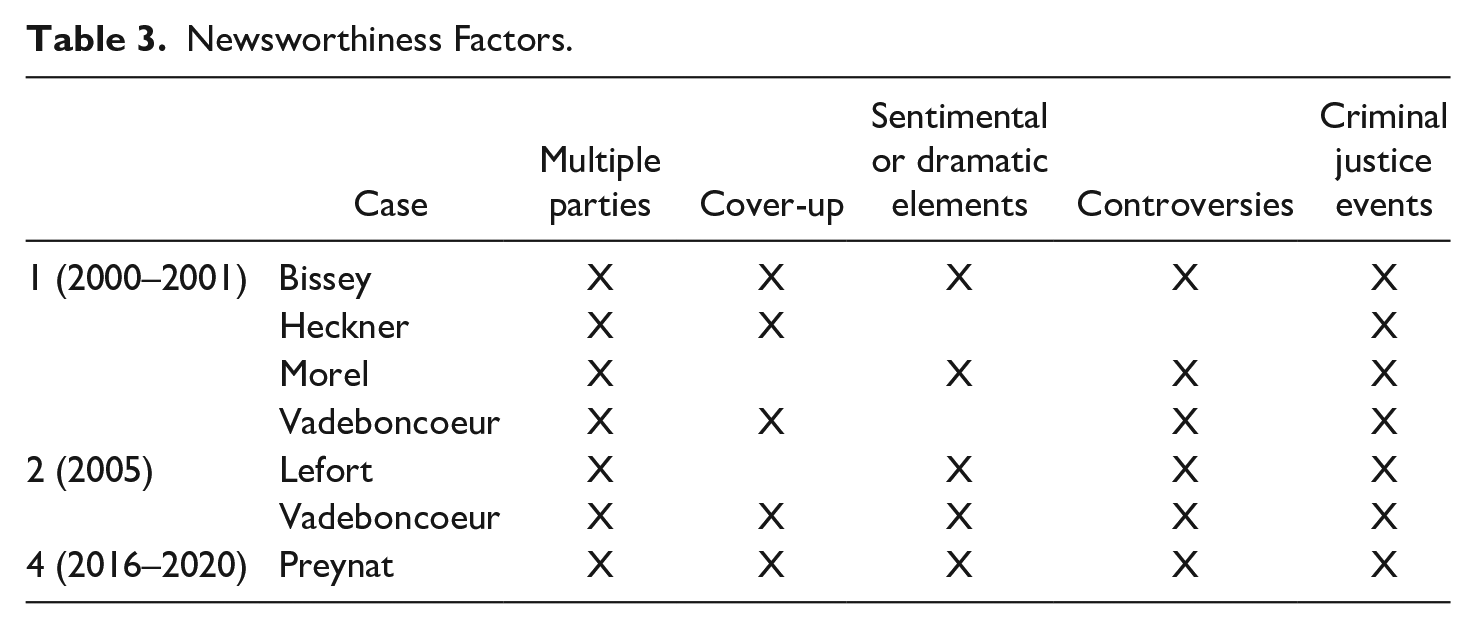
When dealing with structural responsibilities, the news programs also allowed competing voices to be heard. Notably, they gave prominence to denunciations of bishops who did not report SVCC. But they were not visibly critical when these leaders went on television to defend the seal of the confession. Between three and five newsworthiness factors were present in each of the four cases selected (Table 3). The media coverage always occurred at the time of criminal law events such as indictments or trials, and always involved cases with multiple victims. Dramatic elements were least present. Three of the four cases involved a cover-up and were controversial. Two sources of controversy were identified: disagreements over the facts of the case, and debates surrounding the secrecy of the confessional. The majority of television news programs refused to provide conclusions to debates that they had opened. For example, one journalist said on air that, “For the Church, torn between notions enshrined in divine law on the one hand and in the Penal Code on the other, choosing between defending the interests of victims or preserving the secrecy of the confessional is no simple matter” (France 2, 23/07/1999).
Newsworthiness Factors.
2005: Television Coverage Increases But Remains Ambivalent
A second peak in national television news occurred in 2005 (Figure 1). As in the years 2000–2001, the reports mainly concerned French events (Figure 2) and focused mostly on individual cases (Figure 3). The increase in reporting was due to coverage of trials of previously reported cases (Figure 4). The SVCC were indeed a subject present in the news of the year 2005, without, however, giving rise to journalistic in-depth investigations such as the search for other cases or the production of thematic reports on the phenomenon.
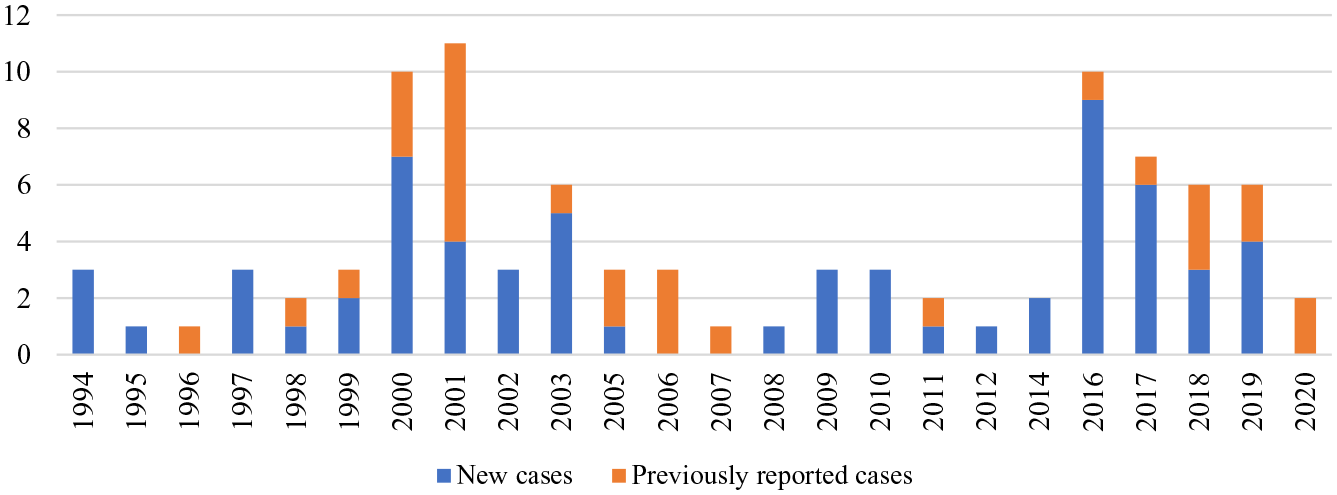
Televised News Coverage of SVCC on National Television: Reports About New Cases (63) Versus Previously Reported Cases (30).
The data from 2005 shows a certain continuity with the 2000–2001 period. The facts presented by the victims were not questioned by the journalists, but neither were the accused’s strong denials. This was particularly noticeable during the trial of Father François Lefort, a priest convicted of the rape and sexual assault of six Senegalese adolescents in 2005. At the time of his trial, the suffering described by the victims was “balanced” by reporting his denials, as in the program headline “François Lefort says he is the victim of a plot orchestrated by pedophiles” (TF1, 17/04/2003).
As in the years 2000–2001, hierarchical responsibilities were highlighted in cases where bishops had not denounced perpetrators of sexual violence to the courts. However, television news programs addressed certain questionable actions of the Church as if they were legitimate, demonstrating that sexual violence was not very politicized yet.
Four of the five newsworthiness factors were present in the two cases of the period (Table 3) that received media coverage at the time of the trial and involved several victims. Although mention of the secrecy of the confessional was absent from reporting of the cases at the time, the theme of forgiveness was addressed in the Vadeboncoeur case. A repeat offender who had been found guilty of abusing children by the Canadian justice system, Father Denis Vadeboncoeur was subsequently given employment by the diocese of Evreux in France. Bishop Gaillot explained to a journalist that he took Vadeboncoeur into the diocese because he believed his reintegration was possible. “If I was wrong, I was wrong. I was confident, that was the case, I wanted someone to be reintegrated” (France 2, 19/09/2005).
2010: French Television Turns Its Gaze Outwards
A third peak emerges in the year 2010, which saw a further increase in the amount of reporting about SVCC in France, with 192 media items identified (Figure 1). They mainly concerned accusations against individuals (Figure 3) and focused on new rather than historic cases (Figure 4). The increase in reports was primarily linked to television coverage of cases that occurred abroad: as shown in Figure 2, the number of reports on national television concerning foreign cases exceeded the number of reports concerning French cases.
Closer examination of the sample shows that the year 2010 marks a specific moment in television coverage of SVCC, due to the number of scandals that had occurred in Europe during these years. As one French television news programs put it, “The Church can no longer close its eyes: in the Netherlands, Austria and Germany, the reality of the many cases of sexual violence has been made public” (Canal+, 12/03/2010). Much of the media attention was focused on Pope Benedict XVI. This was due in part to accusations regarding his management of a number of sexual-violence cases before he became Pope (Pew Research Center’s Project for Excellence in Journalism, 2010). It also stemmed from his well-publicized travels to various countries to apologize to the victims and condemn both the criminal acts and the complicit silence kept by certain hierarchies.
This focus framing meant that the facts were no longer being denied and that the general responsibility of the hierarchical leaders was being acknowledged by Benedict XVI himself. In March 2010, the Pope wrote a letter to the Irish Church in which he detailed two levels of responsibility: that of the perpetrators of the violence (“you must answer for it before Almighty God and before properly constituted tribunals”) and the bishops’ (“Besides fully implementing the norms of canon law in addressing cases of sexual violence against children, continue to cooperate with the civil authorities in their area of competence”) (TF1, 20/03/2010). While the Church’s position was not without ambivalence, the television stations followed these declarations closely, making 2010 the year that the structural dimension of SVCC was recognized on television. It should be specified that—over and above the scandals per se—the Pope’s “celebrity” (Cheit, 2003) is likely to have stimulated media coverage, and therefore this recognition.
2016–2020: Structural Factors Begin to Be Covered
During 2016–2020, coverage focused on new cases (Figure 4), most of them occurring in France (Figure 2). After a drop in coverage in 2017 and, to a lesser extent, in 2018, a new peak emerged in 2019. During these years, media coverage still focused—albeit less exclusively—on French events (Figure 2) and gave rise to a sharp increase in new cases, especially during the years 2016 and 2017 (Figure 1). However, the most interesting feature, which also applies to 2018, was the increase in thematic coverage rather than reports on individual cases (Figure 3).
Analysis of the sample shows that in 2016–2020, neither victims’ believability nor the reality of sexual violence were being challenged in news reports any longer. Coverage of the topic also became more intense thanks to the actions of some of Father Preynat’s victims, who wished to see their story publicized to put pressure on the Catholic Church. Having come together under the banner of the nonprofit organization La Parole Libérée (Liberated Voices), these victims vehemently denounced the silence of the hierarchy and took legal action to have the last living bishop who had not denounced the crimes convicted in court. François Devaux, a victim of abuse and a co-founder of La Parole Libérée, pointed out, “The real problem is not one sick man, it’s the conspiracy of silence around all this.” (France 3, 26/01/2016).
On the whole, by that time, news programs acknowledged SVCC’s structural dimension. Reinforced by the exposure of similar scandals in other countries, this recognition was also based on the facts of the Preynat case, which established that although several deceased bishops had indeed been aware of the violence perpetrated by Father Preynat, they had not denounced it. Recognition was also supported by the creation of the Independent Commission on Sexual Abuse in the Church (CIASE) in 2018 (Atlani-Duault et al., 2023). The news programs therefore found it easy to assert the structural nature of SVCC. They were less forthright, however, in questioning Cardinal Barbarin’s responsibility: he firmly denied having knowingly covered up assaults. After an initial conviction, he was in the end released in January 2020.
All the newsworthiness factors came into play around the Preynat case (Table 3). Along with the Barbarin case, it crystallized media attention for many months and, for the first time, exposed the mechanism of silence surrounding the violence.
Conclusive Discussion
The media’s coverage of sexual violence within the Catholic Church has undergone significant shifts over the years, evolving through four distinct regimes of visibility:
Before the 1990s, our study unveils a significant “invisibilization” in French national television news. Despite employing a methodology that had previously proven its effectiveness for another sensitive topic within the same database, we were unable to identify any television news items addressing the issue before that time.
During the early 2000s, particularly 2000–2005, the media’s approach to sexual violence reflected a pronounced ambivalence. While the subject began to receive more consistent coverage, the narratives surrounding testimonies of sexual violence were received with doubt: although the believability of the victims was never questioned, their stories were often juxtaposed with defensive voices.
The year 2010 witnessed a peak in media coverage, driven largely by international SVCC cases. From that year on, the words of the victims were no longer counterbalanced by opposing voices, and reporting showed a broader recognition of the structural issues at play. The media’s framing during this period began to highlight hierarchical responsibilities and potential institutional weaknesses within the Church.
During the 2016–2020 period, the Preynat and Barbarin cases not only revived journalistic interest in SVCC in France, they also emphasized the Church’s complicity in perpetuating violence through silence. The media began to spotlight the central role of victims in driving the narrative, emphasizing their efforts to break the silence and seek justice. This period culminated in broader acknowledgment of the structural dimensions of SVCC, aligning with findings from other studies, such as the one conducted by Dubec et al. in 2022.
Although complex, visibility is “largely understood as a political, aesthetic, and technological field, where power is produced and contested through forms of noticing, managing attention, and determining the significance of events and subjects,” (Brighenti, 2010: 52; Jiménez-Martínez, 2021). Our study identifies three factors shaping the visibility of SVCC on television: (a) the recognition of sexual violence; (b) television’s noninvestigative approach in publicizing the phenomenon, and (c) power dynamics between the Church and the victims, which, over time, created a range of different risks associated with media visibility.
Recognition of Sexual Violence in French Society and within the Catholic Church
The media’s construction of SVCC was part of the wider recognition of sexual violence during these years. The absence of coverage before the 1990s underscores a broader lack of recognition of sexual violence in French society before the 1980s (Steinberg, 2018), which translates into hesitancy within the French media landscape to confront the topic of sexual violence. Notably, it was not until the mid-1980s that the mass media began to address the sexual abuse of children (Ambroise-Rendu, 2014).
During the 2000–2001 and 2005 periods, while victims’—and, more specifically, children’s—word was gradually being constructed as legitimate, the Outreau case (1997–2000) led to a clear decline in confidence, both in the victim’s word itself, but also in related judicial institutions and associations. It was a case of sexual assault on minors in which most of the accused were eventually found innocent (Ambroise-Rendu, 2014). Massively covered in the media, the case was a turning point in the mediatization of sexual crimes against children in France, and seems to have had an impact on how television covered issues committed within the Church itself.
Within the Catholic community, related debates over issues such as the secrecy of the confessional and the possible reintegration of convicted pedo-criminals, revealed a low degree of politicization of these issues. The half-hearted recognition of the fact of sexual violence only began to change in the 2010s. From then on, television coverage became part of a generally accepted discussion, which focused even more specifically on the Catholic environment. In other words, the facts were no longer doubted or questioned, hierarchical responsibilities were highlighted, and the cases were seen as likely to weaken the Church as an institution.
It was at that point that the Church recognized SVCC as an issue of concern, including in its structural dimension. However, it was only later, when the issue became internationally prominent, that the reality of SVCC was recognized more broadly in France. The media then began to offer a space for the words of the victims and to give visibility to the activism of La Parole Libérée (see above). The Church found it difficult to sanction or even condemn the acts of Cardinal Barbarin, the last of the prelates to have been accused of not reporting crimes to the authorities. At times, television news programs struggled to highlight real hierarchical responsibilities when Philippe Barbarin’s actions were being discussed. It should be noted that this ambivalence reflected the legal history of the Barbarin case itself, with the bishop having been convicted in 2019 and then acquitted in 2020.
The lack of systematic reporting to the police by clergymen—based on the argument that the knowledge had been acquired during confession—had been raised by victim associations early 2000s. Yet French television news programs did not really question the supposed primacy of canon law, which requires confessors to maintain absolute silence about everything that is said in confession. Interestingly, French society would have to wait for coverage of the Independent Inquiry Commission on Sexual abuse in the French Catholic Church’s 2021 report to learn that, under French Law, reporting sexual violence against minors of less than 15 years old to the police is mandatory for everyone and anyone, including clergy, and even if the knowledge had been acquired under the Seal of Confession (Atlani-Duault & Guérin, 2022; Atlani-Duault et al., 2023).
Television’s Noninvestigative Approach
Our data suggest that televised media have often taken a noninvestigative stance toward SVCC. This crucial aspect of media coverage is evident in at least two phenomena. First, cases of sexual violence were primarily covered when they reached judicial stages. This approach stands in contrast to proactive investigative journalism, exemplified by The Boston Globe’s reporting in the U.S. Consequently (leading us to our second point), French TV news often reflected social trends rather than pioneering them and remained relatively cautious in terms of its stance toward sensitive issues before the 2010s. For example, during the periods of 2000–2001 and 2005, it frequently adopted a “pendulum” approach to balance points of view. This journalistic practice, inherent in strategic procedures that allow journalists to claim objectivity (Tuchman, 1972), appears to have been favored before social debates surrounding sexual violence had stabilized.
This relatively noninvestigative approach still held sway in 2010, when the Catholic Church recognized both the practices of silence and the hierarchical responsibilities involved in the crimes committed in several countries. Television news coverage evolved at the same time as “common sense.” As emphasized by Tuchman, who conceives of objectivity as a strategic ritual by which journalists protect themselves from their potential errors, “Common sense plays a central role in the assessment of news content, since the content of a news story is multitudinous ‘facts,’ and common sense may determine whether a piece of information may be accepted as a ‘fact.’” (Tuchman, 1972, p. 674). By the 2016–2020 period, the time was ripe for structural responsibility to be recognized in France. It should be noted, however, that the five newsworthiness factors were still required for a story or issue to attract coverage.
The Risks of Coverage: Visibility’s “Double-Edged Sword”?
Finally, our analysis of visibility regimes for SVCC in French television news analyzes Brighenti’s (2007) proposition that visibility is a “double-edged sword: it can be empowering as well as disempowering” (p. 335). The risks associated with visibility are closely dependent on the power relations between the players involved, as well as their relationship with the media. From this point of view, while our analysis must take into account the progressive politicization of sexual violence, we must also consider factors such as the secular stance of French television news and the rise of victim figures in increasingly individualist societies (Sécail, 2010).
On one hand, the study highlights a Catholic Church that was increasingly in difficulty. While the victims’ believability gained visibility and stability in television news, the Catholic Church found itself trapped in its own communication logic. This could be seen in the heavy media coverage surrounding the Pope’s travels in 2010 and his apologizing to the victims of SVCC. On the other hand, the media coverage of victims—while obviously not without significant personal costs—seemed less risky in the current regime of visibility. However, it seems important to point out that not all victims are made visible. Cases of abuse of nuns are increasingly documented (Figueroa & Tombs, 2023) but rarely brought to justice, and therefore, not widely publicized. That issue would definitely benefit from further research.
Television journalism seems to have retained its reactive, rather than pro-active, character today. However, the La Parole Libérée’s televised presence in the coverage and politicization of SVCC is a reminder that television can have a strong impact in cases involving abuse that may have taken place decades before, which are now central to the work of victims’ associations.
Limitations
Our study has three main limitations. A comparison with other media, especially print media, would help in understanding the specificities of television coverage of sexual violence. The often familial context of television and the difference between a written medium and an audiovisual one would be interesting avenues to explore further. A second limitation is the relative weakness of the database: the INA is a resourceful institution for researchers, providing access to valuable audiovisual data, but the various “gaps” in the database due to archiving issues pose a challenge for researchers looking for visibility processes. Finally, one limitation is intrinsic to the study: while identifying the classical first phase of invisibilization, we do not account for the many person who actually have remained invisible. A specific methodology, designed to identify them, would be extremely valuable for the genealogy and collective memory of SVCC.
Footnotes
Declaration of Conflicting Interests
The author(s) declared no potential conflicts of interest with respect to the research, authorship, and/or publication of this article.
Funding
The author(s) received no financial support for the research, authorship, and/or publication of this article.
