







Abstract
Programmatic advertising (PA) has revolutionized the digital marketing landscape, providing automated and data-driven solutions for advertisers. However, concerns regarding the credibility of PA platforms have emerged, necessitating a comprehensive understanding of the factors that influence credibility. This paper aims to explore the key drivers that enhance the credibility of PA platforms and propose a conceptual model for their evaluation. Drawing upon a review of existing literature, the study identifies three essential drivers: transparency, optimality, and safety surveillance. Each driver is considered a two-layer construct with distinct sub-components, emphasizing the complexity and interplay between various elements.
Keywords
Programmatic advertising (PA) has revolutionized the digital advertising ecosystem, incorporating a diverse range of technologies that enhance digital advertising practices (Li et al., 2017). With the exponential growth of the digital advertising market, fueled by advancements in Ad-Tech, PA has gained remarkable momentum. In 2021, global spending on digital media surpassed $418.4 billion U.S. dollars, with approximately 72% allocated to PA. It is projected that by 2026, this figure will reach a staggering $725 billion U.S. dollars (Statista, 2023a). The advent of AI-powered Ad-Tech further propels the development and expansion of PA as intelligent advertising (Rodgers & Nguyen, 2022). PA has emerged as the preferred choice for advertisers of all sizes, as it lowers entry barriers for small businesses and enables cost-effective access to audiences. Additionally, it empowers large brands to efficiently execute large-scale advertising campaigns across multiple media channels simultaneously. For digital medium publishers, ranging from individual influencers to major media companies, PA provides opportunities to easily sell advertising space, increase revenue, and optimize the utilization of ad slots. The application of PA extends to various advertising channels, including keywords, display, mobile, video, social media, audio, OTT (Over-the-Top), CTV (Cable TV), and RMNs (Retail Media Networks), with expectations of future implementation on technologies and platforms such as chatbots, voice speakers, and the Metaverse (Malthouse et al., 2018; van den Broeck et al., 2019).
The Interactive Advertising Bureau defines “Programmatic Advertising” as a digital buying and selling process that enhances operational and pricing efficiency by connecting buyers and sellers through trading platforms, facilitating the programmatic purchase of ad placements (IAB Europe, n.d.). The transformative force of PA within the digital advertising industry stems from its compelling features, which encompass a comprehensive ad trading process, large-scale advertising space transactions, media convergence, real-time automation, instant measurement, personalized targeting based on data analysis, cost-effectiveness, and improved productivity (Araujo et al., 2020; Kiran & Arumugam, 2020; Qin & Jiang, 2019). However, despite the attractiveness of the PA platform, it faces persistent challenges, including ad fraud (Fulgoni, 2016; White et al., 2019), privacy invasion (Cooper et al., 2023), data ethics (Martínez-Martínez et al., 2017), viewability issues (Fulgoni, 2016), and inappropriate ad matching (Malthouse et al., 2019). Market research indicates that practitioners express concerns about inconsistent measurement and metrics, limited agency transparency, insufficient visibility into third-party activities, the prevalence of ad fraud, challenges related to ad viewability, and ensuring brand safety (eMarketer, 2018).
Addressing these concerns is not only crucial for establishing trust but also essential for ensuring the effectiveness of advertising campaigns. This highlights the significance of actively researching and establishing a balanced PA ecosystem, moving beyond the sole focus on technological advancements in the digital advertising market. Recognizing the pivotal roles played by advertisers and audiences in driving the growth of PA, it becomes imperative to prioritize the creation of a healthier and evolving PA ecosystem. This involves proactively addressing factors that contribute to distrust in the PA market and strengthening trust among stakeholders. By actively resolving concerns and fostering trust, the PA market can flourish and realize its full potential. Thus, there is a pressing need to explore the key drivers that can enhance the credibility of the PA ecosystem from the perspectives of advertisers and audiences. This study aims to identify these drivers and provide insights into the process through which the PA ecosystem gains credibility, offering a conceptual framework for enhancing trust. By examining previous studies and market trends, the study will identify areas for development and propose evaluation indicators for PA platforms in the future.
The theoretical and managerial significance of this research gap cannot be understated. From a theoretical standpoint, understanding the factors that contribute to the credibility of the PA ecosystem will advance our knowledge of trust-building mechanisms in digital advertising. It will provide valuable insights into the interplay between technological advancements, industry practices, and stakeholder perceptions, shedding light on the complexities of establishing trust in a rapidly evolving digital landscape. Furthermore, by proposing a conceptual framework for enhancing credibility, the study will contribute to the theoretical foundations of the credibility in the context of PA, filling a critical gap in the literature. From a managerial perspective, the findings of this study will have practical implications for advertisers, digital publishers, and other stakeholders in the PA ecosystem. By identifying the key drivers of credibility, organizations can proactively address the challenges and concerns that hinder trust and take concrete steps to build trust among stakeholders. This, in turn, will enable advertisers to make more informed decisions, allocate resources effectively, and maximize the impact of their advertising campaigns. For digital publishers, the insights provided by this study will help them create an environment of trust, attracting more advertisers and fostering long-term partnerships. Additionally, the proposed framework for enhancing credibility can serve as a guide for PA platform developers and industry regulators, assisting them in designing and implementing measures that promote trust and integrity in the PA ecosystem. In conclusion, the research gap addressed in this study, focusing on building trust in the PA ecosystem, is of both theoretical and managerial significance. By delving into the complexities of trust in the context of PA and providing a framework for enhancing credibility, this research will advance our understanding of trust-building mechanisms in digital advertising and offer practical insights for stakeholders to foster trust and realize the full potential of PA.
Research Background
The PA platform represents a comprehensive digital advertising operation ecosystem where various stakeholders, including advertisers, publishers, Ad exchanges, media platforms, and audiences, interact. These stakeholders collectively form an ecosystem that facilitates the execution of digital advertising campaigns and the transaction of advertising inventory. The credibility of the digital marketing advertising market relies on a trustworthy PA ecosystem, making it essential to address challenging risks and ensure the health of the digital advertising ecosystem. While the risks associated with the PA system can be discussed from the perspective of all stakeholders, this study focuses on the risks related to advertisers and audiences, who are the core clients of the PA platform (Araujo et al., 2020; White et al., 2019; Yu, 2021).
The complete PA process, where advertisements are traded among PA stakeholders and presented to audiences, is depicted in Figure 1. This model builds upon previous studies that have provided in-depth insights into the functioning of subsystems within the PA platform (Cozzolino et al., 2021; Pintado et al., 2018; Yu, 2021).
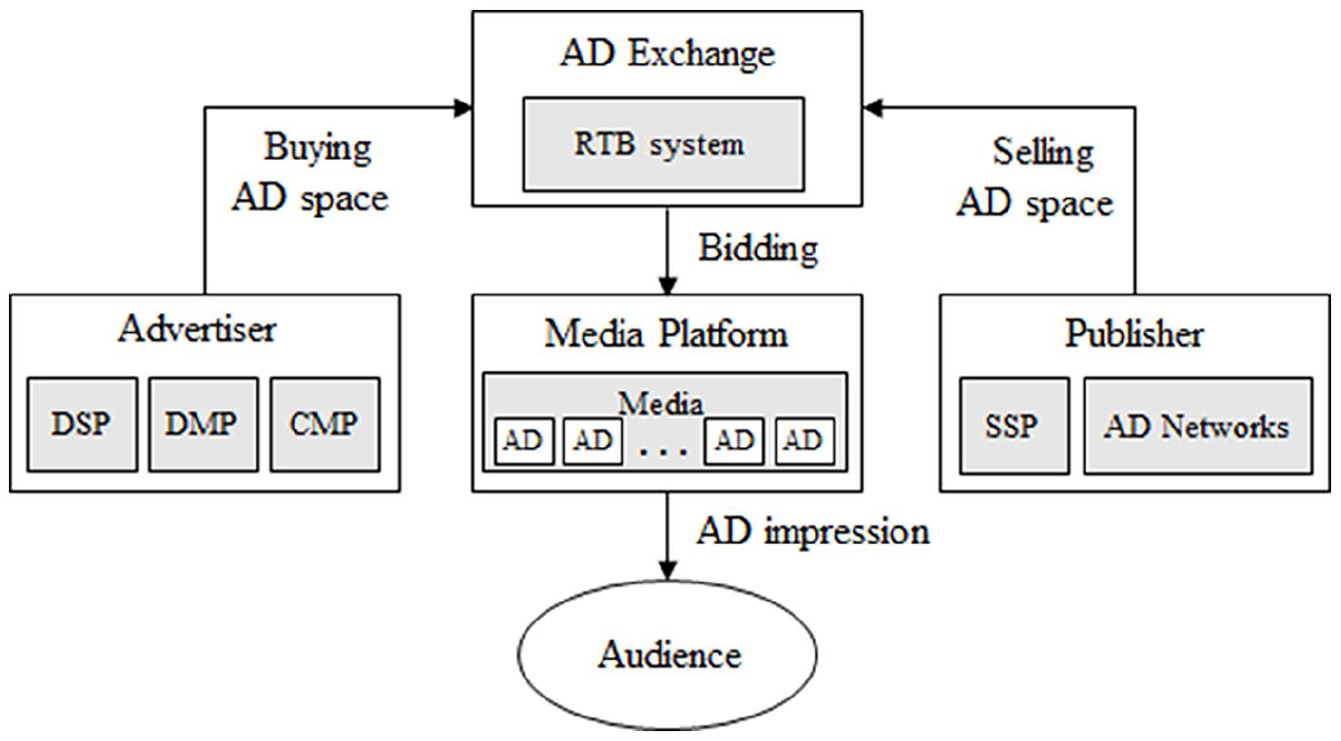
Full Funnel of Programmatic Advertising Ecosystem.
The stakeholders in the PA ecosystem include:
Advertiser: Within the PA platform, advertisers play a pivotal role by purchasing and paying for ad slots to promote their products, services, or brands. They undertake various tasks, including advertising planning, budget management, targeting, creative production, and performance measurement (Yu, 2021). These activities are supported by specialized systems within the PA platform, such as the Demand-Side Platform (DSP), Data Management Platform (DMP), and Creative Management Platform (CMP). The DSP optimizes ad purchases, the DMP enhances targeting through data collection and analysis, and the CMP automates the creation of advertising creatives across multiple media formats.
Publisher: Publishers, in the context of PA, refer to media owners or operators who display advertisements. They possess advertising inventory, such as ad slots or spaces, and generate revenue by serving ads from advertisers. Publishers utilize supplier-side platforms (SSPs) offered by media platforms like Google, Meta, and YouTube to sell and manage their ad slots. These SSPs enable publishers to effectively monetize their advertising inventory (White et al., 2019).
Ad Exchange: An Ad Exchange acts as an automated advertising marketplace that facilitates the matching of advertising inventory with potential advertisers. It plays a critical role in connecting advertisers and publishers, ensuring the availability of relevant advertising inventory, and facilitating smooth transactions between the two parties (Karlsson, 2020). Ad Exchanges employ various PA bidding methods, including private marketplace, preferred deal, and programmatic guaranteed. However, the most common approach is an open auction system based on real-time bidding (RTB), which enables advertisers to bid for available ad inventory in real time, thereby maximizing the efficiency and effectiveness of ad placements (Pintado et al., 2018).
Media Platform: The media or publisher platform serves as a platform where publishers, who possess ad space for running ads, can develop and operate their own media (Araujo et al., 2020; Helberger et al., 2020). Examples of media platforms include Google, Facebook, YouTube, or TikTok. The advertisement of the winning bidder is then displayed to the audience through a specific advertising space on the media platform owned by a specific publisher (Latham et al., 2021).
Audience: The audience refers to a specific group of users who are targeted by an advertisement. When members of the audience visit a website, blog, YouTube channel, or other platforms operated by a publisher through a media platform, they are exposed to the advertisement that won the ad placement. The audience may choose to ignore the displayed ads (Wang et al., 2019), or they can exhibit cognitive, attitudinal, or behavioral responses to the advertisements (Araujo et al., 2020; Lee & Cho, 2020).
The importance of the credibility in PA has been discussed from both advertiser and audience perspectives (Benedicktus et al., 2010; Bleier & Eisenbeiss, 2015).
Risks on PA From the Perspective of Advertisers
Advertisers play a dominant role in the PA ecosystem as they serve as a primary revenue source for the stakeholders involved and exert significant influence (Araujo et al., 2020). Addressing these risks is crucial for safeguarding brand image, enhancing advertising performance, and maintaining brand safety (Choi & Rifon, 2002). PA platforms must prioritize risk mitigation strategies and techniques to foster a secure and effective PA platform environment. Advertisers on PA platforms encounter various potential risks, including:
Improper targeting: Concerns may arise regarding the accuracy of the targeting algorithm and the quality of data utilized. Due to the utilization of multiple inventory and advertising platforms, advertisers may worry that their ads may reach an overly broad user base or fail to reach the intended audience due to inappropriate targeting (Frick et al., 2022).
Ad fraud and falsity: The complex ad inventory and traffic ecosystem in PA are susceptible to ad fraud, ad falsity, and brand counterfeiting, such as ads appearing alongside harmful content or imitating brand logos, posing risks to brand safety (Malthouse & Li, 2017).
Transaction and ad cost opacity: As PA operates on RTB and competition, the opacity surrounding ad transactions and ad costs can raise concerns for advertisers. The lack of visibility into the transaction process can lead to uncertainties and questions about the overall effectiveness of their advertising campaigns (Fulgoni, 2016; Funk & Nabout, 2016).
Data privacy issues: Advertisers must comply with data protection and privacy laws when handling user information. Failure to ensure privacy or experiencing data breaches can severely damage a brand’s reputation and credibility (Yu, 2021).
Risks on PA From the Perspective of Audiences
Another influential stakeholder in the PA ecosystem is the audience, also known as the consumer. The audience’s perception of risks associated with PA can lead to negative reactions toward digital advertising (Araujo et al., 2020). Previous studies have shown that negative feelings or perceptions toward digital ads can result in intrusiveness (Markham et al., 2001), annoyance (Rus-Arias et al., 2021), irritation (Kim & Han, 2014), suspicion of complicity (Ghanbarpour et al., 2022), creepiness (Segijn et al., 2022), and resistance (van Ooijen, 2022). These reactions can manifest as ad-blocking (Rus-Arias et al., 2021) and a decrease in click-through rate (CTR; Hasri et al., 2022), thereby impacting the effectiveness of advertising. From the audience's perspective, several potential risks associated with PA methods can impact their experience:
Objectionable advertising content: Audiences may come across inappropriate or suggestive advertising content that makes them uncomfortable (Wicker et al., 2017). This could lead to ad avoidance or ad-blocking behavior (Rus-Arias et al., 2021), diminishing the effectiveness of advertising (Jung, 2017).
Risk of personal information exposure: When personal information is collected from the audience for ad targeting purposes, privacy concerns arise (Hasri et al., 2022). The possibility of data leakage or misuse can create anxiety among the audience (Malloy et al., 2016).
Ad overload: Excessive ad impressions can overwhelm audiences, leading to ad fatigue and a reduced level of engagement. Overexposure to ads can degrade the user experience and diminish awareness of the advertised content (Ghanbarpour et al., 2022).
Inconsistency between ads and content: Audiences expect ads to be relevant and aligned with the content they are consuming. Inconsistencies between advertising content and the medium’s content can be confusing and compromise credibility and the user experience (Nabout et al., 2015).
Reduced system performance of ad receiver: Certain ad formats or large ad campaigns can negatively impact the performance of devices or networks, causing slow loading times or poor overall system performance. This can frustrate audiences and disrupt their brand experience (Kim & Han, 2014).
As examined so far, the PA ecosystem faces significant risks, such as fraud, lack of transparency, and data misuse, which can undermine stakeholder trust and disrupt market dynamics (Araujo et al., 2020). Given that advertisers and audiences are the core clients of PA platforms, these risks must be addressed to safeguard their interests and ensure the platform’s reliability and effectiveness (White et al., 2019). Advertisers rely on the PA ecosystem to optimize campaign performance and protect brand safety, while audiences depend on ethical practices to preserve their privacy and receive relevant, non-intrusive advertisements (Yu, 2021). Therefore, identifying and addressing credibility factors are essential to mitigate these risks, enhance stakeholder trust, and promote the long-term sustainability of the PA ecosystem.
Conceptual Model
The purpose of this article is to improve the PA ecosystem, and Figure 2 presents a conceptual model that outlines key factors for enhancing its health. The model explores the factors that determine the structure of PA’s credibility and its impact on advertiser safety and audience safety. Defining the soundness of a PA system requires a detailed discussion, but it can be described as a well-functioning and trustworthy environment where advertisers, publishers, and consumers have confidence in the credibility and integrity of the advertising processes and practices. When a healthy PA ecosystem is established, multiple players interacting in the ecosystem can use the platform with confidence.
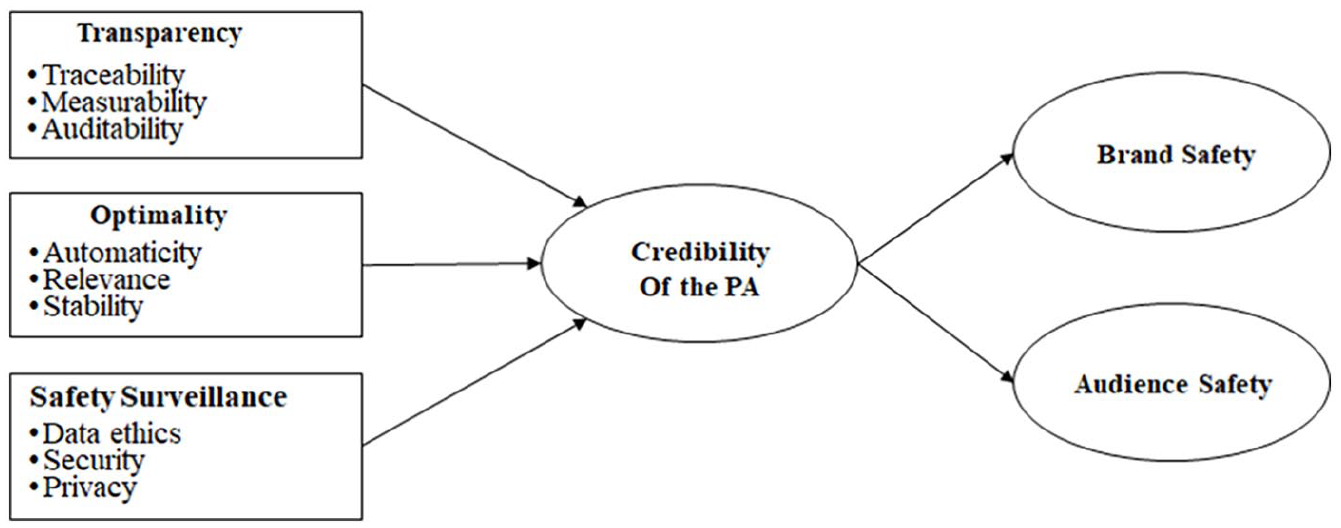
The Conceptual Model for the Credibility of the PA Platform. PA = programmatic advertising.
It is widely recognized that credibility or trust is crucial for successful electronic businesses (Choi & Rifon, 2002). Both practitioners and academics have acknowledged the importance of credibility in creating a healthy PA ecosystem (Fulgoni, 2016; Martínez-Martínez et al., 2017; Richet, 2022; White et al., 2019). However, the drivers of credibility in the PA platform and the impact of PA credibility on stakeholders have not been sufficiently studied. The proposed model emphasizes Transparency, Optimality, and Safety Surveillance as the primary drivers of credibility in the PA ecosystem, which, in turn, contribute to the safety of advertisers (i.e., brands) and the targeted audience.
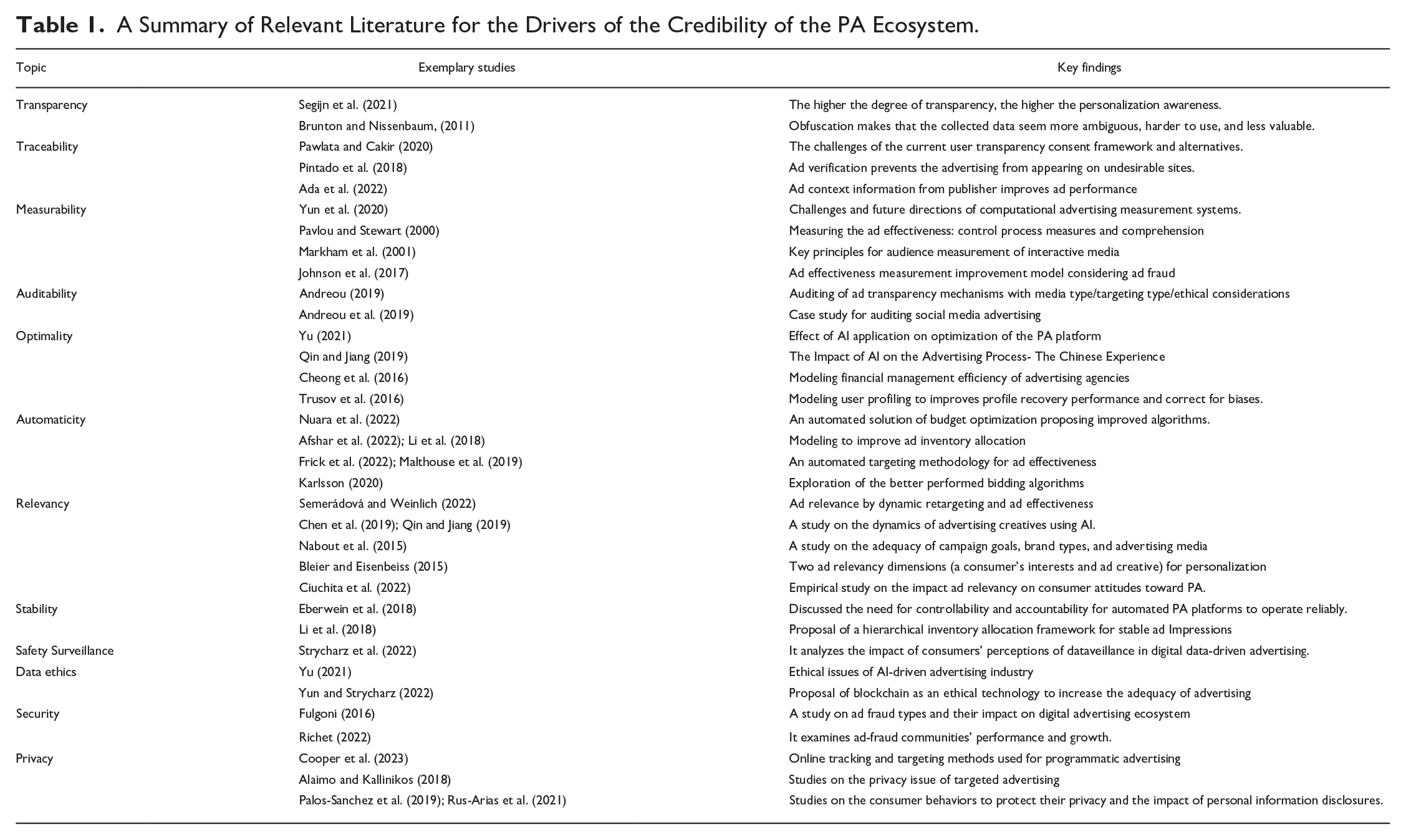
The proposed model identifies Transparency, Optimality, and Safety Surveillance as key drivers of credibility in the PA ecosystem, emphasizing their role in ensuring both advertiser safety and audience protection. First, transparency enhances user awareness of personalization, fostering trust in advertising (Segijn et al., 2021). It reduces data ambiguity, making collected information clearer and more valuable (Brunton & Nissenbaum, 2011). Furthermore, transparency mechanisms, such as auditing targeting practices, improve accountability and trust in advertising systems (Andreou et al., 2019). Optimality ensures efficient resource allocation and improves advertising performance (Cheong et al., 2016). AI-driven optimization enhances programmatic platforms, leading to better campaign outcomes (Yu, 2021). Automated systems for targeting and budgeting maximize return on investment by streamlining operations (Li et al., 2018). Finally, safety Surveillance addresses ethical and security concerns by ensuring responsible use of consumer data (Strycharz et al., 2022). It mitigates risks from fraud and other threats in the digital advertising ecosystem (Fulgoni, 2016) while protecting user privacy through secure data handling practices (Cooper et al., 2023). By integrating these elements based on previous research (refer to Table 1), the model strengthens the credibility and ethical standards of PA, promoting safer and more effective engagement for all stakeholders.
A Summary of Relevant Literature for the Drivers of the Credibility of the PA Ecosystem.
The Credibility of the PA Ecosystem
Credibility can be viewed as a comprehensive set of perceptions held by receivers toward a source. It encompasses various dimensions, such as trustworthiness and expertise (Newell & Goldsmith, 2001), credibility (Flanagin & Metzger, 2000), believability and persuasiveness (Choi & Rifon, 2002), and fairness, accuracy, and depth (T. J. Johnson & Kaye, 2009). Within this context, the credibility of the PA platform can be defined as “the extent to which stakeholders believe or trust that the PA platform is capable of effectively delivering ads that meet their respective expectations.” This definition highlights the platform’s ability to satisfy the needs and wants of both advertisers and audiences, emphasizing the trust and credibility associated with its advertising services. However, it is important to note that the previous literature provided does not specifically address the credibility of the PA platform. Therefore, while the concept of the credibility of the PA platform can be inferred, further research is necessary to examine and define it more specifically within the context of the PA ecosystem.
Drivers of Credibility for a Healthy PA Ecosystem
We have previously discussed the concerns advertisers and audiences have about the PA ecosystem. To mitigate these negative risk factors and enhance the credibility of PA, it is essential to improve Transparency, Optimality, and Safety surveillance as outlined:
Transparency
Transparency refers to a state where all data and transactions occurring within the advertising operation process are disclosed (Segijn et al., 2021). It can be achieved by transparently sharing information, such as data and costs generated during the transaction process among stakeholders (Latham et al., 2021). IAB Europe proposed TCF 3.0 (IAB Europe Transparency and Consent Framework) as a measure to enhance the transparency of the PA platform, imposing new constraints for the entire industry. Brunton and Nissenbaum (2011) caution that obfuscation by PA platforms can render collected data ambiguous and challenging to use. Segijn et al. (2021) argue that higher levels of transparency lead to increased personal awareness of such practices, making practical control possible only with a sufficient level of awareness. van Ooijen (2022) examines that disclosures made by untrustworthy media platforms diminish the effect of disclosure because the disclosure motivation is perceived as insincere. Considering previous studies, we anticipate that transparency will positively impact the credibility of the PA ecosystem. Transparency could be a higher-level construct comprising three key factors: Traceability, Measurability, and Accountability.
Traceability
Traceability represents the ability to track the flow of data throughout the PA ecosystem. Ad transparency is ensured by monitoring the overall delivery and transaction process of advertising, including the delivery path, the source of advertisement exposure and interaction, and the movement of advertisement data (Cooper et al., 2023). Traceability helps identify and address potential data quality issues, allowing advertisers and agencies to enhance ad impression and performance data credibility and ensure ads are exposed in the right environment and measured correctly. For example, Gertz and McGrath (2016) demonstrates that enhancing the transparency of data flow in the ad buying process increases trust, which in turn influences the selection of PA channels. Rappaport (2014) explains that improving advertisers’ ability to trace data enhances fraud prevention and ad quality assurance, thereby improving transparency. Several studies suggest the need for frequency tracking, audience verification tracking, brand safety tracking, conversion tracking, and publisher context information tracking as technical methods to improve traceability (Ada et al., 2022; Pawlata & Cakir, 2020; Pintado et al., 2018).
Measurability
Measurability refers to the ability to quantify the impact of PA activities. To accurately and quantitatively measure advertising performance in real time, a transparent transactional relationship is necessary (Markham et al., 2001). Measurability management plays a crucial role in ensuring transparency within the advertising transaction process and ad effectiveness (Pavlou & Stewart, 2000; Yun et al., 2020). Drèze and Hussherr (2003) argue that advertisers’ trust in PA depends on the measurability of performance metrics such as CTR and Return On Investment (ROI). To enhance the measurability of PA-based advertisements, the ad measurement system should focus on developing methods to integrate simultaneous consumer responses across multiple media channels while taking into account threshold effects and excluding other influencing variables (Pavlou & Stewart, 2000). White et al. (2019) emphasize the importance of balancing the improvement of reliable performance metrics with considerations for customer concerns regarding data privacy and feelings of intrusiveness. Some studies suggest methods to improve ad measurement models, taking into account noise such as ad fraud (G. A. Johnson et al., 2017).
Auditability
Auditability entails the ability to examine and verify the transparency, integrity, and accuracy of processes and transactions within the PA ecosystem. This aspect focuses on tracking and verifying data flows, transactions, ad placements, and financial activities to ensure that they meet industry standards, regulations, and agreed-upon criteria (Andreou et al., 2019). Cespedes et al. (2016) note that advertisers’ trust significantly increases when independent third-party auditing of advertising data and costs is implemented in PA transactions. Eberwein et al. (2018) contend that increased automation and technological autonomy not only reduce predictability and controllability but also pose challenges to governance and media accountability. Andreou (2019) underscores the need for an audit of a transparent advertising process mechanism. Markham et al. (2001) discuss the importance of media auditing using appropriate metrics for digital advertising media. Despite the need for auditing of the PA platform by several researchers, in-depth empirical research related to this has been overlooked.
Based on the previous literature review, we propose “transparency” as one of the factors driving the credibility of the PA ecosystem:
Proposition 1: Transparency positively influences the credibility of the PA ecosystem. Transparency will be a higher-level construct comprising three key components: Traceability, Measurability, and Auditability.
Optimality
The optimization of the advertising process based on Ad-Tech is a crucial aspect of the PA platform. AI technology enhances advertisers’ optimal budget allocation, media selection, precise targeting, and ad creation optimization (Yu, 2021). Optimality embodies the achievement of desired results by refining various processes involved in advertisement execution, including planning, purchasing, targeting, and production (Qin & Jiang, 2019; White et al., 2019). Research on improving algorithms and models for ad platform optimization aims to enhance efficiency and effectiveness for advertisers (Cheong et al., 2016) while maintaining a safe advertising exposure environment for audiences (Trusov et al., 2016). Consequently, the optimality of the PA platform will positively affect the credibility of the advertising ecosystem. We propose that optimality can be conceptualized as a higher-level construct comprising three key elements: Automaticity, Relevancy, and Stability.
Automaticity
Automaticity refers to the maximization of financial advantages using low-cost, mass-produced advertising technology through PA process automation (Eberwein et al., 2018). Increased automation of PA activities leads to more efficient and effective digital advertising practices. Prior studies in this domain have focused on optimizing PA performance by enhancing automation algorithms in budgeting (Nuara et al., 2022), targeting (Frick et al., 2022; Malthouse et al., 2019), ad creation (Chen et al., 2019), ad inventory allocation (Afshar et al., 2022; Li et al., 2018), and bidding (Karlsson, 2020), among others. Bapna et al. (2017) demonstrated that automation enhances campaign execution speed and data processing efficiency, supporting advertisers in achieving their optimization goals. Furthermore, several studies argue that automaticity allows operators to concentrate on more strategic and value-added activities related to advertising practice (Saurwein, 2022). We anticipate that automation may contribute to refining advertising operation methods and procedures in PAs and optimizing advertising through advantages such as efficiency, precision, and scalability (Lee & Cho, 2020).
Relevancy
PA platforms, primarily used by retailers, serve as automated big data systems that enable organizations to bid for opportunities to deliver personalized online advertising to the right audience, at the right time, and in the right place (Samuel et al., 2021). Relevancy aims to maximize ad value by matching appropriate targeting (Semerádová & Weinlich, 2022), design and copywriting (Qin & Jiang, 2019), media (Nabout et al., 2015), and personalization disclosure (van Ooijen, 2022). The more suitable the advertising displayed on the PA platform, the more likely the ad performance will be effective and have a positive impact on consumers (Bleier & Eisenbeiss, 2015). Ciuchita et al. (2022) demonstrate that ad relevance positively influences consumer attitudes toward PA, while higher risk beliefs weaken the relationship between ad relevance and consumer attitudes toward PA. Previous studies have explored factors that improve relevancy, such as data collection (Yun & Strycharz, 2022), personalization (Ciuchita et al., 2022), and dynamic content (Chen et al., 2019).
Stability
Stability on the PA platform refers to the extent to which the PA trading system operates consistently. A stable PA platform is more likely to succeed in the long term (Ciuchita et al., 2022). However, previous studies have not extensively explored the stability of PA platforms. PA platform stability is primarily related to the technical controllability and liquidity of advertising inventory. Technical controllability, in the context of a PA platform, entails the system’s ability to minimize failures or errors, efficiently handle high volumes of advertisement traffic, and promptly process ad requests and responses. Eberwein et al. (2018) warn that increasing autonomy of technology may lead to decreased predictability and controllability. Liquidity refers to the ability of advertisers to buy or sell advertising inventory whenever they desire. When the PA platform can stably provide valid advertising inventory, it can accommodate advertisers’ needs, maximize advertising effects, and ensure a stable brand experience for audiences (Li et al., 2018).
Informed by previous literature reviews, we propose “optimality” as one of the factors driving the credibility of the PA ecosystem:
Proposition 2: Optimality positively influences the credibility of the PA ecosystem. Optimality will be a higher-order construct comprising three key components: Automaticity, Relevancy, and Stability.
Safety Surveillance in PA
Strycharz et al. (2022) conceptualized surveillance as perceived surveillance, suggesting it as a response to surveillance rather than the monitoring action itself. They argued that this could represent a new type of consumer response to data-driven advertising. In the context of PA, we define safety surveillance as the ability to monitor potentially harmful or inappropriate content within the PA ecosystem. The goal of safety surveillance is to establish a secure and trustworthy environment by employing strategies and technologies that guarantee brand safety, protect users, and prevent the spread of harmful or fraudulent advertisements. When safety surveillance is executed ethically and respects data ethics, security, and privacy, it may have a positive impact on the credibility of the PA ecosystem (Cooper et al., 2023; Yun & Strycharz, 2022). We propose that safety surveillance represents a higher-level construct, consisting of three key elements: data ethics, security, and privacy.
Data Ethics
Data ethics encompasses the philosophy and practice of adhering to ethical principles controlling the collection, utilization, and sharing of data (Yu, 2021). Ethical data collection and usage are more likely to yield accurate and reliable results (White et al., 2019). Yu (2021) emphasizes the importance of vigilance regarding data ethics issues as PA platforms become increasingly AI-driven. Yun and Strycharz (2022) explore whether advanced technologies, such as blockchain, could serve as alternatives to address data ethics issues in PA platforms. Cooper et al. (2023) discuss the significance of devices and policies for safety surveillance on media platforms, acting as gatekeepers and regulators. We anticipate a positive correlation between data ethics levels and safety surveillance competence.
Security
In the contemporary digital landscape, cybersecurity is crucial for users and businesses alike, including the advertising sector (Yu, 2021). Security in safety surveillance refers to the ability to safeguard the system from threats including data leaks, hacking, and fraud. Effective security management enhances internal data protection and personal information security, preventing unauthorized data access and abuse. Ad fraud is a critical issue, with estimated global losses ranging from $35 billion in 2018 to $100 billion by 2023 (Statista, 2023b). Fraud detection and prevention methods, such as ad verification technologies and traffic filtering, are considered to help mitigate fraudulent activities (Fulgoni, 2016). Richet (2022) highlights the necessity of monitoring the ad fraud community as a subject of safety surveillance.
Privacy
Privacy concerns individuals’ rights to control the collection, usage, and sharing of their personal information. Thus, individuals should have the agency to decide what information they share and with whom. As a result, privacy can be viewed as the oversight of personal information collection and utilization to prevent violations of individual privacy. Many researchers have identified privacy issues as significant risks associated with PA platforms (Araujo et al., 2020; Taylor, 2009; White et al., 2019). Notably, studies have investigated privacy concerns in targeted advertising (Alaimo & Kallinikos, 2018; van den Broeck et al., 2020), consumer-initiated behaviors to protect personal privacy such as ad-blocking and controllability (Palos-Sanchez et al., 2019; Rus-Arias et al., 2021), the impact of personal information disclosures (Markham et al., 2001), and approaches to managing targeted advertising privacy (Yun & Strycharz, 2022). We expect that protecting user privacy is a significant component of safety surveillance.
Based on previous literature reviews, we advance “safety surveillance” as a factor contributing to the credibility of the PA ecosystem:
Proposition 3: Safety surveillance positively influences the credibility of the PA ecosystem. Safety surveillance will be a higher-level construct, encompassing three key components: Data Ethics, Security, and Privacy.
Thus far, we have examined the primary factors influencing the credibility of the PA platform. Table 1 provides the main themes of previous studies on transparency, optimality, and safety surveillance that affect the credibility of the PA platform.
Outcomes
Credibility significantly impacts brand and consumer attitudinal and behavioral outcomes. Consumers depend on their perceptions of a firm’s trustworthiness to judge the overall quality of the organization (Walker & Kent, 2013). Corporate credibility has shown direct, positive effects on attitudes toward the ad, brand, and purchase intent (Goldsmith et al., 2000). Choi and Rifon (2002) explored the effects of website and advertising credibility on ad credibility, ad and brand attitude, and product purchase intention. When consumers are familiar with an organization, they have preexisting perceptions about its credibility (Goldsmith et al., 2000). We suggest brand safety and audience safety as the primary outcomes of PA platform credibility. As PA platform trust improves, the safety of advertisers and the audience will increase.
Brand Safety
We anticipate the credibility of the PA platform to directly influence the advertiser’s cognitive evaluation of brand safety. Brand safety aims to protect the brand’s reputation and trust by aligning its image and goals and minimizing associations with unsuitable or risky content. Despite the brand's intentions, automatic and unintentional ad deliveries to inappropriate sites and ongoing brand safety infringements occur through PA methods. For instance, advertisements of over 477 prominent U.S. companies and brands were exposed on RT.com, a Russian propaganda site, for 6 months or on numerous deceptive websites (Crovitz, 2020). Brand safety is crucial for preserving the brand’s reputation and credibility by protecting it from dangerous or unsuitable exposures. Advertisers using automated PA platforms can take limited steps, like keyword filtering, self-monitoring, and restricting the list of ad sites. However, they often rely on PA platforms’ functionalities. Consequently, the credibility of the PA platform must directly impact brand safety. Therefore, strengthening the PA platform’s credibility will have a direct positive effect on brand safety.
Proposition 4: The credibility of the programmatic advertising platform will positively affect brand safety.
Audience Safety
We expect the credibility of the PA platform to directly influence the consumer’s cognitive evaluation of audience safety. Audience safety aims to protect personal information and privacy, ensuring secure and appropriate environments for users regarding data collection and ad exposure. Consumers are most concerned with potential breaches in the “Ethical limits” scenario (Aguirre et al., 2015; van Doorn & Hoekstra, 2013). Empirical research is needed to investigate the moderating effects of privacy concerns on personalization and cognitive and affective factors (Kim & Han, 2014). Kietzmann et al. (2018) examine how AI benefits consumers and advertisers by generating insights in environments that respect public privacy rights. Trust propensity might affect benefit and harm evaluations. Thus, more trusting individuals are likely to underestimate the risk of disclosing personal information to service providers and have lower privacy concerns (Pavlou & Gefen, 2004). Consequently, enhancing the credibility of the PA platform will positively impact audience safety.
Proposition 5: The credibility of the programmatic advertising platform will positively affect audience safety.
Conclusion
This study explores the critical role of credibility in the PA ecosystem by proposing a conceptual model that identifies key drivers contributing to platform trustworthiness. The research develops a comprehensive framework centered on three fundamental pillars: transparency, optimality, and safety surveillance. These dimensions provide a theoretical foundation for understanding and enhancing credibility within PA platforms.
Theoretical Contributions
The study advances theoretical understanding of PA credibility through a systematic and comprehensive framework that significantly extends existing research. By introducing a nuanced approach to conceptualizing credibility, the research provides a holistic, multidimensional perspective that moves beyond traditional linear understandings of trust in digital advertising ecosystems. The theoretical contribution is anchored in three critical dimensions: Transparency, Optimality, and Safety Surveillance. Within Transparency, the study meticulously explores traceability, measurability, and auditability as fundamental mechanisms that enable verifiable and accountable advertising processes. The Optimality dimension delves into the critical aspects of automaticity, relevance, and stability, offering insights into how technological efficiency and strategic alignment can enhance advertising performance. Safety Surveillance emerges as a crucial component, comprehensively addressing data ethics, security, and privacy concerns that are increasingly paramount in the digital advertising landscape.
By synthesizing these dimensions, the research provides a structured, sophisticated approach to understanding credibility that transcends fragmented or superficial interpretations. The framework offers researchers and practitioners a robust theoretical lens through which to examine the complex trust mechanisms inherent in PA platforms. This approach not only illuminates the intricate dynamics of digital advertising credibility but also establishes a sophisticated foundation for future empirical investigations and theoretical developments in the field.
Practical Implications
The research provides significant practical insights that can benefit multiple stakeholders in the PA ecosystem. For advertisers, the proposed credibility model offers a strategic approach to enhancing advertising effectiveness. By implementing the recommended credibility strategies, advertisers can optimize their targeting accuracy, improve resource allocation, and maximize their overall advertising impact. These improvements potentially translate into tangible business outcomes, such as higher CTRs, improved conversion rates, and, ultimately, a more substantial return on investment.
Advertising agencies stand to gain substantially from this framework as well. The model facilitates the development of trust-based relationships with clients by emphasizing transparent and ethical practices. By demonstrating a commitment to credibility, agencies can differentiate themselves in a competitive market, attract more clients, and build long-term, sustainable partnerships based on reliability and performance. Finally, for PA platforms, the research provides a comprehensive blueprint for establishing and maintaining a strong reputation. The model offers a structured approach to driving stakeholder confidence by promoting verifiable and trustworthy operational practices. By adopting these credibility-focused strategies, PA platforms can not only enhance their individual market position but also contribute to broader industry growth, creating a more reliable and efficient digital advertising ecosystem. Ultimately, the practical insights derived from this research offer a roadmap for stakeholders to navigate the complex landscape of PA, emphasizing the critical role of credibility in achieving business success.
Limitations and Future Research Directions
Based on a comprehensive review of advertising research published in Journalism & Mass Communication Quarterly over the past century, Thorson (2023) emphasizes the necessity of investigating emerging issues, particularly the ethical implications of personalized advertising and privacy concerns, as crucial directions for future research. This study, while providing valuable insights into PA platform credibility, acknowledges several inherent limitations that present opportunities for future research. First, the proposed conceptual model requires rigorous empirical validation, as the current research primarily offers a theoretical framework rather than a comprehensive methodology. Second, the research identifies a need for developing more nuanced and standardized metrics for assessing platform credibility. While the study outlined key dimensions of transparency, optimality, and safety surveillance, future research must focus on creating precise indicators that can objectively evaluate these complex constructs. Third, the study recognizes the limitations in its current scope of exploring credibility dimensions. Researchers are encouraged to expand the investigation into additional factors such as trustworthiness, believability, fairness, and accuracy to provide a more holistic understanding. Fourth, there is a critical need for empirical studies that assess the direct impact of platform credibility on various stakeholders, examining how it influences advertiser performance, consumer behavior, ad fraud reduction, and regulatory compliance. These limitations are not viewed as shortcomings but as valuable opportunities for advancing the field, with each identified research direction representing a potential pathway to deeper understanding of credibility in digital advertising platforms.
Footnotes
Declaration of Conflicting Interests
The author declared no potential conflicts of interest with respect to the research, authorship, and/or publication of this article.
Funding
The author received no financial support for the research, authorship, and/or publication of this article.
