






Abstract
Cyclone Freddy, the longest-lived tropical storm in recorded history, provides a critical case study for interrogating the dynamics of social inequality in journalism on climate crisis. We develop a distinction between colonial reporting and solidarity reporting through a qualitative textual analysis of 534 news stories on Cyclone Freddy published from February 1, 2023 to March 31, 2023. Most stories perpetuate colonial logics by deferring to officials while silencing survivors. Only 12 stories in our corpus (2.2%) demonstrate solidarity by including the incriminating truth of survivors’ firsthand accounts of government neglect. Solidarity reporting contributes an approach for resisting journalistic colonialism.
Keywords
In an era marked by rising climate disasters and deepening global disparities, journalism continues to play a role in shaping how societies understand, navigate, and respond to escalating environmental crises (Houston et al., 2012). News production is never immune to social inequalities, as news values are not natural or neutral, but rather culturally and socially constructed to primarily perpetuate dominant ideologies (Bell, 1991; Hall, 1973; Usher, 2024). Who is heard, how they are represented, and which forms of knowledge are prioritized in news coverage are indicative of broader structural hierarchies that govern media systems (Beckers et al., 2024; Shoemaker & Reese, 2014). In the context of climate change reporting, past journalism scholarship has critically interrogated dominant news media’s overemphasis on scientism, routines of prioritizing elite sources, and the prevalence of restrictive and reductive narratives when portraying climate survivors (Blue, 2018; Boykoff & Roberts, 2007; Dreher & Voyer, 2015; Høeg & Tulloch, 2019; Ragragio, 2022; Shehata & Hopmann, 2012).
We analyze how sourcing routines and narrative frames may reproduce or resist entrenched systems of marginalization in climate coverage. Building upon critiques of colonial logics woven into climate change discourse (Blue, 2018; Coen, 2020; Ross, 2025), we articulate and illustrate the differences between colonial reporting on climate crises and solidarity reporting on climate crises. By developing the distinction between colonial and solidarity reporting, this article contributes a novel framework for interrogating how journalism represents social inequality through sourcing practices, knowledge hierarchies, and representational frames in climate crisis reporting. Our empirical focus is on the case of Cyclone Freddy, which was the longest-lived tropical storm in recorded history (World Meteorological Organization, 2024).
Making landfall twice from February 5, 2023, to March 14, 2023, Cyclone Freddy became international news for its rampant destruction, leading to the displacement of hundreds of thousands of people. Like other climate disasters, Cyclone Freddy demonstrated the stark inequality and injustice of climate crisis as it hit “first and worst” in countries that are not major contributors to climate change, including Malawi, Madagascar, and Mozambique (Kamboh et al., 2024). Although there are thousands of climate crises that make international headlines, Cyclone Freddy was and is particularly significant, not only because of its grave impact on three countries but also because of its global implications: the climate science community reached swift consensus that the strength and length of Cyclone Freddy are consistent with research linking warmer oceans to greater cyclone intensity (Peyton, 2023; Seneviratne et al., 2021).
Using qualitative textual analysis, we closely analyze sourcing dynamics, dominant narratives, and frames in coverage immediately before, during, and after Freddy hit, with a particular focus on the presence, absence, and conditions of inclusion. We find that colonial reporting on climate crisis perpetuates longstanding practices of abstraction, erasure, and silencing, which neglect to account for the truth of people’s grounded knowledge, insight, and struggles (for a related discussion of epistemic erasure of people’s firsthand knowledge, see Ross, 2025; Sultana, 2022).
Although much of the international coverage of Cyclone Freddy includes officials within the affected countries who are not imperial powers, discursive practices prioritizing people with institutional power as sources still may perpetuate colonial logics through the erasure of Indigenous knowledge. As Martin Lang (2015) has argued with reference to Raka Shome (1996), “Contemporary communication scholarship. . .must be alert to the neocolonial context of discourse, for while colonists of the past emphasized territory, contemporary powers ‘subjugate the ‘native’ by colonizing [them] discursively’” (p. 87). Farhana Sultana (2022) has similarly argued in the context of climate coloniality, “Colonialism is not in the past, it is in the present and in the future” (p. 10). Legacies of climate colonialism in news media may persist through the epistemic authority conferred to elite sources and the restrictive frames that news organizations routinely use to portray affected populations. Identifying pervasive yet latent colonial logics in journalism on climate crisis offers a way to interrogate these dynamics in the service of distinguishing and developing alternative reporting logics.
For example, we also find—occasional—evidence of solidarity reporting in international coverage of Cyclone Freddy. Solidarity reporting is a journalistic approach where reporters prioritize affected people’s experiences by forming connections with them and amplifying their firsthand knowledge, direct insight, and shared struggles for basic needs (Varma, 2020, 2022, 2023). Prior to the present study, solidarity reporting has not been analyzed in the context of coverage of climate crisis, which is a growing priority for many journalism organizations around the world. We argue that solidarity reporting should be much more prevalent in journalism to advance climate justice as an ethical imperative. Truthful reporting on climate crisis, we argue, needs to account for the struggles that affected people face and know more than any other source. By emphasizing the stakes of who is seen, heard, and believed in moments of global crisis, this study calls attention to the ways international journalism may reinforce or resist existing inequalities, and calls for international journalism to do better not only by the people already impacted by climate crisis, but by its international news audiences who remain ill-prepared for the dawning reality of climate crisis which is making landfall worldwide.
We begin by foregrounding climate crisis as an issue of social inequality, and then conceptually contrast colonial reporting with solidarity reporting on climate crisis. Colonial reporting reinforces social inequalities, whereas solidarity reporting resists social inequalities. Then, building on the literature on journalism, social inequality, and climate coverage (Blue, 2018; Boykoff & Roberts, 2007; Sultana, 2022), we conduct qualitative thematic analysis (Boyatzis, 1998; Braun & Clarke, 2006; Neuendorf, 2018) of international news coverage of Cyclone Freddy, and find that numbers, officials, and scientists dominate, while survivors who have firsthand knowledge of the truth of climate crisis are largely silenced. We find 12 exceptions to this dominant tendency, however, which we classify as solidarity reporting. We conclude by considering global applications and implications of solidarity reporting for resisting journalistic colonialism.
Contrasting Colonial Reporting and Solidarity Reporting on Climate Crisis
Climate crisis is a story of social inequality. Disproportionately impacting countries that were colonized by Western empires, climate crisis is devastating evidence of the human harms of colonialism. Formerly colonized countries across the Global South are susceptible to and already experiencing the “first and worst” impact of a climate crisis disproportionate to their industrial output (Kamboh et al., 2024). In light of these historical and contemporary inequities, colonialism continues to be globally regarded as a key contributor and ongoing reason for climate vulnerability (Intergovernmental Panel on Climate Change, 2022). This disproportionate impact of climate crises is also known as climate colonialism (Bhambra & Newell, 2022). Climate colonialism creates disproportionate vulnerabilities to climate crises due to histories of colonial empires stripping natural resources and limiting infrastructure development in colonized countries, as well as persistent unequal access to resources and representation in policy discussions of aid for addressing these vulnerabilities (Mahony & Endfield, 2018). These inequalities are often normalized and reinforced rather than recognized or resisted in public discourse, including media coverage (Kamboh et al., 2024) that focuses on climate science without accounting for its colonial lineage and neo-colonial implications.
Climate science, which is often portrayed as a neutral and objective field, making it attractive to ostensibly “objective” journalism, has deep historical roots in imperialism and colonialism (Coen, 2018). During the 19th and early 20th centuries, European colonial powers, particularly the British, French, and Dutch, invested in climate science by building vast networks of observation stations across their empires in an attempt to understand and control monsoons, trade winds, and other phenomena that impacted colonial economies (Coen, 2018). Doing so was part of a strategy for controlling agricultural production, trade routes, and labor systems dependent on seasonal weather patterns around the world (Coen, 2018). Meteorology and climatology were institutionalized as tools of colonial governance for determining when to plant, where to build infrastructure, and how to optimize extraction processes (Coen, 2020).
Journalism is a meaning-making institution that contributes to shaping public understanding of climate science, climate crisis, climate injustice, and climate vulnerability (Sachsman & Valenti, 2020; Schäfer & Painter, 2020). Perpetuating social inequality in journalism on climate crisis manifests at the level of practices, which are discernible from published stories. These practices include primarily quoting elite sources, erasing marginalized voices, conflating credibility with elite institutions (Nkoala et al., 2025; Ross, 2025; Sultana, 2022), and restricting affected people to stereotypical emotional testimonials rather than representing their firsthand knowledge of the on-the-ground reality they face (critiqued in Varma, 2020, 2023).
Colonial logics shape news coverage of climate change (Blue, 2018; Coen, 2020), which reinforce and normalize social inequalities rather than resisting and refusing them. A hallmark of climate reporting is scientism, which posits that science is the only source of knowledge and truth and contributes to disregarding or discounting other forms of knowledge and experience, such as Indigenous or local knowledge (Blue, 2018). Science and scientism are not synonymous, however. Using scientific methods does not automatically require or mean claiming that science holds exclusive domain over truth. However, dominant Western practices of knowledge production have often elevated science as if it were the only legitimate way of knowing (critiqued in G. Gondwe, 2022, p. 5; Ndlovu-Gatsheni, 2015, p. 488), therefore denying or marginalizing the existence of “silenced knowledges” (Moyo, 2020, p. 128). Addressing this denial does not require rejecting science altogether, however. Instead, it means opening knowledge production to multiple ways of knowing—which include but are not limited to scientific knowledge (Moyo, 2020, p. 123). 1
Scientism is reflected in stories amplifying the voices of experts and scientists within climate coverage and focusing exclusively on the scientific aspects of the issue, such as wind speed, without any quotes from survivors to represent the human dimension. Through rhetorical processes of standardization, minimization of Indigenous knowledge systems, and the erasure of impacted communities (Lang, 2015), colonial reporting relies on the abstraction of climate crisis from the realities of the urgent needs it creates for real people. In contrast, solidarity reporting on climate crisis resists journalistic colonialism by concretizing it.
A growing body of scholarship led by scholars originally from Africa raises consistent concerns about the persistent coloniality of knowledge production in and on Africa (G. Gondwe, 2022; Mohammed, 2021, 2025; Moyo, 2020; Ndlovu-Gatsheni, 2015). Although formal colonial rule has ended, these scholars argue that coloniality persists in many forms, including through knowledge production that perpetuates the denial of “cognitive justice. . .a space where multiple forms of knowledge and ways of knowing can coexist” (Moyo, 2020, p. 114, with reference to Santos, 2007). While these scholars primarily critique academic scholarship, their arguments are directly applicable to journalism as knowledge production as well. Across these theoretically rich works, scholars consistently call for decolonial solidarity in knowledge production, starting with the provocative question: “Who generates knowledge and from where?” (Ndlovu-Gatsheni, 2015). Last Moyo (2020) points out that Global North scholars display an “uncanny discomfort with the existence of truly multicentric ontologies” (p. 116).
Substantiating the connection between coloniality, knowledge production, and journalism, Mohammed (2021) conducted community-engaged sessions in Ghana with journalists who identified “harmful tropes” as “undignified news reporting” and developed alternatives for ethical reporting (p. 16). The idea of knowledge production in and on Africa as a route for decolonial solidarity is grounded in affected people’s awareness and rejection of a status quo in which knowledge production upholds, reinforces, and normalizes coloniality through the systematic exclusion of affected people as co-creators of knowledge on their own lives (p. 14).
Solidarity is a longstanding approach for resisting colonialism and a driving force of liberation movements. Defined as “a commitment to social justice that translates into action,” (Varma, 2020, p. 1706), solidarity is a recurring theme in policy discussions of climate crisis and climate justice. For example, UN Secretary General António Guterres called vehemently for climate solidarity at COP27, stating that “humanity has a choice: cooperate or perish. It is either a Climate Solidarity Pact—or a Collective Suicide Pact.” Climate solidarity is often discussed in terms of climate justice social movements (Jacobsson, 2021) and transnational aid (Malherbe & Oladejo, 2025).
In journalism, solidarity includes but is not limited to social movements: Varma (2020, 2022, 2023) has traced solidarity through dimensions of journalism, including narrative techniques, news values, sources, and primary definitions. Solidarity in journalism manifests through reporting marginalized communities’ firsthand knowledge, insights, and observations in the service of advancing social justice (Varma, 2022, 2023). By adopting definitions from the ground-up, journalism moves from exclusively emphasizing officials and institutional spokespeople with podiums and press releases to including people who are living the issue, placing their basic survival at stake. Solidarity reporting positions people with firsthand knowledge as credible sources of truth, including when their accounts contradict or undermine official narratives (Varma, 2023). Rather than replacing officials with survivors, however, solidarity stories include affected people as well as a wide range of sources such as government officials, scientific experts, grassroots aid workers, and global aid workers. What is distinctive about solidarity reporting is not simply the presence or even the proportion of affected people, but how they are portrayed: with agency, inherent humanity (dignity), and knowledge derived from firsthand experience of their own struggles to survive (Varma, 2020, 2023). A key criterion for solidarity reporting is hearing from multiple people affected, which moves beyond individual, personal profiling (critiqued in Varma, 2020) to account for widely shared struggles that affect entire communities at the level of basic dignity. Solidarity reporting means that affected people provide concrete, firsthand facts about the material reality they face.
Solidarity reporting remains rare in most coverage of climate crisis, which tends to disregard the experiences of those most affected (Blue, 2018). Climate crisis affects millions of people, and yet these people are often nowhere to be found in coverage of the issue, posing an existential threat to their lives and all of humanity’s survival. Even when climate coverage portrays affected people, these portrayals tend to rely on limited frames, the most recurrent being the victim and refugee security threat frames (Burch, 2021; Dreher & Voyer, 2015; Høeg & Tulloch, 2019)—which fall short of solidarity. Extending Kamboh et al.’s (2024) argument for centering people’s lived experiences in climate justice policy discourse, we advance an argument for adopting the solidarity reporting approach to counter international journalism’s perpetuation of colonial reporting logics. In both journalism and policy, prioritizing people with firsthand knowledge takes strides toward justice by truthfully accounting for their self-articulated, concrete needs. Solidarity reporting prioritizes insight from people who have lost their homes, families, and access to basic needs like clean water. Moving beyond placing people’s pain on display for consumption or amplifying officials’ preferred narratives, solidarity reporting offers a way for international journalism to truthfully portray and convey the stakes and lived realities of a crisis with implications for every country in the world.
Distinguishing between colonial reporting and solidarity reporting (Table 1) provides a framework for identifying and interrogating the inequalities involved in reporting what some news outlets continue to mistake for a story exclusively of science. These two journalistic logics 2 are not merely normative ideals or stylistic preferences; they are social practices embedded in broader systems of power. Colonial reporting is not accidental; it reflects institutional hierarchies that govern who has access to news platforms, whose knowledge is considered credible, and which narratives align with dominant global agendas. Solidarity reporting challenges colonial logics by reorienting coverage toward justice through the inclusion of people’s truthful accounts of what they have experienced, and what they need now to survive. By rejecting abstraction in favor of direct, firsthand accounts of what the institutional powers have and have not done to help, solidarity reporting challenges colonial logics by resisting the erasure and silencing of victims’ and survivors’ knowledge.
Key Distinctions Between Colonial Reporting and Solidarity Reporting on Climate Crisis.
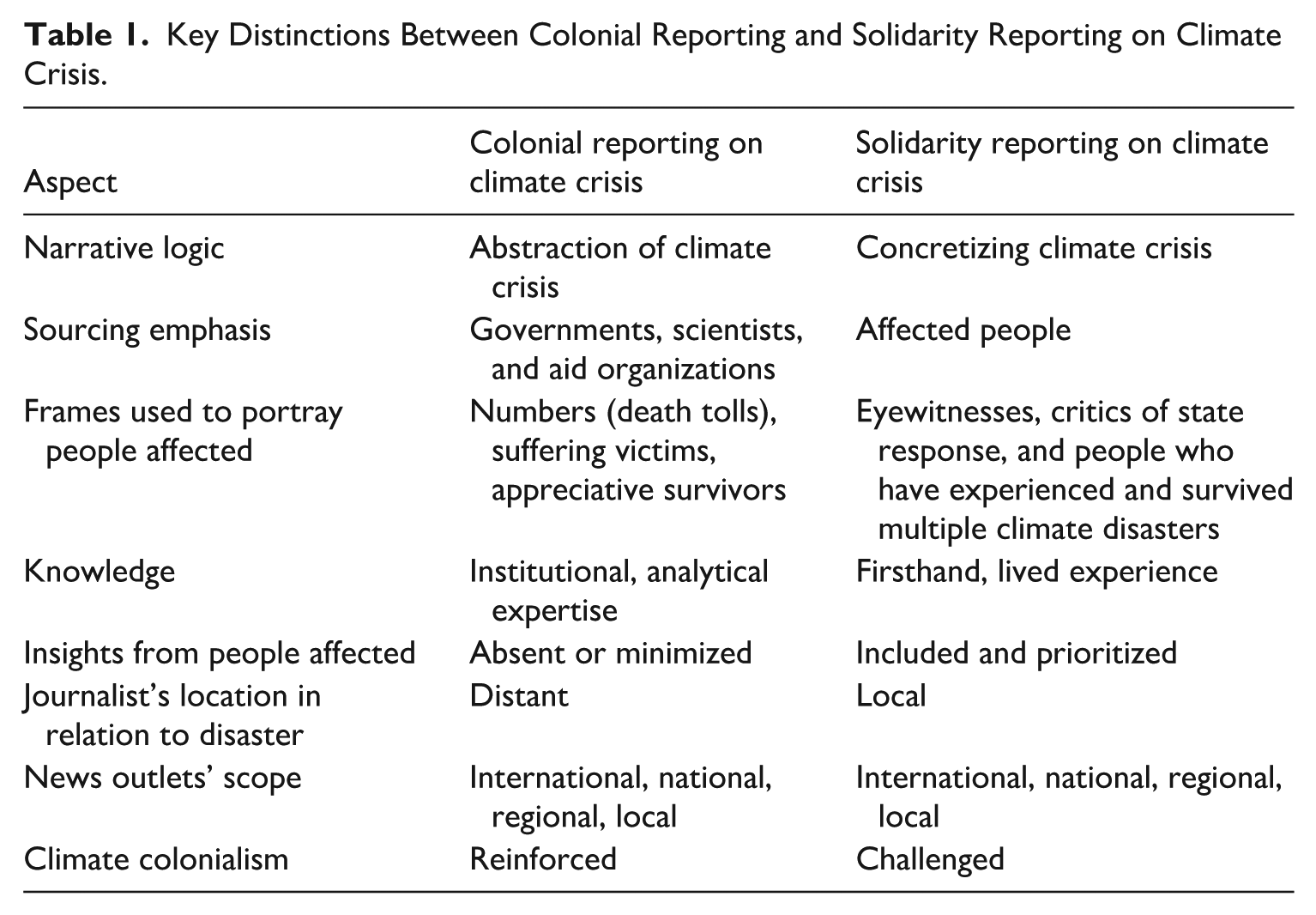
While there are many climate crisis events where the contrast between colonial reporting and solidarity reporting applies, we focus on Cyclone Freddy for three reasons: first, it was the longest tropical storm in recorded history (World Meteorological Organization, 2024). Second, the significance of the massive human destruction wrought by this storm is not limited to the countries where it made landfall. The implications of oceans conducting unprecedented heat energy will be global, and already are, as indicated by unprecedented hurricane seasons in the West after Cyclone Freddy (National Oceanic and Atmospheric Administration, 2024), making Cyclone Freddy an internationally significant turning point, beyond a particular region. Finally, Cyclone Freddy destroyed lives, livelihoods, and communities in Madagascar, Mozambique, and Malawi—none of which contributed to climate crisis anywhere near the proportion of impact, and all of which were colonized until after the mid-20th century: Madagascar gained independence from France in 1960, Malawi gained independence from Great Britain in 1964, and Mozambique gained independence in 1975 from Portugal. With this in mind, we use Cyclone Freddy as a case study to closely analyze the distinction between colonial reporting and solidarity reporting on climate crisis in practice, which leads us to the following research questions.
Methods
To examine dynamics of journalism inequality in coverage of Cyclone Freddy as a case of how international journalism may perpetuate or disrupt social inequality in climate crisis coverage, we conducted qualitative textual analysis of Cyclone Freddy news coverage. Qualitative textual analysis may refer to many approaches that differ from each other (Braun & Clarke, 2013). We developed a thematic analysis, which is distinct from content analysis (Boyatzis, 1998; Braun & Clarke, 2006; Neuendorf, 2018). As Neuendorf (2018) explains, both thematic analysis and content analysis “involve codes and coding. . .a process of representing message content with abbreviated, convenient symbols” (p. 211), but these approaches have distinct logics, processes, and criteria for assessing the quality of analysis (related explanation in Braun & Clarke, 2013, p. 20). Namely, “thematic analysis. . .developed from within a more constructivist paradigm. . .and an emphasis on an interpretive approach” (Neuendorf, 2018, p. 212).
Our methodological approach to thematic analysis is consistent with past research studies that rely on a single coder’s immersion in media texts to foster conceptual depth, close reading, emergent categories, and critical scrutiny of narrative structures, symbolic arrangements, and ideological meaning of journalistic coverage (see Amah, 2024; Varma, 2020, 2022, 2023, consistent with analytical approaches in Chouliaraki, 2013; Durham, 2018; Fürsich, 2009). Our coding process closely follows the steps of thematic analysis that Neuendorf (2018) synthesizes from Clarke and Braun (2014) and Braun and Clarke (2006). Thematic analysis provides a fitting approach for a study of submerged, often-subtle dynamics of inequality in journalism, which seldom take the form of blatant bigotry yet perpetuate colonial logics (related discussion in Ross, 2025).
Thematic analysis is an iterative, interpretive process of refining definitions, collapsing overlapping categories, sharpening distinctions between categories, and ultimately arriving at a coding scheme (Braun & Clarke, 2006; Neuendorf, 2018). Thematic analysis may include counting as one way to demonstrate patterns and prevalence, but what is counted is based on emergent categories rooted in close interpretation of texts rather than relying on intercoder reliability (Braun & Clarke, 2013, p. 279; O’Connor & Joffe, 2020, p. 4; see Hatef & Luqiu, 2021; Varma, 2020). While content analysis relies on intercoder reliability, “intercoder reliability is not routinely assessed in thematic analyses” (Neuendorf, 2018, p. 214). As Braun and Clarke (2013) argue, “the researcher inevitably influences the research process and the knowledge produced. . .the types of themes or categories generated in the analysis depend on the standpoint and experience of the researcher” (p. 279). Following Braun and Clarke (2013), we summarize our “standpoint and experience” next as these pertain to shaping the thematic analysis that follows.
Our lead author is a woman who is originally from Egypt and is now based in the United States. Her research focuses on portrayals of people positioned as victims in a range of global media contexts. She spent six months immersed in literature on climate science, climate crises, sourcing patterns in English-language media on global crises, and scholarly analyses of coverage of climate injustice in countries disproportionately affected by climate change before beginning to collect articles and code for this study. Our second author is a woman from the United States with an ancestral home in India, and her research focuses on the ethics of representing people who struggle for basic needs under the status quo. The authors’ situated lenses on social inequality at a global scale, power dynamics of media representation, and awareness of the international stakes of climate justice enriched their ability to critically analyze dynamics of social inequality in journalism on Cyclone Freddy.
First, to construct the corpus of articles, our lead author collected news stories through a LexisNexis search using the query “climate change” within coverage mentioning “Cyclone Freddy” from February 1, 2023 to March 31, 2023. No other search queries were used. This search initially yielded 766 news articles. Our lead author manually identified and removed 178 duplicate articles with identical content. Then, our lead author manually identified and removed 54 stories published in languages other than English, since our study is focused on English-language coverage. This resulted in a corpus of 534 articles from 112 news outlets, according to LexisNexis, listed in Supplemental Appendix A. 3 We removed duplicates because our research questions are about types of sources and types of portrayals of affected people across the entire corpus of coverage of Cyclone Freddy, using the unit analysis of the article, rather than an assessment of individual news outlets’ performances. Analyzing coverage of a topic across news outlets follows the logic of a decentralized digital media landscape in which news platforms regularly present coverage of a topic with articles from multiple news outlets reporting on the same event or issue, and showcase the article as the focal point rather than the particular news outlet (for a related discussion of the networked journalism landscape, see Waisbord & Russell, 2020).
We included the phrase “climate change” because we are using Cyclone Freddy coverage as a case study of climate change coverage. Disaster coverage that did not mention climate change is broader than the scope of the present study, which seeks to understand dynamics of social inequality in climate coverage specifically, rather than disaster coverage more generally.
Starting with RQ1, our lead author manually coded each article in Atlas.ti to answer the question: who speaks and who remains unheard in our corpus of Cyclone Freddy coverage? This process led to generating a set of initial codes for classifying different types of sources, including scientists and scientific organizations, government officials and bodies, United Nations-affiliates, global aid affiliates and organizations, grassroots organizations, other publications and media entities, and affected people. Our lead author also differentiated between independent scientists, experts, and organizations and those affiliated with governments. This initial coding round led our lead author to notice a recurring pattern of sources quoted in news coverage without human names. These quotes were attributed to institutional agencies or organizations, which led our lead author to do a second round of coding for sources to add a sub-classification indicating whether or not the source had a human name, using labels of “person” and “non-person” distinctions within source categories. Supplemental Appendix B provides codes and definitions.
After ascertaining that some of the coverage included people directly affected by Cyclone Freddy who are not institutional affiliates, our lead author moved to RQ2: how are people directly affected by Cyclone Freddy portrayed in this coverage? Examining how requires a thematic analysis of what Braun and Clarke (2006) have called a “latent level” of “underlying ideas, assumptions, and conceptualizations—and ideologies—that are theorized as shaping or informing the semantic content of the data” (p. 84). To move beyond individual impressions, our lead author discussed latent codes with the second author to clarify and specify their meaning so that someone who is not immersed in the corpus can also understand the codes. Authors met on a weekly basis for 60 to 90 minutes throughout 3 months of thematic qualitative coding. This led to an emergent set of classifications of affected people, including numbers, suffering victims, people attempting to rebuild, survivors appreciative of aid, survivors assigning blame for their plight, and eyewitnesses relaying firsthand accounts of their experiences and needs. Supplemental Appendix B provides frames, definitions, and examples.
Finally, RQ3 led both authors to compare solidarity reporting to colonial reporting and to critically evaluate their implications for social inequalities. We classified stories that omitted affected people altogether as colonial reporting, due to the erasure of local knowledge (Ross, 2025; Sultana, 2022). However, the mere presence of affected people in a story does not necessarily mean it is a solidarity story. Table 1 distinguishes between colonial reporting and solidarity reporting at a conceptual level, but in practice these distinctions are often subtle and therefore require careful and close assessment of emphasis, knowledge claims, and power dynamics woven into a story which constitute its internal logic. To do so, we conducted close readings of all stories that included directly affected individuals (coded as “affected shown”) to assess whether and to what extent they illustrated principles of colonial reporting or solidarity reporting (Varma, 2020, 2022, 2023). We classified stories as colonial reporting when the story relied primarily on official government statements or statements from faceless agencies, omitted the systemic context of Cyclone Freddy as it relates to climate colonialism, and depicted affected populations as lacking awareness, agency, or any firsthand knowledge of the cyclone they endured. While most government sources were of the nations affected (Mozambique, Malawi, and Madagascar), which meant that they also could have been directly affected, our initial reading of all articles revealed that governmental actors were speaking from institutional vantage points and did not provide insight or indicate knowledge of the on-the-ground reality that solidarity reporting revealed. Government officials operate within structures of authority that often distance them from the lived experiences of directly affected communities, which is the central concern of our analysis. 4 We classified stories as solidarity reporting when they included direct insight from affected people, and when affected people were included for their vantage point of firsthand knowledge, direct insight, and lived experience of widespread, concrete struggles for basic needs to survive, which oppose abstraction and transcend individual (personal) anguish.
Stories we classify as solidarity reporting contain multiple types of sources, and do not exclusively quote survivors, which is consistent with past empirical criteria for solidarity reporting where officials and analysts are usually still included but do not eclipse or erase people’s direct experience as a source of knowledge (Varma, 2020, 2022, 2023). Consistent with Varma (2020, p. 1706), classifying solidarity journalism was not a matter of numerical thresholds, frequency counts, or weighted calculations, but instead an overall assessment of each article’s sourcing, depth, context, portrayals of people (or lack thereof), and meaning of the storm.
Distinguishing between solidarity reporting and colonial reporting requires looking at the article as a whole. Both solidarity reporting and colonial reporting may include the affected population, which makes a binary assessment of whether or not certain sources are quoted or mentioned insufficient for assessing whether a story is aligned with solidarity reporting. Applying the empirical approach in Varma (2020, 2023), we classify stories as solidarity reporting when they include facts from the vantage point of affected people on the ground who provide firsthand knowledge of the material reality they face. We identified 12 articles aligned with solidarity reporting and then did three rounds of close reading of each solidarity story to deeply interrogate the significance of these stories, including direct insights from affected people related to dignity, neglect, and ongoing struggles to survive. Finally, to ensure consistency for categories that emerged during coding, our lead author did a second-pass check of 135 stories (approximately 25% of the corpus).
Freddy’s geopolitical context makes it a fitting case for interrogating social inequality, inequality in journalism, and climate injustice. Unlike climate disasters that have been neglected or minimally covered in the international English-language press and press wires, Cyclone Freddy was extensively covered due to its magnitude of impact across two landfalls, deadly aftermath, and cholera outbreaks affecting water supply. The scope of this initial study is English-language news coverage, including from Western-owned and operated news agencies (Flew & Waisbord, 2015), because climate solidarity is a global issue that both implicates and threatens people who are not necessarily co-located with people directly impacted (yet). Furthermore, more than 24 countries in Africa list English as one of their official languages due to historical ties with British colonialism (Plonski et al., 2013), which means that the relevance of English-language news extends beyond Anglo-Saxon majority countries. These articles are not the only way people outside of affected regions could have become aware of Cyclone Freddy but constitute one case study for closely examining how climate crisis is portrayed in international journalism, and how journalistic portrayals may perpetuate or challenge longstanding social inequalities undergirding the crisis. After presenting findings and our discussion, we consider the limitations of this study with respect to scope, including its English-language criteria, and offer avenues for future research. This study is part of a larger body of ongoing research on solidarity reporting in global contexts.
Findings
97.8 percent of stories in our corpus (522 out of 534 stories) omitted people directly impacted by Cyclone Freddy altogether or confined them to reductive frames such as numbers and sorrow, while only 2.2% of stories (12 out of 534 stories) included them in ways illustrative of solidarity reporting. This is a startling proportion, given that thousands of people were directly impacted by Cyclone Freddy, and their presence in these 12 stories indicates that they were available to speak to journalists—but in an overwhelming number of cases, news outlets did not seek them out. As a result, international news coverage of Cyclone Freddy systematically reproduced social inequality through its sourcing patterns and representational frames. Coverage quoted government officials, scientists, and large aid organizations, with scarce representation of firsthand knowledge from people directly affected by the disaster. We find that official governmental sources, scientists, and scientific organizations were the three most common sources used in the corpus, while people directly affected were among the least common (see Figure 1 and Figure 2).
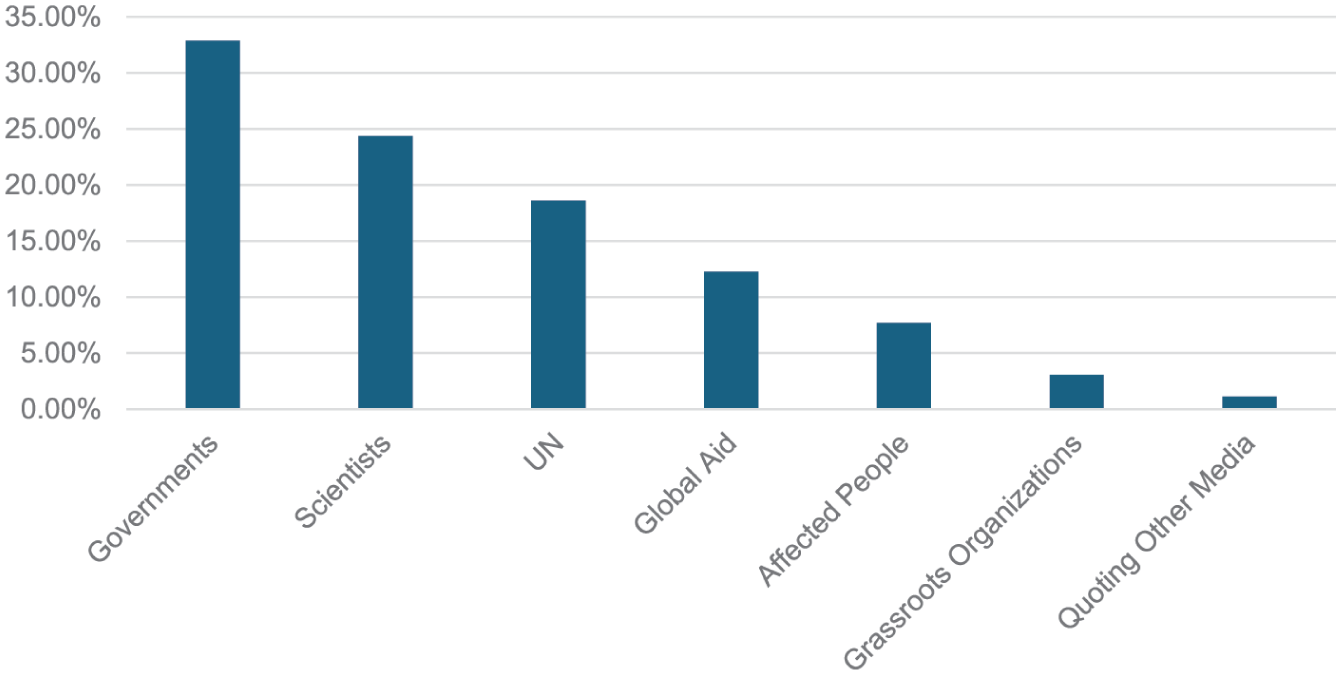
Percentage of sources represented.
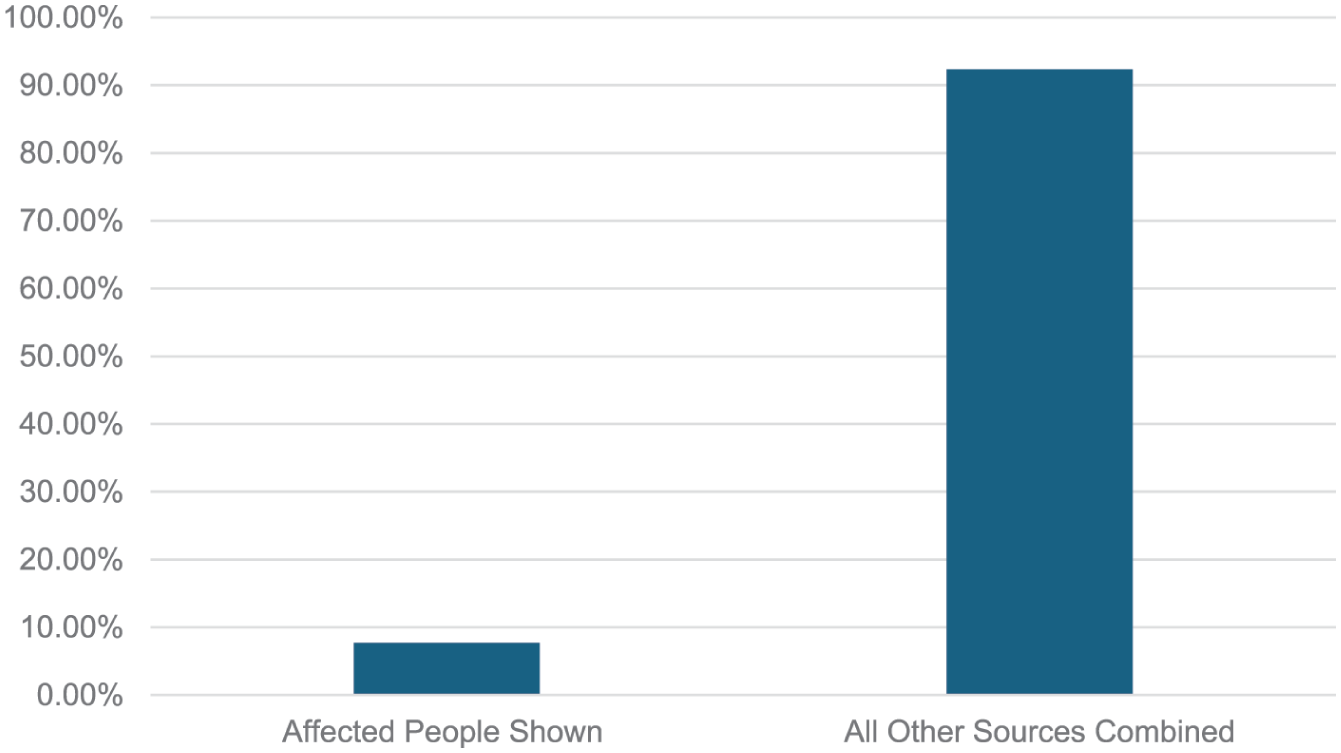
Affected people representation.
This sourcing structure reflects a deeply entrenched journalistic hierarchy of credibility, in which institutional actors are positioned as legitimate narrators of crises—including crises that they neither witness nor experience firsthand—while affected communities are relegated to silence, sorrow, or statistical abstraction (see Figure 3).
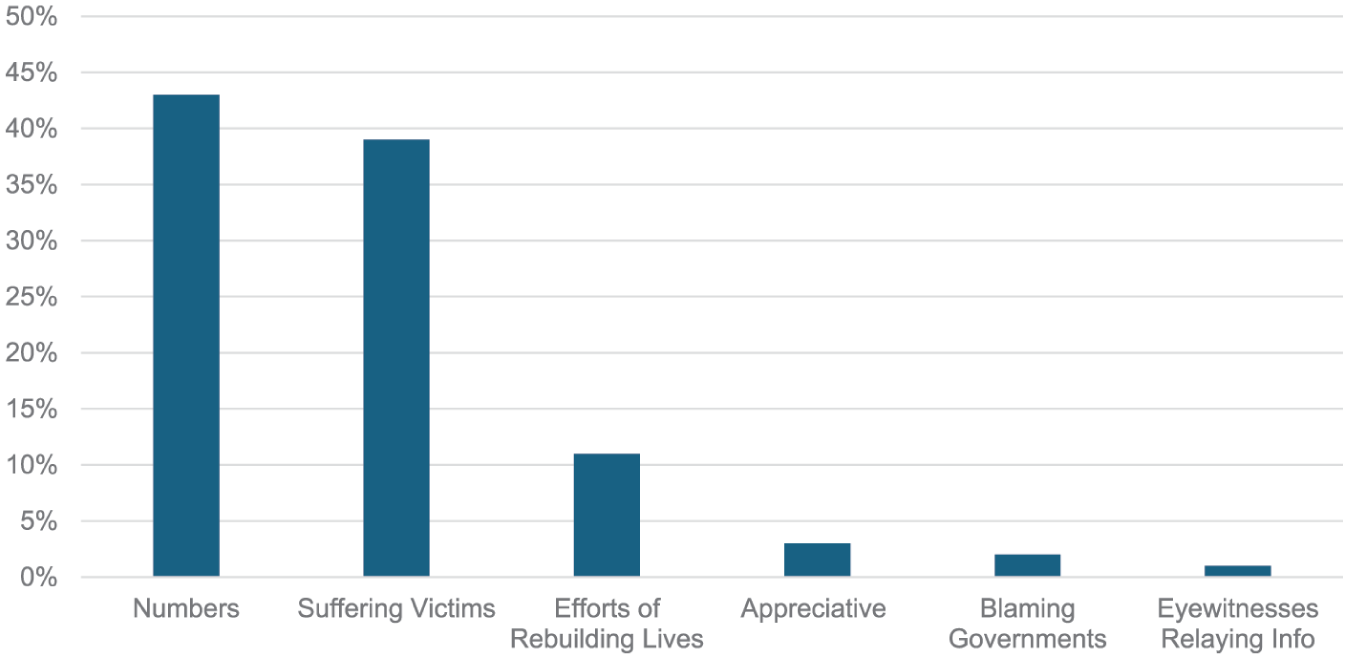
Affected people frames.
Governmental, scientific, and organizational sources predominantly focused on statistics, governmental emergency responses, and environmental impacts, and relied on narrative mechanisms of abstraction. These sources rarely conveyed the lived experiences and immediate needs of those directly impacted by the disaster. On the other hand, when directly affected people were quoted, we find that they shed light on the truth of government and aid failures for survivors—which dominant sources’ narratives did not acknowledge.
Colonial Reporting on Climate Crisis
Official Sources: Cyclone Freddy as a Matter of Numbers
When discussing affected people, government officials regularly use the abstraction of numbers. For example, “Some 19,000 people in the nation’s south have been displaced, according to Malawi’s disaster management directorate” (V. G. Gondwe, 2023). Another article notes, “Mozambique’s national disaster management agency INGD estimates that 1.75 million people have been affected, with over 8,000 persons displaced” (Sangomla, 2023). Death tolls similarly rendered people into numbers, alongside property, facilities, and crops. For example:
The cyclone crashed ashore in Madagascar on February 21 and continued westward, made landfall in Mozambique on February 24 and nearly 166,600 people were affected, with 9,900 displaced and 28,300 houses, 25 health-care facilities and 919 classrooms destroyed. More than 38,100 hectares of crops were affected. Freddy’s death toll is now at least 21 people (10 in Mozambique and 11 in Madagascar) (Tsiko, 2023).
Official governmental quotes in coverage of Cyclone Freddy primarily focused on governmental response measures and preparedness, impact assessments, public safety advisories, or requesting assistance. The vast majority of all quotes sourced from governmental officials or entities either discussed official steps taken to prepare for and respond to Cyclone Freddy, including holding emergency meetings, suspending schools, mobilizing civil protection committees, and deploying search and rescue teams. Official sources provided information on the continuous infrastructure damage caused by Freddy, emphasized the need for the public to stay vigilant and follow the advice of local authorities, or appealed to international aid and support agencies for help through a bureaucratic-administrative lens. Government officials largely aligned around a narrative that they had exhausted all possible measures available to them and now needed international aid providers to close remaining gaps. As our analysis of solidarity stories will show, however, government officials did not acknowledge or account for the ways in which their preparations had failed their people.
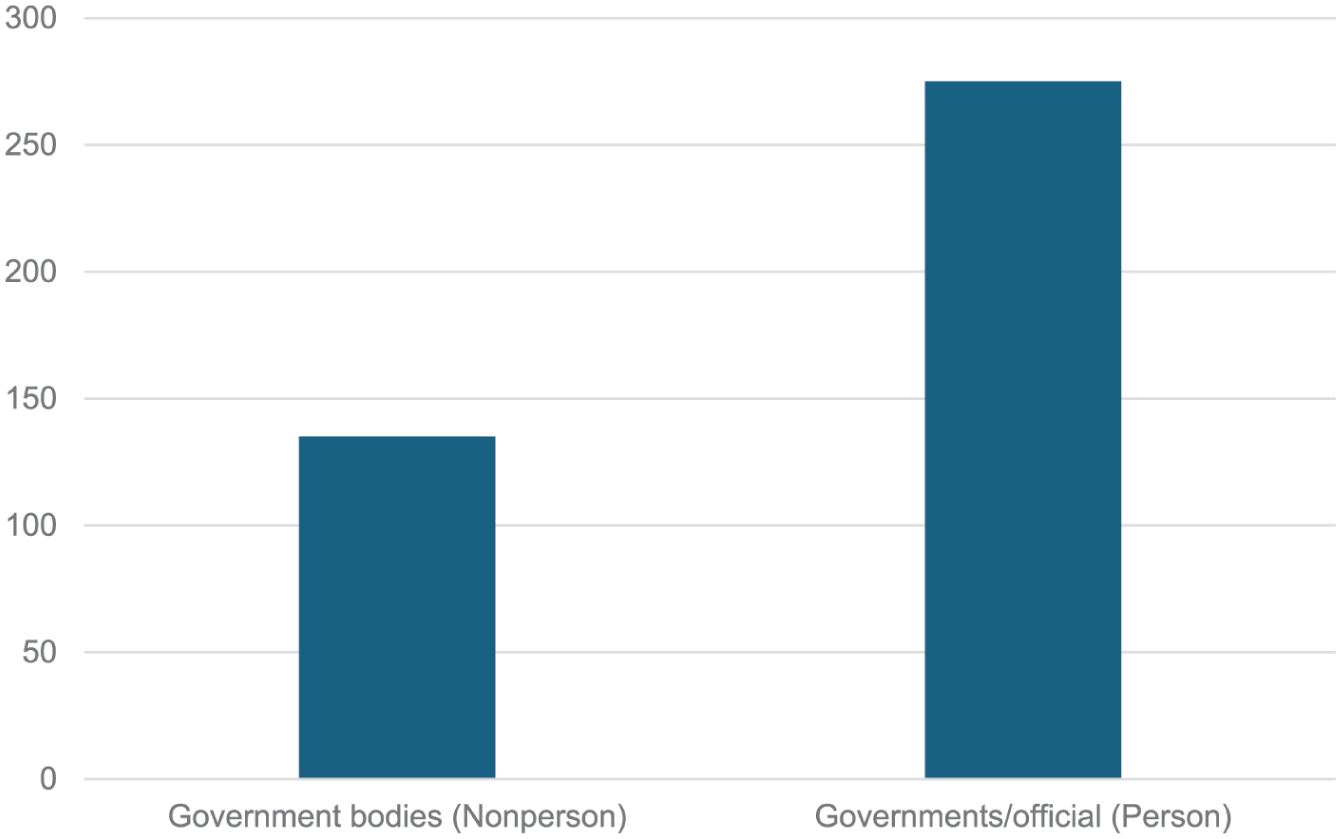
Although organizations cannot speak directly, journalists sometimes anthropomorphize organizations as though they spoke without a human representative. Government officials and entities were the most used sources overall, as named governmental officials (the “person” category) represented the highest proportion and were quoted 275 times out of the 1,247 times sources were used across the entire corpus of articles. This means that government officials were 22.05% of the total references to sources in our corpus, while official quotes attributed to governmental entities (the “nonperson” category) were used 135 times, accounting for 10.83% of the total references to sources in our corpus of Cyclone Freddy coverage (see Figure 4).
Person versus nonperson governmental sources.
Scientific Sources: Cyclone Freddy as a Record-Setting Meteorological Event
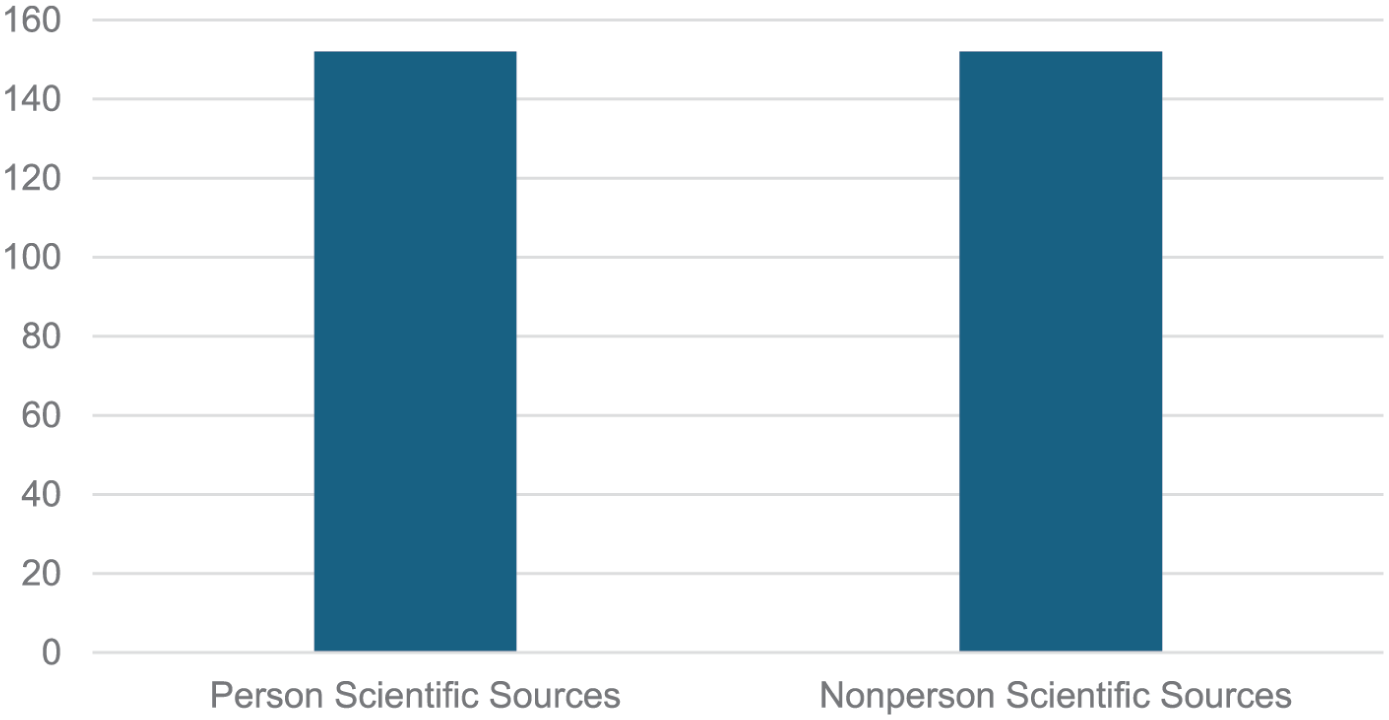
Scientific sources’ quotes highlighted the unprecedented nature and record- breaking characteristics of Cyclone Freddy, the impact of climate change on cyclones’ intensity and frequency, as well as the future environmental impact of such disasters. Like government sources, scientific sources included named scientists (the “person” category) and quotes attributed to scientific entities including agencies and institutes (the “nonperson” category), compared in Figure 5. For example, “Freddy accumulated the most energy of any cyclone recorded in the southern hemisphere during its lengthy gestation, according to the UN’s World Meteorological Organisation” (Cotterill & Matonga, 2023). Other examples illustrate the same scientific emphasis: “Freddy may have broken the record for longest-lasting tropical cyclone on record, according to the World Meteorological Organization.” (Peyton, 2023), “‘No other tropical cyclones observed in this part of the world have taken such a path across the Indian Ocean in the past two decades’, said the U.S National Oceanic and Atmospheric Administration.” (Al Jazeera English, 2023), “Studies going back to mid-1980s suggest there is a clear link between warmer oceans and the intensity and number of cyclones.” (Kabukuru, 2023), and
The life of Freddy is completely linked to warm waters of the Indian Ocean. The surface temperature and the temperature beneath the ocean surface up to 100 meters or so combined with warm temperatures generally during this time of the year must have contributed to its energy, said M Rajeevan, former secretary, ministry of earth sciences. (Nandi, 2023).
We found no evidence of scientists discussing Cyclone Freddy in terms of climate justice or the concrete lived impact of these benchmarks on people.
Person versus nonperson scientific sources.
United Nations & Global Aid Organization Sources: Cyclone Freddy as an Aggregation of Needs
Sources from aid organizations primarily focused on the dire humanitarian crisis exacerbated by Cyclone Freddy, such as its impact on food security, displacement, the overall climate change impact, as well as infrastructure damage. Here, abstraction manifested through sources relying on aggregate terms to articulate the impact of the cyclone: “The World Food Programme (WFP) estimated in September 2022 that up to 2.13 million people would be food insecure in the near future and the crisis would span all the southern districts of Madagascar.” (Sangomla, 2023), and “Nearly 508,250 people have been displaced and at least 499 killed by the flooding in Malawi, the UN’s International Organization for Migration (IOM) said.” (AFP, 2023b).
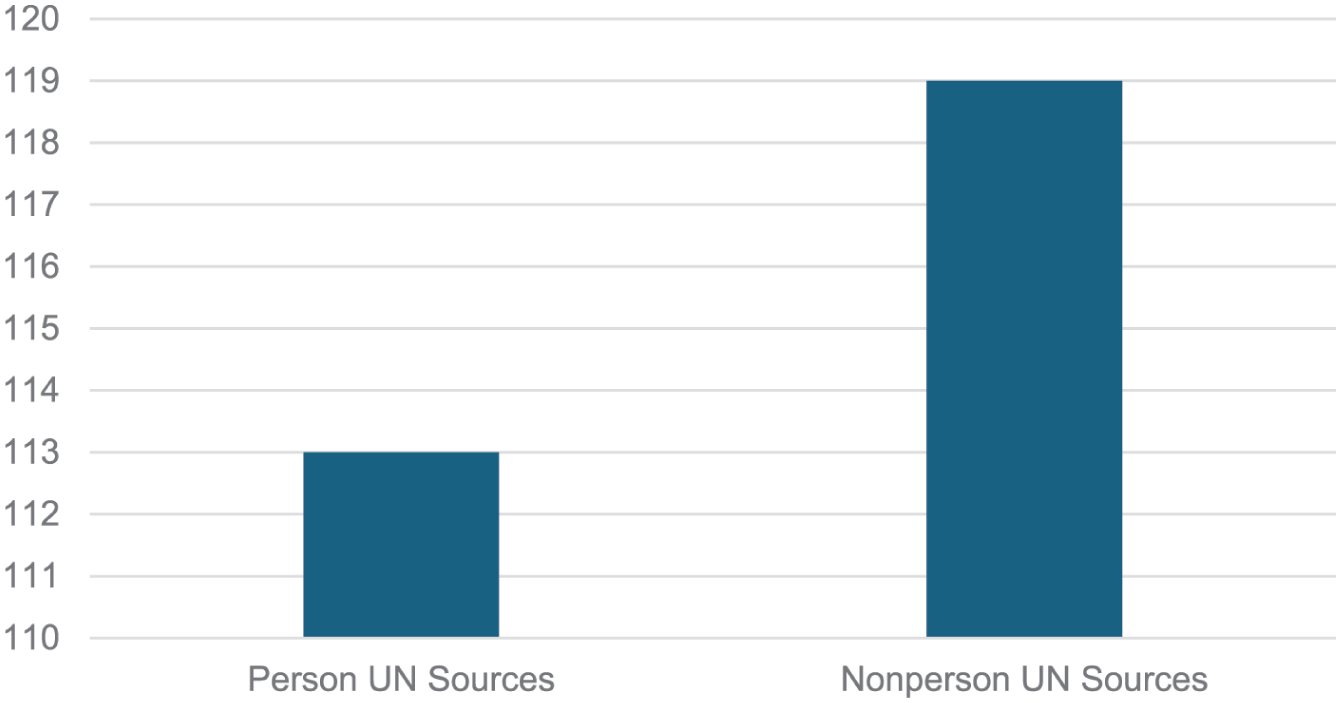
Unlike government sources and scientific sources, UN sources (see Figure 6) acknowledged the acute and disproportionate vulnerability of certain countries to climate crises. This is shown in quotes such as: “Africa is particularly vulnerable to climate change and extreme weather events like floods, cyclones, droughts, wildfires, and sandstorms because it has less capacity to prepare for natural disasters, according to a U.N. report.” (V. G. Gondwe & Kabukuru, 2023a), “The UN health agency said challenges include climate change, which has led to drought or flooding in parts of Africa, resulting in increased population displacement and reduced access to clean water” (United Nations, 2023), and
This week, the United Nations released a new report that found that African countries are already spending between 2 percent and 9 percent of their budgets to respond to extreme weather events. The report prompted renewed calls for the world’s richest nations responsible for the majority of emissions driving global warming to compensate developing countries for the climate crisis—something Western countries have promised but failed so far to do. (Weisbrod, 2023).
Person versus nonperson UN sources.
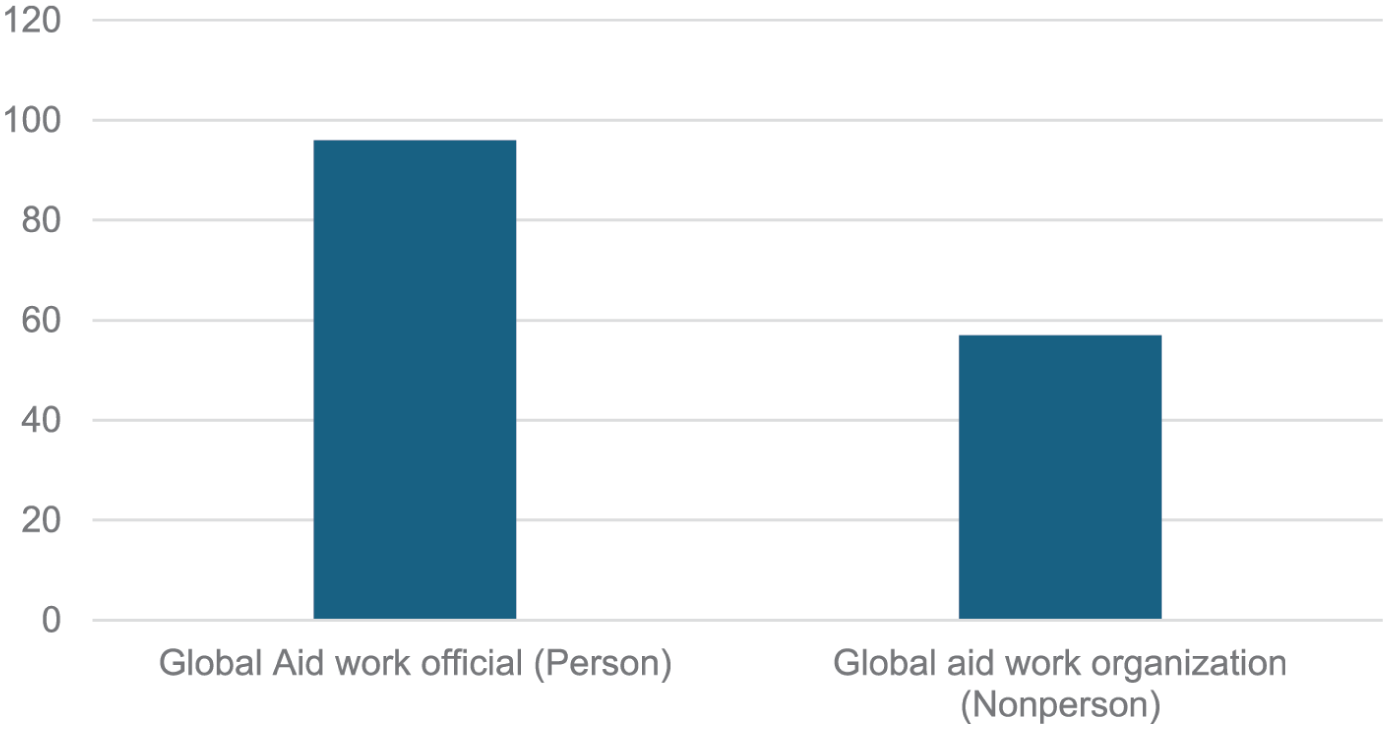
Global aid organizations’ personnel and organizations (see Figure 7) discussed similar issues as UN sources. They mostly emphasized the impact of climate change, discussed the humanitarian crisis and health risks, and highlighted the efforts and measures to deal with Cyclone Freddy’s effects. For example, “Malawi, which has been battling a cholera outbreak, is at risk of a resurgence of the disease, especially since the vaccine coverage in Blantyre is very poor, said Guilherme Botelho from Doctors Without Borders” (V. G. Gondwe & Kabukuru, 2023b). Aid organization sources were closer to the ground than the abstractions from the vantage point of the administrative-bureaucratic government or scientific assessments but were not equivalent to insights from directly affected people, who revealed distinct struggles, needs, and calls for justice. However, in most cases, directly affected people were not quoted for these insights even when they spoke, discussed next.
Person versus nonperson global aid sources.
Affected People as Sources: Victims, Eyewitnesses, and Truth-Tellers
Affected people were quoted only 96 times in coverage of Cyclone Freddy (which is less than 8% of the total of 1,247 times sources were used across the entire corpus of articles). Even when news coverage represented affected people, the majority of representations were reductive by undermining their epistemic agency and obscuring the structural conditions of their vulnerability. Affected people were predominantly shown as numbers, suffering victims, eyewitnesses, or as individuals assigning blame to different entities. In 10 instances, news stories described affected people and their suffering in detail from the reporter’s or publication’s points of view—without naming or quoting any impacted people whatsoever.
Solidarity Reporting on Climate Crisis
Redefining Cyclone Freddy as a Collective Struggle Worsened by an Insufficient Government Response
Solidarity reporting includes “affected population shown,” but the presence of the affected population in the story is not sufficient for determining whether a story is aligned with solidarity reporting. Rather than becoming discernible through a fixed formula with a quantitative threshold, solidarity reporting includes marginalized people’s direct insight from firsthand experience, which means that journalism represents their knowledge claims without abstraction or filtering through officials and scientists. By doing so, journalism resists reinforcing social inequality and accounts for the raw, often severe, struggles that people face on the ground.
We found—occasional—evidence of solidarity reporting in coverage of Cyclone Freddy. Within the category of “affected shown,” 12 stories were aligned with solidarity reporting on affected communities (for a list of headlines, news outlets, publication dates, reporter names, and reporter locations, see Supplemental Appendix C). Solidarity stories on Cyclone Freddy all included direct insight from the vantage point of affected people’s firsthand experiences on the ground, which brought to light an insufficient government response, neglect at a material level of people’s basic needs, and the fact that Cyclone Freddy, while extreme, was a continuation of ongoing poverty, loss, and destruction rather than a one-time event. In stark contrast to the narratives that positioned affected people as defenseless, despondent, and dependent on government guidance, solidarity reporting gave survivors a chance to explain their experiences and needs, and to voice their frustrations with authorities directly: “‘There’s no rescue team, no police officer, any government official’, said David Phiri, a survivor still searching for four missing family members. ‘Only ordinary people, people that lost people’” (“More devastation feared as Freddy toll surpasses 300,” 2023), and “All my houses are destroyed. Luckily, all my children are alive. I rescued them all,” exclaimed local resident Patouma Devisoni (emphasis added, Nebe & Kaliza, 2023). People were also recovering bodies and not waiting or expecting that official agencies or aid organization would do so in a timely manner: “Just this morning alone, our group has recovered three bodies and another group has recovered two bodies. Yesterday afternoon we recovered three bodies, community member Alfred Mbule said” (AFP, 2023a).
Solidarity stories also reveal that the government did not provide answers or sufficient help for residents during Cyclone Freddy, according to residents. For example: “Warnings were inconsistent and often unheeded by residents, many of whom told Reuters they did not know where to go if they did leave their homes.” (Phiri et al., 2023) and “We feel abandoned here, just yesterday, we lost two more people who went with the mudslide as they helped to dig up the bodies. People are hungry and tired.” said Fadila Njolomole (Nebe & Kaliza, 2023), and
Laura Sozinho is more focused on surviving day to day and says the most important thing for her is a tent and essentials. ‘Other things will come with time because waiting for robust help from the government is complicated,’ she says. (Nhampossa, 2023).
These stories, unlike colonial reporting, created space for affected people to speak about the fact that Freddy was not the first devastating climate disaster they had faced, nor was it the first time they were left without adequate support in the aftermath. Some Cyclone Freddy survivors recalled earlier traumas such as Cyclone Idai in 2019, which had already displaced hundreds of thousands, flattened communities, and exposed deep failures in emergency response systems (Munsaka et al., 2021). For many, Freddy arrived while they were still waiting for the relief promised after Idai, making it not just a meteorological disaster, but a continuation of a pattern of trauma and institutional neglect conveyed in these examples:
‘I knew that my family would not be able to relive that nightmare. In 2019 we saw our neighbors and friends dying and you just cannot relive that and remain sane. We saw crushed bodies under rocks when the sniffer dogs came. We saw a whole community being wiped off by Cyclone Idai and that is not something you can go through again despite your age’ (Gukutikwa, 2023). ‘We have been registered many times and participated in numerous meetings, but until today there is nothing concrete’, says Mateus da Costa, a resident of Búzi who lost his home in 2019. ‘It’s more than [four] years of waiting, [four] years of survival’ (Nhampossa, 2023).
These survivors’ accounts challenged the dominant narrative of Cyclone Freddy as an isolated failure, a singular tragic event, or a success story of sufficient government response for meeting people’s needs in the wake of climate crisis. Instead, they reveal a systemic problem of institutional neglect that pre-dates Freddy and persists across multiple disasters.
Other examples of solidarity reporting similarly included affected people who conveyed the ways in which governments and international networks were not acting sufficiently on behalf of affected people. For instance:
In Madagascar, many people feel neglected by both the international community and their own government. In Androy, for instance, locals seem to have few expectations of the state and only express limited hopes of receiving official support. ‘We have no way to repair the damage, I wish someone could help me’ says farmer Clarisse Rasolonirina (Razakamaharavo et al., 2023)
Solidarity reporting conveys the truth of climate crisis by accounting for a dimension that abstraction cannot: the concrete impact of this crisis on real people whose survival is at stake. These directly affected sources attribute their survival to their own agency as well as community support from their families and neighbors—not to outside officials or aid organizations rescuing them.
A logical question at this point of our findings is how some news outlets were able to practice solidarity reporting, given that sourcing access and transportation to affected people were likely limited due to Cyclone Freddy. We found that all 12 stories that contained aspects of solidarity reporting were written by or in collaboration with local African reporters, according to bylines, editor’s notes published at the end of articles, and reporters’ biographies.
For example, Africa Report published stories aligned with solidarity reporting written by freelance journalists based in affected areas, like Mozambique-based reporter Charles Mangwiro. The Manica Post of Zimbabwe published stories written by Zimbabwean award-winning journalist Tendai Gukutikwa. The DW story about Cyclone Freddy battering Malawi and Mozambique, was written by the South African Journalist Cai Nebe with a reporter in Malawi named Miriam Kaliza. Similarly, the Financial Times story about Freddy’s impact ravaging Malawi and Mozambique was written by a journalist based in the country’s capital Lilongwe named Golden Matonga. Large international news agencies such as Reuters also published stories written by regional reporters such as Frank Phiri. While practical limitations of access and safety concerns about sending journalists into cyclone-affected regions may be intuitively understandable and could explain the absence of affected sources in coverage, the reality is that journalists were already on the ground in all regions where climate crises hit. This indicates that rather than requiring an impractical demand that journalists and news organizations willfully risk their own safety to seek out ground truth, solidarity reporting on climate crisis only requires a decision to amplify the work of people who are already on the ground doing this reporting.
Discussion
Neo-colonialism in journalism takes insidious forms. Unlike an era of imperial spokespeople providing comments on formally colonized places, contemporary colonial reporting manifests through the systematic erasure of affected people in ostensibly post-colonial nations, through the disproportionate emphasis on institutions, scientific agencies, and aid organizations. This erasure is elegant in the sense of not appearing to be an incomplete or skewed report, due to journalistic norms of knowledge production. Seeking out knowledgeable sources is crucial in journalism, but the majority of sources used in our corpus of Cyclone Freddy coverage lacked knowledge of on-the-ground struggles, which they did not witness or experience. It is plausible that these sources simply did not know what affected people were experiencing: namely, that the government response was insufficient, more aid pledges would not remedy the distribution delays from Cyclone Idai, and that people had to save themselves and each other because government and aid organizations were either nowhere to be found or insufficient for the extent and intensity of the impact of the storm.
Despite the publication of 534 articles, the truth of Cyclone Freddy remained largely unreported, not due to a coordinated disinformation or misinformation campaign to conceal the systematic failures at hand, but due to routinized, default practices that meant journalism primarily deferred to institutional authorities. Mechanisms of these routinized defaults include editorial incentives for the efficiency of amplifying official statements (Bennett et al., 2006), shrinking international news bureaus (Cooper & Owen, 2014) contributing to dependency on press releases and wire services, and longstanding, deep-rooted biases in Western news organizations against the entire continent of Africa (Nothias, 2018). By privileging elite institutional voices and marginalizing directly affected people, the majority of Cyclone Freddy coverage demonstrates a journalistic approach grounded in abstraction, institutional deference, and epistemic exclusion, which we classify as colonial reporting. The pervasiveness of colonial reporting suggests that colonial reporting results from dominant journalistic norms and routines, rather than stemming from a particular news outlet or a particular journalist.
Arguably, a more generous interpretation of these findings would attribute the sourcing skews to practical media access and resource constraints. Journalists may have limited access to affected communities during and after huge climate crises and sending reporters to places where a huge cyclone is underway may be impossible from a transportation perspective, and unethical from a newsroom employer’s perspective. Furthermore, in the immediate aftermath of a cyclone, airports and access roads may be too damaged or uncertain for news outlets to justify the time, costs, and personnel required to get reporters on the ground. These constraints would predictably lead to the heavy reliance on official sources such as government officials and scientific organizations issuing press releases and statements, instead of sending reporters to capture and highlight affected people’s experiences, needs, and insights.
However, our corpus provides evidence that some reporters were already there and continued to report—which means that the tactical barriers described above were not prohibitive. This is significant because it indicates how journalism perpetuates the logic of colonial reporting by ignoring the existence of local reporters with local knowledge. Stories that were reported with shared bylines by local reporters and published by international outlets show the value of leveraging local expertise to enhance the depth, credibility, and truthfulness of international reporting on climate crisis (related discussion in Djinis, 2024).
Western-centric sourcing and framing practices in journalism lead to a routinized silencing of Indigenous voices (Ross, 2025). Predominantly or exclusively quoting government officials, scientists, and international organizations in disaster reporting of climate crises while portraying affected people as numbers or “the needy” leads to narratives that are restricted to abstractions from the administrative state, science, and aid organizations that deal in numerical aggregates rather than conveying concrete lived experiences. The truth of climate crisis goes unreported when the story is an agglomeration of abstractions rather than accounts of lived struggles to survive—none of which are or will remain isolated to three countries in Africa.
In contrast to colonial reporting’s exclusion of affected people from climate crisis discourse, which perpetuates a cycle of disempowerment and marginalization, solidarity reporting incorporates firsthand accounts that contribute valuable insights into the immediate and ongoing social impact of climate disasters on people. Solidarity reporting on climate crises conveys the lived reality of climate change and communicates the direct knowledge of affected people, which provides a reporting approach for remedying social inequality in journalism, in the service of informing the world of the reality of climate injustice and the life-and-death ramifications of limited climate resilience.
Our study makes an analytical contribution that has not been accounted for in past studies of solidarity reporting: first, while Varma (2020, 2022, 2023, 2025) has defined dignity in terms of basic needs for survival (such as safety, food, shelter, and water) which apply to climate crisis coverage, Cyclone Freddy coverage also includes a concern for people’s dignity in death. People recovering bodies and burying them rather than leaving them in the mud arises as a matter of urgency alongside finding shelter and water for affected people. Survivors recount pulling dead bodies out of the mud on their own because of insufficient numbers of aid workers to help. This grim reality reveals shared conditions on the ground that convey the depth and breadth of the life-and-death struggles that arise in the aftermath of a destructive climate disaster.
Our argument in favor of solidarity reporting on climate crises does not mean erasing officials, scientists, and aid workers’ perspectives, as they are still included in solidarity reporting. Scientists in solidarity reporting on Cyclone Freddy, for instance, helped contextualize the event within climate change dynamics. Solidarity reporting does not exchange official sources for affected sources and instead expands sourcing to better account for the lived experiences and critical insights of people who are living the crisis, which enriches the truthfulness, accuracy, and relevance of climate reporting. The problem with elite sources is not necessarily that they are willfully misleading or acting against the interests and needs of people directly affected by crises like Cyclone Freddy. Instead, due to their positions and institutional roles, they are often not in a position to have affected people’s experiences and insights, which make climate crises meaningful, tangible, and urgent. Neglecting affected people’s direct experiences, viewing them through limited frames, and ignoring their needs is gravely insufficient, as it omits the most urgent dimension of climate crises: direct and detrimental impact on people’s ability to survive.
As a journalistic approach, solidarity reporting opposes exclusionary, reductive, abstract narratives of climate crisis. Shifting the narrative from victimhood to collective struggle, from passive recipients of aid to active actors fighting to survive, and from wailing children to savvy citizens who know the government will not save them are all contributions of solidarity reporting. Climate crisis coverage that aligns with solidarity reporting provides a more truthful picture that reveals the realities occurring on the ground, without intermediaries abstracting or erasing people from stories of their own lives.
Limitations and Future Research
This study’s main limitations are related to scope: we focus on news coverage of one cyclone in one language. Our selection of English-language coverage risks reinforcing the linguistic hegemony of English in international journalism studies, which poses a potential coloniality paradox: international English-language news may be aligned with colonizing logics that begin with linguistic domination, making the domineering tendencies of coverage in this study consistent with a colonial orientation of the language constituting the corpus. Future research will develop comparative case studies of multimedia coverage in multiple languages spoken in affected regions, including Chichewa, Chitumbuka, Malagasy, Portuguese, and French. A separate limitation is that this study treats each article equally, which does not account for the scope of reach of news outlets indexed in LexisNexis. Future research should consider not only the sources in stories but the sources that audiences use to find news, including news aggregators and social media platforms, which would allow for an expanded research design that accounts for the often-chaotic networked journalism landscape (Waisbord & Russell, 2020) in which climate crisis coverage circulates.
Our focus on Cyclone Freddy provides a critical case study, which is part of a longer history and contemporary reality of ongoing climate crises affecting people in countries that lack infrastructure due to colonialism across the Global South. A related area for future research is to further situate Cyclone Freddy in its broader context of prior cyclones and environmental disasters, to demonstrate the ways in which the English-language media erasure of the lived impact of Freddy was a continuation and an intensification of preexisting coloniality in knowledge production on the region (critiqued in G. Gondwe, 2022; Mohammed, 2021; Moyo, 2020; Ndlovu-Gatsheni, 2015).
Conclusion
This study contributes to journalism studies’ growing attention to inequality in media by examining how epistemic authority in journalism is often stratified along lines of geography, institutional access, and proximity to power. We have demonstrated how reporting practices can reproduce or disrupt systems of inequality, particularly through decisions about who gets to speak, whose knowledge is legitimized, and how the underlying causes of crises are portrayed. By developing the contrasting lenses of solidarity reporting and colonial reporting, we contribute conceptual vocabulary for distinguishing between epistemologies of journalism. Colonialism originated many of the binaries that solidarity reporting challenges and dismantles. As Ndlovu-Gatsheni (2015) explains, “the concept of colonial of power enables delving deeper into how the world was bifurcated” (p. 489) into binaries of civilized versus uncivilized, colonizers versus colonized, light versus dark, empowered versus enslaved, human versus inhuman (synthesized from Moyo, 2020, pp. 124–125; Ndlovu-Gatsheni, 2015, pp. 489–490, 2025, p. 71). Coloniality means that despite colonial administrations of foreign empires officially ending, colonial mindsets and routines remain deeply embedded in dominant, global, often unspoken common sense at local, national, and international levels (Maldonado-Torres, 2007, p. 243; Moyo, 2020, p. 140, 147). Ndlovu-Gatsheni (2025) argues that these binaries are significant for decolonial solidarity in knowledge production, which aims not to reify the “drawing of a binary but as aimed at the recovery of subjugated knowledges” (p. 71). Solidarity journalism, we argue, offers a route to decolonial solidarity in knowledge production, which is precisely aligned with African scholars’ calls for challenging a unitary, exclusionary, and falsely universalizing Western epistemology that not only dominates but actively excludes indigenous knowledge (G. Gondwe, 2022; Mohammed, 2021, 2025; Moyo, 2020).
Solidarity reporting challenges the colonial framework’s entrenched, deeply normalized binaries by laying bare the ways that colonial logic is neither natural nor universally accepted and is contestable through grounded practices of knowledge production. Solidarity reporting fosters “preserving the dignity and supporting the self-determination of marginalized communities” (Mohammed, 2025, p. 1) by prioritizing their experiences and “contending with the role that colonization has played in denigrating indigenous. . .knowledges” (p. 13).
Cyclone Freddy news coverage offers a case study of patterns and conventions in international news coverage of climate crises. These patterns predominantly illustrate colonial reporting. Relying on official sources and expert analysis, disregarding local reporters’ expertise, and rarely amplifying affected people’s firsthand knowledge all risk perpetuating existing inequalities in media representation in climate crisis reporting. Evidence of solidarity reporting indicates that this alternative is within news organizations’ reach, however. The presence of solidarity reporting coverage in our corpus refutes the assumption that news outlets must report on climate crises in certain ways because climate change is commonly understood as a scientific subject and indicates that there are alternatives which reporters already (occasionally) use for including the facts of people’s lived experiences as well as scientific facts.
In the years since Cyclone Freddy, anti-science movements and attacks on scientists have escalated (Schwartz, 2025). We are cognizant that criticizing colonial and neo-colonial dynamics of scientism could be misinterpreted as a stance against science. Solidarity reporting does not oppose science or call for expelling scientists from media coverage: on the contrary, it provides a way to better communicate the concrete reality that many scientists dedicate their lives to raising alarm about in solidarity with vulnerable people (Borenstein, 2026; Union of Concerned Scientists, n.d.). Solidarity reporting does, however, oppose the continued erasure of affected people whose lives are at stake due to a climate crisis that they did not create.
With our argument in favor of a solidarity reporting approach, we aim to encourage challenging colonial reporting tendencies that presume it is necessary for Western journalists to have access to the Global South during dangerous climate events. The possibility of solidarity reporting is not contingent on news organizations sending reporters into a cyclone or any other climate disaster if there are local reporters already on the ground. A solidarity reporting approach refuses the colonial notion of requiring a “Western” reporter to do the job of rigorous journalism. Solidarity reporting on climate change involves amplifying (and crediting) local reporters’ stories of climate disasters that represent affected people’s direct calls for climate justice instead of detached press releases that recap official abstractions.
The implications of our distinction between colonial reporting and solidarity reporting extend far beyond a single tropical storm. Future research will apply this analytical distinction to coverage of war, genocide, terrorism, human trafficking, and refugee crises. By articulating the difference between the logic of colonialism and the logic of solidarity in journalism, this framework contributes a significant conceptual and analytical distinction for detecting hidden inequalities in journalism beyond the sheer presence or absence of coverage of an event, issue, or place. Solidarity reporting provides a route for international journalism to enrich its truth value through grounded knowledge from people with firsthand experience instead of solely tethering reporting to institutional abstractions. As time runs out for news organizations to move beyond promises and toward practices of sounding the alarm on global crises including climate change, solidarity reporting offers an ethical and urgent direction for news coverage to do justice to the dangerous realities upon us, starting by bringing the most impacted people to the forefront of international journalism who can tell the world what they know to be true based on their experiences of struggling to survive the storm.
Supplemental Material
sj-docx-1-jmq-10.1177_10776990261453127 – Supplemental material for Special Issue: Hidden, Yet Pervasive: Social Inequality in Journalism (Research)Vanishing Victims and Silencing Survivors: A Critical Analysis of Journalistic Colonialism Through Deference to Power in Cyclone Freddy Coverage
Supplemental material, sj-docx-1-jmq-10.1177_10776990261453127 for Special Issue: Hidden, Yet Pervasive: Social Inequality in Journalism (Research)Vanishing Victims and Silencing Survivors: A Critical Analysis of Journalistic Colonialism Through Deference to Power in Cyclone Freddy Coverage by Omneya Ibrahim and Anita Varma in Journalism & Mass Communication Quarterly
Supplemental Material
sj-docx-2-jmq-10.1177_10776990261453127 – Supplemental material for Special Issue: Hidden, Yet Pervasive: Social Inequality in Journalism (Research)Vanishing Victims and Silencing Survivors: A Critical Analysis of Journalistic Colonialism Through Deference to Power in Cyclone Freddy Coverage
Supplemental material, sj-docx-2-jmq-10.1177_10776990261453127 for Special Issue: Hidden, Yet Pervasive: Social Inequality in Journalism (Research)Vanishing Victims and Silencing Survivors: A Critical Analysis of Journalistic Colonialism Through Deference to Power in Cyclone Freddy Coverage by Omneya Ibrahim and Anita Varma in Journalism & Mass Communication Quarterly
Supplemental Material
sj-docx-3-jmq-10.1177_10776990261453127 – Supplemental material for Special Issue: Hidden, Yet Pervasive: Social Inequality in Journalism (Research)Vanishing Victims and Silencing Survivors: A Critical Analysis of Journalistic Colonialism Through Deference to Power in Cyclone Freddy Coverage
Supplemental material, sj-docx-3-jmq-10.1177_10776990261453127 for Special Issue: Hidden, Yet Pervasive: Social Inequality in Journalism (Research)Vanishing Victims and Silencing Survivors: A Critical Analysis of Journalistic Colonialism Through Deference to Power in Cyclone Freddy Coverage by Omneya Ibrahim and Anita Varma in Journalism & Mass Communication Quarterly
Footnotes
Funding
The authors received no financial support for the research, authorship, and/or publication of this article.
Declaration of Conflicting Interests
The authors declared no potential conflicts of interest with respect to the research, authorship, and/or publication of this article.
Supplemental Material
Supplemental material for this article is available online.
Notes
Author Biographies
References
Supplementary Material
Please find the following supplemental material available below.
For Open Access articles published under a Creative Commons License, all supplemental material carries the same license as the article it is associated with.
For non-Open Access articles published, all supplemental material carries a non-exclusive license, and permission requests for re-use of supplemental material or any part of supplemental material shall be sent directly to the copyright owner as specified in the copyright notice associated with the article.
