







Abstract
Reducing job burnout is decisive for improving journalists’ well-being. Building on the job demands-resources model (JD-R) and self-determination theory, we combined a survey (N = 1,000) of Chinese journalists with in-depth interviews (N = 16) to examine how different job resources are associated with burnout in collectivistic contexts. Results partially supported the JD-R model: perceived organizational support was negatively associated with burnout, whereas job autonomy was unexpectedly positively associated with burnout. Further, interviews revealed dual interpretations of job resources in collectivistic contexts: organizational support was both care and an implicit obligation to reciprocate; autonomy was interpreted as delegated responsibility and risk.
Introduction
Working in journalism has long been recognized as demanding, with long working hours, excessive workloads, fierce competition, and high levels of uncertainty (Reid et al., 2024). These pressures make journalists highly vulnerable to burnout, undermine their work performance, and finally harm their quality of life. Thus, understanding the mechanisms that increase or mitigate job burnout is essential for improving journalists’ quality of work and overall life satisfaction.
The job demands-resources model (JD-R; Bakker et al., 2004) proposes that employees’ well-being is influenced by the balance between job demands and job resources. The general assumption is that job resources protect against burnout, but how employees interpret these resources and through which psychological processes they become protective remain underexplored. These limitations point to a need to investigate the psychological mechanisms behind job resources that develop or reduce burnout.
Self-determination theory (SDT) offers a complementary perspective to explain the mechanism leading to burnout. SDT argues that individuals experience burnout when their basic psychological needs (including autonomy, competence, and relatedness) are not fully met (Deci et al., 2017). Guided by SDT, we can move beyond identifying which resources matter toward how and why these resources influence burnout and life satisfaction.
Journalist burnout is also a salient issue in China. Chinese news organizations are embedded in a media system where state ownership, administrative regulations, and marketization coexist. While Chinese media commercialization nevertheless granted autonomy to some extent, the boundaries within which such autonomy can be exercised remain under authoritative supervision (Xu, 2017). We therefore understand Chinese journalists’ autonomy as their perceived discretion within institutional constraints. Further, Chinese newsrooms are often classified as collectivistic-leaning (Zhong, 2008), but the extent to which individuals endorse collectivistic values and are influenced by culturally prevalent communication styles in their work and organizational relationships remain unclear. We thus explore how journalists interpret these organizational resources within an environment where authority, group well-being, and market pressures intersect.
To extend the research and theory in this field, the current research adopts a mixed-methods design combining a survey (N = 1,000) and in-depth interviews (N = 16) with Chinese journalists, enabling us to explore through which mechanisms organizational resources, that is, perceived organizational support (POS) and job autonomy, are associated with journalists’ burnout under the cultural influence of collectivism.
Literature Review
Journalists’ Job Burnout, JD-R Model, and SDT
Job burnout refers to a state of exhaustion and cynicism toward work (Bakker et al., 2014). A growing body of research highlights the role of organizational resources in influencing journalists’ burnout, mental health, and well-being, identifying a range of individual and organizational predictors, such as salary, job autonomy, role demands, and work–family conflict (Jung & Kim, 2012). These studies demonstrate that organizational resources matter for journalists’ burnout; however, they primarily focus on distinguishing different types of resources, rather than explaining whether these resources function similarly across distinct groups of journalists, or the underlying psychological mechanisms that lead to burnout. In particular, existing studies have not clearly explained how journalists interpret organizational resources in their own words, nor have they adequately explained why variations in resource provision and resource perceptions lead to different outcomes in preventing burnout.
The JD-R model provides a foundational framework for understanding these relationships by distinguishing between job demands and job resources. According to the JD-R model, job resources help individuals to achieve work goals and reduce work costs. Job demands refer to physical, psychological, social, or organizational expectations for work (Demerouti et al., 2001). The JD-R model proposes that job resources stimulate motivation and personal efficacy to lower job demands, thus reducing burnout.
While the JD-R model provides a framework for explaining burnout, it does not fully explain why particular resources matter and how these resources translate into negative (e.g. burnout and strain) or positive outcomes (e.g. well-being and life satisfaction). In addition, organizational resources are often treated as independent and uniformly protective predictors, overlooking the possibility that resources may operate differently depending on how they are provided and experienced. As a result, what the JD-R model leaves underexplored is the psychological processes through which resources may, under certain conditions, fail to protect against burnout or even become additional sources of pressure.
SDT provides a complementary explanation by focusing on employees’ basic psychological needs: autonomy, competence, and relatedness. SDT suggests that individuals’ work performance, health, and wellness will improve when their psychological needs are satisfied (Deci et al., 2017). According to SDT, organizational resources are not inherently beneficial: their effects depend on whether they align with employees’ actual psychological needs and whether they are experienced as genuinely satisfying those needs. From this perspective, job resources may reduce individuals’ burnout when they support their actual needs. Integrating JD-R and SDT thus allows us to explore whether and how organizational resources influence journalists’ burnout and life satisfaction, and understand under what conditions they do so.
Rationale
Perceived Organizational Support
POS refers to the extent to which employees believe that their employers and organizations value their contributions and care about their well-being. Organizational support can be both visible, such as tangible benefits including monetary bonuses, and invisible, such as emotional benefits including caring and approval (Jung & Kim, 2012). Such support influences how employees interpret their relationships with their organizations, and the extent to which they believe the organization is willing to empower them. Within newsrooms, support is closely tied to the distribution of authority and discretion, as editors and supervisors determine how much autonomy journalists are granted (Reich & Hanitzsch, 2013). When journalists feel supported, they may be more likely to perceive that they can exercise their judgment, resulting in a stronger sense of job autonomy. In this sense, POS may be positively associated with job autonomy.
Efficacy is defined as individuals’ beliefs regarding their ability to execute tasks. Previous studies have found that POS helps employees believe that their organizations will supply necessary resources, recognize their performance, and foster their self-efficacy (Caesens & Stinglhamber, 2014). By signaling that the organization values and trusts them, POS strengthens employees’ sense of belonging, recognition, and professional identity. As a result, employees may hold a stronger belief that they can perform effectively at work, suggesting that POS is positively associated with perceived occupational efficacy.
POS has also been identified as a direct protective factor against burnout. POS reduces feelings of helplessness and emotional exhaustion by providing instrumental support and framing demands as shared challenges rather than isolated burdens (Rhoades & Eisenberger, 2002). At the same time, feeling valued and cared for by the organization can strengthen individuals’ perceived stability, belonging, and affective attachment, leading to higher expectations of performance outcomes and more positive evaluations of life conditions overall. For journalists, supportive newsrooms can offer not only instrumental assistance (e.g. staffing, feedback, editorial backing) but also emotional validation that affirms journalists’ value at work (Hoak, 2021). Synthesizing these insights, we propose the following research hypotheses:
Job Autonomy
For journalists, job autonomy refers to the degree to which reporters can select stories, manage production routines, and develop their careers independent of external pressures (Örnebring & Karlsson, 2019). However, the meaning of autonomy may vary across political and cultural contexts. In the context of Chinese journalism culture, journalists often enjoy “conditioned autonomy” under increasing market pressures and shifting state objectives (Fang & Repnikova, 2022).
Job autonomy is widely regarded as a fundamental requirement for professional practice. It provides employees with the authority to exercise discretion and make decisions, thereby fostering motivation, engagement, and job performance, simultaneously protecting them against burnout. Autonomy is linked to occupational efficacy, as greater decision-making freedom usually fosters a sense of competence and intrinsic motivation (Ryan & Deci, 2000). Journalists who feel deprived of autonomy, or unsupported in exercising discretion, usually report greater frustration and fatigue compared to those who perceive that their employers offer more supportive conditions (Nee & Chacón, 2021). This suggests a positive association between autonomy and occupational efficacy.
Beyond the link to efficacy, autonomy may also influence burnout and life satisfaction. A study conducted in the U.S., China, and Brazil found that job autonomy is generally associated with lower levels of burnout (Guo et al., 2023). According to the JD-R model, job resources such as autonomy may buffer the effect of job demands on burnout. Additionally, job autonomy gives employees greater control over their work and more flexibility in meeting job demands, thereby reducing their burnout (Guo et al., 2023). For journalists, autonomy enables them to pursue stories they find meaningful, and align work with their personal values (Hoak, 2021). This may increase their sense of accomplishment, reduce exhaustion, and finally improve their overall life satisfaction. Taken together, we propose:
Occupational Efficacy, Job Burnout, and Life Satisfaction
Occupational efficacy describes individuals’ beliefs that they can successfully manage work-related demands. Previous studies have found that occupational efficacy can reduce employees’ feelings of overload and stress (Schmitz & Tulowitzki, 2025), and positively predict their occupational well-being. When journalists have higher occupational efficacy, they are more likely to maintain higher levels of motivation and view challenges as manageable, thereby buffering burnout. Thus, we propose:
Job burnout can also cast broader effects into other areas of daily life. Previous studies have demonstrated that burnout could reduce individuals’ overall well-being and lower their life satisfaction (Upadyaya et al., 2016). For journalists, the boundary between their work and personal life is frequently blurred, making it difficult for them to psychologically detach from work. As a result, the burnout feelings developed at work may more readily permeate into their overall life evaluation. Accordingly, we propose the following hypothesis (See Figure 1 for all proposed associations among study variables):
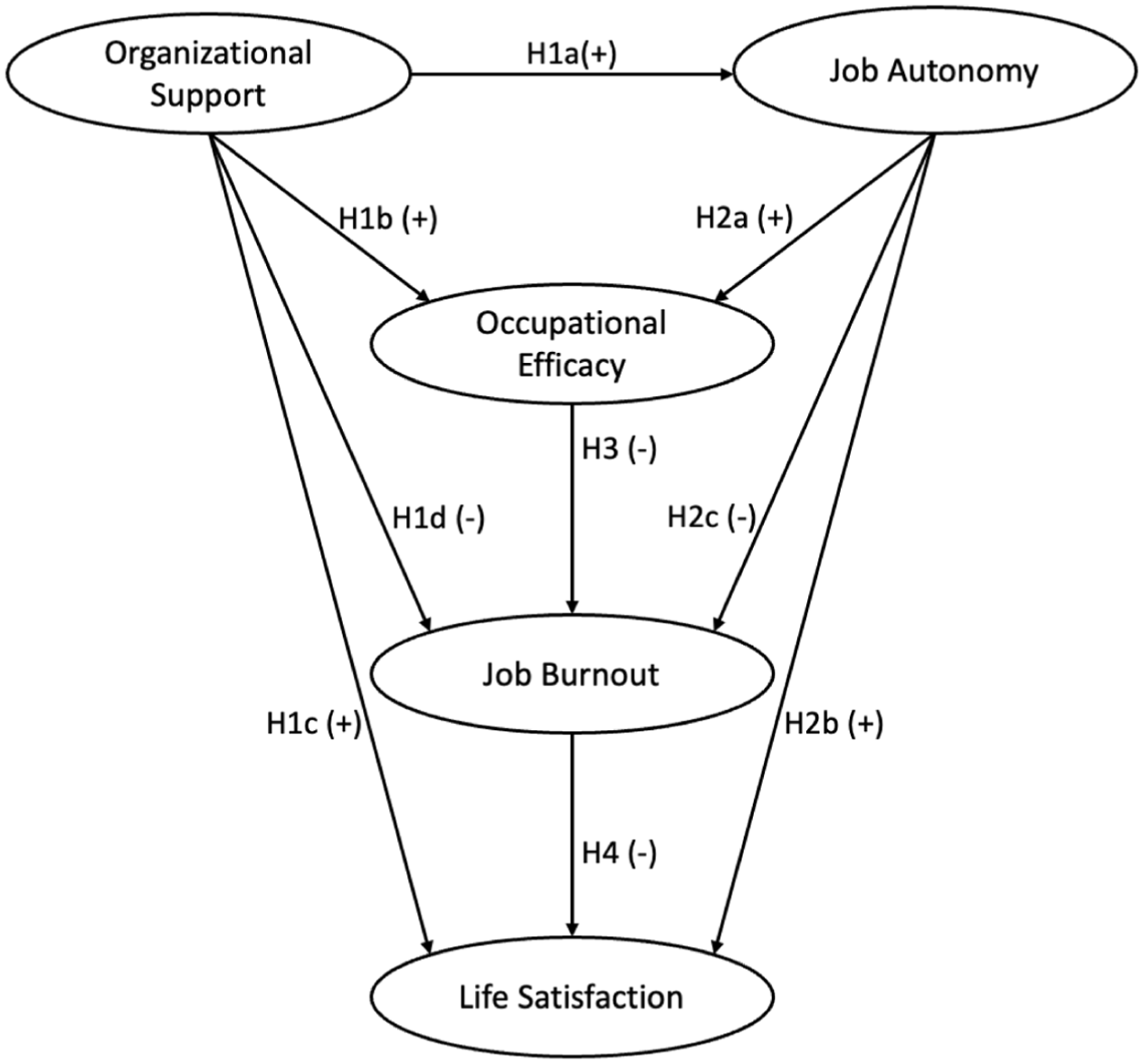
Proposed associations among study variables.
Influence of Collectivism
Career environments in China are often influenced by the cultural orientation toward collectivism (Leung & Bond, 1984). In collectivistic societies, individuals tend to integrate into cohesive in-groups that provide emotional and social protection in exchange for loyalty, obligation, and conformity. Employees working in collectivistic contexts tend to prioritize group goals, teamwork, and relational harmony, which are associated with enhanced well-being and resilience. This cultural orientation may influence how employees interpret job resources.
At the same time, collectivistic orientation can vary across individuals within the same cultural context (Yamawaki, 2012). In the present study, collectivism is therefore also treated as an individual-level orientation that may vary across Chinese journalists and influence their responses to organizational resources. For individuals with higher levels of collectivism, POS is more likely to strengthen their sense of belonging to the organization, thus strengthening interpersonal trust in the organization (Chiang et al., 2011).
The cultural implications of collectivism for autonomy are also complex. From a Foucauldian perspective, empowerment can function as a subtle form of control (Tsobanoglou & Kokkinou, 2022). Therefore, autonomy in collectivistic environments may shift the responsibility for better work performance to individuals, and increase the accountability of work-related risks. Yet, existing research has not clarified whether collectivism strengthens or weakens these associations among POS, autonomy, and burnout. Therefore, we ask:
Study 1
Method
Participants and Procedures
Participants were recruited among Chinese journalists through the Kantar Profiles Network, a widely used online survey platform in China. After quality checks, including attention checks, survey completion time, and one-line response detection, 1,000 valid responses were included in this study (See Supplemental Table S1 for demographic information).
Measures
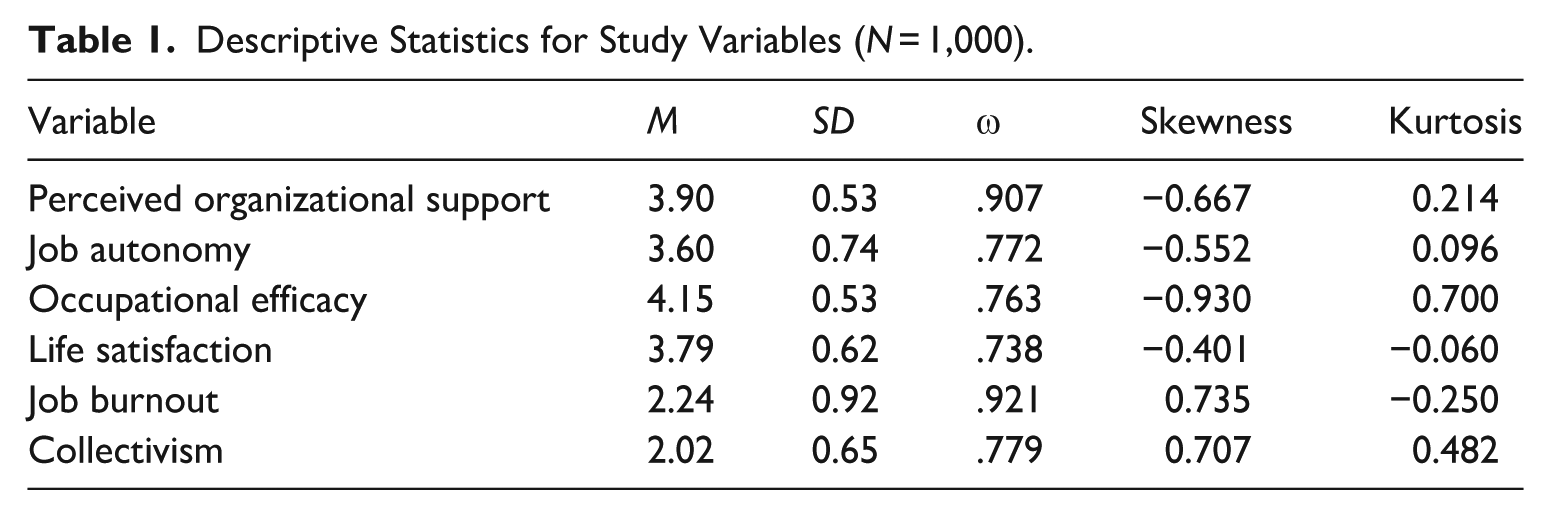
The survey was pilot-tested with a specific Chinese journalist sample (n = 274). Results showed acceptable reliabilities for all measures (average ω = .811; range = 0.719–0.936). In the formal survey, all items were presented in randomized order. Descriptive statistics, including M, SD, McDonald’s Omega (ω), skewness, and kurtosis were calculated and reported in Table 1. All items were measured on a 5-point Likert scale (1 = strongly disagree to 5 = strongly agree). Confirmatory factor analyses (CFA) were conducted for scales with four items or more.
Descriptive Statistics for Study Variables (N = 1,000).
POS was measured using items adapted from Eisenberger et al. (1986). Participants responded to 19 items (e.g. “The organization values my contribution to its well-being,” “The organization strongly considers my goals and values,” and “Help is available from the organization when I have a problem”). The CFA results indicated that the items loaded onto a reliable factor: χ2/df = 2.025, comparative fit index [CFI] = 0.974, root mean square error of approximation [RMSEA] = 0.032, confidence interval [CI90] [0.027, 0.037].
Job autonomy was measured with four items (Mellado & Humanes, 2012). Items included “When I have a good idea about a topic that I consider important to follow up, I always get it covered,” “I have quite or a lot of freedom to select the news/stories on which I will work,” and “I have quite or a lot of freedom to decide which aspects of a news/story I should emphasize.” These items formed a reliable factor: χ2/df = 1.285, CFI = 0.999, RMSEA = 0.017, CI90 [0.000, 0.067].
Occupational efficacy was measured with items adapted from the self-efficacy scale (Chen et al., 2001), such as “I will be able to achieve most of the goals that I set for myself” and “When facing difficult tasks, I am certain that I will accomplish them.” These items formed a reliable factor (χ2/df = 3.650, CFI = 0.989, RMSEA = 0.051, CI90 [0.025, 0.081]).
Life satisfaction was measured with items adapted from the Satisfaction with Life Scale (Diener et al., 1985). Sample items included “The conditions of my life today are excellent” and “So far, I have gotten the important things I want in life.”
Job burnout was measured with items adapted from the Maslach burnout inventory framework (Liu & Lo, 2018; Maslach et al., 1996; Maslach & Jackson, 1981). The original scale included 16 items across three dimensions: exhaustion, cynicism, and professional efficacy. Since prior research suggested that professional efficacy was conceptually closer to work engagement than to burnout (Laschinger & Fida, 2014), and that occupational efficacy served as a separate mediator in the present study, we excluded professional efficacy, and retained only the exhaustion and cynicism dimensions that consisted of ten items. We then measured the ten items, removed those with factor loadings below 0.6, and retained a four-item scale with acceptable model fit (χ2/df = 2.468, CFI = 0.999, RMSEA = 0.038, CI90 [0.000, 0.102]). This sufficiently captured the core features of exhaustion and cynicism in the present sample. The final items included two from the exhaustion dimension (“I feel emotionally drained from my work” and “I feel used up at the end of the workday”) and two from the cynicism dimension (“I have become less interested in my work since I started this job” and “I doubt the significance of my work”). Several removed items, for example, “Working all day is really a strain for me” and “I feel tired when I get up in the morning and have to face another day on the job,” had conceptual overlap with the retained item indicators.
Collectivism was measured using five items adapted from the collectivism scale (Singelis et al., 1995). For example, “I would rather do a job alone than with others (reverse)” and “I usually sacrifice my self-interest for the benefit of my group.” The scale reached acceptable model fit (χ2/df = 4.779, CFI = 0.991, RMSEA = 0.062, CI90 [0.036, 0.090]).
Demographic variables included gender, age, educational level, income, years of work experience, and political identity. In particular, political identity was operationalized as whether respondents were members of the Communist Party of China (CPC) (0 = non-member, 1 = CPC member).
Results
Preliminary Analyses
Study variables were examined for normality distribution assumptions. Results showed that the distributions for all study variables were approximately normal, with skewness between −1 to +1 and kurtosis between −2 to +2 (see Table 1).
Bivariate correlations between study variables were reported in Table 2. Additionally, bivariate correlations between study variables and demographic variables were calculated to determine which variables should be used as covariates in model testing (See Supplemental Table S2). In the final structural models, political identity was included as a covariate because it was significantly correlated with several study variables at r > 0.20.
Bivariate Correlations among Study Variables (N = 1,000).
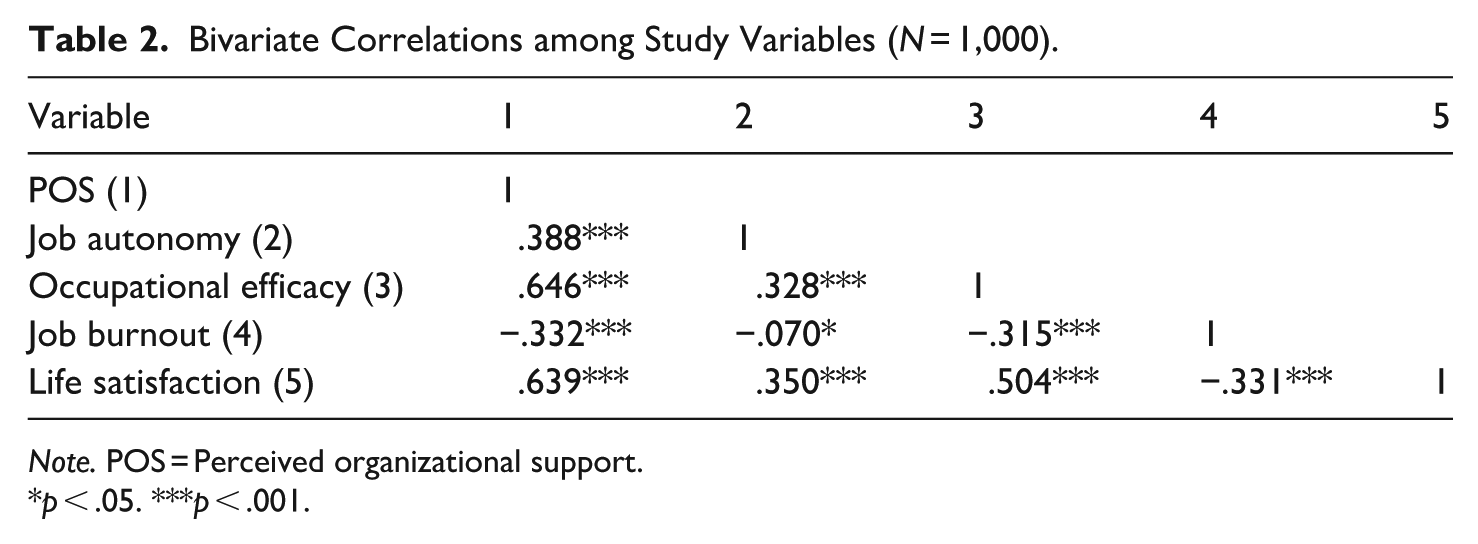
Note. POS = Perceived organizational support.
p < .05. ***p < .001.
Primary Analyses
We specified the measurement model, where all latent factors were allowed to co-vary. The measurement model showed good fit: χ2/df = 2.388, CFI = 0.991, RMSEA = 0.037, CI90 [0.027, 0.047]. Associations among study variables were then tested using structural equation modeling (SEM) in IBM SPSS AMOS 26 (IBM Corp., Armonk, NY, USA). The structural model also yielded good fit: χ2/df = 1.989, CFI = 0.994, RMSEA = 0.031, CI90 [0.020, 0.042]. Figure 2 shows the SEM analysis results.
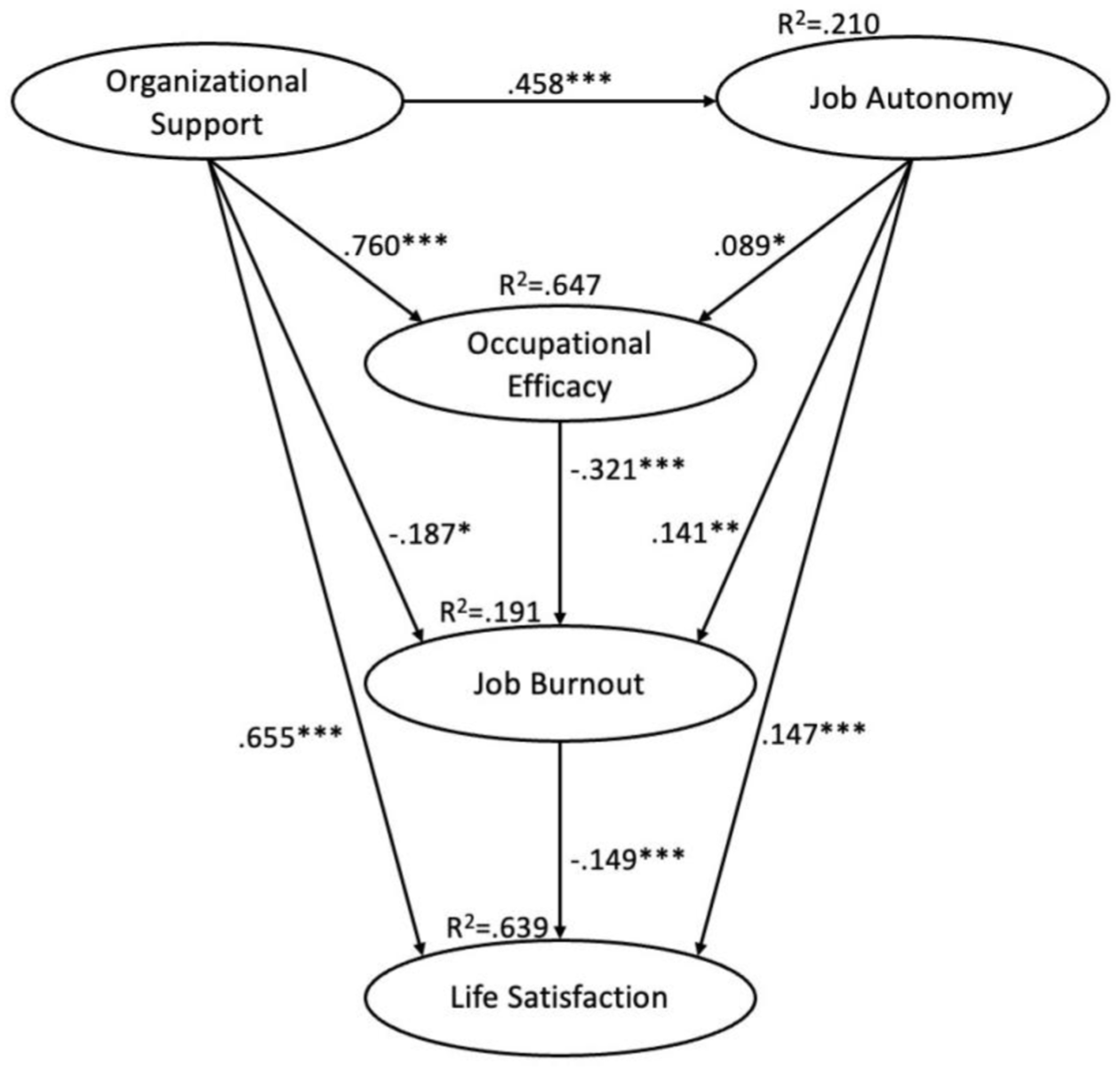
Final model with standardized path coefficients.
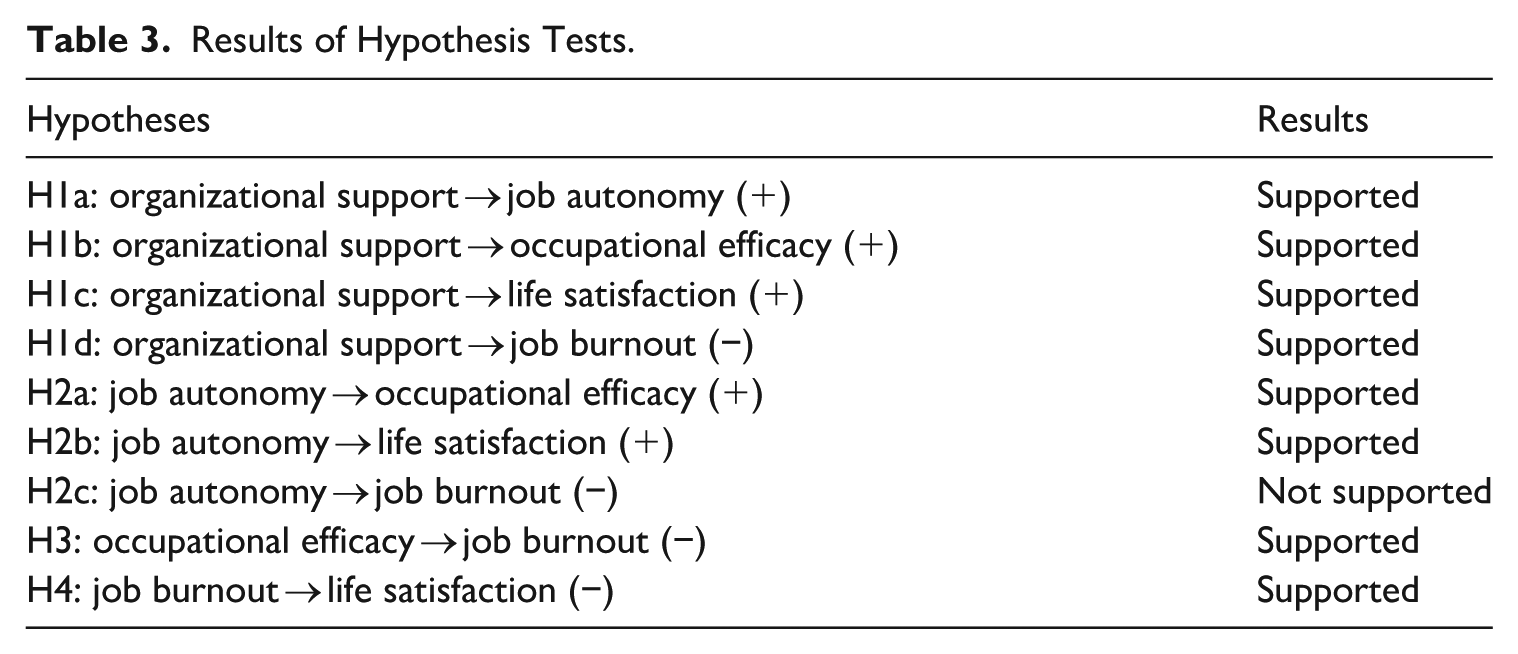
H1a predicted that journalists’ POS was positively associated with their job autonomy. Results showed a positive association between them (β = .458, p < .001), supporting H1a. H1b and H1c predicted that POS was positively associated with occupational efficacy and life satisfaction. As anticipated, POS had positive associations with occupational efficacy (β = .760, p < .001) and with life satisfaction (β = .655, p < .001). H1b and H1c were supported. H1d predicted that POS had a negative association with job burnout. Results showed that Chinese journalists who reported higher organizational support had lower job burnout (β = −.187, p = .016). H1d was also supported.
H2a and H2b predicted that journalists’ job autonomy had positive associations with their occupational efficacy and life satisfaction. We found that job autonomy was positively associated with their occupational efficacy (β = .089, p = .018) and with their life satisfaction (β = .147, p < .001). H2a and H2b were supported. H2c predicted that job autonomy was negatively associated with journalists’ job burnout. But results showed these two variables had a positive association (β = .141, p = .001), rejecting H2c.
H3 predicted that journalists’ occupational efficacy had a negative association with job burnout. As predicted, results showed that occupational efficacy was negatively associated with job burnout (β = −.321, p < .001). H3 was supported. H4 predicted that job burnout was negatively associated with life satisfaction. Results showed that the two variables had a negative association (β = −.149, p < .001). H4 was supported.
Subsequently, this study examined political identity (CPC membership) as a control variable. Results indicated that political identity was significantly and positively associated with organizational support (β = .230, p < .001), occupational efficacy (β = .149, p < .001) and life satisfaction (β = .086, p = .002). Respondents who reported CPC membership were more likely to perceive organizational support, occupational efficacy and life satisfaction. After incorporating these three control paths, the structural equation model demonstrated a good fit: χ2/df = 1.851, CFI = 0.994, RMSEA = 0.029, CI90 [0.019, 0.039]. Table 3 shows the results of all hypothesized associations.
Results of Hypothesis Tests.
Moderation Analyses
RQ1 asked whether collectivism would moderate the associations among study variables. Moderation effects of collectivism on the associations (see Figures 3 and 4) were examined using the PROCESS Macro in SPSS. Results of moderation analyses are presented in Supplemental Table S3.
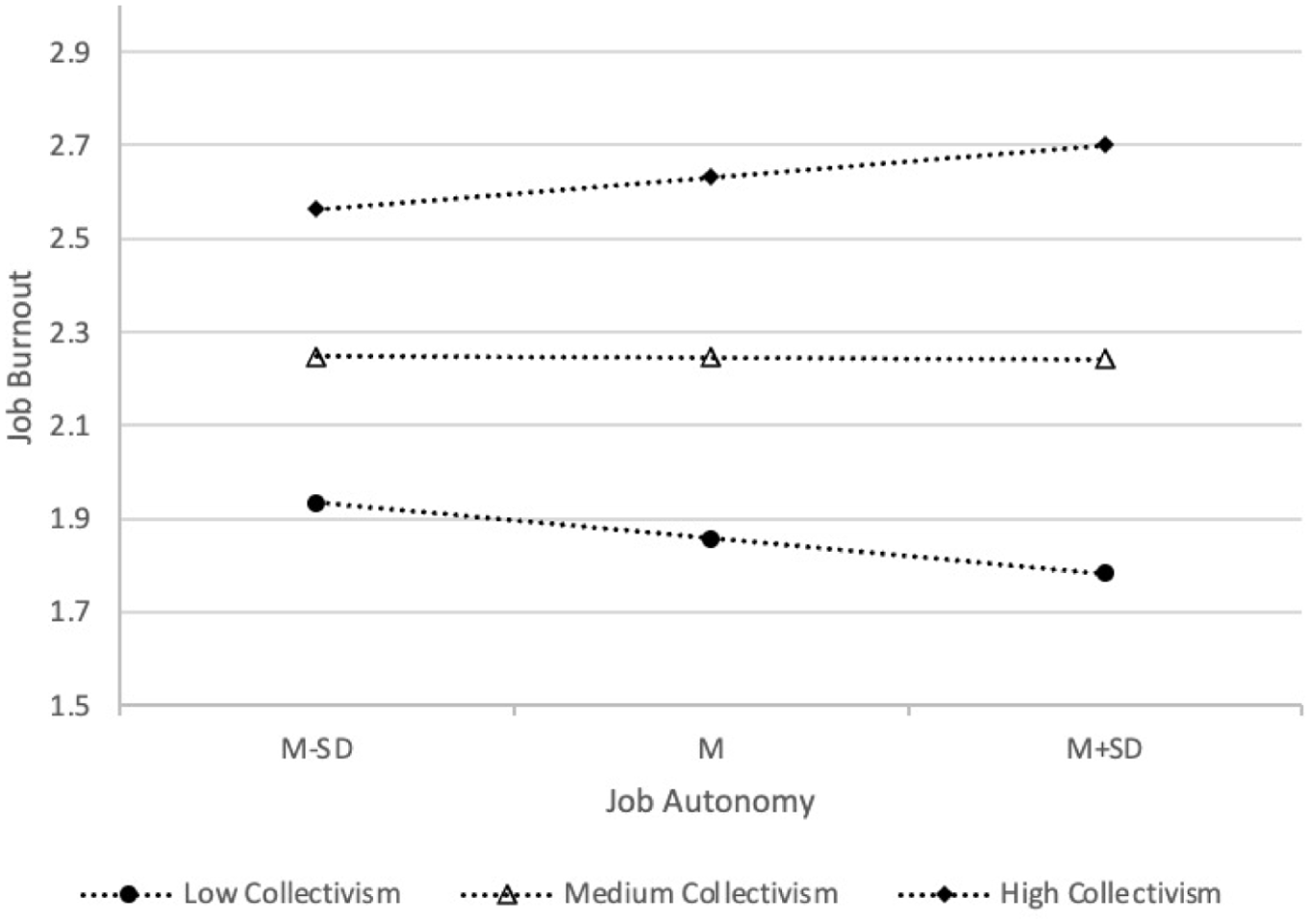
Moderation effect of collectivism on the association between job autonomy and job burnout.
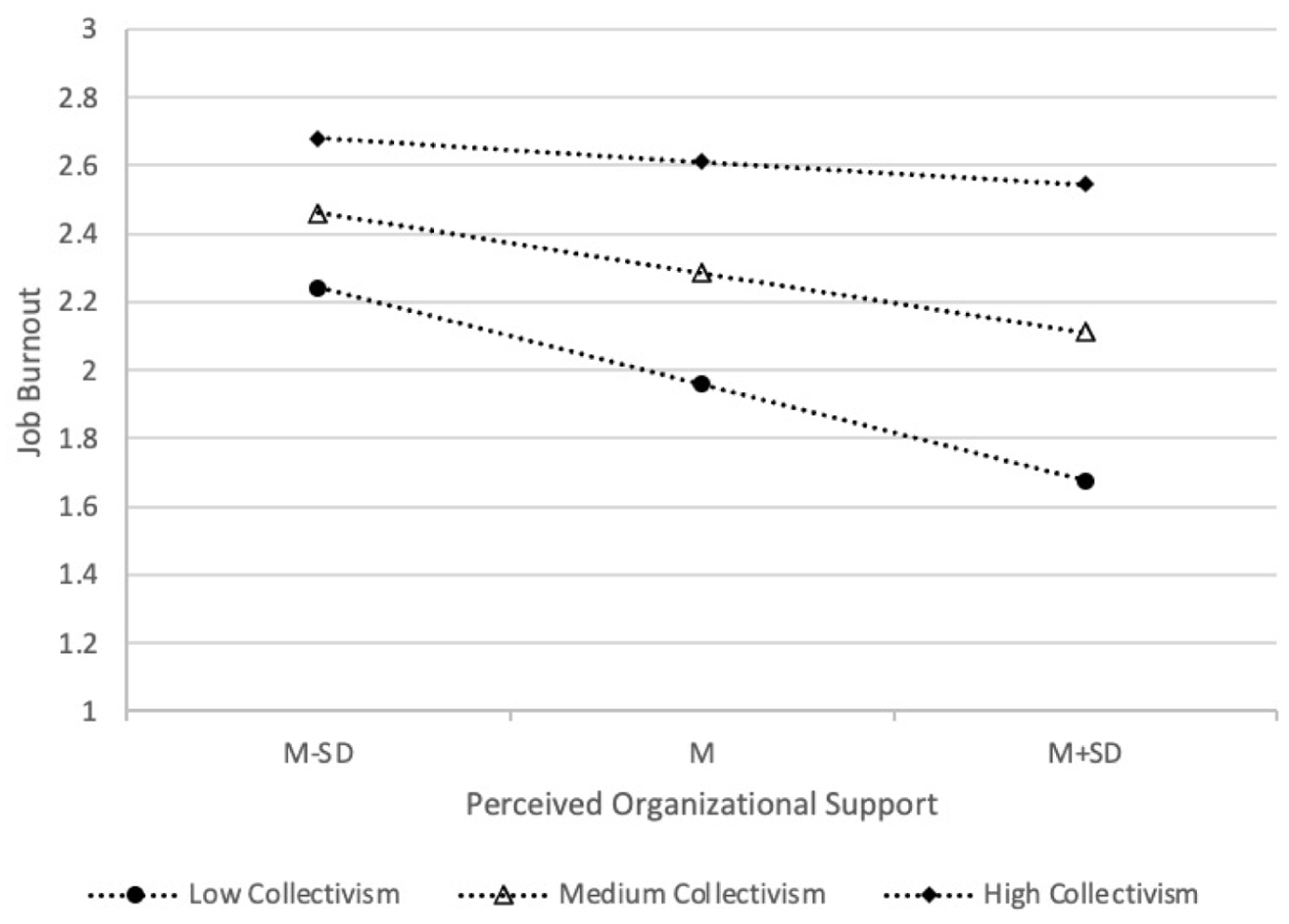
Moderation effect of collectivism on the association between perceived organizational support and job burnout.
Collectivism significantly moderated the association between job autonomy and job burnout (b = 0.149, Standard error [SE] = 0.055, p = .007, CI95 [0.041, 0.257], see Figure 3). Specifically, autonomy was negatively associated with burnout only among journalists lower in collectivism (b = −0.101, SE = 0.045, p = .025, CI95 [−0.190, −0.013]). The effect disappeared at average levels of collectivism (b = −0.004, SE = 0.037, p = .914, CI95 [−0.076, 0.068]), and remained insignificant at higher levels of collectivism (b = 0.093, SE = 0.057, p = .103, CI95 [−0.019, 0.205]).
Collectivism also moderated the effect of POS on job burnout (b = 0.313, SE = 0.072, p < .001, CI95 [0.171, 0.455], see Figure 4). POS showed the strongest negative association with burnout at lower levels of collectivism (b = −0.536, SE = 0.075, p < .001, CI95 [−0.682, −0.389]). The association was weaker but still significant at average levels of collectivism (b = −0.331, SE = 0.055, p < .001, CI95 [−0.439, −0.224]), and insignificant at higher levels of collectivism (b = −0.127, SE = 0.070, p = .070, CI95 [−0.265, 0.011]) (See Appendix A in Supplemental Materials for additional moderation analysis results).
Preliminary Discussion
Consistent with our hypothesis, Study 1 showed that POS was negatively related to burnout, but autonomy was unexpectedly positively associated with burnout. In addition, both POS and job autonomy were positively related to life satisfaction. Burnout appeared to be a highly multifactorial outcome, and the JD-R model could, to some extent, explain how burnout was associated with job resources.
Three insightful mechanisms appeared. First, occupational efficacy and life satisfaction extended the traditional JD-R model. Occupational efficacy mediated the protective pathway of job resources as a kind of personal resource (Xanthopoulou et al., 2007). In intensive journalistic environments, burnout appeared to depend more on journalists’ beliefs that they had the ability to manage and cope with job demands than on structural resources alone. Results also showed that the positive association between efficacy and POS was stronger than that between efficacy and autonomy, meaning that for Chinese journalists, efficacy was more reliant on the organization, rather than on journalists themselves. POS seemed to create a resource caravan in determining life satisfaction, where the support from the organization positively spilled-over to the evaluation of one’s entire life.
Second, autonomy was multifaceted. The zero-order correlation between autonomy and burnout was negative and significant, but the structural path became positive once occupational efficacy and POS were controlled. This inconsistent suppression suggests that the protective function of autonomy is largely shared with efficacy and POS, whereas the residual variance in autonomy remains underexplored.
Third, collectivism moderated the associations between organizational resources and burnout. At high levels of collectivism, neither POS nor job autonomy was negatively associated with burnout, and might even be positively associated with burnout. These findings suggest that the JD-R model may function differently for journalists in higher collectivistic environments. Therefore, it is necessary to examine this pattern qualitatively by inquiring into Chinese journalists’ perceptions of job resources and collectivism, particularly in relation to job burnout and life satisfaction.
Study 2
Method
Study 2 aimed to contextualize and deepen the findings from Study 1. We conducted semi-structured interviews with 16 journalists working in a variety of Chinese media organizations (See Supplemental Table S4 for interviewees’ information), including national state-affiliated outlets, market-oriented media, provincial and municipal newsrooms, and online platforms.
The interviews focused on: (a) how journalists perceived the meanings of organizational support and job autonomy; (b) how POS and job autonomy functioned as both resources and burdens; and (c) how collectivism shaped journalists’ reactions to organizational resources (See Appendix B in Supplemental Materials for interview questions). Interviews were conducted in Chinese, either face-to-face or via video calls, and lasted 50 to 73 min (M ≈ 61). All interviews were recorded and transcribed verbatim with informed consent. We analyzed the data using reflexive thematic analysis (Braun & Clarke, 2019). All translated quotes were checked through back-translation to preserve meaning.
Findings
The interviews showed that Chinese journalists did not interpret organizational resources as uniformly protective, as suggested by the JD-R model; instead, whether these resources protected or burdened Chinese journalists depended on how these resources were experienced within relational, moral, and organizational norms. In this study, we identified three interrelated themes that captured how Chinese journalists interpreted POS, autonomy, and collectivism.
Organizational Support as Both Care and Moral Obligation
Organizational support carried dual psychological meanings: care and moral obligation. This duality explained why organizational support could relieve burnout for some Chinese journalists, yet intensify it for others. While some journalists appreciated the emotional and instrumental supports from their organizations, some also described these supports as pressing expectations to reciprocate the investment.
For some journalists, receiving support often signaled that the organization “trusted” or “selected” them, which was an honor that must be repaid with harder work and increased performance. This suggested an internal pathway that extends the traditional JD-R assumption that greater resources reduce demands. Support was internalized as a symbol that demanded journalists to constantly prove their worthiness. As described by one senior Chinese journalist, “When the organization shows concern, it reminds me that they expect something in return. Support is never just support, because it comes with obligations.” (G). A younger participant further illustrated this by describing her personality and emotional struggles: “I don’t want them (employers) to think I only take advantage of support without giving anything back.” (O)
These accounts explained that while the results in Study 1 confirmed the hypotheses that higher POS was associated with lower burnout and higher life satisfaction, these associations might change if the journalists overburdened themselves by morally internalizing support as pressures to reciprocate.
Autonomy as Both Empowerment and Risk Shifting
We identified two types of autonomy from the interviews: empowering and risk-shifting autonomy (Miszczynski & Pieczka, 2024). Empowering autonomy explained why traditional JD-R held, and risk-shifting autonomy was closely linked to burnout. Empowering autonomy provided journalists with greater narrative freedom, topic selection capacity, and content creativity, which satisfied journalists’ professional ideals and clearly functioned as a protective resource that reduced burnout. As stated by one participant: “It reminds me of why I entered journalism in the first place.” (A).
On the other hand, many journalists in China (especially those working in sensitive newsrooms) interpreted autonomy as a burden that left them to handle risks and consequences independently. In newsrooms governed under strict collectivism (e.g. political newsrooms), making mistakes was especially devastating. “Any mistake can lead to serious consequences.” (M), and “the entire department may pay for the mistake.” (H). Therefore, the top priority for some journalists was not to be creative or critical, but rather to work within the safe boundaries in a risk-free way. However, the autonomy implicitly shifted the responsibility of “handling the risk” (P) onto journalists themselves. Traditionally, news pieces were checked or proof-read layer by layer. With the risk-shifting autonomy, journalists had to self-regulate and were constantly left in a state of uncertainty and anxiety about overlooking potential risks and mistakes. Many journalists stated this as so-called “autonomy,” and that they much preferred to receive “clear and explicit instructions from my supervisors” (K) instead.
Taken together, the interviews suggested an autonomy dichotomy. Autonomy only supported well-being when paired with clear limits and regulatory protections. When autonomy was experienced as risk-shifting in collectivistic or sensitive newsrooms, it increased uncertainty, vigilance, and fear of letting the group down.
Contagious Burnout in Collective Newsrooms
Collectivism created an in-group psychological echo chamber that either magnified pride or reinforced burnout. Journalists in newsrooms of higher collectivism described work-related emotions as group-shared experiences. Stress circulated quickly within the group: “In our team, emotions spread faster than information. When the team is stressed, you feel it instantly.” (E).
Collectivism also shaped how burnout was expressed and morally evaluated. Journalists with stronger collectivistic commitments would internalize organizational norms as a gold standard and regulate their own performance through the potential impact on the team. As a result, journalists refrained from expressing fatigue and demands to preserve group harmony. “I almost never say I’m tired, because everyone is tired. Fatigue is simply the norm here. You don’t burn out alone. You burn out with everyone.” (L). Although burnout was normalized as a collective condition, expressing it out aloud seemed morally inappropriate.
Collectivism could also explain why POS was experienced as an obligation, and autonomy as a form of risk-shifting. Collectivism emphasized loyalty and group-over-individual values. In this sense, collectivism became a decisive factor in interpreting how job resources led to burnout.
Preliminary Discussion
The qualitative findings from Study 2 showed the duality of POS and autonomy. First, POS was perceived as a form of moralized reciprocity, especially in newsrooms with higher levels of collectivism. This explains why individuals of high collectivism were more susceptible to burnout than those with lower levels of collectivism in Study 1. Second, autonomy was empowering when combined with clear boundaries and supervisory backup, but could also simply be a way of shifting risks and responsibilities that led to constant self-monitoring, fear of mistakes, and vigilance about collective reputation. This distinction explained the unexpected positive association between autonomy and burnout in Study 1. Third, burnout was both shared and silenced in collectivistic contexts: journalists absorbed group emotions while suppressing personal exhaustion to preserve harmony. They silently processed POS as an obligation, and autonomy as collective risk-bearing.
Taken together, Study 2 demonstrates that the effects of organizational resources depend on how they are culturally and morally interpreted, especially under collectivistic contexts. These findings extend the JD-R model by reclassifying organizational resources as either protection or pressure, depending on the context.
General Discussion
This mixed-methods study investigated how POS and job autonomy were associated with burnout and life satisfaction among Chinese journalists, and how these relationships were shaped by collectivism and journalists’ occupational efficacy. Study 1 showed that POS and autonomy were associated with higher occupational efficacy and life satisfaction, in line with the JD-R model and SDT (Hoak, 2021; Ryan & Deci, 2000); however, autonomy was positively related to burnout, and the protective effects of POS and autonomy were evident mainly among journalists lower in collectivism. Study 2 then qualitatively explained these unexpected pathways by tracing how support and autonomy were moralized, risk-laden, and embedded in collectivistic norms. These findings suggest that classic JD-R resources may convert into psychological demands in highly collectivistic contexts, function through perceived efficacy, and can spill over to overall life satisfaction.
Occupational Efficacy: Mediating Effects and Constructed by Organizations
The JD-R model states that demands can increase burnout. The present findings refine this logic by showing that when demands are constant, journalists’ beliefs that they have the ability to manage and cope with these demands are more decisive in predicting burnout. This corresponds with the distinction between challenge and hindrance demands in the later versions of JD-R (Van Den Broeck et al., 2016): demands are dynamically viewed as different levels of burdens based on different levels of efficacy. Even when the demand is high, the feeling of being capable can also relieve their burdens.
Our study further specifies that, in high-demand and intensive newsrooms, occupational efficacy comes more from the confidence that the organization will back journalists up, rather than from self-determined confidence that originates in autonomy. This pattern is consistent with the social cognitive theory (Capa-Aydin et al., 2018), which argues that efficacy develops through credible social feedback. Without newsroom validation such as status, trust relations, and institutional affirmation, journalists may possess technical skills yet still experience fragile efficacy.
Organizational Resources: Protection or Pressure?
Our research extends JD-R and SDT by demonstrating that resources are accompanied by organizational expectations, pressures, and mutual obligations, which may in turn increase burnout. Both POS and autonomy, as job resources, can activate two simultaneous pathways: the traditional supportive, protective pathway (feeling valued, competent, and trusted) and an experience-dependent, demanding pathway (feeling obligated, exposed, and constantly accountable). Furthermore, our study reconfigures autonomy into empowering and risk-shifting autonomy. We claim that risk-shifting autonomy occurs when it is experienced as a way in which the organization shifts responsibility, pressure, and fear onto employees. This insight can be combined with Study 1: autonomy itself is not necessarily a resource; only with sufficient efficacy can autonomy reclaim autonomous control. Otherwise, it will be experienced as bearing responsibility and risk that increase burnout. Existing studies have also shown that the positive association between autonomy and well-being may plateau under high job complexity (Chung-Yan, 2010).
Collectivism: A Duty and Emotion Magnifier
Collectivism creates a sense-making system for how job resources are experienced and perceived in journalistic environments. In newsrooms of higher collectivism levels, journalists recognize organizational resources within collective rules, obligations, and group pride. According to the moderation effects in Study 1, in high collectivism contexts, organizational support is interpreted less as a supportive and protective resource. In cultures that emphasize interdependence, the self is viewed as interconnected and inseparable from its context and environment, and thus obligations can be internalized and integrated into one’s sense of self (Lee et al., 2025). Under such conditions, support and autonomy may be experienced as symbolic duties.
From Workforce to Everyday Living: The Spillover of Job-related Factors
Job resources can affect efficacy and burnout, which in turn influence journalists’ broader evaluations of life. In collectivistic and high-pressure working environments, the boundary between work strain and private life is especially blurred. Although organizations often advocate maintaining work-life balance, organizational support can cross the boundaries and directly increase or decrease life satisfaction. Simultaneously, the double-edged job resources also allow burnout to permeate into journalists’ broader life evaluations (Nixon et al., 2020).
Our findings have essential practical implications for news organizations. Support and autonomy should be given with clear boundaries and reassurances, and newsroom environments should be stable and transparent, especially in high-collectivism environments, so that journalists can develop a sense of efficacy that reduces burnout and enhances life satisfaction.
This research is not without limitations. First, the SEM model mainly described the resource side of burnout, which is not exhaustive in explaining burnout. Future research needs to systematically incorporate both work demands and resources. Second, Study 2’s participants were recruited by purposive and snowball sampling. This could potentially include more journalists who were willing to disclose their sensitive experiences. Third, this study exclusively focused on a Chinese sample, which could lead to overlooking both within-group variances and collectivism variations more broadly across different cultures. Future research should therefore benefit from the insights and test for cross-cultural generalizability.
Taken together, this research moves from the availability of organizational resources to their interpretations. The results re-conceptualize support and autonomy, particularly for Chinese journalists in collectivistic contexts.
Supplemental Material
sj-docx-1-jmq-10.1177_10776990261457637 – Supplemental material for Are Organizational Resources Always Protective? Journalists’ Job Burnout and Life Satisfaction under Collectivistic Contexts
Supplemental material, sj-docx-1-jmq-10.1177_10776990261457637 for Are Organizational Resources Always Protective? Journalists’ Job Burnout and Life Satisfaction under Collectivistic Contexts by Yongliang Liu and Wenwen Guo in Journalism & Mass Communication Quarterly
Footnotes

Funding
The authors received no financial support for the research, authorship, and/or publication of this article.
Declaration of Conflicting Interests
The authors declared no potential conflicts of interest with respect to the research, authorship, and/or publication of this article.
Supplemental Material
Supplemental material for this article is available online.
Author Biographies
References
Supplementary Material
Please find the following supplemental material available below.
For Open Access articles published under a Creative Commons License, all supplemental material carries the same license as the article it is associated with.
For non-Open Access articles published, all supplemental material carries a non-exclusive license, and permission requests for re-use of supplemental material or any part of supplemental material shall be sent directly to the copyright owner as specified in the copyright notice associated with the article.
