






Abstract
This study examines how patterns of media consumption and demographic composition shape public perceptions of the pro-Palestine campus encampments that emerged across the United States in late 2023. Drawing on social identity theory and media framing theory, the research explores whether public support for protest goals and tactics, as well as perceptions of the protests’ effectiveness in generating awareness and political change, are better predicted by news source preference or by identity-based demographic characteristics such as age, education level, and political affiliation. Using survey data from 968 U.S. adults recruited via Prolific, the study finds that while social media and student-run news sources are associated with higher support for the encampments, traditional outlets like cable and network news are linked to lower support. Political identity consistently emerged as the strongest predictor of both support and perceived effectiveness. Overall, the findings suggest that while media environments shape the narratives audiences encounter, identity-based interpretation plays a dominant role in shaping evaluations of protest movements. These findings highlight the interplay between identity-driven interpretation and media framing, providing a clearer understanding of the challenges protest movements face when attempting to shape public opinion in fragmented media environments.
Introduction
In 2023, across the United States and globally, activists organized and carried out widespread pro-Palestinian protests in response to Israel’s actions in Gaza. Activists associated with universities organized encampments on college campuses to protest universities’ ties to Israeli institutions (Associated Press, 2024). The movement quickly spread to over 100 campuses across the United States, with protestors primarily demanding that universities divest from Israel and weapons manufacturers (Blinder, 2024; Gohill, 2024; Goldstein & Zuloaga, 2024). The pro-Palestine encampments draw parallels to the protest methods first popularized by the Occupy Wall Street movement in 2011. By physically occupying space, both movements seek to capture attention and spark dialogue. However, the ability to communicate digitally has only grown since the Occupy Wall Street movement. Thus, today’s encampments, more than ever, are not confined to the physical realm. The more recent pro-Palestine movement blends traditional protest methods with digital platforms, utilizing social media to amplify messages and broaden the movement’s reach. This combination of in-person demonstration and online activism marks a significant evolution in protest strategy over the past two decades.
The growing prevalence of social media is transforming how protest groups can communicate with the public. Instead of relying solely on news coverage or physical demonstrations, activists can now share messages directly with a mass audience. This shift has been widely recognized as transformative for social movements as traditional news coverage can often misrepresent the goals or tactics of protests (Freelon et al., 2016; Hermida, 2013; Mundt et al., 2018). Social media has enabled protest groups to craft and control their narratives, potentially sharing goals and plans more directly and with larger populations.
However, social media platforms engage in their own form of gatekeeping through algorithmic curation, often reinforcing users’ existing beliefs and limiting exposure to dissenting views (Barzilai-Nahon, 2008). Outside of social media, individuals’ knowledge, beliefs, and support of social movements are influenced by the social and structural demographics of their lived environment, social norms, and news consumption. These demographics are also incorporated in digital platforms through user interaction with algorithmic decisions and may reinforce political “norms” for social media consumers, creating a barrier for social movements to spread content among populations who aren’t already aligned with their causes. While social media represents a transformation in the operationality of social movement messaging, it is not yet understood how exposure to social media interacts with personal demographics and the use of other traditional news sources.
The present study examines public perceptions of the pro-Palestinian encampments that emerged across U.S. university campuses starting in October 2023, focusing on whether participants’ use of social media for protest-related news is associated with measurable differences in support for protest goals and tactics, as well as perceptions of the protests’ effectiveness in generating awareness and political change, when compared to those who used traditional news sources for protest-related news. We then compare the differences in protest perceptions across demographic groups and media consumption patterns to examine whether identity-based factors or media exposure better explain public evaluations of the protests. By comparing perceptions across news sources to perceptions across demographics, this research examines whether the affordances of social media enable protest groups to effectively frame their narratives and generate greater public support, or whether their messages are ultimately constrained by platform algorithms or overpowered by audience identities. This study extends research on media coverage of protest movements by examining how audiences interpret protest narratives rather than focusing solely on how protests are portrayed in the media.
Literature Review
Social Identity and Protest Perception
Social identity theory (Turner et al., 1979) provides a valuable lens for understanding how individuals perceive protest movements. Social identity theory argues that individuals categorize themselves and others into social groups, and these group affiliations shape attitudes, behaviors, and interpretations of social events. Group membership often produces in-group favoritism and out-group bias, meaning individuals are more likely to evaluate actions from their own group favorably while viewing the actions of perceived out-groups more critically. In the context of protest movements, this suggests that public perception of protest effectiveness may hinge not only on the protests goals or tactics but also on whether the audiences identify with the groups leading the movement (Kelly & Kelly, 1994; Stürmer & Simon, 2004).
A key component of social identity theory is the concept of self-categorization, which emphasizes how individuals align themselves with socially meaningful attributes such as political ideology, generational identity, or educational background (Hogg & Turner, 1987). These identities shape how individuals interpret political information and evaluate collective action. When individuals perceive protestors as belonging to an in-group, they are more likely to empathize with their goals and interpret their actions as justified or necessary. In contrast, when protestors are viewed as part of an out-group, audiences are more likely to interpret their actions as disruptive, illegitimate, or threatening (Huddy, 2001).
Social identity not only shapes evaluations of protest legitimacy but also affects susceptibility to persuasion. Messages communicated by in-group members are generally perceived as more credible and persuasive than those coming from out-group sources (Mackie et al., 1990). As a result, politically charged protest movements may produce polarized interpretations of the same event, with audiences evaluating the movement through the lens of group identity rather than message content alone.
Demographic characteristics can also function as a marker of identity because they are associated with shared political attitudes, generational experiences, and cultural perspectives. Political party affiliation is widely understood as a form of social identity that structures political attitudes and behavior, shaping how individuals interpret political information and evaluate political events (Green et al., 2004; Huddy, 2001, 2003). Social identity research further demonstrates that group identification plays a central role in shaping political attitudes and collective action, as individuals are more likely to support movements that align with identities they perceive as their own (Van Zomeren et al., 2008). Age and education can also shape identity-based interpretations of political events. Generational cohorts frequently develop distinct political orientations shared by shared political experiences and political socialization during early adulthood (Krosnick & Alwin, 1989). These generational experiences often influence how individuals interpret political conflict and social movements throughout their lives. Education similarly shapes political identity and engagement, as higher levels of education are associated with greater political participation, differences in ideological orientation, and stronger attitudes toward social and political change (Hout, 2012; Verba et al., 1995). Together, these demographic characteristics can function as meaningful social identity markers that shape how individuals interpret protest movements and evaluate their tactics and goals.
Public support for protest movements is shaped by a combination of demographic factors and media consumption habits. Research shows that demographic variables such as age, political ideology, and education level often predict protest support (Silver, 2024). For example, younger adults are generally more sympathetic to progressive protest movements, in part because they may identify more strongly with the social groups leading those movements.
Research indicates that younger individuals and those with higher education levels are generally more supportive of protest activities, especially when these align with progressive causes. For instance, a Pew Research Center study found that 40% of social media users aged 18 to 29 reported posting or sharing content in support of the Black Lives Matter movement, compared to 24% of those aged 30 to 49 and 18% of users aged 50 and older (Bestvater et al., 2023). This generational divide reflects broader cultural value shifts, in which younger and more highly educated populations are more likely to view protest as a legitimate form of political expression (Tungohan & Tormos-Aponte, 2023).
Framing and Media Perception
While social identity theory explains how personal affiliations influence interpretation, media framing theory sheds light on how protest information is structured before it reaches audiences. Originally conceptualized by Goffman (1974), framing examines the way information is selected, emphasized, and organized to promote interpretations of events. Framing theory suggests that individuals interpret and make sense of information through frameworks that highlight certain aspects while omitting others (Entman, 1993). Media frames can emphasize particular elements of a story, such as violence, legitimacy or demands, which shapes public opinion by privileging certain interpretations over others.
Framing theory is especially relevant in the context of protest coverage. Studies show that traditional media often emphasize spectacle over substance, depicting protests through what has been termed the “protest paradigm” (Chan & Lee, 1984; McLeod & Hertog, 1999). This journalistic tendency prioritizes conflicts, arrests and disruptions while minimizing protestors’ motivations or goals, ultimately delegitimizing the movement (Boyle et al., 2012). Conversely, social media platforms have allowed protestors to challenge these dominant narratives by providing their own framing of events (Gerbaudo, 2012; Tufekci, 2017).
Social media gives marginalized voices a way to be heard without having to go through traditional gatekeepers found in traditional news organizations. The use of hashtags, such as #BlackLivesMatter, #MeToo, and #FreePalestine have become rallying cries online and allowed local issues to gain global attention (Dobrin, 2020). Social media enables rapid agenda-setting and engagement, often leading to mobilization within hours or days of an event (Papacharissi, 2015). Digital platforms support “choreographed spontaneity,” a process in which users act in ways that appear coordinated yet remain flexible within decentralized structures (Gerbaudo, 2012; Datiri, 2024).
Yet, the mere presence of alternative frames online and the ability to bypass traditional gatekeepers does not guarantee impact. Social media algorithms prioritize content according to users’ networks, likes, shares, locations, and interactions, resulting in individuals being more likely to encounter content that aligns with their existing preferences and less likely to be exposed to viewpoints that challenge their beliefs (An et al., 2014; Pertina & Tarafdar, 2014; Rad et al., 2018). This dynamic, combined with identity-driven interpretation, helps explain why some individuals remain unmoved by protest messaging even when it bypasses traditional media filters.
Research on protest coverage also demonstrates that different media outlets often employ distinct framing patterns when covering social movements. Traditional news organizations frequently rely on journalistic norms that emphasize conflict, disruption, and official responses, whereas alternative or activist media are more likely to highlight protest grievances, motivations, and goals (Boyle et al., 2012; McLeod & Hertog, 1999). As a result, audiences who rely on different news sources may be exposed to systematically different portrayals of the same protest events.
Although the present study doesn’t directly analyze media content, prior research suggests that exposure to different news outlets can serve as an indirect indicator of exposure to different framing environments. Studies in political communication demonstrate that media organizations often employ distinct interpretive frames when covering political events and social movements, and audiences who rely on particular outlets are therefore more likely to encounter consistent narrative patterns associated with those sources (Boyle et al., 2012; Iyengar & Hahn, 2009; Stroud, 2011). Media consumption habits can therefore shape how individuals interpret political issues by influencing which frames and perspectives they encounter (Levendusky, 2013; Slater, 2007). Therefore, examining patterns of news consumption can provide a useful way to explore how mediated narratives about protest movements may shape public perceptions of protest goals, tactics, and effectiveness.
Defining Protest Success
Defining success in protest movements is not always straightforward. Social movement scholars have long debated how protest success should be measured and what outcomes are considered meaningful change. Traditional measures of success often focus on whether movements achieve their stated policy demands or influence institutional decision-making (Amenta et al., 2010; Giugni, 1998; Wang & Piazza, 2015). However, many movements pursue broader goals beyond immediate policy change, including shaping public discourse, raising awareness of social issues, and shifting public attitudes (Andrews, 2004/2018; Earl, 2004). In this sense, protest success can involve both tangible institutional outcomes and broader cultural or political influence.
While achieving stated demands remains a clear benchmark (Wang & Piazza, 2015), the broader ability to shape public discourse and raise awareness is equally important. King (2011) frames disruption as the necessary spark for raising awareness, a foundational step toward any lasting change. Useem and Goldstone (2022) highlight another essential piece: the need to attract a broad and diverse base of support. Without it, even the most visible movements risk fading before their goals can be fully realized.
Protest tactics can help or hinder protest effectiveness (King, 2011), and protest tactics significantly influence media coverage and public perception. Scholars have shown that the political success of protest movements is closely tied to their ability to gain public sympathy and support (Amenta et al., 2010; Giugni, 1998). Research shows that peaceful demonstrations are generally the most effective in influencing public opinion and shifting beliefs (Feinberg et al., 2020; T. Lee, 2002; Mazumder, 2018; Wasow, 2020). At the same time, disruptive tactics can increase media attention and draw public focus to otherwise overlooked issues (Andrews, 2004/2018; King, 2011). Movements therefore face a strategic tension between attracting attention through disruption and maintaining public legitimacy.
Movements, especially those that challenge dominant power structures, often face distorted portrayals in the media. As Gitlin (1980) highlights, the media frequently misrepresents protest activity, focusing disproportionately on acts perceived as disruptive or violent. This pattern was later conceptualized as the “protest paradigm,” where news coverage emphasizes conflict, spectacle, and deviance while minimizing protestors’ grievances or goals (Boyle et al., 2012; McLeod & Hertog, 1999). Disruptive actions, such as encampments or blockades, often attract media attention, compelling authorities to address the issues raised. The balance between drawing attention and maintaining public sympathy is essential for a movement’s success.
Rather than focus only on objective policy outcomes, it is also important to consider how audiences evaluate the impact of protest movements. Public perceptions of protest effectiveness may reflect whether audiences view the movement as legitimate, whether they support its goals and tactics, and whether they believe the movement is capable of generating awareness or producing meaningful change. From an audience perspective, protest success can therefore be understood as a multidimensional evaluation that includes support for protest goals, acceptance of protest tactics, perceived effectiveness in generating awareness, and perceived effectiveness in producing change. Instead of solely measuring the actual outcomes of a protest, measuring the public’s perceptions of the outcomes may reflect the protest’s ability to gain public support.
Integrating Frameworks
Together, social identity theory and media framing theory offer a comprehensive understanding of protest perception. While framing determines the narrative content individuals are exposed to, social identity theory explains how individuals interpret that content through the lens of group belonging. Media framing research highlights how news coverage and digital media environments shape the narratives audiences encounter about protest movements, influencing whether those movements are perceived as legitimate, disruptive, or effective. At the same time, social identity theory suggests that individuals do not interpret these narratives uniformly; instead, interpretations are filtered through existing group identities such as political affiliation, generational identity, and educational background.
Taken together, these frameworks suggest that perceptions of protest movements emerge from the interaction between mediated narratives and audience identities. Individuals who encounter the same protest coverage may evaluate that coverage differently depending on their social identities and political alignments. This study examines whether perceptions of protest effectiveness are better explained by media exposure (framing) or by demographic alignment (identity), shedding light on the interplay between message content and audience perspective in shaping public opinion around protest movements. Specifically, the study investigates how these factors influence public evaluations of protest goals, protest tactics, awareness generation, and perceived political change. By examining how media exposure and social identity jointly shape perceptions of protest effectiveness, this study extends research on the protest paradigm beyond media content analysis to consider how audiences interpret protest coverage. In doing so, the study highlights how mediated narratives and identity-based interpretation interact to shape public evaluations of protest movements.
Research Questions
1. How do age, education, political alignment, and news consumption interact with support for: a. Protest goals b. Protest tactics
2. How do age, education, political alignment, and news consumption affect perceptions of protest success in generating: a. Awareness b. Change
Methods
The researchers recruited adult participants (N = 968) from the United States via Prolific, an online data collection platform for human subjects (Palan & Schitter, 2018). The Prolific platform was selected due to its demonstrated data quality (Douglas et al., 2023) and its quota-based recruitment tools, which allowed the researchers to approximate a politically balanced U.S. sample. Demographic and political characteristics were also collected directly in the survey, and the resulting sample composition is described in the Analysis section. Participants who completed the survey were paid $1.20, with the payment rate being based on the average time it took to complete the survey, 9 min, with a rate basis of $7.99 per hr. The survey included two attention checks; participants who failed these attention checks were not included in the final dataset.
The survey was administered online via Qualtrics and consisted of three main sections. First, participants answered a series of demographic questions, including gender, age, education level, and political orientation. Next, participants reported their news consumption habits with a focus on frequency and preferred platforms. Finally, participants were asked about their perceptions of the pro-Palestine encampments that occurred on U.S. university campuses starting in late 2023. Only respondents who indicated prior awareness of the encampments were asked to complete the perception measures related to these protests.
Measurement
Independent Variables
News source use was measured through a multiple-response format, allowing participants to select all the sources they used to receive news about the encampments. Respondents could choose from the following categories: student news (e.g. university newspapers, campus radio, university television), local news (e.g. local newspapers, TV, radio, or their online platforms), national newspapers (e.g. The New York Times, The Wall Street Journal, USA Today), national nightly network news (e.g. ABC World News Tonight, CBS Evening News, NBC Nightly News), cable news networks (e.g. CNN, FOX News, MSNBC), public television/radio (e.g. Democracy Now, NPR), and social media platforms (e.g. TikTok, X, Facebook, Instagram, YouTube, Reddit). The survey included examples as listed above for each category to facilitate more accurate responses, as previous research has shown that naming specific outlets can help improve participant understanding and reporting accuracy (Barthel et al., 2020).
Dependent Variables
The survey assessed respondents’ support for the protest’s goals and tactics, as well as their perceptions of the protest’s effectiveness in generating awareness and creating change. To measure support, participants responded to two items: (a) “How would you rate your overall support for the protest goals?” and (b) “How would you rate your overall support for the protest tactics?” Responses were recorded on a five-point Likert scale: Strongly support, Somewhat support, Neither favor nor oppose, Somewhat oppose, and Strongly oppose, and were recoded numerically from 1 (Strongly oppose) to 5 (Strongly support) for analysis. Participants who indicated they were unsure of the protest’s goals (n = 49) or tactics (n = 41) were excluded from analyses involving these items. To assess perceived effectiveness, participants answered two questions: (a) “How effective did you perceive these protests to be in generating awareness for their cause (i.e. bringing attention to their demands)?” and (b) “How effective did you perceive these protests to be in creating change (i.e. resulting in the implementation of protestors’ demands)?” These items used a five-point Likert scale ranging from not at all effective to extremely effective, which was recoded numerically from 0 to 4 for analysis.
Predictors/Demographic Variables
Demographic variables included in the analysis were age, education level, and political party affiliation. Age was treated as a categorical variable, with groups beginning at 18 to 24, increasing in 10-year increments, and concluding with a 75+ category. For education, participants selected their highest level of education from 8 response options. These were subsequently collapsed into five categories: high school or less, some college, college graduate, postgraduate, and other. Political party affiliation was assessed using three primary categories: Democrat, Republican, and Independent. Respondents who indicated that they leaned Democrat or leaned Republican were grouped with their respective parties for analysis.
Analytic Strategy
Hierarchical ordinary least squares regression was used to examine the relationship between demographic characteristics, political affiliation, news consumption, and measures of protest support and perceived effectiveness. The researchers selected this approach to allow for the predictors to be entered into theoretically informed blocks. Age and education were entered in the first block as demographic predictors, political party affiliation was entered in the second block, and news source use was entered in the third block, allowing the analysis to assess the additional variance explained by political affiliation and news consumption beyond demographic characteristics.
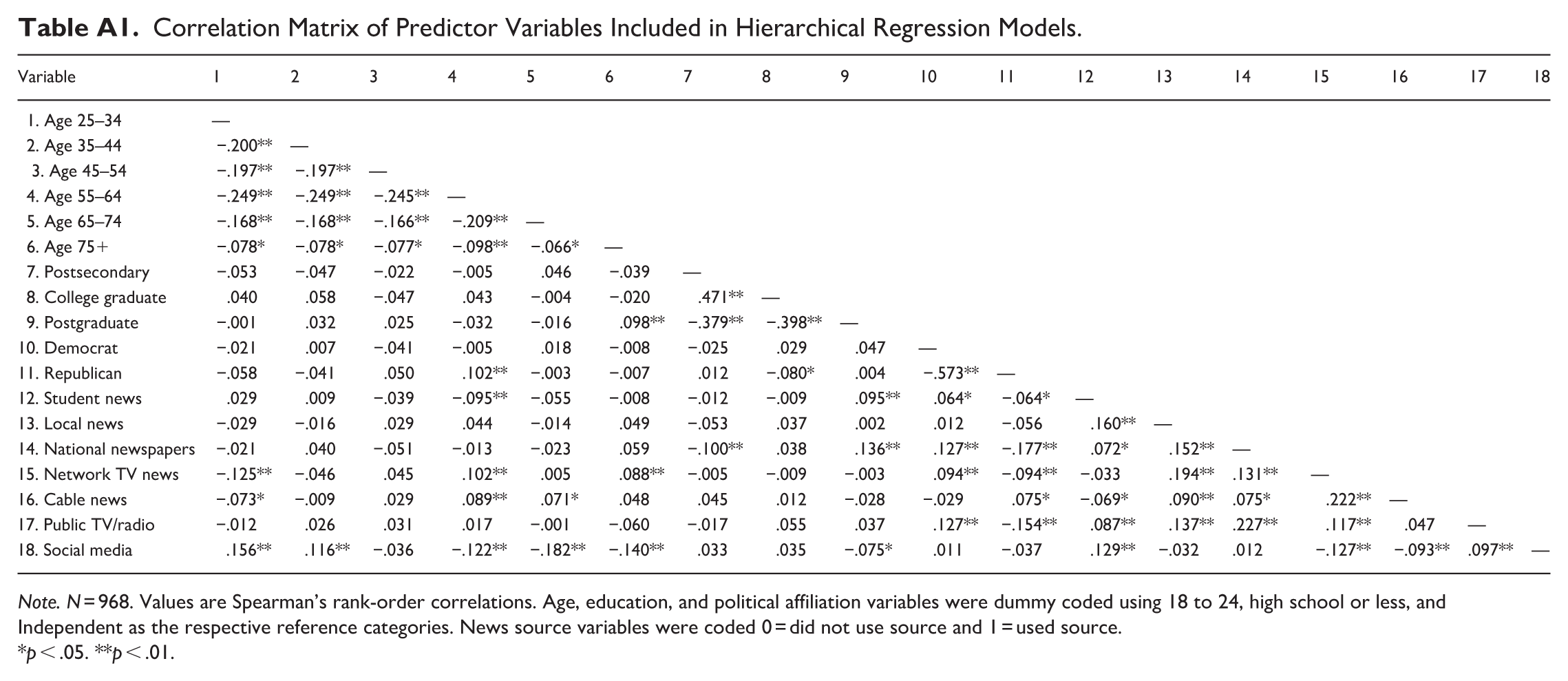
A correlation matrix of the predictor variables, provided in Appendix A, was also examined to assess bivariate relationships among the variables included in the regression models and to provide context for changes in the effect of age across the hierarchical regression blocks.
To assess multicollinearity, collinearity diagnostics were conducted for all models. Variance inflation factors were all below 2, suggesting that multicollinearity was not a concern (Lewis-Beck, 1990). In addition, Spearman’s rank-order correlation was used to examine the association between participants’ support for the protests and their perceptions of protest effectiveness. Spearman’s was selected due to both measures being nonnormally distributed.
Analysis
Table 1 shows the sociodemographic characteristics of the participants. Overall, the sample is mostly representative of the U.S. population when compared to U.S. Census Bureau data. The 55 to 64 age group is slightly overrepresented, while the 75+ group is slightly underrepresented. Participants have higher education levels than the national average.
Sociodemographic Characteristics of the Participants.
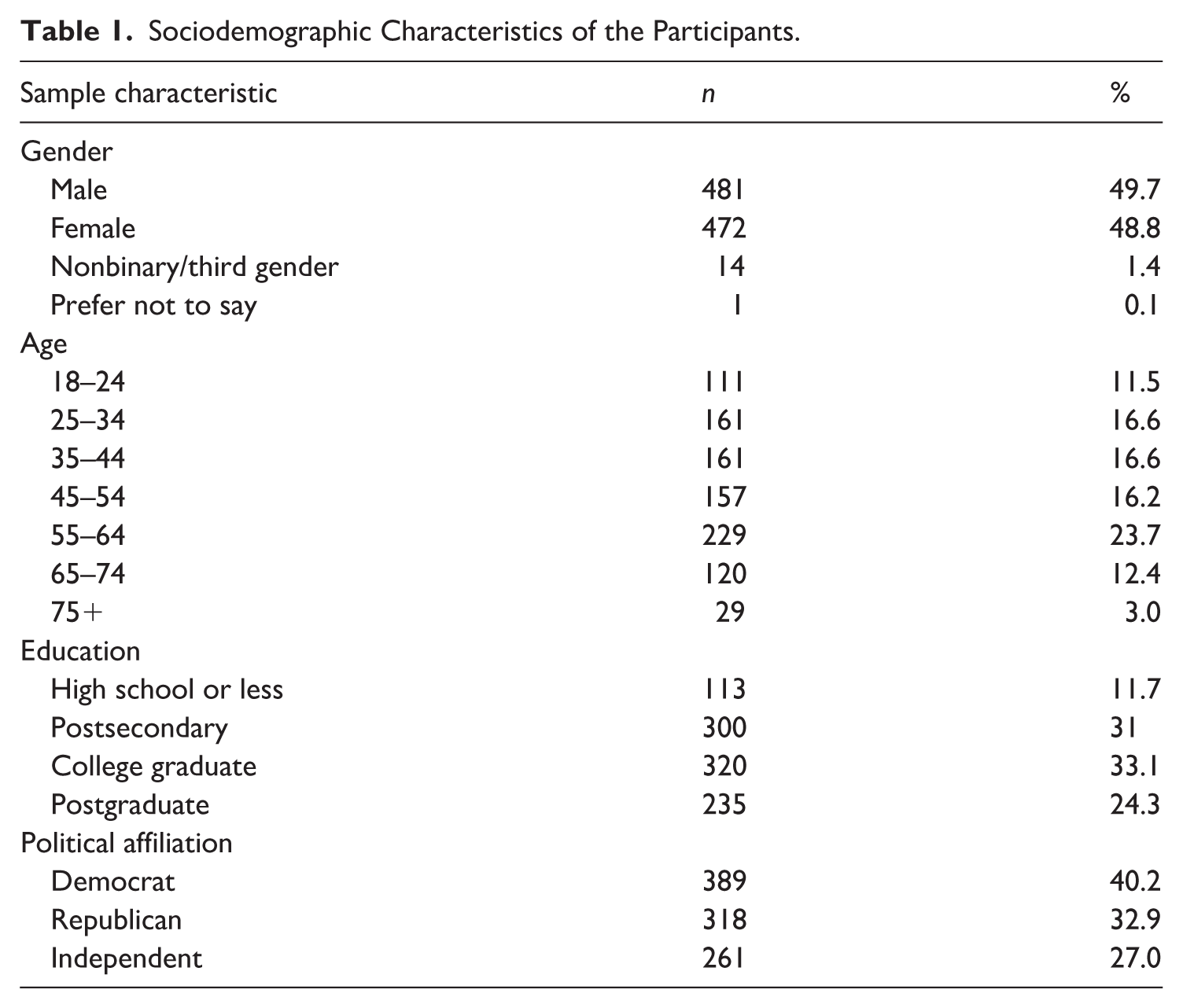
Politically, the sample slightly overrepresents respondents identifying as Democrats and Independents. The distribution of party affiliation in the sample most closely aligns with the Pew Research Center (2024a) estimates, which are also used by Prolific to inform its quota system. Pew data indicate that Democrats comprise approximately 34.25% of the U.S. population, Republicans 29.5%, and Independents 25.75%, with an additional “other” category. In contrast, other sources, such as the American National Election Studies (n.d.), report substantially lower proportions of Independents (6.7%), with Democrats outnumbering Republicans by just over 3% points. These discrepancies across sources reflect differences in how party identification is measured, particularly regarding the treatment of independents and partisan leaners. Despite these variations, the present sample captures a broad cross-section of political orientations.
As shown in Table 2, respondents most commonly reported receiving information about the encampments via social media, followed by cable news and national newspapers, while student-run news organizations were the least frequently cited source.
Descriptive Statistics for Sources Used for News About Pro-Palestine Encampments.
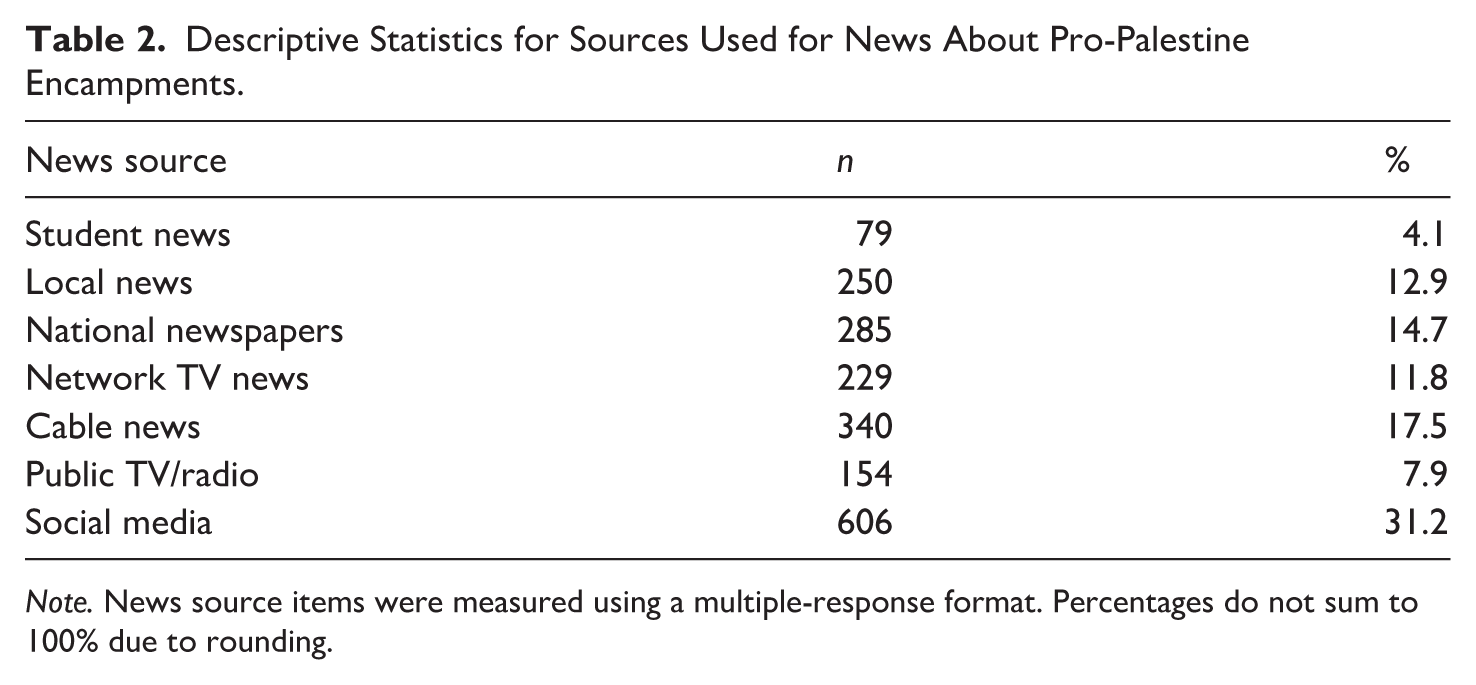
Note. News source items were measured using a multiple-response format. Percentages do not sum to 100% due to rounding.
Support for Protest Goals and Tactics
Participants were asked to indicate their level of support for both the goals and tactics of the pro-Palestine encampment protests. Descriptive statistics for both measures are shown in Table 3. Overall, support for protest tactics was lower than support for protest goals. Respondents who indicated that they were unsure of the protest goals (n = 49) or tactics (n = 41) were excluded from these analyses.
Descriptive Statistics for Support of Protest Goals and Tactics.
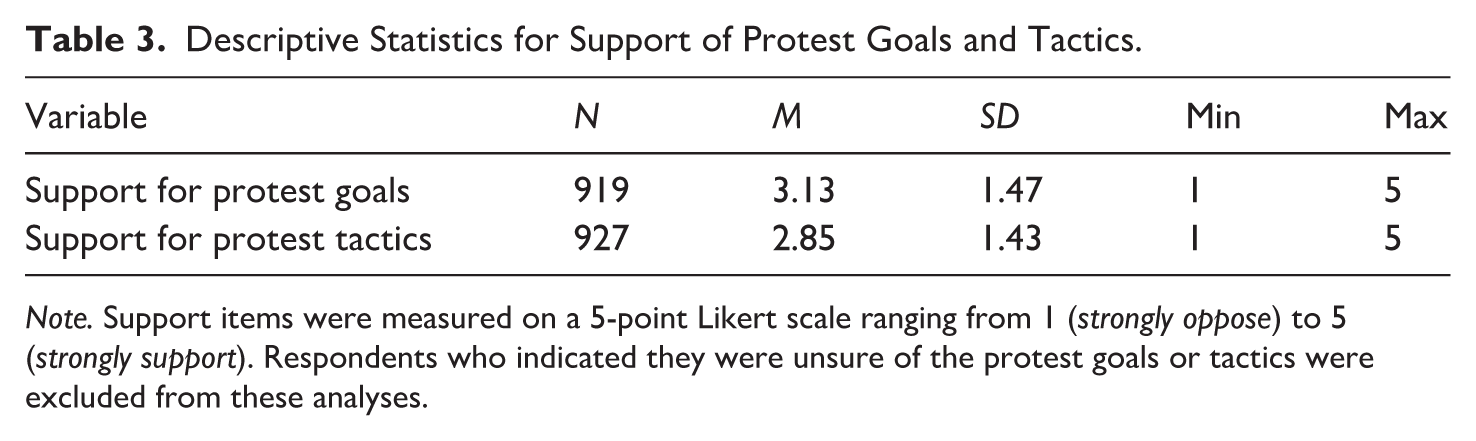
Note. Support items were measured on a 5-point Likert scale ranging from 1 (strongly oppose) to 5 (strongly support). Respondents who indicated they were unsure of the protest goals or tactics were excluded from these analyses.
Support for Protest Goals by Demographics and News Sources
A three-step hierarchical regression was conducted to examine how age, education, political affiliation, and media use predict support for protest goals (see Table 4), excluding participants who indicated they were unsure. The initial model, including age and education, accounted for a small portion of variance in support (R2 = 0.066, F(9, 909) = 7.17, p < .001). Relative to respondents aged 18 to 24, those aged 55 to 64 (B = −0.898, p < .001), 65 to 74 (B = −0.940, p < .001), and 75+ (B = −1.187, p < .001) expressed significantly lower levels of support. Education was positively associated with support, with college graduates (B = 0.550, p < .001) and postgraduates (B = 0.380, p = .026) indicating greater support than those with a high school education or less. The inclusion of political affiliation as a predictor substantially improved the model, ΔR2 = .160, F(11, 907) = 24.17, p < .001. Identifying as a Democrat was associated with increased support (B = 0.579, p < .001), while identifying as a Republican was associated with lower support (B = −0.817, p < .001). The inclusion of political affiliation reduced the magnitude and significance of the age and education effects observed in the first block of the model. As shown in Appendix A, several age categories were associated with political affiliation and media-use variables, which provide context for the attenuation of age effects across the hierarchical models. The final block introduced variables indicating which sources participants used to receive news on the encampments, which modestly improved model fit, ΔR2 = .058, F(18, 900) = 19.874, p < .001. Receiving information from public television or radio was associated with greater support (B = 0.515, p < .001), as was getting information from social media (B = 0.310, p < .001) and student news organizations (B = 0.435, p = .005). In contrast, receiving information from cable news (B = −0.339, p < .001) and national network news (B = −0.229, p = .027) was associated with lower support for the protest goals. The influence of age and education was further diminished once media factors were taken into account.
Hierarchical Regression Results for Support of Protest Goal.
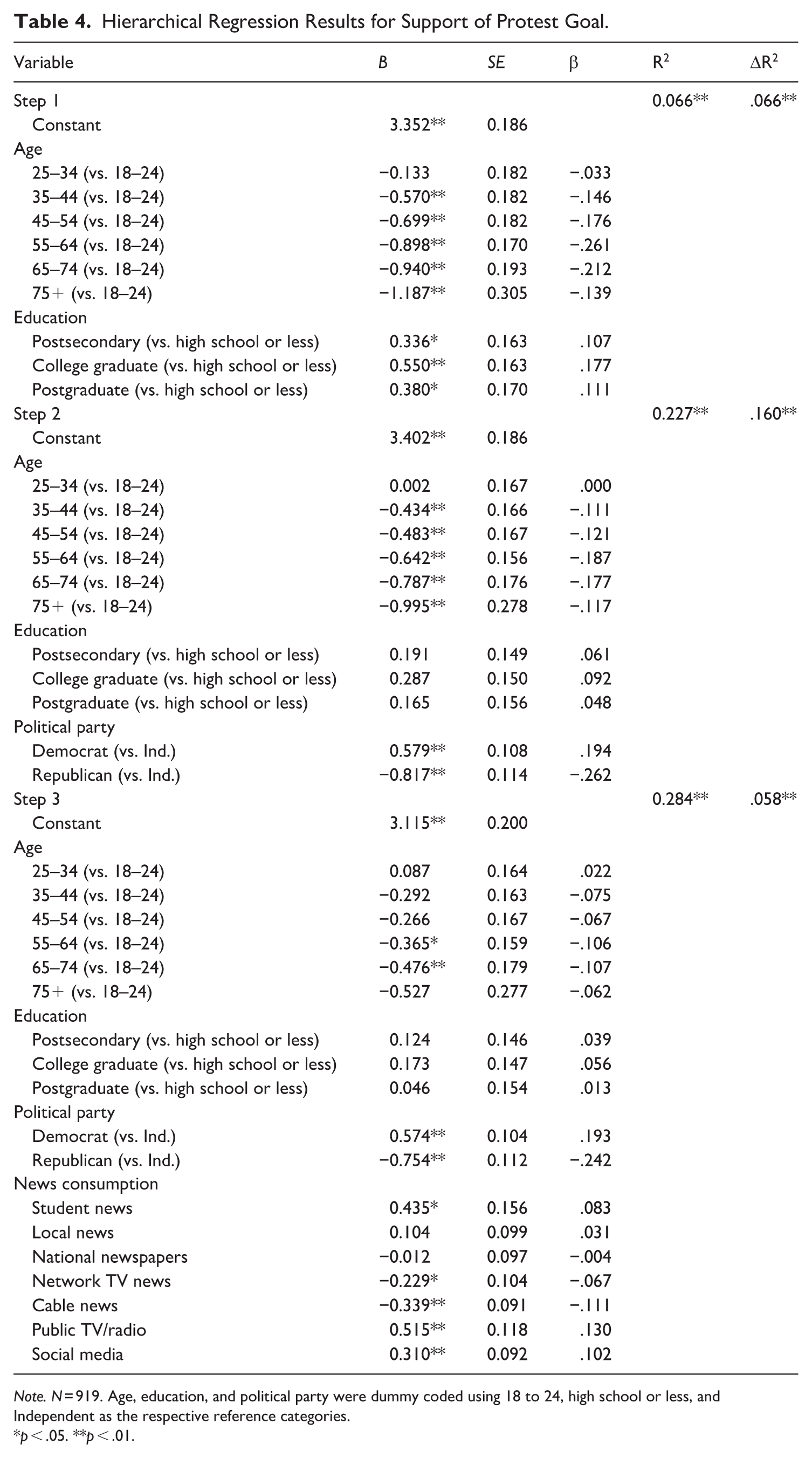
Note. N = 919. Age, education, and political party were dummy coded using 18 to 24, high school or less, and Independent as the respective reference categories.
p < .05. **p < .01.
Support for Protest Tactics by Demographics and News Sources
Examining support for protest tactics revealed a similar pattern of predictors across age, education, political affiliation, and media use. In the first block of the model (see Table 5), age and education were again significant predictors of support, F(9, 917) = 9.46, p < .001. In this model, age accounted for a slightly higher amount of variance in protest tactic support (R2 = 0.085), compared to protest goal support. Here again, younger age groups were the most supportive of the protest tactics. Support among 18- to 24-year-olds did not differ significantly from those aged 25 to 34. However, support for the protest tactics declined progressively with each older age group. The second block of the model showed political affiliation to be a strong predictor of support for the protest tactics, adding an additional 14.8% of variance explanation (ΔR2 = .148, F(11, 915) = 25.32, p < .001). Similar to support for the goals, Democrats expressed greater support for protest tactics (B = 0.593, p < .001) compared to independents, while Republicans were significantly less supportive (B = −0.718, p < .001). Adding media consumption to the final block improved the model’s fit slightly, ΔR2 = .060, F(18, 908) = 20.96, p < .001. Similar trends emerged across news source use. Again, student news (B = 0.578, p < .001), public television and radio (B = 0.481, p < .001), and social media (B = 0.210, p = .019) consumption predicted higher support. Similar to trends seen in support for the protest goals, cable news viewers expressed lower support for protest tactics (B = −0.412, p < .001). However, consumption of national newspapers was negatively associated with support (B = −0.206, p = .027), a trend not seen in support of the protest goals. Once again, the additions of political affiliation and media consumption reduced the influence of age and education across the models, consistent with the predictor correlations shown in Appendix A.
Hierarchical Regression Results for Support of Protest Tactics.
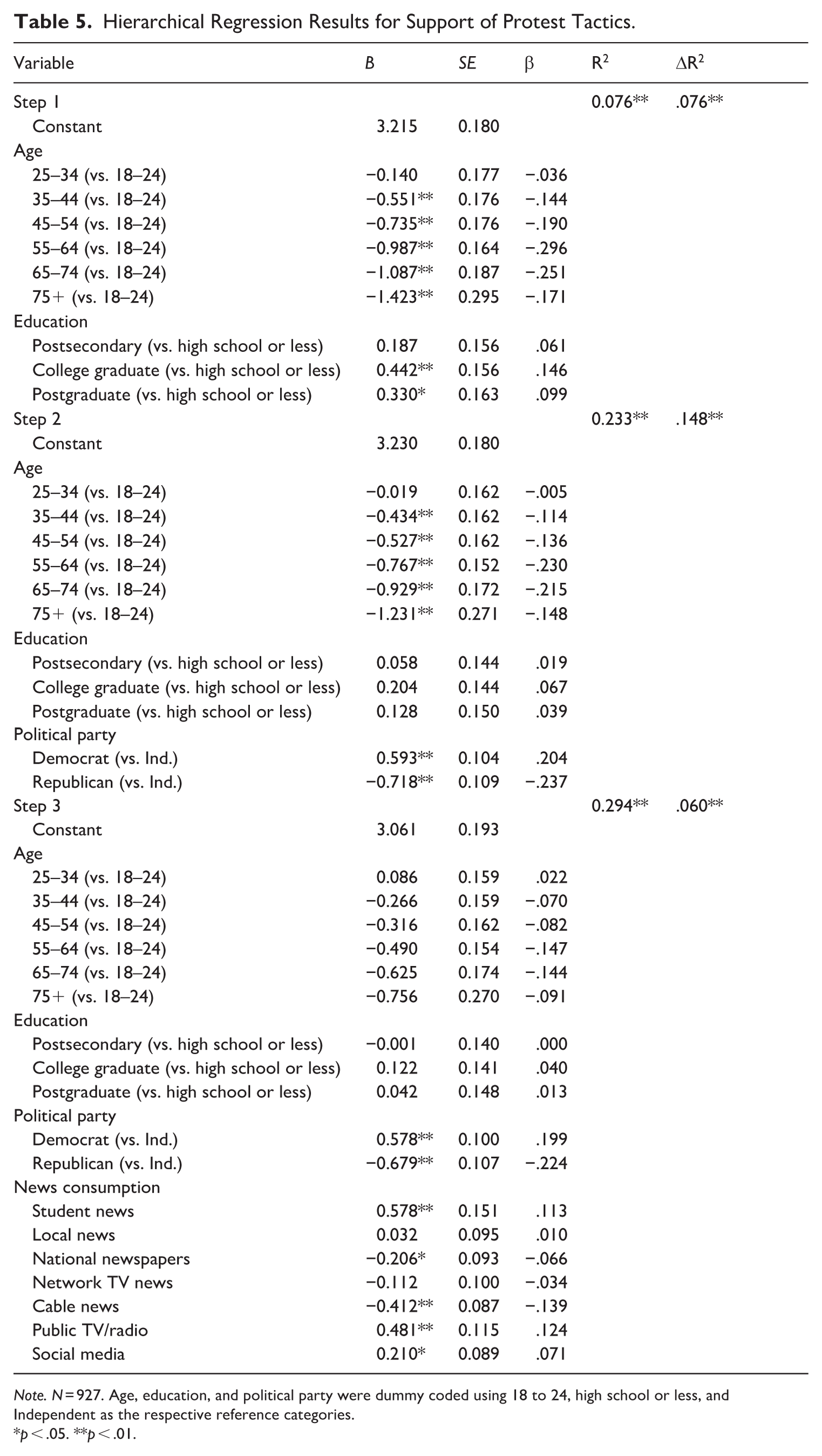
Note. N = 927. Age, education, and political party were dummy coded using 18 to 24, high school or less, and Independent as the respective reference categories.
p < .05. **p < .01.
Perceptions of Effectiveness at Generating Awareness and Change
Participants also indicated their perceptions of the protests’ effectiveness in generating awareness and creating change. Descriptive statistics for these measures can be seen in Table 6. Overall, respondents ranked the protests to be moderately effective in generating awareness and not at all effective in creating change.
Descriptive Statistics for Perceived Effectiveness at Generating Awareness and Change.
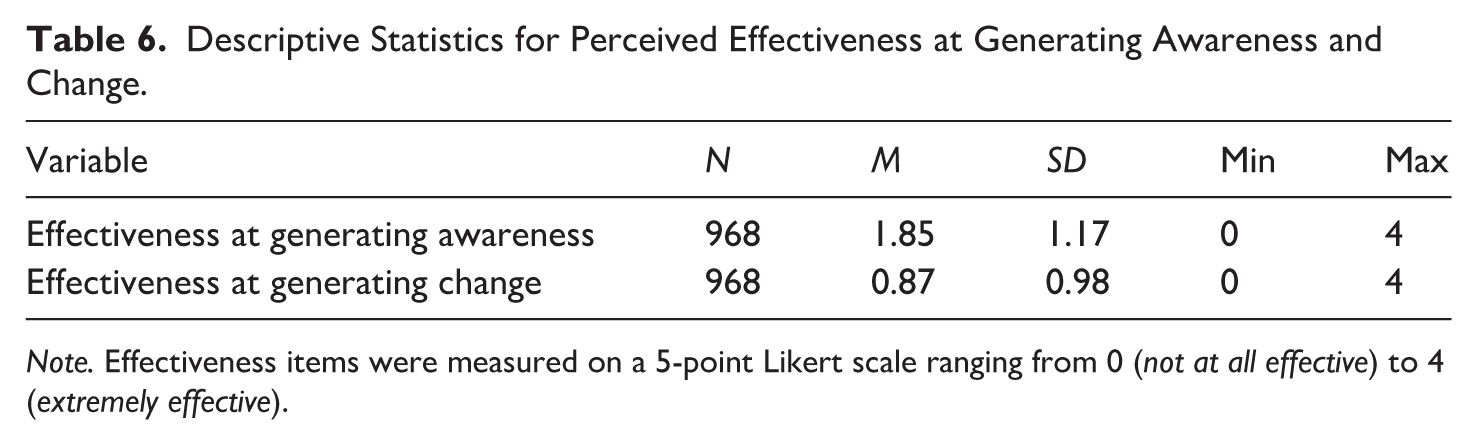
Note. Effectiveness items were measured on a 5-point Likert scale ranging from 0 (not at all effective) to 4 (extremely effective).
Effectiveness at Generating Awareness by Demographics and News Sources
A three-step hierarchical regression examining perceptions of protest effectiveness in generating awareness revealed a small increase in explanatory power between age (R2 = 0.043, F(9, 958) = 4.83, p < .001) and political affiliation (ΔR2 = .069, F(11, 956) = 10.99, p < .001), and limited increase with news consumption (ΔR2 = .026, F(18, 949) = 8.47, p < .001). The final block showed that, compared to younger adults, older adults were generally less likely to view the protests as effective in generating awareness. Compared to those with a high school diploma or less, those with a postgraduate degree reported significantly higher ratings of effectiveness in generating awareness compared to those with a high school education or less (B = 0.279, p = .032). Respondents with some postsecondary education or a college degree did not differ significantly from the reference group. Political identity played the most significant role. Democrats rated the effectiveness of the protest in generating awareness significantly higher than independents (B = 0.367, p < .001), while Republicans rated them significantly lower (B = −0.301, p = .001). Among media sources, two were significant predictors of perceived effectiveness at generating awareness. Receiving protest-related news from public television or radio was associated with higher perceived effectiveness at generating awareness (B = 0.315, p = .002). Similarly, receiving information from student news organizations predicted greater perceived effectiveness at generating awareness (B = 0.321, p = .018). Other sources, including social media (B = 0.119, p = .129), local news outlets (B = 0.148, p = .080), national newspapers (B = −0.020, p = .806), network television news (B = −0.027, p = .766), and cable news networks (B = −0.098, p = .205), were not significant predictors in the final model.
Effectiveness at Generating Change by Demographics and News Sources
The explanatory power of the model investigating the perception of the effectiveness of the protest in generating change was even more limited. Age and educations were the most significant predictors (R2 = 0.065, F(9, 958) = 7.39, p < .001), while political affiliation was very limited (ΔR2 = .009, F(11, 956) = 6.98, p < .001), as was news consumption (ΔR2 = .039, F(18, 949) = 6.73, p < .001). In the final block of the three-step hierarchical regression, similar trends emerged across age groups. Compared to younger respondents, older age groups consistently reported lower ratings of perceived protest effectiveness. Those aged 35 to 44 (B = −0.361, p = .003), 45 to 54 (B = −0.447, p < .001), 55 to 64 (B = −0.539, p = .005), 65 to 74 (B = −0.554, p = .002), and 75+ (B = −0.410, p = .044) all reported significantly lower perceived effectiveness at generating change than the 18 to 24 age group. Education was not a significant predictor in the final model. None of the education categories, including postgraduate education (B = 0.017, p = .881), were significantly associated with perceptions of protest success in producing change. Political affiliation was a modest but significant predictor. Identifying as a Democrat predicted higher perceived effectiveness at generating change (B = 0.202, p = .008), while identifying as a Republican was not significantly associated with perceptions of generating change (B = 0.068, p = .397). Several media sources were significantly associated with perceived protest effectiveness in creating change. Receiving information from public television or radio was positively associated with greater perceived change (B = 0.322, p < .001). Similarly, information from student news organizations (e.g. university-run media) predicted higher ratings (B = 0.361, p = .002). In contrast, cable news networks were negatively associated with perceived effectiveness (B = −0.196, p = .003), and national newspapers also predicted lower ratings of effectiveness in generating change (B = −0.167, p = .018). Other sources, including local news, national nightly network news, and social media, were not significant predictors.
Relationship Between Support and Perceived Effectiveness
Spearman’s correlation analyses were conducted to examine the association between participants’ support for the protests and their perceptions of protest effectiveness, results are presented in Table 7. Support for protest goals was significantly and positively associated with perceived effectiveness in generating awareness and in creating change. Similarly, support for protest tactics was significantly associated with both awareness and change.
Zero-Order Correlations Among Support and Effective Measures.
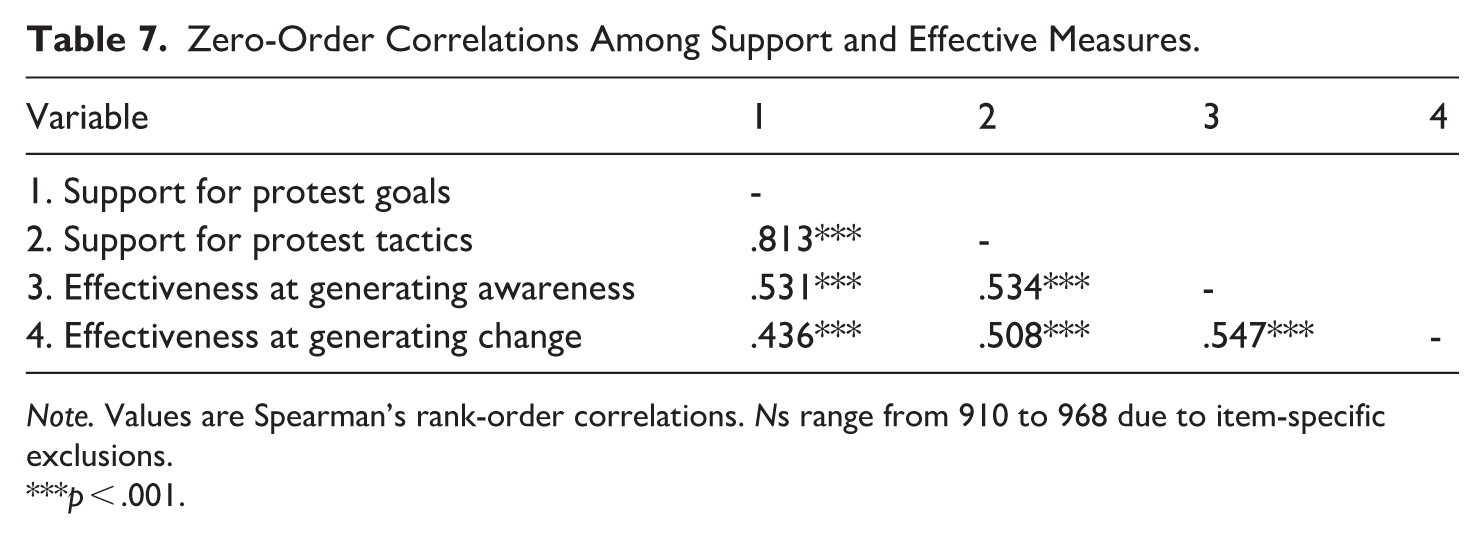
Note. Values are Spearman’s rank-order correlations. Ns range from 910 to 968 due to item-specific exclusions.
p < .001.
These results indicate that participants who expressed stronger support for the goals and tactics of the protests were also more likely to view the protests as effective, both in raising awareness of their cause and in bringing about concrete change. The strength of these associations was moderate, suggesting that while support and perceived effectiveness are closely related, they are not interchangeable constructs.
Discussion
Despite the pro-Palestine encampments being physically confined to university campuses, the movement was amplified to much wider audiences through social media and news coverage. For the many people who never set foot on a university campus, their understanding of the protests came almost entirely from these mediated sources. As a result, individuals’ perceptions and levels of support were shaped by how the protests were framed in the media they consumed.
Social media has offered protest groups unprecedented access to the public, allowing them to share their messages directly without relying on traditional media gatekeepers. Simultaneously, social media has become a central part of people’s news habits (Pew Research Center, 2024b), giving protest groups greater access to larger and more diverse audiences than traditional news previously offered. Reflecting this shift, the survey conducted for this study found that social media was by far the most commonly cited source for news about the pro-Palestine encampments, underscoring its central role in shaping how the public learned about and interpreted these protests. In this context, the growing reliance on social media as a primary news source offers protest movements a powerful tool to shape public perception and build support for their cause. Indeed, social media use was associated with greater support for both the encampment’s goals and tactics, after accounting for age, education, and political affiliation. This finding supports the notion that news about protest movements is framed more favorably on social media compared to traditional outlets (Harlow & Brown, 2021; Harlow & Johnson, 2011; F. L. F. Lee et al., 2017). Three factors may help explain why protest coverage on social media is more favorable. First, social media allows protest groups to bypass traditional gatekeepers and contributes directly to the discourse, producing content that frames their movement in supportive ways. Second, research shows that news organizations often post more favorable protest stories to their social media accounts than appear on their main sites (Bright, 2016; Harcup & O’Neill, 2017; Harlow & Brown, 2021). Third, social media users actively shape the tone of protest discourse by amplifying supportive narratives. They are more likely to share stories that legitimize protests (Valenzuela et al., 2017) and to engage with protest coverage when they already support the movement (Mourão & Brown, 2021).
However, the findings do not reveal a simple divide between traditional media and social media. In fact, receiving news from student news organizations and from public television and radio was associated with even stronger support for the encampments’ goals and tactics than receiving news from social media. In the case of student news, this may reflect the reporters’ shared proximity and identity with the protestors. As fellow students, these journalists may be more attuned to the context and motivations behind the encampments, which could lead to more favorable coverage. Prior research supports this possibility, showing that journalists who personally identify with a movement are more likely to produce sympathetic or supportive coverage (Shultziner & Shoshan, 2017). Similarly, public media’s association with stronger support may stem from its distinct journalistic culture. Public media journalists often prioritize in-depth, issue-focused reporting that encourages civic engagement and examines potential solutions to complex problems (Jastrzebski & Willnat, 2024). This approach contrasts with commercial journalism’s emphasis on objectivity, which in protest coverage can result in balancing positive and negative portrayals in ways that dilute protestor perspectives (Harlow & Johnson, 2011). By centering coverage on context and substance rather than spectacle or conflict, public media may foster a more sympathetic understanding of protest movements, contributing to the higher levels of support observed among its audiences.
Most notably, support for the protests appeared to follow a divide not simply between traditional and social media, but between commercial and noncommercial news sources. Noncommercial news sources, including social media, student news, and public media, were associated with stronger support for the protests’ goals and tactics. In contrast, commercial outlets, including local news, national newspapers, network television, and cable news, either showed no significant relationship with support or were associated with lower levels of support. Consumers of television news, both network and cable, reported lower levels of support for the protests’ goals. This may reflect the structural limitations of the television news format, which is built around short, segmented stories that leave little room for in-depth analysis. Prior research has also shown that television news tends to prioritize conflict in its protest coverage (Butler & Larson, 2025), often at the expense of explaining the underlying goals or motivations of the movement. As a result, viewers may receive only a superficial understanding of the protests, making them less likely to understand and thereby support the protests’ goals. Different patterns emerged when examining support for the protest tactics. In addition to cable news viewers, consumers of national newspapers were the only other group to report significantly lower support for the tactics. This raises questions about whether national newspaper coverage presented the protest goals in a neutral or even sympathetic light, while framing the tactics more critically. Such a distinction would be consistent with broader media tendencies to scrutinize protest movements more harshly when they employ disruptive or confrontational methods.
When considering the role of social media, the influence of professional journalists and their reliance on traditional news values and framing practices is more limited. Social media presents a prolific mélange of information drawn from a wide range of sources. While some of this content comes from established news organizations, it also originates from independent journalists, content creators, activists, and users’ personal networks, such as friends and family. This decentralized structure allows for a broader range of perspectives and gives protest movements greater opportunity to shape the narrative on their own terms. The higher levels of support observed among social media users for both the protest goals and tactics support the idea that these platforms offer an effective way for protestors to challenge dominant narratives found in commercial media and promote more sympathetic representations of their cause.
Although some news source preferences were linked to greater support for the protests, news consumption overall had a more limited impact on shaping public opinion. Instead, social identity, especially political affiliation, proved to be the strongest predictor of support. Age and education played a smaller role, and their influence diminished once political affiliation was taken into account. These findings show that people’s existing identities, more than their media habits, shaped how they perceived the protests. This pattern aligns with prior research showing that protest support is often filtered through preexisting attitudes, with media coverage interacting with, rather than overriding, these deeply held views (Brown & Mourão, 2022). Support for the protests was divided along political lines, with Democrats more likely to support both the goals and tactics of the encampments, and Republicans less likely to do so, relative to Independents. These patterns reflect broader partisan divides in attitudes toward the Israel-Hamas conflict. Polling shows that Democrats are significantly more likely than Republicans to hold negative views of the Israeli government (Silver, 2025).
However, given the highly political nature of the encampments, it is important to recognize that news source still had a meaningful impact on support for the protests, even if its overall influence was smaller than that of political identity. Social media, often criticized for functioning as an echo chamber that reinforces users’ existing political beliefs, appeared to play a more nuanced role in this context. The findings suggest that conversations on social media were indeed able to cut through dominant narratives found in commercial media and foster greater support for the protests, even after controlling for political affiliation. While similar patterns were observed among users of other noncommercial sources (student and public media), social media’s broader reach makes it particularly noteworthy. These results indicate that, although social identity remains a powerful force in shaping how audiences interpret protest movements, social media provides an accessible and expansive platform through which alternative narratives can circulate and support can expand.
Analysis of perceived protest effectiveness revealed both parallels and divergences from patterns of protest support across different news sources. Consumers of public and student media perceived the protests as more effective at generating both awareness and support, aligning with trends seen in their higher support for the protests’ goals and tactics. For both measures, using social media as a source of news about the protests was not a significant predictor of perceived effectiveness. No other news sources were significant predictors of perceived effectiveness in generating awareness; however, consumption of cable news and national newspapers was associated with lower ratings of the protests’ effectiveness in generating change.
Generating awareness remains a significant challenge for protest movements. Disruption has been shown to play a critical role in attracting media attention (King, 2011), and it is often the disruptive nature of protests that prompts initial coverage. However, when protests are framed primarily around disruption, news reporting tends to focus on the spectacle rather than the substance of the movement (McLeod & Hertog, 1999). Once the conflict subsides, media interest typically fades, making it difficult for protestors to sustain public attention over time. This pattern is reflected in preliminary analyses of media coverage of the pro-Palestine encampments. Although the encampments began in October 2023, sustained media attention did not emerge until April 2024, when universities began responding with disciplinary actions and police intervention (Brown, 2024). While these responses triggered national coverage and public debate, the tangible outcomes were limited. Some universities reviewed their investment portfolios in response to the encampments, with a few adopting measures such as increased transparency or revised screening processes for endowment holdings, though most ultimately declined to divest (Moody, 2024). Overall, the movement achieved some success in advancing its goals, but its impact was limited—likely contributing to the low ratings of perceived effectiveness reported in this study.
Still, perceptions of protest effectiveness varied by news source, suggesting that media environments shaped how audiences interpreted the movement’s impact. For student media, the encampments were a major, ongoing story. With direct access to events on campus, student journalists were well positioned to cover the protests from their early stages and continue reporting beyond the peak of national attention. Their coverage likely extended through critical developments such as board votes on divestment, which often occurred weeks or even months after the height of visible conflict. This sustained attention may have contributed to a stronger perception among their audiences that the protests were effective in raising awareness, maintaining visibility, and making progress toward their goals. Public media, with its emphasis on in-depth, issue-focused reporting, is similarly positioned to follow protest movements over time. Unlike commercial outlets, which often shift focus after the most disruptive moments pass, public media tends to track long-term outcomes and assess whether protests lead to substantive change. This more comprehensive coverage may explain why public media consumers viewed the encampments as more effective, even with limited results.
Although social media consumption was a significant predictor of support for the protests’ goals and tactics, it did not significantly predict perceptions of the protests’ effectiveness, either in generating awareness or driving change. This disconnect may stem from the way social media platforms operate. Like commercial news outlets, social media is driven by fast-moving cycles of attention, where algorithms prioritize novelty and engagement over sustained coverage. As a result, even highly visible protest movements can quickly fade from users’ feeds. As Poell and van Dijck (2018) observe, “the interactions and interests that tie dispersed social media users together to form protest movements, generating instant moments of togetherness, tend to dissolve when social platforms algorithmically connect users to the next wave of trending topics” (p. 556). Social media’s reward structures may also accelerate the spread of intolerant content, particularly among users with frequent posting and sharing habits (Koban et al., 2026). These dynamics are especially relevant for politically charged movements, where online audiences may amplify not only supportive frames but also hostile counter-narratives. The findings of this study show that social media news use was associated with greater support for the encampments; however, the multifaceted nature of social media engagement may help explain why those who encountered the encampments on social media were more likely to support them, but not necessarily to view them as effective in creating lasting awareness or change.
Social identity emerged as a significant predictor of perceived protest effectiveness, with both age and political affiliation shaping public opinion more strongly than news source in some cases. Notably, age remained a significant factor even after accounting for political affiliation and media consumption. Across both measures of effectiveness, raising awareness and generating change, younger respondents were more likely to view the protests as successful. This may reflect generational differences in attitudes toward activism or higher engagement with the encampment movement on college campuses. Democrats also tended to rate the protests as more effective than Independents, while Republicans viewed them as significantly less effective at generating awareness and showed no significant difference in their perceptions of the protests’ ability to influence institutional change, such as divestment decisions.
Overall, both models explaining perceived effectiveness had more limited explanatory power compared to the models predicting support for the protests’ goals and tactics. However, there was a strong correlation between greater support and higher perceptions of the protests’ effectiveness in generating awareness and driving change. Respondents who viewed the protests more favorably were also more likely to interpret their outcomes in a positive light.
Limitations
Several limitations should be considered when interpreting these findings. First, the sample for the study was recruited online, which may mean respondents were more likely than the general population to consume news through online channels, including social media. While this sampling approach may overrepresent heavier online news consumers, the platform usage patterns observed here do align with nationally representative Pew Research Center data, supporting the generalizability of these findings.
Second, this study measured the audiences’ perceptions of media coverage rather than the content of the coverage itself. It is important to emphasize that no media content was directly analyzed; all references to framing reflect inferences drawn from prior research on outlet-level framing patterns, not from content observed in this study. While media framing research provided a useful lens for interpreting differences in support and perceived effectiveness, the absence of a detailed content analysis limits the ability to directly link specific coverage patterns to audience responses. Future research incorporating detailed content analysis of encampment coverage could help draw more definitive distinctions and clarify why certain news sources are associated with higher or lower support and perceptions of effectiveness.
Third, the media use variables employed in this study are necessarily broad. The study’s design grouped news outlets into broad categories, such as “cable news,” “national newspapers,” and “social media,” which inevitably miss important differences within each category. Respondents were not asked to distinguish between specific outlets, platforms, or accounts within these categories. For instance, cable news networks can vary widely in their political orientation, and not all national newspapers follow the same editorial approach. The challenge is even greater for social media, which encompasses a vast range of content sources including professional news organizations to independent journalists, influencers, and personal contacts. For social media specifically, future research would benefit from more specific distinctions, such as differentiating between content created by news organization content and individual content creators, and identifying whether news reaches users through follows, feeds, or sharing. This is particularly important given prior research showing that the pathway by which content appears in a user’s feed influences engagement with news on social media (Oeldorf-Hirsch & Sundar, 2014). Additionally, distinctions between social media platforms could provide deeper insights into news use, as Bright (2016) has shown that news content varies significantly across different platforms. Given the growing prevalence of social media as a primary news source, developing more precise classification systems to capture both the origins of information and the mechanisms by which audiences encounter it will be essential for future research.
Conclusion
The research presented here draws on the foundations of framing theory and social identity theory to examine the factors shaping public perceptions of the pro-Palestine encampments that took place on U.S. university campuses. Rather than analyzing news content directly, this study measured audience perceptions alongside their news consumption habits and interpreted the results through the lens of existing research on media framing of protests. By focusing on audiences’ perceptions, the study offers insight into how well-documented media framing patterns are reflected in public attitudes toward protest movements.
Across analyses, social identity emerged as the most consistent and powerful predictor of both support and perceived effectiveness. Democrats and younger respondents were more likely to support the protests and view them as effective, while Republicans and older respondents generally expressed lower support and rated the protests as less effective. Although political identity was the strongest predictor, news consumption also influenced perceptions beyond these demographic factors, underscoring the continuing role of media in shaping worldviews.
Social media emerged as the most noteworthy news source, both for its high level of use and its capacity to allow protest groups to engage directly with mass audiences. These affordances appeared to have tangible effects, as social media consumers expressed higher support for the protests’ goals and tactics than those who relied on commercial media. However, social media use did not significantly predict perceptions of effectiveness, suggesting that the platform’s fast-moving, algorithm-driven attention cycles may limit the sense of long-term impact.
Overall, these findings highlight the interplay between political identity, media consumption, and protest perceptions. They point to the opportunities social media provides for protest groups to challenge dominant narratives present in commercial media, as well as the challenges of sustaining visibility on a platform where news quickly gives way to the next trending topic. Future research should examine not only how social media users encounter protest coverage but also how the mix of professional journalism, independent reporting, and peer-generated content shapes audience interpretations over time.
Footnotes
Appendix A
Correlation Matrix of Predictor Variables Included in Hierarchical Regression Models.
| Variable | 1 | 2 | 3 | 4 | 5 | 6 | 7 | 8 | 9 | 10 | 11 | 12 | 13 | 14 | 15 | 16 | 17 | 18 |
|---|---|---|---|---|---|---|---|---|---|---|---|---|---|---|---|---|---|---|
| 1. Age 25–34 | — | |||||||||||||||||
| 2. Age 35–44 | −.200** | — | ||||||||||||||||
| 3. Age 45–54 | −.197** | −.197** | — | |||||||||||||||
| 4. Age 55–64 | −.249** | −.249** | −.245** | — | ||||||||||||||
| 5. Age 65–74 | −.168** | −.168** | −.166** | −.209** | — | |||||||||||||
| 6. Age 75+ | −.078* | −.078* | −.077* | −.098** | −.066* | — | ||||||||||||
| 7. Postsecondary | −.053 | −.047 | −.022 | −.005 | .046 | −.039 | — | |||||||||||
| 8. College graduate | .040 | .058 | −.047 | .043 | −.004 | −.020 | .471** | — | ||||||||||
| 9. Postgraduate | −.001 | .032 | .025 | −.032 | −.016 | .098** | −.379** | −.398** | — | |||||||||
| 10. Democrat | −.021 | .007 | −.041 | −.005 | .018 | −.008 | −.025 | .029 | .047 | — | ||||||||
| 11. Republican | −.058 | −.041 | .050 | .102** | −.003 | −.007 | .012 | −.080* | .004 | −.573** | — | |||||||
| 12. Student news | .029 | .009 | −.039 | −.095** | −.055 | −.008 | −.012 | −.009 | .095** | .064* | −.064* | — | ||||||
| 13. Local news | −.029 | −.016 | .029 | .044 | −.014 | .049 | −.053 | .037 | .002 | .012 | −.056 | .160** | — | |||||
| 14. National newspapers | −.021 | .040 | −.051 | −.013 | −.023 | .059 | −.100** | .038 | .136** | .127** | −.177** | .072* | .152** | — | ||||
| 15. Network TV news | −.125** | −.046 | .045 | .102** | .005 | .088** | −.005 | −.009 | −.003 | .094** | −.094** | −.033 | .194** | .131** | — | |||
| 16. Cable news | −.073* | −.009 | .029 | .089** | .071* | .048 | .045 | .012 | −.028 | −.029 | .075* | −.069* | .090** | .075* | .222** | — | ||
| 17. Public TV/radio | −.012 | .026 | .031 | .017 | −.001 | −.060 | −.017 | .055 | .037 | .127** | −.154** | .087** | .137** | .227** | .117** | .047 | — | |
| 18. Social media | .156** | .116** | −.036 | −.122** | −.182** | −.140** | .033 | .035 | −.075* | .011 | −.037 | .129** | −.032 | .012 | −.127** | −.093** | .097** | — |
Note. N = 968. Values are Spearman’s rank-order correlations. Age, education, and political affiliation variables were dummy coded using 18 to 24, high school or less, and Independent as the respective reference categories. News source variables were coded 0 = did not use source and 1 = used source.
p < .05. **p < .01.

Funding
The authors received no financial support for the research, authorship, and/or publication of this article.
Declaration of Conflicting Interests
The authors declared no potential conflicts of interest with respect to the research, authorship, and/or publication of this article.