







Abstract
The current longitudinal study examined the relative impact of symptoms and appraisals as well as contextual and demographic factors on women’s subsequent readiness to leave a relationship following intimate partner abuse. An ethnically diverse sample of women (N = 177) completed measures assessing posttrauma appraisals, symptoms, dependence on the perpetrator, and abuse characteristics. One year later, women reported on their readiness to leave the relationship. Regression analyses revealed that readiness to leave was (a) positively predicted by fear appraisals, (b) negatively predicted by shame appraisals, and (c) significantly associated with additional contextual factors (i.e., dependence on the perpetrator, stalking behaviors).
Intimate partner abuse (IPA) against women is a widespread problem. Estimates suggest that more than 5 million women are affected by IPA each year in the United States alone, with 500,000 to 1.5 million women experiencing physical or sexual assault by an intimate partner (Rennison, 2003; Tjaden & Thoennes, 2000). Exposure to IPA puts women at risk for a range of severe and chronic physical and mental health consequences (Bonomi, Anderson, Rivara, & Thompson, 2007; Campbell, 2002; Gielen, McDonnell, O’Campo, & Burke, 2005; Johnson & Bunge, 2001; McDonnell, Gielen, O’Campo, & Burke, 2005; Stover, 2005). Given the high prevalence and associated costs of IPA, some research and intervention efforts have rightfully focused on the perpetrator; however, research is also sorely needed to understand victims’ readiness to leave an abusive relationship. The current longitudinal study builds on previous research to examine the impact of symptoms and appraisals as well as contextual and demographic factors measured after a police-reported IPA incident to predict women’s readiness to leave the relationship 1 year later. In particular, the current study emphasizes the role of women’s posttrauma appraisals (e.g., fear, shame, self-blame) in influencing subsequent readiness to leave an abusive relationship, while also considering factors that characterize the context within which IPA occurs. Improved understanding of the factors influencing stay–leave decision-making and readiness to leave will inform intervention efforts attempting to reduce the negative consequences of IPA and provide adequate and appropriate resources and support to victims of IPA.
Psychological Symptoms and Posttrauma Appraisals
For women exposed to IPA, psychological symptom severity has been linked to decisions to leave an abusive relationship, such that elevations in negative symptoms correspond with increased readiness to leave. For example, Bliss, Ogley-Oliver, Jackson, Harp, and Kaslow (2008) found that higher levels of posttraumatic stress disorder (PTSD) and anxiety symptoms were positively related to readiness to leave. Shurman and Rodriguez (2006) reported that higher scores on an emotionality composite (which included depression, hopelessness, anxiety, and anger) were associated with greater readiness to leave an abusive relationship. These authors hypothesized that increased emotional and physiological arousal and discomfort serve to increase motivation to leave. However, some studies have found that symptoms of depression are negatively correlated with motivation and action taken to leave an abusive relationship (Fiore Lerner & Kennedy, 2000; Walker, 1984). Thus, additional studies are needed to clarify the specific role of potentially conflicting psychological symptoms on readiness to leave following IPA.
Separate from specific symptoms, differences in women’s cognitive and emotional responses to IPA may have an impact on the leaving process (Pape & Arias, 2000), particularly common posttrauma appraisals (including fear, self-blame, shame, anger, betrayal, and alienation). We use the term posttrauma appraisals here to refer to women’s assessment of their thoughts, feelings (including affective states), and behaviors related to the IPA (see DePrince, Chu, & Pineda, 2011). Posttrauma appraisals have been of particular interest to researchers because of links to psychological symptoms, including depression, PTSD, and dissociation (e.g., DePrince et al., 2011; Ehlers & Clark, 2000; Foa, Ehlers, Clark, Tolin, & Orsillo, 1999; Martin, Cromer, DePrince, & Freyd, 2013). Several specific appraisals have garnered significant attention in the trauma literature, including fear, shame, self-blame, and anger (e.g., Brewin, Andrews, & Rose, 2000; DePrince, Zurbriggen, Chu, & Smart, 2010). More recently, researchers have called for studies that also consider betrayal and alienation appraisals following interpersonal violence (Brown & Freyd, 2008; DePrince et al., 2011) and that use multidimensional measures of specific posttrauma appraisals.
Extending the body of work documenting appraisal-symptom links, we predicted that appraisals would also influence women’s readiness to leave an abusive relationship. For example, high levels of fear in reaction to an IPA incident may motivate women to leave the relationship to increase safety; alternatively, fear may have a “crippling” effect that actually prevents women from taking action to leave an abusive relationship (Barnett, 2001, p. 10). Researchers have also hypothesized that high levels of anger may help women recognize abuse as unacceptable, thus providing motivation to leave an abusive relationship (e.g., Shurman & Rodriguez, 2006; Walker, 1984), though evidence is mixed (e.g., Pape & Arias, 2000). Qualitative research suggests that high levels of betrayal may also motivate women to leave an abusive relationship. Chang et al. (2010) found that perceptions of betrayal following infidelity influenced women’s decisions to leave an abusive relationship, though such links have yet to be explored quantitatively. Still other research documents links between high levels of self-blame and shame with decreased likelihood of leaving or engaging in help-seeking behaviors (e.g., Barnett, 2001; Fugate, Landis, Riordan, Naureckas, & Engel, 2005; Hathaway, Willis, & Zimmer, 2002; Pape & Arias, 2000; Shurman & Rodriguez, 2006). Similarly, victims’ attributions of offender responsibility (e.g., whether the perpetrator was responsible for violence) mediate the relationship between violence characteristics (i.e., severity and frequency) and decisions to end the abusive relationship (Pape & Arias, 2000). Finally, previous studies have indicated that less perceived social support is related to reduced readiness to leave an abusive relationship (Burke, Dennison, Gielen, McDonnell, & O’Campo, 2004; Burkitt & Larkin, 2008). While women’s sense of alienation is not an exact proxy for social support (see DePrince et al., 2011), appraisals of alienation and isolation in response to IPA may function in a similar fashion, such that women who feel disconnected from themselves and from their support networks may be less ready to leave an intimate relationship.
To date, the relatively small body of literature examining posttrauma appraisals and readiness to leave comprises cross-sectional studies that examine a single appraisal at a time (e.g., anger or fear), using different methods, making comparisons across studies difficult. The current study addresses these limitations by utilizing a multifactorial measure to simultaneously assess six common posttrauma appraisals: betrayal, self-blame, fear, alienation, anger, and shame (DePrince et al., 2010). Testing the relative impact of distinct appraisals is particularly important because high levels of one appraisal (e.g., fear) might increase women’s readiness to leave whereas high levels of another (e.g., shame) might reduce readiness to leave.
Contextual and Demographic Factors
In addition to testing the impact of symptoms and appraisals on readiness to leave an abusive relationship, the current study also considered potentially important contextual and demographic factors: characteristics of the IPA and presence of children as well as victim’s age and socioeconomic status (SES). Researchers have long hypothesized that IPA characteristics such as severity of abuse have an impact on women’s decisions to leave their relationship (Campbell, Rose, Kub, & Nedd, 1998; Chang et al., 2010; Waldrop & Resick, 2004); however, some studies have failed to provide clear evidence for the role of characteristics such as IPA severity in influencing subsequent decision-making and readiness to leave (Bliss, Cook, & Kaslow, 2007; Holtzworth-Munroe, Smutzler, & Sandin, 1997; Shurman & Rodriguez, 2006). In addition, researchers have suggested that the presence of children in the home may be an important factor influencing decisions to leave; though, once again, evidence is mixed because having children may be linked with increased dependence on the perpetrator but may also motivate women to leave in an attempt to remove children from an abusive environment (e.g., Barnett, 2001; Bliss et al., 2007; Bliss et al., 2008). Previous research has also indicated that age may be a factor in the stay–leave decision-making process, as older women generally endorse greater readiness to leave an abusive relationship (Alexander, Tracy, Radek, & Koverola, 2009; Shurman & Rodriguez, 2006). Finally, SES, including a woman’s individual resources and those for which she relies upon her partner, has been shown to predict women’s stay–leave decisions in abusive relationships (Pape & Arias, 2000; Strube & Barbour, 1983). Further research is needed to evaluate and clarify the impact of specific contextual and demographic factors on women’s readiness to leave an abusive relationship, particularly while accounting for the symptoms and appraisals experienced in response to IPA.
Assessing Readiness to Leave Utilizing the Transtheoretical Model of Change
Deciding to leave an abusive relationship is a continuous and ongoing process involving complex and sometimes conflicting influences, as outlined above. Based on the continuous and complex nature of this process, merely looking at whether or not a woman has left an abusive relationship can be insufficient. Instead, the transtheoretical model of change (also known as the stages of change model; Prochaska & DiClemente, 1982, 1983) provides a more nuanced framework for understanding and assessing women’s readiness to leave a relationship following IPA. The stages of change model predicts that readiness to change a given behavior progresses (and sometime regresses) through five continuous levels (precontemplation, contemplation, preparation, action, and maintenance; see Prochaska, DiClemente, & Norcross, 1992). Widely and successfully applied in assessment and intervention for numerous health-related behaviors (Belding, Iguchi, Lamb, Lakin, & Terry, 1995; Keller, Allan, & Tinkle, 2006; O’Campo et al., 1999; Perz, DiClemente, & Carbonari, 1996; Prochaska et al., 1994; Rossi et al., 1994), the stages of change model has also been advanced as a clinically useful means for understanding and measuring women’s attitudes and behaviors related to leaving an abusive relationship (J. Brown, 1997; Burke et al., 2004; Burke, Gielen, McDonnell, O’Campo, & Marman, 2001; Frasier, Slatt, Kowlowitz, & Glowa, 2001; Zink, Elder, Jacobson, & Klostermann, 2004). When the stages of change model is applied to female victims of IPA, the precontemplation stage describes women who are not ready to leave their relationship and may not identify the abusive nature of their relationship as problematic. In the contemplation stage, women are thought to have begun to recognize the negative impact of abuse, but are not yet ready to leave the relationship. Meanwhile, women in the preparation stage likely want to leave the abusive relationship and have begun making plans to leave. In the action stage, women actively implement behavioral change plans which will lead to termination of the abusive relationship. Finally, women in the maintenance stage have successfully left the relationship and are taking efforts to maintain that change. The nuanced framework for stay–leave decision-making that is inherent in the stages of change model may be particularly relevant for the study of women’s responses to IPA. For example, elevated levels of certain appraisal types (e.g., self-blame or shame) may partially explain differences between women who are in the precontemplation stage following IPA (i.e., not considering leaving) and women who are in the preparation stage (i.e., beginning to take action to leave). Such relationships may not be captured when using a dichotomous stay–leave outcome.
Qualitative research confirms that women talk about reactions to abuse in ways that are consistent with the stages of change model and that women’s readiness to leave the abusive relationship is consistent with the processes of change outlined by the model (Burke et al., 2004; Burke et al., 2001). In addition, multiple studies have successfully utilized the stages of change model to identify factors related to readiness to leave an abusive relationship, such as demographic characteristics, dependence on the perpetrator, attachment style, symptom severity, and social support (e.g., Alexander et al., 2009; Bliss et al., 2008; Shurman & Rodriguez, 2006). More recently, findings that women endorse being in one stage of change but also report behaviors consistent with other stages have raised concerns regarding the categorization of women into exclusive readiness to change categories (Bliss et al., 2008; Burke, Mahoney, Gielen, McDonnell, & O’Campo, 2009). Such findings likely point to the continuous nature of the change process (Bliss et al., 2008) and affirm the need for nuanced assessment of stay–leave decision-making and readiness to leave.
Current Study
The current study expanded on previous research examining readiness to leave a relationship following IPA by addressing limitations of previous work. First, previous research with victims of IPA has generally relied on samples of women seeking treatment or social services (e.g., from domestic violence shelters; for a review, see Waldrop & Resick, 2004), a practice which has resulted in skewed distributions toward increased readiness to leave (Shurman & Rodriguez, 2006). In the current study, women were recruited following the report of an IPA incident to the police; these women were not necessarily seeking social services or treatment. Second, previous research has largely relied on cross-sectional study designs, thus providing snapshots of this important decision-making process (Waldrop & Resick, 2004). In the current study, women were assessed shortly after the IPA incident and again 1 year later. This longitudinal design allowed for the prospective examination of relationships between symptoms and appraisals as well as contextual and demographic factors and subsequent readiness to leave the abusive relationship. Third, the current study examined multiple factors (i.e., symptoms, posttrauma appraisals, and contextual and demographic factors) together to identify the unique influences on women’s readiness to leave a relationship approximately 1 year following IPA exposure. Fourth, we used a multifactorial measure of posttrauma appraisals. Although appraisals are interrelated, they are uniquely related to different trauma-related outcomes (DePrince et al., 2011); thus, the current approach allowed us to identify unique positive or negative links between specific appraisals and readiness to change.
Method
Participants
An initial sample of 236 women was recruited as part of a larger study on coordinated community response programs. Participants were recruited from the population of publicly accessible, nonsexual IPA incidents reported to law enforcement. For a full description of the sample, including further information on retention, see DePrince, Belknap, Labus, Buckingham, and Gover (2012) and DePrince, Labus, Belknap, Buckingham, and Gover (2012). The research team attempted to contact 827 women to complete the study and had a 29% participation rate (39% were never reached, 23% were interested in participating but did not complete the first study session, and 9% declined to participate). Participants completed the initial interview and assessment in a median of 26 days following the reported IPA incident. Thus, the current sample represents a population of nontreatment seeking female victims recently exposed to IPA; however, given the 29% participation rate, findings from the current study may not generalize to the entire population of women exposed to IPA, particularly those without stable access to phone or mail.
As part of the longitudinal evaluation, women completed a follow-up assessment with the research team 12 months following their initial assessment. In total, 189 women (80%) from the original sample were retained at the 12-month follow-up assessment. Given that readiness to leave was assessed at the 12-month follow-up, the current study consists of the sample of women who completed this assessment. Of the 189 women who completed the 12-month assessment, 12 did not provide sufficient information to assess stage of change. Thus, the current sample consists of the 177 women who completed the stage of change measure at the 12-month follow-up assessment.
The initial larger study focused on women’s membership in one of four conditions: two randomly assigned intervention conditions (community-coordinated outreach vs. referral) or two naturally occurring conditions (declined services or never reached by criminal justice personnel). Controlling for membership in the four conditions did not affect the pattern of relationships between the current study’s predictor variables and readiness to leave; therefore, in the interests of space and power, we do not report on membership in the four conditions in the current report.
Materials
PTSD symptoms
The 28-item Posttraumatic Diagnostic Scale (PDS; Foa, Cashman, Jaycox, & Perry, 1997) was administered at the initial interview to assess symptoms of PTSD experienced in reaction to the reported IPA incident. Items on the PDS directly correspond with Diagnostic and Statistical Manual of Mental Disorders (4th ed.; DSM-IV; American Psychiatric Association, 1994) criteria for PTSD, including symptoms of reexperiencing, avoidance, and hyperarousal. Participants rated the frequency of PTSD symptoms over the previous 1 month on a 0 (not at all or only 1 time) to 3 (5 or more times a week/almost always) scale. The PDS is widely used and has been shown to have high diagnostic agreement with structured clinical interviews assessing PTSD (Foa et al., 1997), including use with samples of female domestic violence survivors (Griffin, Uhlmansiek, Resick, & Mechanic, 2004). For the current sample, Cronbach’s alpha for the PDS was excellent (α = .93).
Depression symptoms
The 21-item Beck Depression Inventory–II (BDI; Beck, Steer, & Carbin, 1988) was administered at the initial interview to assess current symptoms of depression. Participants rated items regarding the presence and intensity of depressive symptoms and cognitions on a scale of 0 to 3. The BDI is widely used and has been shown to demonstrate excellent consistency, stability, and validity over years of psychometric research (Beck et al., 1988). For the current sample, Cronbach’s alpha indicated high reliability (α = .90).
Posttrauma appraisals of the IPA incident
The 54-item Trauma Appraisal Questionnaire (TAQ; DePrince et al., 2010) was administered at the initial interview to assess appraisals in response to the recent IPA incident. On the TAQ, participants are asked to indicate on a scale of 1-5 whether they agree or disagree with statements describing cognitive reactions to a traumatic event. Participants in the current study were asked to respond based on their thoughts, feelings, or experiences at the time of the recent IPA incident for which they were referred to the study. The TAQ consists of the following six subscales: Betrayal (e.g., “the people that I was supposed to trust the most hurt me”), Self-blame (e.g., “I am responsible for what happened”), Fear (e.g., “I feel terrified,” “I don’t think I’ll survive”), Anger (e.g., “I want revenge”), Alienation (e.g., “I am disconnected from people,” “my friends don’t understand my reactions,” “I don’t want to have to trust anyone”), and Shame (e.g., “I feel humiliated,” “I’ve lost my sense of womanhood”). The TAQ has been shown to demonstrate excellent internal consistency, reliability, and validity across multiple samples (DePrince et al., 2010). Cronbach’s alpha for the current sample was excellent for the entire TAQ (α = .97), with alphas for each of the 6 subscales ranging from .86 to .93.
Incident severity and abuse characteristics
At the initial interview, women were administered a modified version of the Revised Conflict Tactics Scales (CTS-2; Straus, Hamby, Boney-McCoy, & Sugarman, 1996) to assess the characteristics of abuse experienced in the reported IPA incident. To assess IPA severity, we tallied the total number of psychologically aggressive tactics used by the perpetrator in the target incident (possible range = 0-15), as well as the number of injuries sustained by the victim (possible range = 0-17). This method of scoring is supported by previous research recommending that measures of violence utilize variety scores (i.e., sums of the total number of violent acts endorsed) when attempting to capture violence severity (Regan, Bartholomew, Kwong, Trinke, & Henderson, 2006). In addition, as part of CTS-2 administration, we assessed the number of different types of methods of stalking or harassment used by the perpetrator in the 6 months prior to the IPA incident (possible range = 0-12). The Physical Aggression subscale of the CTS-2 was omitted from current analyses because it has previously been shown to be highly associated with the Injury subscale while being less representative of the severity of the incident, as any specific form of physical aggression can result in either minor or severe injury (Regan et al., 2006). The CTS-2 is a widely used measure for assessing aggression severity in populations of women exposed to IPA and has been shown to have good reliability and validity (Regan et al., 2006; Straus, 2007; Yun, 2011). In the current study, internal consistency for the CTS-2 was good; Cronbach’s alpha was .70 for the Psychological Aggression subscale, .76 for the Injury subscale, and .73 for the Stalking subscale.
Participant demographics, SES, and dependence on the perpetrator
Basic demographic information was collected, including age, race/ethnicity, level of education, occupation, and total income. Level of education was measured using a self-report 1 to 8 scale where a “1” indicates no schooling and an “8” indicates postgraduate education (see the “Results” section for full details). Occupational prestige was coded according to Hollingshead (1975). Total income represents a sum of yearly salary and nonsalary (i.e., contributions from family and others, welfare support, food stamps, etc.) income. An estimate of SES was computed by averaging z scores for education, occupation, and total income variables. As an additional contextual factor, women reported on the number of children for which they are the primary caretaker. Finally, women were asked to provide a self-report rating of their level of economic dependence on the perpetrator (i.e., “At the time of the incident, how important to your financial stability was the money he brings home?”; response options ranged from 1 = not at all important to 5 = absolutely necessary).
Readiness to leave the abusive relationship
Women’s readiness to leave their relationship with the offender was assessed at the 12-month follow-up interview using a staging algorithm that was adapted for use with the current population. Previous staging algorithms have been widely used to assess readiness to change various behaviors such as smoking (DiClemente et al., 1991; Velicer et al., 1995), alcohol use (Laforge, Maddock, & Rossi, 1998), and exercise (Marcus, Selby, Niaura, & Rossi, 1992). In addition, Burke et al. (2009) used a brief interview and staging algorithm similar to the staging algorithm used in the current study to assess stage of change for staying safe from abuse and stage of change for leaving the abusive relationship in a population of women exposed to IPA. Conceptualizing readiness to leave as ranging from precontemplation to maintenance stages, the modified version of the staging algorithm used in the current study included five questions to determine stage of change: (a) Are you currently in a relationship with the offender? (b) If not, have you been out of the relationship for over 6 months? (c) Are you thinking about leaving the relationship sometime in the next 6 months? (d) Are you planning to leave the relationship in the next 30 days? and (e) Have you left the relationship or tried to leave sometime in the past year? Women’s responses to these questions were used to code their level of readiness to change (ranging from 1-5). According to the stages of change model, women who were still in a relationship with the offender and were not considering leaving in the next 6 months were coded as 1 (Precontemplation). Women who were still in the relationship with the offender but were considering leaving in the next 6 months (and not planning to leave in the next 30 days) were coded as 2 (Contemplation). Women who were planning to leave in the next 30 days and had previously left or tried to leave the relationship in the past year were coded as 3 (Preparation). Women who had left the relationship within the previous 6 months were coded as 4 (Action). Finally, women who had left the relationship over 6 months prior to the 12-month follow-up were coded as 5 (Maintenance). The 6-month and 30-day cutoffs for distinguishing various stages of change were based on criteria outlined in the stages of change model (Prochaska & DiClemente, 1983; Prochaska et al., 1992) and are consistent with applications of the model to work with victims of IPA (e.g., Burke et al., 2009). Given that progression through the stages of change is viewed as a continuous process (Prochaska et al., 1992) and that IPA victims follow a common progression toward establishing relationships that are free from abuse (Burkitt & Larkin, 2008), we treat stage of change as a continuous outcome in multiple regression analyses to capture the progressive nature of the change process while using a discrete, cross-sectional measure of stage of change.
Procedure
All procedures were approved by a university institutional review board (IRB). For a full description of recruitment and study procedures, see DePrince, Belknap, et al. (2012) and DePrince, Labus, et al. (2012). Women (N = 236) were recruited from the population of publicly accessible IPA incident reports referred from the local police department to an interdisciplinary victim’s outreach support team. Referred cases involved a heterosexual couple, adult victim and offender, and no cross-arrest (i.e., no cases in which both parties were arrested). Contact with potential participants was initiated by the research team via a lead letter and a follow-up phone call inviting women to participate in a study involving completion of interviews and questionnaires about women’s health. Interviews and questionnaires were administered by the principal investigator (second author) or by female graduate research assistants. Participants were compensated US$50 for the initial 3-hr assessment, and US$60 for the 2-hr 12-month follow-up assessment. Participants were also invited to complete a 2-hr 6-month follow-up interview (for which they received US$55), though results from this 6-month follow-up are not included in the current study. Women who were not able to provide their own transportation to the interview site at a university campus were offered cab rides to and from the interview. Child care was provided as needed.
Results
Sample Demographics and Stages of Change
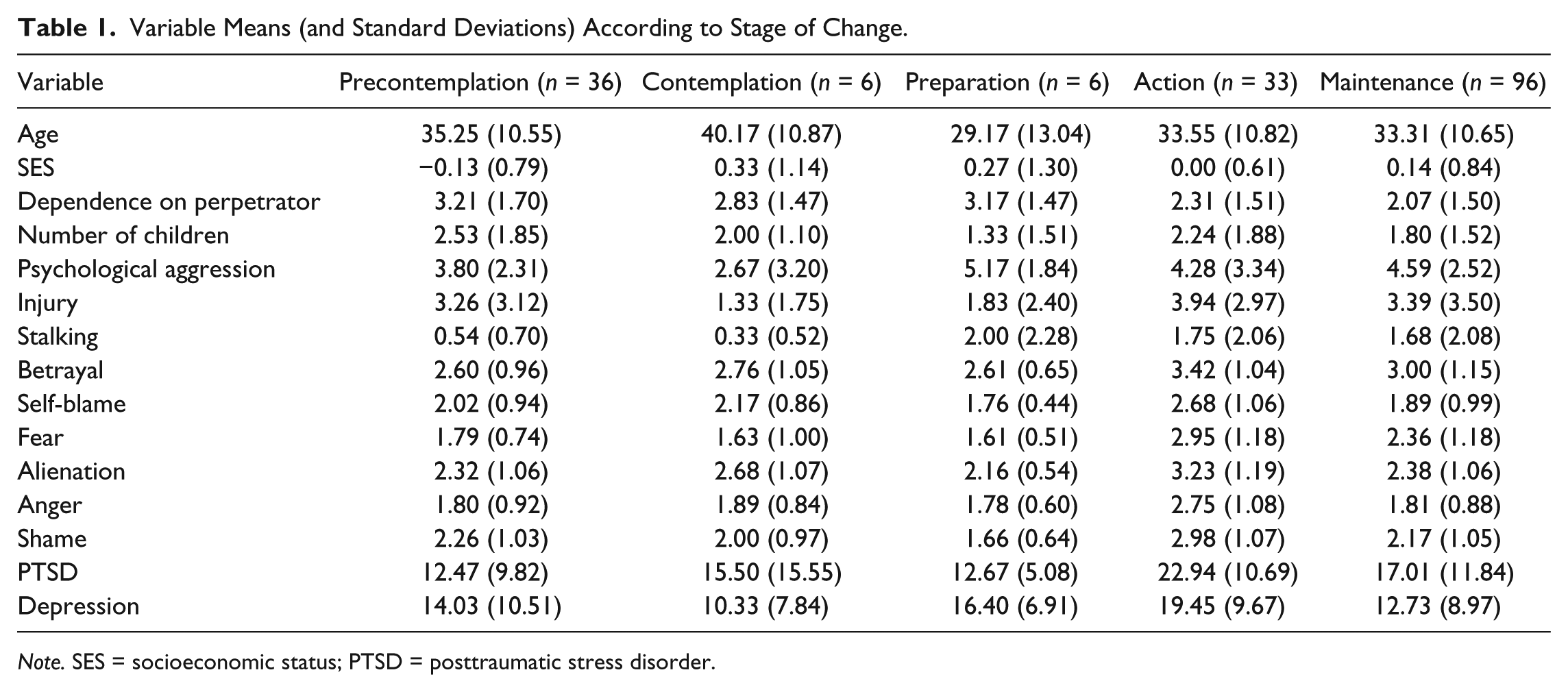
Table 1 provides data on the demographic characteristics according to stage of change group. Women ranged in age from 18-61, with a mean age of 34 years. Participants identified with the following racial/ethnic groups: 40% Hispanic, 48% Caucasian, 29% African American, 11% Native American/Alaska Native, 1% Asian American, 1% Native Hawaiian or other Pacific Islander, and 5% Other (note that participants could indicate multiple ethnicities). Women in this sample described their relationship status as follows: 9% married, 8% living with someone, 18% divorced, 12% separated, 2% widowed, 40% single and never married, and 7% other. The number of children for which participants endorsed being the primary caretaker ranged from 0-7. Participants indicated highest level of education completed as follows: 2% first to eighth grade, 24% some high school, 27% completed high school, 28% some college, 7% associate’s degree, 7% 4-year college degree, 3% postgraduate education, and 2% other education (e.g., trade school, specialized training). According to Hollingshead’s (1975) ratings, participants’ occupational prestige ranged from 10-90, with a mean of 33. Participants’ mean total annual salary and nonsalary income was US$12,100 (SD = US$14,600). Taken together to estimate overall SES, the averages of z scores from education, occupation, and income variables ranged from −0.95-3.85. The analyses (t test) revealed that women who did not complete the 12-month follow-up (n = 47) were significantly lower in SES than those women who were retained for the 12-month follow-up (n = 189), t(234) = 2.39, p < .05. No other significant differences in demographic characteristics were detected between women who did not complete the 12-month follow-up and those who did.
Variable Means (and Standard Deviations) According to Stage of Change.
Note. SES = socioeconomic status; PTSD = posttraumatic stress disorder.
Results from the questions assessing women’s readiness to leave revealed that 20.3% of women in the sample were still in the relationship with the offender and not planning to leave in the next 6 months (Precontemplation); 3.4% were still in the relationship, but were considering leaving sometime in the next 6 months (Contemplation); 3.4% were planning on leaving in the next 30 days and had previously left or attempted to leave the relationship (Preparation); 18.6% had left the relationship in the past 6 months (Action); and 54.2% had left the relationship over 6 months prior to the 12-month follow-up assessment (Maintenance).
Multiple Regression Analysis
A multiple regression analysis was conducted to determine the influence of symptoms, appraisals, and contextual and demographic factors from the initial interview on readiness to leave at the 12-month follow-up. Power analyses indicated sufficient power to detect a medium effect of the overall model (target N = 153 for 15 predictor variables, f2 = .20 and α = .05; G*Power 3.1; Faul, Erdfelder, Lang, & Buchner, 2007), but we may have been underpowered to detect significant betas; thus, we restrict our interpretations to cases in which individual betas were significant. Prior to performing the multiple regression analyses, data were checked for violation of assumptions. Measures of skew and kurtosis indicated that the current variables did not violate assumptions of normality. Bivariate correlations were examined (see Table 2) to assess multicollinearity. While some correlations were in the moderate to high range, none approached the point at which multicollinearity is statistically problematic (i.e., r > .90, tolerance < .2; Menard, 1995; Tabachnick & Fidell, 2007). Nonetheless, given that problems with multicollinearity artificially inflate error and cause increased likelihood of Type II error, we restrict our interpretations to cases in which significant relationships were detected despite potential problems with multicollinearity. Following correlation analyses, all variables were simultaneously entered into the regression model predicting readiness to leave. The overall model was significant, F(15, 156) = 3.38, p < .001, R2 = .26, adjusted R2 = .19. Appraisals of fear associated with the IPA incident were uniquely positively related to readiness to leave (β = .42, p < .01), whereas appraisals of shame were uniquely negatively associated with readiness to leave (β = −.35, p < .05). The contextual variables that uniquely predicted readiness to leave were the women’s self-report of financial dependence on the perpetrator (β = −.23, p < .01) and number of children (β = −.18, p < .05), both of which were negatively associated with stage of change, as predicted. In addition, the number of events endorsed on the CTS-2 Stalking Scale was significantly uniquely positively associated with readiness to leave (β = .16, p < .05). No other predictor or control variables uniquely significantly contributed to the overall model (see Table 3 for a complete summary of results).
Bivariate Correlations for Predictor and Outcome Variables.
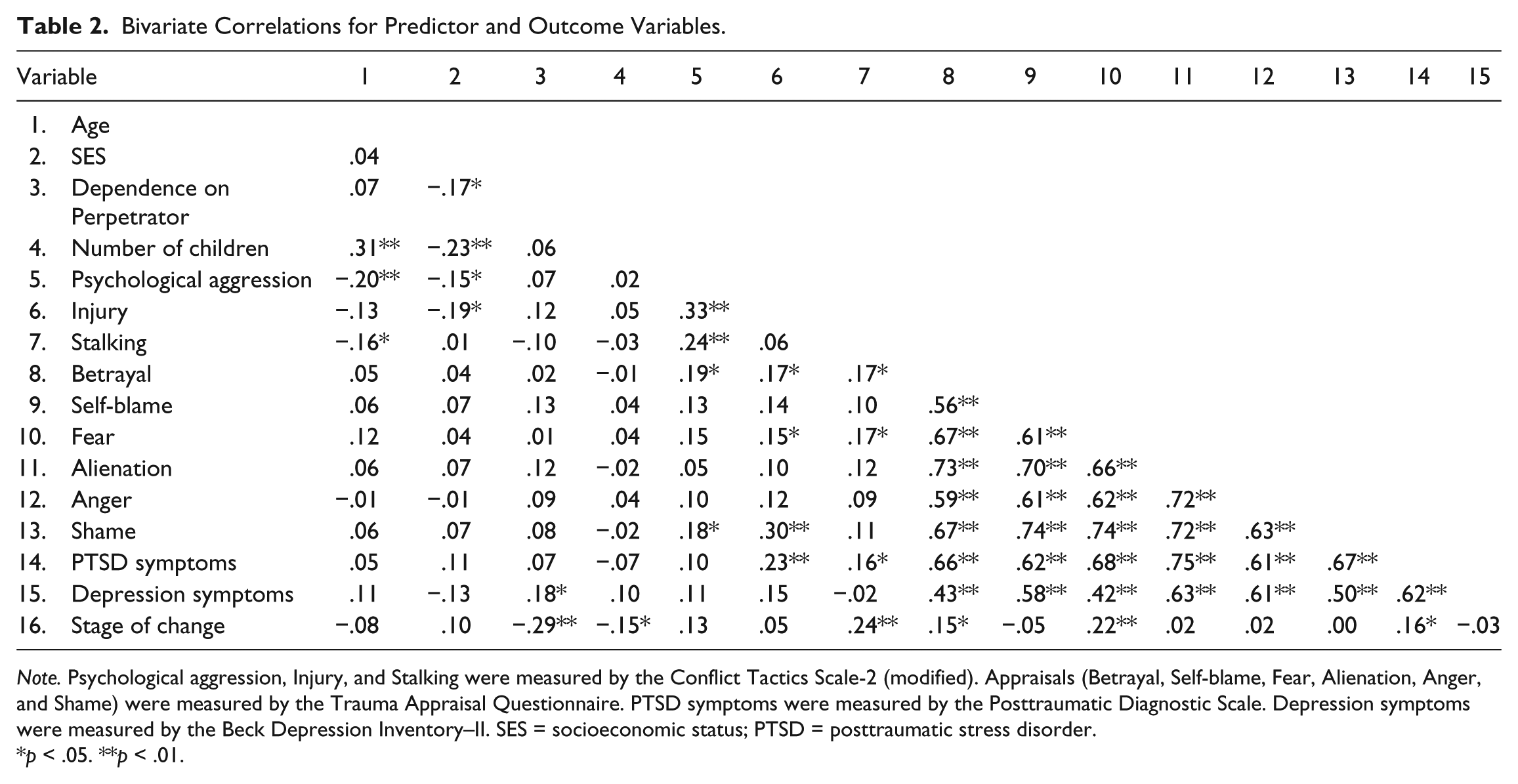
Note. Psychological aggression, Injury, and Stalking were measured by the Conflict Tactics Scale-2 (modified). Appraisals (Betrayal, Self-blame, Fear, Alienation, Anger, and Shame) were measured by the Trauma Appraisal Questionnaire. PTSD symptoms were measured by the Posttraumatic Diagnostic Scale. Depression symptoms were measured by the Beck Depression Inventory–II. SES = socioeconomic status; PTSD = posttraumatic stress disorder.
p < .05. **p < .01.
Simultaneous Multiple Regression Analysis Predicting Stage of Change for Leaving the Abusive Relationship.
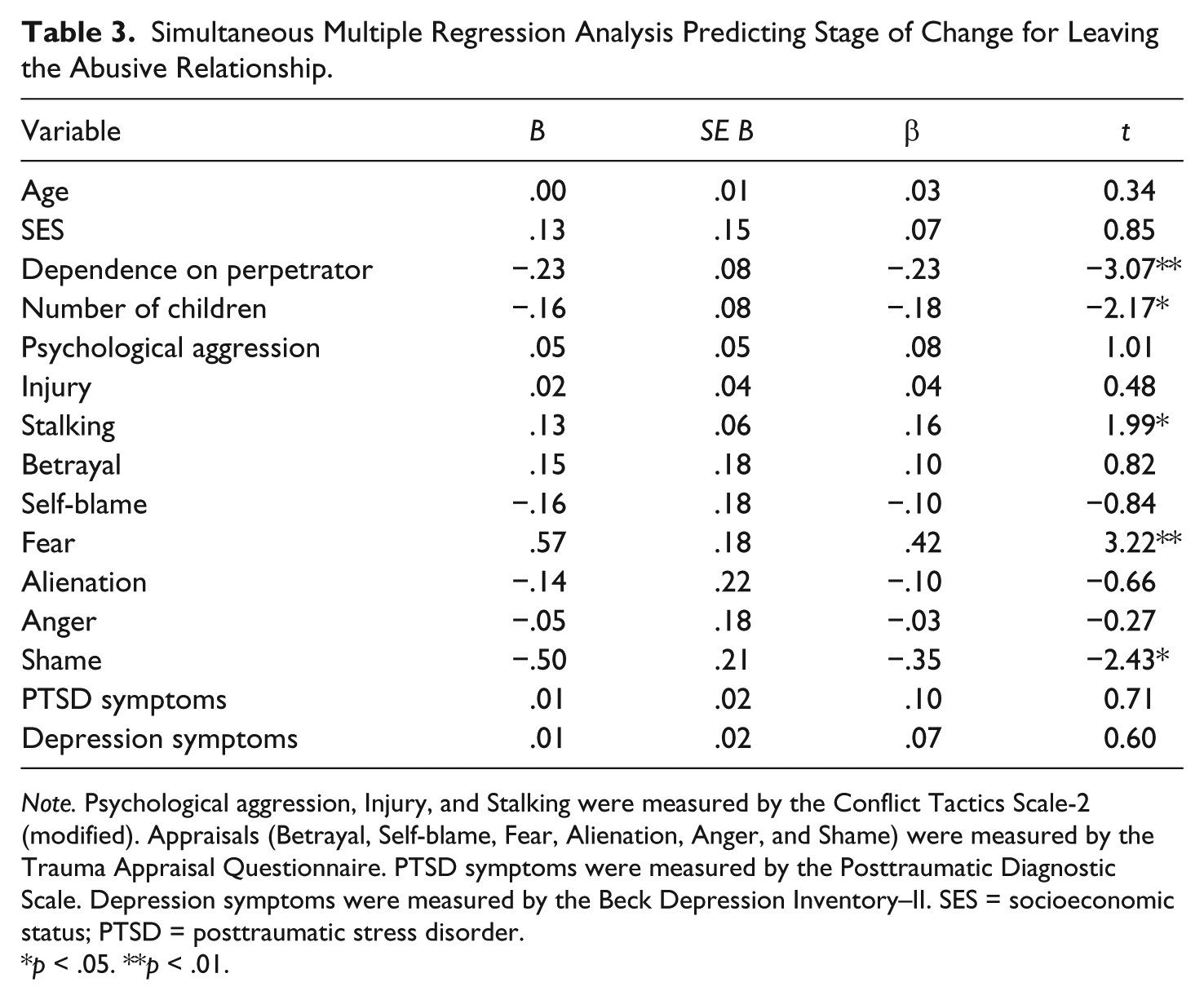
Note. Psychological aggression, Injury, and Stalking were measured by the Conflict Tactics Scale-2 (modified). Appraisals (Betrayal, Self-blame, Fear, Alienation, Anger, and Shame) were measured by the Trauma Appraisal Questionnaire. PTSD symptoms were measured by the Posttraumatic Diagnostic Scale. Depression symptoms were measured by the Beck Depression Inventory–II. SES = socioeconomic status; PTSD = posttraumatic stress disorder.
p < .05. **p < .01.
Discussion
The current study provides new evidence indicating links between women’s readiness to leave an abusive relationship and appraisals in response to IPA. Specifically, higher levels of fear and lower levels of shame following IPA exposure predicted increased readiness to leave the relationship 1 year later. The impact of posttrauma appraisals on readiness to leave was detected even while controlling for additional symptoms and contextual and demographic factors. Among the contextual factors tested, dependence on the perpetrator (as indicated by self-reports of financial dependence and number of children in the home) and severity of stalking by the perpetrator (as indicated by counts of stalking behaviors reported by victims) also significantly predicted women’s readiness to leave the abusive relationship. Importantly, the current study builds upon previous research using the transtheoretical model of change (or, the stages of change model) to understand readiness to leave an abusive relationship by (a) highlighting the importance of appraisal processes, (b) assessing a nonsocial service or treatment seeking sample of women exposed to IPA, and (c) using a longitudinal design allowing for examination of the factors predicting subsequent readiness to leave.
Posttrauma Appraisals
While some studies investigating women’s readiness to leave an abusive relationship have addressed the role of appraisal processes (such as perceptions and attitudes about abuse and attributions of responsibility), few studies have included simultaneous measurement of multiple classes of posttrauma appraisals along with trauma-related symptoms as well as contextual and demographic factors. The current study included measurement of six posttrauma appraisals (betrayal, self-blame, fear, anger, alienation, and shame) reported shortly after IPA exposure to prospectively predict women’s readiness to leave 1 year later. Of these six appraisals, fear and shame significantly predicted differences in women’s readiness to leave the abusive relationship, though in opposite directions. First, higher levels of shame predicted earlier stage of change, indicating lower readiness to leave. This finding is consistent with previous research that has identified feelings of shame and embarrassment as barriers to help-seeking in female victims of IPA (Fugate et al., 2005; Hathaway et al., 2002). To the extent that IPA victims who experience high levels of shame are more likely to be in the precontemplation stage, service providers may want to tailor interventions according to IPA victims’ readiness to leave in a fashion consistent with stage-based interventions outlined by Prochaska et al. (1992). For example, optimal interventions for IPA victims experiencing shame might focus on providing education about the definitions and effects of IPA (Burkitt & Larkin, 2008) and reviewing the decisional balance (i.e., pros and cons) related to leaving the abusive relationship. In addition, interventions for victims of IPA may wish to target shame cognitions and related emotional responses in effort to reduce the negative consequences of IPA and facilitate relationship change (when desired and appropriate). For example, compassion-focused therapy (Gilbert, 2009, 2010) directly targets shame-related cognitions and feelings in an attempt to increase individuals’ sense of safeness, connection, and self-soothing, and may be particularly well suited for victims of IPA.
Second, higher levels of fear in response to the IPA incident predicted increased readiness to leave 1 year later. This pattern is in contrast to suggestions in the literature that fear has a “crippling effect” such that women do not take action to leave an abusive relationship (e.g., Barnett, 2001). Rather, current results suggest that fear appraisals may serve to motivate women to take action to leave an abusive relationship. The role of fear appraisals may be important for understanding links between abuse characteristics (e.g., severity and frequency) and engagement in active coping strategies to end the abuse (for a review, see Waldrop & Resick, 2004). These findings suggest that women who experience high levels of fear in response to IPA may benefit from interventions tailored for later stages of change, which include a focus on the process of leaving an abusive relationship and managing related reactions and stress. However, the current results do not speak of women’s engagement in other domains, such as reporting IPA to law enforcement or seeking out support services for fear of how the perpetrator may react. Rather, current results suggest that a fear-based “crippling effect” either (a) applies to help-seeking behaviors, but not stay–leave decisions; and/or (b) is overcome by women who are taking action to leave an abusive relationship. Indeed, interventions focused on establishing and maintaining connections with support services may be particularly beneficial for women who experienced high levels of fear in response to IPA and are already motivated to leave.
The current results provide new evidence that appraisals of an IPA incident may be as (or more) important as posttraumatic stress symptoms (i.e., PTSD and depression) in understanding readiness to leave an abusive relationship. Specifically, simultaneous multiple regression analyses indicated that fear and shame explained unique variance in readiness to leave above and beyond PTSD and depression symptoms. Although previous research has identified links between psychological symptoms and increased readiness to leave (e.g., Bliss et al., 2008; Pape & Arias, 2000; Shurman & Rodriguez, 2006), those studies have not included measures of appraisal processes. These findings suggest that appraisals, rather than the symptoms per se, may influence women’s readiness to leave. Given potential concerns regarding power and multicollinearity, future studies focused on replication are now needed.
Contextual Factors
Along with the impact of appraisals, women’s level of dependence on the perpetrator was inversely related to readiness to leave the relationship. Higher levels of self-reported financial dependence on the perpetrator and greater numbers of dependent children in the home both significantly corresponded with lower readiness to leave. This finding is consistent with previous research (e.g., Barnett, 2001; Bliss et al., 2008; Pape & Arias, 2000; Strube & Barbour, 1983) and serves to underscore the importance of providing resources, such as financial and caregiving support, when working with victims of IPA to facilitate relationship change. Indeed, previous research has confirmed that increased levels of tangible support (e.g., child care assistance, emergency loans) correspond with increased help-seeking behavior in victims of IPA (Goodman, Bennett, & Dutton, 1999). In addition, stage-based interventions tailored to earlier stages of change which provide education about the effects of abuse, including the impact of abuse on children, may be particularly relevant for victims of IPA who are highly dependent on their partners; such interventions would serve to increase motivation to take action to end the abuse while also considering victims’ motivation to remain in the relationship based on emotional, legal, financial, or familial factors.
The current results also suggest that the number of stalking and harassment behaviors perpetrated by the offender prior to the IPA incident is associated with subsequent readiness to leave the relationship. Unlike lower levels of aggression during conflict, stalking and harassment may stand out more clearly to women as abusive, in turn affecting women’s decisions to leave the relationship. Alternatively, perpetrators may engage in more stalking and harassing behaviors in response to women’s attempts to leave. In the current study, women reporting increased readiness to leave may have started the process of trying to leave earlier, such that offenders were more likely to have been engaging in stalking and harassing behaviors at the initial interview. Regardless, the link between stalking/harassing behaviors and readiness to leave underlies the need for services to support and protect women as they leave an abusive relationship.
Limitations and Future Directions
Together, the symptoms, appraisals, and contextual and demographic factors included in the current study explained approximately 20% of the variance in readiness to leave, which is significant and is consistent with previous research in this area (e.g., Bliss et al., 2008); however, the majority of variance remains unexplained. Although the data did not violate multicollinearity assumptions, the strong bivariate correlations among appraisals may have resulted in inflated error and decreased our ability to detect effects of individual predictors. In addition, the sample size relative to number of predictors increases the likelihood of Type II errors in interpreting individual betas. To address this limitation, we focused on interpreting significant effects while not overinterpreting null findings. Given that these statistical constraints lead to more conservative tests, it is particularly striking that we did identify both appraisal and contextual factors that explained unique variance in readiness to leave.
An additional limitation is our focus on victim reports and victim factors. Much of the unexplained variance in readiness to leave scores may be accounted for by measures of perpetrator characteristics and behaviors. Indeed, perpetrators are always responsible for their actions in IPA, and a complete model of stay–leave decision-making would necessarily include an additional focus on perpetrators. In addition, other contextual factors and victim characteristics remained unaccounted for in the current analyses and should be considered in future research. For example, investment models of stay–leave decision-making posit that length of the relationship, relationship satisfaction, and perceived alternatives are important for understanding responses to IPA (Rhatigan & Axsom, 2006; Rhatigan & Street, 2005). The theory of planned behavior has examined attitudes about leaving, peer support (including peer attitudes), and perceived behavioral control as factors impacting decisions to stay or leave an abusive relationship (e.g., Byrne & Arias, 2004). In addition, while the current study examined appraisals of alienation, we did not explicitly examine levels of social support, which may also be an important factor influencing readiness to leave an abusive relationship and should be examined in future studies.
Additional limitations of the current study include measurement of readiness to leave. First, readiness to leave was not measured at the initial interview; thus, we cannot control for initial responses, decisions, and action taken to leave following the IPA incident. In addition, the staging algorithm used in the current study merely approximates the change process, which is inherently complex and often involves recycling through the various stages of change as well as demonstration of behaviors and attitudes which are consistent with multiple stages. Thus, while the current staging algorithm provides important information about women’s readiness to leave an abusive relationship (beyond whether or not she is still in the relationship), it fails to fully capture the complexities of the change process in response to IPA.
With the current focus on women’s readiness to leave a relationship following IPA, the current study did not capture women’s efforts to end the abuse while also preserving the relationship. Indeed, for many women, an optimal outcome following IPA may be maintaining their relationship with their partner ( e.g., because of love, dependence, family, etc.) while eliminating any abusive aspects of the relationship. Thus, while leaving an abusive relationship is one potential means of reducing the negative impact of IPA and staying safe from future abuse, it is by no means the only outcome, or even the best outcome, for all women. Indeed, strategies for creating a safer life include, but are not limited to, leaving a relationship. Future studies should continue to explore the various relationship outcomes that are optimal or desired by women exposed to IPA, as well as the factors that are related to outcomes other than leaving the relationship.
Finally, given that the current sample consisted of 29% of the women that the research team attempted to contact and that additional participants were lost to attrition at follow-up, the current findings may not generalize to the entire population of women exposed to IPA. In particular, women without stable phone or mail access may have been underrepresented in the current sample.
Summary and Conclusion
The current study provides new information on factors that influence readiness to leave an abusive relationship in a nontreatment seeking sample of female victims of IPA. Specifically, women’s fear and shame at the initial interview predict readiness to leave 1 year later, in opposite directions. Factors related to women’s dependence on the offender as well as the offender’s stalking/harassing behaviors also predicted subsequent readiness to leave scores. The current research points to the need for interventions that consider women’s responses to IPA and the context of their lives. In addition, this research points to the importance of measuring symptoms, appraisals, and contextual and demographic factors together in future research as the field develops more complete models of readiness to leave in female victims of IPA.
Footnotes
Acknowledgements
Thanks to our study partners, including Joanne Belknap, Susan Buckingham, Jennifer Labus, and Angela Gover; Denver District Attorney’s Office; City Attorney’s Office; Denver Police Department Victim Assistance Unit; Denver Domestic Violence Coordinating Council; SafeHouse Denver; Project Safeguard; AMEND; and the Triage Steering Committee. Thanks also to the Traumatic Stress Studies Group, particularly Melody Combs, PhD, Courtney Mitchell, PhD, Annarheen Pineda, PhD, Claire Hebenstreit, PhD, and Jane Sundermann, MA. Thanks to the reviewers who provided helpful feedback and suggestions for improving the manuscript. Finally, thanks to the women who participated in this study.
Authors’ Note
The opinions, findings, and conclusions or recommendations expressed in this report are those of the authors and do not necessarily reflect those of the Department of Justice. The views expressed in this report do not necessarily represent those of the National Institute of Justice.
Declaration of Conflicting Interests
The author(s) declared no potential conflicts of interest with respect to the research, authorship, and/or publication of this article.
Funding
The author(s) disclosed receipt of the following financial support for the research, authorship, and/or publication of this article: This project was funded by Award No. 2007-WG-BX-0002 awarded by the National Institute of Justice Office of Justice Programs, U.S. Department of Justice.