







Abstract
Increasing numbers of Central American women cross the U.S.–Mexico border, prompting social service providers, advocates, and policy makers to investigate motivations and appropriate responses. Drawing from a constructivist grounded theory study and in-depth qualitative interviews, this article explores women’s experiences of domestic and sexual violence in relation to migration. Findings reveal interconnections across multiple and interconnecting categories of violence as precipitating factors for migration, during border-crossing, and following arrival in the United States. This study fills gaps in our understanding of the violence-migration nexus and provides direction for policy, practice, and advocacy, in the context of shifting political landscapes and migration trends.
Although the Central American isthmus has a long history of trade and migration from the southern hemisphere to the northern hemisphere, Central American migration to the United States has nearly tripled since 1990, growing more quickly than other regional migration patterns from Latin America in the last decade (Rosenblum & Brick, 2011; Stoney & Batalova, 2013). During 2014 and 2015, increasing numbers of Central American women and families crossed the Texas border with Mexico, prompting social service providers, immigrant rights advocates, and policy makers to take a closer look at the reasons behind these trends (Gordon, 2015; U.S. Customs and Border Protection, 2015). Reinvigoration of immigrant family detention, recent immigration raids, and the physical landscape of south Texas present a rugged, inhospitable welcome to migrant 2 women fleeing domestic violence in Central America and facing further violence and exploitation during the difficult journey through Mexico in search of safety.
Emerging reports indicate that violence in its various manifestations is woven throughout Central American women’s migration experiences, and domestic violence is, in part, a catalyst for women’s migration decision making (United Nations High Commissioner for Refugees [UNHCR], 2015). During migration, women are subsequently vulnerable to sexual assault, rape as a price of border-crossing, and exploitation or human trafficking. 3 In the United States, migrant women often continue to live in silence and in the shadows, exacerbating existing vulnerabilities and inhibiting physical and emotional safety, well-being, and social justice.
Violence can serve as both a cause and a consequence of migration, and in turn incurs great medical, emotional, legal, and financial costs for individual women, their families, and the U.S. and Central American societies at large. Given the costs of these intersections of migration and violence, coupled with increasing numbers of Central American women crossing the border into the United States, the scant literature base, and anti-immigrant policies, responses remain inadequate. Improved and expanded conceptualizations of the violence-migration nexus are critically needed to assist advocates, mental health professionals, service providers, and policy makers develop informed approaches to policy and social services addressing migrant women.
Against the backdrop of immigrant family detention and deportation, this article draws from a constructivist grounded theory study to explore how Central American women’s experiences of domestic and sexual violence impact the process of migration and decision making related to migration.
Review of Literature
The Northern Triangle: A Regional Context
The Northern Triangle of Central America includes El Salvador, Guatemala, and Honduras and marks the area of specific interest for this article. With shared roots in histories of colonization, natural disasters and political instability and conflict, the Northern Triangle is joined by a current array of interconnected trends: criminal gang networks, international drug trade, high rates of homicide and violent crime, and similar socioeconomic circumstances (Dudley, 2012). A comprehensive description of the regional geopolitical context is not possible given the scope of this article. Nonetheless, it is crucial to recognize the long-standing roles that outsiders have played in the lives of Central Americans. Legacies of colonization and more recent neoliberal policies and globalization, including U.S. economic and political interests in Central America, negatively impacted and continue to impact the region. A complex landscape of regional and U.S.-supported violence has resulted in systematic displacement of people from their lands, particularly indigenous communities, and continues to impact the current violence in and migration from the region (García, 2006; Lykes & Hershberg, 2015). The Northern Triangle’s political and civil conflict of the 1980s created an environment ripe for the legacy of violence against women and proliferation of organized crime (Dudley, 2012; Paley, 2014).
This regional context is further complicated by the highest rate of homicide in the hemisphere. Former Secretary General of the United Nations (UN), Ban Ki-Moon, referring to the region as the “bridge” to North America, commented on the high rate of homicide: “This is more than a spate of killings, it is a crisis—bringing with it great fear and instability to societies. Beyond these appalling numbers, other crimes have emerged—kidnappings, migrant smuggling and human trafficking.” Furthermore, El Salvador has the highest femicide rate in the world, with Guatemala and Honduras not far behind (Small Arms Survey, 2015). The UN describes femicide as increasing in prevalence, particularly in Central America (UN, 2012).
Violence Against Women in the Northern Triangle
Global estimates suggest that a third of women experience some type of interpersonal violence (Ellsberg, 2006; Garcia-Moreno, Heise, Jansen, Ellsberg, & Watts, 2005). Women in the Northern Triangle experience a range of violence from everyday experiences of domestic violence, marital rape, and sexual assault, to femicide (Menjívar, 2011, 2016). Regionally, violence against women remains a severely underreported crime due to societal pressures, fear of reprisal, fear of publicity and stigmatization, discriminatory practices by authorities, and low confidence in the justice system (Ruiz & Sobrino, 2018; United Nations, 2004). Impunity rates remain high, and existing laws are minimally enforced (Immigration and Refugee Board of Canada, 2012; U.S. Department of State, 2013).
Violence against women in the region is largely underreported and shrouded in silence (Hume, 2008, 2009). Hume argues that the perception of public violence as “real” violence and violence against women as simply “normal” is problematic across policy and research. Although gang violence (portraying men as both perpetrators and victims) is widespread, domestic violence is still considered a private issue, and thus silenced (Hume, 2009). Private violence, she asserts, is normalized, tolerated, and rendered acceptable, invisible, and legitimate. Although also considered widespread, it is not prioritized (as public violence is) in social narratives. However, even though violence in El Salvador, for example, is “blamed on street gangs and drug traffickers, the most risky place for girls and women is still at home” (Lakhani, 2013, para. 3).
Domination and control permeate women’s lives in Guatemala, in that men control where partners can and should go, how long they have for visits and errands, and who can accompany them (Menjívar, 2011). This is normalized as male “protection” of women. Mothers, in-laws, and other women may be a source of comfort for abused women, but they may also encourage women to endure the violence.
Menjívar maintains that while it is useful to explore everyday violence and abuses, these exist within larger and multiple social structures of inequality, violence, and oppression. Consistent with Hume’s work, Menjívar (2011) argues for recognizing the interconnectedness of various forms of violence, because “the violence that occurs in intimate relations is connected to the violence that occurs between ethnic groups, which in turn is linked to global patterns of interstate wars, because the same mechanisms sustain them” (p. 36).
Sexual violence and rape also operate as strategies of war, colonization, and genocide (Nawyn, Reosti, & Gjokaj, 2009), as exemplified by Guatemala’s Sepur Zarco case (Thomas-Davis, 2016). Although men’s persecution is often related to state violence, “women who are persecuted more often are targeted by family members, neighbors, or other acquaintances, and the violence is often sexual” (Nawyn et al., 2009, p. 193).
Violence and Migration
Violence plays a role in decision making and motivations to migrate, and transnational migration may serve as a strategy to escape or resist violence and oppression (Parson, 2010; Salcido & Adelman, 2004; UNHCR, 2015; Upegui-Hernández, 2012). In addition, migration may be a strategy used to “cope with the social and cultural prescriptions that promote injustice and sexual violence” (González-López, 2007, p. 227).
The journey from the southernmost border of Mexico to the United States is a long and arduous one, covering more than 1,700 miles. The Mexican government has recently stepped up efforts to stem unauthorized migration north, in part due to political pressure from the United States, drawing migrants into new, and often increasingly remote and dangerous, routes and methods of transportation (Castillo, 2006; Jonas & Rodríguez, 2014). Particularly due to undocumented status, migrants are vulnerable to a wide range of violence—verbal and physical abuse, exclusion, robbery, extortion, assault, torture, human trafficking and smuggling, kidnapping, rape and mass rape, and homicide (INCIDE Social, 2012; Infante, Idrovo, Sánchez-Domínguez, Vinhas, & González-Vázquez, 2012). Vulnerabilities to danger along the migrant routes in Mexico are also gendered, and Central American women are at heightened risk of verbal and physical abuse, sexual violence, exploitation, and other forms of violence on the route through Mexico to the United States (Casillas, 2006; Infante et al., 2012; Jonas, 2013). Amnesty International (2010) estimates that as many as 60% of migrant women are raped during the journey north through Mexico and that sexual violence is used as a price of passage.
Violence Against Migrating Women in the United States
In addition to considerations of violence as an impetus for migration and the risk of violence during migration, many women face further violence and exploitation once resettled in the United States (González-López, 2007; Upegui-Hernández, 2012). Some women report an escalation or initiation of violence and abuse by same or new partners after migrating to the United States, despite efforts to escape battering in the home country (Erez, Adelman, & Gregory, 2009; Salcido & Adelman, 2004). Migrant women are also at increased risk of domestic violence homicide (J. Campbell, 2013). Hass, Dutton, and Orloff (2000) maintain that women without legal immigration status in the United States “face the untenable position of having to choose between risk of deportation and that of ongoing escalating abuse” (p. 105).
Finally, evidence is mounting around the vulnerabilities to violence faced by women held in safe houses or drop houses as well as those detained in the federal immigration detention system (Simmons, Menjívar, & Téllez, 2015). In 2007, 2010, and 2017, allegations surfaced of sexual assault perpetrated by guards against female detainees at the T. Don Hutto facility outside Austin, Texas (Gamboa, 2010; Ruland, 2007; Strensland, 2017). New allegations of sexual abuse and harmful conditions arose in 2014 and 2015, as the practice of large-scale immigrant family detention was reinvigorated in New Mexico and Texas. The contemporary militarization of the U.S.–Mexico border, in addition to the expansion of temporary and longer term immigrant detention facilities, can be considered a form of state violence, resulting in the perpetuation of a climate of fear, as well as the punishment, stigmatization, and criminalization of immigrants seeking asylum in the United States (Alimahomed-Wilson & Williams, 2016).
Immigrant women’s exposure to violence and exploitation is often exacerbated by multiple factors, including social isolation, language proficiency, gender and economic inequality, employment, immigration status, and limited knowledge of rights, laws, and services (Bhuyan & Senturia, 2005; Crandall, Senturia, Sullivan, & Shiu-Thornton, 2005; Menjívar & Salcido, 2002). Migrant women’s undocumented status and socially constructed “illegality” become tools perpetrators use to gain and maintain power and control. Strategies often include threats to report women to immigration officials, causing legitimate fears of deportation, separation from children, and loss of financial stability—a powerful and effective tactic of control and isolation (Erez et al., 2009; Raj & Silverman, 2002).
In sum, the existing knowledge base is informed by human rights reports that document a wide variety of abuses against women in their countries of origin and among migrants traveling through Mexico. In addition, the academic literature provides multiple ways to think about exposure to and manifestations of intimate partner violence among immigrant communities in the United States, in particular related to help seeking, access to services, and strategies of coercion. However, given ever-evolving and recent migration and policy trends, existing studies lack depth in coverage of the ways in which Central American women’s experiences of violence impact migration decision making and the strategies women adopt when confronted with violence during and after migration. This study aims to expand understanding of the violence-migration nexus by exploring how women from El Salvador, Guatemala, and Honduras describe and cope with domestic and sexual violence and its impact on the process of migration and migration-related decision making.
Method
Grounded in feminist and transnational theories, this study used a constructivist grounded theory method to explore the process of migration for Central American female survivors of violence. Constructivist grounded theory provided a useful structure with which to approach the research questions at hand. In general, grounded theory seeks to develop explanations of actions, interactions, or processes by grounding those explanations in data from those who have experienced the processes under inquiry (Creswell, 2007). Constructivist grounded theory, in particular, aims to explain processes or hierarchies of power that may be hidden or masked (Creswell, 2007). Charmaz (2006) describes the approach as an effort to learn “how, when, and to what extent the studied experience is embedded in larger and, often, hidden positions, networks, situations, and relationships” (p. 130).
Sources of Data
As an important element of feminist research and consistent with constructivist grounded theory, this research identified migrant women themselves as central to the research questions and at the core of the research process. Migrant women were invited to participate in research through in-depth, in-person interviews. The study utilized purposive sampling to identify adult women who matched the following inclusion criteria: (a) age 18 years and above; (b) migrated to the United States within the last 15 years; and (c) from country of origin Guatemala, Honduras, or El Salvador. Participants were not screened for prior experience with violence, and immigration status was not presented as an inclusion criterion.
Participants were recruited from four nongovernmental organizations that provide housing, social services, and/or legal services to the migrant community in two large cities of a southern border state. Staff in each organization presented the research opportunity to eligible clients and shared the researcher’s contact information with those who expressed interest. Given the recruitment strategy, participants were likely to be receiving services for needs related to their immigration status and/or experiences with persecution, violence, or exploitation. Consistent with constant comparative analysis, the sampling process was iterative and ongoing as the study moved continually between data collection and analysis (Charmaz, 2006).
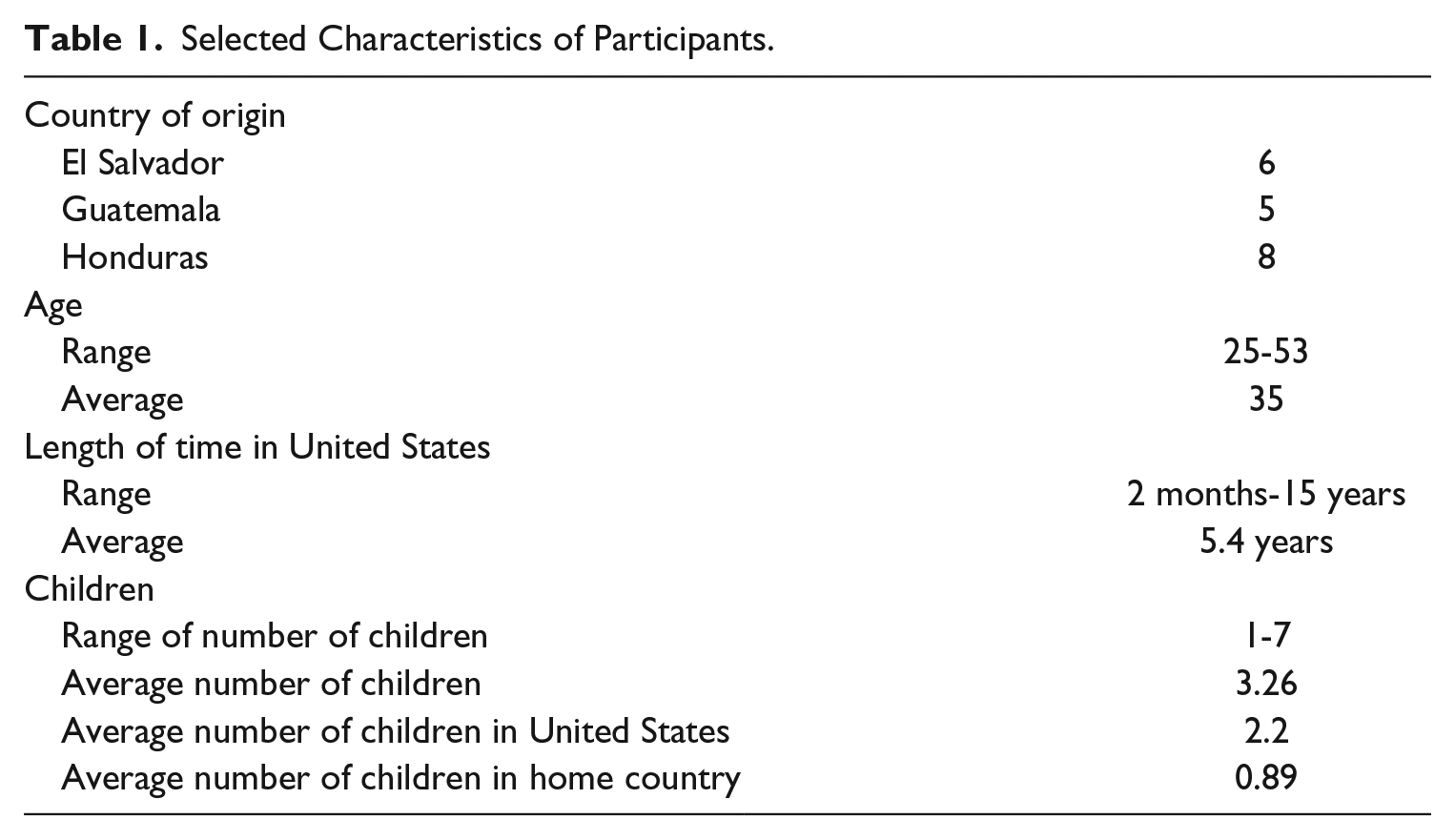
Table 1 describes selected characteristics of research participants, including participants’ country of origin, age, length of time in the United States, and number and location of children.
Selected Characteristics of Participants.
Data Collection
This project utilized in-depth, in-person interviews as the primary data collection strategy, and used an evolving and iterative approach, allowing the interviewer to adapt questions and probes based on specific encounters and on the concurrent data collection and analysis strategies of grounded theory. Interviews were scheduled at times and locations preferred by participants (such as the researcher’s office, participants’ homes, and service providers’ offices). All participants gave verbal informed consent and were provided with written documents that included study details in both Spanish and English. Written consent was waived by the University of Texas at Austin’s institutional review board, given the sensitive nature of participants’ immigration status. Cash compensation was provided to every participant at the beginning of the interview, with clear reminders that participants could suspend or stop their interview at any time, regardless of the compensation provided.
Semistructured interview guides designed for this study aimed to elicit rich, detailed, and nuanced data from participants by providing broad, open-ended questions about motivations to migrate to the United States and perceptions of risk of domestic violence and exploitation prior to and during migration. More directed probes were used to focus more deeply on significant stories or statements as they occurred. All interviews were conducted in Spanish by the researcher. Interviews lasted between 1 and 2 hr and were digitally recorded and transcribed.
Data Analysis
This study used a constant comparative method of data analysis, an ongoing process during data collection, to reveal emerging categories and frameworks (Charmaz, 2006). Data from all interviews were utilized in the analysis process, and these data included digital interview recordings, interview transcripts from those interviews, and the field notes and memos developed throughout data collection and analysis. The process of analysis included three main phases of coding—open coding, focused coding, and axial coding—in addition to memo-writing. During initial, or open, coding, line-by-line process coding of full interview transcriptions was used to categorize actions and processes (Miles, Huberman, & Saldaña, 2014; Saldaña, 2013). Focused coding involved synthesizing initial codes based on fit, frequency, or significance (Charmaz, 2006). During this second cycle of coding, qualitative data analysis software NVivo was used to organize and code data across the following codes: types of violence and exploitation; migration planning and decision making; process of migration; survival; reliance on others; vulnerabilities; chaos, confusion, and not knowing; postmigration experiences; access to justice; health; gangs and criminal networks; truth, lies, and deception. The third phase of coding sought to describe major categories identified during initial phases of coding and to reassemble data that had been fractured, in a sense, by earlier coding (Saldaña, 2013).
Rigor
This study used four strategies to improve rigor and trustworthiness: reflexive practice, maintaining an audit trail, peer debriefing, and thick description (Creswell & Miller, 2000; Lietz, Langer, & Furman, 2006). Throughout the process of data collection and analysis, the researcher maintained an audit trail to serve as a reflexivity journal, to record memos, and to document field observations, methodological decision making and processes, and analysis decisions (Rodgers & Cowles, 1993). Regular peer debriefing meetings were also held with experienced qualitative researchers familiar with grounded theory and violence against women.
Ethical Considerations
Ethical considerations in researching violence against women and migration were closely examined during the course of this research (Baumann, Domenech, Rodríguez, & Parra-Cardona, 2011; Ellsberg & Heise, 2002). The researcher abided by protocols to ensure informed consent, confidentiality, safety and well-being of participants (due to experience of trauma and violence and undocumented status; R. Campbell, Sefl, Wasco, & Ahrens, 2004; Ellsberg & Heise, 2002). Interviews took place in private locations of participants’ preferences. Audio recordings of interviews were deleted following transcription. All data were stored in password-protected files accessible only to research staff. Any contact information used in scheduling interviews was kept separate from interview data and deleted at the conclusion of data collection. This study was approved by and complied with the University of Texas at Austin’s institutional review board.
Interviews often elicited painful memories of past abuse or violence. At any point during the interview if there was discomfort to the participant, the participant was free to stop the interview. Although participants were emotional at times, no interviews were interrupted or stopped due to distress on the part of the participant. At the conclusion of each interview, the researcher (a trained social worker) talked with participants about possible referrals for support for any distress experienced during the interview and/or for support related to unmet service needs revealed during the interview. Given the recruitment method, all participants were in close contact with a social worker, advocate, or other professional who could address resulting concerns. This occurred with two participants, and with their consent, service providers were contacted for follow-up services related to unmet needs.
Findings
A Constellation of Violence
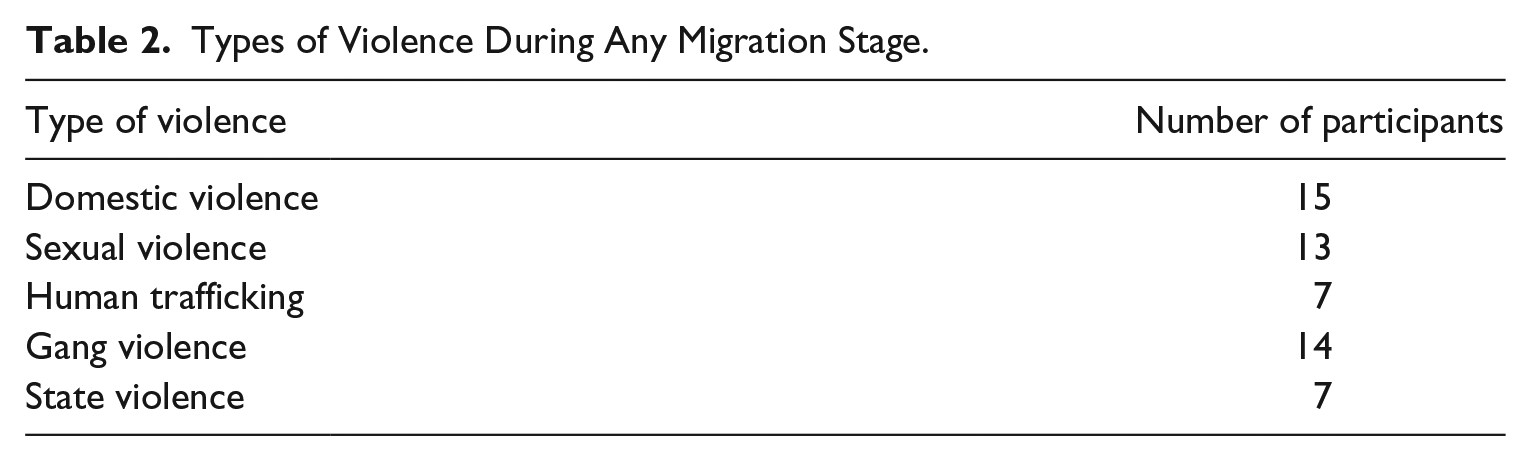
Throughout the process of migration, a constellation of violence is enacted upon women. Women described a wide array of violence over the course of time beginning with the motivation and preparation to migrate, to their present lives in the United States. These experiences occurred before, during, and after migration and coalesced around five major, interrelated, categories—domestic violence, sexual violence, human trafficking, gang violence, and state violence—at the hands of intimate partners, loved ones, new acquaintances, strangers, and government officials. Table 2 gives a sense of the number of women who experienced and consistently described these discrete types of violence. Women did not talk about these experiences with violence along a continuum, which may presume rank order. Rather, these were complex acts of violence that were peppered and intertwined throughout their migration journeys—constellations of violence.
Types of Violence During Any Migration Stage.
Domestic violence
Women described violence in the context of a relationship to include physical violence, sexual violence, emotional violence, and controlling or coercive behavior. Gloria,
4
for example, described her experience:
No había pensado en venir a los Estados Unidos. El papá de los niños era muy celoso y un día yo venía de la tienda, el me tiró una olla de agua. Me quemó todo el cuerpo. Entonces yo, desesperada, agarré, no mucho, dos pantalones, dos camisas y me vine. Así nada más.
I hadn’t thought about coming to the United States. The father of my children was very jealous and one day I was coming back from the store and he threw a pot of water on me. He burned my entire body, so I desperately grabbed, not much, two pants, two shirts, and I came [to the US]. Like that, nothing else.
Sexual violence
Women described a wide range of acts of sexual violence perpetrated by husbands, partners, family members, acquaintances, and strangers. These included forced sex, attempted rape, sexual harassment, being forced or coerced into prostitution, and others demanding sex in exchange for transportation. Isabel, for example, described being held hostage while waiting to cross the Mexico–U.S. border, “lo violan a uno y uno no puede decir nada. ¿Con quién se va a quejar? Está cerrada toda la casa. Sólo abren para meter personas, sólo con llave. Toda la gente en un cuartito encerrados” (They rape you and you can’t say anything. To whom are you going to complain? The entire house is locked. They only open to put people in, only with a key. All the people in a little room locked up).
Human trafficking and exploitation
Women described being exploited through forced or coerced labor or sex. For migrating women, this included being held captive and made to work in cooking, cleaning, or the commercial sex industry. It also included situations of debt bondage, or being made to work until a debt, which continues to rise arbitrarily, is paid off, in addition to other forms of exploitation, such as unpaid work. Belinda, for example, described the exploitation she experienced:
Trabajaba de martes a domingo. Nunca recibí paga, sino que nada más me daban unos tickets que yo se los tenía que dar al que nos trajo. Me apuntaban comida, renta, todo, todo me apuntaban. Llegar ahí y tener que acostumbrarse a tener que tomar o hacer cosas que nunca habíamos estado acostumbradas a hacer, fue bien difícil.
I worked Tuesday to Sunday. I never received payment. They only gave me some tickets that I had to give to the one that brought us. They would write down food, rent, everything, they would write everything down. Arriving and having to get used to take or do things that we have never been accustomed to doing was really difficult.
Gang violence
Women described a range of ways that gang violence impacted their lives and their migration experiences. These included extortion by gang members, being held hostage and made to pay for release, forced to pay for crossing borders, and general acts of physical and sexual violence in territories controlled by gangs (such as neighborhoods, train stations, and border crossings). Being aware of, or witnessing, acts of violence by gangs created a general climate of fear. Zara stated, “todos los días matan. Allá no podemos—ni nosotros que somos de nuestro país—no podemos llegar ni a visitar, porque nos quieren matar por lo poco que llevamos” ([The gangs] kill every day. There, we can’t—not even us who are from our country—we can’t even go out visiting because they want to kill us for the little that we have).
Women worried about their sons being recruited or harmed by gang members and were fearful that their daughters would become targets of sexual violence. Natalia described an encounter between gang members and her 10-year-old daughter: “Cuando mi nena tenía ya diez años, once años, estaba bonita ya, y llegaban los mareros y le decían a ver párate queremos ver de qué tamaño estás” (When my daughter turned ten years old, then eleven, she was pretty and the mareros would come and would tell her to stand up because they wanted to see what size she was). Sierra decided to bring her daughter with her to the United States with the explicit goal of protecting her from what she felt was inevitable rape. She said, “traje mi hija de Honduras para que no me la violaran, y vine a este país justamente para protegerla” (I brought my daughter from Honduras so they wouldn’t rape her, and I came to this country precisely to protect her).
State violence
Women described apprehension and detention by government officials as yet another form of power and control exerted over their actions and decisions, and the militarization of border regions through temporary and long-term detention of asylum-seekers may be considered state violence. Women recalled fear-inducing, coercive, and isolating aspects of interactions with border patrol and immigration officials. María, for example, described being apprehended by border patrol:
Aparecen unas luces bien grandes que nos enfocaron directamente y nosotros empezamos a temblar. Ya no sabíamos que hacer si correr, ahí nos quedamos, bueno no podíamos hacer nada por los niños porque vimos alrededor habían muchos árboles llenos de espina. No había escapatoria, nada. Eran dos cuatrimotos. Y se bajaron cuatro hombres, bien altos, rubios. Y nos dijeron, “no se asusten, somos de migración.” Fue el peor miedo que sentí. (llorando) Demasiado no me podía contener. No podía parar de llorar. (María)
Large lights appeared and they shined directly at us, and we started to shake. We didn’t know what to do, to run? We stayed there. Well, we couldn’t do anything for the children because we saw there were many trees around us full of thorns. There was no escape, nothing. There were two four-wheelers, and four men got off, very tall, blond. And they said to us, “Don’t be scared we’re from immigration.” It was the worst fear I have felt. (crying) It was so much I couldn’t contain myself. I couldn’t stop crying.
Hortensia, on the contrary, interpreted the hielera 5 as a punishment for having come to the United States. She said she was put in a cold dark room, “frío como si fuera de hielo, como si está congelando a uno. Y no los atiendan, no los dicen nada, ni les dan para que uno se tapan ni nada, es como un castigo” (Cold like ice, like it was freezing you. And they don’t attend to you, they don’t say anything, or give you anything so you can cover yourself, it’s like a punishment).
Interaction of Types of Violence
Within the categories of violence described above—domestic violence, sexual violence, human trafficking, and gang violence—women experienced multiple episodes and periods of violence, often across multiple categories of violence. Almost all women described having experienced more than one type of violence.
In addition to women’s experiences including more than one type of violence, women also reported that these types of violence interacted with and played off one another. For example, sexual violence serves as a distinct type of violence, in addition to playing a significant role in domestic violence, human trafficking, and gang violence. Within the context of a marriage or relationship, women described men’s use of sexual violence in terms of forced sex or rape, as a strategy to maintain control over her. Women who were trafficked experienced sexual assault at the hands of traffickers or were forced into the commercial sex industry. In terms of the use of sexual violence within gang violence, both the threat of rape and acts of rape were used as tools of coercion in hostage and extortion situations. Gang members also used women’s bodies at their disposal, as a convenient by-product of other criminal acts.
Women also talked about the intersection of domestic violence and gang violence, particularly for those who experienced controlling and abusive relationships in communities that also endured gang control. Abusive partners used the existence and proximity of gang violence, along with reports of femicide, to bolster the threats they made to women. When men claimed they would have their partner killed, these threats were perceived as real and valid. Women believed the threats and were impacted by them, because they had witnessed gang violence being carried out in their communities. Alma stated, “Iba a amanecer en una bolsa de plástico, no sé dónde” (By sunrise I would be in a plastic bag, who knows where). Even if an abusive partner did not threaten to have someone kill her, women were aware that they may be more vulnerable to gang violence if they left an abusive relationship. In other words, the specter of gang violence served to strengthen partners’ strategies of control. These intersections form the constellations of violence that impact motivations to migrate and experiences of migration.
Violence Across the Migration Process
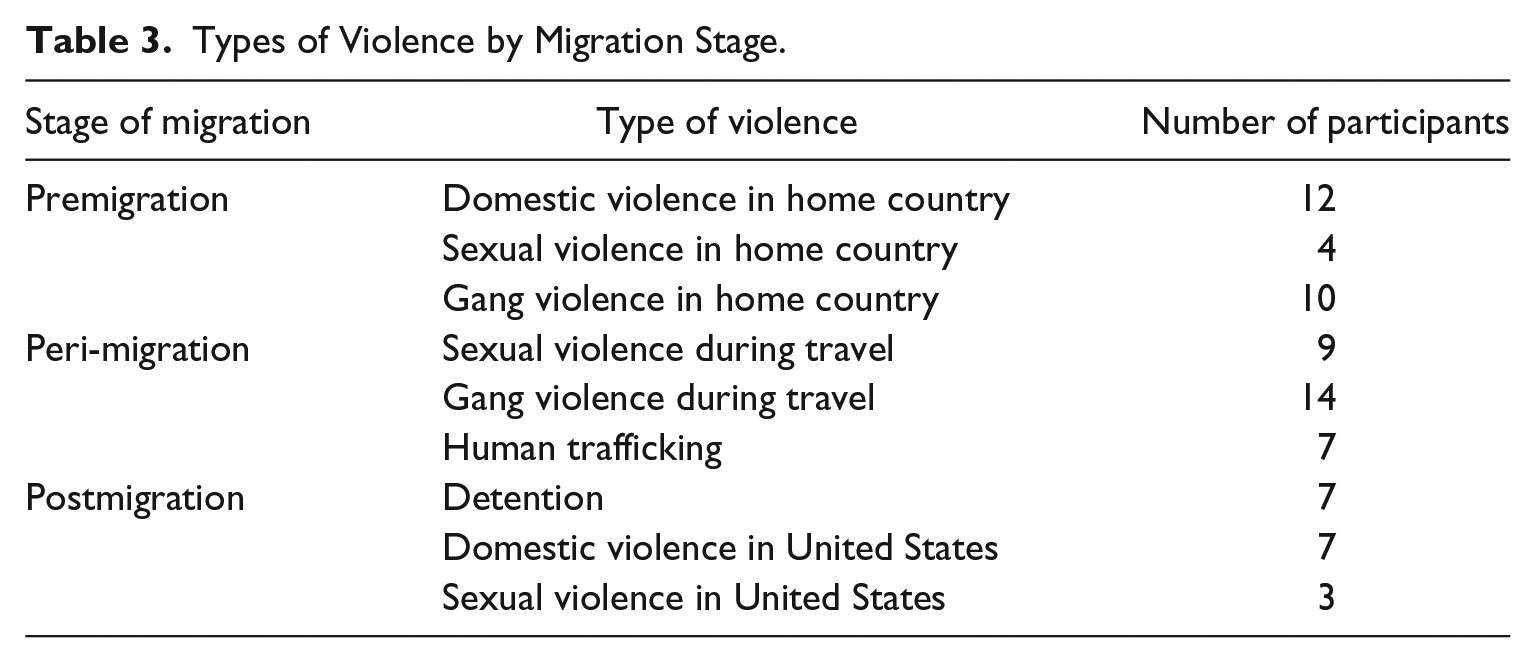
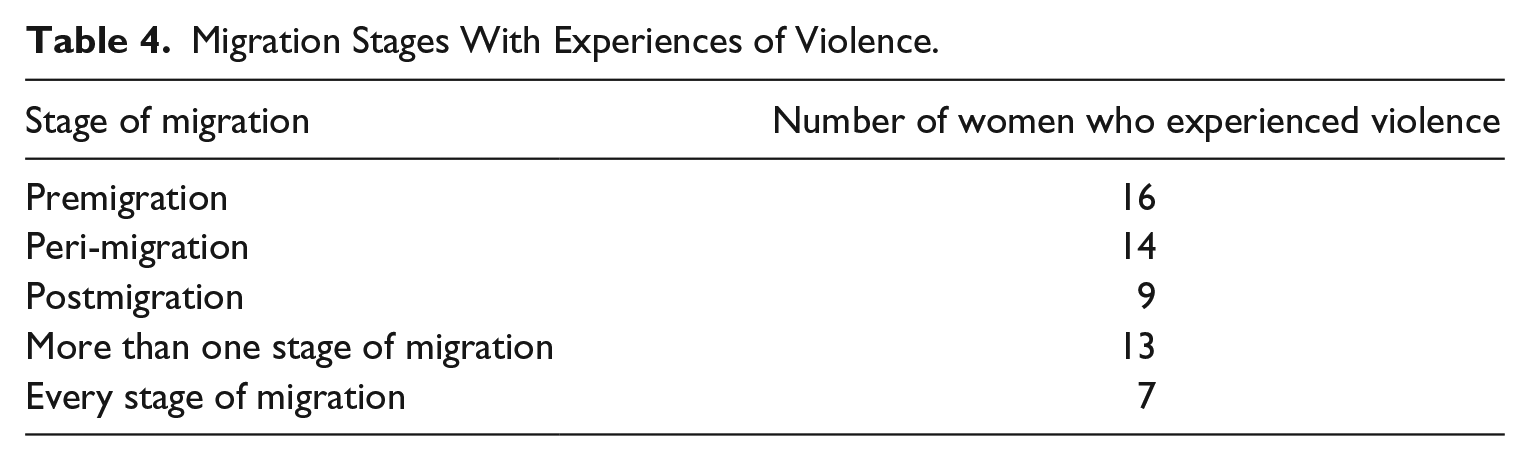
In addition to experiencing multiple and interconnected acts of violence, women described having these experiences across the time and space of their migration processes. Unfortunately, women who experienced violence prior to migrating, and who often described this premigration violence as a motivating factor in their migration decision, were not immune to subsequent acts of violence. Of those who experienced some type of premigration violence, most also experienced violence during or after migration. Table 3 illustrates the types of violence described by women during the three main phases of migration, and Table 4 shows the number of women who experienced violence during each phase of migration, in addition to the numbers of women who reported violence during more than one phase of migration or during every phase of migration.
Types of Violence by Migration Stage.
Migration Stages With Experiences of Violence.
Premigration violence
Women described violence in their home countries as a normalized part of life, supported by patriarchal gender norms and kept in place by socialization. María, for example, experienced multiple abusive relationships prior to migrating. She described having grown up believing that she did not have the right to protect her body from the men in her life, rather that her body was for their use and pleasure,
Para mí era normal que una persona me violara o que me tocara, porque mi familia me dijo que eso era muy normal, que nosotras las mujeres no teníamos derechos a defendernos, porque los hombres eran los que tenían derecho. (María)
For me it was expected for someone to rape me or touch me because my family taught me that was the way things were, that we as women didn’t have a right to defend ourselves because the men were the ones who had the right.
Related to the notion of normalized violence against women, the idea of general impunity was described by women as an element in the violence they experienced in their home countries. In addition to the justice system not operating, women expressed a sense that the general public takes no action. Isabel described her perceptions of this situation in Honduras,
Allá en Honduras se vive una violencia. A las mujeres les golpean, les cortan la cara, lo que sea y el hombre sólo puede estar un día en la cárcel y ya está. Pueden caer muertas, y matan las mujeres y nadie hace nada. (Isabel)
Over in Honduras you live a certain type of violence. Women get beat, their faces cut, everything and the man can only be in jail for a day and that’s it. [Women] can drop dead, they kill the women and no one does anything.
Both the normalization and climate of impunity created a sense of inescapability. These feelings were aggravated by women’s economic situation. That is, due to both the economic control abusive partners maintained and the general levels of poverty in their home countries, migrating to escape domestic violence was intertwined with the search for better economic stability. Hortensia, for example, left an abusive relationship and ended up not being able to make ends meet. Her motivation to migrate was economically motivated on the surface, but had roots in domestic violence.
For some women, relationships involving domestic violence were so intense and lethal that women feared for their lives if they remained in their home countries. Celia described not wanting to migrate but feeling that she had no other option,
Nunca lo planifiqué, nunca pensé en llegar aquí. Fue simplemente la desesperación. El me seguía y me intentó matar, con una almohada casi me ahorca. (Celia)
I never planned it, I never thought about getting here. It was simply out of desperation. He would follow me and he tried to kill me, with a pillow he nearly suffocated me.
Peri-migration violence
Violence experienced during migration was primarily sexual violence and occurred while women were held hostage for the purpose of extortion or were crossing the U.S.–Mexico border into the United States. Many women were held hostage at least one time during their migration and several were held in more than one hostage situation. These occurred near the border between Guatemala and Mexico and more commonly on both sides of the U.S.–Mexico border or in the destination city.
Much of this involved forced labor and sexual assault in the context of a hostage situation, when women were being held and extorted by gangs, smugglers, and traffickers. Anita spoke of the horror in being raped by smugglers and hostage-takers, “eso es bien feo, que uno tiene que pagar para que lo esten violando, para que te destrozen la vida, porque es algo que nunca se va a olvidar” (It’s really ugly, that you have to pay so they rape you, so they can destroy your life, because it is something you are never going to forget). María talked about being taken advantage of while she was ill, “Estaba en un cuarto encerrada cuando llegó un coyote salvadoreño y el me violó, y me dijo que no dijera nada. Yo estaba tan débil. No sabía realmente lo que estaba pasando, y nadie se dio cuenta” (I was in a locked room when a Salvadorian coyote came and he raped me, and he told me not to say anything. I was so weak. I really didn’t know what was happening, and no one noticed).
Beatriz suffered at the hands of her coyote. What began as a voluntary journey to seek a better life for her children devolved into a forced march, “Él me traía a la fuerza. Ahí fue dónde yo me embaracé de la niña pequeña. Él me agarraba del pelo, me arrastraba por todo el camino, y yo le decía, ‘por favor déjame ir’” (He took me by force, that’s where I became pregnant with the little one. He would grab me by the hair, drag me the entire way, and I would say, “Please let me go”). Isabel also described being hurt by someone who helped her during migration, “la persona que me ayudó me violó” (The person who helped me raped me).
The process of crossing the river also presented risks of sexual violence, and women described being afraid of and threatened with rape on the shores of the Rio Grande River. Gilberta spoke of the threats of the coyotes: “Le gritan a uno y que si no te vas a dejar te voy a matar, y que los hombres le dicen a uno te vamos a violar, te vamos a hacer esto, y uno viene con miedo” (They would yell at you and [say] if you are not going to let yourself [be raped] I will kill you, and the men say to you that they will rape you, we will do this to you and you become fearful).
Women also described the reality of witnessing sexual violence against other women and girls and the pain and frustration of not being able to do anything about it. Multiple factors served as barriers to women’s ability to intervene on behalf of other women. These include the general climate of fear and sense of urgency inherent in crossing the border without papers, in addition to the use of physical force, intimidation, and/or explicit threats by coyotes to keep moving.
Oía que estaban violando a las muchachas ahí, al otro lado del río. Cuando ya las violaban las tiraban de regreso al río, y empezaban a gritar, “ayúdenme, me acaban de violar,” o “estoy herida.” Y uno tenía que caminar. Y yo sin poder hacer nada. No podía hacer nada, ni quejarse. (Clara)
I heard that they were raping the women on the other side of the river. When they had raped them they would throw them back into the river and the women would start yelling, “help me, they just raped me,” or “I’m hurt.” And you had to walk away. I couldn’t do anything. I couldn’t do anything, not even complain.
Anita also spoke of the sense of helplessness in witnessing other women being sexually assaulted:
La violaron a una muchacha, y la dejaron tirada, porque estaba muy débil y no podía caminar. Ella se quedo ahí, y pues uno no le podía ayudar porque le pegaban a uno. (Anita)
They raped a woman and left her stranded because she was too weak and she couldn’t walk, and well, one couldn’t help because they would hit you.
Another common element described by women as they told of crossing the Rio Grande River involved having to undress. Women spoke of their indignation and humiliation when coyotes told them they had to disrobe to cross the river. Coyotes instructed them to put their clothes in a bag so that it would be dry when they came out on the other side of the river. Even though women resisted these orders, the atmosphere of the crossing was one of urgency and rushing, and they were at the mercy of their guides. Celia resisted taking all of her clothes off and added that she was groped by the coyotes during these moments.
The emotional and physical pain of these experiences with sexual violence remained with women. Isabel said, “Me siento sucia por tantas cosas que pasaron de Guatemala a aquí” (I feel dirty from all the things that happened from Guatemala to here). Anita described her first opportunity to bathe,
Cuando a uno lo violan, uno no se baña, echa un olor insoportable, y uno solo se da asco, y luego te mandan a bañar y es un dolor bien horrible, te arde todo. Cuando te cae el agua y el jabón, y luego te sale así mucha sangre, eso es horrible. Ahí te empieza a arder todo, a doler todo. Te duele mucho el vientre, y luego así vas. (Anita)
When you get raped, you don’t shower, there’s an unbearable smell, and you’re disgusted, and then they send you to shower and it is horribly painful, everything burns. When the water and soap fall on you and then you start bleeding a lot, it’s horrible. That’s when everything starts to burn, everything hurts. Your belly hurts a lot and that’s how you go.
Although being detained by U.S. immigration officials, Lorena was given a pregnancy exam. Although she did not experience sexual violence during her journey, she described the reactions of other women detained with her,
Las muchachas ahí, llorando, porque estaban embarazadas y no venían embarazadas. Es traumante. Porque aparte de que pasa esas penas en el camino todavía te queda un recuerdo para toda tu vida (llanto). Gracias a Dios yo no, pero es difícil. Hubo como dos o tres muchachas que estaban embarazadas y empezaron a llorar, y llorar. No sabían antes que estaban embarazadas. Es algo como el regalo del camino. Casi la mayoría de muchachas que vienen llegando y tienen sus hijos aquí fueron violadas en el camino y el bebé es consecuencia del camino. (Lorena)
Young women were crying because they were pregnant but they hadn’t come pregnant. It’s traumatizing. Because apart from the difficult things that happen on the road you now have a souvenir for the rest of your life (crying). Thank God I don’t, but it is difficult. There were two or three young women who were pregnant and started to cry and cry. They didn’t know they were pregnant. It is a gift from the road. Almost the majority of the women who get here and have their kids here were raped on the road and the baby is a consequence of the trip.
Postmigration violence
Violence experienced after settling in the United States included domestic violence, sexual violence, and human trafficking. Several women who had fled domestic violence in their home countries also reported domestic violence after settling in the United States, though at the hands of different partners. Karla, on the contrary, left Honduras for fear of gang violence and extortion. She and her husband traveled separately to the United States but reunited in Houston. Although she did not describe their relationship as abusive or violent before migrating, it changed after settling in the United States. He became increasingly jealous and angry, “él empezó a golpearme. Cada vez que se enojaba, me agarraba del cuello, me asfixiaba” (He started hitting me. Every time he would get mad, he would grab me by the neck, he would choke me).
Similar to the experiences in home countries, women in the United States were socially isolated by their partners and felt afraid to ask for help or felt undeserving of help. Zara described her partner isolating her from friends and family, “él me alejó de muchas amistades. Hoy no tengo amigas, no tengo a nadie. Él me alejó rotundamente de todas las personas. Él quería que yo sólo pasara encerrada con él” (He alienated me from many friendships. I don’t have any friends today, I don’t have anyone. He absolutely took me away from everyone. He wanted me to be locked away with him). Although Zara’s partner was ultimately incarcerated on charges of family violence, she was left with tremendous emotional and financial scars, “Yo me sentía depresiva, yo me quería matar, por todo lo que él me había hecho. Me dejó desnivelada económicamente. Me dejó mal en muchos aspectos” (I felt depressed, I wanted to kill myself, because of everything he had done. He left me economically unbalanced. He left me bad in many ways).
Violence in the United States went beyond the context of domestic violence. For example, María and Clara were sexually assaulted by strangers after settling in Houston. Others were held by individual smugglers or larger trafficking rings. Gilberta described an experience with a smuggler, “Me encierra y pasan tres días, pasan cuatro días. Le digo ‘yo quiero irme a trabajar, quiero pagarte el dinero que tú me prestaste.’ Me dijo ‘yo no quiero dinero, yo quiero que tú seas mi mujer’” (He locked me up, three days passed, four days passed. I said, “I want to go to work, I want to pay you back for the money you let me borrow.” He said to me, “I don’t want money, I want you to be my woman”). Gloria, for example, endured long-standing commercial sexual exploitation by criminal networks who were ultimately apprehended by law enforcement. She described arriving in the United States and entering this period of captivity and abuse,
Cuando llegamos aquí nos amarraban de las manos y de los pies y un pañuelo en la boca y nos tiraban a una camioneta como una pelota. Cuando llegamos a una casa, nos compraban una ropa y nos obligaban a que nos vistieramos y traían una señora que los peinara y los pintara. Y nos obligaban a cosas que no queríamos. Y eso fue duro para mi. Pues mis hijos son de todo eso. Los tres hijos de aquí fueron del abuso. (Gloria)
When we got here they tied our hands and feet up, a handkerchief in our mouths and they threw us on a truck like a ball. When we got to a house, they bought us clothes and they made us put it on and there was a woman who brushed our hair and did our make-up. And they made us do things we didn’t want to do. That was difficult for me. My children are from all of that. The three children here are from the abuse.
Discussion
Embedded within conditions of ever-changing unknowns, constellations of violence persist over time and space, influencing the process of migration and forming the violence-migration nexus. During migration and the repeated decision-making junctures that accompany it, a barrage of power and control is exerted over women’s bodies, women’s decision making, and women’s use of space in the world, working against women’s efforts to find safety and stability. A persistent push of violence compels women both to move and remain in motion and also to remain in place, serving as a controlling factor in women’s movement. As more elements of power and control are exerted over women’s bodies, decisions, and mobility, the range of options available to them becomes distorted and constrained.
In looking more deeply at the decision-making junctures women encounter as they move through both time and space, it is useful to also look at the violence experienced by women at different scales—at the micro, meso, and macro levels. Micro-level violence entails that which women experience as discrete threats of violence in everyday interactions with individuals. These include violence experienced in the context of an intimate relationship or sexual violence perpetrated against a migrating woman by a coyote, for example. In other words, these are discrete threats of violence in everyday interactions with individuals. Meso-level violence implies community support of, or engagement in, violence against women, and includes community gang violence that may interact with the control of women, criminal networks that operate systems of hostage-taking and extortion, and state actors engaged in the detention of women in government institutions. At the macro level, women are impacted by multiple structural elements that contribute to violence. These are not discrete acts of violence, but rather persisting and overarching structures of oppression and inequality, such as patriarchal gender norms, poverty and underemployment, and widespread impunity for perpetrators of violence against women that serve to bolster the interpretation that micro-level violence is normative, routine, and to be endured (Menjívar, 2016). Another macro element is the construction of migrant women as “illegal,” maintaining migrant women in silence and isolation, without access to support or protection of rights (Ayón, Messing, Gurrola, & Valencia-Garcia, 2018; Soerens, 2015). Violence enacted on one scale is interdependent with violence enacted on other scales. Each level relies on the other levels for the maintenance and expansion of control over women. For example, the sexual violence enacted on women’s bodies as they cross the border between Mexico and the United States is dependent on both the meso and macro levels of violence. These other levels of violence are in turn complicit in that discrete act of violence. Likewise, the use of the macro context of femicide in exerting power and control at the micro level in relationships involving intimate partner violence, coupled with social acceptance of gendered violence and high levels of impunity, serve as another example of the cumulative influence of multilayered violence.
In addition to experiencing multiple and compounding acts of violence, it is important to note that this ongoing exposure may also entail compounding impacts on survivors. That is, the negative and often-long-lasting physical, emotional, social, and economic consequences of exposure to one episode or one level of violence (Garcia-Moreno et al., 2005) may be exacerbated by the constellations of violence experienced by women in this study. These findings are reminiscent of the framework proposed by Silvia Dominguez and Cecilia Menjívar (2014) in their analyses of the impact of multisided and cumulative violence among women in low-income neighborhoods, in which “one form acts on the other to exacerbate individual effects” (p. 186). The compounded experiences of violence endured by Central American migrating women at the micro, meso, and macro levels also reveal that through “the multiplicity and interconnected forms of violence,” we gain clarity that the roots of violence go beyond individual actors and their individual behaviors (Ayón et al., 2018; Dominguez & Menjívar, 2014).
Furthermore, these findings reflect and affirm previous efforts by advocacy organizations to document the experiences of migrating women. UNHCR’s (2015) Women on the Run report, for example, argues that among women migrating to the United States from Guatemala, Honduras, and El Salvador, “increasing violence from criminal armed groups occurred alongside repeated physical and sexual violence at home. Women described life-threatening and degrading forms of domestic violence, including repeated rapes, sexual assaults, and violent physical abuse” (p. 4).
Survival and Resistance
Although it is important to recognize the ways that patriarchal structures of oppression materialize in acts of power and control over, and violence against, migrating women, it is critical to also identify women as actors in the migration process. Similar to the variety of violence and strategies of power and control enacted against and over women, the ways women resist that violence and protect themselves from it are also varied. 6 Resistance comes in the forms of everyday or micro-strategies, collective agency, and solidarity against violence. The coming together of women, in particular—through shared experience, co-survival and solidarity—becomes vital, as patriarchal actions and structures depend on women being disconnected. These strategies function as mechanisms to retain control or to gain control over specific situations and over women’s own bodies. Even if some may be short-lived, these actions serve as avenues to challenge power structures women experience before, during, and following migration.
In exerting power and in their acts of resistance, women again and again come into spaces where their power is challenged or other’s power is exerted over them anew. As women physically move through space, they repeat and re-enact this cycle of survival and resistance. During each stage of migration, women confront new junctures, and each time, new landscapes of violence and resistance emerge. We are reminded of this repeating cycle by Hortensia, “salía de uno y me metí en otro.” In other words, in leaving or fleeing one set of violent circumstances, she found herself in yet another. Her story is a series of attempts to escape danger only to land in a new dangerous situation, with a new backdrop of micro, meso, and macro factors of violence and a new landscape of solidarity and resistance strategies.
Affirming Heterogeneity Among Migrant Women
Given the risk of essentializing migrant women, recognition of the heterogeneity of migrating women is critical, and not all migrant women share the same gender, racial, ethnic, and/or indigenous identities or class. This study explored the process of migration in the context of violence for a narrow community of migrants. It did not, for example, explore the ways that racial, ethnic, and indigenous identities, or experiences of heteronormativity or transphobia, play roles in the migration-violence nexus. In recognition of the complex and varied voices of women, we must also exercise caution that these findings do not further entrench fixed notions of Latino men as violent abusers or reify cultural norms that maintain women and men into static positions as victim and perpetrator. Rather, it is crucial that we take into account the regional, transnational, and historical contexts that create atmospheres of chaos and conflict. Both those who experience violence and those who engage in acts of violence all operate within the larger scope of structural oppressions that impact the actions and responses of all. It is my hope that this study’s limited focus will not diminish the relevance of, or the need for, additional research on the wider spectrum of individuals who experience gender-based violence and on those who engage in acts of gender-based violence at multiple levels.
Contemporary Responses to Migrating Central American Women
Although there are multiple forms of legal immigration relief, there also exists a very troubling pattern of responses related to the detention of women and children. During the summer of 2014, while the U.S. government and the media focused on the arrival of unaccompanied Central American children, many Central American women also traveled to the United States alone or with their children. The response to these women and children corresponded to their depiction as economic migrants and hence “illegal.” In fact, the summer of 2014 marked the reinstitution of a practice that had gone out of favor in the United States—immigrant family detention. To send a message of deterrence to Central Americans, the U.S. government began to detain women and their children again in detention facilities in New Mexico, Texas, and Pennsylvania, despite the fact that many were eligible for immigration relief. Consequently, they suffered the negative social and emotional impacts of being held in controlled detention environments, compounding the trauma and violence experienced before and during migration. These new responses reflect Elena Fiddian-Qasmiyeh’s (2014) reminder that “the process of migration and resettlement may also present new inscriptions and reinscriptions of structural oppression” and “integrating into a host state, resettlement state or country of origin may equally lead to new or repeated forms of exclusion and marginalization” (p. 405).
In fact, we begin to see clear parallels between the process of immigrant detention and other types of violence. Testimonies of women involved in this research, in combination with the testimonies of women recently and currently detained at Karnes, Dilley, Artesia, and Berks, describe detention as a form of state violence. We cannot overlook the connections between the conditions in detention, for example, and the control tactics used by traffickers, abusers, and criminal gang networks. U.S. immigrant detention practices include keeping women and children in cold hieleras, keeping lights on at all hours, insults and humiliation, efforts to withhold information, isolating women from one another and from their own children, in addition to outright sexual harassment and abuse (Cantor, 2015). These are reminiscent of the strategies used by abusers, traffickers, and gangs to exert power and violence over the women they aim to control. The situations women find themselves in and the violence that may be committed against them are not equivalent, but they may be revealed as mirror images of one another. Furthermore, those who are unable to successfully defend their asylum claims in immigration court may be deported, ultimately becoming forced return migrants.
Disrupting Dichotomies—Forced Versus Voluntary Migration
Although migration from Central America to the United States is frequently recognized as economic migration, and migrants as economic or voluntary migrants, this research supports scholars’ efforts to disrupt the harmful dichotomy of economic versus forced migration (García, 2006; Snyder, 2012). Findings support Nawyn et al.’s (2009) recommendation that scholars “examine migrants’ process of decision-making (however limited it might be at times) in response to gendered violence” (p. 195). Despite considerable political pressure to view Central American women as economic migrants, this study describes the ways that migration related to domestic violence can be misinterpreted as purely economic or voluntary. Given the economic control strategies inherent in abusive relationships, women fleeing such violence may seem, on the surface, to be responding to a one-dimensional economic push. This interpretation fails to include the myriad ways that domestic and sexual violence, in combination with meso-level gang violence and macro-level poverty and underemployment, may create intolerable situations for women.
As part of this discursive debate about forced and voluntary migration, we cannot ignore the production or construction of “illegality” (Gonzales, 2014; Jonas & Rodríguez, 2014). Nor can we ignore the legitimation and impact of “legal violence” on women, described by Menjívar and Abrego (2012) as “the living conditions and experiences of contemporary immigrants in tenuous legal statuses” (p. 1386-1387) that includes a range of suffering experienced by immigrant communities from low-wage or exploitative work to the contemporary climate of insecurity, family separation, detention, and deportation. With the rise in anti-immigrant sentiment and xenophobia, Central American migrants are increasingly portrayed as national security threats and subsequently constructed as “illegal” and exposed to legal violence. Dialogue about broad immigration reform is on the horizon and will benefit from improved understanding of the spectrum of violence experienced by migrants before, during, and after migration and how legal immigration status (or lack of status) impacts help seeking. Furthermore, it is critical that border militarization and the reinvigorated practice of family detention be exposed and heavily scrutinized.
Conclusion
Although researching violence and gender “is akin to doing a puzzle that can never be complete” (Hume, 2007, p. 155), we maintain hope for uncovering additional elements to better understand the complexities of the migration process for women who navigate experiences of violence. This study serves as an initial attempt to put these puzzle pieces together, drawing directly from women’s lived experience to lay an empirical foundation and form a new image of the violence-migration nexus experienced by Central American migrant women.
Above all, those who have experienced the overlapping experiences of migration and violence must be present at the table, directing research design, contextualizing findings and guiding community responses. Without these voices, we run the risk of forging ahead into naïve and misguided territory or causing additional harm to those who have already experienced great injustices. With improved human rights protections for migrant women facing gender-based violence, expanded research agendas, and activism from within migrant communities, we can begin to envision women’s mobility that is neither constrained nor determined by violence.
Footnotes
Acknowledgements
The author would like to express gratitude to the survivors and advocates who participated in, informed, and guided this research, and who work to dismantle multiple forms of oppression and violence.
Declaration of Conflicting Interests
The author(s) declared no potential conflicts of interest with respect to the research, authorship, and/or publication of this article.
Funding
The author(s) disclosed receipt of the following financial support for the research, authorship, and/or publication of this article: This research was supported by the University of Texas at Austin’s Harrington Fellowship, Charles W. Laughton Endowed Presidential Scholarship, and Louis E. DeMoll Endowed Presidential Scholarship, in addition to the P. E. O. Scholar Award.
1.
“Salía de uno y me metí en otro” is a verbatim quote from Hortensia (a pseudonym), a participant in this research, expressing that, in leaving or fleeing one set of violent circumstances, she found herself in yet another.