







Abstract
Many cities and states have taken steps to identify and process all untested sexual assault kits (SAKs). Texas was one of the first states to enact such legislation—SB 1636—which created a time line for a statewide audit and mandatory testing of SAKs. A mixed-methods approach was used to assess the effects of SB 1636 at both state and local levels. The study did not detect any effect of SB 1636 on reporting, arrests, or convictions. The legislation did have a significant effect on criminal justice workloads, particularly crime laboratories.
Keywords
Every year in the United States, an estimated 1,270,000 women experience rape and nearly one in five women (18.3%) has been raped in her lifetime (Black et al., 2011). Sexual violence severely harms individual victims and, collectively, society. These harms include higher rates of substance abuse for victims, lower levels of employment, lower levels of educational attainment, higher levels of depression and post-traumatic stress disorder (PTSD), and higher suicide rates (Campbell, 2008; Centers for Disease Control and Prevention, 2016).
Many victims who experience sexual assault seek medical care. Sexual assault victims are routinely encouraged to have a sexual assault medical forensic examination to preserve evidence of the offense. The evidence is collected through use of sexual assault forensic evidence kits, commonly referred to as sexual assault kits (SAKs), ideally by a specially trained sexual assault nurse examiner (SANE) or sexual assault forensic examiner (SAFE). Kits include materials for the collection and storage of biological specimens and, when completed, are transferred to law enforcement custody, and from there may be sent to a crime lab for analysis.
There is good reason to believe that competently collected SAK evidence is associated with positive criminal justice system outcomes. In theory, forensic evidence can not only establish the identity of the defendant, but also establish the elements of the crime, reconstruct the sequence of events, and corroborate or disprove witness statements (Johnson, Peterson, Sommers, & Baskin, 2012). Empirical studies examining the determinants of sexual assault case processing decisions have demonstrated positive associations between the completion of a physical/forensic exam and prosecution and conviction in the United States, Canada, and the United Kingdom (Campbell, Patterson, Bybee, & Dworkin, 2009; Feist, Ashe, Lawrence, McPhee, & Wilson, 2007; McGregor, Du Mont, & Myhr, 2002; Wiley, Sugar, Fine, & Eckert, 2003). This evidence is consistent with studies of SANE programs, many of which suggest that SANE programs increase prosecution rates because they provide more reliable forensic evidence to crime investigators (Crandall & Helitzer, 2003; Nugent-Borakove et al., 2006).
Despite the growing understanding of the importance of collecting forensic evidence, many SAKs have been sitting untested in law enforcement evidence rooms. Nationally, it recently was estimated that there are 400,000 SAKs that are backlogged in law enforcement or laboratory facilities (The White House, 2015). In a similar vein, Peterson, Johnson, Herz, Graziano, and Oehler (2012) found that SAKs were collected only about half the time and, of these, approximately one third of SAKs were submitted to a crime lab for screening, and just 5% were examined. (While the term “backlog” is typically used as a descriptor for untested kits, there is an important distinction to be drawn. Untested kits—the subject of this article—are in law enforcement custody and have not been sent to a lab for analysis. Backlogged SAKs refer to the untested evidence that was submitted to laboratory facilities but awaits analysis; National Center for Victims of Crime [NCVC], 2017.)
Lack of funding has been cited as a primary reason why SAKs remain untested (Prottas & Noble, 2007). In a sample of 137 victim advocates, prosecutors, DNA lab employees, and law enforcement professionals surveyed by the NCVC, 42% cited lack of funding as the primary reason SAKs are not tested (NCVC, 2008).
Although laboratory capacity is largely a resource issue, law enforcement agencies may choose not to submit SAKs for testing for a number of reasons. In some cases where suspects have already confessed, investigators may not see a need for submitting the SAK for analysis. In cases involving a rape by a sexual partner, investigators may opt against submitting SAKs for testing because the DNA results are not probative (Ritter, 2011). (In these cases, defendants often mount a defense that stipulates that sex occurred, but was consensual, so DNA results generally do not help the prosecution make its case.) In other cases, victims may not wish to press charges, so police investigators may elect to wait on testing evidence in SAKs until they are sure that the victim wants to proceed (Campbell et al., 2015; Ritter, 2011). Finally, law enforcement agencies may elect not to submit SAKs because they do not think the complainant is credible or the complainant is unsure that she was actually sexually assaulted (Rose & Randall, 1982). A study of police investigation of rape found that the patrol officers surveyed estimated that a third of reported rape cases were false, that is “never happened” (Schwartz, 2010).
Taking Action on Untested Kits
Cities and states are taking action on their stores of untested kits, often with federal support. Since January 2017, 73 rape kit reform bills have been introduced in 33 states, according to endthebacklog.org, a program of the national nonprofit Joyful Heart Foundation. Texas passed legislation on the tracking of rape kits in June 2017, making it the first state to implement comprehensive rape kit reform.
The federal government provided funds to encourage jurisdictions to speed up laboratory testing of backlogged kits and to submit untested DNA material for analysis. The DNA Analysis Backlog Elimination Act of 2000 (PL 106-546) provided federal funding for processing existing DNA evidence at the local level, including evidence from SAKs, and for the entry of relevant DNA information into CODIS, the Combined DNA Index System of the Federal Bureau of Investigation. This program was later expanded by the Debbie Smith Justice for All Act of 2004 (PL 108-405), which was reauthorized in 2008 to provide an additional 5 years with US$151 million in annual funding. The Act also provided funding for training of law enforcement and corrections officers to ensure the proper processing of forensic evidence.
Calls for Testing All SAKs
Survivors of sexual assault and victim advocates have long pushed for policies to analyze all untested SAKs and to remain current with kits as they are collected. In a 2013 NCVC survey, a majority of respondents (75%) reported it was “very important” to test all sexual assault forensic kits; another 21% deemed it “somewhat important” (NCVC, 2013). Those calling for testing all SAKs assert that such testing often corroborates the victim’s story, promotes an improved response to sexual assault victims, and increases the rate at which victims report sexual assault to law enforcement (Ritter, 2011). They also note that a “test all kits” policy is easy to apply and prevents SAKs from getting lost in the system (Ohio Attorney General, 2011). One of the most frequently cited reasons for testing all SAKs is that by doing so, police can identify serial rapists (Campbell, Feeney, Pierce, Sharma, & Fehler-Cabral, 2018; Ritter, 2011). Others have argued that expanded testing would populate CODIS (and, therefore, increase the odds of hits in future cases) or lead to exonerations of persons wrongfully accused (Campbell et al., 2015; Subcommittee on Crime, Terrorism, and Homeland Security, 2010).
Texas Senate Bill 1636
Texas was one of the first states to enact legislation mandating universal 1 testing of SAKs. Authored by former state senator Wendy Davis in 2011, the statute required that, when law enforcement agencies receive sexual assault forensic evidence, they submit the evidence to a crime laboratory for analysis within 30 days. In addition, SB 1636 required that agencies report how many SAKs remained untested in their custody by October 15, 2011, and to submit all evidence connected to an “active criminal case” to the Department of Public Safety (DPS) or another accredited public laboratory by April 1, 2012, subject to lab capacity. SB 1636 required the DPS to report to the Governor and the Texas House of Representatives about the numbers of SAKs across the state and to request the funding necessary to test all kits. Advocates of the bill anticipated that there would be an increase in arrests, prosecutions, and convictions of sex offenders. They believed that more serial sexual offenders should be identified as the number of entries in the DNA database of sexual assault cases grew. Such developments were expected to give victims greater confidence in coming forward and telling their stories to hospital staff, police, and prosecutors. In addition, advocates argued that subjecting a victim to a 3-4 hr medical forensic exam and then not testing the evidence was revictimizing to many sexual assault victims. Testing SAKs was a first step in building a successful relationship between the criminal justice system and a sexual assault victim.
As mentioned, one of the requirements of the Texas law was that all untested SAKs (where the statute of limitations had not been reached at the time the legislation went into effect) had to be submitted for laboratory DNA analysis. Law enforcement agencies were mandated to submit all untested SAKs to the state DPS. DPS, in turn, was tasked with developing DNA profiles and uploading them to CODIS. After SB 1636 passage, DPS sent letters to the approximately 2,100 law enforcement agencies in Texas informing them about the requirements of SB 1636. DPS also forwarded a message from former senator Wendy Davis’s office to law enforcement agencies encouraging compliance.
The Current Study
With funding from the Communities Foundation of Texas, we set out to evaluate the impact of SB 1636. The evaluation had two objectives:
Advocates of universal testing of SAKs have argued that such a policy might have the effect of “enhancing public perceptions about law enforcement” and “improve victim participation in the criminal justice process” (Fallick & Wells, 2015, p. 17). This suggests that universal testing may encourage more victims to come forward and report sexual assaults because they would have greater confidence that their complaint is taken seriously by the police and prosecutor (Ritter, 2011).
From this, we developed the hypothesis that
Second, it could also be expected that universal testing of SAKs would lead to more arrests as testing would uncover the identities of offenders previously unknown or uncover patterns of serial rapists. From this, we hypothesize that
Third, with more SAKs tested, we expect an increase in prosecutable cases. So, we hypothesize that
We anticipated that the Texas law would increase the number of sexual assault DNA samples submitted for testing by local crime labs. If that were true, it would have consequences for the volume and backlog at the local crime labs. Submitting more SAKs for testing may not only overload crime labs but also create more work for detectives who must then perform investigative work on these cases (contacting and interviewing victims, suspects, and witnesses; reviewing medical and other physical evidence) as well as prosecutors who may receive more sexual assault cases to prosecute. This was one of the important lessons learned from the National Institute of Justice (NIJ) project in Houston (Wells, Campbell, & Franklin, 2016). We hypothesized that any effects on workloads would be felt most strongly at the front end of the process (crime labs) and least downstream (prosecutors).
Method
Examining Statewide Criminal Justice Indicators in Sexual Assault Cases
Advocates of SB 1636 hoped that testing all SAKs would lead to an increase in reports, arrests, and convictions in sexual assault cases. We used interrupted time series analysis to determine whether a shift in the trends for these justice system outcomes occurred coincident with the introduction of SB 1636. Interrupted time series analysis is a type of quasi-experimental design used to make population-level inferences about the mean effect of an intervention or policy. It is appropriate where a series of measures is broken up by the introduction of an intervention that occurs at a specific point in time.
We obtained from the Texas DPS both statewide and local data. The data included (a) sexual assault and aggravated sexual assault reports by county for an 8-year period from 2008-2015, (b) sexual assault and aggravated sexual assault arrests by county from 2008-2014, and (c) statewide sexual assault filings and convictions from 2008-2015. The pre-SB 1636 period ran from September 2008 through August 2011, and the post-implementation period ran from September 2011 through August 2014.
In addition, we received from DPS results of their DNA analyses of previously untested kits, including the proportion that resulted in matches to other cases, indicating that an individual has assaulted more than one individual.
Examining SB 1636 Impacts on Local Justice System Workloads
Anecdotal accounts suggested that the impact of the universal testing law varied across different municipalities as a function of the numbers of untested SAKs and previous testing practices: Agencies that had been submitting most kits for laboratory analysis prior to SB 1636 had smaller numbers of untested kits to process to be in compliance with the statute. Therefore, we examined the experiences of four cities in Texas (Dallas, Fort Worth, Arlington, and Austin) that had reported differing experiences with implementing the universal testing law.
In each of the four study sites (Dallas, Fort Worth, Arlington, and Austin), we interviewed police investigators in sexual assault units, sexual assault prosecutors, staff of local DNA labs, and victim advocates. In the interviews, we asked subjects about the process of handling forensic evidence in sexual assault cases, their understanding of the requirements of SB 1636, perceptions about how their work had been affected by the legislation, and their opinions about the legislation.
The 20-30 min interviews were conducted in person using a semistructured format. Most of the questions for police investigators and prosecutors were the same. These question sets focused on how forensic evidence was handled and prioritized, trends in caseloads since the implementation of SB 1636, how the agencies dealt with meeting the requirements of SB 1636 for archival untested kits, and what their opinions were about the statute and their ideas about whether all kits ought to be tested. Questions for laboratory staff included how SAKs were prioritized and processed prior to the implementation of SB 1636, whether SB 1636 affected their workloads and caused them to change procedures, whether they had received additional funds for any increase in the number of SAKs they were required to process, and their opinions about the benefits and costs of the statute. Interviews conducted at each site are described below.
Dallas
In December 2016, two members of the project team interviewed two supervisors in the sexual assault unit of the Dallas Police Department (DPD) and two sexual assault prosecutors with the Dallas District Attorney’s Office. In addition, we spoke to two staff members of the Dallas Area Rape Crisis Center (DARCC) and two senior staff at the Southwestern Institute of Forensic Sciences (SWIFS), the local forensic lab that handles DPD DNA testing.
Fort Worth
In February 2016, three members of the research team conducted a group interview with six personnel from the Fort Worth Police Department (FWPD), representing the crime lab and the adult sex crimes investigation unit. A group interview was also conducted with two members of the Tarrant County Criminal District Attorney’s Office (TCDAO). The interview with TCDAO personnel addressed topics relevant to the Arlington Police Department and FWPD, as the TCDAO jurisdiction included both police departments.
Arlington
In Arlington, two project staff interviewed key local staff during the course of three site visits in late 2015. Interviewees included the sergeant in charge of sexual assault cases, two members of the Tarrant County District Attorney’s Office, and two staff in the Tarrant County Medical Examiner’s Office.
Austin
Two project staff members conducted small group interviews (between 2 and 5 persons each) in November of 2015 with all members of the Austin Police Department (APD) Sex Crimes Unit, including victim services counselors. Follow-up emails were made on several occasions with the Sex Crimes Unit sergeants during the spring, summer, and fall of 2016. Additional interviews were also conducted with two prosecutors from the Travis County District Attorney’s Office (November 2015); four employees of SafePlace, the local rape crisis center (November 2015); and a manager in the APD’s forensic lab (March 2016).
Following the initial interviews on site, we collected additional information by phone and email from each site to clarify or expand upon answers given in the in-person interviews. Based on findings from other sites where large numbers of untested kits were later submitted for analysis (Ritter, 2012), we were particularly interested in assessing how criminal justice agencies coped with laboratory analysis of large numbers of untested kits. Therefore, a focus of the follow-up conversations was gathering information on how compliance with SB 1636 was affecting workloads and whether adjustments had been made to accommodate any extra workloads.
In addition to the interviews, we also sought data to examine trends in the caseloads of police sexual assault units and sexual assault local crime labs testing SAKs. In Dallas, we were able to obtain information on trends in caseloads per investigator. From the other sites, we were able to obtain data on trends in cases worked by the sexual assault units. We also attempted to obtain trend data for DNA tests conducted by local crime labs, but were unsuccessful because the labs could not easily produce statistics isolating sexual assaults from other cases.
Results
Effects of SB 1636 on Sexual Assault Reports, Arrests, and Convictions
To test the study hypotheses about SB 1636’s effects on sexual assault reports, arrests, and convictions, we conducted interrupted time series analyses that examined trends in reporting between 2008 and 2015 statewide (between 2010 and 2015 for crime reports due to data availability). If SB 1636 had an effect on any of these measures, we would expect to see a discontinuity in the trend data around the time that SB 1636 was implemented in August, 2011. In other words, if the legislation had the hypothesized effects, rather than an even trend line across the years studied, we would see an upward shift in the trend line following implementation. During the post-implementation period, the trend line should be upward and distinct from the pre-law trend line.
Interrupted time series analysis yields two statistics that test for the effect of an intervention, program, or, in this case, a law. One statistic tests whether there is an immediate effect of the intervention, while the other tests whether the direction of the trend line changes; one tests for short-term changes while the other examines long-term effects. We present visual trends in the summary below and describe whether the statistical tests yielded significant or reliable indications that SB 1636 had an effect on criminal justice outcomes. Detailed results of the interrupted time series analyses are presented in the appendix. For visual clarity, in the summary results below we display criminal justice indicators by year. The interrupted time series tests, however, analyzed data month by month.
We present here the tests of all three hypotheses using statewide data. We also examined trends in crime reports and arrests for the four local jurisdictions that were the focus of our investigation: Dallas, Fort Worth, Arlington, and Austin. These results mirrored the statewide trends, so they are not reported here, but are available at https://texassak.org/.
H1: Universal testing of SAKs will lead to an increase in sexual assault reports
Figure 1 depicts statewide sexual assault reports from 2009-2016. Interrupted time series analysis detected no change in reports coinciding with the time the law was implemented (p = .28). The trend lines pre- and post-law are essentially the same pre- and post-implementation (p = .64) and neither is significantly different from 0, or a flat trend (p = .34 pre-law and p = .42 post-law). Therefore, we conclude that implementation of SB 1636 did not coincide with a change in reporting of sexual assault incidents.
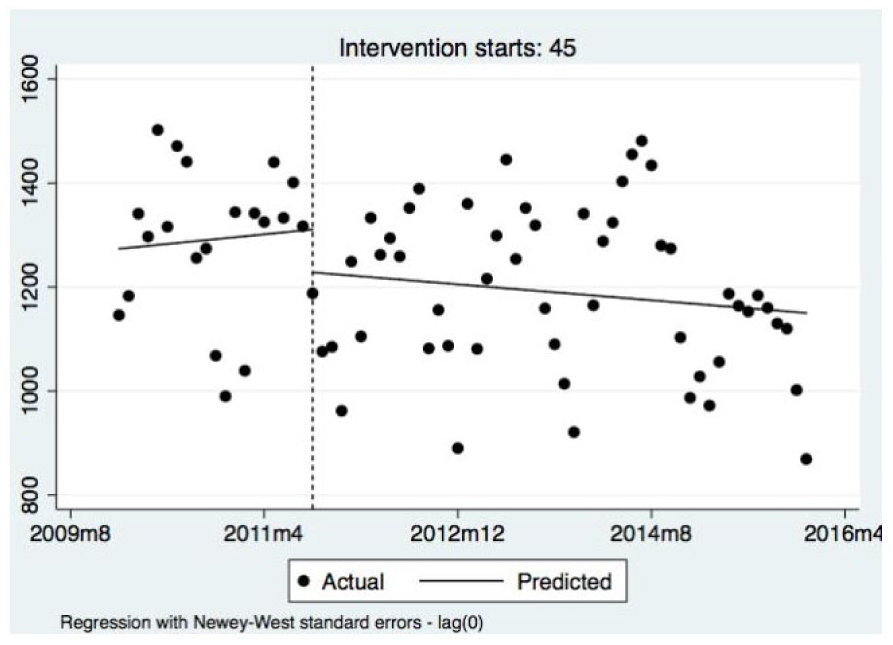
Statewide sexual assault reports, 2009-2016.
H2: Universal testing of SAKs will lead to an increase in the proportion of sexual assault reports that result in an arrest
Figure 2 displays statewide trends in the proportion of sexual assault reports resulting in an arrest between 2009 and 2016. Over this period, about one in 10 reported sexual assaults resulted in an arrest. The figure reveals a downward trend in arrests during this time period. It shows that there was no change in the percentage of reports that resulted in arrests coinciding with the time the law was implemented (p = .73). The trend lines pre- and post-law are essentially the same pre- and post-implementation (p = .31) and neither is significantly different from 0, or a flat trend (p = .16 pre-law and p = .45 post-law). In sum, statewide, there is no evidence that the statute led to an increase in the percentage of sexual assault reports that resulted in arrests.
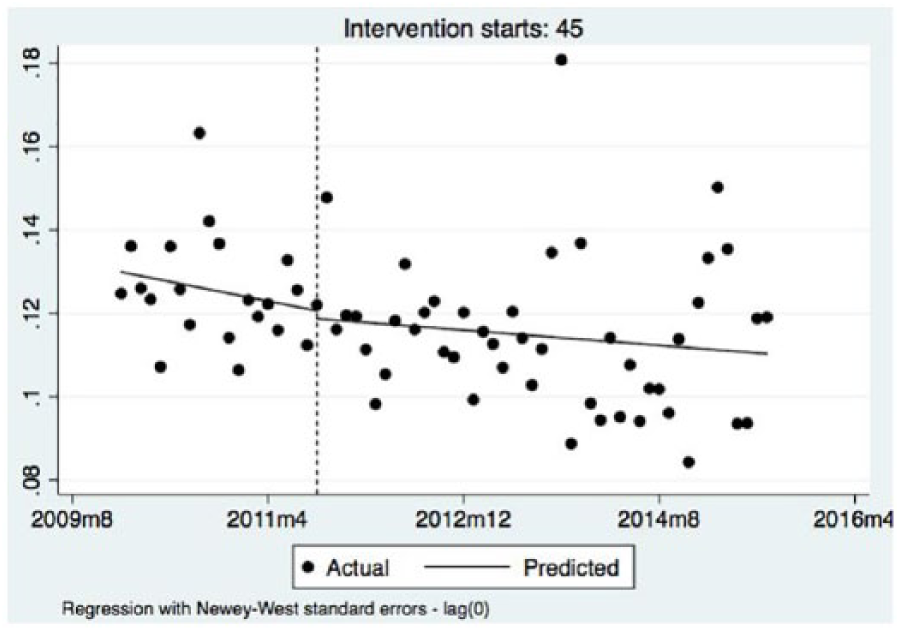
Statewide sexual assault reports that result in an arrest, 2009-2016.
H3: Universal testing of SAKs will result in an increase in the proportion of arrests that result in court filings and convictions
Finally, we examined trends in conviction rates during the period 2008-2015. As depicted in Figure 3, statewide conviction rates were relatively flat during this period, averaging about 40%. The interrupted time series analysis reported in table 1 of the appendix indicated that both pre- and post-SB 1636, the trend in convictions was not significantly different from flat (p = .08 and p = .24, respectively). There was no immediate change in the conviction rate in the first month of the post-implementation period (p = .79), nor was there a significant difference in conviction trends pre- versus post-law implementation (p = .71). In sum, there is no evidence of a change in conviction rates for sexual assault cases in Texas coinciding with implementation of SB 1636.
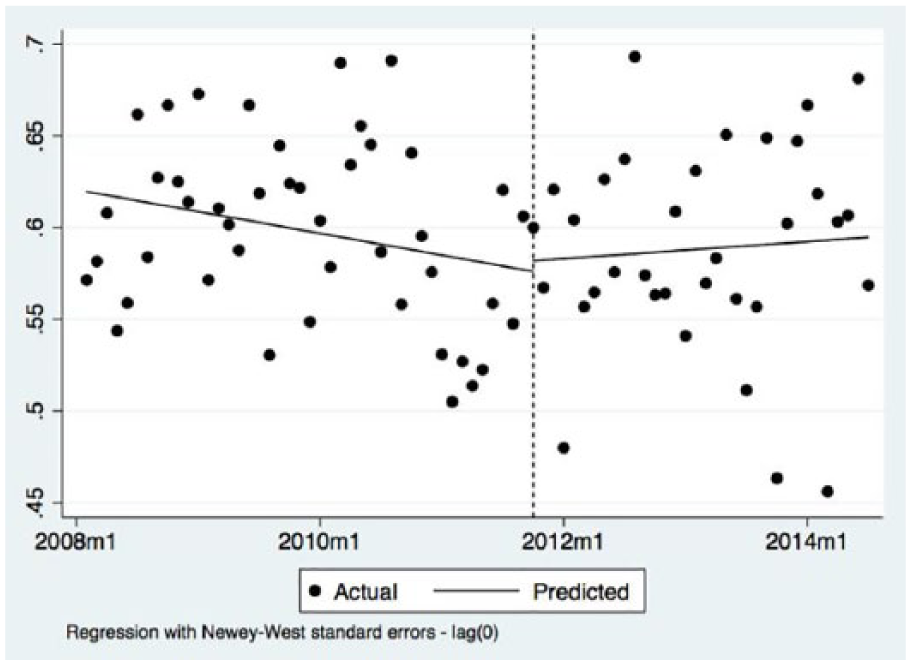
Statewide sexual assault conviction rate, 2008-2015.
Texas Department of Public Safety Results of Testing to Date on Pre-2011 Samples.
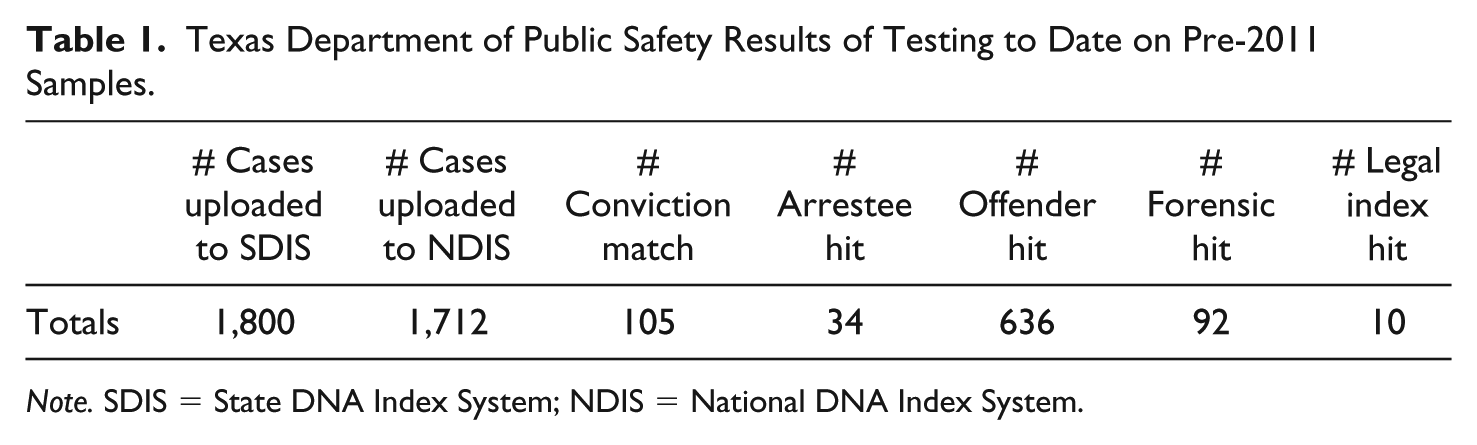
Note. SDIS = State DNA Index System; NDIS = National DNA Index System.
Effects of SB 1636 on Criminal Justice Agencies
Statewide impacts
SB 1636 required that all SAKs be submitted for DNA testing going forward and that law enforcement agencies submit to the DPS for DNA testing SAKs not previously tested from cases occurring from September 1996 to August 2011. At the time of this writing, only 156 of the 2,100 law enforcement agencies across the state had submitted kits for testing. Larger agencies had complied, and it may well be that many very small agencies did not have any untested SAKs. Without a means of verifying, the extent to which agencies have complied with SB 1636 cannot be determined.
In 2013, the state of Texas provided US$10.8 million to DPS to conduct testing. At first, DPS used its own labs to conduct testing, but the large volume of cases necessitated that it contract with private labs as well. While private labs developed most of the DNA samples from previously untested SAKs, the state crime labs remained responsible for uploading the DNA profiles to state and federal DNA databases. A state lab director said that the lab’s turnaround time for all types of cases averaged 18-20 months and growing, far from their ideal of 30-90 days. However, that lab director attributed the backlog to a new state requirement that increased the number of samples tested in homicide cases, not SB 1636. 2
DPS provided interim results of their testing process to date at each of the state DNA labs. The first two columns in Table 1 represent samples uploaded to the state and national DNA databases, respectively. Conviction matches represent matches made to offenders already convicted of the crime. The most interesting columns are hits to a known arrestee in the database, hits to a convicted offender in the database, and hits to a profile ordered by a judge (legal index hits). Hits to convicted offenders in the database are more than 35% of uploads. Each of these categories of hits typically provides new suspect information to investigators. Finally, forensic hits represent case-to-case hits, indicating that an offender’s DNA was collected from another crime scene (which may or not be a sexual assault); 5% of uploads fell into this category.
Local results
The effects of SB 1636 on local criminal justice agencies varied across the four sites that were included in our study. Overall, we were able to obtain a clear picture of the SB 1636 requirement for universal testing of SAKs in current cases.
Dallas
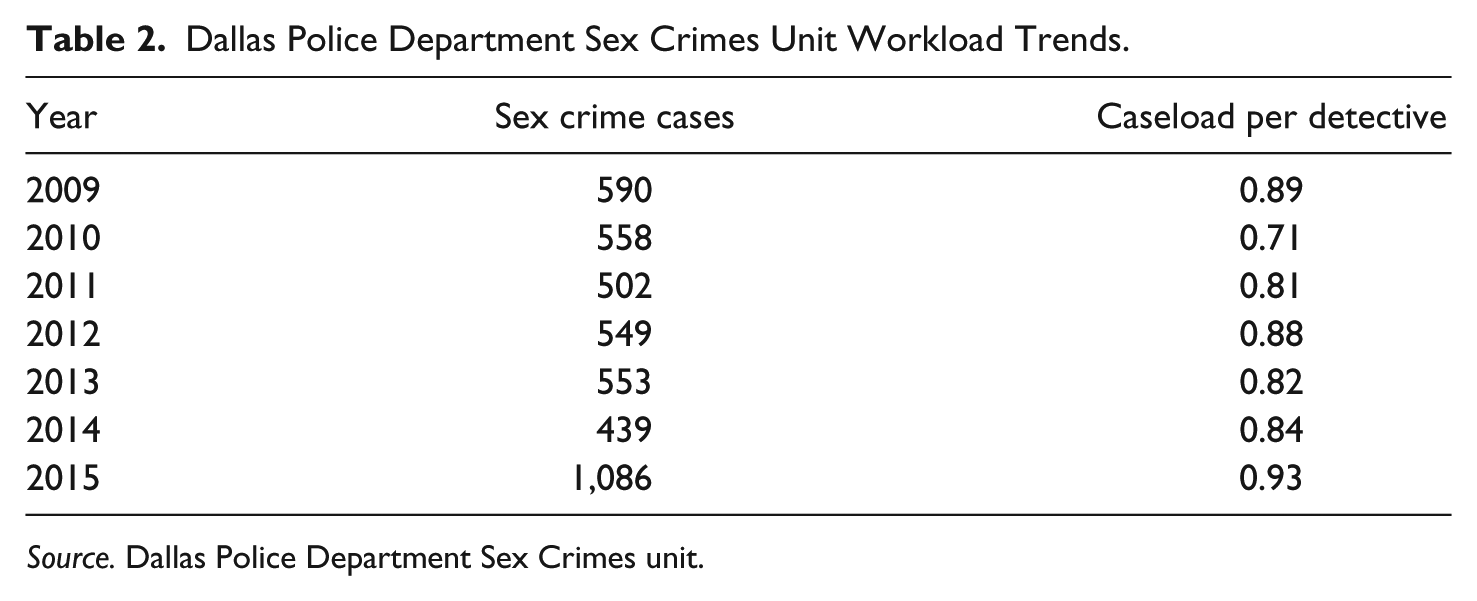
In Dallas, local crime lab staff acutely felt the effects of SB 1636 on new cases; procedures changed and new staff were added as a result of the legislation. The DPD keenly felt the effects of the aspect of SB 1636 that required retroactive submission of SAKs that had not been previously tested. The DPD was one of the early agencies to send previously untested cases to DPS for testing, eventually submitting 4,130 DNA samples. The CODIS hits returned from the testing of pre-August 2011 cases added substantially to DPD’s sexual assault unit workload. Table 2 shows a large spike in detectives’ caseloads in 2015 when the department began getting back CODIS hits from the pre-August 2011 untested kits submitted to the state for analysis.
Dallas Police Department Sex Crimes Unit Workload Trends.
Source. Dallas Police Department Sex Crimes unit.
The increase in police detective caseloads has been mirrored in the workload of the local DNA lab. Most law enforcement agencies in Dallas County use the SWIFS for DNA analysis. Prior to 2011, SWIFS’s policy on SAK testing was to allow law enforcement 30 days to decide if a particular kit had been tested. With the passage of SB 1636 in 2011, SWIFS went back to a previous policy of testing all SAKs. SWIFS was able to manage the increased workload for a while but, as time went on, the lab started falling behind. The lab workload has increased further because, according to the lab personnel, there has been a general trend by SANEs to collect more swabs out of an abundance of caution (e.g., collecting oral swabs even without a claim of oral penetration).
To operate most efficiently, SWIFS is now prioritizing SAK testing based on law enforcement request. This is a relatively informal system and only requires a call or email from an officer asking SWIFS to test the evidence. Priority cases take 60 days for DNA screening and 60 additional days for DNA testing. Because SWIFS cannot keep pace with the current volume of kits, there is a growing backlog of the unprioritized kits that are not being tested. To try to get back on top of the workload, SWIFS requested six new scientists to add to the five existing positions.
With the testing of more kits and the inclusion of more swabs per kit, the DPD has felt economic pressure to try to reduce its DNA testing expenses. The DPD has asked SWIFS to determine what evidence is most probative and test only that evidence initially. If the lab succeeds in extracting testable DNA from that evidence, then they can submit the sample to CODIS and stop further testing. If they do not find a usable DNA sample, then SWIFS can select the next most probative piece of evidence and test it. However, while this system may be cost saving, it can slow down the testing process dramatically in those cases where multiple samples are tested sequentially. SWIFS is currently trying to figure out a workable system that is both efficient and relatively prompt.
Staff that we spoke to at the Dallas District Attorney’s Office said they feel the least impact of SB 1636 as they are further “downstream” in the criminal justice system. Moreover, an NIJ grant to prosecute cold sexual assault cases has acted to further buffer that office from any major effects of increased sexual assault prosecutions. Through the US$1.5 million grant, they were able to hire two investigators who will work at the DPD on investigations stemming from cold case CODIS hits. The grant also provided for two more prosecutors, a victim advocate, and a legal coordinator supplementing the two existing sexual assault prosecutors.
Fort Worth
In Fort Worth, sexual assault police investigators said that SB 1636 had increased their in-house crime lab workload and led to a change in the methods used to screen and prioritize SAKs. The workload of the unit’s cold case sex crimes investigator’s workload increased immediately because of the requirement to inventory SAKs to determine which needed to be targeted for DNA testing. A cold case investigator position was created in early 2012. Although the position was not created as a direct result of SB 1636, investigators reported that the timing was ideal because once the inventory had been completed, the cold case investigator could conduct investigations of cases where a CODIS hit had been returned by the state police.
Because Fort Worth was early in getting its kits to DPS, all of the 144 kits submitted that resulted in CODIS hits had been returned to the police department, and the investigations stemming from those cases added substantially to the unit’s workload. Figure 4 shows that cases handled by the FWPD’s sexual assault unit increased substantially since the enactment of SB 1636. Cases reached a peak in 2014 and declined somewhat in 2015, possibly reflecting a large number of CODIS hits coming back from DPS in 2014 from the 1,083 untested cases submitted to the state for examination. Despite the downward trend from 2014-2015 in the figure, the 2015 FWPD annual report claimed an increase in the number of victims served by the Sex Crimes Unit, from 460 in 2014 to 510 in 2015.
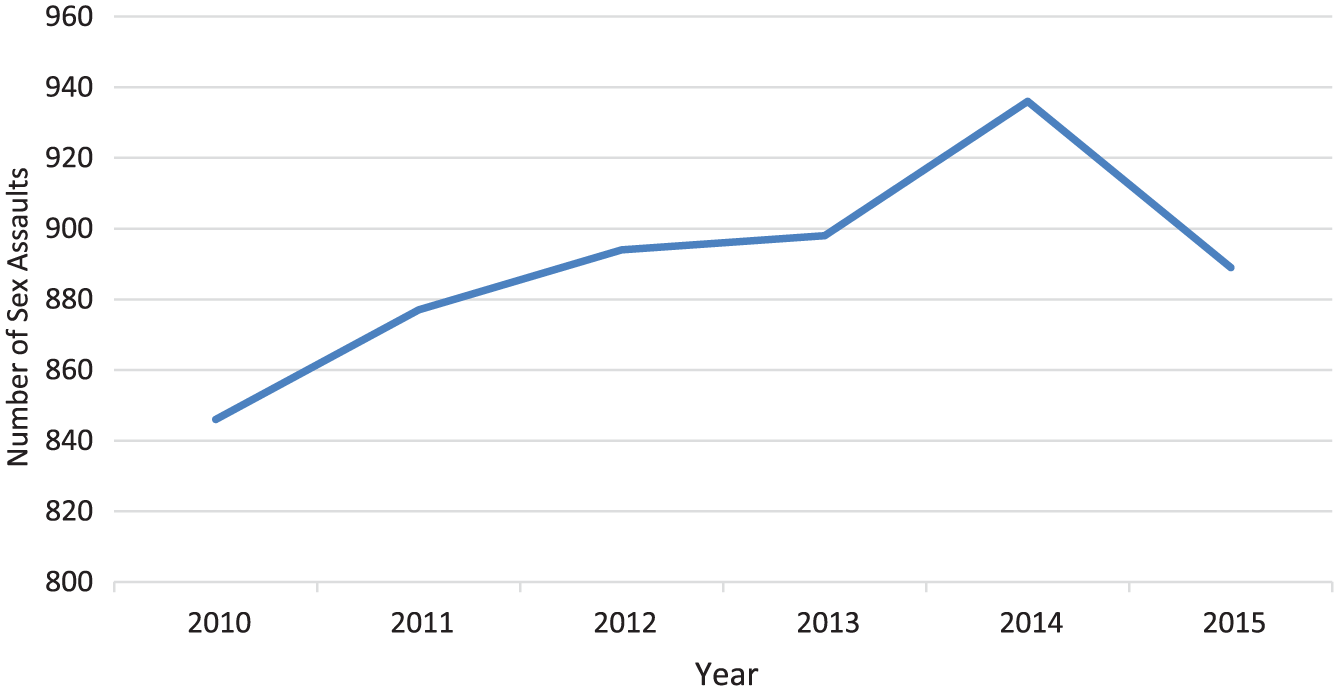
Reported sexual assault trends in Fort Worth, 2010-2014.
A crime lab representative reported that crime lab workloads and turnaround times have increased. In response, a new aspect of the lab’s prioritization system was implemented. The department created a priority system that allows detectives to provide the lab with a list of each of their “top ten priority” cases. Personnel reported that the turnaround time for the priority cases is about 1 or 2 months. The FWPD crime lab can then determine if it has the capacity to test these priority cases or outsource the priority cases to other labs. For cases not on detectives’ top-ten lists, the lab uses a priority system that ranks cases with suspect samples first (because these are most likely to advance to prosecution), then cases with known suspects (but no suspect sample), and then cases without suspects.
Police investigators saw some problems with SB 1636 in practice. Detectives maintained that they each get 2-3 cases per month where victims report a sexual assault, but cannot provide details on what happened. The lab employee indicated that in these cases they have numerous swabs to test because nurses collect swabs from multiple locations on the victim’s body. Detectives also maintained that they often encounter cases that “really aren’t going any place,” but the kit still needs to be tested and that “bogs down the system.”
In contrast, sexual assault prosecutors in the Tarrant County District Attorney’s Office did not perceive an impact of SB 1636 and do not anticipate greater work demands because of the legislation. Their workload had not increased appreciably because only a small proportion of the CODIS hits from the pre-August 2011 cases had been referred for prosecution at the time of our interviews.
Austin
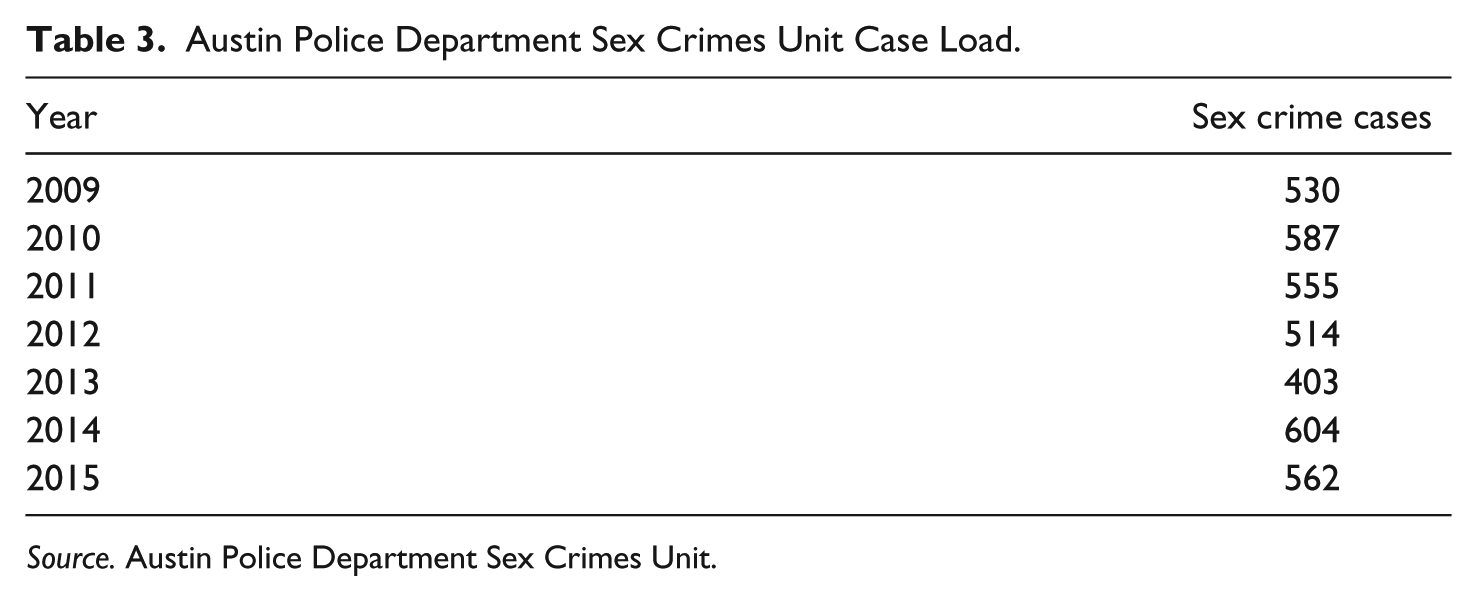
Table 3 depicts case load trends for the APD Sex Crimes Unit between 2009 and 2015. While 2014 and 2015 recorded the highest number of cases within the 7-year period examined, the table shows no clear trend in sexual assault cases during the time period since SB 1636 was implemented.
Austin Police Department Sex Crimes Unit Case Load.
Source. Austin Police Department Sex Crimes Unit.
Trends in forensic exams at local facilities told another story. Medical forensic exams of adult victims in Austin are conducted at Eloise House, a stand-alone clinic specifically created after passage of SB 1636 to meet the requirements of the legislation. Eloise House conducted more than 700 medical forensic exams in 2016, higher than the 475 yearly average seen at its predecessor in previous years. Rape crisis center advocates theorized that Eloise House has been able to successfully reduce the barriers for victims to receive an exam. Sexual assault victims are seen more quickly than in an emergency room, they are informed that they will never receive a bill for their care, and they avoid the confusion and sometimes misinformation that can come with an emergency room visit. Victims have come to Eloise House from 28 law enforcement jurisdictions around Austin, a far greater area than Austin/Travis County.
In Austin, as elsewhere, the impact of SB 1636 was most directly felt at the crime lab level. APD detectives cited SB 1636 as an important reason for an increased load on their crime lab, resulting in a 10-11 month wait for testing to be completed. While some cases can be fast-tracked, most cases are subject to the long wait time. This delay was cited as a serious detriment to investigations. Detectives explained that after 10-11 months, some victims are no longer interested in pursuing their case and other victims cannot be located. In addition, because of the lag in testing and the rotation of detectives from one unit to another, it is not unusual that the original detective is gone from the unit by the time testing is complete. APD crime lab personnel agreed that the requirement to test all new cases has impacted the lab. The lab estimated that in 2010 they had approximately 150-200 DNA cases waiting to be tested. As of March 2016, they had more than 1,200 DNA cases backlogged.
Overall, APD Sex Crimes Unit leadership and detectives were supportive of SB 1636. However, APD investigators and victim advocates expressed concerns about notifying victims of forensic testing results in the 408 pre-August 2011 cases. The concerns revolved primarily around the difficulty of locating victims, but also the possible negative reaction they may receive from some victims. Victim advocates noted that notifications of an old case moving forward had the potential of opening up old wounds, and needed to be done with consideration and respect for victims’ feelings and their privacy.
As with the other sites, prosecutors’ workloads were least affected by SB 1636 and they were the most positive about its implementation. According to prosecutors, SB 1636’s blanket testing of all SAKs has produced positive results. Prosecutors said that universal testing sometimes uncovered evidence that might not have been found otherwise. For example, testing was conducted on a SAK in which the survivor had blacked out. The survivor reported only digital penetration, but testing detected semen. Before SB 1636, they might not have submitted this case for testing and would have missed out on this valuable evidence.
Arlington
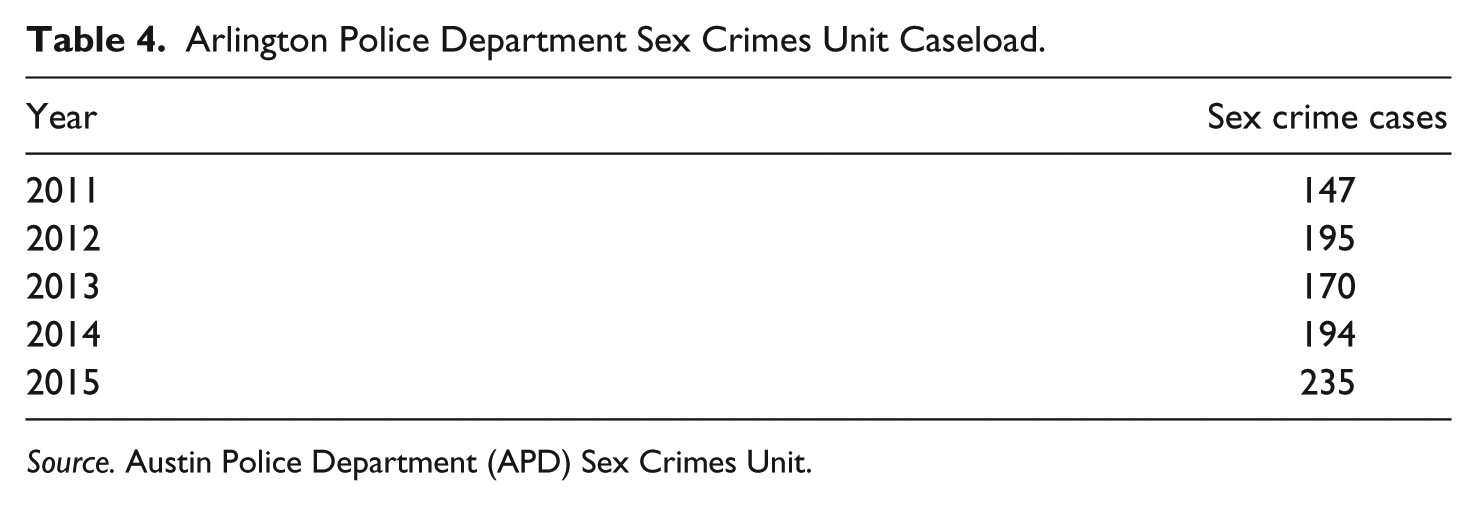
Table 4 shows a substantial increase in the caseload of the Arlington Police Department. Case volume in 2015 was 60% higher than in 2011.
Arlington Police Department Sex Crimes Unit Caseload.
Source. Austin Police Department (APD) Sex Crimes Unit.
In early 2016, the APD decided to change the crime lab they would use for testing SAKs because of cost concerns. The decision to change labs was made because the Travis County Medical Examiner’s Office (TCMEO) charged for each kit; other funding sources would reduce costs to the APD. Kits are now sent to the to the University of North Texas Center for Human Identification (UNTCHI), which has grant funds to test evidence in kits and, thus, will reduce costs to the Austin Police Department (APD).
Initially, the requirement to test previously untested cases did not have an impact on Arlington Police Department operations because of the way that the department interpreted SB 1636. The Department believed that if evidence in a SAK had been screened for the presence of foreign biological evidence (which the Tarrant County Medical Examiner’s Office routinely did), then their procedures complied with SB 1636. However, the Tarrant County District Attorney’s Office advised that SB 1636 required that kits not only had to be screened, but also had to be submitted for laboratory testing. On this advice, the Austin Police Department (APD) started a comprehensive audit to identify SAKs that had screened positive for foreign DNA evidence but had not undergone DNA testing. The SAK audit revealed there were 398 untested SAKs. The audit was completed in late July 2016, too late for the kits to be submitted to DPS as part of its testing program. Therefore, the Austin Police Department (APD) is using the UNTCHI to process these DNA samples.
As with the other sites, Tarrant County sexual assault prosecutors did not report a discernable effect of SB 1636 on their workload. They argued that comprehensive SAK testing is not likely to add substantially to the number of filings or convictions because many sexual assaults involve known offenders.
Discussion and Conclusion
We began this assessment with two questions: (a) How has SB 1636 affected sexual assault reports, arrests, and convictions? and (b) How has SB 1636 affected police agencies, prosecutors, and DNA labs? We came away with preliminary findings on the impact of SB 1636 in both of these areas.
We did not find evidence that SB 1636 increased the number of sexual assault cases reported in Texas, the proportion of cases resulting in arrest, or the proportion of court cases resulting in conviction. Sexual assault reports and arrests trended gradually downward over the period of time we studied, both statewide and in the three local counties examined. Conviction rates were essentially flat during the time period. Of course, there are many confounding factors, other than SB 1636, that may have influenced these trends over this period of time, such as the requirement for testing a greater number of DNA samples in capital cases mentioned earlier.
While DPS received more than 19,000 untested SAKs from law enforcement agencies across the state, the kits have come from just 156 of the 2,100 agencies in Texas. SB 1636 did not contain provisions for enforcement of the requirement to submit kits untested at the time the statute took effect in August 2011. Fortunately, the largest agencies in the state have submitted archived SAKs for testing. While many of the smaller agencies may see few sexual assault cases, and the smallest may not see any, the numbers suggest that compliance with this provision of SB 1636 was low. Importantly, a portion of kits that were submitted resulted in hits to other cases. Over time, these hits will be useful in identifying and prosecuting individuals who have assaulted multiple victims.
The impact of SB 1636 on workloads so far has varied among various parts of local criminal justice systems. Looking across sites, we see similarities in how they have adapted to SB 1636. First of all, the heaviest burden of SB 1636 has fallen on local crime labs. The requirement that all kits going forward be tested coincided with substantial increases in lab workloads and turnaround time. The exact amount of the increase due to SB 1636 is hard to determine because of other confounding factors including trends toward more DNA evidence being collected in sexual assault cases by SANEs and a statute requiring DNA testing of all evidence in capital cases. Fort Worth and Dallas have had to adopt new methods of prioritizing cases as turnaround time increased to unacceptably high levels. The Arlington Police Department switched to local DNA labs to reduce the higher costs it was experiencing as a result of the increase in samples tested. Sexual assault investigator workloads have also been affected by SB 1636, mainly through the requirement that older untested kits be submitted for laboratory analysis. This is true both because of the effort required in the process of inventorying pre-August 2011 kits and because of the time needed to review cases, contact victims, and investigate cases where CODIS hits are returned. Only Arlington, which had not yet had CODIS hits returned, has escaped much of this work temporarily. Being the furthest downstream, prosecutors have been least affected by SB 1636, either from the requirement that pre-August 2011 cases be tested or that all sexual assault cases be tested going forward.
In general, criminal justice officials spoke in positive terms about the statute. This was especially true of prosecutors, who believed that SB 1636 would result in more identification of serial rapists and more convictions. Of course, prosecutors are also the group of officials whose workload is least affected by the statute. Some police investigators felt that SB 1636 went too far in taking away from police the discretion not to test in cases where testing was not probative—cases in which a consensual defense was mounted, cases in which a guilty plea had already been entered, or cases in which victims were judged to be reluctant to cooperate. In Fort Worth, police personnel felt that the system was “bogging down” due to SB 1636. Some officials supportive of the statute also argued that jurisdictions ought to receive state funds to cover the increased costs they were experiencing.
A variety of factors may have contributed to the modest outcomes of this progressive legislation. Universal testing of DNA in sexual assault cases, by itself, may be insufficient to promote meaningful changes in reporting and criminal justice system indicators that some may have expected. Factors that foster change and may lend support to universal DNA testing legislation include the following: relevant criminal justice system training, particularly for law enforcement as the initial decision maker; adequate funding, particularly for labs and law enforcement responses to CODIS hits; and monitoring of the implementation so problems can be readily addressed and legislative intent ensured. The need for sufficient funding cannot be overemphasized, particularly for the cataloging and testing of previously untested cases, laboratory testing, and the investigative process for returned CODIS hits. While states may need to take primary responsibility for funding, other sources may provide critical support. Federal grants, like that received by Dallas for additional staff, can play a vital role in a jurisdiction becoming current in the testing of SAKs and the follow-up required for a just outcome.
Over time, as both the public and the criminal justice system become more familiar with the legislation, more of the anticipated benefits may be seen. This research offers a snapshot of SB 1636 in several locations at a particular time in its implementation.
As this project continues, we will be tracking the CODIS hits that stem from the batch of archival (1996-2011) cases that have been submitted for DNA testing under SB 1636. As the results of laboratory analysis are returned to local law enforcement agencies for follow-up, we are recoding how many trigger additional investigation and how many result in arrest and/or conviction. We already know that a major impediment in these cases is locating the victims and convincing them to reengage in a renewed investigation. Campbell, Shaw, and Fehler-Cabral (2018) have demonstrated the importance of the methods used to contact victims to obtaining their cooperation. As our sites each have different protocols to contact victims, we will be interested to see whether this makes a substantial difference in terms of success in reopening investigations and achieving arrests. If efforts are successful, obtaining justice for offenders who have so far gone unpunished will be another benefit of the passage of SB 1636.
Footnotes
Appendix
Declaration of Conflicting Interests
The author(s) declared no potential conflicts of interest with respect to the research, authorship, and/or publication of this article.
Funding
The author(s) disclosed receipt of the following financial support for the research, authorship, and/or publication of this article: This research was funded through a grant from Communities Foundation of Texas.