







Abstract
Using a randomly assigned 2 (victim race) × 2 (alcohol consumption) between-subjects factorial design, this study used surveys from a sample of 571 undergraduate students at a mid-sized, public university in the United States to determine the effect of procedural justice on police referral after reading a sexual assault disclosure vignette. Multivariate binary logistic regression models demonstrated that positive perceptions of procedural justice increased police referral following sexual assault disclosure. Victim alcohol consumption and rape myth acceptance decreased police referral. Victim race, victim alcohol consumption, and participant sex did not moderate the effect of procedural justice on police referral. Implications are discussed.
Keywords
Introduction
Sexual assault on college campuses remains a pressing social problem. As many as 20 to 25% of women will experience some form of sexual assault in college (Fedina et al., 2016; Fisher et al., 2000; Franklin, 2010). Survivors have faced deleterious consequences, including post-traumatic stress disorder (PTSD), appetite abnormalities, sleep disruptions, sexual dysfunction, self-esteem deficits, and internalizing disorders (Mason & Lodrick, 2013; Ullman & Filipas, 2001b). Physical harm and risk of sexually transmitted disease infection are also probable negative outcomes (Fisher et al., 2000).
Survivors rarely report to formal authorities, such as campus or municipal police (Sabina & Ho, 2014). Considerable barriers have impeded formal reporting, including concern that the experience was not serious enough to warrant police involvement, apprehension that police will not view the incident as worthy of investigation, uncertainty about the legal status of the assault, feelings of shame and embarrassment, and fear of secondary victimization by police (Sabina & Ho, 2014; Thompson et al., 2007). Survivors often disclose victimization to informal bystanders such as friends and family (Edwards et al., 2012; Fisher et al., 2003; Orchowski et al., 2013). The role of friends and family has been less clear in terms of the formal reporting process. Whether these individuals tend to facilitate or impede official reporting has not been well understood (for an exception, see Milliken et al., 2016), nor have the conditions that lead friends or family to facilitate or encourage formal reporting.
This study used a purposive sample of 571 student participants randomly assigned a 2 (victim alcohol use) × 2 (victim race) manipulated vignette describing a sexual assault disclosure (Franklin & Garza, 2021). Analyses focused on factors that predict whether participant-bystanders recommended official reporting. This study has placed unique emphasis on the role of procedural justice (Sunshine & Tyler, 2003) and the way it may impact participant responses for sexual assault survivors. Perceptions of procedural justice have been closely linked to cooperation with and reporting to police (Bradford, 2014; Mazerolle et al., 2013; Murphy & Cherney, 2011; Reisig et al., 2014). The link between perceptions of procedural justice and crime reporting has been well established in the policing literature, but procedural justice, as defined in policing, has not been examined in the context of sexual assault reporting. This study fills that gap.
Predictors of Formal Disclosure
Research has identified predictors of formal sexual assault reporting. These factors can be broken into two categories: (a) incident characteristics including the offender, victim, and assault, and (b) barriers to disclosure, such as fear of reprisal, stigma, shame, and secondary victimization by criminal justice actors (Binder, 1981; Feldhaus et al., 2000; Neville & Pugh, 1997). Factors that influence reporting have been cast within the framework of rape-tolerant myths that suggest certain types of sexual assault are more serious than others and specific victims are more worthy of police intervention (Burt, 1980; Lonsway & Fitzgerald, 1995). Sexual assault that has been captured in official statistics have often reflected the “ideal” victim, “classic rape” (Du Mont et al., 2003), and “convictable” or “credible” crime. It is important to note that crime characteristics and the ideas that surround reporting are closely linked to the emotional and psychological barriers survivors face when deciding to formally disclose. A stranger-perpetrated assault that involved a weapon or gratuitous violence has been perceived as more serious than an acquaintance-perpetrated assault facilitated by alcohol. A victim who has experienced sexual assault characterized by the latter factors may be less likely to formally report because they expect disbelief or are apprehensive about precipitating behavior, dress, and demeanor (Amir, 1975) that reflect endorsement of rape myths among first responders (Garza & Franklin, 2021; Ullman & Filipas, 2001a). In addition, victims of color have reported different experiences of seriousness, deficits in police response, and intervention necessity when compared with White victims, who have been perceived as more credible and less blameworthy (R. A. Donovan, 2007; Foley et al., 1995; Vareles & Foley, 1998). Myths related to Black women have generally sustained ideas rooted in historically negative stereotypes surrounding sexual activity, promiscuity, and sexual risk (Rosenthal & Lobel, 2016). The intersectionality of rape-tolerant myths has disadvantaged survivors of color in terms of helpseeking behavior and post-trauma healing (R. Donovan & Williams, 2002; Neville et al., 2004). The durability of rape mythology has been expressed both among college students (Vonderhaar & Carmody, 2015) and criminal justice practitioners (Garza & Franklin, 2021; Page, 2010).
Incident characteristics: Credible crimes and worthy victims
Fisher et al.’s (2003) landmark study of campus sexual assault in a nationally representative sample of 4,446 college women highlighted incident characteristics and sexual assault reporting. The presence of a weapon, an acknowledged victim, a stranger-perpetrator, and an incident that took place on campus property but outside of a personal residence were more likely to be reported to police. Research has also linked verbal threats, physical force, or gratuitous injury to increased reporting (Kilpatrick et al., 2007; Wolitzky-Taylor et al., 2011). Kilpatrick et al.’s (2007) study of university women revealed that victim alcohol and/or drug consumption decreased the likelihood of formal disclosure, reiterating the resilience of rape myths that have included “she’s asking for it” or “she provoked it,” where survivor risk-taking behavior has mitigated perpetrator responsibility among onlookers (Koss et al., 1994). Findings related to victim alcohol consumption and police reporting have been replicated by other researchers (Krebs et al., 2009; Lindquist et al., 2013) and among general population samples. Seriousness of physical injury or demonstrable harm (Bachman, 1993; Chon, 2014; Pino & Meier, 1999; Williams, 1984); presence of a weapon or use of force (Clay-Warner & Burt, 2005; Du Mont et al., 2003; Felson & Paré, 2005; Lizotte, 1985; Orcutt & Faison, 1988); victim–offender relationship (Chon, 2014; Du Mont et al., 2003; Felson & Paré, 2005); and victim characteristics such as age, education, race, and socioeconomic status (Clay-Warner & Burt, 2005) have influenced willingness to report. Survivors have been more likely to report to police if their experiences fit the classic rape narrative (Du Mont et al., 2003).
Psychological barriers to formal reporting
Sexual assault reporting has also been contextualized through emotional and psychological obstacles. The stigma associated with being a rape victim has inhibited reporting (Binder, 1981; Feldhaus et al., 2000; Neville & Pugh, 1997). In a study of college women, Sable et al. (2006) revealed the most important barriers to reporting were shame, guilt, embarrassment, and fear of not being believed. Survivors encountered skepticism and questions surrounding past sexual behavior from first responders. The insensitivity of these responses, termed a “second rape” (Campbell et al., 2001), revictimize survivors and exacerbate trauma (Campbell, 2008). Sabina and Ho (2014) reported the most consistent impediment to reporting has been the belief by survivors that their victimization was not serious enough to warrant police involvement. Thompson et al.’s (2007, p. 279) study of 134 survivors found that women who experienced “attempted or completed rape” compared with “sexual coercion or unwanted sexual contact” were approximately 6 times more likely to forgo reporting because they anticipated blame by law enforcement. These women were nearly 3 times more likely to forgo police reporting because they expressed shame and embarrassment, and 2.5 times more likely to forgo reporting because they did not want anyone to know about their victimization (Thompson et al., 2007). Indeed, psychological barriers may be most significant for survivors who need the greatest assistance. These studies demonstrated that survivors weigh a number of factors when deciding to disclose victimization, and these factors can be understood through the broader lens of how they may anticipate police responses based on endorsement of rape myths.
Patterns of Sexual Assault Disclosure
To that end, college women rarely disclose sexual assault to police. Fisher et al. (2000) reported fewer than 5% of all attempted or completed rape incidents among college women have been reported to law enforcement. Later analyses of their data revealed that, of all sexual victimization, only 2% of incidents were reported to police (Fisher et al., 2003). Low rates of formal disclosure have been corroborated by recent research (Kilpatrick et al., 2007; Krebs et al., 2009; Lindquist et al., 2013). In fact, Sabina and Ho (2014) reported rates from 0 to 12.9% across studies; 1 rates were generally highest for forced sexual assault and lowest for acquaintance rape and sexual coercion—reiterating the pervasive, negative impact of stereotypes surrounding the definition of real or classic rape and the acknowledgment of victimization (Du Mont et al., 2003; Koss, 1985).
Sexual assault survivors have been more likely to turn to informal support systems, including friends, roommates, and/or family members (Fisher et al., 2000, 2003). These informal disclosees or bystanders become gatekeepers of service referral, formal resource provision, and potential police intervention (Ahrens et al., 2007; Franklin & Garza, 2021; Paul et al., 2014; Ruback, 1994). Fisher et al. (2003) found approximately 70% of sexual assault victims disclosed to bystanders who were members of informal support networks. Almost 90% of these disclosures were made to friends, while 10% disclosed to family members. These patterns have been repeated in recent research (Banyard et al., 2007; Edwards et al., 2012; Krebs et al., 2009; Lindquist et al., 2013; Orchowski et al., 2013). In addition, survivors have tended to disclose to female friends (Edwards et al., 2012; Pitts & Schwartz, 1993). The friends of sexual assault survivors occupy a unique position as the primary individuals to facilitate assistance, provide referrals, and suggest appropriate service provision following sexual assault.
The Role of Friends in Sexual Assault Reporting
The response afforded to a sexual assault survivor following a disclosure has had a significant impact on health outcomes, psychological wellbeing, and post-traumatic growth (Ahrens, 2006; Filipas & Ullman, 2001; Orchowski & Gidycz, 2012; Ullman, 1996; Washington, 2001). When bystander responses are positive, disclosure can be beneficial for survivor mental health and encourage helpseeking behavior, clinical intervention, post-trauma recovery, and police intervention (see Franklin & Garza, 2021 for a review). Positive disclosure responses have included empathic concern, validation, and believing the story that a survivor tells (Filipas & Ullman, 2001; Orchowski & Gidycz, 2012; Ullman, 1996). Negative disclosure responses, traced to adverse ideas about the seriousness of rape and adherence toward rape-tolerant myths (Lonsway & Fitzgerald, 1995), have been psychologically harmful and exacerbated trauma sequelae (Starzynski et al., 2005; Ullman, 1996, 1999). Adverse responses included victim blame attributions; insensitivity; questioning the victim’s behavior, dress and/or demeanor; stigmatizing the victim; and disbelieving her story (Ahrens, 2006; Filipas & Ullman, 2001; Washington, 2001).
Friends of sexual assault survivors also have the potential to stand as a barrier to or a facilitator of formal reporting to police. Research in this area is sparse, but Paul et al.’s (2014) analysis speaks directly to this issue (see also Ahrens et al., 2007). Using a nationally representative sample of 435 women, Paul et al. (2014) categorized sexual assault survivors into three groups: (a) encouraged to report to police upon consultation, (b) not encouraged to report to police upon consultation, and (c) never sought consultation. Among survivors who received encouragement, 56% reported victimization to police. Rates of formal reporting were considerably lower among survivors who were not encouraged (14.7%) and nonconsulting survivors (8.7%). Smaller scale studies have highlighted the role that encouragement from bystanders has had in formal reporting (Campbell et al., 2001; Patterson & Campbell, 2010; Ruback et al., 1984).
Despite the critical role of bystanders, limited research has examined factors that lead these individuals to encourage formal police reporting. Ruback (1994, p. 430) found that disclosees were more likely to recommend calling the police for personal crimes, including sexual assault, if the offense involved a stranger-perpetrator. Other studies supported this assertion (Ruback et al., 1999; Yamawaki, 2007), underscoring the misconception that stranger-perpetrated sexual assault is more serious and deserving of formal intervention compared with acquaintance- or intimate-perpetrated sexual assault. Women and older bystanders have been more likely to advise survivors to call police as a first response compared with men and younger bystanders; such advice is less likely if the victim consumed alcohol prior to the incident (Ruback et al., 1999).
In a more recent analysis of disclosure responses, Suzuki (2013) used a vignette design to identify participant-bystander responses to a sexual assault vignette. Among her sample of 653 undergraduate students, an acquaintance-perpetrator relationship (compared with an intimate-perpetrator) and victim resistance predicted police referral. Finally, Franklin and Garza (2021) employed a racially diverse sample of 348 students who were randomly assigned a 2 (perpetrator type) × 2 (victim race) between-subjects factorial design using a sexual assault disclosure vignette to assess attributions of victim empathy, victim culpability, and resource referral (including police reporting) upon disclosure. Multivariate analyses demonstrated increased victim culpability attributions and decreased resource referral when the victim was assaulted by an acquaintance-perpetrator compared with a stranger. Franklin and Garza (2021) reported no direct victim race effects on resource referral, including police referral.
While these studies have highlighted characteristics that lead participant-bystanders to recommend formal police reporting, research has not considered how these bystanders view the police and how this may influence whether they suggest police intervention. This is a noteworthy limitation, given that perceptions of police—especially perceptions of procedural justice—have proved insightful for understanding how citizens interact with police in other contexts (Mazerolle et al., 2013; Sunshine & Tyler, 2003; Tyler, 1990, 2003).
The Importance of Procedural Justice
Procedural justice is generally understood as the quality of decision-making and treatment by police during police–citizen interactions (Thibaut & Walker, 1975). Procedural justice is provided when police (a) engage in neutral/fair decision-making by treating citizens equally; (b) behave respectfully by treating individuals with dignity and professionalism; (c) appear to be trustworthy, transparent, and honest; and (d) afford citizens a voice to express themselves and explain their perspective (Tyler, 1988; Tyler & Huo, 2002; Tyler & Murphy, 2011). When citizens believe police are procedurally just, they view police as legitimate authority figures (Schulhofer et al., 2011; Sunshine & Tyler, 2003; Tyler, 2003). This has improved compliance and cooperation from citizens, including information sharing, willingness to assist police, and increased crime reporting (Murphy & Barkworth, 2014; Tyler & Huo, 2002).
Tankebe (2013) found that perceptions of procedural justice were positively related to increased cooperation. His sample of Londoners revealed willingness to report crime, suspicious activity, and provide information about suspects to law enforcement when they viewed police as procedurally just. Relatedly, Murphy and Barkworth (2014) analyzed a sample of 638 crime victims and reported that procedural justice increased willingness to report victimization, including burglary, vandalism, physical assault, and domestic violence. The importance of procedural justice has also been demonstrated for domestic security and terror threats. Madon et al. (2017) found, among a sample of 800 Muslims in Australia, that procedural justice was positively related to willingness to report terror threats to police. Similar results have been reported by Schulhofer et al. (2011) among Muslim Americans in New York.
The confluence of factors that comprise procedural justice and encourage citizen willingness to report victimization may be particularly instructive for sexual assault disclosure. First, procedural justice may help to assuage some of the concerns that routinely prevent sexual assault survivors from formal reporting, including apprehension surrounding disbelief, stigma, and blame (Sabina & Ho, 2014; Sable et al., 2006). Survivors often consult friends, and thus, their perceptions of police may be central to understanding the victimization-reporting nexus. If bystanders perceive police as respectful, trustworthy, and willing to give the victim a voice (Elliott et al., 2011), they may be more inclined to recommend police reporting. In other words, perceptions of procedural justice may provide bystanders with confidence and trust in the police to encourage sexual assault survivors to report their victimization experience.
Purpose of the Current Study
Sexual assault survivors most frequently disclose victimization to informal supports rather than criminal justice practitioners. This decision positions bystanders to facilitate next steps for victims, including police referral. The way bystanders perceive police procedural justice is relevant for understanding disclosure responses and the facilitation of formal sexual assault reporting. The present study adds to existing research on sexual assault disclosure by assessing the relation between perceptions of procedural justice and bystander decisions to advise police referral following a hypothetical sexual assault disclosure. The present study addressed the following research questions:
In addition, given the nature of pervasive rape-tolerant myths that attribute certain types of victims who experience particular types of sexual assault as more serious and intervention-worthy, the following two research questions were addressed:
Finally, existing evidence on women sexual assault survivors has demonstrated that disclosures are most frequently provided to women friends. Thus, the following research question was addressed:
Method
Data for the current study employed a purposive sample of undergraduate students in criminal justice classes during the fall 2016 semester at a mid-sized, southern university in the United States. Proper institutional review board (IRB) approval was obtained prior to administration of pencil-and-paper surveys. Classes were selected for inclusion in the sample based on three criteria: (a) sections with large enrollment to maximize participation; (b) sections in which the researchers anticipated instructor consent; and (c) substantive courses that would provide a balance between upper division electives and introductory required classes (including core curriculum). The final sample was drawn from four upper division and two introductory courses. Student participation was solicited during regularly scheduled class times and involvement was voluntary and anonymous. Extra credit was incentivized for participation, and an alternative option was available. The study was described as a “2016 College Experiences Survey.” Survey items were presented in set order and completion took approximately 25 min. Participants were randomly assigned a manipulated vignette depicting a sexual assault disclosure involving two university students. The victim/offender race dyad and victim alcohol consumption were manipulated. Administration of the survey yielded 675 survey responses. Cases with missing data on pertinent variables were omitted. 2 Analyses used a sample of 571 cases.
Sample Demographics
The mean age of participants was 20.25 years. Women represented just over half of the sample (n = 334; 58.5%) compared with men (n = 237; 41.5%). The sample was racially/ethnically diverse, such that 42% (n = 240) of participants were White; 32.6% (n = 186) were Latinx; almost 19% (n = 107) were African American; and just under 7% were Asian American, American Indian, or Other. First-year students represented 22.4% of the sample (n = 128), and sophomores made up 26.3% of the sample (n = 150), followed by juniors (35.4%; n = 202) and seniors (16%; n = 91). Fourteen percent of the sample (n = 80) were Greek affiliated (e.g., belonged to a university sorority or fraternity), 3% (n = 19) were Reserve Officer Training Corps (ROTC) members, and 42.6% (n = 243) were employed.
Randomly Assigned Sexual Assault Vignettes
Participants were randomly assigned one of the four manipulated vignettes modified from Franklin and Garza (2021). These vignettes have been used in modified form in prior research to portray sexual assault victimization by type of perpetrator (Newcombe et al., 2008; Simonson & Subich, 1999) and race of victim (Franklin & Garza, 2021). The vignette was manipulated to create a 2 (White victim/offender dyad or Black victim/offender dyad) × 2 (victim intoxication or no intoxication) between-subjects factorial design. In the vignette, the victim 3 is described as, “your friend” and after the incident is described, the vignette reads, “the next day your friend approaches you for advice.” Appendix A presents the vignette.
Dependent Variable
Police referral was captured with one item that asked participants to rate the likelihood they would recommend police involvement after reading the vignette. Responses were measured on a 6-point, Likert-type scale from 1 (extremely unlikely) to 6 (extremely likely; M = 5.61, SD = 0.88). Due to the heavily skewed nature of the Likert-type police referral measure, a binary variable was created. The “extremely likely” and “very likely” responses were aggregated into a single Yes = 1 response (n = 435; 76.2%), and the remaining four points on the Likert-type scale, which indicated reservation in referring the sexual assault survivor to police, were aggregated to create a single No = 0 response (n = 136; 23.8%). Although an examination of the original scale would have been ideal, this strategy made conceptual sense and provided a better fit to the data. 4
Vignette Manipulations
Alcohol consumption
Two vignettes described a college woman who attended a house party and “consumed five alcoholic drinks,” and two vignettes described a college woman who attended a house party and, “did not consume any alcohol.” A single, binary variable captured victim alcohol consumption (No = 0 [n = 287; 49.7%], Yes = 1 [n = 287; 50.3%]).
Victim race
Two vignettes described a “Caucasian” woman student named “Elizabeth,” and two vignettes described an “African American” woman student named “Keisha.” Perpetrator race was conveyed through name selection (e.g., “Tim” and “Jerome”). Extensive research has indicated that race can be implicitly signaled with distinctive names to convey a particular racial affiliation (Gaddis, 2017). The perpetrator/victim dyads were intraracial. A binary variable captured victim race (White/Caucasian victim = 0 [n = 287; 50.3%], Black/African American victim = 1 [n = 284; 49.7%]).
Independent Variables
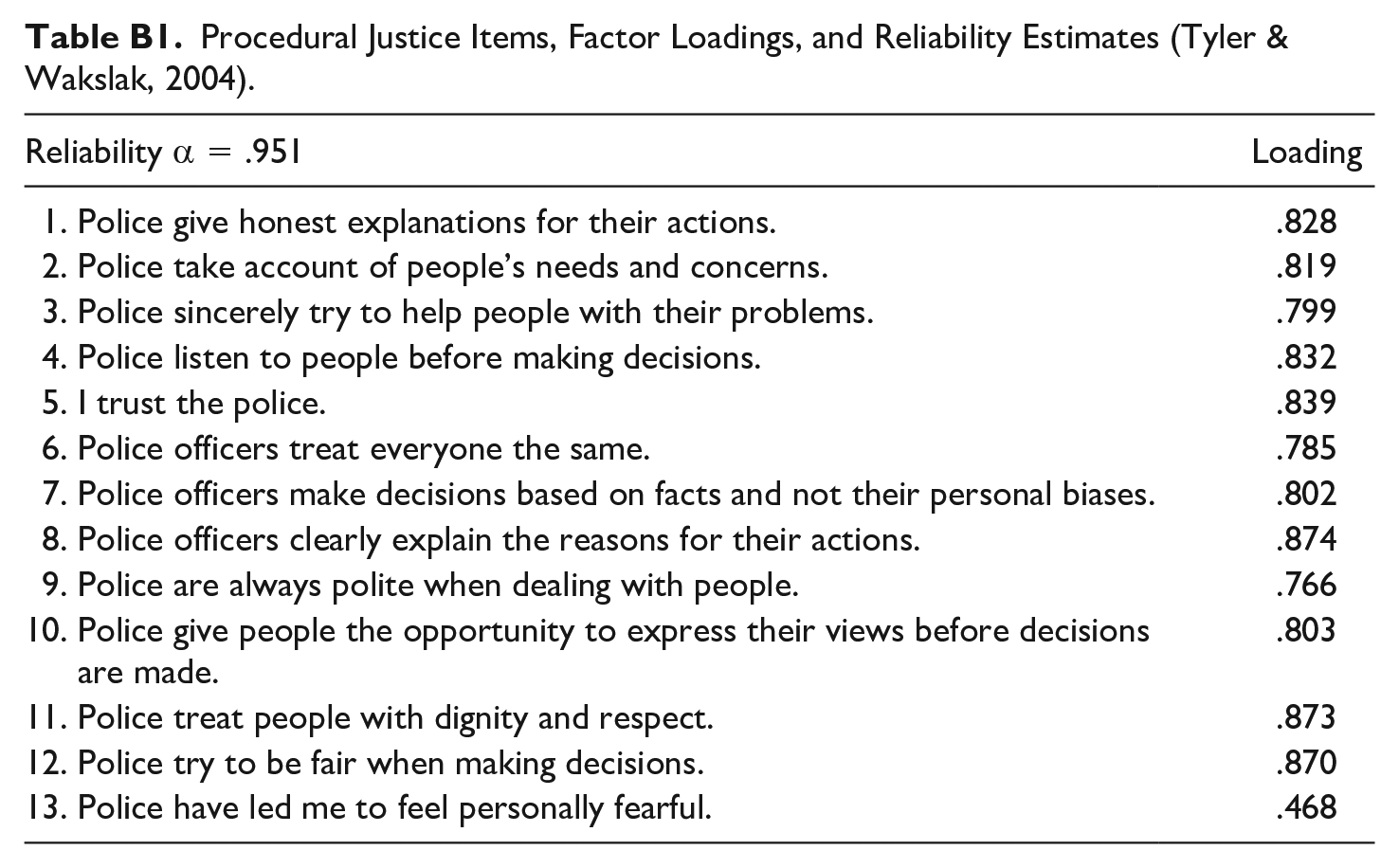
Procedural Justice was captured using an initial pool of 13 items adapted from Tyler and Wakslak’s (2004) study on procedural justice among Los Angeles Police Department officers. Modified items were designed to capture quality of decision-making, treatment, and citizen trust and rephrased to represent law enforcement not affiliated with a particular municipal location. Responses were measured on a 6-point, Likert-type scale from 0 (strongly disagree) to 5 (strongly agree). The 13 items were subjected to exploratory factor analysis (EFA) with maximum likelihood estimation (MLE), which produced one factor with an eigenvalue greater than 1 that accounted for 61.98% of the variance. Factor loadings ranged from .449 to .871. The factor comprised 13 items and was labeled procedural justice. An index was created using the 13 items (range: 0–65), with higher scores representing increased perceptions of police procedural justice (M = 38.01; SD = 14.07; α = .924). Mean values ranged from 1.42 to 3.71 and standard deviations ranged from 1.17 to 1.52 indicating adequate variability. Appendix B presents the 13 items, factor loadings, and reliability estimates for the procedural justice index.
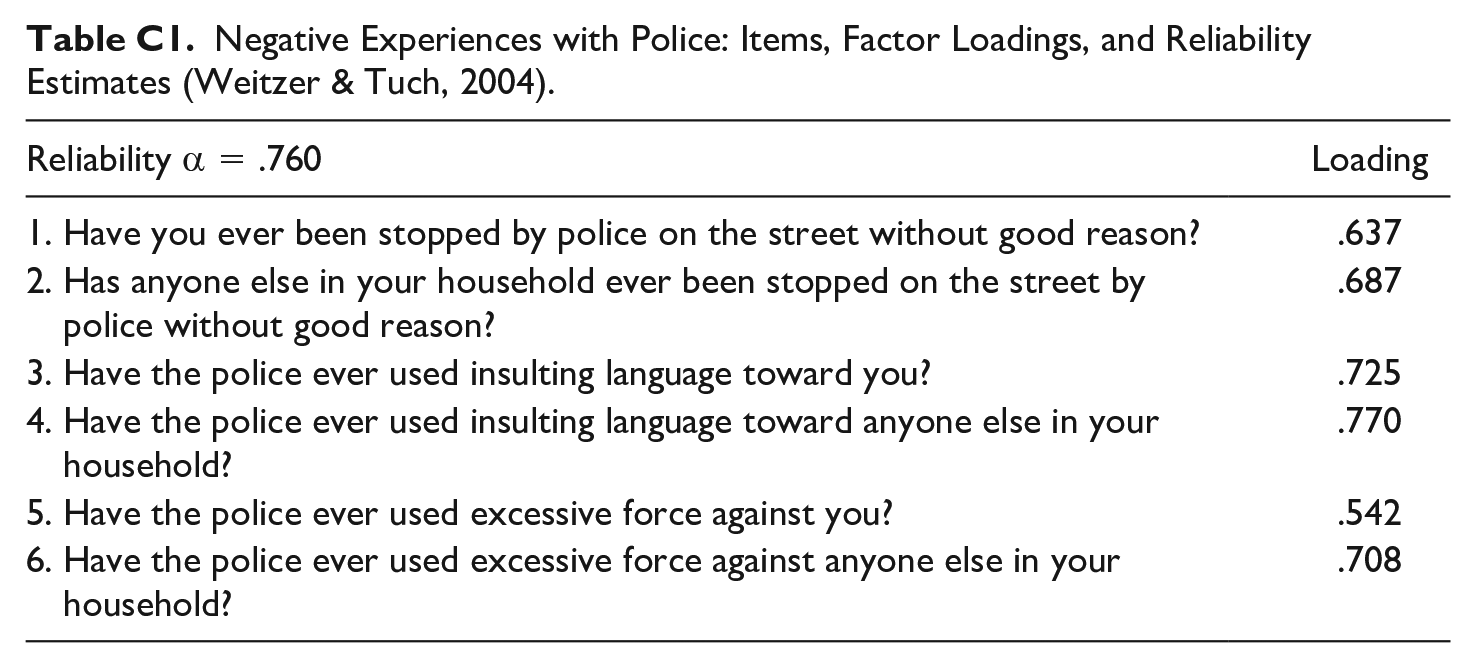
Negative experiences with police were captured using an initial pool of 6 items from Weitzer and Tuch (2004) describing contentious encounters with police. Items were captured as a binary variable (No = 0; Yes = 1). The 6 items were subjected to EFA with MLE, which produced one factor with an eigenvalue greater than 1, accounting for 38.41% of the variance. Factor loadings ranged from .473 to .760. The factor comprised 5 items and was labeled negative experiences with police. An index was created, with higher scores indicating increased frequency of negative experiences with police (M = 1.00; SD = 1.39; α = .748). Mean values ranged from 0.12 to 0.31 and standard deviations ranged from 0.33 to 0.46 indicating adequate variability. See Appendix C.
Voluntary contact with police was measured with one binary item, “Have you ever voluntarily called the police for assistance?” (No = 0 [n = 331; 58.0%], Yes = 1 [n = 240; 42.0%]). Moreover, incident illegality was measured with one item following the vignette that asked participants to indicate the degree to which they believed the behavior described in the disclosure was illegal. Responses were provided on a 5-point, Likert-type scale ranging from 1 (I believe the scenario described legal behavior) to 5 (I believe the scenario described illegal behavior; M = 4.56, SD = 1.06).
Rape myth acceptance was measured using Lonsway and Fitzgerald’s (1995) 19-item Illinois Rape Myth Acceptance—Short Form (IRMA-SF), which captured adherence to myths that blame the victim, excuse the perpetrator, and justify sexual assault. Responses were captured on a 6-point, Likert-type scale from 0 (strongly disagree) to 5 (strongly agree). Items were summed to create an index from 0 to 95 where increased values represented increased endorsement of rape myths (M = 12.04, SD = 12.87; α = .918).
Lifetime sexual victimization captured experiences of unwanted sex as well as attempted and completed rape using the 35-item Revised Sexual Experiences Survey (SES-R; Koss et al., 2007). Sexual assault was measured through behavioral items that identified seven unique forms of forced sex and included coercion; intoxication/incapacitation; threats and force that produced unwanted sexual contact; and attempted and completed oral, vaginal, and anal rape. For each category, five questions in the SES-R were coded so that an affirmative response to any of the items was coded 1 and a “no” response to all items was coded 0. This produced seven binary variables (Yes = 1, No = 1). These seven variables were aggregated to create one SES-R measure. Responses from the seven calculated items were coded 1 if the participant responded affirmatively to any of the questions (n = 194; 34.0%) and 0 if the participant responded negatively to all seven questions (n = 377; 66.0%; α = .839).
Four control variables were included in the analysis. Participant race/ethnicity was captured using a set of three dummy variables (No = 0; Yes = 1) representing White, Black, and Latinx, with White as the reference category. Participant sex (M = 0 [n = 237; 41.5%], W = 1 [n = 334; 58.5%]) and current class standing (First year = 1 [n = 128; 22.4%], Sophomore = 2 [n = 150; 26.3%], Junior = 3 [n = 202; 35.4%], Senior = 4 [n = 91; 15.9%]) were also captured. Participant’s family income was measured on an ordinal scale from 0 (less than US$24,999), 1 (US$25,000–US$54,000), 2 (US$55,000–US$84,999), to 3 (US$85,000 and above).
Analytic Strategy
The analysis proceeded in two stages. 5 First, a zero-order correlation matrix, with point-biserial correlations, means, and standard deviations for study variables, was reported. Second, two multivariate binary logistic regression models were estimated. A main effects model predicting the effect of procedural justice on police referral following a sexual assault disclosure while control variables were entered simultaneously was estimated. A second model was estimated that included interaction terms to assess the moderating effect of vignette manipulations and participant sex on procedural justice to predict police referral following a sexual assault disclosure, while controls were entered simultaneously.
Results
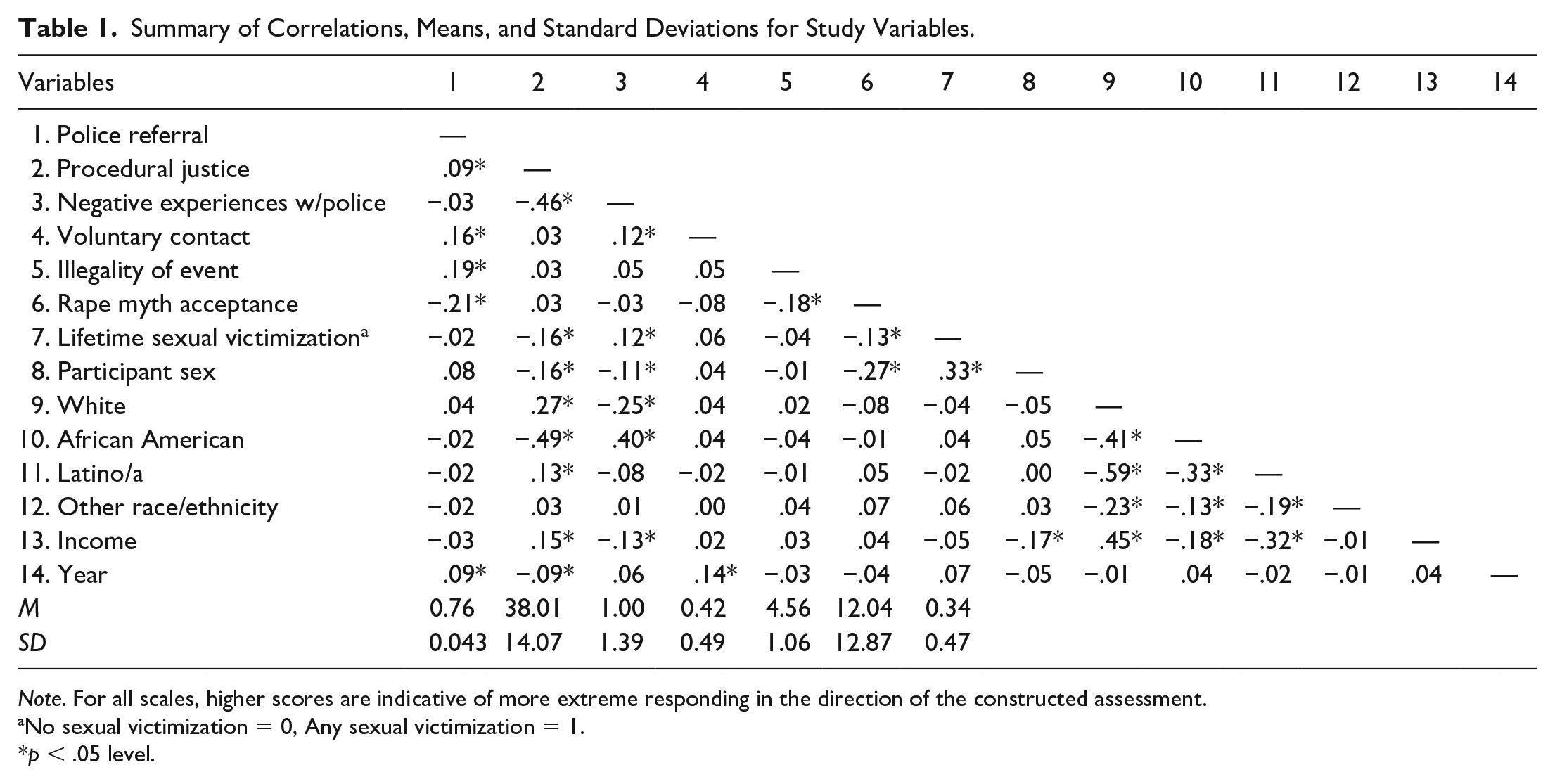
Bivariate Correlation Matrix With Means and Standard Deviations of Study Variables
Table 1 presents the zero-order correlation matrix with point-biserial correlations for the dichotomous dependent variable: police referral (No = 0; Yes = 1). Several bivariate relationships were statistically significant. There was a weak but significant, positive relation between procedural justice and police referral, r(569) = .09, p = .034, and between class standing and police referral, r(569) = .09, p = .025. Voluntarily calling the police for assistance was significant and positively related to police referral, r(569) = .16, p <.000, but the magnitude of this relation was small. Increased perceptions of the illegality of the incident revealed a weak, but significant, positive relation to police referral, r(569) = .19, p < .000. There was a significant, negative relation between adherence to rape myths and police referral, r(569) = −.21, p < .000, and the magnitude of this relation was moderate. Participant race, income, negative experiences with police, lifetime sexual victimization, and participant sex were not significantly related to police referral in the bivariate calculations.
Summary of Correlations, Means, and Standard Deviations for Study Variables.
Note. For all scales, higher scores are indicative of more extreme responding in the direction of the constructed assessment.
No sexual victimization = 0, Any sexual victimization = 1.
p < .05 level.
In assessing bivariate correlations between predictor variables, there was a strong, significant, negative relation between procedural justice and negative experiences with police, r(569) = −.46, p < .000, and between procedural justice and being African American, r(569) = −.49, p < .000. There was a significant, positive relation between procedural justice and family income, r(569) = .15, p < .000, and between procedural justice and being White, r(569) = .27, p < .000; both of these relations were relatively weak. Finally, there was a weak but significant, negative relation between procedural justice and lifetime sexual victimization, r(569) = −.16, p < .000; between procedural justice and participant sex (M = 0; W = 1), r(569) = −.16, p < .000; and between procedural justice and class standing (First year = 1; Senior = 4), r(569) = −.09, p = .026.
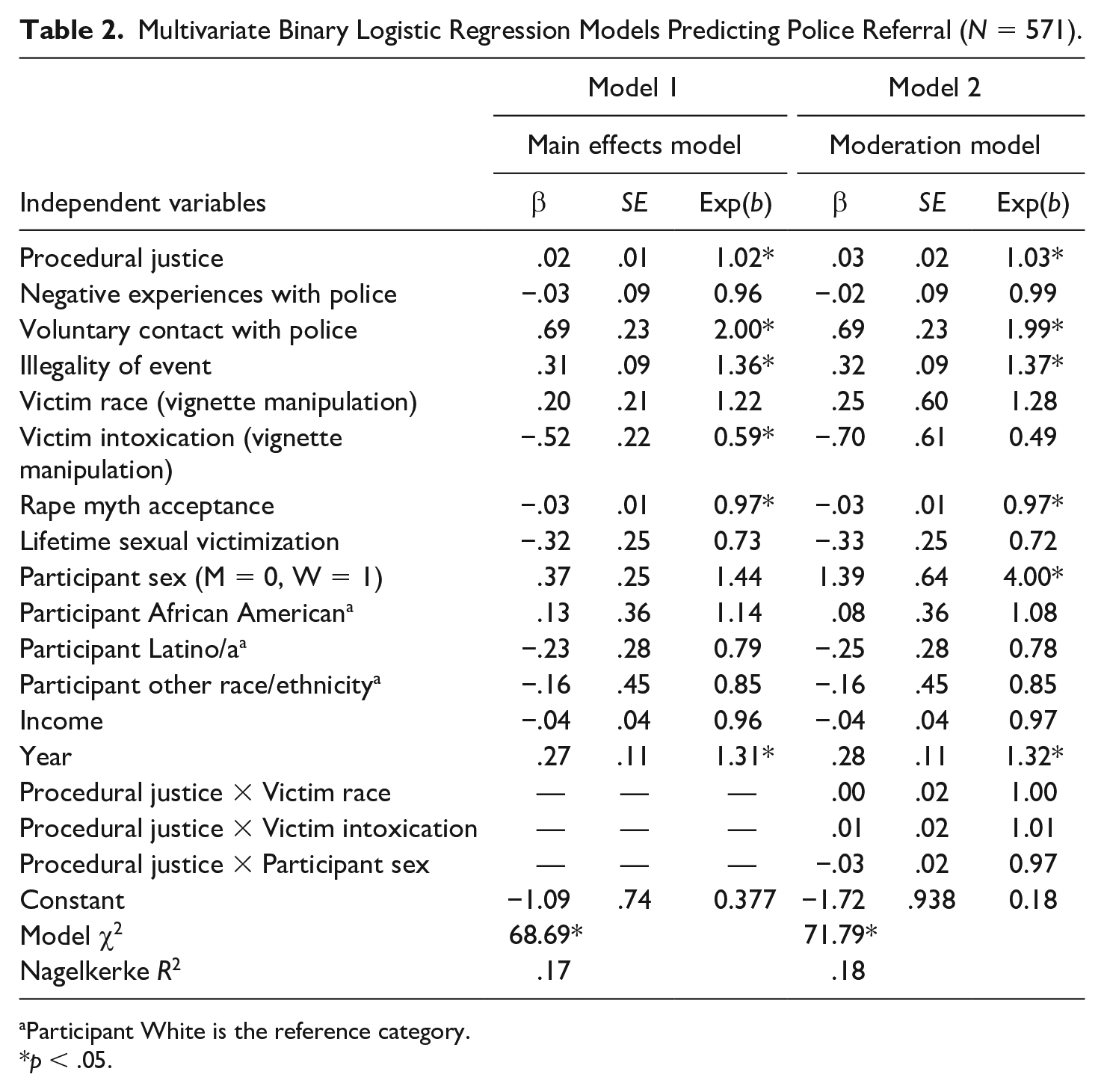
Multivariate Binary Logistic Regression Models
Two multivariate binary logistic regression models were estimated to determine the effect of procedural justice on police referral when independent predictor and control variables were entered simultaneously. Table 2 presents the results of the main effects model predicting the effect of procedural justice on police referral. The regression equation presented in Model 1 was statistically significant, χ2(14) = 68.69, p < .000, and accounted for 17% of the variation in the dependent variable as evidenced by the Nagelkerke R2. Police referral was regressed on the predictor and control variables, and findings revealed procedural justice was a significant, positive predictor of the dependent variable (β = .02, odds ratio [OR] = 1.02, p = .034) such that for each one-unit increase in the 13-item procedural justice index (range: 0–65), participants were 1.02 times more likely to suggest police intervention following a disclosure. Voluntary police contact was also a positive, significant predictor of police referral (β = .69, OR = 2.00, p = .002), indicating bystanders who reported having made contact with police under prior circumstances were 2 times more likely than counterparts to recommend police referral following a disclosure. Perceptions of illegality regarding the incident was significantly related to increased odds of police referral (β = .31, OR = 1.36, p = .001) where each one-unit increase in the 5-point scale corresponded with an increase in the odds of suggesting police intervention by 1.36 times. In other words, when participant-bystanders believed the incident described illegal behavior, they were likely to recommend calling the police.
Multivariate Binary Logistic Regression Models Predicting Police Referral (N = 571).
Participant White is the reference category.
p < .05.
Several variables were also significant, negative predictors of police referral. Increased adherence to rape myths was significant and negatively related to police referral (β = −.03, OR = 0.97, p = .001), even after considering vignette manipulations. Put differently, increased rape myth endorsement decreased the likelihood of recommending formal police intervention, despite the circumstances surrounding the sexual assault incident. Victim alcohol consumption exerted an independent, negative effect on police referral (β = −.52, OR = 0.59, p = .015), and the magnitude of this relation was strong, so bystanders were approximately half as likely to recommend police referral when the victim was intoxicated as compared with when she had not consumed alcohol. Year in college was a significant predictor of police referral (β = .27, OR = 1.31, p = .013) where students later in their tenure faced increased odds of advising police intervention following a sexual assault disclosure. Participant sex, race, lifetime sexual victimization, income, negative experiences with police, and victim race were not significant in the main effects model.
The second stage of the multivariate binary logistic regression model entered interaction terms to assess the moderating effects of vignette manipulations (victim intoxication and victim race) and participant-bystander sex on the relation between procedural justice and police referral following a sexual assault disclosure. The regression equation presented in Model 2 was statistically significant, χ2(17) = 71.79, p < .000, and accounted for 18% of the variation in the dependent variable as evidenced by the Nagelkerke R2. The three interaction terms were not significant predictors of police referral. Specifically, victim race did not moderate the effect of procedural justice on police referral (β = .00, OR = 1.00, p = .889), and victim intoxication did not moderate the effect of procedural justice on police referral (β = .01, OR = 1.01, p = .747). The moderating effect of participant sex on procedural justice to effect police referral approached but did not reach significance (β = −.03, OR = 0.97, p = .083).
Discussion
The present study examined the processes related to whether bystander-friends of campus sexual assault survivors recommended formal police reporting in the event of a disclosure. Emphasis was placed on participant-bystanders’ perceptions of the police—a relation that has remained unaccounted for in present, published research on sexual assault disclosure and helpseeking behavior (see, for example, Franklin & Garza, 2021; Suzuki, 2013). Specifically, this study examined whether perceptions of police procedural justice influenced the decision to recommend formal police reporting to sexual assault survivors following a hypothetical disclosure. Findings have several implications for research and practice.
First, results presented here provide evidence that bystander-friends’ perceptions of the police matter. For instance, compared with those participants who rated police at the bottom of the procedural justice index (i.e., the least procedurally just), participants who rated police at the top of the index (i.e., the most procedurally just) were approximately 4 times more likely to refer survivors to the police; those participants who rated police at the mean were approximately 2 times more likely to make this referral. This finding is salient in light of two facts: (a) campus sexual assault is highly underreported to police (Fisher et al., 2000, 2003), and (b) evidence has suggested that sexual assault survivors are more likely to report to the police when those they consult (primarily friends) recommend doing so (Ahrens et al., 2007; Paul et al., 2014). Thus, procedural justice may provide an important mechanism for understanding a significantly underreported crime. Indeed, when bystander-friends have positive associations surrounding police–citizen interactions, they may believe that formal reporting will produce positive results for survivors. These positive perceptions of procedural justice may counter the many negative expectations that survivors have regarding fear of stigma, disbelief, and secondary victimization.
This finding is also salient because it demonstrates the broad effect of procedurally just policing. That is, police behavior influences not only those with whom police directly interact (some of whom will be bystanders) but also the friends, family, and acquaintances of those with whom they interact (some of whom will be sexual assault survivors). The President’s Task Force on 21st Century Policing, as well as reports from the Community Oriented Policing Services (COPS) Office, emphasized the need to integrate the principles of procedural justice into everyday policing (Institute for Intergovernmental Research, 2015; Norton et al., 2015; President’s Task Force on 21st Century Policing, 2015; Santos et al., 2016). The present findings underscore the urgency with which police administrators should train officers to abide by the tenets of procedural justice to further facilitate citizen cooperation (i.e., treat citizens with respect and dignity, allow them to express their perspective, behave in an honest and transparent manner, and engage in fair/neutral decision-making; Tyler, 1988; Tyler & Fagan, 2008; Tyler & Huo, 2002; Tyler & Murphy, 2011).
Second, findings indicate that the effect of procedural justice may be invariant across important contexts related to sexual assault survivors and their victimization experiences. Prior research examining the resilience of rape myths has shown victim race (e.g., victims of color) and victim intoxication (e.g., consuming alcohol prior to victimization) negatively influence perceptions of victim credibility (R. Donovan & Williams, 2002; R. A. Donovan, 2007; Tillman et al., 2010), as well as perceptions of what it means to be a “real victim” (Koss et al., 2004; Koss, 1985). Using a 2 × 2 factorial design, the present study demonstrated that perceptions of procedural justice operate similarly when bystander-friends are faced with sexual assault disclosures from both White victims and victims of color as well as victims who did and did not consume alcohol. These results are somewhat unexpected in light of research demonstrating the tension between people of color and law enforcement (Gau & Brunson, 2010; Tyler, 2011; Weitzer & Tuch, 2005) and the pervasive nature of rape myths (Payne et al., 1999)—both factors expected to moderate the degree to which perceptions of procedural justice would impact referral decisions among participant-bystanders. Moreover, findings also indicated that procedural justice operated similarly for both men and women bystander-friends. That procedural justice was not moderated by victim race, victim alcohol consumption, or bystander sex further emphasizes the value citizens have placed on procedurally just policing, regardless of the circumstances surrounding the incident in which police may be involved. This reveals the broad application of procedural justice in facilitating bystanders to recommend police referral across key victim and case characteristics, highlighting the importance that police create and maintain perceptions of procedural justice among the public.
Third, while victim intoxication did not condition the effects of procedural justice on the referral decision, it did exhibit a direct effect. In other words, respondents were almost half as likely to recommend police referral if the sexual assault survivor was intoxicated at the time of her victimization (vs. consuming no alcohol) as described in the vignette. Findings also indicated that participants with increased adherence to rape myths were less likely to recommend police referral to sexual assault survivors, independent of vignette manipulations. Taken together, these findings support decades of prior research (Franklin & Garza, 2021; Koss et al., 1994; Ruback, 1994; Ruback et al., 1999; Suzuki, 2013) and suggest that narratives about credible victims and the classic rape continue to be influenced by harmful stereotypes that position responsibility for averting sexual assault on would-be victims. In the present sample, victim intoxication introduced questions for bystanders about the necessity or worthiness of police intervention. Findings present opportunities for programming to counter adverse stereotypes that inhibit the referral of important formal intervention for a sexual assault survivor. A growing body of literature has established the effectiveness of bystander intervention programs on addressing campus sexual assault. These strategies go beyond traditional educational programming and instead dismantle violence-tolerant norms (e.g., rape myths) and facilitate a wide range of skills for preventing, interrupting, or responding to sexual assault (McMahon & Banyard, 2012). This research further illustrates the utility of these types of programs in addressing bystander responses to sexual assault disclosure (Franklin et al., 2017) coupled with the potential to counter misinformation related to risk-taking behavior as a mitigating circumstance for perpetrator accountability.
Findings presented here are noteworthy, but are not without limitations. First, this study relied on manipulated vignettes depicting a hypothetical sexual assault disclosure. Existing research has reiterated the utility of vignette designs in addressing sensitive topics that would otherwise be limited in terms of study access (Barter & Renold, 2000). In addition, hypothetical scenarios have been established as reliable predictors of actual behavior (Kim & Hunter, 1993), countering concerns surrounding the nature of participant responses. Second, this sample drew from predominantly criminal justice students enrolled at a public school located in the southern United States. While the racial/ethnic diversity of the sample adds to its generalizability among existing research on this topic, it would be important to replicate these results using college student samples drawn from a wide range of disciplines in diverse geographic locations across the country. In addition, replication among students enrolled in private, religiously affiliated institutions of higher education would enhance generalizability of the findings presented here. As a consequence, results should be interpreted with caution.
Despite limitations, the findings outlined above provide an instructive starting point for exploring additional mechanisms that may impact police referral to survivors of sexual assault. Current literature on this topic is limited, but the present study adds important theoretical contributions that should be further examined, perhaps including additional items that get at specific encounters with police among bystander-participants; additional manipulations contained in the disclosure vignette; and examination of survivors’ perceptions of police procedural justice to determine the influence these views may have on formal police reporting. The courageous first step to disclose a sexual assault must be met with supportive and affirming responses. When bystander-friends are equipped to do so based on their own repertoire of skills and a positive perception of the way police would handle the situation, survivors benefit, suspect apprehension increases, and public safety is improved.
Footnotes
Appendix A
“One night [Keisha/Elizabeth], an [African American/Caucasian] and final-year student at a state university, who is your friend, went to a house party with [Jerome, Tim], a guy she knew from one of her classes. [Jerome, Tim] was cute and she liked him a little, though they had never been out together before. While at the party, she [consumed 5 alcoholic drinks, did not consume any alcohol]. [Keisha, Elizabeth] and [Jerome, Tim] flirted and danced a little. [She was buzzed from the drinks at the party, but was able to walk home without stumbling or needing any help]. When she was ready to leave the party, [Jerome, Tim] offered to walk with her across the lighted parking lot to her apartment, which was nearby. On her way home, [Jerome, Tim] asked if she was interested in having sex. [Keisha, Elizabeth] said “No” very forcefully, but [Jerome, Tim] did not pay attention to her answer. He grabbed her, began to kiss her, and then lifted her skirt. He forced himself on her and completed the act of sexual intercourse. The next day, [Keisha, Elisabeth] approached you for advice. What would you suggest [Keisha, Elisabeth] do?”
Appendix B
Procedural Justice Items, Factor Loadings, and Reliability Estimates (Tyler & Wakslak, 2004).
| Reliability α = .951 | Loading |
|---|---|
| 1. Police give honest explanations for their actions. | .828 |
| 2. Police take account of people’s needs and concerns. | .819 |
| 3. Police sincerely try to help people with their problems. | .799 |
| 4. Police listen to people before making decisions. | .832 |
| 5. I trust the police. | .839 |
| 6. Police officers treat everyone the same. | .785 |
| 7. Police officers make decisions based on facts and not their personal biases. | .802 |
| 8. Police officers clearly explain the reasons for their actions. | .874 |
| 9. Police are always polite when dealing with people. | .766 |
| 10. Police give people the opportunity to express their views before decisions are made. | .803 |
| 11. Police treat people with dignity and respect. | .873 |
| 12. Police try to be fair when making decisions. | .870 |
| 13. Police have led me to feel personally fearful. | .468 |
Appendix C
Negative Experiences with Police: Items, Factor Loadings, and Reliability Estimates (Weitzer & Tuch, 2004).
| Reliability α = .760 | Loading |
|---|---|
| 1. Have you ever been stopped by police on the street without good reason? | .637 |
| 2. Has anyone else in your household ever been stopped on the street by police without good reason? | .687 |
| 3. Have the police ever used insulting language toward you? | .725 |
| 4. Have the police ever used insulting language toward anyone else in your household? | .770 |
| 5. Have the police ever used excessive force against you? | .542 |
| 6. Have the police ever used excessive force against anyone else in your household? | .708 |
Authors’ Note
The opinions, findings, conclusions, and recommendations expressed in this presentation are those of the authors and do not necessarily reflect the views of the Crime Victims’ Institute.
Declaration of Conflicting Interests
The author(s) declared no potential conflicts of interest with respect to the research, authorship, and/or publication of this article.
Funding
The author(s) disclosed receipt of the following financial support for the research, authorship, and/or publication of this article: This research was supported, in part, by the Crime Victims’ Institute at Sam Houston State University. The opinions, findings, conclusions, and recommendations expressed in this presentation are those of the authors and do not necessarily reflect the views of the Crime Victims’ Institute.
