







Abstract
Bystander intervention has shown promise in preventing sexual violence in certain social contexts. Despite emerging evidence of pervasive sexual violence at music festivals, no research has considered bystander intervention in this setting. Drawing on an online survey conducted with 371 Australian festival attendees, we explore the role of gender on bystander intervention at music festivals. Findings point to significant gender differences, with women more willing and likely to intervene in a broader range of scenarios. We argue that responses to sexual violence are a collective responsibility shared by both women and men, as well as festival organizers and industry bodies.
Introduction
Music festivals are increasingly recognized as sites in which sexual harassment and sexual assault are frequently perpetrated and experienced (Bows, 2019; Fileborn & Wadds, 2018; Fileborn, Wadds, & Tomsen, 2019). As a particularly pervasive and pernicious form of gendered harm, it is imperative that coordinated and effective strategies are implemented to address and respond to this problem. Although growing acknowledgment has resulted in some industry and grassroots campaigns attempting to highlight and address the issue, coordinated, strategic, and evidence-led approaches have yet to be developed, implemented, or evaluated (Fileborn, Wadds, & Tomsen, 2019; Fileborn & Wadds, 2018; Francis, 2017).
One preventive approach that has shown promise in combating sexual violence is bystander intervention (BI). With its focus on challenging social norms, values, and attitudes that can facilitate the occurrence of sexual violence itself, as well as in empowering individuals who are present in a situation to intervene, BI appears well suited to help prevent sexual violence at music festivals (Banyard, 2008, 2015; Burn, 2009; Powell, 2014). Previous studies have explored the influence of several factors in enhancing or inhibiting BI, including awareness, responsibility, confidence and skills, rape myth acceptance, and perceptions of victim worthiness relating to clothing choice and alcohol intake (Bannon et al., 2013; Banyard et al., 2014; Banyard & Moynihan, 2011; Burn, 2009; Zelin et al., 2019). Importantly for the context of this article, gendered differences in bystander efficacy and intention among women and men have been consistently identified in the literature (Amar et al., 2014; Burns et al., 2019; Foubert & Bridges, 2017; Zuo et al., 2018).
However, the majority of research has been conducted in the context of college campuses. Despite growing recognition of sexual violence at music festivals, academic research in this context is noticeably lacking. As such, this article represents the first research seeking to understand the ways in which sexual violence and bystander efficacy exist within festival settings. Specifically, this study provides foundational insight and analysis into the extent to which women and men differ, if at all, in their reported awareness, responsibility, efficacy, and intent to intervene in a range of circumstances.
Situating Sexual Violence at Festivals
This study was informed by a post-structural feminist framework. This approach understands sexual violence as a manifestation of gendered power and control, which reproduces gendered power dynamics, and works to exclude and oppress women in festival (and other) spaces (see Fileborn, Wadds, & Barnes, 2019; Hill et al., 2019). Furthermore, a post-structural approach recognizes the fluidity of “what counts” as sexual violence, resisting fixed or static definitions (Herberle & Grace, 2009). In other words, there is no essential or universal understanding of what sexual violence “is.” Rather, definitions are contested and in flux, shaped by local or situational contexts (see, e.g., Fileborn, 2016; Fileborn et al., 2020). What “counts” is fundamentally shaped by (and reproduces) power relations, with women’s experiences often discursively excluded from dominant framings (Gavey, 2005). Following Gunnarsson (2018), however, we recognize this discursive production as entangled with corporeality and materiality; there is a very “real” element to such violence, though our process of articulating and making sense of this occurs in conversation with discourse.
Relatedly, we draw on Kelly’s (1987) continuum model of sexual violence. Kelly conceptualizes the varied and diverse forms of gendered harm experienced by women and others throughout their lives as interconnected and reflective of broader gendered power and inequality. At the heart of this conceptualization is the privileging of survivors’ experiences and interpretations of events, rather than any legal or dominant discursive production of “what counts.” This approach further stresses the importance of undertaking a context-specific analysis of BI: If what constitutes sexual violence shifts across time and space, it follows that the perceived need for bystanders to intervene in a situation is similarly fluid. As we highlight throughout this article, there are a range of factors relating to festival culture, geographies, and norms that work to produce contexts that facilitate sexual violence, while simultaneously (re)producing broader systems of gendered power and inequality.
Sexual Assault and Harassment at Music Festivals
Music festivals are unique social, cultural, and spatial settings which allow vast numbers of people to gather, interact, and “escape” from the everyday for a finite amount of time (Jaimangal-Jones et al., 2010, Pielichaty, 2015). They are impermanent carnivalesque spaces of leisure, entertainment, and expression, and as such, often manifest as liminal and socially transgressive environments in which many normative practices of the “everyday” are subverted and challenged (Dilkes-Frayne, 2016; Fileborn et al., 2020). It is important to note, however, that music festivals are far from homogeneous events. Rather, they vary widely with regard to musical genre, location and duration, audience, and demographics such as age, sexuality, class, race, and gender, and with regard to their normative social and cultural practices (Fileborn et al., 2020). The limited research to date—this study included—has predominantly focused on youth-oriented, commercial music festivals. Our own study was concerned with a large (within the Australian context) 25,000 capacity, youth-oriented, multi-day camping festival. Our findings are largely limited to this setting—although the vast majority of participants attended multiple festivals per year—and we do not claim that this research necessarily translates to other festival settings.
The demographics and normative practices of patrons, alongside particular sociocultural and spatial features of these youth-oriented, commercial music festivals may contribute to an increased risk of sexual violence within these spaces. Such festivals are often spaces of “determined” intoxication and consumption of licit and illicit drugs (Dilkes-Frayne, 2016; Lim et al., 2010), which can exacerbate risk of sexual violence by increasing risk-taking behavior, excusing perpetrator behavior, and delegitimizing victim-survivor experiences (Abbey et al., 2001; Tarczon & Quadara, 2012). Fancy dress and skin-exposed costumes of glitter-covered chests and see-through clothing are also common among festival attendees (Sessions, 2015) and may similarly reinforce rape-myth discourses in which victim-survivors’ clothing is attributed to encouraging or excusing perpetrators’ behavior (Amar et al., 2014).
The scale, layout, and limited levels of surveillance at music festivals have also been identified as conducive to sexual violence (Fileborn, Wadds, & Barnes, 2019). The sense of anonymity among large crowds may facilitate or otherwise obfuscate unwanted touching and groping as “accidental” and even “unavoidable” aspects of the festival experience (Barnes & White, 2019; Fileborn, Wadds, & Barnes, 2019). Where perpetrators are identified, the spatial layout may create difficulty in gaining assistance from festival staff, security, or police, who may not be easily accessible from particular locations, such as a mosh pit (Fileborn, Wadds, & Tomsen, 2019).
Furthermore, festivals themselves are located within the broader context of a music industry that is well-documented as being male-dominated and perpetuating gender stereotypes and gender-based inequalities (Cooper et al., 2017; Raine & Strong, 2019). In other words, (some) music festivals may represent settings in which sexual violence is likely to occur and where the factors underpinning sexual violence are actively (re)produced, with these issues manifesting in context-specific ways (Fileborn, Wadds, & Barnes, 2019).
Recent news reports and anecdotal accounts have indicated that sexual violence is a common and widespread experience at music festivals, often occurring in the form of unsolicited verbal comments, sexual gestures, and groping (Bows, 2019; Fileborn, Wadds, & Tomsen, 2019; Lewis, 2017; Nelson, 2018; OMMB, 2017; Papisova, 2018). This issue, however, until recently, has been largely absent from academic literature. That said, a wealth of other studies has documented the occurrence of sexual violence against (predominantly, but not exclusively) women in analogous—but in some respects, distinct—settings, such as mass public gatherings (Sampsel et al., 2016), live music venues (Hill et al., 2019), and licensed venues (Fileborn, 2016; Graham et al., 2014; Kavanaugh, 2013; Nicholls, 2019). Recent survey data emerging from the United Kingdom indicate that unwanted sexual behavior is experienced by 43% of female festival attendees (YouGov, 2018), while broader experiences of harassment (sexual, racial, physical, or other) at festivals in the United States affect upward of 90% of women (OMMB, 2017). The evidence provided here suggests that the unique sociocultural and spatial dynamics of some music festivals can facilitate, excuse, and obfuscate sexual violence, creating spaces of heightened risk, but also producing a landscape in which prosocial BI has incredible scope to make a significant difference to the prevalence of unwanted sexual interactions. We also recognize that these features vary across different music festival settings (and indeed may not be characteristics of some events at all) and that it is therefore not necessarily music festivals themselves that are problematic, but rather the convergence of a particular range of factors that facilitate sexual violence. However, the growing body of literature emerging around this topic identifies music festivals as sites that warrant specific investigation. In particular, it is currently unclear to what extent potential bystanders are willing and able to intervene in this context of heightened risk, or the ways in which festival-specific norms might shape and delimit the potential for intervention. It is this issue to which we now turn.
BI: Preventing and Responding to Sexual Violence
BI encourages individuals to recognize and respond to situations in which sexual assault or harassment has the potential to occur, is occurring, or has occurred (Banyard, 2008; Potter, 2012). BI emphasizes the responsibility of all community members in preventing sexual violence, as opposed to approaches which “responsibilize” women to reduce their individual risk (Banyard et al., 2007; Burn, 2009). In addition, BI challenges the broader peer, social, and cultural attitudes and influences which normalize, support, and excuse sexual violence (Banyard, 2015; Powell, 2011). There is evidence to suggest that BI can be effective in changing attitudes and preventing sexual violence (Banyard, 2008, 2015; Burn, 2009; Powell, 2014), and, as such, represents a promising avenue for prevention at music festivals. However, there are a range of well-documented barriers to BI, including bystanders’ failure to identify a situation as high risk, ambiguity regarding consent, bystanders’ relationship to the person/s involved, audience inhibition, intoxication, noise, and other sensory distractions (Burn, 2009). Moreover, bystanders may engage in a range of decision-making processes that lead to the action or inaction, adding a further layer of complexity (Banyard, 2015; Bennett et al., 2014; Burn, 2009).
While all bystanders can face barriers to intervening, current research suggests that these barriers often play out in highly gendered ways. For example, adherence to traditional gender roles, rape myth acceptance, the perceived “severity” of the situation, and fear of social embarrassment have all been identified as factors that may limit BI that are disproportionately experienced by men (Amar et al., 2014; Banyard & Moynihan, 2011; Zuo et al., 2018). In addition, gender norms can shape how BI occurs, with men found to help in more heroic, assertive and public ways, while women are more likely to help through nurturing and caring in social networks (Banyard, 2015; Eagly, 2009). While some studies have shown women’s preference for intervening in more “indirect” ways, such as by calling the police or causing a distraction (Eagly & Crowley, 1986; Nicksa, 2014), women are still considerably more likely to intervene in instances of sexual violence (Banyard, 2008; Banyard & Moynihan, 2011; Burn, 2009). Women’s increased propensity to intervene has been linked to their higher levels of knowledge about sexual violence, greater likelihood of having experienced sexual violence, and being more likely to identify and empathize with victim-survivors (Banyard, 2008; Banyard & Moynihan, 2011; McMahon, 2010).
While BI has been identified within the literature as a useful prevention approach in a range of contexts, it is unclear how BI plays out within the context of music festivals. Given that festivals are both sites of (potentially) heightened perpetration, and spaces with particular gendered, social, and cultural norms, there is a clear need to undertake a situational analysis of BI. The current study aimed to address this gap in the literature by providing the first investigation of gendered responses to sexual assault and harassment through BI in the context of music festivals.
Method
The purpose of this study was to investigate BI in relation to the ways in which men and women recognized and responded to various forms of sexual violence at music festivals. Specifically, this study analyzed the extent to which women and men differed, if at all, in their reported awareness, responsibility, confidence, and likelihood to intervene in various defined circumstances and was based on the following research questions:
Using the Readiness to Help Scale, how does gender correlate to reported awareness of and responsibility to address sexual violence at music festivals?
Using the Bystander Efficacy Scale, how does gender correlate to reported confidence in performing BI?
Using the Intent to Help Scale, how does gender correlate to reported likelihood to engage in various BI behaviors?
Procedure
The data analyzed in this study formed one component of a mixed-methods study investigating perceptions of safety, sexual harassment, and sexual assault at Australian music festivals, conducted in 2017–2018 (Fileborn et al., 2020). As part of this broader study, a convenience sample was generated through an online survey that was conducted using the Qualtrics survey platform. The survey consisted of 55 closed- and open-text questions relating to demographic information, alcohol and drug use, feelings of safety at music festivals, and likelihood to engage in various BI behaviors. Participants were recruited via Facebook advertisements which were promoted to patrons of the Falls Festival and administered by the Falls Festival Facebook page. The research team was reliant on the festival to promote the study to patrons, and Facebook advertisements were their preferred method as there was no mailing list specific to the festival site that our project focused on. We recognize the limitations of this recruitment strategy in terms of sampling. For example, we do not know how many of the festival patrons had Facebook accounts or how Facebook’s algorithms may have shaped who saw the study advertisement. Thus, while the study utilized purposive sampling of patrons from the Byron Bay festival site, there is also an element of convenience sampling at play in that we were dependent on patrons seeing and clicking on the Facebook advertisement.
Participants
Survey participants were required to be at least 16 years of age and to have attended the 2017–18 Falls Festival in Byron Bay. This Festival is a youth-oriented, multi-day camping event, with a total capacity of 25, 000 (making it a “large” festival within an Australian context). A total of 500 festival attendees responded to the survey, with an average of 426 responding to any given question. Participants who did not identify as “man” or “woman” were excluded from analysis due to their small sample size (n = 2). The final sample comprised 371 participants (252 women, 119 men) who met the eligibility criteria and answered all questions from at least one bystander measure (RHS, BES, or IHS scales). The sample was predominantly female (67.9%, n = 252), heterosexual (87.1%, n = 323), currently employed (92.7%, n = 344) with a mean age of 21.4 years (SD = 4.3 years). Half of the participants indicated they had completed high school (“Year 12”) as their highest level of education (50.7%, n = 188), with just under a third having completed an undergraduate degree (31.8%, n = 118). Participants regularly attended music festivals, with 80.3% (n = 289) attending music festivals between 1 and 3 times per year on average. The vast majority of participants (99%, n = 350) consumed alcohol at music festivals, while almost half (46.2%, n = 162) typically engaged in very high levels of alcohol consumption (10 or more drinks in a session) at music festivals. Illicit drug use at music festivals was reported by 43.9% of participants (n = 163).
Measures
Three measures relating to BI were adapted by Fileborn and Wadds to suit to the context of music festivals: the Readiness to Help Scale (RHS), the Bystander Efficacy Scale (BES), and the Intent to Help Scale (IHS). These measures were adapted from previously validated scales relating to self-reported bystander attitudes, knowledge, responsibility, confidence, efficacy, and behavioral intentions (PIRC, 2015). Content validity was established through the development of measures and scales in collaboration with both practitioner and research experts in the field of BI and sexual and relationship abuse (Banyard et al., 2014). Internal consistency, test–retest reliability, and construct validity have been demonstrated for these scales, which have been used and supported widely within the literature (Banyard, 2008; Bennett et al., 2014; Burn, 2009; Coker et al., 2015; Katz et al., 2015; Kleinsasser et al., 2015).
Readiness to Help Scale (RHS)
A two-factor, 12-item scale was developed for the current study to assess individuals’ awareness of and responsibility to address sexual harassment and sexual assault at music festivals. Adapted and shortened from scales developed by Prochaska and DiClemente (1984) and Banyard et al. (2014), each factor consisted of six items. Factor 1 (Awareness) related to awareness and/or denial of sexual violence (e.g., “I don’t think sexual harassment is a problem at music festivals”). Participants were asked to indicate the extent to which they agreed with each item, on a scale of 1 (“strongly agree”) to 5 (“strongly disagree”). Factor 2 (Responsibility) related to responsibility and intentions to address the issue (e.g., “I think I can do something about sexual harassment at music festivals”). Participants were asked to indicate how true, on a scale of 1 (“not at all true”) to 5 (“very much true”), these statements were to them. Scores were created by averaging responses across items, with higher scores indicating greater readiness to help. Previous research obtained good–excellent Cronbach’s alpha of .85 and .91 for the Awareness and Responsibility factors, respectively (Banyard et al., 2014). The current study obtained Cronbach’s alpha of .83 and .89 for the respective factors.
Bystander Efficacy Scale (BES)
The BES was created to assess an individual’s level of confidence in their ability to intervene to prevent sexual assault (Banyard, 2008). Participants completed an adapted 10-item measure by rating how confident they would feel engaging in various behaviors on a scale of 0 (can’t do) to 100 (very certain), with higher scores indicating higher confidence. Scores were created by averaging responses across items. The adapted items conceptualized bystander behavior broadly, including items that described speaking out against social norms that support sexual violence (e.g., “Express discomfort/concern if someone makes a joke about a woman’s body”), as well as bystander behaviors specific to music festivals (e.g., “Do something if I see a woman surrounded by a group of men at a music festival who looks very uncomfortable”). Previous research has obtained reliable Cronbach’s alpha levels of .92 and .93 from use of this scale (Banyard et al., 2014; Banyard & Moynihan, 2011). The current study obtained a Cronbach’s alpha of .83, indicating a high level of internal consistency.
Intent to Help Scale (IHS)
The IHS was developed to measure the likeliness of an individual assisting a victim of sexual assault (Banyard, 2008; Banyard et al., 2005). Participants completed an adapted 44-item measure, rating how likely they would be to engage in BI in various situations. Responses were recorded on a 5-point Likert-type scale ranging from 1 (not at all likely) to 5 (extremely likely), with higher scores indicating higher levels of intention to help. Situations were specific to the context of music festivals and involved BI in responding to scenarios where sexual violence was at risk of occurring, was occurring, or had occurred. IHS items included various forms of sexual violence such as verbal harassment (e.g., “Challenge a friend who makes a sexist joke”), as well as sexual assault (e.g., “Accompany a friend to festival security if they need help after experiencing sexual harassment or sexual assault”). Many items also differentiated between interventions directed at “friends” and “strangers.” Scores were created by averaging responses across items, with higher scores indicating higher reported likelihood to perform the BI behavior. The original study obtained a Cronbach’s alpha of .94 (Banyard, 2008). The current study obtained a Cronbach’s alpha of .92, again indicating a high level of consistency.
Data Analysis
Survey data were analyzed using SPSS Statistics Package 25. The Shapiro–Wilk test for normality determined that responses for each scale were not normally distributed (p < .001 for BES and IHS). As such, the nonparametric Mann–Whitney U test for statistical significance was conducted to analyze gender in relation to each scale. Additional Mann–Whitney U tests were conducted across each item within the two scales to further analyze gender differences between women and men on individual items. Mann–Whitney U analyses implemented list-wise exclusion for each scale. The total number of respondents who answered all items in the RHS, BES, or IHS scale comprised 368, 289, and 272 participants, respectively.
Results
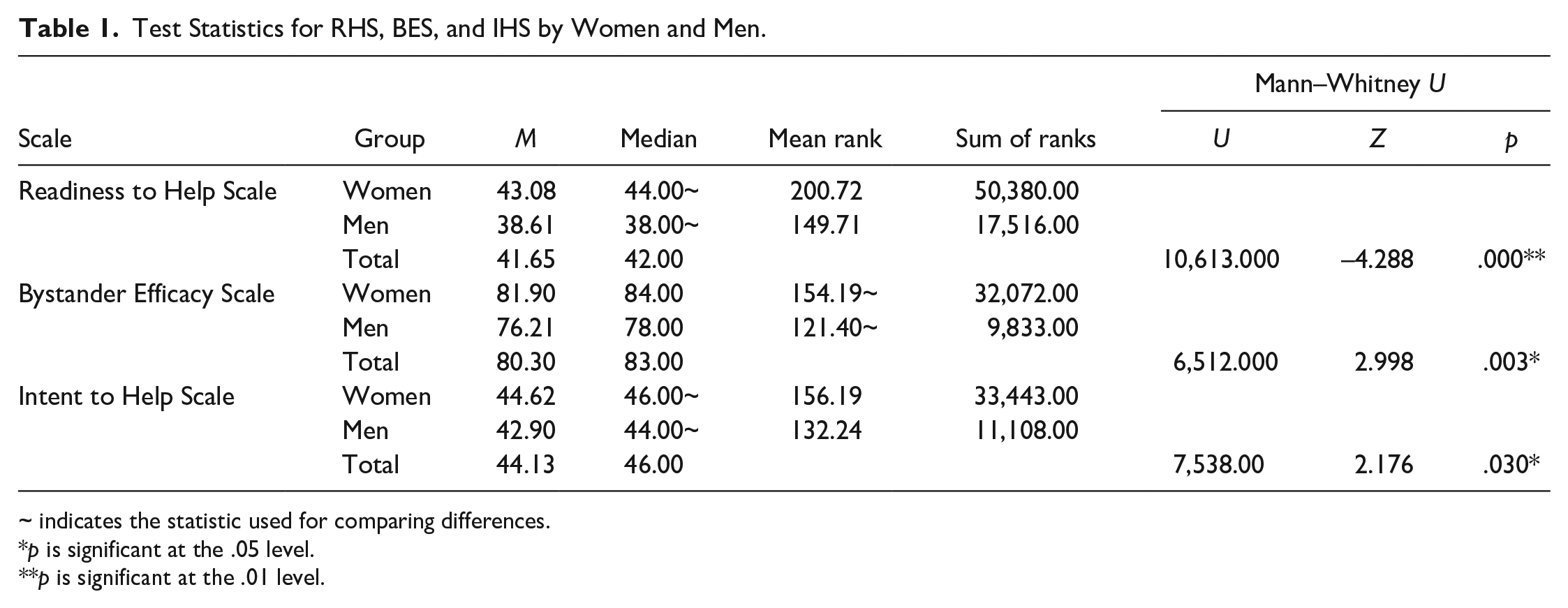
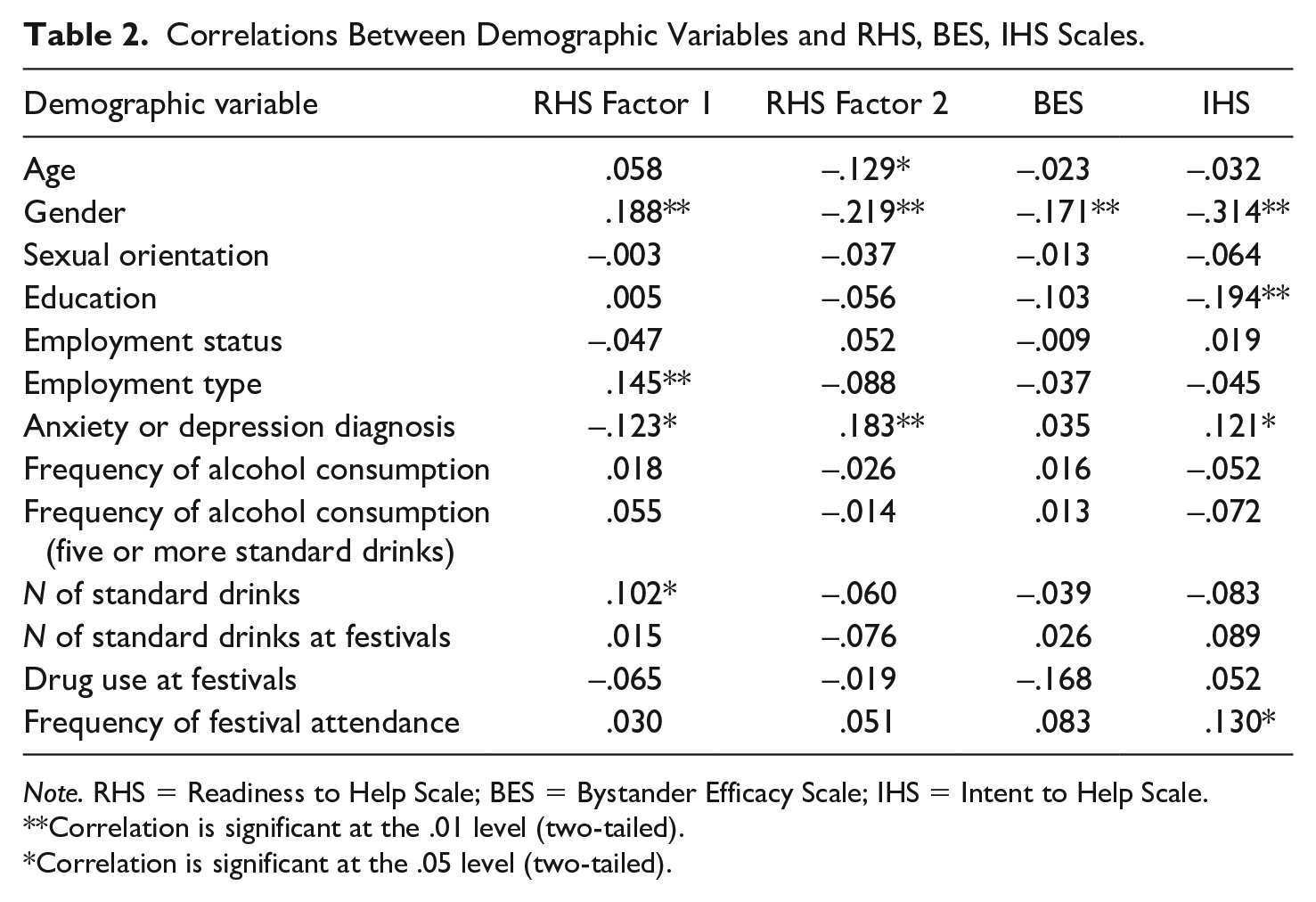
Results indicate that gender is highly correlated with the three scales used to measure bystander awareness, responsibility, efficacy, and intent to intervene in sexual violence scenarios within this study (see Table 1). Correlates of other demographic variables are displayed in Table 2.
Test Statistics for RHS, BES, and IHS by Women and Men.
~ indicates the statistic used for comparing differences.
p is significant at the .05 level.**p is significant at the .01 level.
Correlations Between Demographic Variables and RHS, BES, IHS Scales.
Note. RHS = Readiness to Help Scale; BES = Bystander Efficacy Scale; IHS = Intent to Help Scale.
Correlation is significant at the .01 level (two-tailed).
Correlation is significant at the .05 level (two-tailed).
Readiness to Help Scale (RHS)
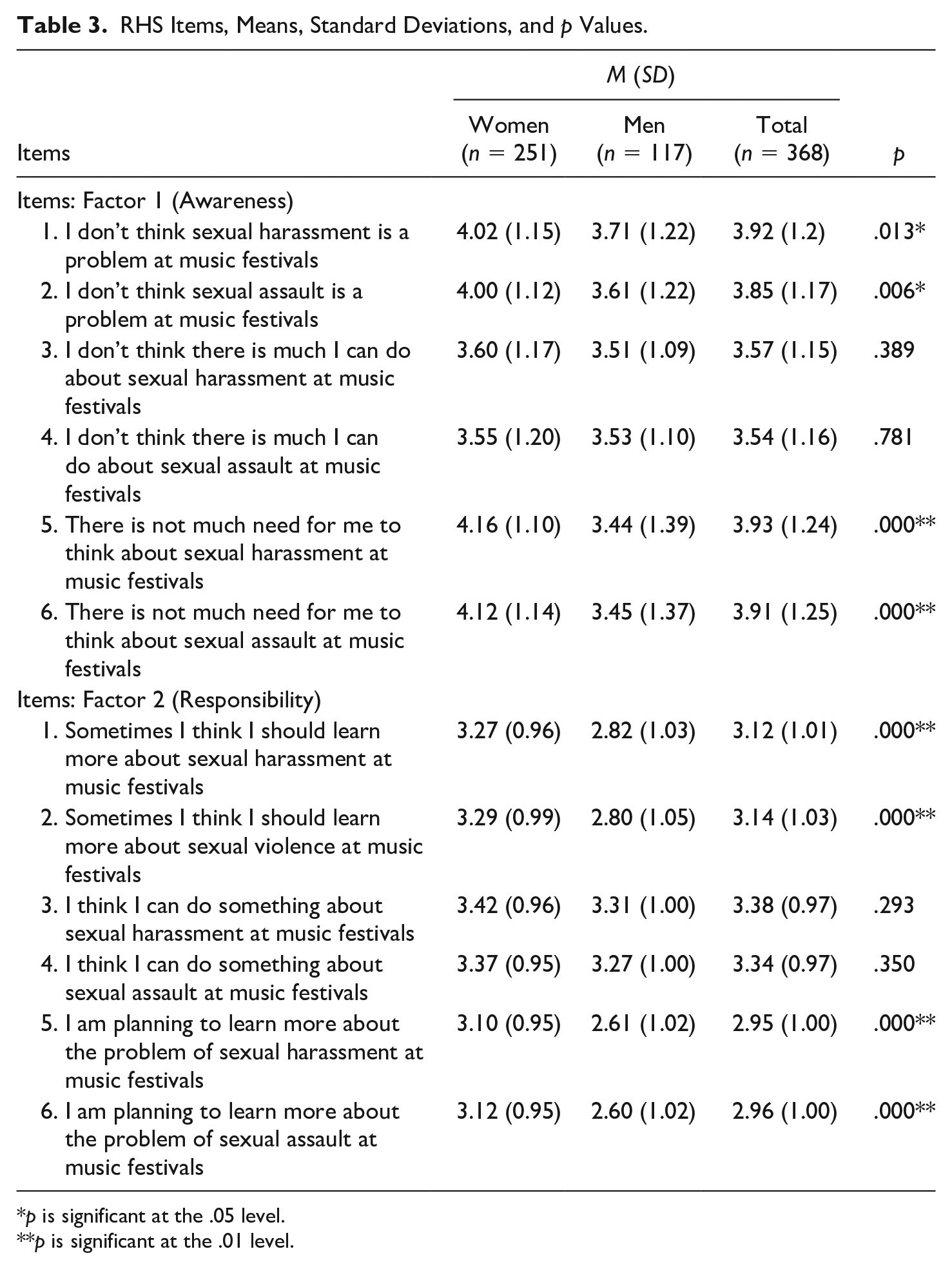
Mean scores for each RHS item for women and men are provided in Table 3. The mean score for each item ranged from 3.10 to 4.16 for women and 2.60 to 3.71 for men, indicating that higher scores were skewed toward women. Mann–Whitney U test results demonstrated that these differences between women’s and men’s scores were significant. Median scores for women (44.00) were significantly higher than for men (38.00), indicating higher awareness of sexual violence at music festivals, and greater responsibility to address the issue among women (U = 10,613.000, z = −4.288, p < .01; Table 2). Distributions of RHS scores for women and men were not similar, as assessed by visual inspection in Figure A1 (Appendix).
RHS Items, Means, Standard Deviations, and p Values.
p is significant at the .05 level.
p is significant at the .01 level.
Items with the highest variance between women’s and men’s mean scores related to the need to “think about” sexual violence at music festivals (There is not much need for me to think about sexual harassment/sexual assault at music festivals; see Table 3, Factor 1 items 5–6). Men’s scores for these items averaged 3.44 and 3.45, respectively, while women’s scores averaged 4.16 and 4.14. Notably, these items were also the highest scoring for women within the scale, indicating a significantly higher awareness and recognition of the need to think about sexual violence at music festivals among women.
The lowest scoring items within the RHS related to participants’ intent to “learn more” about the issue (see Table 2, Factor 2, items 1–2 and 5 and 6). Men’s mean scores for these items constituted the only scores within the RHS to fall below the mid-point score of 3.00, indicating notable indifference to or lower levels of agreement with the statements. Women’s mean scores were slightly higher, though none exceeded 3.29.
Items with the most similarity between women’s and men’s mean scores related to participants’ ability to “do something” about the issue (see Table 3, Factors 1 and 2, items 3 and 4). Combined, total mean scores for these items averaged 3.46. While this average does not indicate high confidence in participants’ ability to do something about sexual violence, that this confidence to “do something” about sexual violence varies minimally between women and men is notable. As the following results and discussion will explore, the significant gender differences found within this study relate to the types of sexual violence that women and men are willing to “do something” about.
Bystander Efficacy Scale (BES)
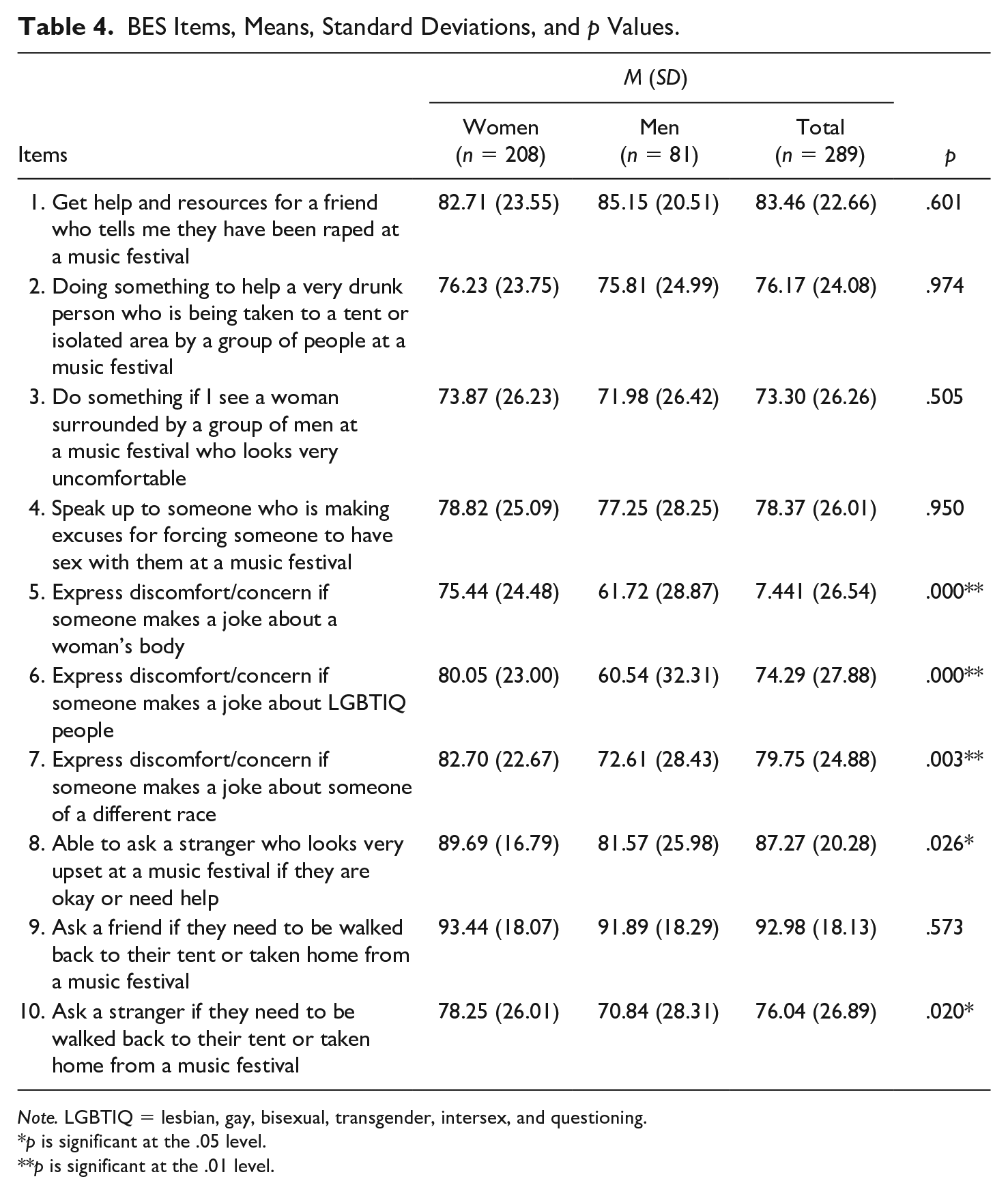
The mean scores for each BES item for women and men are provided in Table 4. Mean scores ranged from 73.87 to 93.44 for women and 60.54 to 91.89 for men, indicating that women tended to report significantly higher confidence in performing BI. Median BES scores were significantly higher in women (84.00) than in men (78.00), indicating greater reported confidence in performing the listed BI behaviors among women (U = 6,512.00, z = −2.998, p = .003*; Table 1). Distributions of BES scores for women and men were not similar, as assessed by visual inspection in Figure A2 (see Appendix).
BES Items, Means, Standard Deviations, and p Values.
Note. LGBTIQ = lesbian, gay, bisexual, transgender, intersex, and questioning.
p is significant at the .05 level.
p is significant at the .01 level.
As outlined in Table 4, items with the lowest variance in mean scores between women and men related to situations in which more overt forms of sexual violence had occurred or were at risk of occurring (see items 1–4), as well as in relation to “checking in” behavior directed at friends (see item 9). For these items, mean scores did not differ more than 2.44 points between women’s and men’s scores, indicating very similar levels of reported confidence for both genders in these situations. Notably, item 1 (Get help and resources for a friend who tells me they have been raped at a music festival) was the only item within the BES where men’s mean scores (85.15) were higher than women’s (82.71), although this difference was not significant.
Items with higher variance between women’s (75.44–82.70) and men’s (60.54–72.61) mean scores related to situations involving sexist, racist or homophobic/transphobic comments or jokes (see items 5–7), with mean scores varying up to 19.57 points. For these items, women reported significantly more confidence to express discomfort or concern in these situations than men (p < .01).
Intent to Help Scale (IHS)
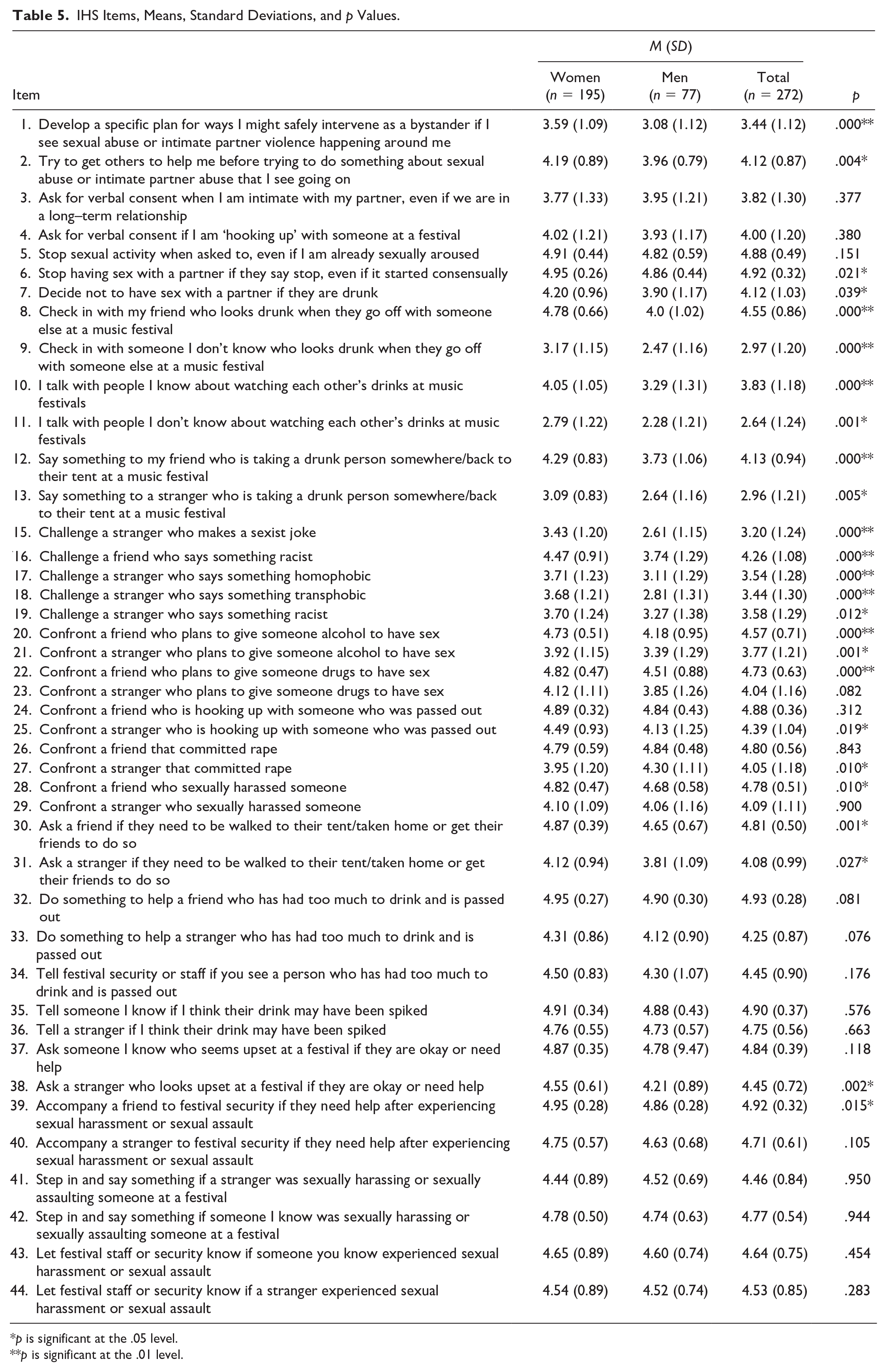
Mean scores for each item of the IHS are provided in Table 5 and ranged from 2.79 to 4.95 for women and 2.28 to 4.90 for men. Mann–Whitney U results indicated that these differences were statistically significant, with median IHS scores significantly higher for women (46.00) than for men (44.00), U = 7,538.00, z = −2.176, p = .030 (Table 1). Findings indicate greater likelihood to intervene in various situations for women. Distributions of IHS scores for women and men were similar, as assessed by visual inspection in Figure A3 (Appendix).
IHS Items, Means, Standard Deviations, and p Values.
p is significant at the .05 level.
p is significant at the .01 level.
Similar to the BES results, items with greatest variance between women’s and men’s mean scores related to challenging sexist, racist, homophobic, and transphobic jokes or comments (see items 14–18), indicating higher reported likelihood for women to intervene in these situations than men. Also similar to the BES, men outscored women in two characteristically “confrontational” items relating to sexual assault or sexual harassment that was occurring or had previously been committed (see items 26–27, 41), although again these differences were not significant.
Items with higher scores and minimal variance between women’s and men’s mean scores related to reporting instances of sexual violence to festival staff or security (items 43 and 44) and intervening in instances featuring “high risk markers” for sexual assault, such as drink spiking (items 36 and 37) and “hooking up” with unconscious persons (item 24). This minimal variance indicates a shared higher reported likelihood to intervene in situations which are more commonly considered “serious” forms of sexual violence, as opposed to verbal comments. However, reported likelihood of intervention in these situations was closely related to whether the person involved—either potential victim-survivor or potential perpetrator—was a friend or stranger to the bystander, with both women and men reporting considerably lower likelihood to intervene in situations involving strangers. Notably, items involving strangers constituted some of the lowest scoring items on the IHS (see items 9, 11, 13). These items present potentially ambiguous situations due to the involvement of strangers, indicating that the relationship between the bystander and the parties involved is particularly influential for both women and men in their reported likelihood to intervene in instances of potential sexual violence.
Discussion
The current study provides a number of key findings relating to sexual violence bystander awareness, responsibility, efficacy, willingness, and intention to intervene among women and men at Australian music festivals. First, significant differences between women and men were found in relation to the RHS. Consistent with previous research, these findings indicate that women tend to endorse higher “stages of change” than men, in relation to recognizing and committing to address a social issue (Banyard et al., 2010, p. 127). Women’s significantly higher scores in these areas of awareness of, and responsibility to address the issue of sexual violence at music festivals will be explored below in relation to women’s gendered socialization to prevent sexual violence, as well as personal experience.
Another key finding indicates that reported likelihood to intervene is distinguished by the type of sexual violence that has occurred or is at risk of occurring. Specifically, stereotypically serious forms of sexual violence such as rape received higher BI intention among both women and men, as opposed to conventionally “minor” forms of sexual violence such as sexist comments. This finding is not unexpected given the commonality of characteristically narrow understandings of what constitutes sexual violence (see McMahon, 2007, 2010, 2011; Robinson, 2005). Consistent with previous research, this finding indicates that situations resembling sexual assault and rape are more readily recognized as problematic and warranting of BI (Bennett et al., 2017; Fileborn, 2017; McMahon, 2011; Nicksa, 2014). In particular, verbal harassment such as sexist and degrading language tend to be constructed as harmless and unrelated to sexual violence (McMahon, 2007). As such, BI campaigns should adopt an understanding of sexual violence within the framework of a continuum, which emphasizes the role of sociocultural factors in facilitating its occurrence. Specific emphasis should be placed on how the normalization and acceptance of typically “minor” forms of sexual violence contributes to an environment in which those more readily identified as “serious” are able to occur.
Findings also showed that this variation relating to the type or “severity” of the situation was also highly gendered. Notably, items relating to sexist, racist, homophobic, and transphobic jokes or comments had the highest variance in mean scores between women and men, with women significantly more likely to intervene in these instances. A potential explanation of men’s significantly lower scores on BES and IHS items for less “serious” forms of sexual violence may be that they tend to hold more traditional conceptions regarding what constitutes sexual violence than women. Although participants’ perceptions of different forms of sexual violence were not explicitly explored in this study, previous findings in this area may nonetheless go some way in explaining men’s comparatively lower likelihood to intervene in these instances (McMahon, 2010; McMahon et al., 2014).
The influence of gendered experiences and responsibilization discourses may also serve to explain these findings. Given women’s disproportionate risk of sexual victimization, it is possible that female participants in this research project may have been more aware of the issue than men due to them having experienced sexual violence themselves, or knowing someone who had (see also Banyard, 2008; Burn, 2009; Nicksa, 2014). Such experiences may help to explain why women reported higher levels of awareness and responsibility to address the issue of sexual violence at music festivals, as well as higher likelihood to intervene in a broader range of situations. Indeed, personal or vicarious experience of sexual assault has been associated with lower rape myth acceptance, increased intention to intervene as a bystander, as well as actual intervention behavior (McMahon, 2007; Murphy, 2014). Although personal experiences of sexual violence were not addressed in this survey, findings from the broader study suggest that this was a factor in increasing victim-survivors’ awareness of sexual violence (Fileborn et al., 2020). As such, men’s lower scores across each scale may be interpreted as a reflection of their lived experience in limiting their ability to recognize the range, harms, and prevalence of sexual violence at festivals. This is not to suggest that men are willfully ignorant or actively refusing to recognize sexual violence at music festivals as an issue of legitimate concern (although some men—and women—may indeed adhere to this perspective), but that men may simply be less aware of the issue due to their relative lack of comparable experience. That there is such variance between women and men suggests the need to foster greater awareness among men, thereby disrupting traditional discourses of the responsibility of women only in sexual violence prevention (Carmody, 2009). In addition, BI campaigns may seek to educate festival attendees and staff as to the nature, prevalence and harmfulness of sexual violence in all its forms so as to raise awareness of the issue and facilitate more nuanced understandings.
In relation to responsibilization discourse, the prevention of sexual violence is typically conceptualized as an individualized and female-only endeavor (Carmody & Carrington, 2000; Fenton et al., 2015). Sexual violence safety and prevention messages typically focus on factors such as dressing “provocatively,” engaging in alcohol and drug use, and socializing with strangers as actions which “invite risk” and facilitate sexual violence (Campbell, 2005). Survivors who engage in these practices are subsequently blamed for their sexualization, while the perpetrator’s responsibility is often occluded (Carmody & Carrington, 2000; Du Preez & Wadds, 2016). These “risks” are especially relevant in the context of music festivals as they form part of the core attraction of attendance (Fileborn et al., 2020) and are said to be normalized in festival settings (Lim et al., 2010). This gendered responsibilization further entrenches gendered norms and expectations which can in turn exacerbate conditions that are conducive to sexual violence (Carmody, 2009). The resultant cyclical process is self-perpetuating and should be acknowledged in approaches which emphasize prevention as a shared responsibility by both women and men (Stathopoulos, 2013).
Just as women have been socialized to be responsible for preventing sexual violence in general, men may have been similarly conditioned to respond to particular types of sexual violence. Broadly, BI literature points to the tendency for behaviors and intentions to align with traditional gender roles and stereotypes (Eagly, 2009). Men’s heightened responses to intervene in “serious” instances of sexual violence may be reflective of these traditional masculine stereotypes relating to chivalry and heroism (Banyard & Moynihan, 2011; Eagly & Crowley, 1986; Leone et al., 2017). Indeed, items within the BES and IHS relating to “confront a friend who committed rape,” “step in and say something if a stranger was sexually harassing or sexually assaulting someone at a festival,” and “get help and resources for a friend who tells me they have been raped at a music festival” (more serious forms of sexual violence) constituted the few items in which men’s mean scores outranked women’s, although as noted earlier, these differences were not significant. These BI behaviors are characteristically “agentic” and reflective of traditionally masculine helping styles (Eagly, 2009, p. 645).
In addition, while men’s responses may be interpreted as an adherence to traditional masculinities, they may also be considered a performance of masculine ideals (Butler, 2006). That is, rather than a reflection of men’s “inherent” identity as a heroic savior and protector, their actions (or in this case, responses) may reflect an interpretation of “masculine” behavior, and their attempts to meet such expectations (Connell & Messerschmidt, 2005; West & Zimmerman, 1987). As such, these responses can be interpreted as a form of “masculine performance,” where men behave (or respond) in ways that allow them to “do” hegemonic masculinity. However, it is also possible that men may simply be less aware of the range of strategies that BI can involve. For example, while BI can include strategies such as confronting a perpetrator, it can also involve more subtle and indirect action. The role that gender plays in mediating awareness of this full range of BI strategies warrants further attention in future research.
These notions of masculinity and performance, however, may play a contradictory role in relation to other forms of sexual violence. Various forms of sexual harassment, such as suggestive comments and unsolicited physical contact, have been recognized within the literature as constituting a means of heteronormative masculine expression (Crooks et al., 2007; Robinson, 2005). From this perspective, men’s engagement in—or acceptance of—these behaviors provides an avenue for achieving hegemonic masculinity. The homosocial nature of these practices further points to the role of male peer support in shaping BI (Grazian, 2007; Quinn, 2002). The normalization of conventionally “minor” forms of sexual violence as practices of masculine bonding consequently constructs any questioning of these practices—through BI—as an affront to established norms (Berkowitz, 2013; DeKeseredy et al., 2000). Combined, these factors may explain men’s significantly lower reported likelihood to intervene in “minor” situations. BI approaches that draw on the multiplicity of masculinities may provide an avenue to present alternative, prosocial masculine identities which emulate social awareness, empathy, and confidence in challenging problematic norms.
Another central finding of the current study relates to BI directed at friends or strangers. Consistent with previous research, both women and men indicated that they were significantly more likely to perform BI directed at friends rather than strangers (Amar et al., 2014; Bennett et al., 2017; Nicksa, 2014). It has been posited that the involvement of friends provides an increased sense of responsibility (Bennett et al., 2014; Katz et al., 2015), as well as heightened familiarity and confidence in questioning or acting in a given situation. In contrast, interventions with strangers may generate negative social consequences such as awkwardness, embarrassment, or even aggression (Burn, 2009). Moreover, the involvement of strangers may increase the ambiguity of a situation, with bystanders being less able to confidently assess the nature of an interaction—that is, making it more difficult to discern if an act is unwanted or consensual (Banyard & Moynihan, 2011; Burn, 2009). Ambiguity is also exacerbated by the type of observed interaction. Situations that do not readily represent conventionally “serious” acts are less easily judged as problematic or requiring intervention (Pugh et al., 2016; Yule & Grych, 2017). In the context of music festivals, various situational and environmental features such as personal intoxication, noise, and overcrowding may further obfuscate a situation and limit willingness to intervene.
In addressing the risk of negative social consequences associated with strangers or other ambiguous factors, BI campaigns may benefit from highlighting the range of interventions available to bystanders (Fenton et al., 2015). McMahon et al. (2013, p. 149) point to the risk of BI being conceptualized as an “all or nothing” intervention in the moment, incorporating more direct and potentially “aggressive” intervention styles. While possibly appropriate in some situations, such interventions may heighten the risk of retaliation from the (potential) perpetrator and are likely unsuitable in ambiguous circumstances where the nature of the interaction is unclear. This lack of knowledge regarding the range (and subtlety) of intervention behaviors may also help to explain the difference in men’s BES and IHS across “minor” and “serious” forms of sexual violence as discussed above. Just as men may be less aware of the more subtle forms of sexual violence, they may be similarly unaware of the subtle methods of intervention that can be implemented over more confrontational intervention styles.
Bystander education should thus focus on emphasizing the diversity of intervention styles and opportunities, which are not limited to typically obvious forms of sexual violence or situations only involving friends. Subtle and indirect forms of intervention may provide more effective opportunities to interrupt a potentially problematic—but ambiguous—situation, as well as providing a means of further assessing the nature of the interaction without relying solely on accusatory or confrontational interventions (Fenton et al., 2015; McMahon et al., 2013). Similarly, BI campaigns could consider promoting prosocial bystander behavior as a central facet of music festival culture, emphasizing the shared social identity of festival attendees within a “festival community.” In this way, BI may be positioned as a community responsibility in which prosocial behavior such as “checking in” with others is normalized and consistent with festival community norms, and not derided as “nosy” or invasive.
Limitations and Future Research
There are a number of limitations within this study. First, the convenience sample inhibits the reliability of results. However, being the first project of its kind, its utility as an exploratory study designed as a pilot for future research should be noted. A second limitation is that the sample came from a single festival and was comprised primarily of women and cisgender, heterosexual individuals. As such, representation from a broader, more diverse sample in regard to gender, sexuality, and genre of festival would strengthen the generalizability of the findings. Nonetheless, this study provides a first insight and number of key contributions toward understanding BI and sexual violence in the relatively unexplored context of music festivals and justifies further research into the area.
The use of self-report surveys also raises issues of validity due to social desirability bias as participants may respond in ways to portray themselves in a more positive light (Bryman, 2016). This risk is especially pertinent in the context of sexual violence BI as participants may over-report their prosocial tendencies due to their cognitive awareness that it is the “right” thing to do. In addition, the measures were related to participants’ self-reported intentions as bystanders, as opposed to reported bystander behavior. As previous research has indicated that bystander intentions are not necessarily reflective of actual bystander behavior (Banyard, 2014; Murphy et al., 2016; Powell, 2011), future research may provide further insight into reported rates of BI behavior at music festivals.
Given the apparent importance of the “type” and “severity” of sexual violence in influencing bystander efficacy, it is unfortunate that participants’ perceptions of “severity” relating to the different forms of sexual violence were not explicitly explored in this study. Nonetheless, the inferences made here highlight the need for future research into women’s and men’s perceptions of different forms of sexual violence with reference to the “continuum” model. Moreover, future research into men’s adherence to various forms of masculinity may also be beneficial in addressing harmful peer and social norms.
Conclusion
As the first research into BI in the context of music festivals, this article provides an important and timely contribution to the growing discussions occurring across academic, industry, and media spheres relating to sexual violence occurring at festival events. Attention has been drawn to the complex interplay of individual, sociocultural, environmental, and gendered factors which influence the perpetration of sexual violence in festival settings, as well as individuals’ likelihood to intervene in various situations.
BI-informed sexual violence prevention at music festivals provides the opportunity for comprehensive and coordinated approaches which enable collective community-and individual-level responses to the issue. Music festival organizers and industry groups hold the responsibility to address the pervasive occurrence of sexual violence in these “community” spaces. Moreover, they possess the means to initiate coordinated approaches in tackling the issue of sexual violence through the implementation of specific BI campaigns and anti-sexual violence policies. In line with BI approaches, campaigns should focus on challenging problematic attitudes, providing education and training on the range of BI strategies available, enhancing understandings and encouraging prosocial behavior. Combined, these approaches have the potential to affect substantial social change in these areas, to which future research should be targeted.
Footnotes
Appendix
Acknowledgements
The authors would like to acknowledge the participants who took the time to take part in our survey, and thank the anonymous reviewers for their insightful and constructive feedback on earlier versions of this manuscript.
Declaration of Conflicting Interests
The author(s) declared no potential conflicts of interest with respect to the research, authorship, and/or publication of this article.
Funding
The author(s) disclosed receipt of the following financial support for the research, authorship, and/or publication of this article: This project was funded by the Faculty of Arts and Social Sciences and School of Social Sciences at UNSW Sydney, and the School of Social Sciences and Psychology at Western Sydney University.
