







Abstract
This mixed-methods study explores the impact of the Vista curriculum, a trauma-informed antiviolence intervention program for women who have used force in their intimate relationships, delivered by the Department of the Air Force Family Advocacy Program clinicians. Questions sought to understand any changes in personal growth, self-awareness, beliefs, and relationship interaction skills for 62 cisgender women. Findings suggest that women gained personal growth, self-awareness, and increased relationship tools. Women identified the positive impact cofacilitator support and non-judgment had on them and their ability to heal from their experiences and increase their awareness of viable non-forceful alternatives. Policy and practice implications are discussed.
Introduction
Overview: U.S. Approaches to Domestic Violence and Women's Use of Force
The contemporary U.S. response to civilians convicted of domestic violence (DV) 1 offenses typically includes court orders to battering intervention programs (BIPs). BIPs evolved in the 1970s to address heterosexual cisgender men's violence, power, and control used against their intimate female partners. According to a criminal legal system and community accountability framework, BIPs were created to promote victim safety and hold perpetrators accountable. With a rise in arrest rates of women following mandatory arrest legislation, women were often court-ordered to BIPs. This turn of events catalyzed practice and research conversations about how problematic one-size-fits-all approaches were to intervention with people who had harmed their partners (Kertesz et al., 2021; Larance, 2024; Miller et al., 2005; Van Dieten et al., 2014).
With regard to cisgender women who harmed their intimate partners, it is evident that these women are often domestic and sexual violence survivors and use violence for reasons that, although they are not always in self-defense, involve navigating the intimate harm they have survived (Dasgupta, 2002; Dobash et al., 1992; Larance & Miller, 2017; Miller et al., 2005). Thus, court-ordering women to programming designed to address dynamics of entitled power and control and violence is not only ineffective, it is potentially re-traumatizing. Answering the call to move beyond one-size-fits-all approaches to antiviolence intervention with women, were grassroots programs designed to contextually meet the needs of this emerging criminal legal systems-identified population (Larance et al., 2019).
The Vista Program is one such intervention (Larance et al., 2009). Vista was co-created by Jersey Battered Women's Service, Inc. practitioners and women court-ordered to antiviolence intervention in Morris County, New Jersey. The Vista curriculum is designed with the expectation that cofacilitators tailor each session's content to the unique needs of referred women within the context of their intersectional identities and respective communities. Although DV support is typically available to women who conform with traditional perceptions of “real” victim-survivors (Sweet, 2018), women with survivorship histories who use force risk not receiving supportive intervention as their force eclipses their victimization histories (Miller et al., 2005). Vista addresses this gap in services in locations around the world. This article explores the impact of Vista curriculum content through the perceptions of 62 women who completed Vista programming in Department of the Air Force (DAF) Family Advocacy Program (FAP) intervention settings, referred to here as FAP Vista.
The DAF FAP and Antiviolence Intervention for Women
The mission of the DAF FAP is to build healthy communities through implementing programs designed for the prevention and treatment of DV, child abuse and neglect, and problematic sexual behavior in children and youth (PSB-CY). 2 Seventy-three Air Force and Space Force installations and Air Force-led joint bases around the world house FAPs where Airmen 3 and Guardians are stationed with their families. FAPs are staffed with military social workers, 4 registered nurses, and program assistants who provide prevention services to all service members and their families as well as treatment services when abuse or neglect is substantiated or PSB-CY is identified.
Between 2000 and 2016, 36% of 38,251 referrals of people who had harmed their partners and met the DAF FAP criteria (Department of Air Force Instruction, 2020) for DV “offenders” across 73 DAF sites and DAF-led joint bases were women. During that same time frame, 44% of 26,876 referrals of people who met the criteria for child maltreatment across 73 DAF sites and DAF-led joint bases were also women. The referrals were both active duty service members and those married to or cohabiting with an active duty service member. Therefore, DAF FAP administrators and practitioners understood that they needed an intervention program designed for women who had caused harm. They also understood that traditional BIPs designed to address men's use of violence and coercive control (Stark, 2007) were not suitable for intervening in women's lives.
To identify an appropriate intervention curriculum for women who had caused harm, the DAF FAP consulted with Kansas State University research team to conduct a full literature search for a manualized evidence-based program that contextually addressed women's use of force. Once identified, such a program would be disseminated across 73 DAF installations and Air Force-led joint bases. Out of seven identified programs, the community-based Vista program (Larance et al., 2009) was selected as most appropriate. Vista brings a contextual understanding and approach to intervening in the lives of women who have caused harm, is manualized, and has been assessed as effective (Van Dieten et al., 2014).
In 2017, 125 treatment managers, all military social workers (civil service and contract employees) from 73 Air Force installations, received their first Vista training provided by the first author at the annual advance clinical skills training in St. Petersburg, Florida, USA. The training focused on a contextual understanding of women's use of force; practice and empirical findings (Dasgupta, 2002; Gardner, 2009; Miller et al., 2005) that women who have resorted to using force often have domestic and sexual violence survivorship histories; a contextual understanding of the motivation, intent, and impact of diverse women's actions; the 20-session Vista curriculum; case examples; and intervention group cofacilitation skills. This same training is offered annually to all newly hired FAP clinicians. Beginning in 2018, all clinical providers were invited to receive FAP Vista training, expanding it to intervention specialists and family advocacy officers. During COVID-19 DAF travel restrictions, FAP Vista trainings were offered virtually. While the in-person training was deemed a more effective training modality, the virtual trainings were well received and well-prepared clinicians to facilitate FAP Vista. During these trainings, the FAP Clinical Director (the third author) addressed any questions about DAF FAP policy and how Vista would be integrated into the treatment protocols for women with substantiated partner or child abuse incidents. For ongoing support and consultation, FAP clinicians are encouraged to contact the trainer regarding questions about the curriculum and group process as well as the FAP Clinical Director for any policy or clinical documentation questions. The DAF FAP is the first U.S. military branch to implement antiviolence intervention for women in a military setting.
In accordance with DAFI 40-301 (Department of the Air Force Instruction, 2020) the DAF guidance for how FAP is to be managed and operated, women 18 years old and older who use violence in their relationships with their partner or children, and whose abuse incident meets the Department of Defense (DOD) criteria for partner or child abuse, are appropriate for Vista and should be referred to Vista by the FAP clinician/case manager at the FAP Clinical Case Staffing (CCS). Women who self-identify for issues around use of force in their relationships may also be referred to FAP Vista on a voluntary basis. It is DAF policy that all active duty female alleged offenders of partner or child abuse/neglect will be directed by their commander to attend FAP Vista, as recommended by the CCS. Civilian women, typically spouses of active duty members, will be referred to FAP Vista but DAF commanders have no authority to require civilians to attend. When women who have been identified as harming their partners or children are notified that their incident met the DOD criteria for abuse at the Central Registry Board, they are recommended to engage in FAP treatment which is typically FAP Vista, at a minimum. When appropriate, additional recommendations are made such as parenting classes or counseling. The current study aims to understand how women's perspectives about themselves and their intimate relationships were affected by FAP Vista program contact. The authors hypothesized that FAP Vista program contact would facilitate positive change in women's personal growth, provide women techniques for navigating abusive relationships, and increase women's understanding about the complexity of DV.
Methodology
In collaboration with the third author, the first and second authors created pre- and post-program participation surveys to be implemented by DAF FAP therapists across all DAF locations that housed Vista programming. The 20-session Vista program, typically delivered in a group format over the course of 20 weeks, is grounded in the understanding that women who have used force in their intimate relationships often also have domestic and sexual violence survivorship histories. This understanding provides the necessary context for appropriate intervention and support. The 20-sessions’ focus provides women opportunities to plan for their safety, explore their relationship options, recognize appropriate levels of responsibility 5 and raise their awareness of viable alternatives to using force. FAP recommended Vista for all women who were the alleged offender in a partner or child physical or emotional abuse case that was substantiated by the Air Force. Women who self-reported issues of anger or violence in their relationships were also welcome to voluntarily enroll. All participants have to be beneficiaries of military medical care. If there was a recommendation for both women in a same-gender relationship to attend Vista, they would attend different groups.
The DAF FAP therapists are contract or General Schedule 6 licensed clinical social workers (LCSWs) with a minimum of 2 years of direct practice experience working in DV and/or child maltreatment intervention. FAP team supervisors may be LCSWs or psychologists and are primarily active duty Air Force officers, some of the active duty providers also facilitate Vista at smaller Air Force installations. They were all trained in the Vista program philosophy and approach by the first author at annual training events for all new FAP therapists. All FAP therapists have regular clinical supervision by their supervisor who has also been trained in the Vista program. Furthermore, the FAP contracted with a Kansas State University research team to complete an internal FAP Vista Quality Assurance study. Additional guidance was provided to the FAP Vista therapists by FAP headquarters regarding the approach to and importance of thorough documentation of topics covered in each FAP Vista session.
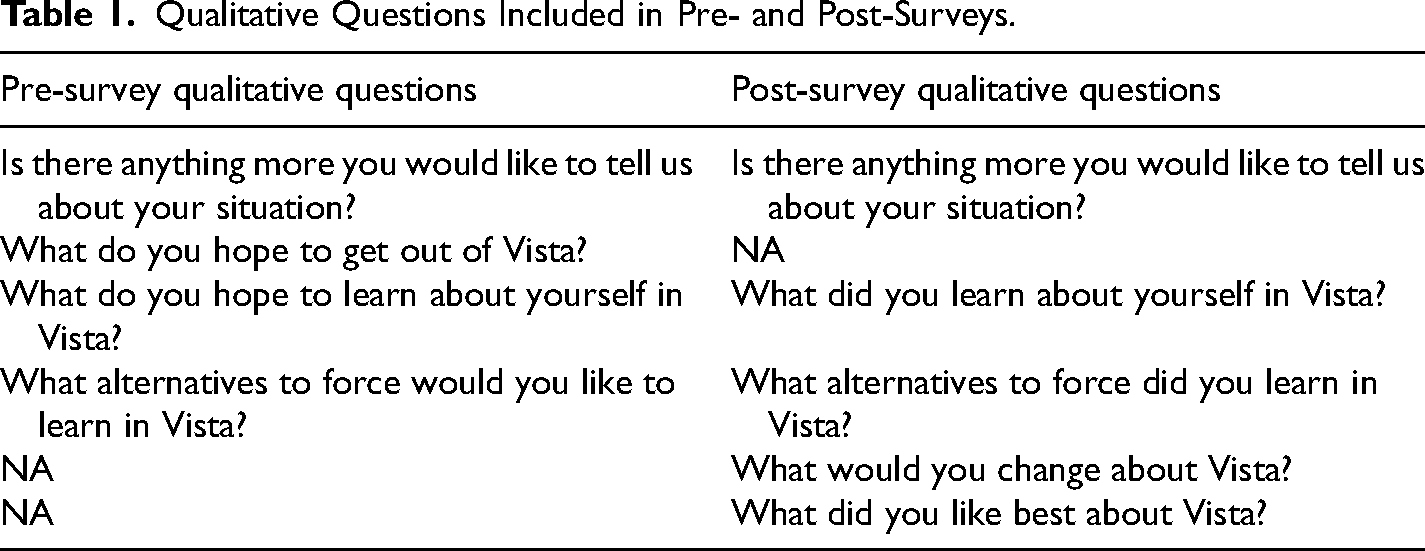
The purpose of the FAP Vista surveys was to capture how group members were affected by program contact. The mixed-methods (Creswell, 2014) surveys consisted of both quantitative and qualitative questions, designed to capture any changes in women's beliefs and knowledge over time. The survey questions were designed to capture demographics, relationship status, experiences of surviving and causing harm, self-awareness, reasons for their use of force, and embeddedness in social support networks. The qualitative surveys included questions asked only at program entry, questions asked both at program entry and exit, and questions asked only at program exit (see Table 1).
Qualitative Questions Included in Pre- and Post-Surveys.
Successful FAP Vista program completion is typically honored with a termination ritual that may include awarding graduates with a FAP Vista coin 7 and the opportunity for women to complete the post-survey. Between 2018 and 2022, FAP clinicians administered the confidential de-identified paper-based surveys to FAP Vista group members, reviewed the de-identified written responses, and sent the surveys to the FAP Program Assistant who compiled the data into Excel spreadsheets and uploaded them into the FAPNet for secure storage. In 2021, the Clinical Director recognized that although pre-survey completion rates were consistently high, post-survey completion was particularly low. For example, there were 192 completed pre-surveys and 62 respondent-matched post-surveys. Although there are no exact numbers, the vast majority of the 130 women who did not complete the post-survey also did not complete the FAP Vista. 8 To increase post-survey completion for those who did complete the program, the Clinical Director created a 10-point guideline to accompany clinicians’ survey disbursement. The Clinical Director then provided all clinicians with the guidelines and further encouragement regarding the importance of survey completion. The guideline and communication yielded group members’ completion of 62 matching pre- and post-surveys between 2018 and 2022. The data were then de-identified and prepared for analysis. Data analysis began following IRB approval in December 2022.
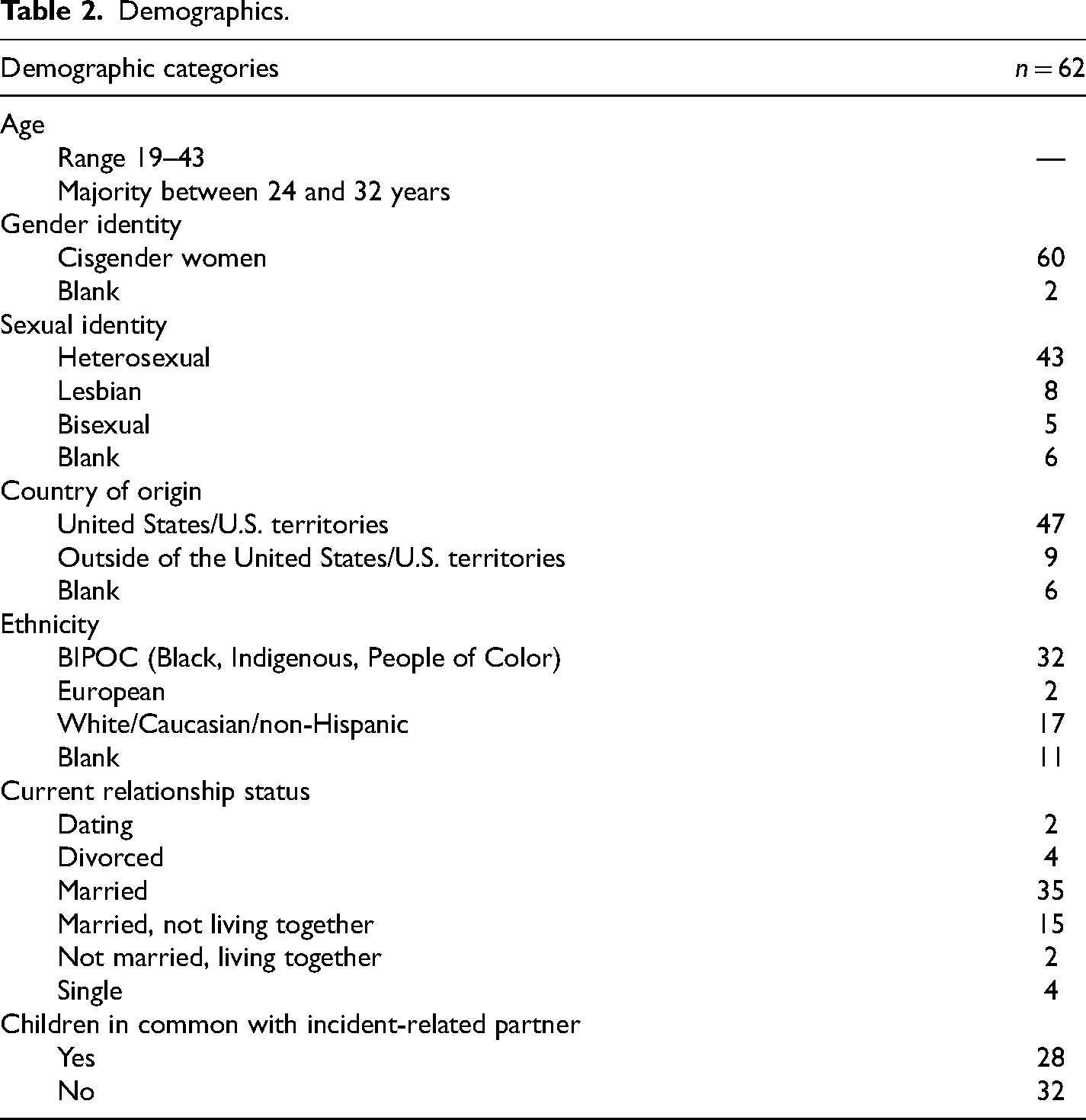
Coding of the open-ended questions was conducted independently by the first and second authors to facilitate interrater reliability. Any discrepancies in coding were resolved through further review until both coders agreed that the coding appropriately reflected the content of the responses. The authors used an inductive, open coding strategy (e.g., codes were not predetermined). The women's responses could potentially fit in more than one category. These data are the first exploring the experiences of women who have had Vista contact in a military setting. The 62 women are diverse in terms of military affiliation, race, ethnicity, sexual identities, and relationship status. Of the 62 women who completed both the pre- and post-surveys, 60 of the women identified as cisgender with 43 heterosexual, eight lesbian, and five bisexual women; most were between the ages of 24 and 32. There is great diversity in the women's intersectional (Crenshaw, 1991) identities across race, ethnicity, and relationship status. The majority (46) of the women reported the United States as their country of origin. Almost half have children in common 9 with their incident-related partner (see Table 2 for additional demographic information).
Demographics.
Findings and Discussion
FAP Vista is designed and implemented to provide women opportunities to learn about themselves in relation to others and explore viable alternatives to their use of non-self-defensive force. Therefore, the intervention is designed to increase their self-awareness and inform their decisions about how they non-forcefully interact with their partners. A mixed-methods approach is appropriate for capturing changes in FAP Vista members’ beliefs and knowledge over time. The quantitative section of the analysis included three steps. First, the pre- versus post-temporal change in the mean and percentage of the outcomes of interest were obtained for all 62 participants who participated in both pre- and post-surveys. Following that, a series of chi-square and t-tests were implemented to identify whether a change in an outcome after the FAP Vista program was statistically significant. Finally, we obtained Cohen's d and Cramer's V statistics to illustrate the effect sizes of FAP Vista on the outcomes.
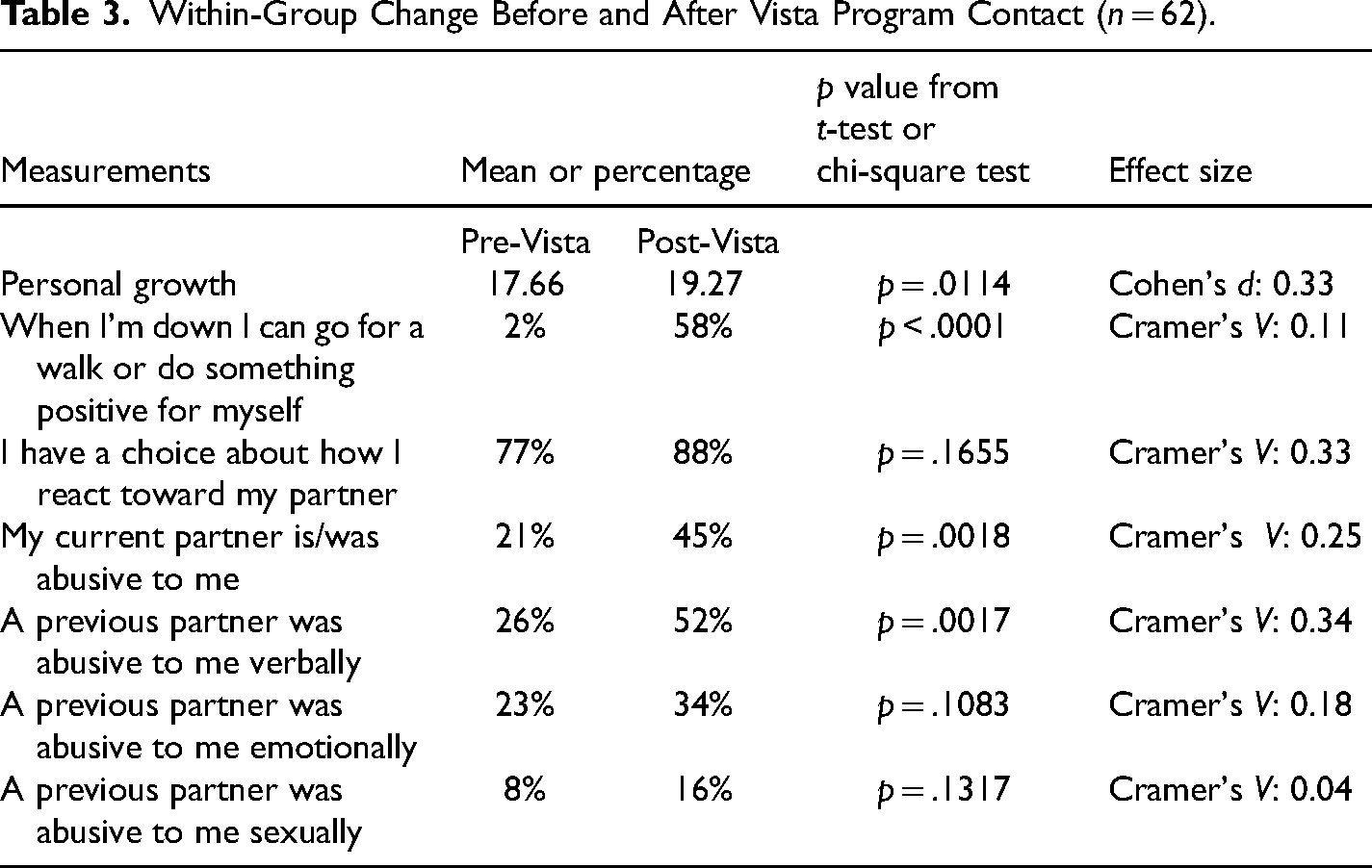
We begin by presenting the quantitative findings. A broad measure of program impact is personal growth upon completion. The authors hypothesized that women's personal growth would increase over the 20-session program. Six survey questions were utilized to measure personal growth: (1) I am interesting; (2) I feel good about myself; (3) My life is full; (4) I’m content; (5) I’m hopeful about the future; and (6) I enjoy my life. Responses for each question ranged from (1) strongly disagree to (5) strongly agree. A latent factor was constructed based on the six items. The internal reliability (Cronbach's alpha) for the scale was .85 in this sample, which indicates good internal consistency of the scale and adequate correlations between the six items used (de Oliveira-Filho et al., 2014). To compare the pre/post-measure of personal growth, we employed a paired t-test, a method to examine the within-subject change pre-/post-intervention for continuous variables (Rietveld & van Hout, 2017). Results showed that respondents experienced a non-trivial personal growth after FAP Vista completion (score changed from 17.3 to 19.3), and there is strong statistical evidence that this change was associated with FAP Vista (p = .01, n = 62, see Table 3). Cohen's d method, a method calculating standardized effect sizes for measuring the difference before and after an intervention, yielded an effect size of 0.33, indicating a small-to-medium effect size of FAP Vista on personal growth (this is based on Cohen's conventions for effect size, see Cuijpers et al., 2014).
Within-Group Change Before and After Vista Program Contact (n = 62).
For other binary measures, we employed McNemar's chi-square tests to examine the within-subject change before and after FAP Vista, given McNemar's chi-square test's advantage in analyzing repeated measures that are dichotomous in nature. We justify using the p < .1 criterion given the small sample size (n = 62) and limited statistical power (Balkin & Sheperis, 2011). In the current analyses, if a p value is smaller than .10, we conclude it reflects a statistically significant change after FAP Vista completion. We also reported Cramer's V statistics of the Chi-square tests, which illustrated the effect size.
Because the Vista curriculum provides techniques for women to use when they experience relationship conflict, we explored whether one of the main techniques, leaving a situation when one is angry 10 had changed for women over time. Our chi-square analysis reveals that upon the completion of Vista, there is a statistically significant increase in the tendency to use “walking out” as a de-escalation strategy when women receive somatic cues that they were escalating due to feeling angry (2% vs. 58%, Table 3). The effect size is .11, which, according to the conventional thresholds for Cramér's V, is considered small to medium (0.10 for small, 0.30 for medium, and 0.5 for large; see Cohen, 1988, p. 227).
The Vista curriculum also emphasized the choices women can make when reacting to their partner. A survey question tapped into the extent they agree that they have a choice about how to react to the partner was used in both pre- and post-survey. Our chi-square test shows moderate evidence that the increase in the percentage of women who strongly agreed that they had a choice of how to respond to their partner after the completion of FAP Vista is marginally significant (77%–88%, p = .17, Table 3). We identify the statistical evidence as moderate because the p value lies between .10 and .20. Because the p value is larger than .10, we failed to find sufficient statistical evidence that FAP Vista induced a significant change in the choices women can make when reacting to their partner.
The Vista curriculum introduced an expansion of the components of DV, moving the factors beyond physical abuse to incorporate other means of abuse, such as emotional and sexual abuse. Emotional and sexual abuse are cornerstones of gendered coercive control (Anderson, 2009; Stark, 2007) with men's sexual violence against women being “a cause and consequence of [gender] inequality” (Armstrong et al., 2018, p. 100). Thus, including both as indicators of “domestic violence” is crucial to dismantling intimate harm. Our pre/post-comparison of women's understanding of these experiences illustrates these expanded understandings. The chi-square test result shows a statistically significant increase when we look at overall change in how women conceptualize DV pre/post the program (21% vs. 45%, Table 3). Cramer's V of this Chi-square test is 0.25, indicating a small-to-medium effect size.
Overall, these quantitative findings reveal that FAP Vista has exerted an impact on the women's understandings of DV, that the program has supported their personal growth and their de-escalation strategies in their relationships. However, quantitative measures only tell a partial story. The women's answers to open-ended questions provide a deeper understanding of their hopes and goals before program contact and a more detailed view of how the 20-session program challenged women's assumptions and amplified their self-awareness and situational awareness. In this section, the authors include each respondent's unique personal identification number in parentheses next to the reported findings.
In response to the open-ended FAP Vista program entry question, “Is there anything more you would like to tell us about your situation?,” 13 of the 62 women provided additional information. Although brief, the women's responses provide a glimpse into the events that led to their FAP Vista contact and how they felt about themselves. Some women indicated that they are in love with their husbands (29, 94, 194), love their children (194), and wanted to stay together (29). While others were either in the midst of a marital separation (12) or had ended their marriages (116, 191). Two women indicated that the events that resulted in the Vista contact were due to “defending” themselves (191) and being “scared” (195). Another woman disclosed her mental health challenges, Post-Traumatic Stress Disorder (PTSD) from past trauma, and the stress both placed on her marriage (114). Shame and humiliation were evident in two women's responses that included “I’m not a bad person” (194), and “It's humiliating to be here” (118).
Qualitative Data: Baseline Measure of Anticipated Consequences of Vista
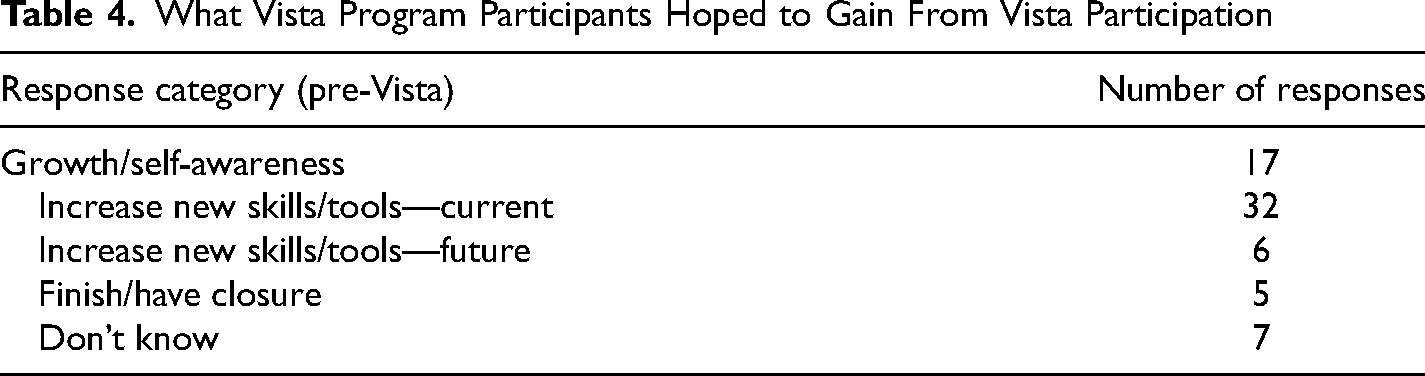
We begin by presenting the themes that emerged when women responded to the question, “What do you hope to get out of Vista?” Overall, their responses reflect an eagerness for personal growth. Seventeen of the women wrote they hoped to gain new perspectives and greater self-awareness. The insight and growth themes are illustrated by women's comments that include: “become aware of my behaviors” (136), “get my life together” (122), “gain feeling empowerment and assertiveness” (116), and “to get better at understanding my triggers and how to not fear every confrontation, assuming I will be physically hurt” (60). Since almost one third of the women indicated a desire for increased self-awareness of how FAP Vista could help them be more attentive to their feelings and actions during a relationship, it suggests women both acknowledge their behavioral choices 11 and want to develop new ways of expressing their frustrations or other difficult emotions associated with their relationships so they can “be a better person” (127). Concomitantly, 32 women sought increased skills and tools to “handle emotions, stressors, cope with things, be better for my kids” (94), “tools to process anger, frustrations, resentment” (132), “better ways to deal with anger and hurt in my marriage” (65), and “different methods on how to cope with volatile situation in a relationship. Gather experience from others to better myself” (110). Most of these comments revealed that the women were focused on their current relationship, while six women described skills they would like to learn to improve future relationships, such as “advice for future relationships” (37), “learn how to positively cope with problems and how to have future healthy relationships” (75), and “ways to prevent this from happening again” (114). Taken together, the women sound optimistic in their willingness to deeply explore their interactions and feelings during Vista. Only five women explicitly mentioned wanting to complete FAP Vista and find closure, though it is unclear whether this is because they resented being in the program or that they simply wanted to move on from the incident (s) that brought them to FAP Vista and begin the next phase of their lives. Also important to note is that the women did not take this opportunity to blame their partners/ex-partners or address what they did or excuse their behaviors, descriptions that would be more consistent with those who hold the coercive control in the relationship, than women who had survivorship histories (see Table 4).
What Vista Program Participants Hoped to Gain From Vista Participation
Comparison of Pre- and Post-Vista Program Measures
Women were then asked two questions that were repeated at the end of the 20 sessions. We first present the paired questions (pre/post) and discuss the responses that emerged. Following these findings, we provide the women's responses to two final questions asked only at the end of the program. The first pre/post-question asked about what they hoped to learn about themselves, and, upon completion of FAP Vista, what did they learn about themselves.
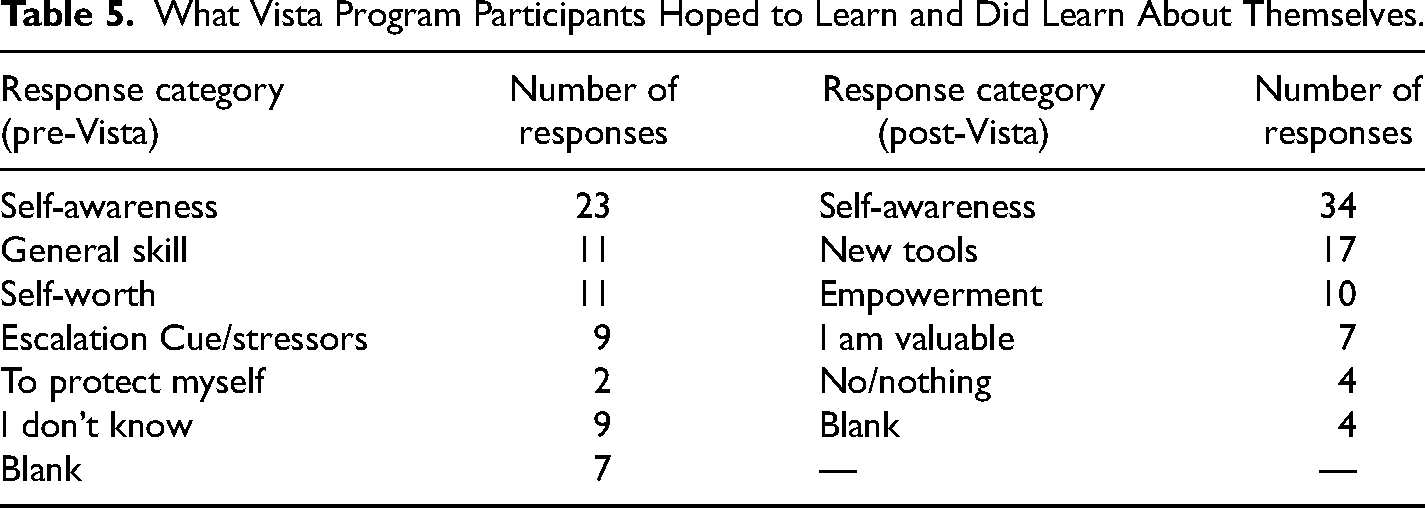
Upon FAP Vista program entry 49 of the 62 women who completed the pre-program survey identified how they hoped to learn about themselves while attending the intervention and support groups. The majority (n = 23) hoped to gain self-awareness. Expressing a desire to know, “why I’m easily angered, and who is the best version of me” (2), “why I react this way” (194), and “to find what I want for myself” (145). Their hope to learn about themselves also reflected an awareness of their trauma histories, one woman hoping to learn about, “my wounds” (60). Women also expressed a hope to learn a range of communication skills (n = 11) and self-worth (n = 11). General communication skills included, “how to control my anger” (91), “ways to handle anger” (32), “when to take a break if something is going wrong” (26), and “boundaries—how to get them” (118). Self-worth was described by the women as “self-worth” (75), “respect for myself” (121), and “I hope to learn to find and love myself” (30). This category suggests an emerging overall theme of women navigating feelings of shame and/or guilt for their circumstances. Nine women indicated that they hoped to learn what their escalation cues/stressors were and how to manage that stress, noting, “what triggers my anger issues” (52), and “stress management” (50). Two women expressed a desire to learn how to protect themselves (n = 2), suggesting that they were currently living in abusive relationships.
Upon FAP Vista program completion, 57 of the 62 women identified having learned about themselves during the program's intervention and support groups. Thirty-four of the women identified having gained a deeper self-awareness, one woman explained as, “so much, it's too much to write” (177). More specifically, one woman explained her new self-awareness as, “I learned so much about myself. But most important … is I used to change or fix people now I learned and know I can only change myself and be responsible of my own behavior” (73). Similarly, another woman noted that she learned, “That I am a strong woman who can accept responsibility for my own actions as well as forgive myself for my past mistakes” (94). Women also identified having learned new tools (n = 17) for their relationships. These tools comprised a diverse range including boundaries, assertive communication, not judging themselves, defense mechanisms, and positive verbal communication. One woman (111) summarized in detail
12
what she learned as, I learned about releasing self judgement, how to confront gently, ensuring that my children are in a loving and nurturing environment, how to show my partner love, defense mechanisms and choosing to do what is right not what is easy. How to manage conflict and realizing that my partner and I are on the same team. Relationship time outs. How to effectively express myself. How to use the I statements because it encourages ownership. Different types of stress and how to manage. What healthy relationships look like; not crossing boundaries, trust, respect. Listening without judgement and self-care.
In addition to self-awareness and tools to navigate their relationships, women indicated that they felt newly empowered (n = 10) and valuable (n = 7) as people. The empowered women expressed learning that they are, “so much stronger than I think I am,” (194) and “much stronger than I believed I was” (188). One woman (48) detailed how her ideas around personal power changed because of FAP Vista, “I thought I was so strong by my strong personality and upbringing, but my actions were weak and now I’m stronger than I ever was by letting go and sometimes allowing myself to be vulnerable.” The women who expressed that they now felt valuable used the language of having “self-worth” (75), “self-love” (127), “being worthy of love” (154), and “that I can be loved for who I am” (122). This suggests that the desire for self-worth expressed in the pre-survey was realized through personal empowerment and feeling valuable. It also suggests a process by which FAP Vista contact enabled women opportunities to release themselves from the pre-program contact shame they felt and focus on a deeper self-awareness and new tools for current and future relationships (see Table 5).
What Vista Program Participants Hoped to Learn and Did Learn About Themselves.
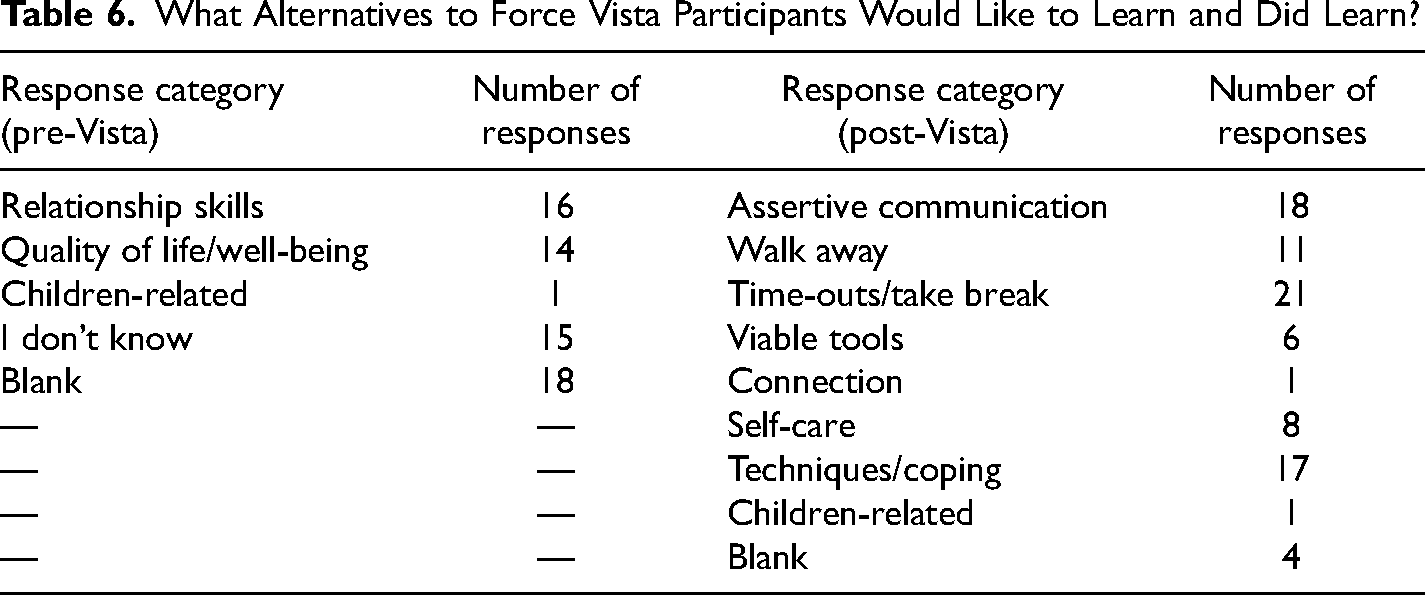
The next paired questions asked what alternatives to force would they like to learn in Vista; then, at the end of the program, women were asked to tell us what alternatives to force did they learn. Before FAP Vista commenced, only half of the women responded to the question, “What alternatives to force would you like to learn?” This small number of responses could reflect women's bewilderment about their situation, especially if their use of force could be attributed to their partner's abusive behavior, as well as their concerns regarding a compulsory program. It might also indicate the women did not yet comprehend the FAP Vista program goals. Sixteen women recognize that improving their communication in their present relationships could be helpful. Several explicitly pointed to needing more effective ways to communicate in a broader sense, as illustrated by these women's comments: “communication techniques” (2), “better communication skills” (52), and verbal “problem-solving” (68). Most of the women mentioned specific relationship skills they hoped to develop during FAP Vista, including learning “healthier ways to handle arguments” (26), “coping mechanisms for when I get upset, frustrated, and emotional” (85), “exploring healthier choices to replace toxic behaviors and reactions” (114), and “recognize instead of jumping to anger” (156). They did not use this opportunity to blame their partner/ex-partner but sought ideas for addressing their own skill development. Two women alluded to relationship situations that seemed more harmful and potentially graver, in these words: “how to cope with mistreatment” (37) and “removing myself from situations to avoid escalation” (121).
Fourteen women focused on improving the quality of their lives and well-being. The quality of life-related comments reflected thinking about strategies for facilitating healthier situations, such as “I need more alternative ways of thinking vs. behaviors” (14), “how to keep myself positive when things go bad” (141), and “stress management” (150). Responses regarding women's well-being emerged as ways to create a stronger sense of self through internal means, using “calming ways” (194), “relaxation” (52), being “ready to receive what it is I have to receive” (111), and “self-care activities” (178). One woman stated she sought “alternatives to using medication to manage emotions” (94). Taken together, the women's responses reveal “they believe their options to be limited, particularly when a history of survivorship is present” (Larance et al., 2009, p. 5).
At the conclusion of the FAP Vista, almost all of the women provided a large range of alternatives to force that they had learned by the program's completion. In fact, in the pre-phase, 33 women indicated they didn’t know any alternatives or they left the question blank; however, by the time of program completion, only four women left this question blank. While in the pre-phase of the survey, 16 women mentioned specific relationship skills they wanted to learn, in the post-survey, women's responses reflected a much larger range of skills and coping techniques they could use in their relationships. Eighteen women learned how to enhance their communication skills by becoming more assertive in stating their needs. For instance, women said, “communication skills, assertiveness rather than aggressiveness” (2), “not using strong/offensive language” (143), “talking things out before it gets too big” (167), and “how to talk and solve problems healthier (75). Three women framed their responses by using a technique explained in FAP Vista of verbally communicating their thoughts and feelings with “I” statements: “saying I need time respectfully” (29), “using ‘I’ messages, you talk, I listen strategy” (143), and “using I statements to communicate what I want my partner to know” (111). Women also wrote about their communication alternatives as ways to be preventative, as illustrated by these two women: “how to respond positively to negative situations to prevent further escalation” (34), and “healthier options for communications and ways to cool down and control emotions before engaging in conversation” (60).
The Vista curriculum provides specific sessions on conflict management 13 stress signals, self-talk, and time-outs— all offering skills in navigating potentially volatile interactions. Women embraced these skills, as indicated by the number of times they were referenced. “Walking away” is one such skill and 11 women stated this behavior was a useful alternative to force. They mentioned things like: “realizing I have the power and choice to walk away from the current situation until all parties are calm and collected, myself included” (136), “what works for me is walking away and addressing the issue when I’m calm” (160), “walking away and gathering myself “ (188), and “walk away, I always have a choice; do not engage” (194). Vista sessions encourage a series of events to consider when engaging in de-escalation, including taking a break or a time out after walking away from the situation. Again, this technique resonated with the women as evidenced by the 21 who mentioned it. Women talked about “taking a ‘time out’ to refocus” (7), “have a 20-min break so it doesn’t escalate” (26), “not to engage further, remove myself from the situation” (116), and “taking a step back” (167).
Women recognized how they expanded their available options of what they could do in their interactions with their partners instead of using force. Twenty-three women wrote about multiple tools they can use, as illustrated by these women: “having boundaries” (21), and “ask for help, re-analyze situation, resources (68).” One woman mentioned the importance of having a support system to turn to (though support system within the group emerged as a major theme to be discussed subsequently). The list of new techniques to use to avoid using force in women's repertoire was vast. A number of women framed their new understanding by saying they recognize warning signs (n = 2) or “triggers” (n = 2) and learned how to respond to them in ways that de-escalated the situation. Women were also more aware of “consequences of my action from other's experience” (110) and that “the words I speak carry weight and while being mindful of what I say I can make my point and opinion clear with words” (136). Other new techniques were also present in the women's general responses, demonstrating a connection between somatic cues and the ability to calm oneself, such as: “Let go! Only focus on controlling my emotions” (48), “techniques to relax and calm down” (141), and “self-regulate, manage time better” (145).
Attention to self-care and other mindfulness techniques remained important to the women as they navigated alternatives to using force following completion of FAP Vista. Four women of the eight who mentioned self-care stated how important mindfulness and breathing exercises were to them. Other women remarked about the usefulness of “patience” (171), “self-love” (127), and “self-realization, awareness” (73), and two mentioned that they “found out more of who I am” (177). These findings illustrate that cofacilitators are maintaining a focus on self-care throughout Vista program delivery.
Women's growth, exhibited after completing FAP Vista, reveals greater cognizance of their own behavior and somatic cues, and greater awareness of different options they developed that expand their repertoire of skills for resolving conflict, choosing alternatives to using force, and practicing self-care. Women who do resort to using force in their intimate relationships often do so because they do not see other alternatives (Dasgupta, 2002). Therefore, these findings are promising in not only increasing awareness of non-forceful alternatives but also women implementing those alternatives after FAP Vista contact (see Table 6).
What Alternatives to Force Vista Participants Would Like to Learn and Did Learn?
Measures of Post-Vista Program Completion
There were two questions asked only at the end of the program, what would women change about FAP Vista, and what they liked the best about it. Thirty-seven women indicated that there was nothing they would change about the program, with some offering further detail, “absolutely nothing. It's great as it is” (73), and “nothing, I enjoyed my time and added a community of others as a support network” (110). Two women shared that they would like for FAP Vista groups to be cofacilitated in ways that are more inclusive for those who identify “as bisexual or lesbian” (2). Eleven women made suggestions regarding program structure that involved either shortening the time in group or making group longer. Others remarked on program content, hoping for more updated handouts and additional interactive activities. Four women indicated that FAP Vista should not be compulsory, explaining, “I think most people would want to take the course if you just ask” (85). The women's desire for connection with others in similar circumstances was also evident, two women indicating what a positive impact their cofacilitators had on their lives, while another woman pointed out, “The only thing I can say is that I wish there were more women in the group to be able to learn from and share experiences with” (114).
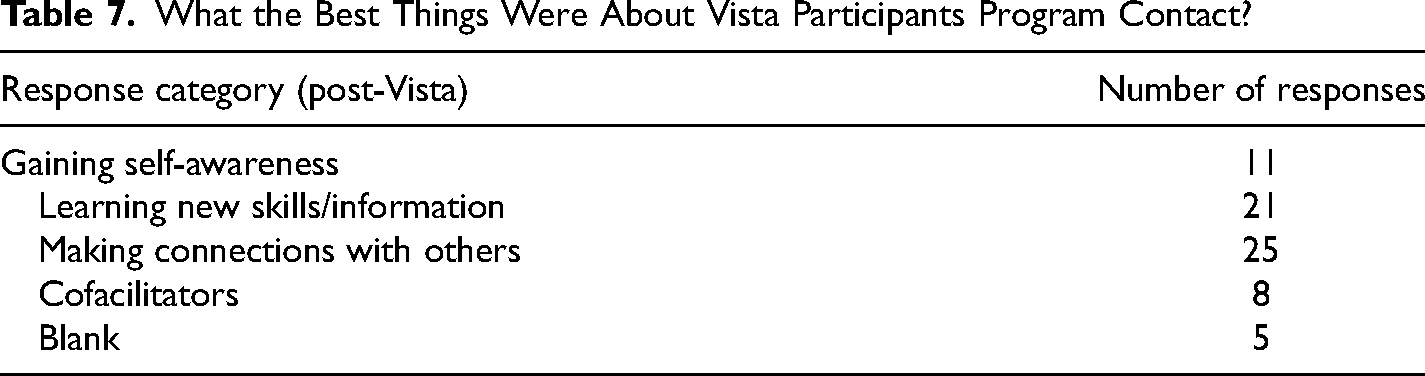
The final open-ended questions asked women to articulate the best thing about FAP Vista. The Vista curriculum seeks to empower women to better understand themselves and to develop a greater self-awareness of viable alternatives to using force. After traumatic experiences, re-establishing one's equilibrium is important (Janoff-Bulman, 2002). This theme was reflected in the women's comments; 11 of them mentioned positive growth and being more at peace with themselves, as expressed by these women: “feeling a sense of self again” (7), “learning about myself and what I need to do in order to feel happy and good” (29), and “I have learned to have a better understanding of not only myself but the choices I make and can make and how they affect those around me” (136). One woman described how she experienced the curriculum and outcome, “There was so much to learn and that led to a lot of self-work. And as a result of that, I am 100% happier than before! How [FAP Vista] positively affected my relationships in a good way” (73). There was also the recognition about how the program contributed to a better quality of life, such as with this comment: “it helped me look at things in a different way. I can be okay with being by myself and walk away” (81). Without a fuller understanding of oneself, growth and a positive self-image would be more elusive.
Reaching a deeper understanding of one's behavior and developing alternatives to using force is another FAP Vista goal that resonated with the women. One-third (n = 21) of the women identified new skills they learned and tools they found useful to rebuild their understanding of who they are in relationships and how they could be their best selves. Some women talked about a greater awareness, such as “becoming more aware of situations and what things mean and how to approach it in a better way” (21) and “opened my eyes for further knowledge on consideration for future” (37). Developing new skills and alternatives to using force were also highlighted, as represented by these women's comments: “the lessons opened my eyes towards alternative ways to cope with anger/stress” (50), “learning about different communication styles and situations” (117), “learning new techniques for when I get upset” (85), “learning better ways of dealing with my emotions and learning better ways of communicating” (167), and “getting to learn different strategies for arguments and knowing it's okay to seek help if needed” (26). Many also mentioned that the breadth of information from the session content was helpful. Women not only connected this information to the relationship that brought them to group, but also anticipated how to use the information gleaned in future relationships, as this woman expressed, “information that I can use in my current, healthy relationship” (191).
The most pervasive theme concerned connections. While building connections between the group members was not a formal component of the FAP Vista content, the women's comments revealed their delight in forging connections. This outcome demonstrates how isolated women are and the cofacilitators’ skill in helping these women feel safe to build trust and form connections. This finding is consistent with extant research that shows that people who experience trauma are often isolated or deliberately self-isolate so that they do not feel judged (Herman, 1992; Larance, 2024; Miller et al., 2005). From the women's words, it is clear that the group format profoundly affected the women and, in combination with the facilitators, made them feel heard, valued, and supported. For women in turbulent relationships, sharing stories and finding commonalities and camaraderie can feel like gifts of survival. Twenty-five women expressed the importance of validation and group feedback to their post-traumatic growth. For several women, this took the form of gratitude in finding out they weren’t the only ones, as stated by these women: “having the ability to talk about and hearing from others who are going through similar situations” (52), “learning that I am not the only woman that fought her spouse” (112), and “validation; I got to feel like I am not crazy or alone for feeling the way I do” (194). So many of the women extolled the nature and importance of getting group support, such as in these women's words: “getting to know other women/moms going through a tough time in life but we all make each other laugh & smile” (161), “the support!!!” (160), “the opportunity to meet others in similar situations” (110), and, “everything; the support my family and I received was an A+ rating” (111). One woman expressed her relief that the focus was not on her partner's behavior: “I feel the best thing about Vista was the positive atmosphere/learning. I love how the group was focused on ‘me’ not ‘him’ even though I was uncomfortable at first” (143). Although “non-judgment” is a specific session, the ethos of non-judgement of self and others seemed to pervade FAP Vista delivery. Women expressed appreciation for not feeling judged by cofacilitators and other group members. This was critical to their strong satisfaction with the program: “the fact that you can express yourself without being judged” (150), “unjudged opportunity to really learn new things” (156), “the best thing about VISTA is having a safe environment to discuss current issues in my life without judgment” (34), “forum where I feel I can trust and be open about my situation and not be judged for how I handled situations and with supportive participants and facilitator” (116), and, “someone to listen openly w/o judgment” (178). This feeling of being welcomed was also experienced by introverts: “getting to know others when you’re not a people person” (163). From the women's comments, it is apparent that FAP Vista created a safe space where women were warmly welcomed and not judged, thus facilitating deep interactions with others and sharing stressful experiences. This complex experience is succinctly captured by one of the women (114): The best thing about Vista was the weekly lessons I got to learn about. Each meeting, I got a new perspective on topics I thought I had figured out. But there is always more to learn and grow from. I cried, I laughed, I felt understood more than I have in a long time I am grateful for my Vista experience and the women I got to meet and talk with. Visa truly has made me feel inspired.
The success of a program like FAP Vista rests not only on a curriculum tailored to the needs of those receiving services, but the skill with which it is delivered. Thus, women's admiration for the group cofacilitators was noteworthy. Eight women championed their cofacilitators, using words like “I love Ms. ___ “ (30) and expressed delight that their facilitators were “amazing” (68) and “patient” (171). Other women wrote comments such as: “meeting Mrs. ___ and having her help me transition into my new life as a much happier woman and mother. Thank you” (60), “learned so much and had an amazing educator” (68), “the counselor was extremely supportive and genuine. She helped me grow & let go” (118), and “having the most kind and very positive attitude counselor Mrs. ___” (127). Women connected the facilitators with the importance of “being able to express myself freely without judgment” (188).
These responses to the question, “What did you like best about Vista?” reveal the power of FAP Vista to encourage women to approach their intimate relationships with greater understanding, additional skills to use when responding to challenging situations, and to (re)instill a sense of pride and confidence in themselves that for many has been “inspirational.” Driving this success necessitates well-trained group cofacilitators who are not only passionate and receptive, but deeply understand how to address the complex needs of a new population while applying those skills and understanding with great competence (see Table 7).
What the Best Things Were About Vista Participants Program Contact?
Implications for Research and Practice
The Vista curriculum has been tailored to meet the needs of women in settings around the globe (Larance et al., 2019). However, DAF FAP is the first member of the DOD to implement Vista in a military setting. Results from the women's pre- and post-FAP Vista survey answers provide evidence that military social workers tasked with meeting the needs of this complex population are using the Vista curriculum to provide women opportunities to heal from their experiences, engage in personal growth, and increase their self-awareness as well as their awareness of viable alternatives to using of force. Thus, rather than women's FAP Vista contact alone, it is the combination of its content; cofacilitators’ non-judgmental, supportive approach; and, a group intervention process that encourages group member connections that positively affected the women. These findings suggest that Vista (Larance et al., 2009) aligns with military social work's history of meeting clients where they are (Yarvis et al., 2023). The women's emphasis on how they built connection and appreciated Vista's non-judgmental approach, in content and delivery, demonstrates that the DAF FAP is accomplishing its aim of effectively delivering trauma-informed antiviolence interventions to a diverse population of women who have both survived and caused harm in their intimate relationships.
What also stood out in the data was that women did not make excuses for the actions that resulted in their Vista referral. Instead, the women sought to absorb the lessons of FAP Vista in ways that promoted their personal growth. This observation is reminiscent of what is known about procedural justice—if the process is fair, treats people with dignity, and honors their voices, the outcome (e.g., being required to attend a 20-session program) is less important (Tyler, 1990, 2003). Individuals who feel respected, heard, and are treated fairly are better able to grant legitimacy to a process that is non-voluntary.
Nonetheless, it is important to recognize areas of opportunity for the future including additional attention to assessment, handouts, and work with women who do not identify as heterosexual. Two women indicated being fearful of their partner and, therefore, possibly used self-defensive and/or resistive force. This suggests these women are at an increased risk of being harmed by their partner. Therefore, safety and support planning at first contact and throughout intervention is crucial. As the answers to the open-ended survey questions reveal, when women resort to using force it is a complex and nuanced phenomenon often separate from coercive control and typically rooted in their own oppression and survivor strategies. Some women indicated the desire for updated handouts, voluntary groups, and for FAP Vista groups to center the experiences of members from LGBTQIA+ 14 communities. FAP Vista cofacilitators must be supported in identifying contemporary materials best suited to meet the needs of mandated and voluntary group members. With the wide range of intervention settings and diverse women served, these are ongoing and necessary areas for further work. In addition, cofacilitators must also receive support meeting the needs of women of color and those from LGBTQIA+ communities in ways that challenge a central focus on white heterosexual women's relationship dynamics.
Despite the positive experiences the 62 women had in FAP Vista, this research raises important considerations. Women's responses to surveys may be improved by in-person interviews rather than a paper-based format. A longer term follow-up is necessary to assess if the women implemented their new acquired beliefs and tools into their daily lives. Future research should include follow-ups interviews with the program participants at different points of time, particularly with women who left the program before completion.
It is important to note that implementing the Vista curriculum framework (Larance et al., 2009) is only one aspect of a community's thorough response to DV. There must be ongoing safety and support planning as well as education for and coordination (Shepard & Pence, 1999) between partnering entities both within and beyond the DAF FAP community. This education must center on identifying the dynamics of coercive control, problematizing a primary focus on incident-based use of force, and understanding how people's intersectional identities influence their access to relationship and institutional power. DV is not exclusive to physical use of force but includes coercive control and emotional, sexual, and verbal abuse. Embracing this complexity across interventions is essential to capturing women's experience as well as providing pathways forward. These findings suggest 15 that with a community's commitment, institutional support, and a contextual curriculum, skilled social work practitioners have the capacity to affect change across micro and macro intervention settings that provide healing and repair for women who have resorted to force and, often, have domestic and sexual violence survivorship histories.
Footnotes
Acknowledgements
The authors are grateful to Lieutenant Colonel Elisha Parkhill, former Department of the Air Force Family Advocacy Program Chief, for her support of the Family Advocacy Program Vista antiviolence intervention program, this outcome study, and the internal Department of the Air Force publication application process.
Declaration of Conflicting Interests
The author(s) declared no potential conflicts of interest with respect to the research, authorship, and/or publication of this article.
Funding
The author(s) received no financial support for the research, authorship, and/or publication of this article.
