







Abstract
In this study, we examined the challenges of Israeli women survivors of intimate partner violence (IPV) who had left abusive relationships and lived independently during the Swords of Iron War. Based on two focus groups with 24 women, findings revealed intersecting personal and collective vulnerabilities. Three central themes emerged: (a) emotional and physical struggles, including retraumatization, anxiety, and stress-related symptoms; (b) family difficulties as single mothers, such as financial strain, conflicts with ex-partners, and childcare challenges; and (c) loneliness within the community. A compounding vulnerability model was proposed, underscoring the need for tailored community and policy support during emergencies.
Introduction
Intimate partner violence (IPV) is considered a global health issue. According to the World Health Organization (WHO, 2019), 10%–50% of women throughout the world experience physical abuse. When emotional abuse is also included, the prevalence is even higher. Collective violence, such as war, increases the risk of various forms of IPV (Hynes, 2004; Buvinic et al., 2013). War breaks down the norms and structures that discourage IPV (Okello & Hovil, 2007); the violence of war seeps into the home sphere (Horn et al., 2014; Saile et al., 2013); and the patriarchal culture of warfare itself reshapes broader gender relations, encouraging IPV (Albanese, 2001; McLeod, 2016). As such, IPV can be seen as part of the social relations of war itself (Gray, 2019).
Studies have indicated that war increases the incidence of IPV due to increased levels of stress, emotional distress, personal gun ownership, loss of resources, and diminished service accessibility (Doyle & McWilliams, 2020; Stark & Ager, 2011). In fact, a systematic review and meta-analysis indicated that 39% of women and girls in conflict-affected settings experienced physical or lifetime IPV, and 24% reported experiencing such violence in the 12 months before the study (Murphy et al., 2024). Despite the vast knowledge of the relationship between war and IPV, there is a significant gap in understanding the effects of war, specifically on women who have left an abusive relationship and are trying to adjust to independent life in the community. Given the accumulation of stressors that characterize the intersection between war, IPV, and the post-leaving phase of an abusive relationship, alongside the loss of resources among this cohort as a result of war, there is a need to learn more about war's effects on this specific group of women and their needs. In the current study, we examined this question through the particular case of Israeli women IPV survivors during a war.
On October 7, 2023, Hamas launched a brutal attack on Israel, to which Israel responded with the Swords of Iron War. On the Israeli side, the war's horrific consequences have included the slaughtering and abduction of many soldiers and civilians; the evacuation of large communities to safer areas, leading to economic instability; increased personal gun-carrying among civilians; and a redirection of care resources to war needs (Saar-Ashkenazy et al., 2024). On the Palestinian side in Gaza, the civilian population has faced severe hardships, such as casualties and displacement, the collapse of healthcare services, and a lack of basic necessities (Ben Saad, 2024).
Based on Heise's ecological model, which conceptualizes violence as a multifaceted phenomenon (Heise, 1998), Murphy and colleagues (2022) outlined a socioecological framework for understanding conflict-related violence against women and girls, which includes six interconnected layers: global, societal, institutional, community, interpersonal, and individual. In addition, an intersectional framework, as articulated by Crenshaw (2013) and Collins (2000), offers a critical lens for examining women's experiences of violence in war. This framework highlights how gender intersects with ethnicity, socioeconomic status, age, and marital status, creating unique vulnerabilities, and reveals how multiple oppressions and structural inequalities converge during conflict. This lens thus enables a nuanced understanding of both shared and divergent experiences of affected women. Such insights can guide the development of tailored interventions to address their diverse needs.
In this qualitative study, we examined the abovementioned six interconnected layers in a specific subgroup of women IPV victims—namely, 24 Israeli women who had left an abusive relationship and were members of a program called “Growing Together,” which supports women survivors of IPV in the community. Our research question was: How do Israeli women survivors of IPV, participating in the “Growing Together” program, experience and navigate emotional, economic, and social aspects of their lives during wartime both outside and within their community?
Intimate Partner Violence in Israel
Violence against women is prevalent across all sectors in Israel. A national survey found that 11% of Israeli women had experienced IPV in their lifetime (Eisikovits et al., 2004). Rates are even higher among women in Israel from cultures where IPV is legitimized—such as among Arab, former Soviet Union-born (FSU-born), and Ethiopian-born women (Ben-Porat, 2010; Haj-Yahia, 2000). Nevertheless, survey findings have indicated that IPV rates in Israel are lower than those in the United States, that IPV in Israel is typified by higher psychological aggression but lower physical aggression (Eisikovits et al., 2004), and that rates in Israel are lower than those in Europe (WHO, 2021).
In an attempt to address IPV, Israel's Ministry of Welfare established 14 shelters and citywide prevention and treatment centers. These centers operate under the Prevention of Family Violence Law (1991) and in accordance with a systemic intervention approach, which considers all family members as clients. The centers focus on risk assessment and individual or group therapy for both men and women.
Wartime Impact on Women IPV Survivors’ Well-Being
Research suggests that women and children may be more vulnerable than men to the indirect effects of war (Bendavid et al., 2021). Generally speaking, war has a detrimental effect on individuals and public resources: It can result in the prolonged disruption of education, the displacement of populations, damage to or destruction of businesses and civil structures, and loss of income and assets (Doyle & McWilliams, 2020; Hynes, 2004; Stark & Ager, 2011).
Istratii (2023) outlined a multidimensional mechanism linking political violence to IPV. This link operates through the psychological trauma and behavioral changes experienced by both victims and perpetrators. Additionally, sociocultural factors play a role in exacerbating abuse among war survivors, either by reinforcing harmful patterns or by dismantling the support systems and community solidarity that would typically exist in peacetime. In addition, Hobfoll et al. (1991) stressed that cumulative setbacks and resource losses during and after war can have negative psychological and psychosocial ramifications, such as more entrenched household poverty, emotional distress, and physical illness.
On the psychological front, war is associated with an exacerbation of the incidence and prevalence of psychological distress, generally manifested in anxiety, depression, and post-traumatic stress disorder (PTSD) (Soskolne et al., 1996; Rees et al., 2016). In a review of 25 years of research studies, Tolin and Foa (2006) found that the odds of developing PTSD were six times higher in women than in men, regardless of the level of terror exposure.
Being subjected to IPV can also lead to a wide range of mental and physical health difficulties. A meta-analysis revealed IPV to be associated with PTSD, depression, anxiety, and physical problems (Dillon et al., 2013), and it has also been linked to diminished resources (Ford-Gilboe et al., 2009; Gueta & Levy Ladell, 2023). During wartime, studies have indicated that women IPV survivors are more vulnerable to emotional distress than the general population. Rees and colleagues (2016) found that women subjected to both substantial war-related stress and IPV were ten times more likely to develop PTSD and depression. In addition, war events can trigger a past trauma history or unhealed current or chronic trauma, such as IPV (Bryngeirsdottir & Halldorsdottir, 2022).
The leaving-an-abusive-relationship phase is considered to be a critical juncture for women survivors and is a dynamic process that involves safety and resource-seeking rather than comprising a single independent event. Therefore, women IPV survivors need substantial levels of support and resources to address issues such as employment, rights exhaustion, single parenting, and well-being (Grossman et al., 2010; Patton et al., 2021). Furthermore, women who leave an abusive relationship may still be susceptible to violence from their ex-partner even years after their shelter exit (Bybee & Sullivan, 2005). In some cases, violence may even increase (Patton et al., 2021). Also, unfortunately, the accumulation of multiple trauma events may hinder the process of leaving the cycle of violence by impairing interpersonal skills and the ability to mobilize resources (Lilly et al., 2014; Patton et al., 2021). Thus, given the impact of war on women, and specifically on IPV survivors, it is important to focus specifically on those women who have recently left an abusive relationship.
War, Social Services, and Civil Society
Women IPV survivors and their children require various services to address their needs, including social service agencies, shelters, crisis counseling, hotlines, and medical, mental health, and criminal justice services (Emezue et al., 2022). During wars, specific services are developed to address the affected civilian population's needs as well (Doyle & McWilliams, 2020). Women are particularly vulnerable during times of war due to the disintegration of health, education, and social services, along with the breakdown of civil society and security (Hynes, 2004). Specifically, IPV survivors have reported that some services are unavailable during and/or after wartime, due to resources diverted to the war effort (Doyle & McWilliams, 2020).
That said, violent conflict can also lead to increased positive civic engagement. The experience of war-related events has been correlated with greater levels of social capital, community engagement, and volunteer activities (Barceló, 2021; Bauer et al., 2016; Voors et al., 2012). As for IPV survivors, there is a great deal of evidence regarding the importance of formal and informal support in the leaving-the-cycle-of-violence phase. Formal services help to alleviate the negative consequences of IPV for survivors; for example, after receiving such support, survivors are more likely to feel confident in their ability to address their own safety needs and to be knowledgeable about other types of support (Bennett et al., 2004; Rivas, Ramsay, et al., 2019). In addition, formal services have been found to be effective in both primary and secondary prevention programs for IPV, including community-based interventions and trauma-informed care (Rivas, Vigurs, et al., 2019). These services have demonstrated efficacy in improving well-being (Ben-Porat, 2020; Dekel et al., 2019), preventing repeat victimization (Xie & Lynch, 2017), and expanding available resources (Patton et al., 2021). With regard to informal support, women IPV survivors who receive this type of support may suffer less violence (Sullivan & Bybee, 1999) and may then turn to more formal types of support, thus increasing their ability to adapt to community life (Bybee & Sullivan, 2005; Sullivan & Bybee, 1999). Informal support also significantly contributes to the women's well-being (Suvak et al., 2013) and their occupational satisfaction (Wettersten et al., 2004). A supportive community, representing a broader kind of informal support, is considered a significant contributing factor to an individual's well-being (Lim & Putnam, 2010). Nurturing a relationship with women IPV survivors and accepting them into the community fabric allows such women, and their children, to cope with the social stigma attached to their situation, develop a sense of value and belonging, and seek or receive concrete or emotional support (Haj-Yahia & Eldar-Avidan, 2001).
In the Israeli context, during the current war, many Israeli citizens have engaged in various voluntary services and supported evacuated populations by supplying both housing and essential items such as food, medications, and household paraphernalia. Soldiers have been supported by voluntary contributions of food as well as equipment. Many volunteered in assisting various populations with jobs, financial aid, legal or psychological support, and childcare (Shoraky-Alfesy, 2023).
In sum, on the basis of the Murphy et al. (2022) socio-ecological framework and the concept of intersectionality (Crenshaw, 2013; Collins, 2000), we expected our findings to reveal how multiple layers of individual, interpersonal, community, and societal factors interacted to shape the experiences of IPV survivors during wartime.
Method
This qualitative study was based on two rounds of focus group meetings that were held in November 2023, a month after the Swords of Iron War began between Israel and Hamas in Gaza (in October 2023). At the time of the group meetings, the war was raging, and rockets targeted various places in Israel daily. At that point, over two hundred Israeli citizens and foreign nationals were still being held captive in Gaza; more than 100,000 people had been evicted from their homes; and Israelis were still in a general state of shock, horror, and mourning after the surprise attack that cost the lives of over 1,000 people, among them babies, children, and the elderly.
The Research Paradigm and Perspective
The present study drew on the paradigm of constructivism (Denzin & Lincoln, 2011), which assumes a relativist ontology (i.e., there are multiple realities) and a subjective epistemology (i.e., individuals understand themselves and their world through subjective meanings). As Creswell (2013) emphasized, because these meanings are varied and multiple, the researchers must rely on the participants’ views. Guided by this epistemology, the present study followed an inductive rationale, aiming to generate emic knowledge: specifically, the participants’ constructions of their experience in the community during wartime. This methodology reflects the importance we attributed to understanding the women's perspectives and their points of view (Creswell, 2013).
Participants
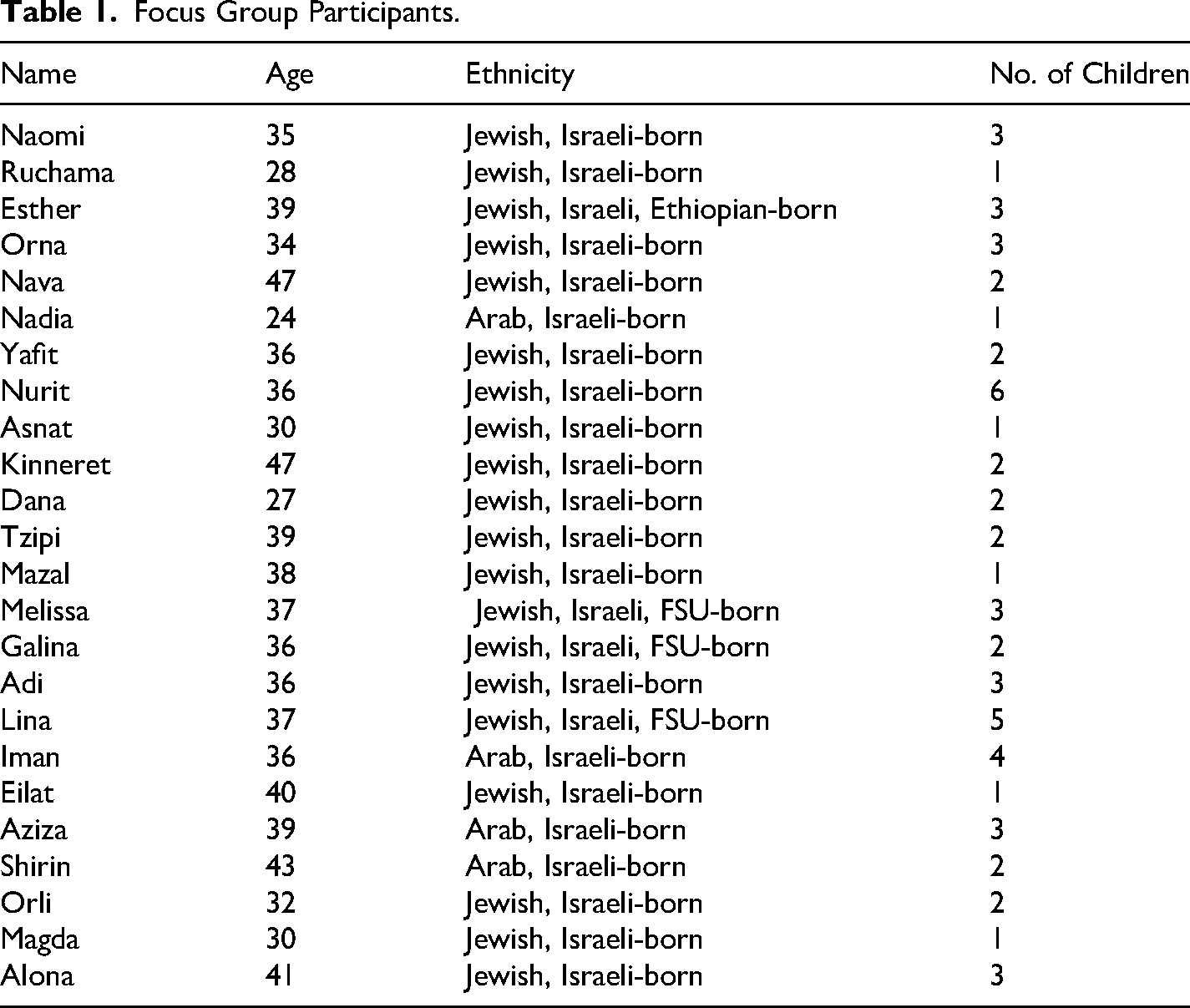
The focus group meetings included 24 Israeli-born, Ethiopian-born, and FSU-born women. Of them, 20 were Jewish and four were Muslim. It should be noted that the Muslim women identified as Arab-Israeli, as part of a community that sees itself as Israeli rather than Palestinian (Shaharit, 2019). The women were 34 years of age on average (range 24–47 years), had 1–5 children (2.9 years on average), and had survived IPV. All participants had separated from their abusive partner within the last two years and were members of nine communities throughout cities in Israel in which the “Growing Together” program, run by the Women's International Zionist Organization (WIZO), was taking place (see Table 1—Focus Group Participants). WIZO is a social organization in Israel dedicated to education and the advancement of women. To support women who are survivors of IPV and their children as they transition to independent living after living in an abusive relationship, WIZO initiated this program to assist women coping with the various challenges associated with their situation. The program supports women in building a sense of belonging and independence by providing social and emotional support, practical guidance in parenting and financial management, and assistance in accessing rights and services. The structure of the program is multiyear, where families meet weekly at WIZO branches for separate support sessions for mothers and children. Mothers receive guidance and workshops, while children engage in age-appropriate activities. Meetings conclude with a shared dinner. Given that the women in the current study had been meeting for over a year, close friendships had developed between them, transcending religion and nationality, and they supported each other. The program also facilitates community integration by involving community volunteers and collaborating with local services (Ben-Porat & Aharoni Lir, 2025). It is important to note that although WIZO funded and facilitated the “Growing Together” program, from which participants were recruited, WIZO had no role in the study design, data collection, analysis, or interpretation of results.
Focus Group Participants.
Data Collection
The women participating in the program were invited by the coordinator of each community to take part in focus groups. Out of 81 eligible women, 24 gave their consent. Data were collected through two in-depth, semistructured focus group meetings, each lasting two hours. The 24 women were divided into two groups of 12, thus allowing enough time and space for all participants to comment and share their thoughts.
We chose focus group meetings as they are an effective way to understand perceptions and beliefs among a relatively large number of respondents over a short time. Focus groups can enrich the discussion through group interactions, where participants are asked to share and question others’ responses (Freeman, 2006). As stated, the two meetings were held a month after the war began (i.e., November 2023). The participants were asked: “What have the consequences of the war been, since it broke out, for you and your children?” “Who gave you support?” “What did the ‘Growing Together’ program mean to you?” Following these initial questions, the discussion evolved organically, with participants elaborating on key issues and responding to follow-up prompts that deepened the conversation.
Data Analysis
The analysis was conducted by reviewing the full transcripts of both meetings and categorizing the data according to topics raised by different participants. The categorization aimed to indicate recurrent phenomena. This research method enabled the recognition of individual women's voices and the identification of common themes among them, using a categorical inductive approach (Huberman and Miles, 2002).
Dividing participants into smaller groups is recommended in the literature, as it fosters more focused and manageable discussions and enables the identification of both shared and divergent themes across groups (Krueger & Casey, 2015). On the basis of this rationale, the two focus group discussions were initially analyzed separately to preserve the contextual integrity of each group's dynamics. This approach also ensured that the meanings emerging from each discussion were grounded in the specific interpersonal interactions and group contexts in which they were generated (Bloor et al., 2001). Subsequently, the analyses were integrated to identify overarching thematic patterns across both groups (Nowell et al., 2017).
Quotes with similar themes, such as fear, safety, and family, were gathered in a table to identify the shared dimensions underlying participants’ narratives. For example, women who described fear-induced physical symptoms, such as insomnia or heart palpitations, were initially coded under “Emotional and physical challenges” and later grouped into the more specific subcategory “Suddenly I got sores all over my body,” which captured variations of physical symptoms within that theme. This process supported the development of a synthesized, composite description that captured the essence of the phenomenon studied.
Reflection
The first researcher, who specializes in domestic violence research, conducted the interviews and literature review, focusing on IPV survivors’ lived experiences. The second researcher, an expert in gender studies and the politics of knowledge, handled methodology, data analysis, and discussion, examining IPV through a gendered lens in a conflict-zone context. The researchers brought distinct personal and professional lenses to the study. One approached the work with a long-standing interest in women IPV survivors’ recovery process. The other, drawing on experience in narrative inquiry, was attuned to the nuances of participants’ storytelling and meaning-making. To enhance credibility, a “reflexive gaze” was applied (Guba & Lincoln, 1985), emphasizing critical self-awareness. As Creswell (2013) asserts, acknowledging researcher subjectivity is essential, and this principle informed the study's analytical approach.
Credibility
A credible qualitative study, as Guba and Lincoln (1985) defined it, must exhibit transferability, reliability, and reproducibility. This study's credibility was reinforced through two primary strategies in addition to the reflective gaze. First, research diaries were maintained to differentiate and refine each researcher's personal perspectives from analytical interpretations. Second, the authors engaged in continuous discussions to refine insights and reach a consensus.
Ethical Aspects
Participation in the focus group meetings was voluntary. The study was approved by the university's institutional review board (IRB) at which the research was being conducted. Participants, who were already acquainted with each other through the “Growing Together” program, were informed that they could withdraw from the study at any time without consequence and that they could reach out to the researchers if they felt troubled following the focus group meetings. Given the sensitivity of the topic and the participants’ vulnerability, the discussions were carefully structured. In order to minimize potential emotional distress and re-traumatization that could accompany conversations on such sensitive issues, the boundaries of the meetings such as the time framework and focusing on the here and now—were defined in advance. As the group members were familiar with each other, the discussion held the potential to foster a sense of community, visibility, and expression, which may have helped alleviate some of the stress (Liamputtong, 2006). To protect anonymity, the names of participants and moderators are disguised in this paper.
Findings
The analysis led to the division of findings into three main categories, characterized by themes that were repeated and brought up by different women: (a) emotional and physical challenges; (2) family difficulties as single mothers; and (c) loneliness in the community.
Emotional and Physical Challenges
Focus group participants expressed various aspects of emotional distress to varying degrees, starting with being emotionally flooded by triggered memories, which led to regression, fear, and anxiety, and continuing with a feeling of pressure that grew from the accumulation of stressors, exhibited in physical symptoms as well. Thus, it was clear that the intersection of gender and IPV was further enhanced by a new layer of intersectionality introduced by the war, bringing additional structural and emotional vulnerability (Crenshaw, 2013; Collins, 2000; Swaine, 2015). Everything just comes back.
The war triggered a flood of memories among the women, resurfacing past experiences that were deeply intertwined with pain and fear. Many recalled traumatic events involving abusive ex-partners who had instilled a lasting sense of terror. These recollections intensified feelings of fear and anxiety, compounding the impact of previous traumas and escalating the emotional toll of the current crisis. As a result, the women's internal resources were further depleted, impairing their daily functioning and diminishing their capacity to cope with life's ongoing challenges.
The term “post-traumatic trigger” refers to a stimulus that awakens a memory and/or emotion associated with a traumatic experience (Bryngeirsdottir & Halldorsdottir, 2022). Triggers can be tangible, such as sounds, smells, tastes, pictures, or places. They can also be more abstract, such as thoughts, feelings of fear and anxiety, and/or feelings of depression that are reminiscent of thoughts and feelings experienced during the original event. The link between their past experiences and the Hamas attack that triggered the start of the war is evident in Galina's and Naomi's narratives. Memories of the past led to emotional flooding and a feeling of past events being repeated, despite the fact that the women thought they had already overcome these things. This phenomenon aligns with findings that highlight how triggers of trauma, whether sensory, situational, or emotional, can reactivate past distress, leading to intense psychological responses (Bryngeirsdottir & Halldorsdottir, 2022). It also resonates with findings about women being significantly more likely than men to develop PTSD following trauma (Tolin & Foa, 2006), a pattern that may help explain the heightened distress experienced by these IPV survivors in the context of war. The added trauma reflects the manner in which armed conflict magnifies preexisting gender-based violence, and how violence in the private sphere, like IPV, interacts with the structural violence of war (Swaine, 2015).
The connection between traumatic experiences in the past and events in the present, and the intensification of fear, led some women to retreat to previous patterns of action, a regression they experienced in their functioning because of the war: I can’t breathe; I’m anxious all day
The emotional overflow and the link between the initial massacre/war events and the women's personal histories were expressed in feelings of fear and anxiety. In some cases, this fear/anxiety bled into all aspects of their lives.
Nadia's experience highlights how national security fears amplify personal trauma, deepening her distress. Her anxiety over Hamas's attacks is compounded by the lingering terror of her abusive ex-partner, whom she fears may seek revenge for her having left him. Research shows that IPV survivors remain at risk long after leaving their abusers, and that they often endure ongoing psychological distress, hyper-vigilance, and safety concerns. War adds an intersectionality between the private and the public (Swaine, 2015). It reactivates fears, leaving IPV survivors constantly on edge and suspicious of their surroundings (Bybee & Sullivan, 2005; Patton et al., 2021). The fact that Nadia is Arab–Israeli adds a layer of intersectionality, as her experience aligns with findings about heightened risk factors for Arab–Israeli women, including higher rates of IPV (Daoud et al., 2020). From drama to drama
One recurring aspect, starting from the outbreak of the war, was the feeling of a never-ending cycle of stressors and difficulties. Many participants described feeling trapped in an unrelenting sequence of crises, with little time or space for recovery. In other words, as soon as they overcame one difficulty, another one emerged.
Studies have indicated that women IPV survivors are at an elevated risk of developing trauma symptoms, including PTSD (Saile et al., 2013; Stark & Ager, 2011). In the current study, this vulnerability was exacerbated by the accumulation of stressors: the coronavirus pandemic and its long-term implications, followed by the collective trauma of the Hamas attack and the Swords of Iron War. At the same time, the women had to cope with personal crises stemming from escaping violent partners, raising children alone as single mothers, and living in poverty, creating multiple levels of stress. These overlapping challenges reflect the layering of individual and collective trauma as well as deepened intersectionality, where gender-based violence, economic precarity, and motherhood converge within a context of armed conflict (True, 2012; Swaine, 2015). The feeling among the women was one of constantly dealing with various pressures, as well as a sense of guilt/shame that they could not always stand on their own two feet, manage their lives, or meet the needs of their children. The constant stress and distress prevented the women from feeling that they would ever be able to fully recover or be truly independent (Grossman et al., 2010; Lilly et al., 2014). Suddenly I got sores all over my body
Along with their emotional reactions to the war, the women also talked about physical symptoms. Many of the participants described difficulty falling asleep, and some of them described how the tension they were experiencing was affecting their bodies as well.
Stress and anxiety, which are the leading causes of mental distress, can cause physical symptoms such as pain, sleep disorders, and problems with the digestive system. This situation is particularly typical among women victims of violence; the research has shown that this cohort suffers from health problems linked to extreme stressful situations (Campbell et al., 2002). As can be seen from the descriptions, the symptoms of mental distress manifested physically as part of the trauma.
Family Difficulties as Single Mothers
In addition to the severe emotional challenges, the IPV survivors in the current study also experienced significant financial hardship, stemming from unpaid leave and a lack of childcare arrangements or educational support. Economic difficulties intensified the pressure, eroding the women's sense of security in caring for themselves and their children. The war worsened all these stressors, including financial instability, ongoing conflicts with ex-partners, and struggles with raising and supporting children, creating a growing burden that made everyday life harder to handle. It's the nutritional thing
One aspect that came up repeatedly in most conversations was the financial damage resulting from the war, which created a lot of tension around the care of the children. Mom, where are you?
Not only did the mothers have emotional and physical reactions to the war, but their children did as well, including manifestations of fear, anxiety, and regression (e.g., wetting the bed). These aspects, alongside disruptions in the kindergarten/school framework, financial difficulties, and dealing with the ex-spouse, increased the women's hardships vis-à-vis caring for the children on their own: Ayelet: My son has been with me for a month and a half straight. And it is very, very difficult. Very hard. True, I only have one child. But this is a 3-and- a-half- year-old, and this is a child who is very, very affected by the divorce, which is relatively recent. And everything is “Mom, Mom, Mom.” He doesn’t know how to keep himself busy.
These descriptions make evident how difficult the situation is for the children: the extreme fear, the loss of security, and an increased dependence on mothers who feel frustrated and find it difficult to cope with the burden. The cumulative trauma weakens survivors’ ability to mobilize resources for recovery (Lilly et al., 2014); thus, past trauma amplifies feelings of helplessness, making it difficult for survivors to break the cycle of abuse. This notion aligns with the observation that exiting IPV is not a single event but a prolonged process requiring sustained support (Grossman et al., 2010). Many survivors, like Aziza and Ayelet, struggle with financial instability, legal challenges, and emotional trauma, all of which hinder their ability to rebuild their lives.
Loneliness in the Community
Many women described feeling a sense of loneliness in the community and a feeling of marginalization; they did not feel that they were prioritized on the national agenda. Some women reported difficulty in getting help and the lack of mechanisms for getting such help. Their difficulties as single mothers did not seem to be recognized, either by informal support systems (e.g., community members) or formal support systems (e.g., service providers), thus fueling feelings of loneliness, invisibility, and frustration:
This situation was also reflected in the cessation of services (i.e., the provision of assistance and resources), as these services were being diverted to populations whose needs had become critical as a result of the war.
Discussion
In this study, we explored the impact of war on women IPV survivors who had left abusive relationships. Our research specifically delved into the circumstances faced by Jewish and Arab–Israeli IPV survivors in the aftermath of the brutal Hamas attack on Israel and the subsequent Swords of Iron War. The findings contribute to a broader understanding of the challenges faced by this specific population during periods of violent conflict that also affect the civil population.
Our findings reinforce the utility of Murphy and her colleague's (2022) socioecological framework and the intersectional lens articulated by Crenshaw (2013) and Collins (2000) for understanding the experiences of IPV survivors in wartime. The interplay between individual, interpersonal, community, and societal layers was evident in participants’ narratives, as women described not only the direct impact of war-related stressors but also how these intersected with preexisting vulnerabilities (e.g., single parenthood, minority status, financial dependence). This convergence underscores the need for interventions that are both multilayered and culturally sensitive, recognizing how gender, ethnicity, and socioeconomic status compound women's challenges during crises.
Based on the findings, we developed a model of the two main features of a compounding vulnerability cycle that incorporates additional layers of intersectionality unique to these wartime circumstances.
Retriggering of Past Traumas: Dwindling Sense of Safety
The cumulative traumas endured by survivors of male-perpetrated IPV were powerfully retriggered by national events propelled once again by acts of extreme male violence. In the context of the recent war, incidents such as murder, sexual violence, and the pervasive threat of brutality acted as acute triggers, forcefully surfacing personal trauma memories. Participants not only described heightened anxiety and hypervigilance for their own safety, but also profound concern for the well-being and security of their children, indicating the ripple effect of such retriggering across both generations.
Importantly, this reactivation of past traumas must be understood through both an intersectional and socioecological lens. The interplay of personal histories of abuse and collective violence created a unique vulnerability for women who had separated from abusive partners. For these survivors, the experience of war did not merely add a new source of distress; rather, it merged with earlier traumas, creating a compounding effect. As the literature emphasizes (Rees et al., 2016; Murphy et al., 2022), war environments, characterized by unpredictability, loss of control, and exposure to new threats, often mirror the dynamics of intimate abuse. For some participants, environmental cues such as sirens, sudden evacuations, or the general climate of fear and instability echoed specific tactics of domination or emotional manipulation they had endured in their former relationships. This convergence consequently intensified a sense of unsafety, sometimes eroding the sense of progress or security they had painstakingly rebuilt since leaving their abuser.
This chronic sense of “nowhere is safe,” as voiced by several women, further contributed to feelings of entrapment and hopelessness. The overlay of community- or nation-wide trauma on top of their individual histories of victimization intensified emotional distress and, for some, led to somatic complaints, sleep disturbances, and exacerbation of PTSD symptoms.
These experiences demonstrate that for women survivors of IPV, especially those recently separated, the trauma of war is not experienced in isolation but is deeply entangled with previous wounds. The concept of “layered trauma” resonates throughout the participants’ narratives, yet our findings go further by illustrating instances where war-related trauma actually intertwined with, and amplified, prior IPV-related trauma, potentially undermining their hard-won recovery.
Addressing these complex, intersecting traumas calls for both trauma-informed and intersectional approaches in policy and practice. Services for IPV survivors must recognize that collective crises, such as war, may reactivate or intensify previous traumas, particularly among women already in a vulnerable postseparation phase. Tailored interventions should be attentive to both individual and collective dimensions of safety, and provide practical, emotional, and psychological support adapted to emergency contexts. In line with Hobfoll et al. (2014), promoting a renewed sense of safety and offering concrete calming strategies for both mothers and children should be central components of interventions during such periods.
Hyper-Invisibility: Dwindling Social Support Resources
During times of war, public attention inevitably shifts toward specific victimized populations, such as soldiers, their families, and civilians directly affected by hostilities. This prioritization tends to eclipse the ongoing struggles of more marginalized groups, including women who have survived IPV and are in the process of rebuilding their lives. Our findings echo research suggesting that in such contexts, IPV survivors, who are already at risk of social marginalization, experience an intensified sense of “hyper-invisibility” (Aharoni Lir, 2021, 2023, 2025). Not only do these women face persistent barriers in voicing their needs and experiences, a challenge further heightened by social stigma and cultural norms, but the collective trauma of war draws communal and institutional resources away from them, amplifying their isolation.
Participants in our study described their hesitancy to seek help or share their difficulties, often because they perceived their struggles as less legitimate relative to the overt suffering caused by the war (Doyle & McWilliams, 2020; Stark & Ager, 2011). This sense of diminished entitlement to support is particularly troubling and has been documented as a unique risk during times of national crisis, when social recognition of “less visible” traumas is often lacking. The compounding loss of formal and informal support systems, such as shelters, counseling services, and community programs, created an additional layer of vulnerability. For many, the dissolution of local support structures and redirection of aid to war-affected groups meant that basic needs, emotional support, and even a sense of belonging became increasingly inaccessible.
Crucially, this dynamic is shaped by intersecting social identities, including gender, socioeconomic status, and single motherhood, as illuminated by intersectional theory (Crenshaw, 2013; Collins, 2000). In line with Murphy and her colleagues’ (2022) socioecological framework, these findings illustrate how different layers of marginalization converge, deepening the invisibility and resource deprivation faced by IPV survivors during wartime.
In an attempt to identify the essential elements of immediate and mid–term mass trauma interventions, Hobfoll and his colleagues (2014) emphasized the importance of community efficacy and connectedness to social groups, which can provide safety, make material resources available for rebuilding and restoring order, and offer hope for the future. The need for social recognition of the trauma and its consequences for the victim is a key element necessary for the trauma recovery process.
Summary and Implications
Experiencing IPV in the context of war introduces an added layer of intersectionality, where personal and collective vulnerabilities intersect, deepening emotional, structural, and economic challenges (Crenshaw, 2013; Collins, 2000; Swaine, 2015). The research findings highlight the notion that the convergence of personal trauma endured by women IPV survivors and their children, along with collective trauma, creates an overwhelming situation marked by an accumulation of pressure and resource losses. In addition, the research points to the challenges and difficulties that may impede the progress of IPV survivors who live in conflict areas, in their efforts to end the cycle of violence, emotionally and financially. Recognizing the needs and vulnerable status of this population at the community, social, systemic, and policy levels is crucial for helping them sustain the significant progress they have made.
It is important to note that although issues of faith, religion, and origin did not come up in the focus group meetings, they can significantly shape how survivors process trauma and cope. The findings highlight the need for additional research among Palestinian women in Gaza, as well as those who identify as Arab–Israeli in Israel (Shaharit, 2019), into how intersectionality influences experiences of IPV across various ethnic and national groups, offering a deeper understanding of the diverse factors shaping IPV within these communities.
It is essential to emphasize that the mental difficulties and subsequent reactions experienced by these women signal potential trauma and regression that may take years to overcome. Consequently, the assistance provided to women in crisis situations should be tailored to their unique needs, including mental, financial, and social support, while prioritizing trauma-focused interventions. The needs of their children must also be a priority. Such interventions should be instituted on individual, group, organization, and community levels. In future research, the long-term effects of war on IPV survivors should be explored while delving into the successful and unsuccessful strategies employed by these women to cope with their hardships, as well as the communal and governmental sources at their disposal.
Footnotes

Funding
The authors disclosed receipt of the following financial support for the research, authorship, and/or publication of this article: This work was supported by the Women’s International Zionist Organization (WIZO).
Declaration of Conflicting Interests
The research was supported by the Women’s International Zionist Organization (WIZO).