







Abstract
Scholars and practitioners are becoming increasingly aware of technologies being used to facilitate gender-based violence, yet little empirical research has explored this issue within the Pacific context. This article reports on a study of practitioners working across nine Pacific Island countries. While the rates and types of victimization experiences are not dissimilar to other countries, practitioners perceived that cultural and religious norms, gender roles, and societal expectations hinder victim-survivors from seeking help, disclosing, or reporting technology-facilitated gender-based violence. We argue that social and cultural contexts are key in understanding technology-facilitated gender-based violence, and developing prevention, response, and support measures.
Introduction
Technology-facilitated gender-based violence (TFGBV) is a growing problem globally, yet there remains limited knowledge of this form of violence, or support and legal response service gaps within Pacific Island countries outside of Australia and New Zealand (Quilty & Flynn, 2025). 1 The United Nations Population Fund (2021) defines TFGBV as “an act of violence perpetrated by one or more individuals that is committed, assisted, aggravated and amplified in part or fully by the use of information and communication technologies or digital media, against a person on the basis of their gender.” The term TFGBV is wide-ranging and inclusive of a variety of subtypes of interpersonal violence. For example, using digital technologies to engage in controlling and monitoring behaviors, emotional or psychological abuse, sexual exploitation, sexual and gendered harassment, and bullying (Flynn et al., 2024a). TFGBV is increasingly emerging in family violence contexts, with digital technologies being used to monitor, threaten, and restrict partners or ex-partners (Dragiewicz et al., 2018, 2022; Harris & Woodlock, 2022; Powell & Flynn, 2023).
TFGBV is gendered in both its nature and impacts. Research suggests that women experience TFGBV at disproportionately higher rates than men (Brown et al., 2022), particularly young women, and gender diverse communities (Flynn et al., 2024a). Men engage in perpetration at higher rates than women (Flynn et al., 2024a; Henry & Umbach, 2024), while women experience TFGBV concurrently with other forms of intimate partner violence, and experience repeated abusive behaviors from the same perpetrator, at higher rates than men (McLachlan & Harris, 2022; Powell & Flynn, 2023). Research has also shown women report experiencing more significant harms from all forms of TFGBV than men (Flynn et al., 2024a; Powell et al., 2022a).
In addition to disproportionately impacting women, it is increasingly apparent that TFGBV presents greater impacts and barriers to support for communities who experience multiple marginalizations, such as Sexual Orientation, Gender Identity and Expression, and Sex Characteristics (SOGIESC) folk (Flynn et al., 2024a), First Nations peoples (Carlson & Day, 2021), people with a disability (Wolbers & Boxall, 2024; Woodlock & Harris, 2022), and culturally and linguistically diverse communities (Vasil & Segrave, 2024).
While victimization experiences across the many forms of TFGBV have been relatively well documented in western contexts, there is less research exploring practitioner experiences supporting victim-survivors of TFGBV, and much of the existing research has focused on practitioners’ experiences supporting specific women – white, middle-class, heterosexual, cisgender, able bodied. What is notably lacking is knowledge of victimization experiences and practitioner experiences among communities across the Indo-Pacific and Pacific Island countries. Two recent scoping reviews of technology-facilitated violence in the Indo-Pacific region (Quilty & Flynn, 2025), and TFGBV in Asia (Bansal et al., 2024), for example, found there were no peer-reviewed papers focused on Central Asia and the Pacific Islands, and only four countries outside Australia or New Zealand were represented in peer-reviewed papers on technology-facilitated violence in the Indo-Pacific region.
This paper responds to this pressing research gap, recognizing the vital, practice-based knowledge that is held by practitioners who work directly with clients experiencing TFGBV within domestic, family and sexual violence contexts, and specialist diversity service sectors in Pacific Island countries. In regions where direct data from victim-survivors of TFGBV is limited, engaging practitioners offers a valuable and pragmatic alternative lens to gain insights. We define “practitioner” as a professional whose working role involves supporting victim-survivors of violence and receiving disclosures of violence. Practitioners work across a range of sectors, including sexual, domestic, and family violence services; health and legal services; specialist diversity services (such as SOGIESC, multicultural, disability, and youth); as well as government and education. Practitioners are uniquely positioned to identify patterns across multiple cases, offering comparative insights into the tactics, impacts, and systemic responses to TFGBV. Their cross-case perspective enables recognition of emerging trends and intersectional vulnerabilities that may not be visible in single-case narratives (Ayodeji, 2025). Practitioner insights are also foundational to collaborative knowledge-building efforts, such as the TFGBV Shared Research Agenda, which emphasizes the importance of practitioner-informed research in shaping responses to evolving forms of TFGBV (SVRI et al., 2024).
Focusing on practitioner perspectives, this paper addresses two questions: (1) what does TFGBV look like in Pacific Island countries from a practitioner perspective? And (2) what are the barriers and challenges practitioners observe for victim-survivors of TFGBV in Pacific Island countries?
To answer these questions, we draw on data from a mixed methods, trauma-informed study involving 19 practitioners working across nine Pacific Island countries. The paper presents data on patterns of TFGBV victimization and perpetration, as well as identifying the challenges that can hinder supporting and responding to victim-survivor’ needs. 2 The paper begins by defining TFGBV as it was conceptualized in the study, and briefly situating the research in the social and cultural context of the Pacific Islands, before presenting the methodology and research findings. In the paper, we argue there is a pressing need for evidence-based research that focuses specifically on the Pacific Island and broader Indo-Pacific regional context, including exploring how traditional gender roles, and social and cultural norms may impact how violence is experienced and responded to. While our study presents crucial evidence on TFGBV, we argue that further research is needed that focuses specifically on victimization, perpetration and prevention responses within the Pacific Island and broader Indo-Pacific regional context.
Conceptualizing TFGBV
TFGBV is a wide-ranging term capturing many subtypes of interpersonal violence, harassment and abuse, utilizing digital technologies. Much has been written about the challenges in defining TFGBV or the best terminology to use, including critiquing the field for operating across linguistic, conceptual and disciplinary silos (Bailey et al., 2021; Koukopoulos et al., 2025; Mitchell et al., 2022). As outlined in Table 1, in this paper, we have conceptualized TFGBV as interpersonal violence committed by a person (s) against another person(s) across three categories:
Categorization of TFGBV.
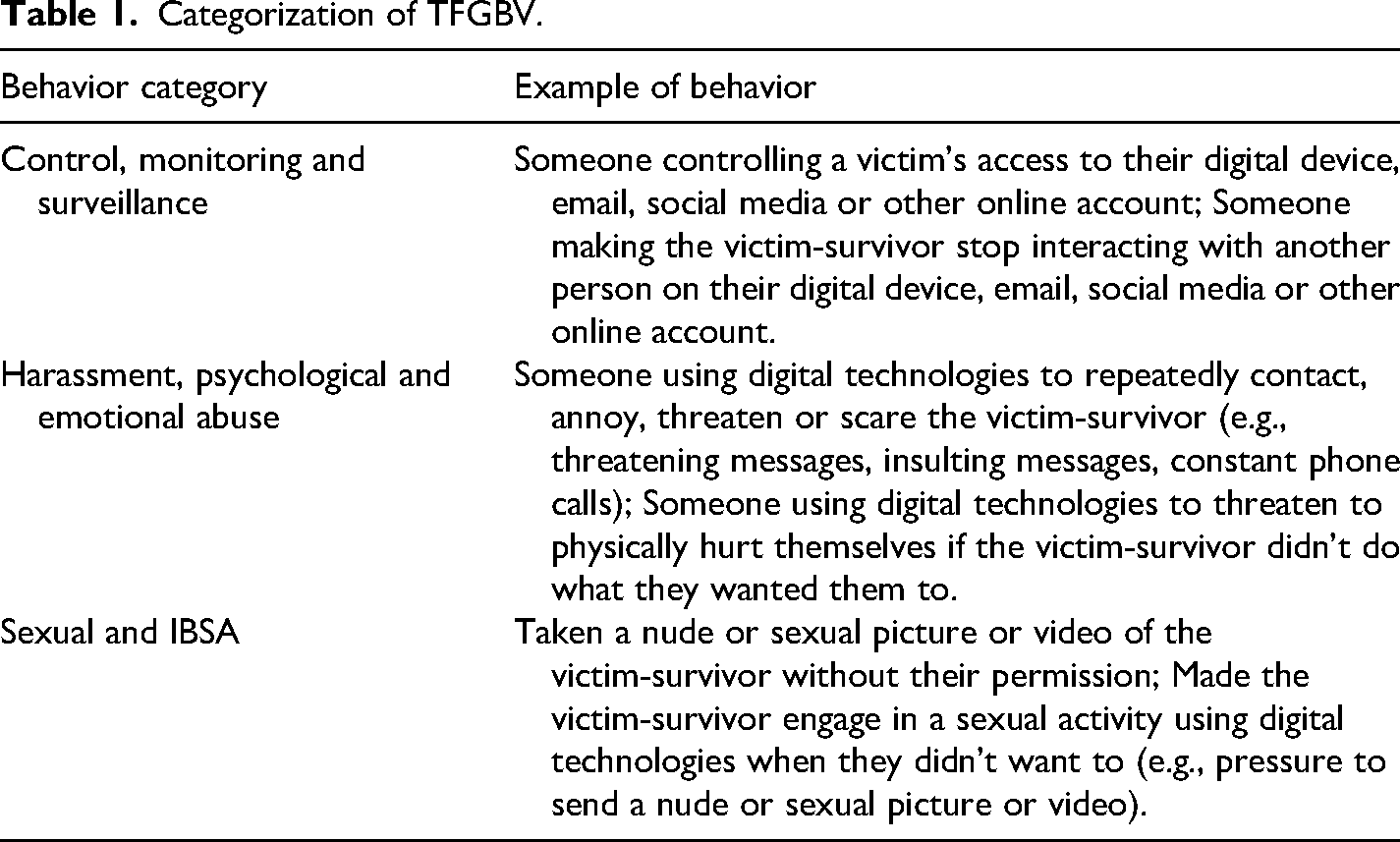
We acknowledge that some overlap exists between the categories. For example, behaviors may co-occur or intersect, such as “someone making the victim-survivor feel threatened if they ignored their calls or messages” (coded as harassment, psychological and emotional abuse) and “someone making a victim-survivor show them conversations or messages they’ve had with another person on their digital device, email, social media or other online account” (coded as monitoring and controlling behaviors). In our conceptualization, TFGBV, like other forms of violence, particularly in family violence contexts, is often experienced as part of a broader, concurrent pattern of abuse perpetrated by the same individual (see Powell & Flynn, 2023). Drawing on the conceptual review by Mitchell et al. (2022), which synthesizes existing definitions and proposes a refined framework for understanding technology-facilitated violence, and Flynn et al.'s (2023a, 2024a) comprehensive conceptualization of technology-facilitated violence, we adopted a categorization that distinguishes TFGBV into three core domains. This approach was designed to reflect the range of behaviors and relational contexts in which practitioners are most likely to encounter disclosures.
It is also important to place TFGBV within the broader context of gender-based violence in the Pacific Islands, which has some of the highest rates of violence against women globally (Amin et al., 2024; Quilty & Flynn, 2025). Within this setting, cultural, religious and gendered norms exist that normalize gender-based violence and create barriers for help-seeking. These norms are deeply embedded in patriarchal structures that have been reinforced by Christian missionary influence and colonial legacies which disrupted indigenous gender relations and introduced rigid moral codes (Biersack et al., 2016). Christianity, now the dominant religion across most Pacific Island nations, has played a dual role. On the one hand, it has provided moral frameworks that can support gender equality and community care. On the other, it has often been used to justify male authority and female submission, particularly within family and church structures (Maravuakula & Mangubhai, 2024). Religious teachings have sometimes been mobilized to rationalize violence as discipline or conflict resolution, especially in rural and faith-centered communities (Maravuakula & Mangubhai, 2024; Sang-Yum, 2024).
Traditional cultural practices have also been found to contribute to gender-based violence (Stamatakis, 2024). In many Pacific societies, values such as respect for elders, family honor, reputation and maintaining communal harmony through silencing victim-survivors can discourage reporting of violence or seeking help. These norms are further complicated by limited access to services and legal protections, especially in geographically isolated areas (UN Women, 2022). It is these complexities that practitioners working with victim-survivors of TFGBV must navigate and which underpins the findings in this study.
Practitioner Perspectives on Victim-Survivors and TFGBV
There is limited research capturing the perspectives of professionals tasked with responding to TFGBV disclosures in Pacific Island countries or the broader Indo-Pacific region, with much of this research focused on Australia. Within the research, there are some key emerging themes related to the challenges in supporting victim-survivors, and inadequacies in legal responses. For example, in a study of family violence practitioners’ experiences with victim-survivors of TFGBV, Woodlock et al. (2020) found a significant increase in the variety of technologies being used by perpetrators, but practitioners reported difficulties staying informed of new and emerging technologies, and in how best to support victim-survivors in prevention and response measures. Inadequacies in police and criminal justice resolution avenues have also commonly featured in practitioner-focused research on TFGBV, with many studies reporting that police are not considered to take the offenses seriously, minimize the harms experienced by victim-survivors, and/or engage in victim-blaming behaviors (Flynn et al., 2023b; Harkin & Merkel, 2022; Henry et al., 2018; Woodlock et al., 2020). The absence of specific knowledge of how digital technologies can be used to perpetrate harm, alongside inconsistencies in legislation, cross-jurisdictional barriers, and a lack of support from platform providers have also been identified by practitioners as challenges in the policing of TFGBV (Douglas, 2023; Flynn et al., 2022, 2023a; O'Shea et al., 2022; Woodlock et al., 2022; Woodlock & Harris, 2023). Connected to these concerns are the barriers practitioners perceive in adequately meeting victim-survivor needs, with overstretched services, inadequate resources, and a one size fits all service response, which is not tailored or accessible to the diversity of victim-survivors who experience TFGBV (Flynn et al., 2022, 2023a, 2024b).
The few international studies exploring practitioner perspectives of TFGBV have also found that practitioners report not being equipped with sufficient training, expertise and knowledge to keep up with the fast-changing landscape of technology (Bansal et al., 2024; Freed et al., 2017; Lopez-Neria et al., 2019). These studies have acknowledged the urgent need for better information and training.
The findings of these studies demonstrate that responding to and supporting victim-survivors of TFGBV is a critical issue for practitioners, however, there remain pressing gaps in current knowledge, particularly in relation to understanding the challenges practitioners observe in supporting victim-survivors of TFGBV outside the dominant western context. This is especially evident in the Indo-Pacific region, where rates of gender-based violence, including TFGBV, are reportedly rising (EIU, 2021; WHO, 2021). This paper responds to this gap in knowledge with practitioners in Pacific Island countries, identifying their insights into what TFGBV looks like in the region, and their knowledge of the challenges they perceive victim-survivors face in seeking help.
Study Methodology
The study involved a two-stage methodology comprising surveys and interviews. Ethics approval was received from the Monash University Human Research Ethics Committee (Project number: 42785). Participants were recruited from a practitioner training workshop on technology-facilitated violence run in Suva, Fiji in November 2024 by an external organization. The workshop brought together practitioners from nine Pacific Island countries. All workshop attendees (n = 23) were invited to participate in a pre- and post-training survey, and as part of the post-training survey, they could express an interest in participating in an interview. A total of 16 practitioners completed both the pre- and post-training surveys, three completed only the pre-training survey, and four completed only the post-training survey. Thirteen participants expressed interest in an interview. Five interviews were conducted with participants representing five Pacific Island countries. This paper presents data from the interviews and the pre-training survey involving 19 participants. While it is a non-probability, small sample size, to our knowledge, it is the first study to capture practitioners’ perspectives on TFGBV across nine Pacific Island countries, offering a unique contribution to the field.
Survey
The survey instrument was developed in paper form and combined a series of closed and open-ended questions. The surveys were handed out and collected by two individuals, and then scanned and saved to a secure server to which only the research team had access. Hard copies were also retained by the lead author. Participants were asked to create a unique identifier code to enable tracking of responses across the two surveys.
The pre-training survey instrument was designed to capture practitioners’ reflections on the nature, forms and impacts of TFGBV they had observed in their professional roles in their respective Pacific Island countries, as well as challenges they faced in supporting victim-survivors, and the current practice and needs of practitioners in identifying, responding to, and addressing TFGBV. The survey was adapted from existing instruments utilized in sector-led and government research (Cortis et al., 2018; Dorozenko & Chung, 2018; Woodlock, 2015), and previous research undertaken by the lead author (Flynn et al., 2021, 2023a, 2024a). It included six question modules that collected data on:
Career information: example items: “how long have you been working in your current role,” “which of the following best describes the kind of organization you currently work in.” Client experiences of TFGBV: example items measured on a Likert scale of 1 = never and 5 = all the time: “in the course of your work, how often have the following behaviors featured in victim-survivors’ lived experience … someone controlling access to their digital device.” Perpetrator characteristics and motivations: example items measured on a Likert scale of 1 = never and 5 = all the time: “how common is it for the perpetrator to have the following relationship connection to their victim-survivor… current intimate partner, de facto or spouse.” Adequacy of support, legal and policy responses: example items measured on a Likert scale of 1 = poor and 5 = very good: “please rate your assessment of the current adequacy of the following response measures in your country … laws are inclusive of the different forms of TFGBV.” Worker confidence, training and resource needs: example items measured on a Likert scale of 1 = not at all confident and 5 = very confident: “please rate your level of confidence in the knowledge and skills that you currently have for … recognizing the signs of different forms of TFGBV.” Demographics: example items: “what is your age,” “which best describes your gender identity.”
Open-ended questions were included to allow participants to describe TFGBV in their own words. For example, “please describe in your own words the ways in which TFGBV impacts victim-survivors. For example, how does it make victim-survivors feel?.”
A total of 19 responses were collected for the pre-training survey. The demographic breakdown is provided in Table 2.
Survey Participant Demographics.
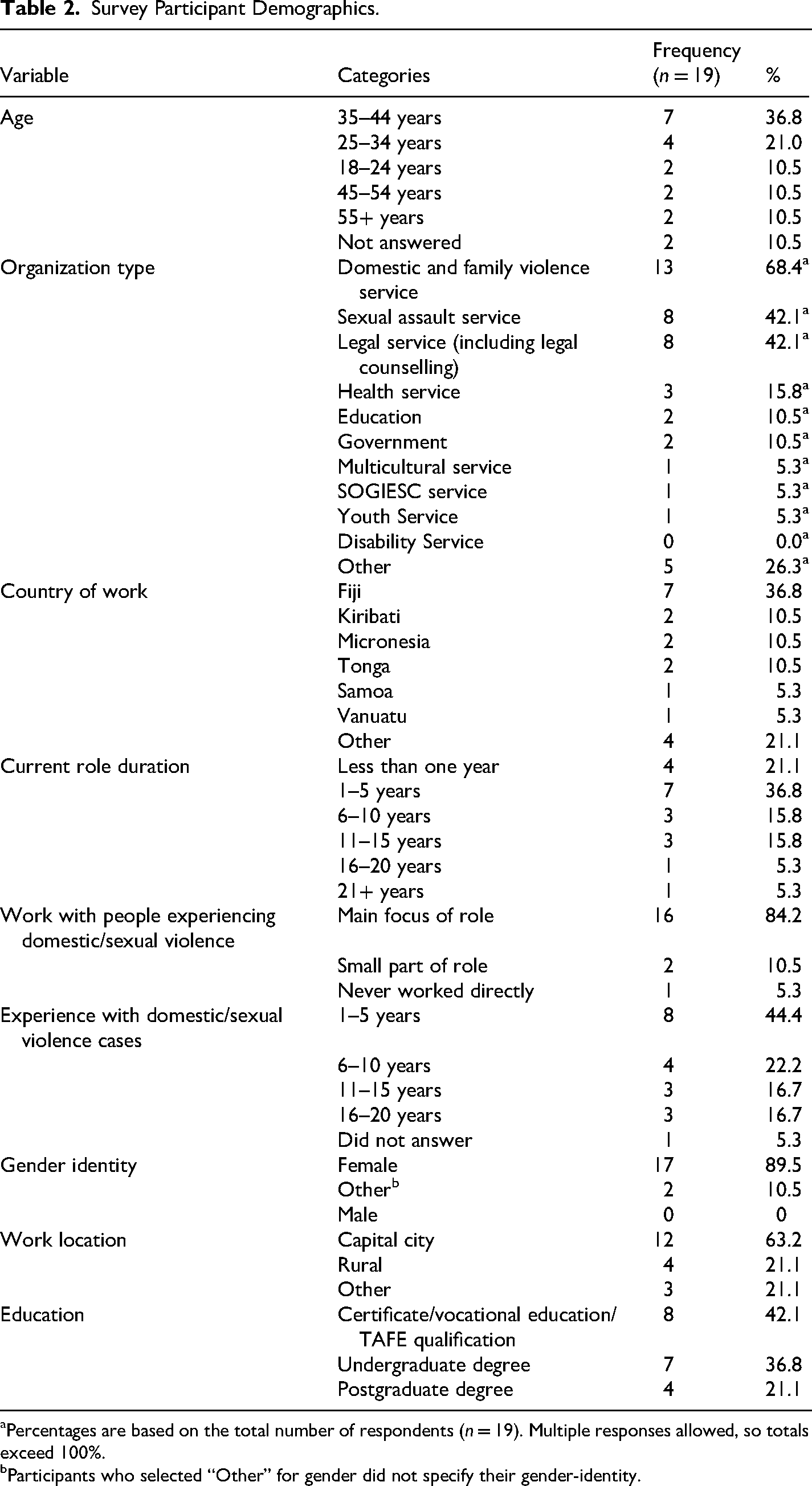
Percentages are based on the total number of respondents (n = 19). Multiple responses allowed, so totals exceed 100%.
Participants who selected “Other” for gender did not specify their gender-identity.
The majority of participants (36.8%, n = 7) were aged 35–44 years, indicating a mid-career demographic. A smaller proportion were younger (21.1%, n = 4 aged 25–34 years and 10.5%, n = 2 aged 18–24 years), suggesting fewer early-career individuals in the sample. Participants worked across multiple sectors, with most participants identifying their roles as family violence services (68.4%, n = 13), followed by sexual assault and legal services (42.1%, n = 8 each). Other sectors like health (15.8%, n = 3), education (10.5%, n = 2), and government (10.5%, n = 2) were represented, though at lower rates. A significant portion of participants (36.8%, n = 7) worked in Fiji, with smaller proportions in Kiribati, Micronesia, Tonga, Samoa, and Vanuatu. The “other” category (21.1%, n = 4) reflected individuals from other Pacific Island countries (including Papua New Guinea, the Solomon Islands, and Tuvalu) suggesting a diverse geographic spread. Most participants (36.8%, n = 7) reported having been in their current role for 1–5 years, indicating a relatively stable workforce with some experience. A smaller proportion (21.1%, n = 4) were newer to their roles, having less than one year experience. Those with longer tenure were fewer, with 15.8% (n = 3) in their roles for 6–15 years, and only 10.6% (5.3%, n = 1 each) having 16 + years’ experience. This suggests a mix of fresh perspectives and established expertise. Most participants (89.5%, n = 17) identified as female, underscoring the gendered composition of this workforce, and most (63.2%, n = 12) were based in capital cities.
Descriptive statistical analysis was performed using data collected through Qualtrics, with initial processing conducted in the platform. Further analysis was carried out in Excel. Frequency distributions and cross-tabulations were generated to examine key demographic and professional characteristics of participants, including age, role duration, organization type, and geographic representation. To analyze perceptions of TFGBV, responses were systematically categorized, and percentages were calculated for different types of abuse, victim-perpetrator characteristics, and institutional responses. Heat maps were created in Excel to visually depict the prevalence and severity of various forms of TFGBV. These heat maps highlighted areas of heightened concern by color -coding response intensities, making patterns in the data more easily interpretable.
Open-ended responses were analyzed using inductive thematic analysis, allowing themes to emerge directly from participants’ narratives without imposing predefined categories (Braun & Clarke, 2006). This involved systematically coding and categorizing the qualitative data to identify recurring patterns. A structured process was followed by the lead and second author, which included: jointly reviewing the data; independently generating initial codes; and collaboratively grouping these into broader themes (Coulston et al., 2025). Through iterative discussion, the first and second author refined and named the themes, ensuring consistency and depth in interpretation. This approach enabled the identification of key patterns, including the harms of TFGBV and gaps in training.
Interviews
Five semi-structured online interviews of approximately 40 min duration were conducted in January and February 2025. While 13 participants expressed interest, the busy nature of practitioner work resulted in only seven participants having capacity, and two of these ultimately withdrew due to workload demands. This outcome itself demonstrates some of the challenges experienced by practitioners. Participants represented five Pacific Island countries: Fiji, Tonga, Tuvalu, Solomon Islands, and Vanuatu. Ages ranged from 29–69 years, with between 7 months and 20 + years’ experience in the sector. All participants identified as women.
We applied a trauma-informed approach (WHO, 2016), prioritizing participant wellbeing. This included a distress management plan, encouraging a safe environment for conversation and de-identifying responses and participants. The interviews were designed to supplement the survey data to provide more in-depth insights into the state of TFGBV in Pacific Island countries, patterns in victimization and perpetration, gaps in legal and other response options for victim-survivors and challenges in supporting victim-survivors. The interviews were recorded and transcribed using Zoom auto-transcription. The lead author reviewed the transcripts for errors and de-identified them.
A reflexive thematic analysis was conducted following five key steps (Byrne, 2022; Clarke & Braun, 2021). The lead author developed a coding framework aligned with the research questions, using a combination of inductive and deductive approaches informed by interview prompts and relevant literature. Initial codes such as victim-survivor characteristics (“gender,” “age,” and “sexuality”) and types of harm (“emotional,” “social,” “physical,” and “financial”) were reviewed by the third author to ensure analytical rigor. Broader themes were then identified, and relevant data were collated under categories such as “victim-survivor impacts.” Illustrative quotes were selected to support each theme. Pseudonyms (Ailana, Alice, Enele, Kiana, and Mere) are used to maintain participant confidentiality.
Results
TFGBV Victimization Experiences
The heat map presented in Table 3 highlights the significant perceived prevalence of TFGBV observed by practitioners across the three categories of TFGBV: control, monitoring and surveillance; harassment, psychological and emotional abuse; and sexual and image-based sexual abuse (IBSA).
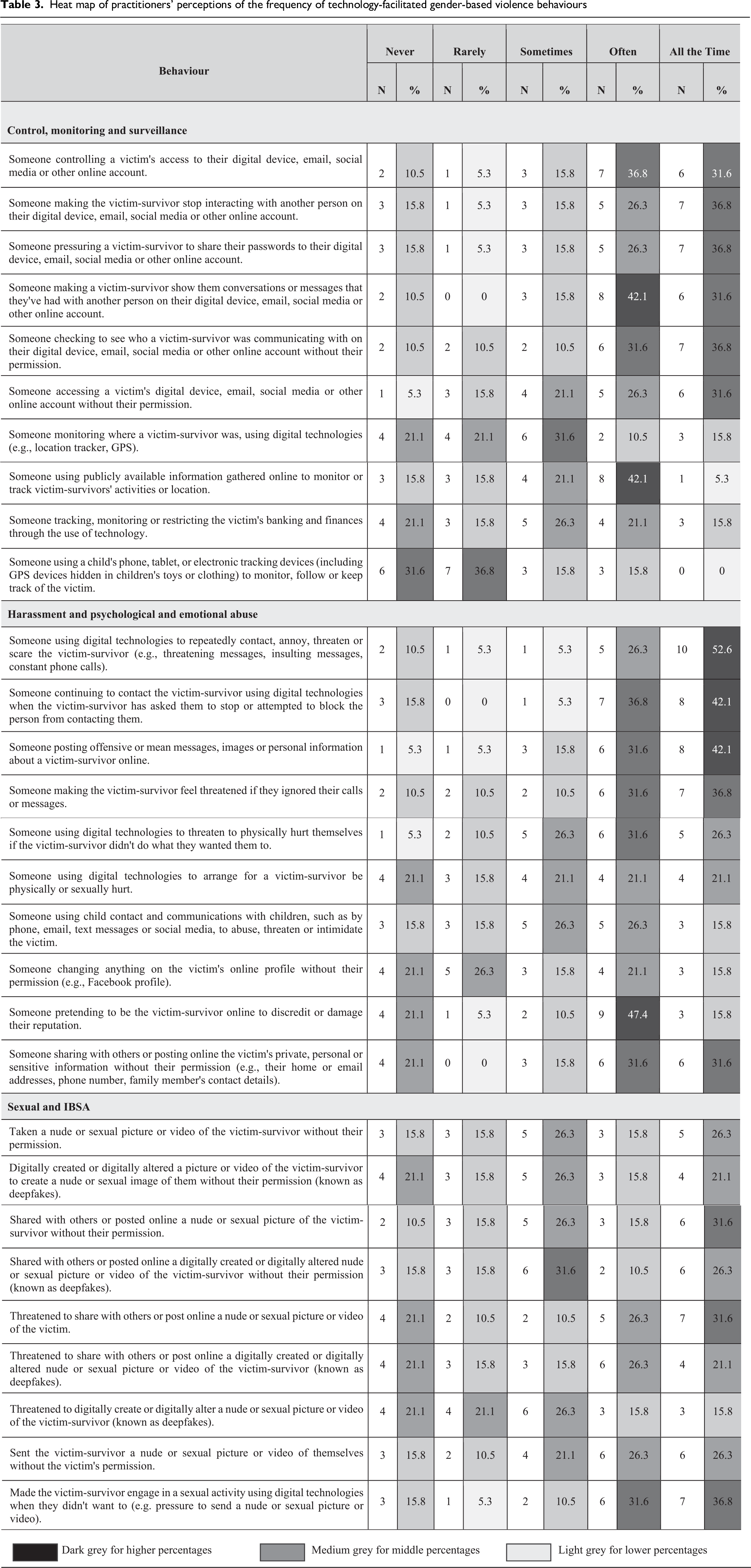
In control, monitoring and surveillance, behaviors such as controlling a victim-survivor's access to their devices, and unauthorized checking of communications, were frequently reported as occurring “All the time” by 31.6% (n = 6) to 36.8% (n = 7) of participants. Additionally, monitoring victim-survivors using location trackers or publicly available online information was also notable, with up to 42.1% (n = 8) observing these behaviors as occurring “Often.” Less common were behaviors such as tracking or restricting a victim-survivor's banking and finances through technologies (21.1%, n = 4 “Never”) and using a child's digital device to monitor the victim-survivor (31.6%, n = 6 “Never”).
Controlling and monitoring behaviors were further detailed in the interviews, with participants putting the abuse into relational and cultural contexts. Mere, for example, described how financial and other factors mean that families often share access to one digital device, such as a phone, and this facilitates controlling and abusive behaviors. She explained, “like couples, married couples having the same Facebook account, then the other partner sees messages coming in directly to the wife. … [and] monitoring where the other partner is going, who he or she stays with”; behaviors that are problematically facilitated by the sharing of devices.
Harassment, psychological and emotional abuse emerged as particularly concerning, with a high percentage of participants encountering victim-survivors who had repeatedly experienced unwanted digital contact. Notably, 52.6% (n = 10) reported such behaviors happening “All the time,” and 36.8% (n = 7) reported that victim-survivors feel threatened if they ignored a perpetrator's calls or messages “All the time,” underscoring the relentless nature of these forms of abuse (see also, Flynn et al., 2024a; McGlynn et al., 2021). Other forms of harassment, such as impersonation or sharing victim-survivors’ private information without consent were similarly pervasive, with 47.4% (n = 9) reporting these behaviors as occurring “Often.” These behaviors were expanded on in the interviews. Ailana, for example, described common behaviors she observed in her role supporting victim-survivors as including “the using of abusive language on social media, for example, Facebook, as well [as] sending abusive messages on email.” Enele also reflected on “online bullying and impersonations, fake people having fake accounts and harassing others” as a common form of TFGBV witnessed in her work. Mere similarly described a common trend among younger cohorts whereby they non-consensually shared private messages and discussions online as a form of TFGBV. She claimed, “young teenagers putting up private screenshots, sending text messages, private messages and screenshots and then putting [them] up on Facebook wanting to get attention of other people and then making negative comments [to the victim-survivor].”
In the area of IBSA, coercion through digital technologies was disturbingly common. For example, 36.8% (n = 7) of participants noted that victim-survivors were forced into sexual activities via digital means “All the time.” Kiana provided some examples of this in Vanuatu, describing how she had seen “a lot of cases” of “male seasonal workers” placing demands on their female partners to engage in the forced creation of digital sexual content, including quite graphic and harmful behaviors, and threatening violence, financial abuse or sharing previous sexual content with others should they refuse. She explained: One of the workers put a rule that every day the wife will have to pick some foods from the market, and then go home, lock the door, and you know, use that on herself to make him satisfied. That's sexual [abuse]. It's a lot. (Kiana)
IBSA was commonly identified, with participants describing the following behaviors as happening “All the time”: the taking of sexual images or videos without permission (26.3%, n = 5), the sharing of sexual images without permission (31.6%, n = 6), and threatening to share sexual images without permission (31.6%, n = 6). Reflecting on her two years’ experience in the field, Alice identified IBSA as a commonly recurring form of TFGBV. Kiana also described IBSA behaviors as common, particularly in the context of relationship breakdowns when “the partner would threaten or even send nude photos of their partners … to group chats … [or] threaten to send the photos to his partner's family members.” Mere also reflected on the rise of sextortion cases in the Solomon Islands where a perpetrator threatens to release intimate material unless the person complies with certain demands. Sextortion is a subset of IBSA that is becoming increasingly common in non-intimate partner contexts (Henry & Umbach, 2024), for example, between people who have only met online, and using Artificial Intelligence (AI) to create manipulated sexual material (known as deepfakes; Flynn et al., 2025). Mere explained: “like having made a video of someone and then demanding the person to give money. If he/she does not give the money, then [they] upload the video or the picture. I’ve seen some of these incidents happening here.” While less frequent, the emerging form of IBSA involving the creation, sharing or threat to share partially or entirely fabricated sexualized deepfake images were still a dominant concern, with 21.1% (n = 4) to 26.3% (n = 5) of participants reporting these incidents as occurring “Often” or “All the time.” With the rapid development of AI technologies that easily create sexualized deepfake abuse content, these trends are likely to increase (Flynn et al., 2022, 2025; Lucas, 2022; Okolie, 2023).
In further reflecting on the nature of TFGBV victimization, participants almost universally identified the co-existence of multiple types of abuse, and the cross-cutting nature of emotional and psychological harms that frequently co-occur, with TFGBV victimization.
As Figure 1 shows, of the participants who responded to questions about the harms of TFGBV (n = 18), emotional abuse was universally recognized (100%, n = 18) as a concurrent form of abuse, with high prevalence rates for sexual abuse, physical abuse, and stalking (83.3%, n = 15 each). Financial abuse (61.1%, n = 11) and child abuse (55.6%, n = 10) were also frequently identified. The interview participants further reflected on co-occurring forms of abuse, and that victim-survivors often only seek help for TFGBV after they have experienced several instances of violence, or as a pattern of other abusive behaviors from a partner. Enele explained: A lot of times when they do come up to share, their experience is when they have already experienced [violence] a few times, or they have been blackmailed or threatened for some time. So, because of their emotional distress and fear of being threatened, they’re not so able to open up about it. So, when they do get that courage to come up and talk about it, it's usually when they have faced it a few times.
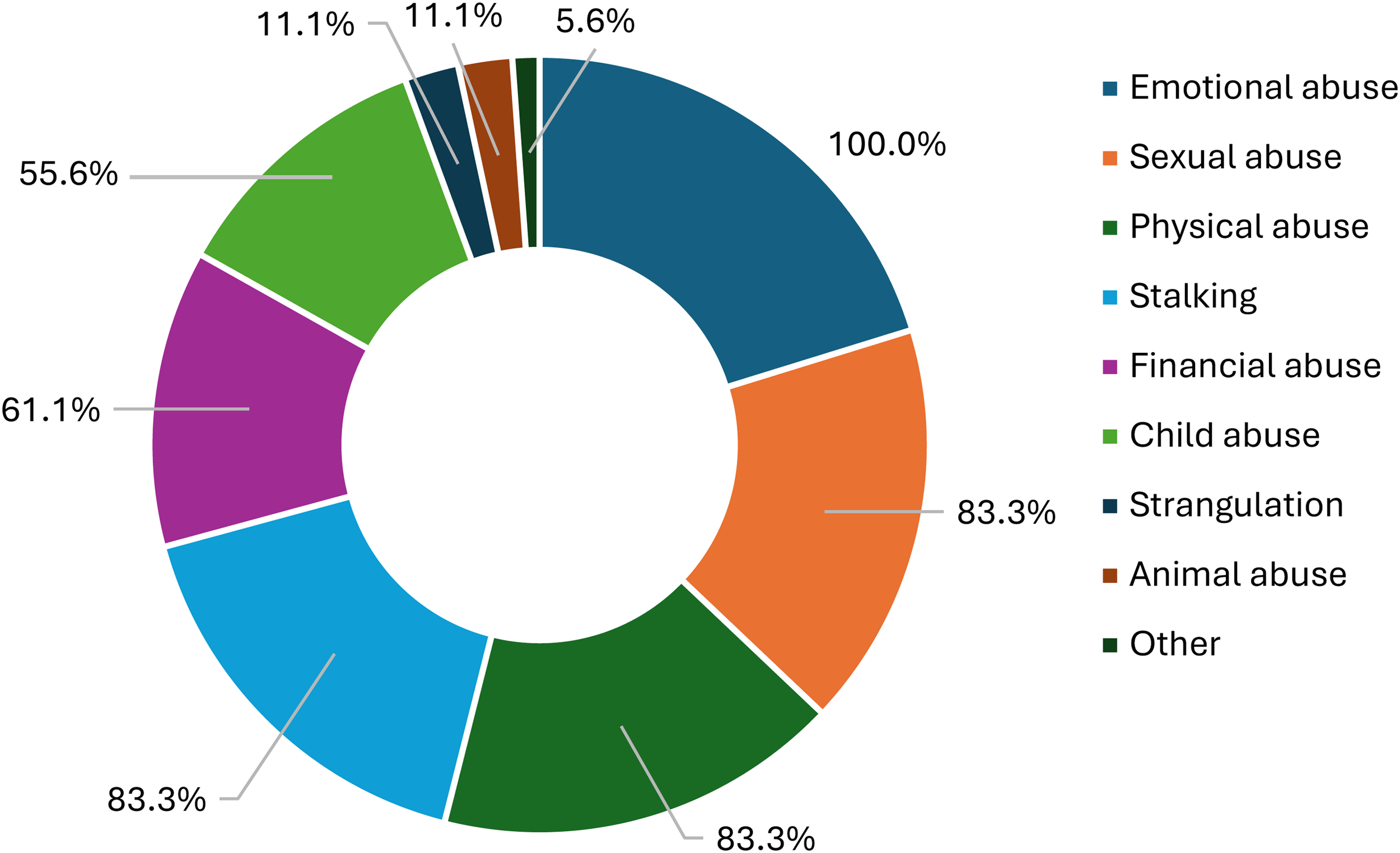
Practitioners’ perceptions of co-current abuse types when experiencing technology-facilitated gender-based violence (N = 18).
This suggests that there may be under-reporting or reduced help seeking for TFGBV when it does not occur within the context of other forms of violence and abuse.
Characteristics of Victim-Survivors and Perpetrators
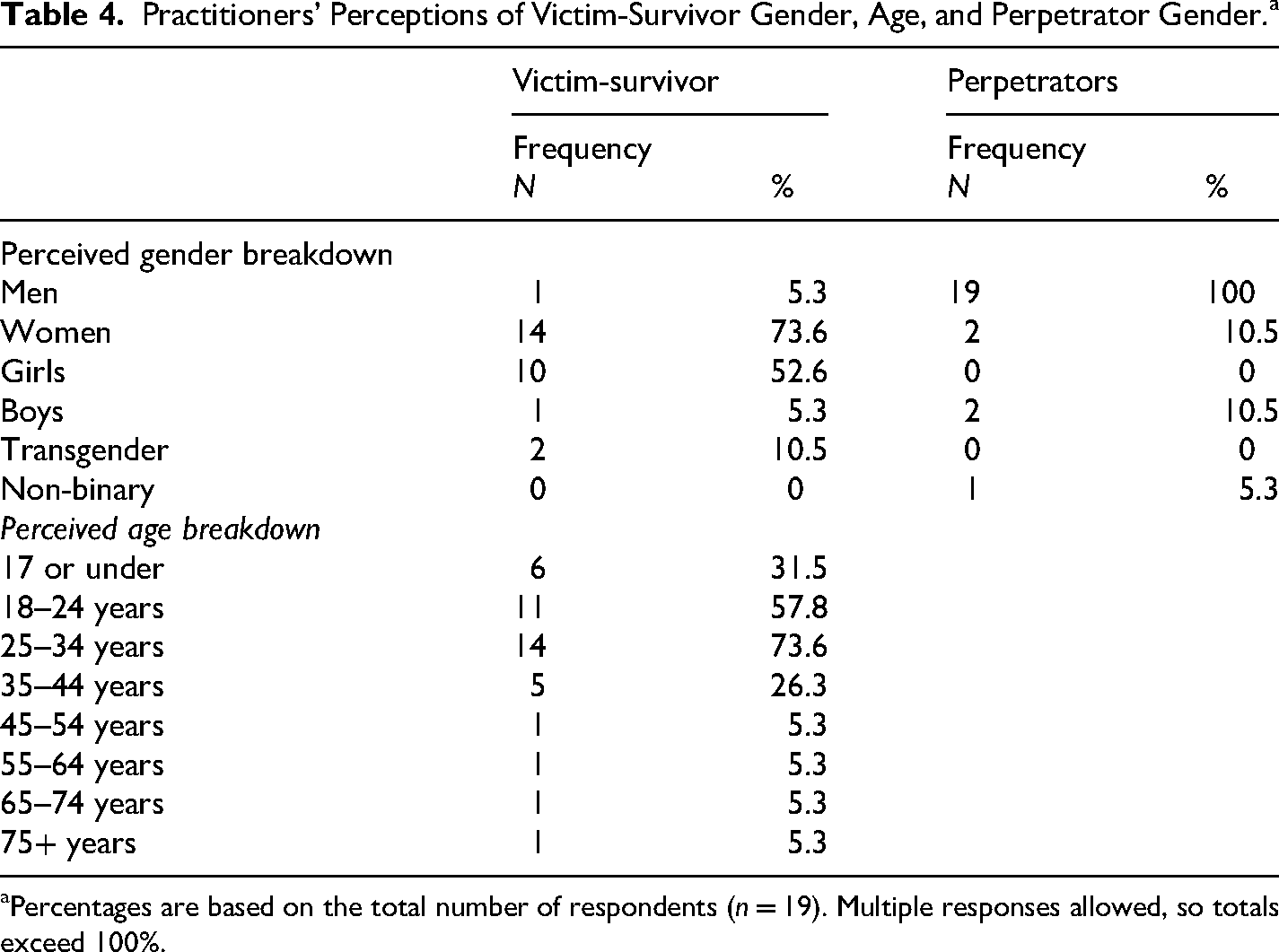
In the professional experience of the practitioners surveyed, victim-survivors of TFGBV were mostly women and girls, with only one participant identifying victim-survivors as mostly men (see Table 4). One survey participant identified women and transgender persons as mostly victim-survivors, and one participant identified women, girls, boys and transgender persons as mostly victim-survivors.
Practitioners’ Perceptions of Victim-Survivor Gender, Age, and Perpetrator Gender.a
Percentages are based on the total number of respondents (n = 19). Multiple responses allowed, so totals exceed 100%.
While noting that women are the most common victim-survivors reporting to her service, Kiana reflected that they do also see some men experiencing intimate partner technology-facilitated violence: “it's mostly females, although we do have some men coming here complaining about women, their partners using technology-facilitated abuse on them.” In reflecting on a previous role working with SOGIESC communities, Ailana observed that it was not uncommon for sexuality diverse men or transgender folk to experience TFGBV, particularly given the cultural and social norms and stereotypes that exist in Pacific Island countries around sexual orientation. She explained, “In my current role, I’ve witnessed that most victims are girls, and you know, the youth age. But speaking of my previous one, there were LGBTQI victims being violated [for example] … people using his images to mock him online.”
While the survey responses suggested more prominence among younger victim-survivors, several interview participants gave examples of cases spanning both younger and older cohorts. Ailana, for example, described a recent case involving “a domestic relationship which happened to a mother of four, and she's around 40 + years,” and Enele observed that “women in their late forties are someone who experience online abuse.” These reflections are relatively consistent with the broader literature on TFGBV across the Global North (Champion et al., 2022; Clancy et al., 2023; Flynn et al., 2024a; Martínez-Bacaicoa et al., 2023; Powell et al., 2022a).
Table 4 also shows that participants predominantly perceived men as the perpetrators of TFGBV. Women were rarely identified as perpetrators (5.3%, n = 1), and only in instances where participants identified both men and women as perpetrators. Boys were also rarely identified as perpetrators (5.3%, n = 1), while non-binary and transgender individuals were scarcely reported. Again, this reflects studies of TFGBV perpetration in the Global North (Flynn et al., 2024a; Martínez-Bacaicoa et al., 2023; Powell et al., 2022b; Woodlock & Harris, 2023).
The majority of perpetrators in the cases observed by participants were said to involve current (100%, n = 19) or former intimate partners (100%, n = 19; see Figure 2), such as spouses or boyfriends, indicating that the TFGBV observed by practitioners often occurs within intimate relationships, potentially as a form of family violence.
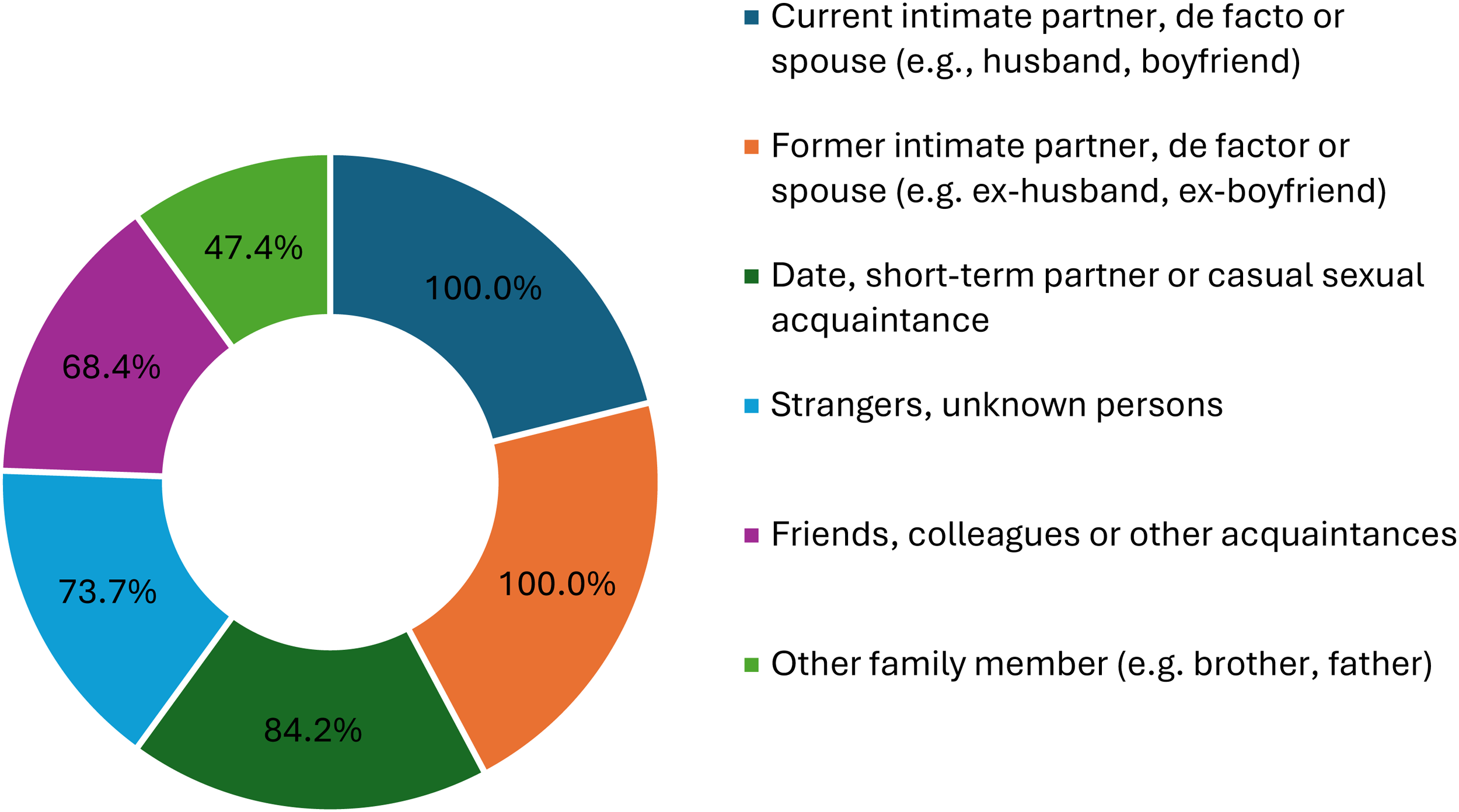
Practitioners’ perceptions of common relationship connection between perpetrator and victim-survivor (N = 19).
This was further explored in the interviews. As Kiana observed, “some men can be older and like using coercive control over their younger female partners.” Casual sexual acquaintances, short-term partners, or dates were also commonly identified as perpetrators (84.2%, n = 16), followed by strangers or unknown individuals (73.7%, n = 14). Friends, colleagues, or other acquaintances were also commonly identified (68.4%, n = 13), while family members, such as brothers or fathers, were relatively highly represented (47.4%, n = 9). As Ailana reflected, “in some cases it happened within the same roof … so the violence was perpetrated against a family member, and some [cases], the partner.”
In terms of motivations, participants reported that perpetrators of TFGBV are primarily driven by control, intimidation, and emotional harm (see Figure 3).
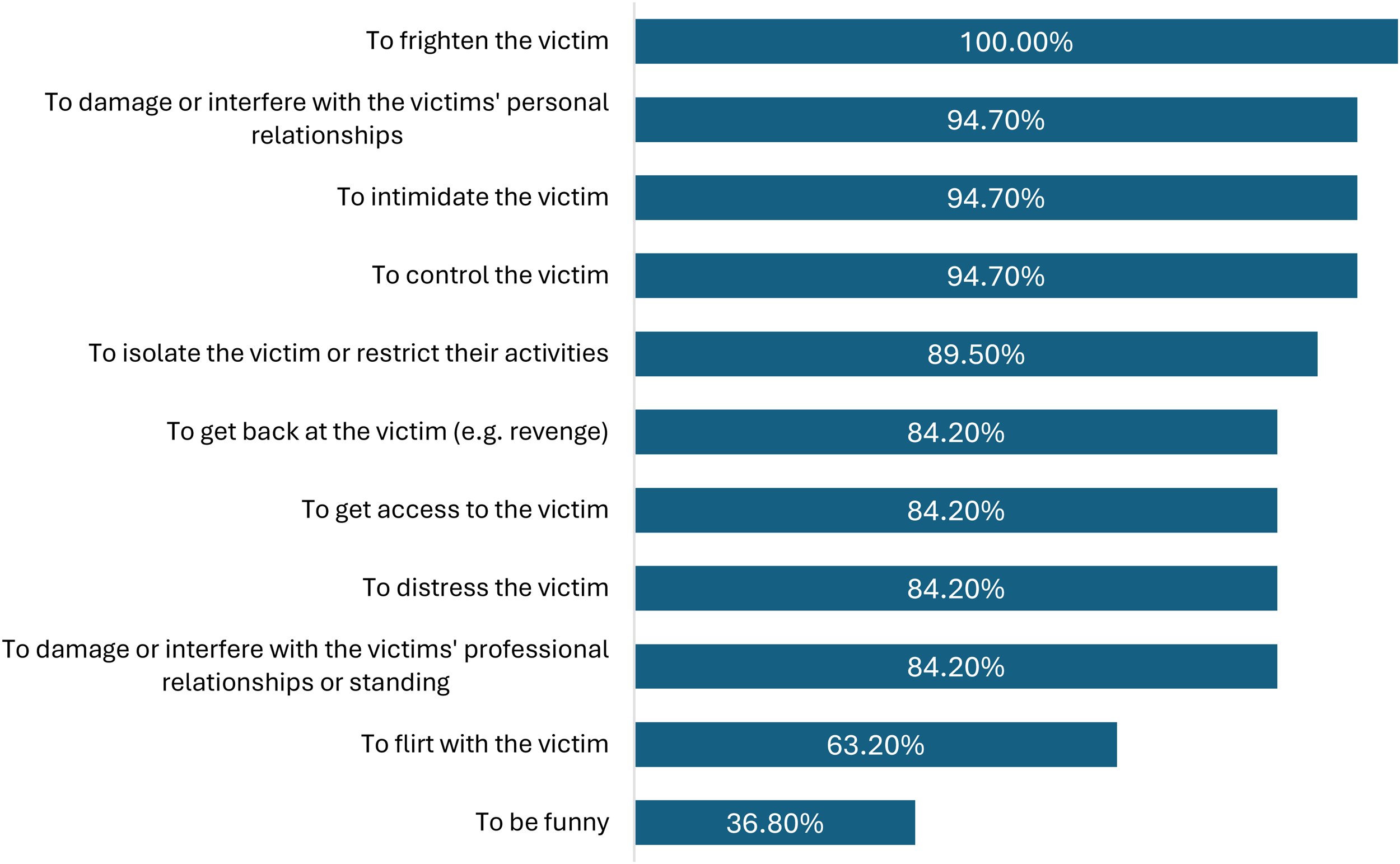
Practitioners’ perceptions of perpetrator motivations for engaging in technology-facilitated gender-based violence behaviors (N = 19).
The most common motivation perceived by participants was to frighten the victim-survivor (100%, n = 19), with control (94.7%, n = 18), intimidation (94.7%, n = 18) and to damage or interfere with the victim-survivor's personal relationships (94.7%, n = 18) following closely behind. Practitioners also perceived that perpetrators seek to isolate victim-survivors from their networks (89.5%, n = 17), harm the victim-survivor's professional reputation (84.2%, n = 16), cause distress (84.2%, n = 16), and gain access to the victim-survivor (84.2%, n = 16). Revenge was another common motive (84.2%, n = 16), with participants suggesting perpetrators use technology for retaliation. While some perpetrators may attempt to flirt (63.2%, n = 12) or perceive their actions as humorous (36.8%, n = 7), these motivations were considered less common by participants. Overall, practitioners observed that technology is primarily being used by perpetrators to exert power and control, cause emotional distress and isolate or harm the victim-survivor both personally and professionally.
TFGBV Harms
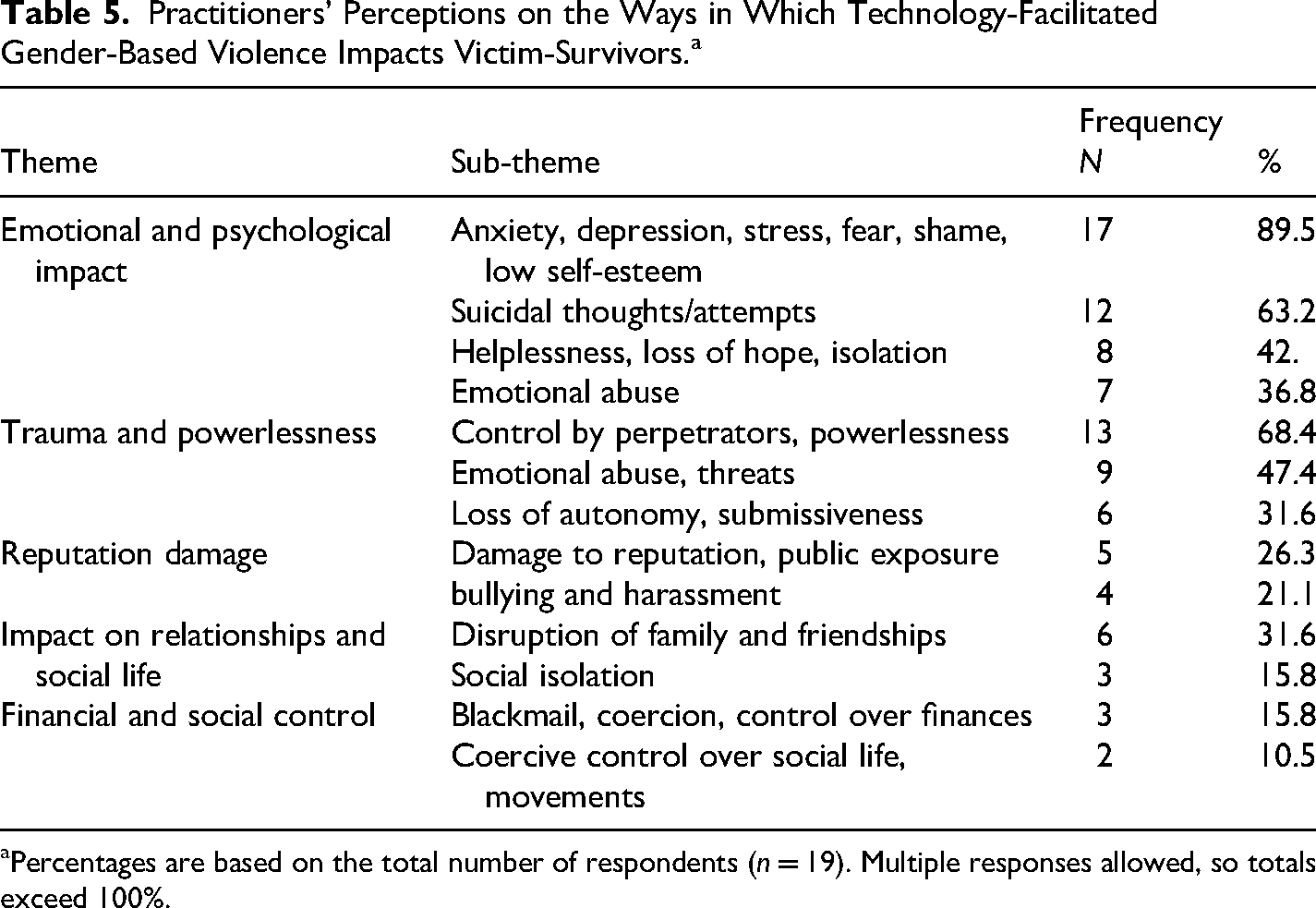
According to practitioners, there are profound and multifaceted impacts of TFGBV on victim-survivors, with emotional and psychological harms being the most prevalent.
As Table 5 shows, nearly 90% (n = 17) of participants highlighted that victim-survivors report feelings of anxiety, depression, fear, and low self-esteem, while many also reported suicidal thoughts or attempts, illustrating severe mental distress. Mere further reflected on these harms: Especially for women, women or young girls, sometimes it lowers their self-esteem, sometimes it affects them in their job. … It affects them: not wanting to go back to their job, their work. In some cases, some have attempted suicide. Some have committed suicide because of these forms of abuse.
Practitioners’ Perceptions on the Ways in Which Technology-Facilitated Gender-Based Violence Impacts Victim-Survivors.a
Percentages are based on the total number of respondents (n = 19). Multiple responses allowed, so totals exceed 100%.
Kiana similarly observed, “victims become traumatized. They get so depressed. And having all these mental issues, sometimes resulting in suicide. And they live in fear; they are scared.” Experiencing fear was particularly pertinent in cases involving family violence, where participants commonly reflected on the threat of retaliation or fear of further violence as both an impact of TFGBV, and a reason victim-survivors did not report or seek help. Enele observed, “when there's involvement of family violence, then there's the risk of [losing] one's life, or the risk of the violence getting more extreme.” Participants described victim-survivors often feeling controlled and powerless, as perpetrators used technology to manipulate and intimidate them, leaving them vulnerable and submissive.
The loss of hope, feelings of helplessness, and isolation were commonly mentioned, further exacerbating the emotional harms experienced by victim-survivors. Drawing on a recent case, Ailana explained: She withdrew herself from going to work … and it really affects her family financially, and especially providing for her children, who are in secondary school level. So that's another negative impact on the survivor.
The impact on relationships and social life was also evident, with many participants describing victim-survivors as experiencing disruptions in familial and social connections due to fear, shame, and isolation. As Alice noted, victim-survivors experience “feeling shame, self-isolation or being isolated from family or community, experiences of victim-blaming, [and] unhealthy relationships.” Financial and social control were less frequently mentioned, but still significant, with practitioners identifying perpetrators coercing victim-survivors into financial transactions or limiting their social interactions as an impact of TFGBV.
Overall, the analysis highlights the complex and long-lasting effects of TFGBV, emphasizing the need for comprehensive support systems, including mental health care, legal protections, and social interventions, to address the emotional, social, and financial harm caused by such violence.
Cultural Norms and Gender Roles
While many of the harms identified are reflective of studies on TFGBV in western and Global North societal contexts, there were some harms identified by participants specific to the Pacific Island and broader Indo-Pacific regional context. These harms are not restricted to the impact on individual victim-survivors, they also contribute to building a culture that creates barriers for reporting and help-seeking. In particular, participants identified cultural and religious norms, gender roles and societal expectations impacting on women's equity and equality within each country, and on victim-survivors being able to seek help and report TFGBV. This aligns with George's (2025) vernacular security framework, in which victim-survivors navigate plural regulatory systems, including law, customary authority and church leadership, which can prioritize reconciliation and communal harmony above the needs of victim-survivors, creating barriers to reporting and help-seeking.
The impacts of social, cultural and gender norms were raised in all interviews as a factor specific to victim-survivors in the Pacific Island countries represented in the study. As Mere observed, “because of their culture, their religion and also because of their status in the community, so they don’t want to like, fight, or make their name come out [by reporting].” Such factors were identified as a “particular concern due to patriarchal cultural norms” (Enele) which perpetuate traditional gendered-divisions and stereotypes around women accepting violence as part of their responsibilities to their husbands (see also, Nagashima-Hayashi et al., 2022). Ailana reflected: The big fat barrier is that culture. The culture is something that is really a factor holding women back from reporting, and that's including our religion [sic] belief. It says that we women deserve to be punished, when they are not obeying the husband, because it's part of our culture. … If we go in, to report, it seems like we are breaking the family rules, and they are not obeying the husband. That's what the culture has taught us to do.
Reflecting on these observations further, Ailana provided a more specific example: In terms of like, for example, mothers-in-law, you know, in-laws [co-living] in the house. They always press things down rather than letting the woman come out [and speak] of the truth. So, it really comes back to our culture setting … [and] this creates a barrier for [a] woman, as a victim, from accessing the available support service that we currently have.
Participants identified culture as a specific concern in the context of family violence, and in instances involving IBSA, because of the stigma and shame attached to displays of female sexuality in Pacific Island countries (see also, Johnson et al., 2022). As Alice observed, the threat of harm to the family's name and the “shame of intimate, inappropriate footage may hold her back from contacting authorities, in case the perpetrator spreads it even more out of anger at her.” Enele similarly observed that patriarchal cultural and religious beliefs around sex and women's place in society is “one of the challenges.” She continued, “because they [victim-survivors] are not so willing to let the family know about it, and they want to keep it as low profile as possible.” Attitudes around sexuality were also identified as creating harmful spaces for SOGIESC victim-survivors, where there may be less social and family support (see also, UNDP, 2019). Reflecting on her time working with SOGIESC communities, Ailana described the experiences of one victim-survivor who was alienated from being part of “the social activities of the community where he belongs” because of his TFGBV experience, in which his sexuality was made public. She described how this resulted in him experiencing suicidal thoughts; an outcome which she observed as being “really a high risk” among SOGIESC people in the Solomon Islands (see also, Moallef et al., 2022).
The potential for social or family exclusion, and the shame that a victim-survivor may experience because of speaking out about TFGBV or other forms of intimate partner violence, were prominent concerns across the interviews, both in relation to a lack of support for victim-survivors, but also in terms of the barriers created for victim-survivors when they do report. Drawing on her experience supporting victim-survivors, Mere, for example, described how “sometimes families feel like they don’t want to accept the victim back to the family because of what is going on. In some families, they neglect the victim, they don’t want the victim.” Ailana also reflected on family and culture as a major barrier for victim-survivors in reporting or help-seeking: Even though you know, associations, organizations like us, trying our very best to provide awareness to the community in terms of how to report [and] that we do provide available support services, … it's really difficult in some family settings, especially because where we are, [we] always abide by the term culture. That is one of the barriers for [the] victim to access the available service. Another one is that they do not have the support in the family.
Barriers to Help Seeking
The societal norms creating barriers for victim-survivors in accessing support were not only identified in relation to family, but also in terms of the types of responses victim-survivors received from police and from support workers themselves. As the below comments reflect, most participants observed a general lack of knowledge of TFGBV among the community, but also, that this was a new area of harm being understood by practitioners: Most of our people in the community now, they didn’t even realize that this is a form of violence against us women and girls. (Ailana) People from different Pacific Island countries with different backgrounds, especially having counsellors on the space, because, from my experience they are very much aware about GBV, but somehow, they are also new to the space of TFGBV. (Enele)
In reflecting on the current supports and services available for those experiencing TFGBV, Figure 4 highlights several significant gaps in services, including law enforcement, according to participants.
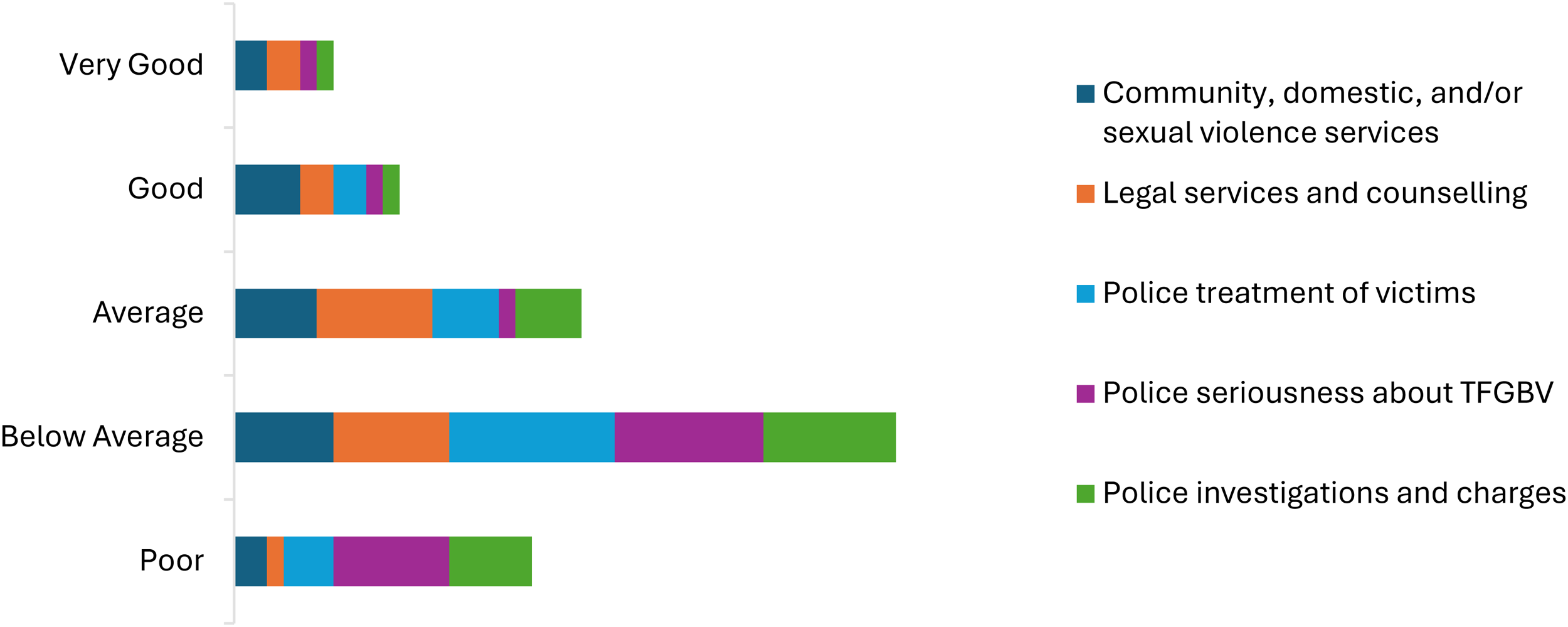
Practitioners’ perceptions of support service and police responses to victim-survivors of technology-facilitated gender-based violence (N = 19).
Community, domestic, and sexual violence services were viewed as inadequate by participants, with 31.6% (n = 6) rating them as “Below average” and only 21.1% (n = 4) rating them as “Good.” Reflecting on the barriers in supporting victim-survivors, cultural and social norms were again evident among participant responses. Ailana, for example, described one of the biggest challenges as “community awareness,” which impacts on victim-survivors being able to speak up or seek help. A lack of resources and the limited availability of support services was also a common barrier identified. As Ailana asked, “How am I supposed to support my clients with limited resources?.” This was particularly concerning for victim-survivors in remote and rural areas, where the availability of services is substantially reduced, and in some Pacific Island countries, as Mere identified, they are non-existent. Mere explained: The biggest challenge supporting victims for TFGBV, as well as any domestic violence cases I’d say, currently we don’t have enough counselling service. We only have one organization that provides specific GBV counselling service here [Solomon Islands]. … We have [a] geographical setting which is a challenge. So, most of the services are only here in the capital, but we have a lot of women in the provinces that are experiencing the same issue but couldn’t get the support.
These concerns have been identified in research on support services more broadly in regional, remote and rural Australia, where it is argued that there is a lack of service provisions available, that victim-survivors must travel significant distances to access support and there are long waiting times (Hanley & MacPhail, 2023; Harris & Woodlock, 2022). Such logistical barriers are heightened in Pacific Island countries given the social and cultural norms, where reporting or help-seeking is already a significant challenge.
The adequacy of police responses was also generally regarded as inadequate by participants, with 47.4% (n = 9) rating them as “Below average” and 36.8% (n = 7) as “Poor,” suggesting that police do not treat TFGBV with the seriousness it requires (see Figure 4). As Mere observed, “I don’t really see that police [are] treating these cases seriously. … I would say 40% [of] police, they treat cases like this seriously, but the rest, no.” Drawing on examples from victim-survivors she has supported, Ailana reflected on how there is a “big gap” between how police respond to TFGBV and how they should respond, suggesting a need for “a gender sensitization training program.” She explained there is a level of victim-blaming coming across from police when victim-survivors report: The questions that [are] being asked to the victim is really offensive. You know, it's really offending how she feels, because at that moment, that point of time she's been through a lot. … She totally shut everything down, because the police officer who was investigating the case, he put out these questions, like ‘what have you done [to deserve this]?’
Like the experiences of victim-survivor support workers, participants reflected on a lack of training, funding and resources to enable police to properly understand, investigate and respond to TFGBV as key challenges. Mere reflected, “when it comes to respond[ing] to GBV or tech-facilitated GBV these are not prioritized [by police]. So, [a] lack of resources, financial resources, lack of human resources.” Recognizing these localized imaginaries is critical for improving responses to TFGBV that resonate with community values and effectively address TFGBV in Pacific Island contexts (George, 2025).
Study Limitations
This study makes an important contribution to understanding TFGBV from the perspective of practitioners working across nine Pacific Island countries. However, this lens is not without limitations. The study is informed by insights from 19 practitioners, which limits the breadth and generalizability of the findings. While these participants offer valuable perspectives drawn from frontline experience, the small sample size means the data cannot be considered representative of the diverse contexts across Pacific Islands countries. Additionally, practitioner accounts are inherently mediated, shaped by professional frameworks and filtered through the dynamics of service engagement. For instance, most participants worked in family violence services (68.4%, n = 13), with fewer in sexual assault (42.1%, n = 8) or SOGIESC and youth services (5.3%, n = 1 each). This concentration may influence the types of TFGBV they encounter and prioritize. It also may underrepresent the experiences of those who do not or cannot access formal support systems, and may reflect institutional priorities over victim-survivor subjectivities. Relatedly, the findings predominantly describe girls and women as victim-survivors. While this reflects broader patterns of gender-based violence and TFGBV (Quilty & Flynn, 2025), the areas in which the practitioners work and the cases they observe shapes how they report their experiences, which may obscure the experiences of other groups. Our study also does not include direct input from victim-survivors, whose lived experiences are critical to understanding the full impact and nuances of this issue. As a result, the findings may overlook or misinterpret certain victim-survivor perspectives. Despite these constraints, practitioner perspectives are instrumental in advancing knowledge in under-researched regions. In contexts where victim-survivor data is scarce, they help fill critical gaps, inform policy and service design, and lay the groundwork for future survivor-centered research by identifying ethical and practical pathways for engagement.
Implications and Conclusions
While the perceived rates and types of victimization experiences of TFGBV in Pacific Island countries identified in our study were not dissimilar to those in other countries, this paper shows how social and cultural contexts are vital in understanding TFBGV in Pacific Island countries, and in developing the types of prevention, response and support measures that are needed.
Social stigma was a key challenge identified as discouraging victim-survivors from seeking help, particularly in communities where strong patriarchal attitudes towards women and violence exist, and where TFGBV is normalized. In some cases, practitioners reflected on how victim-survivors are blamed or shunned for their experiences, making it dangerous to seek help. Our findings reflect studies of physical forms of family violence in Pacific Island countries, such as Fiji, where violence has been found to be deeply embedded and normalized within familial and communal structures (Amin et al., 2024; Johnson et al., 2019; Stamatakis, 2024). In this context, prevailing gender norms and moral expectations sustain a culture of silence and conformity, discouraging victim-survivors from pursuing support, and subjecting them to blame when they do. This perspective reflects the broader patriarchal norms identified by our participants in Pacific Island countries, where social value is often defined by ideals of modesty, family honor and conformity to traditional gender roles (Amin et al., 2020). Applying these insights to our study of TFGBV further demonstrates the importance of culturally sensitive and informed community education prevention initiatives. These efforts should aim to shift harmful societal attitudes and foster safer environments for victim-survivors, including in reporting or disclosing their experiences. However, such messaging must be carefully tailored to the specific cultural and community context, and directly confront the gender roles and social norms that enforce silence and perpetuate harm against women and other gender and sexuality minorities.
There is growing recognition across the Pacific Islands to engage faith-based leaders and traditional authorities in efforts to prevent gender-based violence, and similar approaches should be used in tackling TFGBV. Initiatives such as the My Faith Says No! 3 campaign, illustrate how faith-based advocacy and religious institutions are being mobilized to challenge gender-based violence through sermons, media, and outreach (SPC, 2025). These efforts reflect a broader shift toward engaging religious leaders not only as moral authorities, but also as agents of change. Integrating TFGBV within this context is essential for developing culturally grounded, community-led responses that address both the risks and opportunities of digital technologies in the region.
The biggest challenge in supporting victim-survivors of TFGBV among the Pacific Island countries in the study appears to be a combination of systemic, social, and individual barriers. This suggests that mainstream and specialist services need to work together in forming long-term, strategic approaches to TFGBV. This includes collaboration between services and flexibility in meeting the needs of diverse clients, including those from marginalized groups, such as SOGIESC folk who face additional stigma and shame where strong cultural norms and gender roles exist. A frequent challenge identified by participants was a lack of awareness and education among the community, and those for whom a victim-survivor may first disclose (such as police, family members and support workers). This gap highlights the need for education programs to empower victim-survivors and equip service providers with the necessary support skills upon disclosures of TFGBV.
Given our participants identified shared devices as common, messaging should also include a focus on safe and inclusive digital access and resources. For example, if devices are commonly shared within a family or intimate partner relationship, the safety and prevention responses suggested as “solutions” or “prevention” techniques, in instances where individuals have their own devices is less applicable. There may be training required for practitioners to support victim-survivors in how to protect their safety on a shared device, as well as creating social norms around what is and is not acceptable behavior in accessing other people's private content on shared devices.
Another major barrier identified by participants was the poor handling of cases by police, which may deter victim-survivors from seeking help or pursuing justice system responses. This creates a system where perpetrators are rarely held accountable, leaving victim-survivors without justice or protection. Studies from Australia and across the Pacific Islands have shown that culturally relevant gender-sensitive police training can lead to improved attitudes, enhanced technical knowledge and more victim-survivor-centered responses to gender-based violence (Dowling, 2024; Watson et al., 2023). Strengthening police training around TFGBV, including equipping law enforcement with the skills to recognize and respond to TFGBV, has the potential to enhance victim-survivor safety and improve justice in both physical and digital spaces, and is crucial to addressing this issue.
The lack of specialized support services for TFGBV, particularly in rural, regional, and remote areas was a challenge identified by participants in reflecting on barriers to victim-survivors seeking support. Participants noted that existing referral systems often fail to address the specific needs of TFGBV victim-survivors, largely due to inadequate funding, infrastructure, and the absence of dedicated services. The 2023 Pacific Cyber Safety Symposium sought to respond to such gaps by producing the TFGBV Priorities Document, a regionally led framework that emphasizes inclusive education, legislative reform, and frontline training tailored to underserved populations (Pacific Women Lead, 2023). Emerging initiatives, such as region-based training programs for support workers arising from the TFGBV Priorities Document, aim to build local capacity and extend reach into remote communities (Pacific Women Lead, 2023). These developments represent a promising step toward addressing the service gaps identified in this study. However, ongoing research will be essential to evaluate whether these initiatives lead to improved access to justice and holistic support for TFGBV victim-survivors in regional, remote and under-resourced settings.
Finally, our study suggests further research is needed that specifically engages with victim-survivors and perpetrators of TFGBV from a diversity of demographic and geographic backgrounds, as well as with cultural, religious and other community leaders, to help improve understandings of TFGBV, motivations, and drivers of these behaviors, and importantly, to assist in developing community prevention education and messaging that can reduce the stigma and shame for victim-survivors in seeking help. Overall, the practice-based knowledge from practitioners in this study indicates that addressing TFGBV in Pacific Island countries, and the Indo-Pacific region more broadly, requires a multifaceted approach that includes community education and specialized services, which is tailored to the specific cultural and social contexts in which the abuse is occurring.
Footnotes
Acknowledgments
We would like to thank the people who participated in this study for their generosity in giving their time and enthusiasm to our research.

Author Contributions
Asher Flynn, Tarannum Baigh, and Emma Quilty co-authored this article. The lead author developed the survey instruments. Flynn and Quilty developed the interview schedule. Quilty conducted the interviews. Flynn and Quilty undertook the qualitative analysis, and Flynn and Baigh undertook the quantitative analysis.
Ethical Considerations
This research was approved by the Monash University Human Research Ethics Committee (project ID: 42785).
Consent to Participate
All participants provided written informed consent prior to participating for the study and for the findings of the study to be published.
Funding
The authors disclosed receipt of the following financial support for the research, authorship, and/or publication of this article: The research was conducted by the Australian Research Council Centre of Excellence for the Elimination of Violence against Women (Project Number CE230100004) and funded by the Australian Government.
Declaration of Conflicting Interests
The authors declared no potential conflicts of interest with respect to the research, authorship, and/or publication of this article.
Data Availability
Our ethical approval does not permit the qualitative data to be shared beyond the research team.