







Abstract
Women are more likely to be raped by an acquaintance than a stranger but are more fearful of stranger rape. We apply the concept of unique invulnerability to explain this paradox. Results indicate that women are aware of the greater risk of acquaintance rape for the general population, but believe that they, and their close friends, are less vulnerable to this threat. However, this perceived invulnerability was reduced among women who had previously experienced sexual assault. Women may believe that their acquaintances are incapable of rape, making them feel uniquely invulnerable to risk patterns impacting the broader population.
Introduction
One in four women has experienced rape or attempted rape (e.g., Leemis et al., 2022), and not surprisingly, women report being highly fearful of rape (e.g., Ferraro, 1996). This fear is sometimes correlated to women's risk—that is, women who are at a higher statistical risk of rape are more fearful of rape than those who are at a lower risk (e.g., Felson & Cundiff, 2012; McDonald et al., 2019; 2021; McKibbin et al., 2009; Mumford et al., 2020; Pryor & Hughes, 2013; Thornhill & Thornhill, 1983). For instance, younger women and women who live in more dangerous neighborhoods are at greater risk of assault and fear rape more (e.g., McDonald et al., 2021). However, past research finds that women's fear of rape is miscalibrated when it comes to the risk presented by different types of perpetrators (Friis-Rødel et al., 2021; Hickman & Muehlenhard, 1997; Koss et al., 1988; Pryor & Hughes, 2013). Women are most likely to be raped by an acquaintance, or someone they have previously met (e.g., Leemis et al., 2022), but women are most fearful of rape perpetrated by strangers (Friis-Rødel et al., 2021; Hickman & Muehlenhard, 1997; Pryor & Hughes, 2013).
The miscalibration between women's perceived and objective risk from different types of perpetrators may be due to unique invulnerability—the belief that one is at a lower risk of experiencing negative life events than others (Perloff, 1983). Women may believe that they are at a lower risk of acquaintance rape specifically because they know their acquaintances and trust them. There is some evidence to support this claim; prior research suggests that women do not believe that they are personally at a high risk of acquaintance rape (Hickman & Muehlenhard, 1997) and that women do not think the men they spend time with would rape them (Pryor & Hughes, 2013). However, this perception of unique invulnerability to acquaintance rape may be shattered by experiences of sexual violence given that nine in 10 women who are raped are victimized by acquaintances (e.g., Leemis et al., 2022). Consequently, those who have had experiences of sexual victimization may make assessments of their own risk of rape that are more closely aligned with general risk patterns. To test the impact of unique invulnerability on sexual assault risk perception, the current study compares women's assessments of the sexual assault risk posed by strangers versus acquaintances toward three different victim targets: oneself, one's female friends, and the general population of women. In addition, it examines to what extent assessments of personal risk and risk to others are moderated by one's personal history of sexual victimization.
Associations Between Victimization Risk and Fear
On average, women express a high degree of rape fear (e.g., Ferraro, 1996), yet the variation in fear of rape among women appears to covary with some personal and environmental risk factors for assault. Multiple studies report that younger women are sexually assaulted more than older women (e.g., Felson & Cundiff, 2012; Sinozich & Langton, 2014; Thornhill & Thornhill, 1983). For example, Mumford et al. (2020) find that young adults ages 18–29 are twice as likely to experience sexual harassment and 1.65 times more likely to experience sexual assault than those aged 30 and above. This risk accords with research documenting that, on average, younger women are more fearful of rape than older women (e.g., McDonald et al., 2021; Pryor & Hughes, 2013). Though research on the topic is limited, physical attractiveness may also elevate one's risk of being sexually assaulted. For instance, one study reported that highly attractive adolescent girls were more likely to have been the victim of childhood sexual abuse than their less attractive peers (Savolainen et al., 2020). Consistent with this possibility, there is some evidence to suggest that more attractive women are more fearful of rape (McKibbin et al., 2009; but see McDonald et al., 2019; 2021 for mixed results). Along similar lines, women who report living in more dangerous neighborhoods, where the perceived risk of crime victimization is high, are more fearful of rape (McDonald et al., 2019).
The relationship between risk of victimization and fear of rape is also evident in the data relating to revictimization. Women who have been raped previously are at high risk of revictimization (e.g., Daigle et al., 2008; Mandoki & Burkhart, 1989; Sorenson et al., 1991; Walker et al., 2019; Walsh et al., 2020), and some research suggests that women who have been sexually assaulted in the past are more fearful of rape than women who have not experienced sexual assault (e.g., Culbertson & Dehle, 2001; Hilinski, 2010; McDonald et al., 2021; Smith, 1988). However, some research finds no relationship between victimization history and fear of rape (e.g., Kilpatrick et al., 1979; Veronen & Kilpatrick, 1980; Smith, 1988).
Discrepancies in Victimization Risk and Rape Fear by Perpetrator Type
Given that fear of rape is correlated with risk in some situations, one might expect women to be attuned to the risk of perpetration by acquaintances versus strangers. Yet women's assessment of risk appears to be miscalibrated in this domain, as women fear stranger rape more than acquaintance rape (e.g., Hickman & Muehlenhard, 1997; Pryor & Hughes, 2013), but are at a higher risk of acquaintance rape (Leemis et al., 2022). In their foundational work, Hickman and Muehlenhard (1997) investigated perceptions of rape as a function of perpetrators’ interpersonal closeness to the victim. In a preliminary study, they asked women to list situations where they were afraid of being raped and behaviors they engaged in to avoid rape. In a follow-up study with a new sample of participants (using answers provided during the first study), women reported worrying more in situations related to strangers than acquaintances, and they reported engaging in more behaviors to protect themselves from stranger than acquaintance rape. Similarly, Pryor and Hughes (2013) asked a sample of 1,905 female college students how afraid they were of being raped by a male student from their college, a male friend, or a complete stranger, and found that women were more afraid of being raped by a complete stranger than by either a male friend or a male student from their college. This pattern of women fearing stranger rape more than acquaintance rape has been robustly replicated (e.g., Barberet et al., 2004; Hilinski, 2009, 2010; Wilcox et al., 2006).
Although women fear rape perpetrated by strangers more than rape perpetrated by acquaintances, women experience rape perpetrated by acquaintances more often than by strangers (e.g., Friis-Rødel et al., 2021; Hickman & Muehlenhard, 1997; Koss et al., 1988; Leemis et al., 2022; Pryor & Hughes, 2013). For example, the CDC's National Intimate Partner and Sexual Violence Survey (2022) reported on a sample of 15,152 women; of these women, 26.8% reported experiencing attempted or completed rape in their lifetime. Of the women who were raped, 12.1% were raped by a stranger. The discrepancy is quite stark; women are raped by people they know far more often than they are by people they do not know.
Explaining the Discrepancy in Risk Perception: Lack of Knowledge?
The discrepancy between women's higher risk of rape by acquaintances and their greater fear of rape by strangers could be explained by a lack of knowledge regarding perpetration rates by strangers versus acquaintances. Yet there is some evidence that women know that acquaintance rape is more common than stranger rape. Hickman and Muelenhard (1997) asked women to provide a percentage of how many rapes they thought were perpetrated by acquaintances and how many were perpetrated by strangers; they found that women rated acquaintances (65.36%) as perpetrating more rapes than strangers (34.63%). Additionally, a qualitative study of college women found that women reported having many friends who had been raped by acquaintances (Day, 1999). These preliminary findings suggest that women may know that acquaintance rape is more common than stranger rape.
Explaining the Discrepancy in Risk Perception: Unique Invulnerability?
It is possible that the discrepancy between fear of different types of perpetrators and victimization patterns among the general population exists because of a tendency among women to perceive that they are uniquely invulnerable to acquaintance rape. Unique invulnerability refers to the tendency to see oneself as safer than other people, partially because of an underestimation of one's own risk (Perloff, 1983). Unique invulnerability has been used to explain a variety of psychological phenomena and may have consequences for the value people place on risk mitigation strategies. In the context of medical risk, college students rated their personal likelihood of experiencing negative events (e.g., breaking a bone, contracting lung cancer) as low compared to other same-sex students (Blanton et al., 2001). In another study, sexually active college women tended to see themselves as less likely than similar women to incur an unwanted pregnancy, and the less likely women believed they were to become pregnant, the less likely they were to use effective forms of contraception (Burger & Burns, 1988). Similarly, a study of Chinese drivers found that irrational beliefs of invulnerability to a variety of events, such as sickness and accidents, were associated with increased intentions to drive drunk (Chan et al., 2010).
In terms of sexual assault risk, women may believe that they are less vulnerable to acquaintance rape because they believe that their acquaintances are not the type of people who would commit sexual assault. They may feel uniquely invulnerable due to their presumed knowledge of the good character of their close friends, family, and colleagues. Indeed, of Pryor and Hughes’ (2013) sample of 1,905 college women, 90% agreed with the statement, “The men I interact with on a regular basis are not the kind of males who would rape” (p. 452), and an interview study found that sorority women considered themselves to be at a low risk of acquaintance rape (Nurius, 2000). It would follow, then, that women may believe that they are at a low risk of acquaintance rape, and thus may not fear it as much as stranger rape, because they think that they have chosen safe men to spend time with. Notably, a fear of strangers as opposed to acquaintances is also reflected in people's fear of murder; people worry about being killed by a stranger more than by someone they know (e.g., Safewise, 2019), and yet nearly 80% of homicides are committed by a known perpetrator (Siegel et al., 2014), suggesting that the concept of unique invulnerability and one's known acquaintances could apply across a wide variety of crimes.
Prior Victimization and Unique Invulnerability
The concept of unique invulnerability should predominantly apply to those individuals who have not already been subject to the negative life event to which they feel uniquely invulnerable, as the experience of the event should make it clear that they are, in fact, vulnerable. Consequently, women who have been the victim of acquaintance rape are likely to presume a higher risk of future victimization by an acquaintance than a stranger, relative to a woman who has not experienced acquaintance rape. In other words, women who no longer feel uniquely invulnerable to acquaintance rape may default to their knowledge that women are generally at greater risk of acquaintance rape than stranger rape and assume this now applies to them as well. This effect may be amplified among women who have been victimized more than once, as a single event may be attributed to unique circumstances. Work demonstrating that women's fear of rape is higher among women who have been revictimized is consistent with this prediction (e.g., McDonald et al., 2021).
Current Study
Our research seeks to add to the literature on sexual assault risk perceptions by directly examining whether women are aware of the elevated rape risk that acquaintances generally pose, relative to strangers, but discount this risk when assessing their own personal risk of victimization by acquaintances versus strangers. To do this, women's perceived risk of rape for three victim types (themselves, a female friend, and the general public) perpetrated by three types of people (complete stranger, distant acquaintance, close acquaintance) will be assessed. Additionally, we will examine the extent to which past experiences of sexual assault alter one's personal risk assessment to be more aligned with the risk to the general population as an indication that one's sense of unique invulnerability has been disrupted. Although we chose not to specifically differentiate between a history of stranger versus acquaintance rape to minimize time demands on participants, because nearly 90% of sexual victimizations are perpetrated by acquaintances (e.g., Leemis et al., 2022), we can reasonably assume that most of our participants reporting a history of assault were victimized by acquaintances.
In addition, the current research addresses a key limitation of previous literature exploring women's fear of different perpetrators, namely, the wide variety of people that the acquaintance category encompasses. In prior literature, the category of stranger consistently refers to someone the victim has never met, and the category of acquaintance refers to everyone the victim has ever met. Women may perceive different levels of risk when considering acquaintances they are relationally close to versus distant (e.g., a friend of many years versus a person the victim met one time).
Our hypotheses are as follows:
The inclusion of the victim category of female friend was exploratory; that is, we were unsure which perpetrators would be perceived as most likely to rape a person's female friends. It is possible that the acquaintances of one's female friends overlap with participants’ own acquaintances. Consequently, women who assume their male acquaintances would not rape them may similarly assume that the same men would not rape their female friends. Women's perceptions of unique invulnerability may also be generalized to close friends on the assumption that one's friends share similar characteristics with oneself, so if they are invulnerable, their friends should also be invulnerable. In contrast, though, one's sense of unique invulnerability may only apply to personal risk appraisals, particularly given that many women are aware that acquaintances commit most sexual assaults (Day, 1999; Hickman & Muehlenhard, 1997).
Method
Participants and Procedure
Participants (N = 353) were recruited via Connect, a platform developed by CloudResearch with intent to improve participant interaction with researchers through a subreddit, fair payment, and by offering participants the option to provide feedback to researchers (Hartman et al., 2023). The Connect platform works to prevent fraud through continuous data quality monitoring measures such as random participant screenings, and allows researchers to provide feedback to Connect about participants who may not be suited for participation (Hartman et al., 2023). In total, 91 participants were dropped for one or more of the following reasons: not providing consent (n = 1), indicating that they were not honest (n = 2), indicating that they did not pay attention (n = 9), and/or failing either of two attention checks (n = 79). Finally, participants who did not completely fill out the Sexual Experiences Survey for Victimization (i.e., a measure assessing whether and how many times a person has experienced sexual victimization) (n = 13) were dropped from analyses. The resulting sample was 353 women. The racial composition of the final sample was 76.2% White (n = 269), 15.0% Black (n = 53), 7.9% Hispanic or Latino (n = 28), 6.2% Asian (n = 22), 1.7% American Indian (n = 6), 0.6% Native Hawaiian or Pacific Islander (n = 2), and 0.3% other (n = 1). Most participants, 79.9%, identified as heterosexual (n = 282), 14.7% as bisexual (n = 52), 4.5% as homosexual (n = 16), and 0.8% selected “other” or preferred not to disclose their sexual orientation (n = 3). Participants’ ages ranged from 18 to 79, with an average of 40 years old (SD = 12.13).
The study was conducted online via Qualtrics. The data for this paper were part of a larger study testing multiple research questions. Only the measures relevant to the current research question are presented in the measures section below. Participants completed survey measures in the following order: informed consent, demographic information, one vignette and follow-up questions about the vignette unrelated to the current study, perception of the likelihood that three different types of perpetrators would assault three different victims, and finally the Sexual Experiences Survey for Victimization (Koss et al., 1988).
Measures
Perceived Likelihood of Victimization Questions
Participants were asked a series of questions that prompted them to estimate the likelihood that, if a rape occurred, it would be perpetrated by a close acquaintance, distant acquaintance, or a stranger. Participants provided responses in the form of a percentage and were asked to ensure the totals summed to 100% for each victim type—that is, the perceived likelihood of rape by a stranger, distant acquaintance, and close acquaintance needed to total to 100% (for participants whose answers did not total to 100% the three values they provided were summed and a percentage for each perpetrator category was calculated based on their unique summed total). This set of questions was repeated three times, each from the perspective of a different presumed victim: first oneself, then a female friend, and finally a woman from the general population. The question text is provided below: If you were the victim of a sexual assault in the future, what do you think is the probability that the perpetrator would be a [complete stranger? (i.e., someone you have never met)/distant acquaintance? (i.e., someone you have met before but do not know well)/close acquaintance? (i.e., someone you know very well)] If a female friend of yours was the victim of a sexual assault in the future, what do you think is the probability that the perpetrator would be a [close acquaintance? (i.e., someone they know very well)/complete stranger? (i.e., someone your friend has never met)/distant acquaintance? (i.e., someone your friend has met before but does not know well)] What percentage of sexual assaults do you think, in general, are committed by [distant acquaintances? (i.e., someone the victim has met before but does not know well)/complete strangers? (i.e., someone the victim has never met)/close acquaintances? (i.e., someone the victim knows very well)]
Sexual Victimization Questions
To assess the frequency with which women have had personal experiences of sexual assault, we used the Sexual Experiences Survey for Victimization (SES-V; Koss et al., 2007). The SES-V asks 24 questions about sexual victimization experiences, such as: “Since the age of 14, has a person ever threatened to physically harm you or someone close to you in order to have oral sex with you or make you have oral sex with them?” Participants chose between five response options: never, once, twice, three or more times, or they could choose not to respond. Participants’ responses were averaged to create a composite score for each person.
Results
Descriptive Analyses
To compare women's general ordering for each victim category, means and standard deviations for each victim and perpetrator pairing are reported (see Table 1). When making predictions for themselves, women reported, on average, a 39% likelihood that a stranger would be the most likely perpetrator, followed by a distant acquaintance at 32%, and least likely a close acquaintance at 29%. Following the same pattern as the victim category of self, when making predictions for female friends women rated a stranger to be the most likely perpetrator at 35%, followed equally by distant acquaintances at 32% and close acquaintances at 32%. In contrast, women rated the general population as most likely to be raped by a close acquaintance at 36%, followed equally by a distant acquaintance and stranger, both at 32% This displays that women are generally overestimating the risk of stranger rape across victims, given that only around 10-12% of rapes are committed by strangers (e.g., Leemis et al., 2022). However, women more strongly overestimate this risk of stranger rape for themselves and their female friends compared to the general population.
Victim and Perpetrator Pairings: Perceived Likelihood Correlations, Means, and Standard Deviations.
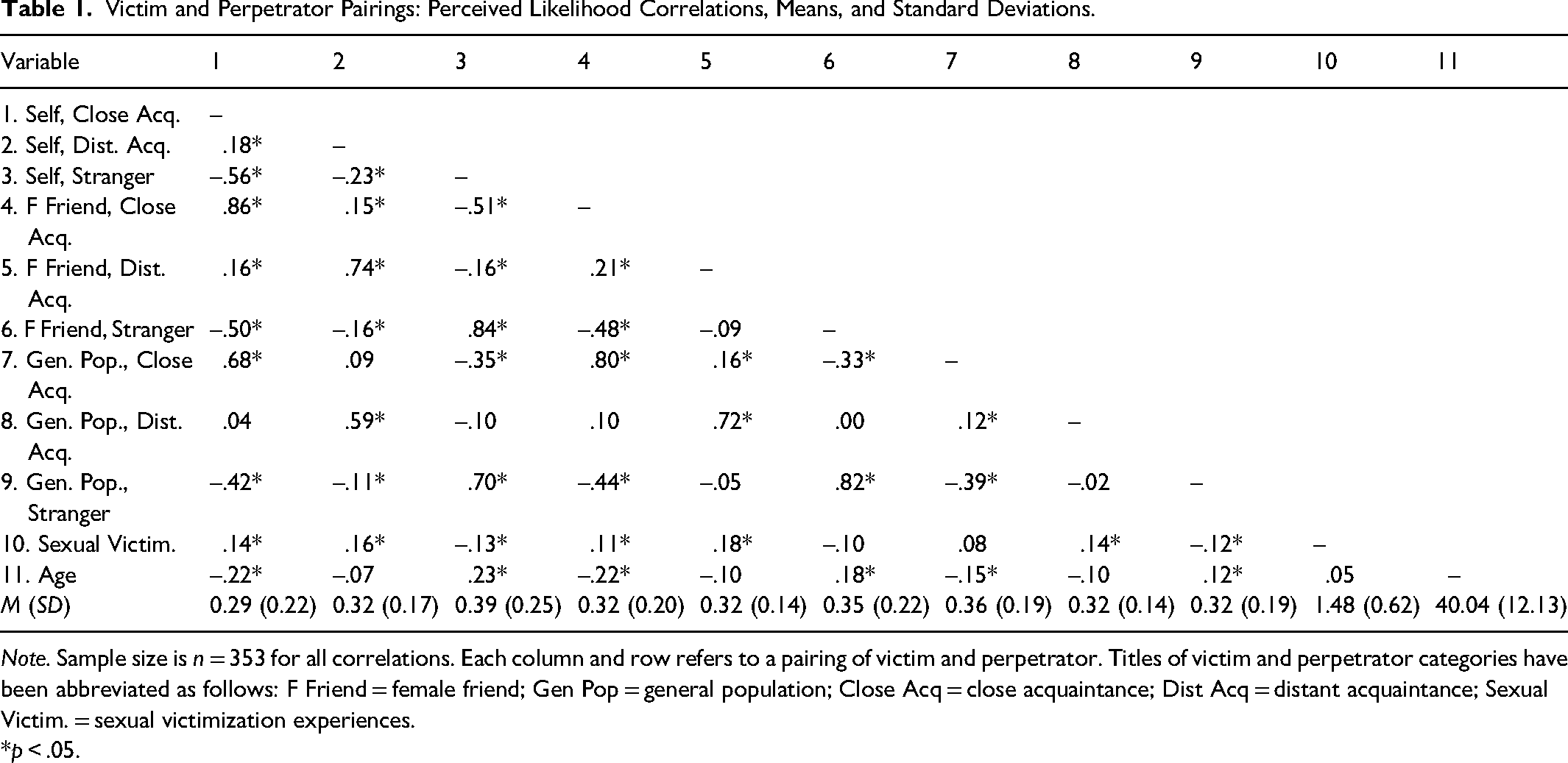
Note. Sample size is n = 353 for all correlations. Each column and row refers to a pairing of victim and perpetrator. Titles of victim and perpetrator categories have been abbreviated as follows: F Friend = female friend; Gen Pop = general population; Close Acq = close acquaintance; Dist Acq = distant acquaintance; Sexual Victim. = sexual victimization experiences.
*p < .05.
To provide a broad assessment of the accuracy of women's risk perceptions, the percentage of women who ranked “stranger” as the highest perpetrator category for each victim type was assessed. Notably, fewer than half of women thought a stranger would be the most likely perpetrator when making predictions for themselves (40%), a female friend (36%), or the general population of women (31%). This indicates that, across victim categories, the majority of women were correct that the risk of stranger rape is lower than the risk of acquaintance rape. Yet more women were accurate in this assessment when making judgments for the general population or their friends than they were when making the judgment for themselves, and women still overestimated the likelihood that all categories would be raped by a stranger.
We next examined whether women's assessments of their personal risk of rape were positively associated with their assessment of a female friend's risk and the general population's risk. Such a correlation could imply that women base their assessment of their personal risk of rape on their assessments of the risk present for others (though a correlational analysis cannot determine causal directionality). This was borne out by the data; women's own perceived likelihood of being raped by a stranger was strongly positively associated with their perceptions of the likelihood of stranger rape for their female friends, r(351) = 0.84, p < .001, and the general population, r(351) = 0.70, p < .001. A similar pattern was observed when examining the perceived likelihood of rape by a distant acquaintance and a close acquaintance (see Table 1 for correlations). Across perpetrator types, women's self-perceived risk was more strongly associated with the risk they perceived for their friends than the risk perceived for the general population, but all associations were strong.
Likelihood of Victimization by Perpetrator Type and Sexual Assault History
Three repeated measures ANOVAs were conducted to examine the impact of perpetrator type (close acquaintance, distant acquaintance, stranger) on perceptions of the likelihood of rape, examined separately for each victim type (self, female friend, general female population), with sexual victimization experiences as a continuous predictor, including its interaction with perpetrator type.
Three separate ANOVAs were used instead of a two-way repeated measures model because the outcome variable (i.e., perceived likelihood of rape by each perpetrator type) summed to 100% within each victim category for each participant. The consequence of this is that the main effect of victim type will always be nonsignificant, because it asks whether women perceive themselves to be more at risk, versus a female friend, or the general population, averaging over perceived risk for each perpetrator type, but the average for each will always be 100, because they were required to sum to 100%. Similarly, the direct effect of sexual assault experiences on perceived likelihood of victimization must also sum to 100% when averaging over perpetrator type.
Self as Victim
We first examined women's self-perceptions of their risk of sexual victimization by known and unknown perpetrators to test Hypothesis 1 (women will perceive that strangers are most likely to rape them, followed by distant acquaintances, and then close acquaintances) and Hypothesis 3 (those with more experiences of sexual victimization will be more accurate in their personal risk assessments). The Mauchley's test for sphericity was significant for the ANOVA when the victim was the participant, χ2(2) = 83.79, p < .001, thus the Greenhouse Geisser correction was used. The effect of perpetrator type was significant, F(1.65, 578.78) = 13.24, MSE = 0.08, p < .001. To assess which differences were significant within the three perpetrator categories, we examined pairwise comparisons with a Bonferroni correction applied. Supporting H1, women believed that if they were to be raped, a stranger would be the most likely perpetrator, which differed significantly from the category of distant acquaintance, Mdiff = 0.07, SE = 0.02, p < .001, and close acquaintance, Mdiff = 0.10, SE = 0.02, p < .001. Women believed the least likely perpetrator to be either a distant or close acquaintance, which both differed significantly from the category of stranger, though were not significantly different from one another, Mdiff = 0.03, SE = 0.02, p = .213. For a full reporting of means and standard deviations, see Table 1.
Supporting H3, the interaction between perpetrator type and sexual victimization experiences when the victim was the participant was significant, F(1.65, 578.78) = 5.92, MSE = 0.08, p = .005. The more sexual victimization experiences a person reported, the stronger risk of rape they perceived by close acquaintances, r(351) = 0.14, p = .010, and distant acquaintances, r(351) = 0.16, p = .003, but the less likely they were to perceive that strangers would rape them, r(351) = −0.13, p = .017. For a visual representation of these results, see Figure 1.
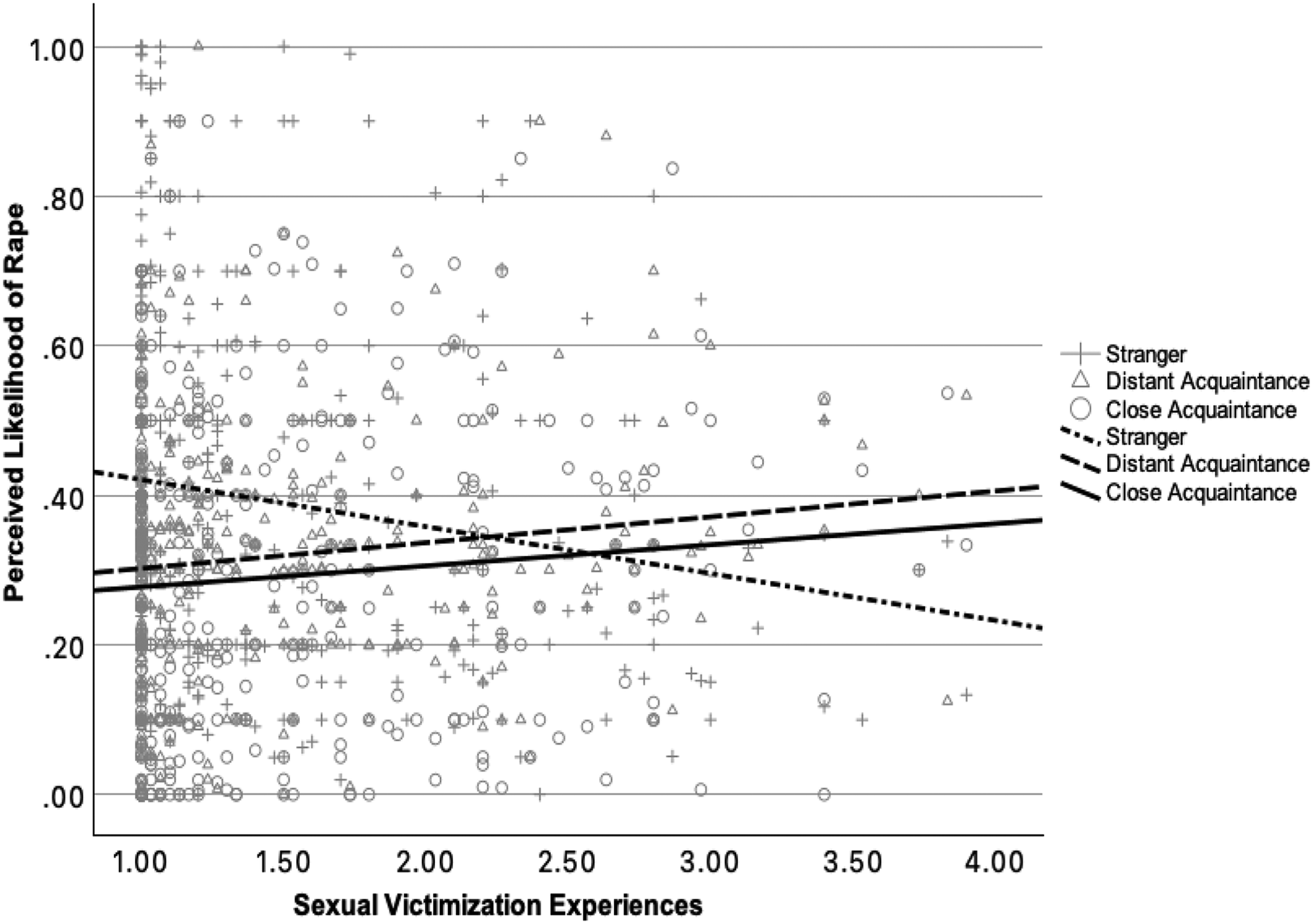
Perceived Likelihood of Rape for Oneself by Perpetrator Type and Sexual Victimization Experiences.
Female Friend as Victim
We then conducted an exploratory analysis on women's perceptions of their female friends’ likelihood of being raped by known and unknown perpetrators. The Mauchley's test for sphericity was significant for this ANOVA, χ2(2) = 82.58, p < .001, thus the Greenhouse Geisser correction was applied. The effect of perpetrator type was significant, F(1.65, 580.08) = 7.09, MSE = 0.07, p = .002, however, pairwise comparisons with a Bonferroni correction did not reveal any significant effects. When a less conservative pairwise correction was used, Least Significant Difference (LSD), the comparisons were still nonsignificant but showed a pattern consistent with the effects from the category of self.
Although sexual assault experiences were only hypothesized to moderate women's self-assessed risk of rape by perpetrator type, we nevertheless tested for the impact on perceived risk of rape to female friends. The interaction between perpetrator type and sexual victimization experiences when the victim was a female friend was significant, F(1.65, 580.08) = 5.39, MSE = 0.07, p = .008, following the same pattern as the victim category of self. That is, the more sexual victimization experiences women reported, the more likely they were to perceive that their friends would be raped by close acquaintances r(351) = 0.11, p = .032, and distant acquaintances r(351) = 0.18, p < .001. The correlation between sexual victimization experiences and perceptions of likelihood for strangers to rape one's female friends was negative, but not significant, r(351) = −0.10, p = .063. For a visual representation of these results, see Figure 2.
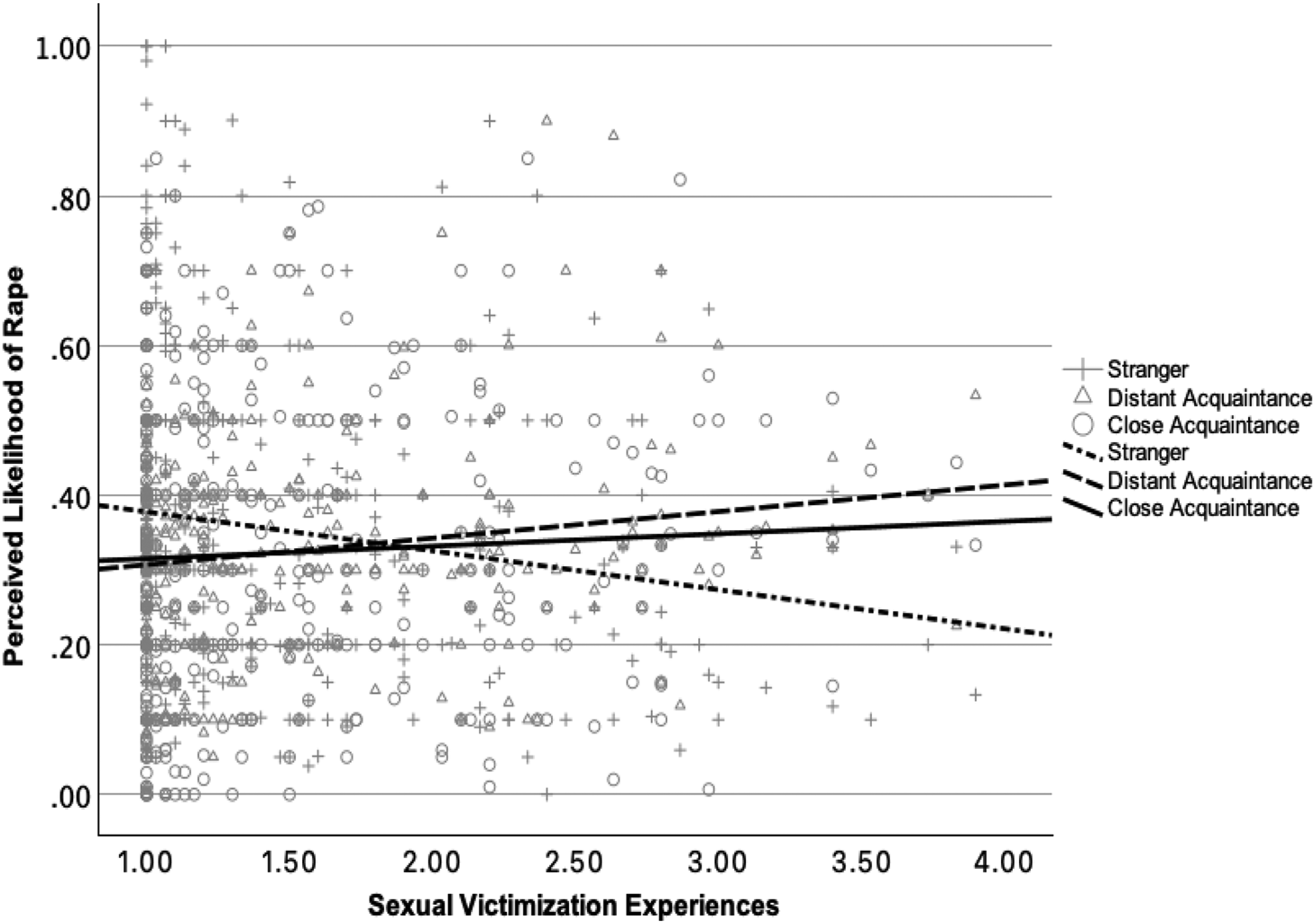
Perceived Likelihood of Rape for Female Friends by Perpetrator Type and Sexual Victimization Experiences.
General Population as Victim
Finally, we examined women's perceptions of the general population's risk of sexual victimization by known and unknown perpetrators to test Hypothesis 2 (women believe that the general public is most likely to be raped by close acquaintances, then distant acquaintances, and least likely strangers). The Mauchley's test for sphericity was significant for the ANOVA when the victim was the general population, χ2(2) = 54.28, p < .001, so the Greenhouse Geisser correction was used. The main effect of perpetrator type was significant, F(1.75, 613.83) = 3.64, MSE = 0.05, p = .033. We ran pairwise comparisons with a Bonferroni correction to assess significance within the three perpetrator categories. As expected, when assessing risk for the general population, women's perceptions were opposite of their own personal risk estimations. Partially supporting H2, women believed the most likely perpetrator was a close acquaintance, which differed significantly from the category of distant acquaintance, Mdiff = 0.04, SE = 0.01, p = .009, and stranger, Mdiff = 0.05, SE = 0.02, p = .030. Women believed the least likely perpetrator to be either a distant acquaintance or a stranger, which did not differ significantly from one another, Mdiff = 0.01, SE = 0.02, p = 1.00.
Finally, there was a significant interaction between sexual victimization experiences and perpetrator type on participants’ perceptions of the general population's likelihood of being raped, F(1.75, 613.83) = 5.22, MSE = 0.05, p = .008. Sexual victimization experiences were not significantly associated with perceptions of the general population's likelihood of being raped by close acquaintances, r(351) = 0.08, p = .125, though they were positively associated for distant acquaintances, r(351) = 0.14, p = .008, and negatively associated for strangers, r(351) = −0.12, p = .025. For a visual representation of the interaction, see Figure 3.
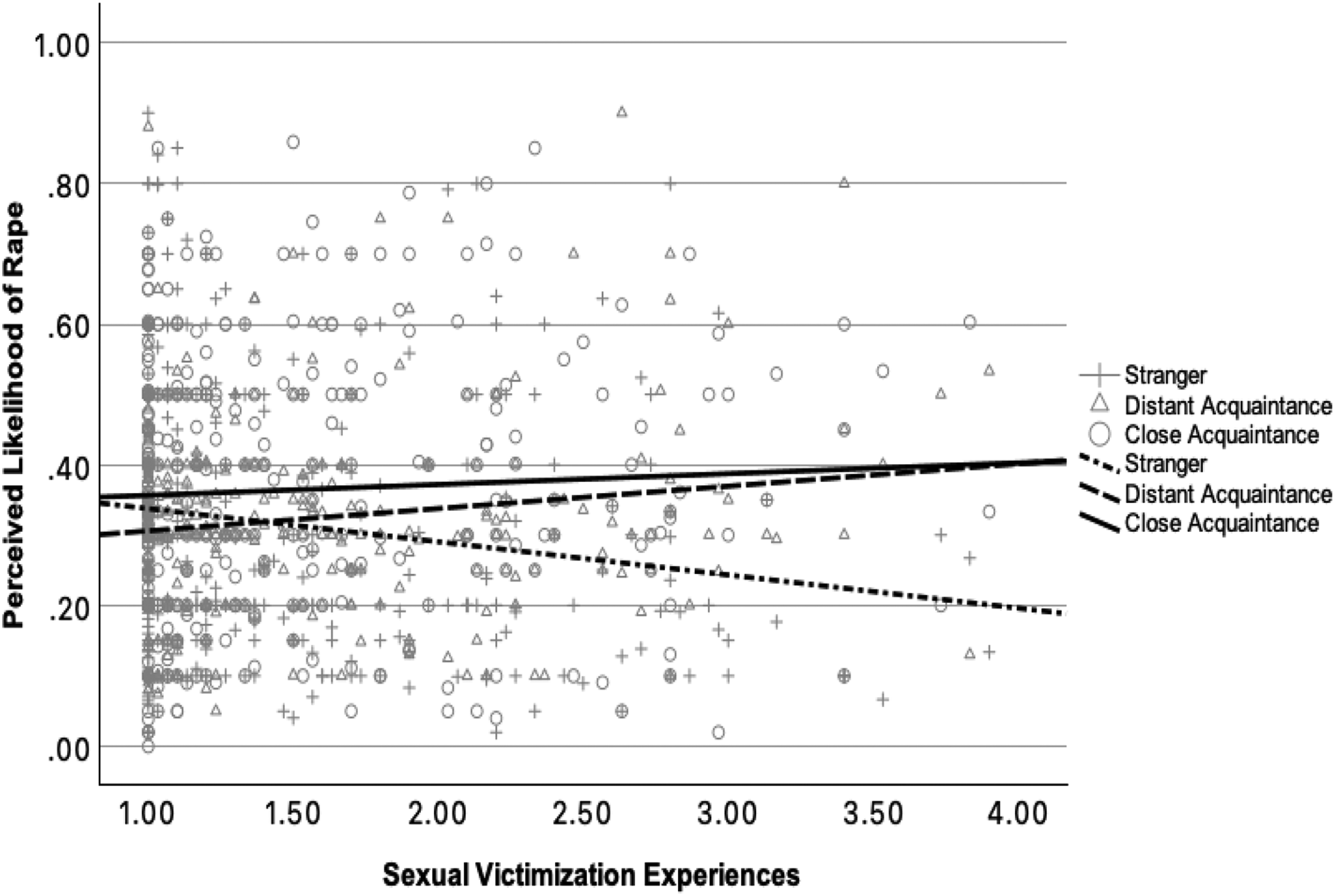
Perceived Likelihood of Rape for the General Population by Perpetrator Type and Sexual Victimization Experiences.
Discussion
Women fear rape perpetrated by strangers more than acquaintances (e.g., Hickman & Muehlenhard, 1997; Pryor & Hughes, 2013), and yet nearly 90% of rapes are perpetrated by an acquaintance (e.g., Leemis et al., 2022). The current research sought to apply the concept of unique invulnerability as a potential explanation for this stark discrepancy in women's fear versus risk of acquaintance rape. In doing so, the research examined whether women are aware of the greater risk of acquaintance rape in the general population, but do not apply that knowledge of risk perceptions to themselves, owing to a sense that they are uniquely invulnerable to threats from known others. To further test the concept of unique invulnerability, we examined whether experiences of sexual assault would reverse women's miscalibration of the magnitude of threat posed by strangers versus acquaintances, as the experience of assault threatens one's presumption of invulnerability.
Effects of Unique Invulnerability
The first proposed hypothesis, that women assessing personal risk would rank strangers as the most likely perpetrator, followed by distant acquaintances, and close acquaintances, was partially supported. Women ranked strangers as the most likely to perpetrate rape against them personally. Distant and close acquaintances were both perceived as significantly less risky than strangers, but did not differ significantly from one another. The second hypothesis was similarly partially supported. When assessing risk for the general population, women ranked a close acquaintance as the most likely perpetrator. Distant acquaintances and strangers were viewed as significantly less likely to perpetrate than close acquaintances but did not differ significantly from one another. The third hypothesis was supported: women who experienced sexual assault reported risk perceptions for stranger versus acquaintance rape more aligned with actual risk patterns in the general population. That is, women who reported more experiences of sexual violence were more likely to rate close acquaintances as most likely to perpetrate, and strangers as least likely.
Support for H1 and H2 suggests that women may believe that they are uniquely invulnerable to acquaintance rape. Women's assessment of the general population's risk as being highest for close acquaintances suggests that women likely know that the general population is statistically more likely to be raped by someone they know (e.g., Leemis et al., 2022). The ordering flips when women assess their own personal risk; they believe that a stranger is the most likely perpetrator. This is a similar finding to Pryor and Hughes (2013), whose sample of college women largely agreed that men they know would not rape them. Knowledge of general patterns of risk does not mean that a person will apply that information to their personal risk assessments; indeed, a large literature in other domains indicates that people often discount the likelihood that particular negative events will befall themselves versus others (e.g., Blanton et al., 2001; Burger & Burns, 1988; Chan et al., 2010). Support for H3 suggests that experiences of sexual violence may shatter women's perceptions of unique invulnerability to acquaintance rape. Consistent with H3, experiences of sexual violence were positively associated with an increased perceived risk of stranger rape, and a lower risk of acquaintance rape. This study did not measure who perpetrated these experiences of sexual violence; however, general statistics indicate that almost nine out of ten experiences of sexual victimization are perpetrated by an acquaintance (e.g., Leemis et al., 2022), which makes us confident that a large majority of reported experiences for this sample of women were likely perpetrated by someone the victim knew. The reported effects may be smaller than what would have been observed had we only included those who had experienced rape perpetrated by an acquaintance.
Notably, our third hypothesis extended broadly to female friends and the general population–sexual experiences were positively associated with more accurate risk perceptions for all three victimization categories. When a person experiences sexual assault, especially as most experience it as perpetrated by an acquaintance (e.g., Leemis et al., 2022), it may prompt reflection and reassessment of one's own risk, as well as the risk of others. That is, if one is personally at a higher risk of acquaintance rape, logic follows that risk for a female friend, and the general population may follow suit.
Accuracy of Risk Perceptions
Fewer than half of women ranked themselves, a female friend, and the general population as most likely to be raped by a stranger. This is important as it indicates that more than half of women are accurate in their assessment that acquaintances pose a greater relative risk of rape to themselves and others. Still, women overestimated the likelihood that a stranger might rape them. On average, women reported the likelihood that a stranger would be the perpetrator for themselves as 40%, 36% for a female friend, and 32% for the general population. These are significant overestimates of the risk of stranger rape, given that only 10–12% of rapes in general population studies are committed by strangers (e.g., Koss et al., 1988; Leemis et al., 2022).
Significant correlations emerged between risk estimates for all three victimization categories for all three perpetrators. That is, women who believed they were personally most likely to be victimized by a stranger were also more likely to believe that a female friend and the general population would be more likely to be raped by a stranger. The same pattern can be seen for both distant and close acquaintances. This data suggests that education about the relative risk of rape by strangers and acquaintances in the general population may increase the alignment of women's self-perceptions of risk with the general population's risk. Similarly, women sharing their experiences of acquaintance rape with their friends could also increase alignment of self-perceptions with the risk of the general population. However, this data is correlational, and causation cannot be demonstrated.
Risk Perception for Female Friends
The category of female friends was included as an exploratory victimization category, as a clear prediction could not be made as to whether women would estimate their female friends’ risk to more closely match their own or the general population. It is possible that a female friend would have the same close and distant acquaintances as the individual assessing risk, so one might include a female friend in their own perceived unique invulnerability. However, it was also possible that women are aware of the general population's risk patterns (Day, 1999; Hickman & Muehlenhard, 1997) and apply that knowledge to their female friends, viewing only themselves as uniquely invulnerable.
Results indicate that women assess a female friend's risk as similar to their own, rather than more similar to the general population. Female friends are perceived to be at the highest risk of stranger rape, followed equally by stranger and distant acquaintance rape. Similarly, women perceive themselves at the highest risk of stranger rape, followed by distant acquaintance rape, and least likely close acquaintance rape. This may be due to the sharing of acquaintances; if you share acquaintances with a friend, then their risk of assault by those shared friends is likely similar to your own. This could be tested in future research by examining female friends who do or do not share the same male friends.
Implications
Teaching women about sexual violence statistics may inform their own personal rape risk perceptions: an acquaintance is the most likely perpetrator for most people. Prior literature exploring unique invulnerability in relation to unwanted pregnancies indicates that women who feel more invulnerable to unwanted pregnancies were less likely to use effective forms of contraception (Burger & Burns, 1988). The same may be true for acquaintance rape; that is, those who believe they are invulnerable to acquaintance rape may not engage in protective strategies to mitigate their risk of acquaintance rape or may engage in protective strategies to avoid stranger rape, which is far less common. Thus, revoking unique invulnerability to acquaintance rape through teaching women about general population statistics may help keep women safe from acquaintance rape by encouraging engagement in risk-mitigating strategies specifically for acquaintance rape. Importantly, though, this is not intended to suggest that women are responsible for preventing their own victimization, but it is an unfortunate reality that women often feel they must engage in defensive behavior to reduce their risk of victimization. Given the protective efforts women already engage in, they may wish to better understand how their risk of assault varies between strangers and acquaintances to maximize their effectiveness.
However, it is ethically questionable as to whether teaching women to fear their acquaintances is a good idea. It may be difficult to live one's life suspecting that one's closest acquaintances, including family members and close friends, are the most likely to harm them. Moreover, protecting oneself from acquaintance rape is not as straightforward a process as protecting oneself from stranger rape. Most of the effort that women expend to reduce their risk of victimization is aimed at protecting themselves from stranger rape specifically (e.g., Hickman & Muehlenhard, 1997). Efforts to protect oneself from acquaintance rape may hinder relationships, both romantic and platonic. This is made clear by Hickman and Muelenhard's (1997) exploration of women's use of defensive vigilance behaviors to prevent acquaintance rape. Their scale assessing precautionary behaviors women engage in because of acquaintance rape asks women whether they would, “… refrain from drinking around guys I know” and “… avoid going on dates with guys I know,” which illustrates how a woman staying guarded against acquaintance rape could hinder their social life. Further complicating matters, efforts to protect oneself from stranger rape may put one at greater risk of acquaintance rape. Indeed, women often rely on male friends and acquaintances to protect them from rape, thereby allowing them access to women in vulnerable contexts (e.g., Wilson & Mesnick, 1997).
Limitations and Future Directions
This study sought to understand women's risk perceptions, which are inevitably tied to fear because women are likely most fearful of what they are at the highest risk of. We did not measure women's fear of rape, given the robust literature already demonstrating a significant difference in fear of rape perpetrated by strangers and acquaintances (e.g., Barberet et al., 2004; Hickman & Muehlenhard, 1997; Hilinski, 2009, 2010; Pryor & Hughes, 2013; Wilcox et al., 2006). However, future research could measure both fear and risk assessments to replicate the association between the two, and to examine the role that fear plays in unique invulnerability. The experience of assault may increase fear, which likely drives a shift in risk perceptions. We also did not directly investigate women's perceptions of their own unique invulnerability. Qualitative research asking women to reflect on their relative perceptions of risk and the perceived source of their invulnerability would be valuable for identifying opportunities to educate women on potential cognitive distortions in their risk perceptions. Our study finds that women who have more experiences of sexual victimization are more accurate in their assessments of risk (i.e., they believe acquaintances are more likely to rape them than strangers). Importantly, our study did not measure how many of these prior experiences of victimization were perpetrated by strangers or acquaintances. Future research could distinguish between experiences of sexual victimization perpetrated by strangers or acquaintances to assess whether experiences perpetrated by different individuals would prompt differences in risk assessments. Additionally, this study presented the three categories (personal risk, female friend's risk, general population's risk) in the same order, thus order effects could have impacted respondents’ reports of their risk perceptions. This study did not measure vicarious victimization. Future research could examine whether knowledge of a friends’ victimization by an acquaintance would have a similar impact on closing the discrepancy gap. Indeed, many women report hearing about experiences of victimization perpetrated by acquaintances (Day, 1999), but it is unclear whether these disclosures impact women's self-assessments of rape risk. Future research should also investigate why women perceive stranger rape to be most likely for themselves.
Conclusion
One in four women has experienced rape or attempted rape, and although nearly 90% of rapes are perpetrated by acquaintances, women paradoxically report a greater fear of stranger rape. This disconnect may be explained by unique invulnerability—women acknowledge the prevalence of acquaintance rape generally, but don't apply this knowledge to their personal risk assessment. Our study examined how women estimate rape risks for themselves, friends, and the general population. Results showed participants believed the general population faced highest risk from close acquaintances, but assessed their own and friends’ risk as highest from strangers. Previous sexual victimization experiences were associated with more accurate personal risk assessments, supporting unique invulnerability as an explanation for this misaligned fear.
Footnotes

Ethical Considerations
Oakland University's Institutional Review Board approved our survey protocols IRB-FY2023-266 on May 25, 2023.
Consent to Participate
Participants provided informed consent to participate online by checking a box confirming their consent.
Consent for Publication
Not applicable.
Funding
The authors disclosed receipt of the following financial support for the research, authorship, and/or publication of this article: This work is partially supported by the U.S. National Science Foundation under Grant Numbers 2211896, 2401775, and 2339431.
Declaration of Conflicting Interests
The authors declared no potential conflicts of interest with respect to the research, authorship, and/or publication of this article.