







Abstract
This study examines the determinants of attitudes toward intimate partner violence (IPV) in Thailand. Estimations from binary probit model indicate that Muslim, poverty, and residence in southern/central regions correlate with higher IPV tolerance for both genders. Wealthier women show less tolerance in some situations, while wealthier men show more, particularly related to housework neglect. Access to technology presents mixed results: computer/tablet/mobile phone ownership correlates with increased IPV tolerance in some scenarios, while internet access significantly reduces it. These findings suggest leveraging technology, especially internet access, to combat IPV by improving access to support, raising awareness, and promoting peaceful conflict resolution.
Introduction
Intimate partner violence (IPV) refers to violence occurring within romantic relationships, encompassing legally married couples as well as cohabiting partners who have not formalized their union through wedding ceremonies and/or formal marriage registration. IPV manifests in various forms, including physical violence (e.g., hitting, kicking, punching, or assault with objects), sexual violence (e.g., coercion or threats to enforce non-consensual sexual acts), emotional and psychological abuse (e.g., demeaning, controlling, threatening, or humiliating behaviors), economic abuse (e.g., financial control or enforced economic dependence), and coercive control, such as limiting contact with friends or family (Miller & McCaw, 2019).
Research on IPV has been conducted globally, with cross-country studies based on population surveys in 161 nations indicating that nearly one-third (30%) of women worldwide have experienced physical or sexual IPV, or sexual violence from a non-partner, or both. Among women aged 15–49, over a quarter have experienced physical or sexual IPV at least once in their lifetime. The prevalence of IPV varies significantly by region, with lower-income countries reporting higher rates compared to higher-income countries. For example, IPV rates are found to be highest in Africa and Southeast Asia, amounting to approximately 33%, whereas in developed regions, such as Europe and the United States, the rates are lower, at 22% and 25%, respectively (World Health Organization, 2018).
Heise's (1998) seminal work, “Violence against Women: An Integrated, Ecological Framework,” provides a comprehensive framework for understanding the causes of IPV. This ecological model highlights the complex interplay of factors operating across four interconnected levels: individual, relational, communal, and societal. At the individual level, personal risk factors such as childhood exposure to violence, substance abuse, mental health challenges, and specific personality traits increase the likelihood of perpetrating IPV. The relationship level focuses on dynamics such as power imbalances, unresolved family conflicts, and economic or emotional dependency, all of which contribute to IPV. At the community level, factors like limited social support networks, community norms that condone violence, and social isolation are significant contributors. Finally, the societal level encompasses broader structural issues, including entrenched gender inequality, inadequate legal protections, and economic disparities, which play a critical role in perpetuating IPV (Black et al., 2011; Heise, 1998).
The consequences of IPV are wide-ranging, affecting physical and mental health, familial stability, and the broader economy. Research highlights that IPV victims frequently suffer physical injuries such as fractures and bruises and are at increased risk of chronic illnesses, including cardiovascular disease and hypertension (Black et al., 2011; Campbell, 2002). Psychologically, IPV victims are more likely to experience depression, anxiety (Basile et al., 2004), substance abuse, and suicidal tendencies (Devries et al., 2013). Children exposed to IPV often exhibit aggressive or anxious behaviors and are more likely to perpetuate the cycle of violence in adulthood (Kitzmann et al., 2003).
Attitudes toward IPV play a pivotal role in shaping societal acceptance or rejection of such violence. These attitudes reflect cultural norms, social structures, and gender power dynamics—for example, acceptance of male dominance or the perception that violence is a legitimate means of controlling a partner reinforces IPV (Heise, 1998). Studies such as Yount et al. (2014) demonstrate how cultural, social, and economic factors influence attitudes toward IPV. For instance, studies conducted in rural Nigeria and Kenya found that women in those countries were more likely to view IPV as acceptable compared to their urban counterparts.
Most research on attitudes toward IPV has focused on women, often overlooking gender differences. While women generally hold negative attitudes toward IPV, some may tolerate it due to societal expectations or familial obligations (Heise, 1998; Kishor & Johnson, 2004). In contrast, men's attitudes often reflect societal norms that endorse power over partners, particularly in cultures with rigid gender roles (Gracia & Herrero, 2006).
Beyond societal and cultural factors, technological advancements have introduced both positive and negative implications for IPV. On the positive side, technology can enhance victims’ access to support through safety applications, online counseling, and digital resources (Emezue et al., 2022; Miller et al., 2021). Studies, such as Pesando (2022), highlight how mobile phone ownership and internet use in low- and middle-income countries reduce IPV risks, empower women, and foster attitudes rejecting IPV. Theoretically, internet access may shift attitudes by exposing individuals to global egalitarian norms and information that challenges traditional justifications for violence (Gillanders & McNamara, 2024). Conversely, technology can also facilitate IPV through digital stalking, coercion, and online abuse (Henry et al., 2020; Woodlock, 2017).
Thailand is an upper-middle-income country in Southeast Asia, a region exhibiting one of the highest IPV rates globally. As shown in Figure 1, domestic violence statistics reported by the Thai government show that cases have risen to an annual average of 14.8%, from 1,353 cases in 2018 to 2,347 cases in 2022, with a significant surge during the COVID-19 pandemic (19.3% in 2020 and 16.7% in 2021) due to economic lockdowns. Among these cases, 59.4% involved physical violence, predominantly perpetrated by men (90.5%) aged 19–35 (55.2%). Women accounted for 82.78% of victims, with most incidents occurring in their homes (82%) (Department of Women's Affairs and Family Development, 2022). A comprehensive understanding of the interplay among societal norms, technological factors, and cultural attitudes is essential for addressing IPV effectively and mitigating its prevalence in Thailand and globally.
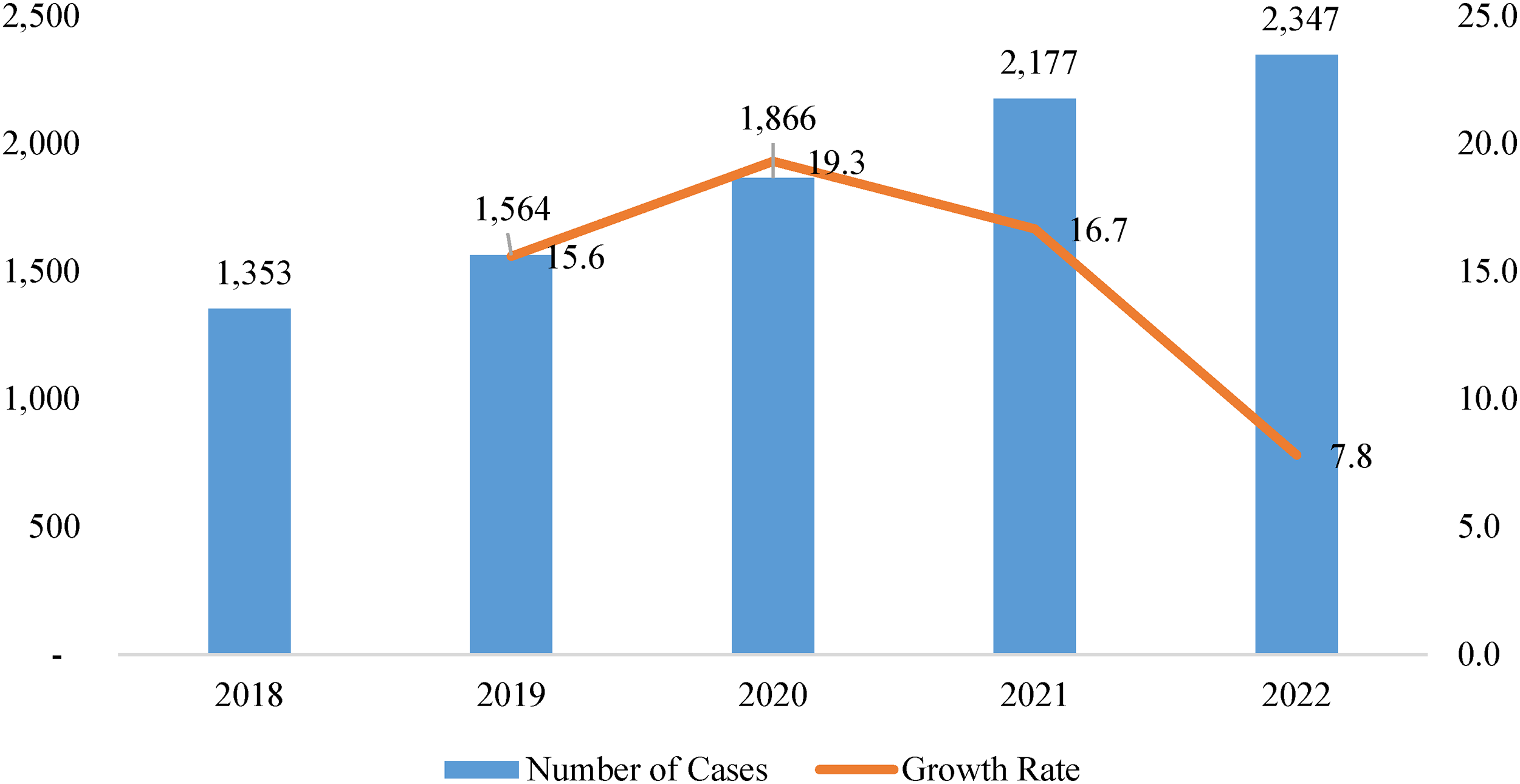
Number of reported cases of domestic violence in Thailand (2018–2022). Source: Analysis by the researchers, data from Family Institution Promotion Division, Department of Women's Affairs and Family Development, Ministry of Social Development and Human Security, Thailand.
This study seeks to investigate the impact of access to technology on attitudes toward IPV, with a focus on Thai couples as a case study. Thailand not only experiences persistently high rates of IPV but also exhibits significant disparities in access to technology, particularly among women. These disparities are likely to influence the dynamics of IPV, as previously discussed, though the exact nature of this influence—whether positive or negative—remains unclear.
A distinct advantage of this study is the ability to examine measures of IPV attitudes across a range of specific contexts (e.g., neglect of housework or going out without permission) rather than using a single aggregate measure. This allows for a more granular contribution to the literature by highlighting how technology access affects specific types of justifications differently. Additionally, given the differences in attitudes between women and men, as noted, this study aims to explore and compare gender-specific attitudes toward IPV, thus seeking to illuminate whether and how attitudes toward IPV differ between women and men.
The study is organized into five sections. The second section provides a comprehensive review of the literature on IPV and the role of technological factors. The third section describes the data and variables used in the analysis. The fourth section presents the econometric modeling approach and the estimation results. Finally, the concluding section summarizes the findings, discusses policy implications, and identifies limitations of the study.
Literature Review of IPV and the Role of Technology
As outlined in the previous section, IPV is a pervasive social issue with far-reaching consequences, impacting victims on physical, psychological, and social levels. Globally, numerous IPV cases are reported annually. Research has identified multiple contributing factors, with individual factors playing a central role. For instance, perpetrators’ personal traits and experiences, such as growing up in a violent environment or lacking emotional regulation skills, are significant predictors of IPV (Dutton & White, 2013). Substance abuse, including alcohol and drugs, is another critical factor, as it impairs judgment and increases the likelihood of aggressive and uncontrollable behaviors (Fals-Stewart et al., 2009).
In addition to individual factors, social and familial factors significantly influence IPV dynamics. Societal norms that normalize or accept IPV as a natural aspect of relationships are particularly problematic. For example, cultural environments that promote control and domination within marital relationships are often associated with higher acceptance of IPV. This is especially evident in polygamous marriages, where women tend to tolerate greater levels of violence (Adewale et al., 2021; Ahinkorah, 2021). Similarly, Heise (1998) underscores the role of gender inequality, highlighting how limited decision-making power within households or workplaces contributes to elevated IPV rates. Restricted access to education and employment for women further exacerbates their vulnerability to abuse.
Familial factors also contribute significantly to IPV. Experiences of growing up in violent households or receiving inadequate parental support can perpetuate cycles of abuse into adulthood (Widom, 1989). Moreover, cultural and legal systems vary widely in their impact on IPV. In societies where IPV is condoned or inadequately penalized, violence is more likely to persist. For instance, cultural norms emphasizing patriarchal dominance and unequal gender roles increase IPV risk, while ineffective legal enforcement against perpetrators fosters long-term cycles of abuse (Dobash & Dobash, 1979). Furthermore, an individual's marital status may serve as a critical moderating factor; whether a respondent is legally married or in a cohabiting union can significantly influence the social expectations and power dynamics that shape their attitudes toward violence.
In the digital era, technology serves as both a catalyst for and an amelioration of IPV, with significant implications on both fronts. On the negative side, technological tools such as smartphones, tablets, computers, and social media platforms are frequently exploited for stalking and harassment. Perpetrators use these tools to create a sense of omnipresence, monitoring victims’ locations, communications, and online activities. Technology is also weaponized to isolate victims from their social networks, humiliate them, and undermine their psychological well-being, often with devastating emotional and safety consequences (Woodlock, 2017). Evidence suggests that men are more likely than women to misuse technology for sexually violent behaviors related to IPV (Duerksen et al., 2019).
Conversely, technology also offers transformative potential in addressing IPV. It can aid in victim screening, problem identification, and violence prevention. For example, mobile applications and telehealth services have been found effective in mitigating the psychological consequences of IPV—such as depression, anxiety, and post-traumatic stress disorder—by providing victims with access to support and resources (Emezue et al., 2021). Digital communication channels, social media platforms, and specialized applications enhance victims’ access to assistance, offering privacy, safety, and reduced fear of social stigma.
Theoretically, the link between technology and IPV attitudes can be explained by the exposure to “social remittances”—where access to the internet allows individuals to encounter global egalitarian norms that challenge traditional justifications for violence (Gillanders & McNamara, 2024). However, it is important to distinguish between the ownership of devices and the actual use of the internet. While owning a computer or mobile phone provides the infrastructure for access, the internet itself serves as the active medium for information exchange. In many empirical models, these variables can be highly collinear; therefore, it is necessary to examine internet access as a primary driver while considering device ownership as a robust alternative measure of digital inclusion.
Although existing studies illustrate the multifaceted impact of technology on IPV—particularly its role in mitigating violence—limited attention has been given to how access to technology influences attitudes toward IPV across a range of distinct situational contexts. This gap is particularly evident in terms of understanding how these attitudes differ between men and women. The subsequent section seeks to address this gap by analyzing data from the National Survey on Children and Women in Thailand, an upper-middle-income country, incorporated in the 2022 Multiple Indicator Cluster Survey (MICS), to explore the relationship between technology access and attitudes toward IPV.
Data
The 2022 MICS is a project supported by UNICEF in collaboration with the National Statistical Office of Thailand. The MICS aims to collect national-level data on the status of children and women, providing universal indicators that facilitate international comparisons. The survey also supports improved policy planning and enables the assessment of progress toward the Sustainable Development Goals and other international agreements. It is important to note a limitation regarding the household structure in the MICS 2022 dataset: while it provides rich socioeconomic data, it lacks consistent indicators for specific marital arrangements—such as duration of marriage or formal versus informal cohabitation—for all respondents. However, the survey remains the most robust representative sample for assessing gendered attitudes in Thailand, which is now classified as an upper-middle-income country.
The survey was conducted nationwide, with samples drawn from both urban and rural areas and five distinct regions: Bangkok, the Central region, the Northern region, the Northeastern region, and the Southern region. A multi-stage stratified cluster sampling method was employed, selecting households from a total of 40,660, with 35,604 successfully interviewed. The response rate was 95.3% among women aged 15–49 years (25,087 women) and 94.2% among men aged 15–49 years (11,023 men).
The dependent variable in this study is attitudes toward IPV among both men and women. Participants were asked whether they believed a husband had a legitimate reason to physically harm his wife in six specific scenarios: (1) if the wife leaves the house without informing the husband, (2) if the wife neglects the care of the children, (3) if the wife argues or fights with the husband, (4) if the wife refuses to have sex with the husband, (5) if the wife burns the food, and (6) if the wife fails to maintain the household. Responses were recorded as: (1) agreeing that violence is justified, or (2) disagreeing that violence is justified.
The analysis of attitudes toward IPV revealed that, on average, men were more likely than women to justify the use of violence in all six scenarios. The highest acceptance of violence among men was observed in the case where the wife neglected the care of the children (5.84%), followed by instances where the wife failed to maintain the household (4.5%) and when she left the house without informing the husband (3.18%). Among women, the highest acceptance of IPV was also found in the scenario where the wife neglected the care of the children (5.15%), followed by instances where the wife failed to maintain the household (3.21%) and when she left the house without informing the husband (2.82%).
Figure 2 illustrates the gender differences in attitudes toward the acceptance of violence, showing that men are generally more likely to accept the use of violence against their partners, particularly in cases where women fail to fulfill their roles and responsibilities within the household.
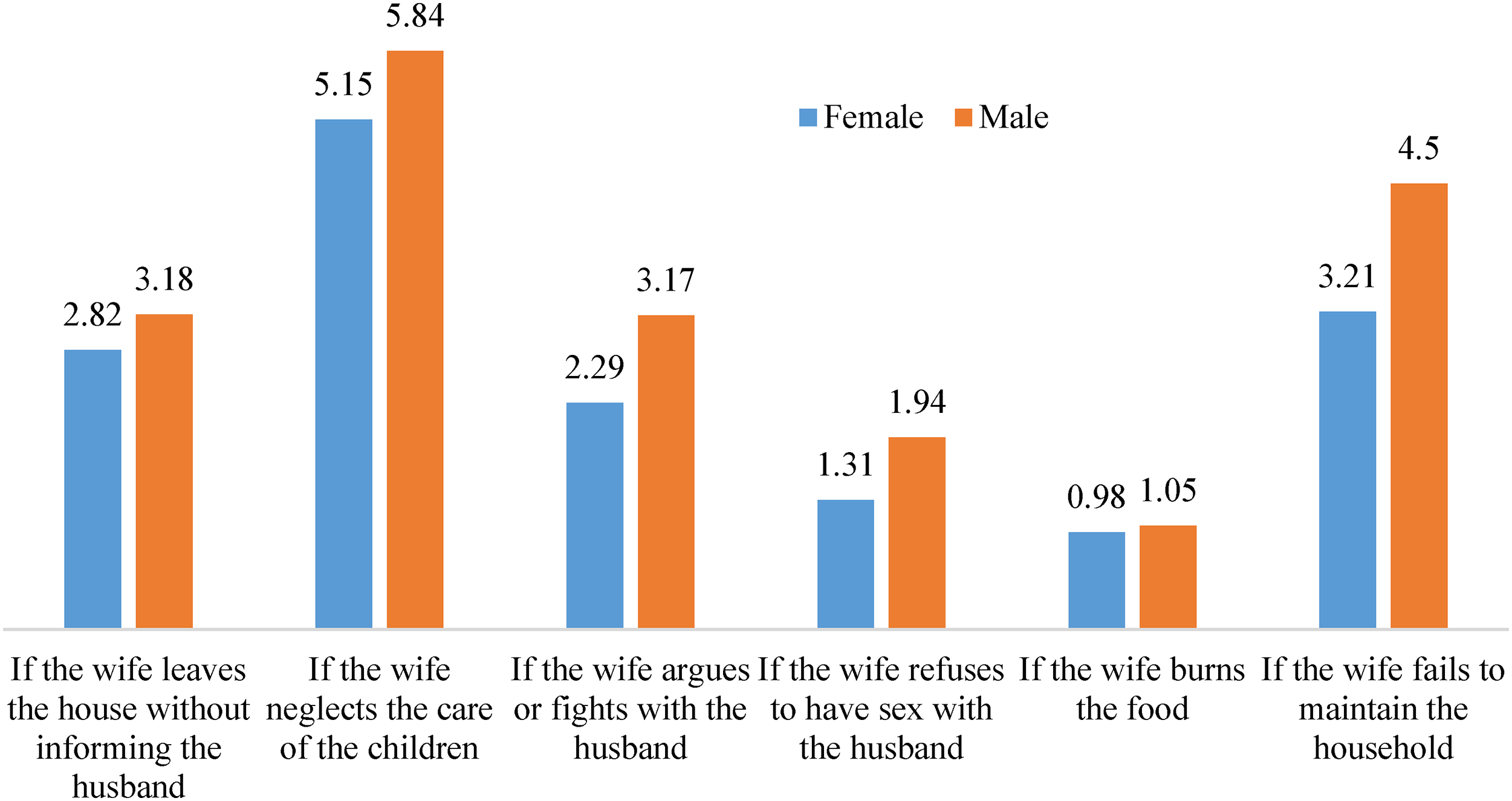
Percentage of attitudes toward intimate partner violence in different scenarios (classified by gender).
In Tables 1 and 2, the analysis of attitudes toward the use of violence was conducted by gender (female for Table 1 and male for Table 2), classified according to various socioeconomic control variables, including age, education level, religion, residential area (urban/rural), region, economic status (wealth index), and household access to technology. The analysis differentiated between the attitudes of women and men. Among Thai women, shown in Table 1, it was found that women with only primary education had the highest acceptance of violence at 6.71%, which decreased to 3.42% in the group with a bachelor's degree or higher. Regarding religion, Muslim women reported the highest acceptance of violence at 10.17%, compared to 4.75% among Buddhist women. For women living outside municipal areas, the acceptance of violence was 6.03%, which was higher than that of women in municipal areas. In terms of economic status, women in the lowest income group had the highest acceptance of violence at 7.18%, which decreased to 3.67% in the wealthiest group. Regionally, the South showed the highest acceptance of violence at 8.35%.
Female Attitudes Toward Intimate Partner Violence Classified by Variables.
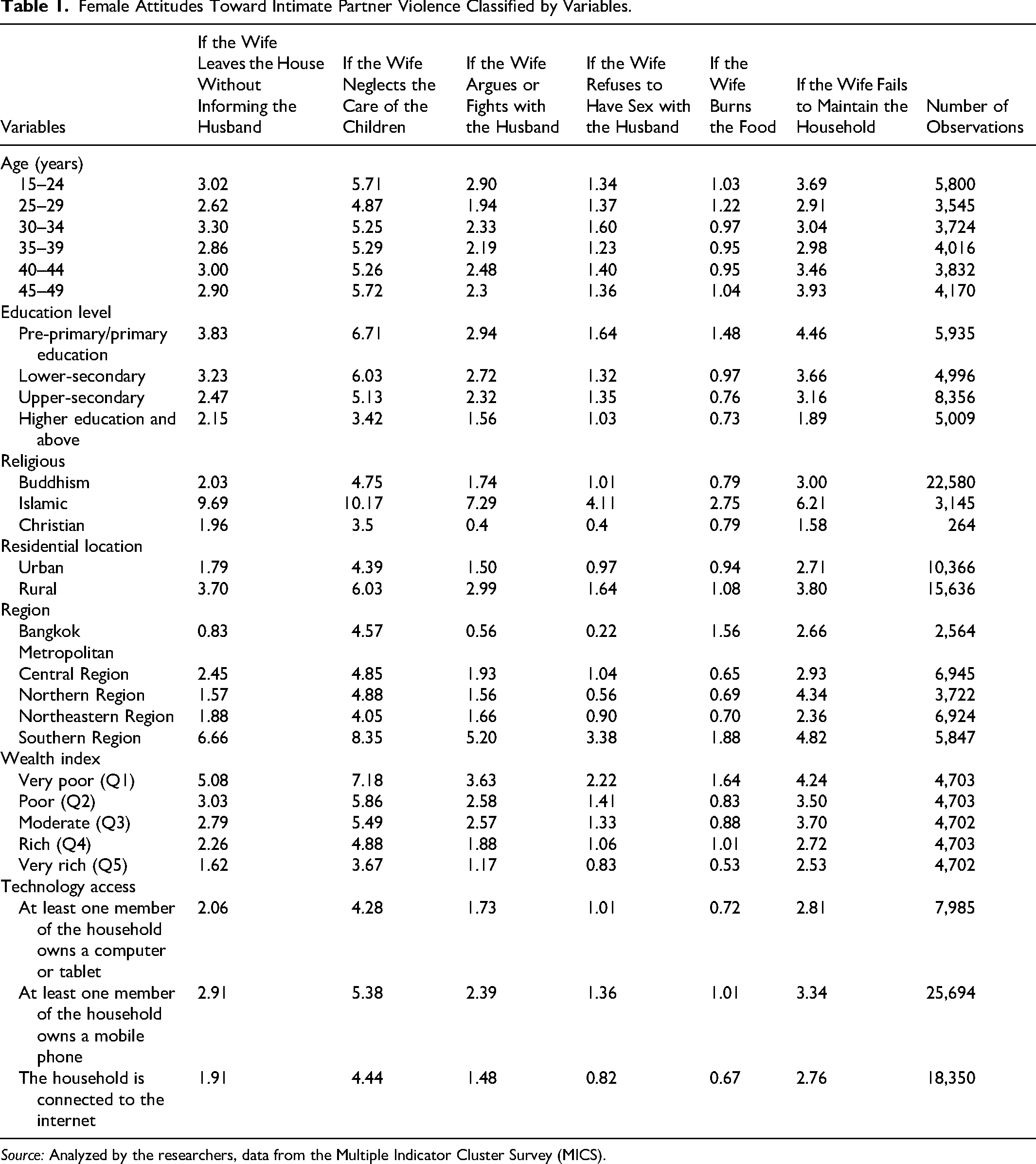
Source: Analyzed by the researchers, data from the Multiple Indicator Cluster Survey (MICS).
Male Attitudes Toward Intimate Partner Violence Classified by Variables.
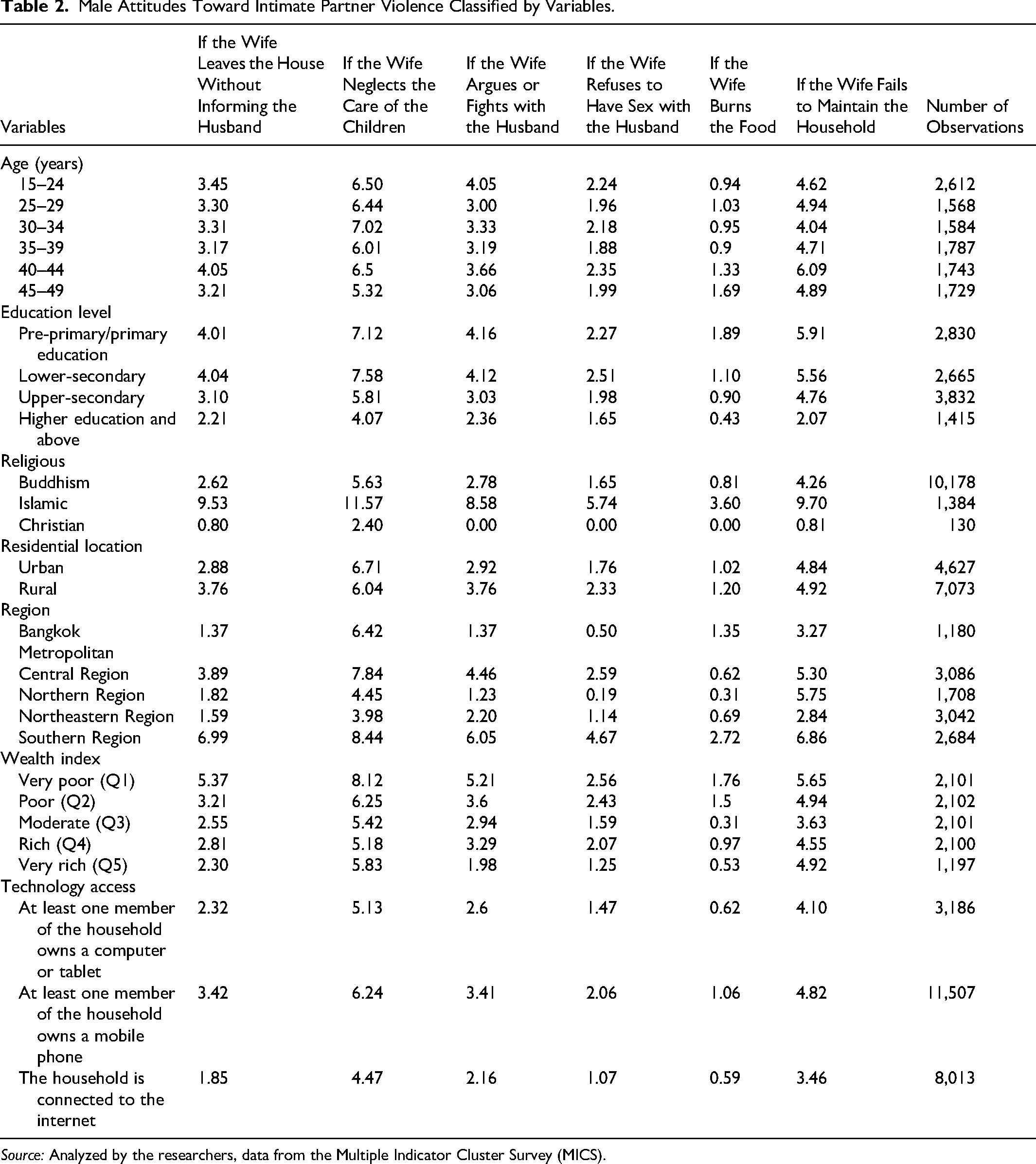
Source: Analyzed by the researchers, data from the Multiple Indicator Cluster Survey (MICS).
Among Thai men, shown in Table 2, social and economic factors such as education, religion, wealth index, and region clearly affected Thai men's attitudes toward the use of violence in various situations with their wives. For example, men with only primary education were more likely to accept violence, such as in the case when a wife refuses sexual intercourse, with an acceptance rate of 2.27%. Meanwhile, men with a bachelor's degree had a lower acceptance rate of 1.65%, reflecting that men with higher levels of education were less likely to accept violence. Regarding religion, Muslim men continued to exhibit the highest acceptance of violence, particularly in situations where the wife neglected household duties (9.7%). Additionally, men living outside municipal areas tended to accept violence more than those living within municipal areas. Economic status also showed that men in the lowest income group (Q1) had the highest acceptance of violence, and men from the South showed the highest acceptance, whereas men in urban areas like Bangkok had the lowest acceptance of violence toward their partners.
Figures 3–5 compare three variables related to access to technology: (1) whether any household member owns a computer or tablet, (2) whether any household member owns a mobile phone, and (3) whether the household has internet access, with attitudes toward the use of violence in couples, categorized by gender. While these three variables are conceptually distinct—representing hardware ownership versus active digital connectivity—they often overlap in household environments. This study includes all three to observe whether the mere physical presence of technology has a different impact on social attitudes than the active flow of global information provided by internet access. Overall analysis showed that both women and men with access to technology tended to have lower acceptance of violence in relationships. Figure 3 shows the percentage of households with or without any member owning a computer or tablet. The results indicated that both women and men in households with a computer or tablet were less likely to accept violence compared to those in households without such devices. In the case of mobile phone ownership (Figure 4), households with mobile phones showed a tendency for both women and men to have a lower acceptance of violence compared to those without mobile phones. Similarly, in households with internet access (Figure 5), both women and men with internet access showed a reduced likelihood of accepting violence.
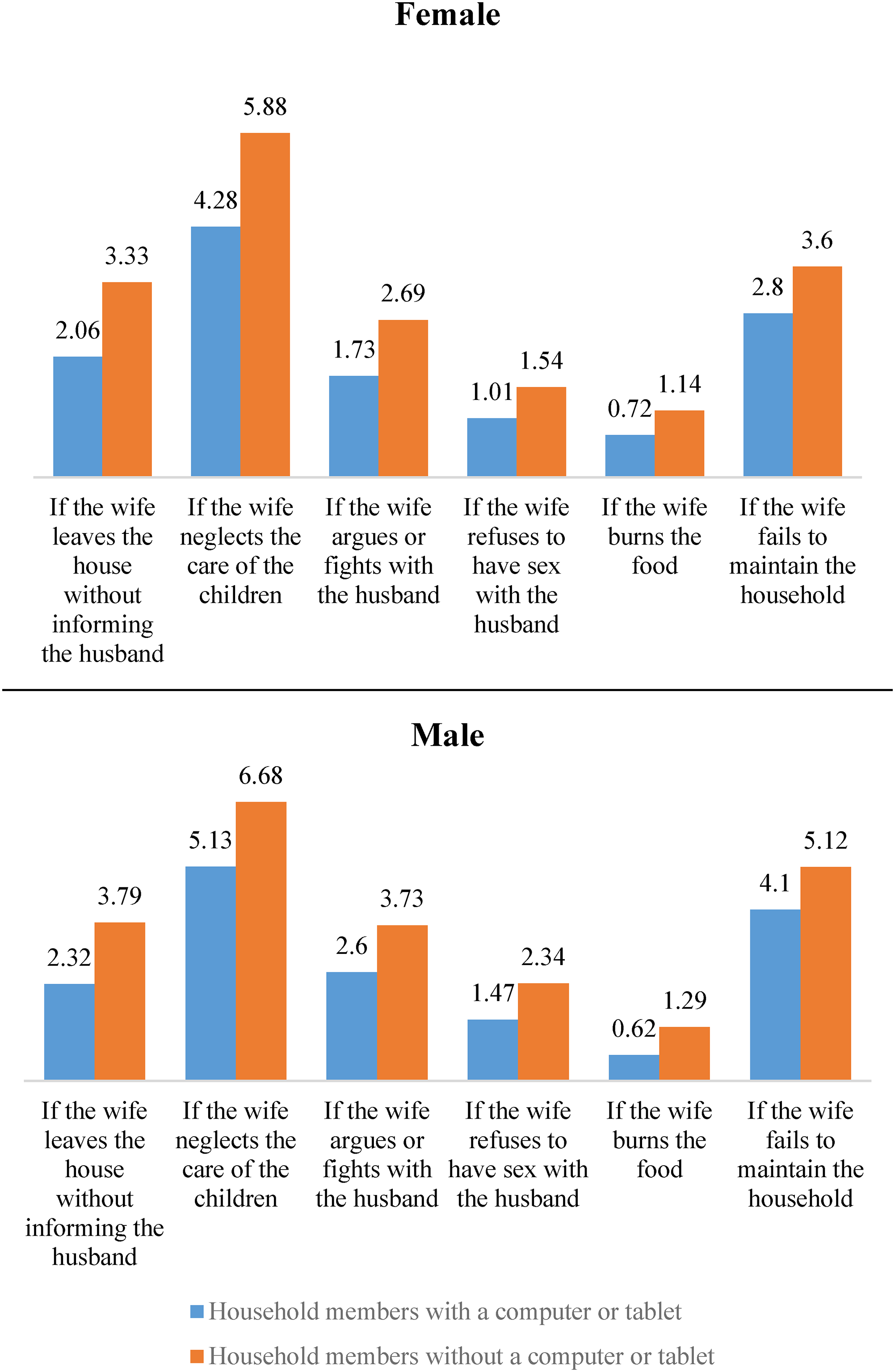
Percentage of attitudes toward intimate partner violence by household computer/tablet ownership status (classified by gender). Source: Analysis by the researchers, data from the Multiple Indicator Cluster Survey (MICS-2022).
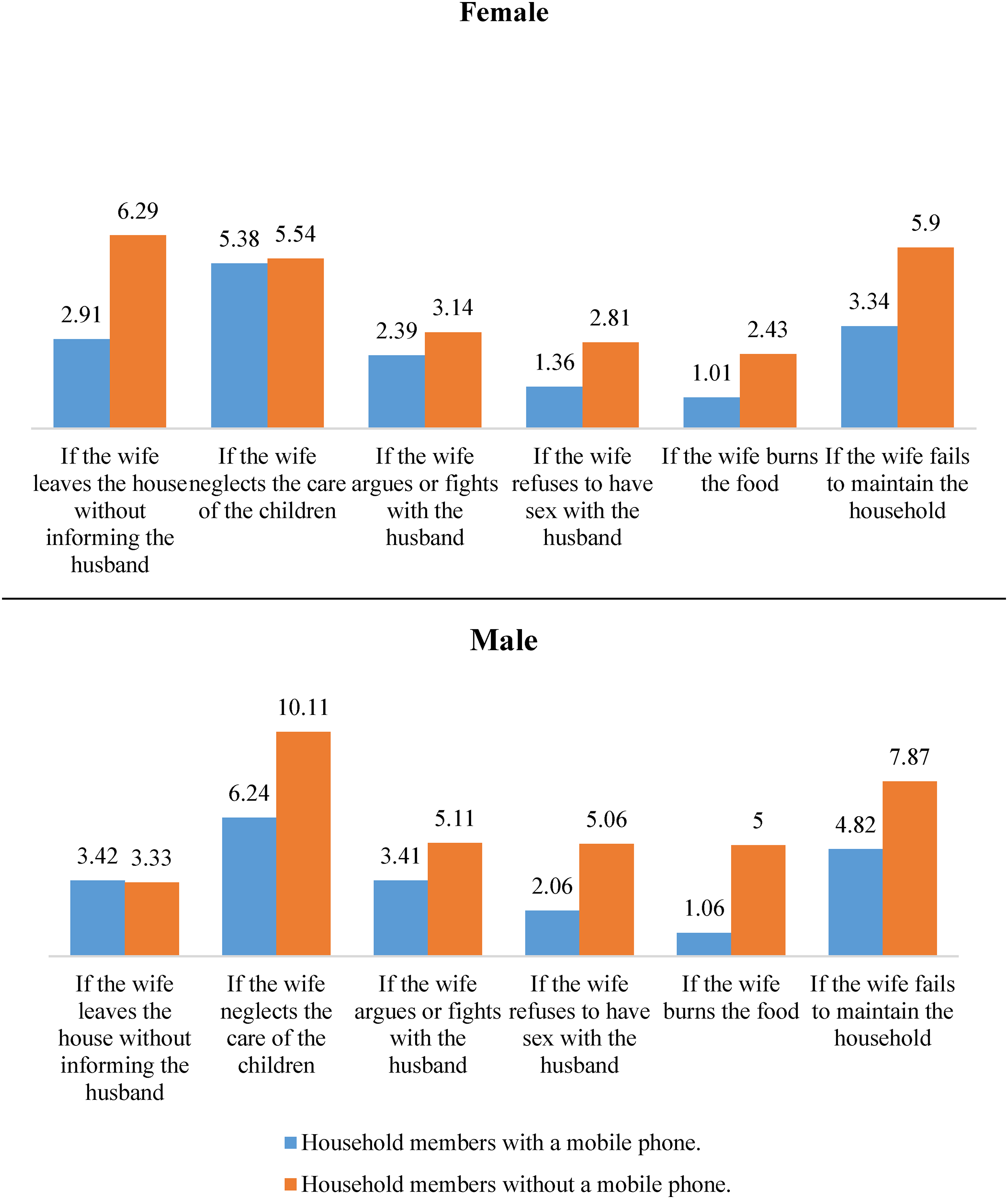
Percentage of households with/without mobile phone access by attitudes toward intimate partner violence (classified by gender). Source: Analysis by the researchers, data from the Multiple Indicator Cluster Survey (MICS-2022).
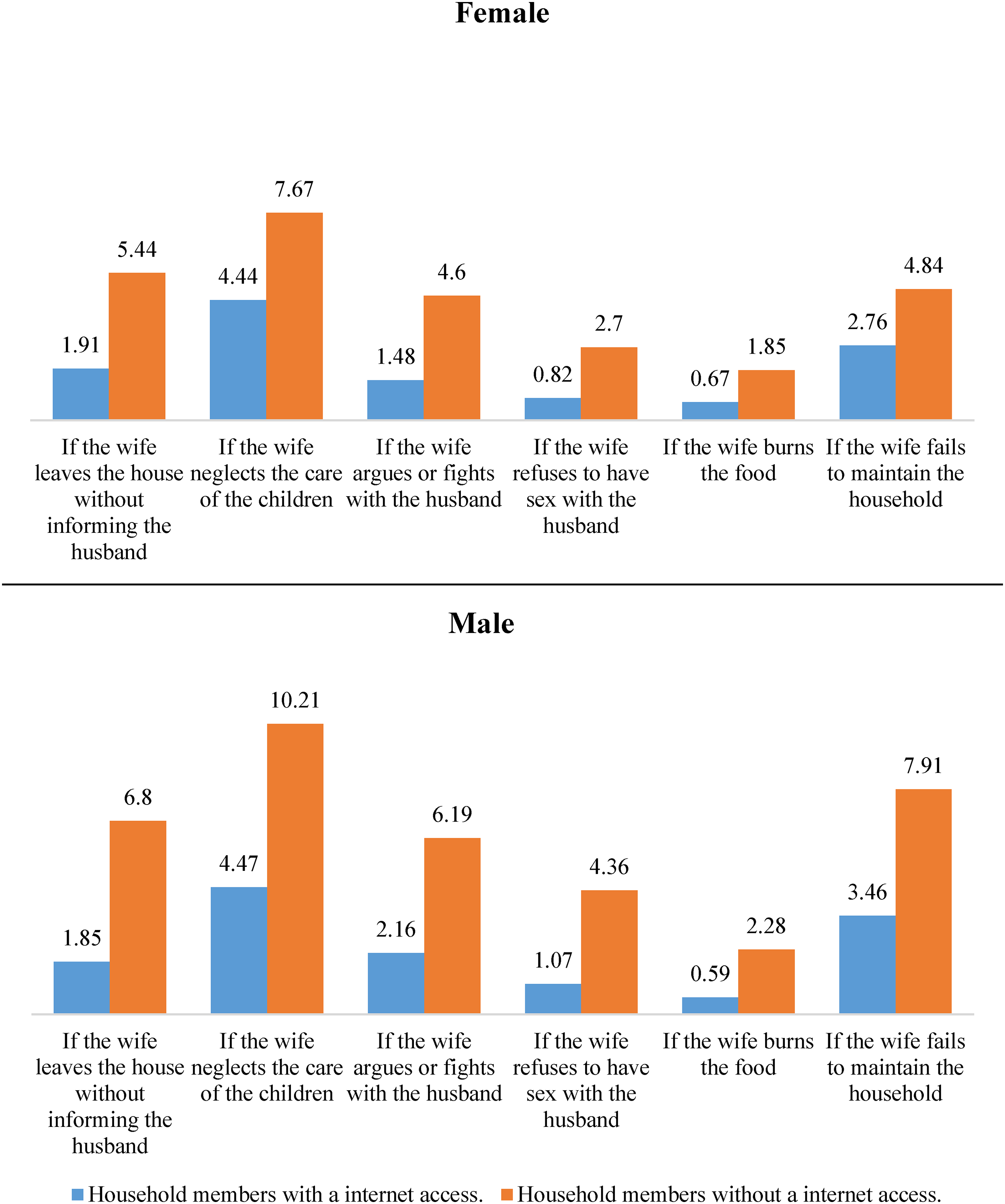
Percentage of households with/without internet access by attitudes toward intimate partner violence (classified by gender). Source: Analysis by the researchers, data from the Multiple Indicator Cluster Survey (MICS-2022).
However, the preliminary analysis presented here does not provide definitive conclusions, as it lacks a systematic statistical examination of relationships. The use of appropriate statistical methods would enable a more precise and accurate identification and explanation of the relationships between the variables. Moreover, it is necessary to control additional variables that may influence attitudes toward the use of violence in intimate relationships. The following section will address this limitation through the application of econometric modeling techniques.
Econometric Analysis
This section will employ binary probit regression with marginal effects to investigate the factors influencing access to technology and its impact on attitudes toward IPV among Thai women and men (across the six situations presented in Tables 1 and 2), while controlling for various socioeconomic factors.
Let IPVi denote the attitude toward IPV, where the value is 0 when the female (or male) in sample group i believes that violence should not be used, and 1 when they endorse its use under any of the following six scenarios: (1) if the wife leaves the house without informing the husband; (2) if the wife neglects the care of the children; (3) if the wife engages in an argument or fight with the husband; (4) if the wife refuses to engage in sexual relations with the husband; (5) if the wife burns the food; and (6) if the wife neglects household responsibilities.
The variable Xi represents a set of control variables, which include socioeconomic factors for sample group i, such as age, educational attainment, religious affiliation, residential area, region, and wealth index (a measure of wealth). The variable Techi specifically focuses on assessing access to technology for group i, considering three aspects: (1) whether any household member owns a computer or tablet; (2) whether any household member owns a mobile phone; and (3) whether the household has internet access. To address potential concerns regarding multicollinearity among these three technology indicators, we performed diagnostic tests and confirmed that while correlated, each variable captures a distinct dimension of digital inclusion—physical hardware versus active connectivity. The error term, εi, accounts for random deviations in the model.
According to the results from the binary probit regression for Thai women (Table 3) and for Thai men (Table 4), age does not significantly affect attitudes toward IPV (for both women and men). However, education level is a critical determinant of IPV attitudes. Both women and men with higher education levels are significantly less likely to endorse IPV. For example, women with at least a bachelor's degree are statistically less likely to condone IPV in situations where the wife neglects the children (decreased by 2.51%), neglects housework (decreased by 2.08%), or burns the food (decreased by 0.42%) compared to women with only primary/pre-primary education. Similarly, men with at least a bachelor's degree are less likely to condone IPV in these scenarios (reduced by 2.18%, 3.02%, and 0.46%, respectively) compared to men with only primary/pre-primary education. These findings are consistent with Adewale et al. (2021), who found that Ghanaian women with higher education levels were less likely to support IPV.
Binary Probit Regression Estimations for Females (Marginal Effect).
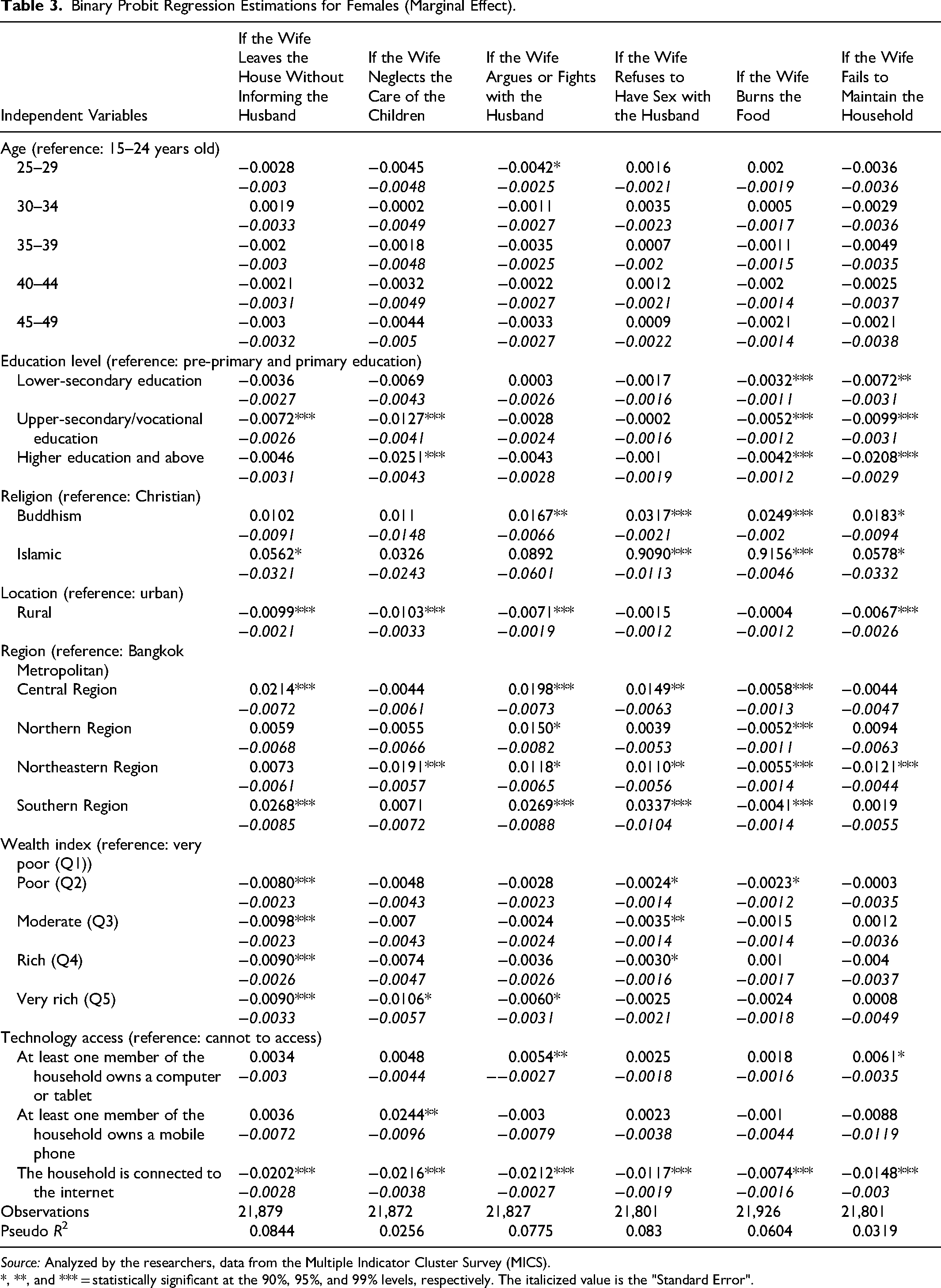
Source: Analyzed by the researchers, data from the Multiple Indicator Cluster Survey (MICS).
*, **, and *** = statistically significant at the 90%, 95%, and 99% levels, respectively. The italicized value is the "Standard Error".
Binary Probit Regression Estimations for Males (Marginal Effect).
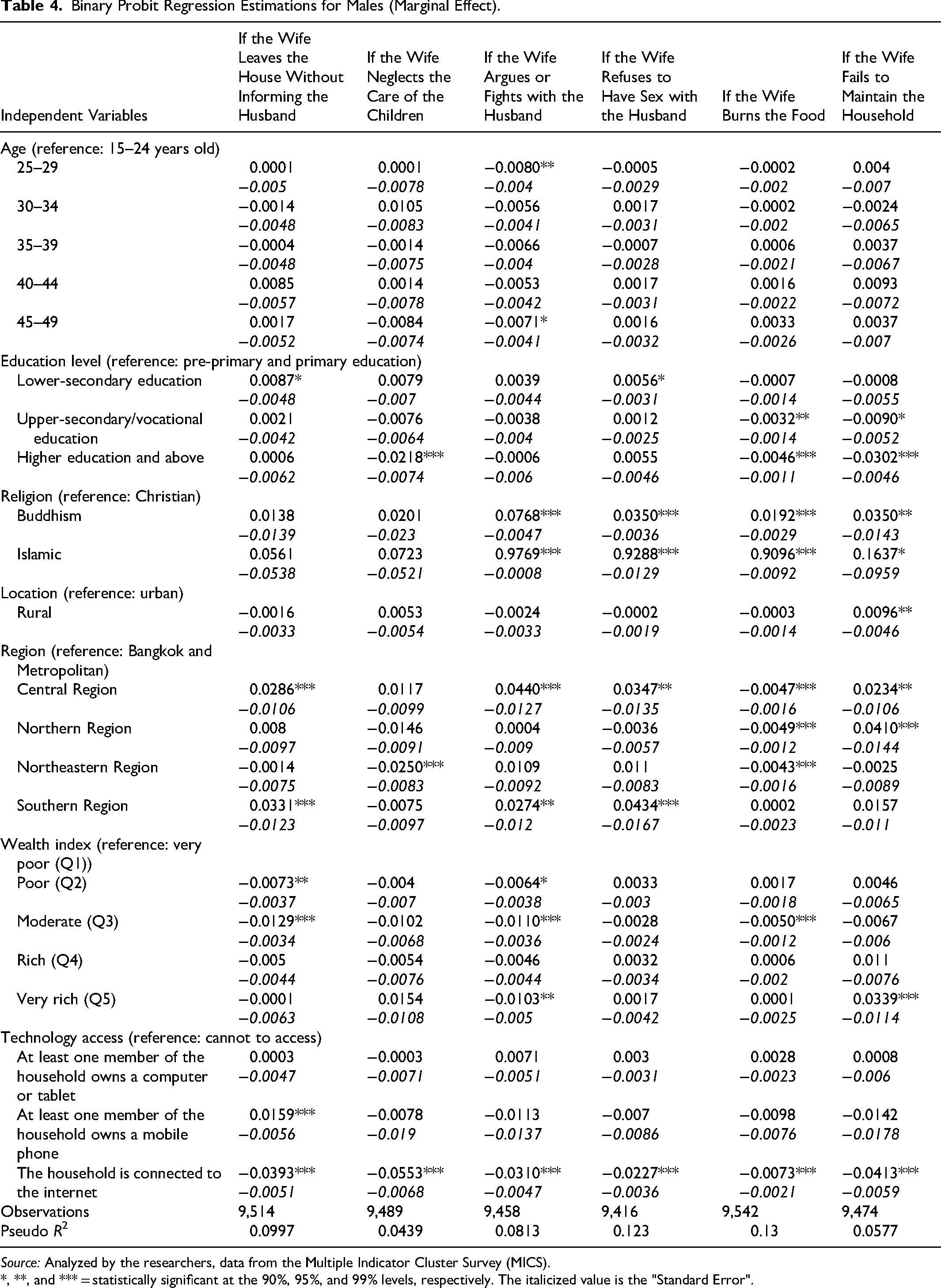
Source: Analyzed by the researchers, data from the Multiple Indicator Cluster Survey (MICS).
*, **, and *** = statistically significant at the 90%, 95%, and 99% levels, respectively. The italicized value is the "Standard Error".
Religious affiliation also shows a consistent pattern across both genders. Muslims in Thailand are more likely and strongly endorse IPV compared to adherents of other religions. Thai Muslim women are significantly more likely to condone IPV in cases where the wife burns the food (91.56%), refuses sex (90.9%), or neglects housework (5.78%), compared to the reference group (Christianity). Similarly, Thai Muslim men are significantly more likely to endorse IPV, especially when the wife argues (97.69%), refuses sex (92.88%), or burns the food (90.96%). This suggests that both Thai Muslim women and men share similar attitudes, likely influenced by Islamic cultural practices, where men historically possess greater authority over women (e.g., polygyny). This may reinforce gender norms that justify controlling behavior and decision-making within the household. These results align with the work of Alesina et al. (2021), who argue that cultural factors supporting patriarchy encourage male entitlement regarding family decisions, thus fostering greater acceptance of domestic violence.
At the regional level, women living in southern and central Thailand were significantly more likely to endorse IPV compared to those residing in the Bangkok metropolitan region. For instance, women in the southern region exhibited higher acceptance of IPV in cases where the wife refuses sex (3.37%), argues with the husband (2.69%), or leaves the house without informing the husband (2.68%), compared to women in the Bangkok metropolitan area. This trend was similarly observed among men in the southern region, who were more likely to condone IPV in these situations (increased by 4.34%, 3.31%, and 2.74%, respectively) compared to men in Bangkok. These regional differences may stem from distinct cultural and socioeconomic factors inherent to these areas.
Regarding economic status, measured by the wealth index, the results were somewhat inconclusive. Women in higher wealth groups were less likely to condone IPV, consistent with Adewale et al. (2021) who found that wealthier women were less likely to endorse IPV. However, among men, those in higher wealth groups were more likely to endorse IPV, particularly in cases where the wife neglects housework (increased by 3.39%) compared to men in the lowest wealth group. This discrepancy may arise from the fact that married couples often share similar income levels, and discrepancies in wealth between spouses could exacerbate power imbalances, potentially contributing to greater acceptance of IPV.
The primary variable of interest in this study, “access to technology,” showed mixed results across the six situational contexts analyzed. Households where any member owns a computer or tablet, or a mobile phone, were more likely to endorse IPV in certain scenarios (e.g., if the wife neglects children, for women, or if the wife leaves the house without informing the husband, for men), although these effects were statistically significant only in specific cases. Conversely, households with internet access consistently showed a significant reduction in IPV tolerance across all scenarios. Specifically, women and men in households with internet access were less likely to condone IPV (with reductions ranging from 0.74% to 2.16% for women and 0.73% to 5.53% for men), compared to households without internet access. These results lend empirical weight to the “social remittances” framework, suggesting that active internet connectivity serves as a conduit for the diffusion of egalitarian global norms. By exposing individuals to diverse perspectives and information from the international community, the internet effectively challenges traditional cultural justifications for domestic violence (Gillanders & McNamara, 2024). These findings are also consistent with research by Emezue et al. (2021) and Pesando (2022), which found that the use of digital platforms, mobile phone ownership, and internet access help reduce the risk of IPV and mitigate its negative mental health impacts, ultimately decreasing the prevalence of IPV in relationships.
Conclusion and Policy Recommendations
IPV refers to violence occurring within recognized partnerships or marriages. IPV is a global issue influenced by multiple factors at the individual, relational, community, and sociocultural levels. An understanding of “attitudes” toward IPV is a critical factor influencing the “acceptance or rejection of violent behavior” within a given society. These attitudes often reflect social norms, cultural values, and gendered power structures inherent in the broader societal context.
However, rapid technological advancements can impact IPV in both “positive” and “negative” ways. On the positive side, technology can serve as a tool to help victims access support more easily, such as through safety applications and online counseling services. On the negative side, technology can be used to control and intimidate victims, such as through location tracking or digital harassment.
The aim of this study is to examine the impact of access to technology on attitudes toward IPV, using data from Thai couples as a case study. Thailand, as an upper-middle-income country within Southeast Asia, continues to experience high rates of IPV. Moreover, the country exhibits significant disparities in technology access, particularly among women. These disparities may influence the occurrence of IPV, either positively or negatively, as previously discussed. Additionally, given the differing attitudes toward IPV between women and men, this study focuses on comparing their views to determine whether their attitudes toward IPV differ or align.
Using data from the 2022 MICS and analyzing it through a binary probit regression model, we found that households with Muslim religious affiliation, lower levels of education, and those residing in the southern and central regions of Thailand were significantly more likely to condone IPV. These findings were consistent across both female and male respondents.
In contrast, the results regarding socioeconomic status revealed divergent patterns between women and men. Wealthier women were less likely to support IPV in certain situations compared to women from poorer households. Conversely, wealthier men were more likely to endorse IPV, particularly in cases of neglecting housework, when compared to men from lower-income groups. These differences were statistically significant.
The primary variable of interest in this study, “access to technology,” showed mixed results. Households where any member owns a computer or tablet, or a mobile phone, were more likely to endorse IPV in certain scenarios (e.g., if the wife neglects children, for women, or if the wife leaves the house without informing the husband, for men), although these effects were statistically significant only in specific cases. Conversely, households with internet access consistently showed a significant reduction in IPV tolerance across all scenarios. This suggests that while hardware ownership may facilitate monitoring, active internet connectivity acts as a gateway for social remittances, allowing for the adoption of more egalitarian gender norms. This suggests that technology can be an effective tool for enabling victims to access assistance more readily.
Based on these findings, the study offers the following policy recommendations aimed at reducing the acceptance of IPV. The government should raise awareness through online and digital platforms or other local platforms popular within communities to disseminate information on the impact of domestic violence and promote new societal norms that support peaceful conflict resolution. Furthermore, digital literacy initiatives should focus not just on technical skills but on the healthy use of technology within relationships to prevent its use as a tool for partner control.
Furthermore, increasing access to technology and internet connectivity in rural communities is essential. For instance, providing free Wi-Fi in mosques, schools, or community centers could help bridge the digital divide. The government should also develop applications or websites that offer information on preventing IPV, alongside accessible channels for seeking help. These measures should focus on key target groups, including individuals with low education, residents of southern regions, Muslims, and those living in poverty.
Despite the strengths of this study, such as the use of a nationally representative dataset that enhances the reliability of the findings, some limitations should be acknowledged. First, the survey primarily targeted women and children, resulting in a larger female sample compared to male participants. Second, there was a considerable amount of missing data, particularly at the household level, such as information about the presence of additional wives, the number of parents or children living in the household, or the number of children. Additionally, the dataset lacks specific indicators for marital duration and formal marriage registration status for all participants, which may influence the power dynamics related to IPV attitudes. These missing data may have led to omitted variable bias in the model's estimation. Finally, the data used are cross-sectional, representing a snapshot at a single point in time. Given that attitudes toward IPV can change over time, future research could address this limitation by employing longitudinal data to examine how these attitudes evolve over time.
Footnotes
Acknowledgments
The authors gratefully acknowledge the National Statistical Office of Thailand and UNICEF for providing the MICS 2022 dataset.

Funding
The authors received no financial support for the research, authorship, and/or publication of this article.
Declaration of Conflicting Interests
The authors declared no potential conflicts of interest with respect to the research, authorship, and/or publication of this article.