







Abstract
Domestic violence in Anantnag, Jammu and Kashmir, driven by cultural norms and patriarchy, severely impacts women's well-being. This study explores survivor's experiences, help-seeking barriers, and suggests interventions. Semi-structured interviews with 16 Anantnag women were analyzed thematically. Analysis revealed five themes: fear, isolation, financial dependence, emotional abuse, and health impacts, with barriers including stigma, economic constraints, and limited awareness of support systems. Findings emphasize culturally sensitive support, policy reforms, and community efforts to empower survivors and address systemic issues. By prioritizing survivor voices and systemic change, the study informs strategies to mitigate domestic violence and foster resilience in marginalized communities.
Introduction
Violence against women refers to any verbal, physical, or sexual act that compromises their physical safety, self-worth, or trust. It is a widespread issue affecting women regardless of their age, race, ethnicity, or nationality (Campbell, 1995). The United Nations, in its 1993 Declaration on the Elimination of Violence Against Women, defines domestic violence as gender-based harm that can result in physical, sexual, or psychological suffering. This includes acts such as threats, coercion, or the deprivation of freedom, whether in public or private spaces. Such violence is not just a significant public health concern but also a fundamental violation of human rights (Joachim, 1999).
Domestic violence remains a global concern, deeply rooted in cultural and institutional systems that sustain gender inequality (Shafi & Jahangir, 2013). Whitworth (1994) identifies it as the physical, emotional, and financial abuse inflicted by a partner or family member. Physical violence includes acts of torture such as beatings or even more extreme measures like burning or killing (Bello, 2023). Emotional violence often manifests through verbal assaults, humiliation, and restrictions on personal freedom (Alifanovienė et al., 2013). Economic violence, on the other hand, is characterized by denying women the right to work, leaving them financially dependent and powerless. The multifaceted nature of domestic violence underscores the urgency of addressing it comprehensively. It not only affects individual women but also perpetuates cycles of abuse within families and communities, demanding a nuanced, systemic response to break these patterns of oppression.
Domestic violence affects nearly half of the global population, emphasizing its status as a widespread and critical issue (Peterson & Schroeder, 2017). Simply being a woman often renders individuals vulnerable to various forms of violence across the world, a problem deeply rooted in historical gender roles and the perception of women as property (Harvey & Gow, 2013). Societal norms and institutional biases perpetuate this violence (Shafi & Jahangir, 2013). While the issue received limited attention until the 1980s, women's groups began mobilizing during this period to highlight the physical, psychological, and economic abuse women endure (Dobash & Dobash, 2003). By the 1990s, increased awareness led to the establishment of legislation and financial support to combat gender violence, particularly in Europe and North America (Ellsberg & Heise, 2005; Gelles, 1997).
Domestic violence remains a widespread issue affecting millions globally. In the United States, around 1 in 4 women and 1 in 10 men experience severe intimate partner violence during their lifetime (Bell et al., 2024). To address this, the Violence Against Women Act (VAWA) provides critical legal protections and support services for survivors. Similarly, in the United Kingdom, 2.3 million adults faced domestic abuse in 2020, leading to the enactment of the Domestic Abuse Bill in 2021, which reinforced protections for survivors (ONS) (Houghton, 2024). In Australia, approximately 1 in 6 women and 1 in 16 men have experienced physical or sexual violence, prompting comprehensive national initiatives to tackle the crisis. South Africa also reports alarmingly high rates, with over a quarter of women subjected to intimate partner violence, despite the Domestic Violence Act, 1998, which aims to protect survivors.
In India, domestic violence is both pervasive and underreported, primarily due to cultural taboos, societal fear, and lack of awareness. According to the 2015–16 National Family Health Survey (NFHS), 29% of Indian women reported experiencing violence from their spouse, although the actual figures may be much higher given the underreporting (International Institute for Population Sciences & ICF, 2017). Contributing factors include dowry-related harassment, economic dependence, and deeply ingrained societal stigma (Krishnan et al., 2012). These systemic barriers highlight the urgent need for culturally sensitive interventions and robust legal frameworks to address the crisis effectively.
In Jammu and Kashmir, despite growing female education and financial independence, many women continue to face domestic violence, often tied to marital conflicts and dowry demands (Kaur, 2022). Police data reveals a rising trend, with 172 cases reported in Anantnag between 2011 and 2021 (Pandya, 2022). This suggests an urgent need for focused interventions to address domestic violence in the region and ensure systemic support for survivors.
Literature Review
Domestic Violence: A Global Overview
Domestic violence is globally recognized as one of the most pervasive forms of violence against women and a serious violation of human rights. Research across regions demonstrates that intimate partner violence is deeply rooted in structural gender inequalities, patriarchal norms, and unequal power relations within intimate relationships (Ellsberg & Heise, 2005; García-Moreno et al., 2006). Global scholarship has consistently shown that domestic violence extends beyond physical assault to include emotional abuse, economic deprivation, coercive control, and social isolation (Stark, 2007).
The consequences of domestic violence are multidimensional, affecting women's physical health, mental well-being, reproductive outcomes, and social functioning (Campbell, 2002; Coker et al., 2000). Beyond individual harm, domestic violence imposes broader societal and economic costs, reinforcing intergenerational cycles of inequality and trauma (Krug et al., 2002). Although many countries have enacted legislative reforms and developed institutional responses, underreporting remains widespread due to stigma, fear of retaliation, and normalization of abuse within private spaces (Nahar, 2024).
Domestic Violence in India
In India, domestic violence is shaped by deeply entrenched patriarchal social structures that institutionalize male dominance and female dependency (Koenig et al., 2006). Historical patterns of patrilineal inheritance, patrilocal residence, dowry practices, and rigid gender divisions of labor reinforce women's subordinate position within marriage and family systems (Ackerson & Subramanian, 2008). These structural arrangements normalize expectations of female obedience and endurance, thereby minimizing recognition of abuse as violence (Rasool, 2015).
According to the National Family Health Survey (NFHS-5, 2019–2021), approximately 29.3% of ever-married women aged 18 to 49 reported experiencing spousal violence, indicating that nearly one in three women in India face abuse within intimate relationships. While this represents a slight decline from earlier surveys, the persistence of high prevalence underscores the systemic nature of the problem.
Research in India has identified multiple intersecting risk factors, including alcohol use, economic stress, dowry-related disputes, and gendered socialization that valorizes male authority (Krishnan et al., 2012; Rao, 1997). However, implementation gaps, lack of awareness, and societal stigma continue to constrain women's help-seeking behaviors (Jeyaseelan et al., 2004).
Domestic Violence in Jammu and Kashmir: Contextual Specificities
In Jammu and Kashmir, domestic violence must be examined within a unique socio-cultural and political context characterized by prolonged conflict, conservative gender norms, and strong concerns regarding family honor. Patriarchal family structures remain dominant, and women's mobility, autonomy, and access to institutional support systems are often restricted (Shafi & Jahangir, 2013).
While educational attainment among women has increased in recent years, decision-making authority within households remains largely male-dominated. Social stigma, fear of social exclusion, and pressure to preserve marital relationships frequently discourage women from reporting abuse or seeking external support. District-level reports indicate rising registration of domestic violence cases; however, these figures likely represent only a fraction of actual incidents due to significant underreporting (Pandya, 2022).
Despite emerging scholarship on violence in Kashmir, qualitative, survivor-centered research exploring lived experiences and help-seeking barriers at the district level remains limited. In particular, there is insufficient empirical attention to how patriarchal norms intersect with socio-political instability and institutional constraints to shape women's responses to domestic violence in regions such as Anantnag.
In addition, the prolonged socio-political conflict in Jammu and Kashmir constitutes a critical structural context that shapes domestic violence dynamics in the region. Exposure to chronic insecurity, militarization, economic instability, and psychological stress has been shown to intensify household tensions and normalize various forms of violence within private spaces (Shafi & Jahangir, 2013). Studies from conflict-affected settings suggest that the externalization of violence into everyday life often reinforces patriarchal control, where men may reassert authority within the household in response to perceived loss of power in the public sphere (Duvvury & Nayak, 2003). Furthermore, restricted mobility, weakened institutional access, and heightened surveillance conditions can limit women's opportunities to seek support or escape abusive environments. In such contexts, domestic violence cannot be understood in isolation from the broader conflict ecology, as structural instability intersects with entrenched gender norms to sustain patterns of coercion, control, and silence.
Patriarchy and Structural Roots of Domestic Violence
Domestic violence in India and Jammu and Kashmir cannot be fully understood without examining the structural foundations of patriarchy. Patriarchy operates not merely as a cultural ideology but as a systemic arrangement that organizes property rights, inheritance systems, labor divisions, and family hierarchies in ways that privilege men and subordinate women (Dobash & Dobash, 2004).
In the Indian context, patrilocal residence patterns and economic dependence often isolate women within marital households, limiting their access to natal family support and financial resources (Ackerson & Subramanian, 2008). These structural constraints are further intensified in socio-politically sensitive regions, where instability may restrict institutional accessibility and reinforce conservative gender norms. Thus, domestic violence is sustained not only by individual perpetrators but also by broader social systems that normalize control, endurance, and silence.
Research Gap
Although domestic violence has been widely studied at global and national levels, important gaps remain in the existing literature, particularly in the context of Jammu and Kashmir. First, an empirical gap exists as most studies in India have primarily focused on measuring prevalence rates and identifying demographic correlates of domestic violence through large-scale surveys (Koenig et al., 2006). While such studies provide valuable statistical insights, they offer limited understanding of survivor's lived experiences, emotional negotiations, and everyday realities of abuse.
Second, a population-specific gap is evident, as existing research often treats women as a homogeneous category without adequately capturing the experiences of women in conflict-affected and socio-politically sensitive regions such as Jammu and Kashmir. Studies in the region remain limited and tend to overlook localized cultural norms, family structures, and institutional constraints that shape women's responses to domestic violence (Shafi & Jahangir, 2013).
Third, a methodological gap persists in the dominance of quantitative approaches, which often fail to capture the depth, complexity, and context-specific nature of domestic violence experiences. There is a lack of qualitative, survivor-centered research that foregrounds women's voices and explores how they interpret, negotiate, and respond to abuse within their socio-cultural environments (Ellsberg & Heise, 2005).
Finally, a theoretical gap exists in integrating structural perspectives such as patriarchy and coercive control with the unique socio-political realities of conflict-affected settings. Existing literature rarely examines how prolonged conflict, institutional limitations, and cultural expectations intersect with gendered power relations to shape domestic violence dynamics.
Addressing these gaps, the present study adopts a qualitative, survivor-centered approach to explore lived experiences of domestic violence in Anantnag district, thereby contributing context-specific and theoretically informed insights to the literature.
Theoretical Framework
This study is guided by feminist theory and Stark's (2007) concept of coercive control. Feminist theory conceptualizes domestic violence as a manifestation of structural gender inequality embedded within patriarchal social systems rather than as isolated interpersonal conflict (Dobash & Dobash, 2004). It emphasizes how normalized gender hierarchies legitimize male authority and female subordination within intimate relationships.
Stark's theory of coercive control further expands this understanding by highlighting nonphysical dimensions of abuse, including isolation, intimidation, emotional manipulation, and economic restriction. This framework enables analysis of how control operates subtly yet persistently, shaping women's agency and constraining their help-seeking behavior. Together, these perspectives guide the interpretation of survivor's narratives within broader structural and cultural contexts.
Research Questions and Study Contribution
Guided by this framework, the study addresses the following research questions:
How do women in Anantnag experience and interpret domestic violence within their marital relationships? What structural, cultural, and interpersonal barriers influence their help-seeking decisions? How do patriarchal norms shape women's perceptions of endurance, stigma, and agency?
Empirically, this study contributes context-specific qualitative evidence from a conflict-affected and culturally conservative region that remains underrepresented in domestic violence scholarship. Theoretically, it extends feminist and coercive control perspectives by demonstrating how structural patriarchy intersects with localized socio-political conditions to sustain abuse. By centering survivor's voices, the study advances understanding of domestic violence beyond prevalence statistics toward lived realities and systemic constraints.
Methodology (Revised and Strengthened Version)
Research Design
This study employed a qualitative research design using in-depth semi-structured individual interviews to explore women's lived experiences of domestic violence and the barriers they face in seeking help. A qualitative approach was particularly appropriate given the sensitive and stigmatized nature of domestic violence, where issues of privacy, confidentiality, and participant safety are paramount. In conservative socio-cultural settings such as Anantnag, discussing domestic violence in group settings or structured formats may expose participants to risk, social judgment, or emotional distress. Individual in-depth interviews provide a safer and more confidential environment, allowing survivors to share personal experiences in a controlled and supportive setting.
Furthermore, qualitative interviews enable flexibility, empathy, and responsiveness to participants’ emotional states, which is essential when engaging with trauma-related experiences. This approach not only facilitates deeper exploration of subjective meanings, fear, stigma, and dependency but also ensures that participants retain control over the pace and depth of disclosure. Thus, the choice of qualitative in-depth interviews was guided not only by the need for rich, contextual data but also by ethical considerations of safety, privacy, and participant well-being (Ellsberg & Heise, 2005).
Study Setting and Participants
The study was conducted in Anantnag district of Jammu and Kashmir. The selection of Anantnag district as the study setting was guided by both contextual and practical considerations. Anantnag represents a socio-culturally conservative and conflict-affected region within Jammu and Kashmir, where patriarchal norms, concerns of family honor, and restricted female mobility continue to shape women's lived experiences. The district has reported a steady incidence of domestic violence cases in recent years, indicating both the presence of the issue and increasing engagement with formal reporting mechanisms (Pandya, 2022). At the same time, the coexistence of traditional social structures and evolving institutional responses provides a critical context to examine how women negotiate abuse and help-seeking within layered constraints. Additionally, accessibility to participants through institutional channels such as the Women's Cell and local administrative offices facilitated ethically appropriate and safe recruitment of survivors for this study. The target population included women survivors of domestic violence residing in the district.
Inclusion Criteria
Participants were selected based on the following criteria:
Women aged 18 years and above Currently married, separated, or formerly married Self-identified experience of domestic violence by an intimate partner Willingness to voluntarily participate in the study Currently residing in Anantnag district
Sampling and Recruitment
A purposive sampling strategy was used to ensure inclusion of women with direct lived experience of domestic violence. Participants were identified through records available at the Women's Cell Anantnag and the SSP's Office Anantnag. Initial contact was facilitated through institutional gatekeepers. Women were approached individually and privately, informed about the purpose of the study, and invited to participate voluntarily.
Fifteen participants were interviewed. Data saturation was reached at the sixteenth interview, as no substantially new themes emerged thereafter.
Recruitment Considerations
Because participants were recruited through legal institutions, it is acknowledged that the sample may reflect women who had already sought formal assistance. As a result, the study may underrepresent survivors who have not approached institutional mechanisms. This recruitment pathway may have influenced findings related to help-seeking behavior. This limitation is acknowledged in interpreting the results.
Data Collection
Data were collected through in-depth semi-structured interviews guided by an interview guide, rather than a structured questionnaire. The interview guide consisted of open-ended questions focusing on:
Experiences and forms of abuse Perceived causes of violence Emotional and health impacts Barriers to help-seeking Coping strategies
The flexible nature of the interview guide allowed probing and clarification while ensuring consistency across participants.
Interviews were conducted face-to-face in safe and private locations between April and May 2024. Each interview lasted approximately 35 to 45 minutes. Field notes were maintained to capture nonverbal cues and contextual observations.
Ethical Considerations and Risk Mitigation
Ethical approval was obtained from the Department of Social Work, University of Kashmir. In addition to informed consent, confidentiality, and anonymity, specific ethical safeguards relevant to domestic violence research were implemented.
Interviews were conducted in private settings to ensure participant safety. No interviews were conducted in the presence of partners or family members. Participants were informed that they could decline to answer any question or withdraw at any stage without consequences.
Given the sensitive nature of domestic violence discussions, emotional distress was anticipated. The interviewer remained attentive to signs of discomfort and paused interviews when necessary. Participants were provided with information about available local support services, including counseling and legal aid, should they require assistance following the interview.
No identifying details were recorded, and pseudonyms were used in reporting narratives to ensure participant protection.
Data Analysis
Thematic analysis was conducted following Braun and Clarke's (2006) six-step framework: familiarization, coding, theme generation, theme review, theme definition, and reporting. Codes were derived both inductively from participant narratives and deductively informed by feminist and coercive control frameworks.
To enhance credibility, a second researcher independently reviewed a subset of transcripts and coding structures. Differences in coding were discussed and resolved through consensus to ensure analytical rigor.
Reflexivity and Positionality
Given the sensitive and gendered nature of domestic violence research, reflexivity was considered essential. The researchers acknowledge their positionality as social work scholars operating within the same socio-cultural context as participants. While shared cultural background facilitated rapport and trust, it also required conscious effort to avoid assumptions and interpretive bias.
Throughout the research process, reflexive notes were maintained to critically examine how researchers’ social location, gender perspectives, and professional training may have influenced data interpretation. This reflexive engagement strengthened transparency and analytical depth.
Results
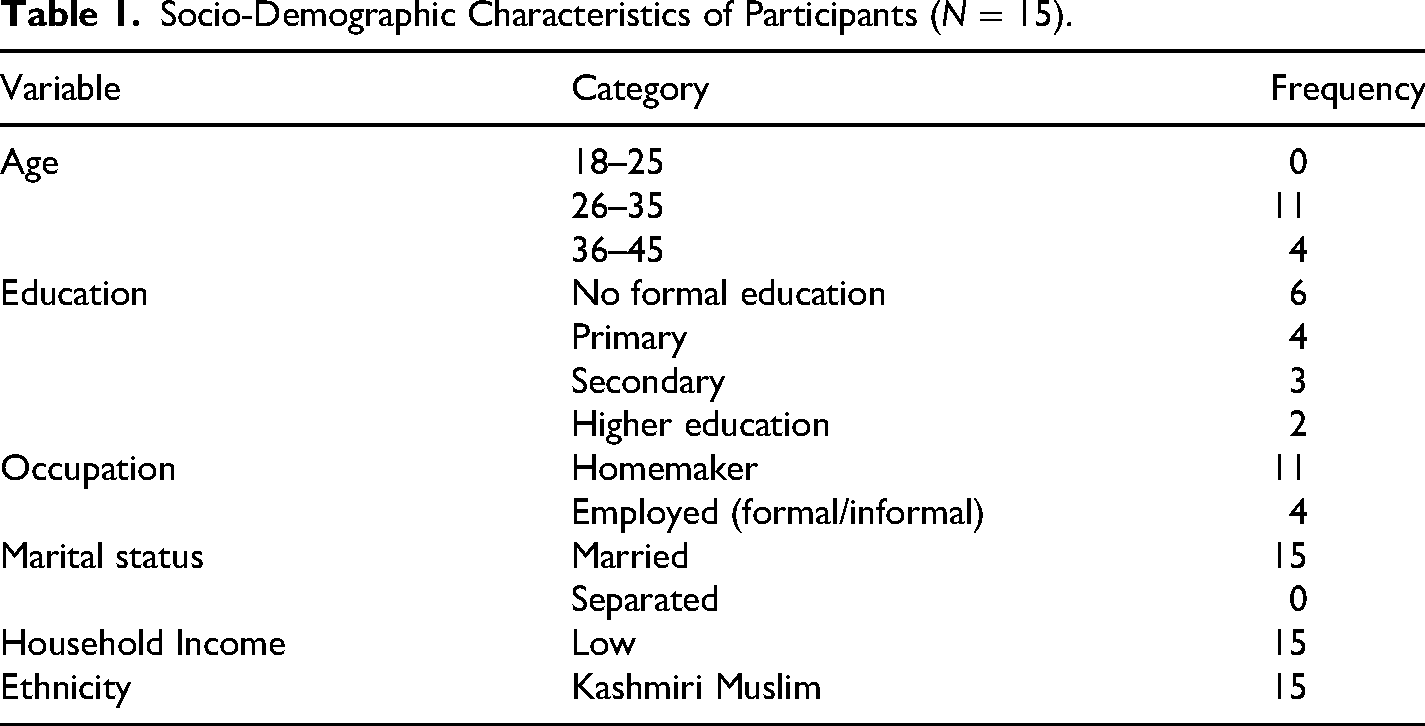
The experiences of women survivors of domestic violence are multifaceted and encompass various themes that highlight the unique challenges they face. The analysis identified several key themes (Table 1).
Socio-Demographic Characteristics of Participants (N = 15).
Fear and Intimidation
The theme of fear and intimidation emerges as a central factor in the lived experiences of women facing domestic violence. Women often live in constant fear of their abusive partners, facing intimidation tactics, threats, and manipulation. This fear can make it difficult for them to seek help or leave the abusive relationship. Out of 15 participants, 12 revealed that they faced fear and intimidation from their partners. Participant narrated “Whenever I think of leaving this home my husband reminds me of my children. He always says that he will remarry, and his second wife will not remain fair towards my children. Then, I drop my idea.”
My husband always threatened to harm himself if I ever tried to leave. He would say, ‘If you step out of this house, I’ll hang myself, and everyone will blame you for my death.’ This would terrify me. I stayed because I couldn’t bear the thought of being accused of causing harm to him, even though I knew I was suffering.
Participants in the study highlighted how the fear of retribution, particularly in the form of harm to themselves or their children and partner, perpetuates their sense of helplessness. For instance, one respondent shared that her husband frequently threatened to remarry and suggested that a second wife would be unfair to her children, compelling her to abandon thoughts of leaving the abusive household. Such scenarios reflect the complex interplay between emotional manipulation and cultural norms, where concerns about the welfare of children and societal judgment intensify the psychological burden on women.
The findings align with existing literature that underscores the role of fear and coercive control in sustaining abusive relationships and limiting women's help-seeking behavior (Dutton & Goodman, 2005; Stark, 2007). Fear not only inhibits women from seeking external support but also reinforces the cycle of abuse by diminishing their agency and autonomy. This theme highlights the urgent need for interventions that address the psychological impact of domestic violence, providing survivors with safe spaces, emotional support, and resources to mitigate the fear that underpins their victimization. Recognizing fear and intimidation as a primary barrier to help-seeking is critical for developing targeted strategies to empower women and break the cycle of abuse.
Isolation
The theme of isolation emerges as a significant strategy employed by abusive partners to exert control over survivors. Isolation involves systematically cutting off women from their support networks, including friends, family, and social connections, thereby increasing their dependence on the abuser. This deliberate tactic not only erodes the survivor's ability to seek help but also exacerbates feelings of loneliness, helplessness, and vulnerability. Isolation often serves as a precursor to other forms of abuse by ensuring that survivors remain confined within the abusive relationship without external avenues of support.
One participant shared her agony “My husband didn’t usually allow me often to visit my mother's place alone. He used to accompany me there and didn’t allow me to stay there more than a day. He used to monitor my phone and didn’t allow me to talk or chat with my friends.” “My husband stopped me from attending family functions or even stepping out of the house without his permission. He said that women have no business wandering outside, and if anyone saw me, they would talk badly about our family. I eventually stopped asking for permission because I knew the answer would always be no.”
The analysis of these narratives demonstrates how isolation serves as a dual mechanism of control and disempowerment. By severing ties with external networks, abusers ensure that survivors remain reliant on them for emotional, financial, and social needs. This tactic also limits the survivor's exposure to alternative perspectives or resources that could empower them to leave the abusive relationship. Addressing isolation as a key component of domestic violence requires multifaceted interventions, including awareness campaigns, community-based support systems, and accessible services that reach survivors even in secluded environments. It underscores the importance of creating safe spaces and resources that enable survivors to rebuild their social networks and regain autonomy.
Financial Dependence
Financial dependence is a critical theme in understanding the control dynamics within abusive relationships. Financial abuse involves tactics designed to limit a survivor's access to financial resources, effectively curbing their independence and ability to make autonomous decisions. This form of control exacerbates the survivor's vulnerability, as the lack of financial means often becomes a barrier to seeking medical help, legal support, or even basic necessities. The inability to access money reinforces the power imbalance, creating a cycle of dependence that is difficult for survivors to escape.
Participant shared that “I was never allowed to handle money; my husband managed everything. One night, I had severe stomach pain and a high fever but no money to visit a doctor. I begged him to come home, but he said he was busy. I endured the pain for six hours until he returned. The doctor later said the delay could have been dangerous. I felt completely powerless.” “I wanted to start a small tailoring business from home, but my husband refused to give me the money to buy a sewing machine. He said there was no need for me to work since he was earning enough. Over time, I stopped asking because every refusal made me feel more insignificant.”
The analysis of these narratives highlights how financial dependence operates as a tool of systemic disempowerment. By depriving survivors of the resources necessary to make independent choices, abusers create an environment where leaving the relationship seems impossible. The absence of financial autonomy not only limits access to external support but also diminishes the survivor's confidence and sense of self-worth. Addressing financial abuse requires targeted interventions, such as financial literacy programs, access to microloans, and economic empowerment initiatives. Providing survivors with the skills and resources to achieve financial independence is crucial in breaking the cycle of abuse and restoring their agency.
Emotional Abuse and Manipulation
Emotional abuse is a pervasive and insidious form of domestic violence, characterized by constant belittling, humiliation, and criticism. This form of abuse undermines the survivor's self-esteem and sense of worth, fostering a deep sense of dependence and powerlessness. Emotional abuse often occurs alongside other forms of violence, creating a toxic environment where survivors feel trapped and devalued. Out of 15 participants, 14 reported experiencing emotional abuse, not only from their partners but also from their in-laws, amplifying the emotional toll.
One participant shared her experience: “My husband constantly taunted me about my education. He would say things like, ‘You don’t know anything. I don’t even understand what I was thinking when I married you. I could have had someone better, but my mother insisted on you.”
Impact on Mental and Physical Health
Domestic violence exposes women to continuous physical harm, ranging from minor injuries to severe bodily trauma. Many women also endure chronic pain, gastrointestinal disorders, and reproductive health issues as a direct result of sustained abuse. Beyond physical injuries, the psychological consequences are equally, if not more, debilitating. Survivors often experience anxiety, depression, post-traumatic stress disorder (PTSD), and other mental health challenges that undermine their overall quality of life. Feelings of isolation, worthlessness, and hopelessness are common among survivors, making it difficult for them to seek help or envision a path to recovery.
The study participants unanimously emphasized the dual nature of the abuse they experienced, combining both physical violence and psychological harassment. Out of the 15 participants, every single one reported being subjected to mental and physical abuse within their domestic settings. Their accounts provide a vivid lens into the devastating impact of such violence.
One participant shared a distressing account of the constant humiliation she endures: “My in-laws continuously taunt me for not bringing dowry. Earlier, my husband used to support me, but now he too has resorted to mentally harassing me. I attempted suicide twice. I always feel alone and devastated. There seems to be no escape from this misery.”
Another participant narrated her ordeal: “My husband often beats me for trivial reasons, and his anger is unpredictable. Once, he struck me so hard that I had to be hospitalized. Beyond the physical pain, it's the constant fear and humiliation that hurt the most. I feel like I’m losing my sense of self. I can’t even confide in my family because they believe it's a private matter that I should endure.”
The narratives presented here illustrate the severe mental and physical toll of domestic violence on women. The interplay of physical harm and psychological abuse creates a vicious cycle that leaves survivors vulnerable and isolated. Addressing this issue requires a multidimensional approach, encompassing societal awareness, legal intervention, and robust support systems to help survivors heal and rebuild their lives. The voices of these women serve as a poignant reminder of the urgent need for comprehensive measures to combat domestic violence and its devastating effects on health and well-being.
Cultural and Societal Factors
Cultural and societal factors significantly influence women's experiences of domestic violence. Deeply entrenched cultural norms, rigid gender roles, traditional beliefs, and pervasive social stigma often prevent survivors from seeking help or leaving abusive relationships. Concerns about societal judgment, fear of ostracization, and cultural barriers create substantial obstacles for women trying to escape such environments. Financial dependence, lack of safe housing options, fear of retaliation, and concerns for children's well-being further compound these difficulties. Limited access to legal support and a lack of awareness about available resources also play critical roles in perpetuating abusive relationships.
All 15 participants in the study reported that these cultural and societal factors forced them to remain in abusive relationships. Their testimonies provide a stark insight into the systemic barriers that hinder women's ability to break free from cycles of violence.
One participant described her internal struggle: “I would have left everything here but then I think where could I go? What will people say? Who will take care of me? Who will accept me? What will happen to my children afterwards? These things stop me from leaving.”
Discussion
While the themes identified above are presented as distinct experiential categories, they are deeply embedded within the broader socio-political and institutional context of Jammu and Kashmir. Participants’ narratives reflect not only interpersonal dynamics but also structural constraints shaped by prolonged conflict, restricted mobility, and limited institutional accessibility. Fear, isolation, and dependence were often intensified by concerns about social surveillance, stigma, and lack of responsive support systems. Even when formal mechanisms such as police or women's cells were available, participants expressed hesitation due to fear of social repercussions, procedural complexities, and distrust in institutional processes. These findings suggest that domestic violence in this setting cannot be understood solely at the individual or household level but must be situated within a wider context of socio-political instability and institutional limitations that shape women's experiences and responses.
The findings of this study underscore that domestic violence in Anantnag is not confined to discrete acts of physical aggression but operates as a sustained system of control embedded within patriarchal gender structures. Although themes such as fear and intimidation, isolation, emotional abuse, financial dependence, and health consequences emerged as analytically distinct categories, they are deeply interconnected manifestations of structural gender inequality. Feminist scholarship has long conceptualized domestic violence as a mechanism through which patriarchal authority is maintained within intimate relationships rather than as isolated interpersonal conflict (Dobash & Dobash, 2004). The narratives in this study illustrate how control is exercised not only through physical violence but also through emotional degradation, economic restriction, and social isolation, aligning with Stark's (2007) concept of coercive control.
In addition to structural patriarchy, the findings must also be understood within the broader context of prolonged socio-political conflict in Jammu and Kashmir. Exposure to chronic insecurity, economic instability, and militarized environments may indirectly shape household dynamics by increasing stress, frustration, and the normalization of control and violence within private spaces. In such contexts, the household often becomes a site where broader power anxieties are negotiated, potentially reinforcing male authority and control. This suggests that domestic violence in conflict-affected regions cannot be examined in isolation from wider structural instability, as socio-political conditions intersect with gender norms to intensify women's vulnerability and constrain their help-seeking options.
The pervasive role of cultural norms in sustaining abuse was evident across themes. Isolation, for instance, was frequently justified through concerns about family honor and women's modesty, reflecting broader societal regulation of women's mobility. Financial dependence similarly cannot be reduced to household-level dynamics alone; it reflects structural patterns of economic marginalization, limited property ownership, and restricted employment opportunities for women (Ackerson & Subramanian, 2008). Emotional abuse and humiliation were often normalized within marital expectations that emphasize female obedience and endurance. These findings are consistent with research from other parts of India (Jeyaseelan et al., 2004; Koenig et al., 2006) and with global studies demonstrating that domestic violence is reinforced by entrenched gender hierarchies and socio-economic inequalities (García-Moreno et al., 2006).
Help-seeking behaviors were shaped by similar structural constraints. Fear of social stigma, concern for children's futures, and pressure to preserve marital relationships frequently outweighed considerations of personal safety. Such findings resonate with international evidence showing that women often delay or avoid formal reporting due to social expectations and limited institutional trust. The fact that participants were recruited through legal institutions suggests that even women who engage formal mechanisms face significant procedural, emotional, and social barriers. It is plausible that women who never approach such institutions encounter even greater constraints, indicating that silent endurance remains widespread.
All participants in this study identified as Kashmiri Muslim women, reflecting the demographic composition of the region. While ethnic variation was not present within the sample, the cultural homogeneity highlights how shared religious and social norms shape collective expectations regarding marriage, gender roles, and family reputation. In such contexts, domestic violence becomes intertwined with broader concerns about social belonging and communal identity, further complicating women's decisions to disclose abuse or exit relationships. The religious and cultural context of the predominantly Muslim population also plays a nuanced role in shaping women's experiences of domestic violence. While Islamic teachings emphasize dignity, mutual respect, and protection within marital relationships, the findings suggest that cultural interpretations and patriarchal practices often override these principles in everyday life. Participants’ narratives reflect how notions of family honor, modesty, and marital endurance are socially reinforced, leading women to internalize suffering as a normative expectation. At the same time, religion may also serve as a coping mechanism, providing emotional resilience and justification for patience in the face of adversity. This dual role highlights the importance of distinguishing between religious values and culturally embedded patriarchal interpretations when addressing domestic violence in such contexts.
Importantly, the findings suggest that interventions focusing solely on individual resilience or agency are insufficient when violence is structurally embedded. While counseling services, awareness programs, and survivor support groups are essential, broader structural reforms must accompany them. Strengthening enforcement of protective legislation, expanding women's access to independent income and property rights, improving gender-sensitive policing, and enhancing accountability within legal institutions are critical steps. Moreover, empowerment initiatives must be designed carefully to account for potential backlash effects, whereby shifts in women's autonomy may provoke intensified control or violence by partners (Jewkes et al., 2002). Gender-transformative approaches that engage men and challenge normative constructions of masculinity are therefore central to sustainable change.
By situating survivor's narratives within structural patriarchy rather than individual pathology, this study extends existing scholarship on domestic violence in India and contributes context-specific qualitative insights from a conflict-affected region that remains underrepresented in the literature. The findings demonstrate how localized socio-cultural norms, economic constraints, and institutional limitations converge to sustain abuse and constrain help-seeking, thereby underscoring the need for multi-level, structurally informed interventions.
Conclusion
Domestic violence in Anantnag emerges from this study as a deeply embedded structural phenomenon shaped by patriarchal norms, economic dependence, and socio-cultural expectations surrounding marriage and family honor. The findings demonstrate that survivors experience abuse not only in physical forms but also through sustained patterns of emotional manipulation, isolation, and financial control. These dynamics significantly constrain women's agency and shape their help-seeking decisions.
By centering survivor's lived experiences, this study highlights how localized cultural norms and institutional limitations intersect to sustain violence and silence. The findings contribute context-specific qualitative insights from a conflict-affected and socio-culturally conservative region, advancing understanding of domestic violence beyond prevalence statistics toward structural and experiential dimensions. Addressing domestic violence in such contexts requires comprehensive, multi-level approaches that confront systemic gender inequalities while strengthening institutional responsiveness and community accountability.
Limitations and Future Research
This study has several limitations that should be acknowledged. First, the research is geographically confined to Anantnag district of Jammu and Kashmir, which may limit generalizability to other regions with different socio-cultural dynamics. Second, the sample size is relatively small and consists of women who had accessed legal institutions, potentially underrepresenting survivors who have not engaged formal mechanisms. Third, given the sensitive nature of domestic violence, participants may have moderated disclosures due to stigma or emotional distress despite confidentiality safeguards.
Future research should expand to diverse districts and comparative regional contexts to examine how socio-political environments influence domestic violence dynamics. Mixed-methods approaches incorporating both qualitative and quantitative data could offer broader insights into prevalence patterns and structural determinants. Longitudinal studies would be particularly valuable in assessing long-term psychological, economic, and intergenerational impacts of domestic violence. Additionally, further research examining institutional responses, community-based interventions, and gender-transformative programs in conflict-affected regions would deepen understanding of effective structural strategies.
Footnotes

Ethics Approval and Consent to Participate
This study received ethical approval from the Institutional Ethics Committee of the Department of Social Work, University of Kashmir. All participants were fully informed about the objectives of the study and their rights, including the right to withdraw at any stage without consequence. Informed consent was obtained in writing and verbally before conducting any interviews.
Consent for Publication
All participants consented to the anonymized use of their data in academic publications. No identifiable personal information has been included in the manuscript.
Author Contributions
Sumaya Rashid did conceptualization, data collection, thematic analysis, initial manuscript drafting. Zahid Ahmad Lone did methodological guidance, critical revisions, supervision. Sarafraz Ahmad did literature review support, editorial feedback, formatting assistance. All authors reviewed and approved the final manuscript.
Funding
The authors disclosed receipt of the following financial support for the research, authorship, and/or publication of this article: The study was independently carried out as part of academic work at the University of Kashmir.
Declaration of Conflicting Interests
The authors declared no potential conflicts of interest with respect to the research, authorship, and/or publication of this article.