






Abstract
This study investigates the compounding impact of incivility and sexual harassment on job outcomes among 2,870 women and transgender, genderqueer, and nonbinary employees at a multi-campus university. Analyses produced three factors: incivility, gender harassment, and sexualized harassment. Nearly 90% of participants experienced any mistreatment. Employees with a disability and in a supervisory position were at greater risk of mistreatment. Mistreatment patterns by race/ethnicity support selective incivility as modern discrimination. Frequency of mistreatment helps explain some differences in outcomes across mistreatment groups. Findings suggest workplace harms are inherently linked, and incivility tolerance might enable more egregious discrimination in academia.
Over the past two decades, recognition of mistreatment in the workplace and its impact on employees has increased alongside employment protections for people with marginalized identities. Scholars have identified a range of power-based mistreatment behaviors commonly experienced, including sexual harassment and workplace incivility (Lim & Cortina, 2005). Sexual harassment continues to be widespread despite over thirty years of research, with prevalence studies indicating that one in every two women experiences some form of sexual harassment at work, including overt (e.g., quid pro quo), and covert forms (e.g., creating a hostile environment and gender harassment) (Fitzgerald & Cortina, 2018; Ilies et al., 2003). Workplace incivility behaviors are more subtle than sexual harassment, including rude, disrespectful, or ostracizing actions (Cortina et al., 2001), but workplace incivility is more pervasive than sexual harassment, particularly among people with marginalized identities, with one study estimating that 98% of workers have ever experienced workplace incivility (Cortina et al., 2013; Kabat-Farr et al., 2020; Porath & Pearson, 2013).
Most research examines sexual harassment and workplace incivility separately, despite evidence that exposure to multiple forms of harm is associated with worse psychological impacts (Green et al., 2000; Watson et al., 2016). Lim and Cortina (2005), however, examined the co-occurrence of sexual harassment and workplace incivility and found compounding negative impacts on employee well-being. They suggested that sexual harassment typically occurs in workplace environments that already tolerate uncivil behaviors. Lim and Cortina's (2005) study focused on employees working in U.S. federal courts, but research suggests that the power differentials inherent to academia might uniquely foster mistreatment with wide-ranging negative impacts (NASEM, 2018). These dynamics, which are distinct from those in other professional settings, make the academic environment a crucial context for further examination of workplace mistreatment.
The current study therefore sought to investigate whether this phenomenon of co-occurring, escalating workplace incivility and sexual harassment extends into the academic workplace. By investigating the differential impacts of these behaviors on academic employees with intersectional identities, this research updates and builds upon prior work (Lim & Cortina, 2005) and answers the National Academies of Science, Engineering, and Medicine's (NASEM) (2018) call to examine sexual harassment experiences of women in vulnerable groups. The current study's findings could inform interventions that address low-level uncivil behaviors through supportive infrastructure (Hickson et al., 2007) before they escalate to sexual harassment in order to foster more equitable academic workplaces.
Workplace Incivility and Sexual Harassment
Experts conceptualize sexual harassment as a construct made up of three distinct, related dimensions (Fitzgerald et al., 1995). Gender harassment, the most common, includes behaviors that convey “insulting, hostile, and degrading attitudes” about people of a particular gender, often women (Fitzgerald et al., 1995, p. 430). Unwanted sexual attention consists of “sexually inappropriate behaviors” that are not reciprocated or desired by the recipient (Lim & Cortina, 2005, p. 483). Sexual coercion is the most overt form of sexual harassment in which requirements to engage in sexual activity are made a condition of employment or promotion, also known as quid pro quo (Fitzgerald et al., 1995). Sexual harassment negatively impacts targets and organizational environments. For example, employees who experienced sexual harassment report greater job withdrawal intentions; lower job satisfaction; poorer social organizational climate; and lower organizational commitment (Muhonen, 2016; Vargas et al., 2020; Willness et al., 2007). Additionally, several studies have found that frequency of experiences might influence the impacts of sexual harassment (Buchanan et al., 2024; Langhout et al., 2005). Although experts classify gender harassment as less severe than other types of sexual harassment, several workplace studies found the highest prevalence of gender harassment (e.g., Leskinen et al., 2011; Vargas et al., 2020), and some research suggests that with high frequency, its adverse impacts are roughly equivalent or even stronger than that of infrequent, but more severe types of sexual harassment, like sexual coercion (Langhout et al., 2005; Leskinen et al., 2011; Sojo et al., 2016).
Andersson and Pearson (1999) defined workplace incivility to encompass all “low-intensity deviant behavior with ambiguous intent to harm the target” (p. 457) and theorized that it might be a precursor to more aggressive mistreatment behaviors in the workplace. Workplace incivility consists of psychological mistreatment that violates workplace norms of mutual respect, such as rude or disrespectful behaviors like interrupting or making jokes at someone's expense (Cortina et al., 2013). Workplace incivility negatively impacts organizations through increased job stress, lower job satisfaction, and increased turnover intentions (Cortina et al., 2001; Estes & Wang, 2008; Han et al., 2022). A meta-analysis of 20 years of workplace incivility research found other outcomes associated with workplace incivility, including greater negative affect and burnout; decreased trust in one's organization; less organizational support, supervisor support, coworker support, and organizational commitment (Han et al., 2022).
Since its conceptualization, researchers have posited that workplace incivility is a distinct, but adjacent construct to sexual harassment because both are types of power-based harm exhibited in the workplace (Lim & Cortina, 2005). Yet few studies have examined their co-occurrence and joint impact on workplace outcomes, even though research suggests that the co-occurrence of different traumas is common and more harmful than experiencing just one type of mistreatment (Buchanan & Fitzgerald, 2008; Green et al., 2000; Watson et al., 2016). Lim and Cortina (2005) conducted the only study examining a joint factor structure between sexual harassment and workplace incivility. They found support for a three-factor model, in which workplace incivility and sexualized harassment were moderately correlated, but gender harassment was strongly correlated with both incivility and sexualized harassment. While controlling for frequency of mistreatment, participants who experienced behaviors across all three factors reported worse job outcomes than participants who experienced workplace incivility and gender harassment, who in turn reported worse outcomes than participants who only experienced workplace incivility. Their study suggests that the complexity and variety of mistreatment behaviors might uniquely worsen job outcomes, however, the workplace incivility and sexual harassment scales they used have since undergone significant revisions (see Table 1), and no study has tested whether the interrelated factor structure of these distinct phenomena and their associations with job outcomes persist.
Comparison of Old Workplace Incivility and Sexual Harassment Measures to Their Updated Versions.
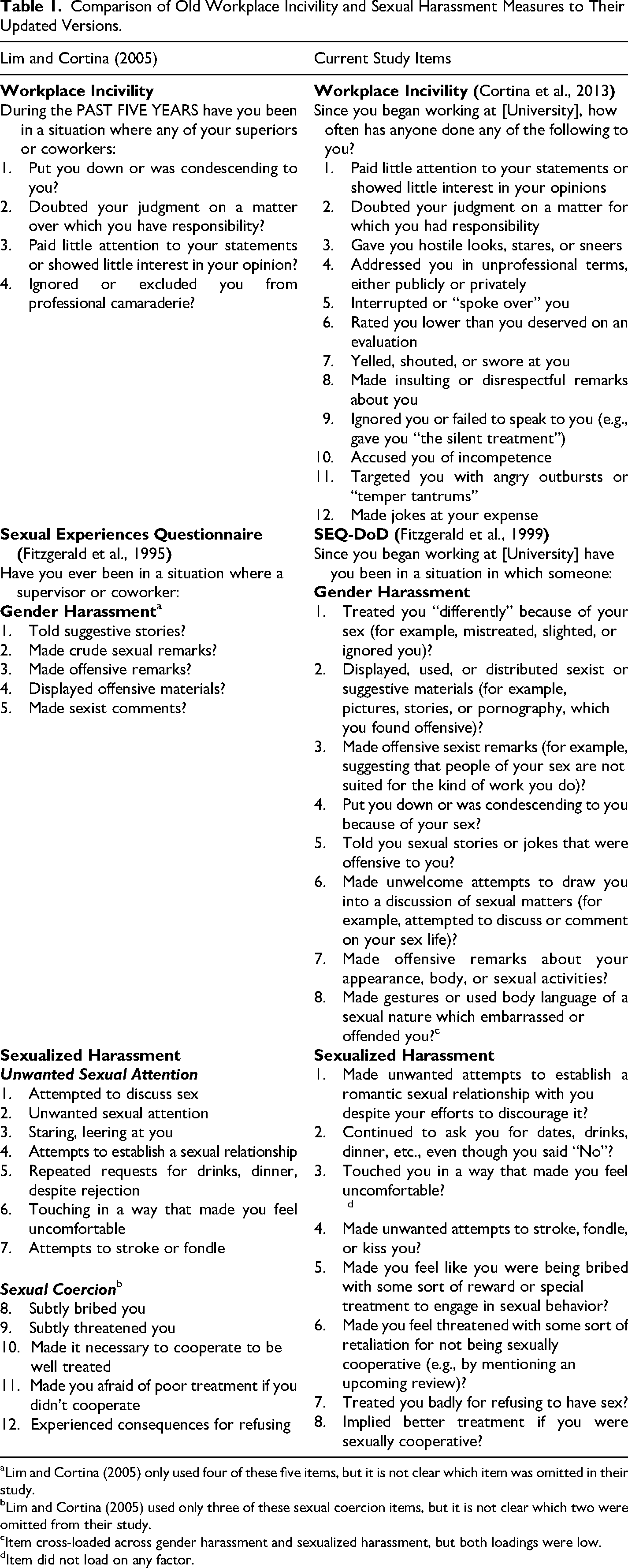
Lim and Cortina (2005) only used four of these five items, but it is not clear which item was omitted in their study.
Lim and Cortina (2005) used only three of these sexual coercion items, but it is not clear which two were omitted from their study.
Item cross-loaded across gender harassment and sexualized harassment, but both loadings were low.
Item did not load on any factor.
Harmful Behavior in the Academic Environment
Academia exhibits rates of harassment on par with or exceeding those in almost all other professional settings, making it a prime setting for study (Ilies et al., 2003). A report from NASEM (2018) found that more than 50% of women faculty and staff reported experiences with sexual harassment. Many scholars have identified specific cultural features within academia that foster sexual harassment and mistreatment, including institutional tolerance, competitive environments, power imbalances, and a hierarchical structure (Henning et al., 2017; NASEM, 2018; Täuber et al., 2022). In a systematic review, Lee (2022) asserted a conceptual model of hierarchical microaggressions in the higher education work environment, identifying the unique factors that shape mistreatment in academic work settings. Furthermore, a meta-analysis found that the positive relation between workplace incivility and turnover intentions was stronger for studies in academia than studies in other work environments (Namin et al., 2022). The power structure of academia might intensify the negative impacts of workplace incivility and sexual harassment (Täuber et al., 2022), making an investigation of their co-occurrence in this setting urgently necessary.
Incivility and Intersectional Identities
Individuals with multiple marginalized identities experience sexual harassment and workplace incivility more frequently and with worse outcomes, such as greater turnover intentions (Berdahl & Moore, 2006; Cortina, 2008; Cortina et al., 2013; Jagsi et al., 2016; Kabat-Farr et al., 2020). In 2008, Cortina coined the term selective incivility to capture the way that workplace incivility disproportionately targets people with marginalized identities (Cortina, 2008). For workers who have multiple marginalized identities, such as women of color, experiences of racism and sexism in the workplace are not just additive through double jeopardy, but are interactive, producing a unique experience of concomitant trauma with negative work outcomes and psychological impacts (Buchanan & Fitzgerald, 2008; Buchanan et al., 2018).
This phenomenon also extends to employees with other marginalized identities (Fitzgerald & Cortina, 2018; Vargas et al., 2021). The Transgender Discrimination Survey found that 90% of respondents experienced harassment or mistreatment in their workplace, and Black, Latino/a, American Indian, and multiracial transgender respondents reported higher prevalence of workplace mistreatment behaviors, such as discrimination in hiring and being denied promotions, compared to their White transgender counterparts (Grant et al., 2011). In her systematic review, Lee (2022) found that academic employees with marginalized identities, including those with disabilities, women, LGBTQ, and employees of color, were particularly vulnerable to hierarchical microaggressions, regardless of position. Similarly, prior research has suggested that women in positions of power are more likely to experience harassing behaviors, because their authority challenges gender norms, leading to more harassment intended to put women back in their place (McLaughlin et al., 2012).
Individuals with disabilities also face significantly higher rates of workplace mistreatment, including harassment and discrimination. In the 2014 Canadian Public Service Employee Survey, 37% of employees with disabilities reported harassment, compared to 17.1% of employees without disabilities (Jones et al., 2018). The impact of disability on workplace harassment and discrimination is further compounded by gender and other marginalized identities (Dali, 2018); females with mental or psychological disabilities report the highest rates of physical workplace harassment (Lapshina & Grabarski, 2023).
These patterns of selective incivility might belie a mechanism of the “leaky pipeline” in academia that replicates societal inequities, reinforces White supremacist patriarchy, and makes multiply marginalized faculty more likely to leave the academy (Liu et al., 2019). Investigating the associations between workplace incivility, sexual harassment, and job outcomes across race/ethnicity, disability, and job roles in academia therefore could be pivotal to addressing academia's leaky pipeline and creating more equitable academic workplaces (Liu et al., 2019). If Lim and Cortina's (2005) assertion that sexual harassment takes place against a backdrop of uncivil work environments is also true in academia, understanding the nuances of workplace mistreatment could help preventionists stop the behaviors from escalating. The current study's findings could therefore inform workplace interventions to address inequities and foster healthier academic work environments.
The Current Study
The current study sought to extend Lim and Cortina's (2005) study to answer the following research questions: (a) Does Lim and Cortina's (2005) interrelated three-factor structure of incivility, gender harassment, and sexualized harassment persist with the updated versions of workplace incivility and sexual harassment scales in an academic work environment? (b) How do co-occurring experiences of workplace incivility and sexual harassment in academia differ by identity characteristics, including age, disability status, race/ethnicity, and sexual orientation in a sample of cisgender women and transgender, genderqueer, and nonbinary (TGQN) individuals? (c) Are co-occurring experiences of workplace incivility and sexual harassment associated with staff and faculty's job satisfaction, sense of community, and job withdrawal intentions? In answering these research questions, the current study builds upon NASEM's (2018) work to deepen understanding of how overlapping forms of mistreatment might worsen pre-existing inequities in academia.
Method
Procedure
We conducted a campus climate employee survey over 6 weeks at a large, multi-campus mid-Atlantic university in the Fall 2022 semester. We based the survey tool on the validated Administrator Researcher Campus Climate Collaborative's (ARC3) Campus Climate Survey Instrument (Swartout et al., 2019) and included adapted scales from the Know More Campus Climate Survey administered at Michigan State University (MSU) (Lindquist et al., 2019). The survey tool asked participants about their demographics, experiences of workplace incivility, sexual harassment, and reporting to the university. Eligible participants entered raffles for gift cards of varying values as an incentive. For more information about the survey tool or analytic procedures, please contact the authors.
Sample
The analytic sample, part of a larger climate survey with a 17.1% response rate, included 2,870 women and TGQN faculty and staff. The present investigation was limited to cisgender women and TGQN individuals because Lim and Cortina (2005) restricted their sample to women. Moreover, experiences of incivility and sexual harassment likely overlap to a greater degree for cisgender women and TGQN individuals relative to cisgender men, resulting in possible differences in the factor structure of scales. We also excluded individuals who declined to report their gender, did not complete at least the survey's first section, or provided unusual or inconsistent responses in open-text fields (287 participants excluded).
The analytic sample consisted of 73.8% staff and 26.2% faculty. Most participants (97.6%) identified as cisgender women, were 30 to 60 years of age (72.2%), and had worked at the university for four or more years (73.9%). A total of 59.4% of participants identified as White/Caucasian, and 81.6% identified as straight/heterosexual. Participants who were White, women, and employed in staff positions were overrepresented in the sample relative to their population share.
Measures
Frequency of Mistreatment
We created an average score across all workplace incivility and sexual harassment items to indicate frequency of mistreatment, which ranged from 0 to 4. This is consistent with Lim and Cortina's (2005) approach to incorporate frequency into the analysis as a covariate.
Job Satisfaction
We used a validated single-item measure of job satisfaction. Participants rated their agreement with the statement, “Overall, I am satisfied with my job” on a seven-point scale from Strongly Disagree (1) to Strongly Agree (7) (Fisher et al., 2016).
Sense of Community
We measured sense of community with an adapted question that asked, “How would you describe your sense of belonging to your campus?” with a four-point response option scale from Very Weak (1) to Very Strong (4) (Schellenberg et al., 2018).
Intent to Leave
One item assessed intent to leave: “Have you ever seriously considered leaving your current job at [University]?” (1 = Yes; 0 = No) (Rankin et al., 2010).
Demographics Measures
Age
Participants indicated their age by selecting from the following options: 23 or younger, 24 to 29, 30 to 39, 40 to 49, 50 to 59, 60 and older. Due to small cell counts, 23 or younger and 24 to 29 were grouped together, resulting in a variable with five categories.
Gender
We assessed gender identity with a two-part question: “How do you describe your gender?” and “Do you currently identify as transgender, genderqueer, or nonbinary?” Any participants who indicated transgender, nonbinary, or genderqueer on either of the two questions were grouped with those who selected agender, genderfluid, or not listed/other (in this study, we refer to this group using the acronym TGQN). We classified people who selected No to the second question and Woman to the first question as cisgender women.
Sexual Orientation
The survey asked participants, “How do you describe your sexual orientation?” and presented the options, asexual, bisexual, gay, lesbian, pansexual, queer, straight/heterosexual, I describe myself in some other way, and prefer not to answer. Participants who identified as asexual, bisexual, gay, lesbian, pansexual, or queer were grouped together, resulting in a two-category variable (0 = Straight/Heterosexual; 1 = LGBQA+).
Race/Ethnicity
A single item assessed race/ethnicity based on recommendations from the 2015 Census National Content Test: Race and Ethnicity Report (Jones & Bentley, 2017). The survey asked, “How do you describe your race/ethnicity? Please check all that apply.” The question produced a five-category variable (Asian/Asian American, Black/African American; Hispanic or Latinx; multiracial/another; White/Caucasian).
Disability
A single item assessed disability, adapted from the MSU Know More Campus Climate Survey (Lindquist et al., 2019): “Do you have a diagnosed or documented disability (vision impairment, deaf or hard of hearing, mobility impairment, learning disability, psychological/mental health disability, autism spectrum disorder, developmental disability, or another disability)” (1 = Yes; 0 = No).
Employment-Related Variables
Participants reported their years of employment and supervisor status. Institutional Research provided participants’ roles at the university.
Results
Exploratory Factor Analysis
To assess the underlying factor structure of workplace incivility and sexual harassment together, we first performed an exploratory factor analysis (EFA) and a confirmatory factor analysis (CFA). Although we expected a similar factor structure to Lim and Cortina's (2005), the substantial revisions of both scales might have changed the factor structure of the scales when measured together (see Table 1). Prior research has used EFA for similar investigations into an underlying factor structure across multiple validated scales (e.g., Pham et al., 2024). Additionally, Lim and Cortina (2005) abbreviated the workplace incivility and sexual harassment scales without noting in their paper which specific items they cut from the original, validated scales. In order to minimize researcher bias in abbreviating validated scales or assigning items to expected factors arbitrarily, we first ran an EFA to empirically identify cross-loading items (Worthington & Whittaker, 2006). We split the sample with the Solomon method (Lorenzo-Seva, 2021), implemented in SPSS, which performs component analyses and computes weighted scores for each individual before splitting the sample to create subsamples with comparable levels of shared variance. We performed an EFA on the first subsample. We imputed missing data (<10% of observations for any given item on the sexual harassment and workplace incivility measures) using the EM algorithm in SPSS version 29, and used the resulting matrix of EM correlations as input for the EFA (Weaver & Maxwell, 2014).
The pattern of missing data was consistent with survey drop-off; there was less missing for sexual harassment and workplace incivility items, at the beginning of the survey, but more for job outcomes (∼ 13%), collected at the end of the survey. Drop-off was also related to several demographic variables (e.g., race/ethnicity, age); thus, the data were not considered missing completely at random. Accordingly, we addressed the missing data via multiple imputations (m = 20) performed using the mi chained function in Stata.
The Kaiser–Meyer–Olkin Measure of Sampling Adequacy was .91, and Bartlett's test of sphericity was significant (p < .001), indicating suitable data for factor analysis. Exploratory principal axis factoring (PAF) analyses with Promax rotation suggested three factors that accounted for 52.9% of the total variance. All workplace incivility items loaded on the first factor, incivility, which explained 30.8% of the variance. SEQ-DoD items split across the second and third factors, with unwanted sexual attention and sexual coercion items loading on the second factor (15.4%), sexualized harassment, and the remaining items loading on the third factor (6.7%), gender harassment. We named the factors to match Lim and Cortina's (2005) because the factor structures closely align. Incivility and gender harassment were correlated (.49), as were gender harassment and sexualized harassment (.44), but incivility and sexualized harassment were not highly correlated (.15), indicating a distinction between workplace incivility and more severe forms of sexual harassment. One item did not load on any factor (<.30, “Touched you in a way that made you feel uncomfortable”), and one item cross-loaded across gender harassment and sexualized harassment, but both loadings were low (<.40, “Made gestures or used body language of a sexual nature which embarrassed or offended you”). These items were not retained in the CFA; however, as a robustness check we re-estimated the outcome models including these items, and the results were substantively similar to those reported here.
Confirmatory Factor Analysis
Following Lim and Cortina (2005), we constructed three manifest indicators for each construct by averaging items together. We determined item parcels using a combination of balancing and facet representativeness methods (Little et al., 2022), in which item-level CFA models were fit to the data, and parcels were constructed by pairing the highest and lowest loading items, and pairing items from the same subscale. CFA then tested the model suggested by the EFA.
The three-factor CFA model had a comparable fit to Lim and Cortina's (2005), χ2(24, N = 1435) = 155.97, p < .001. Additional model fit indices included NFI = .98, NNFI = .97, CFI = .98, RMSEA = .06 (Figure 1). Gender harassment was correlated with incivility (r = .60) and sexualized harassment (r = .43). The correlation between incivility and sexualized harassment, in comparison, was less pronounced (r = .20).
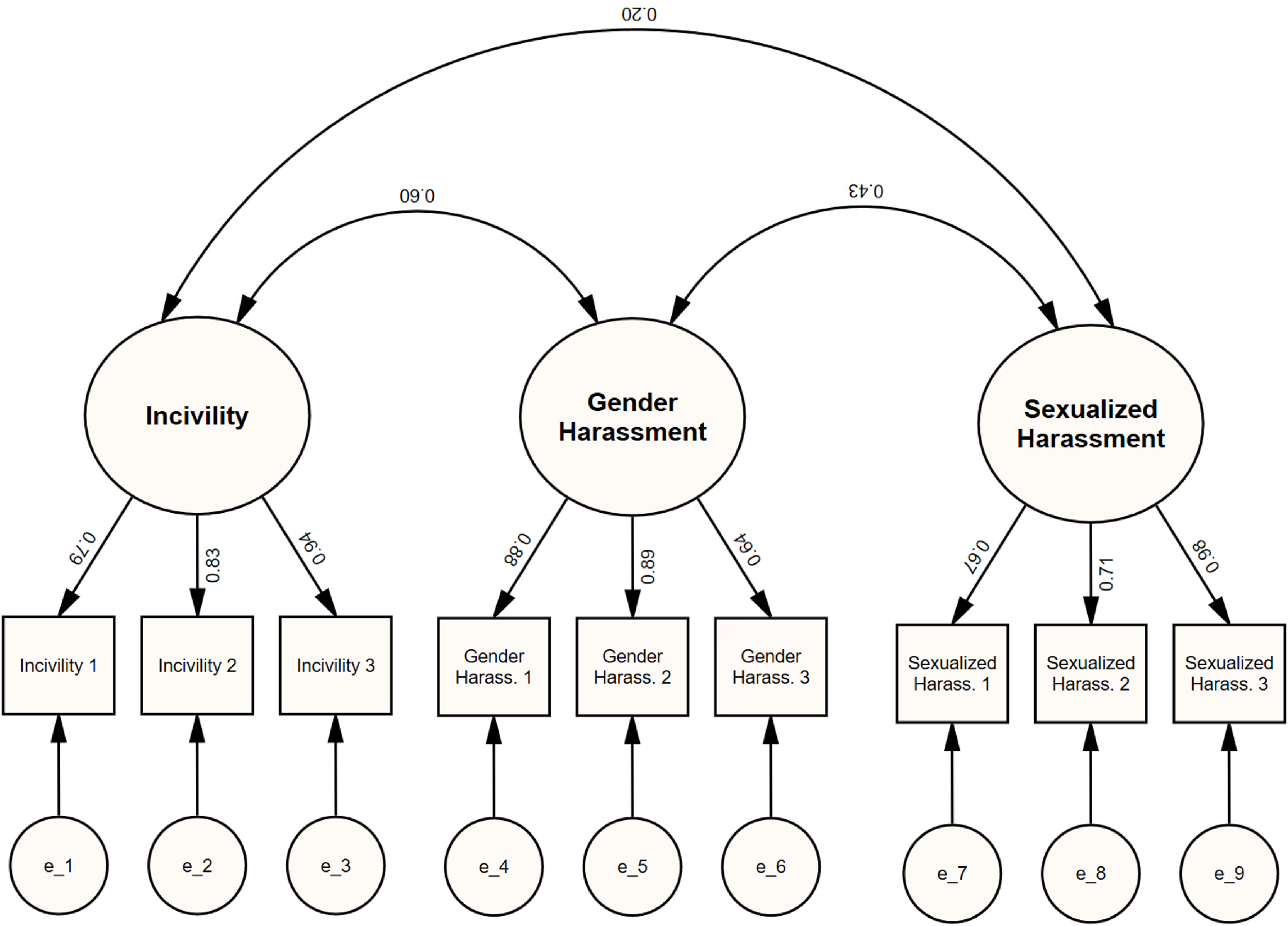
Three-factor model of workplace mistreatment. Note. Three-factor model with standardized factor loadings and path coefficients.
Prevalence of Mistreatment
A large proportion of the sample reported experiencing only incivility (41.7%, 95% CI [39.8, 43.5]). Very few respondents experienced gender harassment or sexualized harassment alone (<1%). Consistent with Lim and Cortina (2005), most respondents experienced more than one form of mistreatment (46.7%, 95% CI [44.8, 48.5]), with most experiencing incivility and gender harassment (41.6%, 95% CI [39.7, 43.5], followed by all three types (4.5%, 95% CI [3.7, 5.3]). Very few respondents reported other combinations of mistreatment (1.0%, 95% CI [0.6, 1.4]). The remainder of the sample experienced no mistreatment (11.3%, 95% CI [10.1, 12.4]).
We categorized respondents into four groups: (a) experienced no mistreatment; (b) experienced incivility but neither form of sexual harassment; (c) experienced incivility and gender harassment; and (d) experienced incivility, gender harassment, and sexualized harassment. Differing from Lim and Cortina (2005), to maintain a consistent n across imputed datasets, we grouped the few who experienced other combinations of mistreatment with the latter category. However, we also performed analyses without these individuals for comparison purposes.
Differences in Mistreatment Experiences by Identity
A multinomial logistic regression analysis assessed differences in mistreatment by identity characteristics. All results, presented in Table 2, are in relation to the omitted category, experiencing no mistreatment. Results are reported as relative risk ratios (RRRs), where values greater than 1 indicate a higher relative risk of experiencing a given type of mistreatment compared to no mistreatment, and values less than 1 indicate a lower relative risk. RRRs for categorical predictors represent comparisons with the stated reference group, and can be interpreted in percentage terms (e.g., an RRR of 1.70 corresponds to a 70% higher relative risk).
Multinomial Logistic Regression—Mistreatment Experiences.
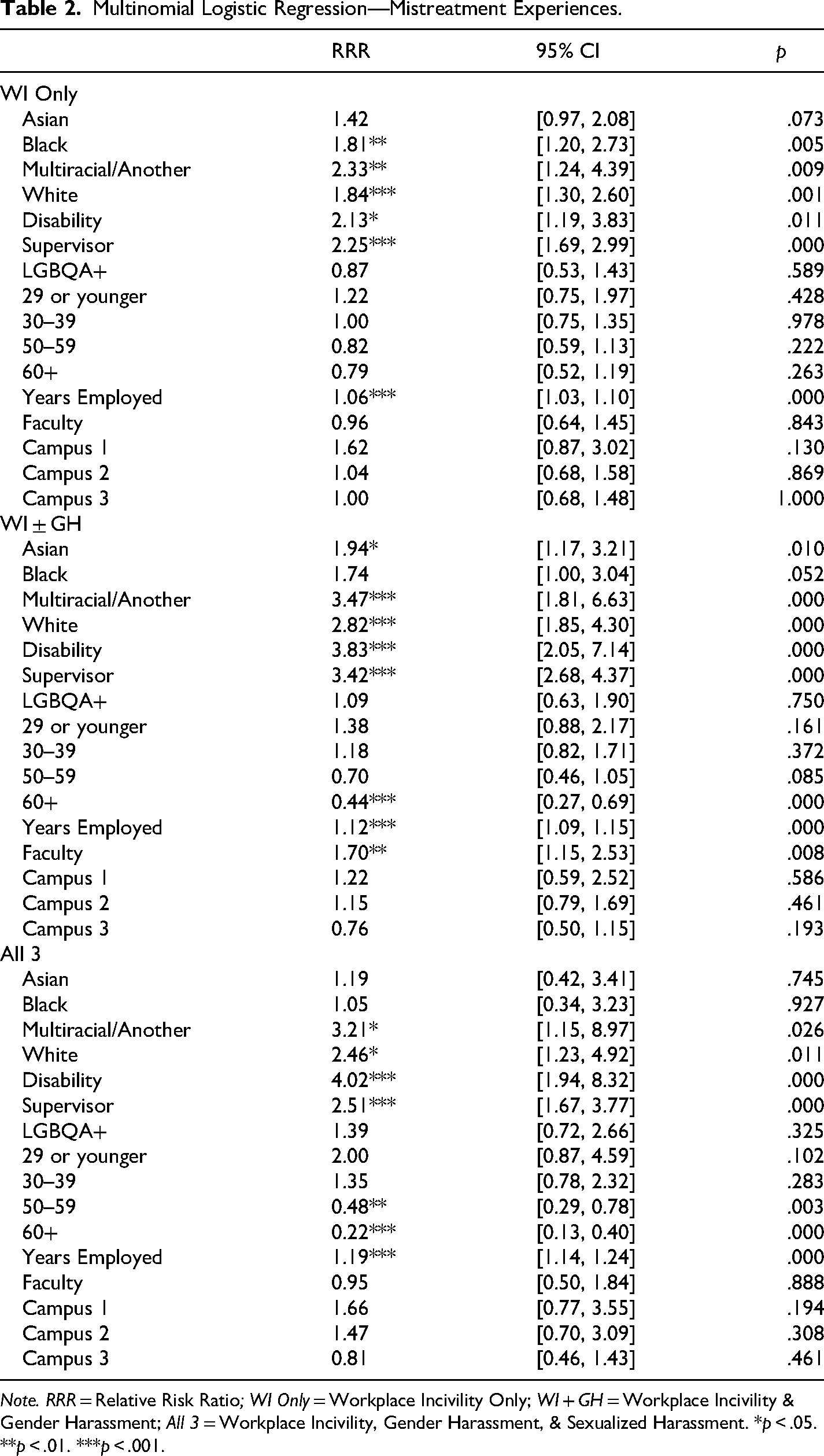
Note. RRR = Relative Risk Ratio; WI Only = Workplace Incivility Only; WI + GH = Workplace Incivility & Gender Harassment; All 3 = Workplace Incivility, Gender Harassment, & Sexualized Harassment. *p < .05. **p < .01. ***p < .001.
Incivility vs. No Mistreatment
Years of employment (RRR: 1.06, p < .001), disability status (RRR: 2.13, p = .011), and supervisory status (RRR: 2.25, p < .001) were associated with increased risks of experiencing incivility only versus no mistreatment. Relative to Hispanic/Latinx respondents, Black/African American respondents (RRR: 1.81, p = .005), respondents classified as multiracial/another (RRR: 2.33, p = .009), and White respondents (RRR: 1.84, p = .001) were at higher risk of experiencing incivility only.
Incivility and Gender Harassment vs. No Mistreatment
Longer employment (RRR: 1.12, p < .001), having a disability (RRR: 3.83, p < .001), and holding a supervisory position (RRR: 3.42, p < .001) were associated with increased risk of experiencing incivility and gender harassment versus no mistreatment. The risk of experiencing incivility and gender harassment was 70% higher for faculty members relative to staff (RR: 1.70, p = .008). Respondents who were 60 or over were at decreased risk of experiencing incivility and gender harassment relative to those 40 to 49 years old (RRR: 0.44, p < .001). Risk of experiencing incivility and gender harassment was higher for respondents who were Asian (RRR: 1.94, p = .010), respondents classified as multiracial/another (RRR: 3.47, p < .001), and White (RRR: 2.82, p < .001), relative to respondents who were Hispanic/Latinx.
Incivility, Gender Harassment, and Sexualized Harassment vs. No Mistreatment
Respondents who had worked at the institution longer (RRR: 1.19, p < .001), have a disability (RRR: 4.02, p < .001), and were supervisors (RRR: 2.51, p < .001) had greater risk of experiencing all three forms of mistreatment, as were White respondents (RRR: 2.46, p = .011) and those classified as multiracial/another (RRR: 3.21, p = .026), relative to Hispanic/Latinx respondents. Individuals 50–59 (RRR: 0.48, p = .003) and 60 or over (RRR: 0.22, p < .001) had lower risk of experiencing all three forms of mistreatment relative to those 40–49.
Altogether, more years of employment, having a disability, and holding a supervisory position put employees at greater risk of mistreatment within all three mistreatment groups. We expand upon the differences by race/ethnicity in the following section. There were no significant differences by sexual orientation.
Race/Ethnicity Comparisons Between Mistreatment Groups
Predicted probabilities of experiencing each mistreatment type by race/ethnicity are shown in Figure 2. Unlike above, these results are independent of the baseline category. The figure shows that Hispanic/Latinx respondents had the highest probability of experiencing no mistreatment relative to all other groups, and Asian respondents had a higher probability of experiencing no mistreatment relative to respondents classified as multiracial/another. Black respondents had a higher probability of experiencing incivility only relative to White respondents, but White respondents had a higher probability of experiencing incivility and gender harassment than Black respondents, perhaps because incivility is more often selectively directed at Black women as a covert form of racism (Cortina et al., 2013). White respondents, Asian respondents, and respondents classified as multiracial/another had a higher probability of experiencing incivility and gender harassment relative to Hispanic/Latinx respondents. Across racial/ethnic groups, respondents were least likely to experience all three forms of harm, and there were no significant differences between racial/ethnic groups in this mistreatment group.
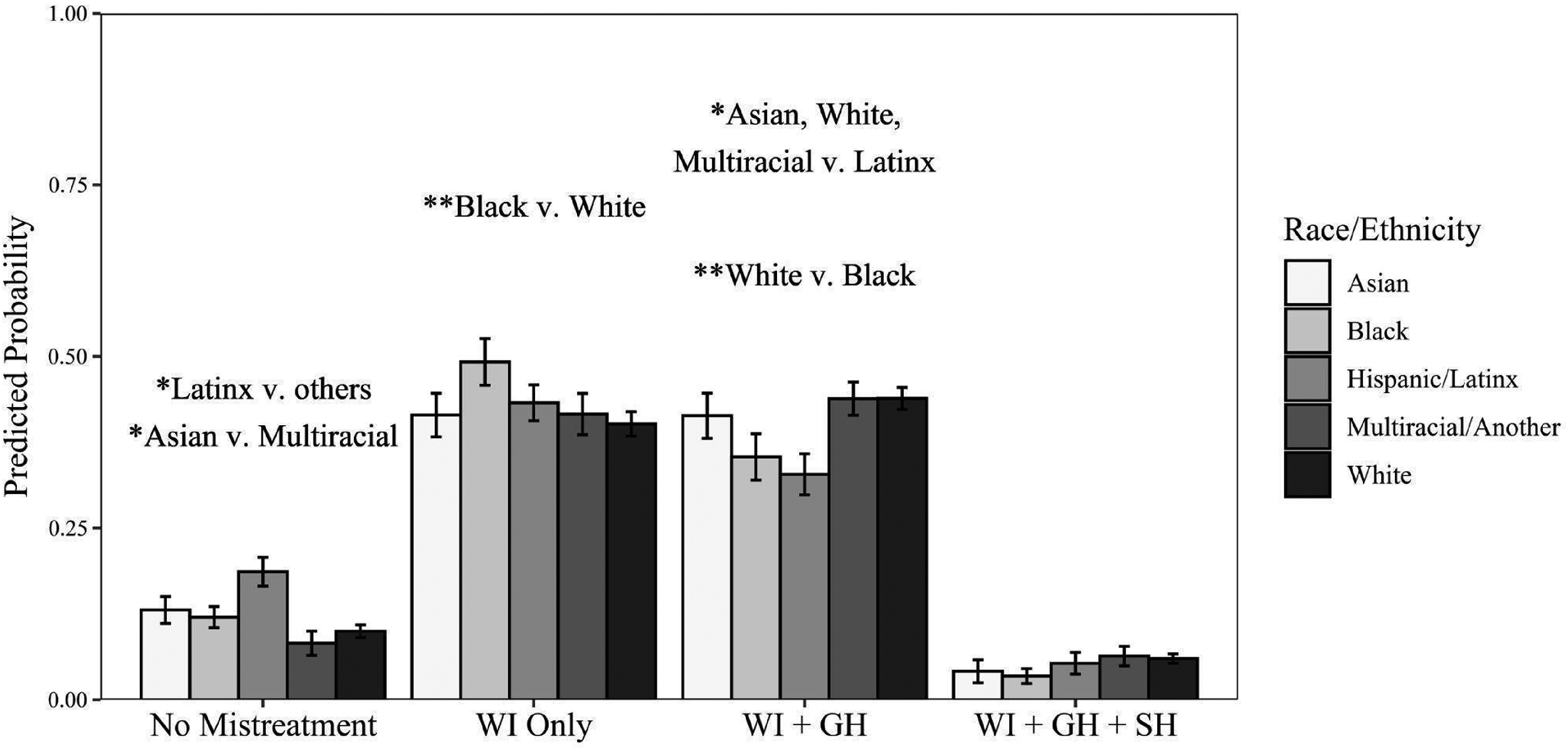
Predicted probabilities of experiencing forms of mistreatment by race/ethnicity. Note. Statistically significant comparisons noted above bars (*p < .05; **p < .01). Error bars indicate +/− 1 SE.
Frequency of Mistreatment
Finally, the frequency of (any) mistreatment differed across categories of mistreatment, with respondents who experienced all three forms of mistreatment reporting the highest average frequency (.92, on a scale of 0–4), followed by those who experienced incivility and gender harassment (.67), and those who experienced incivility only (.32). All contrasts between the groups were statistically significant (p < .001).
Regression Analyses
Finally, logistic regression analyses investigated associations between the co-occurrence of workplace incivility and sexual harassment and employment outcomes, including job satisfaction, sense of community, and whether participants had seriously considered leaving their job. For all outcomes, hierarchical regression analyses examined work-related outcomes, such that in an initial step, we included categories of mistreatment and demographic covariates, followed by the addition of mean-centered mistreatment frequency in a second step. In these frequency-adjusted models, estimates for mistreatment type therefore represent associations evaluated at the average frequency of mistreatment. We fit all models using cluster robust standard errors, with observations clustered by academic units. Because the relationship between mistreatment type and outcomes could vary depending on the frequency of mistreatment experiences, we also conducted exploratory analyses testing interactions between mistreatment type and mistreatment frequency among respondents reporting any mistreatment.
Intent to Leave
Binary logistic regression analysis revealed that when including only demographic controls, all three types of mistreatment were associated with greater odds (OR's > 4) of intending to leave the institution relative to no mistreatment (Table 3, Model 1). Additionally, consistent with predictions, experiencing incivility and gender harassment in combination was associated with greater odds of intending to leave relative to experiencing incivility only, though it did not differ significantly from experiencing all three forms of mistreatment.
Logistic Regression – Intent to Leave.
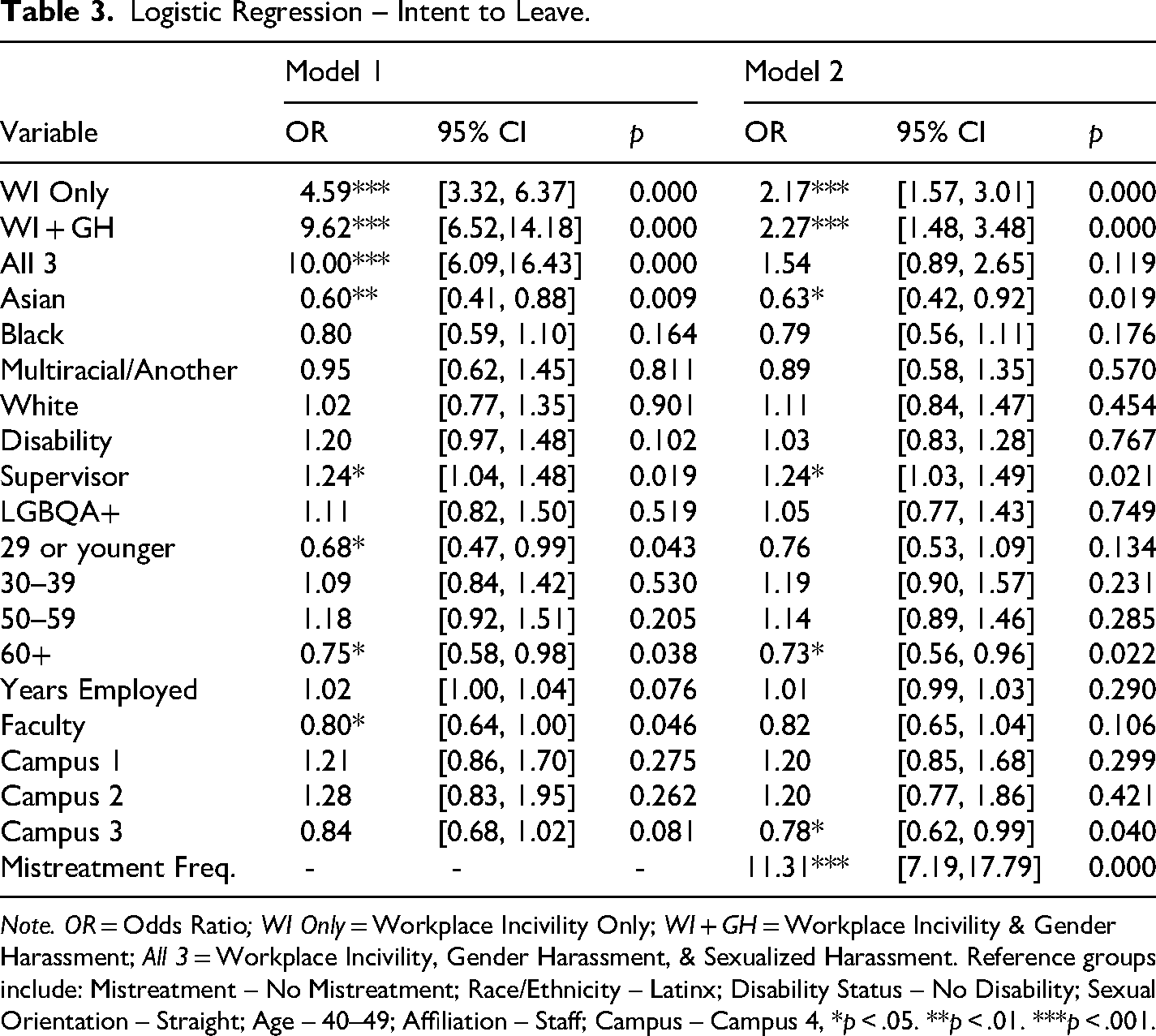
Note. OR = Odds Ratio; WI Only = Workplace Incivility Only; WI + GH = Workplace Incivility & Gender Harassment; All 3 = Workplace Incivility, Gender Harassment, & Sexualized Harassment. Reference groups include: Mistreatment – No Mistreatment; Race/Ethnicity – Latinx; Disability Status – No Disability; Sexual Orientation – Straight; Age – 40–49; Affiliation – Staff; Campus – Campus 4, *p < .05. **p < .01. ***p < .001.
However, in models that also adjusted for mistreatment frequency, as in Lim and Cortina (2005), the pattern of results changed (Table 3, Model 2). Frequency was strongly associated with intent to leave (OR = 11.31, p < .001), indicating that greater exposure to mistreatment increased the likelihood that respondents had seriously considered leaving. Experiencing all three forms of mistreatment was not significantly associated with increased odds of intending to leave relative to experiencing no mistreatment. Coefficients for other mistreatment categories remained statistically significant but were reduced in magnitude after adjustment for frequency (ORs > 2), suggesting that mistreatment type continued to show associations with intent to leave, although smaller than those observed in models that did not account for frequency.
Across models, Asian (relative to Latinx) respondents and respondents aged 60 or over (relative to those 40–49) had lower odds of intending to leave, while supervisors expressed greater intent to leave than non-supervisors.
In an exploratory analysis among respondents reporting any mistreatment, the association between mistreatment frequency and intent to leave differed by mistreatment type (p = .026). Mistreatment frequency was more strongly associated with intent to leave among respondents experiencing incivility only (risk difference [RD] per one-unit increase in frequency: 0.57) than among those experiencing all three mistreatment types (RD: 0.35). Because multiply imputed items produced mistreatment groups and the “all three forms” category was small, classification varied across imputations and interaction estimates should be interpreted cautiously.
Sense of Community
Ordinal logistic regression analysis revealed similar results. Experiencing all three types of mistreatment were associated with lower sense of community (OR's < 0.5) relative to no mistreatment (Table 4, Model 1). Experiencing incivility and gender harassment was associated with a lower sense of community relative to experiencing incivility only, but it did not differ significantly from experiencing all three forms of mistreatment.
Logistic Regression – Sense of Community.
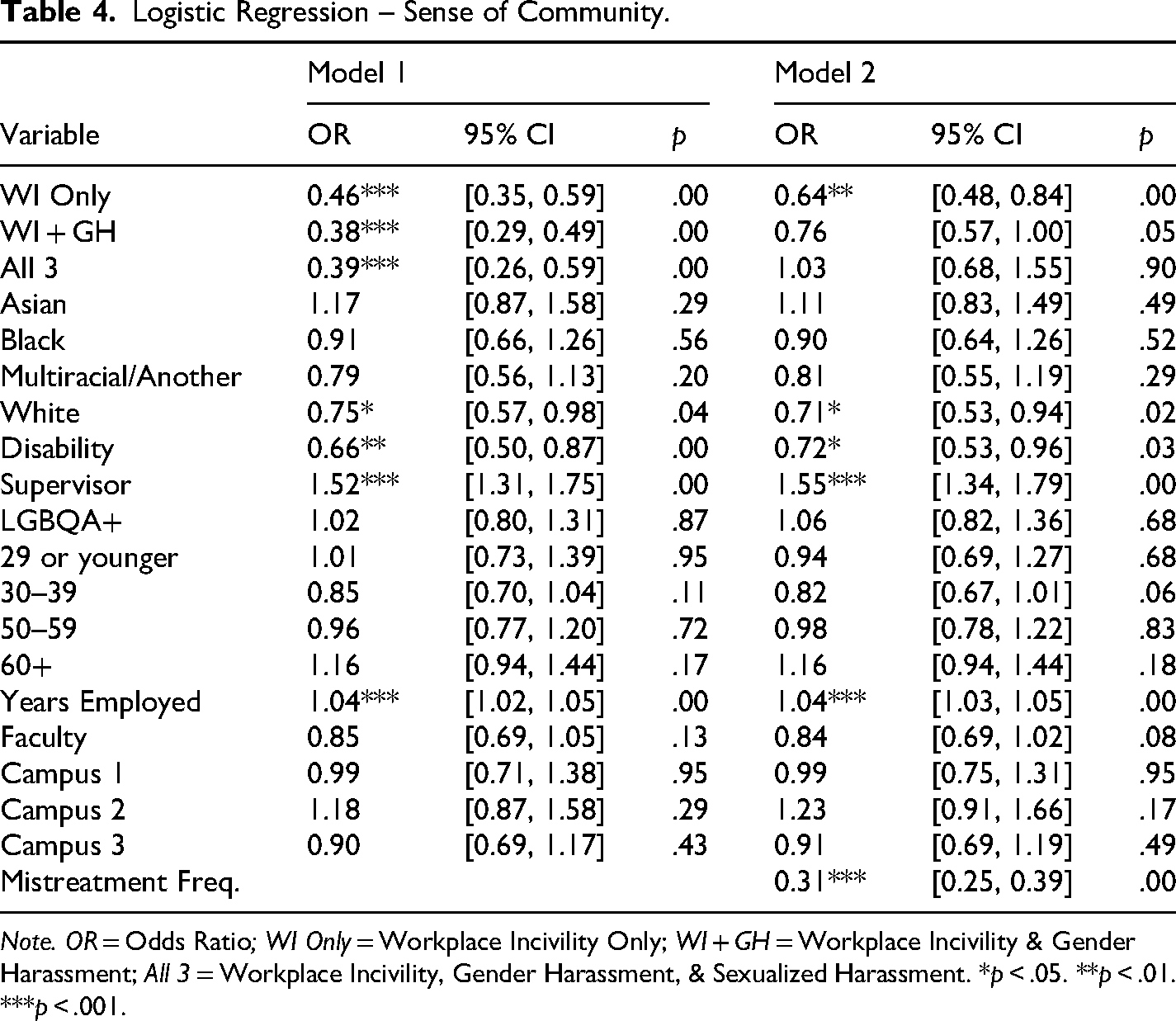
Note. OR = Odds Ratio; WI Only = Workplace Incivility Only; WI + GH = Workplace Incivility & Gender Harassment; All 3 = Workplace Incivility, Gender Harassment, & Sexualized Harassment. *p < .05. **p < .01. ***p < .001.
After adjusting for frequency of mistreatment, experiencing all three forms of mistreatment was no longer associated with sense of community relative to experiencing no mistreatment at the average frequency of mistreatment (Table 4, Model 2). Mistreatment frequency was strongly negatively associated with sense of community, corresponding to a 69% decrease in the odds of being in a higher sense of community category (p < .001). Coefficients for incivility only and incivility with gender harassment were attenuated (OR's < .80). Experiencing incivility only was associated with a lower sense of community relative to experiencing all three forms of mistreatment and experiencing incivility and gender harassment.
In both models, White (vs. Latinx) respondents and respondents with a disability (vs. no disability) reported lower sense of community, while supervisors (vs. non-supervisors) reported higher sense of community. Years of employment also positively predicted sense of community.
Exploratory analyses examining interactions between mistreatment type and mistreatment frequency among respondents reporting any mistreatment were not statistically significant for sense of community, indicating similar associations between mistreatment frequency and sense of community across mistreatment types.
Job Satisfaction
Because several of the lower job satisfaction categories contained few observations, which resulted in model instability, we collapsed the original 7-point job satisfaction scale into three ordered levels representing low, moderate, and high job satisfaction. The proportional odds assumption was violated, so we estimated generalized ordered logit models which allowed selected predictors (age and mistreatment category) to vary across outcome thresholds. Model 1a (Table 5a) estimated the probability of reporting disagreement relative to higher levels of job satisfaction, while Model 1b (Table 5b) estimated the probability of reporting high job satisfaction relative to lower levels of satisfaction. In both models, all three types of mistreatment were associated with lower job satisfaction compared with experiencing no mistreatment (OR's < 0.53), indicating a consistent negative relationship between mistreatment and job satisfaction. Experiencing both incivility and gender harassment, as well as experiencing all three forms of mistreatment, was associated with lower job satisfaction compared with experiencing incivility alone in Model 1a. In Model 1b, experiencing all three forms of mistreatment was associated with lower job satisfaction relative to experiencing incivility alone.
Job Satisfaction: Odds of Reporting Neutral/Agree vs. Disagree.
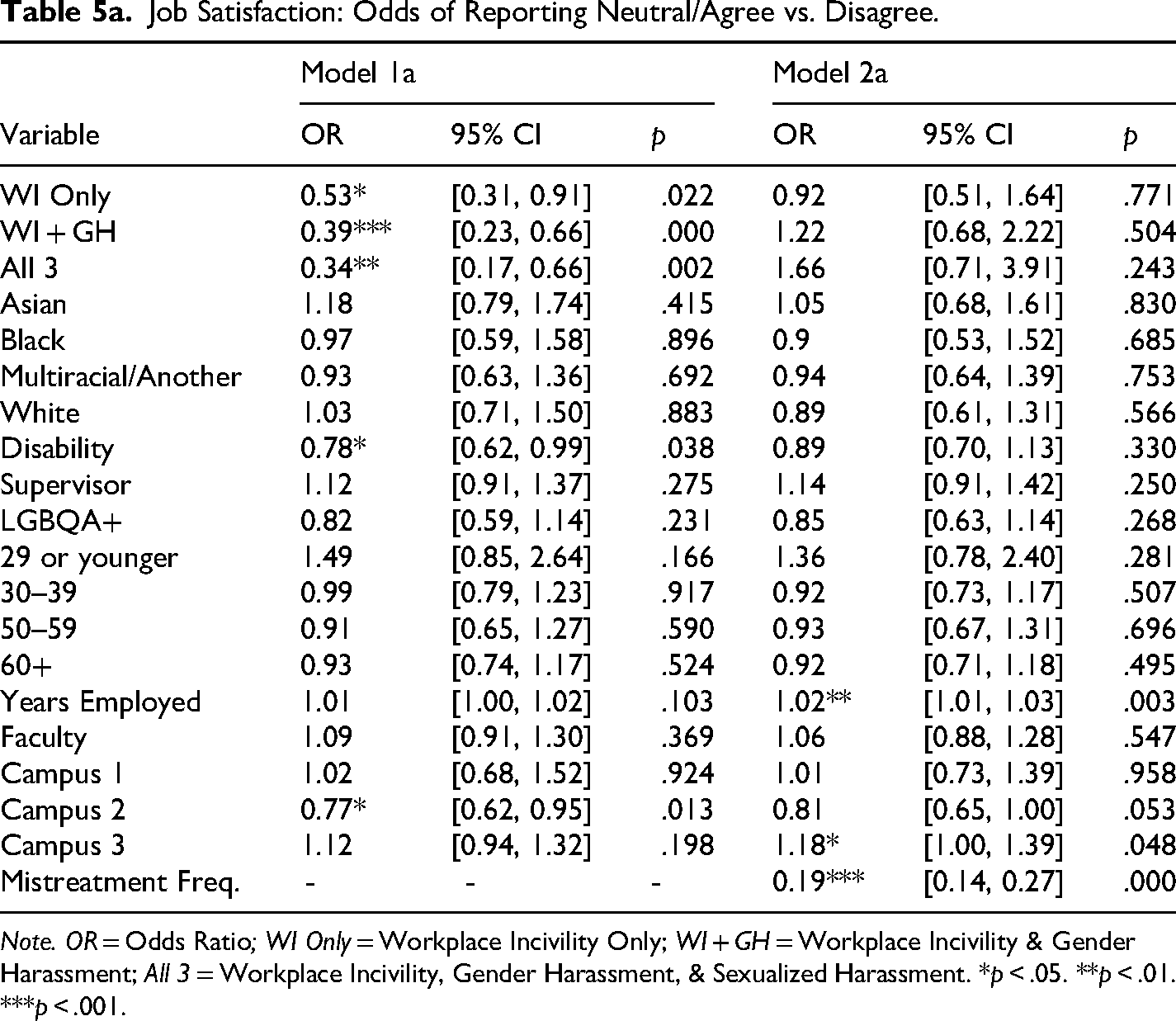
Note. OR = Odds Ratio; WI Only = Workplace Incivility Only; WI + GH = Workplace Incivility & Gender Harassment; All 3 = Workplace Incivility, Gender Harassment, & Sexualized Harassment. *p < .05. **p < .01. ***p < .001.
Job Satisfaction: Odds of Reporting Agree v. Neutral/Disagree.
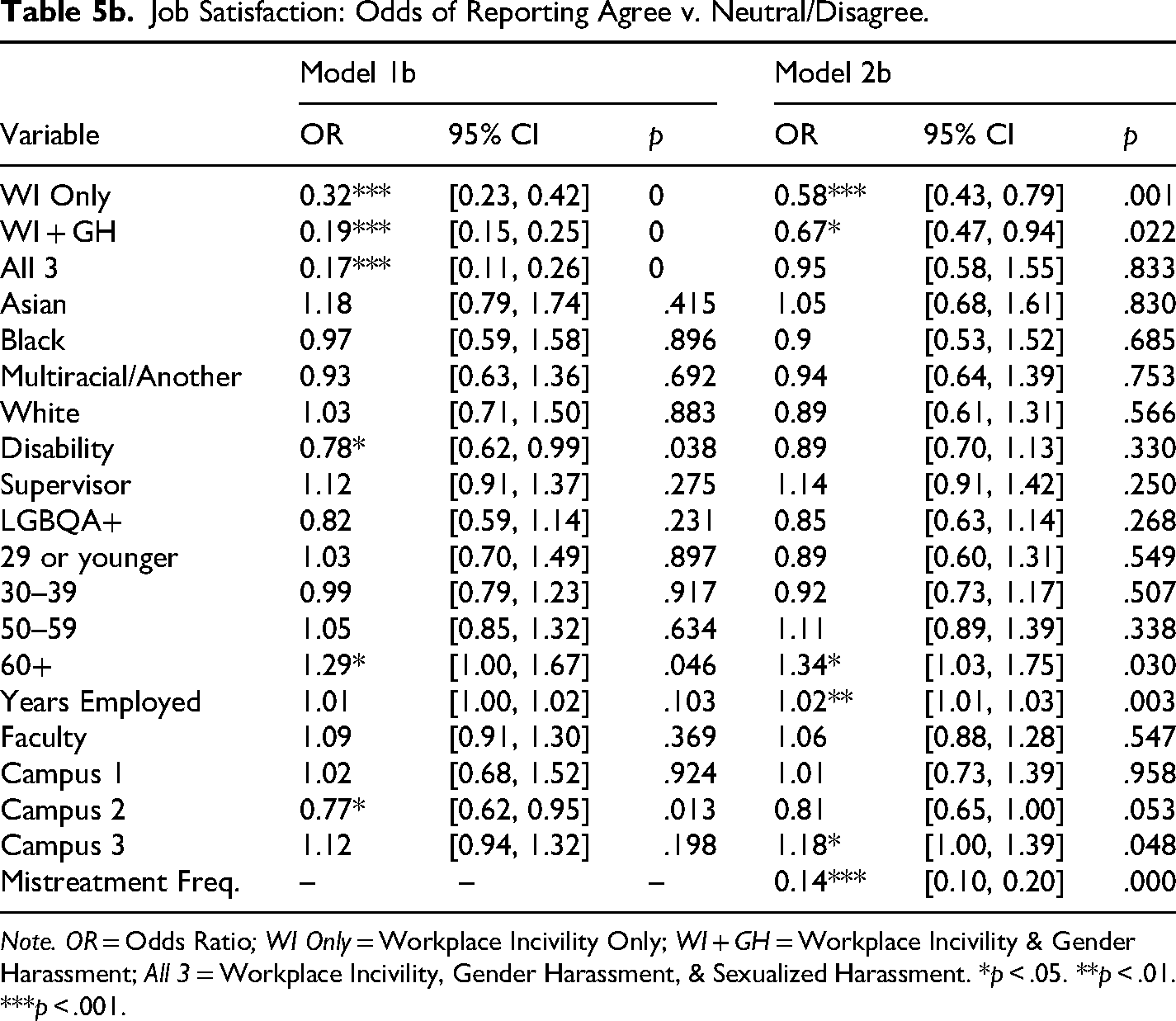
Note. OR = Odds Ratio; WI Only = Workplace Incivility Only; WI + GH = Workplace Incivility & Gender Harassment; All 3 = Workplace Incivility, Gender Harassment, & Sexualized Harassment. *p < .05. **p < .01. ***p < .001.
After conditioning on mistreatment frequency, the pattern observed for the other outcomes was evident for Model 2b (Table 5b), which contrasts high job satisfaction with lower levels of satisfaction. Experiencing all three forms of mistreatment was no longer associated with lower job satisfaction relative to experiencing no mistreatment, and mistreatment frequency was strongly associated with job satisfaction (OR = 0.14, p < .001), indicating that higher mistreatment exposure substantially reduced the odds of reporting high job satisfaction. In this model, experiencing incivility alone, as well as experiencing both incivility and gender harassment, was associated with lower job satisfaction compared to experiencing no mistreatment, and experiencing incivility alone was associated with lower job satisfaction than experiencing all three forms of mistreatment combined. In contrast, in Model 1a (Table 5a), which contrasts disagreement with higher response categories, none of the mistreatment types significantly predicted job satisfaction after conditioning on mistreatment frequency, although frequency itself remained strongly associated with job satisfaction (OR = 0.19). Taken together, these results suggest that, among individuals reporting comparable levels of mistreatment exposure, differences in mistreatment type are more strongly associated with lower likelihood of high job satisfaction than with increased likelihood of strong dissatisfaction. Interactions between mistreatment type and frequency were not statistically significant for job satisfaction.
Supplementary Analyses
To further examine unique associations of mistreatment dimensions, we conducted supplementary analyses using continuous scores representing the mean frequency of workplace incivility, gender harassment, and sexualized harassment. Nested regression models were estimated sequentially by adding centered workplace incivility, gender harassment, and sexualized harassment scores. Incivility was consistently associated with all work outcomes after accounting for overlapping mistreatment dimensions. Gender harassment showed comparatively smaller incremental associations beyond incivility, while sexualized harassment contributed limited additional explanatory power beyond the other mistreatment dimensions. Findings were substantively consistent with the primary analyses using categorical mistreatment operationalizations, suggesting that the patterns were not dependent on the coding approach.
Discussion
This study contributes to our understanding of the co-occurrence of workplace incivility and sexual harassment among academic employees with various identities. The current study used updated versions of workplace incivility and sexual harassment measures and our results align with many of Lim and Cortina's (2005) findings. Similar to Lim and Cortina (2005) we found a three-factor structure of incivility, gender harassment, and sexualized harassment. Among our sample of women and TGQN faculty and staff, as in Lim and Cortina's (2005) samples, nearly all participants who experienced gender harassment or sexualized harassment had also experienced incivility. This reinforces Lim and Cortina's (2005) suggestion that most sexual harassment takes place in a workplace environment where incivility is commonplace, and extends the evidence for this phenomenon to academia.
Our study included a novel investigation of workplace incivility and sexual harassment prevalence across intersectional identities and demonstrates that certain academic employees experience more mistreatment than others. For example, Black participants in the sample experienced more incivility relative to White participants, but White participants were more likely to have experienced both incivility and gender harassment relative to Black participants. These findings support Cortina et al.'s (2013) assertion that selective incivility is a modern form of covert racial bias, because even though by definition workplace incivility has ambiguous intent to harm the target, in the case of our study, Black women and TGQN employees were disproportionately targeted with incivility. Asian, White, and multiracial participants were more likely to have experienced both incivility and gender harassment relative to Hispanic/Latinx participants. Interestingly, this finding aligns with a previous study that found that Hispanic women, particularly those with less acculturation, have a lower incidence of sexual harassment compared to non-Hispanic White women, as well as less impact on their work-related outcomes (Shupe et al., 2002). These findings among various racial and ethnic identities would benefit from replication with larger samples to investigate interactions. In addition, qualitative research could detect nuances and potential reasons for differences.
Participants with a documented disability were more likely to have experienced more types of workplace mistreatment. This aligns with previous research finding higher prevalence of discrimination and harassment among employees with disabilities compared to those without disabilities (Dali, 2018; Jones et al., 2018; Lapshina & Grabarski, 2023). Future research should investigate workplace incivility and harassment for workers at the intersection of disability and other identities, such as race.
Supervisory status also produced significant results, in that holding a supervisory position was associated with having experienced more types of workplace mistreatment and expressing greater intent to leave (compared to non-supervisors) in regression analyses. Given that our sample only included women and TGQN employees, this finding aligns with prior evidence that leadership positions often put women and employees with marginalized identities at higher risk of mistreatment (McLaughlin et al., 2012; Rudman & Phelan, 2008). Supervisors also, however, expressed stronger sense of community and we found that faculty had greater risk of experiencing incivility and gender harassment compared to staff. As Lee (2022) noted, certain structural characteristics of academia might contribute to these curious findings. For example, heightened mentoring expectations of women and faculty of color might build community even while adding to job expectations and putting faculty at greater risk of additional mistreatment.
An additional novel finding from this study involved the frequency of mistreatment. Understandably, each subsequent mistreatment group had a higher average frequency of experiences. This could explain why when mistreatment frequency was included in the second model, the pattern for most mistreatment groups remained similar, but the association for individuals who experienced incivility, gender harassment, and sexualized harassment was attenuated. Because mistreatment type and frequency are closely related, these models are not intended to isolate the independent effects of each but rather to examine whether differences across mistreatment types persist among individuals reporting average levels of exposure. The results suggest that cumulative exposure to mistreatment helps explain some of the differences in outcomes across mistreatment groups. Additionally, we found that frequency moderated the effect of mistreatment type on participants’ intent to leave, such that frequency played a larger role among participants who experienced incivility only compared to those who experienced all three forms of mistreatment. This finding should be interpreted with caution, but is consistent with prior research suggesting that pervasiveness plays a larger role in participants’ subjective appraisal of distress from lower-level harmful behaviors, and a smaller one in cases of more intense behaviors (e.g., sexualized harassment; Langhout et al., 2005). Our findings bolster prior assertions that mistreatment impacts accumulate with repeated exposure (Buchanan et al., 2018).
Implications for Research and Practice
While the current study's scope is limited to one university, the findings bolster prior research demonstrating that different types of harm are interdependent, in that if one type of discrimination is present in an organization, there is an increased likelihood that other forms of discrimination are also present (Buchanan & Fitzgerald, 2008; Cortina et al., 2002). In this way, it is possible that discrimination like sexual harassment evinces a larger problem of toxicity and harm in a work environment, which aligns with prior research indicating the primary predictor of sexual harassment is an organization's tolerance for it (Buchanan et al., 2014; Fitzgerald & Cortina, 2018). Our findings also confirm the damage mistreatment has on its targets, and mirror previous research on double jeopardy and selective incivility experienced by individuals at the intersection of multiple marginalized identities (Berdahl & Moore, 2006; Cortina et al., 2013). Employees with different identities experience unique patterns of harassment and mistreatment, and these patterns and their impacts are not equivalent. As scholars and activists have suggested, sexual violence and harassment prevention needs a more intersectional approach that acknowledges the interlocking nature of discrimination and oppression (Buchanan & Fitzgerald, 2008; Buchanan & Ormerod, 2002; Buchanan et al., 2018; Rothman, 2019). Fitzgerald and Cortina (2018) suggest that collaboration among researchers who study different forms of violence and discrimination can help de-silo these categories of harm and account for their overlaps and commonalities born out of the shared roots in White supremacist patriarchy and the social construction of power. Future work should capture multiple dimensions of harm, like type and severity, and investigate the potential mediating effect of frequency on the relation between harm and occupational outcomes (Fitzgerald & Cortina, 2018).
Many academic organizations still provide separate educational programs and training for bias, microaggressions, sexual harassment, and workplace incivility. The current study's findings suggest that it might be more efficient and effective to make these interventions cross-cutting. Rothman (2019) suggests that campuses move away from “single issue” sexual violence work and instead consider efforts that address multiple issues, including systemic oppression (p. 179). Similarly, preventionists could extend student bystander intervention programs to address several types of harm (Fitzgerald & Cortina, 2018; McMahon et al., 2020) among employees. Organizational climate is multidimensional, and prevention, intervention, and support resources should reflect the interconnectedness of different types of workplace discrimination. If sexual harassment builds on workplace incivility, as the current study and prior studies suggest (e.g., Andersson & Pearson, 1999; Lim & Cortina, 2005), then institutions can proactively address both by cultivating principles of equity, inclusion, and respect throughout their structures (Fitzgerald & Cortina, 2018). Beyond training and education, the unique power structures that make higher education a particularly vulnerable setting for mistreatment (Lee, 2022) are an opportunity for tailored policies and communication from university leaders to effectively address and reduce sexual harassment and workplace incivility (Buchanan et al., 2014; Estes & Wang, 2008; Han et al., 2022). Efforts to eliminate harassment and mistreatment from the workplace, particularly when spearheaded by leadership, can benefit both the targets of mistreatment and the institution as a whole (Buchanan et al., 2014).
Limitations
The results of this study need to be interpreted in the context of a few limitations. First, although many employees participated in the survey, the response rate was somewhat low for an online census survey (Wu et al., 2022). The sample overrepresented participants who were White, women, and employed in staff positions relative to their population share, which might have introduced bias into the results. Additionally, surveys that focus on sensitive issues risk topic salience bias, in which individuals for whom a survey topic is relevant are most likely to participate (Berzofsky et al., 2019). We implemented best practices to minimize this bias, including raffled incentives, a reasonably long survey field time, and multiple reminder emails (Berzofsky et al., 2019). This is a cross-sectional study at one multi-campus institution, so we cannot infer temporal ordering of the variables, but replication on a larger scale with longitudinal data from other institutions would help assess the generalizability of results. Small cell sizes limited the analysis of differences by gender, race/ethnicity, and tenure status, so future research should examine intersectional differences across academic roles. Researchers might also consider investigating measurement invariance of workplace incivility and sexual harassment measures to assess whether cultural groups interpret the constructs differently. This could improve our understanding of how intersectional identities might influence the experience and reporting of mistreatment. Additionally, although this study prioritized the examination of workplace incivility and sexual harassment, there are other forms of harm and mistreatment that were not captured, such as racial bias.
Measurement limitations include that the job outcome dependent variables were assessed with single-item measures. This might warrant caution when interpreting the validity of findings, though research has found that certain single-item indicators in organizational research, such as the job satisfaction measure in this study, demonstrate consistently favorable psychometric properties and can help reduce respondent burden (Fisher et al., 2016). Although we would have liked to investigate whether frequency of mistreatment experiences mediated the relation between mistreatment group and occupational outcomes (Langhout et al., 2005), our measure of frequency was too intertwined with mistreatment classification for a formal mediation analysis.
To address the potential for conceptual overlap in the workplace incivility and sexual harassment measures (see Table 1), Lim and Cortina (2005) removed workplace incivility items that “seemed most vulnerable to double counting” (p. 493). We strove to account for possible double counting with a more empirical method, EFA, and in fact eliminated one item that cross-loaded on both gender harassment and sexualized harassment. Although the original workplace incivility and sexual harassment scales are similar in length, because the three-factor structure split the sexual harassment measure into two factors, the incivility factor included many more items than either the gender harassment or sexualized harassment factors. This could have skewed the results by splitting the prevalence of sexual harassment behaviors between gender harassment and sexualized harassment and overemphasizing the prevalence of the incivility factor in comparison. Lastly, although our categorization of participants into mistreatment groups aligned with Lim and Cortina's (2005) approach and allowed for conceptual continuity and comparison of findings, future research might consider using continuous indicators for mistreatment experiences. Alongside greater variability in mistreatment exposure, continuous indicators could preserve statistical power and more granularly investigate the independent and compounding effects of different forms of mistreatment through interaction models.
Conclusion
Workplace incivility and sexual harassment are widespread forms of workplace harm with serious negative impacts on the well-being of individuals and the workplace environment. These forms of mistreatment can be particularly pervasive in academia because of organizational tolerance for disrespect, competitive culture, and hierarchical power dynamics. This study provides evidence that workplace incivility and sexual harassment are associated constructs of workplace mistreatment that are often experienced together and intersect with other forms of discrimination, like selective incivility, in patterns that differentially impact employees with multiply marginalized identities. Workplace incivility and sexual harassment and the frequency with which they occur also have harmful impacts on employee job satisfaction, sense of community, and intentions to leave the academic workplace. Results of this study suggest that addressing subtler forms of workplace mistreatment might help prevent more egregious forms of discrimination (Hickson et al., 2007). Additionally, to foster a healthy, productive culture, organizations need to de-silo workplace mistreatment prevention efforts and promote equity, inclusion, and respect throughout their structures.
Footnotes
ORCID iDs

Funding
The authors received no financial support for the research, authorship, and/or publication of this article.
Declaration of Conflicting Interests
The authors declared no potential conflicts of interest with respect to the research, authorship, and/or publication of this article.