







Abstract
Migrant-serving nonprofit organizations negotiate some of the most intractable economic, social, and political problems in the United States. In the realm of economic development, nonprofit organizations have emerged as labor market intermediaries, devising various strategies to assist migrant workers in securing work, making ends meet on low wages, and negotiating an abusive workplace. I contribute to literatures in community and economic development, by presenting a definition of the sector of “migrant nonprofit organizations” and typologizing organizations’ labor market strategies. The role of nonprofit organizations in the labor market is contradictory, both flanking and contesting precarious work. The article draws on a survey and semistructured interviews with organizations in Chicago.
Introduction
Cities in the United States have been transformed by unprecedented rates of migration 1 during the past 20 years, challenging urban planning practitioners and public administrators to evolve and grow new responses to questions of migrant incorporation into urban life. Many nonprofit organizations are on the frontlines of responding to these concerns, providing services and programs targeted to the particular needs of migrant populations (see Cordero-Guzmán 2005; Hung 2007; Hum 2010; Marwell 2007; Ramakrishnan and Bloemraad 2008; Wong 2006). For some organizations, this is a familiar role. Civil society organizations—community groups, unions, religious institutions, and other actors that exist between the state, market, and household—have long intervened in the social, political, and economic lives of migrants in urban areas (Cordero-Guzmán 2005; Katz 1996; Moya 2005; Salamon 1992). New organizations have been founded to respond to the needs of migrant populations, while older organizations are adapting to meet a new set of concerns.
The labor market is a space of particular tension for migrants. The search for economic opportunity is frequently the primary motive for migration, and finding decent work the initial challenge confronting migrants upon arrival. But finding and maintaining work is rarely an easy process. Securing work, making ends meet on low wages, and negotiating an abusive workplace are all situations that many migrants struggle through. As one worker said, expressing his frustration with the quality of jobs he had experienced, “There is abuse everywhere.” How have nonprofit organizations that serve migrants responded to the growing problem of precarious work facing their clients? And what can an analysis of these responses tell us about the opportunities and constraints of nonprofit interventions in labor markets?
Such organizations provide a number of workplace-related services, ranging in their goals, degree of intervention in labor markets, and outcomes. These services include the following: intermediation between workers and employers when disputes arise; assisting workers in upgrading their skills and education; partnering with government enforcement agencies to educate workers about their rights and help file claims against employers; policy advocacy; and protest and public demonstrations. In addition to these strategies that aim to directly intervene in labor markets in some way, organizations also conduct services that are not obviously connected to workplace concerns but mitigate the effects of precarious work. These include the following: social services that assist migrants with social reproduction, and allowing people a safe space to spend time and upgrade skills while they are between jobs. Additionally, some organizations create alternatives to precarious work by hiring clients as staff members, and fostering worker cooperatives and self-employment.
Nonprofit organizations can have a positive impact on the lives of many workers, as scholarship has demonstrated (see Carré and Heckscher 2006; Fine 2005, 2006; Gordon 2005; Jayaraman and Ness 2005; Ness 2005; Theodore, Valenzuela, and Meléndez 2009; Theodore and Martin 2007; Wills 2008). The literature on workers’ rights organizations (see Carré and Heckscher 2006; Fine 2005, 2006; Gordon 2005; Jayaraman and Ness 2005; Ness 2005; Theodore, Valenzuela, and Meléndez 2009; Theodore and Martin 2007; Wills 2008) has focused on the most active and activist of these, mostly on workers’ centers that have been established with the express purpose of improving labor standards. I add a new aspect to this discussion by examining social service organizations that do not explicitly conduct workplace programs but still deal with the consequences of precarious work. I excavate the work of migrant nonprofit organizations (MNOs), seemingly disconnected from the labor market, and find their activities to be intertwined with precarious work. This role is not unproblematic, however, and I demonstrate how it can have contradictory effects, simultaneously assisting and harming workers’ interests (Cope 2001; Mayer 2007). The role of nonprofit organizations in the labor market is contradictory, both flanking and contesting patterns of economic restructuring and labor market change that are downgrading working conditions in the low-wage labor market. The duality of their role stems, in part, from the schism between intention and outcome. Broadly speaking, the intention of the organizations that I studied was to upgrade the working conditions facing migrant workers and to contest the practices of unscrupulous employers. They were often successful in these endeavors. But, as Jessop (2002, 454-55) claims, organizations can be mobilized “as a flanking, compensatory mechanism for the inadequacies of the market mechanism.” Where the market has created insecurity for workers, community efforts can mitigate this insecurity, thereby allowing substandard employers to go unchallenged and reinforcing unjust economic practices (Martin 2010). This is an uncomfortable position for community economic development practitioners, finding that their mission of serving workers in need also aids unscrupulous employers by helping to ensure a stable labor supply. By exposing the divergence between intent and outcome, this article seeks to illustrate the promises and pitfalls of this work in order to suggest where improvements might be developed.
This article proceeds in three parts. First, I delineate the sector of migrant-serving nonprofit organizations based on a seven-part definition, thereby filling a gap in the literature, as the sector is rarely specified precisely. Second, I present an overview of Chicago’s migrant organizations, reporting results from a survey of organizations conducted in 2005. Drawing on the survey, participant observation, and semistructured interviews, I categorize, describe, and critically assess the range of strategies organizations are using to intervene in labor markets, highlighting both potential advantages and drawbacks. The article concludes with a discussion of the implications of the nonprofit sector as labor market intermediary and the need for scholars to develop a nuanced framework for measuring the complex outcomes of their work.
Delineating Migrant Nonprofit Organizations in Chicago
Scholars of the voluntary sector are increasingly recognizing that organizations serving migrants constitute a distinct segment (de Leon et al. 2009; Fox and Rivera-Salgado 2004; Hung 2007; Lee and De Vita 2008; Theodore and Martin 2007; Wong 2006). Their distinctiveness derives from three attributes: (1) their internal coherence, (2) their relationship to the rest of civil society, and (3) how they relate to society at large (Theodore and Martin 2007). First, the organizations are internally coherent given their shared concern for the particular needs of migrants, which is born from their missions, the types of services they provide, and their mode of providing culturally sensitive programming. Second, with respect to the rest of civil society, MNOs are differentiated by the centrality of migrant clients to their core goals and activities, whether or not they explicitly aim to serve a migrant clientele. Third, MNOs articulate migrants’ concerns to policy makers and society at large and therefore can be conceptualized as a collective actor working in the interests of migrants. However, organizations’ approaches may diverge in their pursuit of migrants’ interests because of different philosophies and practices, a theme I return to below. While there is a growing interest in MNOs, the definition of the sector remains underspecified and many of the approaches for identifying migrant organizations fail to account for the evolving nature of the interactions between migrants and nonprofits, which I elaborate on below. I review several definitions and then present my own.
A common approach to identifying migrant organizations focuses on the characteristics of the organizations’ leadership. Fox considers “migrant civil society” as “migrant-led membership organizations and public institutions” (2006, 2; see also Fox and Rivera-Salgado 2004). Cordero-Guzmán similarly highlights the migrant status or ethnicity of the founders and staff of the organizations, in addition to the shared ethnicity or nationality of the staff and clients: “formed by individuals who are members of a particular ethnic or national-origin group, for the purpose of providing social services primarily to immigrants from the same ethnic or national group” (2005, 6). These definitions exclude organizations that have been founded or are led by nonmigrants, which is problematic because of the way organizations can evolve. In cities with long histories of migration, the countries sending migrants have changed, and likewise organizations that may have been founded to serve a particular group have evolved to serve new groups. Several organizations in Chicago exhibit this trend. Founded in the 1800s to serve migrants from Europe, organizations like Association House now have clientele mostly from Latin America. New streams of migrants are settling in suburban areas, which can prove a challenge to organizations that originated to serve low-income white people. Therefore, the people who form the organization and those who draw on its services may not share an ethnicity and country of origin, and migrants may not be involved in leading organizations that provide important services to migrants. The focus on immigrant origins of the staff and clients leads to an approach to identifying organizations for study that is problematic. The most commonly used approach to identifying organizations decodes the name of the organization, based on references to a particular nationality or ethnicity (de Leon 2009; Lee and De Vita 2008; Trudeau 2008). As Ramakrishnan and Bloemraad point out, an ethnic-sounding name can exclude many organizations that serve migrants but choose not to highlight this in their name. They prefer the term “mainstream” versus “ethnic” to differentiate those organizations that work on political issues effecting migrants. But again, organizations that would count as “mainstream” can in fact serve a sizable number of immigrants and may work on advocacy issues that disproportionately affect migrants (such as living wages or day labor ordinances) even if they are not framed as migrant issues.
I define the sector of migrant-serving nonprofit organizations based on seven characteristics and do not include the name or migrant identity (its history or explicitly stated mission of serving migrants) of the organization, or the ethnicity/nationality of founders and/or staff. Instead, I focus on the migrant status of the clients. First, a substantial share of clients is foreign born, at least 30%. This percentage casts a wide net in terms of capturing organizations that serve migrants, and does not rule out organizations that might work with a migrant population while not necessarily identifying themselves as a migrant organization. Many of the organizations serve both foreign-born and native-born clients (particularly the U.S.-born children of migrants), and therefore do not always self-identify as migrant organizations though they address issues that disproportionately affect migrants. Second, they have a tax status as a registered 501(c)(3) nonprofit organization. A range of groups are therefore omitted but 501(c)(3) status represents a base of organizational maturity, direction, and therefore, influence and impact on clients’ lives. Third, they have an annual revenue of at least $25,000. It is reasonable to expect that in order for an organization to be consistently active, it must exceed this threshold. Fourth, they have a stated mission of assisting people in need, however that need may be defined. Most of the organizations include migrants in their mission statements but this is not a requirement. Fifth, they fulfill their mission through a variety of services, programs, and advocacy activities. In this sense, they are different from philanthropic foundations, which are limited to funding the work of others. Sixth, though transnational work may be part of organizations’ activities, they focus as well on domestic issues and therefore are not only concerned with issues affecting a country of origin. And finally, seventh, they have an office and paid staff (even if this staff is not full-time). In this regard, they can be distinguished from Hometown Associations, mutual aid associations, or other membership organizations that are constituted by volunteers who may only keep a list of member names and have minimal formalized organizational capacity. In summary then, migrant-serving nonprofit organizations are registered 501(c)(3) tax status organizations, with a minimum revenue of $25,000 per year and maintain an office and paid staff. With a client base that is at least 30% foreign-born, they have a mission of assisting those in need (whether migrant or not) in the place where the organization is located, through a combination of services, programming, and advocacy.
Migrants and the organizations that serve them in Chicago are navigating a city where neoliberal urban strategies have been embraced by most political and business leaders. As Chicago’s industrial base declined starting in the 1970s, the city’s elite promoted the transition from an industrial-based economy to one built on services, education, tourism, and research (Koval et al. 2006). The hunt for global city status (see Wilson 2004) has been used to justify a number of projects and programs, such as the reform of city schools and the charter school movement (Lipman 2008), the use of public funds to build entertainment complexes and sports stadia (Smith 2010), the demolition of public housing in favor of mixed-income housing and Section 8 vouchers (Bennett, Smith, and Wright 2006; Hackworth 2007), and the privatization of infrastructure, such as toll bridges and parking meters. A distinct pattern of uneven economic growth has emerged in Chicago, where “the retrenchment of manufacturing is associated with a ‘disappearing middle’ phenomenon, leading to the erosion of job and employment security around what was once the core of the income distribution. Employment in services, on the other hand, tends to be associated with a bipolar growth pattern, in the form of both wages and job quality” (Doussard, Peck, and Theodore 2009, 187). Migrant workers have become the workers of choice for employers seeking a pliable workforce, and the expansion of a migrant labor force is commonly associated with neoliberal urbanism. Community organizations play an important role in neoliberal Chicago, making up for many of the shortfalls due to government roll back of services (Brenner and Theodore 2002; Peck and Tickell 2002).
To understand the characteristics and activities of these organizations in response to this political-economic environment, a two-part research methodology was designed. First a survey was conducted of MNOs in the Chicago metropolitan area between February and October of 2005. 2 Organizations were identified for participation in the survey through the Internal Revenue Service’s 2004 Business Master File of 501(c)(3) organizations. Attempts were made to contact every organization within this universe of nonprofit organizations (in most cases, six attempts were made to contact nonresponsive organizations). The research team screened organizations by telephone to determine the share of clients who were born outside of the United States. If the organization reported that 30% or more of its clients were foreign-born, then an attempt was made to complete a full survey. An in-person survey, lasting about an hour, with the executive director or senior staff member was completed with 133 organizations (response rate of 77%). Questions centered on five thematic areas that included the history of the organization and the neighborhoods served; programs, services, and activities; the characteristics of the population served; transnational activities; and funding and resources.
The second part of the research was case studies of two organizations, El Pueblo and Guadalupe, 3 where I volunteered during 2007, conducting participant observation, semistructured interviews, and document analysis. My activities as a volunteer varied across the organizations but included administrative work, researching grant and funding sources, assisting with teaching computer classes, and educational activities for children. During this time, I interviewed staff and clients and observed their interactions and behaviors. This research approach allowed me to observe the many activities that transpired in the organization that were not part of formal programs, what I call the “hidden” work of nonprofits. In addition to participant observation, I analyzed materials where the organizations were represented. The textual analysis included examining annual reports, newsletters, and the website generated by the organization. In addition, any newspaper or media coverage of the organization and its activities was also examined.
Immigration to the Chicago region has increased significantly in recent decades, intensifying the demands on organizations that work with immigrants to enhance the well-being of this population. Since 1970, the number of immigrants in Chicago has almost tripled to more than 1.6 million foreign-born residents in 2005, which is 17.5% of the total population of the Chicago metropolitan area (U.S. Census Bureau American Community Survey 2005). Migrants from Mexico are the largest single national group, constituting more than 40% of all migrants. The second largest group is from Poland (9.2%), followed by India (5.8%), Philippines (4.7%), China (3.2%), and Korea (2.7%). In addition, there may be as many as 400,000 undocumented immigrants in Chicago, and with an estimated labor force participation rate of 91%, the number of undocumented workers is approximately 360,000 (Mehta et al. 2002).
The history of migration to Chicago is reflected in the populations served by the surveyed organizations. Mexican migrants have long constituted Chicago’s largest migrant group and accordingly the largest number of organizations reported that Mexicans were one of the five largest nationalities they served (see Figure 1). Koreans, Chinese, Russians, Poles, Indians, and migrants from various Central American countries were the other main nationalities served. One-third of all the organizations served a population of whom at least 75% are migrants, and close to 10% reported that all of their clients are migrants. Many organizations also serve U.S. citizens, including the children of migrants born in the United States. Because of the varied nationalities of their clients, many organizations are not necessarily consciously “migrant organizations.” Organizations reported that on average 33% of their clients were undocumented. Many organizations were unable or unwilling to estimate the percentage of undocumented clients given both the difficulty of knowing if someone is undocumented and the sensitivity of the subject. However, most organizations were quite frank about their attitudes towards serving undocumented migrants. Many openly expressed their desire to serve undocumented people given their greater need and were frustrated that they could not do more to assist this vulnerable population. Other organizations, however, said that they did not serve undocumented people, because of the terms of their funding.
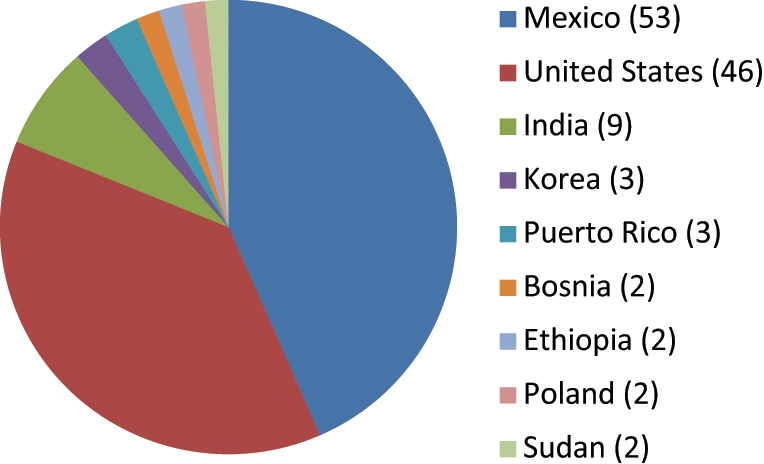
Country of origin for majority of clients served, by number of organizations
The organizations indicated that migrants face a range of social problems in making their adjustment to life in the United States (see Figure 2). The issue-areas most often raised by interviewees include language barriers (56%), substandard employment opportunities (56%), health and social services (36%), immigration-related issues (33%), and access to affordable housing (16%). Reflecting the high needs of their clients, organizations estimate that an average of 70% of clients lives below the poverty line.
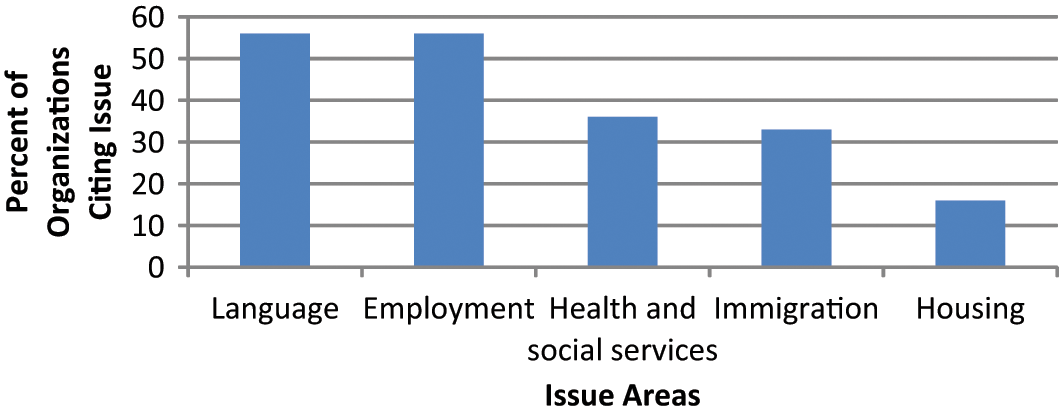
Challenges confronting migrant populations
The economic vulnerability of clients has not necessarily translated into a response in the realm of economic development programming. For example, only 5% of the services offered by all organizations are around economic development and employment. Similarly, only about 7% of advocacy campaigns addressed this area. However, the survey only tells a partial story of the activities of organizations. It captures the formal programming that the executive director or senior staff person is aware of but does not capture many of the day-to-day activities that staff members conduct. The participant observation component of the research design allowed me to observe how staff and client activities that occur outside of formal programming can be a significant part of the agency’s work.
Precarious Work and MNOs
Precarious work, defined as “employment that is uncertain, unpredictable and risky from the point of view of the worker” (Kalleberg 2009, 2), has become a notable feature of the working landscape (see, e.g., Bernhardt et al. 2009; Peck and Theodore 2001; Vosko 2000). Migrants have come to occupy many jobs that are very poorly paid, have harsh working conditions, and hold few opportunities for advancement. These workers tend to cluster in a fairly small group of industries with a preponderance of low-paid jobs, including domestic work, child care, restaurants, home health care, low-end retail, landscaping and construction, warehousing, and segments of the manufacturing sector (Congressional Budget Office 2005; Mehta et al. 2002). Undocumented migrants, in particular, have found themselves in a difficult position. Forced by economic necessity to accept whatever jobs are available—even substandard jobs—they remain vulnerable to threats of retaliation for contesting abusive workplace conditions. These employees have little representation in the workplace since labor unions have been slow to organize recent migrants, though inroads have been made in certain niches (see Meyerson 2002; Milkman 2006). In addition, these workers are often fearful of interacting with government agencies, which are perceived as hostile. Furthermore, federal and state labor enforcement agencies have by and large failed to deter abusive and illegal employer behavior, principally because enforcement of workplace regulations has been on the wane (Bernhardt and McGrath 2005; Ross 2002).
In response to precarious work a new organizational form has emerged across the country in the past 20 years, which combines community and workforce development goals with a particular focus on achieving economic justice for low-wage workers. 4 Variously called “worker centers” (Fine 2006; Theodore, Valenzuela, and Meléndez 2009), “community unions” (Fine 2005), “migrant worker centers” (Martin, Morales, and Theodore 2006), and “quasi-unions” (Carré and Heckscher 2006), these organizations are labor market intermediaries, advocating for and defending the rights of workers. Worker centers undertake a range of services and programs, which include organizing, advocacy, protest, workers’ rights training, filing legal complaints against employers, and operating hiring halls. Some target their efforts towards a particular occupation, industry, neighborhood, or immigrant group, though most work at the intersections of at least two of these categories. While there is a growing literature on worker centers, we know less about social service organizations that have been drawn into working in this area. Because these nonprofits may not self-identify as labor market intermediaries and in many cases their workplace programming is minimal, it is not surprising that their work in this realm has gone largely undetected by scholars. But as I shall show, many of these organizations are also being transformed by the impact of precarious work on their clients.
Organizations’ Responses to Precarious Work
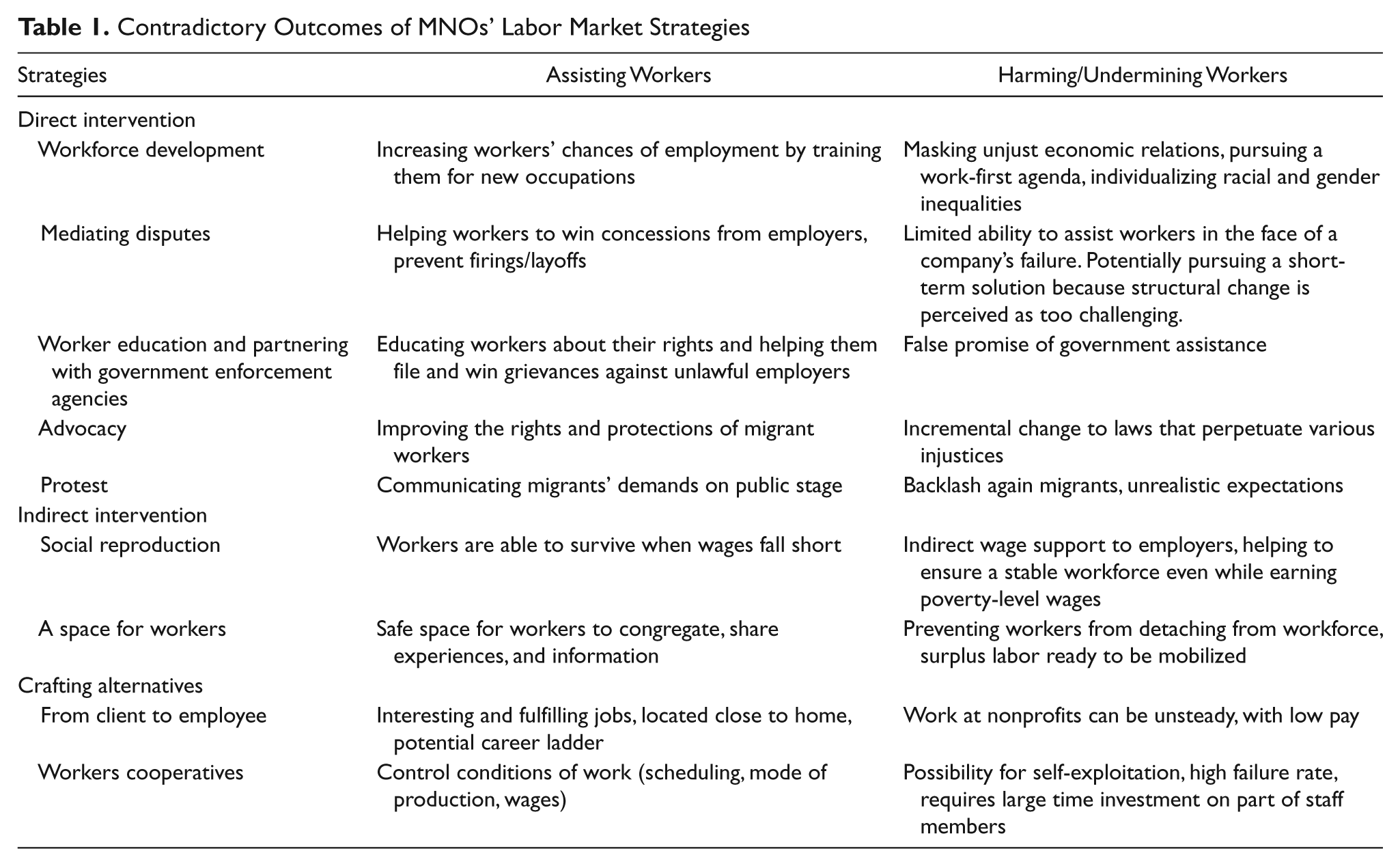
In this section of the article, I draw on the survey and case study organizations to sketch the range of strategies, based on my typology of strategies as either “direct,” “indirect,” or “creating alternatives (see Table 1)”. In cases where the strategy is intended by the organization to directly improve the working conditions of migrants employed in precarious jobs, the strategy is categorized as direct. Indirect strategies are not designed to actively intervene in precarious work but instead respond to consequences of worker vulnerability resulting from participation in precarious work. Creating alternatives to precarious work captures organizations’ attempts to foster employment opportunities outside of the low-wage economy, either through worker cooperatives, entrepreneurship, or hiring clients and volunteers as staff members. It is important to note that a single organization cannot be characterized in this typology because many organizations exhibit all three strategies in their work. I now describe each strategy and provide short examples from several different organizations, with the aim of showing the complex and often contradictory results of these interventions.
Contradictory Outcomes of MNOs’ Labor Market Strategies
Strategies of Direct Intervention
Workforce development
Organizations help workers with resume writing, job search activities, and upgrading skills through educational programming (such as computer training and English-as-a-second-language classes). Others provide referral services, directing clients to various workforce development and job-placement programs offered by government agencies or community colleges. A smaller number of organizations administer workforce development programs themselves, generally funded by the City of Chicago, federal dollars for workforce training, and foundations. The Instituto del Progreso Latino, for example, administers a program “ManufacturingWorks” that works with companies in the manufacturing sector and a community college (Schrock 2010; Schrock and Kossy 2007). In close collaboration with prospective employers, the organization teaches workers skills that will make them employable in occupations that have a shortage of skilled workers. Instituto is based in Pilsen, a primarily Mexican neighborhood on the city’s near south side, though the program serves both foreign-born and U.S.-born workers. The program has tiers that workers progress through, starting with teaching nonnative English speakers technical vocabulary, through to mathematics and statistics required to operate complex machinery. Participants also have access to programs that can help them overcome barriers to employment, such as child care, public transportation tickets, and vouchers for work clothing. Because of the active participation of employers, workers are more likely to find internships and eventually get hired by these same employers.
Since the 1960s, Chicago’s workforce development system has transitioned from a focus on the needs of workers to seeing employers as the clients to be served (Schrock 2010). The progressive potential for the workforce development system to assist in creating good jobs is there (Schrock 2010), but others have pointed to the darker side of organizations shaping the workforce to employers’ needs. Nonprofit organizations are being mobilized to pursue a “work first” agenda that constructs the problem as one of workers’ skills and behaviors, thereby masking the structures of an unjust economic system that reproduces racial and gender inequalities (Peck 2001). Mayer (2007, 109) sees a structural dilemma in the actions of organizations: “The ‘success’ of workers’ right organizations may end up confirming a work-first focus and even lead to legitimizing substandard employment conditions.”
Mediating disputes between workers and employers
Migrant-serving organizations have been called on by their clients to mediate disputes between workers and employers. The Latino Organization of the Southwest is an example of an organization that has increased its intermediary role in order to meet the demand of its clients who are employed in downgraded work (Morales, Carrasco, and Mehta 2003). The organization primarily serves Mexican-born migrant workers who live on the city’s southwest side, through a combination of services and advocacy. A staff member explained, “We had groups of people approaching us, seeking help once they have been discriminated against by their employers.” LOS has also drawn on its credibility and expertise to negotiate on behalf of workers when disputes arise with employers. For example, 200 workers at a downtown hotel were threatened with dismissal because management had received “no-match letters” from the Social Security Administration. In cases where employee names and Social Security numbers do not match, the Social Security Administration mails letters to employers with the intent of correcting the problem. Employers sometimes misunderstand the intent of the notification and respond by discharging workers assuming that they are not legally authorized to work in the United States (Mehta, Theodore, and Hincapie 2003). In partnership with the union that represents hotel and hospitality workers, UNITE-HERE, LOS initiated negotiations with the employer in an attempt to inform the employer that they were not mandated to fire the workers. Through their intervention, the workers’ jobs were preserved and they even won slight wage increases.
Mediating disputes such as these can help workers quickly get back on the job, but in some cases these wins turn out to be temporary. Employers will sometimes quickly agree to a solution to avoid the bad press that community organizations can generate. However, if they are determined to shed workers, organizations hold little power to force employers to maintain their workforce. Many employers of undocumented migrant workers are under economic strain, having low profit margins. In these cases, there is little an organization can do to keep a company solvent and maintain workers’ jobs over the long term.
Worker education and partnering with government enforcement agencies
Migrants are frequently subject to workplace abuse because of their unawareness of U.S. labor and employment laws (see Gordon 2005; Ness 2005). To address this problem, organizations host workshops to inform migrants about their rights and how to file complaints if they believe that these rights are being violated. Workshops are attended by representatives of government enforcement agencies, such as the Illinois Department of Labor, the Occupational Health and Safety Administration, and the Illinois Department of Human Rights. The Chicago Workers’ Collaborative (CWC), for instance, partners with many organizations to train staff members on employment and labor law. CWC is a citywide organization that is devoted to winning economic justice for low-wage workers. The worker center staff teaches staff and volunteers at partner organizations how to remedy the situation by filing a complaint with the relevant government agencies and the types of information that workers need to provide in order to substantiate their claims. These trainings have given staff members some of the technical skills they need to understand the problems associated with the low-wage economy, communicate with clients about their options for seeking redress, and assist clients in initiating the process. This approach also strengthens the relationship between the worker center and participating organizations, and organizations can refer clients to CWC for assistance with more complex problems. However, to many migrants the promise of government assistance rings false. The fear that an employer would find out about a worker’s complaint led many workers to calculate the benefits to outweigh the risk. Migrant workers often told me that they felt that government agencies were either not interested in workers’ problems, did not have the capacity to properly address them, or would even use the information to conduct raids on employers and detain unauthorized workers. While migrants are theoretically protected by the same set of workplace regulations as other workers, the reality is that many migrant workers are excluded from their benefits.
Advocacy
Andrews and Edwards (2004, 481) define advocacy organizations in the following way: “advocacy organizations make public interest claims either promoting or resisting social change that, if implemented, would conflict with the social, cultural, political, or economic interests or values of other constituencies and groups.” Advocacy includes many sorts of activities beyond lobbying or supporting particular political candidates, which is largely disallowed for 501(c)(3) organizations. Only a few of the organizations in the survey are solely devoted to advocacy work, yet about three quarters of the organizations were involved in some form of advocacy work between 2000 and 2004, largely conducted collaboratively or through umbrella groups. A recent successful example was the passage into law of the Day Labor and Temporary Services Act in Illinois in 2005, which protects workers from abusive practices by temporary employment agencies (see Slife 2005), such as failure to pay all hours worked, failure to pay the minimum wage, and illegal charges for transportation and uniforms. The passage of this law was spearheaded by a few organizations with the support of many MNOs. Mehrdad Azemun of the Illinois Coalition for Immigrant and Refugee Rights said: “San Lucas [Worker Center] has been the leader. They passed the day labor services act by bringing together African-American and Latino workers and having them negotiate with day labor agencies” (quoted in Blake 2007). Crafting a strategy and building a coalition of support was necessary in order to win political sponsorship and gain passage through the legislature. The Chicago Workers Collaborative has remained vigilant on compliance issues, ensuring that agencies follow the laws and bringing action against them when abuses are reported.
Advocacy work, by definition, involves conflict because it requires challenging state and corporate power, and presenting an alternative vision of how power and resources should be distributed in society. The funding regime of the nonprofit sector may muzzle their potential to lead a movement for social justice since most organizations are funded by local governments and corporations, the same actors who are the target of advocacy work (Mayer 2007; INCITE! 2007). While scholars have shown that there is room for nonprofit organizations to negotiate with state actors (Elwood 2006; Trudeau 2008), many also choose to avoid this area of work for fear of alienating funders and thereby risking the future of the organization (Wolch 1990). In addition, advocacy may result in policies affording workers slightly improved conditions and wages while masking and maintaining the structural conditions responsible for their vulnerability.
Protest
Migrant-serving organizations use the long-standing tactic of protest to advocate for their clients. Organizations can stage pickets, hold demonstrations, and enact civil disobedience in front of a politicians’ office, a company, or the home of an employer that is in a dispute with clients. Most notably, organizations were key players in initiating and executing the cycle of migrants’ rights protests that started in 2006 and have continued on an annual basis (Cordero-Guzmán et al. 2008). The protests were initially sparked by HR 4437, a bill passed by the House of Representatives in December 2005 and under consideration by the Senate, which included numerous antimigrant provisions, such as making it a felony offense to enter the United States without proper documentation and imposing criminal penalties on anyone providing undocumented migrants with assistance. In this way, the bill was a direct threat to nonprofit organizations that provide social services, health care, housing, and employment assistance (Cordero-Guzmán and Quiroz-Becerra 2007). These organizations were successfully able to draw on preexisting organizational networks and relationships in order to craft a forceful, public response to HR 4437. The first mass mobilization was on March 10, 2006, when more than 100,000 people rallied in downtown Chicago (Avila and Olivo 2006). The March 10th demonstrations in Chicago were an early sign of what would become a national wave of protest, compared by some to the historic marches of the civil rights movement in the 1960s (Avila and Olivo 2006). A second large mobilization followed on May 1st where, according to official estimates, approximately 400,000 marchers participated (organizers dispute the estimate, putting the number closer to 700,000).
These were the largest protests since the civil rights era and the first national-level social movement in the United States to be led by Latinos (Pallares and Flores-González 2010). While these protests were broadly based demands for improved rights for migrants, they also were closely tied to the fight for workers’ rights; “We’re not criminals, we’re workers” is one of the slogans that was adopted by the protesters and continues to be used. May 1st has become the recurring annual day for this demonstration, which not coincidentally is the traditional celebration of Labor Day. Yet, protest is a controversial strategy that can be a double-edged sword. With respect to the immigration rights protests, they proved partially successful because HR 4437 failed to pass. But the reform of federal immigration law that protestors demanded has not materialized. The outburst of frustration that made the protests so powerful did not transform the discussion around immigration reform and no political traction has been gained. The thousands of hopeful marchers may now find themselves disillusioned and further alienated from the political process. Further, the protests may have sparked a nativist backlash among some segments of the population, though this unintended consequence cannot easily be quantified.
Indirect Strategies
Social reproduction
Many workers labor in jobs that fail to pay for their daily and long-term social reproduction needs, such as housing, utilities, health care, food, clothing, transportation, child care, and education. Social reproduction is here defined as the work that maintains the current and future workforce on a daily and generational basis and, as such, mediates many of the tensions and insecurities in the lives of workers created by a capitalist economic system (Picchio 1992). In such cases, workers develop a variety of coping mechanisms, drawing on government assistance; cooperative behavior with family, friends, and neighbors; or simply doing without. Nonprofit organizations can help workers fill the gap between wages and social reproduction needs (Martin 2010). At the Guadalupe Center, this occurs through organizations’ funded programs, such as food and clothing pantries, housing assistance, and energy vouchers. Guadalupe is located on the far southeast side of Chicago and provides social services primarily for Mexican migrants on the southeast side of the city. The organization was founded by a group of Mexican migrant women in the 1980s in response to the deindustrialization of the area and the accompanying social problems of unemployment, loss of population, above-average high school dropout rates, crime, and gang activity. About 90% of the people they serve were either born in Mexico or are the U.S.-born children of Mexican migrants. Virtually all of their clients live below the poverty line and many lack legal status to reside in the United States. The organization operates programs and services in four areas: health programs and education; family literacy; social services; and community organizing and human rights. They have eight full-time staff and four part-time staff. They serve about 12,000 people each year through their programs.
In my observation, most of the recipients of such assistance were either working or part of a family with a member who held employment. And yet, the wages from employment were not adequate to ensure security. Assistance with social reproduction also happens outside of officially funded programs. For instance, the staff spends considerable time making telephone calls and filling out government forms for migrants, who do not know how to access required services, are unable to speak enough English, or lack the confidence to do it on their own. As a volunteer myself, I assisted in making such phone calls, primarily to government agencies, hospitals, and lawyers. Child care is another area where the organization is unofficially involved. Women with small children struggle to balance the scheduling demands of work with those of their kids. Access to safe and affordable child care is a major obstacle facing working families. Mehta et al. (2002, iv) found that the lack of dependent care significantly exacerbated the likelihood of unemployment for migrant workers in Chicago. Holding a job that requires a full work day is a problem because children must be dropped off at school in the morning and then picked up in the early afternoon. Jobs that require late shifts also make child care difficult. In response to this need, the front room of Guadalupe often turns into an informal day care. Volunteers, clients, and sometimes staff gather to look after kids when parents are unable to find or afford other options. The employers who pay meager wages are in part able to do so because of the assistance that workers get at Guadalupe. The social reproduction work that happens at Guadalupe is hidden from these employers, but it is key to the maintenance of a stable and pliable workforce.
A space for workers
Few workers in this segment of the economy are able to gain economic stability, let along mobility. Many workers churn through jobs hoping to find better pay, friendlier conditions, and more fulfilling work. Nonprofit organizations provide a safe space for people to spend time while they are out of work, as they can congregate and share their experiences, exchange information, and generally remain in contact with other community members. While volunteering at El Pueblo, which serves the far north side of the city, I saw firsthand how it served this function. It was established in 1984 by a group of Salvadoran refugees who settled in Chicago after fleeing the civil war in their home country. It has expanded its mission beyond helping Central American refugees and shifted its focus more broadly to Latina/Latino migrants. Currently, the organization’s clients are about 80% Mexican-born, 10% Salvadoran, with the remainder from Honduras, Guatemala, Colombia, and a small number of African Americans. In 2004, the organization served approximately 5,000 people. Between 80% and 90% of the people served live below the poverty line and about 95% are foreign-born. There are 20 full-time staff members and 6 part-time staff, assisted by about 300 volunteers with varying levels of time commitment. The organization has four primary areas of activity: youth programs, women’s programs, adult education, and legal services.
Emilia, who I meet at El Pueblo, took advantage of the space of the nonprofit organization while searching for work. She has cycled in and out of low-wage jobs in the service sector and in manufacturing, which she got through temporary employment agencies. After her last job ended at a manufacturing plant, assembling circuit boards, she decided to search for work at a day care because she loves working with children. This was proving harder than she had hoped and her one job offer at a far suburban day care only paid $7 an hour. While she continues her job search, Emilia improves her computer skills in one of El Pueblo’s classes. She chats with staff member and other clients, sharing her experiences, and giving and receiving advice. This serves both a social purpose by reducing the alienation of the job-search process and an economic purpose as she gains new skills and hopes to get leads on potential employment. The space for workers can keep them from becoming alienated and falling out of the workforce, and therefore their surplus labor is available to be mobilized. And new migrants, who may have less developed social networks to draw on, can build these networks in the space of the organization (Fine 2005). These organizations can also provide soft skills job training, such as advice on resumes, without the aid of government-funded workforce development programs.
Creating Alternatives
Worker cooperatives
Several organizations that participated in the survey have developed, or are experimenting with, economic development strategies designed to generate income outside of traditional waged employment. The premise underlying these strategies is that the poor conditions of work facing migrants are widespread, systemic, and therefore unlikely to improve in the near future. Strategies of generating income that do not rely on an outside employer therefore have the potential to open up new possibilities for migrant workers, enabling them to set their own schedules, earn a fair wage, and exercise their creativity. Worker cooperatives are generally worker owned and operated and benefit from some degree of technical assistance provided by the organization.
Perhaps the first thing that would strike a newcomer on entering the Guadalupe Center’s space is the piñatas hanging from the ceiling. A whole range of popular cartoon characters and animal shapes is available for sale. The piñatas are the work of a women’s cooperative that uses the organization’s basement to make the piñatas by hand. Many of the women were spending time at Guadalupe while their children were participating in one of several programs targeted at the youth of the neighborhoods. It allows them to work flexible hours, mostly while their kids are in school or participating in afterschool programs at the organization. The shortage of affordable child care combined with low levels of pay that often barely cover the cost of child care means that many women find that it does not make financial sense to work. The women have shown considerable entrepreneurial spirit, marketing their wares to local retailers and hope to find new markets for their products. While the money earned is quite modest, it gives the women some disposable income to augment their family’s earnings. Despite the small monetary gain, the control over working conditions has been a major benefit to the women. With the help of Guadalupe, the difficultly of combining a job with child care has been turned into a unique strategy to use women’s time to create their own jobs.
These strategies aim to give workers freedom from the low-wage economy, but microenterprises can also be part of the informal economy by failing to incorporate (see Aspen Institute 2003). Indeed, the piñata cooperative is run largely as an informal business and the women engage in self-exploitation as they attempt to grow the business. The work has advantages for the women who participate, in terms of earning income, control over scheduling, and the freedom from the abusive workplaces that many had suffered under. However, at this stage the jobs still lack stability and decent pay. Perhaps with time, these issues will be mitigated. Or possibly, the jobs will prove to be stepping stones to more education, training, and better jobs.
From client to employee
The same people who find a safe space at nonprofits often hope that by spending time at an organization, they will be hired on by the organization (see Marwell 2007; Martin 2010). In low-income neighborhoods, the jobs at nonprofit are highly sought after as they have good conditions, interesting work, and fair wages. And nonprofits scrounge to find ways to hire clients. Guadalupe’s health care strategy is largely conducted under a program called “Health Promoters” which operates with the motto that “One Visit Counts.” The philosophy of the program is that local residents can learn best from people who share their situation, life experiences, language, and cultural beliefs. For Guadalupe, this means drawing on neighborhood residents who first volunteer with the organization and show an interest in health concerns. If they show willingness and skill, the volunteers get hired and undergo a series of trainings conducted by visiting experts, on topics such as reproductive health and contraceptive methods, nutrition, maternal health, neonatal care, and managing diabetes. All of the Health Promoters are women and most of the clients of the program are also women. After the women have completed their training, they conduct a visit at a client’s home to provide her with education on her particular health care concerns. Usually, this involves prenatal care, referrals to free or low-cost services, and management of various chronic illnesses. Health Promoters combines the challenge of health care with the excess workers in the neighborhood to create employment options for migrant women.
The Health Promoters is the most formalized attempt I found to transform volunteers into paid staff. But even in this case, the number of jobs created is small, about six, and each gets paid $10 per home visit, which brings the hourly wage to approximately the Illinois minimum wage. Even the best jobs at the organization are modestly remunerated. The associate director, for instance, earns $29,000 per year. The small numbers of people who benefit from employment at the organization are happy to have advanced to this stage, but the number of jobs created cannot be expected to alter the opportunities for most workers in the neighborhood.
Conclusion
In the past two decades, the field of community economic development has seen an emergence of migrant-serving nonprofit organizations that to varying degrees are concerned with the challenges facing low-wage migrant workers. 5 I contribute the following to our understanding of these organizations: (1) a concrete definition for identifying these organizations; (2) an overview and typology of the range of economic development strategies; (3) a nuanced view of the impact of these strategies that shows their contradictory nature; and (4) a new conceptualization of how community economic development is practiced, that is, not just by organizations with an economic development mission but also in social service organizations with no explicit economic development focus. The typology is a framework for interpreting organizations’ work in the current moment, but can be amended as organizations create new approaches, or old ones fall out of favor.
In her study of worker centers, Fine found that the organizational form held promise in terms of influencing employers and politicians to improve working conditions and workplace laws. The pitfalls, though, included the small number of workers affected, the lack of a fine-grained strategy to win power, and the sustainability of organizations heavily dependent on fickle foundation funding. To these I add the structural limitations associated with civil society organizations (not just worker centers) operating as labor market intermediaries. The choices confronting nonprofits in this realm are complex and their interventions are undertaken in the face of structural forces beyond their control, such as a restructuring economy, federal immigration policy, and a growing nativist political backlash. The range of strategies undertaken by nonprofit organizations cannot be seen as solutions to the problems generated by substandard employers, economic restructuring, or government policies that leave undocumented workers vulnerable at the workplace. All of the strategies are imperfect and partial attempts to respond to the lived reality of migrant workers in precarious jobs. These interventions can have positive benefits, but they can also generate conflict and have contradictory outcomes, as organizations and workers struggle to navigate a path through a tricky landscape of precarious work. Therefore, organizations have the effect of “countering, or containing, the self-destructive dynamic of the market system” (Peck 1996, 147) but they are unable to resolve the deep-seated crises inherent in such a system (Polanyi 1944). There is a significant research agenda for scholars to understand how and why civil society organizations, the economy, and the government articulate, both theoretically and empirically.
The work of MNOs then defies a simplistic telling of success and failure. We need a more nuanced view of how these organizations are operating that captures their complex relationship to larger structures of economic and political governance. In terms of praxis, MNOs would be better positioned to make strategic choices about their work if they recognized the potential contradictory outcomes of their interventions up front. The negative outcomes do not mean that the work should not be undertaken but that paths to mitigate negative outcomes can be strategized from the outset. MNOs could then make better choices about when and how to intervene in order to minimize certain outcomes and maximize others.
In the United States, the nonprofit sector is increasingly central to managing some of society’s most complex problems, as government has outsourced many of its former responsibilities to civil society (Gronbjerg and Salamon 2002; Smith and Lipsky 1993; Wolch 1990). But migrant-serving organizations are working against significant structural forces that can limit their effectiveness, and demands for action conflict with limited funding, staff capacity, and organizational resources. Organizations must make strategic decisions about when to get involved in labor market issues, when to collaborate with other organizations, and even when to avoid intervening. Their position at the margin of the labor market means that this work must be complemented by the work of other actors, most notably government agencies. I share Lake’s (2002) belief that the way to begin to solve many of these problems is to “bring back big government,” however unfeasible that may seem at this political moment. While I have highlighted some of the limitations of their work, in the current institutional landscape migrant-serving organizations are still the best positioned actors to create positive change for migrant workers in precarious jobs.
Footnotes
Acknowledgements
My thanks to Greg Schrock, Rosie Tighe, Kathe Newman, Nik Theodore and three anonymous reviewers for their valuable feedback on earlier versions of this work.
The author(s) declared no potential conflicts of interest with respect to the research, authorship, and/or publication of this article.
The author(s) disclosed receipt of the following financial support for the research, authorship, and/or publication of this article: The Rockefeller Foundation provided financial support for the survey of migrant-nonprofit organizations.