







Abstract
Recent years have seen unprecedented revitalization in many of America’s older industrial cities. The dynamics of revitalization, however, have tended to concentrate population and job growth in small parts of the city to the exclusion of the rest of the city, manifested in an uncoupling of the “economic city,” the city as a locus of economic activity, from the city’s population, leading in turn to growing economic and racial inequality within the city. As cities become increasingly polarized by race and income, this uncoupling has had particularly adverse consequences for these cities’ African-American populations. This article studies trends over the past decade in a cluster of 10 cities, including Detroit, St. Louis, Cleveland, Pittsburgh, and others, and explores the implications of increasing polarization for these cities’ future.
Introduction
America’s older industrial cities have in recent years become the subject of a growing number of books (Dewar and Thomas 2012; Mallach 2012b; Ryan 2012) and a steady flow of articles, reports, case studies, and newspaper accounts. While rich in descriptions of historic decline, current physical conditions, and prescriptions for changing those conditions, few of these address the dramatic changes that have taken place in many of these cities in recent years. That is not to suggest that there has not been an extensive and valuable literature on urban change in recent years; the process by which cities, not just in the United States but throughout the developed world, have been transformed by population and economic change has been widely addressed, including important works by Sassen (1991), Smith (1996), and Hackworth (2007). At the same time, significant gaps remain, particularly in our understanding of how those changes are spreading from global cities to what might be called the American hinterland, in particular the secondary cities—historically dominated by manufacturing—such as Detroit, Baltimore, and St. Louis which have experienced dramatic losses in population and economic activity since the end of World War II, sometimes termed shrinking cities (Oswalt 2006) or, more recently, legacy cities (American Assembly 2011).
This article will attempt to describe those changes, focusing on a particular dimension of change that has received relatively little attention; specifically, how change is affecting the distribution of jobs and jobholders in these cities and the implications of those changes for the economic conditions of these cities’ residents. In broad terms, I argue that the economic trends during the past decade within these cities have followed a bipolar pattern in which unprecedented growth in small parts of the cities is paralleled by an ongoing and even accelerating pattern of economic decline elsewhere, and that the decline is being most profoundly experienced by these cities’ African-American communities, leading to growing racial as well as spatial disparities.
While the redevelopment of shrinking cities has always been uneven, the past decade has seen an increasingly dichotomized pattern of revival and decline, further exacerbating the economic, spatial, and racial divides that have historically characterized these cities, undermining both the narrative of urban triumphalism exemplified by Grogan and Proscio (2000) and Leinberger (2008), and the parallel opposite narrative of continued decline and decay, reflected most prominently in a cluster of books published about Detroit in recent years (Binelli 2012; LeDuff 2013, among others). This article will attempt to provide an initial framework for exploring these divides by focusing on the way in which patterns of job growth associated with revitalization, and the distribution of those who hold those jobs, have exacerbated rather than relieved inequities within cities. 1 My central proposition is that a spatial redistribution of jobs in formerly industrial American cities is taking place, which reflects a dramatic change in the relationship between the “economic city,” 2 the city as a locus of jobs and economic activity, and what might be called the “demographic city,” the city as a residential community and the people who live there. I refer to this change as the “uncoupling” of the economic city.
The first section of this article will provide the framework for that analysis by describing the growing spatial divide in these cities, followed by a direct exploration of the changing distribution of jobs and jobholders in the reviving city, the findings of which form the basis for my proposition about the uncoupling of the economic city. From there, I look at the racial implications of these trends, focusing specifically on the growing disparities between white and African-American households, while a closing section offers some initial thoughts on the implications of the increasing bipolarity of these cities.
This article is based on preliminary findings from ongoing research in a cluster of 10 cities in the United States, which share two common features: sustained population loss of 25% or more from 1950 to 2000 and a 2010 population of 250,000 or larger. These include cities that are continuing to lose both population and jobs, such as Detroit and Cleveland, as well as a few whose populations have stabilized between 2000 and 2010 such as Philadelphia or Newark, New Jersey; most, however, continue to lose population. While recognizing the interrelationships between these cities and their suburban surroundings, and the significance of changes that cut across municipal boundaries, my focus is on the area within the borders of the central city, rather than metropolitan areas as a whole. In that light, it is worth noting that notwithstanding the recent and well-deserved focus on the growth in suburban poverty (Kneebone and Berube 2013), poverty rates and the social ills associated with concentrated poverty continue to remain far more pervasive in central cities than in their suburban rings, although many if not most metropolitan areas contain at least some suburban areas of high poverty concentration. 3
These cities are more representative of the generality of American cities than are global cities like New York or the handful of other cities that have featured heavily in the gentrification discourse like Washington, D.C., or San Francisco. Large cities, like Chicago, Kansas City, and Minneapolis, to name but three, are affected by the same trends, while many cities below my population cutoff point, such as Richmond, Virginia, or Jersey City, New Jersey, as well as even smaller cities, like Wilmington, Delaware, show even more pronounced patterns of spatial, economic, and racial polarization. While some still smaller cities may also be similarly affected, many of the large number of small shrinking cities—as well as many cities, particularly in the Northeastern states, which may not be shrinking but are similarly distressed 4 —are seeing fewer positive trends than the larger cities, so that these effects tend to be less pronounced.
The rising inequality in cities raised in this article forms part of the larger issue of the growth in economic inequality in the United States, reflected in scholarly literature (Saez 2013; Smeedling 2005) and in magazine articles and blogs (Hargreaves 2013; Krugman 2012, among others). This, along with increased inequality in the distribution of wealth (Keister 2000), has justifiably become a matter of increasingly intense public concern. While the dynamics I describe are clearly linked to that larger issue, they are both narrower and broader; I am concerned with how inequality is linked to the economic revival of cities, how economic changes parallel changes in the spatial organization of cities, and with the increasingly tenuous relationship of the urban population to their cities in those cities’ role as economic entities.
In contrast to the effects of economic change on residential patterns, which are the subject of an extensive literature, these particular changes have been given less attention, having been noted in a few case studies of individual cities—see Wolf-Powers (2013) on New York City, Zimmerman (2008) on Milwaukee, Madison (2011) on Pittsburgh, and Baumgart and Scruggs (2013) on Wilmington—and having recently drawn the attention of Richard Florida and his Martin Prosperity Institute at the University of Toronto (Florida 2012). 5 They have not, however, been the subject of a systematic investigation. While this article can do no more than scratch the surface of such complex issues, I hope that by so doing, it will not only increase the understanding of the nature of these issues and trends but also foster greater awareness of how these trends are affecting the vitality of cities and regions in which millions of people live. These trends also have powerful implications for public policy at the federal, state, and local levels.
The Spatial Divide
The ideological as well as spatial tension between central city downtowns and neighborhoods has been a long-standing issue in American cities since the days of urban renewal if not even earlier (Bauman 1981; Fogelson 2001). The issue for most of the second half of the past century, however, was not that downtowns were prospering and neighborhoods were not. On the contrary, both were in decline, and the tension was over what priority to give the reinvigoration of downtowns versus other objectives more closely associated with social equity goals such as affordable housing or neighborhood revitalization (Keating and Krumholtz 1991). Well into the 1990s, the downtowns of most older cities, despite the addition of some new office buildings, shopping malls, and apartments, often heavily subsidized with public resources, shared, and even exemplified, the city’s distress; the blighted and heavily abandoned downtown was a recurrent trope of the narrative of urban decline (Beauregard 1993).
This is no longer the case. Downtowns or central core areas in secondary cities that otherwise continue to lose population like St. Louis, Baltimore, and Cincinnati are thriving. Central core areas as I use that term here encompass not only these cities’ traditional Central Business Districts (CBDs) but also the quasi-downtown areas, such as Pittsburgh’s Oakland, Detroit’s Midtown, or Cleveland’s University Circle, that house these cities’ major universities and medical centers, along with a small number of predominately residential areas usually adjacent to or closely linked to CBDs or university/medical complexes such as Cincinnati’s Over-the-Rhine or the Central West End in St. Louis.
During the past decade, these areas have seen dramatic growth both in their populations and in their share of their city’s population, jobs, and wealth. St. Louis’ Washington Avenue, all but abandoned 20 years ago, now regularly prompts descriptions like this:
If your image of shopping in downtown St. Louis conjures up images of dark empty streets and bargain shops with bars on the windows, then you haven’t strolled down Washington Avenue recently. Completely renovated and now a thriving entertainment district, Washington Avenue is also coming alive with a wide range of designer shops, furniture stores and art galleries.
6
Midtown Detroit now boasts a Whole Foods Market to accompany the Starbucks that arrived a few years earlier.
The growth in single people and nontraditional households and the manner in which it has fueled central core revitalization in St. Louis, Pittsburgh, and many other cities have been widely celebrated (Bevilaqua 2013; Chang et al. 2013). There is growing evidence that a new generation, the so-called millennial generation, has an affinity for high-density urban living epitomized by areas such as St. Louis’ Washington Avenue or Cleveland’s Warehouse District (Breen and Rigby 2004; Norris 2012). That generation, and in particular the relatively highly skilled, college-educated members of that generation, has fueled the population growth and economic revival of the central cores of the cities discussed here (Cortright 2005). Most of these cities have seen a sharp increase since 2000 in their number and population share of college-educated adults between 25 and 34 (Mallach 2014). As these areas gain population and Whole Foods Markets, however, the cities taken as a whole continue to lose ground, showing significant increases between 2000 and 2010 in such measures as the number of vacant properties, the number of homeowners, or the percentage of households in poverty.
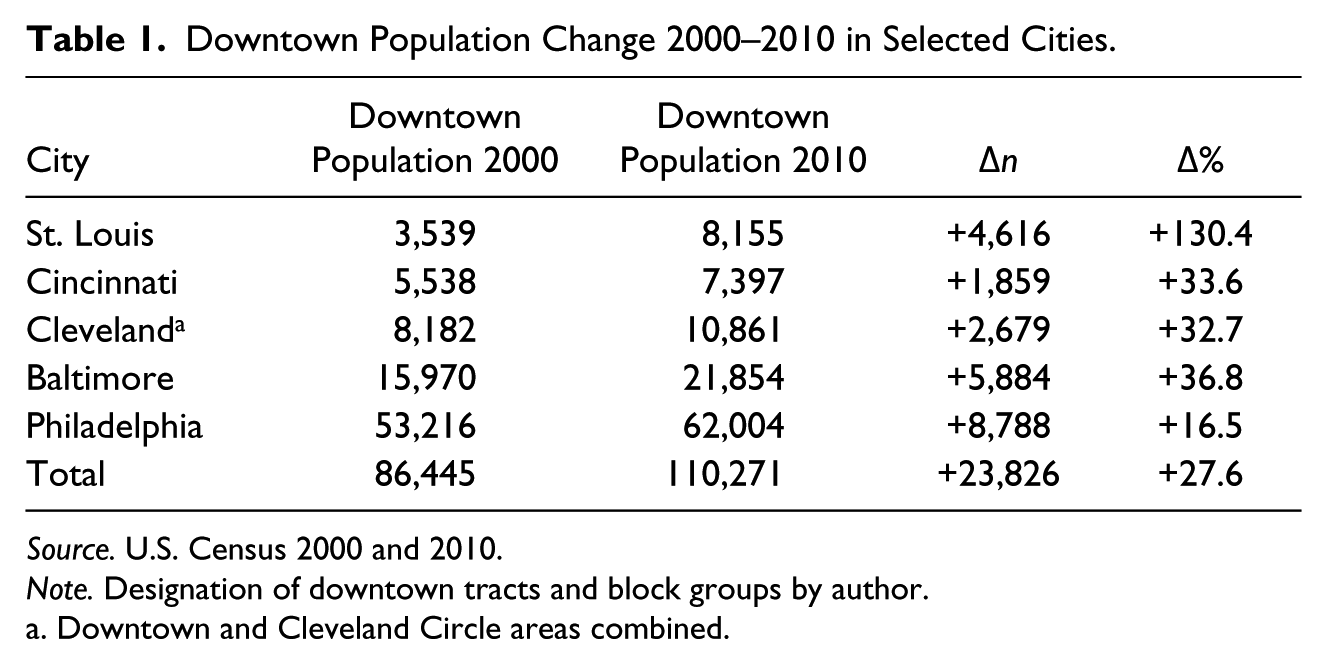
Many downtowns are gaining residents, while the rest of the city continues to lose population. The five downtowns shown in Table 1 added nearly 24,000 people between 2000 and 2010, for a growth rate of 28%. While these are not large numbers, it is worth noting that as these five cities as a group lost 167,000 people during the same period, downtown growth offset 15% of the population loss taking place elsewhere in the city. 7 With the notable exception of Philadelphia, whose downtown, unusual for American cities, has historically accommodated a large residential population, these areas had little or no residential base, at least since the late nineteenth century (Fogelson 2001).
Downtown Population Change 2000–2010 in Selected Cities.
Source. U.S. Census 2000 and 2010.
Note. Designation of downtown tracts and block groups by author.
Downtown and Cleveland Circle areas combined.
These disparities are reflected in the spatial distribution of house values. Figure 1 shows the spatial distribution of house sales by price range for St. Louis, highlighting the disparity between central core areas and the rest of the city. High value census tracts are concentrated in the central corridor, a narrow strip including downtown, the University of St. Louis, Barnes Jewish Hospital (a major research hospital), and a handful of adjacent neighborhoods such as the Central West End. North of the corridor, with the exception of a small pocket of gentrification immediately adjacent to downtown, market demand hardly exists. South of the corridor, a handful of strong market “pockets” are noticeable amid generally weak markets; the strongest is Lafayette Square, again adjacent to downtown. The median house sales price in 2012 was $142,000 in the central corridor, compared with $59,000 outside.
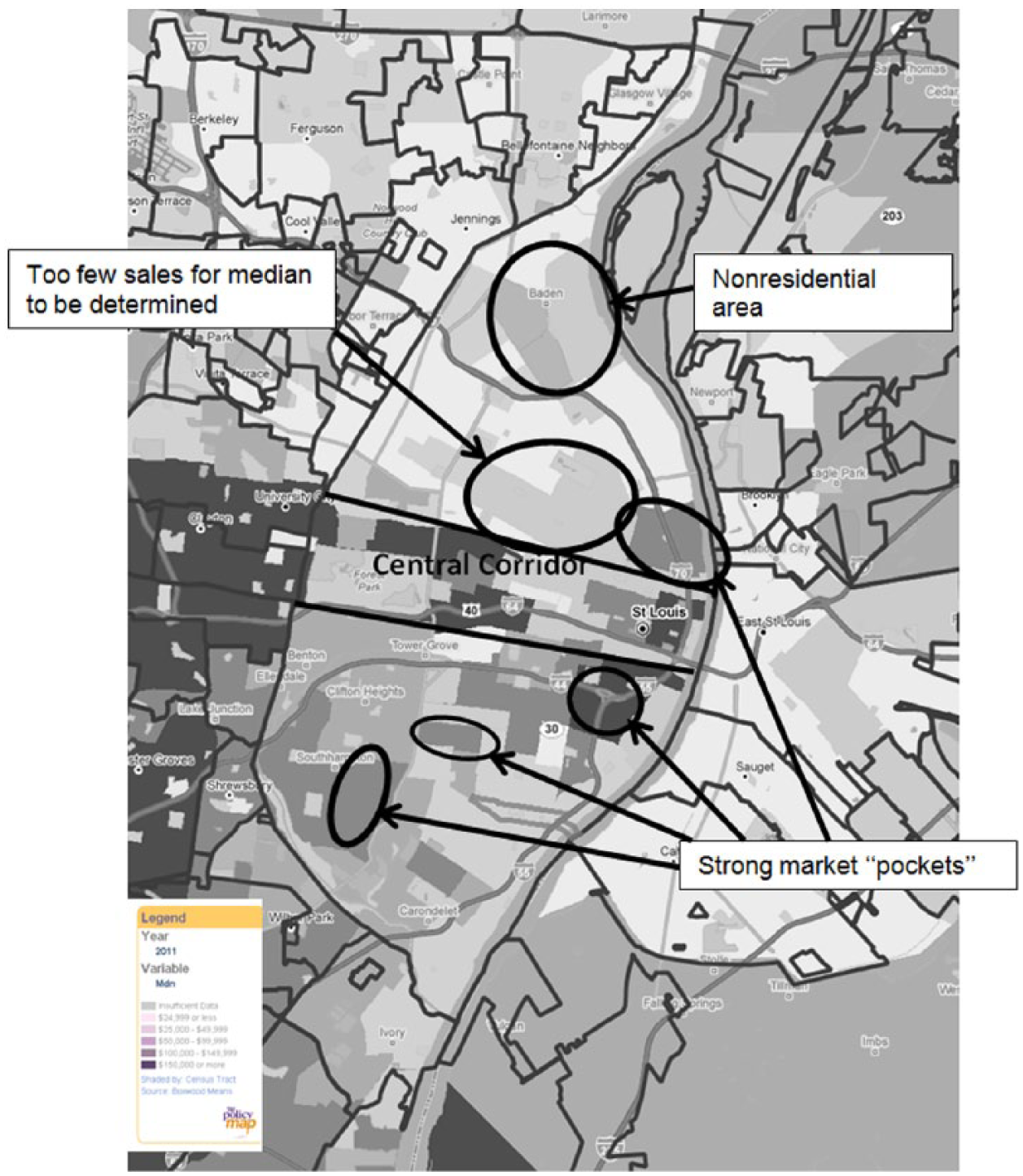
St. Louis median sales prices 2011.
Although Delmar Boulevard—the northern border of the central core—is no longer the hard and fast line dividing white and African-American populations that it was for much of the past century (Gordon 2008), it is still a powerful boundary. Houses in neighborhoods south of the line often sell for $300,000 or more when they come on the market; north of Delmar, prices are little more than $10,000, and many houses do not sell at all and are eventually abandoned. Similar patterns, although not always as sharply demarcated, can be seen in the other cities.
This spatial disparity forms the geographic framework for the trends driving the location of jobs within the city. Although quantitative data are hard to come by for earlier eras, it seems safe to say that from the late nineteenth century through the first two-thirds of the twentieth century, jobs were distributed widely across the city. 8 While downtowns were important job centers, they were only one of many; in 1970, less than 9% of the jobs in the city of St. Louis were located in the city’s central business district. CBDs as job centers were often dwarfed by their cities’ manufacturing sectors; Buffalo’s Lackawanna Works and Bethlehem Steel in Bethlehem, Pennsylvania, each employed over 25,000 workers in their heyday. In Trenton, New Jersey, over 70 separate potteries or ceramic factories, distributed widely across the city, employed nearly 5,000 people in the early years of the twentieth century, a significant number in a city of less than 75,000 population (Potteries of Trenton Society 2001).
Universities and hospitals were modest employers, far from the behemoths they have become in recent decades. Secondary or neighborhood-level commercial nodes and corridors, which provided most city residents with their goods and services, were also a major source of employment until their decimation by suburban automobile-oriented facilities after World War II. While by the mid-twentieth century many suburban workers commuted to downtown jobs, particularly in cities like Philadelphia with strong regional rail networks, most of the cities’ workforce was made up of local residents, often people who lived in the neighborhoods that surrounded the factories. In 1960, 91% of all job-holding residents of St. Louis reporting a place of work worked inside the city. 9
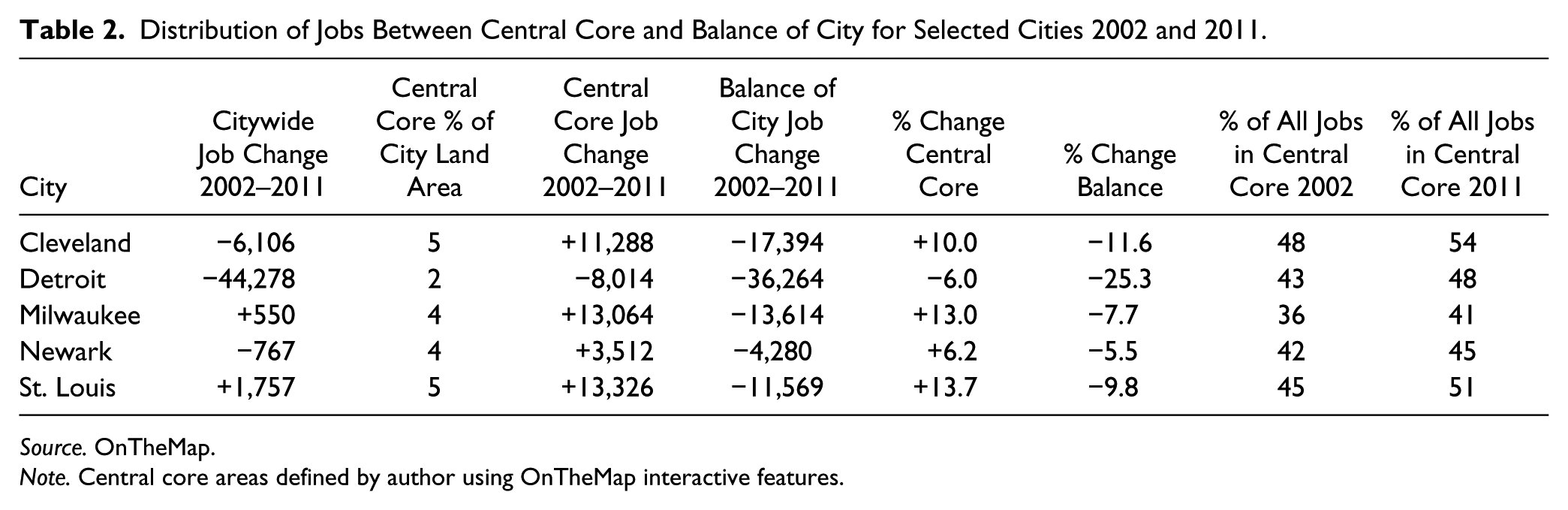
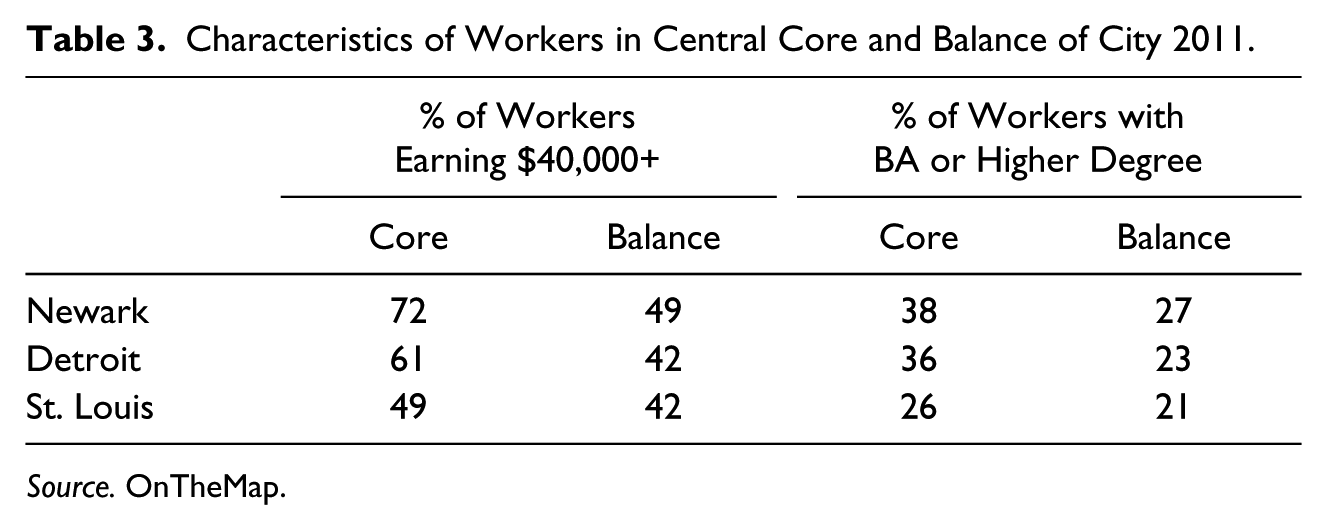
As the factories have closed and secondary commercial districts have declined or disappeared, the relative persistence of downtown office employment coupled with dramatic growth of universities and medical centers has led to a spatial concentration of employment into the central core areas of the city, paralleling the increases in population, wealth, and property values in these areas. The St. Louis Central Corridor, which contains roughly 5% of the city’s land area, 10 contained 51% of the city’s jobs in 2011, a significant increase from 45% in 2002. 11 Table 2 shows similar data on job concentrations for 2002 and 2011 for selected cities. As the table shows, not only are jobs concentrated in the central core but also the level of concentration increased sharply between 2002 and 2011. In most cases, this represented significant net job growth in the central core taking place at the same time that jobs were disappearing at a comparable pace in the balance of the city; in Detroit, both areas declined, but the decline was far more precipitous outside the central core, thus increasing the central core job share and reinforcing the spatial divide. Jobs in the central core on the whole pay better, and demand more higher education, than jobs in the rest of the city, as shown for selected cities in Table 3.
Distribution of Jobs Between Central Core and Balance of City for Selected Cities 2002 and 2011.
Source. OnTheMap.
Note. Central core areas defined by author using OnTheMap interactive features.
Characteristics of Workers in Central Core and Balance of City 2011.
Source. OnTheMap.
The central core is not only gaining a growing share of the city’s jobs but also a growing share of the city’s jobholders, wherever they may work. Between 2002 and 2011, the number of jobholders living in 9 of the 10 cities dropped sharply. Reflecting the growing spatial divide, however, the resident workforce is growing in central core areas and declining elsewhere. Between 2002 and 2011, the number of jobholders living in St. Louis’ central corridor (shown in Figure 1) increased by 17% or over 2,000, while the number of jobholders living in the city’s much larger northside declined by 26% or over 9,000 workers.
The decline in both the city’s worker base and its pool of traditional blue-collar jobs, coupled with the growth of jobs and workers in the central core, has led to growing economic inequality among urban families generally, as the number of households in the lowest and highest income ranges grows and those in the middle decline. Table 4 shows this pattern for Pittsburgh; from 1960, when 71% of all families could be considered to be in a broad “middle” range, earning between 50% and 200% of the citywide median income, that number had dropped to less than 57% by 2011. Over a period during which the city’s population declined by 55%, the number of middle-income families (earning 100%–200% of the city median) dropped by 66%, from nearly 58,000 to fewer than 20,000 families. This growing inequality is driven to a significant degree by these cities’ job trends.
Change in Distribution of Families by Income in Pittsburgh 1960–2011.
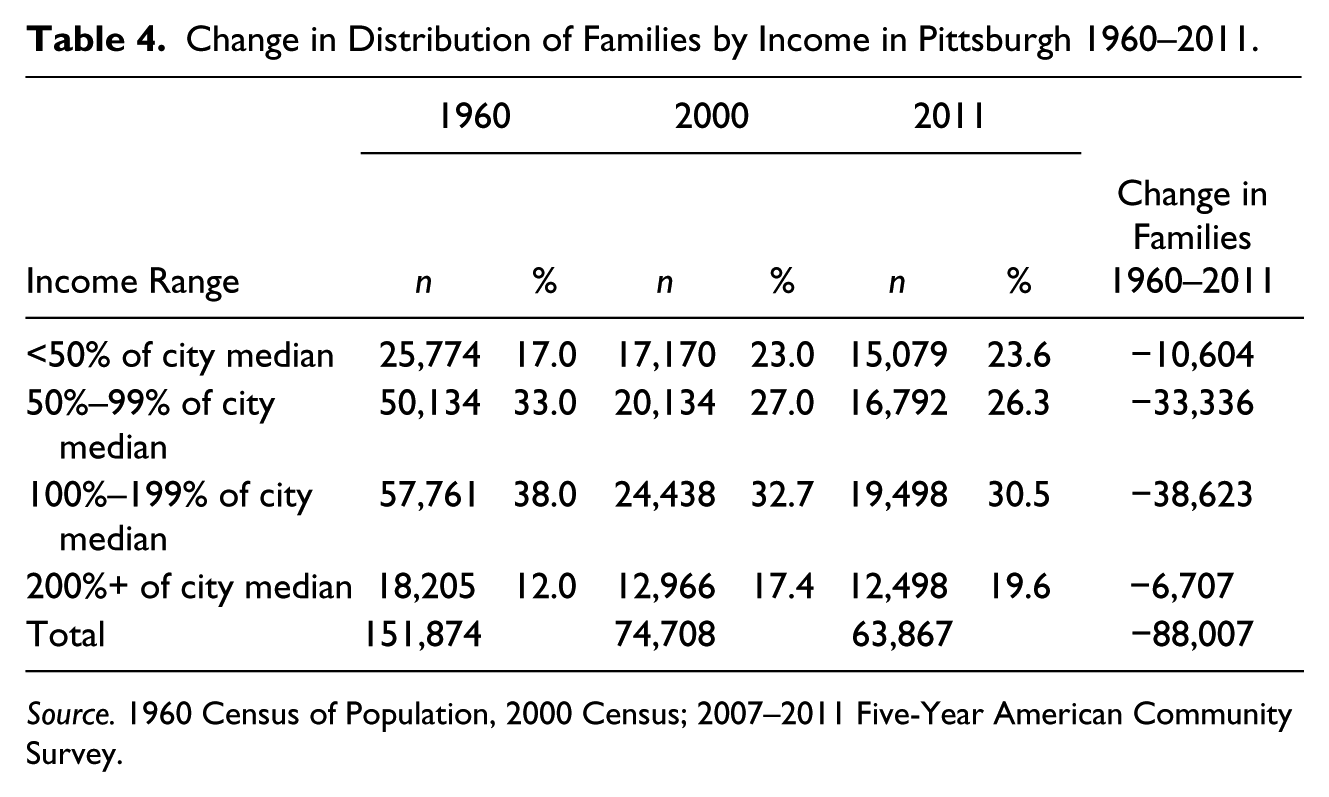
Source. 1960 Census of Population, 2000 Census; 2007–2011 Five-Year American Community Survey.
The Uncoupling of the Economic City
The spatial redistribution of jobs in formerly industrial American cities reflects a dramatic change in the relationship between the “economic city,” 2 the city as a locus of jobs and economic activity, and what might be called the “demographic city,” the city as a residential community and the people who live there. This is most pronounced in the diminishing relationship between the city’s jobs and its resident workforce. That workforce is shrinking, income disparities in the city are increasing, and the jobs in the city are increasingly held by commuters rather than city residents. As discussed below, these changes are disproportionately affecting these cities’ African-American population.
A historical perspective can illuminate the magnitude of this change. Table 5 shows the relationship between three categories of central city worker over time: (1) people who both live and work in the city, (2) people who live in the city but work elsewhere, and (3) people who commute into the city from its suburbs. In 1960, although the postwar decline of the cities was already under way, the historic pattern in which the overwhelming majority of city residents both worked in the city and filled the majority of the jobs that the city offered was still largely intact. With the exception of Newark, 80% or more of city-resident jobholders in the 10 cities worked in the city where they lived; on average, they filled roughly two-thirds of the jobs in the city. At least 25%, and in some cases over 40%, of all of the jobs in each city were manufacturing jobs.
Long-Term Trends in Jobs and Workforce 1960 to 2011.
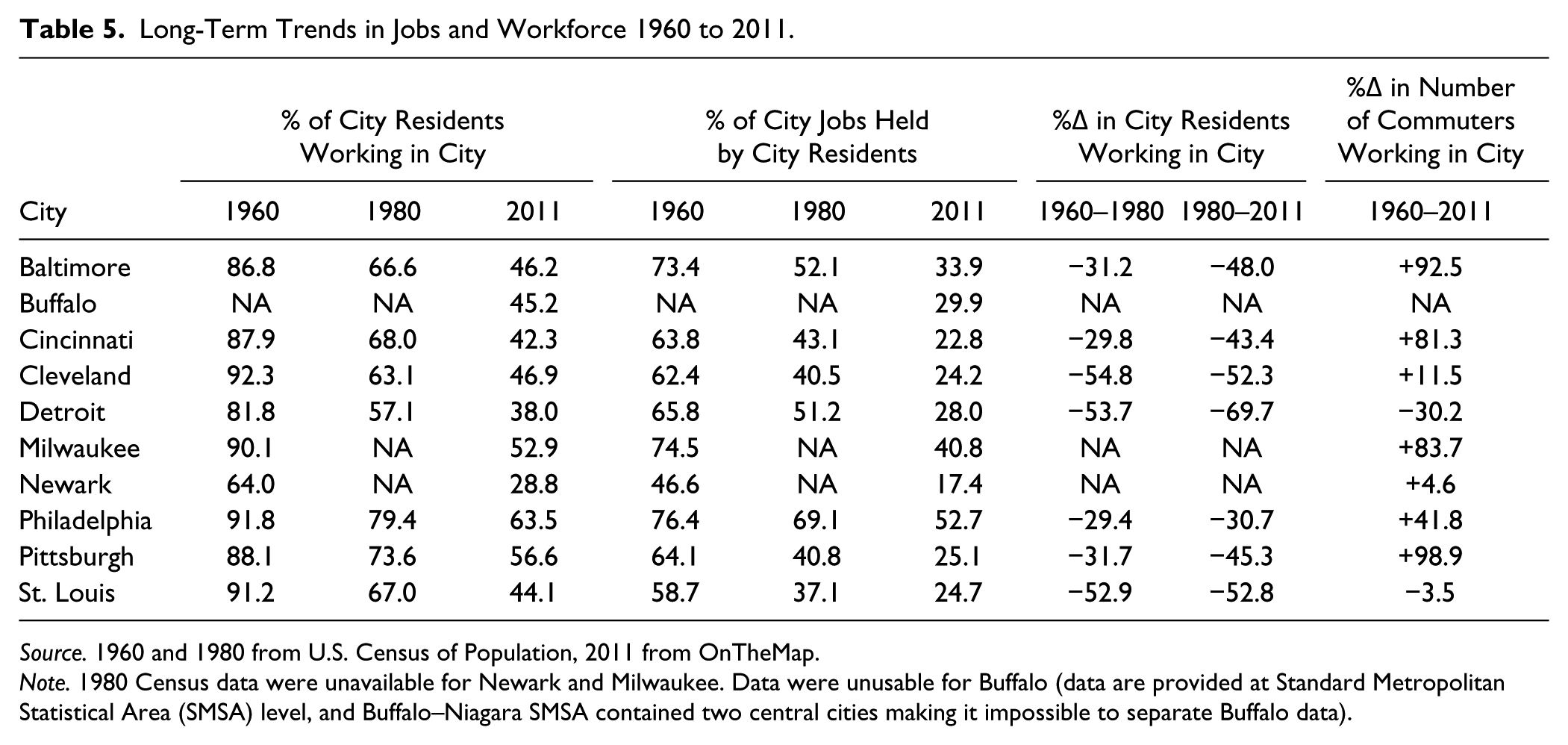
Source. 1960 and 1980 from U.S. Census of Population, 2011 from OnTheMap.
Note. 1980 Census data were unavailable for Newark and Milwaukee. Data were unusable for Buffalo (data are provided at Standard Metropolitan Statistical Area (SMSA) level, and Buffalo–Niagara SMSA contained two central cities making it impossible to separate Buffalo data).
By 1980, these cities had undergone traumatic waves of depopulation, demographic change, and deindustrialization; predictably, the role of city residents in the city’s economy had declined, yet despite the damage of the 1960s and 1970s to these cities’ fabric, the decline was not precipitous. In most cases, two-thirds or more of city residents still worked in the city and filled roughly half of the jobs in the city. Since the 1980s, even as many of these cities have begun to revive their economies and, at least in relative terms, stabilize their populations, the number of city residents working in the city, however, has continued to decline at a rate comparable with that of the period of these cities’ greatest overall economic and population loss. This drop has been far greater than the decline in the total number of jobs in the city and greater than the simultaneous decline in the number of city residents working in the suburbs.
As the number of city residents in the workforce generally and those holding jobs in the city in particular have both declined, the number of suburban commuters to city-based jobs has increased, often in substantial numbers, nearly doubling between 1960 and 2011 in four of the nine cities for which data are available. By 2011, the great majority of jobs in all of the cities except for Philadelphia were held not by residents but by workers who live outside the city and commute to work in the city; 71% of all the jobs in the other nine cities were filled by commuters and only 29% by city residents, a reversal of the historic pattern.
The number of commuters holding jobs in the cities has grown by an average of greater than 10% since 2002. As the cities were not growing jobs to any meaningful extent - only 2 of the 10 showed more than nominal growth in jobs between 2002 and 2011—this growth reflected a zero sum relationship with the resident workforce; during the same period, the number of city residents holding jobs in the city dropped by nearly 180,000 or nearly 17%. This reflects a decline not only in the number of residents working in the city but also in the absolute size of the resident workforce, as the number of residents working outside the city also declined in 7 of the 10 cities, but at a lower rate.
Although it is a subject that requires further investigation, it is likely that the growing share of urban workers reverse-commuting to the suburbs reflects the greater number of low-skill, but also low-wage, jobs being created in the suburbs, in such areas as retail trade, fast food restaurants, or eldercare, as in nursing homes and assisted living facilities. Support for this proposition comes from OnTheMap data that show that city residents working outside the city earned consistently lower wages than those working in the city, as well as that the percentage of workers with BA or higher degrees is consistently higher in central cities than in their surrounding metropolitan areas. This is in marked contrast to 50 years earlier, when city residents working in the suburbs earned substantially more than those working inside the city.
Overall, the number of active workforce participants living in the 10 cities dropped over the past decade at a pace considerably faster than the decline in population; while the cities lost 8% of their population between 2000 and 2010, they lost nearly 16% of their resident workforce between 2002 and 2011. Pittsburgh was the only city to see any growth in the relative size of its resident workforce compared with its total population, while Philadelphia’s job base remained more or less stable relative to its population. 12
As the city’s resident workforce has shrunk, the city’s employers are becoming progressively less dependent on that workforce as a source of people to fill their jobs. As Table 6 shows, the job base in all 10 cities substantially exceeds the size of the resident workforce; taken as a whole, they show a ratio of 1.48 jobs for each resident worker, with 3 cities—Cincinnati, Cleveland, and Pittsburgh—with job/worker ratios close to or above 2.0. Instead of creating job opportunities for city residents, however, the pool from which employers fill these jobs, particularly those that pay well, is increasingly a suburban pool.
Job Inflow/Outflow Trends.
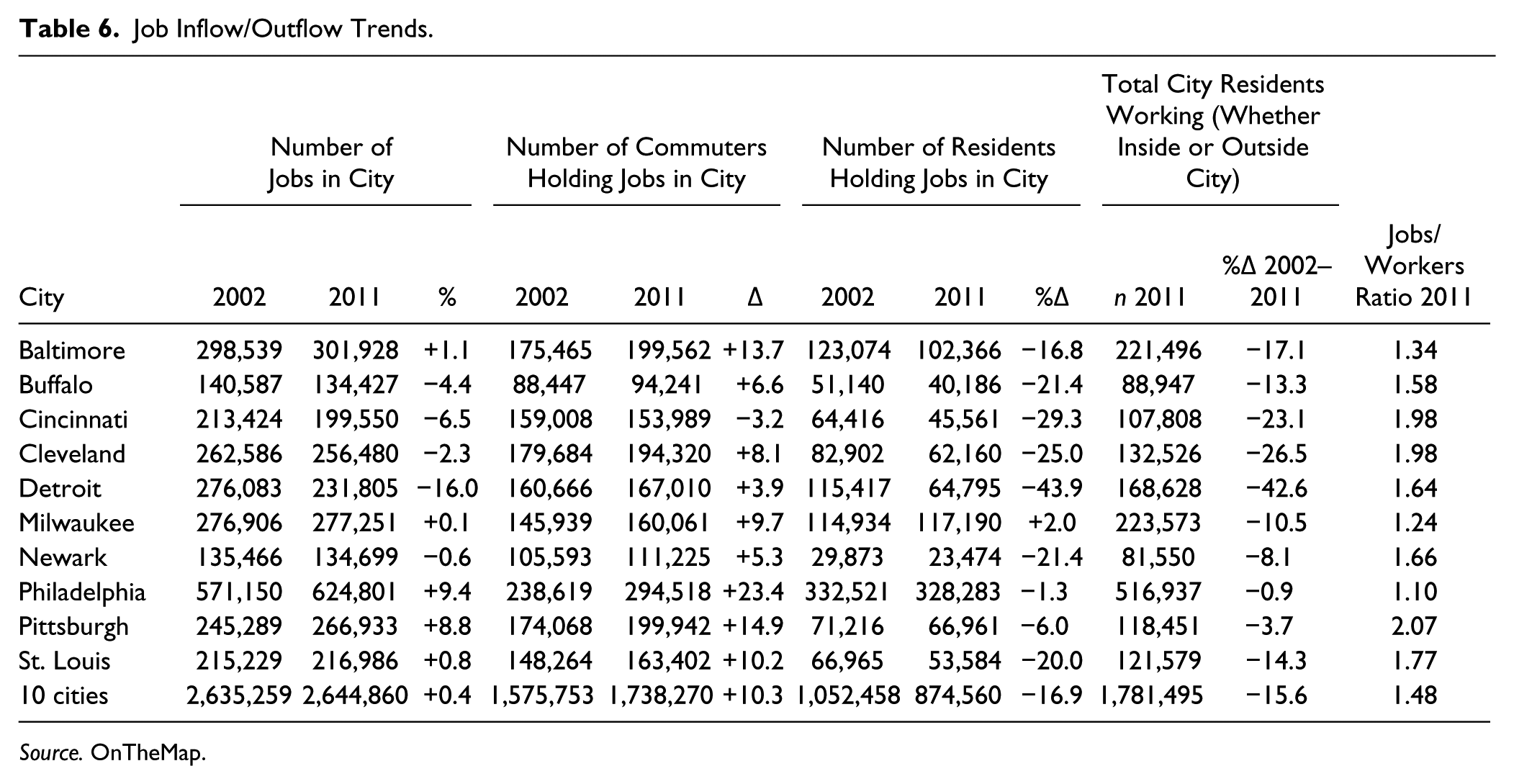
Source. OnTheMap.
The uncoupling of the city’s jobs from its population may be in part a reflection of a skills mismatch, as reflected in the disparity between the number of jobs held by college graduates and the share of college graduates in the resident adult population. It may not necessarily be the case that all of the jobs held by college graduates require that level of formal education; as has been suggested elsewhere, employers may be taking advantage of weak job market conditions to upgrade the skill levels of their workforce, crowding out less educated workers who might have filled these positions in years past, 13 or college graduates having difficulty finding jobs in their fields are taking jobs that do not require a degree; a recent study found that that was true for 4 out of 10 new graduates (Stone, Van Horn, and Zukin 2012). At the same time, as jobs increasingly concentrate in education, health services, and other white-collar and professional categories, much of the disparity may reflect actual job requirements.
The skill mismatch varies widely from city to city. The gap is modest in Pittsburgh and only slightly greater in Cincinnati; it is pronounced, however, in many cities—most notably Cleveland, Detroit, and Newark—where the percentage of jobholders with college degrees is roughly three times the percentage of adult city residents with college degrees. The apparent absence of a mismatch in some cities is misleading, however, as it fails to recognize the educational disparity between white and African-American adults in these cities. It is more accurate to say that there is no skill mismatch in cities like Pittsburgh and Cincinnati between the jobs and the city’s white non-Latino population. The mismatch between the city’s job base and its African-American population, however, as will be discussed later, is large and growing. The skill mismatch is far from a complete or even satisfactory explanation, however; the share of suburban workers in these cities’ goods-producing sector (essentially, manufacturing and construction), where formal education is a far less important condition of employment, is comparable with and often higher than their share of the total job base. 14
Shifts in the city’s economy away from manufacturing to a new economy rooted in higher education and health services have brought significant growth to these cities’ central core areas, but that growth has been paralleled by continued erosion of jobs and workforce attachment in much of the rest of the city, reflecting the uncoupling of the city’s newly emerging economy from the city’s residents. Whether a function of the increased educational requirements for participation in the city’s workforce, which have rendered a growing share of the city’s population less competitive for the jobs that are available, or for other reasons, the workforce that supports central core job growth is largely, and increasingly, suburban. This is taking place at the same time as the city’s resident workforce—whether employed inside the city or outside—is shrinking faster than its population, reflecting the growing marginalization of large parts of these cities’ populations. The growing impoverishment of the urban population does not reflect the absence of jobs in the city where they lived; it reflects the growing disconnect between the cities’ population, particularly their African-American population, and the jobs that are there.
The Growing Racial Divide
The growing economic divide in older American industrial cities is in many respects a racial divide. While this divide has always been a reality of urban America, over the past decade it has grown wider rather than diminishing. The affluent in-migrants who are repopulating city downtowns and other parts of the central core are predominately white; at the same time, these same cities are seeing a significant attrition of their African-American middle class. The size of the black population, either citywide or in many sections of the city, is declining, and the remaining black households are increasingly likely to be poor or near-poor.
The increase in the racial divide can be seen vividly in the dramatic disparity between white and African-American income growth during the past decade, as shown in Table 7. African-American income growth lagged white income growth in all 10 cities, in most cases by significant margins; as the table indicates, white households saw net income growth in constant dollars in 4 of the 10 cities, while their income growth significantly outstripped the national average in 3 more. African-Americans in all 10 cities saw their median income decline in constant dollars, with those declines pronounced in all cities except for Newark and Baltimore. 15 This growing income disparity is not the continuation of an ongoing trend but reflects the reversal of a widespread trend which had previously led to a narrowing of the gap between white and African-American household incomes. Between 1990 and 2000, the racial income gap narrowed—in some cases significantly—in 8 of the 10 cities, only to widen precipitously in the subsequent decade (see Figure 2).
Percentage Change in Median Income for White and African-American Households 1999–2011.
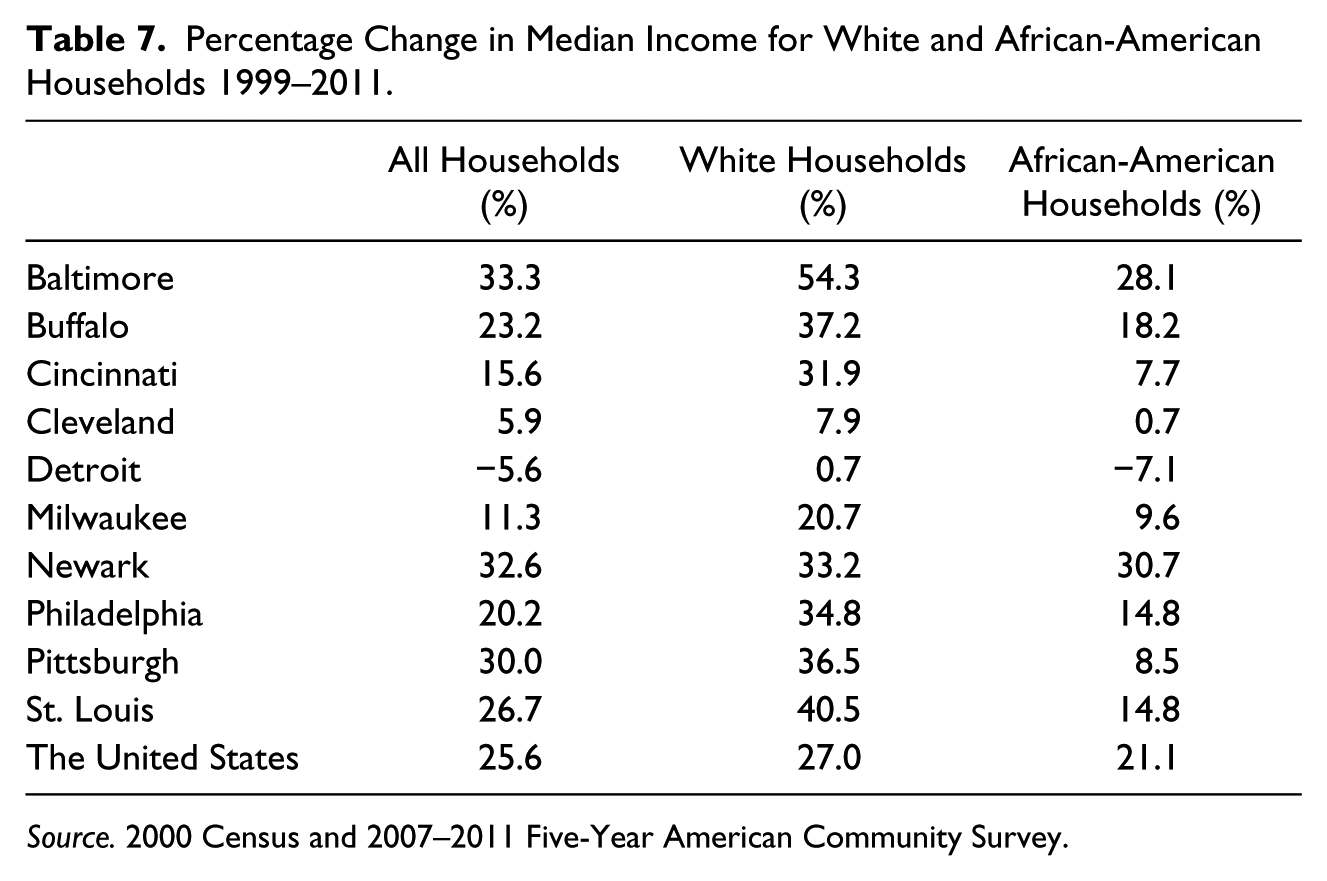
Source. 2000 Census and 2007–2011 Five-Year American Community Survey.
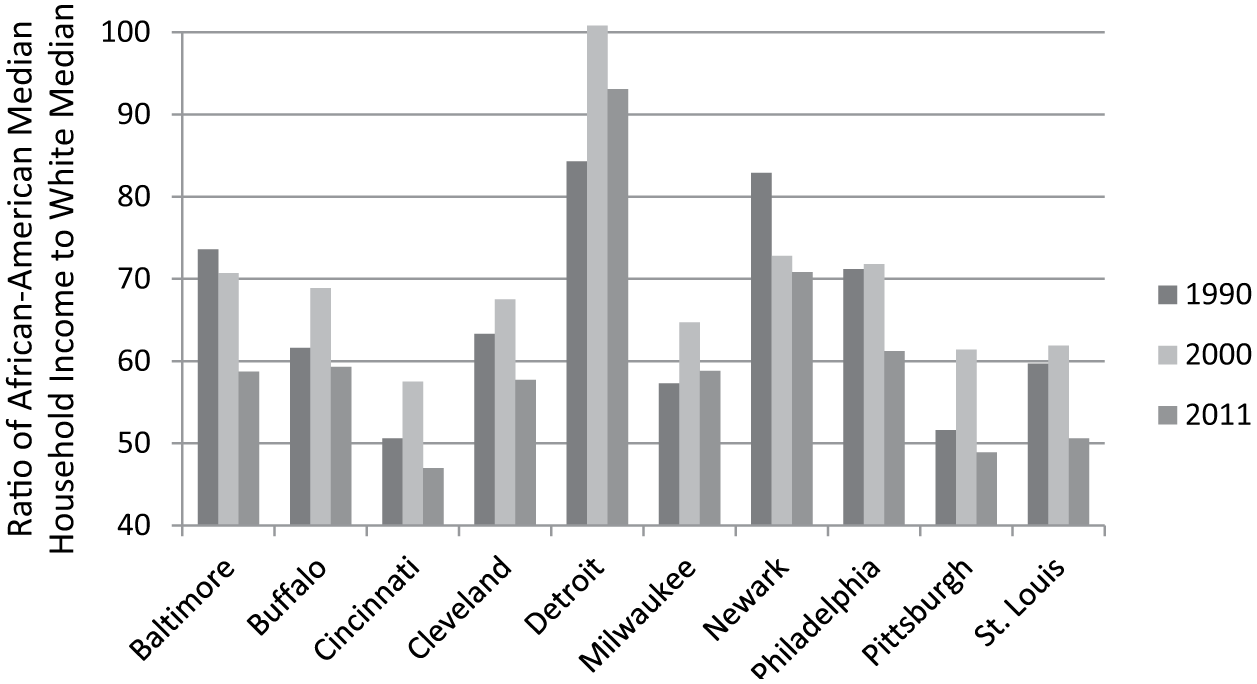
Change in the white/African-American income gap 1990–2000 and 2000–2011.
While some households undoubtedly experienced income declines during the decade, the decline in the incomes of African-American households is too pronounced to be credibly accounted for by changes taking place within a static pool of households. Rather, it appears to be heavily driven by the acceleration in the movement of middle-class African-American households from the cities to the suburbs during this past decade. Although this is not a new phenomenon, earlier commentators tended to focus on movement within the city to more historically upscale white neighborhoods (Winsberg 1985) or on the effect of migration on the suburbs (Wiese 2004). Although recent trends in Black migration have received only limited scholarly attention (Clerge and Silver 2012), they have been described in numerous journalistic accounts; in addition to detailed reporting from Philadelphia (Ferrick 2011; Mallowe 2011) and Detroit (Kellogg 2010), a web search identified similar accounts from many other cities, including Birmingham, Dallas, Los Angeles, Memphis, and Oakland.
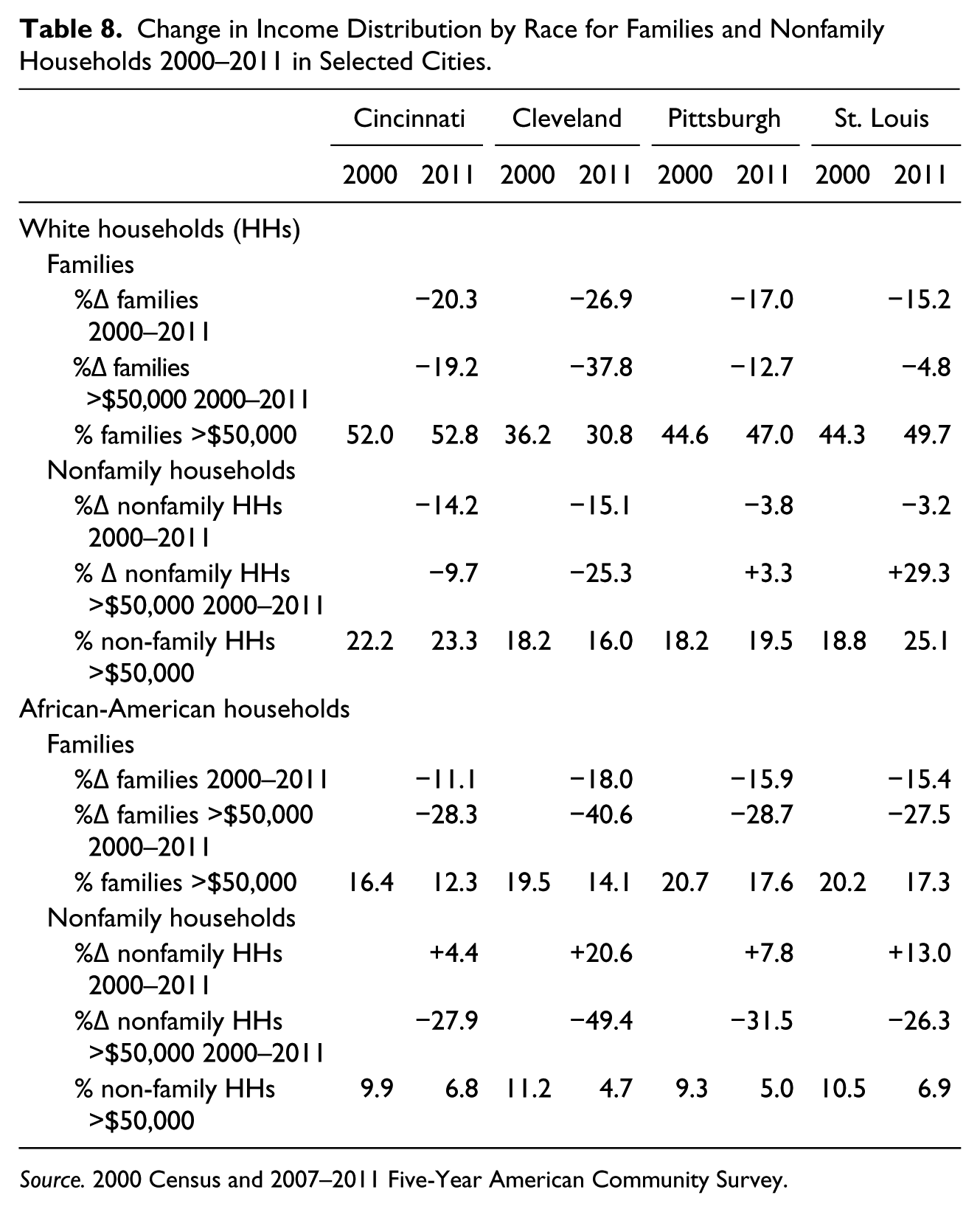
The existence of this trend is borne out by Table 8, which compares the change between 2000 and 2011 in white and African-American families and nonfamily households (mainly single individuals) as a whole with the change in families and nonfamily households earning $50,000 or more (in 1999 dollars) in 4 of the 10 cities. While the number of Black families in all four cities declined during the decade, the number with family incomes above $50,000—a rough surrogate for middle-class status—dropped far more rapidly. While the number of Black families in Cleveland declined by 18%, the number of Black families with incomes above $50,000 dropped by over 40%. The disparity by income is even more pronounced for nonfamily households.
Change in Income Distribution by Race for Families and Nonfamily Households 2000–2011 in Selected Cities.
Source. 2000 Census and 2007–2011 Five-Year American Community Survey.
Many white families also continue to leave the cities. Their numbers, including many working-class survivors of these cities’ industrial heyday, are also declining. The data presented in Table 8, however, show sharply different overall migration patterns for White and African-American households. While African-American out-migration is disproportionately concentrated among higher-earning families, White out-migration is more mixed. While White out-migrants are likely to be replaced by younger, affluent White households, middle-income Black out-migrants are being replaced, if at all, by lower-income households, including particularly large numbers of low-income nonfamily households or single individuals. As a result, in three of the four cities shown in Table 8, a growing share of both White families and nonfamily households is in the middle or upper-income brackets, while the opposite is true of Black families and, even more strongly, Black nonfamily households. As the middle continues to shrink, the economic gap between the conditions of White and African-American households continues to grow.
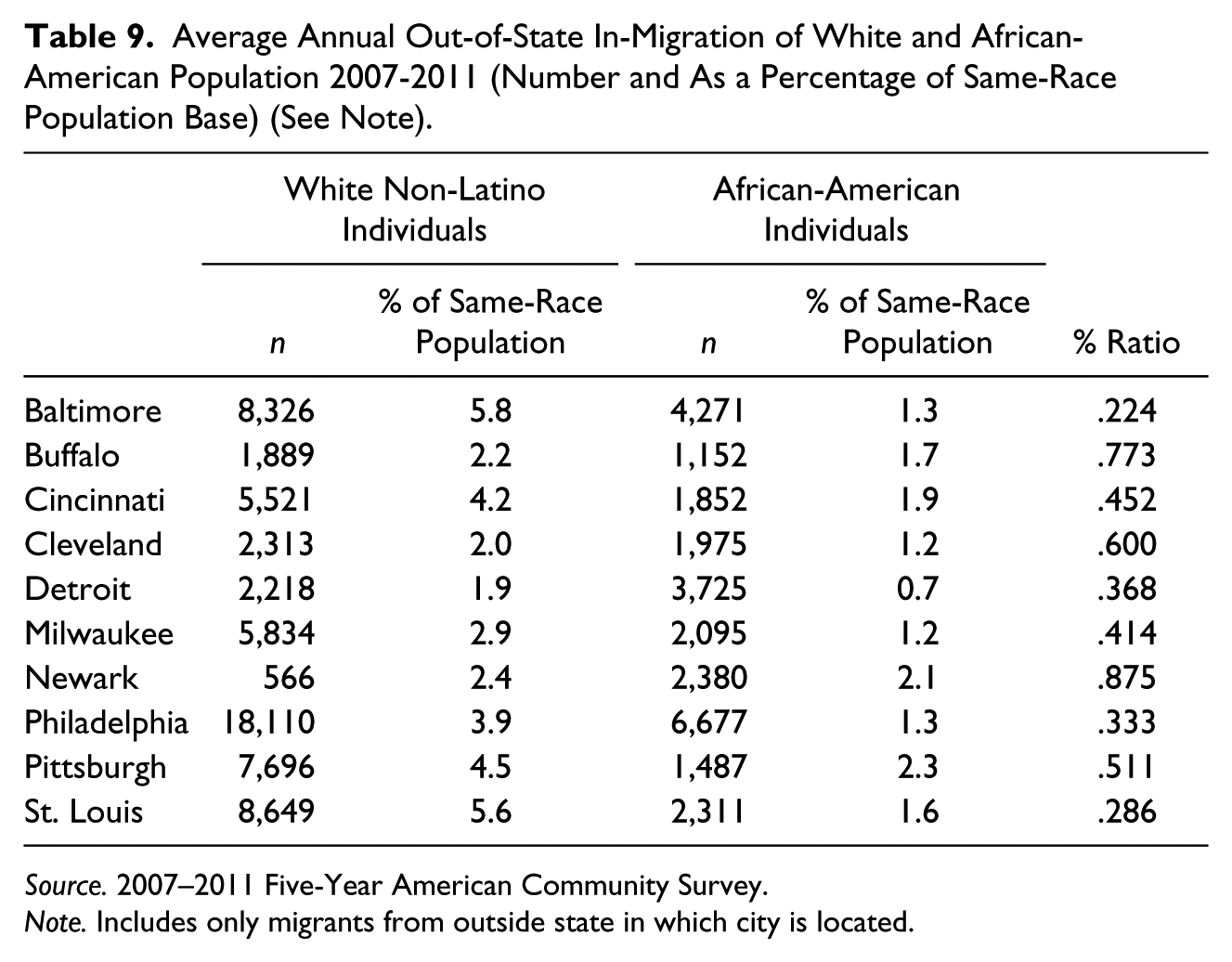
The income gap is becoming a chasm in the cities which have seen the greatest central core revitalization, such as Pittsburgh and St. Louis, compared with Cleveland, where both White and Black populations are seeing their middle-class share decline. Many of the 10 cities are seeing significant White in-migration; as Table 9 shows, the average annual in-migration of White non-Latino households from outside the state into Baltimore, Cincinnati, Pittsburgh, and St. Louis between 2007 and 2011 exceeded 4% of the total white population base, and in 6 of the 10 cities exceeded 5,000 per year. Conversely, in only 2 cities did African-American out-of-state in-migration exceed 2% of the black population base, Newark and Pittsburgh. White out-of-state in-migration—measured as a percentage of the city’s same-race population—exceeded African-American in-migration in every city.
Average Annual Out-of-State In-Migration of White and African-American Population 2007-2011 (Number and As a Percentage of Same-Race Population Base) (See Note).
Source. 2007–2011 Five-Year American Community Survey.
Note. Includes only migrants from outside state in which city is located.
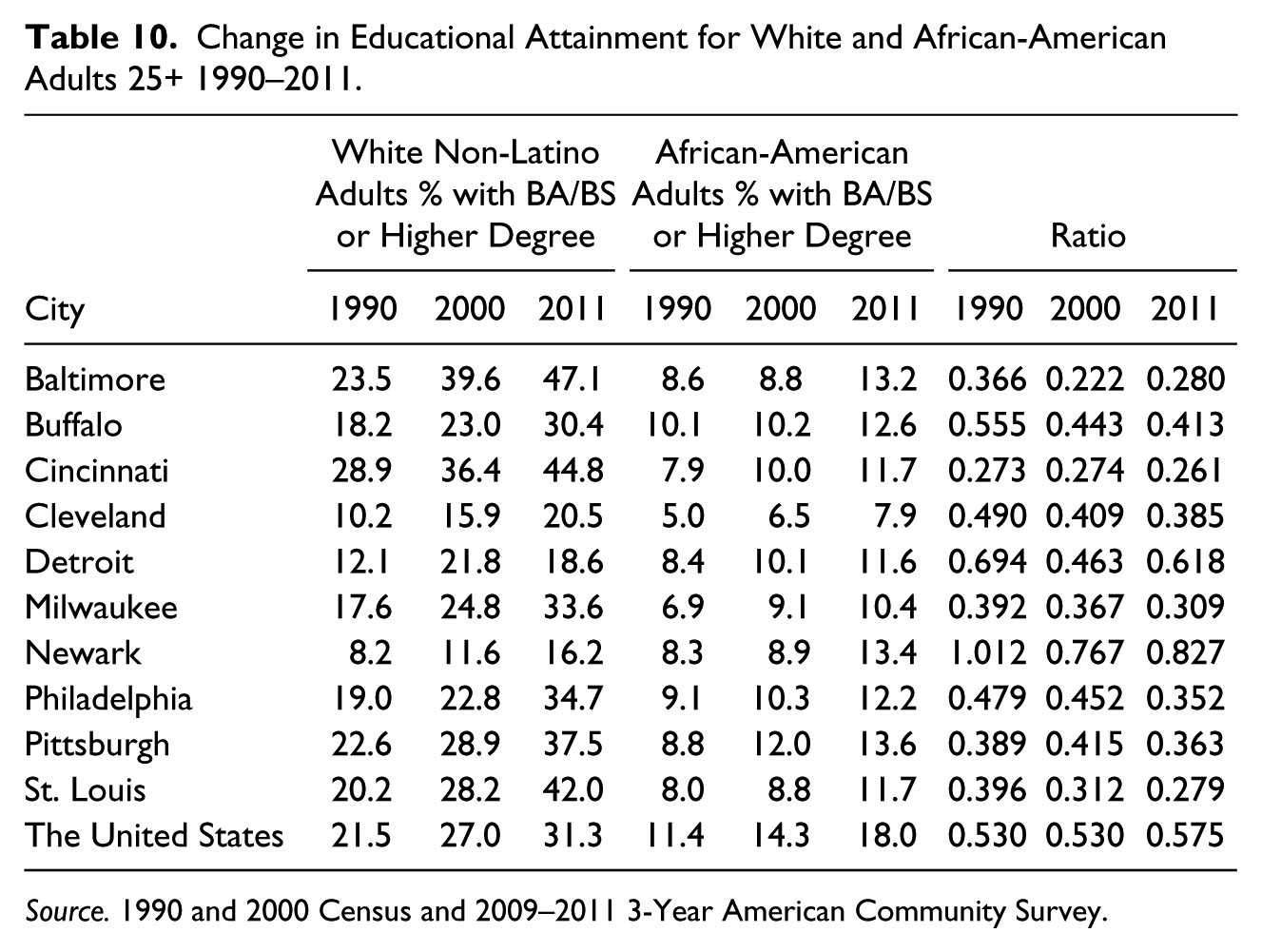
A further widening racial divide, which may be even more important in its long-term implications, is that of educational attainment. The relationship between educational attainment and economic achievement has been widely noted (Kodrzycki 2002 and others), while the powerful association between educational attainment and both income and unemployment rate has been well documented (Day and Newburger 2002). The gap in educational attainment between White and African-American households in the majority of the cities studied is a huge one, as shown in Table 10. For example, 42% of White adults in St. Louis have college degrees, compared with only 12% for African-American adults. In 6 of the 10 cities, the percentage of white adults with college degrees is higher than the national average for White adults; the same is true in no city for African-American adults. The only two cities to show no more than a modest attainment gap are Detroit and Newark; the narrower disparity in those two cities, however, rather than reflecting greater educational attainment by the city’s African-American residents, is the product of lower educational levels for those cities’ White adults. It is notable that these are two of the cities that have among the lowest levels of current White in-migration and which have seen less central core revitalization than the other cities studied.
Change in Educational Attainment for White and African-American Adults 25+ 1990–2011.
Source. 1990 and 2000 Census and 2009–2011 3-Year American Community Survey.
While the presence of substantial racial disparities in educational attainment has long-standing historical roots, the increase in the size of the attainment gap over the past decade arguably has deeper implications for these cities’ future. Although African-American adults in the 10 cities exhibited modest improvement in educational attainment between 2000 and 2011, their progress was far outstripped by much greater improvement in the educational attainment of white adults in these cities. With the exception of Detroit, Newark, and Baltimore, every city saw a widening racial educational attainment gap, in contrast to the nation as a whole, which saw a modest decrease in the gap during the same period. Newark and Baltimore were the only cities in which the gap narrowed between 2000 and 2011 as a result of more than modest progress by African-American households, although in Newark gains made up only a small part of the ground lost during the 1990s.
Looked at differently, between 2000 and 2011, the rate of increase in educational attainment for Whites exceeded the national rate for White adults in 9 of the 10 cities; for African-Americans, the same was true, outside of Newark and Baltimore, only in St. Louis. The gap grew significantly wider in St. Louis, however, during the decade because of the even stronger growth in educational attainment by White households. As these cities complete their shift to a postindustrial economy and the educational and skill demands of the emerging economic sectors continue to increase, lack of education becomes a permanent barrier to upward mobility and opportunity, which is likely to have long-term ramifications for these cities’ racial divide.
Conclusion
While there is strong evidence of revitalization since 2000 in the central core areas of many cities, the evidence is equally compelling that this revitalization is resulting in little benefit to much of the rest of these same cities and that the residents of these cities, taken as a whole, may be losing ground economically. The city’s job base is increasingly becoming concentrated in the central core, while those jobs are increasingly held by commuters rather than city residents. During this period, the size of the city’s resident labor force has shrunk at a rate roughly double the overall rate of population loss. In effect, the economic city has become increasingly uncoupled from the people who live in the city, the demographic or social city.
The growing bipolarity of these cities is increasingly racial in character. While these cities have historically had social and economic gaps between their White and their African-American populations, these gaps have widened significantly during the past decade, as shown in two critical measures—increased disparities in income and in educational attainment. Middle-class Black families appear to be leaving the cities at an accelerating pace; although White families also continue to leave the city, not only are White out-migrants not disproportionately from the more affluent middle class, but many cities are seeing an influx of young, affluent White households that far outstrips simultaneous African-American in-migration. The outcome is an increasingly affluent and well-educated—and growing—White population in these cities, juxtaposed against an increasingly poor or near-poor African-American population lacking the education and skills to compete for an increasingly white-collar, college-degree-oriented job base clustered around downtowns and major educational and medical institutions.
Some of these cities are already seeing a reversal of the trend of many decades during which African-American populations grew and White populations declined. This may increase in coming decades, if economic growth continues to draw younger and predominately White professionals to these cities while safety concerns, poor school performance, and inadequate public services continue to draw predominately African-American families to the suburbs. This may lead in turn to the acceleration of a trend already widely visible, the impoverishment of many inner-ring suburbs. This trend is already well advanced in the suburbs of Cleveland, St. Louis, and other cities. This population reversal may also change the political and social dynamics of many cities, including a decline in the political base of Black elected officials. While that change may not have major practical implications in terms of the delivery of services or the allocation of resources, it is fraught with powerful symbolic significance.
These findings strongly indicate that revitalization, at least at the scale and of the character that is being experienced in these cities, does not confer citywide benefits; if anything, it may even redirect jobs, resources, and wealth away from large parts of the city, concentrating them in a smaller area and leaving the rest worse off than before. Large parts of all of these cities, even where downtowns are thriving, are market “deserts,” where little sales activity takes place except for the occasional investor or speculator and where vacant lots and abandoned buildings are widespread. While this is not new, it is getting worse rather than better. 16
The specter of a reviving core largely surrounded by poverty and blight is becoming a reality in many of these cities. To what extent such a spatial pattern is sustainable is an open question. If central core jobs, as well as the amenities associated with the core, grow significantly, housing demand may spread into adjacent or nearby areas; that appears to be happening to a limited extent in a few of the cities discussed here such as Pittsburgh or Baltimore. If that fails to happen, the boundaries between the central core and its surroundings are likely to harden—if not literally—in a manner not unlike the walls that protected the prosperity of the medieval city from its impoverished countryside. If it does happen, though, it may merely push the walls gradually outward, rather than materially changing the underlying bipolarity of the city.
From a social justice perspective, it would be appealing to be able to assert unequivocally that this emerging spatial pattern is not economically sustainable. While the pattern has not been in place long enough in the cities discussed here to answer the question, the experience of cities in other parts of the world, notably Latin America, suggests that an urban settlement pattern based on extreme spatial and economic inequality can persist seemingly indefinitely; whether that pattern is conducive to strong economic growth and vitality, however, is another matter. Benner and Pastor (2012) argued, based on a substantial body of economic research, that “doing good and doing well can go hand in hand” (p. 2).
Beyond the question of sustainability is that of equity or justice. This is, as Fainstein (2010) pointed out, “obviously value laden.” From what might be considered a neoliberal perspective, there is arguably little to fault with the trends described in this article. The market is working. Jobs are growing in those areas with the greatest competitive advantage, while employers are maximizing the quality of their workforce by recruiting from throughout the region. Areas like Oakland in Pittsburgh or Cleveland’s Warehouse District have become vibrant hubs of activity, while neighborhoods with competitive market advantages are reviving. The city is drawing young people bringing skills, talent, and energy, while African-American middle-class families are acting out of rational self-interest by leaving a city that, from their perspective, is no longer competitive with suburban jurisdictions with respect to the quality of services it offers or the economic and psychological costs it imposes.
From that perspective, therefore, one can argue that the trends described in this article are not only not a problem but also arguably positive, in that they foster a more efficient use of urban resources and maximize the competitive edge of those parts of the city that are indeed market-competitive. Although the neoliberal paradigm is popular with many private- and public-sector policy makers in twenty-first-century America, it is not the only framework through which one can look at a city. It privileges individual, free market activity over all other activities and fails to recognize the many complex ways in which the different sectors of a city, or a society, are interconnected. It attributes little or no value to core principles such as democracy, opportunity, 17 and social cohesion that have long been part of the American tradition. With Fainstein, I would argue that it is not enough. That perspective is inimical to the vision of a just city that she has articulated, with its focus on equity, diversity, and democracy. Indeed, these trends seem destined to lead to a heightened level of segregation, in which households are segregated by race, by economic status—which, within these cities, is increasingly a function of race—and potentially by demography or life cycle.
Moreover, the implications of these trends for the city as a physical environment, and for the quality of life of a large part of its resident population, are equally problematic. As the number of jobholders in the city declines and of that dwindling number, more and more are commuting long distances to the suburbs for what is more often than not low-paying work, the economic framework for the neighborhoods where they live is likely to weaken, bringing in its train declining property values, increased vacancy, and a deteriorating quality of life. There is strong evidence that this is indeed taking place. 18
The trends described in this article contain significant implications for public policy, and yet may well be highly resistant to change, at least within the present economic and political environment. While a detailed discussion of policies is beyond the scope of this article, a few comments may be appropriate. Although measures to combat inequality are being widely discussed, many of the measures under consideration, such as increasing the minimum wage or adopting local “living wage” ordinances, while likely to benefit some individuals in low-wage jobs, would have little impact on the process of economic uncoupling taking place in these cities. Measures directly designed to increase access for city residents to jobs may hold more promise.
The most obvious recommendation would be for measures to build human capital and increase the competitive position of the urban workforce, focusing on improving educational outcomes and workforce readiness (Perna 2014). 19 Over and above that, one should advocate for concerted use of public policy levers to link the city’s workforce to economic opportunity, reflecting the reality that much job and business growth in urban areas is furthered to varying degrees by public resources, investment, or outright subsidy (Weber and Santacroce 2007; Wolf-Powers 2013). Such strategies can include broad reframing of tax incentives away from broadly available and largely undifferentiated subsidies to targeted approaches focusing on creation of local workforce opportunities, to specific programs, such as “first source” ordinances, mandating that employers receiving public benefits provide preferential hiring opportunities to qualified local workers. Alternatively, one might acknowledge the growing centrality of the suburban job pool for the urban workforce, and press for improved transportation linkages between urban workers and suburban jobs (Katz and Allen 1999).
One cannot be overly optimistic about the likelihood of initiatives of this sort coming into being, particularly in the older industrial cities discussed in this article. Despite the modest improvements resulting from uneven, limited revitalization, all of these cities are subject to severe resource constraints drastically limiting their ability to undertake new initiatives; moreover, while a uniquely situated city like New York may contemplate limiting business incentives or imposing obligations on its private sector, such steps are far harder for the strapped cities of the rustbelt, few of which are experiencing more than at best anemic job growth and which are in a weak competitive position in the global marketplace (Longworth 2008; Moretti 2012). Moreover, it is unclear that the political will is there to provide the resources any serious attempt to address this issue demands; notwithstanding the rise of mayors like Bill de Blasio in New York and Bill Peduto in Pittsburgh, neither the federal government nor more than at most a handful of state governments appear to have any interest in providing the financial support without which the best local ideas are likely to founder.
Finally, one must ask whether, assuming against all odds that truly effective, sustained strategies were indeed put in place that led to significantly greater opportunities for city residents to gain good, well-paying, jobs, whether those strategies would lead to inadvertent consequences; for the cities where those residents now live. In the absence of fundamental changes to the quality of life in their neighborhoods, it is not only possible but also likely that large numbers of them would move to the suburbs as their economic conditions improved, further hollowing out the central cities. That may be an acceptable trade-off for the improvement to their lives but cannot be considered an entirely positive outcome.
Footnotes
Declaration of Conflicting Interests
The author(s) declared no potential conflicts of interest with respect to the research, authorship, and/or publication of this article.
Funding
The author(s) received no financial support for the research, authorship, and/or publication of this article.