






Abstract
Background
Hepatitis B virus carriers who receive systemic cancer chemotherapy have been found to be at a higher risk of hepatitis B virus reactivation. However, lack of standard prophylaxis protocol resulted in life-threatening adverse events.
Objective
This retrospective study is to investigate prevalence and chemotherapy drug-induced hepatitis B virus reactivation in all types of cancer patients and establish an institutional clinical practice protocol.
Results
In total 784 patients, 404 patients (51.53%) underwent hepatitis B virus serum antigen (HBsAg) testing before chemotherapy, and 61 patients (7.78%) tested positive. Only 32 patients (4.08%) received prophylactic hepatitis B virus antiviral therapy. Patients receiving prophylactic antiviral drugs were significantly lower risk of hepatitis B virus reactivation than nonprophylaxis (relative risk, RR: 0.53, number needed to treat, NNT: 12). Moreover, our study found specific single or combined chemotherapy that may cause hepatitis B virus reactivation different from those of other studies conducted in Western countries. The differences may refer to enzymes, proteins and immune response of patients.
Conclusions
Our findings indicate that cancer patients receiving prophylactic antiviral drugs remain at risk of hepatitis B virus reactivation during chemotherapy. Therefore, the hepatitis B virus screen and chemotherapy control system was established in 2017 to reduce the risk of hepatitis B virus reactivation and improve patient safety.
Introduction
Hepatitis B virus (HBV) infection is a global public health concern. Individuals who are infected by HBV during early childhood are very likely to develop chronic hepatitis.1,2 Chronic hepatitis is an important clinical issue for HBV carriers who are receiving cancer chemotherapy. 3 HBV reactivation during chemotherapy may result in asymptomatic hepatitis without jaundice, symptomatic hepatitis, hepatic decompensation, or even death. It may also lead to treatment disruption or withdrawal, and compromise treatment outcomes. 4
Research has shown that systemic chemotherapy agents such as anthracyclines, vinca-alkaloids, methotrexate, cyclophosphamide, and etoposide, are highly associated with HBV reactivation.5,6 Data from the US FDA adverse event reporting system show that 26 cytotoxicity chemotherapy drugs and 7 molecular-target agents increase the risk of HBV reactivation. 6 In addition, rituximab, bortezomib, imatinib, everolimus, transtuzumab, taxane, and azacitidine may contribute to the risk of HBV reactivation. 6 Chen et al. observed that the incidence of HBV reactivation was 10.4 per 100 person–years and similar among various subtypes of hematological malignancy. 7 The patients receiving conventional cytotoxic chemotherapy, rituximab-based immunotherapy, and stem cell transplantation experienced HBV reactivation. 7 In a prospective study, 12 of 17 lymphoma patients who had HBV infection resolution experienced HBV reactivation (serum HBsAg positive). It is worth noting that 9 of these 12 patients were undergoing rituximab-based chemotherapy. 8
Several scientific associations, including AASLD (2018),9 EASL (2017),10 AGA (2015), 11 and APASL (2015), 2 have developed guidelines for screening, prevention, and treatment of patients with hepatitis B, especially those who are under high risk of HBV reactivation (e.g. patients with cancer). These guidelines underscore the importance of HBV screening and preemptive treatments for cancer patients before they receive chemotherapy. Specifically, these guidelines recommend using HBV serum antigen (HBsAg), total hepatitis B core antibody (anti-HBc), baseline serum HBV DNA, and liver function testing before initiating chemotherapy or immunosuppressive therapy. Given that HBsAg is the first detectable marker of HBV infection, the screening for HBV infection is usually performed by testing for HBsAg.12,13 Serum HBV DNA becomes detectable during anticancer therapy or within the period of immunosuppression, followed by serum alanine aminotransferase (ALT) levels rising intermittently. 5
Research has found that prophylactic drugs have the potential to decrease the risk of HBV reactivation during chemotherapy. In a randomized controlled trial that involved patients with lymphoma receiving rituximab therapy, the cumulative HBV reactivation rates at 6, 12, and 18 months after chemotherapy were 8%, 11.2%, and 25.9%, in the control group, and 0%, 0%, and 4.3%, in the entecavir prophylaxis group. 14 Similarly, Yeo et al. found that the 24-month cumulative HBV reactivation rate was as low as 4.0%. 15 Liu et al. reported that lymphoma patients receiving rituximab taking prophylactic entecavir had no HBV reactivation or related hepatitis. 16
The issue of chemotherapy-induced HBV reactivation has gained attention in Taiwan in recent years. Two studies published in 2018 discussed the prevalence of HBV reactivation in Taiwan. Chen et al. investigated patients with hematological malignancy in northern Taiwan, and Su et al. examined patients with resolved HBV infection in all types of cancers in southern Taiwan.7,17 Given that Taiwan is a HBV epidemic area, it is essential to engage in the discussion of chemotherapy-induced HBV reactivation by analyzing cases from different region of Taiwan in order to advance the understanding of the issue. Therefore, the present study analyzed the prevalence of HBV reactivation among patients in all types of cancers in central Taiwan. This study is unique in that it differs from the other two studies by investigating different prophylactic agents used on the preemptive treatment and by presenting the higher risk of anticancer agents-induced HBV reactivation.
Methods
Human subject protection
This study has been reviewed and approved by the Taichung Tzu Chi Hospital Research Ethics Committee (REC105-33). All the procedures to protect human research subjects were in compliance with the ethical standards of this institutional research committee and with 1964 Helsinki declaration and its later amendments or comparable ethical standards. Informed consent was waived given the retrospective nature of this cohort study.
Study design and patient selection
The investigators reviewed the medical records of all cancer patients who underwent chemotherapeutic agents dispensing and pharmaceutical care (National Health Insurance Code 05221 A) between 2013 and 2014 in a hospital in central Taiwan. In total, 784 patients were included in this study (Figure 1). Exclusion criteria were as follows: (a) local chemotherapy with intracavity instillation of cytotoxic agents, (b) drug- or alcohol-related hepatitis, (c) systemic chemotherapy for immune diseases, and (d) patients with active hepatitis B diseases before the chemotherapy date.

Cancer Patient Profile. A total of 784 cancer patients receiving chemotherapy during January 2013 to December 2014 in a hospital in central Taiwan. Of the 404 patients who were screened for HBV before chemotherapy, 61 were HBsAg positive (15.3%) and 343 were HBsAg negative. Of these 61 patients, only 32 patients received prophylactic treatment, but 2 of them experienced HBV reactivation during chemotherapy. Of the 380 patients who were not screened for HBsAg and did not receive prophylaxis before chemotherapy, five of them experienced acute hepatitis B flares during chemotherapy. Regardless of whether receiving prophylactic treatment, there were 13 patients suffered from HBV reactivation during the cancer treatment.
Outcome measures
The investigators surveyed the incidence of chronic HBV infection, pre-screening rate of HBsAg before the initiation of chemotherapy, and the severity of HBV reactivation and treatment outcomes of these patients.
This study used HBsAg testing as the primary screen test, because HBsAg is the first detectable HBV viral antigen to appear during infection. Individuals who remain HBsAg positive for more than six months are considered as hepatitis B carriers.12,13 In addition to HBsAg, this study used anti-HBc as the secondary screen test, followed by physician’s guidance. Individuals with anti-HBc positive are referred to as (1) having chronic HBV infection with HBV DNA remaining in the liver but undetectable of HBsAg, (2) recovering from HBV infection, (3) receiving a false positive test result in hepatitis B vaccination, and (4) being in the window phase of acute hepatitis B infection. 12
Chemotherapy-induced HBV reactivation is defined as an HBV infected patient who has received cancer chemotherapy. HBV-infected patients, when developing HBV flare and reactivation during or after cancer chemotherapy, are regarded as experiencing chemotherapy-induced HBV reactivation. For non-HBV infected patients, the definition of chemotherapy-induced acute hepatitis follows the common terminology criteria for adverse events (CTCAE v5.0), drug-induced liver injury (DILI). The index date for the observation of HBV reactivation or flare was set as the first day receiving chemotherapy drugs for each patient. Physicians collected the whole blood tests, liver function panel tests and renal function panel tests prior to giving the chemotherapy drugs each chemotherapy cycle and continued to monitoring patients’ all of the above test results for two years and six months. The primary endpoints included acute hepatitis rate and HBV reactivation rate induced by cancer chemotherapy. The secondary endpoint was to observe whether HBV-infected patients, who received the different chemotherapy regimens induced HBV reactivation and acute hepatitis and therefore resulted in cancer chemotherapy cessation.
Definition of HBV flare and reactivation
HBV flare is defined as an HBV infected patient rising in serum ALT at least three to five times the baseline value and beyond the reference range. 18 HBV reactivation is as an HBV-infected patient sudden increasing in serum HBV DNA loads (≥ 2 log increase from baseline in stable or undetectable patient) or an HBV DNA level ≥20,000 IU/mL in patients without baseline.2,19 In addition, HBV reactivation induced acute hepatitis is defined as a three times increase in serum alanine transaminase (ALT) levels relative to the reference range (≥3 times of the upper limit of normal) or an absolute increase in serum ALT level to more than 100 U/L or total bilirubin ≥2.0 mg/dL.19–22 For patients with resolved hepatitis B infection (HBsAg-negative, anti-HBc-positive), the definition of HBV reactivation is the same as that applied to HBV carriers, except the inclusion of HBsAg reappearance (HBsAg reverse seroconversion). 23 To diagnose hepatitis attributed to HBV reactivation, clinicians must exclude evidence of hepatic infiltration by underlying malignancy, hepatotoxic drugs, recent transfusion, and other systemic infections for all cases.
Statistical analysis
Means, standard deviations (SD), and t-tests are presented for normally distributed continuous variables. Counts, percentages, and chi square (χ2) tests are presented for categorical variables. We used the Kaplan–Meier analysis for the cumulative HBV reactivate rate. All selected variables included in the regression were related to clinical outcomes. Statistical analysis was performed using SAS v9.3 (SAS Institute Inc., Cary, NC, USA) and SPSS v22.0 (IBM corporation, Armonk, NY, USA) statistical software. All statistics were statistically significant for the p ≤ 0.05.
Results
Baseline characteristics
Of the patients included, 41 had lymphoma, 21 had multiple myeloma, 157 had breast cancer, 122 had colorectal cancer, 154 had head and neck cancer, 43 had gastrointestinal cancer, 28 has cervix and uterus cancer, 65 had liver cancer, 84 had lung cancer, and 69 had other cancers. There were 404 men (51.53%) and 380 women (48.46%) (Table 1).
Characteristics of the 785 cancer patients undergoing cytotoxic chemotherapy.

Prescreening and HBV flare or reactivation
Of the 404 patients who were screened for HBV before chemotherapy, 61 were HBsAg positive (15.1%) and 343 were HBsAg negative. Thirty-two lymphoma patients received rituximab and all of them had HBsAg pre-testing prior to chemotherapy initiation. Of these 61 HBsAg positive patients, 7 patients, regardless of whether they received prophylactic treatment, experienced HBV reactivation during chemotherapy. One lymphoma patient receiving rituximab without prophylaxis suffered from HBV reactivation. The investigators also found that of the 380 patients who were not screened for HBsAg and did not receive prophylaxis before chemotherapy, five of them had HBV-infected history and experienced acute HBV flare or reactivation during chemotherapy (Figure 1). Regardless of whether receiving prophylactic antiviral drugs, a total of 12 patients receiving different chemotherapy regimens experienced HBV reactivation (Table 2). Patients without HBV infection history experienced no acute hepatitis. The investigators did not encounter any death case or CTCAE v 5.0 defined Grade 4 severe case during the period of study.
Clinical features of the 12 patients who developed HBV flare or reactivation.

HBV: hepatitis B virus; ALT: alanine aminotransferase.
Prophylaxis and HBV flare or reactivation
Comparing prophylaxis and nonprophylaxis groups, the investigators observed that patients receiving prophylactic antiviral drugs were at significantly reduced risk of HBV reactivation (relative risk, RR: 0.53, number needed to treat, NNT: 12). Prophylactic antiviral drugs decreased the incidence of HBV reactivation events among HBsAg pre-testing groups but no statistically significant difference was found (p = 0.179) (Figure 1). Prophylactic therapy was successful in 30 patients who were administered antiviral drugs such as telbivudine (1), lamivudine (3), entecavir (24), and tenofovir (2) while other two patients receiving lamivudine experienced HBV reactivation during chemotherapy. Twenty-nine prescreened HBsAg-positive patients did not receive any prophylactic antiviral therapy and five of these patients experienced HBV reactivation during chemotherapy (Figure 1). In the HBV reactivation population, the cumulative rates between prophylaxis and nonprophylaxis were 6.2% and 17.7% (p = 0.204) (Figure 2).
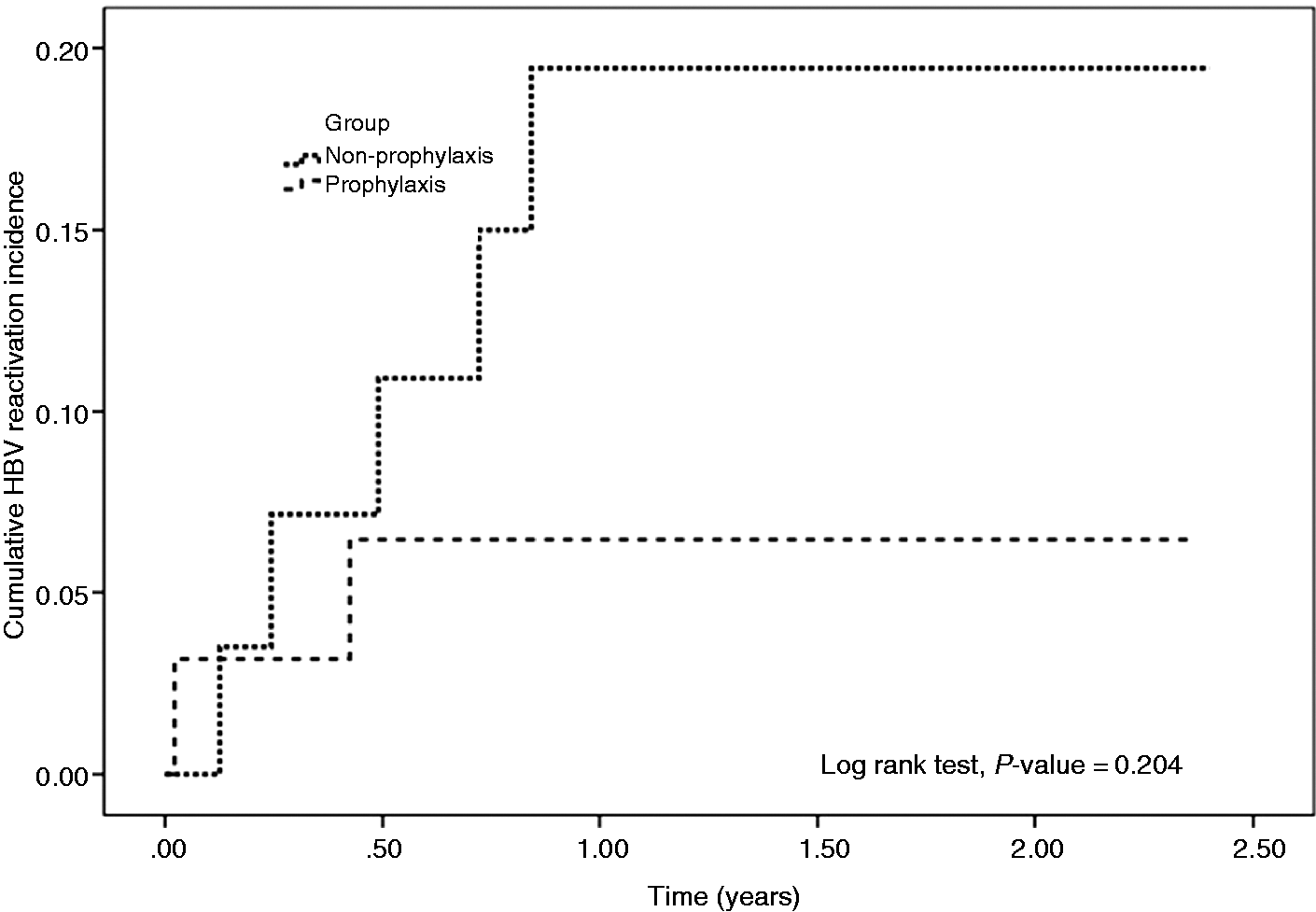
Comparison of HBV reactivation rates between prophylaxis and nonprophylaxis groups in HBV reactivation population. The cumulative HBV reactivation rates between prophylaxis and nonprophylaxis were 6.2% and 17.7%.
HBV flare or reactivation and chemotherapeutic drugs
The two patients who received prophylaxis but still experienced HBV reactivation were administered the following drugs: cisplatin weekly and cisplatin/5-fluorouracil (5-FU) (Table 2). The five HBsAg-positive patients who did not receive prophylaxis and experienced HBV reactivation were administered one of the following combinations: cyclophosphamide, epirubicin, and 5-FU (CEF); cyclophosphamide, methotrexate, 5-FU (CMF); carboplatin and gemcitabine; 5-FU and oxaliplatin (FOLFOX), and rituximab, cyclophosphamide, vincristine, and prednisolone (R-CHOP) (Table 2). The five HBV infection history patients who did not undergo prescreening and experienced HBV reactivation were administered one of the following chemotherapy regimens: CEF (2), FOLFOX (2), and docetaxel/cisplatin/5-FU (TPF) (1) (Table 2).
Discussion
The prevalence of HBV in Taiwan was reported to be 11–20% in 1984, the highest in the world. 24 Therefore, in 1985, the universal HBV vaccination program was launched to reduce the incidence of HBV infection. A survey conducted in 2007 to identify the total and changing burden of chronic HBV in 4088 Taiwanese adults revealed that the prevalence of chronic HBV infection decreased to 13.7%. 24 This rate is reflected in the present study, in which 61 patients (15.1%) were HBsAg positive. HBV reactivation is an important clinical issue for HBV-infected patients who are receiving cancer chemotherapy. HBV reactivation often results in interruption of chemotherapy, which in turn increases the risk of both cancer- and liver-related morbidity and mortality.25,26 In our study, the overall HBV reactivation rate was approximately 1.65% (12 patients), which is lower than the reported HBV reactivation rate of 3% to 88% in the United States. This wide range of HBV reactivation rate is due to a variety of risk factors, one of which is systemic cancer chemotherapy. Since HBV infected patients receiving systemic chemotherapy for cancer treatment are at very high risk of HBV reactivation, studies have suggested peforming HBV screening for every cancer patient before they receive cancer chemotherapy.2,27 Another suggestion is to provide prophylactic anti-HBV drugs to prevent an HBV flare or reactivation. However, in our study, only 51.59% of cancer patients received HBV screening before chemotherapy. In addition, only 52.46% of HBsAg-positive patients (32 patients) received prophylactic antiviral drugs. Although the EASL 2017 Clinical Practice Guidelines recommend screening and HBV prophylaxis for every cancer patient prior to initiation of chemotherapy, we found that 51.6% and 52.3% of cancer patients receiving treatment were screened and provided HBV prophylaxis, respectively.
Systemic cancer chemotherapy that serves as a primary, adjuvant or neo-adjuvant treatment with cytotoxic and immunosuppressive agents may downregulate the immune system, facilitating viral DNA and protein replication, which in turn facilitates HBV reactivation.25,26 During the course of chemotherapy, HBV DNA replicates and spreads to hepatocytes given that immune response is suppressed. After withdrawal of chemotherapeutic agents or during the interval between chemotherapy sessions, the immune response is restored, whereby the cytotoxic T cells (CD8+) remove the infected hepatocytes that cause liver injury and liver cell necrosis, which results in high serum ALT levels.25,26,28
The findings of this study that contribute to understanding chemotherapeutic drug combinations are associated with HBV reactivation. First, gemcitabine may impair cell-mediated immune function, particularly in combination with platinum drugs. 28 In this study, a patient with bladder cancer who received gemcitabine and carboplatin in combination but without any prophylaxis experienced HBV reactivation (Table 2). Second, gyclophosphamide, which reduces B-lymphocytes function, appears to increase the risk of HBV reactivation.6,28 The results of this study support this claim. In the study, four breast cancer patients who received cyclophosphamide-based combinations experienced HBV reactivation. Third, Rituximab, against the CD20 antigen on B-lymphocytes, suppresses the immune system and increases the risk of HBV reactivation.25,26,29 In our study, one out of 32 lymphoma patients who received both cyclophosphamide and rituximab regimen suffered from HBV reactivation. This patient experienced HBV reactivation between consecutive cycles without any prophylaxis and then HBV DNA increased dramatically. Our findings on the higher risk chemotherapy regimens are aligned with the findings from studies published in Taiwan7,17 and from US FDA data analysis report, 6 but no statistically significant differences were found among all combinations between HBV reactivation and nonreactivation groups.
It is worth noting that this study involved the use of prophylactic treatment. Although lamivudine is no longer recommended as a prevention agent for HBV reactivation in the latest EASL and AASLD guidelines, it is still commonly used in certain countries. A report published in 2018 presented that physicians used lamivudine as the prophylactic oral agent in southern Taiwan. 17 In the previous study, the lamivudine as prophylaxis drug decreases HBV reactivation rate HBV-related hepatitis and severe events. 30 In another study that included HBsAg seropositive patients with breast cancer who were undergoing chemotherapy, the incidences of HBV reactivation, HBV-related hepatitis, and severe events were lower than in the patients who received lamivudine prophylaxis as compared to those who did not receive prophylaxis (0% vs. 28.6%). 31 In the present study, three patients received lamivudine as prophylaxis agents, two of whom suffered from HBV reactivation.
In summary, this study found that only half of the patients (51.53%) were screened for HBsAg ahead of chemotherapy initiation, and only 32 out of 61 patients took prophylaxis medicine. To ensure patients’ medication safety, the pharmacy department established the HBV screen and chemotherapy control system (Figure 3) and the prophylaxis protocol was added into the therapeutic plan in 2017 to reduce the incidence of HBV reactivation.
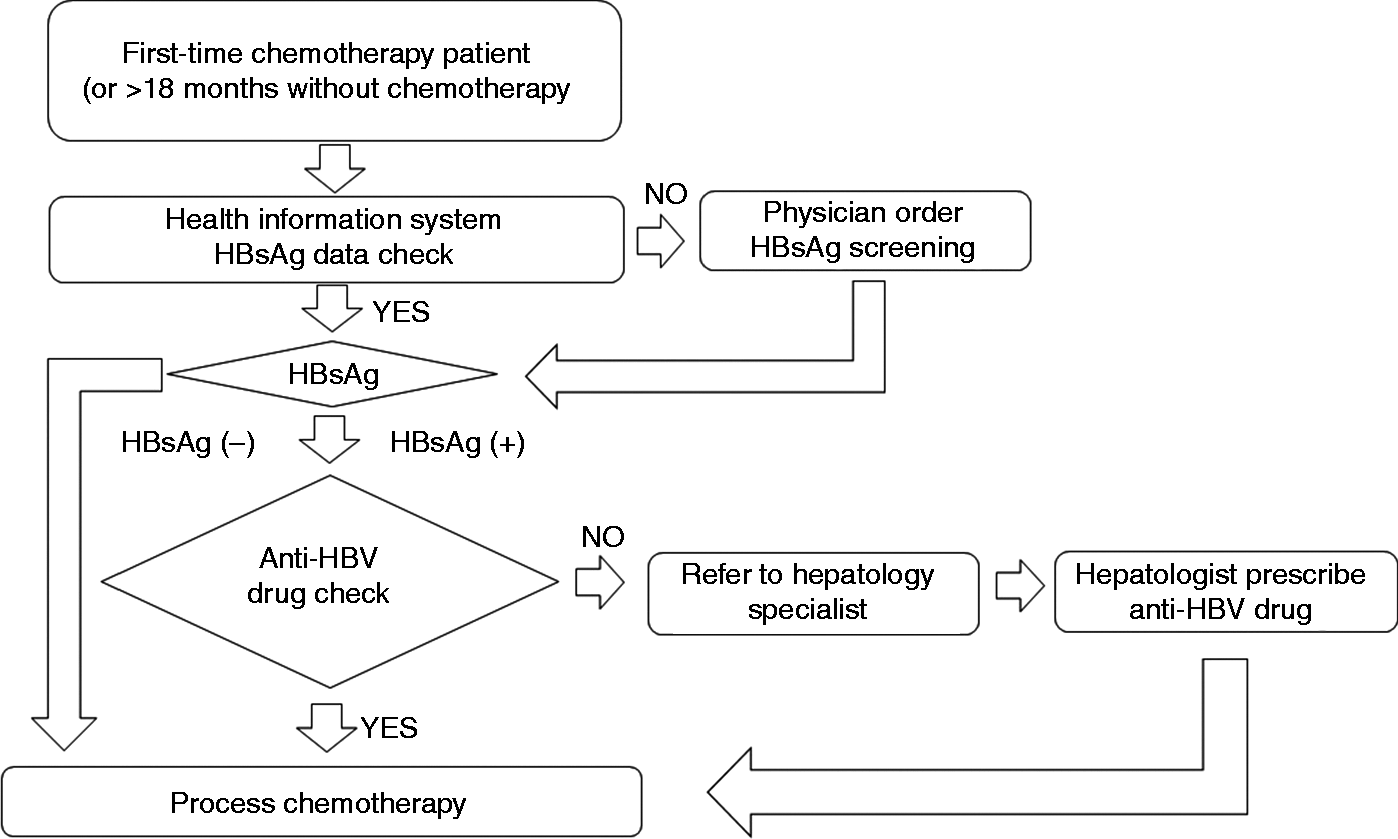
The flow of HBV screen and chemotherapy control system. All patients who are the first-time taking chemotherapy must check HBsAg data in the Health Information System automatically prior to order chemotherapy prescriptions. Patients who do not resort to chemotherapy agents more than 18 months are considered as the new patients and checking the HBsAg testing data.
Limitations
The limitation of the study relates to the nature of retrospective research and its data collection methods. In this study, patient screening and patient profiles, including the collection of all medical treatment, drug, exam, and test data, were conducted retrospectively through electronic medical records. To increase validity, we excluded cases that lacked complete medical records. However, given that the level of detail in medical records varied according to individual physicians’ recording methods, some patients’ profiles appeared to be more complete than others, which resulted in the limitation of analysis.
Conclusion
HBV flare or reactivation during chemotherapy are significant clinical issues that remain a challenge for practicing oncologists. While universal screening for HBV serological markers and HBV vaccination have been put into practice for 30 years in Taiwan, many patients remain unscreened. Since HBV reactivation during cancer chemotherapy is a life-threatening complication, the healthcare professionals shall comply with the guidelines to screen and treat patients. It is important to prevent the severe adverse events and to increase awareness of this potentially critical complication within the oncology community.
Supplemental Material
OPP913095 Supplemental Material - Supplemental material for Real-world prevalence of hepatitis B virus reactivation in cancer patients in Taiwan
Supplemental material, OPP913095 Supplemental Material for Real-world prevalence of hepatitis B virus reactivation in cancer patients in Taiwan by Chi-Hua Chen, Hui-Hsia Hsieh and Tien-Yuan Wu in Journal of Oncology Pharmacy Practice
Footnotes
Acknowledgement
The authors thank Dr Dian-Kun Li at Taichung Tzu Chi Hospital for the help in the article discussion.
Declaration of Conflicting Interests
The author(s) declare that there is no potential conflict of interest with respect to the research, authorship, and/or publication of this article.
Funding
The author(s) received no financial support for the research, authorship, and/or publication of this article.

Supplemental Material
Supplemental material for this article is available online.
References
Supplementary Material
Please find the following supplemental material available below.
For Open Access articles published under a Creative Commons License, all supplemental material carries the same license as the article it is associated with.
For non-Open Access articles published, all supplemental material carries a non-exclusive license, and permission requests for re-use of supplemental material or any part of supplemental material shall be sent directly to the copyright owner as specified in the copyright notice associated with the article.
