







Abstract
Objective
Automated Drug Supplying and management System (ADS) are effective devices that secure drug’s circuit and reduce hospital’s expenses. The purposes of this study are to estimate the earnings made from ADS through a cost-benefit medical economic study, to highlight its impact on Central Chemotherapy Preparation Unit’s (CCPU) global organization, its ergonomy and staff’s satisfaction.
Method
Measurement of cytotoxic drug’s consumption, expiration losses, pharmacy staff’s working time, drugs stock-out before and after the implementation of ADS on the one hand, and assess its ergonomy and acceptability by users on the other hand.
Results
After the implementation of ADS, cytotoxic drug’s consumption decreased by 9 (%), expiration losses by 98.3 (%), and we could see a gain in working time among CCPU’S technicians of 1.32 (h/day) and pharmacist of 0.67 (h/day), in contrast to the stock manager who increased his working time by 0.95 (h/day). Stock-out have decreased by 41.1 (%). The cost-benefit analysis has shown a net benefit of 67,437 between the two six-month phases, which corresponds to an economy of 134,874 (USD) over one year. The ADS was generally appreciated by the CCPU and pharmaceutical staff and 93(%) don’t want to return to the old system.
Conclusion
ADS implementation within CCPU led to financial savings in the hospital, an optimization of expenses and better pharmaceutical management.
Keywords
Background
Since the early 2000’s, and thanks to the publication of the American institute of medicine: “to err is human: building a safer health system”, 1 health establishments around the world began to express the need to provide innovative solutions and make systemic changes to ensure patient safety 2 and reduce hospital expenses.
In fact, computing and information systems are the best way to revolutionize the quality of health care. In this way automation improved the security of drug’s circuit with new technologies as computerized prescription, 3 individual daily dispensing system, 4 validation by barcode system 5 and even more with Automated Drug supplying and management System (ADS). 6
The National Institute of Oncology in Rabat (NIO), 1 of the 10 hospitals of Ibn Sina Rabat-Sale Hospital Center, is the first institution in Africa that established a National Cancer Prevention and Control Plan in collaboration with World Health Organisation (WHO).7,8
As a leader in its disciplines, NIO has a pharmacy with a Central Chemotherapy Preparation Unit (CCPU). This unit guaranteed adequate conditions for storage and preparation of cytotoxic molecules, 9 according to good manufacturing practices and French hospital preparation standards, 10 as it has been shown providing economic and therapeutic benefits.11,12
The huge costs of chemotherapy, 13 improving patient safety and better medication management process motivated NIO to invest in ADS technology as known to generate cost benefit, 14 improving safety and medical management process. 15 In December 2019, NIO’s pharmacy received new ADS for its CCPU.
However the introduction of new technologies impacts not only the costs but also affects work process that needs to be adapted. 16 Many studies have shown that without organizational changes new technologies can cause many errors instead of reducing them.17,18
In this context, the purposes of this study are to estimate the earnings made from ADS, to highlight its impact on CCPU’s global organization, its ergonomy and staff’s satisfaction.
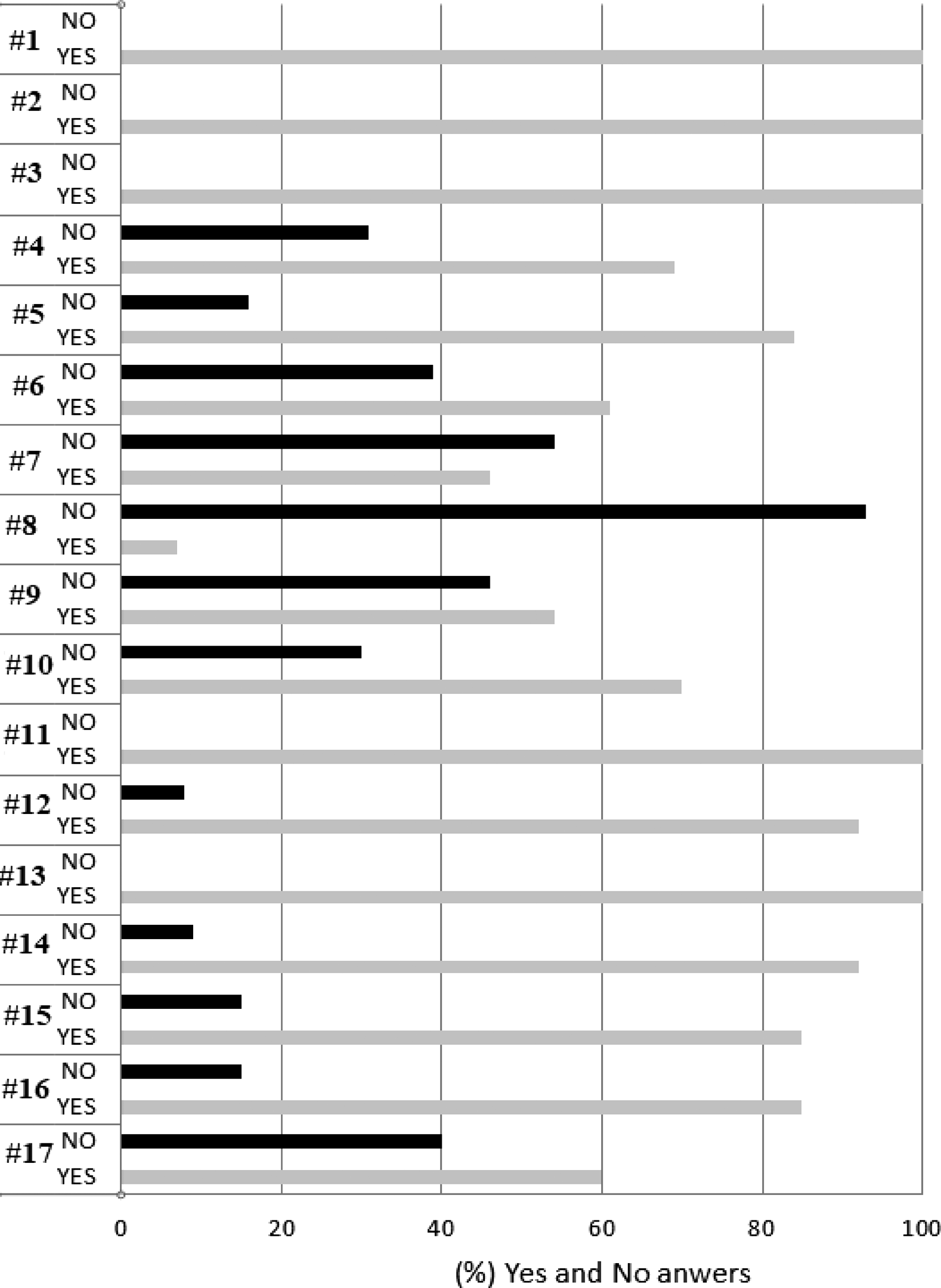
Satisfaction and ergonomy questionnaire results.
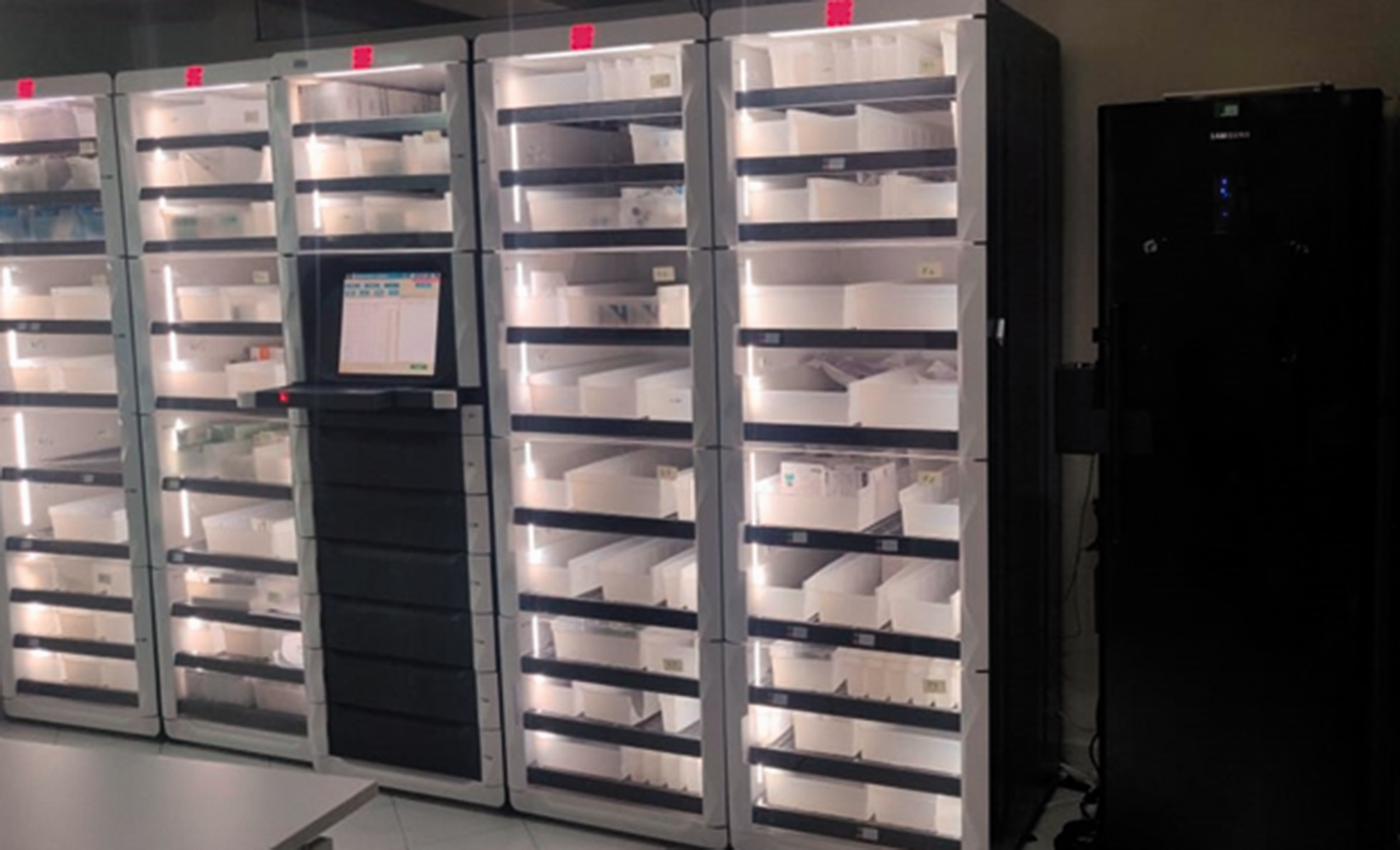
A photo of CCPU’S ADS.
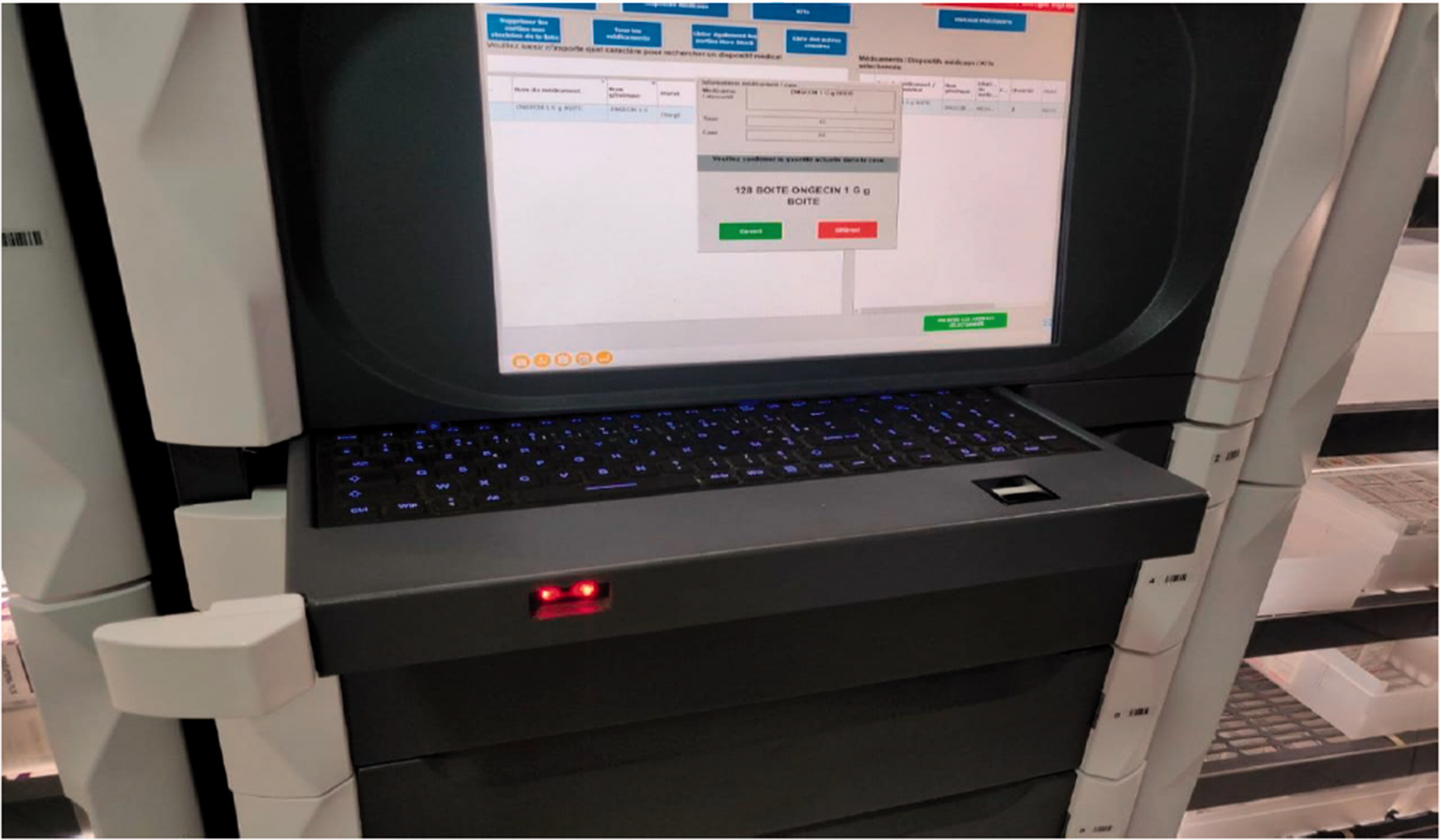
A photo of ADS’S computer server.
Materials and methods
Settings
We conducted a single-center, retro-prospective study of one year: six months before (July 2019 to November 2019) and six months after the implementation of ADS (December 2019 to May 2020) within the pharmacy’s CCPU of NIO in Rabat.
CCPU is made up of 13 pharmacy-technicians, who ensure the manufacture of an average of 3000 cytotoxic preparations per month under the supervision of a pharmacist, following the rules of good manufacturing practices.
The ADS allows a reduction of costs by improving stock management and impact pharmacy-technician’s working time devoted to this activity. 19 Drugs consumption in CCPU before ADS was rising 1,137,993.3 United States Dollar (USD), and the activity during “before/after” phases was similar.
Environmental quality and microbiological controls
CCPU’S premises present a low level of microbiological contamination (level I). A set of conditions guarantee the sterility, especially mastery of preparation processes, equipment’s qualifications, microbiological and particulate environmental controls. Staff's Continuing education is also dispensed with regular programs. 20 Central chemotherapy's ADS is located in an atmosphere-controlled zone in laminar flow hoods CLASS ISO 6 (EN ISO14644-1).
Environmental quality is controlled, and Microbiological and air tests are carried out once a year. A daily disinfection and surfaces cleaning also promote maintaining class 6 cleanroom.
Description of CCPU’s automated drug management system
It’s a medication storage and dispensing machine (Stockart™) that replaces conventional shelves (Figure 2 and 3). The system is controlled by a computer server based at the pharmacy and offering several compartments with different levels of security:
The various options of ADS are accessible and usable from a touchscreen, which after fingerprint or access code identification offers different levels of empowerment depending on the agent’s skill.
Description of the two drug circuits (classic and ADS’s drug circuit)
In the classic circuit, a CCPU’s technician was responsible for supplying the shelves through the formulation of the requirement sent by paper to the pharmacy. The items requested were then distributed to CCPU, once a week. Drug’s storage was done without any particular organization, however the drugs requiring storage at low temperature were placed in a refrigerator. An inventory of CCPU was performed by CCPU’s staff every six months, where expired drugs were eliminated.
Supplying with the ADS
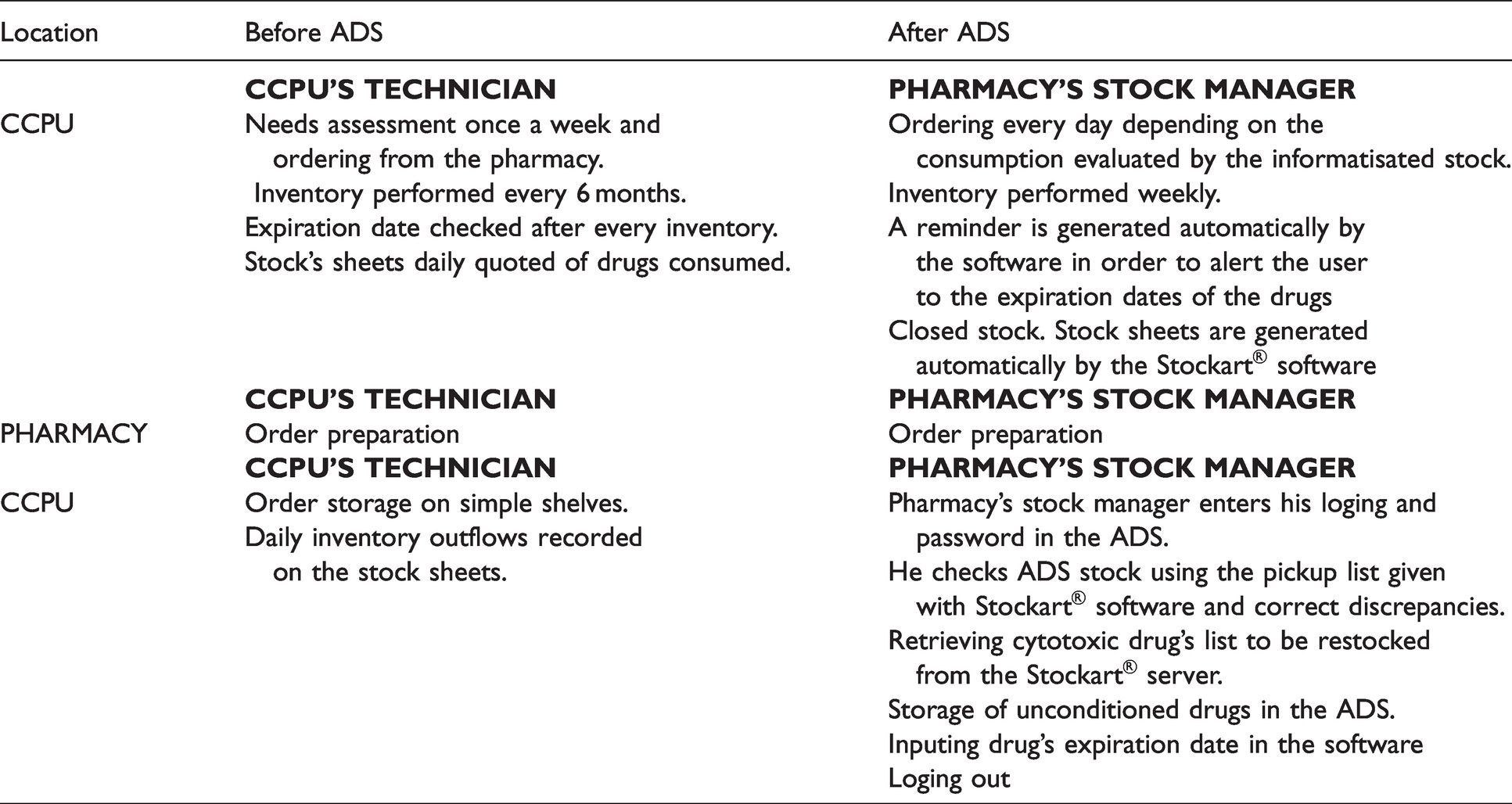
With ADS the endowments in cytotoxic drugs and medical devices were revised. For supply, a pharmacy’s stock manager consults the server daily and prints the quantity of drugs to be supply according to the quantity consumed, these drugs will be unconditioned and placed in the ADS, then a CCPU’s technician checks the entire stock using a picking list (Table 1). This mode of supply allows the pharmacist to have a daily monitoring of CCPU’S drugs consumption.
Cytotoxic drugs stock management before and after ADS.
Distribution with the ADS
CCPU’s technician begins by entering his username and password on the touchscreen, and selects the drugs with the desired quantities respectively. The software facilitates drug’s recognition through a list of suggested names of specialties and international nominations (ICD). Once the request validated, the automated device unlocks the compartment containing the first drug to be taken and facilitates locating it thanks to a diode which lights up and flashes. This allows staff to avoid medication and dosage errors. 21 If the opening time of the compartment is exceeded, a security message alerts the user and is recorded on the database, which prevents any misuse of the ADS. After closing the first compartment, the second one opens in the same way and so on. Unused items will be returned to the pharmacy by putting them in the return container so we avoid their expiration, and cannot be returned to stock. The access to this drawer is limited to pharmacy’s stock managers who check the date and time of return noticed by a label, storage condition, and drug returned integrity and its packaging and the reason of return.
Evaluation of economic impact
We made a cost benefit analysis based on the one hand on making a comparison between the establishment of the system which is the cost, and the financial savings realized with the automate which are the profits. Results were expressed using the net profit that is the difference between the costs and expected profits. Then we estimated the necessary time to amortize ADS’s cost, according to annual costs saving. On the other hand we evaluated the benefits made through the reduction of CCPU’s technician working time dedicated to stock’s management that practically disappeared with the ADS.
ADS’s costs
Two parameters determine the total cost of the ADS:
The cost of ADS and its computer interfaces (USD). The cost of stock’s manager working time who supply the ADS (USD).
ADS’s costs benefits
ADS’s profits were calculated using:
The evolution of articles consumptions before and after ADS implementation. The estimation of expired drugs before and after ADS implementation. The reduction of pharmacist and CCPU’s technician working time.
Cytotoxic drug’s prices were defined with a hospital expenses guide made from an updated database of the National Health Insurance Agency (ANAM). 22
Working time evaluation was achieved by averaging 10 direct timed observations results for each operation of doses preparation, inventory management, management of expired drugs in hour per a day before/after the ADS by CCPU’s technicians. Results were recorded using Microsoft Excel’s sheets, for comparing then converting to monetary values (USD per working hour). Working time’s costs were estimated using the salary grid provided by the Ministry of Economy, Finance and Administrative Reform 23 on the basis of one year, taking into account the administrative leave and weekends.
Satisfaction and ergonomy investigation
Oncology’s wards are those most exposed to emotional burden risks. 24 That’s the reason why we conducted a satisfaction investigation within pharmacy’s staff through a questionnaire and an oral interview addressed to each one of them.
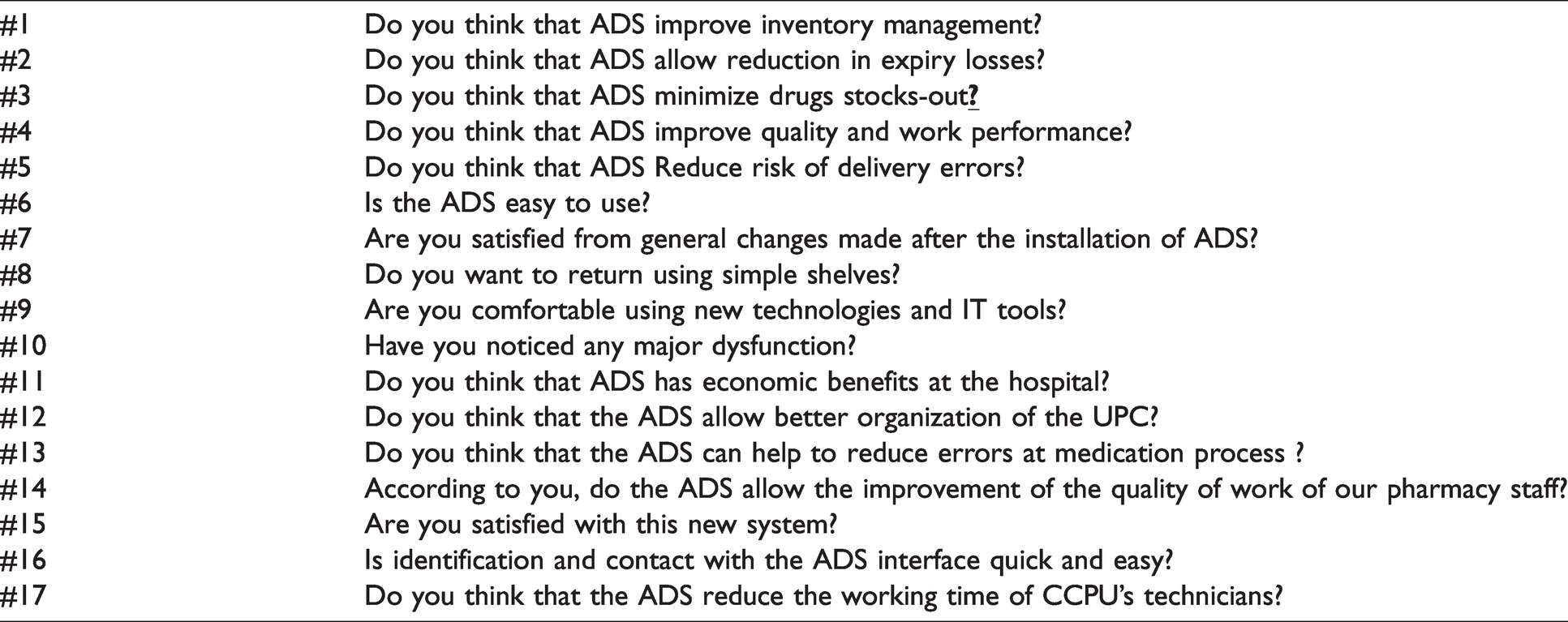
Our questionnaire includes 17 questions evaluating personal satisfaction and ADS’s ergonomy (Table 6).
Cytotoxic stock-outs before and after ADS.

We interviewed our entire CCPU’s staff made up of 14 people, 4 men and 10 women aged from 22 to 54 years old; 100 (%) of the participants answered 100 (%) of our questions (Figure 1).
Results
The cost-benefit analysis
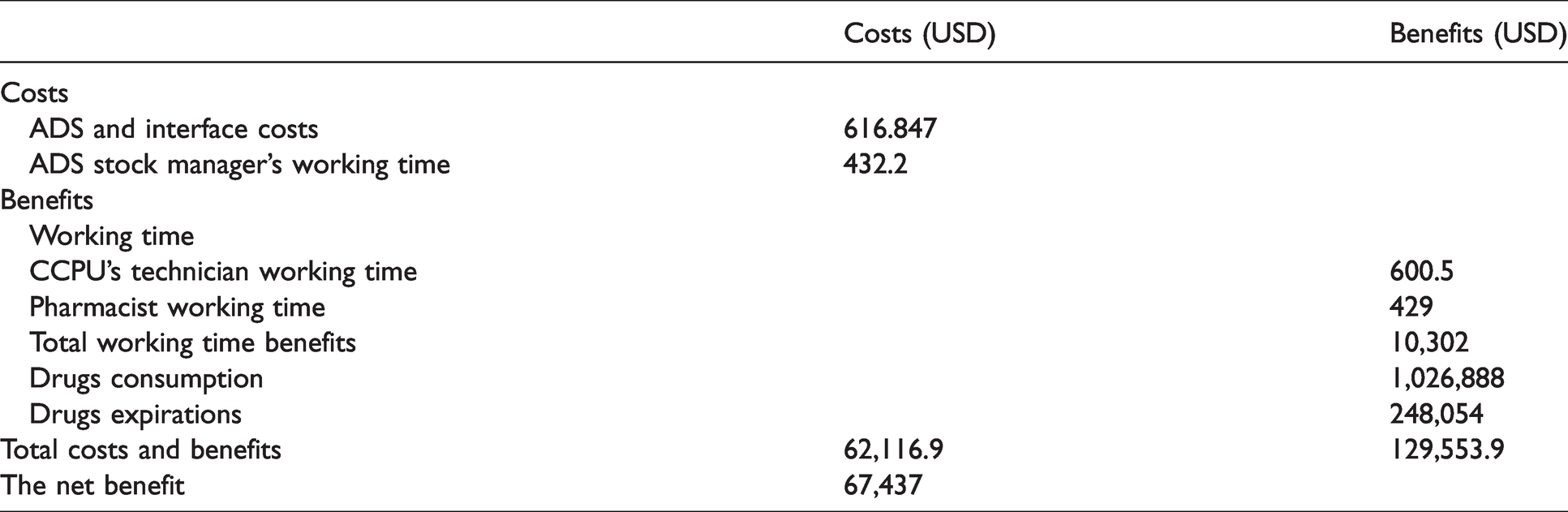
Evaluating pharmaceutical staff working, cytotoxic drugs consumption and expirated medications before and after the implementation of ADS allowed us to estimate the costs saved using this device (Table 3). The cost benefit analysis is presented on Table 2.
The cost-benefit analysis.
Cytotoxic consumption costs before and after ADS.

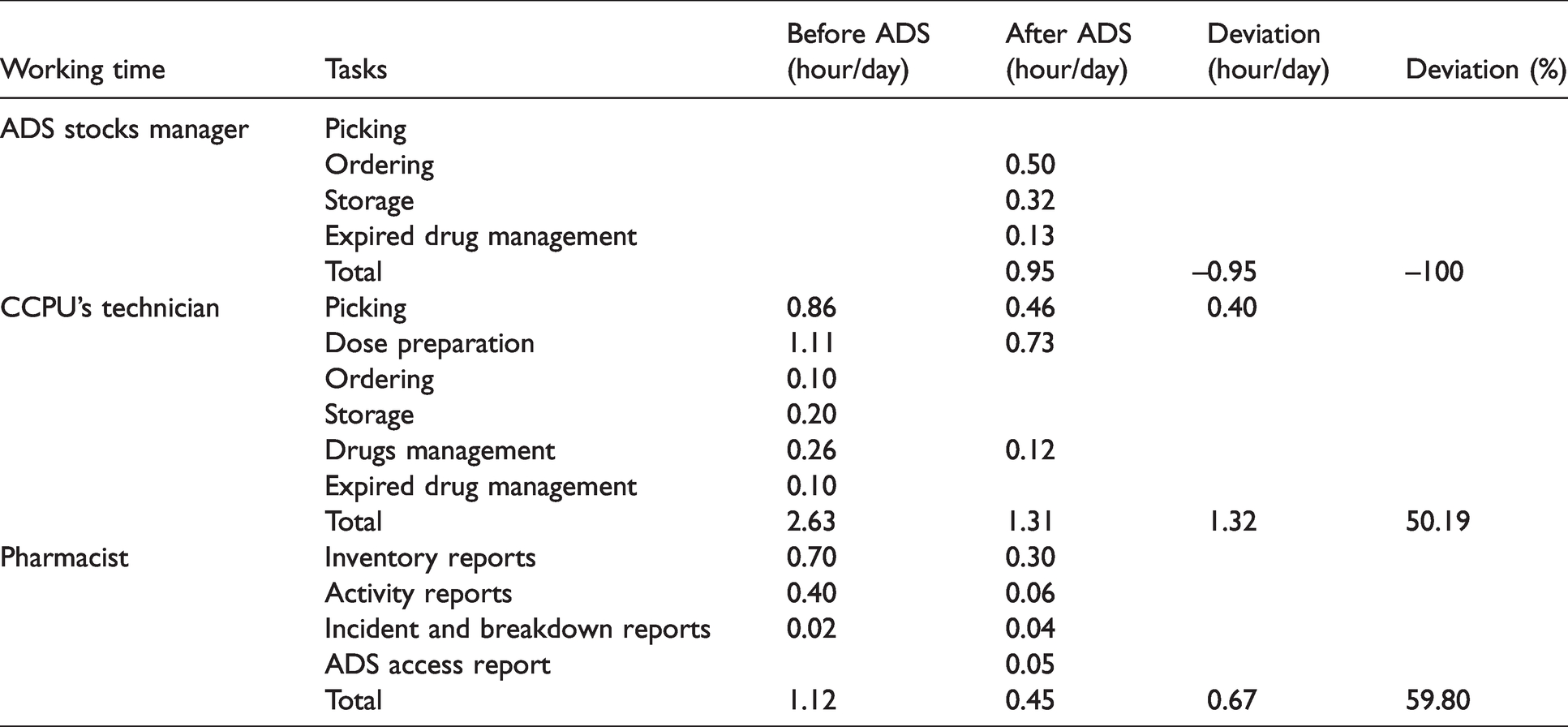
In terms of benefits, ADS’s implementation induced a new distribution of our staff’s working time (Table 5) by reducing pharmacist and CCPU’s technician working time. We also recorded a reduction in drugs expiration losses (Table 4) and stock-outs (Table 6). We had a total benefit of 1,295,539 (USD) for six months.
Pharmacy’s staff working time organization before and after ADS.
Drugs expiration costs before and after ADS.

In investment part, we had on the one hand the acquisition of the ADS, its interface and its maintenance, that reach 616,847 (USD), and ADS stock manager’s working time that amounts to 432.2 (USD). So, we recorded a total of 621,169 (USD) invested costs for six months.
The net benefit being in order of 67,437 (USD), we can deduce that the cost of the ADS can be amortized in six months.
Cytotoxic stocks before and after ADS
Cytotoxic consumption
The number of outflows in cytotoxic drugs decreased by 9 (%) after the implementation of ADS from a consumption of 11,379,933 before to 10,353,045 (USD) After ADS.
Drugs expiration losses
Drugs expiration losses has also decreased moving from 252,266 before to 421.2 (USD) after ADS implementation, which represents a difference of 248,054 (USD) corresponding to 98.3(%) savings.
Working time
The implementation of ADS has led to a reallocation of working hours and the creation of a new pharmacy’s stock managers especially responsible for supplying it with cytotoxic drugs. CCPU’s technicians no longer had to order preparations and medication storage. This freed them from the workload related to drugs management, which benefited to cytotoxic dose preparations.
The pharmacist also saw his working time decreasing of 60(%), in the supervision of cytotoxic drugs management, thanks to the different inventories carried out by the Stockart® software itself. Before the ADS, he had to calculate them himself from stock sheets.
Drugs stock-outs
Stock-outs also declined after the introduction of ADS, by 70 fewer (41.1%).
Satisfaction and ergonomy questionnaire
An anonymous open questionnaire of 17 questions was addressed to pharmacy’s staff, in order to assess, its ergonomics and overall satisfaction. We got a 100 (%) response rate.
About 85 (%) of users were satisfied with the new system and 93 (%) didn’t want to return to simple shelves. 61(%) of users thought that using the ADS was simple, the remaining 39 (%) wanted more introductory training in its use (Figure 1). The questions asked are shown on the Table 7.
Satisfaction and ergonomy questionnaire.
Discussion
Stock’s evolution
The consumption of cytotoxic drugs in CCPU decreased after the implementation of the ADS by 9 (%), generating a saving of 1,026,888 (USD).
In similar studies, authors estimated stocks values reductions in healthcare units up to 37 (%) corresponding to a sum of 11,789,48 (USD) per year. 25 The high savings in our case are justified by the expensive known cytotoxic molecule’s prices, 26 as up to 2585.20 (USD) per dose for pertuzumab 420MG, 930.6 (USD) for rituximab 1400MG, and 806.5 (USD) for rituximab 500MG and trastuzumab 600MG.
The rate of drugs expired was reduced after the establishment of the ADS by 98.3 (%) from an amount of 252,266 to 421.2 (USD) with a saving of 248,054 (USD).
According to the medical bibliography, drugs expiration generally disappears after the establishment of ADS. 27 The persistence of expirations after the establishment of ours is due to the fact that the use of all the features of these was not exploited at the beginning of its installation, due to the lack of experience of our users. Functionality within the Stockart® software allows launching reminders on drugs whose expiration dates are close several months in advance. Thereafter we trained our team on its use.
Working time
The implementation of ADS led to a new distribution of tasks related cytotoxic drugs management and a transfer of workload from CCPU’s technicians and pharmacist to stock manager’s staff.
CCPU’s technician working time devoted to drugs management was reduced by 1 (h/day), and by 0.67 (h/day) for the pharmacist, in contrast to the new ADS stock’s manager team which had a workload increase of 0.95 (h/day) fulfilling additional tasks defined on: Ordering; drugs storage; checking ADS’s contents and drugs expiration check.
These results are to be compared with similar studies results carried out in other hospitals around the world, including that of Sabatier et al., 19 which in an intensive care unit estimated a gain in nursing time of 4.2 (h/day) for an additional pharmacy preparation time of 1.2 (h/day).
That said, our cytotoxic preparation unit is set up in the pharmacy, which considerably reduce displacement time to the pharmacy on the one hand. In the other hand, our pharmaceutical’s staff has completely restructured its organization after ADS implementations in NIO’s hospital, in the aim of optimize drugs management and staffs working time.
The pharmacist also saw his working time decreasing by 0.67 (h/day) thanks to the computerization of inventories and analysis reports in general allowing him to supervise these remotely using Stockart® software. ADS’s supervision by the pharmacist concerns the following tasks: stock-outs analysis report; safety stock analysis report; expiration date control report; picklist report; overload report; goods receipt report; needs assessment report; inventory report; summary report of all transactions; return bin activity report; activity analysis report; report of drugs prescribed below the minimum threshold; monthly usage report; summary report of variances; non-mobile items report and stock-outs trend report. This optimized management of cytotoxic stocks has enabled the pharmacist to focus more on other critical pharmaceutical tasks, while securing the cytotoxic drug circuit within the CCPU.
In some publication, the decrease in stock-outs leads to a reduction in the displacement of nurses and nursing assistants to the pharmacy. 28 Our CCPU being located in the pharmacy itself, we judged that it was useless to measure the savings relative to the travel time CCPU’s technicians. However, it seemed to us necessary to quantify the number the stock-outs over the two periods, their decreases participating to improve drugs management in general.
These stock-outs have gone from 169 before to 99 after, they are supposed to disappear with the help of a reminder within device. This said, in the same way as expirations, the installation of the ADS required a certain time of learning and responsiveness of pharmaceutical staff until they can use all its functionalities.
The satisfaction investigation conducted with 14 participants showed fairly high level of satisfaction. On the respondents, 85(%) of users were satisfied with the new system, 69(%) think that the use of ADS improves the quality and performance of their work, and 93(%) don’t want to go back to simple shelves thinking that new technologies can help improve their daily work in hospitals.
In terms of ergonomics, only 61 (%) of users found the ADS easy to use 39 (%) found it complicated to use. That said 46 (%) of our staff declared that they were not entirely comfortable with computer tools. These technicians wanted more support and guidance on the use of ADS, so we had to schedule training sessions to support them in this change.
This study has its limits, it remains to be complemented by others in NIO’s clinical wards.
Many publications already has described ADS as adequate device to reduce costs relating to the storage of drugs 29 in the one hand, to limit medication errors and secure medication circuit in the other hand. 30
According to the results of our study, we can deduce that ADS may be one of effective devices for optimizing expensive drugs stock management, and rationalizing their savings.
The economic results highlighted by this study are specific to NIO’s pharmacy department, and cannot be applied to any other study. This service was voluntarily chosen within the framework of this study given the expensive prices of the cytotoxic molecules which are there.
Conclusion
The results of the economic analysis and the new pharmaceutical organization highlight positive impacts ADS implementation in a chemotherapy preparation unit. Following this experience, the National Institute of Oncology of rabat plans to promote this kind of device to other services, like the North American hospitals which in 2005 were 72 (%) equipped. 31
Footnotes
Authors’ note
The views expressed in this article are those of the authors alone and don’t necessarily reflect those of their respective employers
Acknowledgement
Thanks to all the pharmaceutical staff of the National Institute of Oncology in Rabat.
Declaration of conflicting interests
The author(s) declared no potential conflicts of interest with respect to the research, authorship, and/or publication of this article.
Funding
The author(s) received no financial support for the research, authorship, and/or publication of this article.
