







Abstract
Introduction
This study aimed to evaluate the participants’ comfort in understanding research papers written in English and discussing such research in English via an Asian online journal club.
Methods
A self-administered online survey was delivered to seven journal club meeting attendees from July 2020 to July 2021. A customer satisfaction analysis was performed to assess the association between the participants’ perspectives on program logistics and satisfaction.
Results
The recovery rate was 37.0% (44/119). After participating in the journal club, the median scores of critical appraisal skills, knowledge and/or pharmaceutical care skills in clinical practice, and discussion skills in English (assessed using a seven-point Likert scale) improved significantly (compared to pre-participation median scores) from 4 (interquartile range [IQR]: 3–5) to 5 (IQR: 4–6), 5 (IQR: 4–5) to 5 (IQR: 5–6), and 4 (IQR: 2–5) to 5 (IQR: 3–5), respectively (P < 0.0001). The respondents also expressed great appreciation for the benefits and overall qualities of the journal club. Additionally, regarding patient care behavior after participation in the journal club, 34 (77.3%), 17 (38.6%), 16 (36.4%), and 14 (31.8%) respondents reported improvement in “drug information services,” “patient assessments,” “patient counseling,” and “multidisciplinary rounds,” respectively. Customer satisfaction analysis revealed that sharing information, mutual discussion, a shift system of presenters and co-chairs, and session duration should be improved as a matter of highest priority.
Conclusion
The findings suggest that our program could be helpful for Asian pharmacists, pharmacy students, and faculty members of the department of pharmacy.
Introduction
A journal club is defined as an educational group meeting to discuss and critically appraise the latest medical articles, and to evaluate the clinical applicability of the treatments being examined. 1 Journal clubs have often been conducted in practice settings and as part of training programs for healthcare professionals to enhance their comprehension of medical care principles. They have been reported to be effective in fostering the ability to review articles and improve critical thinking skills to objectively assess drug information.2–4 Additionally, a systematic review reported the potential impact of a journal club to enhance critical thinking and promote research awareness, knowledge, skills; the journal club was observed to help in bridging theory to practice thus to improve clinical practice. 5
Traditionally, journal clubs have been held in hospitals and faculty institutions, 6 whereas, in recent years, social media such as Twitter® have been used to host journal clubs. 7 These technological innovations have made it possible to have discussions with participants located anywhere in the world. 8 A previous study that examined behavioral changes in pharmacists who participated in a journal club in Japan using Skype® (an online communication tool) concluded that journal clubs play an essential role in the post-graduate education of pharmacists. 3 Additionally, Tsuchiya et al. 9 reported on the educational effectiveness of an international journal club for multidisciplinary healthcare professionals and students from Japan, South Korea, Taiwan, Thailand, and the United States of America. They found that an online international journal club for various healthcare professionals and students could enhance evidence-based medicine training programs and improve English communication skills. Their journal club covered only supportive care issues and therapeutic efficacy and safety of immune checkpoint inhibitors, not new drug development, modeling and simulation, and multiplex gene panel testing issues. The usefulness of sharing information and discussing these topics is unclear to pharmacists.
Arif et al. 10 reported that pharmacy students perceived the journal club as a valuable tool that could help them better understand study design and statistics, improve their ability to analyze journal articles, and connect the content of the article to patient care; additionally, they reported that journal club participation enhanced their presentation skills. A previous study by Ismail et al. 11 examined the implementation and usefulness of a multidisciplinary journal club that included residents, pharmacy residents, and clinical pharmacists among postgraduate pharmacists and clinical pharmacists in Saudi Arabia. The study found that a journal club led by clinical pharmacists may be an effective tool to help participants of different learning levels learn principles for interpreting literature and may improve their ability to make science-based decisions. However, the usefulness of journal clubs for postgraduate pharmacist learning across countries has not been adequately explored. Therefore, we initiated an evidence-based oncological medicine and communication skill training program called the Asian online journal club, which included the presentation of an article and mutual discussion via a web conference for pharmacists, pharmacy students, and faculty members of the department of pharmacy in institutes in Japan, Thailand, South Korea, and Taiwan. This study aimed to evaluate the participants’ comfort in understanding research papers written in English and discussing such research in English via an Asian online journal club. In addition, we performed a customer satisfaction (CS) analysis to find areas of improvement for our journal club.12–15
Methods
Online journal club for oncology pharmacists in Asian countries
We initiated an online journal club for oncology pharmacists in Japan and Thailand in July 2020. Over time, the journal club evolved to include more Asian countries. Each 1-h online journal club was offered on the Zoom meeting platform (Zoom Video Communications, Inc., San Jose, CA, USA). Considering the time difference between the different countries, we started each journal club session at 8 p.m. in Japan and South Korea, 7 p.m. in Taiwan, 6 p.m. in Thailand, and 6 a.m. in the United States of America (Daylight Savings Time). The Japanese (HK) and Thai (SS) organizers collectively selected a relevant clinical oncology-related research article as the journal club topic. Therefore, Japanese and Thai participants took turns playing the roles of the presenter and co-chair. In each session of the journal club, the presenter first provided an outline of the selected article. The presenter and participants were then allowed to freely discuss the study design, interpretation of the results, and implementation topics relevant to the participants’ clinical settings. We chose English as the common language for this journal club. Participants could re-watch the zoom archives hosted on a cloud-based storage service called Box (Box, Inc., Redwood, CA, USA) that allowed for on-demand use.
Questionnaires
One of the co-authors drafted a questionnaire. The drafts of the self-administered questionnaire were modified and finalized by consensus among all co-authors. The web-based questionnaire URL was delivered by email to the participants who joined our Asian journal club at least once from July 2020 to July 2021. The questions were aimed at determining the participants’ perspectives on the feasibility, utility, and effectiveness of our journal club. These aspects were evaluated using a seven-point Likert scale, where one represented “dissatisfaction” and seven represented “satisfaction.” The participants’ completion and submission of the questionnaire were regarded as consent to participate in this study. The co-authors were excluded from the survey to avoid bias.
CS analyses
A CS analysis was performed to assess the association between the participants’ perspectives on program logistics and satisfaction according to several previous studies.12–15 The CS analysis graph was plotted two-dimensionally. The deviation value of satisfaction of each program logistics issue was plotted on the vertical axis, and the deviation value of the correlation coefficient between the satisfaction score for each program logistics issue and participants’ overall satisfaction was plotted on the horizontal axis of the CS analysis graph. In the CS analysis graph, factors with a high score and a high degree of influence on overall satisfaction were plotted in the first quadrant that was designated as the emphasis maintenance field (essential to maintain). Factors with a high score and a low degree of influence on overall satisfaction were plotted in the second quadrant that was designated as the maintenance field (maintain present state). Factors with a low score and a low degree of influence on overall satisfaction were plotted in the third quadrant that was designated as the improvement field (examine ways to improve). Finally, factors with a low score and a high degree of influence on overall satisfaction were plotted in the fourth quadrant which was designated as the priority improvement field (improvement required). 16
Statistical analyses
The Wilcoxon signed-rank test was used to compare the scores for the degree of comprehension of each module. All statistical analyses were performed using JMP 15.0.0 (SAS Institute, Inc., Cary, NC, USA). All P-values were two-sided, and statistical significance was set at P < 0.05.
Ethics approval
This study was approved by the ethics review board of the Miyagi Cancer Center (approval number: 2021-023) in Japan. The study was conducted in accordance with the Declaration of Helsinki and the Ethical Guidelines for Medical and Health Research involving Human Subjects by the Ministry of Education, Culture, Sports, Science, and Technology and the Ministry of Health, Labour, and Welfare of Japan.
Results
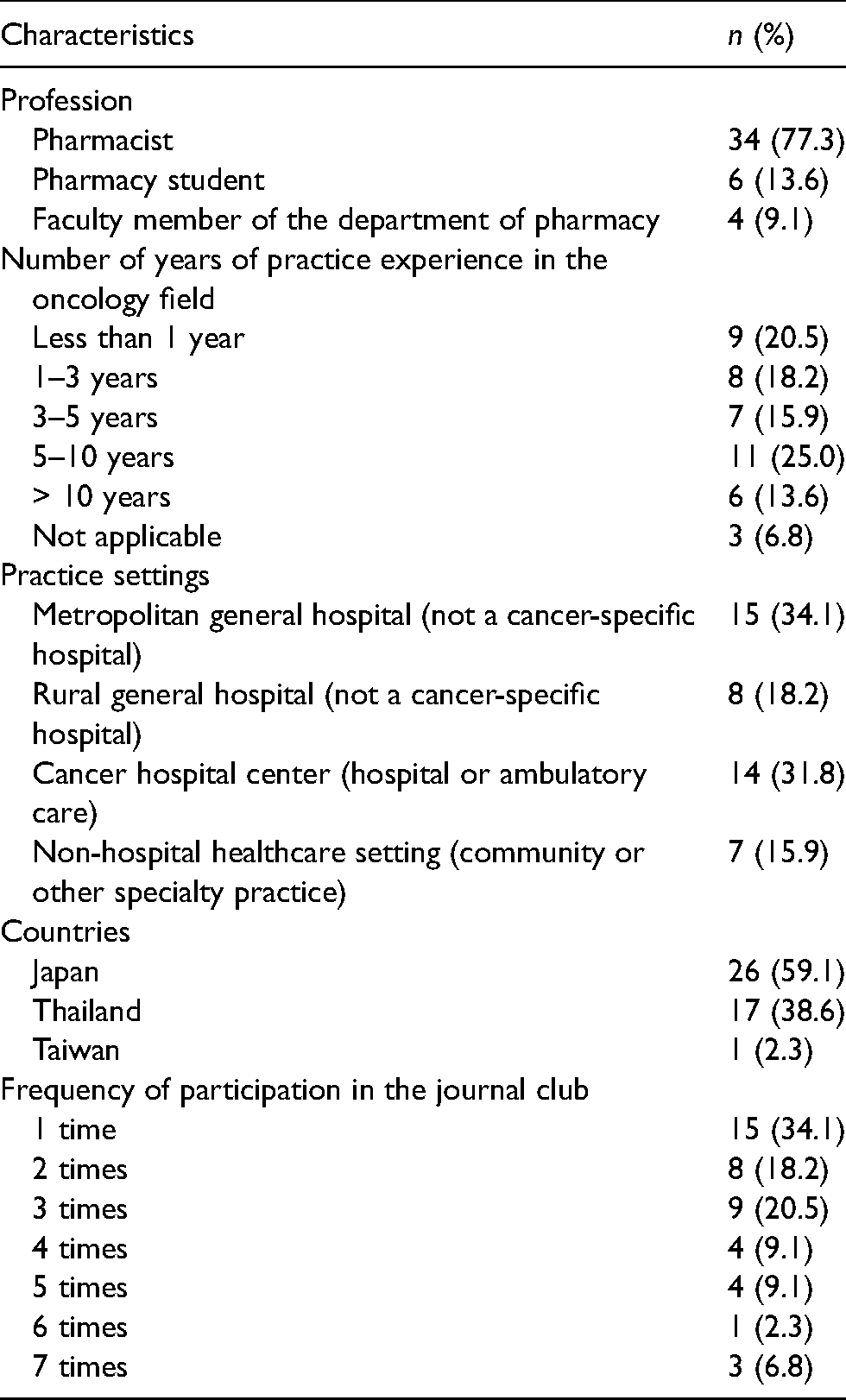
As shown in Table 1, we conducted seven Asian online journal clubs from July 2020 to July 2021. Most articles introduced a new drug, such as trastuzumab deruxtecan, and new regimens such as atezolizumab plus bevacizumab, azacitidine and venetoclax, and lenvatinib plus pembrolizumab, for various malignancies. We discussed the clinical practice of new drugs, modeling and simulation, multiplex gene panel testing, and the role of pharmacists in each country. The number of accesses to each archive was ranged from 32 to 395. The median number of participants in the Asian online journal club sessions was 37 (interquartile range [IQR]: 28–49). The total number of participants was 119. Of these, 44 respondents (37.0%) from three countries including Japan, Thailand, and Taiwan completed the survey and were enrolled for data analysis. The demographic characteristics of the survey respondents are presented in Table 2. The majority of respondents were pharmacists (77.3%), followed by pharmacy students (13.6%), and faculty members of the department of pharmacy (9.1%). Most respondents had 5–10 years of practice experience in the oncology field (25.0%) and practiced in metropolitan general hospitals (34.1%). The median frequency of participation in the journal club was two times.
Details of the Asian online journal club sessions.

USA: The United States of America.
The demographic characteristics of the survey respondents (n = 44).
The beeswarm and box plots of the comparison of self-assessment scores before and after participating in the Asian journal club are shown in Figure 1. After participating in the journal club, the median scores of critical appraisal skills, knowledge and/or pharmaceutical care skills in clinical practice, and discussion skills in English showed significant improvement from 4 (IQR: 3–5) to 5 (IQR: 4–6); 5 (IQR: 4–5) to 5 (IQR: 5–6); and 4 (IQR: 2–5) to 5 (IQR: 3–5), respectively (P < 0.0001).
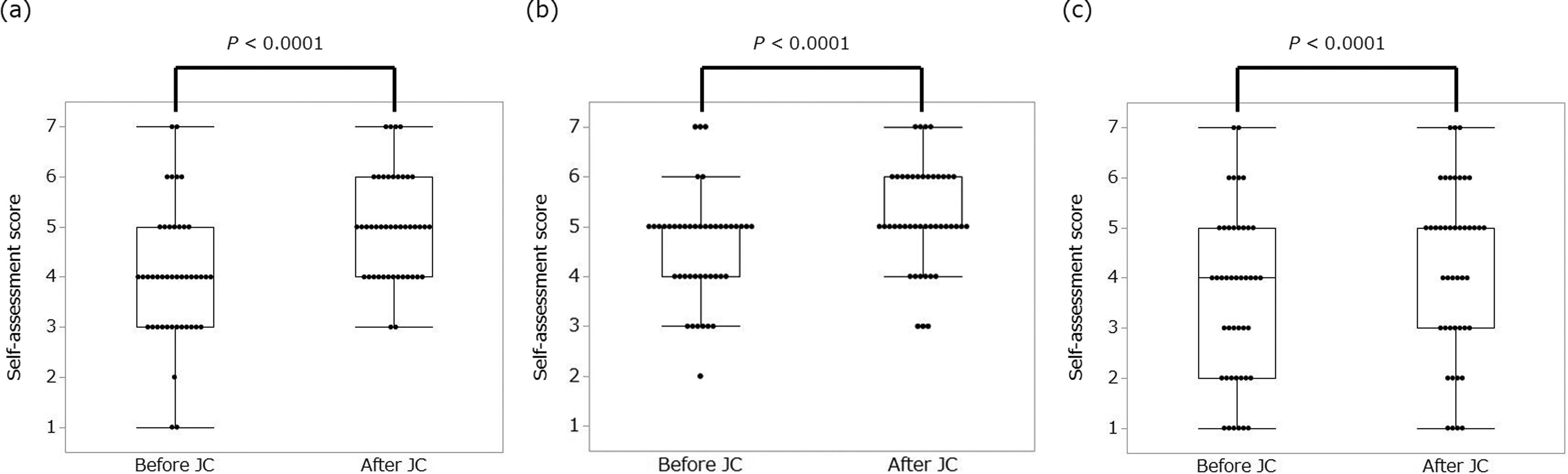
Beeswarm and box plots of comparison of self-assessment scores before and after participating in the Asian journal club. (a) Critical appraisal skills, (b) knowledge and/or pharmaceutical care skills in clinical practice, and (c) discussion skills in English. The top of the box represents the 75th percentile and the bottom represents the 25th percentile; the line within the boxes represents the median. The whiskers above and below the boxes represent the maximum and minimum values, respectively. Wilcoxon signed-rank test JC: Journal club.
The satisfaction scores of the Asian online journal club participants are presented in Table 3. The median score of overall satisfaction was 6 (IQR: 5–7). Seven satisfaction topics had the highest median satisfaction score of 7, including the following: (1) journal club offered free of charge, (2) online format of the journal club, (3) journal club session frequency of once every two months, (4) sessions scheduled at a convenient time, (5) duration of journal club sessions, (6) convenient access to past recordings, and (7) opportunity to communicate in English during the journal club.
Satisfaction scores of the Asian online journal club participants (n = 44).
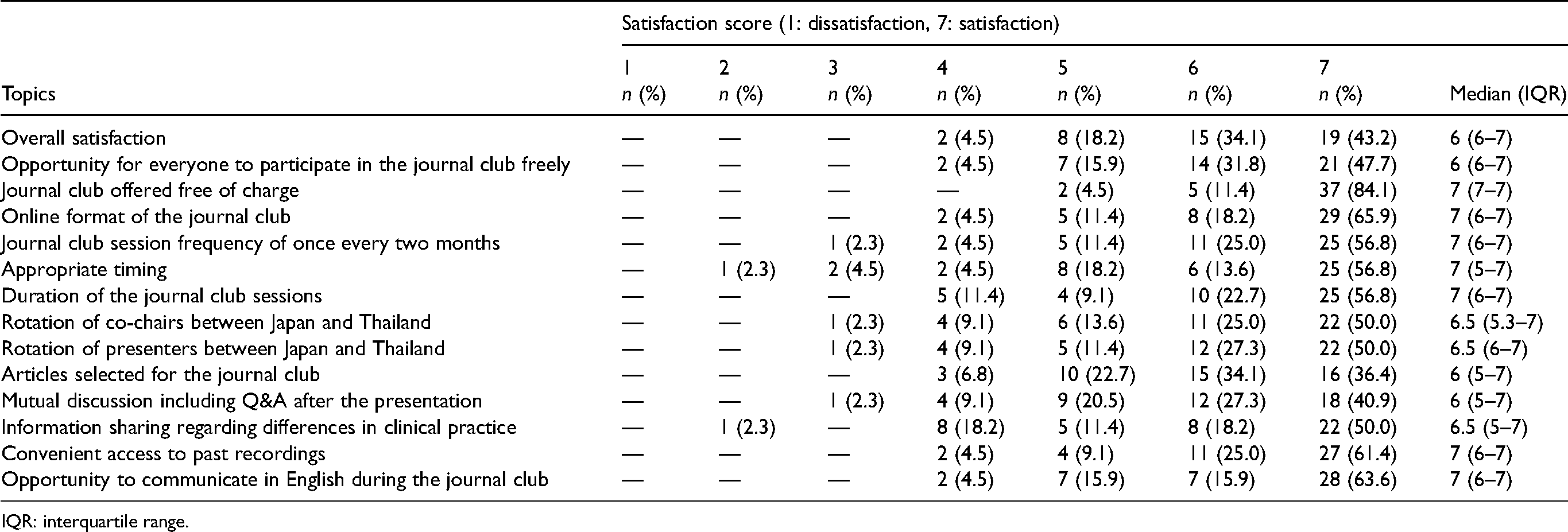
IQR: interquartile range.
The CS analysis graph of the association between program logistics issues and participants’ overall satisfaction is shown in Figure 2. The CS analysis revealed that sharing of information, mutual discussion, shift system for presenters and co-chairs between Japan and Thailand, and duration of the journal club sessions showed low deviation values of satisfaction and high deviation values of correlation coefficients in the fourth quadrant, which was designated as the priority improvement field.
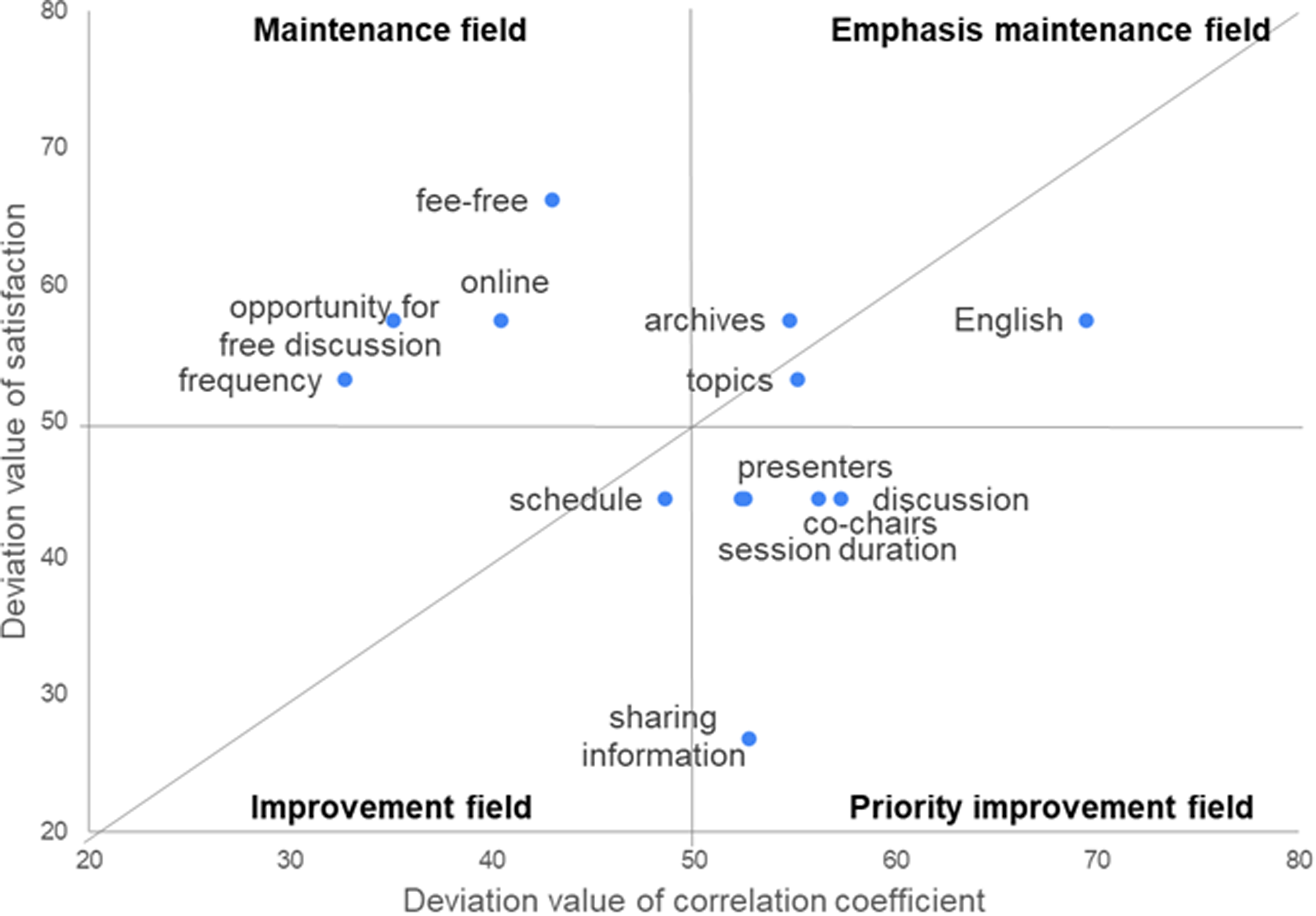
Customer satisfaction analysis graph of the association between the participants’ perspectives on program logistics and satisfaction. The deviation value of satisfaction with reference to each program logistics issue was plotted on the vertical axis, and the deviation value of the correlation coefficient between the satisfaction scores for each program logistics issue and participants’ overall satisfaction were plotted on the horizontal axis.
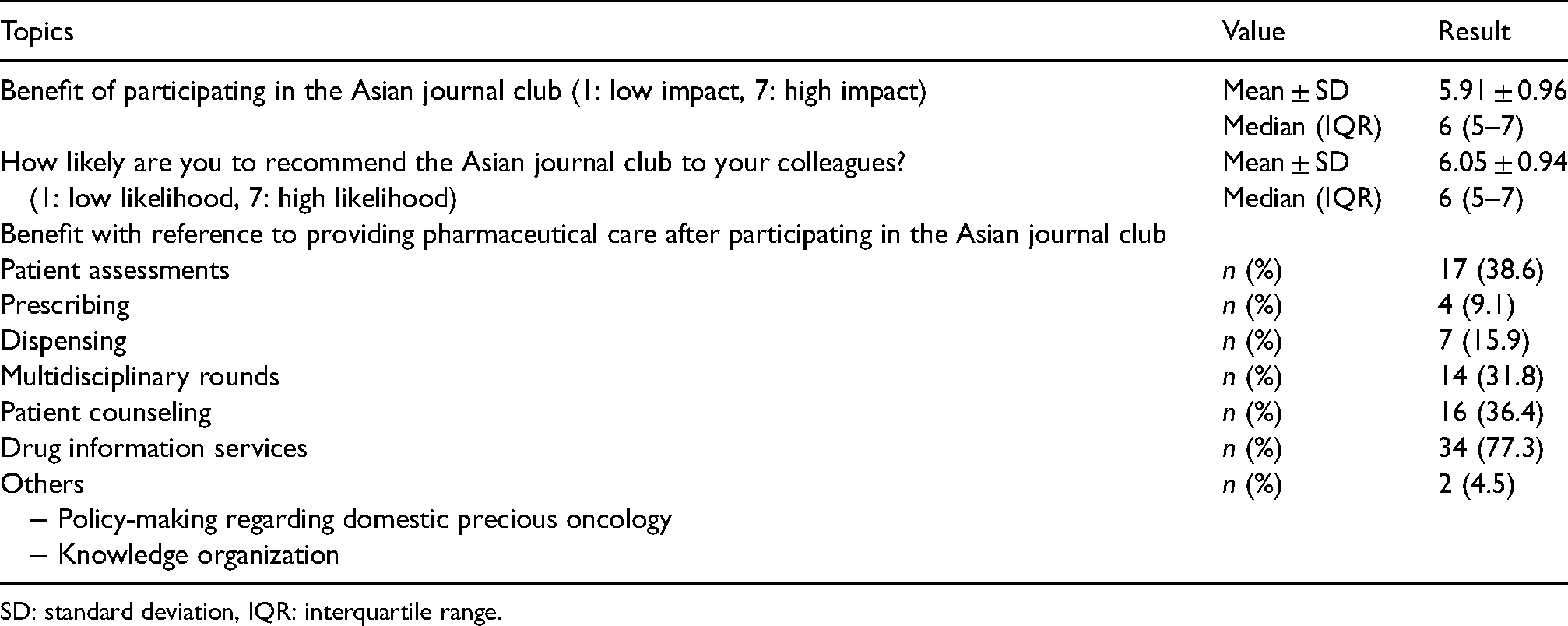
The impact of participation in the Asian journal club on the participants’ daily pharmaceutical care is shown in Table 4. The median score of the overall benefit item was 6 (IQR: 5–7). Respondents reported that it was highly likely that they would recommend the Asian journal club to their colleagues; the median score for this item was 6 (IQR: 5–7). Additionally, the greatest benefit for participants’ daily pharmaceutical care from the Asian journal club was reported to be related to providing drug information services (77.3%), followed by patient assessments (38.6%), patient counseling (36.4%), and multidisciplinary rounds (31.8%).
Impact of participation in the Asian journal club on pharmaceutical care of participants (n = 44).
SD: standard deviation, IQR: interquartile range.
Discussion
In the present study, several assessment measures indicated that the participants were satisfied with our Asian online journal club. This is consistent with previous studies reporting the benefits of journal club activities to inculcate critical appraisal skills, promote research awareness, and deliver evidence-based medicine in clinical practice.5–11 Our results showed that the self-assessment scores of the participants improved after participation in the journal club (Figure 1). This may be explained by the survey participants’ improvement in critical appraisal skills, knowledge and/or pharmaceutical care skills in clinical practice, and English discussion skills. Previously, Tsuchiya et al. 9 reported the outcome of an online journal club for multidisciplinary healthcare professionals and students from several countries. However, it was still not clear how journal clubs would affect clinical pharmacists’ practice. To the best of our knowledge, this is the first study to elucidate the benefits of an online journal club to improve Asian speakers’ comfort in using English to discuss and understand research papers written in English.
In this study, CS analysis was used to explore the factors affecting the overall satisfaction with reference to our Asian journal club. The item on easy access to the archives of the journal club was observed to be located in the emphasis maintenance field and had a strong correlation with overall satisfaction. Our Asian online journal club was conducted in English, though the native language of the participants (except for those from the United States of America) was not English. Therefore, it is possible that some participants may have faced difficulties in understanding the discussions held in English; the archives may have been of particular use to such participants. Sharing information, mutual discussion, shift system of presenters and co-chairs between Japan and Thailand, and duration of journal club session items appeared in the priority improvement field. The shift system for presenters and co-chairs would have been beneficial for the presenters rather than the participants. One of the advantages of the journal club was that it helped in honing the participants’ presentation skills. 8 The opportunity to be a presenter or co-chair would be beneficial for them because they could learn how to make the presentation in English or facilitate the meeting. But we had only seven presenters and two co-chairs (co-authors, not responded to this questionnaire); therefore, most of the respondents would not be satisfied with the shift system because they had not experienced these roles. Accordingly, the fact that we chose presenters and co-chairs from among the participants may have increased the participants’ satisfaction. The participants reported that the following aspects did not meet their expectations: the duration of sessions (1 h), mutual discussions including a question and answer session after the presentation, and sharing of information. We speculate that the participants may have preferred more individual attention and more opportunities for interactions. Therefore, the duration of sessions may have to be tailored to fulfill participants’ needs.
The present study had several limitations. First, a total of 119 participants attended our Asian journal club, but only 44 survey responses were obtained (37% response rate). Second, the participants of this survey may have been more enthusiastic than those who have never participated in journal clubs previously; therefore, the results may not be generalizable to other populations. Third, the self-assessment was performed a short time before and a short time after the journal club; hence, it is highly likely that there would have been an increase in knowledge. In addition, the evaluation of English improvement was a self-assessment, not an objective assessment such as a quiz or achievement test. However, it is more important to study if the increase in knowledge is sustained and will still impact practice in the long term. Finally, the median frequency of participation in the journal club was two times; participating in the journal club twice may not be enough to bring about significant improvement in knowledge and skill for some participants.
Our Asian journal club has several strengths: the participants came from various institutions in Asian countries. Therefore, participants with diverse backgrounds and expertise were provided with a unique opportunity to improve critical thinking and the quality of care delivered in the clinic. The online mode of conducting the meetings and ease of participation were also strengths of our journal club. In the current COVID-19 pandemic situation, the learning style has changed dramatically, and a remote learning style must be adopted to maintain social distance. 17 Therefore, there is a need to develop an adequate remote learning environment for pharmacists. Our journal club provided practical learning opportunities for pre- and postgraduate education in pharmaceutical care. Our study is also the first of its kind to elucidate the benefit of an online journal club consisting of participants from different countries. In accordance with the results of the present study, in the future journal club, we will give participants more opportunities for mutual discussion time and the roles of presenter or co-chair to encourage the participants to learn in English.
Conclusion
In the present study, the Asian journal club participants showed the participants’ comfort in understanding research papers written in English and discussing such research in English via an online journal club. In addition, CS analysis indicated that mutual discussion, taking turns to fulfill the roles of presenter and co-chair (among Japanese and Thai participants), and duration of journal club sessions were priority improvement factors. Future studies aimed at assessing English skills objectively and obtaining qualitative data on the sustained impact on the participants’ clinical practice could provide more robust evidence on the effectiveness of journal club activities led by clinical pharmacists.
Footnotes
Acknowledgements

Declaration of conflicting interests
The authors declared no potential conflicts of interest with respect to the research, authorship, and/or publication of this article.
Funding
The authors received no financial support for the research, authorship, and/or publication of this article.